BGauss Electric Scooters, along with its agency Admatazz, has launched the next phase of its campaign. In the first part of the campaign, where the brand took over the lifeline of Mumbai’s transportation, the Mumbai local trains, they have now extended their campaign and transformed routine BEST bus rides with captivating visuals.
The campaign adorns BEST buses with visuals showcasing passengers seemingly gliding on BGauss scooters.
Said Priyanka Kabra, Brand Director, BGauss Electric Scooters: “At BGauss, we are committed to pushing the boundaries of marketing. The positive response to our local train campaign has fueled our determination, inspiring us to expand our reach to the Mumbai local buses and magnifying our connection with the city’s heartbeat.”
Added Yash Chandiramani, Founder & Chief Strategist, Admatazz: “Crafting this campaign was not just strategic, but a whole lot of fun. The power of hyperlocal marketing is profound, and while Mumbai has proven to be a phenomenal playground for us, we are eager to infuse that same energy into diverse markets”
Publicis Worldwide India has appointed Nidhi Sinha as Vice President (VP) of Planning and Strategy. She will operate from the agency’s Mumbai office and report to Snehasis Bose, Chief Strategy Officer.
Commenting on the appointment, Snehasis Bose, Chief Strategy Officer, said: “Nidhi’s multidisciplinary experience and deep sense of ownership is what sets her apart from the traditional, dyed-in-advertising planners. At a time, when advertising itself is going through churn/evolution, hers is the kind of experience we need to navigate and deliver impactfully on the Publicis Worldwide promise of Creativity To Drive Brand Value.”
YuppTV, the internet-based TV and on-demand services for South Asian content, has announced the addition of Pitaara TV to its FAST (Free Ad-Supported Streaming Television) network platform. Pitaara TV, Punjab’s premier movie satellite channel, has garnered a massive global audience of 1.3 billion viewers, solidifying its position as the ultimate entertainment destination.
Commenting on the launch, Uday Reddy, CEO & Founder, YuppTV, said: “We are delighted to introduce Pitaara TV to our FAST network platform, a significant expansion reflecting the surging demand for diverse content. As one of the foremost entertainment channels for Punjabis and the Punjabi diaspora, Pitaara TV aligns seamlessly with our commitment to offering premium, culturally-rich entertainment. The channel’s unique mix of Punjabi films, music, and exclusive shows brings a fresh, vibrant dimension to our FAST channels. This partnership not only enhances our viewers’ experience but also reinforces YuppTV as a go-to destination for global audiences seeking quality content. We look forward to bringing the magic of Pitaara TV directly to homes worldwide.”
Added Mahesh Sharma, Vice President of Strategic Partnership and Alliances at Pitaara TV: “We are thrilled that Pitaara TV is now available on YuppTV, one of the world’s largest internet-based TV and On-demand service providers for South Asian content. Our goal is to extend our reach to the homes of each & every Punjabi residing worldwide. With this inclusion, we are confident that our mission will be accomplished. Pitaara TV offers the finest Punjabi content, featuring the latest movies, shows, and music that will cater to diverse entertainment preferences.”
Prime Video has announced the launch of its first dedicated anime channel, Anime Times on Prime Video Channels. Anime Times will premiere exclusively on Prime Video Channels in India.
Said Vivek Srivastava, head – Prime Video Channels, Prime Video, India: “At Prime Video, we are steadfast in our efforts to bring diverse, engaging and distinctive content across languages, genres, and formats, for our customers underscoring our content philosophy to offer something for everyone. Over the past few years, anime content has gained significant fandom in India. With the launch of Anime Times on Prime Video Channels, we are expanding our anime programming with over hundreds of hours of programming and bringing highly engaging movies and TV shows for Prime Members. Anime Times will be available for the first time in India only on Prime Video Channels. With this launch Prime Video Channels will become the ‘one-stop entertainment destination’ for all Anime fans in the country. Anime Times has been a premier destination for some of the best Anime content, as a Channel on Prime Video in Japan, and we are thrilled to be the launchpad for them in India, and offer them wide reach to customers across the country.”
Added Hideo Katsumata, CEO of Anime Times Company: “Anime Times and Prime Video have enjoyed a strong collaboration in Japan, and we are now excited to bring Anime Times for the very first time to audiences in India. Japanese anime culture is now a significant global phenomenon, and has led to an increasing interest in Japanese culture and entertainment. We are certain that with Anime Times, fans and enthusiasts all across the country will be able to delve into the huge pool of anime shows and movies, both recent and classic, that we offer via Prime Video Channels.”
American Tourister has unveils a new campaign to launch its new American Tourister Rollio Bags. The film campaign features Ananya Panday and is conceptualised by Makani Creatives.
Said Pradnya Popade, Marketing Communications Head at Samsonite South Asia Pvt Ltd: “American Tourister is a brand for the young and restless who love exploring. The vibe is full of fun and high energy. We’ve taken this energy up a notch with our latest launch, Rollio; bags designed with cutting-edge style for those who #OwnTheRoll. Unveil the future of travel aesthetics with Rollio’s signature roll-shaped silhouette, seamlessly merging chic with functionality. What better way to introduce these bags than by transporting the audience to a whole new verse? A verse inspired by the bags’ innovative and fun design. Choosing Ananya Panday to be a part of the Rollio verse was a natural fit. She’s stylish, fun, and owns everything she does.”
On the campaign execution, Yashtika Vaswani, Digital Client Servicing Director, Makani Creatives added: “Our goal is to captivate the fantastical imaginations of the audience by creating a unique blend of the physical and digital worlds. The power of CGi technology allows us to bring our wildest imagination to life, creating a magical world so accurately inspired by the product.”
The Argentine Football Association (AFA) and Interactive Avenues have reached an agreement to consolidate the content and brand expansion strategies of the Argentine team in India in the coming years.
AFA began operations in the Indian market in 2021, creating content and activations for fans in India and generating regional sponsorship agreements with the largest companies in the region.
Said Claudio Tapia, President of AFA: “For more than six years we have been working steadily on AFA’s expansion plan in the world, developing important markets and regions where we previously had no presence or sponsorship agreements. Today, we can highlight that AFA is one of the sports brands with the greatest presence in strategic markets such as India, China, the Middle East and the U.S. In this case, we are happy to renew our agreement with Interactive Avenues, who is helping us generate a closer link with the Indian audiences and at the same time generate new channels of communication and visibility for our sponsors in the region. We appreciate the trust and will continue working to be a bigger brand every day in India and the rest of the world.”
Added Shantanu Sirohi, COO, Interactive Avenues: “We are delighted to offer differentiated and relatable content that resonates well with Indian audiences and creates a thriving fan community for AFA. We are privileged to be the preferred digital partner for several Indian and international sports teams, and this collaboration will further strengthen our position as a one-stop digital agency for sports marketing.”
India Signing Hands founder Alok Kejriwal (centre) with co-founders Aqil Chinoy (to his right) and Mansi Shah (to his left)
By Shruti Pushkarna
Picture a living room setting in any average household in the country today. You will see various members of the family engaged on their respective handheld devices while the din from a smart television fills the room. Now imagine a deaf child or an individual in this setup. Is (s)he able to participate or communicate with the family? Is (s)he able to consume and enjoy the after-discussions on the same content capsules? The answer is probably not.
India is home to nearly two crore deaf individuals, of which 90 per cent lose out on basic knowledge and information imparted through mainstream communication channels, including television. They remain disengaged from their family and friends because they are clueless about daily happenings and events.
In November 2018, three enterprising individuals, Alok Kejriwal, Aqil Chinoy and Mansi Shah came up with a potential solution for the deaf community, so they could equally access their daily dose of information and entertainment online (The ISH News website: https://www.ishnews.tv/ and the YouTube channel:https://www.youtube.com/channel/UC99w_Bzj8ikOz8Gpv0prbNg)
Meet Aqil Chinoy, Head of Information Technology, India Signing Hands (ISH), one of the forces behind ISH News.
Question: Tell us a bit about yourself, where did you grow up, study and about your work?
Answer: I was born and brought up in a deaf family in Mumbai. Indian Sign Language (ISL) was my first language as my parents, my younger brother, my uncle and aunt are deaf. Only my grandparents were hearing. After passing ICSE, I went abroad to study at Gallaudet University in Washington DC, USA. It is the only university with high standards of accessibility for the deaf in the US. There, my world changed when I realised the huge range of accessibility and opportunities that were lacking in India and how technology plays a major role in improving accessibility. I got myself involved in various organisations, took part-time jobs and learned how to lead an independent life.
Upon graduation in computer science and information systems along with several awards such as ‘Phi Alpha Pi Honor’, ‘Magna Cum Laude’, ‘President’s Scholars’ from Gallaudet University and after a one-year internship at a reputed company in US, I returned to my motherland to settle. Since then, I have been dedicating my time, skills and experiences in empowerment of the deaf people.
Q: What kind of work did you take up upon your return to India?
A: I enrolled in A S Moloobhoy Pvt. Ltd. and built the determination to push myself beyond the boundaries of disability. I became the Head of Information Technology and worked there for 15 years. At the same time, I was also involved with the deaf community, trying to improve the standards of accessibility with the help of technology. I played different roles in several NGOs. With the steady growth of India Signing Hands, I resigned from my job in 2021, and joined ISH full-time.
Q: ISH has been in the news lately, for all good reasons, but we will come back to that in a bit. First, tell us how did India Signing Hands come into being?
A: My parents and I were deprived of the knowledge and information from TV channels as they only communicate in the spoken language. Due to this lack of accessibility, many deaf individuals face difficulty in their lives especially pertaining to education and employment. For this very reason, I concluded that the first step is for them to have quality education and access to information to build up their knowledge. Currently, due to the inadequate method of education, lack of communication with hearing members of the family and inaccessible format of TV Channels, the deaf people have fallen behind. Determined to promote the best solution, I collaborated with Alok Kejriwal, a deaf businessman, and Mansi Shah, and we launched India Signing Hands (ISH).
Q: Access to information is a basic human right and yet we see so many people from diverse communities left out of mainstream communication. The deaf because of the lack of sign language usage and interpretation, blind and visually impaired lose out on heavily visual channels of communication, the illiterate and less educated due to other reasons and so on. What’s your view on this current state of exclusion or marginalization of communities?
A: Deafness is often an invisible disability, where the impact is not immediately apparent. The challenges faced by deaf individuals encompass a spectrum of issues, including formidable communication barriers, restricted entry to educational and employment avenues, and the pervasive social stigma. In times past, awareness surrounding sign language was very limited, with the predominant teaching method in Indian deaf schools being oralism, emphasizing on lip-reading. Unfortunately, this approach perpetuated a widespread misunderstanding that sign language might compromise cognitive skills and logical thinking. Despite ample research refuting such notions, these misconceptions persist.
The communication gap, experienced at home, in workplaces, and public spaces, creates barriers that obstruct their overall prosperity. Presently, a staggering 90 per cent of the deaf population in India grapples with these challenges and they are unable to contribute to the Indian economy. Deaf associations tirelessly advocate for concessions in various facets of life, from railways to tolls, seeking alternative solutions to alleviate the financial burdens. The struggle for inclusivity and recognition persists as the deaf endeavour to carve out spaces that accommodate their unique needs and amplify their voices in the broader societal discourse.
Q: Would you agree that there are enough laws and guidelines in place to ensure inclusion in terms of ICT, and yet no accountability in terms of last mile implementation? Like, despite the guideline issued by Ministry of Information and Broadcasting on keeping broadcasts inclusive for the deaf, reality is far from it. What do you think?
A: Recognising and addressing the challenges faced by the deaf community is a pivotal step toward fostering a truly inclusive society. Achieving this inclusivity necessitates the implementation of policies that extend equal opportunities. The anticipation surrounding the enactment of the Rights of Persons with Disabilities Act in 2016 initially infused hope within the community. Unfortunately, the realisation fell short of expectations. While there have been some positive efforts, such as the provision of ISL interpretation during DD News broadcasts and selected events organized by the Department of Empowerment of Persons with Disabilities, these steps are commendable yet insufficient to catalyse a broader impact.
Proposing Indian Sign Language (ISL) as the 23rd national language holds substantial promise for empowering the deaf community. The recognition of a language as an official one not only symbolises inclusivity but also catalyses socio-economic growth. Businesses thrive when their language is acknowledged, granting the community a sense of authority and presence. Conversely, there are organisations attempting to develop accessibility solutions, viewing this as an opportunity to contribute positively. However, some fall short in understanding a fundamental concept – the Deaf community does not seek to be “fixed.” Their desire is not for a cure but rather for an environment that provides accessibility, allowing them to bridge the communication gap.
Q: How and why did you think of launching ISH News? Tell us a bit about this venture and the team behind it.
A: ISH was launched in November 2018 as India’s foremost daily news and entertainment online broadcasting channel catering specifically to the deaf community. The channel delivers content in a format that combines Indian Sign Language (ISL), voiceover, and subtitles, ensuring an inclusive and enriching experience for its viewers.
The synergistic use of subtitles and ISL contributes significantly to the enhancement of vocabulary skills among the deaf audience. Additionally, the videos, presented in ISL with voiceover, serve a dual purpose by providing a unique learning opportunity for hearing parents, enabling them to acquire Sign Language skills. This, in turn, fosters enhanced communication and establishes deeper connections and trust within families.
My involvement spans diverse responsibilities, from crafting project proposals and defining workflows to detailing technical requirements and coordinating the design of the office and studio floor layouts. Additionally, I have taken an active role in the recruitment and training of team members, ensuring a seamless integration of their diverse skills and experiences.
Within ISH, we take pride in nurturing a diverse team of professionals, encompassing deaf individuals, Children of Deaf Adults (CODA), and hearing team members. This team, consisting of News Signers (anchors), editors, graphic artists, video editors, cameramen, coordinators, interpreters, and more, brings together years of collective experience, particularly within the realm of People with Disabilities (PwDs).
Q: Many individuals and companies believe that adding subtitles and auto-generated captions fixes the gap for the deaf. We know that’s not true, because the deaf population itself in diverse in many ways. Would you like to educate our readers on this?
A: While many companies assume that simply adding subtitles to movies or videos resolves accessibility challenges for all deaf individuals in TV channels or films, this oversimplification overlooks a critical factor – the quality of accessible education provided to the Deaf during their formative years. Within the diverse deaf population, the Hard-Of-Hearing (HOH) subgroup benefits from the ability to read, thanks to partial hearing and access to educational support. They can communicate effectively at home, aided by hearing devices. This represents only a fraction of the deaf population. The majority of deaf individuals encounter difficulties with subtitles. In this context, the Indian Sign Language (ISL) interpretation video-in-film overlay emerges as the most dependable tool for ensuring accessibility. Unlike subtitles, ISL interpretation transcends language barriers, providing a comprehensive and nuanced communication channel. Moreover, ISL interpreters, adhering to the grammatical nuances of ISL, convey not only the literal meaning but also the emotions and tones embedded in the dialogues.
Q: What’s the viewership of ISH News? Any response or feedback you would like to share with us?
A: Since its inception, ISH News channel has garnered an impressive cumulative total of 30.44 crore views and amassed a dedicated following of 5.88 lakhs subscribers/followers across various social media platforms. Averaging an impressive 45 lakhs views per month, our news videos span a comprehensive range, covering daily breaking news, sports, business, health awareness, Deaf Buzz (news related to the Deaf), festivals, disabilities-related news, and entertainment. The outpouring of appreciation and gratitude from thousands of Deaf individuals is a testament to our tremendous efforts in making news and films accessible to the Deaf. Today, they not only comprehend but also relish news and films through ISL interpretation video-in-video.
Q: Coming from television news, I know that it’s a fast-paced environment and not very open to empathetic inclusion, because of the way the industry and professionals are wired thus far. How do you think we as inclusion advocates, can push for a shift in this mindset and culture?
A: By combining a legal framework, success stories and testimonials from deaf individuals who have benefited from ISH News’ initiatives, educational awareness, financial collaboration, government support, and live demonstrations, we can build a compelling case for the inclusion of video-in-film ISL interpretation in TV channels and films, encouraging producers to take accessibility initiatives more seriously. We can begin by stressing on the importance of compliance with national standards and policies, emphasizing that this not only aligns with legal requirements but also reflects a commitment to social responsibility. We can emphasize that inclusive content not only caters to the Deaf community but also appeals to a wider audience, thus contributing to a positive public image for the industry.
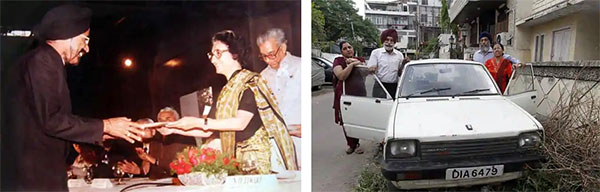
Yesterday, happened to be the 40th anniversary of one of India’s most loved brands: Maruti. On December 14, 1983, the first batch of the Maruti 800 rolled out with the first car eventually registered as DIA 6479 was handed over by Mrs Indira Gandhi to Mr Harpal Singh of Delhi.
The key of the first Maruti being handed over; the car before it was restored and displayed at the Maruti Suzuki brand centre adjoining their head office in New Delhi. Photos courtesy Mr KG Verma of Maruti Udyog Limited.
Rarely has any brand once owned by the government firstly survived this long and secondly maintained its market leadership almost since inception. Rarely has a ‘subsidiary’ company overtaken its parent and become the de facto reason for the parent’s sustained global success. Rarely has a mass market brand, literally catering to millions of customers across every corner of the country, become a benchmark in customer-centricity. Maruti is indeed a rare brand, not only in India, but in any market and a case study for all management schools across the world.
Legend says that on that eventful day 40 years ago, when asked to say a few words, Mrs Gandhi started with “Yeh ek chhoti si gaadi ki ek lambi kahaani hai…” [This is a long story of a tiny car…] obviously referring to her son Sanjay’s obsession with building a ‘people’s car’ in India, a la the Volkswagen Beetle, Renault 5 and Austin/ BMC Mini. He had started his early efforts sometime in 1975, with a break from 1997 to 1980. His sudden death in the same year spurred on his mother to ensure his dream gets fructified.
While the numbers, the loyalty, the profitability and the sheer market dominance has done most of the talking for the Maruti brand, the corporate has been telling cagey about its history. And that is the very issue I raise today, as an alumnus and an individual who owes a lot of what I am to the seven rich years I breezed through there in two stints.
There should have been a Maruti Suzuki museum by now, exhibiting all interesting pieces of history, experimental vehicles, the single-seater racing cars, the concept cars, documents, photographs, blueprints and so on. It should have been the pilgrimage of every Indian motorhead, just like the Autostadt for the Volkswagen group. The results the company posts every year, year after year, are… the results and not the reasons. The reasons should have been showcased and celebrated. Sadly, even if numerous proposals were put up for the museum, the top management thought otherwise.
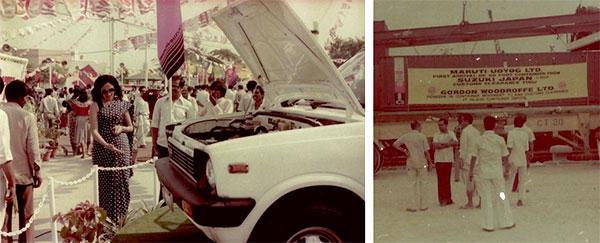
On display before commercial launch at IITF in November 1982 in Pragati Maidan, New Delhi; arrival of the first lot of plant machinery from Suzuki, Japan in early 1983 at Madras (then Chennai) port. Photos courtesy Mr Rakesh Gupta of Maruti Udyog Limited.
The company cannot wish its history away, however much the parent wishes to, for its own myopic reasons. ‘Maruti’ is Sanjay Gandhi’s concept and that needs to be recognised. His original office in the Gurugram plant was converted into a ‘Tool Room’. As if that was not disrespectful enough, it was unceremoniously razed to the ground in 2002, in spite of a few protests. Insiders say that in 1983, there were five working prototypes built by Sanjay Gandhi and his team of rag-tag engineers kept in one corner of the plant. There were ‘orders’ from way above to destroy them. Thankfully, one was whisked out and is in a closely guarded private collection. Basically, everything to do with Sanjay Gandhi was to be removed or destroyed.
This is such a contrast to a brand like VW that does not run away from the fact that Adolf Hitler sponsored the idea and encouraged Dr Ferdinand Porsche to build what is popularly called the Beetle. At the Autostadt in Wolfsburg, there is a bust of Major Ivan Hirst, the British army man who revived VW after the war. There is no shame in admitting to the chequered history any memorable has had. Frankness and candour are virtues for any brand, more so a market leader. Running away from it is sad cowardice.
A brand like Maruti is much more than Arena and Nexa dealerships, a robust service network and a digitised buying process. It cannot be constricted to mere products, which may come and go depending on their own brand lifecycles. It is a pillar of India’s story of slow but sure evolution from an under-developed to the world’s fastest growing economy. It stands for all that is good and not so good about India.
The good is the ambition to be truly world-class. The good is to openly accept and incorporate a foreign management system and make it one’s own. The good is to establish the concept of customer satisfaction as the cornerstone of any business. The good is to demonstrate that a ‘sarkari’ [governmental] setup could be efficient, effective and profitable. The good is to help the consumer mature to a level where no brand, however global in repute, can take one for granted. The good is to make mobility affordable to millions of the emerging middle-class.
The not-so-good is to be introverted about its rich legacy and accept the controversial with the laudable. The not-so-good is to not impress upon its parent that it needs both recognition and representation at the global level. The not-so-good is to be defensive about the quality of its people and see them being rightfully treated as global equals vis-à-vis its Japanese counterparts. The not-so-good is to stay away from causes of national importance that look forward to a stand taken by an icon. The not-so-good is to stonewall progress on issues of safety standards and emission norms using its clout to protect its own turf.
Guess that is what truly memorable brands are made of… the good and the not-so-good. Being proud of one’s legacy and milestones is a mark of maturity of a market leader. Being the 40th anniversary, one would have expected major celebrations by the brand in the form of special editions, on-ground initiatives and customer advocacy programmes. And of course, if not a brand museum, at least a coffee table collector’s edition containing the huge repository of photographs and documents that the company and its alumni have. Given that nothing of this has happened and the day has just passed by, the onus lies on us alumni to take the initiative and do things to commemorate this milestone of one of India’s most loved brands ever!
TheSmallBigIdea (TSBI), an independent digital agency, has announces its foray into the MENA (Middle East and North Africa) region with its office in Dubai, marking its international expansion.
Speaking on the agency’s international expansion with the foray into the MENA market, Harikrishnan Pillai, CEO and Co-Founder at TheSmallBigIdea said: “Embarking on our growth journey in the Middle East is a pivotal moment for TSBI, marking the realization of a long-envisioned plan. We are delighted with the success of this venture, which serves as the initial stride towards transforming TSBI into a truly global agency, firmly rooted in its Indian heritage. By fusing our profound digital expertise cultivated in India with a nuanced understanding of Middle Eastern culture, TSBI Arabia emerges as our gateway to one of the world’s fastest-growing economies. As we collaborate with clients in the region, we are confident that our unique blend of Indian innovation and Middle Eastern cultural insight will propel us to possess a formidable presence on the global stage. With seasoned professionals who boast over a decade of experience in the market, TSBI Arabia is set to lead the way in the coming years, offering an exciting prospect for both our team and the industry at large.”
BBH India, the creative agency within the Publicis Groupe India, has unveiled a campaign for jewellery brand, CaratLane.
Said Parikshit Bhattaccharya, Chief Creative Officer of BBH India: “Our insight was clear – a woman should wear what she wants, not what she feels pressured to wear. So, we designed a campaign that beautifully brings out the essence of Caratlane’s Everyday Vows collection, ensuring it aligns with women’s lifestyle and attitude. It’s about embracing the beauty of everyday magic in relationships.”
Added Jennifer Pandya, VP Marketing of CaratLane: “We believe that every day is an opportunity to celebrate love, and a Mangalsutra is the perfect symbol. A modern woman chooses to wear a mangalsutra as a marker of all the little things her husband does to make her feel special, whether it’s making chai in the morning or being her support system. We’ve created a range of gorgeous lightweight diamond Mangalsutra in chains, bracelets, and rings to fit seamlessly into her lifestyle and add a touch of elegance to her every day.”
The Advertising Standards Council of India (ASCI) has updated its guidelines for ‘Qualification of Brand Extension-products and services’ under the restricted category prohibited from advertising by law. These modifications have been detailed in Chapter III Clause 3.6 (a) of the ASCI code, and specifically target brand extensions associated with restricted categories such as liquor and tobacco.
Key Features of the New Code for Brand Extensions:
Advertising spends have to be in proportion to sales turnover of extension: ASCI has mandated that the advertising budget for genuine brand extensions of restricted master brands has to be commensurate with the extension’s sales turnover. The proportions for the ad budgets are capped at 200 percent (ie. not more than 200 percent) of the turnover in the first two years of launch of the extension, followed by 100 percent (ie. not more than 100 percent) of revenue in the third year, 50 percent in the fourth year, and 30 percent thereafter. The advertising budget includes media expenditure across all forms of media in the previous 12 months, payments to celebrities for brand endorsements on an annualised basis, and the annual average money spent on advertising production for the brand extension in the previous three years.
This measure will ensure a balanced approach to advertising investment in alignment with the extension’s sales performance over time.
Treatment of Variants Under Brand Extension: For clarity, any variants launched under the brand extension will not be considered as a fresh extension. The original date of the first brand extension will apply.
Certification by Reputed CA Firms: To ensure genuine compliance, all evidence supporting the brand extension’s qualifications for advertising must be certified by a reputed and independent CA firm.
If a brand extension of a parent brand that is under one of the restricted categories don’t meet the updated qualifications, ASCI will not consider it to be a genuine extension, but a surrogate created to advertise a restricted category. ASCI’s updates will contribute to maintaining the integrity of advertising in India, upholding ethical standards, and protecting consumers from misleading practices.
Said Manisha Kapoor, CEO and Secretary General, ASCI, on the guidelines: “As part of our ongoing commitment to consumer protection and ethical advertising, ASCI has introduced these new additions to the Brand Extension Guidelines. These measures are essential to prevent the misuse of brand extensions as surrogates for advertising in restricted categories. We believe that these guidelines will strengthen the integrity of advertising in the industry.”
Thought Blurb Communications, a Mumbai-headquartered, advertising and design agency, reports completion of branding and designing activities for the launch of Playseum, a new age kids play area, launched in Mumbai.
Said Meera Sheth, Founder of Playseum: “Branding and designing in today’s times plays an highly important role in any business and specially in anything where kids are involved. Kids love colours and visuals which helps calm them and bring our joy and fun. With Thought Blurb onboard we were able to find a way to build the right strategy. Children can learn from a very early age. But structured education fails to provide this. I have always involved myself with my children’s playtime. You learn a lot by being with them and observing them pick up basic knowledge and skills, as long as they are all part of playtime.”
Added Vinod Kunj, Founder and Chief Creative Officer of Thought Blurb: “This is a unique brand in a unique space. There were really no precedents or examples leading us where we wanted to go. At Thought Blurb, we have made it a point to use our experience in launching new brands into the market to extensive use on this one. We had to establish guide-rails for the entire team to follow as we went about the task. We are proud to have been part of this brand and happy for another successful launch by our agency.”
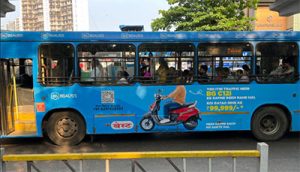 BGauss Electric Scooters, along with its agency Admatazz, has launched the next phase of its campaign. In the first part of the campaign, where the brand took over the lifeline of Mumbai’s transportation, the Mumbai local trains, they have now extended their campaign and transformed routine BEST bus rides with captivating visuals.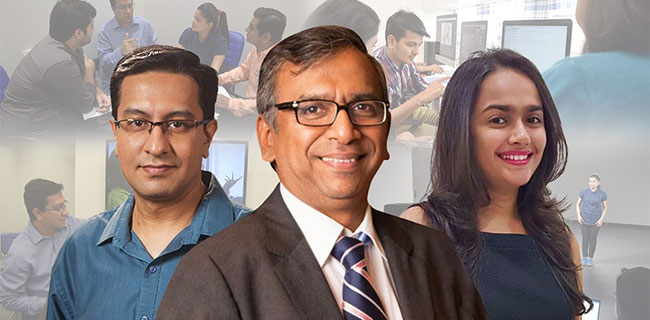
 Picture a living room setting in any average household in the country today. You will see various members of the family engaged on their respective handheld devices while the din from a smart television fills the room. Now imagine a deaf child or an individual in this setup. Is (s)he able to participate or communicate with the family? Is (s)he able to consume and enjoy the after-discussions on the same content capsules? The answer is probably not.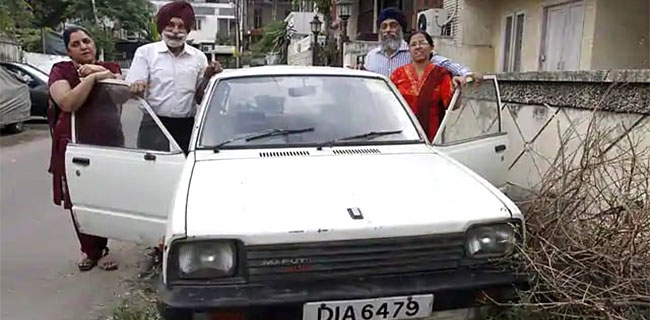
 By Avik Chattopadhyay