By Shruti Pushkarna
 Picture a living room setting in any average household in the country today. You will see various members of the family engaged on their respective handheld devices while the din from a smart television fills the room. Now imagine a deaf child or an individual in this setup. Is (s)he able to participate or communicate with the family? Is (s)he able to consume and enjoy the after-discussions on the same content capsules? The answer is probably not.
India is home to nearly two crore deaf individuals, of which 90 per cent lose out on basic knowledge and information imparted through mainstream communication channels, including television. They remain disengaged from their family and friends because they are clueless about daily happenings and events.
In November 2018, three enterprising individuals, Alok Kejriwal, Aqil Chinoy and Mansi Shah came up with a potential solution for the deaf community, so they could equally access their daily dose of information and entertainment online (The ISH News website: https://www.ishnews.tv/ and the YouTube channel: https://www.youtube.com/channel/UC99w_Bzj8ikOz8Gpv0prbNg)
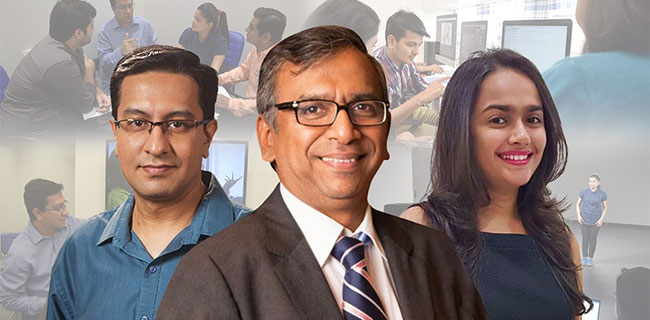
Meet Aqil Chinoy, Head of Information Technology, India Signing Hands (ISH), one of the forces behind ISH News.
Question: Tell us a bit about yourself, where did you grow up, study and about your work?
Answer: I was born and brought up in a deaf family in Mumbai. Indian Sign Language (ISL) was my first language as my parents, my younger brother, my uncle and aunt are deaf. Only my grandparents were hearing. After passing ICSE, I went abroad to study at Gallaudet University in Washington DC, USA. It is the only university with high standards of accessibility for the deaf in the US. There, my world changed when I realised the huge range of accessibility and opportunities that were lacking in India and how technology plays a major role in improving accessibility. I got myself involved in various organisations, took part-time jobs and learned how to lead an independent life.
Upon graduation in computer science and information systems along with several awards such as ‘Phi Alpha Pi Honor’, ‘Magna Cum Laude’, ‘President’s Scholars’ from Gallaudet University and after a one-year internship at a reputed company in US, I returned to my motherland to settle. Since then, I have been dedicating my time, skills and experiences in empowerment of the deaf people.
Q: What kind of work did you take up upon your return to India?
A: I enrolled in A S Moloobhoy Pvt. Ltd. and built the determination to push myself beyond the boundaries of disability. I became the Head of Information Technology and worked there for 15 years. At the same time, I was also involved with the deaf community, trying to improve the standards of accessibility with the help of technology. I played different roles in several NGOs. With the steady growth of India Signing Hands, I resigned from my job in 2021, and joined ISH full-time.
Q: ISH has been in the news lately, for all good reasons, but we will come back to that in a bit. First, tell us how did India Signing Hands come into being?
A: My parents and I were deprived of the knowledge and information from TV channels as they only communicate in the spoken language. Due to this lack of accessibility, many deaf individuals face difficulty in their lives especially pertaining to education and employment. For this very reason, I concluded that the first step is for them to have quality education and access to information to build up their knowledge. Currently, due to the inadequate method of education, lack of communication with hearing members of the family and inaccessible format of TV Channels, the deaf people have fallen behind. Determined to promote the best solution, I collaborated with Alok Kejriwal, a deaf businessman, and Mansi Shah, and we launched India Signing Hands (ISH).
Q: Access to information is a basic human right and yet we see so many people from diverse communities left out of mainstream communication. The deaf because of the lack of sign language usage and interpretation, blind and visually impaired lose out on heavily visual channels of communication, the illiterate and less educated due to other reasons and so on. What’s your view on this current state of exclusion or marginalization of communities?
A: Deafness is often an invisible disability, where the impact is not immediately apparent. The challenges faced by deaf individuals encompass a spectrum of issues, including formidable communication barriers, restricted entry to educational and employment avenues, and the pervasive social stigma. In times past, awareness surrounding sign language was very limited, with the predominant teaching method in Indian deaf schools being oralism, emphasizing on lip-reading. Unfortunately, this approach perpetuated a widespread misunderstanding that sign language might compromise cognitive skills and logical thinking. Despite ample research refuting such notions, these misconceptions persist.
The communication gap, experienced at home, in workplaces, and public spaces, creates barriers that obstruct their overall prosperity. Presently, a staggering 90 per cent of the deaf population in India grapples with these challenges and they are unable to contribute to the Indian economy. Deaf associations tirelessly advocate for concessions in various facets of life, from railways to tolls, seeking alternative solutions to alleviate the financial burdens. The struggle for inclusivity and recognition persists as the deaf endeavour to carve out spaces that accommodate their unique needs and amplify their voices in the broader societal discourse.
Q: Would you agree that there are enough laws and guidelines in place to ensure inclusion in terms of ICT, and yet no accountability in terms of last mile implementation? Like, despite the guideline issued by Ministry of Information and Broadcasting on keeping broadcasts inclusive for the deaf, reality is far from it. What do you think?
A: Recognising and addressing the challenges faced by the deaf community is a pivotal step toward fostering a truly inclusive society. Achieving this inclusivity necessitates the implementation of policies that extend equal opportunities. The anticipation surrounding the enactment of the Rights of Persons with Disabilities Act in 2016 initially infused hope within the community. Unfortunately, the realisation fell short of expectations. While there have been some positive efforts, such as the provision of ISL interpretation during DD News broadcasts and selected events organized by the Department of Empowerment of Persons with Disabilities, these steps are commendable yet insufficient to catalyse a broader impact.
Proposing Indian Sign Language (ISL) as the 23rd national language holds substantial promise for empowering the deaf community. The recognition of a language as an official one not only symbolises inclusivity but also catalyses socio-economic growth. Businesses thrive when their language is acknowledged, granting the community a sense of authority and presence. Conversely, there are organisations attempting to develop accessibility solutions, viewing this as an opportunity to contribute positively. However, some fall short in understanding a fundamental concept – the Deaf community does not seek to be “fixed.” Their desire is not for a cure but rather for an environment that provides accessibility, allowing them to bridge the communication gap.
Q: How and why did you think of launching ISH News? Tell us a bit about this venture and the team behind it.
A: ISH was launched in November 2018 as India’s foremost daily news and entertainment online broadcasting channel catering specifically to the deaf community. The channel delivers content in a format that combines Indian Sign Language (ISL), voiceover, and subtitles, ensuring an inclusive and enriching experience for its viewers.
The synergistic use of subtitles and ISL contributes significantly to the enhancement of vocabulary skills among the deaf audience. Additionally, the videos, presented in ISL with voiceover, serve a dual purpose by providing a unique learning opportunity for hearing parents, enabling them to acquire Sign Language skills. This, in turn, fosters enhanced communication and establishes deeper connections and trust within families.
My involvement spans diverse responsibilities, from crafting project proposals and defining workflows to detailing technical requirements and coordinating the design of the office and studio floor layouts. Additionally, I have taken an active role in the recruitment and training of team members, ensuring a seamless integration of their diverse skills and experiences.
Within ISH, we take pride in nurturing a diverse team of professionals, encompassing deaf individuals, Children of Deaf Adults (CODA), and hearing team members. This team, consisting of News Signers (anchors), editors, graphic artists, video editors, cameramen, coordinators, interpreters, and more, brings together years of collective experience, particularly within the realm of People with Disabilities (PwDs).
Q: Many individuals and companies believe that adding subtitles and auto-generated captions fixes the gap for the deaf. We know that’s not true, because the deaf population itself in diverse in many ways. Would you like to educate our readers on this?
A: While many companies assume that simply adding subtitles to movies or videos resolves accessibility challenges for all deaf individuals in TV channels or films, this oversimplification overlooks a critical factor – the quality of accessible education provided to the Deaf during their formative years. Within the diverse deaf population, the Hard-Of-Hearing (HOH) subgroup benefits from the ability to read, thanks to partial hearing and access to educational support. They can communicate effectively at home, aided by hearing devices. This represents only a fraction of the deaf population. The majority of deaf individuals encounter difficulties with subtitles. In this context, the Indian Sign Language (ISL) interpretation video-in-film overlay emerges as the most dependable tool for ensuring accessibility. Unlike subtitles, ISL interpretation transcends language barriers, providing a comprehensive and nuanced communication channel. Moreover, ISL interpreters, adhering to the grammatical nuances of ISL, convey not only the literal meaning but also the emotions and tones embedded in the dialogues.
Q: What’s the viewership of ISH News? Any response or feedback you would like to share with us?
A: Since its inception, ISH News channel has garnered an impressive cumulative total of 30.44 crore views and amassed a dedicated following of 5.88 lakhs subscribers/followers across various social media platforms. Averaging an impressive 45 lakhs views per month, our news videos span a comprehensive range, covering daily breaking news, sports, business, health awareness, Deaf Buzz (news related to the Deaf), festivals, disabilities-related news, and entertainment. The outpouring of appreciation and gratitude from thousands of Deaf individuals is a testament to our tremendous efforts in making news and films accessible to the Deaf. Today, they not only comprehend but also relish news and films through ISL interpretation video-in-video.
Q: Coming from television news, I know that it’s a fast-paced environment and not very open to empathetic inclusion, because of the way the industry and professionals are wired thus far. How do you think we as inclusion advocates, can push for a shift in this mindset and culture?
A: By combining a legal framework, success stories and testimonials from deaf individuals who have benefited from ISH News’ initiatives, educational awareness, financial collaboration, government support, and live demonstrations, we can build a compelling case for the inclusion of video-in-film ISL interpretation in TV channels and films, encouraging producers to take accessibility initiatives more seriously. We can begin by stressing on the importance of compliance with national standards and policies, emphasizing that this not only aligns with legal requirements but also reflects a commitment to social responsibility. We can emphasize that inclusive content not only caters to the Deaf community but also appeals to a wider audience, thus contributing to a positive public image for the industry.