 By Avik Chattopadhyay
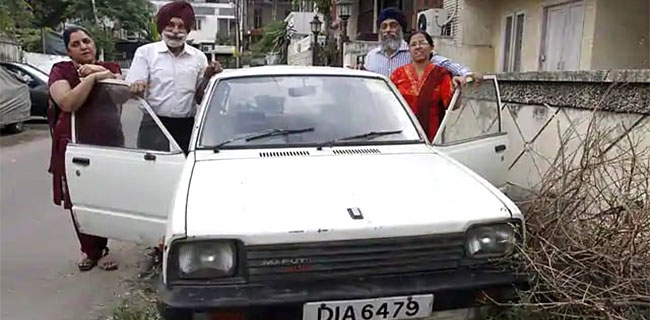
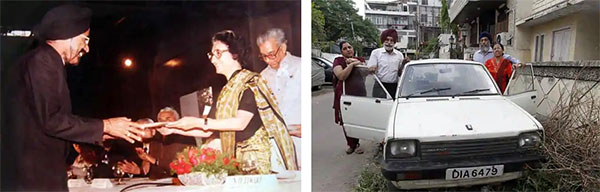
Yesterday, happened to be the 40th anniversary of one of India’s most loved brands: Maruti. On December 14, 1983, the first batch of the Maruti 800 rolled out with the first car eventually registered as DIA 6479 was handed over by Mrs Indira Gandhi to Mr Harpal Singh of Delhi.
Rarely has any brand once owned by the government firstly survived this long and secondly maintained its market leadership almost since inception. Rarely has a ‘subsidiary’ company overtaken its parent and become the de facto reason for the parent’s sustained global success. Rarely has a mass market brand, literally catering to millions of customers across every corner of the country, become a benchmark in customer-centricity. Maruti is indeed a rare brand, not only in India, but in any market and a case study for all management schools across the world.
Legend says that on that eventful day 40 years ago, when asked to say a few words, Mrs Gandhi started with “Yeh ek chhoti si gaadi ki ek lambi kahaani hai…” [This is a long story of a tiny car…] obviously referring to her son Sanjay’s obsession with building a ‘people’s car’ in India, a la the Volkswagen Beetle, Renault 5 and Austin/ BMC Mini. He had started his early efforts sometime in 1975, with a break from 1997 to 1980. His sudden death in the same year spurred on his mother to ensure his dream gets fructified.
While the numbers, the loyalty, the profitability and the sheer market dominance has done most of the talking for the Maruti brand, the corporate has been telling cagey about its history. And that is the very issue I raise today, as an alumnus and an individual who owes a lot of what I am to the seven rich years I breezed through there in two stints.
There should have been a Maruti Suzuki museum by now, exhibiting all interesting pieces of history, experimental vehicles, the single-seater racing cars, the concept cars, documents, photographs, blueprints and so on. It should have been the pilgrimage of every Indian motorhead, just like the Autostadt for the Volkswagen group. The results the company posts every year, year after year, are… the results and not the reasons. The reasons should have been showcased and celebrated. Sadly, even if numerous proposals were put up for the museum, the top management thought otherwise.
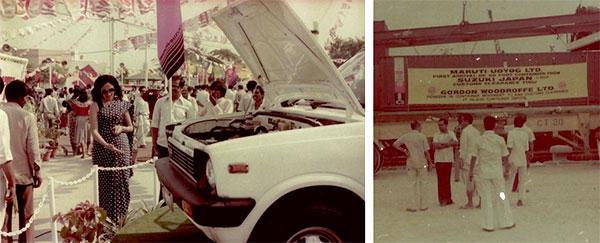
The company cannot wish its history away, however much the parent wishes to, for its own myopic reasons. ‘Maruti’ is Sanjay Gandhi’s concept and that needs to be recognised. His original office in the Gurugram plant was converted into a ‘Tool Room’. As if that was not disrespectful enough, it was unceremoniously razed to the ground in 2002, in spite of a few protests. Insiders say that in 1983, there were five working prototypes built by Sanjay Gandhi and his team of rag-tag engineers kept in one corner of the plant. There were ‘orders’ from way above to destroy them. Thankfully, one was whisked out and is in a closely guarded private collection. Basically, everything to do with Sanjay Gandhi was to be removed or destroyed.
This is such a contrast to a brand like VW that does not run away from the fact that Adolf Hitler sponsored the idea and encouraged Dr Ferdinand Porsche to build what is popularly called the Beetle. At the Autostadt in Wolfsburg, there is a bust of Major Ivan Hirst, the British army man who revived VW after the war. There is no shame in admitting to the chequered history any memorable has had. Frankness and candour are virtues for any brand, more so a market leader. Running away from it is sad cowardice.
A brand like Maruti is much more than Arena and Nexa dealerships, a robust service network and a digitised buying process. It cannot be constricted to mere products, which may come and go depending on their own brand lifecycles. It is a pillar of India’s story of slow but sure evolution from an under-developed to the world’s fastest growing economy. It stands for all that is good and not so good about India.
The good is the ambition to be truly world-class. The good is to openly accept and incorporate a foreign management system and make it one’s own. The good is to establish the concept of customer satisfaction as the cornerstone of any business. The good is to demonstrate that a ‘sarkari’ [governmental] setup could be efficient, effective and profitable. The good is to help the consumer mature to a level where no brand, however global in repute, can take one for granted. The good is to make mobility affordable to millions of the emerging middle-class.
The not-so-good is to be introverted about its rich legacy and accept the controversial with the laudable. The not-so-good is to not impress upon its parent that it needs both recognition and representation at the global level. The not-so-good is to be defensive about the quality of its people and see them being rightfully treated as global equals vis-à-vis its Japanese counterparts. The not-so-good is to stay away from causes of national importance that look forward to a stand taken by an icon. The not-so-good is to stonewall progress on issues of safety standards and emission norms using its clout to protect its own turf.
Guess that is what truly memorable brands are made of… the good and the not-so-good. Being proud of one’s legacy and milestones is a mark of maturity of a market leader. Being the 40th anniversary, one would have expected major celebrations by the brand in the form of special editions, on-ground initiatives and customer advocacy programmes. And of course, if not a brand museum, at least a coffee table collector’s edition containing the huge repository of photographs and documents that the company and its alumni have. Given that nothing of this has happened and the day has just passed by, the onus lies on us alumni to take the initiative and do things to commemorate this milestone of one of India’s most loved brands ever!