
Author: mxmadmin

  • Gauri Khan & Manish Malhotra to style for Bonito Designs

    By Our Staff


    Bonito Designs, the interior design company, has launched a campaign that will redefine the concept of personalised home aesthetics. Customers will have the chance to play an active role in the design process by choosing their preferred aesthetic from a selection of designs of Gauri Khan and Manish Malhotra for Bonito Designs.


    Said Amit Parsuramka, CEO – Bonito Designs: “As the CEO of Bonito Designs, it is indeed a great moment for me and the entire team to witness the launch of our groundbreaking interior design face-off campaign featuring the dynamic duo, Gauri Khan and Manish Malhotra. This collaboration symbolizes Bonito Designs’ unwavering commitment to offering our clients not just spaces but experiences that transcend the ordinary. Gauri and Manish bring unparalleled creativity and sophistication to the table, aligning perfectly with our vision of creating homes that tell unique stories.”


    Speaking on the launch of this campaign, Rishi Sharma – CMO, Bonito Designs said: “The convergence of two creative powerhouses, Gauri Khan and Manish Malhotra, in our latest campaign, is truly something to watch out for. This unique collaboration marks a pivotal moment for Bonito Designs, emphasizing our commitment to innovation and personalized design experiences. Gauri and Manish bring not just their renowned expertise but also a shared passion for redefining interior aesthetics. The unique design face-off not only empowers our customers to choose their preferred style but also reinforces our brand ethos of making luxury accessible. This campaign echoes our relentless pursuit of pushing boundaries and delivering exceptional design solutions. We are proud to be at the forefront of this creative journey, offering our customers an unparalleled experience in transforming their homes into bespoke living spaces.”


  • Godrej Capital launches digital campaign

    By Our Staff


    Godrej Capital, the financial services arm of Godrej Group, has launched a new digital campaign #GrowthKiUdaan with a Digital Video Commercial (DVC) to introduce its enhanced flagship platform Godrej Capital Nirmaan.


    Said Nalin Jain, Chief Marketing Officer, Godrej Capital: “I am convinced of the expanse of support a platform like Godrej Capital Nirmaan can offer to MSMEs across India. Our digital marketing campaign comes with simple and straight messaging – get onboarded on the Nirmaan flight so you can take off on #GrowthkiUdaan. Leveraging digital marketing is the conscious and optimal approach to engaging with our valued customers, considering the prevailing digital landscape. By tailoring our communication to specific target audiences, we are utilizing diverse digital channels including email, social media, web, and mobile, with the integration of BTL activations, to enhance our comprehensive digital content strategy, infuse our messaging with a personalized touch, and facilitate more direct customer connections.”


  • Shalimar Paints launches new campaign

    By Our Staff


    Shalimar Paints is all set to launch a new campaign tilted “Upgrade kiya kya”.


    Talking about it, Kuldip Raina, Director-Sales and Marketing, Shalimar Paints said: “In today’s fast-paced world, the fervour for upgrades extends beyond material possessions. Whether it’s the latest gadgets, self-improvement endeavours, or personal growth, the pursuit of upgrades has become a symbol of progress in our consumer’s lives; but often, they forget to upgrade their homes and specifically home painting. With our thought-provoking initiative “Upgrade Kiya Kya”, we challenge the mindset of our consumers to upgrade their homes with Hero 5 in 1 paint that delivers an exceptional product quality and features at an unbelievable price. It is an ultimate choice for discerning homeowners looking for a feature loaded product in budget friendly prices. All the products are based on consumer research taking care of their unsaid needs.”


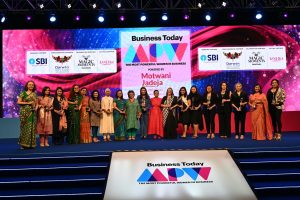
  • Business Today holds Most Powerful Women in Business awards for 2023

    By A Correspondent


    Prabha Narasimhan, MD & CEO, Colgate-Palmolive India, Arundhati Bhattacharya, Chairperson & CEO, Salesforce India, Falguni Nayar, Founder & CEO, Nykaa, Nandini Piramal, Chairperson, Piramal Pharma Ltd, Vibha Padalkar, MD & CEO, HDFC Life Insurance, and Zoya Akhtar, Director & Co-Founder, Tiger Baby, were among the women achievers awarded by Securities & Exchange Board of India (SEBI) Chairperson Madhabi Puri Buch at the 20th edition of Business Today’s Most Powerful Women in Business event in Mumbai on Friday.


    Six women, who are seven-time winners entered Business Today’s MPW Hall of Fame, making way for new entrants to come in next year. The list of achievers has seven debutantes, four comebacks, and 40 repeat winners from last year. This year’s list also has five global winners – Indians who have made the country proud with their achievements on the world stage.


    A special issue of Business Today magazine was unveiled  at the event. Speaking on the occasion, Buch, the first woman chairperson of SEBI, said simply parachuting someone at the top and doing nothing at the bottom will not to work for India. “Don’t do tokenism by putting more women on the board. Let’s see the disclosure on what percentage of your manpower cost goes to women. It will take care of everything,” she said about Indian organisations.


    While delivering the vote of thanks, Kalli Purie, Vice-Chairperson, India Today Group, said: “The rise of women power is not just in urban centres and in gatherings such as this, but it has percolated down to rural areas. To me, this churn is the most exciting and interesting that these women are independent, fierce and ambitious. I am really excited at the juncture of history we are in at the moment. What better place to discuss this than at the 20th edition of Business Today’s Most Powerful Women in Business list which honours 56 leaders from across so many fields.”


    The evening started with a panel discussion titled ‘A View From The Corner Office’ comprising Ameera Shah, MD, Metropolis Healthcare, Upasana Taku, Co-Founder & COO, MobiKwik, Vinati Saraf Mutreja, MD & CEO, Vinati Organics Ltd, Prabha Narasimhan, MD & CEO, Colgate Palmolive India, and Devita Saraf, Chairperson & CEO, Vu Group. They discussed the challenges and opportunities for women in the world of work.


    It continued with  discussions with Ashima Goyal, Member, RBI’s Monetary Policy Committee, Padmaja Chunduru, MD & CEO, National Securities Depository Ltd, Rekha M. Menon, Former Chairperson & Senior Managing Director, Accenture in India, Arundhati Bhattacharya, Chairperson & CEO, Salesforce India, Zia Mody, Co–Founder & Managing Partner, AZB & Partners and Kalpana Morparia, Former Chairman, J. P. Morgan, South and Southeast Asia, and other senior business leaders. Nandini Piramal, Chairperson, Piramal Pharma, spoke on ‘Journey Through Leadership & Innovation’, and Zoya Akhtar, filmmaker & co-founder, Tiger Baby, spoke on ‘Creativity Through The Female Lens’.


  • How and why defence personnel families have different consumer behaviour traits


    With apologies to none at all

    By Vikas Mehta


    Vikas MehtaI shall be soon completing 10 years, living in the small, yet cosmopolitan and progressive, yet steeped in tradition and eclectic, and yet distinct city of Dehradun. And while the transition and experience has been both interesting and challenging, I am amazed at how I keep on discovering new facets of not just culture and tradition but also consumer behaviour. In this column, I will try and touch on a few of these points.


    Dehradun was always known as the city of retired people. Slow, sedentary lifestyle. Nature at every step and the ability to lose oneself in its myriad seasons. Institutions like ONGC, FRI, Geological Survey of India are steeped in history and even folklore. And many of its employees, hailing from all parts of India, settled down in the city, post retirement. Indeed, such was the case with my father too.


    But Dehradun is better known for its retired population of defence people. From Lt Generals to Brigadiers to Majors and to Captains. It’s not just the army people but even the other wings. As an aside, do you know that Dehradun also has a naval office? The Indian Naval Hydrographic Department.


    But I am digressing. It’s not just the retired defence people who stay in Doon. There is also a decent population of currently serving defence personnel whose families live in Doon. With frequent transfers, posting to non-family stations, most families prefer settling down at one place, mostly because of children’s education. And Doon with its plethora of schools, proximity to border areas, bustling cantonment life, and medical hospital for defence people is an ideal place.


    During my morning walks I would come across retired defence people. Mostly they would stand out because of the typical stick, not walking stick, but the small stick of a commanding officer that one would see in many Hindi films, and their gait and posture. I would interact a bit and over a period of time got to know a few of them and their families including some serving ones. I am not professing to be an expert on defence people as consumers but I encountered some interesting behaviour and insights which I would like to share.


    Living in cantonment areas in small towns and sometimes in far flung places is a unique experience. One is living in a secluded township which has its own rules. The life is steeped in discipline and protocols. And this includes the lives of families too. Seniority matters in family relationships too. There are formal and informal occasions with dressing according to the occasion. Life is regimented and strictly routine. And almost all purchase happens from the canteen stores.


    I am sure most of us have heard of how defence personnel and their families get groceries etc at discounted rates at canteen stores. Today, it’s not just groceries but almost anything that a household wishes to buy, is available at canteen stores. Not just durables like ACs or refrigerators but also two-wheelers and four-wheelers. At subsidised rates. A defence person can buy a car at a subsidised rate every 8 years and a two-wheeler every four years.


    For a brand it therefore becomes imperative that they register to sell through canteen store department and in some categories like fans a brand could have almost 10% of its total annual sale coming through canteen stores department (CSD). Even premium brands like BMW and Audi sell through CSD. And it was news when Kia was made available through CSD earlier this year. I also gathered that defence people get a 50% discount on GST to be paid on vehicles. Though some capping on the above is in place now.


    If you now look at it from the viewpoint of serving and retired defence personnel, CSD is an important part of their life. Except for a few perishables like milk or bread, almost everything they buy is through CSD. And the distance from a CSD is an important consideration when they are settling down or renting property in a place. Indeed, when the defence person comes home on leave from his posting a visit to CSD for a major purchase or a big ticket item purchase is always on the agenda. Their visit to a local grocery store or an electronic store is very limited. Even elements like servicing or repair are handled through CSD. And CSD has kept pace with time. If something is not available at the nearest CSD, one can order it through the online site of CSD, for delivery.


    Therefore, if an FMCG brand or a durable or an electronic brand is not present at a CSD, it is not in the consideration mindset of most defence people. They have not seen it. They have not discussed it. They have not felt the need to know about it. This hurts new brands and new categories more. They may be exposed to something new through some media but the familiarity and interest comes through CSD, offline or online. The bottomline is that a brand, to make a difference in the life of a defence person must be a part of CSD.


    And this is more important when these families are placed in remote areas. Their exposure is limited to CSD only. This has a ramification for brands. Because, later on in life when these people move on to bigger cities the perception and awareness that has been built in their minds about brands persist. CSD therefore has created impressions and perceptions which can last for life.


    Sometimes, this also leads to family conflicts. The younger generation which is more technology oriented is more aware and knowledgeable about brands, their benefits, their cool quotient etc. So, they try to look beyond the CSD brands or their impressions for personal use. The parents are at odds with such thoughts. They cannot reconcile to the same. Also, the discounts that CSD offers goes a long way in their decision making.


    Moving beyond CSD, defence personnel face a dilemma and social unease when they get back into society. The career path of a defence person is shorter than the civilians. Most at the level of Major or Colonel retire between 50-54 years. For most of their life they have lived a regimented, disciplined and structured life. They are taught working in a team. They live unselfishly. Sacrifice of personal needs and comfort is part of their upbringing. And yet, when they get back into general society they see indiscipline. They encounter selfishness. They are not trained to do anything else. They try alternate career and find it difficult to fit.


    To make matters worse, families face different problems in amalgamation. With an unregimented society they find issues of adjustment. Their time discipline and selflessness goes unappreciated. And children find themselves woefully inadequate in terms of new type of hobbies or sports. One of them asked my daughter what was Sushi when she said she had it for dinner. Examples of this kind create a divide amongst children and gives an inferiority complex to the defence force children.


    These adjustment issues sometimes force defence people to live in their own enclaves. That in turn makes the “civilians” a bit more wary of the defence types. It’s a lose lose situation for both as the defence people dig their heels in and refuse to accept the reality of the bigger world and the civilian see them as snobbish and entitled (CSD adds to it).


    Surprisingly, it’s the children  who finally integrate better. They go to schools and education institutes where they rub shoulders with all types and they learn to adjust. But this also means that they compromise on their “defence values” like discipline or regimented life. Within the family the clash of generation ensues. The children are quickly enticed by the lure of new products, new services and consumption. They look at their parent’s choice of career vs their new found friends parents and the grass seems greener on the other side. And that’s one of the reasons that unlike in the past, many defence children no longer want to pursue defence as a career option.


    It’s such simple observations that have ensured that I still keep learning new things. Here is to the next ten years of learning in this quaint little town called Doon.


  • Ogilvy India wins Global Grand Effie for Cadbury

    By Our Staff


    The Global Best of the Best Awards 2023 has announced Ogilvy India (with Wavemaker India) as the winner of the Global Grand Effie in Experiential Marketing for Cadbury Celebrations – Shah Rukh Khan My ad. After bagging the coveted Cannes Titanium last year and an Effie APAC this year, Ogilvy India has now added the Global Grand Effie to its roster of awards for for the Shah Rukh Khan My Ad campaign.


    The Global Best of the Best Effie Awards crown the most effective campaigns from all the Grand and Gold Effie winners across the globe in the fray.


    Said Ganapathy Balagopalan, Deputy Chief Strategy Officer, Ogilvy India: “Christmas has arrived early for Ogilvy India, and we are delighted. It’s taken a village to pull this campaign off and we are happy it has made the impact and difference we hoped for.”


    Links to campaign:

    Case Study: https://www.youtube.com/watch?v=_Swn7OF8bvQ

    Creative Ad: https://www.youtube.com/watch?v=bSfP74mqk_E

    Ogilvy Campaign Page link: https://www.ogilvy.com/work/shah-rukh-khan-my-ad


  • Interactive Avenues releases report of ICC Men’s World Cup ’23

    By Our Staff


    Interactive Avenues, a leading full-service digital agency and the digital arm of IPG Mediabrands India, has released ‘Smashing Records, Winning Hearts: A Social Listening Report on #CWC23’, which delves into the digital conversation landscape surrounding the historic tournament of The ICC Men’s Cricket World Cup 2023.


    The report, based on extensive data gathered from social platforms such as Twitter, Reddit, and popular cricket forums, reveals unique insights on player popularity, most appreciated performances, most talked about matches, biggest moments, top brand partnerships and more.


    Commenting on the report, Shantanu Sirohi, COO, Interactive Avenues, said: “The unprecedented scale of social media buzz sparked by this year’s Cricket World Cup has been remarkable. Using innovative tools and techniques, our Social team analysed millions of online conversations to unearth valuable metrics around player influence, match fever, emerging talent, brand engagement, audience sentiments etc. The report validates the surging power of social media in shaping the narrative of sports across the globe.”


  • Lee onboards Sara Ali Khan as brand ambassador

    By Our Staff


    Denim brand Lee has onboarded Sara Ali Khan as its brand ambassador. It has also launched a new brand campaign titled ‘Lee: Home of the Real Denim’ that aims to enhance Lee’s reputation as the preferred denim brand for younger audiences.


    Commenting on the campaign, Nitin Chhabra, CEO, Ace Turtle, tech-native retail company, said: “We are delighted to have Sara Ali Khan as the brand ambassador of Lee in India. Sara embodies the spirit of Lee with her authenticity and flair. Lee’s legacy extends to over a century combining the heritage of denim with the contemporary ethos of embracing one’s true self. We are confident that the campaign will help to build on Lee’s brand equity and help us drive more customers to our retail stores and online channels. We aim to significantly grow Lee’s business in India by the end of the current fiscal year.”


  • Pidilite’s Roff partners with Pro Kabaddi League 2023

    By Our Staff


    Roff, a tile adhesive brand from Pidilite Industries, has partnered with the Pro Kabaddi League 2023.


    Said Manish Dubey, Chief Marketing Officer, Pidilite: “We’re excited about Roff’s partnership with the Pro Kabaddi League (PKL) 2023 as we find a strong brand connection with PKL. The core brand promise of strong grip (that Roff has on tiles to walls) very well resonates in the game of Kabaddi. This connection made PKL very attractive for us.”


  • Angel One gets Adfactors for its PR

    By Our Staff


    Fintech player Angel One has appointed Adfactors PR as its strategic public relations partner.


    Commenting on the partnership, Prabhakar Tiwari, Chief Growth Officer of Angel One, said: “In the ever-changing business world, we know that effective communication is key to maintaining our market leadership perception. We are working with Adfactors PR, a renowned PR agency with deep knowledge of the fintech sector, to help us skillfully communicate our growing portfolio and future vision, and set new industry standards. We are excited to work together to create narratives that align with our goals and help us communicate our position as a fintech market leader.”


    Added Arwa Husain, Director, Financial Services, at Adfactors Public Relations: “We are excited to partner with Angel One and contribute to their growth journey. Angel One has established itself as a leader in the fintech space, and we look forward to supporting Angel One strengthen their brand presence and connect with their target audience through enhancing reputation and delivering strategic, integrated communications programmes.”


  • On ChatGPT’s first anniv, rejoice?


    By Tim Gorichanaz


    ChatGPT was launched on Nov. 30, 2022, ushering in what many have called artificial intelligence’s breakout year. Within days of its release, ChatGPT went viral. Screenshots of conversations snowballed across social media, and the use of ChatGPT skyrocketed to an extent that seems to have surprised even its maker, OpenAI. By January, ChatGPT was seeing 13 million unique visitors each day, setting a record for the fastest-growing user base of a consumer application.


    Throughout this breakout year, ChatGPT has revealed the power of a good interface and the perils of hype, and it has sown the seeds of a new set of human behaviors. As a researcher who studies technology and human information behaviour, I find that ChatGPT’s influence in society comes as much from how people view and use it as the technology itself.


    Generative AI systems like ChatGPT are becoming pervasive. Since ChatGPT’s release, some mention of AI has seemed obligatory in presentations, conversations and articles. Today, OpenAI claims 100 million people use ChatGPT every week.


    Besides people interacting with ChatGPT at home, employees at all levels up to the C-suite in businesses are using the AI chatbot. In tech, generative AI is being called the biggest platform since the iPhone, which debuted in 2007. All the major players are making AI bets, and venture funding in AI startups is booming.


    Along the way, ChatGPT has raised numerous concerns, such as its implications for disinformation, fraud, intellectual property issues and discrimination. In my world of higher education, much of the discussion has surrounded cheating, which has become a focus of my own research this year.


    Lessons from ChatGPT’s first year

    The success of ChatGPT speaks foremost to the power of a good interface. AI has already been part of countless everyday products for well over a decade, from Spotify and Netflix to Facebook and Google Maps. The first version of GPT, the AI model that powers ChatGPT, dates back to 2018. And even OpenAI’s other products, such as DALL-E, did not make the waves that ChatGPT did immediately upon its release. It was the chat-based interface that set off AI’s breakout year.


    There is something uniquely beguiling about chat. Humans are endowed with language, and conversation is a primary way people interact with each other and infer intelligence. A chat-based interface is a natural mode for interaction and a way for people to experience the “intelligence” of an AI system. The phenomenal success of ChatGPT shows again that user interfaces drive widespread adoption of technology, from the Macintosh to web browsers and the iPhone. Design makes the difference.


    At the same time, one of the technology’s principal strengths – generating convincing language – makes it well suited for producing false or misleading information. ChatGPT and other generative AI systems make it easier for criminals and propagandists to prey on human vulnerabilities. The potential of the technology to boost fraud and misinformation is one of the key rationales for regulating AI.


    Amid the real promises and perils of generative AI, the technology has also provided another case study in the power of hype. This year has brought no shortage of articles on how AI is going to transform every aspect of society and how the proliferation of the technology is inevitable.


    ChatGPT is not the first technology to be hyped as “the next big thing,” but it is perhaps unique in simultaneously being hyped as an existential risk. Numerous tech titans and even some AI researchers have warned about the risk of superintelligent AI systems emerging and wiping out humanity, though I believe that these fears are far-fetched.


    The media environment favors hype, and the current venture funding climate further fuels AI hype in particular. Playing to people’s hopes and fears is a recipe for anxiety with none of the ingredients for wise decision making.


    What the future may hold

    The AI floodgates opened in 2023, but the next year may bring a slowdown. AI development is likely to meet technical limitations and encounter infrastructural hurdles such as chip manufacturing and server capacity. Simultaneously, AI regulation is likely to be on the way.


    This slowdown should give space for norms in human behavior to form, both in terms of etiquette, as in when and where using ChatGPT is socially acceptable, and effectiveness, like when and where ChatGPT is most useful.


    ChatGPT and other generative AI systems will settle into people’s workflows, allowing workers to accomplish some tasks faster and with fewer errors. In the same way that people learned “to google” for information, humans will need to learn new practices for working with generative AI tools.


    But the outlook for 2024 isn’t completely rosy. It is shaping up to be a historic year for elections around the world, and AI-generated content will almost certainly be used to influence public opinion and stoke division. Meta may have banned the use of generative AI in political advertising, but this isn’t likely to stop ChatGPT and similar tools from being used to create and spread false or misleading content.


    Political misinformation spread across social media in 2016 as well as in 2020, and it is virtually certain that generative AI will be used to continue those efforts in 2024. Even outside social media, conversations with ChatGPT and similar products can be sources of misinformation on their own.


    As a result, another lesson that everyone – users of ChatGPT or not – will have to learn in the blockbuster technology’s second year is to be vigilant when it comes to digital media of all kinds.The Conversation


    Tim Gorichanaz is Assistant Teaching Professor of Information Science, Drexel University. This article is republished from The Conversation under a Creative Commons license. Read the original article.
     

  • Games24x7 refreshes brand identity

    By Our Staff


    Games24x7, the online skill gaming company, has unveiled its new brand identity, marking a milestone in the company’s 17-year journey.


    At the unveiling of the new brand identity, Bhavin Pandya, Co-founder and Co-CEO, Games24x7 said: “At Games24x7, our path has been shaped by an unwavering dedication to a scientific mindset, our focus on user-centricity, and our incredible teams that wholeheartedly embrace this scientific approach. Our fresh brand identity goes beyond mere visual change; it stands as a reflection of our profound enthusiasm for these core principles and the continuous advancement within the online gaming sector. The rejuvenated brand identity underscores our technological expertise and commitment to harnessing cutting-edge technologies like AI/ML to create hyper-personalized gaming experiences to entertain our users.”