Tag: facebook

  • Salt Brand Solutions hosts Facebook Live Pitch

    By A Correspondent


    You can call it the next frontier: Salt Brand Solutions responded to Nearbuy’s call for a creative pitch by presenting also on Facebook Live. The reason Salt chose to do so was because it believes the current processes are rational and flawed, notes a communique.


    Commenting on this, Mahesh Chauhan, founder, Salt Brand Solutions, said, “It’s exciting to see a young business leader breaking free of the conventional way of doing things. Ankur’s vision and passion to change the game clearly stand out and Salt would love to partner with him & brand Nearbuy. More importantly, he sparked a pertinent conversation about the way pitches themselves are conducted today. Besides demonstrating our way of thinking, taking our pitch live was a small first step towards making the pitch process more relevant in today’s times”. Further he said, “Pitch fee debate is more about the symptom than the disease. The best work is produced by agency-client individual partnerships and that should form the crux of the process going forward. So chemistry between two cultures should be the focal point and not just strategy and creative.”

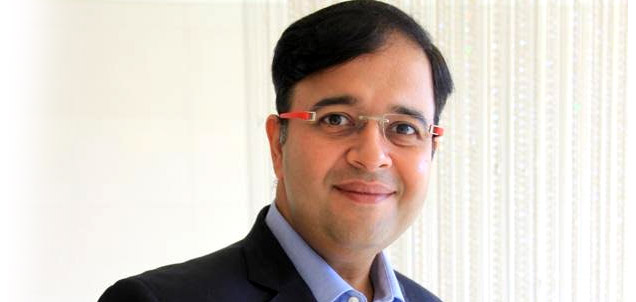
  • The MxM Interview: Umang Bedi, MD – India & S Asia, Facebook


    It’s been around six months that UmangBedi joined Facebook India and South Asia as Managing Director. While the world’s largest social networking platform doesn’t need any introduction, it’s not being embraced in right earnest in India by advertisers. And that’s the mandate Bedi has as he interfaces aggressively with the A&M fraternity. In Mumbai last week for some client meets, UmangBedi took time for this first extensive video and text interview with Pradyuman Maheshwari (Video production by Santosh Jangid)


    Six months into the job. How has it been going?

    It’s been fantastic. It’s been probably the  best decision of my life joining Facebook and the last six months have been really categorised and focused on doing three things — the first is meeting our teams, literally every single employee within the India business, our entire team in Asia Pacific and our leaders in Menlo Park, getting a good idea of the business and meeting our Top 200 clients and our Top 20 agency partners. So that’s been on a big focus. The second big focus has really been pivoting on growth and literally focused on the fact that Facebook moves business outcomes for the biggest brands whether it’s helping them move their brand efficiencies or having them drive sales both in the online world and driving sales in the offline world. We are moving product off-shelves and that’s been a big narrative in the boardroom trying to really talk to CXOs and how we could help them move business metrics that matter. The third big focus area has been on building the ecosystem. When I say ecosystem it’s really focusing on the foundation for Facebook on our creative strategy, on our measurement strategy, on our agency partner strategy and our creative agency strategy which we think is going to be the fundamental pivot for growth going forward. So all and all, phenomenonal six months, really enjoyed the pace of it, been on an airplane most of the time but we have seen outstanding outcomes in the business as well. We have seen both growth on the user side and despite demonetisation we have seen healthy growth on the business because we have been able to pivot ourselves on being world class efficient marketing platform ad driving value for advertisers.


    And we thought that Facebook was a networking platform, right?  You’re obviously making money on us.

    Well, I don’t know if I’d frame it that way but I think of Facebook as a discovery platform and I think it’s a platform that helps harness human attention and goes back to the philosophy of the company of giving people the power to share which is our mission and help make the world more open and connected. So it’s that platform which helps consumers discover content that is relevant, personalised and meaningful for them and give them the power to share and that’s how we think about Facebook. What drives it is we firmly believe that we wanna help the world get more open and connected. So drive more user growth on the platform and as on today we are 1.9 billion people on Facebook.


    And the second largest number of people from India…

    Yes, second largest number of people from India. More than 166 million MAUs or monthly active users and as we grow, what we are very focused on is driving engagement and we measure that by the amount of time an individual spends on the platform and the amount of content that he/she consumes.


    As somebody who meets a lot of people, one of the worries is that people spend all of the time on Facebook.

    Well, I don’t know if I would say that but what we are seeing is we have got a fair amount of penetration both on the user growth side. We are seeing that index forward, we are seeing timespent engagement index as well and when you have a large target audience who is engaged then its about connecting businesses to the people that matter and that’s the strategy.


    You know it all sounds very good but actually it’s very scary because if I am on Facebook, you obviously know my profile and the kind of people I interact with. So you’ve actually got me covered and scanned and tracked through. You know what I do, you know what time I get up, you know what kind of people I interact with. So you have me covered inside out?

    We take user privacy very seriously. So one thing you will find even in our ad policies is, for instance I would allow an ad for a builder, you’re into real estate and you’re selling a flat on Facebook and it’s true. Today Tata Homes sold 250 homes in a single day on Facebook and that happens but we wouldn’t allow you to target an ad to me that says, ‘Hey Umang you’re a Facebook employee so here’s 15% off’ because that would scare me because you just used personally identifiable information to give me an offer and that’s something we are very careful about. I was speaking at a client meeting today and they said, ‘Hey LinkedInallowed me to target CHROs or directors of product management and you have all my information. Why don’t you allow me to do that?’ and I think the answer for us and the answer I gave is the same thing I’m reeling now is we do not allow personally identifiable information


    I thought the entire thing of tracking makes Facebook so powerful. You can actually figure that you want to target your ads through people who are from a certain college or a certain school or from a certain city or live in a certain area.

    So you’re right, targeting is what makes personalisation really powerful on Facebook but it’s targeting to non personally identifiable variable. For instance, I would allow you to target, you wanna reach men between the age of 18 to 25 in a sub-section of Bombay in a certain area who has a device which is running 4G, that’s the level of targeting you would do. You would not go down to say black hair or brown hair or something which is very personal….


    But there is a very thin dividing line between personalisation and privacy

    Not really, because today if you look at the controls that we have given into the hands of the users, the users can decide what they want to be visible on their profile literally to down to the most ground level. So today I can share on Facebook and not share with anyone, it would just be with me. It goes down to that level. So, one is we have given control, two is we are being very careful. Our ad farm policy or our policy around blocking stuff that is using personally identifiable information is very strict… It’s built on trust and that’s the testimony to how we are building the business.


    Over the last few months, we’ve heard you speak a fair bit of the advertising options that Facebook offers and you’ve all been meeting various stakeholders, clients and agencies. Infant you’ve partnered with WPP for something and you’ve partnered with Nielsen and Millward brown. So talk to us about what you’ve been doing engaging the industry?

    Awesome, so that’s the most fun part about my job. So here’s what happening in the market….


    Fun and tough or fun and easy?

    Fun and fun. Fun and really engaging, really amazing, ill tell you why. When you think about let’s say the CPG[consumer packaged goods] segment. The CPG segment [marketers] are masters at brand advertising and they’ve always gone out and done stuff to increase brand awareness, recall, consideration whereas if you look at the commerce segment [marketers] for instance, they are very indexed on perform driven marketing but what we are seeing is lines between brand and performance are blurring. So the marketing funnel from awareness consideration down to purchase is actually collapsing. We are working on what we also know as the full funnel of solutions. It starts for us with creative, great marketing starts with great creative and we have indexed to set up something which is known as Facebook creative shops, these are creative strategies that we have hired who all have won Cannes Lions who really help creative agencies and our partners understand how do you build new feel friendly, mobile thumb stopping creative.


    And this creative service is available for people in India? 

    Yeah, in India. It’s located at this office where we are sitting.


    Could you name some of the people?

    We have JuhiKalia, we have Dan Coben, we have Parul Arora, we’ve got a whole bunch of really strong creative partners who joined us and they are a part of Facebook. Fergus O’Hare who has been fantastic in this business and they really lean on creating the right creative strategy. The second piece once we do that is measurement and on the measurement side we’ve partnered with Millward brown, we’ve partnered with Nielsen and our and are driving some amazing outcomes. So when you think about the kind of outcomes we are driving, there are audience outcomes, there are brand lift outcomes and sales lift outcomes. On the audience side, what we have found is on an average when we are using a region frequency to reach out our target, we are giving a five-point incremental lift over television at a cost which is 1/7th that of TV. On the brand side, we have found that today when we are targeting brand consideration or brand motivation or purchase intent lift, we are today 1/3rd the cost of TV and half the cost of any other competing video platforms and the most exciting part about this is how we are driving sales outcomes and these are measured by cross media studies with milliard brown and match market test from Nielsen. I will give you an example, Garnier went and launched and did Facebook-only media in a high penetration cluster and a low penetration cluster city and we got a 26% and 19% sales rift respectively. Durex did this advertising campaign with us which helped drive a 29% increase in sales during the period of campaign resulting in 9% increase over the year and this is moving product off shelf. Tanishq went and did advertising beautiful, creative and absolutely stunning giving you a code making users walk into stores and then drive a 30% sales and all these examples are brick and mortar examples. The ones that we do seamlessly are because there is an integration of Facebook Pixel is what we do with amazon or e-commerce companies like Flipkart, Snapdeal and OLA cabs because there is conversion happening in the online world.


    In the kind of clients you have, do you find any specific category or specific domain which has greater affinity to Facebook or is it across various segments?

    I think it started off by being very heavy on e-commerce because it was a natural fit. They are digital natives, we are a digital platform, they want to drive performance and conversion, we offer them real people with real identities so that was a beautiful match. What we’ve found over the last few years is that there is spectrum across all verticals that are leaning in very well. So today if you look at the largest brands across CPG, telecom, you’ve been offered a Jiosim and an Airtel pack and a Vodafone depending on your profile, we work with automobiles in a big way, travel and almost every segment.


    But still the amount spent in the digital media by the likes of a Hindustan Unileveretc is not significant enough. Right now it would possibly be single digit at most and inspiteof the fact that you are offering targeted stuff and fairly granular data of your possible target audience. Why is it that you think people are not putting their bucks on this media?

    It’s a very interesting question so when you think about time spent v/s amount spent on media there is a dichotomy. So the least time spent is on print whereas print is 30% of the AdEx. Between print and television you’ve got 86% of the AdEx. Today the AdEx is 7 billion dollars about 14-15% is digital, 85% is between television and print. What we are seeing happening over the next four years and this is predicted by e-marketers, by GroupM report or any other report that you read, digital is going to be 40% of the spends, all spent in India. Today the market is 7 billion, by the next three to four years it will be about 9-9.5 billion which means that the digital part of the pie is going to be 3.5-4 billion dollars which means there is a 2.5 billion dollars of shift that’s gonna happen in the market. Now, you’re right. A traditional advertiser spends single digit on digital today but there are industries that have indexed as high as 35%-40% in e-commerce where they are very very driven around digital being the only play for them or a large play for them.


    I was speaking to a very large BFSI advertiser recently and he said that possibly in his lifetime and mine, it’s unlikely that digital will exceed television. Do you think that this is something based people not really aware of how things are going or is it possibly the fact of life? 

    I think it’s where you are looking at the problem from. When you think about it, I would not agree with that statement and I’ll tell you why. Would you believe me if I told you ten years ago that a billion people in India would have a cellphone when you and I dialled using an analogue instrument? Just ten years ago that’s the landline we both had at our homes. We had a conversation 10 years ago saying that every Indian would have a cellphone with not even a wire connected to it, we wouldn’t have believed each other. I think it’s a little bit of that. In the West, what we’ve found last year in Australia which is the first market where mobile advertising pipped television and this year it’s going to be higher by 20 points. So my firm belief is that digital will increase whether its 30 or 40% is a prediction. Will it currently increase from the 15%? It will and there are two reasons for that — one is growth in the platform. Today, if I look at television there are 180 million television sets in the country, you look at the reach of any GEC its about 110 million. The moment you have half a billion people on digital which is gonna happen soon so we have 300 million people connected to the internet in India. Nasscom predicts that it’s going to be 720 million in 2010. Essentially, even if you say we have half a billion Indians connected and if that’s where they are spending a majority of  their time, the shift is inevitable and we see that shift happening sooner than later and it’s happening as we speak. So when we are working with advertisers one of the things we are working on with them to say is when you television alone your efficiency is X  but when you do television + Facebook your efficiency is at least 15% higher because what happens is even in television there is some amount of wastage whereas we could just remove the wastage part of the dollars onto the Facebook + TV narrative we’ve been talking to advertisers on and see a 15% uplift in terms of any campaign KPI that they are tracking.


    Let me ask you a slightly unfair question and you don’t need to answer that if necessary. There is a fear that the likes of Facebook and google, etc are going to eliminate the advertising agency as an intermediary. You already mentioned that you hired creative guys here. Do you feel that the advertising fraternity in India is not really pushing your case that much because they possibly think that you ay eliminate them soon?

    On the contrary, I think my #1 bet on my go to market in India is working with our agency partners whether you meet with our friends in GroupM or Dan or Publicis or Omnicom, they are integral and critical to our success. From our perspective the agencies are an interesting….


    They obviously know that soon enough the clients could speak to you directly

    So here’s the way I look at it. I think in India you have to build leverage scale models. There is no way that we have the workforce to go and cover the whole of India. It’s just not possible. If you look at Facebook globally as well with the number of people, agencies in India have twice as many number of people in the whole of Facebook. So I don’t think we ever have ambitions to go direct into every segment of the market. That’s not what we are.


    Some segments you will.

    No, we always work with agency partners. So we are very clear our creative is not an agency. We work with the creative agency to help built mobile first creatives. On the media side, when I look at how we are partnering with the agencies, we are doing three things which are fairly unique. The first one is they also understand that today their growth is going to be from all three mediums but the agencies are looking at media mix more than anything else today. It’s not just growth on television or print but they wanna see a healthier media mix come in to play and that’s where platforms like ours are critical to their growth. So we are working with them to embed our blueprint, training and certification program into their e-learning curriculum and that’s a big initiative. The second piece you referenced with the WPP, we are literally working all their creative strategists to just show them what are the best practices that we have learned on creating creative for being thumb stopping, mobile first creative that is thumb stopping which is very different from maybe what you see on television which is a far longer format whereas the attention span on mobile is a lot shorter and these are deep partnerships. So we literally spend two days with 90 professionals from WPP going through an entire course after which we gave them real client pitches and they came up with some outstanding outcomes because don’t forget, we are not creative professionals. The creative agencies are awesome at what they produce. The media agencies understand media mix, what we are doing is really showing them how we can participate with them to be mobile first and working with the agency partners is our number one priority.


    And they don’t have this worry that you could avenge them?

    I don’t think so and I don’t think anyone from our team at any point ever has this strategy. We will succeed with our partners.


    What is it that’s stopping people from embracing Facebook in the way it is. Obviously there are worries, people are not putting in the money as they should be. What according to you is the single biggest problem that exists right now?

    I think the single biggest problem for the industry in digital is really coming up with a standardised measurement narrative.


    And that you know will never happen.

    I think it will.


    I think industry associations have kind of failed. In television you have IBF, in print you have the INS and the IAMAI seems to have been hijacked by various pressure groups?

    I’ll stay from that comment on the industry association but what I would stay is, when I talk to marketers and I’ve literally spent a lot of time with them, when I talk to CEOs, there is an old saying  in IT that you will never be fired for buying an IBM, its one of those things. You will never be fired for doing an intelligent campaign because GRPs are a well-established standard. I will not go into the details of the fact that its sampled, etc. Having said that there has to be a uniform standardised measurement narrative and our belief is that as an industry there is a lot of jargon coming from the digital world. So let’s talk about jargon. So we first talk to your about cookies, we talk to you about clicks, we talk to you about CTRs, we talk to you about CPMs, CPMMs, CPAs. So we are confusing the hell out of you.


    You mentioned that you run a two-day course for people. I was speaking to somebody senior at GroupM who heads programmatic there one of the worries I figured that exists even I an agency like that is even that the talent that exists is not really educated [on tech]. Is that something that you are looking at educating the world about what Facebook can offer?

    Absolutely. I just want to complete my last point, I think what we need in that uniform measurement narrative is a narrative that’s not based on cookies but a narrative that’s based on real people. It’s a narrative that’s not based on CTR or CPM or a CPA. It’s really based on conversions and as a business leader you care about conversion, how many customers come. So let’s track conversion and you don’t care about what your CPM rate was whether it was high or low. You care about ROI on your business or return on you adspend. So let’s build a people based narrative that is focused on driving conversions for your business that is driving an ROI and a great ROS. That’s basic business if you talk to a CEO… he understands that language. That’s the narrative we need to get to.

    Coming to the point on education, we have just launched Blueprint. Facebook Blueprint is a 54-odd course module across various parts of digital advertising with mobile being at the centre of that experience and one instance of what we are doing is GroupM has a very very vigorous training process known as their internal digivisits. we are embedding our blueprint into their digivisits. Those are the kind of initiatives that we are doing with all their agencies, we are working with all our partners, running blueprint live workshops, blueprint trainings and ultimately working wth them to help get their team certified. Facbook.com/blueprint has these 54 modules and they are free for the entire world. We are literally making it open source and open standard as an industry so people can learn and adopt.


    What gives UmangBedi sleepless nights? I don’t see any dark circles but is there anything that worries you? 

    I sleep really well. I don’t sleep like a baby but I sleep well.


    Don’t spend too much time on Facebook, do you?

    I spend a lot of time on Facebook but we work on Facebook so Facebook at work or Facebook work place is literally how we communicate. We communicate in tribes and groups. So my email traffic has clearly fallen ever since I’ve joined because we just communicate on Facebook, on Messenger and groups in a big way but I think what worries me is the opportunity is so large today in the market that I don’t know if we are moving fast enough and I keep asking myself this question: is there more that we can do? As an industry to really move the needle forward, because I think every time you connect people to the internet every time you drive digital, you uplift a society. There is economic data from the world bank that proves the more people you bring online, you give them access to jobs, to healthcare, to financial services, to education, you add value to the GDP and as more and more business goes online as digital becomes a means to an end in the country transparency increases and we believe the businesses that want to reach brands we are that world class marketing platform that enables businesses to reach real identities. So are we moving fast enough towards that goal / mission is a question I ask myself.


    I must saythat although you’ve been just six months in the job and you come for a different setting, you’ve learnt the idiom of this business fairly well?

    Actually you could say both Facebook and Adobe are technology-driven companies.


    Yeah, you did interact with marketers considerably but this is more of nuts and bolts advertising, 

    speaking to GroupMs of the world and all of that.

    I think you just have to stay humble, keep your feet on the ground and learn from the best around you and Facebook has hired the best people, I’m privileged to work with the best people and learn from them. So, I think it’s a function of the team more than really I’ve really done I don’t think its that but I think I really love the industry. Best decision of my life…
     

  • Chevrolet launches digital campaign on Facebook

    By A Correspondent


    To welcome the New Year 2017, Chevrolet has partnered with Facebook to inspire its customers in finding new roads to further strengthen its customer relationship.


    Since many people quit their resolutions very early in the year, Chevrolet has identified five influencing achievers around the globe and chronicled their inspirational journey of achieving their New Year resolution. Additionally, the campaign will also incorporate Chevrolet Co Driver, the new messenger Bot technology, which further intimates the viewers to subscribe and share their new year resolution. The Co-Driver community is aimed at exchanging tailored GIFs and motivating memos to support each subscriber to accomplish their set resolutions.


    Commenting on the new digital campaign and partnering with Facebook,  Jack Uppal, VP Marketing & Customer Experience, Chevrolet India said, Our company motto appropriately defines Chevrolet’s brand statement, ‘Find New Roads’, it is all about exploring new opportunities and making every mile count. We strive to craft innovative concepts for our consumers, and offer new experiences that sustain our brand connect and enhance the overall customer experience and brand value amongst our target audience. Facebook is one of the largest social networking platforms which engage multiple users on a daily basis. With this partnership, Chevrolet envisages widespread customer outreach and further anticipates establishing a deeper brand connects with its customers.”


    In 2016, Chevrolet India conducted a variety of social media campaigns. With the advent of 2017, Chevrolet will attempt to shape a firm foundation between digital natives and the automotive industry. Chevrolet continues to build upon its commitment towards offering the best in class customer service by adopting diversified measures.


  • Going mobile-first via Facebook


    By Santosh Jangid


    Whether it’s banking on the go, catching up on news or flicking through friends’ holidays photos, mobile is the device that has people’s time and attention. It has transformed the way people around the world connect, share experiences and discover new things. Many of the first-time users of internet in India are coming via mobile phones.


    This presents a huge opportunity for brands as Facebook has over 166 million monthly active users, of which over 95 per cent users log in via mobile. Facebook is at the heart of a mobile-first shopping journey and can play a significant role to help brands and advertisers reach out to consumers who form a huge and core target audience for them. Speaking to the media in Mumbai on Monday, Umang Bedi, Managing Director, Facebook India started off the session by saying,“Our journey has been focused on connecting people. They said the world is going mobile but that is not correct. The world has gone mobile. India is leading the way on mobile purchases.76% use mobile for e-commerce for exploration, 76% use mobile for shopping, 74% use mobile to post purchases and 42% use mobile to transact/purchase. 90% consumers who seek information on Facebook are likely to buy the product. Facebook is at the heart of mobile-first shopping journey and Facebook users are heavy mobile shoppers. 9 out to 10 e commerce shoppers are active on Facebook.”


    Facebook has partnered with India’s top 100 advertisers wherein they have launched their products or engaged with consumer on Facebook which has led to conversions. Some of them include Mondelez, Kingfisher, Tanishq, Goibibo, Adidas, Garnier, Durex, Shopclues amongst others.


    Kingfisher launched a new drinks brand on Facebook, bringing its personality to life through vides, photos and slideshow ads aimed at youth on mobile device. Similarly, Goibibo used Facebook, audience network and Instagram to reach Indians on mobile on a massive scale, driving over 15x more installs in three days.


    Said Siddharth Banerjee, SVP Marketing, Vodafone on Vodafone’s key learning using digital: “It’s not just about digital marketing in a box but about doing digital marketing in real world. I see three trends in this. The first one being understanding the marketing trends, i.e., What will Facebook/Twitter deliver to my business. The second trend is reorienting creative. We at Vodafone have always understood the value of good story telling. In the last few quarters, we have brainstormed on how to make thump stopping at Facebook. And the third trend is area measurement. Area measurement has enabled us to put more funding. We brought the pug back because the pug connected with our audiences.


    Speaking about future of mobile first and digital marketing in India, Ashish Bhasin, Chairman & CEO South Asia Dentsu Aegis Network said ,“Video is very important for us and with JIO and Vodafone coming in market, the data cost will fall and once that happens, the lines between  digital and outdoor and other mediums will blurry. Everybody who predicted 40% will be digital will be proven wrong because by 2020 I think 80-100% will be digital.”


    Adding on to what Bhasin said, Siddharth Banerjee averred:’We see great opportunity with m-pesa in the future. We are seeing huge spurs with the payment banks now available. In the future, There will be many Indias within India. There will be a leap from 2G to 4G and we will have the services, offerings to power the road to digitalisation.”


    “As the shift to mobile accelerates in India, businesses have to be faster in adopting mobile strategies that reach people at every step of the fragmented commerce journey. We are committed to helping businesses grow .Whether it’s brand building, generating demand, driving leads or sales, we are focused on helping business unlock growth opportunities and help them move their business through solutions that drive results.” said Umang Bedi, Managing Director, Facebook India.


    “Mobile, in India, is becoming an integral part of doing business, not just for communications. In some ways, the recent demonetisation decision of the government will further accelerate this process and as a country we will leapfrog a generation, thanks to mobile. It is an integral part of a consumer’s life and brand and purchase decisions. At Dentsu Aegis Network, we want to be at the cutting edge of this revolution, along with our partners like Facebook, to bring the learnings and best practices to India and provide a world class product to our clients” said Ashish Bhasin, Chairman and CEO Dentsu Aegis Network South Asia.


  • Facebook lauds Firstpost in a global case study


    Network18 portal Firstpost.com is the only Indian news portal to find honorable mention in a global case study created by Facebook on publishers who have found great success with FB Live. Through use of technology, Firstpost used FB Live for covering the Indian Assembly Elections, live from five states.


    Firstpost used multiple broadcast feeds via the Facebook Live API, anchored by a host in Mumbai with additional inputs and commentary from a panel of experts in its studio. The coverage ran uninterrupted for 4 hours live, and engaged a total of 1 million users. The Facebook case study points out – “On May 19, Indians in five states cast votes to elect leaders to the legislative assembly. During the counting of votes, Firstpost turned its newsroom, production facility and regional bureau into a ‘television studio’, broadcasting on its website and to Facebook Live from Guwahati, the NCR, Chennai, Trivandrum, Kottayam, and New Jersey.”


    Commenting on the development, Manish Maheshwari, CEO, Network18 Digital said, “We are delighted to be recognised alongside companies of Bay Area that are known for being at the cutting edge of the interplay of content-tech.The last couple of years have noticed an explosion of online video that is driven by technical innovation, initiatives from platforms like Facebook and investment by media companies like us. We will continue to experiment with new visual storytelling formats and newer ways of reaching out to the audiences.  And we also look forward to being the partner of choice when it comes to digital news and opinions in the country.”


  • With India in mind, Facebook’s new growth gambit


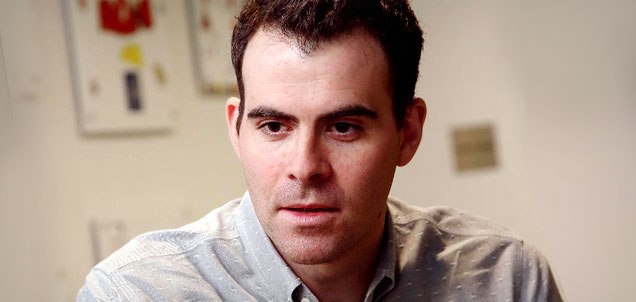
    We are committed to learning about how people everywhere use our product, and making sure Facebook works for them, said Adam Mosseri, VP of Product to mediapersons at a specially convened session last week in the capital. Connecting the next billion people on Facebook means understanding these differences and building better experiences to work on all connections, devices, and regions. And these are the highlights of what he said:


    Latest newsfeed architecture announcement: Over the past many months, we’ve continued to focus on efforts to improve the newsfeed for everyone regardless of device or network connection. We are now launching a new architecture so you can see less grey boxes, and more relevant stories quickly, regardless of your network connection. This new architecture allows stories to be ranked on the client after being sent from the server. We avoid spinners and grey boxes by:

    1. requiring stories to have all necessary media available before rendering them in newsfeed, and

    2. being able to optimise the stories in newsfeed for each session, so you can see the most relevant stories even if you’re on slow internet connections.


    Facebook Media: Facebook is also where people go to discover and join conversations about news, entertainment, sports and their broader interests. With 1.7 billion people globally and more than 150 million people in India using Facebook monthly, Facebook provides an essential audience platform for content creators and we are building fast and immersive media experiences to deliver the right content to the right people at the right time.


    People around the world are using Facebook to connect with news publishers, video creators, celebrities and sports.


    The rapid shift to mobile is fundamentally changing the way creators and publishers can reach and engage their audiences and Facebook is innovating on the types of content that publishers can use to tell stories. Across the globe, people are using mobile devices and adopting visual language to communicate. Social TV experience is a new trend given the new age digital audience who consume content on social media platforms. Facebook plays host to a global TV conversation in part because fans enjoy discussing shows with the people who matter most to them. Facebook has also become one of the best places for TV networks and show creators to connect with and build a community of fans.


    Networks and studios are now heavily relying on digital marketing pegged heavily on innovative/ engaging content. Globally 100 million hours of video are now watched daily on Facebook. Tools like Facebook Live and Mentions help celebrities express themselves authentically. Celebrities and entertainment publishers are using Facebook in creative ways, creating immersive experiences that draw people in and give them a deeper artistic experience. For example, through Facebook Live, everyone has a production studio with a built-in global audience in their pockets at all times. Similarly, Instant Articles, 360 video and autoplay video are new native surfaces that we are seeing creators and publishers embrace to build their audiences and businesses.


    We always want to learn from our partners, and are committed to building products and business models hand-in-hand that deliver value to people and publishers on Facebook.

    - 670 million people are connected to a News Publisher page on Facebook. A recent Pew Survey said that more than 40% of American adults find news on Facebook.

    - The American Press Institute found that over 88% of millennials get news from Facebook, more than any other social network.

    - Facebook is now a widely-read source for news about government and politics. According to a recent Pew study, Facebook is the second most popular source where people online get their political news (48%), second only to local news outlets (49%).


    Quick stats for India:

    - In India there are 155 million MAU, 77 million DAU, 147 million Mobile MAU and 73 million Mobile DAU (as of Q2 2016)

    - Facebook is available in 12 Indian languages (22 official languages in India, and many more dialects)

    - As of the end of Q2 2016, daily actives on Facebook in India had grown 22% year over year, compared to a 17% increase in daily actives on Facebook worldwide.

    -  Not including Likes, more than 50% of the reactions used in India are Love, and more than 30% of Reactions used in India are Haha


    Entertainment:

    - 1 billion people are connected to a public figure on Facebook.

    - 17 of the top 20 public figures (8 of the top 10) on Facebook are entertainers. Today, thousands of public figures across verticals — sports, entertainment, news media and more — use Facebook to easily connect with their fans and each other.

    - With the largest and most diverse community of entertainment fans in the world, Facebook is the best place for the entertainment industry to personalize and scale their campaigns to reach a global audience — from promoting a new movie or show, to releasing a music video or making an awards season push.


    Sports

    - Facebook brings together the world’s largest community of sports fans.

    650 million people around the world are connected to at least one sports Page (league, team, athlete, sports media) on Facebook.

    - Facebook is where the largest real-time social media audience comes together to talk about sports’ biggest moments.

    277 million people had 1.5 billion interactions on Facebook about the Rio 2016 Summer Olympic Games.

    - Facebook helps athletes, teams, leagues and media connect with a global audience of sports fans and achieve their business goals.


    News

    - For journalists and publishers, Facebook is a valuable place to engage with their readers.

    - We’re building fast and immersive media experiences to make news discovery better for people and publishers — from Instant Articles to Live and 360 video.

    – Facebook is a technology company.We know that people are coming to Facebook to get their news and we take our role in the media ecosystem seriously.

    We’re working closely with our media partners and listening to their feedback to help them monetise their content and build their businesses.

    We have to make this work for publishers so we can deliver value to them and to everyone on Facebook.


  • Facebook unveils App Event Optimisation for advertisers

    By A Correspondent


    When it comes to mobile, apps are where it’s at. Mobile apps can bring ongoing value to businesses, especially when the right people download them. Almost 90 per cent of time spent on mobile is spent in apps and 58 per cent of mobile purchases in the US are made through apps.


    However, not every person who installs an app will take actions within it that are valuable to businesses, such as making a purchase, booking a trip or reaching a certain level within a game. Thirty days after people install an app, only 6 per cent of them are still using it.


    In other words, not all app installs are equal. As mobile app businesses evolve, it’s increasingly important for them to connect with the people who are likely to not just download their apps, but to take valuable actions within them. In its latest initiative, Facebook has announced a new way for advertisers to reach the people who will bring more value over time.


    To build healthy mobile app businesses, advertisers must connect with the people who are likely to take valuable and repeated actions within their apps. To help businesses to reach these people, Facebook is launching a new product: App Event Optimisation. This helps businesses to maximise long-term app value.


    “We’re extremely excited for Facebook’s new capabilities for app install advertising, which helps us optimise towards our true business goals. By reaching people on Facebook that are most likely to engage in our app, we have seen an 80 per cent decrease in cost per event, leading to five times the growth in lifetime value,” said Chris Chow, Head of Growth at PennyPop.


    Because so many people engage with adverts across Facebook, Instagram and the Audience Network, the app is able to determine whether a person is likely to take actions based on historical data and people with similar characteristics. Through App Event Optimisation, advertisers can deliver adverts to the people who are likely to take valuable actions within their apps. This brings value to businesses, as well as to people, who get adverts for the apps that will be most useful to them.


  • Kantar partners with Facebook to expand advertising measurement service

    By A Correspondent


    Kantar Worldpanel has formed a global partnership with Facebook that brings Facebook mobile ad exposure data into Kantar Worldpanel’s Consumer Mix Model (CMM) service. The enhanced CMM tool combines Facebook’s mobile ad exposure data (in addition to desktop) with Kantar Worldpanel’s continuous consumer packaged goods (CPG) purchase data to provide brands with an accurate assessment of the effectiveness of their cross-media advertising campaigns.


    The advertising landscape has witnessed rapid change in recent years as brands increasingly turn to digital formats. In April Facebook announced that its advertising revenue had grown by 57 percent to $5.2 billion in the first quarter of 2016 alone, with advertisers drawn to its increasingly large user base.


    The tool allows brands and advertisers to understand the real impact of individual advertising campaigns on actual sales and the contribution Facebook and other media have on their return on investment.This in turn will help them to optimise their media planning and ultimately improve the efficiency of their media investment.


    Josep Montserrat, chief executive of Kantar Worldpanel, comments: “The partnership allows our experts to build a solid understanding of how advertising works and the role that Facebook plays in a wider campaign context.  Working with Facebook will allow us to inspire even better decisions to optimise advertising budgets and maximise advertisers’ return on investment.”


    Patrick Harris, director of Global Agency Development at Facebook, said: “We believe that strong partnerships with our agency partners are key to providing advertisers with the tools they need to measure true business value on Facebook.  We are excited to help inform Kantar Worldpanel’s Consumer Mix Model solution by bringing in our mobile ad exposure data in a privacy-safe way.”


    Kantar Worldpanel’s continuous CPG purchase panels are already widely used by the advertising community worldwide to understand the effect of cross-media advertising.  Its measures take into account in-store promotions and consumer loyalty to determine the full picture behind consumer purchase behaviour.


    Kantar Worldpanel’s new service is now available in the UK, France, Spain, Portugal, Brazil, India, South Korea and Taiwan, with additional Asia Pacific and Latin American countries to follow throughout 2016.


  • Umang Bedi joins Facebook as MD​

    By A Correspondent


    Facebook has appointed Umang Bedi as Managing Director, India, where he will lead in building and maintaining strategic relationships with top clients and regional agencies in the country. He will take over from Kirthiga Reddy, who will be returning to United States to take on a new role at the company’s headquarters at Menlo Park.


    Bedi comes to Facebook with close to two decades of leadership experience covering sales, marketing and partnerships where he successfully built teams and grew businesses for multinational companies. Prior to joining Facebook, he was Managing Director of the South Asia region at Adobe. He was responsible for growing their business in India and helping India grow to amongst the leading markets for Adobe in the APAC and global regions.


    “India is known for its great talent pool and we are really pleased to have Umang Bedi, a proven business executive to lead our business in India. I also want to wish Kirthiga the very best in her new global role. Kirthiga has played a huge and key role in building our India business from scratch, and I know she will continue to deliver the same impact in the US.” said Dan Neary, Vice President, Asia Pacific, Facebook.


    He further added, “Facebook is where people and businesses connect on mobile and with close to 150 million monthly active people in India, we see significant opportunities to help Indian business – large and small – deliver against their business objectives in the mobile world.”


    Facebook works with more than 85% of the top 100 advertisers in India identified by Kantar. 100% of those advertisers use video within their Facebook campaigns in India.


    “I am thrilled to join Facebook and am looking forward to working with the talented teams in India, to help brands and agencies grow their business on our platform. For me it’s a promising opportunity to participate in India’s digital growth, and I can’t think of a better place to be at.” said, Umang Bedi, Managing Director designate, Facebook India.


    Bedi is an engineering graduate from University of Pune, an alumni of Harvard Business School and the recipient of the prestigious ‘40 Under Forty: India’s Hottest Business Leaders Award 2014’ given by The Economic Times and Spencer Stuart in 2014.


    Reddy is set to join the Global Accounts team at Menlo Park, CA where she will manage a set of global brands and also lead the emerging markets efforts globally for the Global Accounts team, which manages Facebook’s relationships with the world’s largest global advertisers.


    Said Reddy, “After six years in India building our operations and business, it’s hard to leave a team I now call family. The good news is that we will continue to work together. As I look ahead, I am excited about how well positioned our business is, to grow from strength to strength with Umang’s leadership, and with my next opportunity to shape and drive our emerging markets strategy across some of the world’s biggest brands.”


    Umang will officially start at Facebook in July 2016. Kirthiga will start her new role in August 2016.


  • Weber Shandwick adopts the Facebook at Work collaboration platform

    By A Correspondent


    Weber Shandwick is the first global public relations firm to adopt the Facebook at Work collaboration platform. The enterprise-wide engagement comes on the heels of a successful pilot program that began in late 2015, in which the firm was also the first global PR firm to engage as early adopters. The launch of the platform is part of Weber Shandwick’s ongoing effort to explore and understand new innovative communications platforms for clients engaging key constituencies, employees increasingly being among the most important.


    “Facebook at Work will be a player in employee engagement solutions going forward, so we’re adopting it across our company to continue to analyze and understand advantages for clients, as well as benefit from the value it brings to our own highly creative and collaborative global network,”said Chris Perry, Weber Shandwick’s Chief Digital Officer.


    Weber Shandwick’s pilot of Facebook at Work included nearly a quarter of its worldwide staff and was set-up across teams with varied organizational structures and workflows  to gather best-practices and insights that would be applicable to a variety of companies.


    “Through the pilot, we wanted to understand the platform’s use as a tool for engagement, communications and reputation – as well as how it helps create a more productive and connected workplace,”Valerie Pinto, Weber Shandwick’s Chief Executive Officer said.  “After seeing how successful the pilot was, we’re excited to see the collaboration that occurs when it’s used across geographies, industries and disciplines company-wide,and be able to share our findings with clients to better-inform their practices.”


  • McDowell’s unveils unique contest on FB

    By A Correspondent


    McDowell’s No 1 Soda has launched a new campaign urging the country’s friends to come together in a unique way to cheer for team India.


    The campaign celebrates the time-honoured tradition that when close friends who are also frenzied sport lovers come together to watch a cricket match, very often one person ends up making a silly promise in the hope of securing India’s victory.


    McDowell’s No. 1 Soda has roped in TV hosts and actors – Rannvijay Singh and Manish Paul, for a live act on Facebook. It is a first of its kind engagement where the duo will be seen making and fulfilling the wacky friendship promises.


    Commenting on the initiative, Subroto Geed, Senior Vice President, Marketing at United Spirits said, “We know that AsliYaars will do everything to fulfiltheir No.1 Yaari promises and help India win. McDowell’s No.1 Soda enables the celebration of the moments that strengthen the bonds of brotherhood and we are very excited with this first of its kind digital activity using Facebook Live, an interactive video function, to bring together cricket and Yaariin aunique fashion. We are very pleased to have the talented duo Rannvijay and Manish on boardto help us create new benchmarks in audience engagement.”


    This activity concept has been co-created by DDB Mudra and Elements MediaWorks and the digital solutions are from 7Edge.


  • The Quint completes impactful one-year run on Facebook

    By A Correspondent


    Leading digital content platform, The Quint, completed its first year on Facebook on January 9, 2016. First launched on the social media platform before its website was unveiled in March, The Quint, has had a good run in India. The platform enjoys over 3 million dedicated readers on Facebook having pioneered publishing concepts like Instant Articles, created calls-to-action and championed several meaningful and impactful campaigns through the innovative use of technology.


    Led by Raghav Bahl and Ritu Kapur, co-founders of Quintillion Media, The Quint on Facebook has made its presence felt since its very first day a year ago when it coloured the social media site with the shades of yellow and purple. Besides being driven to bringing news to the fingertips of readers, the platform has successfully leveraged the power of Facebook to invite readers to participate in its campaigns and create change with it.


    Speaking on the first Facebook anniversary celebrations, RituKapur, CEO, The Quint said, “In this exciting one year, we have experimented with content, formats, technology and different ways of engaging our readers meaningfully. Throughout this ride, we’ve broken news (and parameters) as well as our own expectations, but most importantly, we’ve broken the perception that only print or television can rule information. We dreamt of a platform where we could interact with our readers and they’ve overwhelmed us with their response. It is indeed a time of celebration for the entire team for what we’ve managed to achieve together!”


    Amongst several campaigns that garnered a lot of attention on Facebook was the #MakeOutInIndia campaign that talked about breaking away from the hypocrisy that is associated with sexuality and discussions on sex in India. #SayYesToWeed was another high-impact initiative where The Quint took the onus of breaking the myth that weed is harmful. The #BiharMobile campaign grabbed a lot of eyeballs as The Quint went out to become the first digital-only platform to cover an entire election on smartphones.


    Facebook was where the platform began to test waters and tried to understand what its readers expected and wanted. From its first 500 likes to now more than 3 million fans, from the ‘first’ piece of breaking news to the ‘first’ 1,000 shares, the first taste of going viral with the `BuriLadki’ poster which broke gender stereotypes in India, The Quint has displayed tremendous growth in this one year which it plans to continue building on in the year ahead.