Tag: facebook

  • MxM Open Classroom: Digital Marketing


    Why MxM Open Classroom: Upskill yourself!, That’s what one is told so as to make the extended lockdown work for us. But while doing one of the hundreds of free or paid courses sounds easy, in realit,  it isn’t. And going through the tests and quizzes that are contained in them can be quite daunting. Starting this week, we start a series of ‘open classroom’ sessions. Each week, we will have a five-part series – Monday through Friday that will tackle an important area of the media marketing services domain. We kick off our series with a focus on Digital Marketing with Bhuvi Gupta, a marketing specialist who has


    The HOWs and WHYs of making trends

     

    By Bhuvi Gupta


    According to a FICCI EY report, the Indian Media and Entertainment (M&E) sector grew 9% to reach INR 1.8 trillion in 2019.


    The rapid spread of mobile access is helping the growth of the digital media industry. With a population of 1.3 billion, 688 million internet subscribers and nearly 400 million smartphone users, quantitatively, India already has high numbers but also has high potential for growth. This means that the digital media industry which grew 31% to reach INR 221 billion in 2019 will continue growing and industry experts expect it to grow at 23% CAGR to reach INR 414 billion by 2022. Digital advertising grew 24% to INR 192 billion and is expected to follow a similar growth trajectory. As digital penetration increases, more advertising budgets will get diverted to digital, especially because digital advertising is easier to measure and to finely tailor target audiences.


    The biggest challenge with digital is the evolving landscape – changing algorithms of popular platforms, newer applications of Augmented Reality, new platforms with niche demographics (like Helo, ShareChat, Likee, Bigo), and newer forms of advertising like influencer marketing to only name a few. This makes it difficult to allocate digital budgets effectively because the ‘how’ of being effective is constantly in flux.


    This series is in a sense a cheat sheet to understand digital advertising better and to ease navigating this evolving landscape. In each article, we will evaluate how to best create virality by leveraging popular digital platforms. Key focus platforms will be Instagram, TikTok and Facebook, chosen because of the reach, they garner.


    To kickoff the series we focus on the objective of many if not most campaigns – ‘Virality’. Making a campaign ‘viral’ is the holy grail by which campaigns are measured & many awards given, today.


    Marketers know that in spite of how topical and relevant the communication it is impossible to guarantee campaign virality because there are too many variables.  However, what is attainable is ensuring that a campaign ‘trends’.


    The key difference between a campaign ‘trending’ and it ‘going viral’ are in longevity and organic reach. While a trend may last for a short period of time, may be paid for and limited to a particular target audience, a campaign going viral implies that it has had the longevity of a few days, substantial word of mouth and a high recall value that has surpassed its initial targeting. Hence, while all viral campaigns, trend, not all trending campaigns go viral. With the right strategy it is possible to make a quality campaign trend, which may be the push it needs to achieve virality.


    A quality campaign is one, which while espousing product benefits, is topical and evokes a strong emotional response so that it is prompts the viewer to share it to enable word of mouth. An easy test to determine shareability is to ensure that the messaging is entertaining, inspiring or informative or a combination of the three.


    Here are Five ways to make a quality campaign ‘trend’–


    I. Choosing 1 or 2 focus platforms

    Today every social media platform has a key age and socio-economic demographic. Depending on the messaging, the brand, and campaign budgets focus platforms should be defined. It is wise not to focus on more than two, even if budgets permit. Successful campaigns will spillover organically to other platforms, anyhow.  For e.g. in 2019, Pepsi used TikTok as their primary platform for promoting their new brand anthem with the tagline ‘Har Ghoont mein Swag’. The campaign anthem was sung by 2019’s most popular Bollywood Punjabi singer, ‘Baadshah’ and the music video starred popular Bollywood youth icons & social media influencers, Tiger Shroff & Disha Patani. TikTok was was aligned to the brand’s mass & youth focused targeting. The campaign was a huge success, with 240+ million views and over 15,000 user-generated videos within 24 hours of its launch. The campaign also naturally spilled over to Instagram, where it received 20+ million views. The campaign remains one of TikTok’s most successful brand campaigns in India.


    II. Challenges

    A campaign which requires the consumer to engage will automatically have higher recall value & will also allow for the network effect which will help it to trend organically. The messaging of the campaign is key to how it can have a challenge component.


    Challenges are especially relevant for TikTok, and Instagram. Hashtag challenges form a key component of TikTok and challenges typically trend for a week. Hence, hosting challenges aligned to brand campaigns on TikTok can help a campaign achieve virality.  Currently, a Challenge trending on both TikTok & Instagram is the #PassTheBrushChallenge, where different women, pass a makeup brush to each other while showing before & after images of themselves wearing makeup. The challenge has not been initiated by any brand, but has gone viral with different kinds of iterations being produced, including a male version with a hairbrush!


    III. Hashtags –

    A hashtag, which can be the campaign tagline in entirety or a part of it is a key component of a trending campaign, as it is an easy identifier when the post gets shared, or mentioned. A hash tag is easy to understand, catchy, and related to the brand. It should ideally be not more than 3-4 words, have a verb, and either the brand name or a keyword from the catch phrase.


    Hashtags are vital for discovery on Twitter& TikTok, while they serve as identifiers on Instagram, Facebook & YouTube. Along with the key campaign hashtag, it is advisable to use other aligned & popular hashtags with which the content can be discovered.


    For e.g. in the Pepsi ‘Har Ghoont mein Swag’ campaign the key hashtag used was the same as the tagline, #HarGhoontMeinSwag along with #SwagStepChallenge. The campaign was followed up by a follow up campaign, with a new single called ‘Swag Se Solo’ sung by 2019’s breakout Bollywood singer, Tanishk Bagchi, released in February 2020. This campaign used the hashtag #SwagSeSolo and re-used the hashtag #SwagStepChallenge.


    IV. Influencer Marketing –


    Today, to break the clutter, it is crucial to invest a part of advertising budget on influencer marketing. Influencers enjoy loyal fanbases, and due to their relatibility, are often more trustworthy and credible than celebrities. Targeting influencers aligned to target audiences can help get exponential reach and engagement.


    However, influencers per platform need to be defined because each platform has different influencers in the same niche. A beauty influencer on TikTok may not  enjoy the same following on Instagram & YouTube, and hence can not be used for a campaign with Instagram as the primary social media platform.


    Influencer marketing works on all platforms, but is especially relevant on TikTok, Instagram and YouTube. It is especially effective for marketing new launches. Popular mobile phone brands often leverage influencer marketing while marketing their new launches – One Plus, gets influencers across industries to post videos highlighting the USP of the new launch. Google hosts parties with photo booths and gourmet food and, gifts influencers the latest ‘Pixel’ device. Photos of the party get shared on social media by all the attending influencers, thereby successfully creating a buzz.  One of the most successful examples of influencer marketing remains the selfie taken by Ellen DeGeneres at the2014 Oscar ceremony  (sponsored by Samsung) where Hollywood’s A listers posed for a selfie taken with a Samsung Galaxy Note 3. What remains ‘Note’-worthy is that the picture, which was shared, was not of the selfie but that of the stars taking the selfie so that the ‘Samsung’ logo was prominently displayed.


    V. Digital Advertising –

    For platforms such as Facebook, and now Instagram, which have attained maturity in their life cycle, the competition for organic reach is high. Hence, using advertising for discovery and amplification is necessary for virality. To enable speedier discovery it is advisable to use advertising on TikTok as well. Digital advertising used in conjunction with the above strategies, on the chosen platform (s) can effectively amplify the campaign. While it will definitely help a campaign to trend, it can often serve as a tipping point for creating virality.


    The gulf between a trend and virality is deep and often, a trending campaign that reaches relevant audiences is sufficient to earn ROI and achieve the brands marketing objectives. Virality is very often a vanity metric, which helps the brand create widespread awareness like traditional ATL marketing but may not aid in creating actual consumer intent.


    Bhuvi Gupta is a marketeer with over a decade of work experience, of which the last six have been in the media & entertainment industry. She has been a part of many launch marketing campaigns with experiences at the Times of India group, Republic TV and the latest in marketing a Bollywood film

     

  • Zero Gravity now part of Facebook managed agency partner program

    By A Correspondent


    Zero Gravity Communications has recently associated Facebook managed agency partner. This accreditation will enable Zero Gravity Communications to deliver measurable results, provide end to end Facebook family apps marketing support with the help of an experienced workforce.


    Khushboo Sharma

    Said Khushboo Sharma, Director and Founder, Zero Gravity Communications: “This came at such a crucial time, a time when nation-wide lockdown has changed the way we look at business and economy. The digital landscape is the only all-pervasive way the brands will be able to communicate with masses. Digital mediums are going to play a very crucial role and this partnership will now help us serve our clients better.  We are thrilled to get this distinction from Facebook which will motivate us to move a step further towards our goals.”


  • Facebook takes 9.9% of Jio Platforms (Reliance Jio’s holding co) at Rs 43,574cr

    By A Correspondent


    It’s been in the works for a while, and then there have been rumours to the effect that this is set to happen. And then the Covid-19 scare happened, and one didn’t know when it would actually happen. If at all.

    But in the wee hours of today (and April 21 in the United States), a statement came in from Facebook and Reliance Industries.

    First the Facebook note by David Fischer, Chief Revenue Officer, and Ajit Mohan, VP and Managing Director, India: “Today we are announcing a $5.7 billion, or INR 43,574 crore, investment in Jio Platforms Limited, part of Reliance Industries Limited, making Facebook its largest minority shareholder.

    “This investment underscores our commitment to India, and our excitement for the dramatic transformation that Jio has spurred in the country. In less than four years, Jio has brought more than 388 million people online, fueling the creation of innovative new enterprises and connecting people in new ways. We are committed to connecting more people in India together with Jio.

    “India is in the midst of one of the most dynamic social and economic transformations the world has ever seen, driven by the rapid adoption of digital technologies. In just the past five years, more than 560 million people in India have gained access to the internet.

    “Our goal is to enable new opportunities for businesses of all sizes, but especially for the more than 60 million small businesses across India. They account for the majority of jobs in the country, and form the heart and soul of rural and urban communities alike. In the face of the coronavirus, it is important that we both combat this global pandemic now, and lay the groundwork to help people and businesses in the years to come.

    “One focus of our collaboration with Jio will be creating new ways for people and businesses to operate more effectively in the growing digital economy. For instance, by bringing together JioMart, Jio’s small business initiative, with the power of WhatsApp, we can enable people to connect with businesses, shop and ultimately purchase products in a seamless mobile experience.

    “India is a special country for us. Over the years, Facebook has invested in India to connect people and help businesses launch and grow. WhatsApp is so ingrained in Indian life that it has become a commonly used verb across many Indian languages and dialects. Facebook brings together friends and families, but moreover, it’s one of the country’s biggest enablers of growth for small businesses. And Instagram has grown dramatically in India in recent years as the place where people follow their interests and passions.

    “We are excited about furthering our investment in India’s vibrant digital economy. Our efforts with Jio will be focused on opening new doors and fueling India’s economic growth and the prosperity of its people. We look forward to working with Jio, and to future collaborations in India to advance this vision.”


    And here goes the communique from Reliance:

    “Reliance Industries Limited (“Reliance Industries”), Jio Platforms Limited (“Jio Platforms”) and Facebook, Inc. (“Facebook”) today announced the signing of binding agreements for an investment of ₹ 43,574 crore by Facebook into Jio Platforms. This investment by Facebook values Jio Platforms at ₹ 4.62 lakh crore pre-money enterprise value ($65.95 billion, assuming a conversion rate of ₹ 70 to a US Dollar). Facebook’s investment will translate into a 9.99% equity stake in Jio Platforms on a fully diluted basis.

    “Jio Platforms, a wholly-owned subsidiary of Reliance Industries Limited, is a next-generation technology company building a Digital Society for India by bringing together Jio’s leading digital apps, digital ecosystems and India’s #1 high speed connectivity platform under one umbrella. Reliance Jio Infocomm Limited, which provides connectivity platform to over 388 million subscribers, will continue to be a wholly-owned subsidiary of Jio Platforms.

    “Jio’s vision is to enable a Digital India for 1.3 billion Indians and Indian businesses, especially small merchants, micro-businesses and farmers. Jio has brought transformational changes in the Indian digital services space and propelled India on the path towards becoming a global technology leader and among the leading digital economies in the world.

    “Jio has built a world-class digital platform powered by leading technologies such as Broadband connectivity, Smart Devices, Cloud and Edge Computing, Big Data Analytics, Artificial Intelligence, Internet of Things, Augmented and Mixed Reality and Blockchain.

    “Jio has created an ecosystem comprising network, devices, applications, content, service experiences and affordable tariffs for every Indian to experience the Jio Digital Life. During the current Covid-19 crisis, Jio’s platforms have been a dependable and inclusive Digital Lifeline for our Nation.

    “As one of the largest countries in the world, India is home to some of Facebook’s most thriving communities on WhatsApp, Facebook and Instagram. Over the years, Facebook has invested in India based on a strong belief in India’s entrepreneurial talent and opportunity, to help create meaningful impact for Indians and Indian businesses using their multiple platforms.

    “The partnership between Facebook and Jio is unprecedented in many ways. This is the largest investment for a minority stake by a technology company anywhere in the world and the largest FDI in the technology sector in India. The investment values Jio Platforms amongst the top 5 listed companies in India by market capitalization, within just three and a half years of launch of commercial services, validating Reliance Industries’ capability in incubating and building disruptive next-generation businesses, while delivering market defining shareholder value.

    “Our goal with this investment is to enable new opportunities for businesses of all sizes, but especially for small businesses across India and create new and exciting digital ecosystems that will empower, enrich and uplift the lives of all 1.3 billion Indians.

    “This partnership will accelerate India’s all-round development, fulfilling the needs of Indian people and the Indian economy. Our focus will be India’s 60 million micro, small and medium businesses, 120 million farmers, 30 million small merchants and millions of small and medium enterprises in the informal sector, in addition to empowering people seeking various digital services.

    “The partnership assumes special significance for India in the wake of the severe disruptions caused by the coronavirus pandemic in the Indian — and the global — economy. In the post- Covid era, comprehensive digitalisation will be an absolute necessity for revitalisation of the Indian economy. It is our common belief and commitment that no Indian should be deprived of the tremendous new opportunities, including opportunities for new employment and new businesses, in the process of India’s 360-degree digital transformation.

    “Concurrent with the investment, Jio Platforms, Reliance Retail Limited (“Reliance Retail”) and WhatsApp have also entered into a commercial partnership agreement to further accelerate Reliance Retail’s New Commerce business on the JioMart platform using WhatsApp and to support small businesses on WhatsApp. WhatsApp already plays an important role in helping people and businesses connect in India. Reliance Retail’s New Commerce platform, JioMart, is being built in partnership with millions of small merchants and kirana shops to empower them to better serve the needs of Indian consumers. The companies will work closely to ensure that consumers are able to access the nearest kiranas who can provide products and services to their homes by transacting seamlessly with JioMart using WhatsApp.

    “Commenting on the partnership with Facebook, Mr Mukesh Ambani, Chairman and Managing Director, Reliance Industries Ltd, said, “When Reliance launched Jio in 2016, we were driven by the dream of India’s Digital Sarvodaya– India’s Inclusive Digital Rise to improve the quality of life of every single Indian and to propel India as the world’s leading Digital Society. All of us at Reliance are therefore humbled by the opportunity to welcome Facebook as our long-term partner in continuing to grow and transform the digital ecosystem of India for the benefit of all Indians. The synergy between Jio and Facebook will help realise Prime Minister Shri Narendra Modi’s ‘Digital India’ Mission with its two ambitious goals — ‘Ease of Living’ and ‘Ease of Doing Business’ – for every single category of Indian people without exception. In the post-Corona era, I am confident of India’s economic recovery and resurgence in the shortest period of time. The partnership will surely make an important contribution to this transformation.”


  • Pain, Humiliation & the New Media


    By Ranjona Banerji


    O the pain and the humiliation. I want to blame the virus but after 20 days of social isolation I have to blame social media and us, but mainly you, other humans. O the pain and the humiliation. Especially as a journalist, a writer. Only pain and humiliation.

    This is how it breaks down:

    On Twitter:

    You tweet a link to an article you have written. First responders will not go further than the headline. Now 99.9 per cent of the time, the headline and accompanying strap have nothing to do with me. But the headline will deeply affect twits. And they comment on the article based on the headline alone. Some will then explain to, to ME, what the article is about. Some will then give me links to other articles with similar headlines. None of these will actually read what the article says, ie what I have tried to say.

    I think somewhere within is the great revenge of the Sub-Editor. I have to confess a small part of me is quite happy. For the first three months of my first job in journalism, I wrote mainly headlines and captions. At least 30-odd years later, I know someone reads them!

    However. My great thanks to those who do actually read. All 11 of you.

    On Facebook:

    Facebook is actually infinitely worse. Twitter is a bunch of strangers, mainly, and I have made some very good friends there. But Facebook is largely people one has met, “friends of friends” and other post-Zuckerberg social characterisations.

    These “friends” are unable or unwilling to read. That is, they will read the first two lines of what you have written and never make it all the way to the end. It does not matter if you have written three lines or 300. Two is the limit.

    And then the comments flow free and fast. People falling over themselves, to be trigger happy, to be kind and loving, to be wise and worldly, to be helpful. O lord, that’s the limit. The helpfulness. I just can’t abide it. Like when I post an article that I have written, why the &*%# do you think I want to read similar articles from another 100 journalists, a good number of which are untalented upstarts and most of whom I do not consider journalists at all? Have you never considered the gigantic size of my own ego?

    See, pain and humiliation.

    Then there are those who start complaining about the accompanying photograph or the point size or some website deficiencies. I mean, what can I do about any of those? I don’t own or run any newspapers or websites. And the best are the three people who start some side conversation which turns into a rip-roaring battle.

    I really love the two people who just quietly hit the “like” button without bothering to read anything or comment or offer any advice. True friends. I love you.

    And finally, Whatsapp:

    It exists as a trial. To test our lack of comprehensive powers. To increase our blind belief. To systematically target any part of the brain which has anything to do with reason.

    Because I am new to this Whatsapp game or rather I never paid attention to it before, and mainly because of time on my hands, I waste a good number of hours pointing out fake news to people. No, you cannot see the Arctic Circle from Gurgaon because pollution has reduced and so on. But I don’t know why I bother. Hardly have I hit send, then I have been bombarded again with the same videos, the same fake news, the same gobbledygook which Whatsapp people think must be true. I use the word “think” advisedly…

    Anyway, now that 12 million people have sent me some article by Arundhati Roy on every possible form of web-driven communication, I suppose I shall have to read it…

    Maybe, amidst the pain and humiliation, there is some scope for revenge here.


    Ranjona Banerji is a senior journalist and commentator. She is also Consulting Editor, MxMIndia. Her views here are personal.


  • Bipasha Chakrabarti appointed Communications Head at Facebook India

    By A Correspondent


    Facebook announced that it has recruited a new communications head to lead its growing corporate communications and public relations mandate in India. Bipasha Chakrabarti will take on the role of Communications Director at Facebook India, and will be a part of the India leadership team, reporting to Ajit Mohan.


    Her last assignment was as Head of Corporate Communications at Cisco India and SAARC.  The announcement comes just a month after Facebook announced the hiring of Avinash Pant as the Marketing Director at Facebook India to drive the company’s consumer marketing efforts across the family of apps.


    Said Ajit Mohan, VP and MD of Facebook India: “Communications is a critical function for us as we continue to build Facebook’s story in India. We are grateful for the trust that our users, advertisers, partners, and the government have placed in us, and are committed to communicating openly and transparently. Bipasha is among the most seasoned communication professionals in the country and I am very excited to have her join us and lead this charter.”


  • Facebook rolls out its ‘More Together’ campaign in India

    By A Correspondent


    Facebook has launched a new consumer marketing campaign in India, ‘More Together’, to showcase how people across the country can do more together by harnessing the power of their connections on the platform. The campaign is the first to be launched in the Asia Pacific region.


    Said Ajit Mohan, Vice President and Managing Director, Facebook India: “India is at the heart of Facebook and one of our focus areas this year is to tell the exciting story of a service that is deeply embedded in the fabric of India. While at the company level we remain focussed on building trust, we want to showcase the many ways that Facebook is intertwined in the lives of Indians – from connecting with loved ones, to growing businesses and supporting local communities, to finding ways to come together to learn and share and celebrate. I could not be more excited that we are telling our story – it is a story that is lived by people across the country every day.”


    The campaign for India has been conceptualised and executed by Taproot Dentsu. Said Agnello Dias, Co-Founder, Taproot Dentsu and Creative Chairperson, Dentsu Aegis Network India: “Taproot Dentsu is delighted to develop such an important campaign for one of the most loved services in the country. The world of Facebook represents a canvas of connections that’s huge, vibrant and full of serendipitous outcomes and surprises. To celebrate all users and to inspire more of them to benefit from the power of connections, our creative team led by Pallavi Chakravarti, wrote stories with all these unexpected, wonderful outcomes, which are inspired by real people and their real journeys.”


  • DAN Data Sciences announces global launch of Dentsu Marketing Cloud

    By A Correspondent


    In an effort to provide data-driven solutions to clients, the Data Sciences Division from the house of Dentsu Aegis Network (DAN) India, has announced the global launch of the Dentsu Marketing Cloud (DMC). The announcement was made at an exclusive DAN client event at Facebook’s Thailand HQ earlier this month.

     

    The DMC brings together a slew of Dentsu proprietary ecosystems such as the Facebook Marketing Partner (Ad-Tech) Badged DAN Data Labs Product Suite, Dentsu Explore and other proprietary mar-tech tools. It also has advanced analytics solutions such as the Dentsu Pixel and the Dentsu DSP to help clients plan, buy, measure, analyse and optimise campaigns. Additionally, the DMC helps in establishing greater control of client data in one place.


    Commenting on the launch, Sarnchatt Chansrakao, CEO, Dentsu X Thailand said, “On the backbone of cutting-edge technology, Dentsu Marketing Cloud provides us with the necessary resources to deliver more relevant and effective marketing solutions for clients. Through DMC we will be able to provide bespoke services to clients such as multi-touch attribution and market mix models; consequently, helping us deliver the full strength of planning and optimising digital campaigns – all whilst ensuring privacy and providing clients with greater control of their data.”


    In an attempt to promote greater collaboration across teams and share insights, the DMC will promote a customer-centric approach to marketing by equipping teams to deal with modern client structures. It has been built on integrations between the DAN Data Labs Facebook Product suite and Advanced Analytics products. DMC has already been a great success in 30 global markets and has won numerous client awards.


    “The DMC revolutionises the way modern and future-focused advertising agencies operate. With the launch of new products and solutions such as the Dentsu Ad-server (D-Serve), the Dentsu Pixel, etc., the DMC will present to clients more control over their data and allow them to analyse their cohorts. This enables clients to create better segments for sharper targeting. The Dentsu Marketing Cloud is just the first step in our platform’s story. As an organisation, we are committed to enabling marketers in achieving their goals as we promote greater transparency, control and the best of technology,” added Gautam Mehra, CEO, DAN Programmatic & Chief Data Officer, DAN – South Asia.


  • Social advertising growth slows down, notes WARC report

    By A Correspondent


    Marketing services research firm WARC has found that advertising revenues among key social and messaging companies rose 26.2 per cent year-on-year during the first three months of 2019 to reach $17.9bn – the second-highest total on record.


    However, while this growth outpaced all other advertising sectors, it was roughly half the rate of expansion seen just one year earlier (51.6 per cent in Q1 2018). All six companies studied in the report – Facebook, Pinterest, Snap, Twitter, Tencent (WeChat/QQ), Weibo – recorded an easing in ad revenue growth during Q1 2019.


    In North America, the largest market for social advertising ($8.0bn in Q1 2019), user growth has stalled over the last 12 months. Time using social platforms has also stagnated in the region, remaining at two hours per day for the last three years. Facebook has 186m daily users in North America, Snap 80m, and Twitter 28m – numbers that are mostly flat or down from the previous year.


    Further, European user growth across Facebook’s social properties (including WhatsApp and Instagram) slowed to its lowest rate on record (1.4 per cent), while Snap’s users in the region fell for the first time. Daily social media usage fell by four minutes to 1:49 (hours:minutes) across Europe year-on-year, according to GlobalWebIndex.


    Instead, growth is emanating from Asia, in particular from India, Indonesia and the Philippines. Daily social time is also ticking up in the region, reaching 2:11 compared to 2:09 a year earlier. But users here monetise at a far lower rate than their Western counterparts.


    The slowdown in social ad growth comes at the same time as the tech sector in general, and Facebook in particular, is under pressure over its use of consumer data. Recent research by YouGov, Dentsu and Universal McCann, among others, finds that half of consumers believe tech and social media companies have too much power and influence, while a similar proportion feel more industry regulation is required.


    As advertising revenue growth cools, social media companies are increasingly looking to diversify. Facebook has already announced its intention to launch a new cryptocurrency, ‘Libra’, by 2020, with emerging markets being its prime focus, alongside ‘Calibra’, a digital wallet which will be integrated into Messenger and WhatsApp.


    While social shopping is still nascent on Western platforms, in China, the ease of mobile payment has made social shopping a norm. Tencent made RMB21.8bn ($3.2bn) from FinTech in the first three months of this year. But in the US, security and privacy are cited as major concerns for the development of social commerce, and this is a core challenge Facebook will need to confront.


    Summing up, James McDonald, Managing Editor, WARC Data, and author of the research, said: “The social sector is still expanding at a rapid pace – amassing $17.9bn of ad money in the first three months of this year alone – but growth has eased over recent quarters and has halved from a year ago. Further, user growth has stalled in North America and consumer trust in social platforms is waning.


    “Facebook is looking to diversify its revenue streams with the launch of Libra which, the company says, will not be used directly to enrich the consumer data it has harvested for ad selling purposes. However, the cost of advertising on Facebook’s social platforms could feasibly rise if the company proves a relationship between the ads it serves and an increase in Libra-facilitated sales.”


  • Future Shock or Fixed?


    By Sanjeev Kotnala


    Sanjeev Kotnala

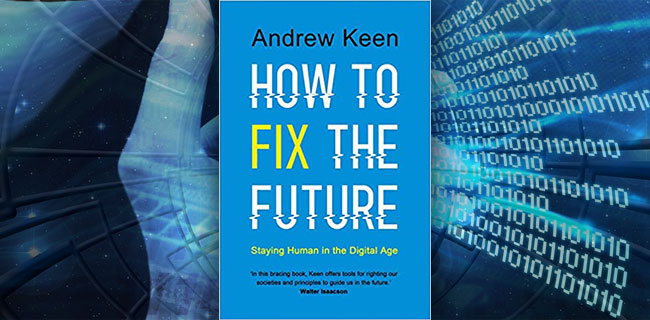
    I knew all along, there was something drastically wrong with the way the future is unveiling itself. I was on the lookout for a debate on ‘How to fix the future’. Andrew Keen’s session at the IAA World Congress held at Kochi, India in February this year probably opened new spaces for the discussion.

    We are under constant surveillance. Our behaviour is slowly being nudged towards what the dominant biggies Google, Amazon, Facebook of the business want. It is the new era of ‘Winner-takes-it-all’ business that is creating polarisation of wealth rather than distributing it.

    We are ignorantly working towards bettering their algorithms. We believe we are getting all this free. Not realising there is nothing free.

    The internet is a boon, but may be the price we are paying for its services outweigh the benefits.  Internet is the new morphine. Like many of us, I feel trapped in the system. I am addicted to it. I am unable to withdraw or detox.

    After having read ‘Internet is not the only thing’ by Andrew Keen, and having an equally polarised view of the internet, it was logical for me to pick his next book ‘How to Fix The Future: Staying Human in the Digital Age’.

    And if this is the trailer, what profound changes Artificial and Alternate Intelligence can unleash on mankind, unless we pre-plan to control the damage. History is witness to the fact that we are blinded by our vision of advantages and rarely humans have thought of the future repercussion while it adopted a new regime of services and products.

    Talking of the influence of internet-based services and addiction, I find it amusing and true. A potential threat humans failed to appreciate at the initial stage. “In the 1960s, we swam through the waters with only a few hooks: cigarettes, alcohol and drugs that were expensive and generally inaccessible… “In the 2010s, those same water are littered with hooks. There’s the Facebook hook, Instagram hook. The porn hook. The email hook. The online shopping hook. And so on. The list is long –far longer than it’s ever been in human history, and we’re only just learning the power of these hooks.”

    On the other side, humankind has always been smart enough to get out of the damage path by intense social pressure, tweaking of the technology and bringing new guidelines and reforms to control the damage.  Half of us would believe that we would once again succeed in doing so with the Internet and AI.

    In his book, Keen makes a very pertinent point: ‘The computer is the “Brain Outside ourselves” our “Second Brain”. From an evolutionary point of view, there we have taken an exponential leap. The new brain has outpaced our heart, our morality and beliefs. We are so preoccupied looking down at the second brains, that we forget how to look smartly at ourselves. As these devices get faster and faster, we appear to be standing still, as they produce more and more data about us, we are getting any more intelligent: as the devices become more powerful, we might lose control of our own lives. Instead of the singularity, we actually be on the brink of antithesis- let’s call it the “duality” –  an ever-deepening chasm between humans and smart machines and also between tech companies and the rest of humanity.

    He adds what I call a real possibility:  ‘In the future, we may no longer be in charge of our own creation… Our technology might be developing a mind of its own, thereby excluding and disempowering, and enslaving us. The existential threat of self-conscious algorithms is very real. They might be our final invention.’

    May be the answer lies in genuinely finding ‘What the Humans are good at’ and will always be a wee bit better than the machines. The current answer is ‘Nothing’. And we in our quest of making machines equally smart and emotive with a better power to process and take decisions are clearly on the path to wipe out any difference. I have my doubts. I am part of the small subset that believes; we are on the way to hastening the end of mankind. And one of the reasons I like reading Andrew Keen.

    Most of us are intellectually challenged to understand the enormity of the technology revolution, the amplified inequalities, the creation of parallel power centres feeding on our data and the race to harnessing Alternate intelligence.

    No doubt, Keen is open and transparent in stating: ‘This is a maybe book, based on the belief that the digital revolution can, like the industrial revolution, be mostly successfully tamed, managed and reformed. It hopes that the best feature of this transformation – increased innovation, transparency, creativity, even a dose of healthy disruption – might make the world a better place.”

    The book title ‘How to fix the future’ is misleading. There are no solutions. There can’t be.

    Keen presents a strong argument in favour of his belief that “No, not even the smartest technology can solve technological problems. Only people can”. I agree with him as he shares a few example and stories of how people are solving the thorniest problem in the digital age.

    Though there are directional paths from education to governance, to fixing it well in time. The example quoted in the book of Governance in Estonia and the always-on technology for betterment in Singapore shows some promise. The concept of ‘Universal Basic Income’, paid to everyone for ‘Not Doing Anything’ is also explored but be warned that can never be the solution. The only good part is that Andrew Keen is raising the issue. He at least presents a possible solution around competitive innovation, government regulation, consumer choice, social responsibility by business leaders, and education. It is up for healthy discussion.

    What I disliked was the constant reference to the 1516 work of Thomas More’s Utopia. It comes across as a framework of an idealistic world-inspiring Keen. But that is hardly the way life is expected to turn. Though it was interesting to note that if seen from a perspective More’s Utopia Map resembles a skull. May be there is a cryptic message in the map design that we are missing.

    Go read this interesting book that may sound fiction to many followers and admirers of internet-led ease in life.


  • Facebook hosts AI for Social Good Summit

    By A Correspondent


    Facebook has announced a host of initiatives dedicated to delivering social and inclusive growth by harnessing the power of emerging technologies led by Artificial Intelligence (AI). The announcements were made at Facebook’s inaugural AI for India Summit held in Bengaluru that focused on AI for Social Good. The summit was attended by AI thought-leaders, start-ups, NGOs, and the developer community.


    Kicking off the day-long summit, Ajit Mohan, Vice President and Managing Director, Facebook India, said: “At Facebook, we are developing and leveraging cutting-edge technologies for products we develop around the world. From developing a tool to swiftly connect blood banks and hospitals with blood donors to utilising Disaster Maps to aid the relief work during the 2018 Kerala Floods, we have always sought opportunities to deploy the best of our expertise in the service of India. We are an ally for India’s economic growth and social development and this summit is our effort to understand how we can contribute to the development of deep tech in India, as well as corral resources to use these technologies to develop impactful solutions for tough and persistent problems.”


    “At Facebook we are also committed to growing the local AI ecosystem, which can be achieved by providing support to start-ups, to the student community, and by ensuring diversity within the ecosystem itself. That’s the thought behind our key announcements today around AI for India Accelerator, trainings and scholarships for students and developers, and ‘Women in AI’ hackathons,” added Mohan.


  • Google and Facebook to make $176bn from advertising, pushing share of internet marketing to over 60%: WARC

    By A Correspondent


    WARC, the international marketing intelligence service, has found that of the $590.4bn spent on advertising worldwide last year, $144.6bn (24.5%) went to the Google and Facebook ‘duopoly’, which equates to almost one in four dollars. The duopoly’s adspend share is up from 20.3% in 2017 and is more than double the 10.8% recorded in 2014. WARC predicts a further increase to 28.6% ($176.4bn) this year.


    Looking only at the internet advertising market, the duopoly took over half (56.4%) of ad money in 2018, a share which WARC expects to rise to 61.4% this year. This growth, notes the report, is squeezing other online media owners, as the pool of ad money available to them is now in decline for the first time, down 0.7% to $111.0bn.


    Said James McDonald, Data Editor, WARC, and author of the research: “One of the main reasons for the duopoly’s success is their creation, and subsequent ownership, of the digital formats perceived to be most effective by adland’s decision makers: paid search and social. Several surveys in the past year have shown search and social to be highly regarded by advertisers in terms of meeting campaign objectives. Google dominates the search engine market, handling almost all mobile searches worldwide and nine in ten on desktops. Meanwhile, ad buyers can target Facebook’s 1.48bn daily users by leveraging a rich cache of personal data. Beyond major brands, the accessibility of the duopoly’s ad buying tools has attracted a long tail of small- and micro-advertisers, creating a competitive advantage which has been core to revenue growth.”

    Against this backdrop, WARC’s research on the duopoly highlights three key trends:

    Google and Facebook are directly competing for video dominance: The value of the online video market across WARC’s 12 key markets – Australia, Brazil, Canada, China, France, Germany, India, Italy, Japan, Russia, UK, US – is $30.2bn, which equates to 21.5% of linear TV, and is growing rapidly. Much of this money is spent on social media sites, including Facebook and YouTube (e.g. 86%, or £1.9bn in the UK).

    Both Google and Facebook hope to unlock brand budgets while also controlling the trade of targeted performance advertising. Regulation appears to be the principle threat to the duopoly’s growth, which currently shows no sign of a significant slowdown.


    Google is battling Amazon on two fronts to defend its search market dominance: Google handles 63,000 search queries per second – or two trillion in an average year – but its dominance of the paid search market may soon come under threat from Amazon. The e-commerce giant is developing its own search business, looking to pair advertisers with consumers close to the point of purchase.

    Whilst WARC expects Amazon to make $13.9bn from advertising this year (compared to Google’s $107.4bn), its ad business is growing much faster than Google’s, with 69% of marketers in a recent WARC survey stating that they intend to up their ad investment on Amazon this year.

    Amazon, which has a rich database of consumer purchasing habits, has also stolen a march on Google in the emerging area of voice search. Its Echo devices are used by 63% of American smart speaker owners, well ahead of Google’s Home devices on 26%.


    Younger Americans are leaving Facebook’s core platform for Instagram: Instagram is now the main driver of daily user growth for Facebook, with estimates suggesting that as many as 15m US users have left Facebook’s core platform since 2017.

    Instagram’s rise in popularity hasn’t gone unnoticed by marketers, with Instagram recording a net budget increase (the number of practitioners intending to increase budgets minus the number intending to decrease) of 67% in a recent WARC survey, ahead of Amazon on 63%, YouTube on 60%, and Facebook on just 13%.

    Facebook is responding by pivoting to an encrypted messaging service to regain consumer trust, and to build a secure environment for online payments. The company spent $1.1bn on advertising worldwide last year in the wake of the Cambridge Analytica scandal.


    Global media analysis – The Duopoly

    28.6% Google and Facebook’s combined share of global adspend this year, up from 24.5%in 2018

    41.0% search and social media’s share of US adspend

    51.8% share of attainable users Facebook reaches every day

    61.4% the duopoly’s expected share of the online ad market this year

    82.7% Facebook’s share of US social adspend in 2018

    86.0% social’s share of UK online video advertising spend

    Other key media intelligence new on WARC Data


    Seven in ten companies are not GDPR compliant

    TV’s reach key to cross-channel campaigns

    Flipkart lags behind Amazon India in adspend

    5G to triple mobile speeds by 2022

    94% of UK youth access TV streaming services

  • IProspect India wins digital duties for PayPal

    By A Correspondent


    IProspect India has bagged the digital paid media duties for the online payment service, PayPal. As part of the mandate, the agency will handle their paid media duties including Google Search, Facebook and programmatic display and will service the account from its Mumbai office.


    Said Jayant Desai, Head of Marketing, PayPal: “IProspect is known for its capabilities of data driven media buying and this is in line with our strategy in India. We are excited to partner with iProspect and look forward to partnering with them on award winning work.”


    Commenting on the win, Rubeena Singh, CEO, IProspect India said: “The confidence which PayPal has shown in us demonstrates the consistent and innovating work of the team at iProspect. Really proud to have PayPal on board and we will partner with them in delivering holistic solutions in India.”