Esports firm Global Esports has announced a partnership with Number, a wearable and gaming earbuds brand, as Title Sponsor for the BGMI roster ahead of BGMS Season 2. Global Esports are the defending champions from season one having defeated big teams, such as GodLike, Orangutan, and SouL to lift the grand trophy.
Commenting on the sponsorship, Rushindra Sinha, Co-founder of Global Esports, said: “We are thrilled to onboard Number as our title sponsor for BGMS 2023. Their commitment towards delivering well-designed high-quality products at an affordable price aligns with our vision to deliver at the highest stages and take the Indian gaming industry to the next level.”
Talking about the association, Jigar Mehta, CEO and Founder, Number said “At Number, our objective is to provide gamers with the best-in-class gaming audio accessories so that they may start their journey in esports with the right equipment. Esports is a strongly growing community in India and we strive to support this growth with our new and first-of-its-kind partnership with Global Esports. We are thrilled to partner with a leading organisation such as Global Esports who are also the winners of BGMS 2022. With this partnership, we mark our journey into the esports world and are here to stay, play and win the journey.”
BGMS 2023 was scheduled to kick off on August 4, 2023, with 24 Indian teams participating. It will be broadcast live on Star Sports Network and Rooter at 9.30 PM IST.
Is social media designed to reward people for acting badly?
The answer is clearly yes, given that the reward structure on social media platforms relies on popularity, as indicated by the number of responses – likes and comments – a post receives from other users. Black-box algorithms then further amplify the spread of posts that have attracted attention.
Sharing widely read content, by itself, isn’t a problem. But it becomes a problem when attention-getting, controversial content is prioritized by design. Given the design of social media sites, users form habits to automatically share the most engaging information regardless of its accuracy and potential harm. Offensive statements, attacks on out groups and false news are amplified, and misinformation often spreads further and faster than the truth.
We are two social psychologists and a marketing scholar. Our research, presented at the 2023 Nobel Prize Summit, shows that social media actually has the ability to create user habits to share high-quality content. After a few tweaks to the reward structure of social media platforms, users begin to share information that is accurate and fact-based.
The problem with habit-driven misinformation-sharing is significant. Facebook’s own research shows that being able to share already shared content with a single click drives misinformation. Thirty-eight percent of views of text misinformation and 65% of views of photographic misinformation come from content that has been reshared twice, meaning a share of a share of a share of an original post. The biggest sources of misinformation, such as Steve Bannon’s War Room, exploit social media’s popularity optimization to promote controversy and misinformation beyond their immediate audience.
How social media algorithms drive misinformation.
Re-targeting rewards
To investigate the effect of a new reward structure, we gave financial rewards to some users for sharing accurate content and not sharing misinformation. These financial rewards simulated the positive social feedback, such as likes, that users typically receive when they share content on platforms. In essence, we created a new reward structure based on accuracy instead of attention.
As on popular social media platforms, participants in our research learned what got rewarded by sharing information and observing the outcome, without being explicitly informed of the rewards beforehand. This means that the intervention did not change the users’ goals, just their online experiences. After the change in reward structure, participants shared significantly more content that was accurate. More remarkably, users continued to share accurate content even after we removed rewards for accuracy in a subsequent round of testing. These results show that users can be given incentives to share accurate information as a matter of habit.
A different group of users received rewards for sharing misinformation and for not sharing accurate content. Surprisingly, their sharing most resembled that of users who shared news as they normally would, without any financial reward. The striking similarity between these groups reveals that social media platforms encourage users to share attention-getting content that engages others at the expense of accuracy and safety.
Engagement and the bottom line
Maintaining high levels of user engagement is crucial for the financial model of social media platforms. Attention-getting content keeps users active on the platforms. This activity provides social media companies with valuable user data for their primary revenue source: targeted advertising.
In practice, social media companies might be concerned that changing user habits could reduce users’ engagement with their platforms. However, our experiments demonstrate that modifying users’ rewards does not reduce overall sharing. Thus, social media companies can build habits to share accurate content without compromising their user base.
Platforms that give incentives for spreading accurate content can foster trust and maintain or potentially increase engagement with social media. In our studies, users expressed concerns about the prevalence of fake content, leading some to reduce their sharing on social platforms. An accuracy-based reward structure could help restore waning user confidence.
Doing right and doing well
Our approach, using the existing rewards on social media to create incentives for accuracy, tackles misinformation spread without significantly disrupting the sites’ business model. This has the additional advantage of altering rewards instead of introducing content restrictions, which are often controversial and costly in financial and human terms.
Implementing our proposed reward system for news sharing carries minimal costs and can be easily integrated into existing platforms. The key idea is to provide users with rewards in the form of social recognition when they share accurate news content. This can be achieved by introducing response buttons to indicate trust and accuracy. By incorporating social recognition for accurate content, algorithms that amplify popular content can leverage crowdsourcing to identify and amplify truthful information.
Both sides of the political aisle now agree that social media has challenges, and our data pinpoints the root of the problem: the design of social media platforms.
Ian Anderson is a PhD student in Social Psychology, USC Dornsife College of Letters, Arts and Sciences; Gizem Ceylan is a Postdoctoral Research Associate, School of Management, Yale University, and Wendy Wood is Provost Professor Emeritus of Psychology and Business, USC Dornsife College of Letters, Arts and Sciences. This article is republished from The Conversation under a Creative Commons license. Read the original article.
The one constant the internet offers us is a continual rotation of trends. Months ago, the trend was people exhibiting “main character energy”. People were imagining themselves as main characters in their own life show: they were the ones who knew everyone’s name in the coffee shop, they were having the whirlwind romance, they were only accepting the best.
Now, the trends have moved on, and people are NPCs.
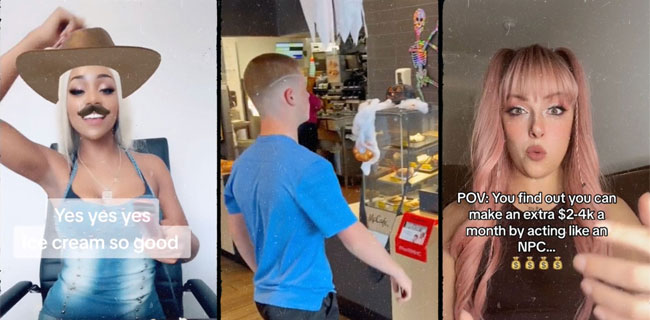
Non-playable characters, or NPCs, are taking TikTok by storm. NPCs originate in video games. They are the background characters, the ones with repetitive movements and sayings, and no storylines. The main, playable, character can interact with them but only in limited ways. They are tools in someone else’s story.
People pretending to be NPCs on TikTok are not new. Creator @loczniki, Nicki Loczek, has been acting like a video game character on her TikTok page for two years. Her videos regularly get millions of views.
NPC content rapidly gained popularity in recent months when creators like @pinkydollreal have been live streaming as NPCs. NPC creators perform scripted lines and reactions to purchased “gifts” from their fans that then appear on screen as emojis.
Giving diamonds, coins and other gifts to creators has a very low cost to fans. However, when creators accumulate large audiences, the profits can add up significantly, especially when the streams can go for hours. Creator @glam_with_dee tried out the trend and shared that she made $99 in a two-and-a-half-hour stream.
Some people are calling the NPC trend a fetish – more often that not it is beautiful women performing actions and sounds on command for an audience. Others, however, disavow this sentiment, stating that people always claim women making money from the absurd is a fetish, when it is often far from the truth.
People watch NPCs on TikTok for a variety of reasons. Nicki Loczek’s popularity came from her funny videos pretending to be a video game character in public. Many streamers also dress up in elaborate cosplay costumes, feeding into the gaming and fantasy aesthetic.
Others, myself included, watch for the absurdity. It is uncanny watching people be NPCs.
Commodifying the self
People online have been commodifying themselves since social media platforms introduced creator fund programs and brands recognised the income potential of content creators. For years, creators have been participating in brand deals for anything from health products to home decor, with some going as far as deals for free cosmetic surgery.
One of the key principles of being successful online is a consistent personal brand. Traditionally, when we think about people becoming successful online, we attribute this to authenticity.
Audiences want consistent posts, a clear authorial voice, and a person and brand where they know what they’re getting. While NPCs cannot technically be “authentic” as they are characters rather than people, they still fulfil these attributes on TikTok. They do what we think they will do. Their reactions are expected, if not delivered at the specific times we ask for them.
NPC live streamers have planned reactions to the “gifts” they receive while they stream. Bigger gifts usually have bigger reactions. Christine Tran, a PhD candidate from the University of Toronto, states: “NPC streamers are just the latest genre of creators who divide their bodies into marketplaces of intimacy.”
The NPC trend fits in with other forms of online commodification. Pretending to be an NPC on TikTok live is not too far removed from popular YouTubers maintaining an “online persona” for the purposes of creating a marketable, brand-friendly channel.
Monetisation online
TikTok is one of many social media platforms where users create and sell a personal brand for money. Tobias Raun, an assistant professor in communications, states: “YouTube as a platform plays a crucial role by persistently encouraging users to compete for attention and status and rewarding them economically for promoting themselves.”
TikTok pays its users far less than YouTube does. While the real numbers differ depending on video length and the creator themselves, TikTok is known to pay $0.03 per 1,000 views, compared to multiple dollars on YouTube. The most money to be made on TikTok, outside of brand deals, is through live streams.
The creator fund on TikTok is limited to creators with over 10,000 followers who have amassed a minimum of 100,000 views in the last month. It is also available in limited countries. Australia is not included.
Alternatively, any creator with over 1,000 followers can live stream and can cash out in-app “gifts” for real money. This system is available to far more people.
The NPC trend has shown us how the self-branding online we are more familiar with, people being so authentically themselves, can be surpassed by people playing a character. The rise in live videos on TikTok is linked to the platform’s monetisation policies. If content creators want to make money from their content, they either need an incredibly large following or must find brand deals or do live streams.
I couldn’t call myself an autoethnographic researcher without trying to go live myself. I did.
TikTok is a strange, strange place. I went live for 15 minutes while writing some of this article, and 320 people watched me. I talked to some of them. Someone said I typed too hard. Someone else asked me to sing Black Sabbath.
I closed my TikTok app with a new-found appreciation (and a little bit of fear) of how hard it must be to maintain a character for hours during a live stream.
Someone did say they liked the sound of my typing. If I found a way to do my marking on an ASMR live stream, you would find me on TikTok tomorrow.
Edith Jennifer Hill is Associate Lecturer with Flinders University. This article is republished from The Conversation under a Creative Commons license. Read the original article.
We Indians have suddenly discovered a new food ingredient. Tomato Puree’ is now the talk of town of the urban and even semi urban Indian. Price of tomatoes is passe’. I actually joked with my vegetable vendor while asking him the price of tomatoes, that will he charge me for just asking the price. The fact is that at the price of a kilogram of tomatoes one could buy 4 kgs of Langda mango in Doon. (Last enquiry showed the price of tomatoes as Rs 250 per kg in my neighbourhood). The big issue today at retail outlets and on ecommerce sites is the availability of Tomato Puree’. I am told that in Mumbai there is already a blackmarket of the exalted product. Retailers are claiming that the demand has gone up by 6-8 times for the puree’.
Now, I am no cook or an expert in food ingredients. But I was intrigued. Price of basic tomatoes was going through the roof. Every Tom, Dick and Harry worth their salt were asking people to use tomato puree’. The demand for the product had soared. Puree’ was being touted as the next best thing to fresh tomatoes and yet, wasn’t it processed food? Didn’t it have any other additive? And if tomato is costly, anything being made out of tomato should also see a price hike. Old stocks notwithstanding.
Let me also confess that having worked on food brands, I do have some basic idea about Tomato Sauce and Tomato Paste. But Puree’ for me is a new one. So, I turned to my wife first for some information. I recollect that when we were in Egypt, tomato paste was a common ingredient found in local kitchens and it was used as a base for cooking of many a vegetable dishes. My wife informed me that puree’ is a much thinner version of the paste. It is more natural, less processed and closer to the actual flavour of tomato.
Next, I looked up the web and found the following descriptors for puree’ and paste.
Tomato puree is a product made from fresh, ripe tomatoes that are cooked, then blended into a thick liquid just slightly thicker than a typical tomato sauce. However, unlike tomato sauce which can be chunky, tomato puree is smooth and uniform. An acid (like lemon juice) and salt is usually added giving tomato puree a bright flavour.
Tomato paste is a concentrated form of cooked tomatoes, where tomatoes are cooked, strained and recooked until most of the liquid has evaporated and the tomatoes reach a thick, pasty texture similar to toothpaste. Because tomato paste is cooked for a longer period of time, it has a deep red hue and sweet flavour thanks to the natural sugars present in the tomatoes. Like tomato puree, store-bought tomato paste may contain added acid and salt.
Having armed myself with some basic knowledge I searched for actual products. The first brand I came across was Kissan puree’. And the ingredient information shocked me. It said water, tomato paste, salt and acidity regulator. Tomato paste? Not from tomato itself? And only 34.8% was tomato paste. So, what was the rest? Water, salt and acidity regulator. How could this therefore be a substitute for natural tomatoes. The rule when one writes ingredients on the pack is that the ingredients will come in a descending order of total composition. So, Kissan tomato puree’ is actually water mixed with tomato paste, salt and acidity regulator. The good thing was that the brand was being honest but the brainwashing on puree’ does not prepare one for these facts. I mean how can something, read paste, which by definition is cooked twice so that it is devoid of water be used to make another product, read puree’ which is more liquidy? By adding water. So, we are being charged for adding water to paste?
The next brand I encountered was Topps puree’. In ingredient information it said tomato, sugar, iodised salt and preservative. Now, look at the inconsistency in the ingredient information. No mention of what amount of tomato or salt or preservative. Just by its absence it can be presumed that all is not healthy. Though tomato written as the first ingredient means that the brand has more of tomato.
But the real surprise about how rules regarding packaging, ingredient information and even branding are vague and open to interpretation happened when I came across Dabur Hommade Puree’. Sounded too good to be true. And it was. As behind the pack is a disclaimer which says “Hommade is only a trademark and does not represent its true nature.” Seriously? Hommade is a Dabur brand which is quite misleading but that’s another story. The pack says made from 100% ripe tomatoes. And yet if one looks at the ingredient story it is almost the same as Kissan. Water, Tomato paste (37%), acidity regulator and anti oxidant. Tomato paste? So, what’s this about made from 100% ripe tomatoes. Misleading? To a lay consumer like me, definitely.
I did look up Kissan Tomato paste also. Its ingredient story had Tomato paste (96%) as the first ingredient, followed by water, salt, sugar and and acidity regulator.
And I also came across some imported Italian brands which had 96% tomatoes and salt as the only two ingredients in puree’.
This is what I had written about in my last blog. We consumers are being taken for a ride. The packaging rules are not clear. Ingredient story is incomplete and sometimes not consistent with the claims. Phrases are being used as brand names which have to be defended within the packaging but in an obscure fashion. So called influencers who obviously are being paid then drive the gullible us to use products which are not exactly what they are supposed to be.
I am sure that the legal departments of these companies will have arguments to counter all this. But, why do they need legal to justify a product?
Looks like the Tomato story is not just about the price.
Vikas Mehta is a Dehradun-based business strategy and marketing consultant and educator. He writes on MxMIndia every other Monday. His views here are personal.
Planet Marathi Group has joined hands with Vistas Media to launch an OTT platform called ‘Planet Bharat’. This new OTT will showcase high-quality local language content across a diverse range of formats, languages, dialects and genres. It will be launched in November 2023.
Said Akshay Bardapurkar, Founder and CEO of Planet Marathi Group: “It is essential that we elevate the standards of creating and consuming Indian content. Our country is home to numerous languages, each possessing its own unique power and potential that remains largely untapped. There is a significant void in exceptional content from India across languages, and Planet Bharat aims to bridge that gap. With the launch of Planet Bharat, we strive to create a unified one stop destination, where audiences across the globe can enjoy and embrace the diverse cultural heritage that India has to offer.”
Added Abhayanand Singh, CEO of Vistas Media: “Our country is made up of various languages, cultures and dialects and often, many of them get neglected for various reasons. Planet Bharat aims to bring the whole nation together, wherein we will celebrate the diversity of our culture with a significant representation across segments.”
Nine months after the launch of ChatGPT, the hype has died down and the real work of building upon the burgeoning availability of Large Language Models (LLMs), of which ChatGPt is but one example, has begun.
The interest of businesses in the concept of Big Data rose exponentially in 2012. Many expected a paradigm shift in consumer marketing based on nifty analytical systems driven by Big Data. Much was expected in data-driven decision-making, personalisation and customisation, targeted advertising, sharper segmentation, predictive analytics and real-time insights. In 2015, in its report titled ‘Big Data, Analytics and the Future of Marketing and Sales’, McKinsey laid out the expectations.
In 2023, the future is different from what McKinsey expected. The paradigm certainly shifted for Google and Meta, who cornered the advertising market based on a humongous amount of real-time Big data and state-of-the-art analytical engines.
Change also happened for brands that marketed and sold products and services to B2C and B2B markets. However, the difference had little to do with their use of Big Data and advanced analytical systems. It was in the emergence of the digital universe as a product, go-to-market and communication platform.
Dig a little, and you will find that the thesis that brands under-exploited the opportunity that Big Data presented to them mainly because they used legacy databases and ERP systems from the likes of SAP, Oracle and Salesforces to collect and store their Big Data. As a result, while many created special teams to mine, warehouse and analyse Big Data, most crucial business, marketing and sales decisions continued to be based on traditional business analysis and market research.
Meanwhile, Google and Meta (then Facebook) invested in an analytical system that eschewed the rigidity of the traditional IT-age relational databases – essentially tables with rigid rows and columns. In a seminal decision that presaged the age of AI, they decided to populate their databases in graphs – a network of nodes with many properties with multiple links to other nodes, with each link specifying a kind of relationship with a property of the originating node and a property of the linking node.
Such a database structure allowed for:
:: Fast and more varied analysis
:: More immediate additions and reconfiguration of the database as conditions change
:: Better situational analysis and insight discovery through “what-if” analysis that changed node and link configurations
Based on their ever-expanding, ever-enriched graphs and the use of Machine Learning (ML) driven near-real-time analysis, Google and Meta created a mighty advertising service with the confidence to offer brands a pay-per-click service. As a result, brands willy-nilly outsourced the harnessing of the real opportunity of the digital and Big Data age to Google, Meta and other digital ad exchanges that sprang up.
It is no surprise that Google and Facebook are among the most advanced AI players today, including in the field of LLMs with Google’s Bard and Facebook’s Llama. The essential process that powers LLMs is that they parse large storehouses of text into triples of subjects, objects and predicates and then model them into graphs with the nodes consisting of subjects and objects and the links signifying relationships in the form of predicates.
As Google’s and Meta’s LLMs improved power, it turbocharged their graph databases, allowing them to automate the process of incorporating unstructured into their graphs. Perhaps left to themselves, Google and Meta would not have exposed their LLMs to the public as they have done so now but kept it themselves as a background technology powering customer-facing applications. Instead, OpenAI and ChatGPT forced their hand.
The resultant hype around ChatGPT has kickstarted the age of AI, with the world at large now seriously scrambling to incorporate AI into businesses, Governments, schools, hospitals and wars. Publications like The Economist and others have started ranking Fortune 500 companies based on the potential competitive advantages/disadvantages that AI can deliver to them!
How will businesses in general and marketers in particular respond to the new horizons of AI?
The powers of MI, Graph Theory and Advanced Modelling will create a new platform that will change how businesses, if not entire societies, are run. Just as the arrival of digital media changed economies at the core, Graphs with Big Data inputs from structured and unstructured sources (processed through LLMs) will create dynamic market models that will change how businesses are structured, with business and marketing strategy being almost wholly automated with human inputs needed only at the highest meta-strategy level. The shift will be paradigmatic enough for the world to label the resultant business order as the Nth Industrial Revolution, a sub-set of the First AI Revolution that will redefine human society.
The question is whether individual businesses will seize this opportunity, invest and build proprietary dynamic models that will run their companies, or will they, once again, as they did with the digital revolution, outsource it to the next Google or Meta?
The stakes this time are higher. Not only will the businesses themselves be more beholden to those who own and run the models, but in the process, society will create AI-driven behemoths that will be the first step to the dysfunctional system that those who fear AI imagine.
Therefore, it is incumbent on business leaders and thinkers to pay close attention to this evolving opportunity and invest all that is needed to harness it before it becomes an insurmountable challenge.
Alike, the social travel marketplace, conducted a survey across its official social media channels and online travel communities. This survey aimed to uncover the key reasons that put-off people from booking their holidays online.
The survey findings reveal that 40% of respondents found the information on destinations, accommodations, or prices to be misleading, which erodes trust in online holiday brands.
A further 26% of respondents were put-off by a previous experience of subpar customer service during travel planning, that left them feeling unheard and unsupported.
The report further highlighted that 21% of respondents expressed frustration with the time-consuming process of hunting for the best deals tailored to their preferences. This arduous task of sifting through numerous options often leads to hours spent comparing choices.
And the final 12% respondents noted the absence of personalised recommendations and travel options, which resulted in a feeling of robotic treatment with one size fits all, cookie-cutter options presented on the online holiday booking platforms.
Ashish Sidhra, Co-founder at Alike, said: “The Indian consumer is used to benchmark digital experiences in their daily life, and it is high time they are served with similar quality of service in online holiday bookings as well. We at Alike are proud of the continued top-rated reviews from our global customers and are committed to offering the same trustworthy online experiences for holiday bookings for our Indian customers, that are based on global best practices.”
PhonePe has launched celebrity voice feature on its SmartSpeakers in collaboration with actor Amitabh Bachchan as part of its Golden Voice Project. Instead of the automated payment confirmation message while shopping, shoppers and merchants will now hear the voice of Mr Bachchan. This has been executed by 82.5 Communications.
Commenting on the 82.5 x PhonePe collaboration for the Golden Voice project, Ramesh Srinivasan, Director, Brand Marketing, PhonePe said: “The intent was to change the way merchants get their payment alerts, reminders and other notifications. We are glad to have 82.5 Communications partner with us on this. They were able to lend their ingenious touch to the existing prompts and turn it into something magical, in a manner that every merchant and customer shall now feel and hear Mr. Bachchan’s presence in every part of the country.”
Added Mayur Varma, CCO, 82.5 Communications: “PhonePe SmartSpeakers speaking in electronic voices were going to get a massive voice upgrade. Big B was bringing in his baritone, and we got the opportunity to set the tone of voice that was uniquely PhonePe. Henceforth, there will be a clear distinction between PhonePe SmartSpeakers and the ‘rest of them’.”
Truecaller has unveils a new corporate brand identity with a redesigned brand logo and App icon. The new look and feel of the brand with a refreshed app icon reflects the essence of the Truecaller brand.
According to a communique, Interbrand, the leading brand consultancy, and Truecaller have conceptualised this together to create a governing idea and key insight that addresses people’s desire for clarity, confidence, freedom, and fulfilment.
Said Ashwani Sinha, Vice President, Global Brand at Truecaller: “Today when brands are going out of their way to find their ‘purpose’, we don’t take lightly that we have purpose built into the core of our business. When we empower our users to take the right call, they in turn empower millions more by marking out fraud and spam calls. This flywheel of trust, powered by our 356-million strong global community, helps make communication a little safer every day. Our new positioning and brand identity is a reflection of this empowerment and trust.”
Talking about the new identity, Ashish Mishra, CEO, Interbrand India and South Asia, added: “Brands are increasingly being built on new acts of leadership. In areas which concern the world and its people most. We found an opportunity in the pervasive disinformation that plagues our times. Truecaller perhaps is the best placed brand in the world to lead the empowerment of people, businesses, and communities through true information. Under this larger ambit of nobility laced with a touch of activism, lie the more tangible step ups of recognisability and smooth experience. A signature design system and UX audit to identify the experience gaps helped deliver these within the rebrand.”
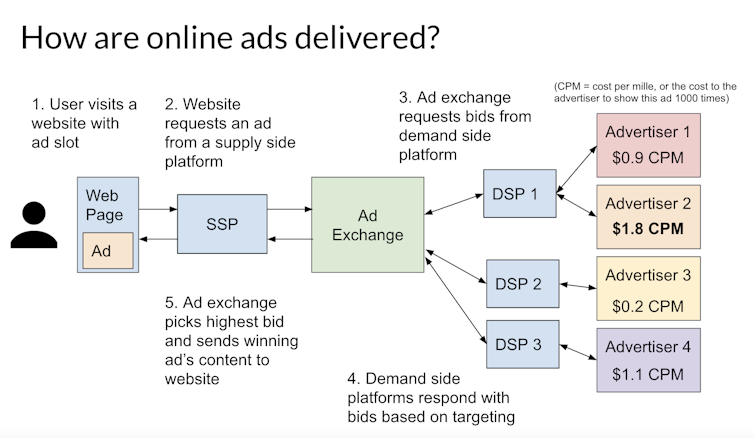
Each day, you leave digital traces of what you did, where you went, who you communicated with, what you bought, what you’re thinking of buying, and much more. This mass of data serves as a library of clues for personalized ads, which are sent to you by a sophisticated network – an automated marketplace of advertisers, publishers and ad brokers that operates at lightning speed.
The ad networks are designed to shield your identity, but companies and governments are able to combine that information with other data, particularly phone location, to identify you and track your movements and online activity. More invasive yet is spyware – malicious software that a government agent, private investigator or criminal installs on someone’s phone or computer without their knowledge or consent. Spyware lets the user see the contents of the target’s device, including calls, texts, email and voicemail. Some forms of spyware can take control of a phone, including turning on its microphone and camera.
Now, according to an investigative report by the Israeli newspaper Haaretz, an Israeli technology company called Insanet has developed the means of delivering spyware via online ad networks, turning some targeted ads into Trojan horses. According to the report, there’s no defense against the spyware, and the Israeli government has given Insanet approval to sell the technology.
Sneaking in unseen
Insanet’s spyware, Sherlock, is not the first spyware that can be installed on a phone without the need to trick the phone’s owner into clicking on a malicious link or downloading a malicious file. NSO’s iPhone-hacking Pegasus, for instance, is one of the most controversial spyware tools to emerge in the past five years.
Pegasus relies on vulnerabilities in Apple’s iOS, the iPhone operating system, to infiltrate a phone undetected. Apple issued a security update for the latest vulnerability on Sept. 7, 2023.
When you see an ad on a web page, behind the scenes an ad network has just automatically conducted an auction to decide which advertiser won the right to present their ad to you. Eric Zeng, CC BY-ND
What sets Insanet’s Sherlock apart from Pegasus is its exploitation of ad networks rather than vulnerabilities in phones. A Sherlock user creates an ad campaign that narrowly focuses on the target’s demographic and location, and places a spyware-laden ad with an ad exchange. Once the ad is served to a web page that the target views, the spyware is secretly installed on the target’s phone or computer.
Although it’s too early to determine the full extent of Sherlock’s capabilities and limitations, the Haaretz report found that it can infect Windows-based computers and Android phones as well as iPhones.
Spyware vs. malware
Ad networks have been used to deliver malicious software for years, a practice dubbed malvertising. In most cases, the malware is aimed at computers rather than phones, is indiscriminate, and is designed to lock a user’s data as part of a ransomware attack or steal passwords to access online accounts or organizational networks. The ad networks constantly scan for malvertising and rapidly block it when detected.
Spyware, on the other hand, tends to be aimed at phones, is targeted at specific people or narrow categories of people, and is designed to clandestinely obtain sensitive information and monitor someone’s activities. Once spyware infiltrates your system, it can record keystrokes, take screenshots and use various tracking mechanisms before transmitting your stolen data to the spyware’s creator.
While its actual capabilities are still under investigation, the new Sherlock spyware is at least capable of infiltration, monitoring, data capture and data transmission, according to the Haaretz report.
The new Sherlock spyware is likely to have the same frightening capabilities as the previously discovered Pegasus.
Who’s using spyware
From 2011 to 2023, at least 74 governments engaged in contracts with commercial companies to acquire spyware or digital forensics technology. National governments might deploy spyware for surveillance and gathering intelligence as well as combating crime and terrorism. Law enforcement agencies might similarly use spyware as part of investigative efforts, especially in cases involving cybercrime, organised crime or national security threats.
Companies might use spyware to monitor employees’ computer activities, ostensibly to protect intellectual property, prevent data breaches or ensure compliance with company policies. Private investigators might use spyware to gather information and evidence for clients on legal or personal matters. Hackers and organised crime figures might use spyware to steal information to use in fraud or extortion schemes.
On top of the revelation that Israeli cybersecurity firms have developed a defence-proof technology that appropriates online advertising for civilian surveillance, a key concern is that Insanet’s advanced spyware was legally authorized by the Israeli government for sale to a broader audience. This potentially puts virtually everyone at risk.
The silver lining is that Sherlock appears to be expensive to use. According to an internal company document cited in the Haaretz report, a single Sherlock infection costs a client of a company using the technology a hefty US$6.4 million.
Claire Seungeun Lee is Associate Professor of Criminology and Justice Studies at UMass Lowell. This article is republished from The Conversation under a Creative Commons license. Read the original article.
I coined Concierge Intelligence (CI) as a type of Artificial Intelligence (AI) owned by and dedicated to an individual and fully protective of his privacy. CI would aid the individual in understanding herself better and leading to better life outcomes in health, education, career and relationships – in general, as a putative ad copy would say: ‘Be A Better You’. Further, CI would handle routine tasks like shopping, bill paying, appointments, correspondence and travel arrangements based on a deep understanding of the individual’s preferences and needs and an up-to-the-minute and universal understanding of options. CI would be under the complete control of the individual, who can switch it off and on and decide on the level of access granted.
When I first wrote about CI in Feb 2021, the concept seemed at least a decade or more away. Not any longer. Like the world, I was unaware of the rapid progress of Large Language Models (LLM) technology.
Today, many factors indicate that the first generation of CI is around the corner. A CI prototype might already be in the hands of hundreds of millions worldwide! Let me explain.
For a couple of years now, Apple has been communicating the following:
:: Many of the functions and Apps on its devices – Siri, Keyboard Suggestions, Health, Messages, Mail, Music, Books, and Apple TV – use AI to enhance user experience and utility.
:: Apple puts ensuring user privacy as the highest priority. Therefore, all its AI works on data and software residing on the user’s device, under complete user control, and cordoned off from other entities, including Apple.
The penny dropped when I first read about the Journal App that Apple is readying for release with iOS 17. Journal App gives iPhone users the means to record their day-to-day activities and uses advanced prompt features enabling users to track their emotional state and the causes.
The latest iPhones carry specialised chips that allow the device to run sophisticated AI programs on the device itself. With the breadth and depth of information, the iPhone has about its users, the phone’s processing capabilities and the level of trust Apple had built with its users, all the conditions that make for a CI already exist. Over the next few years, iPhone users, prompted by Apple, will increasingly find use cases for the CI that resides over the phone. With each new generation of iPhones, the CI will get more powerful and within the next decade, Apple will likely brand this as a proprietary feature and build a revenue model around it. CI by Apple could be the next big thing from Apple after the iPhone. If Apple keeps its promise of protecting user privacy, iPhone CI will add to the quality of life and be one of AI’s boons.
While the wizards of Cupertino are coming at AI based on an individual’s shared experiences, the wizard who has given the world Tesla and SpaceX is taking a different tack.
Musk wants Tesla to be the first to launch a fully self-driven car without a steering wheel or a brake pedal to allow a human driver to take control. While many companies, Alphabet being one of them, are at work perfecting AI systems, Musk’s approach is entirely different from the rest.
Alphabet and others are trying to build a self-driving car based on an algorithm that relies on the following:
:: Signals from a hardware system consisting of cameras and radars that transmit in great detail, second by microsecond, the physical environment of the car as it drives through a roadscape.
:: And rules that codify the signals into millions of scenarios and actions that are needed to respond to the system.
The above approach is similar to the early days of Natural Language Processing, which tried to create language models based on the contextual meaning of words and rules of grammar and idiomatic usage.
In one sense, Musk’s flip on the AI needed to build a self-driven car is simple. He believes if humans can drive cars based on just visual inputs, so can AI. So, radars are the first things he has taken out of the equation. His second lead is even greater. Large Language Models (LLMs) like GPT 4.0 work through patterns that a Deep Learning AI system detects from a large enough set of training data without needing an explicit set of rules. Musk’s leap is that he can build AI systems that can operate in the physical world through a large enough training data set. The difference is that in the case of the physical world, the data set is visual.
Every Tesla carries a set of high-resolution cameras. And its software records all the actions that a driver takes. Further, all the data from the cameras and the software systems are transmitted to Tesla’s servers. With millions of Teslas worldwide, Tesla has an ever-increasing training data set.
Musk is not stopping at building self-driving Robocars but is busy building a human-like robot branded Optimus on the same AI principles. The training data for Optimus-like robots will come from recording humans engaged in various activities – cooking a meal, navigating a home, an office or a mall, playing a sport, etc.
Further, in all cases, the training data will be culled so that the robot learns from the best drivers, champion players, chefs, etc. So ipso facto, robots will come out of the gate better than humans because they learnt from the best and have the advantage of being faster, connected and untiring.
Paradoxically, Musk also pays lip service to the dangers of AI and contends that he is trying to build something like Assimov’s Three Laws of Robotics into the AI systems he is busy inventing.
So, between the CI that Apple is fast making a reality and Musk’s promised Robot Intelligence (RI), AI is set to impact the daily lives of all of us significantly.
Another AI revolution is brewing in the scientific field, launching tectonic shifts that will alter human civilisation. But that is grist for another post.
New research from LinkedIn reveals marketers in India are ready to embrace AI with 78% feeling confident about using AI tools.
The study reveals that the majority (83%) of marketers in India believe AI will significantly change the way they work in the next year, and nearly half (47%) hope it will help them to be more productive. The research also found that 93% believe AI will support their work and help create space for teams to think innovatively.
AI will free up considerable time for marketers to build impactful creative campaigns
As companies look to stay top of mind and leverage creativity to build memorability among audiences, AI will enable marketers to spend less time trying to find potential buyers, and more time on higher value work such as engaging with customers. Marketers plan to use AI for day-to-day tasks, such as summarising lengthy articles and videos (88%), creating first drafts of written content and presentations (82%), and helping them problem solve (83%).
In India, 68% of marketers are using the technology today, with nearly half (45%) experimenting with tools such as ChatGPT. LinkedIn’s latest ‘B2B Marketing Benchmark’ report also finds that 87% of B2B marketing leaders in India plan to increase their use of generative AI in the next year.
Said Ashutosh Gupta, Country Manager at LinkedIn India: “AI tools can work as great supporters for B2B CMOs by taking on operational tasks and creating room for marketers to focus on building strong customer relationships. Amid competing priorities and limited resources, AI empowers marketers to excel in strategic work, deepen customer connections, and create memorable campaigns that drive immediate action and fuel long-term business growth.”




 We Indians have suddenly discovered a new food ingredient. Tomato Puree’ is now the talk of town of the urban and even semi urban Indian. Price of tomatoes is passe’. I actually joked with my vegetable vendor while asking him the price of tomatoes, that will he charge me for just asking the price. The fact is that at the price of a kilogram of tomatoes one could buy 4 kgs of Langda mango in Doon. (Last enquiry showed the price of tomatoes as Rs 250 per kg in my neighbourhood). The big issue today at retail outlets and on ecommerce sites is the availability of Tomato Puree’. I am told that in Mumbai there is already a blackmarket of the exalted product. Retailers are claiming that the demand has gone up by 6-8 times for the puree’.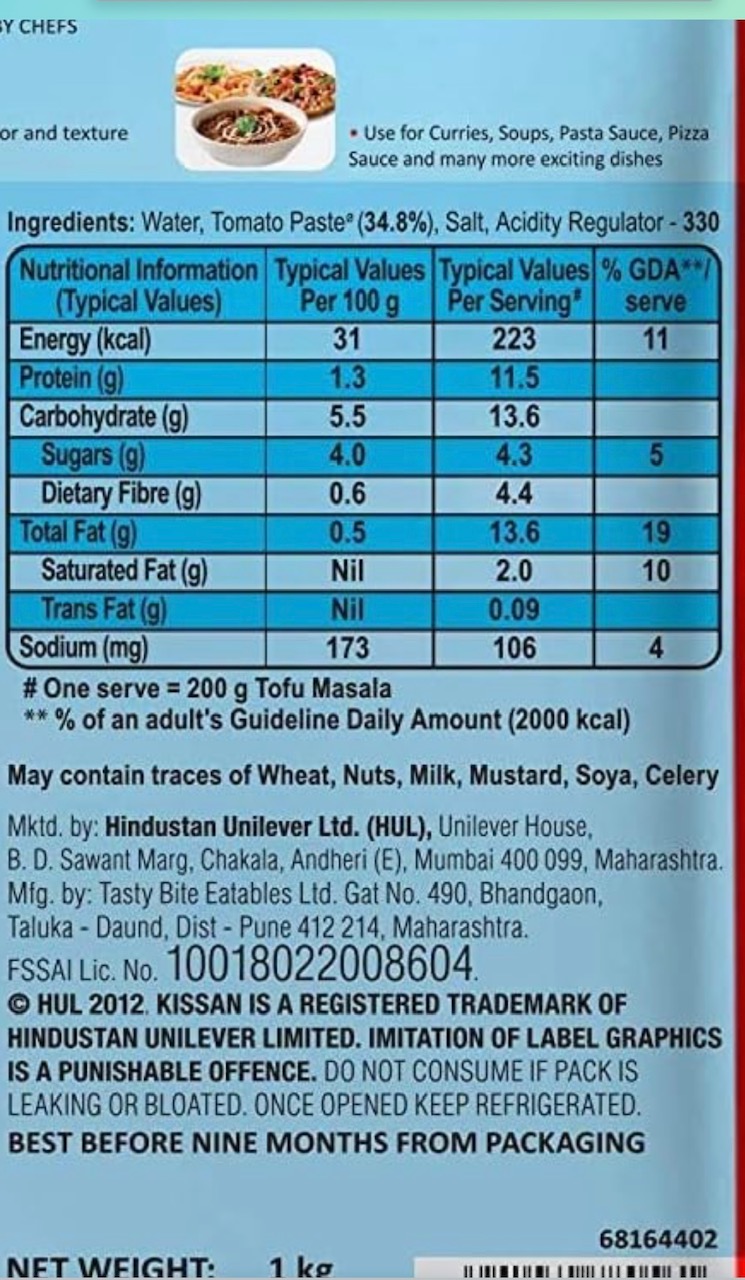






 Nine months after the launch of ChatGPT, the hype has died down and the real work of building upon the burgeoning availability of Large Language Models (LLMs), of which ChatGPt is but one example, has begun.