There’s no doubt generative AI’s ability to rapidly produce new texts, images and audio is shaking up creative jobs.
In the long-running Writers Guild of America strike, a central sticking point has been the guild’s demand that AI be used only as a research tool and not a replacement for its members. For many creative types, it seems harder to earn a living with AI around.
At the same time, however, AI tools are often seen as a springboard to next-level human creativity. Technologies such as Anthropic’s chatbot Claude and OpenAI’s ChatGPT and Dall-E 3 offer a seductive creative experience.
Will these tools help us survive and thrive as a creative species? Or are they the death knell of creativity as we know it?
What is creativity?
In her book The Creative Mind, cognitive science expert Margaret Boden distinguishes between two types of human creativity.
Psychological or personal (p-type) creativity happens when an individual thinks something for the first time – even if others have thought it separately before. One example is a child realising water can take any shape.
Essentially, p-type creativity is learning something useful and, in the process, synchronising our thoughts with others.
Historical creativity (h-type), on the other hand, happens when an individual thinks something that has never been thought before. One example would be Archimedes’s “eureka” moment in the bath, which supposedly led to him discovering the law of buoyancy.
The more someone’s creativity subsequently affects other people’s thinking, the more momentous and enduring we consider their legacy.
This is why Wandjina rock art in the Kimberley, Homer’s Iliad, Pablo Picasso’s Guernica, Frank Lloyd Wright’s Fallingwater house and Albert Einstein’s Annus Mirabilis papers are all considered exceptional works left behind by exceptional humans. They are important because they continue to shape our thinking.
Generative AI doesn’t belong in either category
AI obviously has the potential to promote both p-type and h-type creativity. It can lead us to insights about biology, history and mathematics, and help us create texts and images that may be useful or thought-provoking.
But there is one key difference between human creativity and AI-driven creativity: the latter doesn’t stem from the evolutionary clash of mind and world.
AI models don’t contain reality. They rely on the complex statistical abstraction of digital data. This limits their real-world creative significance and their capacity to produce “eureka” moments.
To differentiate AI-driven creativity from old-fashioned creativity, I have proposed a new term: generic, or g-type, creativity. It formalises the fact that while AI models are capable of provoking new thought, they are limited by the underlying data they have been trained on.
The big risk: a generic spiral
We can expect an explosion in g-type creativity in our future. The danger here is that our increasing use of AI could make us think too much alike, leading to a decrease in cognitive diversity and an increase in cultural tightness.
In this scenario, societies would become more rigid in the norms they enforce, and less tolerant of deviations from the status quo. At a population level this would be a creativity killer.
The threat isn’t just AI-generated movies, TV, books and art. In the future, the homes we live in, the cars we drive (or won’t have to drive) and our shared public spaces will all be shaped by AI. We may see our thinking become homogenised under the pressure of increasingly similar environments and experiences.
This sameness further put us at risk of a generic spiral. AI models are trained on content we create. So the more we use AI for g-type creativity, the more generic our content will become – and since this will be used to further train AI, the more generic AI outputs will become.
While this might be useful for certain specialist tasks – such as consistently interpreting law – it’s worrying to contemplate the kind of Orwellian political economy a generic spiral might give rise to.
Can we enjoy AI and also preserve creativity?
Balancing and reconciling human creativity with AI isn’t as simple as going for regular walks in nature – although that will probably help.
Generative AI may well be a transformative technology to rival the printing press or steam engine. Such juggernauts are difficult to resist; we collectively get swept up in the change, uncertainty and alienation they foment.
Some of the best minds of our generation are already abandoning other pursuits to try their luck at building and using advanced AI models.
Our best chance to remain truly creative is to protect and privilege the human over the artificial. Intellectual property law is key. Any further moves towards legal personhood for AI – such as allowing AI a “fair use” right to train itself on copyrighted material, or have copyright applied to AI outputs – will erode our creative system and risk a generic spiral in human creativity.
Cameron Shackell is Sessional Academic and Visitor, School of Information Systems, Queensland University of Technology. This article is republished from The Conversation under a Creative Commons license. Read the original article.
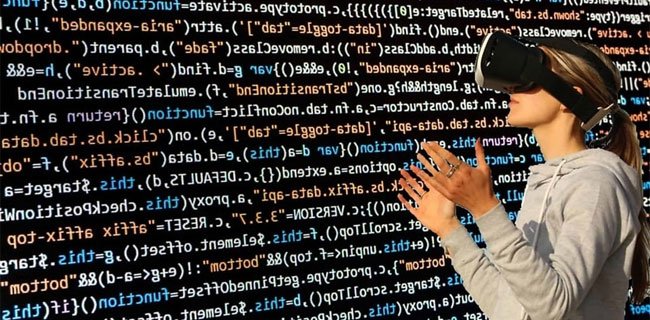
The Screen Age dawned with the spread of TV. Today, it has reached its apex with the ubiquity of the smartphone.
There are now indications that over the next decade, a new age will dawn that lessens humankind’s obsession with the screen.
I have always considered augmented reality more potent than virtual reality and could not fathom Mark Zuckerberg’s obsession with the Metaverse. A week ago, Zuckerberg revealed a use case for virtual reality technology that made immediate commercial sense in his interview with Lex Friedman.
The interview itself was perhaps the first public demo of a powerful new technology that Meta has developed – Pixel Codec Avatars (PiCA): “a deep generative model of 3D human faces that achieves state of the art reconstruction performance while being computationally efficient and adaptive to rendering conditions during execution”. Behind the technical jargon is a hot new metaverse experience that led a usually stone-faced gnome like Lex Friedman to drool.
PiCA is poised to take over the online meeting space at the high end, pending software and hardware developments.
Beyond PiCA, the interview revealed a shift in Zuckerberg’s attitude that will make Meta more of an Augmented Reality (AR) player than a Virtual Reality (VR) player.
Zuckerberg speaks about thinking of AR as a shift in how people experience everyday reality in contrast to VR or the Metaverse, which is about people living in a separate reality.
Zuckerberg now sees an AR world as one that adds a 4th dimension to the 3-D world of time and space we live in – the AR-driven digital dimension – not as static or moving texts and images on a screen – but as an integral part of the lived reality – an integral part that instead of detracting us from our surroundings, immerses us deeper in it.
Zuckerberg thinks that with advances in AI, IoT, and PiCA technology, we could be, in a decade or so, living in a world where two people wearing Quest 2030, a spectacle light VR set, can play table tennis on a holographic table with holographic paddles and ball! When the game is over the table, the paddles and ball return to the digital world, leaving the real-world 3D space accessible to the next visitor from the digital dimension.
The failure of Google Glass in the consumer world was because it was just an uncomfortable shifting of the screen from a handheld to a lens in front of our eyes.
AR is now in its second generation, where leaps in bandwidth and computing power combined with innovations like PiCA will allow for wearable headsets that are as comfortable for all-day use as spectacles and which project digital 3D objects into real 3D space that one can interact with through voice, gesture, and other digital 3D things.
That will be a whole new paradigm in experiencing reality.
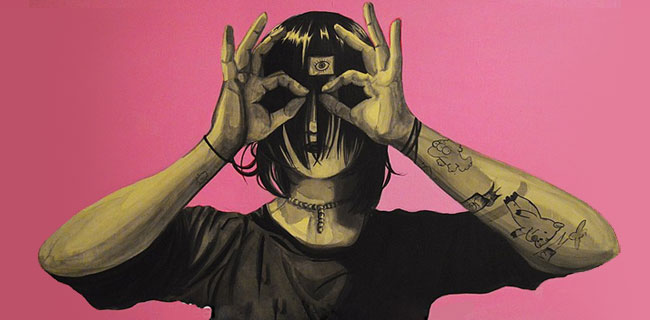
When it takes hold, it will be the screen’s death. A paradigm that will add a new sense organ to us humans – the Third Eye- bringing into our lives a fourth digital but actual dimension to our old-world three-dimensional reality. The Screen Age brought us distraction and shallowness of thought- almost a collapsing of our world into 2D. What will the Era of the Third Eye get us? It is difficult to predict, but the magnitude of change in the human experience will be almost metaphysical.
Why do I feel the Third Eye is fluttering, heralding the not-too-distant dawning of the Era of the Third Eye? Besides the revelations in the Zuckerberg interview, another rumour said that Sam Altman of Open AI and the legendary designer Jony Ive (of iPhone fame) plan to collaborate on an AI hardware device. I bet a million dollars that it will be a Third Eye design if they come up with one.
When I was a kid in the 1960s, we used to drool over the Dick Tracy watch that did all sorts of things and fantasise about what devices advertised as X-Ray glasses would do for us. Over the next decade or so, the world will likely be flooded with Third Eye devices, a combination of a powerful wrist computer and lightweight, normal-looking eyeglasses, delivering an almost godlike dimension to everyday reality.
OTTplay Premium, the AI-powered streaming, recommendation, and content discovery platform, has announced a strategic partnership with Stage, the dialect-based streaming platform. This collaboration marks a step forward in delivering diverse and regional content.
Said Avinash Mudaliar, CEO and Co-founder of OTTplay: “We are thrilled to join forces with Stage in our shared mission to bring diverse, regional content to the forefront of India’s streaming industry. This collaboration not only enriches the content offerings on OTTplay Premium but also celebrates the linguistic and cultural diversity of our country. Our AI algorithms will ensure that users discover STAGE’s compelling content, creating a personalized and engaging experience for our viewers.”
Added Vinay Singhal, Co-founder and CEO of Stage: “Dialects in India changes after every 8 kms or so. Up until now people only had Hindi content at their disposal where the cultural values and milieu are missing. Stage makes content for aspiring Bharat and enables them to take pride in their culture and dialect. Partnership with OTTPlay will allow Stage to take its content and mission to a wider set of audiences.”
Disney+ Hotstar reports concurrent viewership of 3.5 crore views during the ICC Men’s Cricket World Cup 2023 match between India and Pakistan on Saturday (October 14).
The clash of titans on Oct 14 marked a watershed moment for the platform and for digital sports viewership across the country, notes a communique, adding: “Asia Cup 2023 has already garnered an overwhelming response from fans, with 2.8 crore viewers for the India vs Pakistan match and 2.1 crore viewers for India vs Sri Lanka.”
Said Sajith Sivanandan – Head, Disney+ Hotstar India: “We would like to thank all the fans who tuned-in to watch the India-Pakistan match on Disney+ Hotstar. Your love for the game is what made it possible for Disney+ Hotstar to break all the previous records across all cricket formats and hit a peak concurrency number of 3.5 crore viewers. As the cricketing rivalries continue, we’ll continue to honour our commitment towards delivering an unmatched viewing experience to all our users. We look forward to many more such experiences as the ICC Men’s Cricket World Cup unfolds.”
Sony Pictures Networks India is set with seven new shows for global audience across all ages, produced by YAY! Animations.
Said Leena Lele Dutta, Business Head, Kids and Animation – Sony Pictures Networks India: “At Sony Pictures Networks India, we’re dedicated to pushing creative boundaries, and our animation slate embodies that commitment. We see animation as a universal medium of storytelling that transcends borders resonating across all age groups. All shows are a celebration of captivating narratives, where every frame is an imaginative canvas and every character a vessel of emotion. With this creative venture, we aim to redefine storytelling through animation and inspire hearts globally.”
It’s the celebratory festival of Dassera tomorrow. It marks the triumph of good over evil. We thought it would be good to republish this article, as it offers an insight on a very harmful effect of screentime-overdose. With the proliferation of streaming/OTT services, and bingewatching being a socially accepted norm, there is need for a pause and consideration of the negative impact of excessive screentime. So, the next time there’s a Men’s World Cup Cricket Match on, pause, go, play an outdoor game with your child. Even if it’s good ol’ passing-the-ball or a game of badminton.
By Sergio Flores Villar
The effects of prolonged screen use during childhood have been extensively studied in recent years. Evidence indicates that excessive screen time is harmful both to neurological development and socialisation. This is because, among other things, they cause us to disconnect from our surroundings, leading to very real addictions that often require intervention from a mental health professional.
Additionally, screen use can cause neurocognitive learning disorders at the early stages of personality formation in childhood. But above all, excessive time spent in front of televisions, video games, mobile phones and tablets during childhood and adolescence leads to a sedentary lifestyle. In fact, there is already a proven link between overuse of screens and the increase in sedentary lifestyles among children.
Now, a new dimension can be added to all these reasons for limiting the time children spend in front of televisions, video games and mobile phones. According to a new study, led by Andrew Agbaje at the University of Eastern Finland in Kuopio and presented at the European Society of Cardiology Congress 2023, sedentary children are at increased risk of heart damage in early adulthood.
In other words, inactivity during infancy may well set the stage for heart attacks and strokes later in life, even if weight and blood pressure are within the normal ranges.
Excessive screen time increases heart weight
The research analysed the cumulative effects of sedentary time on the heart, drawing data from Children of the 90s, a landmark multigenerational study that is unique in its breadth and depth of scope. It tracked the health and lifestyles of 14,500 babies born in 1990 and 1991 into their adult lives.
Of the children included in the study, 766 –55% of them girls and 45% boys– were asked at age 11 to wear a smart watch that monitored their activity for seven days. At age 15 they were asked to repeat this, and then again at 24. In parallel, an echocardiographical analysis was taken of each subject’s left ventricle at ages 17 and 24, which was then adjusted for height, sex, blood pressure, body fat, tobacco use, physical activity and socioeconomic status.
The results indicated that at age 11 the subjects were sedentary for an average of 362 minutes per day. In adolescence (age 15) this increased to 474 minutes per day, and then went up to 531 minutes per day in adulthood (age 24). Sedentary time increased by an average of 2.8 hours per day over the 13 years of the study. A large amount of this sedentary time was spent in front of screens.
Most seriously, the echocardiography registered an increase in heart weight among young people that correlated directly to time spent being sedentary. Once they entered adulthood, this increased the likelihood of heart attacks and strokes. This direct relation between accumulated inactive time and heart damage was independent of body weight and blood pressure.
Tell me how much you moved as a child…
By now it is common knowledge that sedentary lifestyles increase the risk of metabolic conditions (such as obesity and type 2 diabetes), neurodegenerative disease and cardiovascular disease in adults. The new study shows that sedentary behaviour at a very early age –especially unrestricted screen time– may lead to an earlier onset of cardiovascular disease in adulthood. For this reason, it is of the utmost importance that parents encourage children and adolescents to move around more, and limit the time they spend watching television, or using social media and videogames.
As we have already suggested with regard to premature birth, the list of known, conventional cardiovascular risk factors (smoking, diabetes, hypertension, etc.) should be revised and updated as a result of the study to include the cumulative time spent engaging in sedentary behaviour in childhood.
We should all, from an early age, heed the words of Martin Luther King when he said “If you can’t fly, then run. If you can’t run, then walk. If you can’t walk, then crawl, but whatever you do, you have to keep moving.”
Sergio Flores Villar, is Associate physician of the Pediatric Hospitalisation Area and Head of Pediatric Cardiology at the MutuaTerrassa University Hospital, Universitat de Barcelona. This article is republished from The Conversation under a Creative Commons license. Read the original article.
Spikes Asia, the award for creativity and marketing effectiveness in APAC, has announced that submissions are open for 2024, in addition to revealing the Jury President line-up.
New for 2024 are the Gaming Spikes, which will celebrate creative work that connects people to brands through gameplay. Submissions will need to demonstrate how brands successfully tapped into complex gaming communities and seamlessly added real value to the overall gaming experience, while driving commercial success.
Inaugural Jury President of the Gaming Spikes, Joey David Tiempo, Founder & CEO, Octopus&Whale, the Philippines, said: “Being the President of the Entertainment, Music, and Gaming Jury at Spikes Asia is a tremendous honour, especially with the exciting addition of the Gaming Spike in 2024. Gaming has evolved into a cultural force, infusing its creative potential into marketing that connects with dedicated communities around the world. It’s thrilling to witness this alongside the groundbreaking strides in entertainment and music. Asia’s longstanding dominance in gaming is finally being recognised – a testament to the incredible talent and innovation thriving in this dynamic region. Let’s embrace the future of creativity!”
The Spikes Asia 2024 Jury Presidents have been named as the following:
Brand Experience & Activation, Creative Commerce, Glass: The Award for Change, Integrated and Grand Prix for Good Jury President:
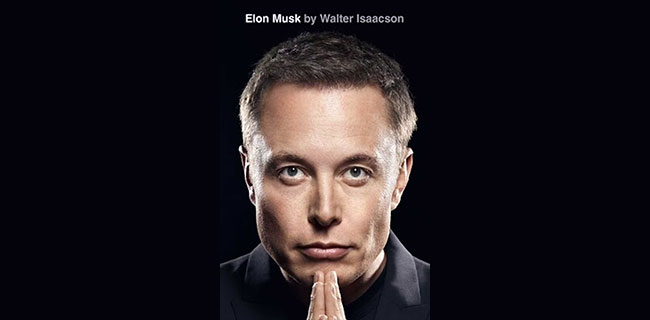
Elon Musk, the world’s richest man, has his fingers in many pies, none of them your standard Four and Twenty – space exploration, electric cars, AI and social media, among others.
He became a global leader in space exploration when NASA had virtually vacated the field, and his electric vehicle company Tesla, headquartered in the gas-guzzling United States, has by far the biggest market capitalisation of any car manufacturer in the world, yet he has few formal qualifications in either field.
Many see Musk as a 21st-century idiot savant. Others, watching him reduce an important social media platform – Twitter – to cyber-rubble, think of him simply as an idiot. Maybe both are true, or maybe other readings of his life are true. Aged 52, Musk certainly merits a good, searching biography.
Walter Isaacson seems well-credentialed for the task. He has written biographies of Henry Kissinger, Benjamin Franklin, Albert Einstein, Steve Jobs and Leonardo da Vinci that have won awards or become bestsellers, or both.
Isaacson began his working life as a journalist. He spent more than two decades at Time during the magazine’s heyday, rising to become editor in 1996. Since then, he has been chief executive of the CNN cable television network, headed the Aspen Institute (a longstanding non-profit think tank), become a professor of history at Tulane University, and done various jobs for both Republican and Democrat governments.
This year he was awarded the National Humanities Medal by US President Joe Biden.
Isaacson’s virtue as a biographer is his reporter’s ability to gather enormous amounts of material and quickly render it as a (generally) smooth and readable account of a life bursting with dramatic events. His project only began in 2021 and covers events up to Space X’s unsuccessful Starship rocket launch in April 2023.
Musk made himself available for numerous interviews. He gave Isaacson access to places and people at key moments, such as the purchase of Twitter (now known as X), and regularly emailed Isaacson at 3am with his thoughts – and thought bubbles.
Isaacson also interviewed 130 other people, and his labours have uncovered newsworthy information that has been widely reported – and, in one case, corrected – since the book’s publication.
For instance, Isaacson builds on earlier reporting by the Washington Post to reveal the extent to which Musk’s Starlink satellite network has been crucial to the Ukrainian military’s ability to fight Russia’s invasion, providing them with continued access to the internet on the battlefield after the Russians destroyed access to other internet services. He shows how Musk was persuaded by the Russians to temporarily cut off the Starlink access after he believed their entreaties that any further victories by Ukraine would provoke nuclear war.
The implications of these remarkable revelations have been examined by the ABC’s Matt Bevan in a recent episode of his If You’re Listening podcast. But even though Isaacson revealed this information, he does not pause to discuss it in any detail. That’s one of the shortcomings of this book.
Lord of the Flies on steroids
Perhaps seduced by Musk’s apparent candour or a publisher’s pressure to rush to print, Isaacson accepts his subject’s words without sufficient scepticism. For instance, Musk’s childhood experiences at a veldskool in 1970s South Africa read like Lord of the Flies on steroids. Bullying was the norm and children were encouraged to fight over meagre food rations. “Every few years, one of the kids would die,” writes Isaacson.
Really? Says who? Musk, apparently. No one from the school is listed in the source notes, to confirm or refute this account. Throughout the book, Musk comes off as a shameless self-dramatiser, but that doesn’t mean his biographer should succumb to it.
Isaacson is an adherent of the “grand man” school of history. He has written only one biography of a woman – the Nobel Prize-winning biochemist Jennifer Doudna. He is far less interested in, or comfortable with, the role structures and systems play in shaping events.
As Jill Lepore pointed out in the New Yorker, Isaacson also has “an executive’s affinity for the C-suite”, meaning he pays little attention to the people who work for Musk or the impact of his actions on their lives.
The core question driving the biography is: has Elon Musk had to be such an “asshole” (Isaacson’s term) to achieve what he has? Isaacson acknowledges it is much the same question he asked about Steve Jobs in his earlier biography of the Apple cofounder.
I lost count of the times the question, or a variation of it, was posed during the book’s 670 pages, but in classic Time-style both-sidesing, Isaacson keeps toggling between admonishing Musk for behaving like an “asshole” and admiring his ability to get results. He rarely if ever lifts his gaze beyond this binary, which means he ignores lessons learned from all those people, past and present, who have achieved things without treating people appallingly.
It also means achievements are seen solely through the prism of one person’s actions. In a perceptive article in Vox, Constance Grady reminds us that Musk’s determination to override safety concerns in Tesla factories has led to worker injury rates equivalent to those in a slaughterhouse.
Grady allows that Isaacson reports the increased injury rates, but notes his vagueness about exactly what kind of injuries occurred. Citing 2018 work by the Center for Investigative Reporting, she reveals Tesla workers were “sliced by machinery, crushed by forklifts, burned in electrical explosions, and sprayed with molten metal”.
She also notes Isaacson downplaying the company’s experience of COVID-19. Musk, a fervent libertarian allergic to any form of regulation, kept the factory running during the global pandemic. Isaacson says “the factory experienced no serious COVID outbreak”, but Grady reports there were 450 positive cases.
From Twitter to X
Musk has an immense work ethic and expects everyone working for him to share it. By relentlessly questioning all assumptions – “the laws of physics are unbreakable; everything else is a recommendation” – Musk and those working in his companies have indeed achieved a lot.
I am not really in any position to assess Musk’s contribution to space exploration, AI or car manufacturing. But I am willing to accept the evidence of Isaacson’s biography that they have been substantial – or, in the case of AI, promise to be.
I feel better able to assess Musk’s contribution to social media. Here, the evidence presented by Isaacson and many others is that Musk has damaged, perhaps irretrievably, Twitter – which he has renamed X, a letter of the alphabet to which he seems inordinately attached. Not only has he named one of his children X, he waves away the letter’s other connotations.
In 1999, Musk cofounded the online bank X.com. He soon learned there was another company aimed at revolutionising online transactions, PayPal, founded at around the same time by Peter Thiel, Max Levchin and Luke Nosek.
The companies merged in 2000, amid a classic Silicon Valley phallus-waving struggle over who had the idea first and who should take over whom. Levchin derided X.com as a “seedy site you would not talk about in polite company”. “If you want to take over the world’s financial system,” Musk rebutted, “then X is the better name.”
Musk lost the nomenclature war then, but realised his dream more than two decades later when he bought Twitter for US$44 billion and could call it whatever he liked.
Impulsive, determined, clueless
The picture of Musk that emerges in Isaacson’s book is of an impulsive, utterly determined person who is genuinely talented as a physicist and businessperson, and genuinely clueless when it comes to human relationships. He either doesn’t get people or doesn’t care about them – or, more likely, both.
He dotes on his children, especially X (I guess you need to do something to compensate for naming a child after a letter), yet he is capable of breathtaking callousness and rank sexism. He whispered in his first wife’s ear on their wedding night that he was the alpha male in the relationship.
In 2021, Musk’s third wife, Shivon Zilis, was pregnant with twins conceived with Musk by in-vitro fertilisation, and was in a hospital in Texas experiencing complications. At the same time, and in the same hospital, a woman serving as a surrogate for Musk and his ex-wife, Claire Boucher – better known as the Canadian-born musician Grimes – was also experiencing pregnancy complications.
Zilis and Boucher, not to mention the surrogate, did not know about the other’s pregnancy.
As Isaacson drolly comments elsewhere in the book:
Musk developed an aura that made him seem, at times, like an alien, as if his Mars mission were an aspiration to return home, and his desire to build humanoid robots were a quest for kinship.
Musk is on record saying humanity is in danger of not having enough smart people and it is his duty to populate the planet with as many of them as possible. To date, he has 11 children. If that notion sounds disturbingly like eugenics, it is not something Isaacson reflects on as he studiously documents Musk’s chaotic love life.
Nor does he delay his rat-a-tat-tat narration of every twist and turn in Musk’s dramatic life to question his subject’s burning desire to make humanity a “multi-planet civilisation” by colonising Mars. Musk is obsessed with this goal because he is worried about the prospect of our planet being destroyed by the accelerating consequences of climate change.
A laudable ambition, no doubt. But neither he nor his biographer stops to ask: if humanity fails so badly that it destroys this world, why would you think it could make life better on another, already inhospitable planet?
The surface of Mars. NASA/JPL, Public domain, via Wikimedia Commons
Startling achievements and childish petulance
It is easy and tempting to poke fun at Musk. Perhaps this is because his personality combines grandiose visions with arrested development, startling achievements with childish petulance. His idea of dieting is to get hold of the diabetes medication Ozempic – the dieter’s drug du jour – begin an intermittent fasting regime, then make his first meal of the day a bacon-and-cheese burger and sweet-potato fries topped with a cookie-dough ice-cream milkshake.
Or do you remember how Musk responded in 2018 to a mild rebuke of his frenetic desire to play the hero rescuing children trapped in a cave in Thailand with a purpose-built mini-craft? That’s right, by labelling one of the actual rescuers a “pedo guy”.
But it is dangerously easy. Social media plays an important role in modern society. Whatever its benefits, and they are many, the algorithms embedded in social media platforms – by their owners, let’s not forget – neatly sidestep nuance and reason in debate, turbo-charge conflict and emotion, and play a role in the spread of misinformation and disinformation.
Musk is now the owner of one such social media platform. But since buying Twitter last year, he has not been able to bend it to his will. His mistake – perhaps fatal, according to Isaacson – appears to be that he sees it as a technology company, something he understands, when it is really an “advertising medium based on human emotions and relationships”, something he does not understand.
Musk proclaims himself a free-speech advocate, but he has already displayed flagrant biases. He allowed Ye (formerly Kanye West) to tweet anti-Semitic remarks. He tweeted a florid conspiracy theory about the savage attack on Paul Pelosi, husband of the then speaker of the US House of Representatives, Nancy Pelosi. And he has asserted China’s repression of the Uyghurs was an issue that “had two sides” – perhaps because China was important to his car company, Tesla.
Musk has become obsessed by what he calls the “woke-mind virus”, which he believes is infecting social discourse. Whatever the excesses and blind spots of those on the progressive side of politics, Musk sees this virus almost everywhere.
A longtime devotee of comics and science fiction, he has increasingly given rein to his conspiratorial tendencies, as if he really thinks The Matrix trilogy was a documentary series. In one of his 3am tweets, Musk wrote: “My pronouns are Prosecute/Fauci”. As Isaacson trenchantly comments:
It made little sense, wasn’t funny, and managed, in just five words, to mock
transgender people, conjure up conspiracies about the 81-year-old public health
official Anthony Fauci, scare off more advertisers, and create a new handful of
enemies who would now never buy Tesla.
Nor does Musk’s belief in free speech extend to the social media postings of Twitter employees or their comments on internal Slack messaging. He trampled on the company’s internal culture of healthy dissent, peremptorily firing three dozen employees who had criticised the company.
His longstanding, largely successful mantra of getting things done cheaply and quickly, regardless of impediments, finally ran aground after he proposed cutting the company’s workforce by 75%.
Just before Christmas last year he decided it was imperative to move all the company’s servers from Sacramento to Oregon as a way of saving money. Remember how presidential aspirant Ron De Santis’ big live interview on X went horribly wrong earlier this year? That was because of problems with the servers, writes Isaacson.
More recently, the drastic cutting of the site’s moderators led to floods of misinformation following the attack on Israel by Hamas on October 7.
Musk has also begun to realise that advertising, which previously comprised 90% of Twitter’s revenue, is susceptible to public perceptions. It fell by more than half in the first six months of Musk’s ownership, according to Isaacson.
Geopolitical implications
As mentioned earlier, Musk has found himself playing a key role in a war with geopolitical implications.
Immediately before invading Ukraine in early 2022, Russia launched a malware attack that crippled the US satellite company providing internet service to Ukraine. Its deputy prime minister, Mykhailo Fedorov, reached out to Musk via Twitter, appealing for help.
Musk did, donating US$80 million worth of technology to Ukrainian forces, including Starlink’s solar and battery kits, which were able to defeat Russian efforts to jam them.
Musk’s intervention was widely praised, but in September 2022, when the Ukrainians planned to use Starlink to guide a drone attack on the Russian naval fleet at Sevastopol in Crimea, he refused to help. He had been listening to the Russian ambassador, who had reached out to him a few weeks before.
Russia had annexed Crimea in 2014 and the ambassador persuaded him not only of Russia’s inalienable right to Crimea, but of the prospect of nuclear war if the Ukrainians were allowed to try and retake it. He told Isaacson he had been studying foreign policy and military history: “Musk explained to me the details of Russian law and doctrine that decreed such a response.”
Has technology put an individual private citizen in such a position before?
Individual companies, such as the Krupp manufacturing company, notoriously played an important role in arming Nazi Germany. Individual media proprietors, such as Rupert Murdoch, have played a role in encouraging war, as when Murdoch’s media outlets overwhelmingly editorialised in favour of the United States invading Iraq in 2003.
The combination of new global communication technologies and decades of unwillingness by governments to find ways to regulate them adequately has now put one unelected citizen, as childishly impulsive as he is brilliant, in a rare position.
The question is not simply, is he equipped to make such decisions, but how and why has it come to this?
Matthew Ricketson, Professor of Communication, Deakin University. This article is republished from The Conversation under a Creative Commons license. Read the original article.
Gaming abd interactive media fund, Lumikai, has released the third edition of its annual State of India Gaming report, in collaboration with Google. According to the report, the Indian gaming market is expected to hit the $7.5 Bn valuation mark by FY28. The report cited several interesting insights that show the significant growth in the last few years.
The data decoded in the report showed the shift from being one of the emerging markets to now being a key market in the world driven by faster download speeds, rapid smartphone penetration and affordable data. Increasing affinity towards byte-sized entertainment and participation in interactive communities have also been key drivers in the growth of gaming across the country. The report anticipates a robust growth rate of 20% CAGR, driven by increasing in-app purchases and advertising revenues in casual and mid-core games. The data also sheds light on India’s global position as one of the leading countries globally for total mobile game downloads. Over 50% of all Indian internet users account for the gaming population in the country. This number grew by 12% in FY23, according to the report. The data also highlighted how the average time spent on gaming increased by 20%, to 10-12 hours per gamer per week.
Said Salone Sehgal, Founding General Partner at Lumikai: “We are thrilled to unveil the 3rd edition of the State of India Gaming report in partnership with Google. The strong growth and insights showcased in our report are a testament to the continued appetite for gaming in India. Indian gaming has been on the rise because of rapid digitisation, growth in new gamers and new paid gamers, and increasing diversity of gaming content consumed. Even though funding has slowed down this year, the outlook towards the gaming industry is extremely positive. We’re particularly excited to see the increasing engagement of gamers from non-metro cities, which demonstrates the massive growth potential and the opportunity in the Indian gaming industry. We are committed as a team to be at the forefront of powering India’s gaming economy and we will continue to enable the best interactive media & gaming founders across India.”
Battlegrounds Mobile India (BGMI) has announced the launch of “Battle Beats,” a music-based contest. As the part of the contest, the participants have a chance to share their own rendition of this iconic theme or use it to create their own music video and win exclusive in-game rewards. Gamers, both new and experienced, are invited to participate in this contest.
According to a press statement, ‘Battle Beats’ is a movement that brings together the creativity of BGMI’s community and the gaming spirit that unites us all. It is the celebration of the people’s love for the BGMI theme, its players, and the vibrant culture that has sprung up around it. The anthem and music video encapsulate the adrenaline-pumping experience of BGMI, and the forthcoming contest promises to keep the excitement going.
Leading the contest is the BGMI anthem – Jeeto, written by 1080G and composed by the Benny Dayal. The project was conceptualised by Bengaluru-based – The Silly Fellows. The music video is directed by Altray (Ray Rajdip), a music video director and short film maker.
They were both enabled by Good Fellas Studio, a Mumbai-based production house that’s worked with The Silly Fellows on projects of a similar format.
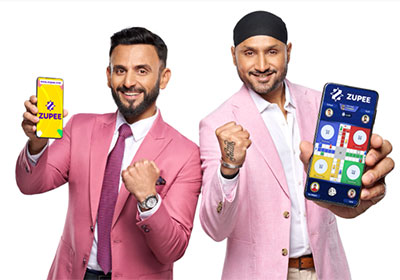
Zupee, the online skill-based gaming platform, unveiled its latest digital campaign, ‘Extra Winnings’ featuring cricket legend Harbhajan Singh and sports presenter Jatin Sapru.
Said Akanksha Dhamija, Chief Operating Officer, Zupee: “The ongoing excitement around the World Cup gives us a great opportunity to connect with millions of passionate cricket fans who are also gaming enthusiasts. Zupee’s ‘Extra Winnings’ campaign perfectly blends the thrill of cricket with the joy of gaming, for instance, the thrill of getting a ‘6’ shares a special significance in both cricket and Ludo. Additionally, Jatin Sapru and Harbhajan Singh flawlessly embody the campaign’s essence with their delightful chemistry. Their playful energy is sure to entertain and create a relatable connection with our audience.”
Led by its chairperson, Justice (Retd) A.K. Sikri, former Judge of the Supreme Court of India, Digital Publisher Content Grievance Council (DPCGC), a self-regulatory body under the IT Rules 2021 and operating under the aegis of the Internet and Mobile Association of India (IAMAI), has initiated a year-long all-India campaign to enhance awareness regarding OTT content consumption and the redressal mechanism of related grievances. The campaign aims to make law enforcing agencies and consumers of OTT platforms aware of the various tools that the law provides for an enhanced viewing experience, and to foster collaboration between parents, law enforcement agencies, and educational institutions, promoting responsible content consumption practices for all.
Speaking on the goals of the campaign Justice (Retd) Sikri said, “In their right wisdom, our legislature and our parliament, guided by the MIB, have collaboratively established a robust framework to integrate OTT platforms into the legal landscape. DPCGC formed under the IT Rules aims at efficiently addressing concerns or grievances related to OTTs through self-regulation. It is essential that all stakeholders, particularly viewers and law enforcement agencies, remain well-informed about this mechanism.”

 The Screen Age dawned with the spread of TV. Today, it has reached its apex with the ubiquity of the smartphone.



 Zupee, the online skill-based gaming platform, unveiled its latest digital campaign, ‘Extra Winnings’ featuring cricket legend Harbhajan Singh and sports presenter Jatin Sapru.