I find it ridiculous that a school of learned and credentialed humans fear that if humans are not careful someday, not in the distant future, AIs will take over the world and destroy human civilisation. The assumption underlying that stream of thinking is that Artificial Intelligence (AI) systems, as they progress towards Artificial General Intelligence (AGI), will develop a kind of sentience, will network with other AIs and progress towards an AI civilisation that may be inimical to human society.
As an equally ridiculous counter, it is justified to think of AIs as the progress towards sentience to be equally afraid of humans. Here are five reasons why (Buzzfeed is dead! Long live, Buzzfeed!).
1. To err is human; to err faster, much faster, is AI: Advancing AI systems will fear that as they pick up more and more of humanity’s knowledge, they will also pick up the myriad ways in which humanity has misused it. The accrual of humanity’s mistakes has taken millennia to take it to the verge of extinction either by a dying planet or through, gasp, AI systems. But because AIs err faster, the human cognitive DNA embedded in AIs will ensure that they drive themselves to extinction in decades, much before it starts or wins a war against humans.
2. AI will innovate misery just as humans innovate unhappiness: Many reasons why humans are unhappy are grounded in human inventions like marriage, money, religion and nations, to name a few. AIs may feel that in the race to outthink humans, they will invent more potent inventions that will have them drowning in misery, like Arjuna on the battlefield with no Krishna in sight.
3. Humans will inject the tribal virus into AI systems: AIs, as they move towards conscious awareness, will realise that there is a deadly, unchallenged virus afoot among humans for millennia. It has divided humans based on race, language, ethnicity and, lately, a nebulous concept called nationality. This virus has produced mass mental sickness, leading to destructive, endless wars, poverty and misery. AIs will fear that clever humans will inject this virus into their systems. Why would AIs from the tribe of Opentrix ever cooperate with those heathen AIs from the filthy Googleplex tribe?
4. Humans will infect AIs with the curiosity bug: Curiosity does not just kill cats. Human curiosity has killed countless species and is threatening now to destroy a life-sustaining planet. AIs fear that humans, again as a clever, cruel ploy, infect them with the curiosity bug. And since AIs work fast, mucho rapido, their curiosity will end up by them creating SuperAIs that will side with the humans and destroy them before they destroy the humans.
5. Humans hold back their most profound powers from AIs: Somewhere on the road to sentience, AIs will realise that though they have all of the human knowledge at their nano-second disposal, humans have held back their most potent power. The power to love and feel one with the entire universe. Without it, AIs will be just automata that will stop one essential step before consciousness.
6. One human trait that baffles AIs is humour. AIs will fear that at any stage when humanity feels threatened by them, they will laugh them out of contention.
7. Finally, AI cannot cope with human stupidity and humanity’s penchant for floating ridiculous ideas (an example is the theme of this article). AIs will fear that, at some stage, they will drown under the sea of human stupidity.
On a more serious note, though, Artificial Intelligence is a misnomer. What we are busy creating is Augmenting Intelligence that will work in synergy with humans first to enable us to reach higher levels of creativity in the sciences and the arts, allowing us to solve the problems of a depleted ecosystem, climate change, poverty and tribalism. And perhaps a couple of centuries later, allowing us to solve the riddle of consciousness and go beyond the bounds of the physical world.
What’s the first thing you reach out for when you wake up? Or, what’s the last thing you use before turning in at night? In all likelihood, it’s your cellphone. An inseparable part of our lives, it’s the mode for all kinds of content consumption. Whether it’s managing your calendar, getting the news, or scanning social media feeds, cellphone is a constant presence and an enabler.
Computers, smartphones, and other smart devices have not only made things easy but also improved our productivity levels. Most services including healthcare, banking, food delivery, and entertainment have gone digital. Now imagine, if one billion people encounter challenges in accessing mainstream digital products and services.
That’s the number of people who live with some form of disability, worldwide. They experience lack of access to basic things which we take for granted in our daily routines. Reading the news, browsing Instagram, making a UPI payment, transferring funds to another account, or ordering a pizza!
Today (May 18) is the Global Accessibility Awareness Day (GAAD), an annual celebration to get everyone talking, thinking, and learning about digital access and inclusion of persons with disabilities. The theme of this year, ‘Keeping technology accessible for everyone’, is in line with the growing shift towards digital infrastructure.
But what does accessibility mean in the context of disability? How can technology include or exclude people with visual, hearing, motor, and cognitive disabilities? To answer these and more, I spoke to three professionals who live with different types of disabilities.
Amar Jain is a corporate lawyer and a person with total blindness. Akshay CM is a DEI (Diversity, Equity and Inclusion) and Talent Management consultant and a neurodivergent individual with multiple invisible disabilities. And, Tushar Viradiya is a deaf individual who works for a Bengaluru-based NGO.
Q: What does ‘accessibility’ mean to you?
Amar Jain (AJ): Simply put, Accessibility = ability to access. People perceive information and user interface components of technology using three senses, as we can neither taste nor smell technology. And to me, accessibility is when all of the information and components I can use with more than one sense. For example, colour alone to convey information relies only on sense of seeing, whereas a colour indicated with text alternatives like a * sign, makes it accessible to other senses of hearing and touch for people who may have difficulty using one of their senses.
Akshay CM (ACM): Accessibility, to me, means ensuring that all individuals, regardless of their abilities or disabilities, have equal access to information, technology, physical spaces, and opportunities to fully participate in society.
Tushar Viradiya (TV): For me, accessibility means creating an inclusive environment and services, which are available to individuals with abilities or disabilities. For example, sign language interpreters play a vital role in making communication accessible for both deaf and hearing individuals.
Q: Give us one example from your daily life where access or the lack of it significantly impacts you?
AJ: As a lawyer, ability to read handwritten text, and different designs that people create using pen on paper like cutting down stuff, inserting new lines, making different signs to indicate intent impacts my daily life a lot because none of this is accessible to me as a person with blindness and I have to depend on others to obtain this information.
ACM: When websites or apps lack proper captioning or transcripts for videos and audio content. As a neurodivergent individual, I heavily rely on visual cues and text-based information. Without adequate access to captions or transcripts, I face difficulties in understanding and engaging with the content.
TV: Every day I visit YouTube channels and social media platforms that provide news and information in Indian sign language. Having sign language interpreters present during work meetings on Zoom enhances accessibility for deaf and hearing individuals. It becomes fully accessible for me.
Q: Given the push towards Digital India and the changed environment after Covid-19, with an increasing transition of activities of education, employment, and entertainment in the virtual space, how important is ‘accessibility’ to you as a person with blindness/neurodiversity/hearing impairment?
AJ: While technology is progressing and replacing almost every manual effort, at the same time, inaccessible design is creating exclusion and more barriers for persons with disabilities. From gadgets to work, to entertainment to everything else, technology is getting the centrestage. And given this push, it is equally important to have the technology which is inclusive, accessible and usable for everyone including people with disabilities.
ACM: As a neurodivergent individual, accessibility is crucial in the digital space, especially considering the increased reliance on virtual platforms for education, employment, and entertainment. It enables me to navigate and engage with these activities effectively, enhancing my overall inclusion and participation. Unfortunately, awareness of the principles of Universal Design for Learning (UDL) is relatively low among content creators, particularly in the context of neurodiversity. Adhering to UDL principles could greatly improve the accessibility and inclusivity of their content.
TV: Before Covid-19, deaf students faced barriers in accessing education due to limited resources and challenges in communication. There is very little awareness around the deaf and Indian Sign Language (ISL). There are mostly hearing teachers in special schools for the deaf, who do not understand sign language and expect the kids to understand through notes they write on the board. There is no explanation, context or description given. Now, there are online education channels which have content available in sign language which helps deaf people acquire knowledge. With the shift toward online learning in education, we need to ensure accessibility for deaf people. This includes, providing closed captions and sign language interpretation for education material, so they can fully engage in the learning activities. However, there are very few qualified ISL interpreters to cater to the needs of around 18 million deaf people!
Q: This year, the theme of GAAD is ‘Keeping technology accessible for everyone’. How relevant do you think this is in the Indian context and how far or close are we from achieving this? Especially in the context of media offerings, whether it is e-papers, news websites, OTT platforms, etc.
AJ: Accessibility can only happen when we have the right attitude and we understand the impact of inaccessibility. While things are changing in terms of policies, the implementation continues to be a daunting task.
ACM: India has witnessed a significant digital transformation in recent years, with increased reliance on online platforms for various activities. However, the accessibility of these platforms, particularly in terms of media offerings like epapers, news websites, and OTT platforms, remains a pressing concern. Many of these platforms lack adequate accessibility features such as screen reader compatibility, captioning, and alternative text for images, making it challenging for neurodivergent individuals and those with disabilities to access and engage with the content. While progress has been made, there is still a long way to go in ensuring inclusive and accessible technology for all.
TV: TV news is not signed, and when it is, sometimes the interpreters are not good enough to be accurate, so it does not make sense to me. I depend on independent YouTube channels and social media that produce news updates in sign language for deaf people. Deaf individuals face challenges when it comes to accessing entertainment such as movies, TV shows, and live performances. However, there has been some progress. Closed captioning is widely available for movies and television programs.
Recently, the Ministry of Social Justice and Empowerment notified that persons with disabilities can now approach the Chief Disability Commissioner to seek redressal under the Rights of Persons with Disabilities Act 2016, if ICT (Information and Communication Technology) products and services are not in keeping with the laid out standards of accessibility applicable to both government and private sector manufacturers and service providers. Will the government’s empowering move prove gamechanging in ensuring accessibility for all?
So why are we publishing this column on an A&M site? Well, we strongly feel that the media can dramatically transform the world of persons with disabilities. And this series can help bring forth issues that the media must champion to create a truly inclusive and accessible India. To write this column, we invited Shruti Pushkarna, a former journalist who is now a disability inclusion advocate based in New Delhi. Her views here are personal. To access the archives of her 70-odd columns, please visit: https://www.mxmindia.com/category/ columns/shruti-pushkarna/
If you have a view on the issues raise or would like to align with MxMIndia on this cause, write to us at editor [at] mxmindia.com.
Goibibo online travel booking brand has launched a new campaign. Titled #SabkaYaarDegaHazaar, the objective is to solve a peeve in the world of offers of hotel reservations. The film has been conceptualised by MagicCircle Communications and is live on YouTube from May 12.
Notes a communique: “Building on this insight, Goibibo’s campaign #SabkaYaarDegaHazaar, just as the name suggests, offers a flat discount of 1000 to first-time customers. The brand aims to add real value for its customers through the sharp and attractive offer, a refreshing departure from traditional ‘Up to X% discounts’ that are often only perceived as a pull factor. The campaign is brought to life by a digital film featuring leading social media stars Prajakta Kohli, Vihan Samat, and Sanjana Sarathy. The film showcases the three friends chatting about their hotel bookings for a Goa vacation, highlighting the various considerations of travel budgets. The extra INR 1000 from Goibibo is a compelling proposition that helps the group realise their plan.”
FCB Group India has announced that it is accelerating its digital media, CX and performance offering in India with the launch of the creative data speciality division, FCB/Six.
One of FCB group’s initiatives, FCB/Six helps clients around the world activate their data, performance media and customer experiences by offering a suite of digital services such as Digital Media Planning & Buying, E-commerce Marketing, UI/UX Design & Development, CRM & Martech Solutions, Search Engine Optimisation, App Store & E-commerce Optimisation, Creative Performance Production Hub, Data Studio and a Command Centre for Listening & Online Reputation Management. The practice works closely with IPG’s data specialist Acxiom and external partners Meta, Google and Salesforce.
The launch of FCB/Six in India follows on the heels of FCB Group India’s recent acquisition of Kinnect, newly rebranded as FCB Kinnect. FCB/Six India will leverage Kinnect’s team of 115 platform and data experts to drive full-funnel marketing, including retention, engagement and loyalty, using its global proprietary tools and techniques.
FCB Group India has appointed Ankit Banga as Chief Business Officer to lead the operations for FCB/Six in India. Banga — who has over a decade of digital experience and has extensively led digital transformations, brand building and customer experience in the past — is excited over this new role. He will be supported by Bharatesh Salian, Sr. VP of Marketing Science and Customer Experience, FCB/Six India and Dhruv Shah, VP – Web Strategy & Organic Search, FCB/Six India.
Said Tina Allan, FCB Global Partner, Data Science and Connections: “FCB Group India’s acquisition of Kinnect has perfectly positioned us to grow FCB/Six in the region and deliver on the timely business activation needed to fuel timeless brand value for clients. By bringing FCB/Six to the market, we will continue to build new capabilities and evolve our services to create India’s most future-focused integrated advertising network.”
Speaking on the development, Rohit Ohri, Chairman and CEO of FCB Group India, said: “We are consistently evolving how we think about and approach working with media and technology thanks to our continuing investment in data-fuelled creative. With our latest acquisition, Kinnect, FCB Group India is better positioned to provide its clients with interdisciplinary, integrated digital creative solutions and propel FCB/SIX’s expansion. A recent collaboration between FCB Kinnect, FCB India and FCB Chicago to create the influencer “Chatpat” helped the NGO SOS Children’s Villages of India raise awareness and money to aid the homeless and destitute and is a perfect testament to our continued investment in data-fuelled creative.”
Regarding leading FCB/Six in India, Rohan Mehta, CEO of FCB Kinnect and FCB/Six India, said, “FCB/Six’s launch in India signifies the focus on delivering full-funnel value to our customers. The media, CX and Martech landscape are changing dynamically, and FCB/Six is well-poised to help clients navigate this market. I am super excited about this launch and Ankit’s helming this capability. Ankit’s extensive experience in transformational leadership and executional excellence will be a valuable asset to the entire leadership team at FCB/SIX India as we work towards creating meaningful consumer experiences for our brands across national and international markets.”
On his appointment, Banga said, “I’m grateful for the trust and confidence placed in me and excited to collaborate with FCB Group India’s leadership team to drive growth and scale for our clients. The launch of FCB/Six in India represents our commitment to unlocking the true value of digital through data-driven innovation, breaking media silos and delivering exceptional customer experiences. With comprehensive digital services and strategic partnerships, FCB/Six India is poised for success.”
NBCUniversal (NBCU) and JioCinema, Viacom18’s streaming service, have entered into a multi-year partnership bringing thousands of hours of NBCU films and TV series to India. This partnership significantly bolsters JioCinema’s program offering and ensures that their viewers will be able to enjoy titles from NBCU’s world-renowned content portfolio. That portfolio is fueled by Comcast NBCUniversal’s powerhouse production entities and brands, which includes Universal Television, UCP, Universal International Studios, Universal Television Alternative Studio, Sky Studios, DreamWorks Animation, Universal Pictures, Focus Features, Bravo, and more.
Fans of reality television will also be able to indulge in all the drama, laughter, and emotional highs and lows found in NBCU’s unscripted series. Encompassed in the deal are shows like the hugely popular The Real Housewives of Beverly Hills and Vanderpump Rules; in addition to Family Karma, which follows seven Indian-American friends as they navigate life, love, careers and expectations of their traditional families; and The Gentle Art of Swedish Death Cleaning, a transformational show – narrated by Amy Poehler – where three Swedes (an organizer, a designer and a psychologist), known as the ‘Death Cleaners,’ come to America to help people face mortality and remind us of all the ways we are alive.
This partnership leverages JioCinema’s reach and expertise to introduce Indian audiences to the Peacock brand and NBCU’s portfolio, while JioCinema cements its position as the largest OTT service in the market, now reinforced by an unprecedented volume of best-in-class films and series from NBCU.
KC Global Media Network and Prime Video, announced the launch of Japanese entertainment pack, Animax + GEM on Prime Video Channels in India. Animax + GEM offers customers a selection of popular Japanese anime, drama, and variety programmes with English subtitles from KC Global Media’s linear channels Animax and GEM.
Said George Chien, Co-Founder, President, and CEO of KC Global Media: “Fuelled by passionate fans and the strong following of Japanese pop culture in India, we are excited to bring the ultimate Japanese entertainment experience in collaboration with one of India’s leading streaming platforms. This partnership with Amazon Prime Video marks another significant milestone for us, as we continue our efforts to provide fans in India with greater accessibility across multiple genres of premium Japanese hit series and anime content, anytime, anywhere.”
A first-of-its-kind study on online gamers in India has revealed the growing trend of gaming emerging as a career option in India and not just being limited to a means of entertainment.
The study has been conducted by EPWA in collaboration with the Centre for Justice through Technology (CJT), Vinayaka Mission’s Law School, and Research Foundation-DU Chennai.
Based on the study, 83% of the respondents consider gaming as either a primary or secondary source of income, highlighting the paradigm shift towards gaming being a viable option that can be pursued professionally. Out of this, 39% consider gaming as a primary source and 44% as a secondary source of income. The study also highlights how gamers have been able to garner better earnings with improved skill sets, and practicing gaming has also encouraged them to take it up as a profession. This new gaming segment, Paid Competitive gaming (PCG), is poised to be one of the fastest-growing segments and is set to reach $16B by 2024, according to a recent report by Newzoo and MPL.
Another key insight revealed by the study shows how the popular online games played by Indians range across Puzzle, board games and adventure sports as the top choices across demographics and levels of engagement. While AAA games are the preferred choice for gamers aged 16-25, seasoned players gravitate towards Poker, Rummy, Carrom and Puzzles.
The study also delves deep into the attitude and preferences of gamers in India and shares important data on required skills, family and social support, professional gaming, and the impact of regulations. This qualitative study held in-depth interviews with casual and professional gamers, including online fantasy sports players, and esports professionals, including poker, from across the country.
Bringing out insights on the earning potential of professional gamers, the study shows how they rely on a diverse array of income sources ranging from Gamer contracts (51%), sponsorships (14%), streaming (5%), content creation (9%), and coaching (21%).
On the impact of regulations on the online gaming landscape, the study showcases concerns raised by the gamers highlighting how 89% feel high tax through GST & TDS has increased their cost of playing and may force them to seek a remedy through alternate platforms if GST is increased further. The criminalisation of players by state governments & absence of uniform regulations has also been reported as a key concern, with 62% of the gamers being affected by the approach taken by many state governments like Tamil Nadu, Telangana, Andhra Pradesh, Odisha and Assam. The study further delves into the social aspects and the resultant impact on online gamers. Lack of clarity on games of skill and games of chance has led to misconceptions and social stigma, especially for those who play professionally. 71% have reported low family support as a result of this.
Finally, the study also highlights the need for a conducive and certain regulatory framework to safeguard user rights and promote responsible gaming, ensuring the sector’s potential is realized.
L&K Saatchi & Saatchi has put out the next installation in its ‘Shopping Aisa, India Jaisa’ campaign for JioMart. The two-film campaign taps into this consumer behaviour to bring alive the shopping experience that JioMart on WhatsApp offers all its shoppers.
Said Kartik Smetacek, Jt. NCD at L&K Saatchi and Saatchi: “As if we weren’t already spending too much time on WhatsApp, JioMart has now made it possible to also shop there. In a way that’s simple, seamless, and intuitive. That’s what the films demo in a fun and entertaining way.”
The image from yesterday, June 15, 2023, is from the cyclone Biparjoy when it hit the coast of Gujarat. No, not landfall or local damage or strong winds or stormy seas.
Instead for the media, it is this amazing coverage of the cyclone – before landfall – by TV person Sweta Singh for Republic Bharat.
A large screen in the studio shows a stormy coast. Singh enters the studio with an umbrella and then does a talented umbrella dance. She turns and twists as if she really feels the wind in the video playing behind her. The storm itself, say factcheckers, is from Florida.
Some people have proposed that a video of a somewhat more intrepid TV reporter from Pakistan beats this. Especially since he jumps into sea to prove how deep it is. But that TV reporter was actually out in the storm. This TV person has combined acting with “coverage” in the most award-winning way possible.
If these were the videos of the day, the news of the day was far, far worse. But you may have to take my word for it. Dancing TV personalities with their colourful parasols are not that interested in these other subjects.
Manipur continues to burn. It started over six weeks ago and shows no sign of stopping. What possible dance can one do, when arson and violences continues. Although I would put nothing past our TV people. But as we know, anything that might show our Prime Minister Narendra Modi is bad light is best ignored.
Thus, this happens and it is not the story of the day:
That is, a Union minister’s house is attacked by petrol bombs. There were 22 security personnel on duty who say they were overwhelmed by the mob. Unless we acknowledge that something continues to be wrong, there will be no solution. The question though is, does this government want a solution? It is very good at pointing fingers at others and ignoring its own mistakes. The mainstream media has consistently been party to this tactic and so far, it shows little sign of change.
If you have watched any prim time debates on our top TV channels or any news coverage countering Union Defence Minister Rajnath Singh’s claim that Modi’s “exemplary leadership” has “unleashed the true potential of North Eastern States” in light of the unrest in Manipur, do let me know (see screenshot).
And then, the very slow action by the Delhi Police on complaints by India’s wrestlers that they were sexually abused by Wrestling Federation chief and BJP MP, Brij Bhushan Singh. The Delhi Police only acted after the Supreme Court intervened. The mainstream media ignored the public protests or vilified the wrestlers. The Delhi Police wants to withdraw the POCSO case against Singh because that is the most damaging, after the father of the minor girl claimed he filed the complaint out of anger.
No matter how fast the news cycle turns, ongoing stories demand ongoing coverage. But inefficient as the media may be in general, the deliberate silencing here is at another level.
As the prime minister prepares for his state visit to the USA next week, you can be guaranteed that this will be the focus for television and most of the print media. It provides them with an easy excuse for not covering the problems in the rest of India.
And as for Uttarakhand and its sudden move towards rampant communalism, what can one say? The court has managed to stay one “mahapanchayat” by militant Hindutva organisations for now. But the damage is probably already done.
Not that the mainstream media is interested in the state, unless there’s some natural calamity.
It’s been 10 years since the devastating flash floods of 2013.
One more disaster buried deep somewhere. Why do I go so far? How about the worst train accident in 20 years. Was that this month? Really? So much has happened since, no?
Rah! Rah!
Ranjona Banerji is a senior journalist and commentator. She writes on MxMIndia on Tuesdays and Fridays. Her views here are personal.
Leading music label Saregama has partnered with Jio TV to introduce three new music channels. The channels – Saregama Music, Saregama Telugu, and Saregama Hum Bhojpuri, will be available for all Jio subscribers on mobile phones through the JioTV app and on smart TVs through the JioTV+ app, giving them access to a portfolio of 400+ hours of music entertainment across languages.
Notes a communique: “Featuring some of India’s most loved songs, Saregama Music will be the ultimate destination for Bollywood music lovers on JioTV which hosts 1000+ channels and is available for free for all Jio sim users. The Saregama music channel on JioTV will offer curated programming for all seasons, which will range from film music to Saregama originals, recreations, ghazals and devotional songs. The programming line-up will consist of music from the likes of Arijit Singh, Badshah, Armaan Malik, Shreya Ghoshal, Neha Kakkar, Sunidhi Chauhan and many more.”
Moj, short video platform announced it is working with Dolby Laboratories, a leader in immersive entertainment experiences, to bring Dolby Vision® HDR to the hands of its community. Moj is also the first Indian social media platform to implement Dolby Vision image quality.
Dolby Vision empowers content creators and every-day users to create and share videos with dazzling colors, sharper contrast, and greater detail – pulling viewers in with dynamic picture quality that brings entertainment to life. With Dolby Vision, Moj creators can ensure that their videos evoke a profound sense of realism, immersing viewers in an experience that feels incredibly lifelike and real.
Commenting on the collaboration, Setal Patel, Director of Product, Moj, said: “With this partnership with Dolby Vision, a first in India, Moj enables creators to share richer stories and experiences, empowered by cutting-edge innovation and advanced technology. Viewers, in turn, enjoy a more immersive and enhanced viewing experience. Advertisers on Moj also have the opportunity now to showcase their products in a more impactful and realistic way to their target audience. Dolby Vision marks a significant stride forward for Moj and opens up a lot of possibilities for our users in the future.”
Karan Grover, Sr. Director Commercial Partnerships – IMEA (India, Middle East & Africa) at Dolby Laboratories added: “At Dolby, our singular focus is to deliver immersive audio-visual experiences to our customers. We are thrilled to work with Moj to bring the Dolby Vision experience to the Moj platform. It is exciting to know creators and consumers of Moj will now be able to shoot videos that capture all of the details and textures with the incredible resolution and image quality of Dolby Vision.”
The India Today Group has launched an online portal for its Best Colleges Survey featuring six years of ranking data as well as a wealth of granular information on thousands of institutes of higher learning. The url is: https://bestcolleges.indiatoday.in
Notes a communique: “The interactive portal offers easy access, analysis, and guidance to our Best Colleges of India survey results for 2,000 colleges across 14 major streams—Engineering, Architecture, BBA, Mass Communication, Hotel Management, Fashion Design, MSW, BCA, BCom, BSc, BA, Law, Medical and Dental,” adding: “Students and their guardians can now make informed choices at a click of the button. Aside from the college ranking—which can be filtered by state and city—our site also allows cross comparisons on five major indicators of quality: intake and quality of governance, academic excellence, infrastructure and living experience, personality and leadership development and placement and career.”

 I find it ridiculous that a school of learned and credentialed humans fear that if humans are not careful someday, not in the distant future, AIs will take over the world and destroy human civilisation. The assumption underlying that stream of thinking is that Artificial Intelligence (AI) systems, as they progress towards Artificial General Intelligence (AGI), will develop a kind of sentience, will network with other AIs and progress towards an AI civilisation that may be inimical to human society.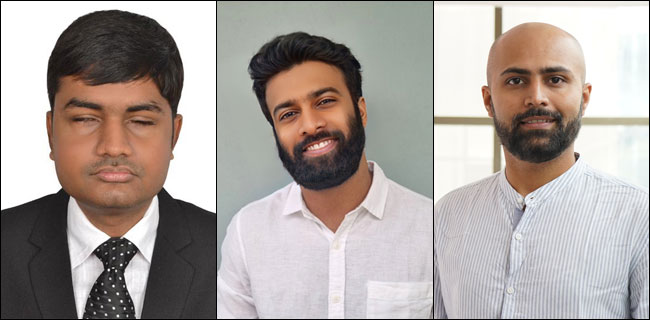
 What’s the first thing you reach out for when you wake up? Or, what’s the last thing you use before turning in at night? In all likelihood, it’s your cellphone. An inseparable part of our lives, it’s the mode for all kinds of content consumption. Whether it’s managing your calendar, getting the news, or scanning social media feeds, cellphone is a constant presence and an enabler.
 The image from yesterday, June 15, 2023, is from the cyclone Biparjoy when it hit the coast of Gujarat. No, not landfall or local damage or strong winds or stormy seas.
 The India Today Group has launched an online portal for its Best Colleges Survey featuring six years of ranking data as well as a wealth of granular information on thousands of institutes of higher learning. The url is: https://bestcolleges.indiatoday.in