Category: MARKETING

  • W+K boosts Hero MotoCorp’s EV brand Vida

    By Our Staff


    With its entry into the EV market last year in October 2022, Vida and its electric scooter Vida V1 is all set to raise the bar with a national launch across multiple cities with its creative platform Make Way conceptualized by Wieden+Kennedy India.


    Commenting on the campaign, Santosh ‘Paddy’ Padhi, Chief Creative Officer, Wieden+Kennedy India, said: “It was important for us to set a unique tone and personality for brand VIDA, within the Hero family and also in the category. While other brands are still selling the EV category, we decided to up the game by tapping into the new age mindset and behaviour in our narratives. The brand film is an ode to the changemakers who made this world more meaningful, while we kept VIDA V1 at the core of our narratives. In both films, the casual, candid, slice of life storytelling was well captured by both the directors, it was much needed for us to be energetic, effortless and authentic as these are some of the pillars the brand is built upon.”


  • Poonawalla Fincorp launches a new campaign

    By Our Staff


    This piece of news generated special attention on our newsdesk. The company in question has its headquarters right next to our office in Pune. Poonawalla Fincorp Limited, the Cyrus Poonawalla group-promoted non-banking finance company, launched the digital campaign titled ‘Log toh Sawaal Karenge Hi’.


    Said Abhay Bhutada, Managing Director, Poonawalla Fincorp: “The tendency of high demand for consumer loans during the festive season gets fuelled due to multiple reasons such as home renovations, vacations, weddings, or purchase of consumer durables, etc. We have observed that during festive season, people end up taking high interest loans without doing proper due diligence despite having a good credit history and high credit score which creates unnecessary burden of paying high EMIs. The purpose of this campaign is to create awareness about how to choose the right loan service provider like Poonawalla Fincorp which can help a borrower to explore best loan offers at attractive interest rates with no hidden charges. We at Poonawalla Fincorp always believe in offering best-in-class customer-centric products and solutions to enable dreams and fulfil the financial needs of our customers. This campaign highlights our value proposition of being the most transparent and end-to-end digital lending NBFC, committed to offer instant hassle-free loans to customers with high credit score.”


  • SBI General Insurance unveils digital campaign

    By Our Staff


    SBI General Insurance has announced the launch of #JoBhiHoHumDekhLenge campaign, aimed at spreading awareness around Health Insurance and its benefits. The campaign entails a series of three engaging digital films highlighting the bond shared between a father and son duo. The films shine a spotlight on the features of the newly launched health insurance product ‘Super Health Insurance’.


    Said Rathin Lahiri, Head Marketing and CSR, SBI General Insurance: “Given the rising hospitalization and medical costs health insurance is an absolute necessity today to deal with medical emergencies for us and our families. With this campaign #JoBhiHoHumDekhLenge, we aim to connect deeper with our customers. The central theme of the campaign is to convey ‘bharosa’, a value that SBI General Insurance brand personifies. We want consumers to choose their insurance coverage carefully so that they remain protected, and live worry-free.”


  • Pepsico rolls out new TVC

    By Our Staff


    PepsiCo India has introduced a new TVC to celebrate the expansion of its Sizzlin’ Hot platform. This fiery TVC features the complete Sizzlin’ Hot range including Lay’s, Kurkure, and Doritos.


    Commenting on the Sizzlin’ Hot range expansion and launch of the TVC, Anshul Khanna, Vice President and Foods Category Head of India and South Asia, PepsiCo said: “Last year, we introduced one of our most successful global platforms, Sizzlin’ Hot in India and have witnessed an overwhelming response. As we approach the festive season, we’re thrilled to announce the expansion of the platform with localised flavours for the unique Indian spice palate across our beloved brands, including Lay’s Maxx, Kurkure, and Doritos Dinamita. The launch will be accompanied by a comprehensive 360-degree marketing campaign that is sure to get people to intrigued about the fiery range. We hope that consumers love this new range and continue to spice up their snacking occasions.”


    Added Vikram Pandey (Spiky), National Creative Director, Leo Burnett India: “The Sizzlin’ Hot flavour is available in 3 formats – Kurkure, Lays and Doritos. No matter which one you pick up, the fiery taste is likely to make you react in unexpected ways. From fiery exclamations to bizarre sounds, the execution of the TVC brings together a gamut of expressions in a way that you can’t help but watch it again. Pretty much like the product, that you can’t help but eat another.”


  • Vivo collaborates with BrandMusiq

    By Our Staff


    Devices major Vivo has partnered with BrandMusiq to craft sonic identity System.


    Speaking on the landmark initiative, a Vivo Brand spokesperson said: “We can’t wait to have consumers experience this encapsulating tone that is the perfect embodiment of vivo brand values and purpose. The process of creating this was a wonderful journey of bridging the gap between science and art. We hope consumers can find joy in what we have created.”


    Added Rajeev Raja, Founder of BrandMusiq: “Vivo’s decision to integrate our Sonic Identity System into their brand communications and consumer engagement programs marks a momentous leap for both sonic branding and the brand’s identity. We are thrilled to partner with vivo in creating a comprehensive sonic identity that triggers instant brand recognition and deepens brand emotion.”


  • Ranveer Singh to promote Lavie Sport brand

    By Our Staff


    Makani Creatives has created a campaign for a Lavie Sport sub-brand in an ad featuring Ranveer Singh. The new sub-brand positions itself as a ‘hybrid bag’ with a unisex appeal.


    Said Prasad Rao, ECD at Makani Creatives: “There is no one better than Ranveer Singh to stand true to the message of Work. Play. Slay. He has been killing it in the industry for years now. Be it his films, his roles, the characters, or even his style, he slays it every single time. And that’s what excited us because that is exactly what Lavie Sport stands for. His energy defines the generation today. And the best part was it all came effortlessly to Ranveer. It’s just the way he does things, it’s his way of life. It was a pleasure to work with him and witness his energy translate beautifully onto the creatives.”


    Speaking of the campaign and the partnership with Makani Creatives, Ayush Tainwala, CEO and Founder of Lavie & Lavie Sport added: “Makani has beautifully captured the active and energetic essence of our brand, in the film and stills. This formidable synergy between the products, our brand ambassador, and the campaign will surely encourage Indians to adopt an active lifestyle.”


  • LS Digital campaigns for Tilda Basmati Rice

    By Our Staff


    LS Digital, a digital marketing transformation group, has created two short films for Tilda Basmati Rice, an Ebro Foods brand, celebrating the occasion of Onam and Ganesh Chaturthi with videos likening its diverse range of rice varieties with India’s rich multi-cultural heritage.


    Said Puneet Kapoor, Head of Marketing at Ebro India: “Our Onam and Ganesh Chaturthi films are a heart-warming celebration of love, family, and the joy of giving. They beautifully capture the spirit of festivities, reminding us that even the simplest gestures can create unforgettable moments. We always believe in celebrating diversity and Tilda Basmati Rice offers an array of rice that caters to each region and is part of their every celebration. Join us in this cinematic journey that reaffirms the power of love and instigate cultural diversity.”


    Added Nishant Patil, ECD & AVP 2, Design at LS Digital: “Food and festivals bring people together and that’s what we played on. Tilda being a rice brand was a perfect fit for this campaign. In the Onam film, we took this opportunity to showcase today’s contemporary society where men are equally inclined towards cooking as women have been. After all, why should only women do the cooking always? Overall, the campaign not only promulgates the brand Tilda but also gives out a positive message to society by changing stereotypes of home cooking. Now, with the Ganesh Chaturthi film, we have showcased how Tilda beautifully strengthens the unique bond between a mother-in-law and a daughter-in-law and brings them closer.”


  • Sensodyne launches digital campaign

    By Our Staff


    Sensodyne, the oral care brand from the house of Haleon (eka GlaxoSmithKline Consumer Healthcare) has launched a digital campaign to celebrate the role of dentists on World Dentist’s Day, that’s observed on October 3.


    Said Bhawna Sikka, Category Head, Oral Care Lead, Haleon said: “This World Dentist Day, we wanted to demonstrate our firm belief in the importance of the role played by dentists in helping people maintain their overall health. Most people feel wary of visiting dentists; hence, through this campaign we hope to bring alive stories and conversations that show how dentists enable small joys throughout our life. They are the doctors of joy and people should see them more often.”


  • Shubman Gill stars in Tata Capital campaign

    By Our Staff


    Tata Capital, the flagship financial services company of the Tata Group, unveiled a new campaign featuring cricketer Shubman Gill. The campaign comprises five films, a key brand film and four shorter product films.


    Speaking about the campaign, Abonty Banerjee, Chief Operating Officer- Digital and Marketing, Tata Capital said: “The essence of the campaign thought is to portray Tata Capital as an enabler in the financial journey of our customers, while allowing them to focus on life’s beautiful moments. Khoobsurat chinta are those beautiful ‘worries’ which we enjoy thinking about, such as the colours of a new home or the venue for a wedding. The campaign uses Shubman’s life story as a metaphor of how one can focus on the more meaningful things in life when financial worries are taken away.”


  • Eveready launches new campaign

    By Our Staff


    Eveready Industries India Ltd (EIIL) has introduced a new range of Ultima Alkaline batteries with a TVC conceptualised by Ogilvy.


    Said Anirban Banerjee, Senior Vice President & SBU Head (Batteries & Flashlights) of Eveready Industries India Ltd: “Empowering the present, energising the future – defines the revamped Ultima battery series from the house of Eveready. Its smarter appeal and long-lasting power embodies our commitment to solving for emerging consumer needs and innovation. Demanding devices like battery operated toys, smart remotes, wireless mouse, BP machines etc need more power. The new and improved Ultima batteries, push our boundaries, with 400% and 800% longer-lasting performance, highly suitable for the high drain devices. The batteries are also equipped with a unique Turbolock Technology which prevents leakage and protects the consumer’s precious devices from damage caused by the batteries. As a testament to our vision of responsible innovation, Ultima batteries are eco-friendly, devoid of Mercury, Lead, and Cadmium. This is not just a product upgrade; it’s a step towards shaping a better tomorrow.”


    Added Sukesh Nayak, CCO, Ogilvy India: “Khelenge Toh Sikhenge” is an empowering platform that helps look at playing with toys in a new way. The games children play with their toys have a lot to teach them. Lessons on partnership, sharing, caring, teamwork, empathy and more can be learnt by continuous play. Eveready, India’s No. 1 battery with its new long lasting Ultima batteries wants to own and build this empowering platform. And help enable every child in every household across India to learn something new and meaningful, every single day.”


  • TCS stays India’s most valuable brand


    By Our Staff


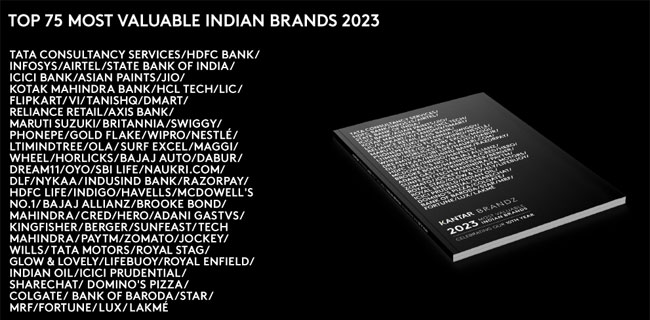
    Tata Consultancy Services (TCS) has retained its #1 position in the 10th edition of Kantar BrandZ Top 75 Most Valuable Indian Brands Report for the second consecutive year, with a brand value of US$43 billion. HDFC Bank, Infosys and Airtel also hold on to their top four positions, while State Bank of India rises one place to enter the Top 5.


    India’s Top 75 brands have a combined brand value of $379 billion, a decline of 4% from 2022 – a modest decrease given the ongoing economic volatility across most of the world. This is testament to Indian brands’ resilience, stability and consistency. The decline has been driven by brands in the Business Technology and Services Platforms category, which have a major presence in international markets, and therefore have been impacted by global pressures, recession threats and geopolitical instability.


    The Automotive category produced the Top 75’s two fastest risers: TVS (No.51; $1.90bn) and Mahindra (No.47; $2.01bn) and achieved the second highest category growth at 19%. India’s automotive brands have quickly responded to changing consumer needs, notably the shift in preference from hatchbacks to SUVs, and the demand for electric vehicles.


    TVS gained 59% in value and leapt 24 places thanks to a number of successful product launches and a 10-year partnership with BMW that gives it leverage in markets such as Europe, the US and Canada. Mahindra, which grew its value by 48%, has made itself incredibly meaningful in Indian consumers’ eyes, and has also significantly boosted its salience.


    The ranking’s 16 Financial Services brands contribute the biggest chunk of its total value. They grew 6%, thanks to the boom in digital banking, led by Axis Bank (No.17; +28%) and ICICI Bank (No.6; +18%).


    Telecom providers also performed strongly, resulting in a 17% rise in total brand value. Airtel (No.4; +29%) took full advantage of the end of the price wars to focus on what makes it special and relevant to Indian consumers’ lives. This included offering differentiated digital services, such as the Xstream entertainment app and Wynk music app. Airtel has also successfully leveraged the rapidly increasing demand among businesses for data and connectivity related solutions, and digital products that enable the delivery of an enhanced omni-channel customer experience.


    There are four newcomers to the 2023 Indian brand ranking, plus two re-entrants. PhonePe – the highest entry at No.21 – has quickly become India’s leading digital payment app by investing heavily in the strength of its infrastructure, building connections with partner banks, and developing a huge network of merchant acceptance points. Also making their debut are fintech brand Cred (No.48; $2.0bn), photo and video sharing app ShareChat (No.67; $1.33bn) and entertainment platform Star (No.71; $1.30bn).


    2023 is the 10th ranking of India’s most valuable brands, during which time the Top 50 have increased almost fivefold in value, from $69.6bn in 2014 to $339.9bn in 2023. The last decade is a story of strength and resilience: 33 of the brands in the current Top 75 were also in the 2014 ranking. The companies behind India’s most valuable brands have consistently outperformed the key market indices – the SENSEX and the NIFTY50 – with share price growth over 10 years of 99.6% compared with 83.2% and 81.7% respectively.


    Kantar BrandZ Top 10 Most Valuable Indian Brands 2023

    Rank 2023 Brand  Category Brand Value 2023 (US$M)
    1 Tata Consultancy Services Business Technology and Services Platforms 42,969
    2 HDFC Bank Financial Services 33,612
    3 Infosys Business Technology and Services Platforms 24,170
    4 Airtel Telecom Providers 22,517
    5 State Bank of India Financial Services 14,483
    6 ICICI Bank Financial Services 12,976
    7 Asian Paints Paints 12,839
    8 Jio Telecom Providers 11,773
    9 Kotak Mahindra Bank Financial Services 10,332
    10 HCL Tech Business Technology and Services Platforms 9,361


    Said Deepender Rana, Executive Managing Director- South Asia, Insights Division, Kantar: “It has been India’s decade. Our GDP has almost doubled with an 82% growth, while the world GDP has grown at 30%. This delta is even more when it comes to the most valuable Indian brands, which have almost quintupled in value (4.9 times), compared to the most valuable global brands, which have grown by 2.4 times. So Indian brands are significant value creators for our economy. We expect this trend to accelerate in the next decade as Indian brands don’t just thrive in India, but also explore growth overseas in their quest to become true multinational giants. Our IT services brands have already done that, with TCS and Infosys already featuring in the Top 100 Most Valuable Global Brand list. The strongest Indian brands have forged powerful connections by consistently adding value to people’s lives, and consumers see them as different to their rivals in ways that really matter. Brands must keep investing in building equity to create future demand, even as they capture existing demand which requires a better balance between short- and long-term strategy.”


    Added Soumya Mohanty, Managing Director & Chief Client Officer- South Asia, Insights Division, Kantar: “There is great diversity within the India Top 75: they are a combination of established names and dynamic young brands, both global and local in footprint. What they have in common is their ability to be essentially Indian. Through a deep and detailed understanding of consumers in the market, and adopting the local culture and ethos, even huge international brands are seen and cherished as ‘homegrown’. The trust and loyalty this engenders has helped Indian brands to suffer less and recover more quickly from the storms that have buffeted them over the past 10 years.”


    Other key highlights from the Kantar BrandZ Most Valuable Indian Brands report include:

    :: Sustainability credentials have a major influence on consumer decision-making – almost 9% of Indian brands’ Demand Power – a Kantar BrandZ measure of the ability to drive predisposition to buy – comes from perceptions around sustainability. However, only 8% of brands in India are seen as leaders in this area, compared to 11% globally, indicating an opportunity for those that can do more.

    :: Differentiation is key to commanding Pricing Power – the ability to justify price charged. Brands that have grown in both Demand Power and Pricing Power over the last year did so by being Meaningfully Different. There are different routes to being perceived as differentiated: a brand could be seen as distinct, to be a specialist, or to have purpose.

    :: The strength of the domestic economy has acted like a shield – Overseas contribution for the Top 30 Indian brands accounts for 31% of brand value, compared with 47% for Japan, 59% for the UK, and 85% for France. This has protected the ranking from the worst effects of international volatility.


    The Kantar BrandZ Most Valuable Indian Brands ranking, report and extensive analysis are available now at www.kantar.com/campaigns/brandz/india 


  • A trip through an Urban Bharat landscape


    With apologies to none at all


    By Vikas Mehta


    Vikas MehtaI have always preferred bus trips wherever possible as it leads to some interesting observations of semi-urban and rural India: Bharat and Urban Bharat. And these observations lead to some very interesting insights. So, last week I got a chance to do a bus trip from Delhi to Dehradun, all in broad daylight. The unfortunate part was that the trip was non-stop, except for a five-minute relief break, so I could not take as many photos I wanted to and could not speak to local people. And as most of the photos were from a moving bus, they were all not as good as one expected. Most of what I am writing are observations and not insights, if you understand the difference between the two.


    My experience actually started at the Delhi ISBT (Inter-State Bus Terminal). This place, in lot of ways resembles a mini-Bharat and Urban Bharat. And the first thing I noticed was Jugaad. There are lot of shops selling snacks and also some staple Indian dishes like Puri-Alu or Rajma-Chawal, inside the passenger terminal. But this time I saw that a few of them had taken over empty spaces, put up two-three big fans, placed some chairs and stools in front of them so that the passengers could be lured into this cooler oasis and empty their wallets. I am sure the set-up was illegal as it was temporary, but it had the feel of a dhaba with some waiters trying to get customers inside.
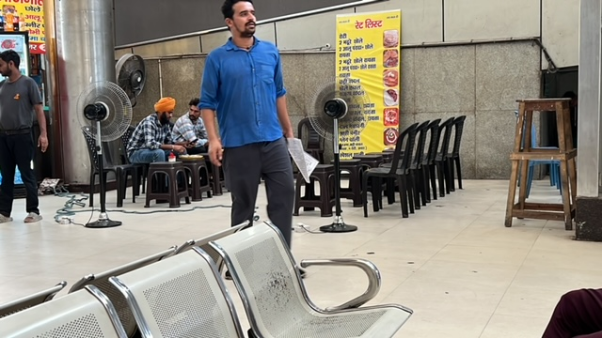


    And then there were the booksellers. Selling pirated books. In two-three languages. Hindi, English and Punjabi. They could understand with your dress and luggage if you were an English or vernacular bookreader. I was approached by two sellers. Both had sorted out English books before they approached me.


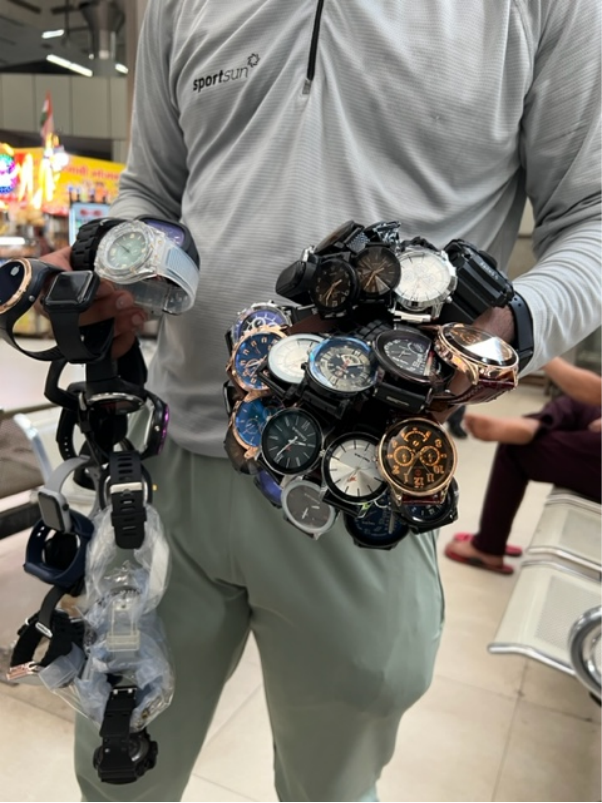
    There were socks-sellers and watch-sellers too. Again, all fake stuff but with the real label. The price printed for Adidas pack of three was Rs 499 but these were being offered for Rs 250. I bought one pack, without any haggling and the vendor therefore opened up a bit to me.


    According to him, these were bought for Rs 150 from some wholesalers at the Delhi borders. The vendors pay protection money of Rs 200 per day to some people at ISBT. Sellers like him manage to sell about 10-12 sets each day. There is haggling and per set anything between Rs 75-100 is profit. The travel cost and lugging of the same means about Rs 150-200 per day. So, at the end of the day. They are left with an earning of Rs 1000-1500. I asked him about his education. The guy was a BCom and so were the others, he said. They spend about 12 hours on their feet selling socks or fake watches. Or fake sunglasses. They come from villages in Haryana and UP and lack of jobs force them to come to Delhi and take up this job.


    I asked him what he hated most about his job. Lack of respect, he said. People are rude, haggle endlessly even if they have no intention of buying and are too smug in their own way. He then muttered “Maybe because they have a job, can afford to travel by AC buses, eat aloo-puri and drink Coke whereas I can’t afford to do the same.” “I do make decent money,” he added, “about 25-30k a month but it’s a back-breaking job and lack of respect hurts.” Plus, there’s the dealing with the protection gang, authorities raids when they seize all the goods, all that adds to the burden. He also confirmed that the stalls putting up eating areas was all controlled by the protection mafia in cahoots with the authorities. See photos below
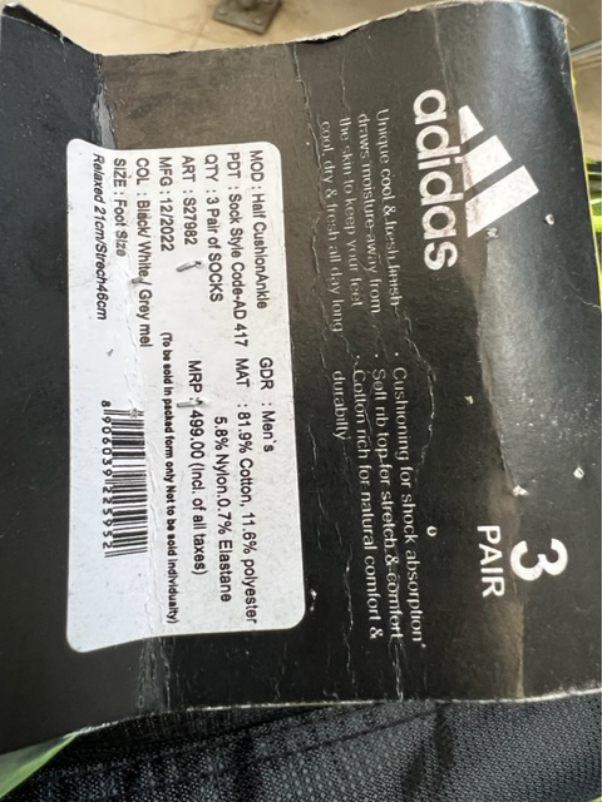


    I used the socks. The quality as well as the branding on the socks sucks.


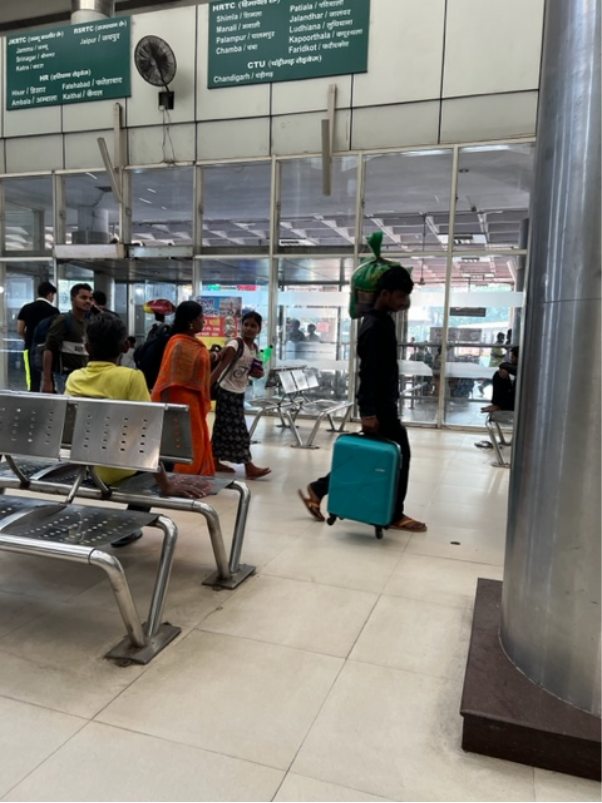
    ISBT also offers a kaleidoscope of clothes, both Indian and western, a smattering of various languages and a variety of luggage. Not just in terms of merchandise but also attire and accessories that passengers use. Lot of fake clothes, shoes etc being worn and a lot of mix of old and new, modern and traditional, utility and jugaad. This picture below really says it better than words. A traveller with a VIP strolley in one hand and a polythene gunny bag with god knows what on his shoulder.


    The first thing that hit me about an hour into the trip was the development that has happened on the route. I have been doing this route since my childhood. The route has changed with many bypasses and freeways that have come up. But the development along the route ensures that nothing remotely rural can be seen from the bus. Sure, one does get to see sugarcane fields, some fruit orchards, but these are all vanishing. As connectivity improves, land prices go up, the farmers realise that they are well off selling their land at good rates and starting some business. And the best business to start along highways is restaurants, dhabas and resorts. And therein lies a tale.

    Hardly a kilometre passes when you don’t see a dhaba. Eating spots of various cuisines, novelty items and amenities exist. And there are some interesting lessons in their branding and communication.


    Since this is the highway to Doon, Haridwar and then onward to Char Dhams of Kedarnath, Badrinath, Gangotri and Yamunotri, most of the dhabas are vegetarian. And to cue vegetarianism, they give all types of religious names to the dhabas. From the mundane, Krishna or Hanuman or Shiva or Dwarka to the more innovative ones like Mahalaya or Natkhat or Mahakaal or Rudraksh. Then there are the ones which cue masculinity. Pehelwan or Sardar or Nambardar. These serve non-vegetarian too. Some cue the cuisine with speciality cuisines like Marwari or Jain catching the eye.


    Besides the name, the differentiation is happening in the offerings too. Jain Shikanji is famous for its Shikanji, a cool Indian drink that one looks forward to in summers. Today, it is a full-fledged restaurant offering all types of cuisine but still calls itself Jain Shikanji. Of late many other Jain shikanji wannabes have arrived on the scene. So this guy has put his photo on the restaurant, hoardings, any piece of communication, saying look out for the photo to recognise the true Jain Shikanji!


    And that’s a communication trick that many restaurant owners are following. I have seen restaurant-owners proudly declare that they eat in the restaurant and it has added to the credibility of the place. I have seen CEOs and owner of companies appearing in ads like the famous MDH owner or even Lee Iacocca of Chrysler, but here it’s just the photo of the owner being used to cue that this is the famous “fill in brand name”. Hoardings for Shiva Dhaba, Ganpati Dhaba, Jain Shikanji and even Bhagatji sweets dotted the highway.
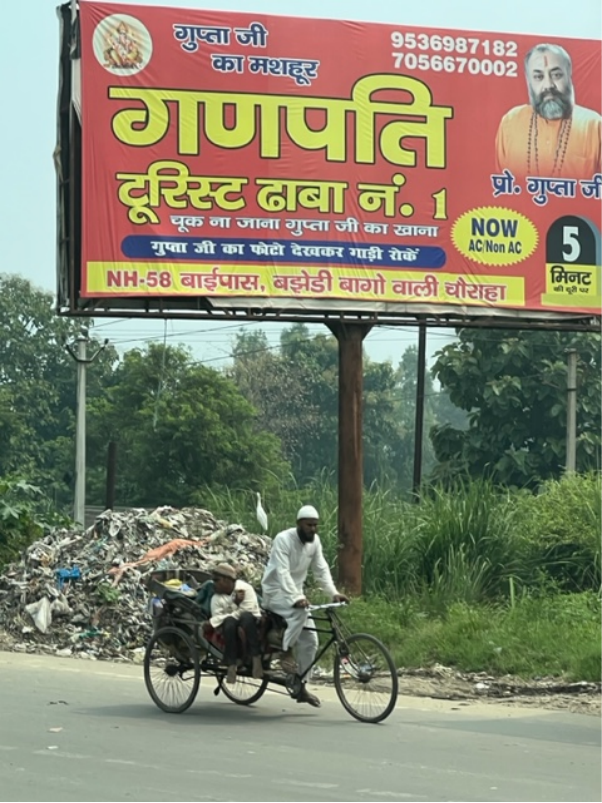
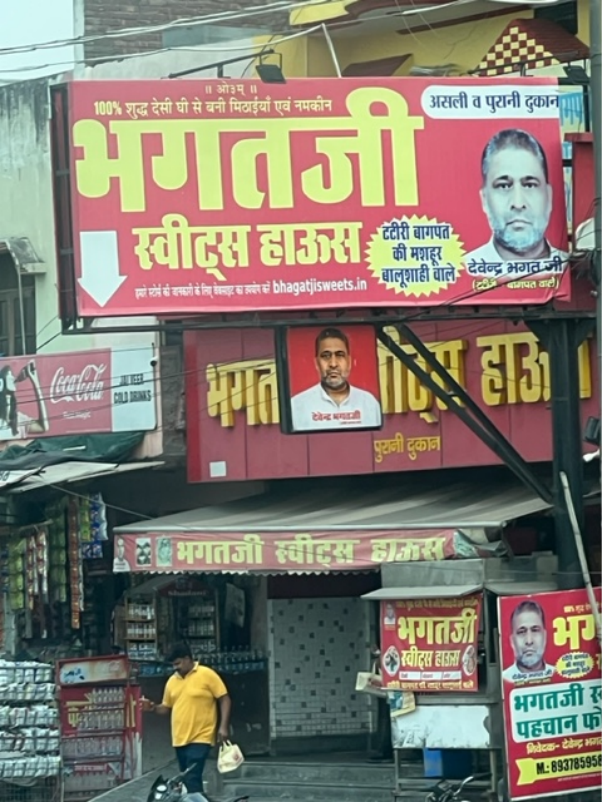


    The other interesting thing about these desi entrepreneurs was that they had opened more than one outlet. Maybe it was franchised but I saw at least two-three of the above-mentioned brands in different locations.


    Another interesting aspect of the communication is that almost all of them showed a milestone. It was not about how far it was but about how long it will take to reach them. And mostly these hoardings would appear from 25-30 minutes away.


    Interestingly, some outlets which have by themselves become famous elsewhere have also opened on this route. Like Murthal parathas which have become famous in Haryana on the Sonepat highway are being aped by a local dhaba.


    But my favourite name and communication is in the picture below. It also shows the owner but his name and association is unique.
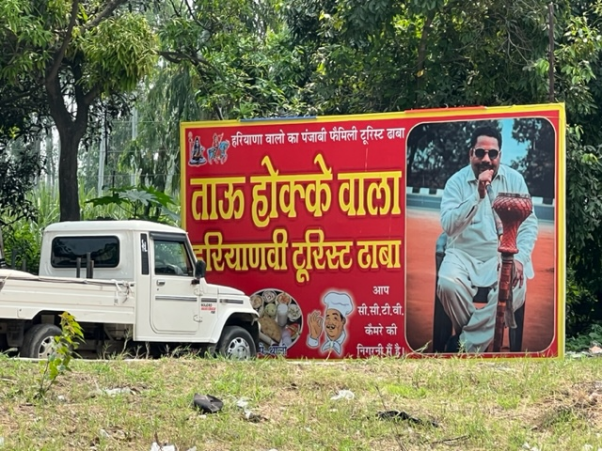


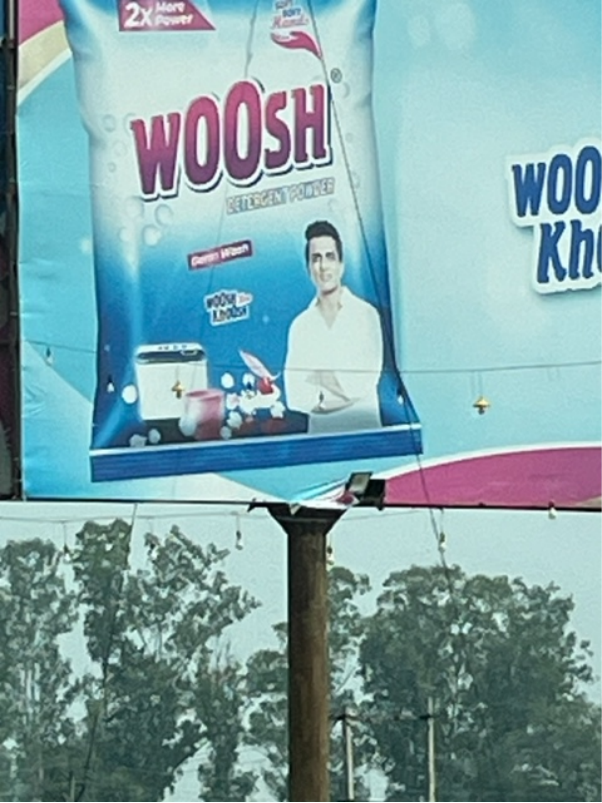
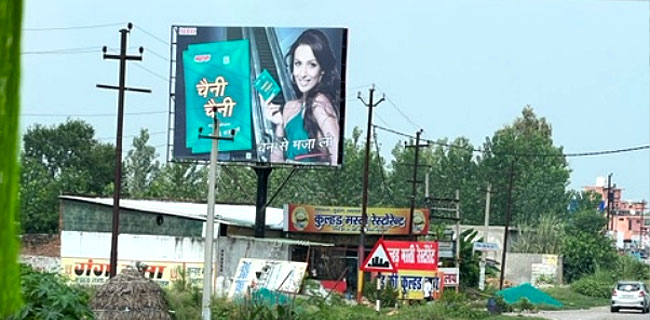
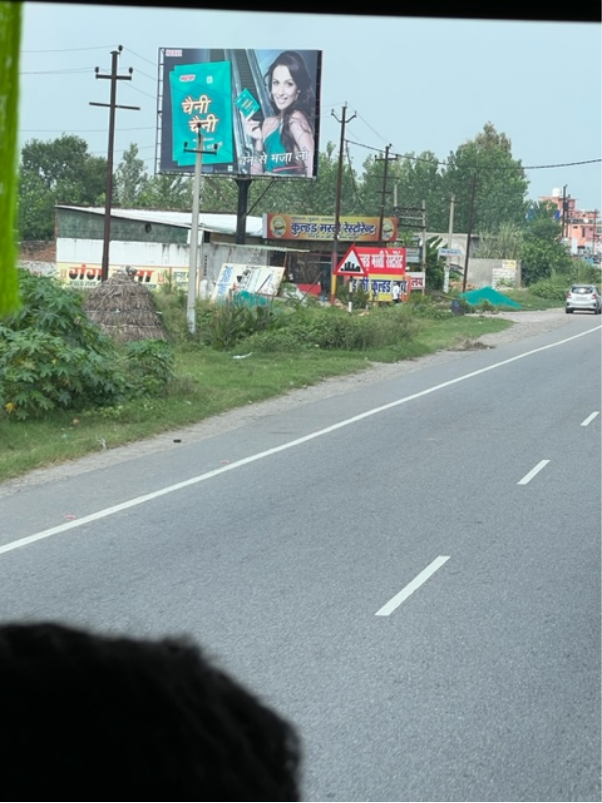
    During the trip it was quite fascinating to see the use of celebrities. I hardly saw any cricketer being used and not many top Bollywood personalities were on display too. Sure Akshay, Shah Rukh, Amitabh, featured in national brands like Apollo Pipes or Vimal Elaichi or Dollar vests. But it was celebrities like Sonu Sood in a detergent hoarding or Pankaj Tripathi promoting Lux undergarments or even Malaika Arora in Chaini Chaini Pan Masala who stole the show. Most of them were endorsing more than one brand. And not just national brand but also local brands like Swoosh detergent or Khanna Jewellers. Ajay Devgun was also very prominent as brand ambassador for many brands. I guess it was the raw earthy appeal of the male celebrities that was a major pull. Not the sophistication or urbanness of other endorsers. And of course, not to underestimate the raw appeal of Malaika Arora.
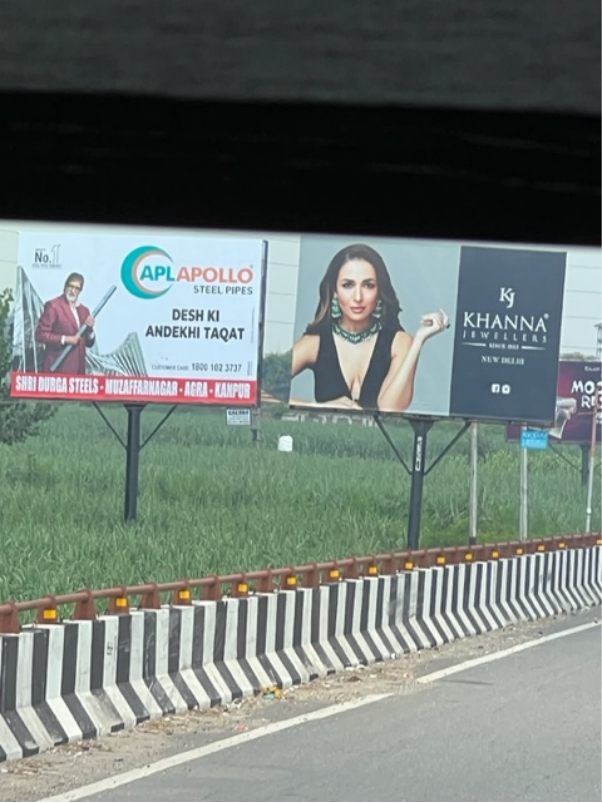


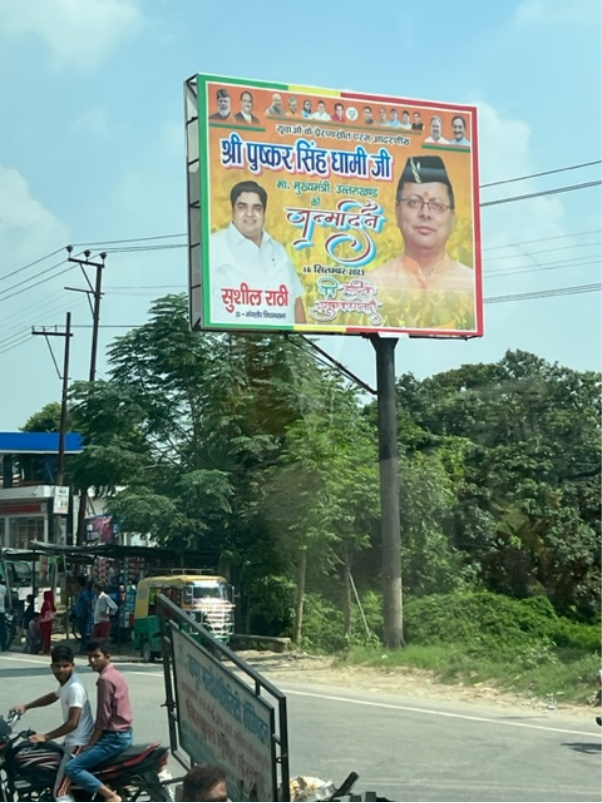
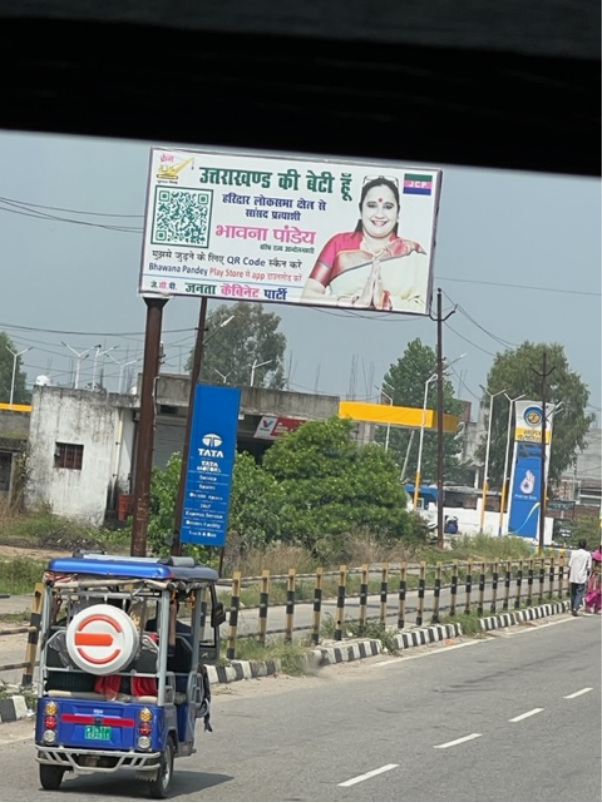
    While the celebrities enjoyed the limelight, politicians were not too far. Candidates were already lining up to highlight their candidature for the next elections. And smalltime politicians wishing the CM or the PM on birthday was not to be missed.


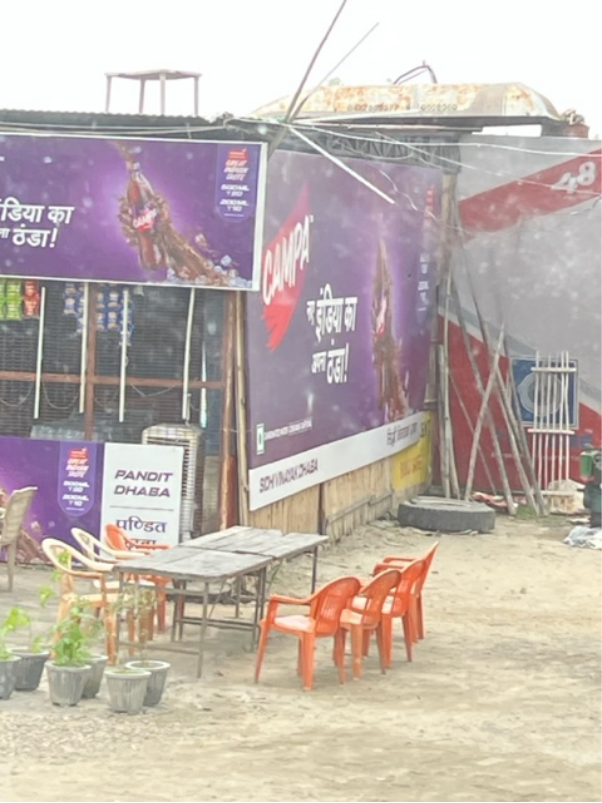
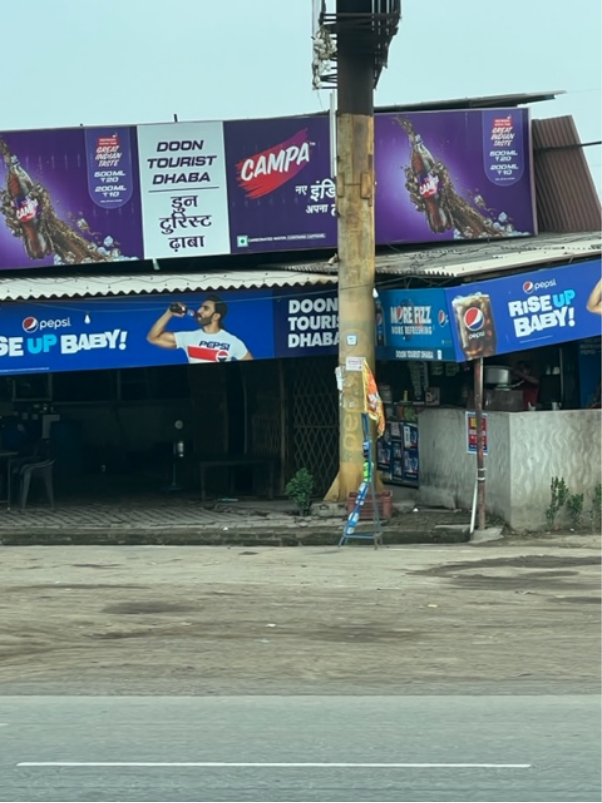
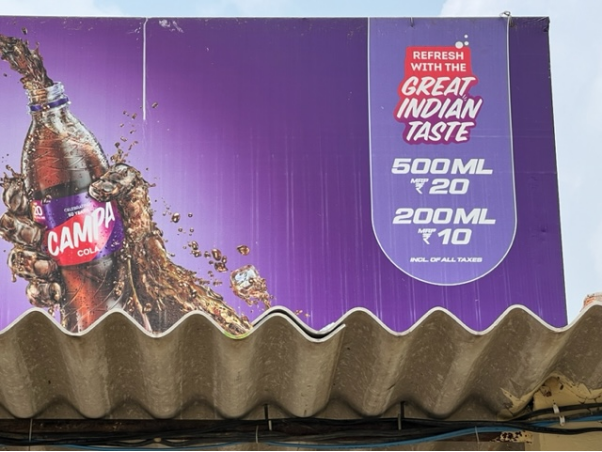
    I am sure most of you readers who are residing in metros have heard about the acquisition and the launch of Campa by Reliance Retail. But have you seen the product or its communication? The one brand that was ubiquitous in its presence throughout, be it wall paintings or restaurant signage or just plain hoardings, Campa had outsmarted both Pepsi and Coke. It had cleverly overshadowed Pepsi in some places and seemed to be the default soft drink through the route. It has an interesting line, Naye India ka apna Thanda. Clearly it is capitalising on the nationalistic mood and the Amrit Kaal fervour. And it does not fall shy of communicating its cheaper, sorry, competitive pricing too. At the five-minute stop, I asked the dhaba guy about Campa. He claims it sells very well because of its price and though it still has distribution and therefore availability issues it is giving Coke and Pepsi a run for their money. While Coke and Pepsi with big endorsements and advertising budgets seem to be going strong, it looks like Reliance Retail is building a solid foundation at the ground level.


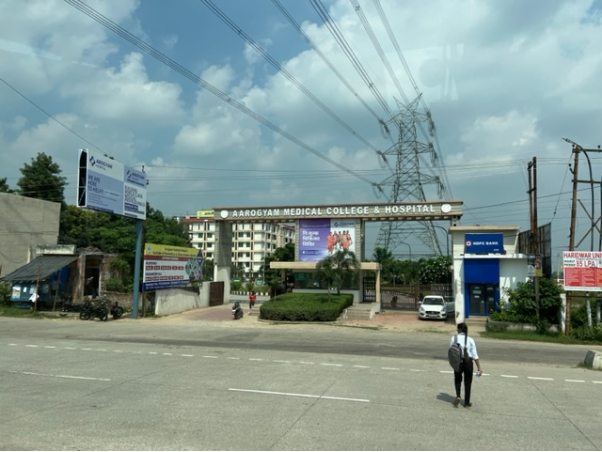
    Talking about nationalism, the impact of ayurveda was visible in outdoor communication and branding of various categories. An allopathy hospital was called Arogyam. Wall paintings associated with Gupt Rog (cue sexual illness) which have been omnipresent all along Indian highways for a long time now have an ayurvedic slant. Even some vegetarian restaurants had ayurvedic-sounding name. Near Haridwar there was a housing society calling itself Amrit Arogyam. The marketing and communication bug has not escaped Urban Bharat or even Bharat.
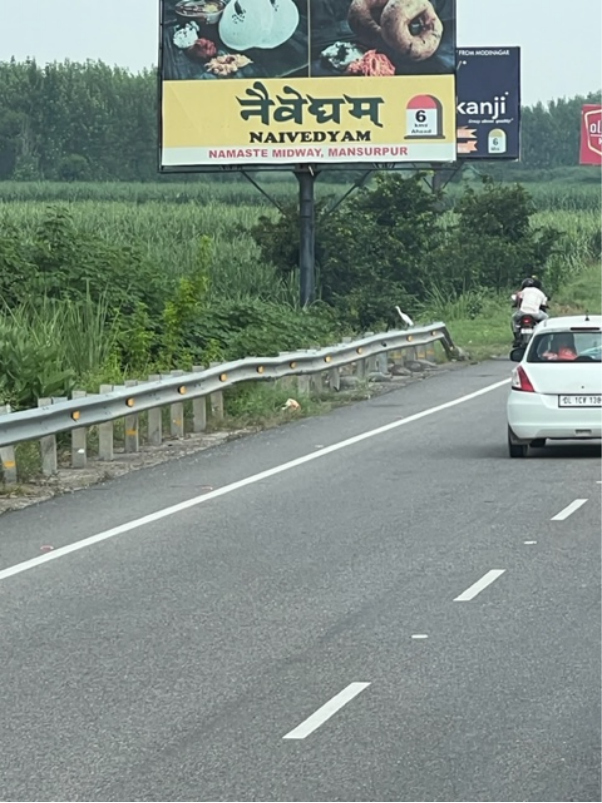


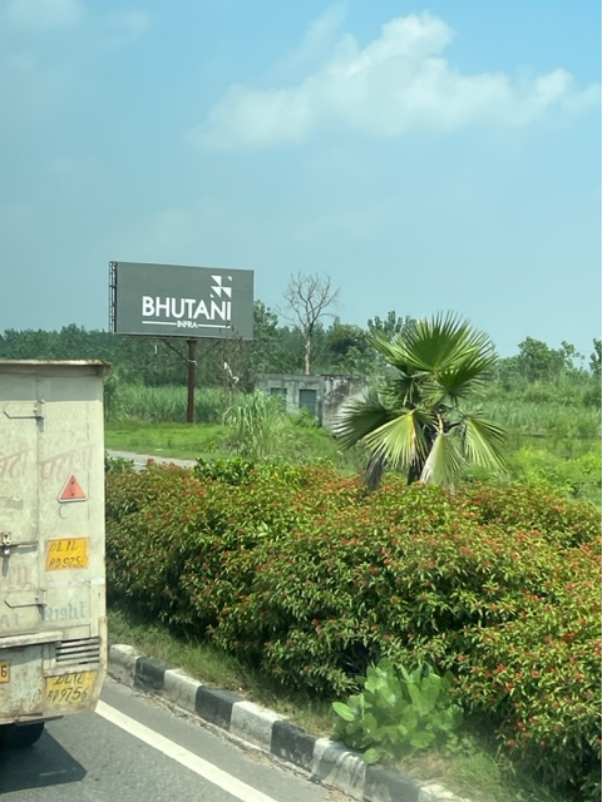
    Almost everywhere it was the local brands which stood out in their presence and communication. Be it Tehri TMT Bars or Tirupati Pipes, or even Bhutani Infra, these brands were present right throughout UP and Uttarakhand part of the route.


    As far as local brands are concerned, the education sector was dominant right through the route. I lost count of UG, engineering and management institutes that I saw on the way. Almost all were private deemed-to-be universities or colleges. And there was no shortage of private schools too. Motherhood University or Om Group of Institutions, here also branding was critical. It mostly had English names cueing a western approach or some had acronyms which sounded very western.


    But it was the school names that took the cake. Almost all had English names. Some even French-sounding and some outlandish. I mean a school called Good News School or called Laureate School. How many teachers or students would pronounce that correctly. In a country, where the dealer of Renault calls it Renolt and not Reno (right pronounciation), my mind boggles on what Laureate school would be called.
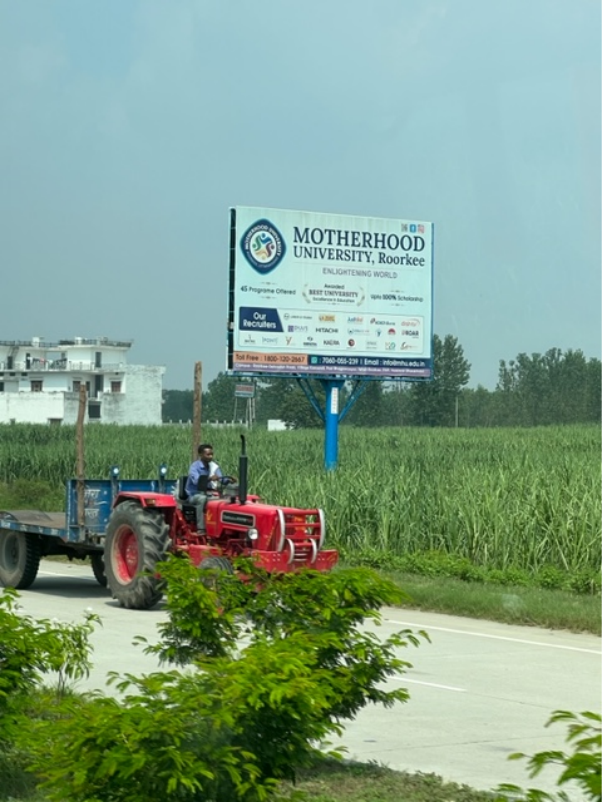


    As you can see, my four-and-a-half hour trip passed in a jiffy. There were some more observations like the presence of a many hoardings advertising a helicopter service to see the Himalayas, cashing in on the Char Dham route. Or wall paintings by Finolex Pipes wishing all Char Dham yatris a safe trip.

    But the one insight I got from all these observations is the importance of branding that is catching on even in Urban Bharat or Bharat. Culturally, we take our names seriously. It’s not just an art but also a science on how we name our children. The same seriousness is now going in the naming of various products and services. Who could have thought of a vegetarian restaurant called Natkhat (Naughty as in Lord Krishna ) or a school called St Kabeer. Do you call it Saint Kabeer or Sant Kabeer? Go figure.


    Vikas Mehta is a senior advertising professional and now a branding and business strategist and educator. After having worked in various geographies, he is now based in Dehradun. His views here are personal.