With apologies to none at all
By Vikas Mehta
 I have always preferred bus trips wherever possible as it leads to some interesting observations of semi-urban and rural India: Bharat and Urban Bharat. And these observations lead to some very interesting insights. So, last week I got a chance to do a bus trip from Delhi to Dehradun, all in broad daylight. The unfortunate part was that the trip was non-stop, except for a five-minute relief break, so I could not take as many photos I wanted to and could not speak to local people. And as most of the photos were from a moving bus, they were all not as good as one expected. Most of what I am writing are observations and not insights, if you understand the difference between the two.
My experience actually started at the Delhi ISBT (Inter-State Bus Terminal). This place, in lot of ways resembles a mini-Bharat and Urban Bharat. And the first thing I noticed was Jugaad. There are lot of shops selling snacks and also some staple Indian dishes like Puri-Alu or Rajma-Chawal, inside the passenger terminal. But this time I saw that a few of them had taken over empty spaces, put up two-three big fans, placed some chairs and stools in front of them so that the passengers could be lured into this cooler oasis and empty their wallets. I am sure the set-up was illegal as it was temporary, but it had the feel of a dhaba with some waiters trying to get customers inside.
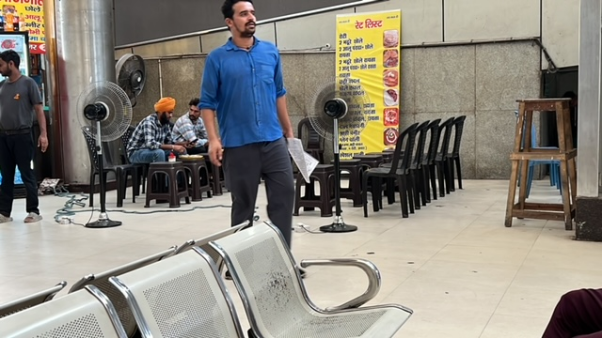
And then there were the booksellers. Selling pirated books. In two-three languages. Hindi, English and Punjabi. They could understand with your dress and luggage if you were an English or vernacular bookreader. I was approached by two sellers. Both had sorted out English books before they approached me.
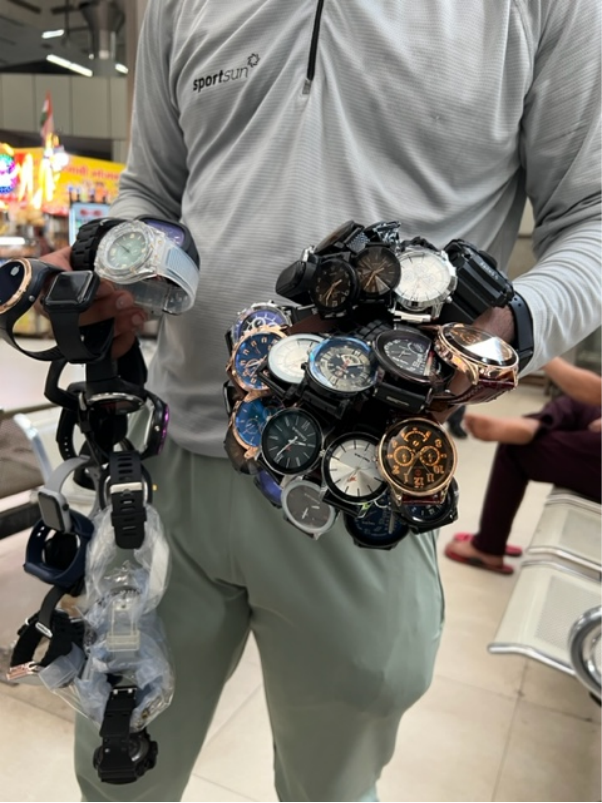
There were socks-sellers and watch-sellers too. Again, all fake stuff but with the real label. The price printed for Adidas pack of three was Rs 499 but these were being offered for Rs 250. I bought one pack, without any haggling and the vendor therefore opened up a bit to me.
According to him, these were bought for Rs 150 from some wholesalers at the Delhi borders. The vendors pay protection money of Rs 200 per day to some people at ISBT. Sellers like him manage to sell about 10-12 sets each day. There is haggling and per set anything between Rs 75-100 is profit. The travel cost and lugging of the same means about Rs 150-200 per day. So, at the end of the day. They are left with an earning of Rs 1000-1500. I asked him about his education. The guy was a BCom and so were the others, he said. They spend about 12 hours on their feet selling socks or fake watches. Or fake sunglasses. They come from villages in Haryana and UP and lack of jobs force them to come to Delhi and take up this job.
I asked him what he hated most about his job. Lack of respect, he said. People are rude, haggle endlessly even if they have no intention of buying and are too smug in their own way. He then muttered “Maybe because they have a job, can afford to travel by AC buses, eat aloo-puri and drink Coke whereas I can’t afford to do the same.” “I do make decent money,” he added, “about 25-30k a month but it’s a back-breaking job and lack of respect hurts.” Plus, there’s the dealing with the protection gang, authorities raids when they seize all the goods, all that adds to the burden. He also confirmed that the stalls putting up eating areas was all controlled by the protection mafia in cahoots with the authorities. See photos below
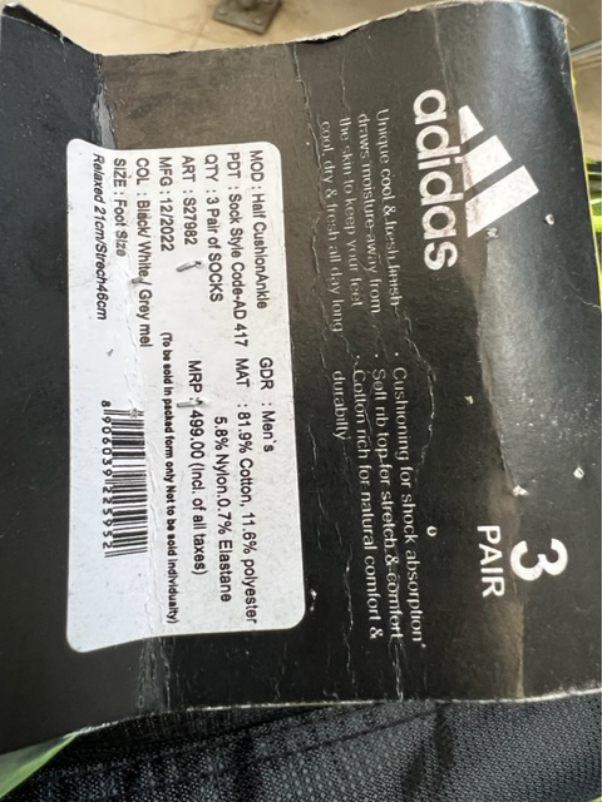
I used the socks. The quality as well as the branding on the socks sucks.
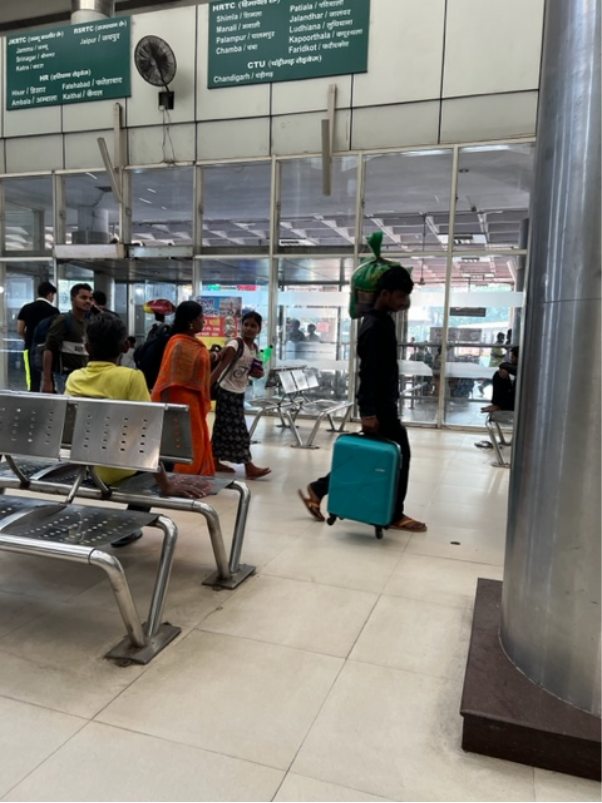
ISBT also offers a kaleidoscope of clothes, both Indian and western, a smattering of various languages and a variety of luggage. Not just in terms of merchandise but also attire and accessories that passengers use. Lot of fake clothes, shoes etc being worn and a lot of mix of old and new, modern and traditional, utility and jugaad. This picture below really says it better than words. A traveller with a VIP strolley in one hand and a polythene gunny bag with god knows what on his shoulder.
The first thing that hit me about an hour into the trip was the development that has happened on the route. I have been doing this route since my childhood. The route has changed with many bypasses and freeways that have come up. But the development along the route ensures that nothing remotely rural can be seen from the bus. Sure, one does get to see sugarcane fields, some fruit orchards, but these are all vanishing. As connectivity improves, land prices go up, the farmers realise that they are well off selling their land at good rates and starting some business. And the best business to start along highways is restaurants, dhabas and resorts. And therein lies a tale.
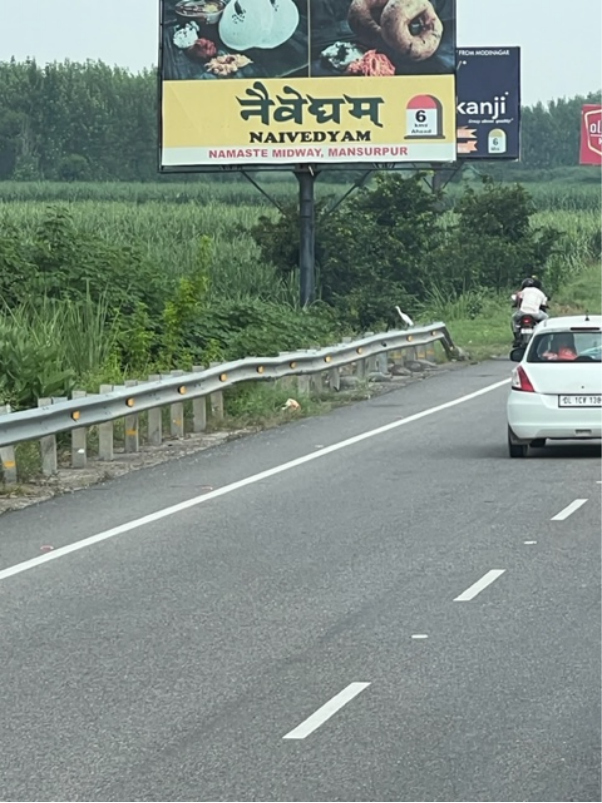
Hardly a kilometre passes when you don’t see a dhaba. Eating spots of various cuisines, novelty items and amenities exist. And there are some interesting lessons in their branding and communication.
Since this is the highway to Doon, Haridwar and then onward to Char Dhams of Kedarnath, Badrinath, Gangotri and Yamunotri, most of the dhabas are vegetarian. And to cue vegetarianism, they give all types of religious names to the dhabas. From the mundane, Krishna or Hanuman or Shiva or Dwarka to the more innovative ones like Mahalaya or Natkhat or Mahakaal or Rudraksh. Then there are the ones which cue masculinity. Pehelwan or Sardar or Nambardar. These serve non-vegetarian too. Some cue the cuisine with speciality cuisines like Marwari or Jain catching the eye.
Besides the name, the differentiation is happening in the offerings too. Jain Shikanji is famous for its Shikanji, a cool Indian drink that one looks forward to in summers. Today, it is a full-fledged restaurant offering all types of cuisine but still calls itself Jain Shikanji. Of late many other Jain shikanji wannabes have arrived on the scene. So this guy has put his photo on the restaurant, hoardings, any piece of communication, saying look out for the photo to recognise the true Jain Shikanji!
And that’s a communication trick that many restaurant owners are following. I have seen restaurant-owners proudly declare that they eat in the restaurant and it has added to the credibility of the place. I have seen CEOs and owner of companies appearing in ads like the famous MDH owner or even Lee Iacocca of Chrysler, but here it’s just the photo of the owner being used to cue that this is the famous “fill in brand name”. Hoardings for Shiva Dhaba, Ganpati Dhaba, Jain Shikanji and even Bhagatji sweets dotted the highway.
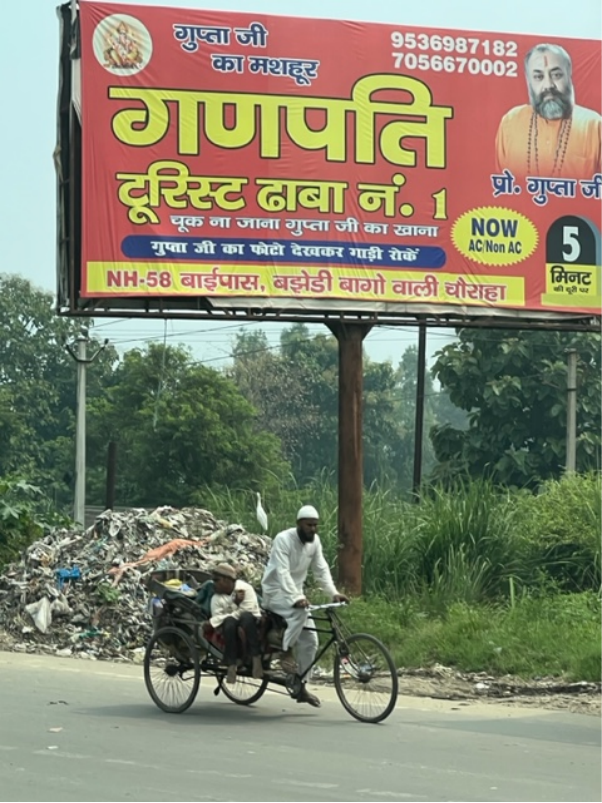
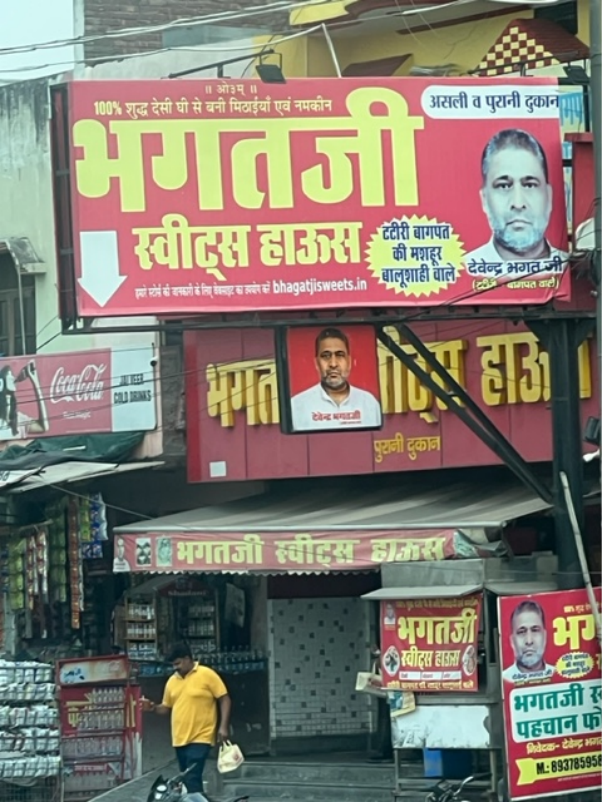
The other interesting thing about these desi entrepreneurs was that they had opened more than one outlet. Maybe it was franchised but I saw at least two-three of the above-mentioned brands in different locations.
Another interesting aspect of the communication is that almost all of them showed a milestone. It was not about how far it was but about how long it will take to reach them. And mostly these hoardings would appear from 25-30 minutes away.
Interestingly, some outlets which have by themselves become famous elsewhere have also opened on this route. Like Murthal parathas which have become famous in Haryana on the Sonepat highway are being aped by a local dhaba.
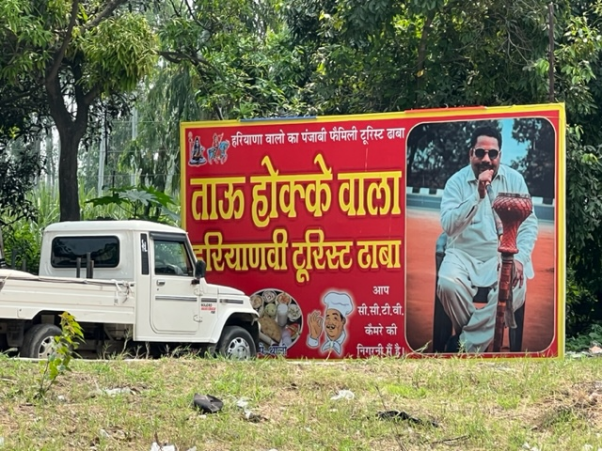
But my favourite name and communication is in the picture below. It also shows the owner but his name and association is unique.
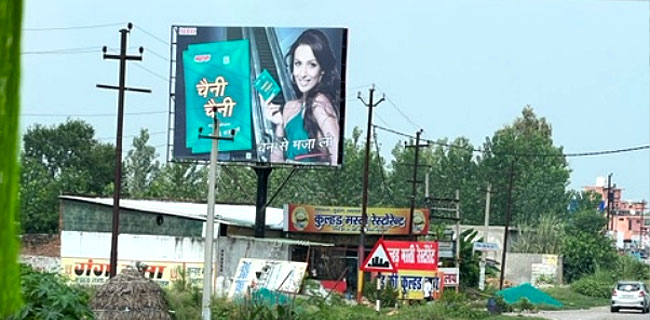
During the trip it was quite fascinating to see the use of celebrities. I hardly saw any cricketer being used and not many top Bollywood personalities were on display too. Sure Akshay, Shah Rukh, Amitabh, featured in national brands like Apollo Pipes or Vimal Elaichi or Dollar vests. But it was celebrities like Sonu Sood in a detergent hoarding or Pankaj Tripathi promoting Lux undergarments or even Malaika Arora in Chaini Chaini Pan Masala who stole the show. Most of them were endorsing more than one brand. And not just national brand but also local brands like Swoosh detergent or Khanna Jewellers. Ajay Devgun was also very prominent as brand ambassador for many brands. I guess it was the raw earthy appeal of the male celebrities that was a major pull. Not the sophistication or urbanness of other endorsers. And of course, not to underestimate the raw appeal of Malaika Arora.
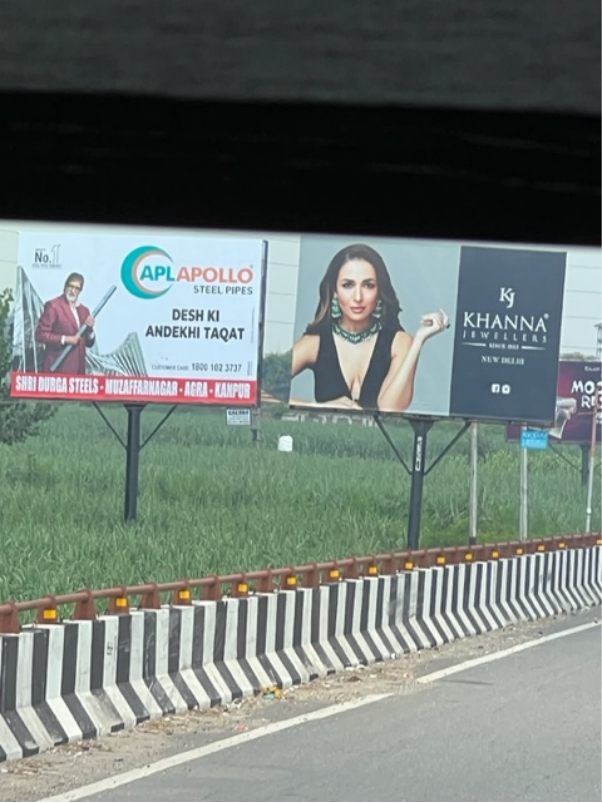
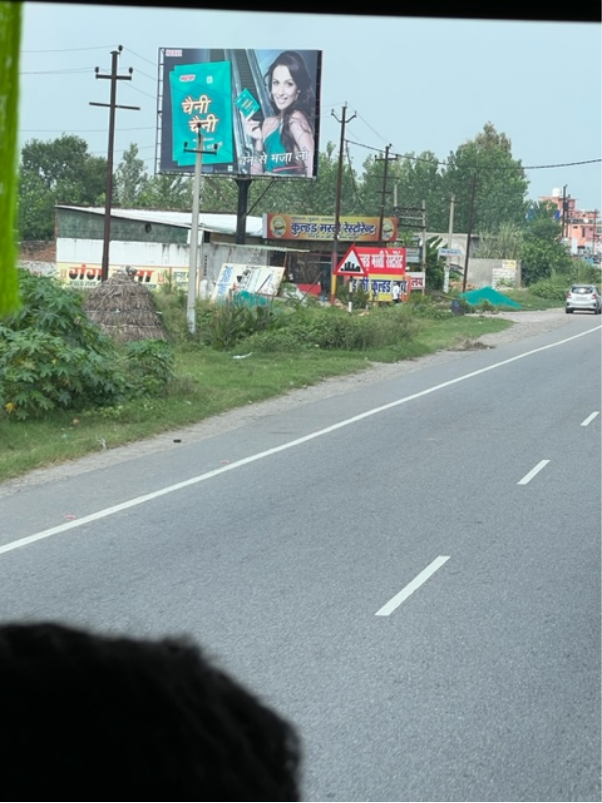
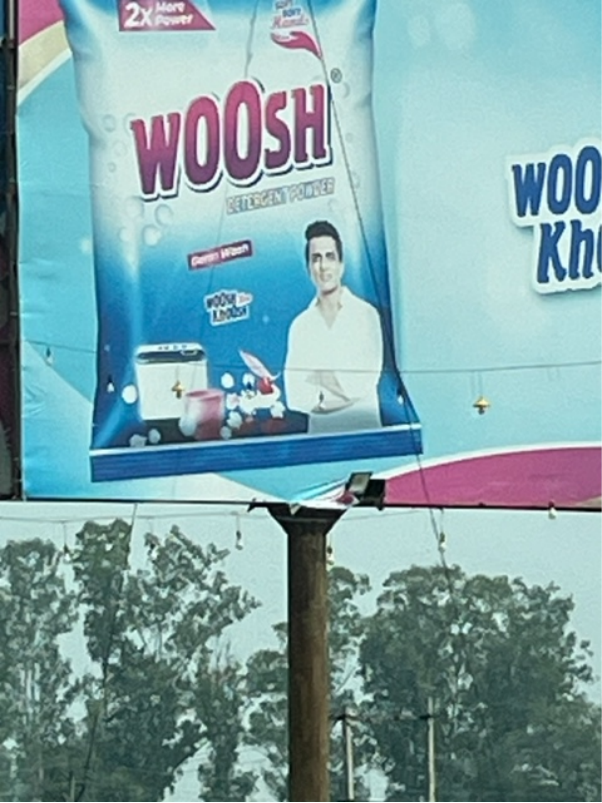
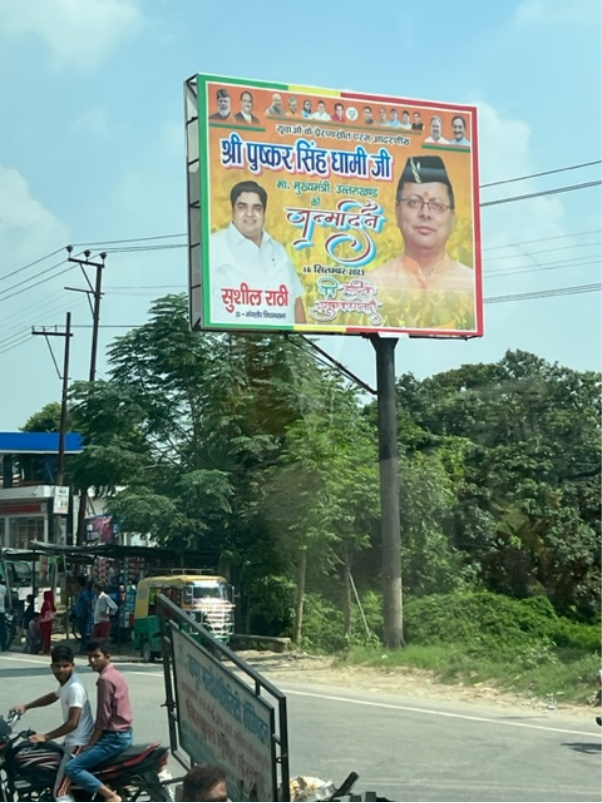
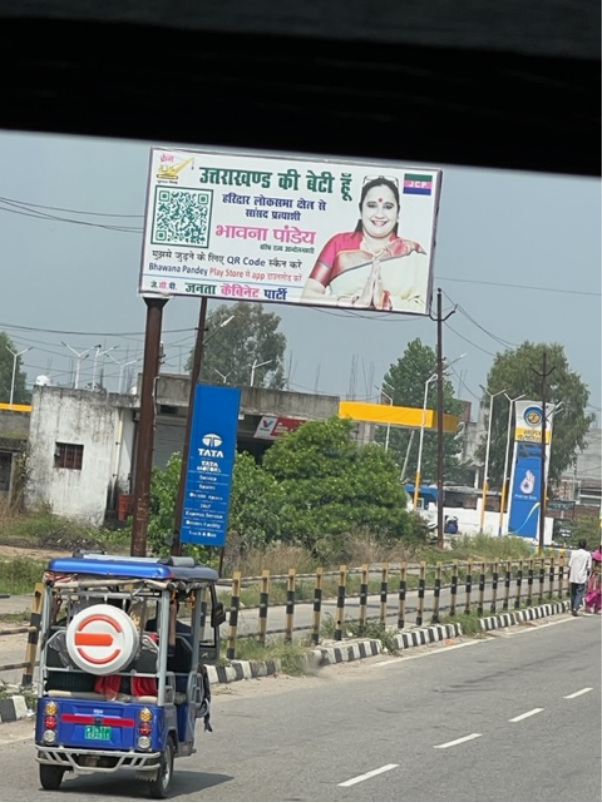
While the celebrities enjoyed the limelight, politicians were not too far. Candidates were already lining up to highlight their candidature for the next elections. And smalltime politicians wishing the CM or the PM on birthday was not to be missed.
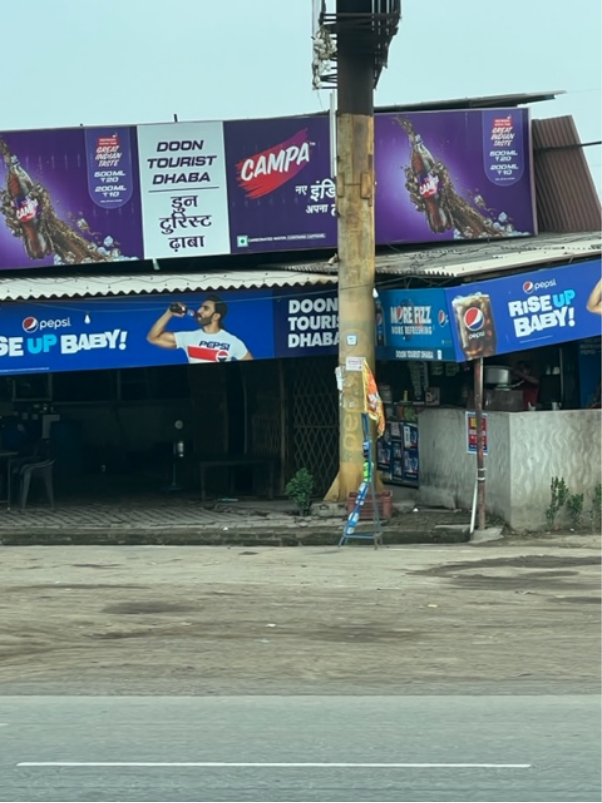
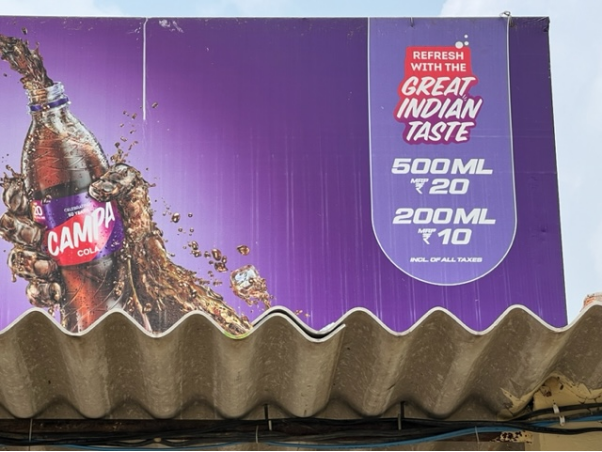
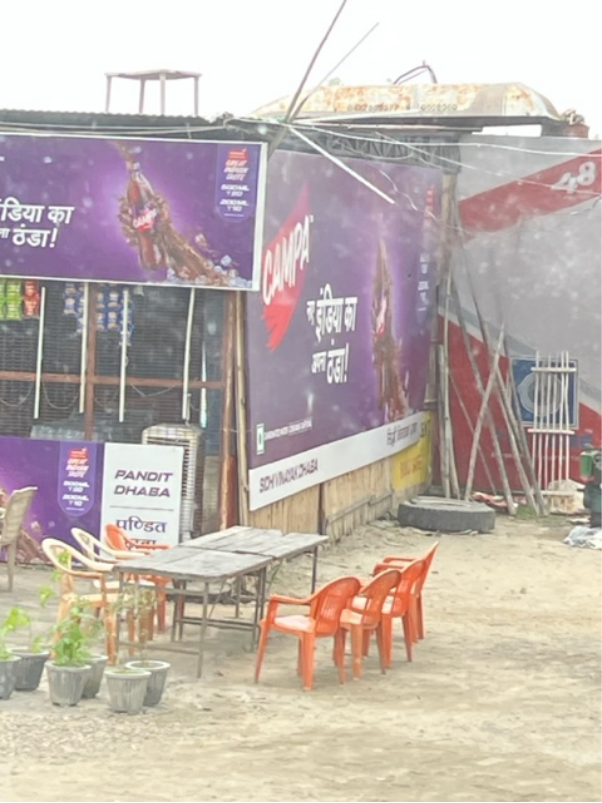
I am sure most of you readers who are residing in metros have heard about the acquisition and the launch of Campa by Reliance Retail. But have you seen the product or its communication? The one brand that was ubiquitous in its presence throughout, be it wall paintings or restaurant signage or just plain hoardings, Campa had outsmarted both Pepsi and Coke. It had cleverly overshadowed Pepsi in some places and seemed to be the default soft drink through the route. It has an interesting line, Naye India ka apna Thanda. Clearly it is capitalising on the nationalistic mood and the Amrit Kaal fervour. And it does not fall shy of communicating its cheaper, sorry, competitive pricing too. At the five-minute stop, I asked the dhaba guy about Campa. He claims it sells very well because of its price and though it still has distribution and therefore availability issues it is giving Coke and Pepsi a run for their money. While Coke and Pepsi with big endorsements and advertising budgets seem to be going strong, it looks like Reliance Retail is building a solid foundation at the ground level.
Talking about nationalism, the impact of ayurveda was visible in outdoor communication and branding of various categories. An allopathy hospital was called Arogyam. Wall paintings associated with Gupt Rog (cue sexual illness) which have been omnipresent all along Indian highways for a long time now have an ayurvedic slant. Even some vegetarian restaurants had ayurvedic-sounding name. Near Haridwar there was a housing society calling itself Amrit Arogyam. The marketing and communication bug has not escaped Urban Bharat or even Bharat.
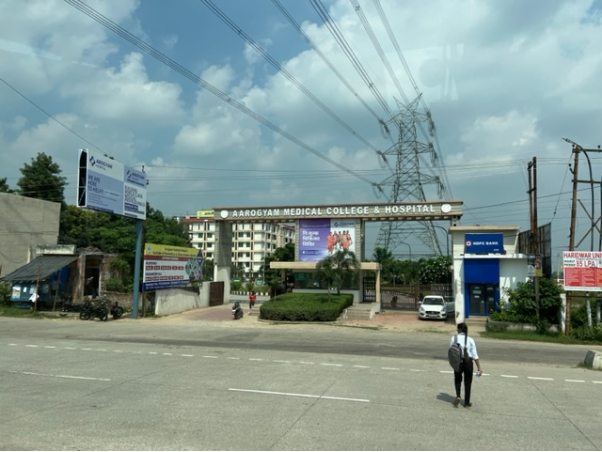
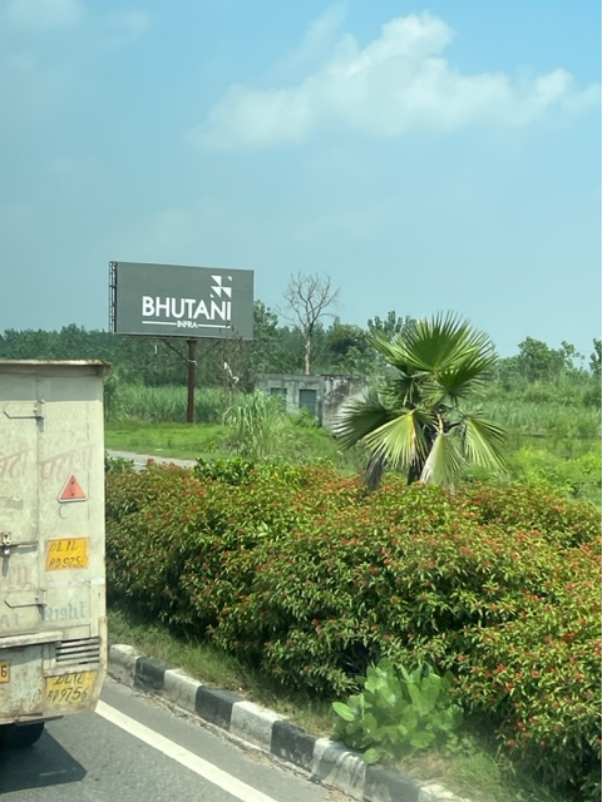
Almost everywhere it was the local brands which stood out in their presence and communication. Be it Tehri TMT Bars or Tirupati Pipes, or even Bhutani Infra, these brands were present right throughout UP and Uttarakhand part of the route.
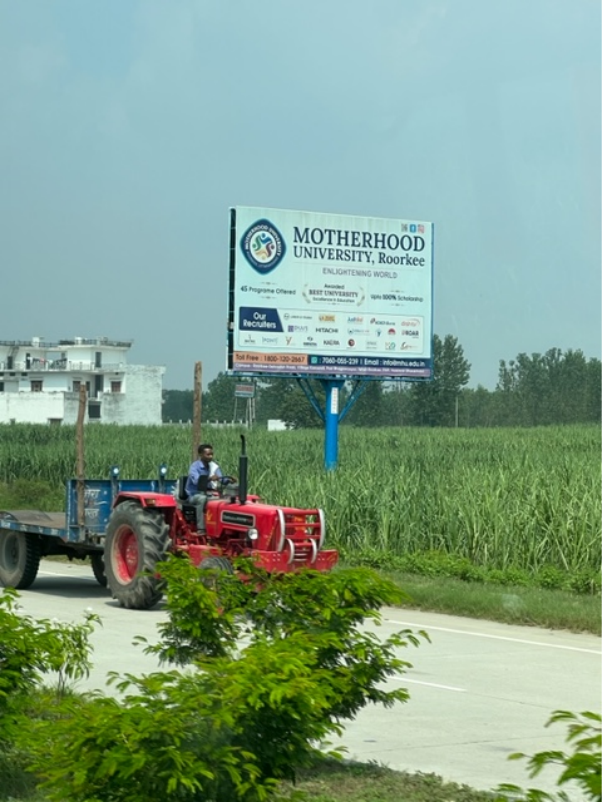
As far as local brands are concerned, the education sector was dominant right through the route. I lost count of UG, engineering and management institutes that I saw on the way. Almost all were private deemed-to-be universities or colleges. And there was no shortage of private schools too. Motherhood University or Om Group of Institutions, here also branding was critical. It mostly had English names cueing a western approach or some had acronyms which sounded very western.
But it was the school names that took the cake. Almost all had English names. Some even French-sounding and some outlandish. I mean a school called Good News School or called Laureate School. How many teachers or students would pronounce that correctly. In a country, where the dealer of Renault calls it Renolt and not Reno (right pronounciation), my mind boggles on what Laureate school would be called.
As you can see, my four-and-a-half hour trip passed in a jiffy. There were some more observations like the presence of a many hoardings advertising a helicopter service to see the Himalayas, cashing in on the Char Dham route. Or wall paintings by Finolex Pipes wishing all Char Dham yatris a safe trip.
But the one insight I got from all these observations is the importance of branding that is catching on even in Urban Bharat or Bharat. Culturally, we take our names seriously. It’s not just an art but also a science on how we name our children. The same seriousness is now going in the naming of various products and services. Who could have thought of a vegetarian restaurant called Natkhat (Naughty as in Lord Krishna ) or a school called St Kabeer. Do you call it Saint Kabeer or Sant Kabeer? Go figure.
Vikas Mehta is a senior advertising professional and now a branding and business strategist and educator. After having worked in various geographies, he is now based in Dehradun. His views here are personal.