

Author: Our Staff

  • Copy that!


    By Kunal Sinha


    Kunal SinhaIn the late 1990s, I visited countless haats across India with my colleagues, understanding the rural residents’ shopping behaviour, helping develop strategies to engage and convince them.


    On those trips, we chanced across a plethora of copycat brands. Funny & Lovely, Fairy & Lovely fairness creams, Polands cream and talcum powder, Dafur and Babur Dant Manjan, Nise and Pearl biscuits. With their limited ability to read the English alphabet, villagers looked at the brand’s logo as the visual ID, because the rest of the packaging was pretty identical to the original brand.


    The makers of these copycat brands were small, local entrepreneurs, riding on the popularity of brands that enjoyed high equity and trust, and out to make a quick buck. They were hard to track down.


    Nearly three decades later, we are witnessing an upsurge of brands that have no qualms about capitalising on the equity of market leaders. The difference: these are brands owned and introduced to the market by well-established, reputable companies.
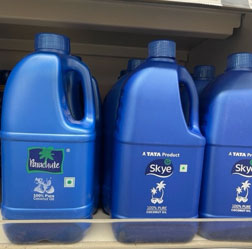
     

    One need not travel to a small town or village to find many of these brands. They are available both online and your neighbouring Star Bazaar. Not only that, the placement on the shelf is right next to the original brand. How brazen could that be?


    Tata’s Skye range is astonishingly similar to several brands which are leaders in their categories. The coconut oil has the same bottle shape and colour, identical product description as Marico’s Parachute. The mnemonics of coconut palms and half coconut have been integrated into one visual, as opposed to separate for Parachute. Small mercies.



    For its glycerine soap range, Tata Skye turns to HUL’s Pears for inspiration. Again, similar colour schemes – white and green / orange are used, and the soap bar is prominently pictured on the pack. The price? Rs 231 for Pears Aloe Vera vs Rs 117 for the Tata Skye version; Rs 202 for the Pure and Gentle version vs Rs 129 for Tata’s glycerine soap. All these for a pack of three.


    Now imagine a budget-stretched couple in Dum Dum or Govindpuri doing their weekend shopping. For them, there is no better assurance than seeing the words ‘A TATA Product’ emblazoned on the label. With such a significant price benefit, which brand do you think they would pick up?


    Let’s look at another popular brand – Mondelez’s popular Oreo cookies, which became a runaway success in the Indian market since its launch.


    In 2020, Parle, by far a much bigger maker of biscuits and cookies, decided to launch a chocolate-vanilla cream cookie by the brand name FAB!O, with identical packaging. Mondelez took Parle to court, and the latter was forced to withdraw its product from the market.

     

    That judgment did not deter another leading CPG company – ITC Foods, from creating and selling its own chocolate-cream cookie, Sunfeast Dark Fantasy Vanilla Crème. As it branched out into chocolates, the packaging and advertising for Candyman Fantastik makes no apologies about borrowing from Cadbury’s colour codes.


    So, what’s with this penchant for copying? And does the adoption of these practices by market-leading companies give copying legitimacy?


    Let’s put it down to lazy marketing and short-termism.


    When marketers see a competitor do well, the easiest trick in the world is to say, “Let’s do what makes them successful! There’s already a model in place, and if we adopt it, we’ll be able to make money quickly.”


    According to Sabeer Bhatia, founder of Hotmail, speaking at a Nasscom event, “90 per cent of the innovation industry is copycat in India, there is nothing new.”


    It’s a refrain one keeps hearing in the agency world. The client asking “Can you give me something new, innovative?” Upon being presented a bunch of new ideas, they’ll respond by saying, “Can you show me examples of how this has worked?”


    Google might be phasing out cookies, but in business it is still a cookie-cutter world!


    Kunal Sinha is a senior strategy and foresights executive based in Jakarta, Indonesia. He is the author of several books including The Future of India’s Rural Markets and Raw – Pervasive Creativity in Asia. He writes for MxMIndia every other Monday. His views here are personal.

     

  • NBDA submissions on the Draft Broadcasting Services (Regulation) Bill, 2023

    News Broadcasters & Digital Association (NBDA), the association of news, current affairs and digital broadcasters in India, has submitted its comments expressing strong reservations and concerns regarding the Draft Broadcasting Services (Regulation) Bill, 2023 (Draft BSR Bill) which was circulated in November 2023 by the Ministry of Information & Broadcasting (MIB).

    In its submissions to the MIB, NBDA highlighted the main areas of concern, which are as follows:

    1. Excessive Delegation
    2. Inclusion of OTT and Digital News Content
    3. Vague Definitions and Ambiguous Provisions
    4. Three-Tier Regulatory Structure
    5. Self-certification by Content Evaluation Committee (“CEC”)
    6. Stringent Penalties
    7. Power of the Central Government to prohibit transmission of programme or operation of broadcaster or broadcasting network.

    NBDA submitted that there is excessive reliance on delegated legislation under the Draft BSR Bill, which creates ambiguity with respect to the Central Government’s expectations regarding the eventual implementation of the relevant provisions of the Draft BSR Bill. It can also lead to further contradictions and ambiguity, leading to potential arbitrary use of regulatory powers.

    It noted: “Regulating OTT services akin to traditional broadcasting services would amount to treating dissimilar/unequal services in a similar manner/equally, which would not only be arbitrary and discriminatory but would also be violative of Article 14 of the Constitution. The Draft BSR Bill overlooks several fundamental distinctions between these services based on the very nature of the applicable regulatory and technology framework, business practices, and nature of relationship with consumers. Further, no prior study or impact analysis was conducted to ascertain the feasibility of treating OTT services as Broadcasting services and whether the same would potentially result in censorship or overregulation and be detrimental to the ease of doing business. Since the content disseminated by OTT services is already regulated by and under the Information Technology [Intermediary Guidelines and Digital Media Ethics Code) Rules, 2021 (“IT Rules”), the MIB should avoid regulatory overlaps under the Draft BSR Bill, which will only lead to duplication (and increase) of compliance liability for stakeholders.”

    NDBA criticised the usage of several broad and vague terms in the Draft BSR Bill. It stated that vague or overly broad terminology carries with it the distinct possibility of misuse and/or arbitrary application by authorities since vagueness itself serves to delegate matters of public policy to regulatory authorities, law enforcement and the Executive and can lead to unconstitutional fetters on the freedom of speech and expression. For instance, the broad definition of “news and current affairs programmes” under the Draft BSR Bill, apart from the inclusion of the terms “noteworthy”, “cultural”, and “analysis”, may also result in the regulation of any content created by individual bloggers and journalists who may not be considered broadcasters in the traditional sense, which would in turn lead to violation of Article 19(1)(a).

    According to the NBDA, the imposition of the Programme Code and the Advertisement Code as they exist today would “discourage journalists and individual broadcasters from expressing their views and providing diverse perspectives on various matters, as the terms used under the Programme Code and Advertisement Code are vague and can be subjectively interpreted”.

    NBDA submitted that the Draft BSR Bill vests uncanalised powers with the Executive to determine the contours and standards of content regulation. Since the Programme Code and Advertisement Code would impact content and thereby the freedom of speech and expression and the broadcaster’s right to carry on business under Articles 19(1)(a) and(g), respectively, any restriction sought to be imposed must be within the four corners of Article 19(2) and should be prescribed by way of legislations and not by way of rules which would be notified subsequently.

    NBDA submitted that using the contravention of the Programme Code or the Advertisement Code as a touchstone for undertaking action against broadcasters goes beyond the reasonable restrictions laid down in Article 19(2) and is likely to have a “chilling effect” on the freedom of speech and expression.

    NBDA opposed the proposal for creating a Regulatory Structure under the Draft BSR Bill, similar to the Three Tier Complaint Redressal Structure established under the Cable Television Networks (Amendment) Rules 2021 and the IT Rules 2021.

    Given that the challenge to the Three Tier Complaint Redressal Structure is pending before the Hon’ble Supreme Court and the High Courts, NBDA, while expressing its deference for industry-led self-regulatory bodies such as News Broadcasting & Digital Standards Authority (NBDSA), suggested that the provisions concerning the Regulatory Structure should be kept in abeyance. Upon perusal of the provisions of the Draft BSR Bill, NBDA stated that the Bill suffers from the vice of excessive executive interference.

    The Draft BSR Bill also results in pre-censorship as the broadcasters are permitted to air only those programmes which are certified by the CEC. “News and current affairs programmes” have not been exempted from the aforesaid requirements. NBDA submitted that implementing pre-broadcast certification in news and current affairs content is not feasible, and the creation of CEC is a prime example of regulatory overreach.

    NBDA conveyed its apprehensions regarding the disproportionate and stringent penalties prescribed under the Draft BSR Bill, including under the First Schedule for violating the Programme and Advertisement Code. It stated that the penalties prescribed must be reduced as they were not industry-friendly and would impede the ease of doing business.

    To ensure the objective of transparent policy formulation in relation to a critical legislative exercise which will have a far-reaching and long-term impact on multiple industry sectors, NBDA submitted that the MIB upload stakeholders comments and make these publicly available on its website so that all stakeholders can understand the various perspectives put forth in relation to the Draft BSR Bill and subsequently comment on the same.

    NBDA stated that it believes that the Draft BSR Bill is an opportunity to revisit the extant policy and regulations and suggested that an effective light touch regulation approach should inform the formulation of the Draft BSR Bill.

  • Planet Marathi gets Abhijit Panse as Director of Content

    Planet Marathi OTT has appointed filmmaker Abhijit Panse as Director of Content.

    In his new role, Panse will spearhead content identification, curation, and acquisition for the platform, while also overseeing a dedicated team tasked with pitching, producing, researching, and developing creative content. With a focus on establishing strategic direction and advancing long-term content objectives, Panse brings his extensive experience and creative vision to Planet Marathi OTT.

    Said Akshay Bardapurkar, Founder, Planet Marathi OTT: “We have had a fabulous working relationship with Abhijit Panse. He has a keen creative eye and the right aptitude to lead Planet Marathi OTT’s content journey. We are thrilled to have in on board and welcome him officially as a part of our family.”

  • Canara Bank rolls out campaign against cybercrime

    Canara Bank has rolled out a campaign addressing the rising cybercrime rates in Rural India with its ongoing initiative, ‘Be Cyber Smart.’ The awareness initiative has been launched across 489 bus stands across India. The campaign was conceptualised and executed by Vritti iMedia.

    Said R P Jaiswal, General Manager, Head Office, Canara Bank: “Canara Bank identified a disturbing increase in cybercrime cases. We observed there is a critical need for creating awareness and educating the public, particularly in rural areas where cybersecurity awareness is critically low. To tackle this issue head-on, the ‘Be Cyber Smart’ initiative was launched to equip people with the knowledge and skills needed to protect themselves in the digital age.”

    Added Rajesh Radhakrishnan, Co-Founder and Chief Marketing Officer- Vritti iMedia: “Vritti Solutions recommended the use of engaging musical jingles and messages on cyber awareness, strategically placed within the regular bus announcements. These jingles are placed amidst bus arrival and departure announcements; thus, guaranteeing 100% engagement rate. The ability to convey messages in regional languages and dialects proved to be a key asset, fostering a direct and relatable connection with the target audience.”

  • Deepak Dhar forms CreAsia Studio for SE Asia

    Deepak Dhar, Founder & Group CEO – Banijay Asia and EndemolShine India, has announced the entertainment major’s strategic expansion into South East Asia, with the formation of a new entity – CreAsia Studio. With a focus on local collaborations to create local originals and produce local Banijay IP adaptations, he announced the appointment of Jessica Kam-Engle as the EVP & Business Head of CreAsia Studio. She will report to him, and be responsible for driving business strategy and growth in the key markets of South East Asia – Malaysia, Indonesia, Singapore, Hong Kong, Philippines, Vietnam, and Thailand.

    Talking about the development, Dhar said: “Given Jessica’s unparalleled experience in the Asian market, Banijay’s global IPs and marquee concepts, exciting local collaborations and a focus on India as a production hub for the region, CreAsia Studio is our next growth engine.” He further added, “We’re confident of Jessica’s leadership to steer us towards a leading presence in the region. Her appointment is also a testament to our commitment to tapping into newer markets and diversifying our portfolio in the vibrant South East Asian entertainment sector.”

  • Ground Zero gets ex-scribe Ankit Doshi as to head strategy

    Ankit Doshi
    Ankit Doshi
    Rahul Tekwani
    Rahul Tekwani

    Ground Zero Consulting has appointed business journalist Ankit Doshi to head the strategy division for the agency.

    Commenting on the appointment, Rahul Tekwani, Founder and Managing Director, Ground Zero Consulting said: “I always knew that to be the change in the field of environment and climate change, we would need passion over experience. Fortunately, Ankit is a mix of both. He brings with him an enthusiastic approach and a natural inclination towards environment and sustainability, and with the understanding of the communications space, we realised he was the perfect fit. Ground Zero is working on very interesting projects in the sustainability marketing landscape. This is only a reflection of our commitment to a greener and more sustainable future.”

  • RPSG Lifestyle Media to bring Hollywood Reporter

    RPSG Lifestyle Media and Penske Media Corporation have announce the launch of The Hollywood Reporter, an entertainment publication with a focus on film, television, and entertainment.

    Currently, The Hollywood Reporter has editions in the US, Italy and Japan. The appointment process of the Editor-in-Chief and other senior positions are currently underway. The date of launch will be announced shortly, notes a communique.

    Said Avarna Jain, Chairperson of RPSG Lifestyle Media: “Hollywood is home to one of the world’s oldest film industries and is the genesis for the multitude of local names that filmmaking communities enjoy all over the world,” she said. “The Hollywood Reporter India will be the first Indian publication that will look at the Indian entertainment industry as a whole. It will celebrate cinematic creativity across languages, regions and platforms, including OTT, digital and theatre. Hollywood may be the oldest, but India is the world’s biggest filmmaking industry and THR India will celebrate that.”

    Added Elisabeth Rabishaw, Executive Vice President and Co-Publisher of The Hollywood Reporter: “This partnership signifies our continued commitment to fostering global connections and celebrating the culture, vibrancy, and robust entertainment business in India.”

    Said Nekesa Mumbi Moody, Co-Editor-in-Chief of The Hollywood Reporter: “We’re excited to embark on this journey with the THR India team and bring our editorial voice to the process as we showcase and amplify India’s rich and compelling entertainment industry on an international stage.’

  • Collaborative film project on Cancer

    On World Cancer Day observed on February 4, the Federal Bank Hormis Memorial Foundation, News18 Network, and Tata Trusts, in collaboration with Fortis launched a short film titled ‘#YaadRakheinScreenKarein’.

    Speaking on the campaign, M V S Murthy, Chief Marketing Officer, Federal Bank said: “There is tremendous effort happening on the other side of cancer. Unfortunately, at advanced stages, it feels all in vain. Through Sanjeevani we are giving life more than a fair chance of putting up a strong fight by promoting early detection. There are two intertwining aspects that we want all of us to commit ourselves to – an annual health check-up and in that an add-on of cancer screening. Sanjeevani has both width and depth of effort, as it works in the intersection of patient support, on ground screening across corporates and large communities and finally on building commitment to self-care by screening annually. Championing the cause beyond Sanjeevani, Federal Bank Hormis Memorial Foundation, in partnership with Tata Cancer Care Foundation and Assam Cancer Care Foundation, has extended support to over 1900 families in a short span of a few weeks. When it comes to cancer, more is less.”

    Added Puneet Singhvi, CEO, Digital, and President, Corporate Strategy at Network18: “In the realm of healthcare, where knowledge, awareness, and timely diagnoses are crucial, ‘Sanjeevani’ remains dedicated to educating and advocating for the benefits of early cancer detection. Using communication tools such as this social experiment film is an excellent method of creating emotional connections and influencing behavioral changes. We hope that this soul-stirring film breaks stigma and acts as a powerful reminder for our audience to schedule their cancer screening soon.”

    Said Deepshikha Goel Surendran, Head of Brand and Marketing Communications, Tata Trusts: “Tata Trusts remains committed to alleviating the cancer burden in India by not just focusing on providing access to quality and affordable care but also providing as much, if not greater emphasis on awareness. While early detection of cancer helps save lives, it also plays a significant role in reducing the financial burden for patients while also reducing the overall burden on the system. Our effort at the Trusts, therefore, is to drive this behaviour change that will eventually lead to a reversal of the late to early detection ratio from 70 to 30, as is the case, internationally. Through the film #YaadRakheinScreenKarein, as part of our partnership for ‘Sanjeevani, United Against Cancer’, we hope to lay emphasis on the significance of regular screening using a thought-provoking lever that we hope will inspire introspection and help to move the needle on early detection.”

  • Pulp Strategy unveils AI-powered brand film

    Pulp Strategy, a digital agency, has unveils an AI-powered advertising brand film for Dabur Red.

    Said Ambika Sharma, Founder and MD of Pulp Strategy, said: “AI is at the peak of its hype cycle; the capability of the tools is limited but growing. There are many interesting and real value use cases beyond creative and content with generative AI. It is our collective responsibility to prevent ‘nice-looking garbage’ through quality control processes to ensure impactful and effective campaign outcomes.”

  • Equitas SFB releases Circle of Life campaign

    Equitas Small Finance Bank has unveiled the inspiring journey of Virumandi under the ‘Circle of Life’ campaign.

    Said Vignesh Murali, Senior Vice President & Head – Marketing, Equitas SFB: “Virumandi’s journey epitomises the essence of resilience and determination,” “His unwavering commitment to hard work and his partnership with Equitas underscores our mission to empower individuals to achieve their dreams, no matter the obstacles they face. We are honoured to stand by Virumandi on his journey from the garage to greatness. Moreover, it’s the persistence of people like Virumandi who are our driving force to actualize financial inclusion and exemplify our commitment to go ‘Beyond Banking’.”

  • Bajaj Allianz organises 4th edition of Plankathon

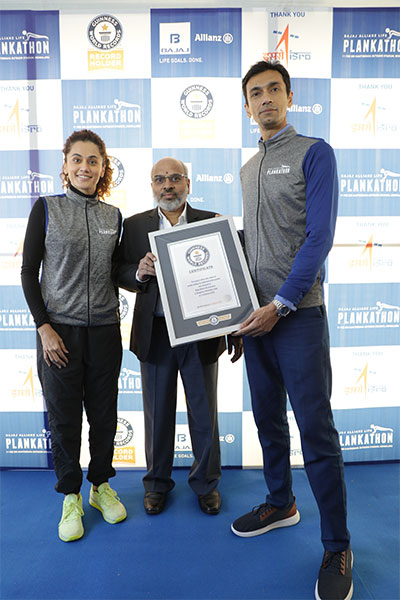
    Bajaj Allianz Life organised the fourth edition of #Plankathon in Bengaluru’s Sri Kanteerava Outdoor Stadium to celebrate the Indian Space Research Organisation’s (ISRO) achievements with Chandrayaan and the Solar Mission, Aditya L1.

    Addressing those present at Bajaj Allianz Life Insurance’s Plankathon 2024, N Sudheer Kumar, Director, Capacity Building and Public Outreach, Indian Space Research Organisation HQ, said: “This is indeed an extraordinary event that showcases the collective Indian spirit. With the initiative like #PlankForAces, Bajaj Allianz Life has brought together several thousands by igniting their passion for their country, as well as their motivation to stay fit and healthy. We appreciate and thank everyone who have participated for their efforts. Your wishes will further fuel our endeavor to make India proud, as we set our focus on the new frontiers within space research.”

    Commenting on the success of #PlankForAces and setting a new world record for the Company, Chandramohan Mehra, Chief Marketing Officer, Bajaj Allianz Life Insurance, added: “Bajaj Allianz Life Plankathon has evolved to be more than India’s flagship fitness initiative, that captures the sentiment of India. We are thankful to tens of thousands of participants who planked offline and online to express their admiration towards ISRO’s outstanding accomplishments that makes us all immensely proud. Anything less than the world-record breaking feat would have been inadequate to the applause ISRO deserves.”

  • Bharat Bill Payment System redesigns website

    The Bharat Bill Payment System (BBPS) has unveiled its redesigned website crafted by Bombay Design Centre. Adhering to the regulatory compliance standards set by the RBI and run by NPCI, BBPS’s refreshed website interface guarantees a distinctive experience for stakeholders, encompassing customers, billers, operating units, and developers, notes a communique.

    Said Noopur Chaturvedi, Chief Executive Officer NPCI Bharat BillPay Ltd (NBBL): “The redesigned website encompasses an extensive bill payment category, accessible through a unified interface. Embracing technology and staying abreast of the modern age is crucial. Acknowledging the significance of our platform, we sought someone who understands the intricate nuances of digital products, design, and communication, ensuring a seamless experience for our partners and customers. Bombay Design Centre perfectly aligns with these requirements. In the future, with additional features like language options, sandbox, dashboard, ticketing and resolution and knowledge hub, we are committed to making this website the go to interface for all information and interactions with Bharat BillPay.”