Tag: media

  • @India, living in China: Burson-Marsteller finds out

    By A Correspondent


    When everything else, or so it seems, is “Made in China”, why should India’s Twitter handle not originate from there? The fact that it has not happened by design is – or should be – a source of embarrassment for the Incredible India peddlers, for this is a strange fact unearthed by Burson-Marsteller – that the @India account is owned by an Indian person living in Guangzhou, China.


    The public relations and communications firm has released the second part of its “Twiplomacy” study (http://twiplomacy.com), looking specifically at country branding on Twitter. The study shows that only 9 governments out of 193 UN member states own their country name Twitter handle.


    In the case of @India, the account owner shares pictures from his daily life and has made it clear that his Twitter handle is not for sale. With respect to other social media channels, India is one of just 19 YouTube channels owned by the tourism office.


    The accounts of @GreatBritain, @Israel, and @Sweden are the most significant examples of country promotion on Twitter. @GreatBritain is part of the ‘Britain is Great’ campaign launched in March 2012 to highlight everything that is great about the United Kingdom.


    @Israel is the country’s official Twitter channel, maintained by the Foreign Ministry’s Digital Diplomacy Team. The account is one of the most followed country accounts with more than 66,000 followers and serves as the focal point for Israel’s government Twitter activity.


    The Twitter accounts of @AntiguaBarbuda, @Barbados, @Lithuania, the @Maldives, @SouthAfrica, and @Spain are run by their respective official tourism organisations to promote tourism in each country.


    However, three out of five country accounts are either protected, dormant, inactive, or suspended and almost half of the 71 remaining active accounts are tweeting an automated news feed broadcasting news about the country.


    “Looking at the findings it becomes clear that few governments and tourism organisations have understood the power of country branding and marketing on Twitter,” said Matthias Lüfkens, head of the Burson-Marsteller EMEA Digital Practice. “There is a huge opportunity for countries to use Twitter as part of their communications to engage with a large and growing audience.”


    Data used was taken in November 2012 looking at the Twiter handles of the 193 UN member countries. Burson-Marsteller used Twitonomy (http://twitonomy.com) to analyze tweeting patterns and the Twitter history of each account.


    To access the complete analysis of these findings, visit: http://twiplomacy.com/country-promotion.


  • WATConsult wins Godrej Nature’s Basket’s digital and social mandate

    By A Correspondent


    Social media strategy consulting agency WATConsult has won the social and digital duties of Godrej Nature’s Basket, the gourmet retail venture of the Godrej Group.


    The account has been won recently and the execution for the same is slated to begin soon. With the addition of Godrej’s Nature Basket, WATConsult extends its current portfolio and takes the total number of clients to 55+.


    Commenting on the win, Rajiv Dingra, Founder & CEO, WATConsult said, “I am delighted with the win of the new account. Since our inception in 2007, it has been the constant endeavour of WAT Consult to create path-breaking creative campaigns that not only make an impact digitally but leave a mark across media. Godrej Nature’s Basket is a leader in its respective industry and by providing excellent quality innovation through strategy, technology and quality of management; we hope that we deliver exceptional performance.”


    Mohit Khattar, Managing Director, Godrej Nature’s Basket said, “Social media plays a pivotal role in building strong consumer engagement for Godrej Nature’s Basket. Understanding the importance of this platform, it was integral for us to get on board an agency that can help us drive our vision towards being a preferred world food destination. We look forward to a long and sustained association with WAT Consult.”


    Currently, WATConsult manages various brands from the Godrej Group. These brands include Godrej Appliances, Godrej Locks and Godrej Security Solutions.


  • Enough backers for payback series?


    By Johnson Napier


    The India-England cricket series that kicks off from November 15, 2012 is being billed as a revenge or payback series by most scribes who follow the sport closely. Be it the media, analysts, critics or even players/commentators, virtually all are going gaga about how the current series would be the one to watch out for as India will be fighting to prove its mettle as being the best in the business. The fact that the men in blue were thrashed badly by the Englishmen the last time they played each other makes the cause even more compelling. But is the prevailing sentiment as positive as is being made out to be, or will it be a tough ask for the channel as it begins its quest to draw in more audiences? And, more importantly, what is the response that can be solicited from the advertisers who of late are opting to stay aloof from their association with the sport?


    To begin with, the good news is that the tournament begins at a time when most of India is in the mood for celebration what with the festival season already underway. So while partying, visiting relatives and relaxing would be top of mind for most it would also mean being able to sit at home and watch Sachin Tendulkar or Virendra Sehwag get India off to a roaring start. And that’s what is leading everybody to believe that the Series will at least kick off on a high note.


    Ayaz Memon

    Anticipating a huge response, senior journalist, sportswriter and now commentator Ayaz Memon is hopeful that the current series will be a success. As Hindi commentator for the current series, Mr Memon sounded positive: “I feel the pressure is more on India as they have to prove a point on the home turf. The fact is that India hasn’t lost a home series since 2004, and also the record since the last 12 months hasn’t been good so the pressure is squarely on the Indian team. Also the team is not in peak form as can be inferred from their recent performances across other tournaments. So one can expect the Indian team to put up a compelling fight, to say the least.”


    Backing up his claim, Mr Memon said that the channel has been doing a good job promoting the series. “I will be doing commentary for Star in Hindi and I can tell you that they have done a good job in building up the tournament and promotion-led activities. Even on the print platform the exposure has been pretty good. But we will have to wait and see how it pans out over the next few weeks. But I am sure that the viewership will be higher than the previous Test matches. The fact that you have Sachin Tendulkar playing in the series along with Yuvraj, Harbhajan and also Kevin Pietersen from England etc, I think it will be a marquee series.”


    Balakrishna

    Backing Mr Memon’s optimism is PM Balakrishna, COO, Allied Media, who said, “From a cricket and sentiment point of view, I feel people are looking forward to the series. It is being touted as the Grudge Series going by the promotional activities that are being carried out by the broadcaster. The audience really wants to see India thrash the English. So based on the hype, I expect to see more crowds at the stadium and also more ratings for the broadcaster.”


    But while the initial sentiment seems bright it is definitely not easy predicting results before the start of the tournament. The prediction becomes even more difficult when the series begins with a Test match and not ODIs or T20 that can guarantee some decent TVRs. When asked about the possible ratings that can be expected, Mr Balakrishna said, “Test matches have never been about ratings like ODIs or T20. But maybe because of the fact that this is a long holiday week, one can expect high ratings at least from the initial match itself. While it would be difficult to hazard a guess, I would be happy to go with an average TVR of 2-3.”


    Kartik Sharma

    Kartik Sharma, Managing Partner, Maxus India was more forthright, saying, “Any cricket tournament involving India is always unpredictable but exciting. As Indians, we obviously want our country to win but a sport like cricket is always difficult to predict. If you ask me, the sentiments are purely driven by the results of the first few matches. And going by our ability to digest defeat, we Indians don’t really fare well in that department. By that I mean that if we lose a match or two, we tend to divert our attention to other sports or television properties. But then again, this being a festival/holiday season I expect at least the first few matches to have a decent viewership as people will be at home and thus would be able to watch the matches. By nature, Test matches anyway do not draw in more audiences compared to what the T20 or ODI matches do. So I am expecting an average TVR of 2+ for Test matches and an average TVR of 4+ for ODIs.”


    Mahesh Ranka

    Presenting another factor that could guarantee ratings or dismiss them, Mahesh Ranka, CEO, Indus Sports asserted that it may even depend on the opponent playing against India: “If it is Australia or even England, there could be some decent ratings expected, as these teams are ranked higher compared to what a Bangladesh or Zimbabwe series would draw. The thing about England is that we lost to them badly when we went there so hopefully, we can look forward to avenging that result through the current series. And if India happens to win the first match, you could expect more audiences (in the range of 20-30 percent more on the base figure) who will come in for the second match, and so on.”


    But in the overall analysis, Mr Ranka is of the opinion that the current series will not have anything great to offer in terms of viewership, at least as far as the Test matches go. “The ratings that Test matches have thrown up in the recent past kind of puts everything under the scanner. Though people (particularly media) tend to hype any tournament, Test matches have never really managed to draw in the audience (viewership). That’s because people have their own mindset behind watching any match and advertisers will always have to move along taking into account the risk of losing out on viewership.”


    On the interest shown by advertisers, Mr Ranka said, “From an advertiser’s perspective, one has to always look at why cricket is typically watched: it is brought for reach. There are two things to that. Firstly it is the festival season where advertisers have monies to spend and whether it is cricket or no, they will eventually spend at this time of the year. The rates that could be expected for Test matches in the current series would be in the range of Rs 50,000 to 1 lakh for ten seconds.”


    Taking a diplomatic stand Mr Sharma said, “The advertiser sentiment depends on the packages that are being offered by the broadcaster and there are various deals in store. But I wouldn’t be able to comment if the rates are more or less compared to the previous tournaments.”


    Presenting a bullish outlook, Mr Balakrishna said that from the advertiser’s standpoint, the sentiment seems pretty positive. “Against the backdrop of digitization, one genre that is the least affected always is cricket, as the sport is not always about being CPRP-led but also about hype and other such factors. So I do see a positive resonance to the whole series from an advertiser standpoint. Also, I am sure that the channel would have factored in the tough economic scenario and therefore would have come up with a competitive package for the advertisers, making it a win-win for both of them.”


    So whether it will be a winner or a dampener, what the India-England Series is managing to do is turn the spotlight back to cricket. Which is a good move considering that the recently held Champions League tourney didn’t go down too well with audiences. The icing on the cake would be if India manages to whitewash the team from England. TVCs have been saying that India “Angrezon ki band bajaayega” – that is, will thrash the English. Music to our ears or hitting the wrong notes? The game will tell.


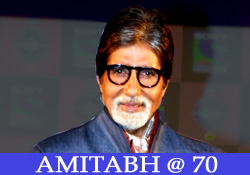
  • Deepa Gahlot: Bollywood Badshah’s on-off affair with media… When he said he would like to be a journalist in his next life

    By Deepa Gahlot


    When Amitabh Bachchan was just emerging from the Bofors controversy, he was quoted to have said that in his next life, he would like to be a journalist – such was the power of the media.


    Today, Amitabh Bachchan is the darling of the media. They hang on to his every word; they not just retweet his tweets, they make entire stories out of them; they gather around the Bachchan family trying to get a picture of the grandchild. The entire country seemed to participate in the naming of the child of Abhishek and Aishwarya Rai Bachchan. The family is photographed at work, at play, at airports, at temples and hospitals.


    But there was a time when Amitabh had decided to ban the ‘yellow’ press and the press, in a rare show of unity, decided to ban him right back. There was a ‘katti’ period, when Amitabh would not speak to the film media and they did not carry any news about him.


    What apparently happened was that Stardust had organised a charity show at which several top stars had agreed to participate. But then some of them, reportedly at the behest of Dilip Kumar, decided that they should not endorse the gossip press and decided to boycott the event. They also decided to boycott all gossip magazines.


    This was a time when Bollywood was not covered by the mainstream media. Stars liked to be featured in the magazines because that was the only way of reaching the film-going public. A boycott of the film media was bound to fail. But during the Emergency in 1975, Stardust had a rough time with the censors and this was reportedly on the orders of Amitabh who was close to the Gandhi family. The cold war went on for years till the unfortunate Coolie accident in 1982 when Amitabh was seriously injured during the shooting of the Manmohan Desai film.


    The whole country prayed for his recovery and even the media must have found it churlish to carry on with the ban. There was a thaw on both sides. In any case, the so-called boycott has not affected the star’s career in the least. He could also afford to be generous.


    Then, in 1989, the Bofors scandal hit, and dragged Amitabh’s name into it. His films started flopping. He only had the medium of the press to get his side of the story to the public. This time the media decided to be gracious and fair and helped Amitabh clear his name. That was when the star admitted to the power of the media and made that quip about wanting to be reborn as a journalist.


    Since then, he has been through problems – the failed comeback with a flop Mrityudaata, the Miss World fiasco that hit him financially – but the media has chosen never to hit out at the star when he was down. They even forgave the public relations disaster of the Abhishek-Aishwarya wedding, when the media was ignored and mistreated.


    On his part, Amitabh is not just an interviewer’s delight, he is always charming, gracious and professional. His office promptly returns calls, forwards messages; he writes personal notes of appreciation if an article or review praising him appears, he also sends miffed letters of clarification if something offends him.


    Times have changed; today the media is full of Bollywood trivia. Stars are worshipped, their homes staked out, their faults papered over, their achievements exaggerated. At a time when stars have more power than politicians and industrialists, the media needs the stars more than the stars need the media. Unlike many of his juniors who snap their fingers when they need the media, but shun the press between releases, Amitabh has maintained a relationship of cordiality with the media, even though he now has social media platforms to have his say (even ranting against a bad review). It could be because of past experience, it could because he is well bred, or maybe because you can’t really push away the guy who has prostrated himself at your gate to try and get an exclusive shot from the gap between the gate and the ground. If asked today, Amitabh would probably say he wants to be a superstar in his next life too… such is the power of Bollywood. He hates this term for Mumbai cinema, but here’s wishing the Badshah of Bollywood a happy 70th birthday.


  • MxM Monday: Has the role of PR diminished?


    By Ananya Saha

    It’s a trend that’s not going unnoticed. Increasingly, companies prefer to be socially more active than depend on good PR. Journalists prefer to reach out directly to the spokesperson, bypassing the PR altogether. And given that every company, well almost, has a corporate communication department, the PR agency role appears to have  diminished. But has it really? Has the PR role limited itself to preparing documents and slot meetings? Or is it that the PR role has now evolved and moved beyond just that of a ‘postman’, thanks to the way media itself is changing? The issue that we are discussing on MxM Mondays today is:  has the role of PR diminished?

    We spoke to a cross-section of industrypersons for their (in alphabetical order of their last names) and added our own:


    Hemant Kenkre

    Hemant Kenkre, VP, LinOpinion

    PR has evolved tremendously social media. Both the sectors are increasingly cross-pollinating, which has grown beyond the traditional media relationship. The brand uses both the mediums: PR and media, to amplify the message. Media is the biggest tool that PR uses since the messaging has to go out. And hence, PR and media share a symbiotic relationship. PR needs to work with the media, and media need to work with PR to get across to the information they need.


    The most well-known brands rely solely on PR to get their message across. PR played the biggest role if you look at the brands that have been built over time. PR is not only the biggest tool, it is the most critical tool too.

     

    Prema Sagar

    Prema Sagar, Principal and Founder, Genesis Burson-Marsteller

    Society, Government, Corporations, Consultants, Media – all, need and depend on each other. So therefore, in this case too, Media, Corporations and other Stakeholders have to necessarily work together.


    Companies have small teams to manage external communications as a function. They need national reach – including new markets that go beyond metros. The mediascape is complex with different languages, sensitivities and expectations. Therefore the Public Relations industry is thriving.


    Genesis Burson-Marsteller and some other firms are known for developing the Message and the Campaign Plans that they create for the client. This is critical to building the Reputation of a client. The experience of working with several organisations, gives the public relations professionals the width and depth to develop a strategy that has insights and expertise. Public Relations firms today have domain expertise and multiple services that go beyond public relations – public affairs, advocacy, corporate responsibility, financial communication, digital and content creation – while others are a pure play media relations.


    Journalists reach out to us and a great relationship develops while managing communications during issues and crisis for our clients. In fact, most often, one develops a great working relationship between the journalist and ourselves during such a time.


    We have no issues about relevant journalists and CXOs from client organisations engaging directly. For us, the larger role of discussing and developing Thought Leadership platforms with publications, co-creating story ideas and participating in significant events – is the value we bring to clients. Innumerable journalists reach out to us for interviews, story ideas and industry issue-led discussions with clients. This is our role.


    If your question was the reverse – ‘Can PR function without Media?’ – No! Even though online and social media is taking over. So we have to stay focused on providing value to our clients and the media.

     

    Deeptie Sethi

    Deeptie Sethi, Head of Corporate Communications at Ford India

    No. Media cannot function without well informed PR. To build brands more and more companies are relaying increasingly on public relations and the function is critical to contribute and be part of the success of the business. The PR industry has significantly evolved and people who are serious about the business of PR understand the value this can bring to a brand. PR companies are no longer considered a ‘post-office’ service to disseminate company information. They have to be engaged deeply with the brand and its philosophy to define how, when and where to communicate with consumers with the power of relationships, understanding of media platform that are measurable. In today’s evolved environment, PR has a more conclusive role to perform.


    At Ford India, the Communications plans are integrated with the marketing plans to create a holistic approach to deliver a more compelling and consistent story telling. We truly understand the power of one plan and a good example of that is Ford Figo’s exemplary launch in India. Much before the car was launched, our PR strategies kicked in to create brand awareness and essentially single-handedly drove the buzz for close to two years in the pre launch phase and marketing complemented when the product was available for retail – our booking were in tune of 10,000 units in the first month of launch itself.


    When it comes to social media, it’s a platform for engagement and listening – and more importantly to get feedback real time! The conversations are already happening and it’s up to a company if they want to participate in them or not. Both social and PR mediums have their own identities and have a role to play in shaping communication strategies. One has to define what each of them will achieve for the company and tread carefully to keep the distinction.



    Jaideep Shergill

    Jaideep Shergill, CEO, Hanmer MSL

    The media and public relations (PR) enjoy a strange relationship – deeply symbiotic, yet edgy. Depending on which side you stand, you would think that PR is an invaluable source of information and access or that it’s little more than a mouthpiece for brands.


    The digital age is changing the way consumers interact with the media and brands. Round-the-clock news, the internet and social media have created an aware and empowered consumer. This has, in turn, changed the relationship between the media and PR professionals.


    When you analyse the relationship, it’s important to remember that media relations is only a subset, not PR as a whole. Hence, while connecting with the media is important, establishing a solid relationship with the consumer is vital. In so many cases, traditional media do not figure in a PR plan at all.


    PR is about understanding and shaping your stakeholders’ perception of the brand. These stakeholders include consumers, employees, vendors, government and the community, not just the media.


    In the past, a well-thought-out media relations campaign was considered the best way to achieve the PR objective. However, the internet has changed the rules. We can now reach out across borders to spark the connections a brand needs, bypassing traditional media altogether. Now, when we think of media, we include social media influencers, bloggers, YouTube, podcasters, etc.


    All this means that PR is getting less dependent on the media, but it also means that the media doesn’t always need PR to get information or for access to the relevant people for their stories.


    However, it would be a mistake to think that the relationship is dying or is being scaled down. PR firms are managing the information flow from businesses to the outside world, which in turn is being tapped by the media. Also, strong big-picture PR campaigns are often the first level of engagement for the media. Websites, blogs, electronic newsletters, etc, are becoming important media touchpoints, and they’re being managed by PR professionals. All this is vital to the media looking for news, resources and data.


    So, can the media do without PR? In my opinion, no!



    Pradyuman Maheshwari

    Pradyuman Maheshwari, Editor-in-Chief, MxMIndia

    Can PR function without the media? And can the media function without PR? The answer to this question could’ve been in the negative, but for the various things technology has facilitated in the last decade, and especially in the last 18-odd months.


    By PR, my reference is to an organized public relations activity in an organization or outside of it, via a specialized consulting firm. There are several individuals and organizations continuing to reach out to the media without a designated PR manager or agency. Some of these have been doing fantastically well, but my sense is that it’s the scale of operations which eventually decides whether there is a need of a specialized resource, or if it can be managed without one.


    Mind you ,there are enough on people on both sides of the fence who would rather not do with each other. For, the fact is that there is enough disdain for the PR-persons from journalists and vice versa. So while the relationship ought to be that of an ally, it’s often of an adversary. Sad.


    I must confess that there are enough rotten apples out there. Journalists who just don’t take calls or play too hard to get.  And PR honchos and executives who don’t really do their homework well (on the journalist or the client/industry s/he is dealing with) or, like journalists, are just not available when they are needed the most. Adding to these issues are assorted forms of corruption, dishonesty and inefficiency.


    Thankfully, technology has been an equalizer. PR newswires aren’t as ‘hot’ in India as they are elsewhere in the world, but it’s possible to bypass a PR official to get information. And, yes, journalists are not necessarily the only people who are sought after PR professionals. Bloggers, regular tweeters and even regular Facebookers are aggressively sought after by corporates, celebrities and PR agencies.


    In fact, there are many organizations – especially in the technology and lifestyle space – who reach out to bloggers (and now even ‘tweeters’) ahead of traditional media in the PR exercise. So while the process has gotten more complex in the sense there are more people to reach out to in multiple media, the mainstream print, electronic and digital media entities aren’t the only vehicles available for publicity. In fact I have often heard murmurs of discontent amongst some journalists on how the social media and blogs were being given preferential treatment by tech biggies for sneak peeks to products and access to top management.


    However, even though there is simmering between the two sides of the fence, I don’t see either side doing without the other.  Not in the near future in India at least. The human interface of a specialist will not fade away in a hurry.

     

  • Paritosh Joshi: Independence and Free Media

    By Paritosh Joshi


    Constitutional Law is assumed to be arcane, dense and generally beyond the comprehension of anyone except the most learned of legal minds. And yet, some of the most soaring, inspiring expressions of humanity’s pursuit of a higher ideal, the greater good, a more just world are to be found there. Here are two splendid examples:


    “WE, THE PEOPLE OF INDIA, having solemnly resolved to constitute India into a SOVEREIGN SOCIALIST SECULAR DEMOCRATIC REPUBLIC and to secure to all its citizens:

    JUSTICE, social, economic and political;

    LIBERTY, of thought, expression, belief, faith and worship;

    EQUALITY of status and of opportunity;

    and to promote among them all

    FRATERNITY assuring the dignity of the individual and the unity and integrity of the Nation;

    IN OUR CONSTITUENT ASSEMBLY this twenty-sixth day of November, 1949,DO HEREBY ADOPT, ENACT AND GIVE TO OURSELVES THIS CONSTITUTION”.


    “Congress shall make no law respecting an establishment of religion, or prohibiting the free exercise thereof; or abridging the freedom of speech, or of the press; or the right of the people peaceably to assemble, and to petition the Government for a redress of grievances”.


    84 words in that first quotation, the Preamble to the Constitution of India (and it was only 82 before Indira Gandhi imposed ‘SOVEREIGN SOCIALIST’ upon it vide the Forty Second Constitution Amendment Bill, 1976) and a mere 45 in the second, the Second Amendment to the United States Constitution. Look at how emphatic both are on the matter of Free Speech.


    Why should this be so? Jurists aver that all other fundamental freedoms can be logically derived from Free Speech. Conversely, truncate Free Speech from the rights enjoyed by the citizens of a nation-state and you have an inevitable path to oppression and tyranny. The Scottish essayist, Thomas Carlyle in his book On Heroes and Her Worship cites the British Parliamentarian Edmund Burke as the progenitor of the phrase “Fourth Estate” to describe the Press. The quote that has passed into common usage is: “There were Three Estates in Parliament; but, in the Reporters’ Gallery yonder, there sat a Fourth Estate more important far than they all”. The importance of this Estate grows exponentially as private and state power expands in a rapidly growing Socio-Economy. By ensuring that the reader or viewer is kept abreast with the latest developments in the world around them and, in particular, calling out malfeasance, misdemeanour and mischief in high places, the media keep untrammelled might in check.


    How well are we inIndiadoing on this front?

    Not very, one has to say, with the greatest regret.


    Doordarshan, set up with an ambitious charter of achieving everything from “Catalyst for change”, “Promote National Integration” all the way through to  “Create values of appraisal of art and cultural heritage” has now been reduced to an anamic copy of private Hindi GE channels. So much for our much vaunted “Public Broadcasting System”.


    And have the private broadcasters covered themselves with glory? Let’s look at news in India’s most widely spoken language: Hindi. With a potential audience footprint running into several hundred million people, the genre must surely recognize its indispensable role in protecting the rights of this, often disadvantaged, class of viewers / citizens. What do they actually get? A puerile confection of tabloid sensationalism, GE quasi-reruns and an endless barrage of news pablum.


    Can we be hopeful that things can or will change? Yes. For the strangest reason.


    The promise of BARC to give us a wider and deeper understanding of the needs and interest of the television audience. And its other promise of shifting the inventory valuation from a relative currency (CPRP) to an absolute one (CPT). As broadcasters receive a more fair value for the product they sell, their need to be incessantly strident to get audiences or perish trying, will be replaced by greater sobriety and a renewed focus on creative quality.


    66th Independence Day Greetings to all my readers and their families!


  • The Anchor: 5 ways to make print more relevant for advertisers

    By Ashish Pherwani


    1. To make print more relevant for advertisers, we’ve got to have more interactions and more engagement through either digital or activations on radio or any other vehicle. There needs to be a level of engagement built into the print offerings of media companies. Advertisers are looking at some kind of measurement which is not just readership but a measurement of a deeper level of engagement.


    2. You have got to make print more relevant to the reader, and therefore the one-size-fix-all newspapers being generated today may not be the answer and it may call for better segmentation and better understanding.


    3. Overall, the print companies need to realize that they are no longer B2B companies, that the main asset they hold is their relationship with their consumers and their readers. And therefore, they need to evolve into B2C companies, build databases with their customers as information and optimize that database for different advertisements.


    4. As youth moves away from its consumption of newspapers and moves towards different methods of consuming media, newspapers need to be able to figure out ways to retain those youth, either on some other medium or by giving them the kind of news that they want to read. Most publishers still believe in giving out news which they believe is relevant. Therefore giving youth-centric content is something that the industry needs to work on and youth is a category which most advertisers look forward to.


    5. Print companies need to proactively come to advertisers with innovations with products that resonate with their brands.


    Ashish Pherwani is Partner-Advisory Services, Ernst & Young India


  • Paritosh Joshi: Not another piece about the Ratings Battle

    By Paritosh Joshi


    You’ve already read enough of those so I’m not about to inflict one more upon you.


    However, if this week’s piece sounds like a lesson in elementary Economics, so be it. You were warned.


    Prices are not divinely ordained. As Adam Smith taught us, people enter a market when they wish to sell or buy goods or services. A process of negotiation follows. This depends at least as much on perception as it does on objective reality (whatever that is). An Alphonso orchard owner in Devrukh Taluka of Ratnagiri District believes that the output is plentiful, demand is scanty and he will be fortunate to sell his output at whatever price the Arhati (broker) offers him. You, in Delhi or Mumbai believe that unseasonal rains destroyed the crop, all good produce was immediately exported to grace the plates of Sheikh Al bin Mighty in wealthy Saudi and you must feel grateful for a dozen prized fruit at Rs1,000. So much for objective truth. The story can have a very different outcome if you add just one ingredient: inquiry. The orchard owner (who now owns a cell phone) calls up his office boy cousin in BKC who shares the street price in Mumbai… Yup, you can infer the rest.


    When people sell goods, they have the ability to warehouse their produce. I can sell my mangoes today or I can choose to hold on to them ’til tomorrow in the hope of a better price. When people sell a service, this is not possible. As a daily wage worker, I cannot carry forward my 10 hours of work from today and then do 20 hours for a higher realisation tomorrow. In general, therefore, services are far more perishable than goods. Their instant or near-instant perishability frequently translates to service providers being extremely vulnerable to extortionate price negotiations with buyers. This is where things begin to get really interesting. When the ‘perceived’ nature of a service becomes exceptionally rare, the price it commands becomes truly astronomical. A brilliant lawyer who wins suits for megacorporations and global telcos bills over a Million Dollars a week. We all pitch in, indirectly and sometimes directly, to pay a few exceptional, and exceptionally fortunate, cricketers eye-popping sums to bowl or bat. MJ, Elvis, Frank and Janis continue to weave musical (and commercial) magic from beyond the grave, their services having been warehoused to meet the needs of our hungry ears for years and years. Heck, even weight loss advisors called AM or VL pull down zillions to help you lose what you should never have gained. Most times, these incalculably precious eminences share a common secret sauce. Their raw material, which was admittedly of rare quality, has been honed and polished to a rich lustre by various players in the Media & Communications industry. They have in fact crafted the ‘perception’ of exceptional rarity that translates into astronomical price. They are the impresarios, the image-makers, artisans of myth, masters of smoke and mirrors. In a word, they are someone like you.


    If you were an extraterrestrial, say Ford Prefect, the galactic hitchhiker from Douglas Adams’s eponymously named trilogy in five parts, who happened to stumble upon the Indian M&C industry, what might you see? A bunch of talented creative minds building wonderful brand successes for their clients? Or a bunch of neurotic, insecure sales people unable to defend fair profit margins and constantly prostrating themselves before the extortionate buyer up the value chain from them?


    More likely the latter than the former, I have to say with the deepest regret.


    The very people who create images for their clients, thereby making them immune to the vagaries of elastic demand and endowing them with that ineffable je ne sais quoi, are the same people who have reduced their own business to a commodity-esque fish market.


    How did this come to pass? A friend worked for HTA Bangalore. Ivan Arthur, then NCD and already a legend of the industry, was visiting the office and decided to drop in on a Saturday morning. Said friend was toiling away getting press advert artwork pasted up in studio to hit material deadline for a Sunday Deccan Herald insertion. Ivan asked friend what she was doing in the office on the weekend. Friend meekly acknowledged demands of tyrant client who expected agency to be at his beck and call… around the clock. Ivan offered these three comments:

    Weekends are meant to regain the intellectual and emotional energy expended during the week, so that the professional can come back fresh and rarin’ to go on Monday.

    If you don’t respect yourself, why should anyone else?

    Abject surrender before the client is not only unjust to the agency; ultimately it is unjust to the client too.


    Read this metaphorically rather than literally and then address these questions to yourself. When the first agency offered to drop its commissions from 15 per cent of gross, (17.65 per cent of net billing) to some smaller number, the agency took a huge step back for the industry. When those commissions kept heading south for many years to come, a whole generation’s future in the industry was blighted by the long shadow of the small League of Damned Arbitrary gentlemen. I hasten to add that this kind of extortionate bullying of service providers was not just about agencies; the broadcasters succumbed to it too.


    No wonder then that as an industry, we have brought ourselves to this parlous place.


    We have cheapened ourselves.


    Paritosh Joshi was until recently CEO, Star CJ. He has been a marketer, a mediaperson and a key officebearer on industry bodies. He is Strategic Advisor, Ormax Media. He can reached via his Twitter handle @paritoshZero


  • Paritosh Joshi: How to make a really spectacular mistake

    By Paritosh Joshi


    In all our lives, there are tales of misadventure that we bury away deep and try our darndest to forget all about. Today it’s time to ferret out just such a story from the not so distant past and see if there’s something, anything, we might learn from it.


    The year was 2007. Private Television broadcasters were trapped in a financial vice. Costs were on a tear as good content: entertainment, sports or news, commanded big premia. Revenues crawled as new entrants into every genre constantly expanded advertising inventory and made price increases difficult. While advertising revenues were still growing, a lot of the increase was attributable to ever-laxer controls by broadcasters on advertising duration leading to flat, or even declining, yields. As an advertising sales person myself, back then, I asked for an analysis of Average Spot Rates (ASR), a very commonly used and easy to compute yield metric, across key genres and channels for the previous three years. My hypothesis, which proved agonizingly right, was that the bulk of revenue growth for channels was coming from selling more inventory and little or none from better ASR. Obviously, I wasn’t the only one seeking such analyses and soon the issue began to dominate all conversations between broadcasters.


    Here was what the broadcasters were seeing:

    • Television penetration was galloping along, adding up to 10 million new homes, up to 45 million viewers of age 4 and above, every year.
    • Cable penetration was growing by almost an identical figure, having moved up from under 30 million homes in 2005 to over 47 million in 2007.
    • GDP was up 9 per cent for 2007 over 2006 and maintaining healthy buoyancy.
    • Distribution revenues were not a source of any joy as platforms had begun to seek carriage fees to monetize the chronic scarcity of capacity on a decrepit analog network. In the meanwhile, TRAI was binding broadcasters hand and foot where it came to wholesale pricing of their content to platform operators.
    • Media agencies were relentlessly using the dreaded CPRP (Cost Per Rating Point) to pummel advertising prices down. Even category leading broadcasters were unable to exercise pricing power in the face of CPRP maths.
    • While more broadcasters constantly entered the market, the demand side represented by the media buying agencies was getting ever more consolidated. Already, the top two agencies controlled very nearly two-thirds of the advertising spend on TV between them. They had achieved this, primarily, on the back of their ability to extort low prices using their virtual oligopoly combined with the willingness to drop commission rates to low single digit percentages. While the standard terms of trade indicated a 15 per cent agency commission on TV advertising, the media majors were actually working on less than 5 per cent, passing on the spread as additional discount to the advertisers.


    It was clear to broadcasters that the situation could no longer be permitted to drift but what were they to do and how? A team of planners from across broadcasting organisations was asked to develop a recommendation. Everything had to be done with considerable secrecy, lest word get out and the project be stillborn. The plan was in. Voila! We would all, every last one of us, collectively impose a 25 per cent surcharge.


    Needless to add, the plan asked for way more resilience from broadcasters, particularly the small and vulnerable ones, than they could muster and in a classic predator-prey drama, they were arm-twisted on the pain of the death-of-a-thousand-cuts by M-this and M-that into abject capitulation. The plan unwound within 72 hours leaving a lot of us with unpleasantly puce visages. An awful mistake had been made. I could tell you the whole ugly story of who shafted whom, when and where but sadly, in a reversal of the trope, if I told you, someone would have to kill me.


    Now here is the really terrible story. Most everything that made the revenue story look grim in 2007 for broadcasters still looks exactly the same in 2012. Indeed worse in many cases, like for the anæmically bloated Hindi News genre for instance.


    What is the broadcast industry doing about it? Can something be done about it at all?


    First, until TV advertising is valued based on a relative, rather than absolute currency, pricing power will remain solidly with the buyers. Until we shift from the iniquitous CPRP to the universally accepted and economically fair CPT (Cost per Thousand contacts), this will not happen.


    Second, all stakeholders in the BARC (Broadcast Audience Research Council) process would be well advised to apply their might to moving it from idea to execution.


    Hmm. Someone will have to kill me after all.


  • Paritosh Joshi: _____________ Maketh A Man

    By Paritosh Joshi


    Surely, you are wondering why I chose to leave that first word blank when everyone knows the word that completes the aphorism?


    A Methuselah of our Media & Communications business came by a few years ago, when I was still gainfully employed and not a lily of the field, to talk about the media and their place in our lives. The conversation made an impression on me, abiding enough that I am compelled to develop it in today’s essay.


    Let me rewind to my early memories circa 1968.Kanpurhad no local English newspaper. The Times of India would ship theDelhi‘Dak’ Edition to our mofussil outpost. By the time the (now only of distant memory) Toofan Mail with her imposing steam locomotive growled intoKanpurstation with the precious newspaper, it would already be a day late. The news wasn’t yet stale, mind. After all, the only other source of news and current affairs we had, was the nightly bulletin on All India Radio delivered in the richly textured baritones of Jasdev Singh, Ashok Bajpai and their ilk. I must add that the scratchy Short Wave signals that our prized Murphy radio managed to extract from the ether made listening challenging at the best of times. Barring the most momentous of events and emergencies, the world beyond the nearest 10 kilometers was at least two days away. And it didn’t matter. Life, as we led it then, had little or nothing to do with the world beyond.


    Fast forward to 1977, nearly a whole decade later. We lived inNasikjust 175 kilometers fromBombay. Yes, in those days it was stillBombay.  Here was a city that offered not just one but TWO local (also local language) newspapers, Gavkari and Deshdoot. Times ofIndia,Bombay’s Dak edition would reach us the same day except it probably carried the previous day’s stories. There was still no television inNasik, so we still were served only by the stale newspaper and the highly expurgated radio. Not a lot had changed. Our lives continued to be led in the isolation and serenity of small townIndiaand, quite frankly, we didn’t think we were missing anything.


    Things began to change with the move toBombayin 1980. Suddenly, a television arrived at home. Black & White it may have been and only for a few hours of low fidelity transmission every day. And featuring exciting content such as missing people’s reports and Krishi Darshan, the farmers’ show, only occasionally spiced up with Chitrahar and Chhayageet. From consuming less than an hour’s worth of assorted media (perhaps half an hour each of radio and newspaper), our days now had at least another hour dedicated to TV.


    Television continued to grow. Print began to proliferate, not just in the form of a growing range of magazines, but also as a daily in the form of the afternoon or evening tabloid. Soon there was a Mid-Day fan and an Afternoon aficionado; an India Today enthusiast and a Week loyalist; a Stardust addict and a Filmfare feeder. Between all the diversity now available to them, many consumers were spending several hours a day just consuming all the options they were fond of.


    Cut to 2012. From perhaps 2 or 3 hours of exposure to various media a day, the modern urban Indian probably spends 4 or more hours a day consuming or in some way interacting with one medium or another. And it is no longer just urbanIndiaeither. DTH is available all over the country and a subscriber in the most remote hamlet has to just train its little antenna toward the sky to receive the latest content from around the world, a lot of it for free, in full digital video and Dolby Stereophonic Audio.


    People are defining themselves by the mix of content they consume.


    Can there be a segmentation approach that is based on shared commonalities AND uniquenesses in the way people consume the media?


    Which is why I left that heading blank.


    It really ought to read:


    Media maketh the man!


    Paritosh Joshi was until recently CEO, Star CJ. He has been a marketer, a mediaperson and a key officebearer on industry bodies. He is Strategic Advisor, Ormax Media. He can reached via his Twitter handle @paritoshZero


  • Paritosh Joshi: Everything I had to know, I heard it on my radio

    By Paritosh Joshi


    Three times this last week, radio has crept into my conversations, with three quite different people. Let me cite just one. We were talking about our preferences between playing music from our CD collection and dialing up a radio station. My guest was enthusiastic in his approbation for the radio, for a very simple reason too. “When you play music from your collection, you always know what’s coming up next,” he said, adding: “and what makes radio fun is it’s an endlessly unfolding sequence of surprises.”


    To which I would add that there is something rather relaxing about leaving the hard work of choosing what plays next to someone else, indeed someone else who is specialized in the art and craft of assembling and running through playlists.


    Got me thinking about radio, so it was the obvious next step to check out what the industry association offered up. Wasn’t hard to locate the website of the Association of Radio Operators for India (AROI). Promptly went there to discover – well, not a lot. Had to get something on the industry and thankfully, the good people at KPMG and FICCI had the latest “Indian Media & Entertainment Industry Report” available for download, which I swiftly proceeded to do. Here’s what I found.


    The Radio industry in 2012 is worth a mere Rs13 billion, ~ US $ 240 million and represents a mere 1.6 per cent of the overall industry of Rs 823 billion, ~ US $ 15 billion.


    In five years, it is projected to grow to Rs 29 billion, still just ~ US 540 million but representing a slightly more respectable 2 per cent of the overall pie. Evidently, this will require it to grow faster than the overall pace, which it is projected to do, clipping along at a 21 per cent CAGR even as the overall number doesn’t quite get to a 15 per cent CAGR.


    Dig deeper and you will find that a lot of the enthusiasm stems from FM Radio Phase III which will introduce private FM to as many as 227 new towns. So that is all it takes to make radio exciting, is it?


    Let’s take a look elsewhere and find out what radio is really about. A good place to start is any of these: Last.fm, “tunein.com” Radio or “shoutcast.com” Radio Directory. All of them are aggregators, like the portals of yore in some ways, which offer you an endless variety of radio stations from across the planet. An important aspect of what is on offer is the range of ‘genres’ by which the stations are classified. Here’s a list of the genres under the broad category, ‘Music’ on TuneIn:


    Adult Contemporary Country Hip Hop Rock Top 40-Pop
    Blues Decades Jazz Soul World
    Classical Easy Listening Oldies Spanish
    College Electronic-Dance Religious Specialty


    Just in case you might think this was a bewildering choice, I have news for you. ‘Sports’ offers a choice of 21 genres, including, trust me, ‘Fantasy League’.


    The point I’m making is quite simple really. Radio is all about precise choices and tightly defined audiences. Stations have an unapologetic and uncompromising commitment to their audiences and are only able to attract them because they stick to playlists that reflect the choices of their highly differentiated audience.


    What does the picture look like inIndia? Our earliest templates from what radio stations must sound like came from Akashvani, the one channel that catered to our teeming millions long before the brash youngsters arrived on the scene with FM Phase I.


    Akashvani was the ‘one size fits all’ / ‘any colour so long as it is black” radio station. From programming in two, even three, languages to carrying everything from mythologicals through adventure serials (anyone remember Inspector Eagle here?), to the News and various topical features, radio did everything – catered, as it were, to the lowest common denominator.


    Look at where we are now. Barring one station that chooses to play a purely Western playlist, all our major metros run a whole bunch of stations whose content is largely interchangeable, mainly because their music and even anchoring style – chatty, hip youngsters doing their clever, irreverent thing, are right out of a cookie cutter.


    Now before I get flamed out by radio folks pointing to the compulsions of recouping sizable licence costs, I must beg forgiveness and hide behind the defence of ignorance. What I do know, however, is this cannot possibly be the best way for radio to go forward.


    Radio must target tightly and then programme obsessively to that chosen audience. “Let me be just like everyone else” is not good marketing in any category, least of all radio. Keep in mind that radio will shift away from airwave frequencies to the Internet. That’s when the same-same (known, I believe, as Adult Contemporary) content will die anyway.


    I began by invoking Queen’s Radio Gaga and can’t help but quoting again from the same, wonderful song at the end.


    “You’ve yet to have your finest hour Radio – radio”


    Paritosh Joshi was until recently CEO, Star CJ. He has been a marketer, a mediaperson and a key officebearer on industry bodies. He is Strategic Advisor, Ormax Media. He can reached via his Twitter handle @paritoshZero
  • Anil Thakraney: Hysterical news channels

    By Anil Thakraney


    On Wednesday noon I got a serious jolt. Was in the middle of some work, and during the quick lunch break I switched on the TV to check if there was any khabar on the heavy downpour in Mumbai. What I saw instead made the food plate drop out of my hands. All the news channels were going ballistic over the discovery of a ‘suspicious looking’ object inside a Lokhandwala Complex (Mumbai) mall. Even as the police was busy sussing that mysterious object, it was being freely referred to as a ‘suspected bomb threat’. In fact, close-up shots of the damn thing were being flashed.


    Totally panicked, I frantically got onto the phone to alert family members who live in the vicinity (and am sure many people did ditto), and then rushed back to the television set. Suddenly, instead of the bomb threat, all the news channels were hectically ‘breaking news’ on the Indian cricket team’s selection for the up-coming Sri Lanka ODI series! And I was like: Arre, bomb ka kya hua, behenji?


    I had to strain my eyes to read the fast moving ticker. Which, very quietly, indicated that it was only a false alarm. Meanwhile, of course, many weak hearted sods (like me) had to endure a great deal of stress. Now this is worrying. It’s clear that not many lessons have been learnt from the past, and that the news channels are busy making the same goof ups. It’s back to alarm-raising and hysteria. (Also, I later discovered this led to intense rumour mongering all over the city.)


    Guys and gals, it’s simple, really. No ‘God Particle’ science, see? Maybe we should hold the news till some sort of an official statement is made by the cops? Maybe the media needs to let the investigators do the initial work in peace, that of determining what the ‘suspicious looking’ object is? So that people don’t needlessly panic. And most importantly, the same old disturbing question: What public service is being served by such ultra hurried, speculative reporting? Correct, the answer is none.


    Frankly, I really don’t know if and when we’ll get our act together on terror coverage. I guess our news channels simply cannot resist going live at the very first hint of terror. In which case, there’s no hope at all. Keep your pace maker on stand-by.


    * * *


    PS: Hahaha. Really enjoyed this series of comic strips on the advertising life. Hit this link only if you belong to the crazy world of advertising, because only then you’ll be able connect with these situations. Yep, we ad buggers have lived each one of these moments! Awesome stuff.


    Link: http://theawesomeworld.tumblr.com/archive