Tag: media

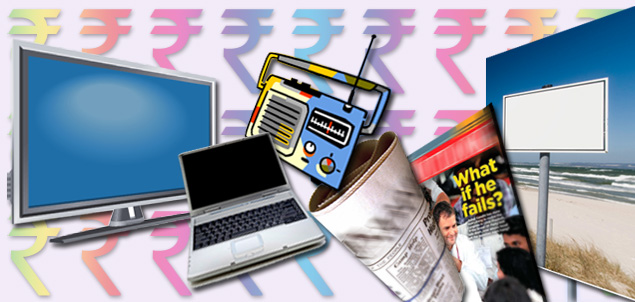
  • So will media spends grow at 12 or 8%?


    By Johnson Napier


    A lot could be said about how the year 2011 has shaped up for the media industry in India. From a growth perspective, it possibly has shaped up the way brand marketers and industry observers had predicted it to be – a mixed year with its usual set of highs and lows. But despite the rise and fall, the enthusiastic performance displayed by the industry year-on-year is giving players from the space, as also research bodies, enough scope to track down this domain exclusively and come up with studies that predict the trajectory and also crystal-gaze into its performance for the forthcoming year.


    In pace with its observations on the growth witnessed by the media industry in India, a couple of media (agency) firms have rolled out reports citing healthy growth numbers for 2011 and a cautious-yet-optimistic trend for next year. After Mindshare India released its annual report titled ‘This Year, Next Year: Indian Media Forecast’, it was the turn of Pitch-Madison to reveal its report last week. Joining the above two reports was another finding from research firm Media Partners Asia that unveiled its study tracking the performance of media in 2011-12. (Disclosure: MxMIndia partnered with Mindshare to publish the report digitally and in print form as ‘The Mindshare Indian Media Forecast 2012’)


    2011 (cr) 2012 (cr) YOY % growth
    Mindshare 33,388 37,397 12
    Pitch-Madison 25,594 28,013 9
    Media Partners Asia 31,400 34,100 8.7


    While most studies have predicted a healthy growth trend what is noteworthy is the optimism in numbers that have been expressed through the various reports which range from a modest 8 per cent to a high of 13 per cent. This translates into adspend monies ranging from Rs 25,594 crore to Rs 33,388 crore approximately. As part of the ‘Mindshare Indian Media Forecast 2012’ published by MxMIndia, Ravi Rao, Leader, South Asia, Mindshare had expressed how predicting adspends has become more complex now than ever was. “The economic outlook is something that one can never get the handle right, with most studies not agreeing on one number. But this is what makes it exciting to look and estimate the Adex growth in India. Group M does yeoman’s service of providing some startling numbers based on science rather than gut, even though India tends to buck the trend away from global predictions.”


    When analysed further, the Mindshare study predicts an AdEx growth of 12.8 per cent in 2011 with net revenue totalling INR 33,388 crore. This was driven largely by the medium of television that contributed 18 per cent to the growth followed by Print at 7 per cent and Digital at 30 per cent. In fact for 2012, Mindshare predicts an overall growth rate of 12 per cent that will be led by spends on television – 15 per cent, print – 8 per cent and digital – 30 per cent.


    As for the insights by MPA, ad revenues in India for 2012 are expected to clock a growth rate of 8.7 per cent. According to MPA, this growth will be primarily driven by MNCs investing in India and stronger MCG sector, and if there are revisions carried out in 2H 2012. As for the advertising growth across key categories, MPA expects robust growth from the FMCG sector, which is the largest advertising category, contributing 30-35 per cent to total ad spend. The study predicts that MNCs are expected to report robust numbers while a few large MNC accounts are looking to increase spends by 50-70 per cent for the coming year. The other sectors that will see heightened activity include Auto – while traditional companies such as Maruti and Hyundai have reduced spends, global car manufacturers investing in India are driving the overall growth for the sector, Telecom and Life Insurance.


    On its part, the Pitch-Madison study (published by Pitch magazine, conducted by Madison) predicts a sluggish growth rate of 8 per cent due to slowdown worries in the second half of 2011. It predicts a cautious trend for 2012 which is expected to pick momentum only in the second half. It predicts a growth a 9 per cent with revenues totalling Rs 28,013 crore.


    The industry, on its part, seems undeterred with the varying figures being thrown up and appear comfortable with the current state of affairs so far. Divya Gupta, CEO, Dentsu Media India said, “The estimated adspend growth according to us stands at approx 9 per cent. Also, the growth trajectory may have slowed down versus what was reported in the last few years, but it is still very healthy!”


    According to Shubha George, Chief Operating Officer, South Asia – MEC, “Our estimate of 2011 closing numbers is close to 13 per cent. When analysed further, the mediums of TV, Digital and Cinema have outperformed vis-a-vis the overall 13 per cent whereas Print and Radio have been below par. As for 2012, our estimates are a percent lower than 2011 at 12 per cent.”


    Admitting that the so-called slowdown may have cast its effect on the growth of the industry, Anita Nayyar, Chief Executive Officer – India and South Asia, Havas Media said that “the actual rate that was predicted was in the range of 11-12 per cent but given the slowdown scare and also the volatility that was witnessed in the markets, the rate was revised to be in the region of 9-10 per cent.” Going forward, Nayyar feels that marketers will tread with a cautious approach as they are yet to see signs of recovery – a phenomenon that will start taking place in the second half of 2012. “Large clients like P&G and other FMCG units have announced a slash in the adspend rates. This indicates a cautious approach that’s being taken by the marketers. Even category-wise, sectors like FMCG, finance etc that used to spend heavily have taken a backseat for the moment. But what is surprising is the marketing drive that has been taken out by sectors such as education, real estate and to certain extent even auto, which are continuing to hike their adspend budgets.”


    Presenting a rather comprehensive outlook, S Yesudas, Managing Director – Indian sub-continent, Vizeum India stated that while the industry will grow at 10 per cent, growth will come in largely from three areas. “At a broad level it will come from investments in newer markets with the definition of India changing for many categories and consequent expansions. Share of voice reduction by certain categories will be balanced with increase by certain others which will include new launches particularly in the financial, automobile, IT and healthcare segment. Growth will also come from increased investments in the digital as well as out-of-home space and will be further boosted by changes in the audience buying-selling structure of traditional TV medium,” he asserted.


    While some clients may have decided to plug the unwarranted spends in advertising there are others who are jumping into the bandwagon to explore opportunities not found before. But slowdown or no slowdown, the industry appears to be keeping pace with its growth story the way it has been since the past few years and would continue to focus on ensuring that clients get maximum ROI for the monies spent.
     

  • Indian adspends to see +8.7% growth in 2012: MPA study

    By A Correspondent


    Media ad sales will grow by 8.7 per cent in net terms this year, against the background of a slowing economy (~7 per cent real GDP growth versus historical range of 8-9 per cent) and the high first half of 2011 base last year resulting from the Cricket World Cup (which happens once in four years) plus an extended IPL season according to Media Partners Asia.


    The growth will be primarily driven by MNCs investing inIndiaand stronger MCG sector, and there could be upward revisions made in the second half of 2012. The outlook for advertising growth across key categories is mixed.


    Some of the highlights are:

    • FMCG 

    Media buyers expect robust growth from the FMCG sector, which is the largest advertising category, contributing 30-35 per cent to total ad spend. MNCs are expected to report robust numbers, while a few large MNC accounts (with annual ad budgets in the region of Rs2-3 billion) are looking to increase spends by 50-70 per cent for the coming year. Domestic FMCG companies are expected to see only marginal growth as the profits of these companies have deteriorated due to rising input costs.


    • Auto 

    Traditional companies such as Maruti and Hyundai have reduced their spends; but global car manufacturers investing inIndiaare driving the overall growth for the sector. As suggested in the recently held Auto Expo 2012, the sector will benefit this year from new launches in the two-wheeler and utility vehicle segments in subsequent quarters.


    • Life insurance

    The forecast is for a steady growth, a prevailing trend seen in this category since 2008. A reversal of interest rates will be the underlying factor influencing consumption and ad spend across sectors. The rising interest rate cycle seems to have peaked out. After raising interest rates by 13 times since March 2010, RBI (Reserve Bank ofIndia) may shift its approach towards the country’s monetary policy. Inflation is likely to fall considering the high base last year, and in order to bring the country’s economic growth back on track, the RBI is likely to reduce interest rates gradually in 2012. This will encourage investments and spending, in turn benefiting the ad market.

    Consumption demand has held up reasonably well though rural demand may be a concern, highlighted by a recent slowdown in sales of two wheelers and durables.


    Other key factors that will have an impact on the ad marker include:

    • Competition in Hindi GEC

    Competitive intensity in the Hindi GEC space is nothing new, though new competition is accelerating amongst second-tier channels. There has been a change in the pecking order of top three Hindi GECs, with Sony climbing up to the No. 2 spot while incumbent Zee TV has now slipped to No 4. Based on discussions with some of the major media buyers, the genre currently has limited supply of inventory, which should keep ad rates healthy.


    • Digitalization to create new niches

    Before the first phase of digitalization is implemented in June 2012 (it may be delayed to December 2012), broadcasters are already rolling out new niche channels in various genres like action and comedy. This will attract advertisers who are willing to target and segment their audience, not just from demographic but also psychographic parameters.


    • FDI in single-brand retail

    Opening up of FDI in single-brand retail (precursor to opening up multi-brand retail) will benefit regional print companies.


    • State elections

    In the near to medium term, print media will benefit from the upcoming closely contested elections to be held in five states: Uttar Pradesh, Uttarakhand, Punjab,Goaand Manipur.


  • Exclusive: Mindshare forecasts 12% media spends growth in 2012; it was 13% in 2011

    By Johnson Napier


    For all the doleful talk of the economy heading south and brands slamming their ad-spend doors on media, sceptics are in for disappointment as the industry managed a commendable growth story for Calendar Year (CY) 2011, clocking a growth rate of 13 percent. Further, with net revenues totalling Rs 33,388 crore, the media confirmed its status as being ‘unstoppable’ and guaranteeing advertisers a good bang for their buck. The results were the finding of a study put together by GroupM, led specifically by the team at Mindshare. Titled ‘This Year, Next Year: Indian Media Forecast’, the study highlights the positive growth story that was witnessed by the industry, especially in the first half of CY 2011.


    Continuing with its strong projections and putting aside fears of a financial downturn, the study hints at 2012 to deliver growth numbers in the range of 12 percent and net revenue to the tune of Rs 37,397 crore. This will be driven largely by the advertisers’ willingness to deploy budgets around the media of television, print, radio and digital, the study notes.


    Throwing light on the report and its findings, Ravi Rao, Leader, South Asia, Mindshare commented, “The economic outlook is something that one can never get the handle right, with most studies not agreeing on one number. But this is what makes it exciting to look and estimate the Adex growth in India. GroupM does yeoman’s service of providing some startling numbers based on science than the gut, even though India tends to buck the trend away from global predictions.”


    The detailed forecast and sector-wise spend analysis are part of ‘The Mindshare Indian Media Forecast 2012’ report published by MxMIndia and presented by UTV Bindass (Details on how you can get your copy at the end of this report)


    On the growth pattern to be expected by the industry in 2012, Mr Rao affirmed that since October of 2011, the moment the Eurozone market failure triggered a downslide the thoughts are very much soft where advertising budgets are concerned. “But if you look at the growth driver – every media is expected to grow in double digits with the exception of print and out of home. Every broadcaster and publisher is trying ways and means to cut down input costs while trying to extract the maximum. The first four months of this year will show the trend for the year, but the challenges are aplenty for media,” he asserts.


    On the performance of several domains in 2011, Jai Lala, Principal Partner – Exchange, Mindshare said that in terms of Adex, one of the media that stole the thunder last year was television. “In the first half of the Calendar Year (CY) 2011, the medium of television grew as high as 26 percent, which then slowed down to a rate of 16 percent in the second half. So while the average growth for 2011 for television hovers around 20 per cent, 2012 is anticipated to put up numbers in the range of 16 percent. But unlike last year, we expect the first half of CY 2012 to show a slow growth while the second half will manage to show a sudden spurt in growth numbers.”


    According to Mr Lala, the properties that will be churning out the numbers for television in 2012 includes cricket – led largely by IPL, reality shows, regionalisation and digitisation. They will be backed by increasing advertiser interest particularly from the sectors of auto, FMCG, finance, IT & ITES, retail, etc.


    As for the performance of the other big contributor to Adex – Print, the study envisages a growth of 8-9 percent for 2012. “This is due to the fact that there is going to be a certain amount of demand through elections and the possible bounce-back of certain sectors like auto, real estate, etc who will continue to look at print as a viable advertising option,” states Amin Lakhani, Principal Partner – Exchange, Mindshare. Another factor that will drive the fortunes for Print will be speciality magazines. “Being subscription-based and catering to niche audiences, these magazines will continue to attract the attention of the advertisers as well,” states Mr Lakhani.


    Continuing with its solid growth story in 2012 as well, digital is pegged to achieve a growth rate of 30 percent. Apart from servicing the many needs of the online and mobile worlds, marketers are expected to increase their focus on people during the ongoing year. Affirms Mr Ashok Lalla, Leader – Digital, South Asia, Mindshare, “In 2012, the most important media channel that smart marketers will increasingly focus on will not be specific Social websites, TV channels, print publications or radio stations, but it will be People. All the rest of the media mix will be oriented around activating a brand’s audience (People) to be the key driver and proponent of a brand’s communications.”


    As for radio, the biggest event that will change the fortunes of the radio industry in 2012 will be Phase 3. According to the study, Phase 3 will help radio owners to drive some incremental revenues. The only stumbling block, the study notes, would be measurement that will have to pan itself to include other cities and towns as well. A growth rate of 11 percent is what is expected out of the medium for 2012, the study notes.


    With Out-of-Home, the study notes that the formation of the IOA would lead to standardisation of rates and other operational modalities that will help push for more research into the medium. This effort by the industry would be recognised by clients who will go all out and invest in the medium, it states. “Marketers want to use outdoor as they provide good imagery and high visibility. It has even allowed for newer and better innovations to help advance the sector. Also, outdoor panels, screens, LEDs are now shaping up a new revenue stream which is now getting separately classified as retail. So the medium has come into its own and will continue to grow at a healthy rate in 2012 as well,” notes Mr Lakhani.


    Contributing silently but significantly, Cinema will continue to put up good numbers in 2012. The growth projections for this medium would be in the range of 14-15 percent for 2012, the study notes. Sector wise, a large range of advertisers would continue to pursue the medium as an effective advertising option.


    ‘The Mindshare Indian Media Forecast 2012’ report is presented by UTV Bindass and being distributed to select marketing and media professionals across the country starting today. If you want to make sure you get a copy, please write to us at editor@mxmindia.com writing MIMF2012 in the subject line. And, yes, while we are sure you’ll find it priceless, it’s not a priced report.


  • Design takes centre stage at Momentum India 2012

    By A Correspondent


    The National Institute of Creative Communication (NICC) along with the Confederation of Indian Industry (CII) organized a two-day forum titled ‘Momentum India’ highlighting the growing need for industry-oriented professionals in Media and Design.


    Prominent national and international names who attended the event included Prof Theo Groothuizen, India Regional Advisor, ICSID, Counsellor for Science and Technology, Embassy of the Kingdom of The Netherlands; Nick Talbot, Global Design Head, Tata Elxsi; Srinivas Reddy, Director, Glynt Jewels; Michael Foley, Product Designer & Founder, Foley Designs; Sonia Manchanda, Director, IDIOM Design Consulting; BR Swarup, Creative Director Ad campaign ‘Your Moment is waiting’, Kerala Tourism; Ramesh Ramanathan, Senior Advertising Consultant; Wasim Khan, International Fashion Photographer; Pradyuman Maheshwari, Founder Director, MxM India; and Abhijeet Sojwal, Head of Photography and Imaging, Myntra.


    The two-day session included topics such as design and its importance, media and design education destination, media and design education opportunities, media and design careers in industry, industry-education collaboration and the Indian media and design entrepreneur. Besides sessions there were also workshops on the art of photography, toy design, copywriting, TV journalism among others.


    Also read: NICC and CII bring ‘Momentum India’

    http://www.mxmindia.com/2012/01/nicc-and-cii-bring-%E2%80%98momentum-india%E2%80%99/


  • The Anchor: 6 tips to be productive working out of home

    Freelancing or working from home can be pretty tough and often not productive enough. On the other hand, it doesn’t make sense in investing in office space and infrastructure if your work doesn’t involve the need for a full fledged office… especially in the media space.


    Here are 6 tips on how to make the most of it and get good work done in the comfort of your home.


    1. Make a clear schedule with work hours and rest/ household chores times set in advance

    Most often the issue is that one doesn’t delineate time bands for all this and eventually it’s all rolled into one. This is the most important step, hence if it’s 10am-12noon for work in the first half, then only work happens, no matter what…


    2. Learn to concentrate and make the quietest space your work place

    Let not the home phone, the door bell  and so on intrude into your work time, whatever be the time you have allocated . Keep yourself armed with what you need before your start, even if it’s that flask for your coffee. This seems flippant but each time you get up to make a cup, you might just end up involving yourself in other stuff.


    3. Do not overload yourself and make everything around you a priority!

    The common problem with most of us is that even before we realize it, everything is a priority on the list!  Take what you can handle in a given time frame, given your flexible schedule. Personal work must be slotted on a separate list so that it doesn’t clash with your work list. Don’t forget, time management is in your hands and hence you can slot it accordingly.


    4. Discuss your schedule with the family /housemates

    Unless you make it clear that this is what you have planned, there will always be a thin dividing line. It’s important for the others to understand that you work from home but it’s just the same as working from office. The difference being that you monitor yourself and hence it’s actually tougher! They will come to terms with it and, without doubt, support your plan of action.


    5. Avoid distractions, even if you think you can manage

    Would you have the TV or Radio on while you work at office? If not, then don’t bring them near you, when you are working from home. It’s easy to say it’s a non-intrusive medium, but the fact remains, it’s not always easy to concentrate while listening to a RJ butting in every few minutes, just when you are working at your best.


    6. Time is money and your work space is sacred

    Not an old school thought. A reality. One needs to understand that your work takes time and effort and the sacred space, since it brings you the satisfaction of seeing your efforts pay off. Hence do not take the liberty of lying in bed and typing on your laptop when at work. Sit at a table and work just like you would at your office. No to quick beers, or a smoke too many either. It’s your office, remember!


    Jaisurya Das is Director & Chief Mentor, Xanadu Consulting Group Pvt Ltd. He is Contributing Editor, MxMIndia and mentors readers @ DearMxM.


  • Jaldi 5 with Archana Vohra: itimes is philosophically different

    01. How will the property be marketed?
    We are excited about the launch and right now want to learn how our users are interacting with the new product. Once we get a better understanding we will think about how to grow the audience base.


    02. FB Groups/Yahoo Groups also offers same proposition. How do you plan to make it tick?

    The new Itimes.com is philosophically different from Facebook groups and Yahoo groups.


    03. Is it invitation-only?

    Itimes.com is a open interest network where anyone can create and share interests. It’s not invite or friends led hence relationships are based purely on content.


    04. How scalable is the property?

    From a business model perspective, the focus is engagement and not monetization currently. On the application side, we are scalable to manage large volumes of data and interactions.


    05. What are the challenges that this proposition might face in India?

    Right now we’re trying to build something that gives users a new way to engage with things they care about. So our real challenge is to see if we can develop an experience that makes that happen.


    As told to Ananya Saha


  • Media & Adland Wishlist 2012


    By Anil Thakraney


    The Indian media, in general, has got a number of things right. It puts serious pressure on the ruling government and sometimes the judiciary, so that the right things happen, and they happen fast. This crusading spirit is important in a slow- moving, chaotic nation like ours, so kudos on that front.


    However, there are a number of things that are not so right with our media, especially the mass media, and here’s hoping we get to see some course correction in the coming years. Here’s my Top Ten wish list.


    1. Radiagate was a wakeup call for all journalists. When access to the rich and powerful gets too close, one needs to quickly draw a line and back off. Some didn’t, and are lucky to still have their jobs. The scandal brought immense disrepute to the profession, and credibility will be hard to restore completely. Here’s hoping in the future the Indian media remains free of any such nonsense. We can’t afford it.


    2. The Broadcast Editors’ Association put out a 10-point code of conduct for news channels on how they should cover the Bachchan baby birth. And the very private family event passed off very privately without the channels breathing down their necks. What one would like to see in the coming year is that this practice becomes standard operating procedure during private celeb moments, and there is no need for codes any more. This would also delight Shri Katju.


    3. While it did change to a certain extent as the year closed, most editors behaved like Anna Hazare’s cheerleaders all through the year 2011. This is not just unfair, it’s against the fundamental principles of journalism. Here’s looking forward to less bias and more balance in the year 2012.


    4. It’s very clear that our media houses have aligned themselves with various political parties, and their respective biases keep becoming apparent even to the layman. This must change for sure, starting from 2012. Media without objectivity is like Rakhi Sawant without silicone. No one wants that.


    5. No more paid news. Repeat after me children… no more paid news. Repeat after me children… no more paid news.


    6. Here’s hoping all those TV anchors who indulge in hysteria and drama are promptly transported to the Bigg Boss house in the coming year. And are not allowed to enter newsrooms again. The junta wants news and views. Not nautanki.


    7. No more front half-pagers in the coming year. Where advertisers demand that the front page be vertically slashed. A fatwa needs to be declared against proprietors who agree to this criminal practice.


    8. Would like to see some kickass innovations in the print media this year. Both, newspapers and magazines. The digital media threatens big-time, it’s like a wolf at the door, and our old-world editors continue to pretend nothing’s happening, as they dish out the same tired stuff. I am also hoping editors who refuse to re-invent are shown the door before 2012 closes.


    9. Really wish that in the year 2012 the maha excitable radio jocks shut the eff up and play the effing music. Even if all the radio stations play the same ten songs at the same time.


    10. All the girls in the TV newsrooms need to glam up. I noticed the nails are becoming brightly coloured these days, but I want to see more. I mean, if I am stuck with the likes of Abhishek Singhvi, Chandan Mitra and Mani Shankar Ayer discussing the same tosh night after night, I need some joy to come from somewhere.


    Ad World 2012

    The Indian ad world, though it gives many awards to itself, hasn’t really set the world on fire. Okay, so we do score the odd international award now and then, but clearly we have a long way to go. Aside from that, our ad guys will face many serious challenges in the coming years, and quite frankly, I am not sure the industry leaders are ready as yet. I still get a sense of complacency and self-satisfaction when I meet agency bigwigs.


    Here are ten changes I would like to see in 2012.

    1. Once and for all, ad agencies must set aside their rivalries and egos, and must come together to work out a fee structure. It’s obvious the agencies are underpaid by their clients, and this puts serious pressure on their resources. This is also a common complaint I hear from agency heads. Well, grumbling won’t solve the problem. Start the New Year with many beers, and figure a way out!


    2. I think hot shops are back with a bang in the ad world, and in the coming year they will put real pressure on the large networks. Aggie and Padhi are just one example, but I predict more people will quit large agencies and set up their own boutiques. Since their rates will be lower, many clients will be tempted to defect from the traditional agencies. And I think this is a good development as it will result in superior work overall.


    3. Experts in TV media continue to head ad agencies, and I am hoping at least a few agencies will smash this system and promote young creative chaps skilled in the new media. Because old-world creative directors generally don’t understand the digital space, and they need to make way for the young geeks. Sooner the better.


    4. Simultaneously, I wish in the year 2012, youngsters in the ad agencies get off the internet (and that includes Facebook) and spend some time in the villages and small towns. There is a dire need for agency staffers to be well rounded in their skills. This is not Singapore. This is India, and a whole lot of people are still looking to buy their first colour TV.


    5. I wish ad agencies would bring back the lost pride into their strategic planning function. The number one reason many suits quit the business to join the world of marketing is the lack of brand planning within ad agencies. Ad agencies have become creative sweatshops, and this leaves no work for managers but to be good executors. Starting 2012, I am hoping this changes, because it’s bleeding the ad world of its talent.


    6. Dear Creative Director, please, please, please do at least ONE nice press ad in the year 2012. I beg of you. People still read newspapers in this nation. Puleeeeaze!


    7. I know the media buying function is now completely divorced from advertising. And it is my belief that this has badly affected media innovations. I recall those days when the three of us – the account executive, the media planner and the creative director – would lunch together and crack ad ideas. I hope at least once in the year 2012, Balki, Lynn and their client servicing person share a drink and discuss brands.


    8. No fake ads in 2012. Repeat after me, children. No fake ads in 2012. Repeat after me, children. No fake ads in 2012. Repeat after me, children.


    9. No noisy TV commercials in 2012. People don’t buy from shriekers. Repeat after me, children. No noisy commercials in 2012. People don’t buy from shriekers. Repeat after me, children.


    10. I am hoping at least one brand will show all of us how to exploit viral magic on the internet in 2012. At least one brand will become the Kolaveri of 2012.


    Cheers!


    Anil Thakraney has worn various hats in advertising and as a journalist for around 25 years. He is editor-at-large, MxMIndia. The views expressed here are his own.

    Visual: Rafiq


  • [LOOKBACK 2011] People movements: some surprising, some not-so

    By Ritu Midha


    People movement is a way of life for any organisation, more so when it happens in the advertising and media industry.


    Here are some leading movements of 2011, a few of these even making one’s eyes pop with disbelief


    Ashvini Yardi:

    Ashvini Yardi, who seemed to be doing everything right at Colors as Head of Programming quit the channel. This made many wonder what next for Colors shows? Ms Yardi, meanwhile, continues to work with Viacom 18 and would work on film projects.


    Bharat Kapadia:

    Bharat Kapadia quit Lokmat as Director in July 2011, and started two ventures of his own. One of them a marketing consultancy firm called ideas@bharatKapadia, and the other a technology solutions company: Whatuwant Solutions.


    Bobby Pawar:

    Mother of all surprises! Mudra bagged awards by the dozen last awards season, and credit for the same, to a large extent, goes to the creative genius. He joins JWT India as Chief Creative Officer and Managing Partner India. Would the JWT awards tally increase in coming years, courtesy Mr Pawar holding the reins of creative at the agency? We vote in favour – what say you?


    CVL Srinivas:

    CVL Srinivas was the first big movement of the year 2011, moving to Starcom MediaVest as MD, LiquidThread, APAC & Chairman, Starcom MediaVest Group, India. Mr Srinivas moved from Bennett Coleman & Co Ltd, where he was the Director – Private Treaties.


    Divya Gupta:

    One had almost thought that the lady with a razor sharp mind had left advertising for good. But she proved us wrong. She joined Dentsu, as the CEO of media business. She returns to advertising and media after a gap of six years, how much a difference her presence would make to Dentsu India, we would learn shortly, as she believes in driving in top gear.


    Divya Radhakrishnan:

    Her quitting TME as President in January 2011was another big news earlier in the year. Ms Radhakrishan recently launched Helios Media Pvt Ltd which would offer outsourcing services to the broadcasting industry in the sales, marketing, research and traffic management.


    G Krishnan:

    The phones never stopped ringing the day G Krishnan quit TV Today. After 16 years with the organisation, he was the face of the organisation and rightfully so, considering his contribution to it. Future plans of the former Executive Director & CEO, TV Today Network Ltd are still under wraps.


    Haresh Chawla:

    Haresh Chawla, a name synonymous with Network18, decided to move on in November. Currently the Group CEO of the organisation, he has been with the organisation for 11 years and guided its growth from a single television channel, CNBC-TV 18 to a media conglomerate with diversified interests and revenues of Rs2,500 crore in FY 2011. All eyes are now on Mr Chawla’s next destination, while he is busy handing over the responsibilities.


    Joy Chakraborthy:

    Joy Chakraborthy quit Zee Entertainment Enterprises Limited (ZEEL) as Executive Director, Revenue & Niche Channels in October-end and had people guessing where he was headed, but not for long. He joined TV Today Network as CEO on December 1, 2011. How far Mr Chakraborthy fits into Krishnan’s boots, only 2012 will tell.


    Raj Nayak:

    This one left people gawking too! Bosses at Viacom 18, of course, remembered the magic Mr Nayak had created at Star TV, and expect him to pull a similar rabbit out of his hat yet once again. Would 2012 see Colors moving up to be the numero uno yet once again? We would have to wait and watch.


    Rajesh Jejurikar:

    Rajesh Jejurikar announced his movement from Mahindra & Mahindra to Zee Entertainment Enterprises Ltd as president in November. It will be interesting to see how he deploys his learnings as the president of automotive division, M&M at Zee.


    Rajiv Agarwal:

    One of the most acclaimed names in Indian advertising, returned to what he knows best – advertising in February 2011. After a seven years hiatus, he relaunched Nexus Equity in partnership with Arun Kale, his former partner.


    Rohit Ohri:

    He was Senior VP and Managing Partner role at JWT before he moved to Dentsu India Group as executive Chairman in June 2011. Many in the industry are of the view that Mr Ohri’s appointment was an excellent move on Dentsu’s part.


    Sameer Nair:

    When he quit Turner General Entertainment Networks in May 2011, it was, indeed, big news. However, with the organisation all set to fully integrate Imagine operations into Turner Broadcasting System Asia Pacific, many expected this to happen.


    Seema Mohapatra (November 2011):

    No one really expected Seema Mohapatra to move after a dozen-and-a-half years stint with BBC Worldwide. At the time of calling it a day at the organisation, she was the Regional Director, South Asia BBC Worldwide and headed BBC Advertising, ad sales company of BBC Worldwide for the region.


    Shreejit Mishra:

    The biggie from Hindustan Unilevel was appointed as the CEO, BCCL in May 2011. Yet another example of media companies trying to make the most of learnings in FMCGs.


    Suman Srivastava:

    The ace adman moved on from the position of CEO, Euro RSG in January 2011, to be the Founder & Innovation Artist at Marketing Unplugged.


  • Newswatch by Madan Sabnavis: In media showbiz, real figures take a backseat

    By Madan Sabnavis


    Media is not unlike showbiz. Everybody wants to be a part of the action and the media is the vehicle to fame. Given the intense competition, it is but natural that every newspaper wants to be one up and every television channel would like to be the first to flash breaking news. Suddenly, even a standard release from the government becomes breaking news for the first channel that flashes the story. From politics to economics, it is the same story.


    The economic travails that we are facing today have grabbed headlines as well as eyeballs, thanks to the media, which is a powerful tool for conveying an idea, as we have witnessed in 2011.


    The media’s main focus has been on the policymakers and critics, which added zing to otherwise insipid developments. It is not thatIndiais crawling this year. Growth is reasonable, inflation is high, though not unusual as we have had such patterns in the past and the entire hullabaloo on exchange rate is again not really happening for the first time. But all this has come to the fore due to incessant media attention, and in a way, has gotten exaggerated. How fair has this exposure been?


    The interesting fact here has been the prevalence of the same basic laws of economics – demand and supply of such views in the media industry. TV channels have hours dedicated to business and economy. As every economic indicator is supposed to affect the stock market, it merits fixed hours of discussion. There are time spaces to fill in with views which get in the big names. This has led to constant interactions with government officials, policy makers, bureaucrats, ex-bureaucrats, economists, CEOs, CFOs, journalists, academicians, journalists, and so on.


    More importantly everybody wants the top names in the field, though the rather amusing outcome is that we have the same set of 10-20 experts in each of the fields who circulate the same, standard views.


    There is, in a way, nothing really wrong here, but there may have been a tendency to over-react at times as we have started viewing every economic detail on a realtime basis.


    Today, economic data in India comes with lags. There is a two-week lag for wholesale prices, a month for exports, consumer prices and industrial data. The lag becomes almost a quarter for GDP numbers. To top it all, there are revisions which can be quite horrendous, since the experts look like having contradicted themselves as they comment based on the information provided at that particular point of time. Now the broader question is whether we should believe such data.


    Why do we want to minutely dissect such high frequency data when we know that there will be changes subsequently? This is important because all such data and interpretations invariably affect stock market and investment decisions. If all experts say that interest rates will rise, then individuals will shift to bank deposits, just like how mutual funds may become attractive in case the majority view is that the economy is on track and booming.


    With a tendency for over-exposure and the willingness or over-enthusiasm of experts to come online, there may have been a situation of overstating cases. Generally speaking, theory will say that economies do not function in one week or month, but on a cumulative basis during a year. This being the case, in the past we have been looking only at cumulative numbers.


    But today if one channel looks at month-over-month numbers, all have to do it to stay in the race. This means forcing the speakers to comment or give their forecasts which they have to do once they are on the phone or on camera.


    This has led to a proliferation in the numbers being given on each and every economic indicator by the same person in a short span of time, say one month. When queried on reactions to a dismal number, which is actually a tautological question, the answer has to be that the person is dismayed or surprised or shocked or concerned. But actually, they may not really know why the number turned out to be abysmal.


    The official stance always talks of recoveries in the rest of the year while the corporates will always paint a doomsday picture when interest rates have risen. This, in turn, can drive an opinion.


    Things have hence been magnified throughout the media on account of relatively higher frequency of economic releases which still are subject to revisions.


    Unfortunately there has been a tendency for single numbers to be blown up and the complete picture obfuscated to drive home a point. We have not really had any novel solutions offered in this plethora of debates.


    Let us see some of them: We need to have reforms. But did we not have a good economic picture without these reforms in the past? We need to lower interest rates to help industry. Is industry the only sector driving the economy and is this the only constituency that matters? We should stop predatory competition fromChinawhich affects us. But if the product is an import going into your product, would the stance be the same? There is policy paralysis. But this cannot be a solution when the world is going through a slowdown and everyone has to adjust.


    Surprisingly, we do not hear western critics saying that there is policy paralysis in the Eurozone which is holding back growth – there as it is understood that all crisis situations take time to resolve as there are various constituencies involved.


    How then does one evaluate the performance of the media in bringing to the fore the economic crisis that we are living with? There is a plethora of views, with few interpretations. The viewer or reader has to make a choice and often times, by virtue of selection of the commentators or experts, ends up getting confused.


    As the media invariably represents a single view in a market economy, it has helped to bring to the fore the issues, though admittedly, government action is based on a larger public concerns and hence has remained susceptible to media bashing.


    We have not really had workable solutions coming forth in these discussions. But, nonetheless it has helped to stoke a lot of debate and create awareness of issues which hitherto would have been confined to only a certain section of people. To this extent, it is a job well done. What about the experts who keep giving their views relentlessly on the same lines? To quote Oscar Wilde, to be in it is merely a bore. But to be out of it is simply a tragedy. It’s showbiz after all.


    Madan Sabnavis is Chief Economist, CARE Ratings. The views expressed are personal.

  • Anchor: 6 wishes for Santa for the media biz

    By A N Chorrea


    1. Blow away Slowdown blues

    Will Santa please bring in some cheer to the world struck by slowdown. Don’t get fooled by the launch of the new channels and publications and all the executive movements in media and markeing. It appears the slowdown is for real. And we want Santa to blow it away.


    2. May we have a Clean election

    There’s going to be plenty of political action in the coming months, and we want Santa to ensure the media doesn’t play favourites by way of paid news.


    3. Need differentiated content on entertainment television

    A new GEC was launched yesterday. With content that was differentiated. Quite like the way Colors was when it was launched. But look at many of the GECs around. Switch channels on any evening, and you’ll find similar content across. Santaji, please help on this score.


    4. And Clean news too?

    News ought to be clean and not without any biases, but many of our news channels tend to exaggerate and sensationalise news. And if they are partisan, then don’t say it upfront. Santa, we don’t want the government to regulate content, but can you please give the erring channels a piece of your mind?


    5. A hands-off government please?!

    Dear Santa, please give a chillpill to Madame Ambika Soni. She (and her ministry and its various constituents) have been flexing their muscles way too much off late. She wants to regulate everything: our advertisements, the content on entertainment and news television, the way the business is conducted. Etc etc.


    6. Better talent needed

    Where is the talent in our industry? Are arms of the media attracting best talent to be able to match up with the talent amongst marketers? Dear Santa, this is tough for you to achieve, but if we are able to create that awakening in the way the media business is run, we could achieve results. The competition in the business has led to very reduced margins and as a result the business can’t really afford top quality talent.


    Do you have any more wishes for Santa? Mail them at editor@mxmindia.com with the subject ‘Dear Santa’ and we’ll feature them on MxMIndia


  • [PR CHANNEL] PR’s Media Fixation

    By Sudarshan.S


    Welcome to the world of “PR” or public relations, for being in the industry, we do not know what we are into, till you have a client, for the client defines what you will do.


    Public Relations (PR) is something that the clients are clear about, but not the agencies themselves. Clients want Media Publicity – what is perceived as last mile connectivity, or the job of generating coverage/leads with media, and organize Press Meets.


    PR Agencies do this diligently and all claim “we do it differently” (including us), and approach the same media that comprises about a dozen English dailies, half a dozen English Business Dailies, ditto for the channels, websites, the leading vernaculars, and then all and sundry who are a part of the mass mailing list.


    The approach may differ slightly on the basis of the clientele that one handles, depending on Music & Entertainment, Investor Relations, Finance, Lifestyle, Technology, Luxury, Marketing, Commodities, and so on.


    There are full-service PR Agencies that have offices across the metro cities and maybe some other key cities depending on client profile. There is a set of second rung agencies who are region / city specific, and operate through associates, and there are boutiques.


    The key measurement factor becomes the number of cities that one can operate out of, and the amount of coverage (clippings/mentions) that can be generated, and hence the weight of the “Media Coverage Docket” is the ultimate measure of success. Quantity tends to take preference over quality, though the awareness of the former is surely increasing by leaps and bounds.


    For the sake of an intellectual debate, I would like to negate everything that is stated above and say that PR is much broader than this, for a PR practitioner is not just a communications man, but a ‘societal technician’, who knows that effective PR is based on reality-not on images, whether true or false. Deeds and action that serve the public interest are the basis of sound PR, thus establishing a meeting point, to the highest degree of adjustment, between an organisation and the publics upon which it depends.


    Professional PR practice depends on the application of the social sciences (psychology, sociology, social psychology, public opinion, communications study and semantics) to the problem at hand. The PR professional plays an important role in preparing the various segments of the society for coming developments-in order to prevent ‘future shock’.


    What one generates as the last mile coverage is the resultant of some PR advice that covers adjustment to the public, information to the public, and persuasion to the public to accept a service or product in the form of editorial coverage or other innovative methodologies.


    So PR as a profession is an occupation for which the necessary preliminary training is purely intellectual in character, involving knowledge in general and learning in particular, as distinguished from mere skill. Secondly, it is an occupation where one has to learn to wear others shoes and think for them, be it a client, media, or any constituent public.


    Public Relations has expanded to include Events, Experiential Marketing, Integrated Marketing Communications, Brand Programmes, Social Media and so on. Thanks to the Internet and technology, the ambit has surely gone wider than just the Media coverage, for the term Media itself has exploded beyond defined boundaries.


    Sudarshan S teaches public relations at various business and media schools. He also head the Mumbai-based Prognosys Marcom Services

  • Bride and, well, prejudice

    Every week, my least favourite life-form in the media changes. It’s confusing, with so many creeps and monsters to choose from. Not anacondas and sting rays and the rest of those. I mean humans.

    This week I watched with pissed-off fascination as those bridezillas, western and Indian, obsessed on their wedding. While they fume, fret and squeeze their parents dry so that they and everything around them looks fairytale etc on their wedding day, the merchandizers sponsoring the shows and the channels showcasing their anxieties and fears laugh all the way to the bank.

    When the western bride shows first appeared, it would have been funny, were it not so grotesque, to watch a grown woman steam rollering even the groom, let alone her parents, in her consuming need to live up to the fantasy in her head. Now it’s the Indians who are out-Shining everyone in the bid to be the reigning Bridezillas of the world. Helped along, of course, ably by anyone who has a stake in their delusions of grandeur – skin, eyes, nails, hair people, body sculptors, designers and tailors, jewelers, caterers, decorators, wedding card printers, photogenic priests, hired white guests, photographers, honeymoon packagers, planners, et al.

    Casting is simply not a problem, for these bride TV shows. All you need is a dullish looking girl, with even duller wits, and there’s your heroine! Of course it’s big business. The industry, estimated at $11 billion a year, is growing at 25 percent annually. And this does not count jewellery sales, which are growing at 7 percent annually, and are projected to reach $280 billion by 2015, is what we are told.

    At the risk of carbon-dating myself as a relic of the ’80s, I ask: Does anyone remember a time when such weddings were only something that the rich and famous indulged in? And the time when the average Indian simply got married; they didn’t have an ‘event’ which needed to be ‘managed’? The wedding was not at a ‘venue’. A local ‘badminton hall’, or a modest and pleasant wedding hall was booked for the day. The girl changed her sari once or possibly twice. Guests dressed well, but did not spend a month’s salary and man hours on what they would wear.

    Not any more, though. Like Woody Allen says, life doesn’t imitate art, it imitates bad television.

    The invitation card, as one of the shows on TV lovingly showed us, is the first indication of the shape of things to come. It is often bulkier than your local restaurant menu. These cards definitely have more zari work, silk, tassels and sequins on them than any piece of clothing that many of us possess. In fact, you could wear one of them around your neck, and carry it off as a piece of jewellery. Some people even produce little booklets – complete with Indian miniature paintings, shlokas, minor treatises on vedic rites and other fundas about the auspicious and holy act of matrimony… all in a more-Indian-than-thou kind of font, that was at one time used by royal calligraphers when kings bestowed citations on people they wanted to honour. Sometimes, the invitation card is not a card at all – but a CD, complete with clips of the bride and groom and their families inviting you; there could also be a little audio-visual bio-pic of the bride and groom, running you through their first baby steps, taking you on a tour of all their achievements in school, college, work – a mini-movie of sorts!

    In these bride-busting-papa’s-bank shows, when I watch grown people talking seriously into the camera for 10 minutes running about the relative merits of wearing Ostentatious Orange over Fussy Fuchsia, etc, I have this one thought: if we put even one-hundredth of the energy that goes into the making of a wedding, into what goes into the making of a marriage, there would have been much less aggro in our families.

    However, there are early signs that, in some circles at least, this psychedelic dream may not be for everyone. Already, in some families, it is becoming retro-fashionable to have a traditional but quieter wedding.  The kind in which the bride’s and groom’s parents didn’t have to quietly sell off their retirement home, and can feel proud that the education that they gave their girl child has trickled down into her psyche, so she doesn’t think that marriages are made in Bollywood.

    Perhaps someone will then do a retro-show on TV – and call it the Small Slim Indian Wedding.