Tag: media

  • Agenda Aaj Tak to debate subjects of national relevance

    By A Correspondent


    Aaj Tak, the 12-year-old Hindi news channel from the TV Today Network, has announced its very first edition of Agenda Aaj Tak. Scheduled on December 6 and 7 in New Delhi, Agenda Aaj Tak aims at providing the greatest platform to debate the issues that matter to the nation in its own language – Hindi. It seeks to provide an avenue for leaders from all walks of life to address a large number of critical national issues. The underlying theme of Agenda Aaj Tak ‘India Maange More’ is set to compel the decision makers to ponder over some of the key issues pertaining to our nation and draw a clear road map for emerging India.


    The summit will bring more than 40 personalities from India and abroad on a single platform together. During each of the sessions, these thought leaders and newsmakers will share their insight and perspective and will try to lay the foundation for India’s Future.


    Leading political leaders, social activists, cricketers, celebrities, authors and bureaucrats such as: Sushil Kumar Shinde, Kapil Sibbal, Kamal Nath, Manish Tewari, Sachin Pilot, Rajiv Shukla, Digvijay Singh, Nitin Gadkari, Arun Jaitley, Sushma Swaraj, Shiela Dixit, Shivraj Singh Chauhan, Bhupinder Singh Hooda, Nitish Kumar,  Anna Hazare, Arvind Kejriwal, Kiran Bedi, Baba Ramdev, Aamir Khan, Kajol, Madhuri Dixit, Randeep Hooda, Sakshi Tanwar, Sameer Soni, Kapil Dev, Saurav Ganguly, Wasim Akram, Mohammad Azharuddin, Waqar Younis, Imraan Khan (Chairman Tehrik-e-insaaf and former cricketer), Subrata Roy Sahara, Chetan Bhagat, Anuja Chauhan,  Javed Akhtar, Ali Zafar and Kailash Kher will be participating in “Agenda Aaj Tak”.


    Commenting on the new initiative of Aaj Tak, Ashish Bagga, CEO, India Today Group said, “It is a matter of great pride for all of us to announce the first edition of Agenda Aaj Tak. It’s a big platform where leading personalities from the country and abroad will debate on national issues. Aaj Tak has been a pioneer and with Agenda Aaj Tak, it will be a step forward in engaging with topics that concern Indian masses the most.”


    The conclave will consist of discussions and Q&A sessions by prominent political leaders, cricketers, Bollywood celebrities, authors & bureaucrats on issues as diverse as politics, youth, social media, democracy, development, Bhasha, cross-border terrorism, regionalism, economic reforms, social issues, India-Pakistan relation and popular culture.


    To lend a voice to issues of the people, a team from Aaj Tak initiated interactions with people at the grassroots level to gather their views on various issues and to bring out the most prominent issues that concern the public. The people’s opinions on subjects of national relevance ranged from issues pertaining to India’s politics, corruption, Bollywood, social media, cricket, democracy, development, cross-border terrorism, regionalism, economic reforms, social issues, India-Pakistan relations among others.


  • Dainik Bhaskar announces ‘Junior Editor’ Season 2

    By A Correspondent


    Dainik Bhaskar Group has announced the launch of Junior Editor II, aimed at building readership among the younger population. Junior Editor II – The Next Generation 2050 is implemented under ‘Bhaskar Champs Club’ taking the core brand engagement thought along with innovation to a new high. This follows Junior Editor I, 2011 which was a grand success being recognized by ‘Guinness World Record’, ‘Limca World Record’ and ‘India Book of Record’ for ‘Largest Writing Competition’ ‘Largest Countrywide Newspaper making competition for children’ and ‘Largest number of manually prepared newspaper by kids’ record respectively.


    In ‘Junior Editor’, the participants are expected to manually create a 12 page newspaper using the pre-designed blank newspaper provided to them on their registering for the contest. The newspaper template is available in 3 language combination; ‘Hindi & English’, ‘Gujarati & English’ and’ Marathi & English’.


    Vinay Maheshwari, Vice-President, Sales and Market Development, Dainik Bhaskar Group said, ‘We wish to sensitize the younger audience and their families on various socio-economic issues and also draw their attention to concerns like, the importance of elders in our families, prevalent malpractices of child labor and value of a vote to build a strong and democratic India,” adding, “JE II will enable students a better understanding of the role and nuances of journalism and news reporting impacting day-to-day life. This has been the core idea for JE II. We are confident that like most of our activities even this will generate huge response and participation.”


  • Colors to air Japanese ‘anime’ remake from Dec 23

    By A Correspondent


    By A Correspondent


    Close on the heels of announcing the mega-acquisition of the Indian rights for international show ’24’, Colors has announced animated teleseries ‘Suraj: The Rising Star’. The show will air on Sunday mornings at 10 am and is scheduled to kick on December 23.


    A remake of the Japanese baseball hit manga Kyojin no Hoshi (Star of the Giants), the show is a story of a 16-year-old boy, Suraj, who sets out on a journey to be trained as a young cricketer. It focuses on the hardships and challenges he faces towards attaining this goal, thereby highlighting all the elements of family, action, fantasy and emotions that will appeal to family audiences.


    Adapted for Indian audiences, Suraj: The Rising Star craftily integrates Indian culture and Japanese animation (anime) highlighting common characteristics like the importance of family ties, friends and a ‘never say die’ attitude.


    The show is an inspiring adaptation based on Japan’s classic masterpiece animation “Star of The Giants. Although animation is popular with children, Colors hopes it will be a hit with adults too.


    The opportunities with ‘Suraj’ seem many as the original has been rendered in various forms: in print, as television series, a Playstation 2 game,  and as many as five movies since 1969.


  • It’s Golden Mikes time again

    By A Correspondent


    92.7 Big FM, India’s No. 1 FM radio network and winner of the Golden Mikes Broadcaster of the Year Award, today announced the second edition of the Big Regional Entertainment Awards – the biggest celebration of regional entertainment in the country. Big Regional Entertainment Awards is a first-of-its-kind property which honors regional entertainers who have contributed and brought to the forefront the rich cultural heritage and diversity in India. Being organized across 7 Indian regions including Central India, Punjab, Rajasthan, Maharashtra, Andhra Pradesh, Karnataka and Tamil Nadu the Big Regional Entertainment Awards will recognize exceptional talent from across fields which include films, music, dance, theatre, sports and television.


    With close to 18 unique categories of awards being presented, the Big Regional Entertainment Awards are presented to entertainers who have been selected basis votes received from 92.7 Big FM listeners in the region. The Big Regional Entertainment Award will be promoted through a complete 360 degree holistic marketing campaign which includes on-ground activations, OOH, print, television, radio, and digital platforms which enable marketers to increase and maximize their brand visibility and target a wider audience base for their products while ensuring a long term presence in the market. The on ground events are scheduled to take place between December 2012 and January 2013 across all regions.


    Commenting on this initiative, a company spokesperson said, “The Big Regional Entertainment Awards is a unique property that celebrates and salutes the regional talent in the country. The Awards received a phenomenal response in every region last year and we are looking forward to replicating the impact while engaging more listeners. We will be deploying a more robust outreach strategy which will include further direct interaction, integration and innovations to ensure an increase in the value created for marketers.”


    The Big Regional Entertainment Awards promise to be a bigger and better affair this year while bringing together the biggest names and best entertainers from across genres including movies, music, dance, theatre, television and sports.


  • Star Network expanded on Sky

    By A Correspondent


    Star Network and Sky have agreed a new multi-year carriage deal that will see an expanded range of Star’s entertainment channels and programming available to Sky’s customers.  The agreement forms part of Sky’s on-going commitment to deliver greater breadth, depth and value for all subscribers, including those audiences who value high-quality programming from overseas.


    Now with a monthly reach of over 1.5 million viewers, Star Network’s portfolio of channels respond to the growing demand for high-quality Hindi and Bengali language programming.  In addition to a channel carriage renewal for its existing channels, Star TV will also launch HD and on demand services as well as a brand new channel, Star Jalsha, to better satisfy customers.


    The agreement sees Sky renew its distribution partnership for Star Network’s leading range of Hindi-language entertainment and Bollywood film channels, including Star Plus, Star Life OK, and Star Gold. This follows the recent launch of Star Plus HD – the UK’s first Asian TV channel in full high definition.


    On 22 November 2012, the renewed carriage deal brought the brand new entertainment channel, Star Jalsha, to Star’s UK channel line-up.  Star Jalsha is the number 1 Bengali general entertainment channel in India, offering premium content including drama and reality series, cultural and religious shows, cookery programmes, comedies and more.


    In addition, the partnership between the broadcasters includes distribution rights that will see Sky offer access to Star Network’s programmes through its catch-up platforms, including Sky’s On Demand service.


    Yeshpal Sharma, Sr. Vice President UK & Europe, Star Networks said, “It has been a fantastic journey with Sky so far and we are glad that with the multi-year deal Sky has recognised our commitment as the UK’s No. 1 Asian television network offering top quality content to a growing Asian audience. We have built a firm foundation and are committed to taking it to new heights.”


    Adrian Pilkington, Director of Partner Channels, Sky, said, “We’re pleased to be extending our partnership with Star TV as viewing amongst the UK’s Asian audience continues to grow strongly. At Sky, we’re delighted to help Star’s programming reach more than 10m homes, and to give viewers more choice, control and flexibility by making Star’s content available in high-definition and on-demand.”


  • Highway On My Plate returns with ‘Coast to Coast’

    By A Correspondent


    The popular peripatetic duo Rocky and Mayur are back with another series of Highway On My Plate – Coast to Coast, in which the hosts travel the shoreline of India in search of the best coastal flavours.


    Fishing villages, trawlers, fish markets, plantations and highways provide seafood in plenty as well as herbs, spices, plants and fruit that will make sure the vegetarian host, Mayur, as well as vegetarian viewers have plenty to partake of.


    The highway explorers thumb rides, punt lifts and hustle free meals as they make friends and eat their way from Gujarat to Bengal. They travel to Mumbai, Kochi, Pondicherry, Chennai, Puri and Kolkata amongst the many other places along the shoreline.


    Highway On My Plate – Coast to Coast is on NDTV Good Times at 8pm.


  • Rahul Johri is ‘Media Professional of the Year’ at World Brand Congress

    By A Correspondent


    Rahul Johri

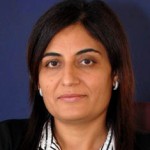
    Rahul Johri, Senior Vice President & General Manager – South Asia, Discovery Networks Asia-Pacific has been awarded the prestigious “Media Professional of the Year” award at the Global Awards for Brand Excellence 2012.


    The award reflects Discovery’s performance and growth in South Asia region under Rahul Johri’s leadership and his contribution in building a robust and varied portfolio of eight unique channels, led by the leading non-fiction network the Discovery Channel.


    Having joined Discovery Networks Asia-Pacific in 2001, Mr Johri currently leads its South Asia operations. He is responsible for the overall growth strategy of India’s highest quality factual and lifestyle portfolio including Discovery Channel, Animal Planet, TLC, Discovery Science, Discovery Turbo, Discovery HD World, Discovery Tamil and Discovery Kids. He has also been the driving force behind networks’ pioneering localisation strategy and the launch of multiple language feeds across brands and expanding their nationwide penetration. His recent initiative, the launch of the game changing channel in the kids genre Discovery Kids, has received industry wide applaud.

    Mr Johri said, “I am grateful to the jury of the World Brand Congress for honouring me with this prestigious distinction. This award is a recognition of the excellence of my team who have contributed significantly in my journey to build Discovery as one of the most respected networks in South Asia.”

    With over 19 years of experience in the industry, Rahul has worked across media verticals, from news channels, magazines and news dailies., Mr Johri is a Board Member and Treasurer of Indian Broadcasting Foundation (IBF). He is also a member of the media and entertainment committee of Confederation of Indian Industries (CII) and member of the Media & Entertainment Division of Federation of Indian Chambers of Commerce and Industry (FICCI).

  • Jaldi 5 with Apurva Purohit: ‘Great networking with fantastic women’

    The lack of networking is also seen by women themselves as one of the top three impediments in their progress. Leading radio station netword Radio City decided to make building connections between women easier by launching a forum where the women can all come and spend time with one another. Apurva Purohit, CEO, Radio City 91.1 FM explains the rationale of starting ‘Women at Work’.


    01. Do tell us more on Women at Work all about?

    Women at Work is a platform where women from all walks of life can come together and optimize their networking time to further their professional and personal growth. It is a networking forum where the members use the platform to connect and explore possible opportunities related to their profession/ business.


    02. And how did Radio City get down to developing this forum?

    As an organization, Radio City has quite a few women leaders, who fulfil their responsibilities equally or sometimes better than their counterparts. While it is a fact that men have several occasions to interact with each other through formal or informal networks, women don’t have such opportunities. Whilst multi-tasking with their responsibilities at work and at home, there is no room left for after-office networking. Women also often do not find a support group to seek solutions to their problems or enough networking opportunities to excel professionally. The senior women at Radio City thus decided to create an opportunity for women to interact and this was in fact the driving factor behind developing this online forum.


    03. How many forums is ‘Women at Work’ planning to hold, and in which cities?

    Our first on-the-ground networking session was held in Mumbai a few months ago and witnessed participation from nearly 100 women. It was amazing to experience the energy it created, through re-forging old connections and building new ones. Many women who attended the forum shared intimate parts of their lives with each other, and this turn helped them forge important relations. The next on-ground forum is being held in Delhi on December 1, and we are looking forward to some great networking with some more fantastic women. Though we are all virtually connected with each other, we plan to conduct one such on-ground meeting in different cities once every quarter.


    04. So how many women have become members of Women at Work?

    The forum has more than 800 users from across the globe and many more joining in daily. In fact, we have started receiving proposals from like-minded women from the US to start an international chapter too.


    05. What can one expect from the Women at Work forum?

    Apart from building connections, the members of the forum can look forward to sharing successes and learnings from each other. The forum has been created with the motive of building a bridge, an umbrella where working women across different cross sections can come together and talk about anything related to our work lives – from bad bosses to office spouses, from stilettos to mojitos, from babies to boyfriends!


    Interviewed by Ananya Saha


  • Azim Premji wins Forbes India’s inaugural philanthropy award

    By A Correspondent


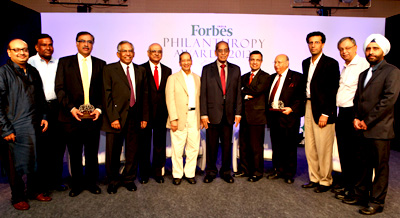
    Azim Premji with the jury (L-R): Abraham Moses, Sanjiv Sarin, MV Subbiah, AN Singh, Bhawarlal Jain, Narayanan Vaghul, Nachiket Mor, Lord Raj Loomba, Ashish Dhawan, Dr Madhav Chavan, Gurmeet Singh

    Azim Premji, chairman of Wipro Ltd, won the inaugural Forbes India Philanthropy Award in Outstanding Philanthropist category for 2012. Mr Premji, 67, the third richest Indian with a net worth of $12.2 billion, has pledged close to $2 billion from his personal wealth to Azim Premji Foundation, which is working to improve elementary education across India. He was among the ten outstanding individuals who received the award under different categories.


    The philanthropy awards were instituted by Forbes India to recognize the efforts of individuals who have given time, money, skill and expertise to solve some of the most pressing societal issues, to create model institutions and to inspire others. The winners received their awards – metalwork keepsakes depicting the Mubhi Tree, which symbolises the art of giving – at an event in Bangalore on Wednesday.


    “Our hope is that business should emerge as a strong force for good in this country and that our list of nominees for each of the ten categories will continue to grow as more and more people from the world of business step up and find new exciting ways to give back to society,” Indrajit Gupta, editor of Forbes India, said during the event.


    Mr Premji spoke about how his foundation’s university, which has 230 students and 70 professors, complements the field work they do in education. “Our objective is that we have to get more results and to scale up much more significantly in the grassroot level in the field,” he said. Later, he joined his fellow winners N Vaghul, former chairman ICICI Bank and MV Subbiah, former chairman Murugappa Group in a fireside chat to discuss what it takes to build a network of engaged corporate citizens, deepening the culture of giving back, galvanising corporate action, and how to take philanthropy in India to the next level. The session was moderated by Subroto Bagchi, chairman and co-founder Mindtree.


    In yet another fireside chat, Nachiket Mor, Chairman of the Board of Directors, SughaVazhvu, Ashish Dhawan, Founder and CEO of Central Square Foundation and Ramji Raghavan, founder Agastya International, discussed the challenges that philanthropists face when they work with multiple stakeholders, especially the government, in bringing about change. Ajit Rangnekar, dean of the Indian School of Business in Hyderabad, moderated the session.


    The event was attended by entrepreneurs, executives and academics with interest and passion for philanthropy and social good. They shared their views on themes related to philanthropy. Kiran Mazumdar Shaw, chairman and managing director of Biocon said that philanthropy is about making changes, and partnerships play a crucial role in that. Mr Mohandas Pai, Chairman of Manipal Global Education, and one of the driving forces behind Akshayapatra a mid-day meal programme, said he was motivated to do more when he realised that he was lucky to have won ‘the ovarian lottery’, many others aren’t so fortunate. Lord Raj Loomba, founder of clothing company Rinku Group, whose foundation works for the cause of widows, said his inspiration was the story of his mother, who became a widow when Raj Loomba was just 10 years old.


    The latest edition of Forbes India devoted to philanthropy was also released. Containing features on philanthropy with detailed case studies about each of the award winners, the special edition has four covers, featuring four of the winners Azim Premji, N Vaghul, MV Subbiah and Ashish Dhawan and a caption that runs across four covers: Philanthropy, done right, is too important to restrict to one cover.


    Speaking on the occasion, Gurmeet Singh, CEO, Forbes India said, “We at Forbes India strongly believe that Wealth and Philanthropy are two sides of the same coin. Therefore it was logical that we scaled up our earlier events on “Purpose Of Wealth”, “Business as a Force For Good” and “Conscious Capitalism” into a full-fledged Philanthropy Awards Evening.  Forbes India Philanthropy Awards and Dinner was a very well attended evening bringing India’s biggest philanthropists, guides and catalysts on the same platform and exploring what motivates leaders to embrace philanthropy and how India Inc needs to bring a stronger giving culture”.


    The winners were selected by a jury comprising of Narayanan Vaghul, Former Chairman, ICICI Bank, Madhav Chavan, Founder and CEO, Pratham, Shashi Tharoor, Member of Parliament and Dr Devi Shetty, Founder Chairman, Narayana Hrudayalaya Hospitals.


    The complete list of award categories and winners:


    Outstanding Philanthropist:

    The flagship award recognises an outstanding individual whose leadership and contributions of time, money, skill and expertise has brought in new thinking into solving complex social issues.

    Winner: Azim Premji, Chairman, Wipro Ltd


    Outstanding Corporate Foundation

    This award honours foundations that have taken up a social issue and have long term vision, strategy, a sustainable model and have created significant impact in their chosen areas.

    Winner: Tata Trusts


    Distinguished Family of the year

    This award honours families who have dedicated their private wealth for public good and benefited an institution or organisation in recognisable and sustainable ways across different generations

    Winner: Murugappa Family


    NextGen leader in Philanthropy

    This award recognises the accomplishments and contributions of emerging leaders in philanthropy, those who have signaled their intent through meaningful giving, have also begun to contribute significant time, skills and resources to the causes they have helped advance.

    Winner: Ashish Dhawan, Founder, Central Square Foundation


    Cause Marketing

    This award is for a company that has successfully marketed products or services in conjunction with a charity and brought significant benefits to both parties.

    Winner: Tata Tea – Jaago Re


    Corporate Catalyst

    This award is for a senior business leader who has used his influence to promote the cause of giving back not just in his or her company, but also across the entire industry.

    Winner: N Vaghul, Former Chairman, ICICI Bank


    The Good Company

    This award recognises pioneering strategic initiatives undertaken by large business corporations, where they have used market-based models to balance the twin objectives of doing well, while also doing social good.

    Winner: Jain Irrigation Systems


    The Good Samaritan Award

    This award is for an exceptional individual at any level in a company who has successfully led and galvanised support within the organisation to mount programs that help more people within that organisation to support worthy causes and give back to society.

    Winner: Abraham Moses, Director, Administration & Facilities, MindTree Consulting


    Distinguished Non-Resident philanthropist

    This award is for a non-resident Indian who has contributed significantly to a social cause in India, by giving wealth, time and expertise.

    Winner: Raj Loomba, Loomba Foundation


    The Crossover Leader

    This award seeks to recognise a professional who has successfully made the transition from a thriving career in the corporate world to work for the social or not-for-profit sector and has served as an inspiration and role model for others.

    Winner: Nachiket Mor, Non-Executive Chairman of the Board of Directors at SughaVazhvu

     

  • NDTV expands global reach; launches in Malaysia

    By A Correspondent


    Expanding its reach in the international markets, New Delhi Television Limited has also launched NDTV 24×7, NDTV Good Times and NDTV India in Malaysia. The channels are part of Asia Broadcast Network’s (ABN) new platform in Malaysia and available in a combination of basic as well as especially dedicated NDTV branded packages.


    NDTV channels have long been available in more than 18million homes in 75 countries internationally and this agreement marks the first time that three of NDTV channels will be available in Malaysia. Each channel is the category leader in Asia’s largest pay TV market – India and this partnership with ABN will now see them become accessible in South East Asia’s largest pay TV market – Malaysia. Under its slogan ‘Access for All’, ABN aims to offer over 200 channels of news, education, entertainment, movies, sports and local programming, and has signaled plans to offer full triple play services such as video-on-demand, social TV and interactive gaming, alongside high-speed Internet and voice services over a hybrid fibre-coaxial (HFC) network.


    The Head of NDTV Network Distribution & Affiliate Sales, Rahul Sood, said, “We are delighted to be part of the ABN platform and reaching new viewers in Malaysia. NDTV has been serving the Indian Diaspora across 75 other countries worldwide and we are glad that the 2million plus Indian community in Malaysia will now also get the chance to see some of the most iconic programs produced out of India. We hope the viewers of Malaysia will be pleased to be informed and entertained like our viewers in the rest of the world.”


  • Bal Thackeray and the media


    By Ranjona Banerji


    Bal Thackeray started life as a cartoonist in a newspaper. He carried that necessary incisive humour and sarcasm with him to his political life to great effect. From this, one might conjecture that he should then have had very good relationships with the media. But instead, it was up and down, like a see-saw. Once he got into his particular brand of divisive, identity politics, a difficult relationship with the media was inevitable.


    Thackeray’s irresponsible off-the-cuff remarks made for great reading but he rarely accepted that they had consequences that could be potentially dangerous. As he started to flex his muscles in Bombay – as it was then – and control his cadre to do his will, his relationship with the media continued on this shaky path.


    Also Read
     

    He was a Bindaas cartoonist: Hemant Morparia


    The Anchor: How the Sunday papers announced the Bal Thackeray news the morning after


    Anil Thakraney: Insensitive for channels to call know Thackeray-baiters


    Ranjona Banerji: How the channels & papers fared


    Jaldi 5 with Bharat Dabholkar: Thackeray was unique… he was a Brand


    However, it is important to keep in mind that the media was not this over-bearing constant presence in our lives the way it is now. The mainstream Marathi and English newspapers both were somewhat distant from the reader and the media was placed far more to the left than it is today. And Thackeray was initially used as a tool to attack trade unions, a domain of the left. The very erudite ivory-tower editors of the 1960s, ’70s and ’80s were rarely impressed with either Thackeray’s bluster or his tactics.


    When the Shiv Sena started its mouthpiece newspaper Saamna in 1989, this was Thackeray’s answer to the mainstream media. It was where he got to have his say and take pot shots at all his rivals which could range from other politicians to the cultural elite. The more outrageous his pronouncements, the more his followers loved it. The Saamna edit would sometimes determine the events of the day and how they panned out in Mumbai. It was Thackeray’s revenge on the Govind Talwalkars and Madhav Godboles, you might say.


    When Thackeray turned from his Marathi identity politics to Hindutva, as especially after the riots of 1992-93, any gloves that were on came off. His interview to Anita Pratap for Time magazine where he talked about his admiration for Adolf Hitler became something of a scandal. He had a long-running battle with Nikhil Wagle and Mahanagar. And he made some rather needlessly derogatory remarks about women journalists which did not go down too well.


    He also kept track of what was said about him. Once in the late 1990s I had a very difficult time as deputy editor of Mid-Day in trying to organise an interview with him for an anniversary issue. The senior reporter who approached him for the interview he felt had been too critical of him. It took a bizarre meeting with Sanjay Nirupam, then still with the Sena, to get Thackeray to agree to meet Mid-Day but he absolutely refused to meet the chosen journalist. The odd thing was none of us could find any critical articles of him by her! (Some of the most critical were in fact written by me, but I had not asked to meet him!) But Thackeray was adamant and initially messages of his anger came to us through various sources ranging from the publisher-owner to the distributor.


    Shiv Sainiks also gained a reputation for attacking newspaper offices – a tradition which they have maintained to this day, now expanding their scope to television as well. It was here where the Sena and Thackeray’s relationship with the media reached its lowest point. There have been instances where Thackeray expressed regret or made some kind of amends for the physical attacks on the media including when a woman journalist was roughed up by Sainiks. But it was his aggressive posturing and his subtle encouragement of violence which allowed his party workers to use violence as an answer.


    However, almost every journalist who met Thackeray was charmed by him. He had wit and charm and could even display a sense of warmth up close. He was not the sort of social hypocrite that so many politicians can be, and this made him unique. Even journalists who disliked his politics became his friends.


    But with a generation change in newsrooms, Thackeray became larger than life and his fans in journalism grew. To many who arrived in Mumbai, he was a grand figure that they had only heard about, and they admired his celebrity. This was the new kind of journalist which emerged in the 2000s, less discerning and more starry-eyed, fed on myths and legends. An older, ailing Thackeray became less accessible, and the legend grew.


    The sort of fawning, laudatory TV interviews which were being replayed after Thackeray’s funeral may have amused the man himself. If there was one thing that was undeniable – he was always up for a sparring match.


    Ranjona Banerji is a senior journalist and commentator based in Mumbai. She is also Contributing Editor, MxMIndia. The views expressed here are her own.


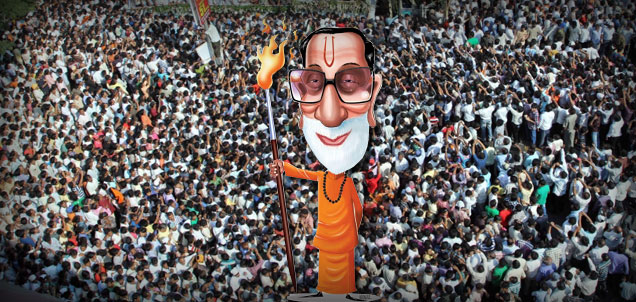
    Big Story image cartoon is by Manjul in DNA (www.dnaindia.com). Used with permission from Mr Manjul. Please refer to Mr Manjul’s recent cartoons on Mr Bal Thackeray at http://www.manjul.com/tag/bal-thackeray. One of the toons he had drawn on the Sena chief won him the Maya Kamath Memorial Awards for Excellence in Cartooning 2009.
    Background image of crowds at the funeral: Fotocorp


  • Jaldi 5 with M R Srinivasan: Chennai could need 3-6 months for digitization switch-over

    01. The court has extended the sunset date. How is the situation in Chennai post the extension?

    In Chennai currently, there is a big confusion. One day we went to the court and got interim order stay and now the case has gone to the Bench, which will have the hearing on 19th. Secondly, despite our letters to MSOs and MIB from our end, none of them are importing the set-top boxes. SAB said that they will be able to import boxes in 21 days provided the LCOs deposit advance money. But some of our members have already deposited two lakh rupees as advance last month. They are yet to receive to boxes. We will be submitting the dealing to the Court on 19th.


    There is uncertainty also because Arasu cable has not been given license yet to provide STB, and once it is given the license it will conquer the market. So, the existing MSO and licensed players are not sure of importing the boxes yet. As they may get wiped out once Arasu gets license.


    Four out of eight players who have got license, only three have installed head-ends.


    02. What are your expectations from the Bench on 19th?

    Well, they should extend the deadline. And if the extension is given, I&B Ministry should take views from all stakeholders. And all the information should be furnished clearly for and by stakeholders in front of MIB. Verification should be done if the said number of STB have been installed and activated. It should be made known as to how many boxes have been imported and how many of it installed by every player, since the imported boxes are usually smuggled in Middle East or Sri Lanka.


    03. How much of Chennai has been digitised, according to you?


    Right now, as per active status given to broadcasters by SAB it is 1.25 lakhs. As per our calculation, the active status is 1.3-1.5 lakhs only. DTH players are claiming that they have sold seven lakh connections. Most of these boxes, almost about 300-400 per month, are smuggled out of Chennai. In Chennai, about three-four lakh of these claimed DTH connections are active. We require about four million boxes in Chennai metropolitan area, which also covers the outskirts of Chennai.


    04. Even if the extension is given, how much time would Chennai require to reach 100% digitisation?

    Chennai would need 3-6 months to switch completely to digital signals. It is well-known that analogue signals are still on in Delhi and Mumbai where 100% digitization has been claimed. In Delhi and Mumbai, boxes are available aplenty and still they have analogue signals. Here in Chennai, we do not have STBs. It is important that analogue signals are not switched off.


    05. How does analogue benefit the stakeholder?

    We have 4G spectrum, but TRAI has not wiped out 2G. With digital, 10-15 analogue channels should be available. Not everyone can afford a STB. One should also think of low-income households.


    As told to Ananya Saha