
Tag: Maruti

  • Happy 40th, little one!


    Avik ChattopadhyayBy Avik Chattopadhyay


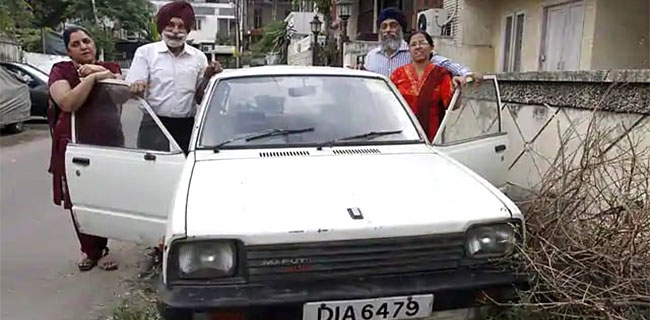
    Yesterday, happened to be the 40th anniversary of one of India’s most loved brands: Maruti. On December 14, 1983, the first batch of the Maruti 800 rolled out with the first car eventually registered as DIA 6479 was handed over by Mrs Indira Gandhi to Mr Harpal Singh of Delhi.
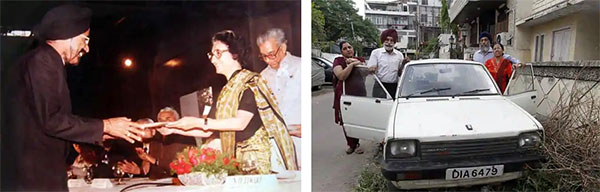
     

    The key of the first Maruti being handed over; the car before it was restored and displayed at the Maruti Suzuki brand centre adjoining their head office in New Delhi. Photos courtesy Mr KG Verma of Maruti Udyog Limited.


    Rarely has any brand once owned by the government firstly survived this long and secondly maintained its market leadership almost since inception. Rarely has a ‘subsidiary’ company overtaken its parent and become the de facto reason for the parent’s sustained global success. Rarely has a mass market brand, literally catering to millions of customers across every corner of the country, become a benchmark in customer-centricity. Maruti is indeed a rare brand, not only in India, but in any market and a case study for all management schools across the world.


    Legend says that on that eventful day 40 years ago, when asked to say a few words, Mrs Gandhi started with “Yeh ek chhoti si gaadi ki ek lambi kahaani hai…” [This is a long story of a tiny car…] obviously referring to her son Sanjay’s obsession with building a ‘people’s car’ in India, a la the Volkswagen Beetle, Renault 5 and Austin/ BMC Mini. He had started his early efforts sometime in 1975, with a break from 1997 to 1980. His sudden death in the same year spurred on his mother to ensure his dream gets fructified.


    While the numbers, the loyalty, the profitability and the sheer market dominance has done most of the talking for the Maruti brand, the corporate has been telling cagey about its history. And that is the very issue I raise today, as an alumnus and an individual who owes a lot of what I am to the seven rich years I breezed through there in two stints.


    There should have been a Maruti Suzuki museum by now, exhibiting all interesting pieces of history, experimental vehicles, the single-seater racing cars, the concept cars, documents, photographs, blueprints and so on. It should have been the pilgrimage of every Indian motorhead, just like the Autostadt for the Volkswagen group. The results the company posts every year, year after year, are… the results and not the reasons. The reasons should have been showcased and celebrated. Sadly, even if numerous proposals were put up for the museum, the top management thought otherwise.
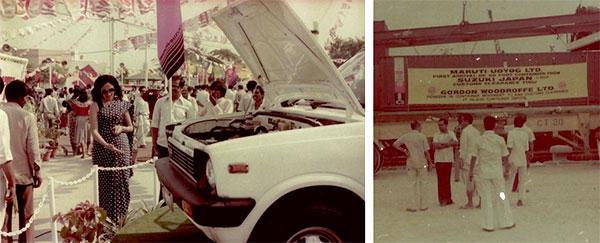
     

    On display before commercial launch at IITF in November 1982 in Pragati Maidan, New Delhi; arrival of the first lot of plant machinery from Suzuki, Japan in early 1983 at Madras (then Chennai) port. Photos courtesy Mr Rakesh Gupta of Maruti Udyog Limited.


    The company cannot wish its history away, however much the parent wishes to, for its own myopic reasons. ‘Maruti’ is Sanjay Gandhi’s concept and that needs to be recognised. His original office in the Gurugram plant was converted into a ‘Tool Room’. As if that was not disrespectful enough, it was unceremoniously razed to the ground in 2002, in spite of a few protests. Insiders say that in 1983, there were five working prototypes built by Sanjay Gandhi and his team of rag-tag engineers kept in one corner of the plant. There were ‘orders’ from way above to destroy them. Thankfully, one was whisked out and is in a closely guarded private collection. Basically, everything to do with Sanjay Gandhi was to be removed or destroyed.


    This is such a contrast to a brand like VW that does not run away from the fact that Adolf Hitler sponsored the idea and encouraged Dr Ferdinand Porsche to build what is popularly called the Beetle. At the Autostadt in Wolfsburg, there is a bust of Major Ivan Hirst, the British army man who revived VW after the war. There is no shame in admitting to the chequered history any memorable has had. Frankness and candour are virtues for any brand, more so a market leader. Running away from it is sad cowardice.


    A brand like Maruti is much more than Arena and Nexa dealerships, a robust service network and a digitised buying process. It cannot be constricted to mere products, which may come and go depending on their own brand lifecycles. It is a pillar of India’s story of slow but sure evolution from an under-developed to the world’s fastest growing economy. It stands for all that is good and not so good about India.


    The good is the ambition to be truly world-class. The good is to openly accept and incorporate a foreign management system and make it one’s own. The good is to establish the concept of customer satisfaction as the cornerstone of any business. The good is to demonstrate that a ‘sarkari’ [governmental] setup could be efficient, effective and profitable. The good is to help the consumer mature to a level where no brand, however global in repute, can take one for granted. The good is to make mobility affordable to millions of the emerging middle-class.


    The not-so-good is to be introverted about its rich legacy and accept the controversial with the laudable. The not-so-good is to not impress upon its parent that it needs both recognition and representation at the global level. The not-so-good is to be defensive about the quality of its people and see them being rightfully treated as global equals vis-à-vis its Japanese counterparts. The not-so-good is to stay away from causes of national importance that look forward to a stand taken by an icon. The not-so-good is to stonewall progress on issues of safety standards and emission norms using its clout to protect its own turf.


    Guess that is what truly memorable brands are made of… the good and the not-so-good. Being proud of one’s legacy and milestones is a mark of maturity of a market leader. Being the 40th anniversary, one would have expected major celebrations by the brand in the form of special editions, on-ground initiatives and customer advocacy programmes. And of course, if not a brand museum, at least a coffee table collector’s edition containing the huge repository of photographs and documents that the company and its alumni have. Given that nothing of this has happened and the day has just passed by, the onus lies on us alumni to take the initiative and do things to commemorate this milestone of one of India’s most loved brands ever!
     

  • Happy 30th, little monk!


    By Avik Chattopadhyay


    Avik ChattopadhyayApart from being the International Labour Day, May 1 also happens to be the birthday of personalities like Balraj Sahni, Gordon Greenidge and Joseph Heller. And the Maruti Suzuki Zen.


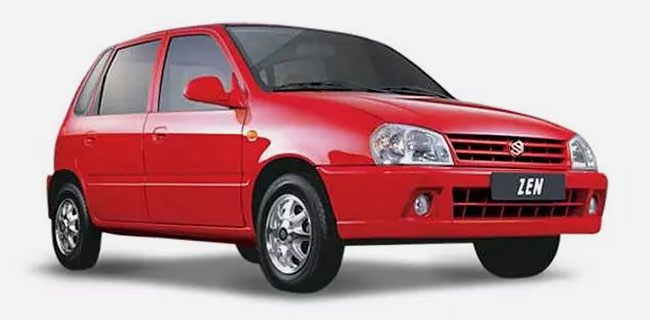
    It was launched on that date 30 years ago, at the Maurya Sheraton hotel in New Delhi. Unveiled by then Finance Minister Pranab Mukherjee, the Zen went on to become one of India’s most loved brands. Codenamed ‘YE-2’, the little car was a big gamble that both Maruti and Suzuki played in the early 1990s as a new vehicle made for a new ‘liberalised’ India. For those of us who remember, 1991 is when we entered the third phase of our nationhood, the first being Independence in 1947 and the second being the emergency of 1975. This was a new India, wanting to open up to the world and dismantling the red-tapes and licence-controls that defined us in the first four decades of our development.


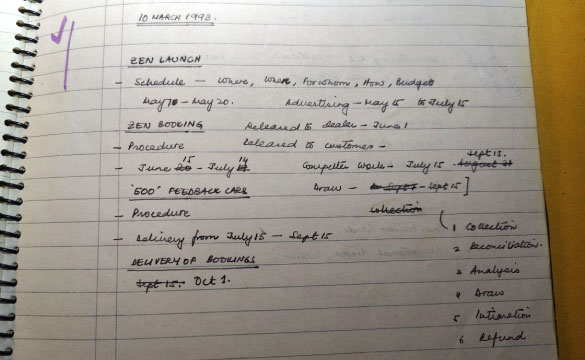
    Page from my notebook with notes on the Zen launch plan, dated 10 March 1993.


    The Zen defied convention. It was almost the same size as the popular Maruti 800 yet was a very different personality, beyond mere mechanical specifications. While it did have an aluminium engine as a novelty and major talking point, it did not rationally justify the price difference it commended over its older sibling. Till then, a product had to be physically larger than the other to command a higher price. The more the metal, the more the price. That was the only way to demonstrate greater value. Not with the Zen. It demonstrated that aspects like design, touch-and-feel, refinement, dynamic performance and comfort were, in combination, a higher value proposition than competition, even from your own family.


    Till 2006, the brand was built as a combination of some clever communication and lots of positive word-of-mouth. In fact, when launched in 1991, it took time to gain public liking. The Indian customer was used to the metal-price equation and the Zen was challenging that. The early adopters did the task of building the initial buzz around its performance and refinement that crucially helped in its gradual adoption and popularity. The initial seven / eight months were an actual struggle. While the network was given lots of “selling tools”, the value proposition was built only when the initial customers swore by it and the automobile journalists praised it sky high. I call this the “Sholay Effect” of hugely successful brands taking time to gain momentum from being almost written off, just like Sholay did.


    Magazine covers on the Zen in May-June 1993 – courtesy Team BHP


    There were four elements in the way the vehicle was launched which together helped build its formidable equity. First was the Suzuki badge on the vehicle. It was the first Maruti product to carry it, subtly stating that this was an ‘international’ product in the Maruti portfolio. There was a move to have the Maruti badge on the vehicle, but that was dropped in favour of the international narrative.


    Second was a term coined to describe its styling – ‘jellybean’. That was the best way to explain its harmonious lines, soft curves and aerodynamic shape, from the front bumper to the rear lights. That term caught the fancy of the media and it was all about jellybean styling after that.


    Third was the ultra-smooth all-aluminium engine which was so refined for its time that many, including Wikipedia, think the name Zen stands for ‘Zero Engine Noise’.


    Which brings us to the fourth element…the name Zen. It was given by me, in a competition within the company. The then director of marketing and sales Kozo Senga liked the name Zen. I explained that the vehicle was exactly as a Zen monk – you have the power within your outer calm that should be used responsibly and only when required. The vehicle looked sedate when parked but was a rocket when revved. Zen it was!


    Rare pic of a YE-2 with the Maruti badge in the plant – taken in Jan 1993


    The initial advertising for the Zen did not work. Though all the still photography was done by the amazing Hardev Singh, the advertising agency and the marketing team went overboard with the positioning statement of “Engineered for Exhilaration”. Nobody could either pronounce it properly or remember the statement. Thankfully, the word-of-mouth had started working its magic so the advertising really did not matter. The brochure however was a very popular item and almost all walk-ins into Maruti showrooms wanted one. It was a distinct square shape and the product in all its glory was the hero. Hardev Singh’s photography did the trick. People basically wanted a test drive and a brochure. Heady times indeed!


    Zen launch brochure of 1993 and one of 1996


    In 1994, the Zen started being exported to various countries, especially those in Europe. Badged as the Suzuki Alto, it was on the streets of London, Paris, Berlin and Rome. This made it the ‘world car’ for Maruti and India and that is what the next communication campaign was all about. This really worked in further building the brand’s appeal as the Indian was now driving exactly what a Londoner or Parisian was.


    By now, the sales numbers and growing popularity allowed the engineers in Gurugram to plan modifications and variants. A diesel Zen was launched in 1998 housing a Peugeot engine. Though it did not do very well, it demonstrated the company’s and brand’s engineering prowess as a trend setter. In 1999 a variant called the Zen Classic was launched but did not go well with the Indian design sensibilities. The reversals did not hold the company back from trying yet new things to cater to the Zen-clan.


    In 2000, Maruti launched the Alto and the WagonR, both hatchbacks catering to the same demographic target segment. In light of newer siblings, the Zen started losing some if its sheen and some crucial intervention was needed from both the product planning and engineering teams. To commemorate the tenth anniversary of the little monk, Maruti Suzuki did possibly its most audacious move of launching a limited edition 2-door Zen, exactly as it was sold in Europe. Out came 300 Zen Carbons in gleaming black and 300 Zen Steels in svelte silver, each vehicle individually numbered and badged. Even though just 600 units, they took the market by storm, being lapped up by both youth into their first jobs as well as retired couples. The brand was back in the reckoning with a very disruptive step. It was a statement that while the Alto and WagonR were selling in Japan, the Zen was being sold in Europe.


    The Zen Carbon and Zen Steel welcome letter – 2003


    Closely following the Zen ‘singles’ as they were called was a major restyling of the vehicle to give it a steroid boost. It did create some flutter primarily due to a high-decibel marketing campaign but the vehicle was on its old tired wheels. It had its best chance when Suzuki was planning its next big global launch in India codenamed the YN-4 in 2005. This vehicle would again disrupt the market in the way it looked and performed, just like the YE-2 had done 12 years ago. This should be the new Zen. That is the only way the legend could be revived in its new avatar. An attempt was made in the top circles to carry the Zen badge forward through this new vehicle. Consensus was otherwise. The new vehicle became the Swift, yet another uber successful brand till today.


    And the Zen? Well, a half-hearted attempt was made by slapping the name on a car that was a completely different personality from the Zen. It was called the Zen Estilo and launched in 2006. Thankfully the customers saw through the feeble game quicker than Maruti Suzuki had anticipated and the product sank without a trace in 2009. Thereby laying to rest one of India’s most loved and aspired for automotive brands, ever.


    Best wishes of the day, little monk.

    Rest easy!


  • Ubiquitous. Universal. Unanimous

    File Picture. Creative Commons


    On Maruti’s 37th birthday last week, our columnist and senior brand and auto industry specialist Avik Chattopadhyay goes first person


    Ladies and gentlemen,


    Terribly sorry for the delay in writing to all of you. Was caught up in my 37th birthday celebrations last week. It was quite something!


    So many messages. So many wishes. So many memories. So many little milestones to remember. Brought a tear to my eye actually. Never realised there is so much love for me still in the hearts and minds of people around me.


    A newspaper report announcing the big launch

    Life has been quite a roller coaster for me. it took quite some time to conceive me. Guess my mother took her time to choose her suitor and settle down. She finally did, with my Japanese father. The early days were not the best for me. you see, I was born a bit underweight in 1983. My mother was worried about my health. People kept telling her that this sickly kid would not make it. But I gave it my best, ably shielded in my mother’s lap. A few relatives came to our support in my initial years.


    By the time I was three, the tide had turned. I was a rockstar in kindergarten. The two bullies of my class were outclassed by me. The fat English one beat a hasty retreat. The slick Italian did put up a brief fight, given his extended family, but finally accepted to operate under my protection. I became a social magnet. Exams were cracked and the playground was conquered. Music and art classes were literally child’s play. I even took to the racetrack and licked it every time I stepped on to one. Teachers pampered me, the girls swooned over me and the boys wanted to be like me. school was a breeze.


    I brought about a revolution of sorts. People by the thousands came out on to the streets, from all walks of life. I gave them the freedom to move, the freedom to explore, the freedom to express themselves. Being seen with me was a matter of status.


    I entered college when I was only 14, having topped the higher secondary exams with record marks.  Stepped out of my town for the first time. There were newer people around me, from other towns, of different shapes and sizes. But my reputation had preceded me. After all, the state had never seen such a young topper in academics and all-rounder. I held my ground. Donned a new style and new ambitions to conquer a larger world now. Gave myself flashy new colours, new clothes and learnt new tricks. I might not have been the biggest guy but was still a favourite with the crowd. Was at every happening place…concerts, parties, shopping malls, marriages…you name it, and I was there. Ubiquitous. Universal. Unanimous.


    By the time I graduated, I realised that life would be getting more competitive and stressful. But my parents had never taught me to give up so easily. So, I stepped right into the professional world. Did not want to waste time on further academic qualifications. As a young lad of 18, you do not expect to get the best of jobs. You might be light on your feet, quick thinking and efficient at whatever you do but your size becomes a bit of a constraint. So, I had to plan my moves carefully. No point getting squeezed amongst the big guys without finishing my task. The early 2000s were also a turning point for India. The consumer had come of age. Life was rapidly getting global, connected and ambitious. The millions I had brought on to the roads now wanted a better experience. Quite natural of them. Life does not stand still for ever. I had to bring more millions on the roads… the ones who had never imagined so. I had to continue to be accessible and friendly. I was now this rockstar who was called in for nostalgia concerts. I knew that I could not continue this for much longer. Being on the road for twenty years non-stop does take its toll on health and constitution.


    So, I had to plan my exit…slow, smooth and steady. I had to prepare the next line of command and hand over the mantle of leadership. I had identified my worthy successor. He was now four years old. A strapping young lad in whose eyes I saw myself way back in 1988. He sure was modern, with a fresh outlook but not altogether different from my DNA. The task of drawing out more millions on to the roads had to be carried on.


    Some legends are born. They appear like the supernova. And then they go away in a burst of fireworks. And some legends are crafted. They take time to take shape and leave a lasting impact and a worthy successor. I happen to be of the latter type. And I have enjoyed every moment of this journey…the straights, the bends, the chicanes and the blind alleys.


    The last 10 years of my life were quite uneventful. Boring, to be quite honest. Just like leaders who have crossed their prime but are forced to stay put, I was made to endure the same vegetative state. But I tried to make the most of it by a thorough handover to my successor. And enjoying some special moments like when I saw a couple of 70-year-olds ambling along India Gate in New Delhi with the words “Narain Karthikeyan ka baap!” on the rear screen. Occasions such as these make a life worthwhile. Finally, after 31 whirlwind years of bringing 2.6 million Indians on the roads, I bid adieu in 2014.


    It has been six years since then. I have not had an obituary written about me. Nor an epitaph. No resting place for me. For I do not rest. I am still alive in the hearts and minds of millions. 2020 for all of you has been quite like the last 10 years were for me…waiting for it to end. For tomorrow will be better and brighter. So, here is wishing you all a terrific 2021!


    Your favourite “Mrooti


  • The Obsession To Be Premium


    By Avik Chattopadhyay


    The other day I was chatting up with a Maruti Suzuki Nexa dealer. Post the expected lament on lack of footfalls and the still elusive operating profit, we got into discussing the basic Nexa model – the purpose, the promise and the delivery. After a lot of soul-searching and head scratching, he finally brought it down to the wooden flooring, fancy furniture and focused lighting as the “premium” experience being offered to a customer vis-à-vis one who walked into a Maruti Suzuki Arena!


    Sounds preposterous? Totally believable!

    Let’s just spend a few more words on this Nexa vis-à-vis Arena case. The two channels of the same Maruti Suzuki brand offer separate products to customers, hence ensuring a minimum level of footfalls in both. I cannot buy an Ignis from an Arena outlet, hence go to a Nexa. Similarly, I cannot pick up a WagonR at a Nexa, hence go to an Arena. It is not that I have a similar product portfolio in both, yet I choose a Nexa over an Arena as the entire customer promise and experience is what I associate with and aspire for.


    There are various ways I can be premium in being a Nexa channel partner.

    In my product pricing. But the Nexa offers the Baleno that is in the same price band as the Swift.

    In my product positioning by addressing a different customer psychographic. But, then, the Ciaz was moved from Arena to Nexa to allow more revenues to the latter.

    In my overall experience. But the service and ownership experience, as per customer feedback and dealer inputs, are the same in Nexa and Arena.


    So, I am fundamentally undifferentiated from my less privileged channel cousin and totally confused in what I am supposed to be in the first place. Yet, I boast that I am “premium”. Not a very sustainable business model, is it?


    Maruti Suzuki’s urge to go premium is not an oddity. It is another demonstration of the common malaise many Indian brands have – the obsession to be premium!


    From aviation to automobiles, food to furniture, healthcare to homes, brands and businesses make proud statements in press releases and communication that they are a premium brand or aim to go premium.


    It is as if being entry-level or mass-market is a protozoan life rid of all respect and pride. It is as if being affordable is an affront to business logic and purpose.


    In the three decades I have spent working for a living, I have come across a handful of seniors and bosses who have also expressed this desire to ‘elevate’ the brand into a premium one. Basically, making the customer pay more money for the same product or solution. And how will that happen? Magical marketing! Spend on symbols of an elevated status like brand ambassadors, sponsorships and imagery to package the same product in a new avatar!


    Does this not work? It does, for some time and for some people. But it is never sustainable as the brand is desperately trying to live on borrowed clothes and makeup.


    Have I been successful in any such attempt? Not once. Have tried a few times but failed miserably. But in the process, have learnt five important lessons which I wish to share.


    Premium vis-à-vis Expensive

    These are two separate concepts. A Harley-Davidson is expensive. It is not premium. It is expensive because the Americans can just not get efficient enough. But in its home market no one buys it for its premium-ness but for its distinct imagery and culture code.


    Mass vis-à-vis Premium

    A Bic ballpen is mass. And people love it because it is so. But a special edition Bic commemorating the Black Lives Matter movement will certainly sell at a premium. Similarly, a Maruti Suzuki Swift is mass. But a 15th anniversary limited edition Swift Sport will be premium. Hence, mass and premium are not mutually exclusive concepts… in reality.


    Premium vis-à-vis VFM

    These are not conflicting at all. In fact, the better a brand is able to demonstrate value-for-money [VFM] to its target customer, the better the premium it will attract. And not extract. I once met Mr R M Dhariwal, the owner of the Manikchand Group, who told me that he bought a Maybach for his daughter on her birthday as believed for the amount of money he wanted to spend, the Maybach offered him best value for money!


    The intangible value of a product or experience, over and above the physical value is what allows a brand to command a premium. And not just demand it.


    Premium vis-à-vis Profit

    These two are not necessary and sufficient conditions to co-exist. There are mass-market brands that make profits that many luxury brands would give both arms for. A premium offering need not make higher profits than an entry-level one. The focussed definition and delivery of its promise is what makes a brand charge a premium.


    Response vis-à-vis Objective

    This is the biggest lesson for me. Being “premium” is a desired consumer response and not a business goal or objective. It is an outcome and not the process. It is the end and not the means. This clarity of brand management happens only when the brand stays true to its intended purpose and promise.


    We experience brands like Bata, Amul, McDonald’s and Chevrolet not because they are positioned as “premium” but because they are true to their brand DNA and carry no pretensions. As customers, we give them their due premiums when we wait for the pack of Amul Taaza milk to arrive at the store, love to see the sparkle in the eyes of our children on getting them a Happy Meal, squeal the hell out of the tyres of a gleaming Corvette or splash about in muddy puddles in the Naughty Boy shoes. Each of these experiences is what truly makes a brand “premium”!


  • Hyundai appoints Tarun Garg as Director – Sales, Mktg & Service

    By A Correspondent


    Hyundai Motor India has announced the appointment of Tarun Garg as Director – Sales, Marketing & Service, Hyundai Motor India Ltd.


    Notes a communique: “An alumnus of the Delhi College of Engineering and Indian Institute of Management, Lucknow, Garg has served as Executive Director – Marketing, Parts & Logistics at Maruti Suzuki India Limited.”


  • Hungama Digital bags Best Campaign award at PMAA

    By A Correspondent


    Hungama Digital Media Entertainment Pvt Ltd has won four awards at The Promotion Marketing Awards of Asia (PMAA) – The Dragons of Asia 2012.


    Hungama Digital Media bagged the PMAA Dragons of Asia for ‘The Best Campaign from India’ for its Maruti Suzuki Cricket Stock Exchange campaign. It also bagged a Gold in ‘The Best Innovative concept’ category, two Silvers for ‘The Best Use of the Internet in a Promotion Marketing Campaign’ and ‘Best Use of Social Marketing in a Promotion Marketing Campaign’.


    Said Sunila Dhar, Deputy General Manager Media, Maruti Suzuki, “We are very happy to have got this award. Our association with CSX has been for two years and it is overwhelming to see the response to the game. It was based on the correct consumer insight of the passion for cricket, and the fact that we all have an opinion on the players and like to give a calculated opinion. Besides, the game has been made highly engaging by Hungama with many new segments in its second avatar.”


    Speaking to MxMIndia on the news, Siddhartha Roy, COO, Consumer Business & Allied Services, Hungama Digital Media Entertainment  said, “To be acknowledged by the PMAA for our campaigns is a great boost to the team’s morale, but it does raise the bar for them to keep creating successful, clutter breaking campaigns . Our Biggest winner – Maruti Suzuki Cricket Stock Exchange was a well thought out and superbly executed project by the team.” Speaking about the product, he added, “Cricket by far dominates and drives consumption on digital gaming, and with CSX we created a differentiated offering for consumers. With a trading game that is impacted by the real world cricketing news and stats, consumers have the opportunity to be more involved within the game. Ayaz Memon’s expertise ensures that users have the most accurate knowledge and info to make the trade on the stock exchange so as to maximise their earning.”


    Added Ms Niloufer Dundh, Head – Integrated Media, Hungama Digital Media Entertainment  said: “I am delighted, and thrilled with the awards we won, hats off to the team for creating Maruti Suzuki Cricket Stock Exchange campaign and for constantly improving and innovating. This is the second year we aired a campaign for this product, it was first launched during IPL 2011. I am also very happy because we had a brand like Maruti who supported us and had faith in us for these two years.”


    This year, the awards witnessed the introduction of the Dragons of Malaysia, in partnership with Marketing Magazine, as a plan to recognize more local agencies. All winning campaigns were then judged locally and then again in the Dragons of Asia, with 50 Gold, Silver and Bronze winners now taking part in the 2012 MAA Worldwide Globes.


    Awards won by Hungama at PMAA 2012 – The Dragons of Asia (Orders of Merit)


    The Dragons for the Best Campaigns in their Country

    Dragon Campaign Client
    Best InIndia Cricket Stock Exchange Maruti Suzuki


    Best Innovative Idea or Concept

    Dragon Campaign Client
    Gold Cricket Stock Exchange Maruti Suzuki


    Best Use of the Internet in a Promotion Marketing Campaign

    Dragon Campaign Client
    Silver Cricket Stock Exchange Maruti Suzuki


    Best Use of Social Marketing in a Promotion Marketing Campaign

    Dragon Campaign Client
    Silver 7 U Lemon Pattalum 7 UP


  • Anil Thakraney: Murder in the factory

    By Anil Thakraney


    What happened at Maruti’s Manesar plant is extremely sad. You don’t go to work and expect to get burnt alive by your own colleagues. And this is no longer a business story, it has moved to Page 1 as a sensational crime story.


    Naturally, we now have to wait for the police investigation to get done, so that we know exactly what transpired that fateful day. Apart from nabbing the criminal workers (which isn’t going to be easy given the political pressure), another truth needs to be uncovered: There are rumours that the slain HR manager provoked a group of workers by hurling casteist or communal abuse. This doesn’t lessen the crime, but it still needs to be investigated.


    As of now, I know just one thing: HR managers who deal with factory workers need high level of skill and training. It is a very difficult job because there is always a huge degree of mistrust between white and blue collar workers. Everything is vastly different: Sensibilities, motivations, attitudes, culture, language, you name it. I sometimes wonder if CEOs put in special efforts to appoint the correct HR personnel for their factories. And ensure they are heavy trained for the job. It’s just not the same as air-conditioned corporate offices, where even if the HR staffers did nothing (and many do precious little!), life simply goes on.


    How do I know all this, since I have never worked in HR? It’s simple. My dad, before he retired, was the chief of personnel and human resources at Shaw Wallace. And the factory HR was his key result area. I am aware of the high level of tact and diplomacy he used to need at his disposal to keep the workers and the management at peace. It was a very stressful job, and despite his best efforts, he would, at times, receive violent threats from a section of workers.


    I got a chance to watch him in action when he took me for a factory visit to the company’s Uran (Maharashtra) brewery. This was when I was in school, and the visit introduced me to beer very early in life, but that’s another story. 😉


    * * *


    [youtube width=”400″ height=”225″]http://www.youtube.com/watch?v=pTjHCCU2E4c[/youtube]

    PS: ‘The web is what you make of it’. Google Chrome has been doing some nice adverts in this campaign. This particular one, where a man is trying to woo his lost love back, is quite charming. The strength of this work lies in what is known in advertising parlance as ‘vivid demonstration of the product’. Whereby you experience exactly how the product works. But they do it in a very entertaining way, which is why the ads shine. Something to learn here for all those guys who make those ultra boring mechanical car commercials.


  • Debrief: Maruti: ‘Kitna deti hai?’ continues to rock

    By Anil Thakraney


    I have always been a fan of Maruti’s ‘Kitna deti hai?’ campaign. Okay, the phrase has an erotic ring to it (admittedly that’s my dirty mind at work), but its single-mindedness of purpose is admirable. And also the fact that it’s totally relevant; Indians tend to be obsessed with mileage. There’s one more reason for my liking this campaign: The commercials are always entertaining.


    Well, Maruti is back with yet another ‘Kitna deti hai?’ ad. And the timing could not have been more appropriate. With petrol prices going through the roof, this is the one question on top of every middle class car buyer’s mind. The new TVC re-creates the thirties. A firang lady called Amelia Johnson is the first woman to fly solo from England to Australia. She’s arrived for a ‘stop-over’ in Mumbai, and crowds have gathered to meet her. Amelia excitedly boasts about the various technical features of her aircraft when a desi jumps her with that most important question: Kitna deti hai?


    [youtube width=”400″ height=”225″]http://www.youtube.com/watch?v=1AyynrjP3EM[/youtube]

    Super stuff. Love this ad. The humour is solid and the treatment outstanding. (Not easy to re-create that era in an ad… ads usually have limited budgets.) And most importantly, I simply adore Amelia’s expression when that deadly question is fired at her. It’s a cross between amusement and astonishment. And it’s not an easy expression to deliver. A huge pat on the back to the film’s director just for this.


    Rating: (On a scale of 1 to 5): 4. Wonderful idea. Lovely execution.


  • TIL brings a bigger and better IPL season 5

    By A Correspondent


    Times Internet Limited (TIL), in partnership with YouTube, is back with a slew of new features to woo cricket lovers for the fifth edition of the Indian Premier League (IPL), which starts on Wednesday.


    TIL’s dedicated IPL site, ipl.indiatimes.com, now offers interactive scorecards, high-definition streaming of IPL matches, DVR features (to rewind during a match), online radio commentary in partnership with AIR , video-on-demand facility, and an all new ‘Battleground’ section.


    Making its debut this year is the interactive 10 minute video show ‘Pitch Studio’, where fans can interact with stalwarts from the cricketing world including a former cricket team captain and expert, by posting their comments and questions on Facebook and Twitter. These pre-match shows will give a quick recap of past matches and talk about key events, with guest stars adding an element of surprise.


    “Having attracted a total of 72 million global views last year, we are looking to make IPL 2012 a lot more user-centric, giving user’s total control over their IPL viewing experience,” says Rishi Khiani, CEO, Times Internet Limited.


    In the ‘Battleground’ section, IPL fans can post their comments and also indulge in activities such as throwing tomatoes and eggs at the other side during a live match. The new DVR feature will allow fans to rewind on the time-line and watch any part of the match that they may have missed. Adding to all the fun is the cheerleader application, video scorecard that captures video highlights on the fly during the match stream, and the video-on-demand feature, which offers match highlights such as fours, sixes and face-offs between players.


    Given the phenomenal success of the Indiatimes platform during the previous IPL season, it’s no surprise that this year too, some of its heavy weight sponsors including Maruti, Coca Cola, and Samsung, have put their weight behind TIL as premium sponsors.

  • Big brands use TV stars to connect with masses

    By Rajiv Singh


    Now, Malhotras can raise a toast. After gulping down countless cups of tea during umpteen meetings over the last few months, this middle class family in North West Delhi has finally found a ‘perfect’ match for their son. Rashmi, their prospective daughter-in-law, is not only beautiful but also has a pet name ‘Toasty’ – something that instantly clicked with the Malhotras.


    Reason: The other Toasty they know is a lovable daughter-in-law, played by Aishwarya Sakhuja in Sony’s TV fiction Saas Bina Sasural, who keeps her family together. “I am sure Rashmi has similar qualities like Toasty,” said an elated Mrs Malhotra.


    Malhotras are not alone in getting influenced by serial characters. There are thousands of such people across the country. And several marketers are now waking up to the potential of small screen stars as brand endorsers.


    Over the last six months, a slew of brands including Cadbury, Emami, Hyundai, Maruti, Dulux, Red Label and Lux has roped in popular TV celebrities such as Sakhuja and Hussain Kuwajerwala who can connect well with people at a fraction of cost of hiring a popular Bollywood actor.


    “It’s a great strategic move by brands. The TV characters have a strong resonance with the viewers, especially the middle class that relates to the values shown in the serials,” said Prathap Suthan, an advertising industry veteran who created the government’s ‘India Shining’ and ‘Incredible India’ campaigns and is now the chief creative officer of iYogi, an online technical support services provider.


    Saurabh Uboweja, director of brand consulting firm Brands of Desire, said that by casting TV stars with successful running soaps, advertisers can have the dual advantage of both role and star endorsement for a sensible signing amount: “They get two candies for the price of one.”


    MONEY MATTERS

    While TV celebrities do have their own large fan following, their relatively lower endorsement fee is a huge plus for several companies in the present tough business environment where subdued consumer sentiments and rising costs have hit sales of several products.


    One such company is Maruti Suzuki, the country’s largest carmaker that has had a tough last year and expects its sales to fall 11 per cent in the year ending March.

    “In the current cost-cutting environment, it makes more sense to hire TV stars,” said Shashank Srivastava, Maruti Suzuki Chief General Manager (Marketing). The carmaker roped in TV celebrity Anita Hassanandini this month to feature in its Swift Dzire commercial. Last December, it signed Kavita Kaushik and Rajesh Kumar from SAB TV to endorse its multi-purpose vehicle, Eeco.


    “Selling a car is not like selling a Bournvita,” said Mr Srivastava. “So, there’s no point in shelling out fortune in having big Bollywood celebrities.” Big celebrities have not really worked for Maruti. Father-son duo of Amitabh and Abhishek Bachchan could not boost its Versa sales in 2000-2001. Maruti has also had actor-director Farhan Akhtar and actor R Madhavan to endorse A-Star and Wagon R, respectively, but with limited success.


    CLOSER TO LIFE

    Marketers also say it’s easier for people to relate to TV celebrities than big screen stars. “While a Bollywood celebrity projects an image which is aspirational and larger than life, TV celebrities relate closer to the real life of the viewers and are hence becoming extremely popular,” said Krishna Mohan, CEO of FMCG firm Emami, which signed Suhana of Star Plus’ serial Sasuraal Genda Phool aka Ragini Khanna in November last to endorse its moisturiser Vasocare.


    Unlike film stars, small screen celebrities are identified with the characters they portray in popular long-run serials. So people relate them to the values their characters hold, like a committed housewife, an ideal husband, a perfect daughter… ¦ It helps brands project a distinct identity by endorsing them.


    Late last year, paints brand Dulux rolled out a media innovation by tying up with three popular television serials to create vignettes that resonate with their thematic campaign, ‘Apne Rang Chalakne Do’. AkzoNobel’s brand showed the lead pairs from Star TV soaps Yeh Rishta Kya Kehlata Hai and Iss Pyar Ko Kya Naam Doon, and Sony’s Saas Bina Sasural in its commercial.


    “Since daily soaps are a big draw in India and the consumer follows their journey closely, the protagonists of the daily shows had the appeal that was needed to propel the idea,” said Pushkar Jain, marketing manager for Dulux at AkzoNobel India.


    However, there’s a flip side of using TV celebrities as well, said Mr Uboweja: “Brands want to capture these stars and their soaps when they are running hot. But the shelf life for both is fairly short”. “This ad strategy is a bit like instant noodles, good enough to fill the stomach but not enough to satiate the appetite,” he added.


    Source:The Economic Times

    Copyright © 2012, Bennett, Coleman & Co. Ltd. All Rights Reserved