Tag: Maruti Suzuki

  • FilterCopy and Maruti Suzuki WagonR present mini-series

    Pocket Aces, a digital entertainment media company, has announced a fresh new mini-series, “Bada Sheher Choti Family,” under their creative studio, FilterCopy in collaboration with Maruti Suzuki WagonR. The three-episode series, with each episode ranging from 8 to 10 minutes, offers a relatable portrayal of a middle-class family embarking on a life-changing journey.

    Said Vishwanath Shetty, D2C Head at Pocket Aces: “We are incredibly excited to present ‘Bada Sheher Choti Family’ on FilterCopy. Pocket Aces has always been at the forefront when it comes to D2C content, whether it’s fiction or non-fiction. As part of our strategy this year, we are focused on creating more fiction mini-series on FilterCopy, and this association with Maruti Suzuki WagonR is a significant step in that direction. This mini-series has been carefully crafted to showcase how Maruti Suzuki WagonR is the perfect fit for a family car. With its spacious design and impressive features, it complements the journey of our characters as they navigate life in a big city. We hope to continue this association with Maruti Suzuki and bring you more heartfelt stories in the future.”

  • Happy 40th, little one!


    Avik ChattopadhyayBy Avik Chattopadhyay


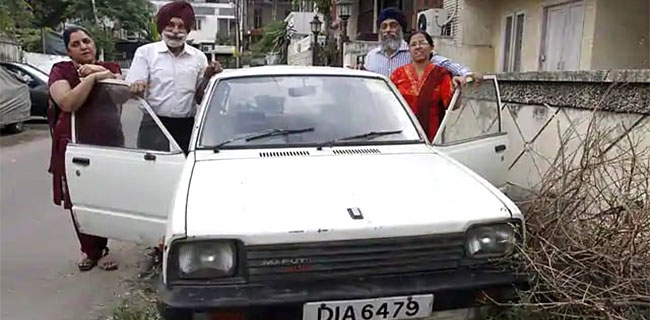
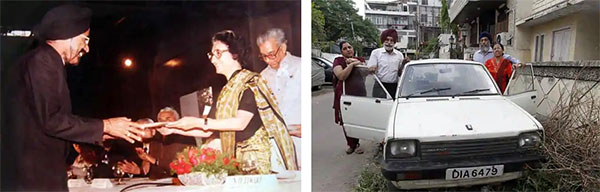
    Yesterday, happened to be the 40th anniversary of one of India’s most loved brands: Maruti. On December 14, 1983, the first batch of the Maruti 800 rolled out with the first car eventually registered as DIA 6479 was handed over by Mrs Indira Gandhi to Mr Harpal Singh of Delhi.


    The key of the first Maruti being handed over; the car before it was restored and displayed at the Maruti Suzuki brand centre adjoining their head office in New Delhi. Photos courtesy Mr KG Verma of Maruti Udyog Limited.


    Rarely has any brand once owned by the government firstly survived this long and secondly maintained its market leadership almost since inception. Rarely has a ‘subsidiary’ company overtaken its parent and become the de facto reason for the parent’s sustained global success. Rarely has a mass market brand, literally catering to millions of customers across every corner of the country, become a benchmark in customer-centricity. Maruti is indeed a rare brand, not only in India, but in any market and a case study for all management schools across the world.


    Legend says that on that eventful day 40 years ago, when asked to say a few words, Mrs Gandhi started with “Yeh ek chhoti si gaadi ki ek lambi kahaani hai…” [This is a long story of a tiny car…] obviously referring to her son Sanjay’s obsession with building a ‘people’s car’ in India, a la the Volkswagen Beetle, Renault 5 and Austin/ BMC Mini. He had started his early efforts sometime in 1975, with a break from 1997 to 1980. His sudden death in the same year spurred on his mother to ensure his dream gets fructified.


    While the numbers, the loyalty, the profitability and the sheer market dominance has done most of the talking for the Maruti brand, the corporate has been telling cagey about its history. And that is the very issue I raise today, as an alumnus and an individual who owes a lot of what I am to the seven rich years I breezed through there in two stints.


    There should have been a Maruti Suzuki museum by now, exhibiting all interesting pieces of history, experimental vehicles, the single-seater racing cars, the concept cars, documents, photographs, blueprints and so on. It should have been the pilgrimage of every Indian motorhead, just like the Autostadt for the Volkswagen group. The results the company posts every year, year after year, are… the results and not the reasons. The reasons should have been showcased and celebrated. Sadly, even if numerous proposals were put up for the museum, the top management thought otherwise.


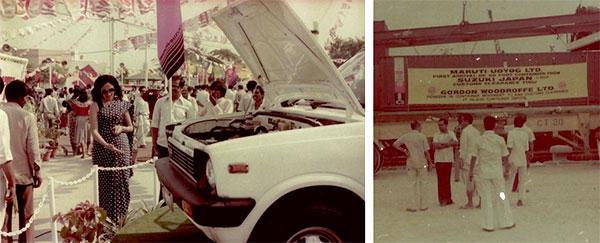
    On display before commercial launch at IITF in November 1982 in Pragati Maidan, New Delhi; arrival of the first lot of plant machinery from Suzuki, Japan in early 1983 at Madras (then Chennai) port. Photos courtesy Mr Rakesh Gupta of Maruti Udyog Limited.


    The company cannot wish its history away, however much the parent wishes to, for its own myopic reasons. ‘Maruti’ is Sanjay Gandhi’s concept and that needs to be recognised. His original office in the Gurugram plant was converted into a ‘Tool Room’. As if that was not disrespectful enough, it was unceremoniously razed to the ground in 2002, in spite of a few protests. Insiders say that in 1983, there were five working prototypes built by Sanjay Gandhi and his team of rag-tag engineers kept in one corner of the plant. There were ‘orders’ from way above to destroy them. Thankfully, one was whisked out and is in a closely guarded private collection. Basically, everything to do with Sanjay Gandhi was to be removed or destroyed.


    This is such a contrast to a brand like VW that does not run away from the fact that Adolf Hitler sponsored the idea and encouraged Dr Ferdinand Porsche to build what is popularly called the Beetle. At the Autostadt in Wolfsburg, there is a bust of Major Ivan Hirst, the British army man who revived VW after the war. There is no shame in admitting to the chequered history any memorable has had. Frankness and candour are virtues for any brand, more so a market leader. Running away from it is sad cowardice.


    A brand like Maruti is much more than Arena and Nexa dealerships, a robust service network and a digitised buying process. It cannot be constricted to mere products, which may come and go depending on their own brand lifecycles. It is a pillar of India’s story of slow but sure evolution from an under-developed to the world’s fastest growing economy. It stands for all that is good and not so good about India.


    The good is the ambition to be truly world-class. The good is to openly accept and incorporate a foreign management system and make it one’s own. The good is to establish the concept of customer satisfaction as the cornerstone of any business. The good is to demonstrate that a ‘sarkari’ [governmental] setup could be efficient, effective and profitable. The good is to help the consumer mature to a level where no brand, however global in repute, can take one for granted. The good is to make mobility affordable to millions of the emerging middle-class.


    The not-so-good is to be introverted about its rich legacy and accept the controversial with the laudable. The not-so-good is to not impress upon its parent that it needs both recognition and representation at the global level. The not-so-good is to be defensive about the quality of its people and see them being rightfully treated as global equals vis-à-vis its Japanese counterparts. The not-so-good is to stay away from causes of national importance that look forward to a stand taken by an icon. The not-so-good is to stonewall progress on issues of safety standards and emission norms using its clout to protect its own turf.


    Guess that is what truly memorable brands are made of… the good and the not-so-good. Being proud of one’s legacy and milestones is a mark of maturity of a market leader. Being the 40th anniversary, one would have expected major celebrations by the brand in the form of special editions, on-ground initiatives and customer advocacy programmes. And of course, if not a brand museum, at least a coffee table collector’s edition containing the huge repository of photographs and documents that the company and its alumni have. Given that nothing of this has happened and the day has just passed by, the onus lies on us alumni to take the initiative and do things to commemorate this milestone of one of India’s most loved brands ever!


  • Zee TV’s Sa Re Ga Ma Pa back with new season, sponsors

    By Our Staff


    Zee TV’s Sa Re Ga Ma Pa returns with new season, and sponors. The show has brought on board a line-up of 18 sponsors for its upcoming season. Some of the sponsors include Maruti Suzuki India Limited: Co-Title, Dabur India Limited: Co-Presenting & Associate Sponsor, Mondelez India Foods Limited: Co-Powered By, Hindustan Unilever Limited: Co-Title & Special Partner, Rajdhani Flour Mills: Special Partner, Procter & Gamble: Special Partner.


    Said Ashish Sehgal, Chief Growth Officer, Advertisement Revenue, Zee: “As the pioneer of music reality shows in India, Zee’s Sa Re Ga Ma Pa has become an iconic brand in itself and has been among the most-watched shows across India in its run of more than two decades. In the new season of Zee TV’s Sa Re Ga Ma Pa, we have added extra layers of uniqueness which stems from our profound expertise in creating content that resonates deeply with our audiences across India. With our hyper-local approach of scouting talents, the show has created a strong connection with our viewers as the top contestants face tough musical challenges to release their own original song on Zee Music Company. This provides the perfect opportunity to seamlessly integrate the brand communications of our sponsors led by our anchor, judges and the contestants. We are extremely delighted with the response from the brands and I whole-heartedly welcome all the 18 sponsors on board – who have continued the trust in our platform, as we embark into the festive season together. With our curated multimedia promotion plan, each sponsor will get phenomenal 360-degree exposure and innovative brand engagement opportunities in every phase of the show to bring out the brand’s core propositions effortlessly and leave a long-lasting impression among our viewers in this vibrant festive season. I am certain that this new season of Sa Re Ga Ma Pa will re-ignite the musical spark among millions of our viewers and generate immense value for our esteemed partners.”


    Added Aparna Bhosle, Business Head, Zee TV: “We are delighted to see an exceptional response from advertisers for our new season of Sa Re Ga Ma Pa. A combination of some remarkable fresh talent coupled with a revamped format has elevated our appeal with both the audience and brands alike. Our team is poised to bring you the OG voices of India who, basis their performance in the season, are already getting opportunities to record their original singles to be released by Zee Music Company. With so much excitement in store every episode, Sa Re Ga Ma Pa remains an unparalleled platform for brands to leave a lasting impact with audiences, given our extensive reach and dedicated viewership.”


    Said Shashank Srivastava , Senior Executive Officer, Marketing & Sales, Maruti Suzuki India Ltd: “This marks the beginning of an interesting partnership between Maruti Suzuki Arena,  India’s  largest automotive channel and the iconic television show – Sa Re Ga Ma Pa. We believe in bringing the joy of mobility to all and creating exciting new experiences. Maruti Suzuki Arena brings this vision to reality with a modern, tech-enabled and youthful experience. Now, “Find Your Match” with our wide array of cars and network. Sa Re Ga Ma Pa shares a similar journey where talent meets opportunity. This collaboration elevates our brand positioning amongst the relevant audience. Hoping, together, we deliver a great season.”


  • Maruti Suzuki appoints AGL for hyperlocal marketing

    By Our Staff


    AdGlobal360 (AGL), MarTech company that’s a member of Hakuhodo International, has won the mandate for managing the PAN-India Hyperlocal Marketing of Maruti Suzuki India Limited (MSIL) – which would span across 3400+ Outlets across the Country.


    Sharing his opinion of this burgeoning partnership, Shashank Srivastava, Sr. Executive Officer, Marketing & Sales, said: “The contribution of hyperlocal marketing to our business is significant and digital leads from this program account for nearly 30% of our car sales. AdGlobal360’s are specialists in this and we are looking at a partnership that will collectively help us grow manifold. We look forward to their expertise in managing a program of this scale and delivering effectively on our expectations.”


    Speaking on the win, Rakesh Yadav, CEO-AdGlobal360, added: “This is more than a win for us, since we were already managing half of Hyperlocal Marketing for MSIL. This is a validation of our expertise and the value we bring to our partners, MSIL and the Dealers. It is our promise that with our continuous investments in understanding Indian Consumers through our Sei-katsu-sha philosophy, we will keep getting better and deliver better outcomes.”


  • Mindshare drives home with media mandate of Maruti Suzuki

    By Our Staff


    Mindshare bags mandate for Maruti Suzuki. The agency emerged victorious after a competitive multi-agency pitch. As a flagship agency from GroupM, Mindshare’s expertise, creativity, and strategic vision will help steer the Maruti Suzuki brand towards a faster lane of growth and success, operating from its Gurgaon office.


    Shashank Srivastava, Senior Executive Officer, Marketing & Sales, Maruti Suzuki India Limited, said: “We are looking forward to this partnership with Mindshare (Group M) as our integrated media agency. We expect to leverage Mindshare’s strengths in the media industry to synergize and optimize our media spends and co-create ground-breaking initiatives that will give us an edge in today’s competitive automotive industry. We look forward to the exciting possibilities that lie ahead.”


    Added Helen McRae, CEO – Mindshare Asia Pacific: “This win by Mindshare in securing the media mandate for Maruti Suzuki is a significant milestone for the advertising industry in India. It highlights the agency’s exceptional capabilities in providing innovative and technology-driven solutions to their clients. We are excited to see the strategic vision and expertise of Mindshare to steer Maruti Suzuki towards sustainable and responsible growth. This partnership is a testament to the agency’s commitment to delivering exceptional results for clients and driving growth for businesses in the region.”


    Prasanth Kumar, CEO – GroupM South Asia, expressed his excitement, said:  “We are thrilled to have a brand like Maruti Suzuki on board with Mindshare India. This win is not only a testament to the agency’s outstanding capabilities and offerings but also demonstrates GroupM’s commitment to delivering exceptional results for clients. It also demonstrates the agency’s ability to drive brands forward and build trust with clients. We look forward to seeing the innovative solutions that Mindshare will develop to drive Maruti Suzuki’s growth story forward.”


  • Happy 30th, little monk!


    By Avik Chattopadhyay

     

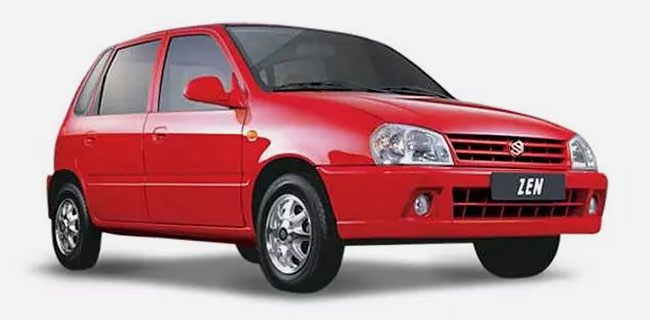
    Avik ChattopadhyayApart from being the International Labour Day, May 1 also happens to be the birthday of personalities like Balraj Sahni, Gordon Greenidge and Joseph Heller. And the Maruti Suzuki Zen.


    It was launched on that date 30 years ago, at the Maurya Sheraton hotel in New Delhi. Unveiled by then Finance Minister Pranab Mukherjee, the Zen went on to become one of India’s most loved brands. Codenamed ‘YE-2’, the little car was a big gamble that both Maruti and Suzuki played in the early 1990s as a new vehicle made for a new ‘liberalised’ India. For those of us who remember, 1991 is when we entered the third phase of our nationhood, the first being Independence in 1947 and the second being the emergency of 1975. This was a new India, wanting to open up to the world and dismantling the red-tapes and licence-controls that defined us in the first four decades of our development.


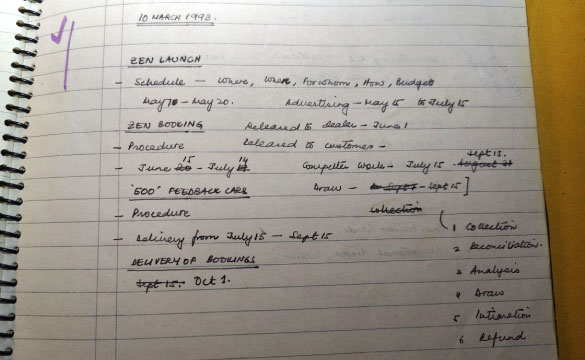
    Page from my notebook with notes on the Zen launch plan, dated 10 March 1993.


    The Zen defied convention. It was almost the same size as the popular Maruti 800 yet was a very different personality, beyond mere mechanical specifications. While it did have an aluminium engine as a novelty and major talking point, it did not rationally justify the price difference it commended over its older sibling. Till then, a product had to be physically larger than the other to command a higher price. The more the metal, the more the price. That was the only way to demonstrate greater value. Not with the Zen. It demonstrated that aspects like design, touch-and-feel, refinement, dynamic performance and comfort were, in combination, a higher value proposition than competition, even from your own family.


    Till 2006, the brand was built as a combination of some clever communication and lots of positive word-of-mouth. In fact, when launched in 1991, it took time to gain public liking. The Indian customer was used to the metal-price equation and the Zen was challenging that. The early adopters did the task of building the initial buzz around its performance and refinement that crucially helped in its gradual adoption and popularity. The initial seven / eight months were an actual struggle. While the network was given lots of “selling tools”, the value proposition was built only when the initial customers swore by it and the automobile journalists praised it sky high. I call this the “Sholay Effect” of hugely successful brands taking time to gain momentum from being almost written off, just like Sholay did.


    Magazine covers on the Zen in May-June 1993 – courtesy Team BHP


    There were four elements in the way the vehicle was launched which together helped build its formidable equity. First was the Suzuki badge on the vehicle. It was the first Maruti product to carry it, subtly stating that this was an ‘international’ product in the Maruti portfolio. There was a move to have the Maruti badge on the vehicle, but that was dropped in favour of the international narrative.


    Second was a term coined to describe its styling – ‘jellybean’. That was the best way to explain its harmonious lines, soft curves and aerodynamic shape, from the front bumper to the rear lights. That term caught the fancy of the media and it was all about jellybean styling after that.


    Third was the ultra-smooth all-aluminium engine which was so refined for its time that many, including Wikipedia, think the name Zen stands for ‘Zero Engine Noise’.


    Which brings us to the fourth element…the name Zen. It was given by me, in a competition within the company. The then director of marketing and sales Kozo Senga liked the name Zen. I explained that the vehicle was exactly as a Zen monk – you have the power within your outer calm that should be used responsibly and only when required. The vehicle looked sedate when parked but was a rocket when revved. Zen it was!


    Rare pic of a YE-2 with the Maruti badge in the plant – taken in Jan 1993


    The initial advertising for the Zen did not work. Though all the still photography was done by the amazing Hardev Singh, the advertising agency and the marketing team went overboard with the positioning statement of “Engineered for Exhilaration”. Nobody could either pronounce it properly or remember the statement. Thankfully, the word-of-mouth had started working its magic so the advertising really did not matter. The brochure however was a very popular item and almost all walk-ins into Maruti showrooms wanted one. It was a distinct square shape and the product in all its glory was the hero. Hardev Singh’s photography did the trick. People basically wanted a test drive and a brochure. Heady times indeed!


    Zen launch brochure of 1993 and one of 1996


    In 1994, the Zen started being exported to various countries, especially those in Europe. Badged as the Suzuki Alto, it was on the streets of London, Paris, Berlin and Rome. This made it the ‘world car’ for Maruti and India and that is what the next communication campaign was all about. This really worked in further building the brand’s appeal as the Indian was now driving exactly what a Londoner or Parisian was.


    By now, the sales numbers and growing popularity allowed the engineers in Gurugram to plan modifications and variants. A diesel Zen was launched in 1998 housing a Peugeot engine. Though it did not do very well, it demonstrated the company’s and brand’s engineering prowess as a trend setter. In 1999 a variant called the Zen Classic was launched but did not go well with the Indian design sensibilities. The reversals did not hold the company back from trying yet new things to cater to the Zen-clan.


    In 2000, Maruti launched the Alto and the WagonR, both hatchbacks catering to the same demographic target segment. In light of newer siblings, the Zen started losing some if its sheen and some crucial intervention was needed from both the product planning and engineering teams. To commemorate the tenth anniversary of the little monk, Maruti Suzuki did possibly its most audacious move of launching a limited edition 2-door Zen, exactly as it was sold in Europe. Out came 300 Zen Carbons in gleaming black and 300 Zen Steels in svelte silver, each vehicle individually numbered and badged. Even though just 600 units, they took the market by storm, being lapped up by both youth into their first jobs as well as retired couples. The brand was back in the reckoning with a very disruptive step. It was a statement that while the Alto and WagonR were selling in Japan, the Zen was being sold in Europe.


    The Zen Carbon and Zen Steel welcome letter – 2003


    Closely following the Zen ‘singles’ as they were called was a major restyling of the vehicle to give it a steroid boost. It did create some flutter primarily due to a high-decibel marketing campaign but the vehicle was on its old tired wheels. It had its best chance when Suzuki was planning its next big global launch in India codenamed the YN-4 in 2005. This vehicle would again disrupt the market in the way it looked and performed, just like the YE-2 had done 12 years ago. This should be the new Zen. That is the only way the legend could be revived in its new avatar. An attempt was made in the top circles to carry the Zen badge forward through this new vehicle. Consensus was otherwise. The new vehicle became the Swift, yet another uber successful brand till today.


    And the Zen? Well, a half-hearted attempt was made by slapping the name on a car that was a completely different personality from the Zen. It was called the Zen Estilo and launched in 2006. Thankfully the customers saw through the feeble game quicker than Maruti Suzuki had anticipated and the product sank without a trace in 2009. Thereby laying to rest one of India’s most loved and aspired for automotive brands, ever.


    Best wishes of the day, little monk.

    Rest easy!


  • Rohit Shetty to host Khatron Ke Khiladi yet again!

    By Our Staff


    Colors TV has announced the new season of reality show Khatron Ke Khiladi.


    Pavithra KR
    Pavithra KR

    Said Pavithra KR, Revenue Head, Colors: “Khatron Ke Khiladi is our flagship property and has become synonymous with action on Indian television. The previous season was the no.1 non-fiction property in the Hindi GEC category, and we are excited about its return. Given the show’s popularity, it serves as a great opportunity for advertisers to engage with and reach out to their audience. We are excited to once again associate with Maruti Suzuki as the presenting sponsor and welcome onboard ‘Charged’ by Thums Up as the powered by sponsor for the show and look forward to a great partnership. The new season will see a powerful ensemble of contestants experiencing the thrill and adventure with the action maestro Rohit Shetty.”


  • Dentsu Impact creates campaign for 2021 Swift

    By Our Staff

    Maruti Suzuki has launched its latest campaign for the 2021 Maruti Suzuki Swift. Conceptualised and executed by Dentsu Impact India, the campaign introduces the latest edition of Maruti Suzuki hatchback. The film has been released on television supported by a longer edit on digital. Additionally, it is backed by elements in print, OOH and social media.

    Said Shashank Srivastava, Executive Director (Marketing & Sales), Maruti Suzuki India Limited: “Pure performance is thrilling. But when it looks good, it’s even more thrilling.  That is what makes the experience truly limitless. This is the idea behind the campaign which introduces the new 2021 Swift. After all, this widely popular hatchback not only highlights its well-known performance legacy but now also brings a world of enhanced style, all thanks to the powerful Next Gen K-Series 1.2L Dual Jet Dual VVT Engine, Sporty cross mesh grille, and stylish dual-tone exteriors. The new Swift is perfectly poised to take the breath away of those who like a wow drive, and also of those who have an eye for great designer looks. Swift has always been a car that has challenged all kinds of limits. With the Limitless Thrill campaign, we look forward to set new benchmarks, and win even more hearts and minds.”

    Added Amit Wadhwa, President, Dentsu Impact: “Swift is synonymous with car enthusiasts who love to push themselves beyond limits. With the new 2021 Swift, Maruti Suzuki has taken the pedestal a notch higher with new looks to match the aspirations of a modern-day customer. As their partners, we are excited to be a part of the Swift’s launch and create newer milestones with them.”

    Said Anupama Ramaswamy, Managing Partner and National Creative Director, Dentsu Impact: “Performance always has a wow factor. And when it meets a world of style, it truly becomes a head turner. Swift has always been a thrill to drive, and now it has taken the experience one step further, by thrilling us with its all-new style. This campaign is a testament to this.”


  • Zee’s ‘Indian Pro Music League’ onboards many sponsors

    By Our Staff


    There is much excitement at Zee Entertainment Enterprises Ltd with the success of its Indian Pro Music League (IPML), airing on Zee TV and Zee5.


    Speaking about the positive response from advertisers, Ashish Sehgal, Chief Growth Officer – Advertisement Revenue, ZEEL said: “The rise of the ‘anytime’ consumer has fuelled the need for creating content that is platform-agnostic and that can be consumed by the audience any time of the day. Our objective has always been to maximize our content presence by being platform agnostic and thereby providing holistic solutions to our advertisers. Our aim of bringing India’s first-ever music league on both, linear and digital platforms, was to amalgamate the enthusiasm generated by a league with the emotion evoking power of music. We are pleased to see the overwhelming response received from our partners and we are confident that the novel concept of the show along with the star-studded line-up will attract audiences across platforms to make the show a resounding success.”


    Among the many sponsors, IPML has:  Maruti-Suzuki and Lifebuoy as Co-Presenting sponsors, Parle G and Whisper as Co-Powered sponsors, Balaji Wafers as Special Partner and Nilkamal Industries’ Nilkamal Mattrezzz, Asian Paints Limited’s Ultima Protek and Life Insurance Corporation (LIC) as Associate Sponsors. Phew!


  • Maruti rolls out ad to celebrate technology

    By Our Staff


    Maruti Suzuki has launched ‘People Technology’, a media campaign to celebrate innovations and technologies that delight its customers. Through this campaign, Maruti Suzuki showcases technologies that have over the years mobilised and empowered millions.

    Said Kenichi Ayukawa, Managing Director & CEO, Maruti Suzuki India Limited: “Behind every technology is a latent customer demand. We have tried to fulfil them in more than several ways. We take pride in democratizing technologies so that they benefit masses and are not limited to a handful. Through our People Technology campaign, we demonstrate our capability to bring new-age and cutting-edge technology to masses.”

  • The Obsession To Be Premium


    By Avik Chattopadhyay


    The other day I was chatting up with a Maruti Suzuki Nexa dealer. Post the expected lament on lack of footfalls and the still elusive operating profit, we got into discussing the basic Nexa model – the purpose, the promise and the delivery. After a lot of soul-searching and head scratching, he finally brought it down to the wooden flooring, fancy furniture and focused lighting as the “premium” experience being offered to a customer vis-à-vis one who walked into a Maruti Suzuki Arena!


    Sounds preposterous? Totally believable!

    Let’s just spend a few more words on this Nexa vis-à-vis Arena case. The two channels of the same Maruti Suzuki brand offer separate products to customers, hence ensuring a minimum level of footfalls in both. I cannot buy an Ignis from an Arena outlet, hence go to a Nexa. Similarly, I cannot pick up a WagonR at a Nexa, hence go to an Arena. It is not that I have a similar product portfolio in both, yet I choose a Nexa over an Arena as the entire customer promise and experience is what I associate with and aspire for.


    There are various ways I can be premium in being a Nexa channel partner.

    In my product pricing. But the Nexa offers the Baleno that is in the same price band as the Swift.

    In my product positioning by addressing a different customer psychographic. But, then, the Ciaz was moved from Arena to Nexa to allow more revenues to the latter.

    In my overall experience. But the service and ownership experience, as per customer feedback and dealer inputs, are the same in Nexa and Arena.


    So, I am fundamentally undifferentiated from my less privileged channel cousin and totally confused in what I am supposed to be in the first place. Yet, I boast that I am “premium”. Not a very sustainable business model, is it?


    Maruti Suzuki’s urge to go premium is not an oddity. It is another demonstration of the common malaise many Indian brands have – the obsession to be premium!


    From aviation to automobiles, food to furniture, healthcare to homes, brands and businesses make proud statements in press releases and communication that they are a premium brand or aim to go premium.


    It is as if being entry-level or mass-market is a protozoan life rid of all respect and pride. It is as if being affordable is an affront to business logic and purpose.


    In the three decades I have spent working for a living, I have come across a handful of seniors and bosses who have also expressed this desire to ‘elevate’ the brand into a premium one. Basically, making the customer pay more money for the same product or solution. And how will that happen? Magical marketing! Spend on symbols of an elevated status like brand ambassadors, sponsorships and imagery to package the same product in a new avatar!


    Does this not work? It does, for some time and for some people. But it is never sustainable as the brand is desperately trying to live on borrowed clothes and makeup.


    Have I been successful in any such attempt? Not once. Have tried a few times but failed miserably. But in the process, have learnt five important lessons which I wish to share.


    Premium vis-à-vis Expensive

    These are two separate concepts. A Harley-Davidson is expensive. It is not premium. It is expensive because the Americans can just not get efficient enough. But in its home market no one buys it for its premium-ness but for its distinct imagery and culture code.


    Mass vis-à-vis Premium

    A Bic ballpen is mass. And people love it because it is so. But a special edition Bic commemorating the Black Lives Matter movement will certainly sell at a premium. Similarly, a Maruti Suzuki Swift is mass. But a 15th anniversary limited edition Swift Sport will be premium. Hence, mass and premium are not mutually exclusive concepts… in reality.


    Premium vis-à-vis VFM

    These are not conflicting at all. In fact, the better a brand is able to demonstrate value-for-money [VFM] to its target customer, the better the premium it will attract. And not extract. I once met Mr R M Dhariwal, the owner of the Manikchand Group, who told me that he bought a Maybach for his daughter on her birthday as believed for the amount of money he wanted to spend, the Maybach offered him best value for money!


    The intangible value of a product or experience, over and above the physical value is what allows a brand to command a premium. And not just demand it.


    Premium vis-à-vis Profit

    These two are not necessary and sufficient conditions to co-exist. There are mass-market brands that make profits that many luxury brands would give both arms for. A premium offering need not make higher profits than an entry-level one. The focussed definition and delivery of its promise is what makes a brand charge a premium.


    Response vis-à-vis Objective

    This is the biggest lesson for me. Being “premium” is a desired consumer response and not a business goal or objective. It is an outcome and not the process. It is the end and not the means. This clarity of brand management happens only when the brand stays true to its intended purpose and promise.


    We experience brands like Bata, Amul, McDonald’s and Chevrolet not because they are positioned as “premium” but because they are true to their brand DNA and carry no pretensions. As customers, we give them their due premiums when we wait for the pack of Amul Taaza milk to arrive at the store, love to see the sparkle in the eyes of our children on getting them a Happy Meal, squeal the hell out of the tyres of a gleaming Corvette or splash about in muddy puddles in the Naughty Boy shoes. Each of these experiences is what truly makes a brand “premium”!


  • Dentsu Impact, Maruti Suzuki launch ‘Move Up’ campaign

    By A Correspondent


    Maruti Suzuki has launched its latest campaign, ‘Move Up’, for its brand – the 2020 Dzire. Conceptualised and executed by Dentsu Impact, the campaign introduces the latest edition of the Dzire car.


    Speaking on the all-new 2020 Dzire, Shashank Srivastava, Executive Director – Marketing & Sales, Maruti Suzuki India said: “With over 55% market share in its segment, Dzire is the preferred sedan of over 20 lakh customers. Building on an overwhelming customer response, the 2020 Dzire offers next generation K-series engine with segment-first idle start-stop technology (ISS), an upgraded premium exterior design, refreshed interiors, and advanced features. As a company, we have believed in bringing technologies that benefit the customers. The 2020 Dzire will help us to continue with our brand promise, to offer products with state-of-the-art designs and advanced technology to delight our customers. The introduction of the advanced K-series Dual Jet, Dual VVT BS6 petrol engine with idle start-stop (ISS) function makes it more desirable, low on emissions with best-in-class fuel efficiency.”


    Added Anupama Ramaswamy, National Creative Director, Dentsu Impact said:  “When it comes to Indian families, moving up never happens alone. Right from our childhood, we have seen our fathers work tirelessly, selflessly and go to any length to make every little wish, every little desire come true. With the ‘Move Up’ campaign, we celebrate this emotion and, also tell all fathers that the 2020 Dzire is by their side to see each and every desire of their loved ones come true.”


    Said Amit Wadhwa, President, Dentsu Impact: “The idea of ‘Moving Up’ together with your family is one that resonates with every Indian. And when it comes to cars – moving up and togetherness is exemplified quite well in a sedan, especially by Dzire, which is the top choice for millions of people. The communication created around the car reflects just that and if I may add… quite beautifully!”