Category: AVIK CHATTOPADHYAY

  • #AAPHEW! | Avik Chattopadhyay: What made Brand AAP click

    By Avik Chattopadhyay

     

    The AAP brand has been very thoughtfully created, nurtured and matured by the party thinktank. I really do not know the names of the thinkers, but I am sure there are quite a few of them, from various walks of life and backgrounds, that ensures its unique personality and positioning before the man and woman on the street.
    And the positioning was summed up in BBC’s update on February 10 evening that said, “India anti-corruption party routs BJP.”


    “Anti-corruption”.
    This is the brand essence of AAP.
    This is their greater purpose…of existing, contesting, winning and administering.
    The party has stood for this purpose with a manic conviction.
    In November 2013, it was demonstrated through a raw, extroverted, abrasive sincerity.
    In January 2015, it has been expressed through a calm, collective and controlled aggression.
    But the missionary zeal… clearly remains, undiluted.


    This purpose brings an automatic emotional connect with all Indians, at every corner.
    And most so, in the capital, where forms and intensities of corruption proliferate and pulverise.


    The values of the brand?


    Candour. Inclusive. Challenging. Young.

    These are the values that tomorrow’s India aspires for, appreciates and aligns with.
    In the disarming candour of a man openly admitting he had made a mistake and requesting for another chance.
    In the inclusiveness of its volunteer forces that gave their all for a just cause.
    In their challenging the conventional central authority of its organisational and financial muscle.
    In the youthful energy in their approach to campaigning and the content that they shared on social media.


    There was a Pepsi to a Coke.
    There came a Mac to a PC.
    There is an AAP to a BJP.


    Both need to co-exist, for in their contrasting ethos and styles of functioning will lie the checks and balances of administration and development. That is the very essence of a thriving democracy. And I am sure proud to be born and live in one that is ours!


    Avik Chattopadhyay is a senior marketing and brand consultant. He now co-runs brand advisory firm Expereal. He has spent over two decades in the automotive industry and was also CEO of Saffron Brands India.


  • Gone with the Crop Stubble!

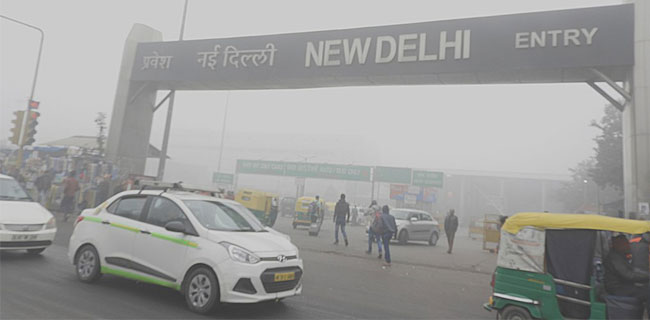
    File pic of New Delhi in 2017… but things haven’t changed much since


    By Avik Chattopadhyay


    The National Capital Region [NCR] has just finished with its annual Festival of Smoke.

    It’s quite unique in the celebration that happens – eyes become moist, throats become parched and the general feeling is simply breathless! A heady mix of road dust, generator fumes, vehicle emissions, construction dust and something called “crop stubble burning”.


    The last one has been in the news of late. The entire NCR seems to be pointing fingers at the farmers in Haryana and Punjab for all the polluted air in their world. “The villain operates out of Patiala” seems the refrain. Okay…so what does really happen? The rice paddy crop is harvested in September-October every year. A large part of Punjab and a little part of Haryana [and UP too] grows lots of rice. The time available between the rice harvesting and the sowing of wheat is just a few weeks. Everything is incredibly rushed. After the harvesters are gone, the rest of the straw and stubble needs to be disposed of. The correct way would be to uproot the straw and mix the balance of the crop stubble with the soil. This needs lots of mechanised equipment and thousands of operators. Both of which are just not there…for reasons unknown. Hence the straw and stubble are burnt…by the hundreds of thousands of acres of land. And all the foul air travels, through the villages of Punjab and Haryana on to the National Capital. In time for the Festival of Smoke. Ably supported by the Festival of Lights.


    This happens every year. With unerring punctuality and impact. Followed by panel debates, political blame-games, an over-active social media, hyperactive activists and interventions like “Odd-even”. Every year. The plot does not change, like most soaps on television.


    This year was no different. The festival was conducted with its usual gusto and garrulousness. The plotters and pundits were the same as last year and the years before that. Little realising that this moment of social anxiety can actually be acted upon and gradually turned around into one of anticipation, planning, implementation and mitigation. One can actually demonstrate positive pro-action to build better bonds with the population [and electorate / consumer base]. How else are enduring and loved brands built, if not through actually walking the talk and connecting with the larger masses on a greater purpose?


    Five key brands came a cropper in the 2019 edition of the festival. They had the opportunity but simply wasted it. In fact, they have emerged weaker than before, though none would have the candour to admit to the same.


    AAP ka Sarkar

    Epitome of total callousness. It seemed as if they were waiting for this calamity to start one more round of ‘collective crying’. They actually spent precious money on billboards that claimed that all the great work they had done in curbing pollution during Diwali was undone by the farmers of Punjab and Haryana! How insensitive can a “common man’s” government be? Instead of wasting money on thousands of billboards basically projecting the CM and merely writing letters to the neighbouring states, the government could have taken lots of ground level interventions, much in advance, within NCR as well as in Punjab and Haryana. At least in the fifth year of their term, knowing very well what the calamity is, the citizen of Delhi could have expected more empathy and maturity!


    Ministry of Environment

    Instead of feigning helplessness at the hands of the states, the ministry could have swung into positive ground action months in advance. They could have monitored the actual use of allocated budgets in purchasing the machines needed to remove the stubble. They could have created teams at ground zero to educate and ensure negligible burning by farmers. They knew that the AAP ki Sarkar would throw their hands up early on and hence grabbed the opportunity to build greater affinity through action. But they too did nothing at all but for releasing official statements expressing concern about the situation!


    Indian agriculture industry

    Corporate India has to understand that if it expects the common man to see it in better light, it has to do better things than just obsess with sales and profits. Being the closest to the problem, the leading tractor makers, seed suppliers and fertilizer companies could have taken up the task of supplying equipment and operators for a start. They could have created the forward linkages of using the straw for end products like construction bricks, biogas and ethanol. Why would I sit calm when my customer and key stakeholder is left helpless with no option to set the fields on fire? Why can I not come together for a greater cause?


    BCCI

    They actually played a T20 game in the haze in Delhi! Preposterous!! In fact, when some people raised the question of whether the game should be moved to a ‘cleaner’ city, the BCCI did not budge. They did not only put the health of 22 players at risk but also that of the thousands of spectators present. Being rich and powerful does not give you the licence to play with the lives of the common man and woman. BCCI could have actually championed the cause of clean air by not holding the match in Delhi. The revenues lost would have paled before the respect earned from the cricket-crazy nation!


    Prayas

    One typically expects the NGOs and activists to maintain the right optics and narratives on such situations. But a leading NGO called Prayas actually went ahead and organised a mini marathon for children, without masks! The flak they received was totally justified. Look at the brighter side… a large part of the NCR knows of them now!


    When times are good the general population is in its comfort bubble and true leadership, resilience and maturity is not tested in people. Moments of reversals and calamity throw up true leaders. This Festival of Smoke just about stubbed out five potential ones!


    Avik Chattopadhyay is a senior marketing and brand strategist based in Gurugram (okay, Gurgaon!). He writes fortnightly on MxMIndia. His views here are personal


  • Reverse Snobbery Works & How!


    By Avik Chattopadhyay


    I have a friend in Paris, the tony, fancy part of Paris. He has a four-bedroom apartment in an ornate late 19th century building. Antique furniture, impressionist paintings, a pair of Mings and a Steinway among other collectibles. And he drives a Smart ForTwo! That’s a 2.6 metre two-seater car costing around Rs.5.0 lakhs that just about manages to hold him, his wife and a couple of shopping bags inside. “That’s all you own?” “Oui. That’s good enough. Easy to park. Easy to use. Easy on the environment. Easy on…” “Okay, okay, get the idea. Making a statement, aren’t you? You could afford an exotic Alfa Romeo but wish to make a certain statement with the Smart.” “Voila! You get it. I stay in the heart of Paris in my own apartment. And I use the Smart!”


    Reverse snobbery.

    That’s what it is. Plain and simple.

    Cocking a snook at the ‘wannabees’ who are desperate to flaunt their BMWs and LVs, paying their EMIs through their noses.

    This is the “rebel” brand. One that questions straight-jacketed conventions and the holy cows. One that challenges the age-old traditions as irrelevant and ostentatious.


    It works. It sure does work.

    And quite a few brands have built their raison d’etre on this very platform of standing up and smirking at the typical symbols of status and exclusivity. I have picked my favourite 5, apart from the Smart, that have proven beyond doubt that reverse snobbery is a viable and sustainable space to occupy, both as a philosophy and as a business proposition.


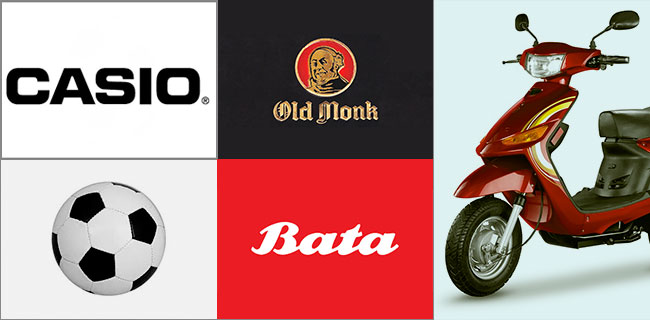
    Casio.

    Specifically the G-shock range that has truly transformed the digital plastic cased and strapped watch into a near icon! It goes off the shelves in no time in any part of the world, appealing across age groups. In any premium watch retailer you will see it displayed alongside far more “premium” brands like Tissot, Armani and cK. It is a rage amongst the gen-Z for its sheer larger than life physical manifestation and built in “cool” features that the premium brands do not offer. Swatch did play the same role very effectively till some time back but its absence from the smartwatch segment has seen it slip in the eyes of the beholder. Titan also missed a beat or two with Fastrack in taking it up the image ladder.


    Old Monk.

    Never could imagine a benign Benedictine padre to be a spirited confidante of millions of homes in India! And also travel across the world bringing both joy and solace to the Indian diaspora. My alma mater has something called OMAXI, the Old Monk Association of XLRI with a ‘chief’ ceremoniously elected and crowned every year! One really committed group I must admit. That glass bottle with the caramel brown liquid has given a beating to some of the biggest global spirits in terms of loyalty, advocacy and also relevance. When your customers release ads on your 60th anniversary you sure know the prayers are on your side!


    Football.

    Yes, the beautiful game came back with a bang with the English Premier League getting into our bloodstream through ESPN a decade and a half back. In a nation obsessed with cricket [still so] and sports like golf and Formula 1 catering to the “elite”, Sir Alex Ferguson came with a sledgehammer and rearranged the living room a wee bit. Football got a bigger footprint beyond its traditional following in Bengal, Kerala, Goa and Punjab. Rich kids went around chilling in Manchester United and Chelsea t-shirts. Then came the wave…La Liga, Bundesliga, Serie A, Champions League and more. It was cool to discuss Mourinho’s follies in the toniest of parties in Delhi and Mumbai. The game of the masses finally saw a fashionable following in the “class”.


    Bata.          

    The good old fuddy-duddy school shoe brand is back with a bang! After decades of meandering around directionless, they have finally hit the purple patch. Excellent product portfolio, much improved product quality and most importantly, a new customer base that sees it cool enough to wear and flaunt. The shopping experience has also been taken a few notches higher with a strong online push. The renewed self-confidence is demonstrated by the introduction of an entry-level fast-fashion brand like FootIn. The brand co-existing with the likes of Hush Puppies, Caterpillar, Scholl and Weinbrenner has actually paid off immensely for its own image makeover.


    The Scooter.

    Its no longer “sissy” to be seen moving around on a scooter anymore. You need not pass off yours as your sister’s before your friends or colleagues. The scooter is cool. Its more responsible. Its more flexible. Its more than a motorcycle. The relaunch of the Chetak by Bajaj tells you that the guys at Akurdi have realised their mistake of vacating this space to competition. The Honda Activa is the largest selling two-wheeler in India. It’s a scooter! The category today offers you a range to choose from based on your personality type – family man = Jupiter, fashionable = Fascino, speed freak = Ntorq, cruiser = Burgman and so on. The scooter looks as aspirational and adorable as any motorcycle. And the fact that it continues to cater to both men and women with consummate ease is what attracts the ‘metrosexual’ to it in droves.


    These are my top 5 picks of brands that thrive on reverse snobbery.

    Just wish the Tata Nano were also on this list.

    Had all the ingredients of being a global icon.

    Alas, that is one big lost opportunity…another story…another day…


  • In the Race for Leadership, should Brands Fuss about the Means or the End?


    By Avik Chattopadhyay


    On August 25, the automobile and business world lost Ferdinand Piech, the erstwhile chairman of the supervisory board of the Volkswagen Group. Credited with creating what Audi is today and the powerhouse that the Volkswagen Group is, Piech was declared the Car Executive of the Century in 1999. A grandson of Ferdinand Porsche, he was both revered and feared by those around him and across the world. His professional career ended on a smoky note when he resigned due to the ‘Dieselgate’ scandal involving Volkswagen and other group brands.


    Though I never had a chance to meet him, I did work in the empire he had created. And interacted with a few senior people in the management board of Volkswagen. I could feel the passion with which Piech led the group every time I visited Autostadt in Wolfsburg.


    My 17 months in that assignment was one of the most tumultuous in my career. A deep-down conflict developed between the brand as a business operation in India and me as entrusted to nurture it. One instance sums up the fundamental friction. In the annual meeting with the global director of marketing and sales, he proudly announced that the group has set the goal of selling 10 million vehicles worldwide, and they will meet the target “come what may”! I found it disturbing as the key driving force of an organisation its size, and asked the director as to why is the goal of not being the most respected and admired automobile brand across the world?


    Why does a brand have to necessarily “win”? Why is winning the means as well as the end?


    In a year of my leaving the brand [frankly, before they could sack me!], the Dieselgate scandal hit the brand and the group. While the details of what exactly is the scandal about can be read up on the internet, the fundamental decision to fit a ‘cheat device’ in a vehicle to lie about emissions was with the sole purpose of selling more vehicles in the key US market. “Come what may.” To sell the 10 million vehicles, the organisation went to great lengths to cheat and hoodwink the regulatory system in one of its key markets, in the hope of not getting caught!


    Did Piech know? Of course, he did. Did he approve? Of course, he would have as the decision making then was uber-centralised. Did he own up? Never.


    For Piech and the entire group management wanted to “win” at any cost.

    Win, and not “lead”.

    To be a winner and not a leader.


    A contemporary of Piech was Fujio Cho, the chairman of Toyota Motor Corporation. Interestingly, they are of the same age.


    There are three instances of Cho’s journey which are imprinted in my mind. In 1991-92, Lexus had taken the US market by storm. Topping all the quality reports and costing significantly lesser than the European rivals like Mercedes-Benz and BMW, the brand had brought its competition to their knees, making them re-think their US strategy, especially BMW’s plan of entry. It seems Cho took the unprecedented decision of cutting back Lexus production so that the other brands also could continue selling and BMW enters the US market. His unique logic was that without competition, Lexus would not be able to benchmark and improve!


    In the mid-1990s, when the automobile world was obsessed with launching more powerful cars and larger SUVs, Cho went the other way and launched the Toyota Prius in 1997. It was to make a statement not only of Toyota’s R&D capabilities in making hybrid vehicles but also the concern for the environment and the generations to come. Environmentally-friendly cars will soon cease to be an option, he remarked, they will be the necessity!


    In the mid-2000s, when the annual data for US sales was released, in a certain year, Toyota was shown as #1 closely followed by Ford. However, Toyota realised that there was actually a calculation error and Cho went to the press to formally announce that Ford was the true #1.


    Cho never built an edifice like Autostadt. He never bothered with creating a vehicle like the Bugatti Veyron which Piech did. Cho had once famously said: “First we build people, then we build cars.”


    Cho clearly wanted Toyota to lead.

    Piech was focused on VW to win.


    Toyota is loved and respected.

    Volkswagen is feared and revered.

    Both are admired and aspired for.

    Toyota leads, always.

    Volkswagen wins, occasionally.

    Toyota fusses about the means.

    Volkswagen bothers about the end.


    In a world of increasing conflict and shortening attention span, we need more brands to lead than just win. For the focus on the means and to be sustainable is far more responsible and relevant than merely hitting temporary number targets. Leading is the means that should typically end in winning. Winning is the mere outcome. And not necessarily the rigour, ethos and credibility with which one operates.


    So, while I still find the VW Karmann Ghia fascinating, as an investment I would go in for the Toyota Corolla Altis with my eyes closed!


    Winning sure is macho, but leading is more meaningful.


  • Is the Auto Expo dying?


    By Avik Chattopadhyay


    Having spent a couple of decades in the automobile industry, the Auto Expo has been one event I have always looked forward to. Since 1993, I have visited every single expo, as a proud member of the automobile fraternity and as an Indian. It is truly one of the few world-class expositions in our country, bringing in the best, brightest and most reputed from across the world. I cannot forget Porsche participating way back in 1993. Or the Hyundai Santro launch. Or that of the Bajaj Pulsar. Can one forget the world waiting with bated breath for the unveiling of the Tata Nano in 2008?


    The narrative today about the Auto Expo actually pains me. It is largely negative, focusing on the automakers who choose not to participate in an edition. People only fussing over the symptoms without a bother on the suggested treatment.


    The ‘motorshow’ as a concept is at the crossroads. The traditional one is a dinosaur, now surviving only as a closed platform for the big bosses of the automakers to satisfy their personal egos, pamper some journos and use it for personal networking. Any consumer event has to fundamentally be clear of what the consumer wants and behaves like.


    Twenty years back, the consumer looked forward to a day out with the latest in automotive design and technology, the show providing that opportunity. Automakers used to plan their big announcements and unveilings accordingly. “Latest” and “first” were buzzwords. The consumer today any way has access to all information and reviews online and does not look forward to spending a day with ‘old’ news. And the automakers have their own product portfolio calendars to follow, choosing to have ‘stand-alone’ moments of limelight. The show has lost the buzzwords. There seems no novelty and flaunt value.


    The organisers of the show in Detroit are close to shutting it down. Paris and Tokyo are holding on to “national pride” and putting up a brave face. Geneva, already small, is scaling down. And Frankfurt this year saw a lively debate on its future. Some small ones have shut shop and nobody misses them. Quite a few automakers have chosen other platforms like CES to ‘connect’ better.


    So, where goes the Auto Expo? Does it deserve to continue or will die a painful death?


    In the midst of all the debate and prophecies on the future of the motor show, the Auto Expo has a once-in-a-lifetime opportunity to take the bull by the horns and create a new paradigm on what the motor show of tomorrow should be. Yes, the Indian automobile industry and its policy body SIAM can actually take up this challenge and become a pioneer.


    So, what will it take to rebuild the relevance of the expo? Five key things:


    First, it’s about mobility and not just about motors.

    Tomorrow’s world will be not about just metal, glass and rubber. It will be not about just the products anymore. The traditional way of positioning the show as having “x” number of launches and unveils will have to give way to “z” number of tech showcases. It will be all about mobility and not simply the motors that form only the core but not the entire ecosystem. This contains multi-modal travel, entertainment, sharing, platooning, lifestyle and all types of ‘phygitial’ customer touchpoints. It will be more about safety, cleanliness, responsibility and sustainability than just speed and torque and number of cylinders. It will be all about greater immersive experiences rather than just the act of clicking selfies with motors and some celebrities.


    More so, the organisers are right now at the mercy of the automakers participating to ensure the show’s ‘success’. Right now, they are wasting time answering journalists about who all has pulled out of the show than invest it in ensuring better qualitative participation. Automakers take the excuse of “not having anything new to display” for not participating. Another favourite excuse of theirs is that the “cost is too high” forgetting that only around 15-20% of their total spend is actually on space rental and services. Getting huge teams of designers and fabricators from the headquarter locations to construct their pavilions does not help their cause one bit.


    Second, needs to expand the scope of participants.

    Logical, is it not, if it is to be about mobility. The participants have to be beyond just the automakers. There have to be technology brands like Microsoft, IBM, Google and Apple. There need to be solution providers like Ola, Uber and Zoomcar. There need to be public transport providers like Delhi Metro, DTC and BEST. There need to be navigation services like Map My India and Garmin. There need to be infotainment providers like Airtel, Jio and Amazon Prime. There need to be social media influencers like Twitter, Facebook and Instagram. The list can just go on and on…as long as I have driven home this point.


    Third, needs to bring in more ‘organisers’.

    Of course, as only SIAM, CII and ACMA do not have the wherewithal to bring in all the big brands mentioned above. Organisations like NASSCOM have to be brought in. Even international bodies like JAMA and ACEA have to be active organisers to ensure the required levels of participation. Ministries of consumer affairs, electronics and technology have to be involved with all support.


    Fourth, it needs to cater to the ‘mobile’ Indian.

    This is a key disruption needed to evolve the show from its current largely-physical manifestation. While the organisers take pride in having close to 600,000 visitors over just six days of the show, it has to cater to ten times that number, right across the country and the world. And this can be done only digitally…when you re-create the Auto Expo as a virtual show on mobile or tablet or laptop screens for those to enjoy who cannot physically visit. No motorshow in the world has done this as yet [though the Tokyo show does have its share of VR]. Being the land of the software-geek, the Auto Expo should certainly take this up and set a new benchmark.


    Fifth, it needs consistent support and funding.

    The show’s scope and scale should not be limited to only what budgets the automakers who participate have. This is India’s showcase to the world. It is larger than life. It needs financial support from the ministries and all allied industries. Only then will the show be able to create relevance that is credible, demonstrable and sustainable.


    In fact, it should not be called “Auto Expo – the motor show” anymore. That is the past. It is the “India Mobility Expo”.

  • A Prize Too Far?


    By Avik Chattopadhyay


    Abhijit Banerjee wins the Nobel. Bezwada Wilson wins the Magsaysay. Satyajit Ray is bestowed with the Irving Thalberg award. Arundhati Roy wins the Man Booker prize.


    All moments that have made the nation proud and also brought certain special and superlative people to the forefront who would have otherwise remained in the inside pages of a newspaper. They were brought to the front page by being associated with certain awards and prizes that are the gold standard in their respective fields…the Nobel in Economics, the Magsaysay for Social Service, the Thalberg for a lifetime contribution to films, the Booker for literature and so on.


    As Indians we have gone into overdrive every time such an achievement happens. I personally have tried my hand at “reflected” glory by having known Siddhartha Mukherjee in my adolescence, Bezwada Wilson as a professional and now Abhijit Banerjee as the elder brother of my business partner! Apart from the fact that I keep good company, I sure take pride in the value of the associations. Of the stature of the prizes and awards. For these are testimonials of their individual prowess at a global level and a recognition of their contribution to the betterment of society at large.


    So, in the middle of all the euphoria of Abhijit-da [co]winning the Nobel for Economics, one simple question came up in my mind. Why could we never have an award or prize of international scale and fame? One that people from every corner of the world would crave for. One that every media publication in the world would write about. One that would make us proud as a nation for not only having produced stalwarts but also recognising ones from all walks of life, all fields of endeavour and all forms of excellence.


    Sadly, we have none.

    There is the Jawaharlal Nehru Award for International Understanding but it has hardly attained that global stature and the last one was anyway given in 2009 [to Angela Merkel]. Tells you about the commitment to continuity by the award givers. And the present government will have none of it as “Nehru” is a bad word nowadays.


    We have lots of film awards, but none at the level of the Palme d’Or.

    We have lots of sports awards, but none at the level of the Laureus.

    We do have a few awards for journalism, but none at the level of the Pulitzer.


    Why is this so? Why could India not create at least one award of global stature that had the world looking forward to the winner being announced every year? We take pride in being the first nation to have attained freedom through peace. So why not one for peace movements? We take pride in being the world’s biggest feature film market. So why not one for non-English movies? We take pride in being one of the world’s oldest civilizations [a few flagbearers will claim us to be the oldest]. So why not for historical studies?


    Four clear reasons why not.


    First. We fear global comparisons.

    As a nation, we are a very apprehensive lot with lots of mental reservations about being evaluated on development parameters at a global level. We would love to vote by the millions for a movie star on the internet and declare him the “most popular” in the world. We have made religion out of a sport that is played by only a handful of nations with just 12 of them being full-time members of the sport’s governing council! We hate being exposed to indices and metrics that put us out in the open against people of other nations. Years of thriving on mediocrity in the garb of development have led us to this unique state of being. The ones that go out and establish themselves on the world map do so purely by themselves, with little support and encouragement from the nation. But once they get global recognitions, they become beacons of all that is great and glorious about India!


    Second. We take comfort in volume and not value.

    We are a very opportunistic nation, taking recourse to facades that help us in specific contexts. So, as a poor nation, why do we need to have international prizes and awards and give away serious prize money to outsiders? Don’t our poor need to be fed? Such precious money cannot be wasted at all. We are all about numbers…population by the millions, roads by thousands of kilometres, schools by hundred-thousands, languages by hundreds, rituals by thousands and so on. We are not really about the qualitative aspects of the population, the roads, the schools and so on. Hence, the sheer value of creating and nurturing an award of international stature does not hold much water.


    Third. Philanthropy is not our thing.

    Imagine a Man Group in India putting their money behind an international award for literature like the Booker. Or someone like the Rockefeller Fund partnering with the family to create the Magsaysay. Or the motion picture association creating an Oscar. That’s not really our cup of tea. Non-government awards and prizes are constituted to pat each other on the back. They are not necessarily for greater good. People of dubious repute or minimal contribution are given the nation’s highest civilian honour! How many like Maulana Abul Kalam Azad have we had who had the guts to refuse the Bharat Ratna as he felt he was not eligible enough? Why could the Ambanis not institute a global award for entrepreneurship? Why could the government not revive the Nehru Award in the right spirit?


    Fourth. Sadly, we still lack self-esteem.

    Collectively, we are still not out of our colonial hangover. We still feel that we are not good enough to be counted at the global scale, apart from a few Guinness Record events being stage-managed. We will crave for associations and recognitions from overseas but not have the ego to go ahead and create one recognition of global repute. Political pontification and posturing do not help. Building tall statues and long bridges are not a sign of self-confidence. Creating gold standards whereon stalwarts from across the world are evaluated surely are.


    After winning the Nobel in 1913, on being called to yet another celebration ceremony in Kolkata, Tagore had politely refused being garlanded. He said that while he did not yet know how the Western world recognised a poet standing on the Eastern coast, back home he was sure to acknowledge the ‘intoxicated euphoria’ of his own people but not consume it!


  • The Festival of Freedom


    By Avik Chattopadhyay


    We are a land of festivals. There is a phrase in Bengali that goes like “12 months, 13 festivals”.  Just the Bengali ones, mind you. If one were to add up all the festivals across all faiths and occasions, we would end up with probably 10 times that. We just love celebrations, of all types, shapes and sizes. And most brands around us surround us with their specific pieces of communication for each festival. Wishing us health, prosperity, happiness and most of all, spending money.


    Two such festivals fall end-January and mid-August.

    The “feeling nationalist” festivals.

    Tomorrow is one.

    When as a nation we shall see a surge of nationalism and being Indian.


    Over the last one week many of us would have bought the national flag.

    Ones for our car dashboards. Ones for pasting on our windows.

    Ones for placing on our work-desks. Ones for our verandahs and rooftops.


    We will wear traditional clothes and gather at parks and community centres to hoist the national flag, sing the national anthem, exchange pleasantries, hear out a few speeches, and then carry a little box of a samosa and a laddu back to our world of WhatsApp, Twitter and Instagram, passing judgments, drawing conclusions, pouring vitriol and acting holier than thou.


    Brands also have this seasonal booth of national pride.

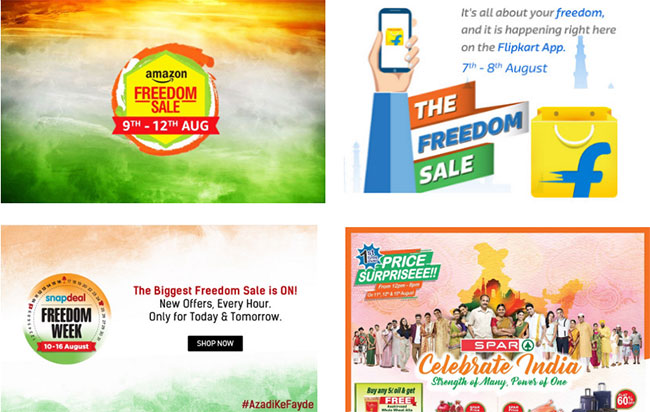
    We actually have multiple “freedom sales” going on.

    Amazon simply calls it the “Freedom Sale”.

    Flipkart says “it’s all about your freedom…”

    Snapdeal promises it is #AzadiKeFayde.

    While Spar encourages you to “Celebrate India. Strength of Many. Power of One.”

    How utterly ridiculous can the entire thing be!?

    First, you misuse the sanctity of an occasion like the Independence Day to push out a commercial activity. And then you wrap cheeky communication around it that makes you think you look smart! What about my freedom does Flipkart really deliver? And what “fayde” [benefits] of freedom does Snapdeal promise me? The Spar one actually goes one step further by saying things that are totally inane. The marketing heads behind these exercises need some brain scanning.


    Then we have lots of brands espousing national pride and the spirit of unity on television. Liberty Shoes. Benetton. Manyavar. Times of India. Lava. And so on. There are some truly ridiculous ones that you can watch on YouTube in collections called “Independence Day Ads” part 1, 2, 3 and so on. I found one by Oyo featuring actors Manoj Bajpayee and Raveena Tandon totally demented. And there is one by PayTM that claims that a cashless India will be corruption free, even if you may give people in kind. The mind boggles. Then there are quite a few that are forcing you to be misty-eyed. But then there are ones by Ambuja and Bajaj that strike the right chord.


    I have three observations to make on all the advertising that is specially prepared for occasions like Independence Day [or even Republic Day].


    Why not for the whole year?

    The values of freedom and being part of a nation cannot be restricted to only 2 weeks of a year, like any other festival. They need to be communicated through the year, in all languages, to reinforce the true meaning of being an Indian, in its inclusiveness, openness, progressiveness and the responsibility that lies in each of us to preserve, nurture and propagate these values. Only then can the message register and resonate. Otherwise we will continue to have one week of cacophony and then slip into yet another festival.


    Why always feel good and not feel disturbed?

    Every piece of communication wants to tug at your heart, create a lump in your throat and leave you misty-eyed. Like a television soap. Freedom entrusts us with the responsibility of not just sharing the good stories but also highlighting the issues of concern. The nation need not be sung to sleep but also woken up rudely with uncomfortable truths staring us in the face. Communication needs to provoke the recipient into thought, debate and positive action. Brands can take up a cause that is close to their heart and wake people up, beyond shares on social media.


    Why not encourage people to give instead of buy?

    Do not make people buy. Instead, teach them to give. To a cause. To specific sections of society. To the underprivileged. To the exploited. To the deserving. We Indians are terrible philanthropists, bordering on being downright inconsiderate and selfish. Let all the e-commerce platforms encourage their members to move beyond the donation boxes in the places of worship onto the streets where millions of our brothers and sisters could benefit from our little contributions.


    Wish brands accord the occasion its due respect and stop treating every national holiday a shopping spree. Also try to resist the temptation of melodrama in your communication as that quite ridicules the sacrifices of our forefathers for the cause. As Netaji had said, “Freedom is not given. It is taken.” Jai Hind!


  • The ICC World Cup of Brands 2019


    By Avik Chattopadhyay


    Cricket is possibly the only thing that binds India on this date. A few others like the National Anthem, the Constitution and the Flag are going through their phases of revisionism and identity-crisis. Bollywood has never been a unifier! If you feel offended, ask the movie-goer in Chennai and Cochin for the right perspective.

    So, when the ICC One-Day Cricket World Cup happens, every brand wants to ride the bandwagon. Either directly as ICC sponsors and partners or with the media vehicle Star Sports. In either case, paying top money for primetime. We were pitted against England as the favourites to win the cup, so eyeballs would be guaranteed till the 12th of July.

    The biggest sponsors of this world cup were Kohli and Dhoni.

    Kohli was on air for Uber, Shyam Steel, Google Duo and Nuvoco Vista.

    MSD for Dream 11, SRMB Steel, Orient LED, MasterCard and Bharat Matrimony.

    Pardon me if I have missed out any more.

    Through the tournament I just hoped some guy with a sense of humour would announce, “This match is brought to you by Nissan, Oppo, Coca-Cola, MRF, Virat Kohli and MS Dhoni.” But that moment never came.

    Instead, India stopped at the semis.

    And so did most of the eyeballs.

    Now that the nation is at relative peace and debating only about ICC rules and New Zealand being short-circuited [almost patronisingly], here is a good time to look at how the brands on the b[r]andwagon fared. My assessment basically from the multitude of products and services that spent oodles of money on television over the 48 matches…into 3 sets of the good, the bad and the ridiculous. They are in no ranking order, hence the alphabetical order.


    The Good 5


    Coca-Cola – adorable communication featuring Paresh Rawal and Ranbeer Kapoor. Simple story, brilliantly told. Though one might argue the open invitation to gulp down gallons of aerated sugar water, the sheer quality of the campaign pardons the sin. “Chaar saal dete hain world cup waale…” should go on to become an iconic quip over time.


    Dream 11 – in the 5 WhatsApp groups I am part of, there were at least a dozen individuals hooked on to this site. Old and middle aged people, mind you, leading otherwise responsible family and corporate lives, indulging in betting! Obviously, the communication, simple and compelling enough, made the most of the occasion. MSD kept well here…no byes and drops.


    Google Search – while the Google Duo communication was quite flaky, the one by Search was bang on! Again, like Dream 11, made the most of the occasion.


    Swiggy – they had started off during the IPL, but the excellent campaign continued through the world cup. The brilliant tie-ins with various cricketing situations through the commentary brought a smile on millions’ faces I am sure. They had quite a few stories on air but my favourite one is the “Batsmen are taking a risk here…” featuring the two old friends ordering quesadilla and lasagne!


    Uber – very tactical and topical but well communicated and that is why it is in my list of the Good 5. Virat played well, on all types of pitches, in all conditions. Disarming and to the point. Only I could not understand playing the ad on the final. But that is for another day and under another subject…


    The Bad 5 – these are brands that spent a lot of money on advertising that did not work, according to me, for various reasons, specific to each.


    Fogg – we know that “Fagg chal raha hai” but why? There was no new story…nothing on the occasion of the world cup. They are smart communicators, hence I was sure disappointed when they spent a lot of money rehashing their IPL messaging. And I just wish we stop playing up the anti-Pakistan bit any more. What is innocent fun at one time can become laboured if stretched beyond relevance.


    Kamla Pasand – this one really shook me up by the scruff of my neck. The dream of 130 crore people! Give me a break please. I expect such talk in Parliament, not for a sport catering to the middle class and above. And all that flag waving? Nope, does not work. Being a ‘pan masala’ does not help things. Do not try to be Amul or Tata Tea. To communicate like them you need to switch businesses.


    MasterCard – okay, so you got a couple new stories to tell, but do you need two celebrities to drive home your message? Also, too many messages I thought, with none clearly registering [in my mind at least, in spite of being a MasterCard user]. Visa did a much better job with a single story being driven home.


    Oppo – you are the sponsor of the Indian team and the ICC and this is all that you do…bring a pretty girl close to a prettier bird?! Did you think that just your name appearing on shirts, grounds and backdrops would do the job? Nope, according to me. That was just your name that millions saw across the cricket playing world, not your brand. Lost a big chance of doing something truly relevant and memorable.


    Pepsi – I know, I know…they were not on television but so what…they did spend a lot of money trying to out-do Coke. They thought they did this super clever “digital” campaign forcing the grand old lady Charulata Patel do weird poses with her fingers. You think that’s swag? Take a good swig!


    The Ridiculous 5 – these are the jewels that I have not figured out why they were there in the first place! I am sure they still do not have the answer themselves.


    Apollo Tyres – just because MRF is there? Huh? You think that is reason enough? “Ambush marketing” in the age of AI and ML!! Sad. Please think up a better reason. It’s a nice, feel-good ad, but totally wasted on this platform. Therefore, money well wasted.


    Bharat Matrimony – we know young immature couples do propose at the cricket ground or in flights taking them to one, but you really want to talk about all this just because MSD is your brand ambassador? This is no way to “maximise” presence and squeeze the last bit from your lemon. Lemon!


    Nissan – you are one of the world’s most respected brands and this is what you do? Make an SUV reverse into the crease, create an android hand and smash a metallic ball? Seriously? Katayama-san would commit hara-kiri on this!


    Orient LED – I was a kid once so let’s get this straight – kids do not study during summer vacations and when a world cup is on…any world cup. Period. So, stop the preaching on whether the LED light flickers or not. That’s when exams come up. Okay?


    Shyam Steel – every time I saw yet one more ad of the most loving couple in the cricketing world, I cried. For I wanted it to end as soon as it started and the only way out was to look away or quickly check WhatsApp messages. Need I say more?


    Avik Chattopadhyay is a senior brand and business strategist based in Gurugram. This is the first in a new series of columns he will write for MxMIndia.

  • Is the world’s oldest brand under threat?


    By Avik Chattopadhyay


    Religions are some of the world’s most enduring ‘brands’. Substantial following, terrific returns on investment, upward stock value, handsome market-share and sustainable reserves. What more could a business want?


    There is a lot that business brands can learn from religions or faiths.

    How to spread and amplify one’s core message.

    How to build a network of loyalists and advocates [called the faithful] who ensure a steady flow of customers [called the followers].

    How to weave mythical and endearing stories around entities and happenings [called mascots and milestones in the corporate world].

    How to establish a set of rituals and a behavioural code and perpetrate the same.

    How to keep the religion or faith relevant and in sync with the emerging and young generation.

    How to ensure it is financially self-sustaining through regular and large infusions [called sponsors in the corporate world].

    How to put in a smooth crowd-funding process that ensures the entire operation is co-owned [the corporates call this shareholding].

    How to ensure the same level of fervour and following in all types of situations and circumstances [the buss word here is sustainability].


    Countries are born out of religion.

    People are identified by religion.

    They are also divided by religion.

    Economies are built on religion.

    And also destroyed by religion.

    Such is the power of this brand!


    Hinduism is the world’s oldest surviving religion or faith and, therefore, the oldest operational brand!


    While some may counter that what we call Hinduism came about only around 500 AD and all before that was either Vedic or Puranic, I shall not get bogged down by such trivia and insist that the faith has certainly evolved over the years, but at the core, what was practised as Vedic is now Hindu.


    And the world’s oldest brand is right now under threat!


    This is not the first time that the faith has faced such a situation. It possibly happened for the first time with the increasing popularity of Buddhism. Then with the onset of Islam in India. Then again with the mass adoption of Christianity especially under British rule. Every time, the religion came out reformed, refreshed and therefore stronger to last a few more centuries in peaceful coexistence with all other faiths around itself.


    Very much like any popular brand with a massive footprint and following when competition comes in, either niche and disruptive or equally large and with monetary muscle to challenge the leader.


    Buddhism was competition that was born from within led by a ‘rebel’ wanted to set up a new ‘organisation’ to cater to a certain population segment that was thoroughly neglected by the leader. The entry of Islam was unique in the fact that certain people following another faith wanted to benefit from the same life of comfort and prosperity that was India. They came in small numbers and gradually grew in numbers over four centuries to finally counter Hinduism and almost ‘relegate’ it to a secondary position in northern India. Christianity came in through various missionaries over almost 200 years till the various European East India companies finally anchored on Indian shores and made the new faith replace Islam as the ‘ruling’ faith pan India.


    In each of the previous occasions, Hinduism went through intense introspection and concentrated revamp of the social structure be it during the Gupta rule, the Bhakti movement or the neo-Vedantic era.


    On each occasion, stalwarts rose up from various parts of this vast land to lead the revision.

    The Gupta rule saw the likes of Kalidasa, Aryabhata and the foundation of Nalanda.

    The Bhakti movement saw the likes of Basava, Kabir, Nanak, Tulsidas, Tukaram, Mirabai, Jayadev and Chaitanya.

    The neo-Vedantic era, closest to our current existence, saw the rise of the likes of Ram Mohun Roy, Savitri Phule and Vivekananda.

    The leadership was crucial for the revival. And it came from all aspects and functions of life…literature, art, social reform, science, spiritual thought and even royalty.


    So, like any enduring brand, Hinduism made itself more relevant to the emerging population, reached out to dissatisfied sections of society, restructured itself by ridding itself of regressive dogmas, started a fresh narrative of collective co-existence and emancipation and most importantly, embracing fringe, niche and micro-local faiths into its fold. Buddha became one of the Dasha Avatars when ‘spiritual’ peace was brokered with Buddhism and almost embraced [along with Jainism] both rebels under the larger umbrella of a faith that is free and flexible. Mergers and acquisitions, as a business strategist would say.


    Over the last five-odd years, the wold’s oldest enduring brand seems to have raised an ugly head of intolerance and extroverted assertion. As if some new-found ‘freedom’ has given the followers of the faith the power and entitlement to ride roughshod over all else in the tearing hurry to establish ‘supremacy’ and extract ‘submission’. Like the unleashing of some “revenge” against the non-believers…something one would typically experience in nation-states that propound a specific faith rather than a heterogeneous democracy with secularism as a constitutional right and duty.


    Almost when the market leader gets into a raucous and rowdy mood in a market.

    And is virtually combative and short-sighted.


    This moment of threat in the brand’s lifecycle is very different from the previous occasions. And this difference is what makes the threat more potent and the religion more fundamentally fragile.


    Four specific reasons to drive my hypothesis.

    Forgetting the brand idea and purpose

    The core brand idea, the brand’s values, the brand’s key promise and the delivery are totally forgotten or deliberately debunked for personal gains. Hinduism is not only the world’s oldest brand but also its most free and harmonious faith. To quote from Wikipedia, “Hinduism includes a diversity of ideas on spirituality and traditions, but has no ecclesiastical order, no unquestionable religious authorities, no governing body, no prophet(s) nor any binding holy book; Hindus can choose to be polytheistic, pantheistic, panentheistic, pandeistic, henotheistic, monotheistic, monistic, agnostic, atheistic or humanist. Ideas about all the major issues of faith and lifestyle including vegetarianism, nonviolence, belief in rebirth, even caste, are subjects of debate, not dogma.”


    Misrepresenting key symbols and facts

    This is a breakdown of the basic brand architecture within an organisation when facts are either twisted or fabricated while key symbols are misused. It’s almost like using the brand logo in a context and application far removed from its intended purpose. Concepts like “Ram” and “Saffron” have been usurped for wrong narratives and optics. The core concept of Ram is of unbiased good governance. The core concept of the Saffron colour is of abstinence and sacrifice. Continued misuse and misrepresentation of such core symbols will lead to irreparable destruction of the brand idea and purpose. Something that every organisation that aspires for sustainable business is obsessed with and therefore cautious about.


    Lack of quality leadership

    This time there is neither an external threat nor an internal rebellion. The situation is unique in its lack of quality leadership that could steer the followers away from fanaticism. A bit like blind men feeling an elephant and describing the ‘cause’. The leadership is inept and uneducated in the basic tenets of the faith, wanting to use the faith as a tool for political and economic power rather than an ensuring social superstructure. Incompetent and a morally corrupt leadership would drive the wrong narrative amongst the foot soldiers, making them act counterproductive to the actual health and relevance of the brand. We need the Jayadevs, Mirabais and Phules most in the faith to give it much needed stewardship and wrest control of the ship from the ‘pretenders’.


    Trying to live some other faith’s life

    This is any brand manager’s nightmare…when those in ‘charge’ of the brand think they actually “own” it rather than the man or woman on the street. And therein lies the faultline. The obsession of living someone else’s life rather than ones own, as determined by the millions of faithful and followers, is what makes a brand really susceptible to constant attacks and gradual erosion. Right now Hinduism is trying to behave like a few other faiths, which I shall not name, that thrive on principles of exclusion, forced conversion and persecution for survival.


    From the corporate world, I shall take three specific examples of brands with mammoth mass appeal, adoption and advocacy across boundaries that wavered on these fundamentals and reached their points of implosion. At their pinnacles of success and ubiquity, nobody ever dared talk about their vulnerabilities. One folded up. The second is in a new avatar. The third is at an existential crossroad.


    The first is Kodak. The ones above 40 years of age all know of it. The millennials have the faintest of ideas, unless you are in business school and the Kodak case study is part of your curriculum. Amazing childhood memories. And that’s it. For the guys at Kodak got caught in the ‘ritual’ of loading photographic films into cameras. The leadership thought their business purpose was making the best film. The leadership failed to stick to the fundamental purpose of ‘preserving memories’, whatever the medium or method. The film roll was the symbol of cutting-edge technology. The obsession was with the Japanese and Germans.


    The second is Nokia. Again the darling of the above 40s. The millennials and further younger have no legacy to swoon over. Can we oldies forget the cover of Forbes November 2007 issue with the words “Can anyone catch the cell-phone king?”. Well, many did. Lots and lots did. And the king is now a pawn at the best on the chessboard. The leadership here was arrogant beyond description. And they thought they had all the answers to the world of tomorrow. They were obsessed with the hardware and the quality of the buttons. The youngster wanted a touchscreen with something called ‘applications’. The core purpose of “connecting people” was totally forgotten in the business rituals of the here and now. The piece of hardware was merely a “phone” and not a device that empowers the user with content and creativity. Again the obsession with the status quo just like in Kodak, with no one in the leadership to envision and reform. In the new avatar under HMD global, the going is sure tough. For, to the young Indian consumer, you are “my dad’s childhood phone”!


    The third is Facebook. In serious trouble as a very concept. Its core purpose has lost its way ‘into the dreary desert sand of dead habit’ [to quote from Tagore]. The founder is going through huge existential crisis as he chose to deliberately twist an open social platform into a tool of commerce, in your face, shunning all the values that you once stood for. Facebook is a marketing tool now. Nothing more. And that is what tomorrow’s generation is not interested in. it is caught between the powerful and the empowered. The former wishes to influence minds. The latter minds all doctored influencing. Zuckerberg needs to decide the future of his creation. To me, drag it entirely into becoming a marketing tool while starting on a fresh social platform, from scratch, with the same spirit of openness and enquiry as he had set up the first.


    As for Hinduism, it is more a way of life than merely a religion.


    And it needs to come out of its current state of self-inflicted vulnerability through one more round of review, refreshment and revival. The world’s oldest brand needs to teach a lesson or two to today’s world of start-ups and unicorns on how to remain relevant and sustainable for generations to come!


    Avik Chattopadhyay is a senior brand strategist and advisor. His views here are personal

  • Has the Cyrus saga dented Brand Tata?


    Has Brand Tata been adversely impacted or tarnished because of the Cyrus Mistry ouster? Even as all may not have always been very well at the group, it has been India Inc’s most trusted business group over the years. Will a possible backlash from the Cyrus Mistry camp lead to a further devaluation of Brand Tata? We posed this question to a few brand gurus for their views:


    Harish Bijoor

    CEO, Harish Bijoor Consults

    The brand Tata has a rather deep equity and a change in the Chairman or a change of a Director does not hurt the image of Brand Tata as much fundamentally because it is all about the fact that the equity of brand Tata. It’s a Rs 100bn+ company and is in operations in 100+ countries and in the corporate world these kind of things are accepted. People get excited about it and then they forget. It will be seen as a corporate activity.
     

    Trust is a macro issue and trust happens over 100 of years and decades. Trust happens with your experience with the brand. Consumers statically interact with brands and not necessarily with corporate brands. So the Tata brand has got a front-ended facet which is far and wide. When you pick up a Titan watch you are interacting with the Tata brand, when you pick up Tata Coffee packet or Tata Tea packet you are interacting with the brand, never mind what happens behind. If you take the corollary of Kingfisher brand, people have asked me if the brand Kingfisher – the beer is affected because of Vijay Mallya and everything that happened I say, not at all. Anybody who is interacting with Brand Kingfisher and drinking the beer will continue to do so with a great degree of gusto. Tata is a consumer company by and large, whether it is a Tata truck, Tata bus, Tata car or Tata coffee, people are touched by these brands on a continuous basis and these brands are the ones that evoke trust. I really do believe that this will be seen as a corporate hiccup rather than a corporate turmoil.


    Avik Chattopadhyay

    Co-founder, Expereal

    The Tata brand has been a benchmark for business propriety, professionalism and patience. But it seems the old guard got rattled by Cyrus’ plans of restructuring the organisation. His direct, no-nonsense style questioned a lot of deadwood, emotional baggage and personal ego-trips. The group went through a same phase of restructuring when RNT had taken over around 25 years back, but nobody objected then and obediently went through the slash and chop. Guess an ‘outsider’ did not help matters. And this episode does not help the Tata brand either. Bombay House is back to incandescent lightbulbs from LEDs. And its corridors shall be a bit darker now!


    Alpana Parida

    Managing Director, DY Works

    There is widespread consternation about this move. The belief- right or wrong – is with the establishment as correcting  a trajectory that was at odds with its value system. The true equity of the brand has not been so much its size or success- which apart from TCS and JLR – seems to be in question. The real reason for the Tata equity has rested on its value system. Both as a corporate citizen and as an employer.

     

    Tata has been the tall face of Indian global corporate ambitions and a move such as this has the country taking sides.
    Amrita Chowdhury

    President, DY Works​

    Clearly this is a dramatic move for a heritage- and values-driven firm. We have seen such high profile ousters in companies like HP or even Apple, driven from a divergence in the beliefs of the CEO/Chairman and the Board.
     

    When we think of Tata Group what remains in our minds is its brand value. Their challenges in innovation or quality or profitability are systemic in nature. Recalling Lou Gerstner’s stories on the remaking of IBM, such transitions can be brutal. Or it could be steered over a long period of time. What is the right strategy for Tata Group in an Indian and Global context remains to be seen.


  • Is Brand Indigo still ‘6E’?


    By Avik Chattopadhyay


    Avik Chattopadhyay

    What happened with the Indigo passenger is the symptom of a disease that lies deep down. Just like an internal infection manifests itself as a bad cough or a painful boil. That disease is an outcome of serious neglect and denial…like most diseases. In this case, it is the denial of operating in the service industry, wherein each employee has to have patience, empathy and politeness ingrained into the blood flow through training and mentorship. Obviously, all this is lacking in the Indigo training and resource development system. They just teach processes and nothing more. The “ladies and gentlemen, boys and girls” is mere lip service and does not come out of any deep down customer intimacy.


    While this one incident will make Indigo the brunt of lots of WhatsApp jokes and memes for some time, till the next such blunder by any airline, the management should see this as a clear warning of how they train, prepare and nurture their employees. Personally, I prefer Air India any day…they are polite, understanding and definitely far more patient with all those that fly the airline.


    Brand Indigo is definitely negatively impacted by this incident. The once poster boy of the industry has been losing its sheen over the last couple of years while competition has been upping its service levels and operational efficiency.


    For a service business, the brand is built through every point of customer interface and experience. The once “wow” factors that defined the Indigo brand as a leader are now tablestakes. The innovation has stopped, the flight delays have started, the prices are no longer value and the menu remains the same. How boring is that!!??


    The advertising that once was a reinforcement of on ground brand experiences is now just gimmicky…playing with words. This incident is symptomatic of all that ails the brand now. It is an overt expression of the internal stresses and anxiety. These internal factors do seep into the psyche of all employees. This employee just gave vent to the tensions within the system.


    As my brand guru Wally Olins used to repeat, the brand is a promise of an experience delivered consistently over time. Once that chain breaks, one needs to start afresh…repairs typically are not known to work. More than the incident, Indigo’s reaction, response and redressal system, or lack of it, exposes the disease within.


    Avik Chattopadhyay, co-founder of brand strategy firm Expereal, was until a couple of years back marketing head at Volkswagen India. He has also been India CEO of Saffron Brand Consultants. Hecan be reached at avik@exper.in. The views expressed here are his own


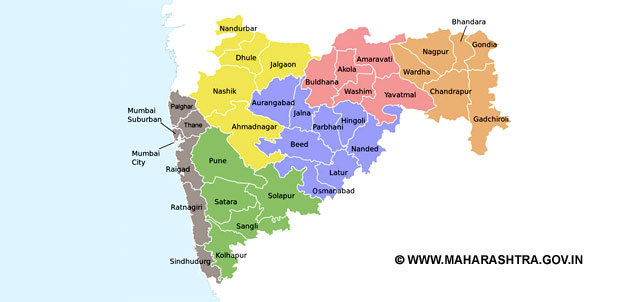
  • 4 must-dos to revive Brand Maharashtra


    By Avik Chattopadhyay


    To me, the ‘Brand Maharashtra’ needs to be revived doing four specific things.


    1. Maharashtra as a melting pot: Building an atmosphere of ‘inclusiveness’ is the first step. The state still needs to be the place where dreams are fulfilled and lives are made for an Indian from any part of the country. This has to be the core ethos of the ‘Marathi Manoos’, one who welcomes all with industriousness to his/ her home to build a prosperous Maharashtra


    2. Maharashtra as a Bridge: The state has few pockets of prosperity and development and the contrasts between the ‘haves’ and ‘have-nots’ are too wide and stark which need to be reduced consciously by building more pockets of development


    3. Maharashtra as a Technology Hotspot: Both in manufacturing and agriculture,  these two key economic activities need to be both harnessed as well as connected using technology. This needs to be both communicated as well as implemented at the ground level.


    4. Maharashtra as One Flag: This is the last but possibly most significant thing to be done, as a rallying point for all those who live, add to and take from the state. A communication pivot and an identity that connects with all – beyond religion, colour, caste and place of origin.


    Avik Chattopadhyay is a leading marketing and brand consultant. He was engaged in a rebranding exercise of West Bengal. This article first appeared in the ‘dna of brands’ section of dna.