Category: PRODUCTS

  • Big brands hire rival captains to forge ahead

    By Rahul Sachitanand & Gauri Kamath


    In late August, when Aventis Pharma, the Indian subsidiary of Europe’s largest drugmaker Sanofi, announced the acquisition of Indian firm Universal Medicare’s branded nutraceuticals business, Mr Ranga Iyer joined the celebration.


    Mr Iyer, a former MD of US drugmaker Wyeth in India, was the man Aventis had turned to 18 months ago to help bulk up its presence in the Indian healthcare market. He had then just stepped down from Wyeth after its global merger with world number one Pfizer. Eschewing other job offers, Mr Iyer turned advisor to CEOs of pharmaceutical companies on strategy, business development, mergers and acquisitions. Helping Aventis scout around for potential acquisitions was one of those mandates.


    Mr Iyer is not the only head honcho-turned-consultant advising companies that were once rivals. Across India Inc, companies are turning to former business heads of competing organisations for advice and handholding in product launches, entry strategies, acquisitions and new projects. Mr Sunil Alagh, Mr Shripad Nadkarni, Mr Narendra Ambwani and Mr Nabankar ‘Nobby’ Gupta are some of yesteryear’s hotshots who have now become backroom strategists.


    When GlaxoSmithKline Consumer Healthcare (GSKCH) decided to extend the Horlicks brand into the fragmented 10,000-crore biscuits market two years ago, it sought help from one of the most accomplished names in the industry.


    It leaned on the expertise of Mr Sunil Alagh, a former managing director of Britannia Industries, who had built the Bangalore-based biscuit-maker’s brand during his 29-year stint, launching products such as Tiger and foraying into allied areas such as dairy products. GSKCH wanted Mr Alagh to help recreate some of that magic with its own fledgling brand. The strategy appears to have worked. In the near three years Mr Alagh has worked with the company, Horlicks has grown into an over Rs 100-crore brand and launched at least a dozen variants to expand its market share in this competitive market.


    Mr Alagh’s inputs were critical for GSKCH to gain a foothold in a market in which multinationals such as Cadbury Kraft are gaining ground and established players such as Britannia and Parle are fighting to retain their shares. After his bitter parting with Britannia in 2003, this may be a sweet comeback for Mr Alagh, but for executives at GSKCH, it’s also a short-cut to the success of its biscuits business. GSKCH declined to comment.


    Mr Shripad Nadkarni is a former marketing whiz of Coca Cola, who was responsible for the thanda matlab Coca Cola ad slogan. He’s also credited with growing Thums Up’s lead in the cola segment and was given responsibility of leading the advertising for the beverage-maker’s core brands across rural China, Nepal, Bangladesh and Sri Lanka, besides India.


    Now, Mr Nadkarni is using his marketing skills at his boutique consulting firm, Market Gate, that has Coke’s archrival PepsiCo and other beverages firms like Tata Global Beverages listed as clients. He calls his services “consumer informed business strategy” and says his expertise is centred on business turnarounds and expanding footprints.


    Those looking for expert insights on consumer medical products are likely to reach out to Mr Narendra Ambwani, a former India MD at Johnson & Johnson (J&J), the maker of Band Aid and Johnson’s Baby Powder. “I have frequently been contacted by other companies in this field since I retired,” says Mr Ambwani. “They want my expertise in branding and marketing their products and also want to leverage my expertise in operations across South and South-East Asia.” Mr Ambwani has used his consumer goods marketing and distribution skills with the likes of Modi Naturals and Godrej Consumer Products.


    Mr Nobby Gupta is best known for his skills acquired as the marketing head for consumer durables marketers such as Philips and Videocon. Now, he is leveraging those skills to consult other companies in the white goods space. He is currently advising, among others, one of the world’s largest electronic retailers on their India entry. “Confidentiality is paramount,” says Mr Gupta, whose last corporate role was as president of apparel-maker Raymond’s. “For me, the biggest growth potential exists among mid-market companies, which are open to ideas and have strong growth ambitions.”


    Source:The Economic Times

    Copyright © 2011, Bennett, Coleman & Co. Ltd. All Rights Reserved
  • As the $ rises, pay more for FMCGs & white goods

    By A Correspondent


    The falling rupee is raising the heckles for consumers already grappling with rising food prices. Over the last few weeks several fast moving consumer goods companies and white goods makers have increased prices, citing the depreciating rupee. And, those left behind are also bracing for a hike.


    If you haven’t noticed it yet, telecom handset makers such as BlackBerry and HTC have already jacked up prices by around 5%. According to retailers, Nokia has also raised the prices by the same amount, but the company declined to comment. Godrej, LG Electronics and Whirlpool have increased prices by around 8%. Samsung is planning to raise smartphone prices by 3-5%, but when it comes to white goods, the Korean giants have already opted for a 2-5% increase for refrigerators, washing machines and microwave ovens. Godrej Consumer Products, Dabur, Panasonic will follow suit, company executives said.


    While demand is not rising significantly, most companies say they can no longer absorb the lower margins on account of higher commodity prices. Although metal prices have declined internationally in recent weeks, the falling rupee has eroded the gains. Since the beginning of August, when the rupee was a little short of the 45-mark against the dollar, the Indian currency fell to a low of 52.73, a decline of nearly 18%. On Monday, the rupee closed 51.42, but even this is 15% lower than the level seen four months ago.


    Source: The Economic Times

    Copyright © 2011, Bennett, Coleman & Co. Ltd. All Rights Reserved

  • Middle India market for FMCGs will exceed US $ 20 bn by 2018 : Nielsen

    By Ratna Bhushan


    The FMCG market of about 400 smaller Indian towns with populations of 1 – 10 lakh, is expected to surpass US $ 20 billion by 2018 and 80 billion US $ by 2026, a new study by insights and analytics firm Nielsen said.


    Currently, the 400 smaller towns represent approximately US $ 6 billion.”Although big Indian metros remain the staple for FMCG marketers and rural India is proving to be critical for volumes in the long run, the next wave of the Indian urban demand revolution may be found in these 400 smaller towns with a population of 1 – 10 lakh,” said Ranjeet Laungani, Executive Director, Nielsen. “It’s time for marketers to take notice”, he added.


    Nielsen’s study shows that out of the total US $ 28 billion in FMCG sales last year, products worth about US $ 6 Billion were consumed in these smaller towns. This number makes up more than 20% of overall FMCG sales, and 30% of the urban FMCG sales. Since 2002, the FMCG sector grew 3.5 times in these smaller towns of 1-10 lakh population, compared to 3.2 times at the all-India level.


    “The demand revolution has percolated down to middle India and these towns will behave like the metros of tomorrow,” said Laungani. “Middle India leads the pack across urban and rural segments for FMCG value growth rates.


    Out of 81 FMCG categories tracked by Nielsen, 49 product categories across personal care, over-the-counter drugs, household care, and food outgrew the all-India rate. Over 30 categories saw growth rates faster than 1.15 times the all-India rate. FMCG companies which anticipated this kind of growth and invested in these areas a few years ago, are likely seeing a positive return on their efforts,” says Laungani.


    Source:The Economic Times

    Copyright © 2011, Bennett, Coleman & Co. Ltd. All Rights Reserved

  • Online artifacts store makes good money

    By Amit Kumar


    Pallavi Singh Keshri believes that people should give wing to their dreams. Little wonder then that she has named her labour of love Eyass, which translates to falconry, wherein the young ones of a falcon are taken from the nest for training. There is another reason she chose the name – falconry is a near extinct art form in the Middle East, and art is what Eyass is all about.


    A two-year-old online store, Eyass showcases craftwork from all over the world. All the pieces are either hand-crafted, unique or endangered, and eco-friendly. This effort has enabled the creation of a platform, which connects artisans directly with the consumers, bypassing middlemen and margins.


    The road to entrepreneurship has been a circuitous one, but Ms Keshri was sure she would have her own business some day. After graduating from Delhi University in 1996, she picked up a post graduate diploma in marketing and joined a media house. Subsequently, she worked for Naukri.com for about two-and-a-half years. Then, in 2006, Ms Keshri quit her job as marketing manager at Dale Carnegie Training in Mumbai to pursue a one-year MBA degree in general management and international business. She worked in Dubai for a year and it was on her return to India in December 2008 that Keshri felt ready to start her own venture. “The time was right. I had gained enough experience in the field, had made the right contacts, and shored up adequate savings to start on my own,” says the 36-year-old.


    Over the next year, she worked on the idea, got the legal documents needed for the venture (export-import licence) and developed the website design. Finally, in December 2009, the company was launched with a seed capital of Rs 4.5 lakh, which mainly covered the expense for the website and inventory. In the initial months, Ms Keshri hired people on a freelance/part-time basis, her residence in Delhi serving as office to save on expenses.


    Around this time, Ms Keshri also realised that she had to narrow down her business focus if she wanted to succeed in the sector, while remaining true to the concept of direct marketing. “The point of starting Eyaas was to ensure that we get to work directly with artistes and craftsmen. I realised that if we tried expanding too soon, I would have had to compromise on that aspect, which I wasn’t comfortable with,” says Ms Keshri. Today, Eyaas works with many partners, including All India Artisans and Craftworkers Welfare Association, an African associate and a Cambodian one. The repertoire includes toys, home accessories, pottery, stationery and jewellery.


    Eyaas has raked in revenue of about Rs 3.5 lakh in the past year and is expected to breakeven in the next six months. The venture currently employs four people, including Ms Keshri. Although she hasn’t been able to pay herself a salary yet, she hopes that this will be rectified in the coming year. Meanwhile, she has managed to keep herself going financially by helping aspiring candidates prepare for GMAT exams in various institutes. However, she is sure that Eyaas is destined to soar.Future plans? “We need to work on reaching out a little more to the artistes in south India,” she says.

  • Micromax strengthens its core team in India

    By A Correspondent


    Micromax, the leading Indian mobile brand, in its endeavour to further firm up its leadership position in the market, on Tuesday announced the appointment of key positions in its management team in India.

    Deepak Mehrotra, joining as the new Micromax CEO, will now be at the helm of affairs. His last assignment was in Bharti Airtel as the operations directors- mobility business.

    The brand is already a key player in the feature phone segment and is now looking to capture the smartphone market share as well. The focus will now be on two separate divisions: the ‘feature phone division’ to be led by Khaja Muzaffarullah and the ‘smartphone division’ to be headed by Ajay Sharma.

    Commenting on the development, Rahul Sharma, Executive Director, Micromax said: “We are a brand that’s admired for challenging the conventional. The new team brings with them a wealth of experience by virtue of their long-standing association and in-depth understanding of the overall mobility market globally.”

    Considering the leap Micromax has taken in the mobile ecosystem in India and globally, the appointments are a testimony to a great future in coming times as well. Deepak Mehrotra, CEO, Micromax Informatics Ltd said, “These are exciting times, not only for the brand, but for the industry as a whole. We are witnessing technology advancements every day and that further excites us at Micromax. The Indian mobile industry is growing at a rate of 12 percent and we would like to capture this opportunity and drive the next phase of growth for the brand. We would further leverage brand’s success in this high potential Indian market and build new capabilities.”

    In the next two years, as India gears up become the largest mobile market, Micromax aims to double its reach as well and strengthen its distribution network. Leading this vision will be Khaja Muzaffarullah as the Head of sales for feature phone division. Mr Muzaffarullah, was earlier with Sony Ericsson.

    Commenting on his new role, Mr Muzaffarullah said, “The channels partners are a key to our business model and form the backbone of our strong presence in the country. We would be strengthening our distribution across the country and work towards creating a robust network that brings us closer to the customer.

    Micromax, having already established its leadership in the feature phone market in India, now aims to build a strong portfolio of smartphones for the discerning Indian consumers.


    Commenting about the potential of smartphones, Ajay Sharma, who will be leading the smartphones division, said, “Micromax would aspire to a 10 percent of the market share at the earliest.”

    Micromax, is the largest Indian mobile handset company, in terms of units shipped during the quarter ended March 31, 2010 and the third largest mobile handset seller as at March 31, 2010 (according to IDC’s India Quarterly Mobile Handsets Tracker, 1Q 2010, June 2010 release).


  • Homeshop18.com and Microsoft join hands

    By A Correspondent


    This holiday season, HomeShop18.com, Network18 group’s online and television retail marketing and distribution venture, is teaming up with Microsoft to bring its best selling offers closer to its customers. HomeShop18.com users can now browse the website faster through a one-click access system, using Windows 7 and Internet Explorer 9.

    All customers who upgrade to Internet Explorer 9 and pin HomeShop18.com to their IE9 browser will get a free gift voucher and easy access to the shopping portal from their desktop taskbar. Windows Internet Explorer 9 can be downloaded free from www.homeshop18.com or from www.beautyoftheweb.in.

    Commenting on the association, Sundeep Malhotra, Founder and CEO, HomeShop18 said, “We feel proud to partner with Microsoft to offer easy access to our e-commerce portal, HomeShop18.com. With this association, we wish to introduce unique technological benefits in order to strengthen our customer interface. Keeping all the consumer needs in mind, we have announced the association with Microsoft.”

    “We are very excited about our partnership with HomeShop18.com, one of India’s fastest growing web destinations. Through this association, we have made it simple and fun for Homeshop18.com subscribers to get one-click access with Internet Explorer 9. We are confident that Indians will love this all new immersive browsing experience”, said Senthilkumar Sundaram, Director – Product Marketing, MicrosoftIndia.

    This association will help Homeshop18.com users to easily ‘pin’ the website to their Windows 7 taskbar and get one-click access to the shopping site. Additionally, users can simply right click the taskbar icon for quick access lists, also called jumplists.


  • Brands get a designer touch


    By Tuhina Anand


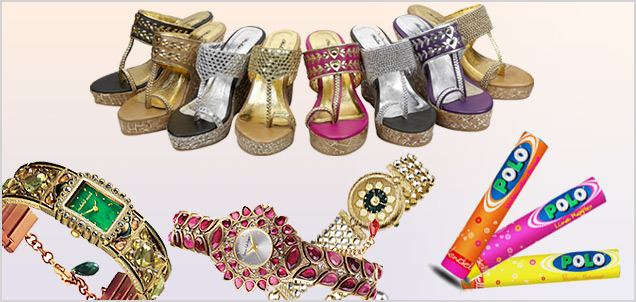
    Wendell Rodricks for Polo, Malini Ramani for Bata, Tarun Tahiliani for Timex… Some of the top Indian fashion designers have moved from their familiar territory of creating haute couture to creating new lines for popular brands.


    Wendell Rodricks has designed four new flavours called the Polo Fashion Flavours for Nestle’s Polo and has even given a funky new look to the staid-looking green and blue packaging of the mint.


    Malini Ramani, who is known for her bohemian style, has associated with Bata to come out with a new collection of footwear called Malini Ramani for Bata.


    Tarun Tahiliani has designed a special collection for Timex to help the brand break away from the sporty image it is associated with.


    Giving his views on this trend, Harish Bijoor, brand expert and CEO of Harish Bijoor Consults Inc. said: “I would call it bringing bizarre into branding. Fashion designers have no connect with the (product) category and it’s a stretch to think of them designing footwear or a designer mint. This is done to just get eyeballs and media share, and not necessarily about gaining market share.”


    For brands, it may be an effort to garner eyeballs, especially now, when they jostle with numerous others to grab the consumers’ attention.


    For Bata the association came at a time when they were looking at opportunities at designer footwear market inIndia. This, in fact, is the first time that Bata India has roped in a designer to design a special collection for them.


    On the reason behind associating with a fashion designer, Rajeev Gopalakrishnan, Group Managing Director, Bata India Limited, said: “The designer market is unique and full of innovations and Bata, as a brand, believes in constant innovations to bring forth the best for their customers. Therefore, we decided to rope in Malini Ramani, who is one of the most coveted designers in the country.”


    The footwear major has had a positive feedback of its association with Malini Ramani and hopes to further strengthen this association and even look for similar opportunities with other designers in future.


    Mr Gopalakrishnan added: “With the increasing demand for footwear in the Indian market, it is essential for any brand to introduce various designs and variety often. BataIndiaoffers various footwear ranges in every category. We bring out new designs for our customers as per the global trends and standards every month. The entire collection is changed every quarter to cater to the changing needs of Indian consumer.”


    Besides the Malini Ramani collection, BataIndiahas genuine leather casual collection for men under Bata and North Star Collection for the young customers. For customers with an active lifestyle, Bata launched a new collection under the Weinbrenner brand with personalized branding. It has Marie Claire collection for women, Power brand for the sports enthusiasts and variety of designs in attractive colours for children under Bubblegummers and Baby Bubbles, besides school shoes for children.


    For Timex the association with Tarun Tahiliani was to give break to the stereotype image that the brand has been associated with. VD Wadhwa, MD & CEO of Timex Group India, said: “Timex has been perceived as a sporty and outdoorsy brand since its inception and we want to move beyond that image. To strengthen our connect with the women costumers; we associated with ace designer Tarun Tahiliani. The aim of this association was to establish credibility amongst the women customers at comparatively higher price points and cash in on the wedding and festive season.”


    Mr Wadhwa stated that the response has been tremendous as far the collection is concerned. In fact, many costumers have come back asking for more options in this line. Though Timex doesn’t have any plans to add to this collection with other designers.


    “Marketers are increasingly leaning on homegrown designers for business associations to launch signature or limited edition lines. All this is done to attract the young and ambitious Indian consumers who would happily pay a premium price to stand out in the crowd. Indian designers are the best bet, since each one of them has a specific style and can fuse Indian and international designs brilliantly to develop an aspirational product,” said Mr Wadhwa.


    Fashion designer Manish Malhotra has also been featured in La Opala Diva ads and there is a possibility that he may design for the crockery brand, though the plan has not been finalized yet.


    One may even recall that few years ago, Sabyasachi had designed Bombay Dyeing’s new bed and bath range. It is clear that the marketers have started tapping the designers to give a fresh appeal to their products.


    It could be to create an aspirational value or tap consumers that have remained away from the brands and lure them in. In a cluttered market, this may be the way to at least garner eyeballs and somewhere succeed in getting an increase in sales too.


    Polo image: Nestle.in, other images: courtesy company spokespersons

  • Nestle India rolls out the Nescafe Plan

    By A Correspondent


    Nestle India has announced the implementation of the Nescafe Plan in India. Nescafe Plan is a global initiative by Nestle S.A. to bring under one umbrella the company’s commitment on coffee farming, production and consumption which will help Nestle to further optimize its coffee supply chain.


    To start the roll out of the Nescafe Plan in India, the first Nescafe coffee demo farm and training centre was inaugurated in Kodagu District of Karnataka by Mr. Jawaid Akhtar, I.A.S, Chairman, Coffee Board of India, Mr. Nandu Nandkishore, Nestle executive Vice President and Zone Director for Asia, Oceania, Africa and the Middle east, and Mr. Antonio Helio Waszyk, Chairman & Managing Director, Nestle India.


    This first coffee ‘demonstration’ farm in India will help farmers improve quality, productivity and sustainability. The company is assisting coffee farmers in the states of Karnataka, Kerala and Tamil Nadu to develop their agricultural practices as demand for soluble coffee grows in the country. Furthermore, Nestle research and development teams aim to provide farmers with high-yielding, disease resistant plantlets suitable for Indian conditions.


    Through the initiative, the company seeks to source coffee sustainably by working closely with Indian coffee farmers and ensuring competitive prices, transparency and traceability.


    Mr. Jawaid Akhtar, I.A.S, Chairman of the Coffee Board of India, said: “I am happy that the nescafe Plan is being launched in India. It will provide coffee farmers with technology and best practices for sustainable production of high quality coffee and also benefit them with improved access to markets.”


    During the event, a group of 20 farmers who have been trained under the Nescafe Plan were felicitated. While releasing the training manual ‘Nescafe Better Training Practices’, Mr. Nandkishore, Nestle executive Vice President and Zone Director for Asia, Oceania, Africa and the Middle east, said: “Nescafe is the world’s leading coffee brand. The Nescafe Plan demonstrates our commitment to working with thousands of farmers around the world, including in India, to provide training and technical assistance.”


    In recent years Nestle India has been doing extensive work to improve penetration of its Nescafe instant coffee amongst consumers and expand the market. The Nescafe Plan is important to ensure that the business is sustainable and that the coffee farmers also benefit. It reflects Nestle’s business philosophy that it must create value for its shareholders as well as the communities where it operates.


    Mr. A Helio Waszyk, Chairman and Managing Director, Nestle India said: “Indian coffee is currently amongst the best in the world and we would like to use our own expertise in coffee to help it retain its excellence in the future as well. In the Nescafe Plan our team will work with coffee farmers as well as other experts to combine the traditional wisdom with the benefits of modern science to make coffee farming more sustainable.”


    Currently The Coffee Board of India assists in research, development, extension, quality checks, market information and the domestic and external promotion of coffee from India. Nestle India agronomists will also work with coffee farmers and train them on how they can further improve the productivity and quality of coffee in a sustainable and efficient manner.

  • Ghari ousts Wheel to be Detergent No 1 (in Oct & Nov 2011)

    By Sagar Malviya


    Twenty-five years after launching a laundry brand inspired by Nirma, Ghari detergent appears to have edged out, at least temporarily, Hindustan Unilever’s Wheel from the number one slot in the Rs 13,000-crore laundry industry.


    Ghari, manufactured by Kanpur-based Rohit Surfactants Pvt Ltd (RSPL), had a higher share in October and November than Wheel, a brand that contributes over Rs 2,500 crore, or 12%, of the Rs 20,000-crore top line of Unilever Plc’s Indian unit.


    “As per value market share data, on a 12-month average share basis, the gap between Wheel and Ghari now stands at just 30 basis points; however, Ghari’s shares were higher than Wheel for the last two months,” said brokerage firm Prabhudas Lilladher in a report, dated January 2, quoting numbers from market research firm The Nielsen Company.


    In November, Ghari had a 17.4% share compared with Wheel’s 16.9%, according to people familiar with the numbers. The market researcher will generate data for December in the third week of January.


    Ghari’s achievement is reminiscent of the feats of Ahmedabad-based Nirma, whose eponymous washing power evicted HUL’s Surf from the top slot in 1985. Nirma achieved this by pricing its products considerably lower than Hindustan Lever (HLL), as the company was then known as.


    The resultant rumpus and the incumbent’s fierce response are part of Indian business folklore and have made it to management textbooks.


    HUL, which contributed 6% to Unilever’s top line in 2010, eventually prevailed as Nirma’s challenge faded in the early years of this century, with the global consumer giant stepping up marketing and advertising spend to levels its homegrown rival could not match. Wheel, the detergent whose market leadership is under threat, is very much a product of that period.


    HUL still dominates


    A powder variant of Wheel was introduced in 1988 to take on Nirma’s challenge. Despite the wobbles in October and November last year, HUL still dominates the detergent market with Wheel as the country’s largest brand on a yearly comparison, though the gap has been narrowing each quarter. The Hindustan Unilever spokesman declined comment on the data.


    “Our laundry category has grown significantly ahead of market in both volume and value in the period from January 2011 to September 2011. Wheel also contributed significantly to this with strong double-digit growth driven both by volume and price,” the spokesman added.


    The company said it could not validate the Nielsen data. “We cannot confirm the factual correctness of the market share data you have emailed as it is proprietary data of Nielsen. We request you to contact Nielsen to validate the data.” The Nielsen Company’s spokeswoman said: “As per company policy, I will not comment on brand specific data and will not be able to verify and validate the data.”


    Big hitters from Kanpur


    Both Wheel and Rin, another detergent from the HUL stable, have increased their market shares compared with the same year, but have been lapped by the faster growth achieved by Ghari, which was launched in 1987 by brothers Muralidhar and Bimal Kumar Gyanchandani.


    The Ghari phenomenon, emerging as it did from Kanpur, a business backwater, has been widely celebrated by many as an example of small town entrepreneurial chutzpah. “Losing share isn’t as big as losing leadership in its largest brand.


    In trying to maintain its margins, HUL didn’t adjust the pricing at the challenger’s level and that did the trick,” says a former HUL senior executive who was directly involved with HUL’s operation STING (Strategy To Inhibit Nirma’s Growth) in the late eighties.


    In 2011, Ghari gained not only by growing faster than Wheel but also yesteryear’s price warriors such as Nirma, which has less than 6% share now. “While Wheel may have maintained its market share, its other brand Rin has been consistently gaining share clearly reflecting the company’s premiumisation strategy,” said Anand Mour of Ambit Capital.


    “On the other hand, Ghari has taken share from smaller regional players, especially brands from the southern states, where it entered last year.”


    Ghari’s expansion


    RSPL attributes its growth to a variety of factors, including expansion to more states. The company has entered 10 more states in the last three years and now peddles its ware in 19 states, through more than 3,500 dealers. It has 21 manufacturing units, 15 of which were added since 2006.


    “We will be setting up plants in Bihar, Raipur and Karnataka soon to catch up with our sales growth of over 25% in the last nine months. Even in volume terms, we have been growing more than 10%,” said Mr Sushil Kumar Bajpai, president (corporate affairs) & company secretary, RSPL.


    Also, what’s helped Ghari is the sheer size of its home market Uttar Pradesh, which contributes 17% to total FMCG revenues, according to The Nielsen Company. Judging by its past, HUL is likely to respond fiercely.


    “Hindustan Unilever has a tremendous capability to fight back and they will do it soon,” says Mr Amin Babwani, an independent consultant who has spent three decades with HUL.


    It clearly has the marketing muscle to do so. The company’s existing distribution footprint in rural India, where a brand such as Wheel would sell, reaches nearly 200,000 villages, which is nearly double the industry average.


    “The growth in soaps and detergents segment will come from gradual upgradation of cheaper alternatives, ” said Mr Vijay Chugh of BNP Paribas Securities India in a recent report.


    Source: The Economic Times

    Copyright © 2012, Bennett, Coleman & Co. Ltd. All Rights Reserved

  • FMCGs make hay as noodles, soft-drinks etc drive growth in rural India

    By Samidha Sharma


    Noodles, macaronis and soft-drinks made rapid inroads into the rural markets driving up growth in the fast moving consumer goods (FMCG) industry – 10% by volume and 12% by value – in the first ten months of 2011. The consumption story for most part of last year dispelled slowdown fears as Indian rural households piped urban counterparts in growth sweepstakes , said market research agency IMRB. Rural India had clocked a negative volume growth during 2010 (here volume growth is the increase in sales clocked over last year while value growth is volume growth plus price hikes).


    The urban FMCG market, on the other hand, grew 4% by volume and 7% in value and was led by categories such as ready-to-eat mixes, deodorants , breakfast cereals and soups. Growth for personal care products such as toilet soaps, shampoos and household products stagnated compared to last year, while F&B space saw a healthy growth. The IMRB survey is conducted across 30 product categories.


    Sector analysts said the F&B market witnessed hectic action in rural India with players like ITC and Hindustan Unilever (HUL) leveraging their distribution muscle to push products in this category. ITC’s Sunfeast noodles and HUL’s Knorr brand of soups have been able to penetrate the hinterland leading to increase in the category reach.


    “In the F&B market we are seeing the share of rural markets grow. Packaged fruit juices have traditionally been a very urban market product, but with growing health awareness among rural consumers, we are witnessing a marked growth in demand. To cater to this demand, Dabur has already expanded the distribution footprint for juices to cover smaller cities,” said Mr George Angelo, executive director – sales , Dabur India, maker of Vatika shampoo and Real fruit juice. The FMCG biggie saw its personal, oral care and health supplements report strong growth in the rural markets.


    While the low-penetrated products in the F&B space witnessed good growth, detergents , washing soaps stagnated volume wise. “Due to lower rural reach household care categories such as floor cleaners , household insecticides are showing faster growth. But foods especially staples such as cooking maida, atta/wheat which are driving the growth in volumes,” said Mr Manoj Menon , group business director at IMRB International. In the urban market emerging categories , noodles, macaroni, vermicelli grew 20% in terms of volume, while ready-to-cook mix products saw a whopping 64% growth and soups grew by 20%. In the personal care category , which largely remained stagnant in the urban market, deodorants saw a 31% growth.


    There have been some concerns over consumer spending with price hikes being taken across the board by FMCG companies to offset the impact of rising input costs.


    “Because of healthy disposable income growth and lower absolute spends on FMCG products it hasn’t impacted the consumption yet, however if there is uncertainty around income growth risks of downtrading exist,” said Mr Gautam Duggad, an analyst at domestic brokerage firm Prabhudas Lilladher.


    Most industry players said they haven’t seen any palpable signs of downtrading yet. “Directionally there is no slowdown in the market but there could be some cut back in the next few quarters on discretionary items by consumers. The impact will be felt in the top-end product categories and non-essentials ,” said Mr Saugata Gupta, CEO, Consumer Products at FMCG major Marico.


    Source:The Economic Times

    Copyright © 2012, Bennett, Coleman & Co. Ltd. All Rights Reserved


  • 3 EDs quit in 1.5 years… all well at Hindustan Unilever?

    By Kala Vijayraghavan & Chaitali Chakravarty


    Three of Hindustan Unilever’s top team of eight executive directors – Gopal Vittal, Shrijeet Mishra and Ashok Gupta – have quit in the past 18 months. There have also been more than a few exits in lower levels of the company.


    And sources within and outside the marquee employer say managers are feeling stifled by paucity of growth options. The FMCG giant, once considered an impregnable vault of top-notch talent, is now beginning to look vulnerable.


    What ails HUL? The cause for the simmering discontent among local managers can be traced back to a bunch of strategic changes CEO Paul Polman is rolling out to make Unilever more responsive globally, past and present HUL managers say.


    First, Mr Polman has consolidated the global business into four divisions – personal care, home care, food and refreshments (like Ice Cream). Secondly, he is centralising much of the decision-making globally, stifling the role of local managers.


    Thirdly, he is forcing the company to consider outside talent, upsetting growth aspirations of internal candidates. Mr Polman, who took over in January 2009, is the first outsider in 77 years to head Unilever.


    And lastly, global postings in the Unilever universe, once a big draw for Indian mangers, are no longer as attractive. “While the company has become bigger, roles have become fewer,” a top HUL official told ET. “Jobs at HUL are becoming more functional and narrow,” other top officials with an inside line to the company added.


    An insider points to Mr Pankaj Gupta, who quit Unilever recently to join Reckitt Benckiser as supply chain head for South East Asia. He is now managing many factories across countries. He has the freedom to strategise, change and make the system more efficient. But as category VP, supply excellence for Unilever in Singapore, he had limited operational freedom.


    Insiders say HUL will not miss exits like Mr Gupta as they have an excellent knowledge management system which means managers are told how things are to be done. There is little room for initiative.


    Mr Polman is also mandating longer tenures at each position for its top management including the CEO. He is doing this to ensure business accountability and continuity in the face of growing competition and volatility. But at HUL, which is used to quicker job rotations and promotions, this too, is being viewed as a disadvantage by internal staffers.


    Moreover, Mr Polman’s view that outside candidates should also be considered for every senior management role to ensure diversity, is another reason for angst among internal candidates used to netting such roles, sources say.


    “It is highly speculative and incorrect to draw such conclusions,” a HUL spokesperson said in an email response to an ET questionnaire. “The average age of our Management Committee is around 45 years. This is a reflection of our focus on identifying high potential talent and investing in them through exposure to big and challenging jobs early in their career.”


    A young management committee could be another reason making the second rung of managers restless, an FMCG expert, who has worked in HUL for several years in the past, said. “The so-called number two gets impatient,” he said.


    Sources point to examples like Mr Samir Jain, vice-president, laundry at HUL, who quit to join Bungee, an agro-trading company, as it’s second in charge. He has a better and quicker shot at becoming CEO, they point out.


    “HUL has over 1,500 managers and attrition is significantly below industry level at 5% per annum for the past four years. Our approach for identifying and grooming top talent has established the company as a source of leadership talent,” the HUL spokesperson said in the email response.


    Moreover, global posting, once an attractive carrot, is no longer effective. Highly placed sources say that both Mr Gopal Vittal and Mr Shrijeet Mishra (currently the chief operating officer of Bennett, Coleman and Co Ltd, the publisher of The Economic Times) were offered global postings, but found them unattractive.


    There are more such instances even at lower levels, they added. “India is where the action is. Why would I want to move to Moscow or Poland,” a former HUL executive, who was offered one such posting, quipped.


    Source:The Economic Times

    Copyright © 2012, Bennett, Coleman & Co. Ltd. All Rights Reserved


  • Private labels of retailers Bharti Retail, Future Group outsell national brands in own stores

    By Sagar Malviya


    Private labels owned by retailers such as Bharti Retail, Future Group and Aditya Birla Retail outsold several national brands in home care and packaged food categories at their retail stores as value conscious consumers opted for best bargain in an uncertain economic condition and soaring headline inflation despite consumer goods companies aggressively betting on modern retail to drive future growth rate.


    For instance, Bharti Walmart’s private brand ‘Great Value’ tops the floor cleaner segment with 50 per cent share and are in the top three selling spot in terms of market share in categories such as tea, wheat flour, rice and branded snacks according to Nielsen latest retail index service during July-September 2011 period for the India FMCG Private Label market.


    Customers prefer private labels due to better quality, high food safety standards, international look and feel of products feels William Savage, chief merchandising officer, Bharti Walmart, which has private labels owned by retailers such as Bharti Retail, Future Group and Aditya Birla Retail outsell several national brands in certain home care and food categories at their retail stores even as big brands push more sales through modern retail.


    Coming at a time when national brands increasingly bet on modern retail to drive their future growth, analysts say even large manufacturers such as Hindustan Unilever and Reckitt Benckiser are impacted.


    “In short term, national companies will have to either go for promotions or discounting to fight back market share,” says Gautam Duggad, an analyst at brokerage Prabhudas Lilladhar. “But it also means losing margins and that’s a trade-off call the companies will have to take,” he adds.


    While retailers attribute the success of their own brands to value offers, good packaging and their increasing credibility, consumer product makers say private labels are gaining mostly in low-involvement categories.


    QUALITY AT LOW PRICE

    “Customers have begun to like private labels due to better quality, high food safety standards, international look and feel of products, customized packaging created after customer feedback and the credibility of the retailer,” said William Savage, chief merchandising officer, Bharti Walmart, which has over 35 per cent market share in wheat flour segment, close to 22 per cent in tea and 20 per cent in salty snacks, or namkeen.


    Private labels are mostly priced much lower that branded products because of substantial marketing and distribution savings. Retailers make up for lack of media marketing through in-store promotions and prominent display.


    In Big Bazaar stores, which started selling own brands four years ago, private labels are among the best sellers in at least a dozen product segments. Future Group Chairman Kishore Biyani believes its brands such as Tasty Treat and Clean Mate are now established. “Three years ago, our private label sales grew mainly because of experimentation and trials by consumers. But now, sales are driven by repeat purchases,” says Biyani.


    “We have quality products packed innovatively, priced attractively and placed strategically at our retail stores. So the success of private brands is a combination of all four Ps,” he adds.


    Aditya Birla Retail CEO Thomas Varghese says its More Value and More Choice brands have got good traction after the firm repositioned its private labels two years ago. Its private label pickles, with the widest range of regional variants, outsell the likes of Mother’s Recipe and Priya Pickles in More outlets. Hand wash, toilet and floor cleaners and disposable tissues are among the other segments More brands are among the best sellers.


    MARKETERS UNFAZED

    While companies such as Dabur, Emami and Parle acknowledge that private labels are gaining ground, they say it’s on segments where product differentiation is low and have relatively lower shopper involvement in purchase decisions, and that it will be tough for retailers to challenge national brands in high-involvement segments.


    “When it comes to foods or personal and beauty care products, consumers have been loyal to branded items and will continue to remain so,” said George Angelo, Dabur India Ltd Executive Director-Sales. He expects retailers to reduce product launches and rationalise range in this space.


    Emami CEO Krishna Mohan said it will be difficult to make strong private labels in personal care and over-the-counter health care segments because they require stronger consumer understanding and brands will need to innovate to provide extra benefit to consumers. But he expects retailers to eventually get there. “We are sure they are working on the same and eventually will venture into these categories which are huge.”


    Private brands already account for close to 7 per cent of modern trade sales in India, compared to 1 per cent in China, according to a Nielsen survey that covered more than 50 countries last year.


    And the scope is huge. Private brands account for more than 40 per cent of the total sales of the world’s largest retailer Walmart. The rise of private labels comes at a time when modern retail is increasing its contribution to the top line of most consumer goods firms.


    For instance, the country’s largest consumer goods company HUL gets around 12 per cent of its Rs20,000-crore annual sales by selling goods at modern retail stores compared with just 5 per cent four years ago.


    Source:The Economic Times

    Copyright © 2012, Bennett, Coleman & Co. Ltd. All Rights Reserved