Category: RADIO

  • PlanetRadiocity launches new genre on Web Radio

    By A Correspondent


    PlanetRadiocity.com has formally launched its new web radio genre, IndiPop Radio, which plays back-to-back IndiPop hits 24×7. The newly launched web radio station will feature popular IndiPop music from all over the world, the segment will also feature popular music of artistes like Lucky Ali, Mohit Chauhan, Kailasa, Strings, Junoon, Apache Indian, Sukhbir and so on.


    The launch of the IndiPop stream (a new genre on PlanetRadiocity Web Radio) is said to be an effort to expand the offerings of PlanetRadiocity Web Radio. Web Radio which offers 24 hours of streaming internet radio was launched in March 2010 by PlanetRadiocity.com.


    Indian rapper Baba Sehgal also launched his new single and video ‘Praji Kunjam Kunjam Control’ exclusively on PlanetRadiocity Web Radio. Listeners will have to visit IndiPop Radio on PlanetRadiocity.com’s Web Radio to listen to the song.


    A little more than three years since its launch, PlanetRadiocity.com, the music portal from Radio City, is set to undergo a revamp. Its Web Radio, after ‘Live Radio’ and ‘IndiPop’ will very soon launch more genres such as Devotional and Independent music to name a few. In conversation with MxMIndia, Ms Rachna Kanwar, Head – Digital Media and New Business, Radio City the brain behind PlanetRadiocity.com spoke about the future trends of online radio, mobile plans for PlanetRadiocity, on the revamp plans and much more.


    Q: Can you throw some light on the new web radio station – IndiPop? 

    Last year we started ‘Web Radio’, which is a separate entity and not the same as the terrestrial radio. Web Radio has been created keeping in mind our TG which is the internet audience and now we have launched IndiPop Radio which was formally launched on Tuesday, March 20, 2012. We believe there is a huge space that is yet to be filled by the non-film music. Today most people are focusing only on Bollywood music, which of course is very popular and we too play and endorse it.


    However there are also other genres or type of music which are very popular and have a lot of audience and hence needs to be played. In fact most of the popular Bollywood singers have emerged from this genre (IndiPop) whether they are Kailash Kher, Mohit Chauhan, Shaan etc. So if Bollywood is dipping into this creative pool then why not create space for the IndiPop genre itself. This year in fact is in a way seen as a comeback of the IndiPop genre because a whole lot of artists of this genre are announcing their albums whether it Lucky Ali, Indus Creed or Baba Sehgal himself.


    Q: Now, once an artist launches his/her album, take for example the Baba Sehgal album… How does PlanetRadiocity promote it or take it forward?

    What we plan to do is take a 360 degree marketing approach by promoting it through our terrestrial radio station, online we will be using the social media, search engine marketing, mailers, promos etc. and then create events around it.


    Q: On Web Radio, (launched in 2010) you have Live Radio and now IndiPop Radio. How has the response been for web radio? What are new genres that you would explore soon?

    Very soon we will be launching devotional music and independent music which is very different from Indipop and many more. Our TG is completely the internet audience i.e. anybody and everybody who is interested in listening to music but, our web radio are consumed heavily in offices and by college students. Apart from them, we have a whole lot of audience listening from home as well and a large chunk of them are the NRI’s. We have received huge response from audience on our Web Radio. We have about 1.6 million listeners from across the world including UK, US and Pakistan etc.


    Q: Is there a market for web radio in India? What is the audience profile that visit PlanetRadiocity’s web radio? Do Radio City listeners also visit the website?

    Frankly, people have just begun to understand digital music in India, people are becoming quite aware of music online and therefore you have more websites targeting music lovers online. So there is a market for web radio in India and we have been quite successful with web radio.


    Radio listenership to a certain extent has been moving to the digital platform and while we do realize that radio has its loyal listeners, there are listeners particularly the younger ones who are moving to digital. We already have headway in engaging this audience, we have a full-fledged digital team and music website.


    Q: The business model for web radio (and PlanetRadiocity) is ad sales led, isn’t it? Is there any other revenue source?

    Web Radio is also dependent on banner advertising and ad sales etc. The advantage being that within the stream also one can sell air time and which is a huge advantage for us because our sales team know how to sell air time.


    Q: It’s been nearly 3.5 years since the launch of PlanetRadiocity.com. You have the web radio now and more genres to come. Any plans to revamp the website or give a new look to the web radio section?

    Yes, very soon we will be revamping the website. We would also be including new features in it which should happen in about a month time or so.


    Q: How are you leveraging mobile? Any mobile specific plans? Will mobile internet users also be able to listen to PlanetRadiocity web users?

    We are in the process of creating mobile apps for the website. Once these apps are created we will also have mobile internet users also visiting our website.


    Q: How has 2012 welcomed PlanetRadiocity? What can we expect from you this year and say a few years from now?

    The year 2012 looks extremely positive and encouraging because we will be launching a new look, we would be launching a lot of music streams, new web radio genres etc. which will attract new audience. As far as our growth target is concerned we have been able to meet them.


  • [MxM Radio] The viral effect is baffling: Anil Srivatsa

    By Robin Thomas


    Entrepreneuring is said to be in his blood, considering his first job straight out of college was his own business. He has been a veteran of the media field since the past 20 years. He had launched a radio show called ‘Anil Ki Awaaz’, in New Jersey, USA and ‘between the sheets’ in India. He also launched an internet radio channel for Asian Americans. Anil Srivatsa is the Co-Founder, CEO Venturenet Partners Pvt. Ltd. (promoters of Spot Radio and Radiowalla). Prior to launching Venturenet Partners, Mr Srivatsa was the CEO of Kings XI Punjab and before that he was the COO Radio Today Broadcasting.


    In conversation with MxMIndia, Mr Srivatsa spoke at length about his Bengaluru-based internet radio company, Venturenet Partners and its soon-to-launch Radiowalla, a service that offers a variety of special interest internet radio channels. He also spoke about Spot Radio, a b2b digital in-store radio entertainment, the break-even plans, and much more.


    Q. We are already in the middle of March 2012, and Radiowalla is scheduled to launch in April 2012… Is the schedule on?

    Yes, we are on schedule to launch in April. However, there are different stages of launch and the beta launch will happen where a close group of people with get to use the service. This will take place within the next few weeks.


    Q. Are you seeing an increase in the curiosity level among people? What’s the kind of reaction you are receiving?

    Well, the curiosity level seems to be increasing but the one phenomenon I am unable to figure out is the fact that three weeks ago we had only 260 ‘Likes’ on the Radiowalla Facebook page and today we have over 5000 ‘Likes’ despite us not doing anything to move the needle. It’s probably the viral effect. So, going by all the viral activity we are receiving on the Facebook page, it seems like people are waiting in anticipation.


    Q.What about Spot Radio? It’s been a while since launch… What’s the team size?

    Spot Radio is doing extremely well; we are best- in-class. We have competitors but, I don’t think there are any companies that have more clients than we do. However it is just notabout numbers but our product, our service, our pricing and our timing. Everything speaks for itself. Our team has been working well. We’ve got a small team putting out 30 radio stations today. We have 30+ clients which meanswe are actually churning out 30+ radio stations with five (Creative) people. We have a total strength of about nineteen world class professionals. I keep saying world class because our talent and product is world class, and it just goes to prove that you don’t need 30 people to run one radio station.Infact, I need 20 people to run 30+ radio stations.


    Q. You are currently headquartered in Bangalore… Are you looking at setting up studios in other parts of the country too?

    We will set up a studio in Delhi. Ithas a lot to do with the kind of content we want to generate out of there and tap into some great talent available there. We have an outfit in Chennai. Mumbai will be the last, not because it is the least important but, because it is the most expensive to set up an office. So, we are trying to do all what we can everywhere else before we come to Mumbai. Our presence in Mumbai will be felt soon but for now I travel to Mumbai and take care of business development out of there. We may forge a partnership with a strategic partner in Mumbai (Once we find the right partner).


    Q. What is your view on content innovation on radio and tell us what led you to start Radiowalla?

    I think we have been speaking about innovation in radio for the last five years since I have been involved with the business in India. I think the problem here is that the industry seems to be confusing innovation for differentiation. There is plenty of innovation happening, there is no lack of innovation in radio today. There is infact a lack of differentiation and unless an industry captain takes a personal professional risk this will not change for some time now. Nobody wants to take a risk aseveryone is worried about their next job. I have spoken to many of my peers who secretly harbor ambitions to be able to do something different but none is willing to bell this cat. Great ideas exist among the radio professionals.


    I took a risk to a point that I lost my job over it. Radio needs patience. There is no collective will to do something different. If one of them is following one format let them follow that format, there is always a space for another format. This will actually create more advertising spread. Advertisers will be forced to buy advertising on all radio formats to reach a broader section of people with diverse interest had radio organized by format. Now what is happening is that all radio is alike so the advertisers pick the top 3 and leave out the rest as they are reaching the same audience. I believe format differentiation will increase the ad pie and as a result force a more equal distribution of the ad money. This approach would have been better for the Industry in general. Rising tides will raise all ships.


    Q. And this was one of the reasons for Radiowalla…

    Yes, Radiowalla is about content differentiation and on the internet because distribution is the least of my problems. The internet allows me to create a hundred channels if I want to. This is what Radiowalla is about. It is a platform of audio content which is differentiated in each of its channels, giving a choice to the audience i.e. whoever wants to listen to whatever content, and at any time. We are a linear radio format. What the music industry calls a non-interactive format of delivery. So, it is not just the idea but, technology that supports the idea and the execution of it that makes an innovative product happen.


    Q. You had said that you would initially launch only audio channels. Why? 

    Audio has so much depth. I am not even thinking beyond audio because there is so much to do in audio! It is a non- invasive media. I can do ten things and still engage with audio, unlike any other where it is a one dimensional engagement. Audio is more effective in thought change. I equate Audio to guided Meditation. It is difficult to meditate with your eyes open. Audio has no visuals and therefore more engaging to the mind -Less distracting.


    Q.So, you will launch 30 radio channels… Will news be one of them?

    Atleast 30 radio channels as of now and yes news will be one of those channels. There is enough to do with non music content. There is only so much music you can do. You count all the genre of any music in English and Indian languages. You can’t find more than thirty. We are trying to cater to the long tail. The focus is on non-music production to add to the magic of music.


    Q. Do you think in the long run internet radio in India is a feasible one?

    Of course it is feasible. I draw the analogy from terrestrial TV, cable TV and DTH TV. What Doordarshan started was terrestrial television,now is cable television not television? Is DTH not television? Is TV on the internet not Television? Are they all not viable/feasible? What you are seeing now is radio on FM terrestrial frequencies, it doesn’t mean that what happens on internet is not radio. It is the same but, the distribution medium is different. Terrestrial television was different from cable television which is different from DTH which is different from television on the internet but all still Television. Similarly FM is one way of delivering radio, and not the only way.


    Q. Should the traditional radio stations in India start worrying about the advent of internet radio?

    Well they should worry as anyone would with a competing platform growing…Traditional terrestrial radio has their limitations. There can only be so many frequencies. Traditional radio will never die, all I am saying is that internet radio just offers an extremely different canvas, where you can paint different pictures, it’s affordable and yet has a business model around it.


    Q. What is the business model you follow? Is it advertising led or do you have alternative source of revenues?


    The business models are traditional. We have a combination of Ad support and subscriptions.To use jargon, the freemium and premium models. There are certain channels that will be available as subscription only and commercial free, while some channels would be available for free but, supported with advertising.


    Q. And what about Spot Radio? It is a b2b arm of Venturenet… How does it function?

    We create radio for specific brand identities in the retail and corporate space. So the business model is very simple, they pay us for the service to manage their network and some of them allow us to sell third party advertising… so we generate revenue which we share back with our client.


    Q. You are building infrastructure, recruiting experts, setting up studios etc. How else are you utilizing the Series A funding? What will the next round of funding focus on?

    Our progress on infrastructure building is very public. I have pictures up on our facebook page at every stage. We now have about 19 people and will grow to a few more. The funding has helped us get to this point as it was intended to. As far as the next round of funding is concerned that is a matter of strategy as it is based on a certain milestones that we reach and if we reach those milestones quicker we get to that funding quicker.


    Q. And what are those milestones…?  

    Well, they are revenue milestones and there are business expansion milestones. I believe that if we stay with our current business planit will take us about 18 months to reach a certain milestone but, if we are accelerating that and achieving it sooner, then clearly we need more funding quicker. Thus it is just a matter of which stage we are in now.


    Q. When do you plan to achieve break-even?

    Break-even should happen in 18 months but, if we had another ten clients in Spot Radio we should have operationally broken-even. I hope to get to this stage inside 18 months.


    Q. How would you measure the success of Spot Radio or Radiowalla? What is the benchmark for success?

    For Spot Radio, the benchmark for success is very simple.It is as many clients as we have who are paying us and if we start meeting our advertising revenue targets then this is a measure as well. As far as Radiowalla is concerned, the quality of content is the benchmark to success because that will automatically start giving me customer acquisitions. Eventually the number of customers we have will ultimately determine how successful Radiowalla is.So, it’s all in the numbers but, what leads to the numbers are where I am focusing and it the quality of content that will help me retain my customers. I focus on quality of content.


    Q. Any specific plans for 2012 thatyou would like to share with us? What can we expect from Venturenet this year?

    All I can say is that it is going to be an exciting growth phase for us in 2012. We are looking at further consolidating ourselves, and grow more clients.We are looking at related areas that have not been exploited yet and which are perhaps under the radar as of now. So yes lot of action plans this year.


    Q. Do you see the internet radio market further growing? Do you see more internet radio players in India?

    Internet radio is a great opportunity! In terms of a global listenership it is a bigger business than an FM station in one city. We are only the beginning of it. There are plenty of those ideas going around and I am sure there will be many who fail and many who will succeed.


    Content is still King, distribution can be King Kong but, it will still be a monkey without content. Radiowalla is a content company agnostic to technology. We are adaptive to new emerging distribution technology and we will keep one eye on it. We are focusing on good content and that’s where we are meeting the needs. When you can have your own phoolwalla, doodhwallah, chaiwallah,sweetwalla then now it’s time to get your own Radiowalla.


    Q. On a lighter note, how has life changed after becoming an entrepreneur?

    I have always been an entrepreneur. So, life has not changed because I like this life and that is why I am in it. In fact my first job out of college was my own business, at 21 I was running my own City magazine for Bangalore. So to me being an entrepreneur is in my blood and every job I have had since then have been in a startup environment, for someone else in their founding team and as a senior member in their founding team. The difference now is just that I am doing it for me and I am the only one I can blame if I don’t do well. With all the ups and downs I have seen in life as an entrepreneur, the one good thing that has happened is that my life is now recession proof. My greatest achievement so far!

     

  • Rockstar wins album of the year at Radio Mirchi Awards

    By A Correspondent


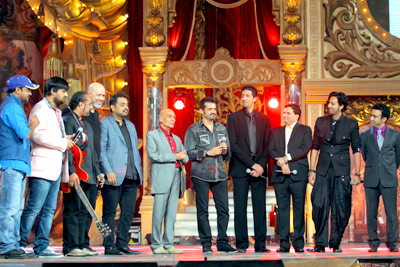
    The fourth Mirchi Music Awards honoured music talent across 24 categories as Radio Mirchi paid its tribute to music with much extravaganza and fanfare. Royal Stag was the title sponsor of Mirchi Music Awards. The awards were held on Wednesday, March 21, 2012.


    Bollywood personalities like Saif Ali Khan, Shreya Ghoshal and Bappi Lahiri, Mika, Sonu Nigam, Shankar Ehsaan Loy, Lalit Pandit, Salim-Suleiman, Ram Sampath, Sajid Wajid and Leslie Lewis were also among those personalities that performed during the awards night. Ash King, Harshdeep Kaur, Neha Bhasin, Anushka Manchanda, Tochi Raina, Shweta Pandit, Dominique and Clinton Cerejo, Kamal Khan, Suman Shridhar, Shefali Alvares, Benny Dayal and Ritu Pathak were among other celebrities at the Awards.


    There were 24 categories of awards at the fourth Mirchi Music Awards. The winners were decided by a jury that consists of notable personalities from the Indian film and music industry – Javed Akhtar, Ramesh Sippy, Ashutosh Gowariker, Sooraj Barjatya, Prasoon Joshi, Sameer, Shankar Mahadevan, Anu Malik, Aadesh Srivastava, Lalit Pandit, Kailash Kher, Louis Banks, Kavita Krishnamurthy, Alka Yagnik, Sadhna Sargam, Suresh Wadkar, Talat Aziz and Ila Arun.


    The Mirchi Music Awards – Winners List is as follows:

    1. Best Programmer & Arranger – Abhijeet Nalani & Giorgio Tuinfort for Chammak Challo from RA One

    2. Best Song Representing Sufi Tradition – Kun Faya Kun from Rockstar – A.R. Rahman, Javed Ali, Mohit Chauhan and Irshad Kamil

    3. Best Raag Inspired Song – Khoya Kya from Kashmakash – Hariharan, Sanjoy Das, Raja Narayan Deb

    4. Special Recognition to Pandit Channulal Misra

    5. Best Upcoming Singer of the year Male – Kamal Khan for Ishq Sufiyana from The Dirty Picture

    6. Best Upcoming Singer of the year Female – Tia Bajpai for Sheet Leher from Lanka

    7. Best Upcoming Music Director of the year – Harshit Saxena for Hale Dil from Murder 2

    8. Best Upcoming Lyricist of the Year – Seema Saini for Sheet Leher from Lanka

    9. Best Song Recording – Vijay Dayal and Mark ‘Exit’ Goodchild for Chammak Challo from Ra One

    10. Best Background Score – Ram Sampath for Delhi Belly

    11. Best Item Number Song – Ooh La La from The Dirty Picture – Bappi Lahiri, Shreya Ghoshal, Rajat Arora and Vishal-Shekhar

    12. Best Album of the Golden Era – Awaara (Shankar Jaikishen and Raj Kapoor)

    13. Royal Stag Make it Large Award – Dhanush and Anirudh – Special Award

    14. Jury Award for Outstanding Contribution to Hind Film Music – Babla Shah

    15. Best Indipop song – Mera Kya Hain Sab Hain Tera – Dil Ki Baatein – Javed Ali, Alaap Dudul Saikia & Ravi Basnet

    16. Best Song of the Year Mirchi Listeners Choice – Nadaan Parinde from Rockstar – A.R. Rahman, Mohit Chauhan and Irshad Kamil

    17. Best Album of the Year – Mirchi Listeners Choice – Rockstar

    18. Best Lyricist – Javed Akhtar for Khaabon Ke Parinde from Zindagi Na Milegi Dobara

    19. Best Music Director – A.R. Rahman for Nadaan Parindey from Rockstar

    20. Best Female vocalist – Sunidhi Chauhan for Ishq Sufiyana from The Dirty Picture

    21. Best Male Vocalist – Kamal Khan for Ishq Sufiyana from The Dirty Picture

    22. Best Song of the year – Senorita by Shankar Ehsaan Loy

    23. Best Album of the Year – Rockstar

    24. Lifetime Achievement Award – Khayyam


  • Continuing the WorldSpace legacy @ Timbre

    By A Correspondent


    The year 2012 has already begun with a series of announcements of radio on the web and other digital platforms. PlanetRadiocity.com for instance has launched a new genre – IndiPop Radio on their Web Radio station in March, 2012, and a Bengaluru based internet radio company- Venturenet Partners will be launching a premium model internet audio service- Radiowalla in April 2012. Formed in 2010 by former employees of WorldSpace India, Timbre Media is also slated to announce its internet radio station – Timbre Radio. All these players not only aim to provide innovative but, differentiated content and world class radio programming to their listeners, all through the power of audio.


    Besides the internet, Timbre Media plans to exploit the potential of the audio medium across digital platforms including mobile and DTH Television. On the mobile front, the Bengaluru based Timbre Media has already aligned with Vodafone India to offer listeners multiple music genre radio stations across the country. Listeners will have to pay Rs. 30 per month for 300 minutes of free usage. However this mobile radio service is not available in Andra Pradesh, Gujarat, Himachal Pradesh and Kolkata. Saregama India Pvt Ltd. which has acquired 10 per cent stake in Timbre Media provides the company (Timbre Media) with access to their music database.


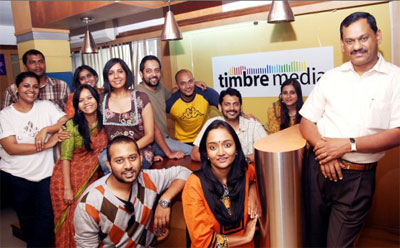
    Timbre Media offers customised radio content for multiple broadcast platforms. It has four studios in Bengaluru and two studios in Mumbai among other studios in different parts of the country. In conversation with MxMIndia, M Sebastian, Co- founder and CEO, Timbre Media spoke about business model of Timbre Media, his break-even plan, the trends to watch out for, on traditional FM radio and much more.


    Q: Can you share with us how Timbre Media was formed? And what was the thought process behind the launch?

    Timbre Media was formed in 2010 by the erstwhile employees of WorldSpace India, to continue the legacy of world class radio programming that we provided through WorldSpace to our listeners.


    Q: What is the team size? Timbre Media is currently headquartered in Bangalore… Will you be setting up offices in other parts of the country too? When?

    We are a team of around 80 people, spread across different Indian cities.


    Q: Timbre Media specializes in programming radio contents for corporate entities, FM stations etc… Can you throw some light on the USP of Timbre Media? Also are you in talks with any FM station for radio content?

    Timbre Media has the unique advantage of a talent pool that introduced subscription based radio service in India and popularized the concept of genre based radio programming in our country. Our content is different, rich and compelling. We have learnt a lot about the expectations and aspirations of our target customers in the last 10 years of our association with WorldSpace Satellite Radio and its elite customers who valued quality and variety.

    We are in discussions with potential customers in every vertical that we are operating in.


    Q: What is the business model of Timbre Media? Is it advertising-led or a subscription model?

    Our business model is based on our philosophy that is to provide customized content that is different, rich and compelling and monetize the same in the best possible manner. It could be advertisement- or subscription-based depending on the vertical and the ecosystem we are operating in.


    Q: How many channels are in the offing? Which genres will you be offering? Will news also be part of it?

    We can’t say at this moment how many and what types of channels we will be offering. As I said, it is a function of the vertical and the prevailing ecosystem. We are focusing on providing customized content solutions to various customers and it could vary from one to the other. We are not averse to a particular type of programming or platform.


    Q: When are these channels scheduled to launch? Will it be only through mobile or will one be able to access them on the internet and DTH as well?

    We are not averse to any programming or platform. We are interested in utilizing our experience and expertise to meet the aspirations of the end user by using every available opportunity and monetizing the same to ensure the growth of Timbre Media.


    Q: Whom do you consider as competition?

    As such I do not think there is anyone who has the same experience and expertise that we have, and provide the same products and services that we offer.


    Q: How has 2012 welcomed Timbre Media? What are your growth plans?

    We have made considerable progress in the last two years. Thank God and the committed and passionate team that Timbre have, we have done extremely well compared to most of the start-up enterprises. We want to be a unique media enterprise that touches every customer who values quality audio content through all possible platforms and devices in the next 5 years.


    Q: Any specific trends you see in the Indian radio industry, particularly in the internet and mobile space?

    Radio industry is growing, and listeners are appreciating quality content for which they are willing to pay. The technology and platforms are enhancing the ecosystem every day and enabling the consumer to get what he wants, in the way he wants at the time he wants.


    Q: Also, should traditional radio begin to worry with your entry?

    There is sufficient space for everyone to co-exist and grow. Rather than worrying, we need to identify areas of partnerships that lead to mutual benefit and faster growth and work towards realizing the full potential of the audio medium.


  • RAMcheck: More surprises for FM players

    By A Correspondent


    TAM Media’s Radio Audience Measurement (RAM) – which covers four key metros, Mumbai,Delhi, Kolkata and Bengaluru – released its latest radio listenership figures for Wk 4 to Wk7 (Last two weeks of January 2012 and first two weeks of February 2012).


    According to the latest RAM data, for listeners of 12 years of age and above, all places of listening, and according to radio channel shares,RadioCity, Radio Mirchi, Fever FM, Big FM, Red FM, Radio One, Oye! FM were some of the top FM stations in the big four metros.


    Mumbai:

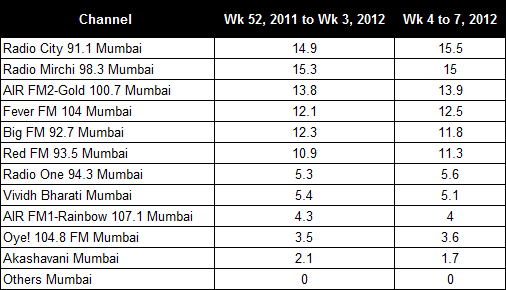
    Radio City surged ahead of Radio Mirchi as the most popular FM station in the city with 15.5 per cent channel share from Wk 4 to Wk7, 2012 whereas Radio Mirchi’s channel share stood at 15 per cent. Ranked three is AIR FM2 Gold which more or less remained unchanged in listenership share from wk 4 to 7, 2012 as against Wk 52, 2011 to Wk 3, 2012. As compared to Wk 52, 2011 to Wk 3, 2012, six FM stations witnessed growth in their listenership share in Wk 4 to Wk 7, 2012 namely, Radio City, Fever FM, Red FM, Radio One, Oye! FM and AIR FM2 Gold.


    Source : RAM

    Market: MUMBAI

    Demographic: All People 12+ Filter Demographic: None

    Statistic: Share %

    Daypart: Sun – Sat 12:00 AM – 12:00 AM

    Place of Listening: All


    Delhi:

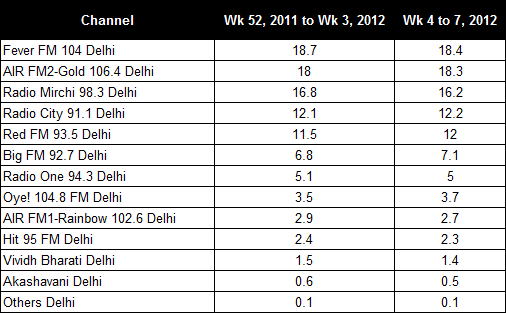
    Fever FM once again manages to retain its leadership position inDelhi, its nearest rival in Delhi is Radio Mirchi, if the government owned AIR FM2 Gold is excluded. According to figures for Wk4 to Wk 7, 2012, AIR FM2 Gold is close behind Fever FM for the top spot. What remains to be seen is whether or not Fever FM is able to retain its leadership position inDelhi.


    The Wk4 to Wk 7, 2012 RAM numbers reveals that in comparison to Wk 52, 2011 to Wk 3, 2012 only five FM stations witnessed any growth in the Delhi market. The FM stations to have seen growth in their listenership shares are Radio City, Big FM, Red FM, Oye! FM and AIR FM2 Gold.

    The other FM stations in the Delhi market are Radio One, Hit FM, AIR FM1 Rainbow, Vividh Bharathi and Akashavani Delhi.


    Market: DELHI

    Demographic: All People 12+ Filter Demographic: None

    Statistic: Share %

    Daypart: Sun – Sat 12:00 AM – 12:00 AM

    Place of Listening: All


    Bengaluru:

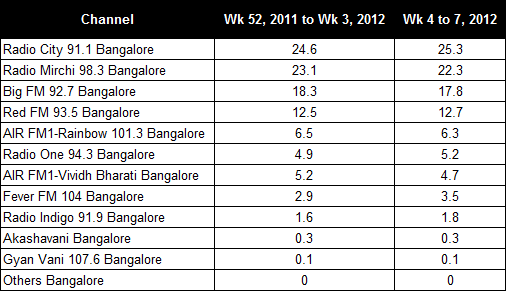
    In Bengaluru too, Radio City continues maintain its numero uno position, the FM station has managed further grow its listenership share in Wk 4 to Wk 7, 2012 as against Wk 52, 2011 to Wk 3, 2012. The second most popular FM station in Bengaluru is Radio Mirchi followed by Big FM and Red FM, ranked third and fourth respectively. Ranked fifth is AIR FM1 Rainbow and Radio One is ranked sixth. The five of the eleven FM stations in the Bengaluru market which witnessed growth in listenership share areRadioCity, Red FM, Radio One, Fever FM and Radio Indigo.


    Market: BENGALURU

    Demographic: All People 12+ Filter Demographic: None

    Statistic: Share %

    Daypart: Sun – Sat 12:00 AM – 12:00 AM

    Place of Listening: All


    Kolkata:

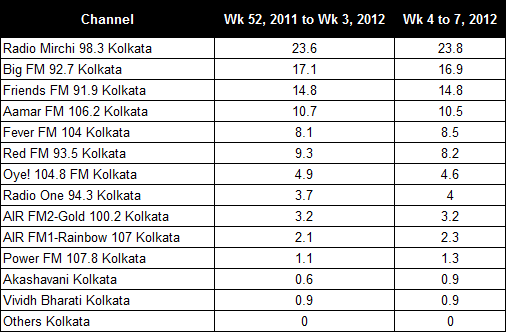
    Radio Mirchi has not only maintained its leadership position in the city, but has also witnessed some growth according to the Wk4 to Wk 7, 2012 RAM data as against Wk 52, 2011 to Wk3, 2012. Kolkata is the only RAM market to have seen no change in atleast the top three rankings. Radio Mirchi, Big FM and Friends FM continue to be the top three FM stations in the city. Ranked four is Aamar FM, followed by Fever FM, Red FM and Oye! FM. Of the thirteen FM stations in Kolkata, six FM stations in the city have witnessed growth in their listenership shares: Radio Mirchi, Fever FM, Radio One, Power FM and AIR FM1 Rainbow. Although Friends FM remained stagnant in its listenership share, nevertheless it is comfortably placed at number three. The other FM stations in the Kolkata market include Radio One, Power FM, AIR FM1 Rainbow, AIR FM2 Gold, Akashavani Kolkata and Vividh Bharati.


    Market: KOLKATA

    Demographic: All People 12+ Filter Demographic: None

    Statistic: Share %

    Daypart: Sun – Sat 12:00 AM – 12:00 AM

    Place of Listening: All


  • RAMcheck: What women listen to…

    By A Correspondent


    Which are the most popular FM stations among women? MxMIndia shifts focus on women listenership trends in the four RAM (Radio Audience Measurement) – Mumbai, Delhi, Bengaluru and Kolkata. The data consists of women who are 12 years of age and above, all places of listening from WK 47, 2011 to WK 6, 2012. The most popular FM stations among women in the four metros are Radio Mirchi, Radio City, Big FM, Red FM and Fever FM.


    Delhi:

    Fever FM is the most popular FM station among Delhi women listeners, followed by Radio Mirchi, AIR FM2 Gold, Red FM and Radio City – the top five FM stations for women in Delhi. The listenership share of Fever FM has in fact moved slightly higher on Wk 3 to Wk 6 as compared to Wk 47 to Wk 50. The top five FM stations in the city have managed to sustain their listenership rankings from wk 47 to 50, 2011 to Wk 3 to 6, 2012. The other FM stations in the city are Big FM, Radio One, Oye! FM, Hit FM, AIR FM1 Rainbow, Vividh Bharati and Akashvani.


    Mumbai:

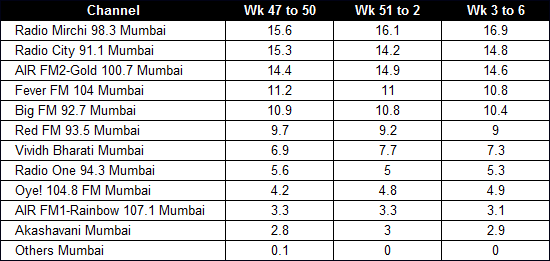
    For the women listeners in the commercial capital, Radio Mirchi is the numero uno FM station, at least in terms of station share. Radio City is the second most popular FM station among the women listeners of Mumbai followed by AIR FM2 Gold which is ranked three. The other two FM stations in the top five category are Fever FM and Big FM, which are ranked four and five respectively. While these top five radio stations have received a double digit listenership share, the other FM stations in the city are Red FM, Radio One, Oye! FM, Vividh Bharati, AIR FM1 Rainbow and Akashvani.


    Bengaluru:

    The Bengaluru women listen to Radio City the most. Radio City has maintained its leadership position among women listeners from Wk 47 to Wk 50, 2011 to Wk 3 to Wk 6, 2012. Ranked second is Radio Mirchi followed by Big FM, the third most popular FM station of the city. Ranked four and five are Red FM and AIR FM1 Rainbow. The top four FM stations have infact witnessed their share per cent in double digits. The other FM stations in the Bengaluru market are Radio One, Fever FM, Radio Indigo, AIR FM1 Vividh Bharati, Akashvani and Gyan Vani.


    Kolkata:

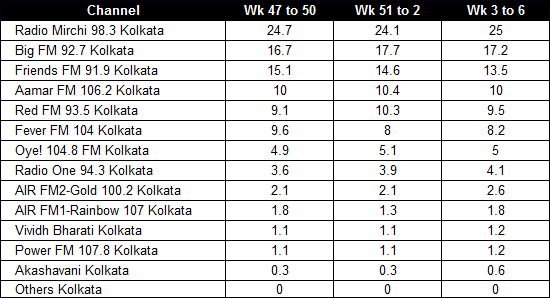
    Radio Mirchi is clearly the most popular FM station for Kolkata women. The FM station has maintained a significant lead in the city with 25 per cent of the market share as on Wk 3 to Wk6, 2012. Its nearest rival in Kolkata is Big FM with a share of 17.2 per cent followed by Friends FM with 13.5 per cent of the share. Aamar FM and Red FM are ranked four and five with a share of 10 per cent and 9.5 per cent respectively. The other FM stations in the city are Fever FM, Oye! FM, Radio One, Power FM, AIR FM2 Gold, AIR FM1 Rainbow, Vividh Bharati, and Akashvani.


  • RAMcheck: No changes in top rankings in four metros

    By A Correspondent


    On Friday, January 6, 2012, Radio Audience Measurement (RAM) – which covers four key metros, Mumbai, Delhi, Kolkata and Bengaluru – released its latest radio listenership figures for Wk 43-46 (last two weeks of October and 1st two weeks of November 2011) Vs Wk 47-50 (Last two weeks of November and 1st week of December 2011).


    According to the latest RAM data, for listeners of 12 years and above, and according to radio channel shares, Radio City, Radio Mirchi, Big FM, Red FM, Fever FM, Radio One, Oye! FM were some of the top FM stations in the big four metros.


    Mumbai:

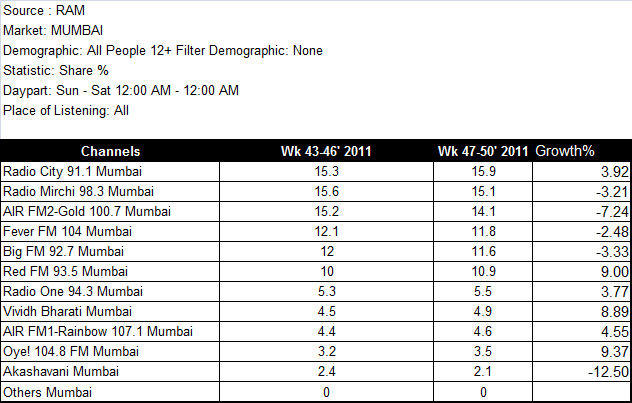
    In Mumbai,Radio City further strengthened its leadership position in Wk 47-50 as against Wk 43-46 with a growth of 3.92 per cent in its channel shares. Radio Mirchi was rated the second most popular FM station in terms of channel shares followed by AIR FM2 Gold, Fever FM, Big FM, Red FM and Radio One. The other clusters of FM stations in the city are Oye! FM, Vividh Bharati, AIR FM1 Rainbow and Akashavani Mumbai.


    Besides Radio City, Red FM, Radio One, Oye! FM, AIR FM1 Rainbow, Vividh Bharati and Akashavani Mumbai are the only radio stations to have shown growth.


    Delhi:

    Most radio stations inDelhiwitnessed growth in the channel shares in Wk 47-50 as against Wk 43-46. AIR FM2 Gold emerged as the number one FM station inDelhi, its channel share however remained stagnant. Fever FM slipped to the number two position in Wk 47-50 after its channel share saw a decline as compared to Wk 43-46. Fever FM and AIR FM1 Rainbow were the only two FM stations inDelhito have seen a decline in channel shares on Wk 47-50 as against Wk 43-46.


    Radio Mirchi was the third most popular FM station followed by Red FM, Radio City, Big FM, Radio One, and Oye! FM. The other clusters of radio stations inDelhiinclude AIR FM1 Rainbow, Hit FM, Vividh Bharati and Akashavani Delhi.


    Bengaluru:

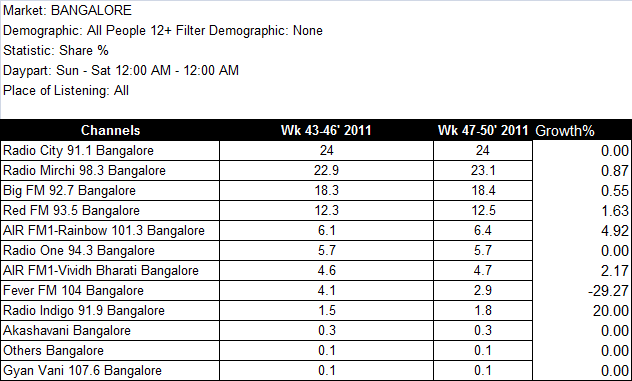
    There was no change in the station rankings in Bengaluru.Radio City continued to lead Bengaluru followed by Radio Mirchi and Big FM. While Radio City showed neither growth nor decline in its channel share, Radio Mirchi and Big FM saw marginal growth. Fever FM, however, was the only FM station that showed decline in its channel shares.


    Kolkata:

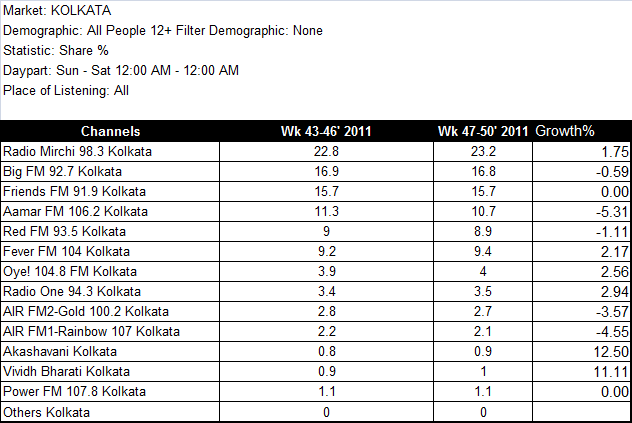
    Kolkata too saw no change in its station rankings. Radio Mirchi, Big FM, Friends FM, Aamar FM and Red FM were the top five FM stations in Kolkata in terms of their channel shares. Radio Mirchi, the most popular FM station in Kolkata has further strengthened its leadership position with a growth of 1.75 per cent in channel shares in Wk 47-50 as compared to Wk 43-46.


    While Radio Mirchi’s nearest rival in Kolkata, Big FM came a distant second with a slight decline of 0.59 per cent in terms of its channel share, the third most popular FM station in Kolkata, Friends FM remained stagnant. Besides Radio Mirchi, Fever FM, Oye! FM and Radio One were the only private FM stations in Kolkata to have witnessed growth in channel shares.


  • RAMcheck: Most popular FM stations heard out of home

    By A Correspondent


    Unlike our regular RAMcheck reports which didn’t differentiate between any places of listening, this time MxMIndia decided to concentrate exclusively on radio channels’ out of home (OOH) listenership. According to RAM (Radio Audience Measurement), the OOH listeners include listenership in cars, at work and other out of home places. TAM Media’s Radio Audience Measurement from week 40-43, 2011 to week 52- 3, 2012 reveals the most popular FM radio station out of home. RAM is currently present in four metros – Mumbai, Delhi, Bengaluru and Kolkata.


    Mumbai:

    According to the RAM data for OOH listenership, the top five FM stations for Mumbaikars are Radio Mirchi, Big FM, Radio City, Fever FM and Red FM, excluding the government-owned AIR FM2 Gold. The radio stations, from week 40- 43, 2011 to week 52 to 3, 2012, have not seen much variation in their channel shares.


    Delhi:

    In Delhi AIR FM2 Gold is the most popular FM station followed by Fever FM, a strong number two in OOH listenership share. While the number one and two slots have a clear position in OOH listenership, there is no clear winner for the number three position. There is a close fight for number three position between Radio Mirchi, Radio City and Red FM. However in Wk 52′ 2011 to Wk 3′ 2012, both Radio Mirchi and Red FM received 12.4 per cent station share whereas Radio City received a station share of 11.1 per cent. The other FM stations in the Delhi market include Big FM, Radio One, Oye!FM, Hit FM, AIR FM1 Rainbow, Vividh Bharati and Akashavani Delhi.


    Bengaluru:

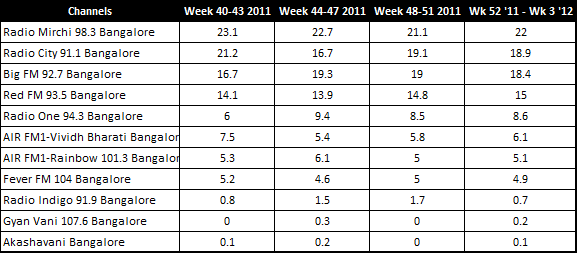
    Radio Mirchi is the number one FM station in Bengaluru followed by Radio City, Big FM, Red FM and Radio One. Between Wk 40- 43, 2011 to Wk 52, 2011-Wk 3, 2012 the radio channel share for Radio Mirchi was at its peak in Wk 40 -43, 2011 with a share of 23.1 per cent. Radio City, the second most popular FM station in OOH listenership, was also at its peak in wk 40 – 43, 2011 with 21.2 per cent share. However in week 52, 2011 – Week 3, 2012 the station share for Radio Mirchi dropped to 22 per cent whereas Radio City’s share was 18.9 per cent. The other clusters of FM stations in Bengaluru are Fever FM, Radio Indigo, AIR FM1, Vividh Bharati, AIR FM1 Rainbow, Gyan Vani and Akashavani Bengaluru.


    Kolkata:

    Kolkata has a clear number one and number two FM stations in Friends FM and Radio Mirchi. Ranked third is Red FM. The gap between the top three FM stations is significant. While Friends FM received a market share of 23.4 per cent in Wk 52, 2011 – Wk 3, 2012, the same week saw Radio Mirchi receive just 18.3 per cent market share and Red FM receive 12.4 per cent share. The other clusters of FM stations in Kolkata are Fever FM, Aamar FM, Air FM2 Gold, Oye! FM, AIR FM1, Rainbow, Radio One, Power FM, Akashavani and Vividh Bharati Kolkata.


  • RAMcheck: Media agencies on new FM listenership numbers

    By Robin Thomas


    The latest RAM data on radio listenership for the month of September to mid-October has thrown up a few surprises in radio listenership. New leaders have emerged in cities that were once strongholds of their rivals. Barring Kolkata where Radio Mirchi continues its leadership position, the remaining three markets – Mumbai, Delhi and Bengaluru have new No. 1s.


    Take Mumbai for instance, once a Radio Mirchi bastion, the latest RAM figures (category: all people 12+, all places of listening, shares) show Radio City as the number one private FM station in the city, slightly ahead of Radio Mirchi. However this time (i.e. week 38-42, 2011) Radio City had to share the No. 1 slot with the government owned FM radio – AIR FM2-Gold. Bengaluru where Big FM held its number one status for a very long time is now overthrown by Radio City. In Delhi Fever FM has become number one taking over from AIR FM2- Gold, Radio Mirchi which was number one in the city for very long time has slipped to number three position. These figures are according to RAM, All People 12+, all places of listening and all daypart (i.e. Sunday to Saturday 12 am to 12 am).


    In addition to these developments we find that when we compare week 35- week 38, 2011 (last week of August to 1st three weeks of September, 2011) and week 39- week 42, 2011 (Last 2 weeks of September and 1st two weeks of October, 2011) not all FM stations have witnessed growth in their listenership. When asked whether FM stations have reached a stagnation point in listenership, Mr Janardhan Pandey, Associate VP, Mudra Max explained, “It has not reached a stagnation point, but a period of stabilization. To further increase listenership, FM stations will have to take the quality of content and programming to the next level along with higher-level product promotions.”


    Mr Ajay Rao, Vice President, Dentsu observed, “FM stations do not have novelty working for them any more. It is today a force of habit for people who find themselves without a smartphone to keep them going. For the young people FM is losing out to other more engaging past times. Can one differentiate basis the content? Listeners tune in for music and switch channels during breaks.”


    AIR FM2- Gold which has been growing strong in listenership particularly in Mumbai and Delhi where it has emerged as a strong number two contender. What remains to be seen is whether this trend continues or will it see a decline or stagnation in listenership. Media planners are however of the view that since AIR FM2- Gold offer only specific contents it is not considered as often as the private stations. Mr Narendra Kumar Alambara, Vice President, Starcom Chennai was of the view that, “Since the entertainment content is limited in AIR, the advertisers do not consider AIR as often as compared to the private stations.”


    “AIR FM- Gold has been consistently delivering impressive numbers, this suggest that the music is most important content of a radio station and RJ/ innovations and promotions alone cannot keep you on top,” said Mr Janardhan Pandey.

  • RAMcheck: Some surprises in 4-metro stats for Aug to mid-Oct

    By Robin Thomas


    On Friday, December 2, Radio Audience Measurement (RAM) released its latest radio listenership figures for Week 35 to Week 38, 2011 (last week of August to 1st three weeks of September, 2011) and Week 39 to Week 42, 2011 (Last 2 weeks of September and 1st two weeks of October, 2011). RAM covers four key metros – Mumbai, Delhi, Kolkata and Bengaluru.


    According to the latest RAM data, for listeners 12 years and above, from all places of listening and according to share value, Radio City, Radio Mirchi, Big FM, Red FM, Fever FM, Radio One, Oye! FM are some of the top FM stations in the big four metros.


    Mumbai:

    In Mumbai Radio City emerged as the number one FM station in Mumbai, followed by AIR FM2- Gold, Radio Mirchi, Big FM, Fever FM, Red FM, are the top six FM stations in Mumbai. The other FM stations in Mumbai include Radio One, Vividh Bharati, AIR FM1 Rainbow and Oye! FM.


    If we compare growth of FM listenership in terms of shares from Week 35 to week 38, 2011 and Week 39 to Week 42, 2011 we find that Radio City, AIR FM2- Gold, Big FM, Fever FM, Radio One and Vividh Bharati are the only FM stations to have witnessed growth. Interestingly, AIR FM2- Gold emerged as the fastest growing FM station, with a share of 12.59 per cent. Radio City, number one FM radio station grew 0.63 per cent in shares. Big FM, the fourth most popular FM station as per the latest RAM figures remained stagnant whereas Fever FM saw a marginal growth of 0.88 per cent. Radio One also saw good growth of 6.25 per cent.


    The FM stations which saw a decline in their listenership share are Radio Mirchi, Red FM, AIR FM1- Rainbow and Oye! FM. While Radio Mirchi is the third most popular FM station in Mumbai after AIR FM2- Gold then Radio Mirchi saw a decline of 7.19 per cent. Oye! FM on the other hand saw a decline of 11.43 per cent in their listenership share.


    Delhi:

    The RAM figures for Delhi too have thrown some interesting figures. Fever FM emerged as the number one FM station from week 39 to week 42 (i.e. Last 2 week of September and 1st two week of October, 2011). Fever FM took the leadership position from AIR FM2- Gold which was number one in Delhi from week 35 to week 38, 2011 (i.e. (last 1 week of August to 1st three week of September, 2011).


    Ranked one is Fever FM with a share of 20.7 per cent as on week 39 to week 42, 2011. Fever FM is closely followed by AIR FM2- Gold with a share of 20 per cent. Ranked three is Radio Mirchi with a share of 16.7 per cent and Red FM with a share of 11 per cent as on week 39 to week 42, 2011. While Big FM and Radio One received a share of 5.6 per cent and 5 per cent respectively, Oye! FM and Hit FM received 3.6 per cent and 2.1 per cent share respectively.


    The FM stations that witnessed growth in their listenership share (i.e. comparing ‘Week 35 to 38, 2011’ and ‘Week 39 to 42 2011’) we find Fever FM, AIR FM2- Gold, Big FM, Radio One, AIR FM1- Rainbow, Hit FM and Vividh Bharati are the FM stations to have witnessed growth. Fever FM which leads Delhi in terms of listenership share grew 5.61 per cent, Big FM grew 5.66 per cent, Hit FM grew 5 per cent, AIR FM1- Rainbow grew 4 per cent. Radio One emerged as the fastest growing FM station in Delhi with a listenership share of 5 per cent as on week 39 to 42, 2011 which is a growth of 8.70 per cent as against 4.6 per cent share on week 35- week 38, 2011.


    Radio Mirchi, Radio City, Red FM and Oye! FM on the other hand saw a decline in their listenership share (i.e. when we compare Week 39-42 as against week 35 to 38, 2011). Fever FM, AIR FM2- Gold, Radio Mirchi, Radio City, Red FM, Big FM, Radio One and Oye! FM are the top 8 FM stations in terms of listenership share.


    Bengaluru:

    Radio City continues its leadership position in Bengaluru, it is closely followed by Radio Mirchi, Big FM, Red FM and AIR FM1- Rainbow are the top five FM stations in Bengaluru.


    Big FM which held the number one position for a long time in Bangalore is now ranked three after Radio City and Radio Mirchi. However with a listenership share of 18.3 per cent (on week 39 to week 42, 2011), Big FM witnessed a marginal growth of 0.55 per cent as against its listenership share of 18.2 per cent (from week 35 to 38, 2011). The other FM stations to have witnessed growth are Radio City, Radio Mirchi, AIR FM1- Rainbow and Radio Indigo. Radio City received a share of 24 per cent on week 39 to week 42, 2011 as against 23.6 per cent from week 35 to 38, 2011, a growth of 1.69 per cent. Radio Mirchi on the other hand grew 3.65 per cent after receiving a share of 22.7 per cent on week 39 to 42, 2011 as against a share of 21.9 per cent from week 35 to 38, 2011.


    The other private FM stations in Bengaluru are Red FM, Radio One and Fever FM which received a share of 11.6 per cent, 5.5 per cent and 5.4 per cent respectively. Red FM for instance in Bengaluru received a share of 11.6 per cent (from week 39 to 42, 2011), week 35-38, 2011, the FM station received a share of 12.3 per cent, a decline of 5.69 per cent. Radio One declined 5.17 per cent after receiving a share of 5.5 per cent on week 39 to 42, 2011 as against 5.8 per cent share on week 35 to 38, 2011. Fever FM on the other hand received a share of 5.4 per cent (on Week 39 to 42′ 2011) as compared to its share of 5.8 per cent on week 35 to 38, 2011, a decline of 6.90 per cent.


    Kolkata:

    The top five FM stations in Kolkata are Radio Mirchi, Big FM, Friends FM, Aamar FM and Red FM. While Radio Mirchi continues to lead the Kolkata market with a share of 23.1 per cent (for week 39 to 42, 2011), the second most popular FM station as per week 39 to week 42 data, Big FM is a distant second with a share of 17.4 per cent. Friends FM maintains its third rank in Kolkata with a listenership share of 15.5 per cent, Aamar FM came next with a share of 10.5 per cent and rank five is Red FM with a listenership share of 9.3 per cent.


    The other private FM stations in Kolkata are Fever FM, with a share of 8.5 per cent, Oye! FM with a share of 3.9 per cent, Radio One with a share of3.8 per cent, Oye! FM received a share of 3.9 per cent and Power FM received 1 per cent.


    Radio Mirchi, Big FM, Friends FM, Red FM, Oye! FM, AIR FM1- Rainbow, Akashvani and Vividh Bharati are the only radio stations to have witnessed growth in the week 39 to week 42 data as against their numbers in week 35 to week 38.

  • IPL 5: BIG FM takes on mania with ‘BIG Indian League’

    By A Correspondent


    BIG FM aims to create an overwhelming experience for cricket fans across the country with the ‘BIG Indian League’.  This campaign brings golden opportunity to listeners across its 45 station network, to not only relive their passion for cricket on radio by supporting their favorite teams, but also a chance to win a grand cash prize of Rs. 1 lakh and tickets to the IPL finale. BIG FM has already partnered exclusively with two leading IPL teams Deccan Chargers and Kings XI Punjab promising listeners exclusive and interesting entertainment updates on these teams.


    BIG FM is said to give T20 on radio a new exciting twist built around the game, wherein listeners have to conclude the answer by putting forth a maximum of 20 questions to the RJ. The game will have four listeners representing one of the teams playing in the IPL that respective day with BIG FM RJ. The person who guesses the right answer using the lowest number of questions wins cricket goodies and also gets a chance to win the grand prize of Rs 1 lakh.


    In addition to this, BIG FM will recreate the magic of IPL with the BIG Indian League championship in metros including Mumbai, Hyderabad, Kolkata, Bangalore, Delhi and Chennai. The cities will witness a mall activity to shortlist top 8 teams of the city. These eight local teams will then fight for the title of BIG India league Champion for the city. In Hyderabad and Chandigarh, the winning team will get to play a real match with the respective city IPL teams. BIG FM will also include live updates and insights of the cricket including toss and scores updates and players’ performance for all the matches.


    Leading cricket expert Aakash Chopra will share the insights on the matches being played and give out player trivia while leading comic Surendra Sharma will add effervescence to the cricket fever with his witty one-liners.


    The initiative will be promoted aggressively across mediums and all the updates will have their digital foot print across social media platforms of BIG FM.


    This property offers a an exciting and extensive platform to all the marketers who are keen to showcase their brands around this cricket season and ride on its multi-media promotions and massive scale of BIG FM.


    The Company Spokesperson said, “In our country, cricket is the national passion and as a brand that celebrates people’s passions, BIG FM is going all out to entertain listeners during this cricket season like never before on air, on-ground and digitally. We are committed to delivering highly engaging cricket-listening experience on radio with innovations in programming and marketing. Our scale and ability to drive quality content during this season is sure to make it deliver huge value for consumers and customers alike.”


  • Tier 2 & 3 crucial for radio: Monica Nayyar Patnaik

    By Robin Thomas


    She is the founder member of Radio Choklate, the radio arm of Eastern Media Ltd. Monica Nayyar Patnaik is the Joint Managing Director at Eastern Media Ltd., In conversation with MxMIndia, Ms Patnaik spoke at length about the trends in the radio industry, the challenges, on Radio Choklate post break-even, the phase III plans and much more.


    Q: How would you rate the year 2011 for Radio Choklate and the radio industry?

    The radio industry is still awaiting phase III announcements, and there are hopes in these announcements. Secondly, the increase in FDI has brought some cheer for all of us. As far as the copyright issue is concerned, the talks are still on, though I believe that we have gone ahead and may soon reach a breakthrough point.


    For the past three years Radio Choklate has been able to further consolidated its position and achieve break-even. The year 2011 has seen our listenership in Bhubaneswar, Cuttack and other nearby areas further increased, the reason being the change in programmes. We have been constantly changing our programmes, placed them in the right time slot and it worked well. In addition to these, our on ground activations also gave further momentum to our listenership.


    Q: Radio Choklate achieved break-even couple of years ago… what has changed for the station since then, ie in terms of infrastructure, talent, etc?

    The break-even achieved was purely advertising led, our expenditures has however gone up. One of the significant contributors was the Telecom sector. They had advertised considerably which gave us a huge boost in our advertising revenues. Besides we also deliver a lot of value additions to our clients. Going forward, it is not so easy. It is difficult in getting the right talent, and a lot of money is invested in recruiting good talent. Hence both in terms of talent pool and infrastructure it requires a lot of money and besides the copyright issue is yet to be fully resolved. In fact this year has not been so good for the industry in terms of advertising revenues which has slightly declined.


    Q: According to IRS, radio consumption has seen a decline. Do you agree? Some say that the decline is because of a delayed phase III and content restrictions…

    I have a different view on the listenership because we have been number one in our listenership since a long time and we are still number one radio station. However we have not witnessed any decline in our listenership. There are still many small town areas that need to be covered under the IRS bandwidth, many of which significantly contribute to the listenership share. Hence IRS must bring those uncovered or under covered areas under the IRS bandwidth to bring up the overall listenership.


    Q: Has radio listenership reached a saturation point in the metros and the next phase of growth for radio will come from tier 2 and 3 cities?

    I do agree that the next growth of FM listenership in India will come from the tier 2 and 3 cities as there are lot more cities and towns that need to be covered. With phase III rollout FM radio will be spreading its wings in 227 new cities. I believe it is now time that those cities which have reached saturation point must bring differentiation in terms of delivery, packaging and programming. However these developments can only take place once multiple licenses are allowed and I am sure it will help especially in cities where listeners need variety of music or programming.


    Q: Do you think the industry is confusing innovation with differentiation? As you just said, there is lack of differentiation… but, isn’t there too much innovation happening in radio today?

    It could be true however I am aiming to give listeners a different experience by getting into the niche areas i.e. by providing them a differentiated programme. So, if the listeners in my State want us to get into different areas of programming we would deliver to them what they want. So, if the listeners want a talk show they will be given, and that’s why we are so keen on multiple licenses, which is the key to differentiation.


    Q: You once said, come FM Phase III, you would want Radio Choklate to further expand in Orissa… Do your plans still remain the same?

    Absolutely, our plan still remains the same. We are looking forward to phase III, and our plans to further consolidate in Orissa. Music is just one part of radio, and for the medium to grow robust it needs other elements of contents as well, whether its sports commentaries or news and current affairs. Hence I feel there shouldn’t be any more delay in Phase III, the sooner it is rolled out the better for the industry.


    Q: Will multiple frequencies bring additional listeners and advertisers to radio or will it further fragment the listenership in the already fragmented medium?

    I don’t think so. How many multiple frequencies can one have in the same city? Multiple frequencies will give listeners more choice, and yes it will bring new listeners to radio, perhaps even those that have never listened to radio.


    Q: How has 2012 welcomed Radio Choklate? Any specific industry trends we should watch out for in the coming years?

    In 2012, Radio Choklate will look forward to FM Phase III rollout, we should be able to give different variety to the listeners and we will continue to concentrate more on local music.