Category: RADIO

  • Phase III countdown: ‘Overbidding will kill stations’

    By Robin Thomas

    FM radio listenership has more or less remained stagnant for a while since the completion of FM phase II. The soon to be launched FM phase III may have therefore brought some respite to FM stations across India. For some phase III is an opportunity to expand their listenership reach to newer cities and towns, yet for others it becomes an opportunity to further consolidate their position within a particular state/region. If Multiple Frequencies are allowed, it will introduce different genres of FM radio within the same city, thus encouraging new listeners to tune in.

    The drawback however would be the marginal FDI increase in radio to 26 percent from the earlier 20 percent. This marginal increase in FDI will probably discourage investors from taking the full plunge into the phase III bidding process. News is not available in the best of forms too, as FM stations are allowed to source news only from All India Radio.


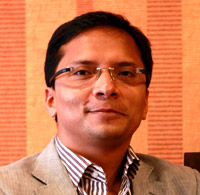
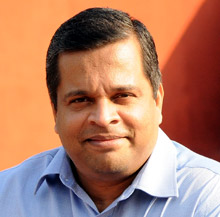
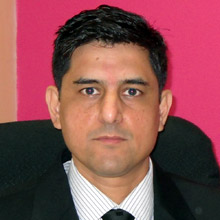
    Mr Prashant Panday
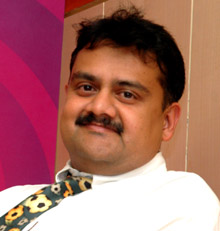
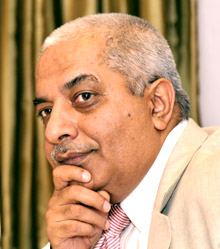
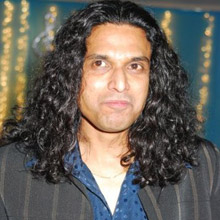
    Mr. Harshad Jain
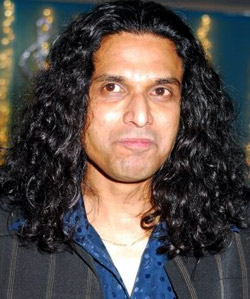
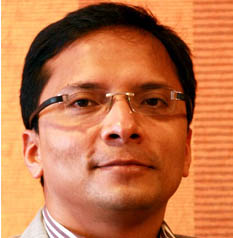
    Mr Harrish M. Bhatia
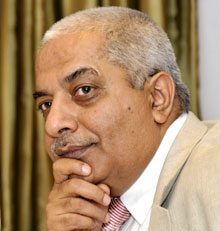
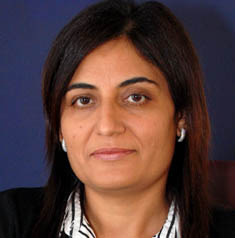
    Mr Rana Barua

    Despite all these developments, FM stations face a whole lot of other challenges which may have a direct or indirect effect on their phase III plans. The Music Royalty issue still remains unresolved, as a result of which FM stations, particularly in small towns, have to pay higher royalty. With expansion there would also be an increase in operation costs, and employee or talent management could be another challenge. MxMIndia spoke to few FM players to find out their views on the challenges for FM stations in phase III.


    Mr Prashant Panday, CEO, Radio Mirchi explained, “If people overbid in Phase III, they are finished. Radio is not like TV. One has to be extremely cost-conscious. One has to keep his head down while doing the business of radio. Phase III has e-auctions. There is a very good chance of bids going haywire. This is what each bidding broadcaster has to keep in mind.”


    Mr Harshad Jain, Business Head, Fever FM observed, “Phase III will bring with it a set of inevitable challenges like rising costs to set up new stations, and getting new audiences while the radio industry on the whole is still grappling with current costs and investments.”


    Mr Harrish M Bhatia, CEO, MY FM said, “The most important is the Royalty Issue; till the time it is completely resolved, it is quite difficult for the radio industry to grow efficiently. The absence of an acceptable radio measurement tool is another challenge. Content restriction is a big restraint for the industry as we are not allowed to provide self-generated news content. The challenges faced by the radio industry in the cities and towns other than the six metros are more or less the same as above.  To overcome these, the industry as a whole needs to work in tandem.”


    One of the possible challenges that FM stations can no longer remain immune from is the global economic climate. The uncertainty hit the world economy just before the FM phase III rollout, which may have some impact in the bidding process. “India as an economy is still expected to show healthy growth rates despite global sluggishness and we believe Radio will see greater volumes in a downturn too. The key issue is the ability to take up prices that will be difficult to manage in a downturn,” explained Mr Jain of Fever FM.


    According to Mr Bhatia, “The global showdown is more of metro phenomenon, hence it has not impacted the tier 2 and tier 3 cities. In fact, the radio business growth, even for existing players, is expected from non-metro cities.”


    In an earlier interaction with MxMIndia, Mr Rana Barua, COO Red FM had said, “I believe we should be taking complete cognizance of the fact that there is definitely a slowdown. The clients, advertisers, everybody are extremely, extremely careful about the money they are investing in any form of media. Taking things for granted and creating business plans for next two or three years seems passé now.”


    Three schools of thought emerged from this interaction, one which believes that the economic slowdown is a metro phenomenon. The second line of thinking is that the despite the global slowdown, the radio industry will continue to grow. And the other believes that the industry must admit the fact that there is a slowdown and hence the industry must take a cautious approach especially during the phase III bidding process.

  • The lesson so far for FM players

    By Robin Thomas


    FM Phase-I Policy was approved by the Government in July, 1999. Under Phase I policy, a total number of 21 FM radio channels are operational in 12 cities. FM Phase II on the other hand has a total of 336 channels in 90 cities across the Country whereas the much awaited FM Phase-III policy seeks to extend FM radio services to about 227 new cities. Phase-III will cover all cities with a population of one lakh and above, simultaneously, there will be a total of 839 new FM radio channels in 294 cities. In addition to this Foreign Direct Investment (FDI) in radio has been raised from 20 per cent to 26 per cent, if allowed, multiple frequencies will bring new genres in radio leading to content innovations, and the overall advertising pie is also expected to rise from the estimated 5 per cent.


    While the FM phase II may have been well received by the industry, all FM stations have reported break-even. Smaller FM stations are more likely to face huge challenges ahead especially since the music royalty issue is yet to be resolved. Overbidding in phase I and II could be just one of the issues, MxMIndia asks some of the industry players what lessons the FM radio industry can learn in Phase III from the earlier Phase I and II.


    Mr Prashant Panday
    Mr Rana Barua
    Mr Harrish M. Bhatia
    Mr. Harshad Jain
    Mr. Ashish Pherwani

    Mr Prashant Panday, CEO, Radio Mirchi observed, “One main lesson from Phase I and II – Do not bid so aggressively that you can never recover your investments. Those who bid sensibly in Phase-II (very few) are making PAT profits this year. Those who did not are at best making EBITDA break-even. Some are still making EBITDA losses. These people sometimes feel overjoyed that they have turned EBITDA positive; but fail to realise that the returns on investments only start after you turn PAT positive. There are barely 4-5 years left for the licenses to get over. If a company is not PAT positive yet, it has no hopes of generating any decent ROI. This is the main learning from the first two phases.”


    “The 2nd learning is about being able to bring brands. But to build brands, companies need profits. So again, if you have bid wrongly, you don’t have enough resources to build brands. That’s what our research shows every quarter. That except for Mirchi and maybe one-two other brands in some specific cities, no other radio station has been able to build a brand. They may have listenership, but they still don’t have a brand. There are no attributes that people assign to these brands. No values that the brands stand for. Without a solid brand, listenership suffers. Pricing suffers. And long term profitability suffers” he added.


    In an earlier interaction with MxMIndia, Mr Rana Barua, COO Red FM said, “One of the critical learning that a lot of us had in phase I and II is not to overestimate the potential of the market. The biggest challenge that lies for all of us is knowing that uncertainty has become such a huge thing today, therefore I think a cautious approach is going to be extremely critical.”


    According to Mr Harrish M. Bhatia, CEO, MY FM, “What was witnessed in Phase 1 and Phase 2 is totally different than Phase III. The Phase-3 rollout will increase radio penetration, making it a pan-India medium, reaching tier II & III towns. The most important thing that the radio players need to keep in mind is to bid realistically.”


    Mr. Harshad Jain, Business Head, Fever FM had a different viewpoint, he said, “The regulatory amendments in phase III are ultimately expected to facilitate industry growth.  FDI has been increased and might drive some additional investment in the industry. I do believe that FDI should have been raised further to actually fuel growth and overall industry development. Another key change is to allow multiple frequencies in the same city but we will have to wait and watch how this rolls out in practice. Another key shift in policy is the e-auctioning route as this will take the license fee to new highs, especially for frequencies in metros like Delhi and Mumbai.”


    Mr. Ashish Pherwani, Associate Director, Advisory Services, Ernst & Young, has seven point suggestions to the FM players, some of them are  the key aspects that all radio companies need to address vis a vis phase III are: –


    1. “Which licenses to bid for-  How well the new stations complement the existing bouquet of stations in terms of tactical sales, the future revenue potential from these stations both from the point of view of generating local revenues and adding on to the revenue generating ability of other stations, etc.”

    2. “Bid values- The bid value should logically be based on the revenue generating ability of the station over its license period, and expected costs.

    3. “Alliances.  Some radio companies need to consider which stations to bid for on the assumption that they will form alliances with other networks that together will provide advertisers with national, regional or state-wide reach.  In addition, radio companies with existing ad sales.” In addition to these, “Trade licenses that add value to other networks, Using FDI effectively, Build better MIS and control mechanisms to prevent operational chaos and Focus on People” are some of his suggestions to the FM players.


    As one of the industry player said FM Phase-III is not the same as Phase I and II, true, but it is bound to have challenges of its own perhaps even more bigger and tougher. MxMIndia will focus next on the challenges for FM radio in Phase-III.

  • The Anchor: 8 key aspects of Phase III that radio companies need to address

    By Ashish Pherwani


    #1 Which licenses to bid for:

    The answer is quite complex, as it needs to consider the ability to sell the new stations both singly and as a bouquet, how well the new stations complement the existing bouquet of stations in terms of tactical sales, the future revenue potential from these stations both from the point of view of generating local revenues and adding on to the revenue generating ability of other stations, etc.


    #2 Bid values: 

    The bid value should logically be based on the revenue generating ability of the station over its license period, and expected costs.  But when you factor in that the revenue generating ability depends on the listenership position the station achieves, the rest of radio company’s station network, the efficiency of the sales team, expected competition in the market, etc, and the cost depends on variables like the license period (10 or 15 years), the rate of music royalties, the ability to share infrastructure and content, etc, it’s a complex decision to make!


    #3 Alliances:

    Some radio companies need to consider which stations to bid for on the assumption that they will form alliances with other networks that together will provide advertisers with national, regional or state-wide reach.  In addition, radio companies with existing ad sales alliances may need to reconsider these in the light of the licenses they propose to bid for.


    #4 Trade licenses that add value to other networks:  

    Radio networks are entering the phase where they will be able to begin trading their licenses.  Some radio companies may want to exit, and valuations aside, may find buyers in those wishing to enter the segment, as well as those which need to increase their presence through a more assured mechanism.  Particularly if multiple frequencies are permitted.


    #5 Using FDI effectively:

    Given the increase in foreign investment that is expected to be permitted, radio companies are already looking to identify partners / investors.  The long term strategic fit and the degree of control that is required to be diluted are key areas that need to be considered.  Particularly since there will also be a Phase 4 one day.


    #6 Go for multiple frequencies:

    If they do come into being, the key questions will pertain to the programming mix – what genre should the new station be? – and ad sales – how not to discount the existing station’s rates when selling space to advertisers.


    #7 Build better MIS and control mechanisms to prevent operational chaos:

    Given the growth in the number of stations, the need to refine processes, automate, and ensure an adequate level of controls in the new, and existing, stations, will be key.  As the span of controls increases, controls always get less effective.  Processes which were performed manually across 20 or 30 stations won’t continue to operate across a 100 stations.  Key persons from existing stations will be used across new station launches, and that could cause the controls environment in existing stations to get lax.  Integrating station infrastructure and content, centralising capex and support function, implementing standard operating procedures and accounting checklists could benefit radio companies.


    #8 Focus on people:

    When 300 stations become 900, the number of people is expected to grow by 175 percent as well.  Recruitment, training, and then monitoring the new set of radio operations will be a challenge by itself.  Not to mention managing the inevitable poaching!


    Ashish Pherwani is Associate Director, Advisory Services, Ernst & Young Private Limited.

  • FM stations go for out-of-the-box content

    By Robin Thomas


    Often criticized for airing uniform content across channels, FM radio stations have already begun exploring content that goes beyond just regular Bollywood music. Unlike print, television or the internet, radio in India continues to be a highly regulated medium. Contents across various radio channels are restricted to music, though multiple frequencies if allowed by the government is likely to change this. News on FM radio has already been given a nod by the government of India, but not everyone in the industry is chuffed about this development as it restricts news to be sourced only via AIR (All India Radio).


    Nisha Narayanan

    Meanwhile, even as the ups and downs over restrictions continue, FM stations are leaving no stone unturned to offer their listeners out-of-the-box content, each station wanting to sound different from the other. Fever FM for instance, has a mythological show, ‘Ramayan’ with huge fanfare and ‘From Russia with Love’, an infotainment programme. Radio Mirchi airs ‘Sunday Suspense’ in Kolkata, wherein the RJ (Radio Jockey) narrates stories written by authors like Satyajit Ray, Saradindu Bandhopadhyay among many others. Red FM on the other hand initiated shows like ‘Red Arrest’ and ‘The Mental Show’ in Delhi and Mumbai respectively.


    Ms Nisha Narayanan, Senior VP Projects & Programming, Red FM said, “Red is known for innovative programming. In the present, the two most innovative program initiatives are ‘Red Arrest’ in Delhi and ‘The Mental Show’ in Mumbai with Suresh and Hoezay. The treatment of both is edgy, humorous, shocking, tongue-in-cheek, and the response has been phenomenal. They both have been the talking point of Delhi and Mumbai Stations respectively and have gained tremendous traction. The mails , calls , responses have been consistently pouring in – and it’s not a surprise!”


    Mr Sriram Kilambi, Marketing Head, Radio Mirchi stated, “Sunday Suspense is an amazing show in Kolkata. It is produced in-house by our Mirchi Team in Kolkata. The show has many firsts to its credit – being the first in its genre – and has been supremely well received. The show is targeted at the general Kolkata public who is afraid that the current generation will start to lose touch with Bengali literature. This show has been one of our biggest successes thus far.


    Sunil Kumar

    “Sunday Music Company on the other hand is a show in Mumbai that basically talks to those behind the music of the latest release. So, while you get a lot of movie reviews, this is a one-of-a-kind music review that tells you about the music, its makers etc. Sundays have been very strong for Radio Mirchi, largely thanks to innovative shows like the SMC.” he added.


    According to Mr Sunil Kumar, MD, Big River Radio, “FM stations have experimented a lot with music content, and they are doing a good job by offering differentiated content within music itself. Today listeners are able to identify their favourite FM stations and very soon there will be further differentiation in content, with or without regulations.”


    Ashish Pherwani

    Mr Ashish Pherwani, Associate Director, Media & Entertainment, Ernst & Young observed, “Content innovation in FM radio still has a long way to go, as currently every other FM station is plays popular music with little bits of innovation here and there. I believe content innovations will actually happen once multiple frequencies are allowed which is likely to happen in phase III.”

  • The Anchor: Devraj Sanyal on the 10 songs you’re sure to hear on FM radio

    #1Satyameva Jayate: From the most awaited album SuperHeav’… It’s the track which brings the nation together… has that anthemic feel.

    #2 Lady Gaga, The Edge of Glory: A must-have artist in your playlist, the biggest pop icon the world is gaga over.

    #3 Enrique Iglesias, Dirty Dancer: The most loved artiste in India, one of the highest selling in the country.

    #4 JLO, On the Floor: The biggest club hit in recent times… gets JLo back on the music scene.

    #5 Raab Rakha, Love Breakups Zindagi: Very young and vibrant song, a direct connect to today’s youth.

    #6 Jessie J, Price Tag: Purely for its lyrics… It’s not about money money money.

    #7 Watch The Throne, I love you so: A must-have for hiphop fans – two hiphop idols in one album!

    #8 Pal Pal Dil Ke Paas, Blackmail: Played on all the radio stations on their classic shows… Kishore Kumar is definitely hamaare dil ke paas.

    #9 Yeh Dosti, Sholay: An evergreen friendship track.

    #10 Senorita, Zindagi Na Milegi Dobara: Very cool, very young, from a new-age young film.


    Devraj Sanyal is the Managing Director of Universal Music India

  • The Anchor: 6 reasons a listener can never fall out of love with radio

    By Ashit Kukian

    #1 Radio gives listeners different genres of music and a fresh playlist all through the day. And that is further packaged with warm and friendly RJs, topical banter, guest appearances and lots of surprise elements to keep listeners wowed every minute of every day.

    #2 Radio is credited with being the ‘Theatre of the Mind’ since it engages one’s imagination more actively than a visual medium does.

    #3 The level of engagement and interaction that Radio enjoys with its listeners is incomparable to any other medium.  From conversing with listeners on a daily basis, to celebrating their joyous occasions of life, Radio touches the lives of all its listeners.

    #4 Radio provides listeners with Infotainment – relevant and topical information presented in as entertaining a way as possible. Radio then serves as a mood-enhancer by catalyzing one’s mood and uplifting the spirit of the listener who tunes in.

    #5 Listeners can relate to the medium in a very personal and intimate way. It can be a loyal friend to some and a confidant to others. So much so that you’ll often find listeners confiding in RJs about their deepest fears and problems.

    #6 Being a local medium, Radio fits seamlessly into the fabric and framework of the city. It serves as a lens through which listeners can get a glimpse of the pulse of the city.


    Ashit Kukian is COO, Radio City 91.1 FM.

  • Prashant Panday: ‘Coz radio is sexy!

    By Prashant Panday

    It’s indeed great to be in the radio business! Provided you are the leader and have managed your costs well! Provided you are a listenership leader and your listenership helps you command a good enough pricing in the market! Provided your work culture is so much fun that you are able to retain the top talent and top management both! Provided you have managed your business so well that you are well prepared to take on future challenges and opportunities! In short, provided you are a Radio Mirchi!


    For the rest, radio has been an uphill challenge right from the time the auctions for Phase-2 ended in Jan-Feb 2006. Right from then, losses have only mounted for most broadcasters. When things started to get a little better, they got a lot worse when the economic slowdown hit in 2008-9. When things got a little better again last year, and many of the larger broadcasters achieved EBITDA breakeven, almost half the license period had ended. In the radio business, if you hit EBITDA breakeven at the mid-point of your license period, you have no hopes of delivering returns to your shareholders. That indeed is the story of most radio broadcasters.


    However, the future does look brighter than the past has been. Provided again, if broadcaster handle their businesses sensibly in the future; provided they bid reasonably and sensibly in Phase-3 auctions. Those who chase network size at any cost will continue to be in trouble for the next 15 or even 25 years. Those who bid smartly – even losing a few important stations in the process – will be able to make the radio business profitable.

    One has to remember this – radio is not TV – here costs are paramount. This realization is more important than anything else. In radio, one has to keep one’s head down; focus on brand building; not get too flashy or ambitious; and keep plodding away at the key drivers of the business. That and that alone matters in the radio business!

    For such broadcasters who bid sensibly, the road ahead is indeed exciting. The radio industry has scaled only the 5 percent peak – 5 percent as a share of the total advertising industry. The 8 and percent peaks are set to be scaled in the next few years.

    As the number of cities increases, the importance of radio is bound to increase. First there is Phase-3 to provide the impetus – taking the penetration of radio to more than 300 towns. Then there is bound to be the next phase – Phase IV – in which the government is sure to add more frequencies in the major metros. That should give radio another big impetus. In fact, the government can launch both phases 3 and 4 simultaneously.

    The radio industry has given an easy formula for the government to offer more spectrums to radio broadcasters, thus more than doubling the number of channels in the major metros. Simply reduce the gap or separation between two adjoining FM channels from 800 Khz to 400 Khz and the number of frequencies will double! Everyone will gain – most so the government which can rake in much higher license fees. Equally so…..the listeners at large…..who will get much more programming variety to choose from. This will help broadcasters also who will get to operate different formats – after all, in which other media segment is there such a shortage of formats? There are more than 750 TV channels, thousands of newspaper titles and tens of thousands of outdoor sites and websites. Why then are there so few radio stations?

    To end, radio has always been a sexy medium. It’s the medium in which advertisers can truly dive and get the best out – at a regional and local level. Advertisers who predominantly use TV can use radio to give a local flavour to their campaigns. Advertisers who primarily use newspapers can use radio to give a “smart personality” to their brands. Radio is poised at that interesting cusp – when people who work in good radio companies can grow their careers much faster than they can in comparison to TV and print companies. Radio is truly a sexy medium!

    Prashant Panday is CEO, Radio Mirchi

  • Primetime debates an excuse for doing TV cheap: Mark Tully


    By Shruti Pushkarna


    [youtube width=”350″ height=”200″]http://www.youtube.com/watch?v=2RilcOb3GrQ[/youtube]
    [youtube width=”350″ height=”200″]http://www.youtube.com/watch?v=PdgXFlJ8g1g[/youtube]

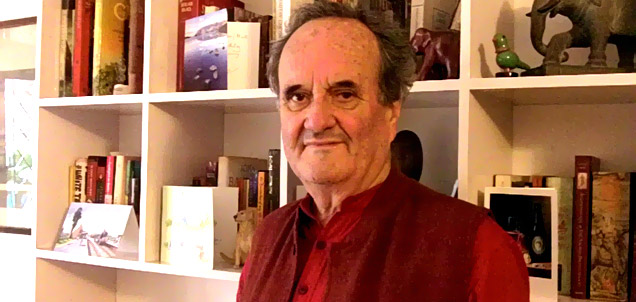
    He likes to refer to himself as ‘British who is much influenced by India’. Often called an ‘expert on India’, Sir Mark Tully is famous for his extensive reportage of the changing social, political and economic trends in India as the BBC India Correspondent and as BBC Bureau Chief later. He quit the BBC in 1994 after an argument with the then BBC Director General, John Birt, where Mr Tully accused him of running the corporation by fear. But his deep-rooted familiarity with India and its culture made him stay on here even after his term ended with the BBC.


    Sir Mark Tully has co-authored and authored quite a few books on India, his latest being Non Stop India which he released in the capital last week.

    He is currently the regular presenter of the weekly programme, ‘Something Understood’ on BBC Radio 4.

    In this interview with MxM India at his Nizammuddin residence, the veteran journalist shared his views on what he thinks of the Indian media today. Mr Tully also shared some instances from his BBC days to point out the changes that the media has seen over the years. While he seemed extremely hopeful of the print media, he felt there is a need to hold back the expansion in Indian television to see what’s going on really. “Technology,” he says, “is being badly used to overload journalists, particularly in multimedia organizations, to make journalists into radio, television and online journalists at the same time, with the net result that they have absolutely no time to find out what’s going on.”


    And although he believes that India has a great future, he urges India to stop following the western model and to create its own way forward.


    Q: Much has changed from the time you wrote No Full Stops in India. If you were to write that book now, what would change?

    I think the big thing that would change would be that India is in a very different position economically than it was before, and India is in a very different position in what I call ‘morale terms’ as well. At the end of the ’90s, things were looking very bleak in India, we’d had twenty years or more of Neta-Babu Raj and the economy was stagnant basically because of that neta-babu raj and all the bureaucratic controls that existed, particularly controls on investment and on doing business. So that would be very different. But one thing I would say which would not be different would be the emphasis on that India must find its own way ahead and not simply ape and follow American or the western model.


    Q: The Indian media has gone through an explosion in the last five to 10 years. As someone who dominated the airwaves just before that, what’s your take on the current explosion?

    Well I don’t think I ever dominated the airwaves but what has happened basically is that television has taken over in a big way and sadly radio, the media which I love best and which I think is a very very important media, has not been allowed to develop properly because the government has restrained control over news and current affairs. Television has expanded and I believe that what is now needed with television is to sort of in a way call a hold to the expansion and look at what is going on on television and see whether improvements cannot now be made in that.


    Q: We have had a Press Council Chairman Justice M Katju virtually damning the media and media persons. There are many who agree with him but say he’s got no right to say it. As an outsider now, do you agree with Justice Katju’s views?

    I think that maybe he overstated the case, probably he did. But I don’t think we should react hysterically as journalists. I think that we should examine ourselves and see what is going wrong and there are things which are going wrong. And the first thing I would say is our failure to stand together to resist the onslaught of commercial pressures which have turned television and newspapers, and even radio into commercial rather than news organizations. Secondly, I think that we journalists, very much need to examine the way we exercise the editorial function. There isn’t, particularly in television, enough editing going on. I’ll give you one example, the Bombay attacks, if the editor in the studio had exercised tight control over reporters in the field then we wouldn’t have gotten into the mess that we did over the Bombay attacks. That’s just one example. Time and again, you see examples of shows which drift on, breaking news which drifts on without any apparent editorial control. And thirdly, what I find whenever I ask anyone in television, whether there are reviews of what has gone on the day before or a week before so that people can learn from their mistakes, so that you can criticize and benefit from that criticism, I’m always told that reviews don’t take place. When I worked in BBC World Service Radio, we used to have two meetings regularly every day; part of that meeting was looking forward to the news we would be covering that day or expected to have to cover and part of it was very much a review, and a critical review of what we’d done the day before.


    Q: Your views on the long-drawn-out debates with the usual suspects as panelists on Indian television prime time news?

    Well, as someone who is sometimes on these panels, frankly I am amazed that there are so many of them. There is a stage army of people really who come on to these panels and they always get politicians, and the political parties send the same people every time. And I think this is largely an excuse for doing television on the cheap. I personally believe that we should have other ways of presenting the news, discussing the news than endless panel discussions, and of course one way which you would have seen nearly often enough is through news and current affairs documentaries.


    Q: And while Indian media has gone through this explosion, how would you think the British media has seen the last decade?

    Well I think that the British media has changed a great deal in the last decade because of course of the media which you are in, the internet and the electronic media, that has had a very considerable effect on newspapers. Newspapers have been the main victims really and you’ve got a situation in London for instance, where a historic paper like the ‘Evening Standard’ is now given away free because it couldn’t get enough circulation to attract advertising. I think the commercial impact has been there in Britain as well. And the other thing I think change has come to over very much, which I think is a pity, is that there is far more of correspondence giving you the news in conversations with presenters rather than properly crafted news stories; and very often television just turns into bad radio. The other day I saw a comedian do a wonderful imitation of these dreadful interviews where clearly the presenter has warned the correspondent of what the question is going to be. So the presenter very earnestly asks him a question like, ‘Is the rupee going to fall further?’ And the correspondent says, ‘Yes, yes you are quite right, that is the big question.’ That sort of thing rather than the properly crafted news stories. And also like in India, because it is so much easier to broadcast from the site, there is too much broadcasting from the site now and too much repetition. I was watching the night that Gaddafi was killed, and you saw the same pictures going round and round and round.


    Q: Since the time you were active and on the field in India, what do you think has been the changes that the political class has had towards the media?

    I think the political classes have become more organized, they have these spokesmen now and all that. I think some of them rather like coming on the Tele, they weren’t so interested in coming on the radio. When I was with the BBC, it was a strange fluke of history really because the transistor radio had come and so radio listening was very widespread but all the listeners had was to listen to the All India Radio. So lots of them turned to the BBC as an alternative source of news and we became in effect, a domestic news broadcaster. So that meant that the politicians were much more concerned about the BBC than I think they are now, their attention is much more on the local media now.


    Q: And vice versa? Journalists towards the politicians? After all they are all in the hunt for the exclusive?

    I’m not sure that there has been any big change about that except one thing, I wouldn’t say they are in the business of exclusives, they are in the business of much less worthwhile, which is ‘bites’. Time and again, when I go to a book launch or something like that, quite often a young journalist would come up to me and say, ‘can you give me a bite?’ That didn’t use to happen nearly as much. And we used to have many more set-piece interviews. I must in my time have done five or six interviews with the Prime Minister, with Indira Gandhi, I interviewed Rajiv several times, I interviewed Morarji, I made a whole film about Morarji. Now you don’t see those set-piece interviews and the big leaders don’t seem to have as many set-piece press conferences as they used to have.


    Q: What’s your view on the Indian print media? With the breaking news constituency now clearly dominated by news television, has Indian print been able to adapt itself to the new times?

    I think that the Indian newspapers do seem to have adapted quite well, circulation figures as far as I know are doing very well. What there has been I think which is very important and very good thing really, is there has been a realization of the power and influence of the media in languages other than English. Even twenty years ago, general assumption of advertisers was why bother to advertise in a Hindi or Punjabi or Bengali media because people who read those papers, they don’t have much money, they can’t buy what we advertise. So all the stress was on the English media. Now if you look at the top ten newspapers, you will find there is only one English newspaper in that, and that was the Times of India. So I think this is a good and healthy development which has taken place.


    Q: Do you think a News of the World-like scandal could ever happen in India?

    Yes it could happen anywhere. I’m not saying that I have evidence that people are tapping phones here but there’s obviously a risk that journalists will fall into that. If you take the whole question of sting operations which comes fairly near that, there have been cases In India where sting operations have been mounted against the wrong person or not for proper reasons and that has caused problems and we do know perfectly well that in the local press, in remote areas, sting operations are sometimes used as a way of blackmailing people. In my view, sting operations should only be used when there is a story of very considerable importance and there is no other way of getting at it.


    Q: Rupert Murdoch isn’t a bad name here in India… our values are different.

    Perhaps he’s not a bad name in India because he isn’t a name here really. Yes he is involved marginally in television here but you don’t have Murdoch newspapers here and you don’t have a channel like Fox News either. And you haven’t had a phone-tapping scandal like the News of the World one. So maybe he is comparatively unknown here, although maybe he wouldn’t like to hear that.


    Q: And what about our corporate sector? You have written a whole chapter celebrating the Tatas. Did the Radia tape controversy impact your views on the group? Especially Mr Ratan Tata?

    Well that’s all very muddy and I mentioned in my chapter about Ratan Tata and I mentioned that his voice was heard but I didn’t come to any conclusion about it. The reason why I’ve written about Tatas in my book was something which some people haven’t quite understood. It wasn’t really to investigate them and say that are they good or are they bad, what is good about them, what is bad about them. The thing was really to bring to the attention of people, the remarkable achievements of the Tata group once they were freed from the restraints of the Neta-Babu raj and of the license permit raj. So that was the intention, to demonstrate the enormous ability that there is in India if only we can get governance right. And also to get into the book some criticism of the government and bad governance by business because I always contend that if only business will raise its voice against bad governance then we may get something done about bad governance; because if business doesn’t flourish, then the economy doesn’t grow and all the politicians seem to be interested in is the economy growing. But I would just add one thing there, I don’t believe that business should be able to dictate the policies of the government; I do believe that business needs to play a role in a balanced economy in which all sorts of other elements are also playing a balanced role.


    Q: The fact is that the news media is dictated by technology these days. Is that a good thing or bad?

    Well, you know, I didn’t think things in life to be wholly good or wholly bad. There are advantages in technology and disadvantages. The great disadvantage I think of technology now is that it is the ability to transmit news on the spot is being badly misused. It’s being badly misused by the endless badly edited breaking news syndrome. It’s being badly misused by this overuse of this syndrome of a presenter talking to a journalist on the spot. And it’s being badly used to overload journalists, particularly in multimedia organizations, to make journalists into radio, television and online journalists at the same time, with the net result that they have absolutely no time to find out what’s going on. So the ability to communicate in any way is of course valuable but we always forget that there can be over-communication. I think many people spend far too much time in front of screens rather than meeting people face to face. Recently I did a radio programme about the difference between talking to people on the net and talking to people face to face.


    Q: India doesn’t have any news on private radio (except of course the government saying that private FM saying you can take All India Radio feeds). Do you think that once in, there could be yet another dramatic change in the way we will see news?

    Yes, I think there would be a dramatic change, I think it will make a difference to FM radio. It would give FM radio many more listeners. If you take the example of Britain, the No. 1 political show of the day is not on television, it’s on radio; the one which sets the agenda is the Today programme on BBC Radio 4. If you go to Britain and you talk to a lot of people, for many people it’s almost become fashionable to say ‘I don’t watch television but I do listen to radio’. Radio is a hugely powerful medium and of course news can be prepared to broadcast on FM radio, it will make a big difference to radio and I think there will be many people who’ll turn to FM radio for their news.


    Q: And one final question: Telling a story on radio versus telling a story on television?

    Well I think telling a story on radio is much harder than telling a story on television. But, and I firmly believe this, the pictures on radio are better than the pictures on television. And the pictures you tell/show on radio, you describe on radio, the stories you tell on radio are much more likely to stick in people’s heads than television shows are. The art of radio broadcasting, in many forms of radio broadcasting, is to make each listener think that you’re speaking to them individually and I think you can do that in a much deeper and more meaningful way on radio than you can do on television.


  • Would ‘Kolaveri Di’ have been a rage if it was only aired on FM?

    By Robin Thomas


    Already a huge hit online, with more than 94 lakh views on YouTube, and more than 46,000 ‘Likes’ on Facebook, ‘Why this Kolaveri Di’, a Tamil-English song promoting the Tamil film ‘3’, has become a national rage. The song became so popular online that it was instantly picked up by FM stations across the country irrespective of their language. The Chennai station of Big FM and Radio Mirchi however claim to have aired the song first on radio and that the song was heavily promoted on radio even before it became a craze online.


    According to a Big FM spokesperson, “The song is a rage – both nationally and internationally. Big FM premiered the song at our Chennai station with the musicians, following which it went on YouTube. It was the power of the product – lyrics and music that made it a hit! Radio today, has a key role to play in marketing and creating viral music, and in this case too, it worked! We played the song, across our stations in its Tamil-English version.”


    So, would the song would have created a similar sensation had it been aired only on FM radio? While there are those in the industry who believe that radio has the power and the reach to create a huge sensation, there is a section in the FM radio sector that are of the view that a ‘Kolaveri Di’ kind of national rage was only possible through Facebook and YouTube, as radio is more city/ town or even state-oriented.


    Vehrnon Ibrahim, National Programming Head, Oye! FM

    Vehrnon Ibrahim, National Programming Head, Oye! FM said, “I doubt the song would have been a huge sensation on air (radio) as compared to the craze online. We started playing this song only after it became a huge sensation on the social networking sites. It’s quite an entertaining song, a very filmy story, and we cover all that is filmy or entertaining. We are therefore following the story and not the song.”


    Kartik Kalla, National Programming Director, Radio City said, “Yes of course radio would have created such a rage. After all it’s the same person who tunes in to FM and online so whether radio airs it first or after two days is immaterial.”


    “We have a very robust policy where songs are tested with the listeners before being put on air. But honestly with Koleveri Di that was not required because it has broken all kinds of records online and you certainly can’t ignore that!” he added.


    Ravindran Nair, Director Programmes, Radio Mango

    Ravindran Nair, Director Programmes, Radio Mango, also believes that the song would have been a huge sensation had it been aired first on radio. “Definitely it would have been a hit. Radio has done similar things very successfully. In our case, a song from an album “Coffee on MG road” called “Palavattam” by actor/director/singer Vineeth Srinivasan became huge with radio airplay. Social media has become a part of marketing mix for most products and films and music will be no exception” he explained.


    On a different note, Shaan Menon, Manager Content CLUB FM stated, “I don’t think the song would have been such a rage had it been aired on radio first, it is all because of YouTube or Facebook. Just like Kolaveri, any radio link or radio creative such as a promo or an interview bite can also become viral. It’s unpredictable, but will happen for sure. These days, the internet is the first testing platform for any creative product. So, a product getting well sold on the internet is undoubtedly the choice of the masses! Social Network helps us to extend the reach of our product to more number of people.”


    He further said, “Radio is confined to a city or a state or to a nation, the possibilities for a Channel to fly high taking the flight of a social networking site is a huge positive sign. Radio is a medium which plays the right taste of the people. It’s just like his favourite restaurant where the listener gets his favourite food.”


    Some of the FM stations playing the ‘Kolaveri Di’ song are Radio Mirchi, Red FM, Big FM, Radio City, Oye! FM; Club FM, Radio Mango, Radio Hello and Radio Choklate.


    Of course the frequency of the song is pretty high among the south-based FM stations, particularly those in Chennai. The frequency of the song played on the Big FM Chennai station is also said to be very high as compared to its stations in other parts of the country. According to Radio Hello’s website, ‘Kolaveri Di’ has already become the top most popular song in its ‘Top 10 songs for this week’ list. Club FM, a Mathrubhumi initiative, used to play this song for 16 hours a day with a special promo along with it; Radio Mango, another FM station in Kerala, a Malayala Manorama initiative, used to play this song twice per hour, with heavy rotation. Radio City plays this song three to four times a day across their 20 stations whereas Oye! FM plays it for 172 hours.


    Interestingly, ‘Kolaveri Di’ is not the first song to have crossed language barriers among FM stations. Even earlier songs like, ‘Aika Dajiba’, a popular Marathi song; Tamil Song, ‘Apdi pode’ were played in various FM stations in the country irrespective of their language.

  • The Anchor: 5 reasons radio will flourish, forever

    By Sunil Kumar


    #1 It is Local:

    People are more curious about or interested in the happenings in their city or town. Interest in local culture is developing and radio caters to that local culture which other media just cannot. Radio is absolutely local.


    #2 It is Participative and Interactive:

    Radio is the only medium where people can air their voice… leave a request… and it provides numerous other ways for active listener participation. Increased density of mobile phones is encouraging this interactivity further. Even social media has its own set of limitations…


    #3 It has an Abundance of Content:

    Today different kind of music is played on radio. It is not limited to Bollywood. Since it is a local medium, the music played too is in local language and in accordance to local taste. Today large number of music is produced in India, especially local music. ‘Kolaveri Di’ is one example. Bhajans, Sufi music, or hymns are some other music one can hear in different parts of the Country. In addition to these, the availability of sports commentary and multiple frequencies will offer listeners with more even more differentiation of content.


    #4 Car Listenership is Rising:

    Nearly all cars today have FM stereo attached, and as the number of cars continues to increase, it will further increase car listenership. More cars on the road also means frequent traffic jams. There are also those who travel long distances, and as a result time spent in listening to radio is also likely to increase.


    #5 It’s Free:

    Unlike any other, radio happens to be the only medium which is actually free.


    Sunil Kumar is MD, Big River Radio and a veteran mediaperson

  • FDI’s 26% allowance: Are radio players happy?

    By Shubhangi Mehta


    The government has enhanced the foreign investment limit for FM radio to 26 percent from the earlier 20 percent.


    This change ensures conformity of the foreign investment limit with other similar activities in the Information and Broadcasting sector.


    Rana Barua

    Is the increase adequate or was there more that was expected?

    Mr Rana Barua, Chief Operating Officer at RED 93.5FM, put forth his views by stating,” it’s a positive sign for sure for the industry .

    Whether Red Fm is looking at upping the Astro stake, Mr Barua said, “We will try and look at that but this will all depend on internal decisions hence there is not much to be said on this as of now”.


    “It is a welcome change but we will be able to gauge its real value closer to the bidding date of phase3 when migration policy is clear.  While radio in india is possibly one of the highest CAGR media in the world, the global economic situation needs to be accounted for in order to ascertain foreign investment’ interest,” said Mr Vineet Singh Hukmani, MD, Radio One.


    Apurva Purohit


    On this Ms Apurva Purohit, CEO, Radio City 91.1 FM said,”The increase in FDI in Radio sector from 20 to 26 percent is not really going to make any dramatic impact on the industry. It is too less and even now not on par with other media like TV or DTH.”


    Prashant Panday


    Mr Prashant Panday,CEO,Radio

    Mirchi, remarked, “A higher FDI limit will help FIIs to trade more in radio stocks that are listed. Till now, the limit was 20 percent and when FIIs approached that number, they had to take special permission from RBI to buy more. Now that limit has been raised to 26 percent and that will help increase volumes on listed radio stocks.”


    Will this encourage more foreign players to invest in the market?

    On this Mr Panday said,” Whether it will have any impact on strategic investments from foreign companies in India or not remains to be seen. On the one hand, the radio sector in India offers tremendous growth opportunities. But on the other hand, the sector’s profitability has been in question for much of the last five years. Even going forward, if bidding in Phase-3 becomes unreasonable, profitability could be in serious jeopardy. Further, foreign ncompanies are themselves operating under uncertain conditions in their own markets. Whether they will be willing to invest in India at this point in time remains to be seen.Also, given the condition of the money markets in India right now, it is unlikely that fund raising will be very easy. Given all of this, I think FDI investments into the radio sector in India will be limited.


    Mr Barua on the same said,” I’m still not sure if the rise will encourage new players to enter the market. The rise is there but when it comes to analysing it, I have always encouraged a higher percentage. In my opinion this rise is not high enough and leaves us with a doubt if it will actually egg on more foreign players”.

  • FM radio: Waiting in the wings for how long?


    By Ritu Midha


    Television and print continue to be the mainstay of any media plan. The buzz around launch of new channels and publications (largely newspapers) is difficult to ignore. Digital media, too, has become a medium of ‘now’. Meanwhile, radio continues to struggle, with cost to operate being quite high while profitability is still an issue. Is it time, then, to ring the alarm bells? Is radio getting lost even before it has acquired a national footprint?


    Prashant Panday

    Radio: Today

    Prashant Panday, CEO, ENIL, emphasises: “There is no evidence of that yet, though if Phase III expansion gets delayed, this is bound to happen. The Indian media scenario has new brand launches happening all the time. Newspaper reports say that since August this year, the Ministry of I&B has given permission for 745 new TV channels – about half of which are news channels. Likewise, if you look at newspapers, there are editions opening across the country almost every month. It’s the same with outdoor sites and internet portals. In a scenario like this, if there is no addition in the number of radio channels, then the sector will get affected. That is one reason we are waiting for the 800 odd new radio licenses to be issued under Phase III. At present though, radio continues to grow, and its share continues to be just under 5 percent of total advertising spends.”


    Media planning and buying fraternity, in turn believes that radio as a medium is gaining popularity, and that is largely because of its content which touches a cord with the local consumers. Mohit Joshi, Managing Partner, MPG India, explains, “While there is not as much buzz about radio, I don’t think it is losing out. It has developed a unique role in the communication mix, which straddles ATL and BTL. Advertising support on the medium has been growing at 11 percent over the years.”


    Ashit Kukian

    Increase in FDI Limits: Low impact

    Media owners are of the view that increase in FDI in radio would not really impact the sector, unlike retail where the proposal for FDI in multi-brand retail has raised a storm. The common belief is that not many foreign players would be interested in the medium because of low profitability.


    Mr Panday says, “Remember, FDI only enters sectors where there is profitability and where the regulatory regime is favourable and stable. Today, most radio broadcasters are barely hitting EBITDA break-evens. This, after half the license period of ten years, is already over. I personally feel that the higher FDI/FII limit will help increase trading in listed radio stocks like ENIL and RBN, but apart from that, the impact might not be that high.


    Ashit Kukian, COO and President, Radio City, agrees, “The increase in FDI in radio sector from 20 to 26 percent is not really going to make any dramatic impact on the industry.”


    Vinish Joshi

    Slowdown: Whither goes Radio?

    While FM in India continues to struggle, impact of the slowdown, interestingly, on radio, as per the expert opinions might be the least, courtesy its local content. As per Mr Panday, with a slowdown in ad spends, the overall ad industry is unlikely to grow at more than 5-8 percent. His belief is that radio may grow slightly higher at 10-12 percent. “Almost all sectors are seeing a slowdown. We attributed the slowdown in the 1st quarter to the higher spends in the preceding 4th quarter on account of the cricket. However, the 2nd quarter also has been weak,” he says.


    Vinish Joshi, GM, Mediacom, too believes that radio might see a higher percentage growth than other media – largely due to its reach and content. He says, “Increasingly FM-enabled mobile phones are driving radio growth in India and phase III is expected to extend radio’s reach to 294 towns and 839 stations. If any medium stands to gain from this slowdown, it is radio, as during the periods of slowdown, marketing activities get more focused. The concern remains on accountability, as marketing will also be more accountable during this period and comprehensive measurement tool for Radio industry will be critical.”


     Mohit Joshi

    Measurement currency: A catch-22

    Indeed, the tighter times lead to a lot more stress on RoI, and measurement currency becomes very important. The radio players feel that there is need for a more robust radio measurement system. Mr Panday says: “The present system is a diary system which has many flaws. What we need is an electronic measurement system which accurately captures listenership. We also need more sample sizes to better capture the heterogeneous habits of our cities.”


    This sentiment of the media players is shared by media planning and buying fraternity. While, they agree that attempts being made to capture a larger listener base are commendable, they believe that it needs to broaden further.


    Mohit Joshi says, “Effort is already on for increasing the coverage of the network of the current Radio Measurement systems. Today, when we have radio stations across most of the key cities, the coverage also needs to mirror that growth. The better the data, the easier it would be to establish the role of Radio.”


    It would be interesting to find out how much is the fraternity ready to invest in improving the measurement system and currency. It is a known fact that research and measurement is cost-intensive. With RoI being an issue, most of them might find it difficult to make a major investment in anything.


    FM stations: Same, same – no different

    Radio, at the moment is suffering from me-too syndrome – which to a large extent can be attributed to investment constraints. There is definitely a need for differentiation – enter localised communication.


    Mr Kukian says, “Radio as a medium has the ability to create customized communication for pocketed audiences and impact millions of Indians due to its wide coverage and personal connect. This coupled with the medium’s innovation quotient gives it one up over other media in terms of fulfilling advertisers’ requirements.”


    Vinish Joshi shares a similar opinion, but he qualifies, “Inserting rapid-fire weather forecasts and traffic reports is just providing minimum local content. Local radio, by my definition, is the real interaction of radio personalities, announcers, the people on the air, with listeners both on and off the air. As long as radio maintains its local presence, something that other syndicated forms cannot provide, there will always be a need for its services.”


    Unfortunately local content on radio, largely restricted to traffic reports and contests, seems to be similar on all the stations. The reason for this, yet again, is operating costs and limited number of stations. The game might change once there are more radio stations post Phase III.


    Mr Panday states, “Very little content differentiation will happen unless more frequencies are released. Let’s take an example. Suppose only 10 TV channels were allowed by law. Which channels would exist then? My guess is that the 4-5 GECs would still exist, there would be 1-2 news channels and 2-3 other channels. The reason for so much content differentiation in TV is that there are so many channels. The second reason is that broadcasters are allowed to own and broadcast several channels, so that the cost of operating smaller format channels is reduced.”


    He continues, “In radio however, we suffer from restrictions on both the above mentioned requirements. There are only 7-8 channels in the major markets and broadcasters are allowed to operate only one channel per market. The Phase-III regulations are going to relax the second condition, but till the number of channels increases significantly, we cannot expect much content differentiation. And if the auctions happen the way they are planned – e-auctions for one frequency in Delhi and two in Mumbai – then the license fees will shoot up and niche formats will become unviable. The government needs to release more spectrum BEFORE auctions are conducted. We have even given them a formula to do this – just reduce the “separation” between two adjoining radio channels from the 800 kHz at present to 400 kHz.”


    If the separation between two adjoining channels is helved, the number of channels would double – broadcasters will be able to compete better with TV and print, the government will get more license fees through auctions. And it just might help in increasing FDI investments in the sector by raising the bar and the competition.