
Category: RADIO

  • Differentiation & Innovation key to success, says Harshad Jain

    As Business Head – Radio and Entertainment of HT Media, a role he assumed last year, Harshad Jain has his role tailormade for excitement. The FM Radio market may be small when compared to television or print, but given the nature of competition is a challenging play. In conversation with MxMIndia’s Robin Thomas, Mr Jain spoke about Fever 104 FM’s radio play – Gandhi, the consistency of the FM station’s leadership position in Delhi, Phase III plans and much more. Prior to joining Fever 104 FM, Mr Jain worked with companies like Pepsico, Worldspace and Airtel to name a few.


    Fever 104 FM recently launched radio play – Gandhi… What is the kind of response you have been receiving?

    The radio play, Gandhi, has done extremely well. It is currently aired at three different day time slots, and we have extremely good sponsors – Maruti Suzuki, Union Bank of India and Tata chemicals. We have been inundated with thousands of SMSes and calls, along with over 3,000 plus responses on Facebook wherein people have appreciated our initiative. And I do believe this has been one of the finest innovations in the radio industry.


    Do radio plays still strike a chord with listeners?

    Absolutely, because it drives a lot of appointment listenership. Today, the issue with the radio industry is the fact that it is tough to create differentiation. A radio drama like Gandhi or Ramayan is a high end production which drives appointment listening and, it is very relevant for any target group.


    According to RAM, Fever 104 FM Delhi consistently claimed the No 1 spot… What, would you say, are the factors that led to this success?

    Today, we are the single largest radio station in Delhi, not only among the private FM radio stations, but we have managed to go ahead of AIR FM Gold – we are the undisputed number one FM radio station in Delhi. The key reason for our success in Delhi is because we are a station which is very much integrated in Delhi. We believe that we have got a differentiated product offering in Delhi, we do a very high level of innovation and we’ve got an extremely strong local connect which makes us very powerful competition.


    IRS, on the other hand, seems to have a different story to tell… What would you say are the takeaways from IRS Q4 numbers?

    IRS is a readership survey; it is not a survey for radio. Radio Audience Measurement (RAM) on the other hand is an exclusive survey only for Radio. Second, IRS is a quarterly survey whereas RAM is a weekly survey. Third, the detailing in terms of RAM is excruciating as it provides time-band listenership, number of listeners by show, cumulative listenership, time-spent listening, therefore RAM is a measurement system meant to track a certain kind of medium. IRS is principally a tool for print media, it is about readership survey and a readership survey cannot do justice to a listenership survey.


    What, according to you, worked in Delhi but did not work in Kolkata and Bengaluru? What is the learning from Delhi for the remaining markets?

    The learning from Delhi comes from the fact that we need to be high on innovation, we need to have a differentiated product, and a very strong local connect.


    How has the Fever 104 FM Digisound impacted listenership?
    We used to be a distant number five in Mumbai, now we are a dominant number three player in the city. This proves that the strategy has worked positively for the station.


    What are your FM Phase III plans? Do you plan to expand to newer markets? Any specific cities or towns you are eyeing?

    We will participate in FM Phase III, we are still strategizing and only after thought through consideration, will we do what is required. We do have our expansions plans as to which markets we need to expand and depending on the how the viability and economic model works, we will expand.


    How active is you online presence – your website, Facebook and Twitter? How do you engage listeners off air?

    We do a lot of activities online, a lot of our RJ promotions and other engagement activities are done online. Digital is, therefore, a key part of our strategic mix in terms of reaching out to a larger audience, and we use it very effectively.


    How has the year been so far for Fever? And what would you say are the challenges and concerns facing the radio industry today?
    It has been a good year for us so far. We have entered the year very well, and we are looking at very strong sustained growth. As far as the challenges are concerned, there are couple of challenges – lack of differentiation in content is one of them. Second, the size of the advertising category is relatively small which needs to grow dramatically in the next couple of years, and third, the licence fees needs to be reduced.
     

  • Can a Satyamev-like show be created for radio? Yes, say broadcasters

    By Robin Thomas


    Aamir Khan’s ‘Satyamev Jayate’ is the hope to recreate the Sunday morning appointment viewership that was probably lost with the entry of multiple cable television channels in the late 90s. The Sunday morning programme, which premiered on May 6 with much fanfare, has already received rave reviews from viewers and marketers alike.


    Appointment viewing in television has become a common practice, with examples galore like season one of Kaun Banega Crorepati (KBC) or soap operas suchas ‘Kyun Ki Saas Bhi Kabhi Bahu Thi’ or even earlier epic programmes like the Ramayana and Mahabharata, wherein viewers would often set the time aside for their favourite shows.


    But can the same be said about radio? Does a radio programme have appointment listenership? Can they create shows of the calibre of ‘Satyamev Jayate’?


    One of the reasons why television programming has evolved is said to be only because of multiple channel offerings, similarly radio programming is also said to evolve with more channel offering, different genres and thus big property shows which could draw more loyal listeners.


    According to GG Jayanta, National Marketing Head, Radio Mirchi, a similar kind of experience exists on radio, albeit on a smaller scale, despite the fact that music is the largest chunk of programming on most radio stations. “The breakfast show, from 7am to 11am, usually tackles issues that resonate with local sentiments – be it the case of the battered girl child or petty corruption or question paper leaks or pot-holed roads. There are expert opinions, listener call-ins, diverging points of view et al – but the tone and manner is always upbeat and offers a ray of hope to the listener – entertaining, but not frivolous. It makes for engaging content leaving the listener with a feeling that there is someone listening to their plea. This interactivity is what makes radio powerful.”


    One of the challenges for radio today is the lack of differentiation in content as most radio stations arguably sound the same, especially in the kind of music they play. Gone are the days when radio programmes like ‘Binaca Geet Mala’ and ‘Sangeet Ke Sitaron Ki Mehfil’ were highly popular with listeners who set aside time to listen to these programmes.


    Anil Machado, National Programming Head, Radio One, felt: “Radio has a lot of appointment listeners, mostly during the weekends. Programming in every medium is a challenge today, but it depends on how you create a differentiation in your content. The moment a radio station begins to move away from the herd and create a differentiated content, it will attract more listeners and thus bring appointment listenership.”


    Nonetheless, those were the days when there were not as many FM stations and the television onslaught was yet to take place. Whether or not multiple frequencies in FM Phase III would create differentiated and innovative shows and shows that of a ‘Satyamev Jayate’s’ calibre, only time will tell. But radio broadcasters would like to disagree. “In fact, Aamir Khan was on air with RJ Jeeturaj on Radio Mirchi Mumbai, wanting to interact with the audience and gauge their reaction to the show. Therefore, a similar sort of programming can happen on radio or for that matter any medium but, what is important is the audience should feel enriched,” said Mr Jayanta.


    Radio broadcasters are of the view that such programmes have always been part of radio and that the next step forward for the industry should be attempts to create differentiation in content in order to create more appointment listeners. But there are some who feel that more than shows like Satyamev Jayate, what would work on radio are shows with localised content.


    Sarthak Kaushik, Director, Programming, Hit FM felt: “A radio version of Satyamev Jayate’s calibre will not work because radio is an intensely personal and a local medium, so essentially it is the local issues that work on radio. As far as appointment listenership is concerned, it is mainly depends on the maturity of the audience. Radio is one medium which allows a lot of experimentation, all one needs is courage to experiment with a programme and how confident one is to promote that programme.”


  • RAM releases the second Radio Listenership sweeps for 9 cities

    By A Correspondent


    RAM (Radio Audience Measurement) service, launched by TAM Media Research in 2007 for the radio industry, has released the second round of its 9 cities Listenership Sweeps. The first round was released in October 2012, along with the announcement of the news on RAM panel coverage expansion to 9 additional cities – Ahmedabad, Chennai, Hyderabad, Indore, Jaipur, Kanpur, Lucknow, Nagpur and Pune. Prior to that, RAM operated out of the four Indian metros – Bangalore, Delhi, Kolkata and Mumbai only.


    As planned and announced, the second sweeps data is for the period of February-April 2012. This sweeps, released by RAM, will help the radio industry: broadcasters & media planning agencies, to assess the impact that radio medium is having on audiences in towns other than the major metros.


    Commenting on this release, LV Krishnan, CEO said: “The second roll out is as per timelines committed by us. After the first sweeps in October last year, the second one shows interesting changes in radio consumption patterns. While in some markets, radio consumption base itself has seen an increase, in others, granular trends like Out Of Home (OOH) listenership has seen an encouraging increase.”


    RAM’s second sweeps highlights certain interesting changes in radio consumption behaviour, not only across the 9 cities, but also in comparison to the October 2011 sweeps release.


    Some highlights are:

    • Ahmedabad, Chennai & Hyderabad are the growth markets. Southern metros have seen more than 30 per cent growth in listening thresholds while Ahmedabad has witnessed 15 per cent growth
    • Pune,Kanpur,IndoreandNagpur, have remained almost the same levels as the previous round


    Ahmedabad:

    • Average audience has seen a significant increase in morning while other day parts, remained at the same level. The peak at 9am has grown by 70 per cent.
    • The increase in morning day part is due to 10 per cent growth in cume reach levels.
    • Share of Out of Home listening has grown significantly. Particularly during travel/conveyance with share of listening growing from 9 to 16 per cent
    • Cume reach levels have gone up across all the days, while Sunday has seen a significant growth
    • Time spent levels have seen a very marginal drop across the days. Sunday remains the day with highest time spent level
    • While 90 per cent of cume reach build up was achieved by afternoon earlier, now 95 per cent of the audience can be targeted by the morning day part alone at a weekly level


    Chennai:

    • While cume reach levels have dropped across all the day parts, time spent levels have significantly increased. The maximum increase in time spent being in the morning day part.
    • The audience build up has got spread through the day. It takes up to afternoon day part to cover 95 per cent of all audience.
    • Share of SEC C’s listening has grown from 37 per cent to 43 per cent
    • Share of in-home listenership grows from 76 per cent to 87 per cent
    • While Saturday had the highest listenership thresholds the previous round, Sunday has grown beyond Saturday in round 2 – both in terms of cume reach and time spent


    Nagpur:

    • The weekly listenership levels have remained at the same levels as the previous round
    • The daily cume reach has gone up, with Sunday being the maximum, but time spent levels are down across all the days.
    • Share of In-home listening grows from 82-87 per cent


    Jaipur:

    • Drop in listenership thresholds across the day
    • The same reflects in the cume reach levels across the day parts
    • Dominance of SECDE in Jaipur’s listenership contribution is normalized. Proportionate contribution from all SECs to listenership
    • Morning day part continues to be the one where listenership peaks, though at a lower threshold
    • Sunday emerges as the one with highest cume reach and time spent levels
    • The audience build up has got spread through the day. It takes up to afternoon day part to cover 95 per cent of all audience


    Indore:

    • The listenership peaks have interchanged between mid morning and morning, morning peak emerging as the highest. Other day parts are more or less are at the same threshold
    • At a weekly level, morning day part emerges as the highest in cume reach and time spent
    • Mid-morning day part saw a reduction cume reach levels.
    • TSL level growth in night day part
    • Share of In-home listening significantly drops from 94 per cent to 71 per cent. Maximum growth in Car share of listening at 22 per cent
    • Saturday loses audiences as Sunday emerges as the destination of maximum listening
    • Faster cume reach build up across the day as 95 per cent of the audiences are reached by the mid-morning day part


    Hyderabad:

    • Across the day parts TSL has almost doubled
    • Evening and night day parts have grown significantly while morning has witnessed a drop in listenership levels.
    • The drop in morning day part is primarily due to drop in cume reach levels, while TSL has grown.
    • Contribution from SEC A & B increases
    • 6 per cent drop in share of in-home listening, reflected in the growth of listening share from car/travel/conveyance
    • Equal and high threshold of listenership across weekdays and weekends
    • Evening and night day parts add significant amount of audiences to cume reach build up


    Pune:

    • Similar listenership thresholds across the day parts
    • Mid-morning to night, there is a drop in cume reach levels, but across the day parts there is a growth in TSL levels
    • Contribution from different places of listening remains the same
    • Sunday emerges as the destination of highest listenership
    • Audience addition from afternoon grows in the current year


    Lucknow:

    • Listenership thresholds drop across the day parts, while night primetime holds the thresholds
    • While there is cume reach growth in some of the day parts, there has been TSL drop across all of them
    • Share of listening from 35+ age group comes down
    • Contribution from in-home listening grows from 89 per cent to 93 per cent
    • Cumulative audience on Sunday grow from 82% to 94%
    • Weekdays and weekends have similar thresholds of TSL


    Kanpur:

    • Marginal changes in day part wise preferences
    • Growth in consumption share fromSECABand 45+ age group
    • OOH share of listening grows from 23 per cent to 29 per cent, majority of the growth coming from car/travel
    • Sunday emerges as the clear leader in listening thresholds


    TAM is a joint venture between Nielsen Company and Kantar Media Research. Besides measuring TV Viewership, TAM also monitors Advertising Expenditure of Television, Print & Radio through its division AdExIndia. Since 2004, it extended its presence in the PR Measurement & Analysis space for Corporate/Marketing Clients by setting up a separate division – Eikona PR Measurement.


    In 2007, the joint venture introduced RAM (Radio Audience Measurement) service to track Radio Listenership for the Indian Radio Broadcast Industry. In year 2009, TAM launched a division, called TAM Sports that specializes in monitoring Sports Sponsorship ROI.


  • Marketers ride high on BIG regional music awards

    By A Correspondent


    The BIG Regional Music Awards, when announced recently, saw the industry and marketers alike sit up and notice. An offering from Reliance Broadcast Network’s radio division 92.7 BIG FM and intellectual property division BIG Live, the awards are tailored for the markets of Punjab, Central India, Bengal, Hyderabad, Maharashtra, Tamil Nadu and Karnataka. With the endeavour to recognize the excellence in regional music which will appeal to regional and local tastes, the company has seen some of the biggest brands from across the country associate with it.


    The BIG Regional Music Awards, now in its 2nd year, has the following brands come on board already and are further attracting marketers who see value in the offering:


    Award Sponsor
    BIG Punjabi Music Awards UKStudios: Title Sponsor
    Aircel: Powered by sponsor
    Tata Nano and Nirvana Greens: Associate sponsors
    BIGHindustanMusic Awards Tata Sumo Gold: Powered by sponsor
    Samsung Mobiles: Associate Sponsor
    BIG Bangla Music Awards Exide Batteries and Mashal Oil: Associate sponsor & vertical partner
    BIG Telugu Music Awards Bharathi Cements: Title sponsor
    Narayana: Powered by
    Nuzen: Associate sponsor


    With localization and regional markets being a growing focus for marketers today and with ROI being evaluated for the last buck spent, media platforms have to offer them what best meets their requirements with minimal spill-overs.


    92.7 BIG FM already boasts of a 45 city network, each with a distinct programming in the local language of the region – given that radio is a local medium and the ‘one shoe fits all’ formula doesn’t work. It is with this background that Reliance Broadcast went ahead and launched its regional awards, tailored for respective regions to meet focused and regional approaches of marketers.


    The BIG Regional Music Awards is the only regional awards platform which not only has a wide national reach but also empowers people to recognize regional musical excellence and is a true ‘people’s choice award. The awards will bring a wider reach and visibility to the brands associated thereby accelerating consumer approach.


    Commenting on this occasion, company spokesperson said: “We are happy to have partnered with each of these brands, each with a deep understanding of their target audiences and markets of focus. They have selected the awards basis their focus territories ensuring minimal spill-overs and local audience reach. Our multi-media approach only strengthens our offering and commitment to offer our partners optimal return on investment. We are confident to see more partners coming on board these uniquely designed awards.”


    Reliance Broadcast Network Limited is a multi-media entertainment conglomerate with play across radio, television, intellectual properties and out of home. It is part of the Reliance Group and specializes in creating and executing integrated media solutions for brands.


  • Fever’s Gaurav Sharma on New York Fest jury

    By A Correspondent


    New York festival, world’s best radio programming and promotions award, scheduled to be held in June will have Gaurav Sharma as one of the jurors this year, along with other Industry veterans from across the globe.


    Popularly known as ‘G’, Mr Sharma is the group programming head at Fever 104 FM and is the mastermind behind various breakthrough innovations at Fever 104 FM. The New York Festival platform is not new to Mr Sharma as he was here last year when Fever 104 FM was recognized and facilitated with 2 Gold grand trophies for  ‘Best sound’ & ‘Best Editing’ for its unique radio epic – Radio Ramayana.


    A penchant for music and a voice to croon makes Mr Sharma a true blue creative programming guy. He is an MBA and has extensive experience in leading creative & radio teams. Mr Sharma is always full of ideas and innovations and spontaneity is nature’s gift to him.


    Fever 104 FM, operated by HT Media Ltd, is available in Delhi, Mumbai, Bangalore and Kolkata with a vibrant, youthful, creative and interactive programming. HT Media Ltd’s association with Virgin brings global strengths and expertise in radio markets across the world including Bangkok, South Africa, Paris and Malaysia. With the best quality and most quantity of music on-air, constantly playing only the top contemporary hits Fever 104 FM is synonymous with less talk,  more music.


  • Radio City renews sales alliance with Friends FM

    By A Correspondent


    Radio City, the FM radio brand promoted by Music Broadcast Private Limited (MBPL) has renewed its strategic sales alliance with the Kolkata based Friends FM, the FM radio arm of ABP (Ananda Bazar Patrika) for another one year term. The strategic sales alliance between the two stations has completed nearly three years.


    Of the 20 cities, Kolkata remains the only big market where Radio City is not present, thus the sales alliance allows Radio City to extend its sales reach to Kolkata as well. Besides Friends FM, Radio City is also in sales alliance withGwaliorbased FM radio station, Suno Lemon.


    Speaking to MxMIndia, Ashit Kukian, COO (Chief Operating Officer), Radio City said: “Strategic sales alliance has worked for us. We are already in our third year of strategic sales alliance with Friends FM and have, in fact, renewed it again. It helps a single station to sell their brand nationally because it is very difficult to sustain the cost of placing people nationally. As for Radio City , this alliance helps us reach out to a critical market – Kolkata where we are not present. Besides Friends FM, we also have a strategic alliance with Suno Lemon inGwalior, and once the third phase is rolled out, we will strategize how to reach out to rest of the markets.”


    Radio City had recently announced its decision to increase its ad rates by 15 to 20 per cent, which it believes will result in better ROI for its clients. Some of its telecom clients include Tata Docomo, Vodafone, Idea, and Airtel, while FMCG, Consumer Durables, Automobiles, Realty Estate and media are some other advertising categories that advertise on radio. The retail versus national advertising ratio in Radio City is currently around 35:65 per cent – 35 per cent from retail and 65 per cent from national advertisers.


    Currently, Radio City is present in 20 cities namely, Mumbai, Delhi, Bangalore, Chennai, Ahmedabad, Pune, Hyderabad, Lucknow, Jaipur, Vadodara, Surat, Sholapur, Nagpur, Sangli, Coimbatore, Vizag, Ahmednagar, Akola, Nanded and Jalgaon.


    In the last couple of years, Radio City is said to have established and rolled out a lot of 360 degree marquee campaigns. Following the season one success of its property, Gully Premier League (GPL), Radio City is back with the Season 2 of GPL. Season two of the GPL is said to have already registered more than 14,000 teams for the tournament. Mr Kukian also pointed out that BTL (Below the Line) activations which has been witnessing growth over the years, have contributed significantly to the overall revenues of Radio City : “Our BTL activations have also been growing from strength to strength, moreover our activations last year contributed significantly to our overall revenues. From a radio industry perspective, BTL activations could be around 12 to 15 per cent of the overall revenues, whereas the BTL activations of Radio City alone contribute around 10 to 12 per cent of its overall revenues.” Therefore we are very much in sync with the contribution of BTL activations in the overall revenues.


    Mr Kukian was also of the view that besides FTCs, a radio station, and Radio City in particular, has multiple sources of revenues, activations and on ground propositions are a couple of them. He was also of the view that in the long run, he expects to see further growth in the contribution of these other revenue sources in a radio station’s overall revenues. “Since the medium is high on reach and content, customised syndication of content can be another source of revenue for the industry. In addition to this, we can also look at digital content syndication and monitisation as an extended source of revenue for Radio City .”


    “As of today, 15 per cent of our revenue comes from other sources but, over a period of time I believe these revenue sources could contribute to around 22 to 25 per cent of the entire revenue,” he added.


    Mr Kukian said that 2012 has been the best year so far for the FM station since the last three or four years. He went on to add that Radio City has been consistent in its leadership position in both Bengaluru and Mumbai. In Delhi too, it witnessed an increase in listenership numbers: “According to IRS, Q4 2012 we are ranked first or second across most of the non-metro cities in which we are present in. So from a product perspective, it has been a great year. As far as the revenues are concerned, we have always been doing well, in fact this year we have almost doubled the growth over the market category. Even in terms of talent, we have witnessed consistency in the low attrition rates. And with phase III coming up, we are clear about expanding our network to many more markets and increase our foot print panIndia” he said.


  • Sania Bhabhi is back on Red FM

    By A Correspondent


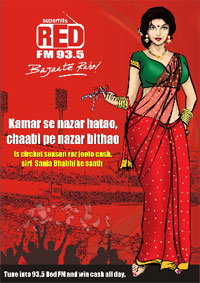
    Known for its innovations, 93.5 Red FM has got ‘Sania Bhabhi’, a sensuous housewife who considers all cricketers her ‘dewars’, back this cricket season. Last year, the character was introduced by Red FM Delhi to deliver cricketing content in an interesting and entertaining manner. Sania Bhabhi used to have topical conversations with her dewars, in a way that makes the listeners let loose their imagine.


    This year she has come back with her wallet full of cash, nicked from her dewars, up for winning through interesting contests. The concept of the show is that Sania Bhabhi knows that all her dewars have earned big bucks, and now she will share that loot with the listeners. For one specified hour in each show on Red FM, she will declare the amounts she’s taken from cricketers. Listeners are encouraged to stay tuned through the hour to know how much money she has given away. The listener who will declare the correct total amount will walk away with that cash prize at the end of the hour.


    The activity has already started from April 4 and will stay on air through-out the IPL cricket season till end of May.  Nearly Rs10,000 will be given out as prizes every day.


    The campaign is primarily aimed at getting listeners to listen to the station longer, through which they can win big. As such, the off-air media will focus to touch-points, to generate incremental listenership:

    • Posters in pan shops, other relevant outlets in high visibility areas for the primary demographic
    • Slides, ambient media at PVR
    • Facebook activation, with creative and audio downloads from theDelhipage


  • Industry gears up for India Radio Forum 2012

    By A Correspondent


    It is that time of the year, when radio players across the country meet to discuss issues pertaining to the industry, listen to ideas from advertisers and agencies, celebrate creativity in radio advertising and commemorate the medium itself. The seventh edition of India Radio Forum (IRF), organized by Partners in Media Asia (PIM), will be held on May 22 at JW Marriot Hotel in Mumbai.


    Amitabh Srivastava, Country Manager – South Asia, Radio Netherlands Worldwide who has been attending the IRF since the last four years and plans to do so this year, explained that radio is still at a nascent stage, thus such forums on radio are good for the industry as it discusses critical issues, it provides a good platform for all stakeholders, and in the long run, such forum on radio will benefit the industry. He further said that in the last four years that he has attended the annual event, he observed that IRF has ensured that every stakeholder participates in the event. He also said that smaller stations have been given their due weightage and their issues have also been discussed at various events.


    George Sebastian, COO, Club FM and GM Marketing, Mathrubhumi and Ravindran Nair, Director Programmes, Radio Mango would also be among the attendees at IRF 2012. When asked whether smaller stations have been isolated at the IRF this year, Mr Sebastian said that he has been attending the IRF since its inception and found that even the issues of smaller stations are addressed at the IRF. “IRF used to be a full day event, now it has been reduced to a little more than a half day. This is the only regret I have towards IRF. Such events most certainly benefit the industry, particularly the awards which recognizes good talents.”


    Mr Nair of Radio Mango said: “IRF helps maintain the vitality of radio stations, it gives one insights into how radio has developed in other parts of the world; it also provides ideas and new ways to monitise contents as well as gives us the client perspective about the medium. The only irony, however, is that the IRF has been reduced from a two day event to merely one day.”


    Unlike previous years, Mr Naval Toshniwal, CEO Tomato FM and Vice President, Pudhari Publications will not be attending the IRF this year. Ms Monica Nayyar Patnaik, Joint Managing Director at Eastern Media Ltd is also among the few industry veterans who would not be attending the IRF this year for personal reasons.


    Speaking to MxMIndia, Ms Patnaik was of the view that such forums do benefit the industry as it helps one learn from each other, helps find solutions to overcome issues and challenges, provides creative ideas and that awards also contribute in a bigger way in recognizing ones creative talents.


    Another industry player who did not wish to be mentioned was of the view that such events do help the industry positively, however, it all depends on implementing the lessons learnt from the various presentations made and panel discussions. “IRF is a good forum, but the industry must learn to implement what is discussed at such events, which has not happened so far. There has to be an action plan to implement all that is discussed at such events, only then will we see the industry grow even further.”


    Anurradha Prasad, President of Association of Radio Operators for India (AROI) and Chairperson cum Managing Director, B.A.G Network will also not be able to attend the IRF this year due to prior commitments. She, however, added that right now everything boils down to the passage of the Copyright Bill in the Lok Sabha. It has already been passed in the Upper House (Rajya Sabha), and once it is passed in the Lower House (Lok Sabha) too, and becomes law, it will significantly improve the growth of the Indian radio industry.


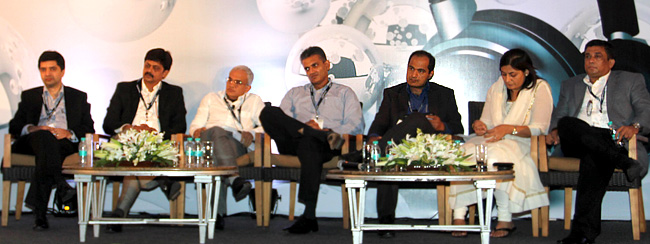
    The speakers list at IRF 2012 comprises of industry veterans not only from the radio industry, but also advertisers, and veterans from the creative and media agencies. IRF 2012 will kick-start with the CEO Roundtable, wherein industry biggies will discuss the current strength and weaknesses of the radio industry, and strategic options to improve the business and their vision for the industry in the coming three years. The panelists will include Apurva Purohit, CEO, Radio City; B Surendar, Sr. VP & National Sales Head, Red FM; Harrish Bhatia, CEO, My FM; Harshad Jain, Business Head, Fever FM; Joy Chakraborthy, CEO, Oye FM; Prashant Panday, CEO, Radio Mirchi and Rabe Iyer, Business Head, Big FM. This session will be moderated by Atul Phadnis, CEO, What’s-On-India.


    The second session at the forum – ‘It’s the Message, not the Medium: Growing your Advertising Revenues,’ will delve on important creative attributes that make radio commercials more effective and the unique qualities of radio as an advertising medium. Jason Brownlee, Founder, Dollywagon Media Sciences will be the speaker of this session.


    Another interesting session at this year’s IRF is ‘Radio and Social Media’, a panel discussion on the effect of social media on the listeners and the radio industry. This session will be moderated by Suman Srivastava, Founder & Innovation Artist, Marketing Unplugged. The panelists of this session include Premjeet Sodhi, COO, Lintas Media Group; Raj Nayak, CEO, Colors – Viacom18; Satbir Singh, Managing Partner and Chief Creative Officer, Euro RSCG; and Tushar Vyas, Managing Partner, GroupM South Asia.


    There will also be a session on ‘Maximising Radio’s Asset: How to Gain Share of Market Spend’. This session will be moderated by Apurva Purohit, CEO,RadioCity. The panel members are Ajit Varghese, Managing Director – South Asia, Maxus and Motivator; Arpita Menon, Head – Media Planning & Buying, STAR TV; and Shubha George, COO, MEC. This session aims to provide the client point of view and that of media planners and buyers on radio’s critical role in meeting market challenges and opportunity it presents in achieving a better ROI and sales goals.


    ‘The Radio Pitch Challenge’, the last session just before the 2012 ‘Excellence in Radio Awards’, will see planning teams from media agencies invited to pitch a compelling and effective presentation to the judges. Each team will talk about a product or service in five minutes or less. They will present 16 slides with only 15 seconds per slide, ending with a radio promo not more than a minute long. The winning team will be awarded two tickets worth over Rs1,00,000 to the 2012 Singapore Formula1 Grand Prix.

  • Mirchi maxes IRF awards, Red FM is best station

    By A Correspondent


    The much awaited Excellence in Radio Awards (ERA) was held in Mumbai on May 22. Although the turnout at the IRF (India Radio Forum) 2012 was dismal, the awards concluded with fanfare. A total of 40 awards were given out this year and three new categories were introduced – Best Radio Programme (Marathi); RJ of the Year (Marathi); and Best Radio Promo – Inhouse (Marathi).  The award winning radio stations at ERA this year include – Radio Mirchi, Red FM, Big FM, Radio City, Radio Mango, Club FM, MY FM, Suryan FM and Fever FM.


    Digital Radio Broadcasting Ltd or Red FM won 7 Awards including the awards for the ‘Best Radio Station’ and ‘Best Breakfast Programme/ Show (Hindi)’ to name a few. Suryan FM won one Award for ‘Best Radio Promo (In house) Tamil’.


    Reliance Broadcast Network Limited or Big FM also won 7 awards, including the award for the ‘Best Programme Broadcast after 11am (Hindi)’ and ‘Best Programme Broadcast After 11am (Tamil)’. Big Magic Pvt Limited won an award for ‘Best Use of Music / Song / Jingle by an Advertiser in a Radio Spot’.


    Radio Mirchi won a total of 12 awards, making it the most awarded radio station at the Excellence in Radio Awards 2012.


    Speaking to MxMIndia, Mr GG Jayanta, National Marketing Head, Radio Mirchi said: “Winning 12 awards is in itself a matter of pride, innovation always wins and good work will always be recognized. These awards will most certainly encourage us to deliver better work as it is a great motivational tool for us.”


    Mr Rajat Uppal, General Manager- Marketing stated: “We saw good participation from the industry, we are glad to have won the Best Radio Station, The RJ of the Year, the Best Breakfast show and others. It shows the kind of work we do is high on quality and high on innovation as well. We won the awards that matter the most to us and our aim will be to continue delivering quality work for listeners and advertisers.”


    Music Broadcast Pvt Ltd or Radio City won a total of 3 Awards, Radio Mango also won 3 awards, Club FM won 2 awards, Fever FM and MY FM won one award each.


    Mr Praveen Scheruchari, Senior Creative Manager, Radio Mango said: “For a regional station like us, winning these awards and that too at a national level is a huge achievement as well as a great opportunity for us. These awards will encourage us to deliver better work for our clients and listeners.”


    The awards for the ‘Most Effective Use of Radio in an Activation Campaign’ and ‘Most Outstanding Use of Radio in An Ad Campaign’ were the winners from ‘The Radio Pitch Challenge’.


  • Ten years on, is radio still an insignificant medium for advertisers? (Text & Video)


    By Robin Thomas (Videos by Insiyah Rangwala)


    Radio is said to be a medium that has been re-born. With the FM Phase III rollout anticipated this year, radio is expected to penetrate further into the country, as a result not only will there be an increase in revenues but, also the fact that newer revenue streams will open up. Multiple frequencies, allowing news and current affairs, sports broadcasting will also bring more innovations in radio, new genre radio stations and great amount of differentiation in content.


     

    Radio’s share of media spends, according to industry estimates, is expected to rise from 4 per cent to 5 per cent in two years. Among categories that advertise on Radio, Real Estate, Telecom, Retail, Education and TV channels are the ones advertise the most.


    What radio players say?

    Harshad Jain
    Joy Chakraborthy
    Joy Chakraborthy
    Apurva Purohit
    B Surender

    So, does radio still need to be evangalised? Is radio still insignificant to for advertisers? The India Radio Forum (IRF) 2012 discussed these issues. According to Mr Harshad Jain, Business Head – Radio and Entertainment, HT Media: “From a client standpoint, radio is still an insignificant medium. It all boils down to value addition of the medium – how can radio, as a medium, ensure value addition to its advertisers? The entire orientation has to be more than just vanilla FTCs. Radio is still an under-penetrated medium and has still a long way to go.”


    Mr Joy Chakraborthy, CEO, TV Today Network (which includes Oye! FM) pointed out that the Indian radio industry needs to stand united, not only on issues related to government regulations, but also for business related issues. “There needs to be some amount of unity among the radio fraternity. For the industry to survive we must stand together, not just for regulatory issues but even for businesses. Today radio is the most underpriced medium and unity within the industry will help us drive our sales.”


    Ms Apurva Purohit. CEO, Radio City was of the view that radio is still at an infancy stage and like any other medium, it will also take some time to evolve. She was quick to point out that television took many years to be what it is today. “Today the ad pie of radio is 4 per cent, the geographical coverage of radio is merely 30 per cent but, with Phase III the geographical coverage will see tremendous increase. Every year the number of advertisers on radio has only been growing, what we need to do now is to encourage these advertisers to spend more on radio and reach out to newer advertisers.”


    Mr B Surender, Senior Vice President and National Sales Head, Red FM said: “In the last two years radio saw tremendous growth. With the launch of Phase III also expected soon, the future of radio is certainly bright. Even radio stations outside metros saw tremendous growth, innovations in smaller towns and cities were high and in the next two years radio’s advertising pie is expected to reach 6 to 7 per cent.”


    The client perspective:

    Few years ago, radio was seen as a supplementary medium for advertisers wherein they would spend only the left over media spends on radio. This is said to be changing, slowly and steadily as advertisers are beginning to take radio seriously. There has also been an increase in the number of on-ground activations which has more or less become complementary for radio stations as a value addition to their clients. However, digital media, which was at one point in time an even smaller medium than radio is today, said to have become an even larger and a more powerful medium than radio and a possible reason could be because Internet, unlike radio, is a highly measureable medium.


    Giving a critical view on radio as an effective local medium, Mr Vinay Bhatia, Customer Care Associate and Senior Vice President Marketing and Loyalty said that radio has a very low share of mind and share of value medium to advertisers today. Digital on the other hand, which started off from 2 per cent of advertising share has a much higher share of mind and share of value. “To maximize assets, radio has to deliver business. Radio needs to world closely with clients, it can also look at which area of a city or town works better for clients. It can also partner with retailers to play radio in stores while customers are shopping. Radio is a response medium, therefore it allows a lot of engagement and interaction with listeners. However, there needs to be more innovations for advertisers on radio because clients love innovation and as a result innovation will bring more money for the radio station.”


    Arpita Menon, Head-Media Planning & Buying, Star India Pvt Ltd
    Premjeet Sodhi, COO, Lintas Media Group
    Harshad Jain, Business Head- Radio & Entertainment, HT Media

    Mr Shubhranshu Singh, Marketing Director-India and South Asia, Visa explained: “As far as Visa is concerned, radio has delivered us handsome returns. Radio, I believe, is economical and one can expect higher returns, it is certainly a cost effective medium. However, radio must come to clients as an industry and not as one single radio channel – it should be bolder in its approach towards clients and thus stay on top of mind of clients.”


    Mr Kartik Sharma, Managing Partner, Maxus had a slightly different take on the medium. He was of the view that radio is the oldest form of social media platform, it allows great amount of interactivity and engagement with the listeners. “Radio is in the business of producing great contents and so are the brands, I believe that both radio and digital can depend on each other. Radio is in the business of providing great content, the power of radio is sound and creativity therefore the mindset to learn this medium is very different.”


    Ms Shubha George, COO, MEC noted that in order to maximize radio’s asset and gain share of market spends, it needs to market itself more. She stated that radio today is sold and not marketed, what it needs is more marketing. She also pointed out that the industry must find ways to monetize every single phone calls and SMSes it receives and market them extensively.


    The Indian radio industry still needs a lot of evangelizing or marketing of the medium. Radio needs more nurturing, it needs to probably find newer ways of achieving better ROIs and thus increase greater share of media spends. More innovations in radio will also bring in more money and help it stay on top of advertisers’ minds. Radio needs to partner their clients and find newer ways to generate better ROIs for their clients. Radio needs to vigorously market itself to the advertisers and explain the power of the medium so that it becomes a primary medium for marketers.


    Image: Clipart, Imaging: Rafiq


  • Need to monetize radio-social media connect (+Vdo)

    By Robin Thomas (Videos: Insiyah Rangwala)


    Social media has, more or less, become a necessity for every organization today because the consumers are out there and no brand can afford to not be interacting with them. Moreover, social media can also help  brands know their consumers’ thoughts, behaviour, likes and dislikes. It also allows brands to have a two-way communication with their consumers, and thus provides high level of interaction and engagement. And it is not just brands but other media like radio stations which are coming out with innovative ways to connect with their listeners through social media.


    At the sidelines of the India Radio Forum (IRF) 2012 industry veterans from the advertising fraternity discussed the importance of social media for radio.


    Mr Premjeet Sodhi, COO, Lintas Media Group said: “Social media is certainly important for not only the radio industry today, but also for every other medium. In the long run we will see more integration taking place between social media and radio.”


    Mr Raj Nayak, CEO, Colors- Viacom 18 explained: “Social media is growing by the day. Today almost 65 per cent of the people in India are below the age of 35 and 50 per cent are below 25 years of age. I believe this is the fastest growing medium, therefore, it is a very important medium and those that have not got onto social media, must get on before it is too late.”


    Mr Suman Srivastava, Founder and Innovation Artist, Marketing Unplugged said: “Social media is important for radio at two levels. One is to connect with the listeners and therefore, get much larger engagement which might even result in an increase in the reach. On the other hand, it is a fantastic medium for radio channels to build their own brands as well as the brands of their advertisers. In the future, I believe, we will see a lot more advertisers using radio and social media together along with, perhaps, ground activations to create events which could have a multiplier effect for those advertisers.”


    Speaking on the need for radio to partner with clients, Mr Vinay Bhatia, Customer Care Associate and Senior VP- Marketing, Shoppers Stop said: “The real big partnership for radio and their clients is in the digital space. Digital and radio have to come together and ally in such a way that they deliver joint value to the client, and I don’t think any of this is happening today. Radio is an out of home medium and we are increasingly seeing out of home consumption for digital. I think these two medium can go very well together and brands like ours which have large Facebook pages need content, we need engagement and I think radio channels that provide us that.”


    Mr Harshad Jain, Business Head – Radio and Entertainment, HT Media said: “Radio is a medium which is free of cost, it is the cheapest form of entertainment in the country, and if there are issues that can be interlinked with social media, it could call for a good integration. Having said that, it is still early days because radio as a medium still has to catch up big time before it starts integrating with social media.”


    While there are calls for integration between radio and social media, the radio industry must also find ways to monetize the radio-social media connect. Mr Sodhi pointed out that while social media can make radio activations richer, it is vital for radio stations to find newer ways to monetize this activation.


    Agreeing with Mr Sodhi, Mr Raj Nayak said that no business will work if there is no monetization. He added: “One of the biggest disservice broadcasters have done is that they have not woken up to the digital media.”


    So while radio and social media will see more integration in the long run, there is also another school of thought that believes that radio is still at a nascent stage and has a long way to go before it can get into integration with social media. However, monetization is the key for survival of any business and radio stations must find ways to monetize its social media activations.


  • Takeaways from IRF 2012 (+Vdo)

    By A Correspondent


    The seventh edition of Indian Radio Forum (IRF) discussed quite a lot of issues on the strength and opportunities of radio, the road ahead for the medium, especially with FM Phase III expansion, how to maximize radio’s assets and how to gain share of market spend; the use of social media and monetizing it and much more. MxMIndia spoke to couple of industry veterans on their takeaways from the IRF 2012.


    Mr Premjeet Sodhi, COO, Lintas Media Group:

    One major takeaway with which I am going back is that while there are issues on how radio is performing commercially, there are certainly people who are passionate about the medium, and therefore, there are a lot of possibilities on how to do well on radio.


    The second major takeaway is the use of social media and radio, we had never thought of a subject as such. Radio has a lot of potential to work along with social media and be commercially successful as well.


    Third, I don’t think we are doing enough for radio, overall as an industry. There is, however, a lot of scope for improvement in this area.


    Mr B Surender, Senior Vice President, and National Sales Head, Red FM:

    I think the RAB (Radio Advertising Bureau) style of evangalising the medium is needed because UK’s RAB is so active in not only the developed markets like the UK, but it is also quite active in developing markets like South Africa.


    InIndia, probably, this kind of promotional activity is required for radio as a medium, because in India FM radio started very late and it did not get enough time before social media and the online or digital media arrived. Therefore, I believe there is a different need for a RAB kind of body which promotes radio.


    Mr Vinay Bhatia, Customer Care Associate and Senior Vice President – Marketing, Shoppers Stop:

    I think each industry within radio should develop its own tools, and this is really important in judging the input-output in efficacy because I am not chasing radio just for reach, OTS or number of impressions. Radio, as a channel, is a response medium and so it must deliver much beyond intermediary variables, it must deliver final business variables and I think radio can do that. However, it depends on how well a radio channel partners with a client, wherein the client is also willing to share some amount of data and information and a radio channel is also willing to partner it and jointly experimenting which works for all of us.