
Category: NEWS

  • BlackCab launches campaign for ITC’s latest culinary venture

    BlackCab, a content production and social media strategy, has unveiled a campaign for the launch of Avartana, ITC Maratha’s latest culinary venture, in Mumbai.

    Notes a communique: “BlackCab leveraged its network agency model using its specialized short form content studio Secret Sauce Studios to produce the content for the Avartana launch. The project saw them capture an array of photos and videos together with architectural shots that emphasize the restaurant’s beauty. The project focused on bringing out and articulating the thought and inspiration behind Avartana’s five different multi-course menus. The BlackCab team spent time with the chefs to understand why the ingredients play such a vital role in the dining experience at Avartana. Following this, the team crafted a content strategy that would bring the space to life.”

  • Ideosphere, Avocado Tree launches C.better

    Ideosphere, the brand strategy and communication consulting firms, and Avocado Tree, a digital consulting practice, have launched C.better – customised digital and media training workshops for business leaders and brands to help them communicate with impact and enhance their reputation (Note: the ‘C’ in C.better is lower-cased by Ideosphere and Avocado Tree (hence c.better), however, as per the MxMIndia style, we always uppercase the first letter of a brand/company name – Ed).

    The workshops will be led by Kavita Jhunjhunwala, founder of Avocado Tree, and Ashraf Engineer, head of brand strategy, Ideosphere.

    Said Jhunjhunwala: “Marketing departments are often treated as cost centres that do not drive the organisation’s core agenda. This can no longer be the case; every organisation must look at marketing as a serious growth function. Businesses need to be not only on a constant learning cycle, but also build the department into an agile organism to adapt to change,”

    Added Engineer: “C.better workshops, completely customised to each business’ specific needs, address the knowledge gaps that exist in the media and digital strategies, and guide the development of the organisation’s playbook. They touch all relevant stakeholders so that the go-to-market activities and timelines become productive. This blueprint development started during the workshop can be continued within the organisation as a process.”

  • Brand lessons from the Ballot


    By Avik Chattopadhyay


    Avik ChattopadhyayA little over a fortnight ago the election results were announced for the five states of Goa, Manipur, Punjab, Uttar Pradesh and Uttarakhand. The outcomes were as expected only that nobody expected the magnitude of the Punjab victory.


    This was one set of elections where we saw seemingly smaller and regional parties wanting to be counted. Not that this was their first attempt, but in this round they seemed more committed and invested.


    There are interesting brand lessons to be taken away from the strategies adopted by the key political parties and personalities and also the outcomes.


    PunjAAP!


    This was the most emphatic, so let’s start with the AAP’s campaign in Punjab. There is nothing like a solid proof-of-performance as a testimonial of what you can do when in power. Just like start-ups with the best proofs of concept get the highest investors, so did the people of Punjab decide to invest in this development model from the shark tank.


    Whenever entering a new market or business segment, it is always prudent to appoint and announce the person who will lead the operations and give him/ her the required bandwidth to set the narrative. It is best if the person is a local who understands the market better than an expat.


    A critical part of a market entry strategy is to get your ‘own people’ converted first before you set sights on the others. Your own people are those who are culturally closest to your domestic market in terms of codes, rituals and likes. They become your early adopters and brand advocates in an otherwise socio-economically fragmented market.


    Lastly, the classic advertising appeal of “try me once” never fails. The appeal still carries a sincere ring to it, sans all the hype. There will always be the experimentative and early-adopters who lead the way. Just that in the case of Punjab they seemed to be the majority!


    Another “Nokia moment”!


    You have a commanding market share and come crashing in just 12 months all due to your own obstinacy of not deciding on an operating system and understanding what the customer needs. That’s the Nokia moment of 2007. Can also be termed a Rip Van Winkle moment!


    The Congress repeated it with unerring accuracy in Punjab. It depended on legacy while the people wanted policy. And it failed to capitalise on a traditionally supportive segment in the farmers who could have turned the tide.


    Just like a market leader loses focus on its core customer base in its urge to capture newer markets and address new product and customer segments. A case in point are brands like Maruti Suzuki and Hero wanting to go ‘premium’ while their core base of entry level product offers gets neglected.


    Divide and Rule!


    It still works. As it did in UP for Yogi and the BJP. Astute marketers do not waste time in addressing all customers needs and desires. They go for those that have a natural alignment with the product benefits. Like aspects of protection, exclusion and intimidation in the case of BJP. Consultants call this segmentation.


    Also, the best event managers do not fuss with the entire duration of the show but create just one or two ‘wow’ moments that impact most and stay on longer in the viewers’ minds. So, images of temple corridors and highways that double up as airstrips combine very well to cover both tradition and technology. The recipient is not really bothered with all details of your narrative, so a few ‘doosras’ are forgiven. The average human being understands and remembers pictures much better than data tables.


    Do not reinvent the wheel, at all. All successful brand managers will tell you that. Not that they are halting the wheel but are going on the same track, faster, smoother, and better while refreshing the look and feel of the wheel. Within a smaller gestation period.


    Elephants cannot dance!


    If Kodak had taken heed of early digital photography and re-calibrated itself accordingly, it would not find mention here. Market leaders typically fail to notice warning signs on their radar screens… of a new technology, of a new trend, of a new entrant, of a new solution, of a new regulation…! Some quickly change course while others perish. Netflix did. Blockbuster didn’t.


    While divide and rule worked for the BJP, it cannot escape the fact that it lost more than 50 seats to the SP. Most contests have been very closely fought. It might not be a wave yet, but certainly a ripple. And it is not that the BJP has not been defeated before, despite the narrative being the same, albeit much milder.


    When both AAP and TMC announced themselves as true successors of the Congress, it needs to read the clear signals on lifecycle management.


    When you are too large as a brand, the Nirmas and Chiks of the world can come up, nibble away at your pie and create a larder big enough for them to sustain. Someone like Sensodyne can change the narrative at one end. Size has its disadvantages. Elephants cannot dance!


    Different ground, different game!


    “Khela holo na” for Didi and the TMC in Goa. The game may be the same, but the ground conditions are different. Knowing how to play football does not mean one plays equally well on hard and slushy turf and in any position. Just because VW rules the roads in Germany does not entitle it to do the same in India, as it has painfully learnt. Cut-copy-paste does not work especially when there are strong cultural differences in the two markets.


    Remote control operations do not work in any market and for any product category. Also, a non-playing captain is not always the best option. One has to have a leader of the team at the ground level to assess the pulse on a daily basis and take corrective action in narrative and promotion. Moreover, the local team has to be empowered to take decisions and modify strategies without having to wait for an approval from headquarters.


    Controlling is fine. Micro-managing kills.


    Tell me something new


    The general narrative of the legacy parties remains more or less the same, be it the Congress or the BJP. They typically bash each other silly. While it works in some places, it fails in others.


    The Congress had nothing to offer the people of UP except for the glamour of the family and the legacy of the freedom struggle. The fact that the leadership had to fall back upon the forefathers rather than create a testimonial in Amethi or Rae Bareilly, is telling it all.


    Even though playing second fiddle to the Akali Dal, the BJP could have certainly performed better had it not applied the same narrative of UP. Also, its stand vis-à-vis the farmers over the last 18 months did not help.


    Political parties rarely seem to have any candour. They never seem to accept mistakes and own up to them. They offer no apologies. Just like most big brands never do. The challengers, however, use candour and vulnerability as strategic tools to move ahead faster. Today’s customer appreciates brands that are frank and fragile rather than infallible. This is a trait that most brand managers need to train upon and acquire.


    The light at the end of the tunnel…


    Work shows. Good work shows better. I saw an interview of N Biren Singh on NDTV after the exit polls were out and showed that the BJP would get a 3/4th majority in Manipur. He said that the projections might be too optimistic but as positive work had been done over the last five years, he was confident of getting the mandate. Eventually, he did get a mandate close to the projections.


    Market share is the outcome and not the objective. Just like good governance. Profits, loyalty, repeat purchase, electoral results and majority are all outcomes of fundamental work for the target customer. I get amused no end when brands make announcements of “x%” market share by such date almost as soon as they enter the market. Makes for masala journalism and nothing more.


    Biren Singh should know that pretty well. He was a journalist once. And a footballer before that!


    Avik Chattopadhyay is a senior brand and strategy consultant. He writes on MxMIndia every other Thursday. His views here are personal


  • Happy Birthday, Brand India

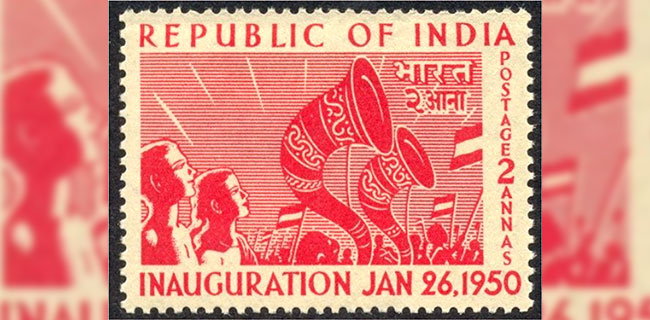
    Stamp issued to commemorate the creation of the ‘republic’ – Source: Government of India Archives


    By Avik Chattopadhyay


    Avik ChattopadhyayIndependent India was formed on August 15, 1947.

    Brand India was created on January 26, 1950.


    Since the “dominion” of India was created on the day the Indian tricolour was hoisted at Red Fort, we continued to be a constitutional monarchy with George V as the head of state and Mountbatten as the Governor-General till the 26th of January 1950 when we adopted our own constitution. It was only on that date that we had our first President in the form of Babu Rajendra Prasad. Till then this newly formed nation was governed by the Government of India Act of 1935.


    So, the significance of our Republic Day assumes greater importance when we realise that it was on that day, after two years, five months and 11 days of having become independent that we decided what exactly we would become in terms of a nation. The product India was rolled out as a prototype on August 15, 1947. The final production version, after all tests and validations, was finally launched for the citizens and the world at large, as a brand that said “Republic of India” on January 26, 1950. Till that day, no common citizen was aware of what exact shape and form we would take in terms of purpose, promise, values and personality. This task was entrusted to a team called the Constituent Assembly, a 308-member team made up of 21 committees headed by some of the sharpest minds like Jawaharlal Nehru, Vallabhbhai Patel, KM Munshi, HC Mookerjee, Bordoloi, BN Rau and GV Mavlankar submitting their reports to the drafting committee headed by BR Ambedkar. They met for 166 days painstakingly putting together the Constitution that was finally adopted on November 26, 1949.


    In an organisational context, it is almost like all functional teams providing their inputs to the brand strategy team that finally prepares the brand book, to be presented in a townhall before all employees for their feedback and necessary modifications before the entire organisation adopts it as its credo and ethos.


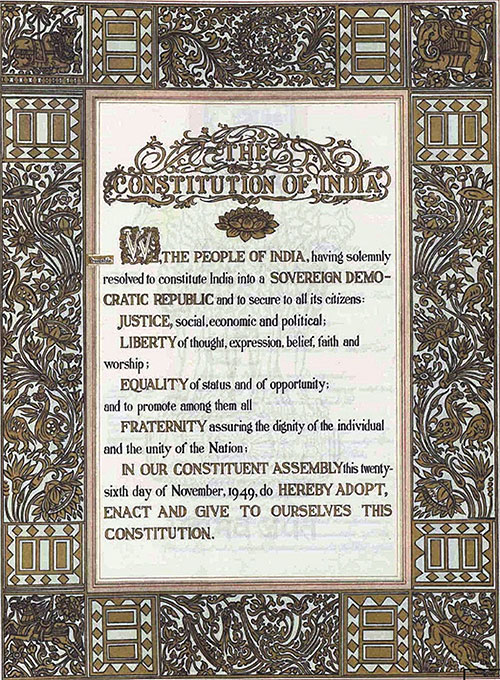
    The Preamble is the brand essence.

    It encapsulates all the pages that follow with their numerous chapters, schedules and articles. It describes the purpose, the promise and the operating values. In fact, all organisations in India could as well study the unique structure of the Preamble to design their own, in terms of brevity of expression and clarity of purpose.


    The original text of the Preamble – Source: Government of India Archives


    Of the Preamble, Ambedkar said, “It was, indeed, a way of life, which recognises liberty, equality, and fraternity as the principles of life and which cannot be divorced from each other: Liberty cannot be divorced from equality; equality cannot be divorced from liberty. Nor can liberty and equality be divorced from fraternity. Without equality, liberty would produce the supremacy of the few over the many. Equality without liberty would kill individual initiative. Without fraternity, liberty and equality could not become a natural course of things.”


    As a part of the debates before its final adoption, there was a proposal to call ourselves the ‘Union of Indian Socialist Republics’. Also, some had proposed that ‘God’ and ‘Gandhi’ be incorporated in the text. Thankfully, all such proposals were struck down as each would have been paradoxical to what we had aspired to nurture ourselves into as a nation.


    By the 42nd amendment of the constitution during the Emergency of 1975, the words ‘socialist’ and ‘secular’ were added to describing the republic over and above being sovereign and democratic. The brand purpose was expanded in scope. However, the promises of delivering justice, liberty, equality and fraternity remained as before, except for the word “integrity” being added to unity to describe the fraternity we aspired for. Very similar to what happens when the second or third generation of the founding family wishes to ‘revisit’ the brand purpose and ‘contemporise’ it, in sync with an evolving market and customer behaviour.


    These very later insertions or modifications are subjects of heated debates today. The brand purpose is being questioned by the new leadership. Like most organisations, the new CEO, especially if brought in from outside, wishes to leave a mark on the key aspects of the brand, especially the ‘vision’ and ‘mission’. That it typically the legacy the leadership wishes to create for posterity to marvel at.


    Even if those ‘controversial’ words are to be removed, the essence of the Preamble does not change one bit. In its very construct it espouses the fundamental principles of socialism and secularism. The word ‘socialism’ is part of the Directive Principles of State Policy and implies social democracy and distributive justice. The word ‘secularism’ implies that there is no state religion and that the powers of the state and any religion are clearly separate. The former cannot be partial towards any particular religion or religions while the latter cannot dabble or interfere in the functioning of the state. Reminds me of the occasion when MA Jinnah in 1919 implored Gandhi not to support the Khilafat movement as “mixing politics and religion” would have disastrous outcomes.


    Brand India is at the crossroads right now. The very brand purpose is being challenged by various factions and fringes by their operating principles [or lack of them] and socio-political acts. There has been no direct attempt to alter the fundamentals of the Republic but subaltern and diversionary tactics are certainly being used, citing the need to go back to our “pure past” to rediscover ourselves and reclaim our greatness as a teacher of the world. We are certainly at the crossroads as we enter the 75th year of being Brand India.


    I will conclude by quoting Ambedkar once again from his last address to the Constituent Assembly on November 25, 1949:


    “On the 26th of January 1950, we are going to enter into a life of contradictions. In politics we will have equality and in social and economic life we will have inequality. In politics we will be recognising the principle of one man one vote and one vote one value. In our social and economic life, we shall, by reason of our social and economic structure, continue to deny the principle of one man one value. How long shall we continue to live this life of contradictions? How long shall we continue to deny equality in our social and economic life? If we continue to deny it for long, we will do so only by putting our political democracy in peril. We must remove this contradiction at the earliest possible moment or else those who suffer from inequality will blow up the structure of political democracy which this Assembly has so laboriously built up.”


    Jai Hind.


    Avik Chattopadhyay is a senior business strategist and commentator based in Gurugram. He writes on MxMIndia every other Thursday. His views here are personal


  • Introducing Data Stories by Kunal Sinha: So how Effective are Influencers?


    By Kunal Sinha


    Kunal SinhaWith Orhan Awatramani aka Orry taking over IG feeds during the past few weeks, announcing ‘I’m a liver’ and snagging a Black Friday endorsement deal from CRED (who else?), the question of influencer effectiveness begs to be answered.


    When Hubspot posed the question, 80% of marketers said that influencer marketing is effective; in fact, 89% say it works as well as, if not better than other marketing channels. They believe that it yields the highest ROI, along with blogging and social commerce.


    In its early days, the detractors against influencer marketing were many. With brands having little control over influencers’ output, some marketers believed that partnering with creators could result in damage to the relationship they have with their consumers if their endorsements are inappropriate or less than transparent.


    Recent experience with influencers suggests that sentiment to have changed. In a study by Kantar, some 59% of marketers said they invested in influencer content in 2022, and close to 60% of marketers globally said they are going to increase spend on influencers in 2023. Already, 23% of marketers globally are spending over 40% of their marketing budgets on influencers; and this year, they would end up spending $16.4 billion dollars on influencer marketing.


    Here in Indonesia, Dr Richard Lee, a doctor who promotes and sells skincare, is followed by 5.1 million folks on TikTok, 1.7 million on Instagram, and has 4.69 million subscribers to his YouTube channel, all reasonably large followings. He made $800,000 in less than three hours selling his skincare products in a live shopping stream on Shopee in August. A follow-up livestream shopping event in September raked in $500,000 in just one-and-a-half hours. Dr Lee’s conversion of his followers into shoppers suggests that the lines between influencer marketing and social commerce are getting blurred.


    Research published in Harvard Business Review analysed more than 5,800 influencer marketing posts on the popular Chinese social media platform Weibo.


    Posts in that dataset were written by 2,412 influencers for 861 brands across 29 product categories, at costs ranging from $200 to almost $100,000 per post. The study found that on average, a 1% increase in influencer marketing spend led to an increase in engagement of 0.46%, suggesting that the strategy can in fact yield positive ROI.


    The jury seems to be out when it comes to the impact of influencers on novelty. Kantar’s analysis of 30 different influencer campaigns in beauty, fintech, sports and retail revealed that compared to market averages in their database of almost 9,000 global ads, influencer creative executions are in the top third for delivering new information and being credible.


    Conversely, the study published in HBR found that ROI for influencer posts announcing new products was 30.5% lower than for equivalent posts that were not about new product launches.


    Having said that, there are some clear directions towards which factors and variables make an influencer campaign perform better.


    Number of followers: Influencers who have a large following not only deliver greater reach, but are also seen as more credible. They are able to generate higher engagement rates than brands would achieve by spending the same budget on partnering with a less-popular influencer. Posts from influencers whose follower bases are larger than average achieved 9.2% greater ROI.


    Posting frequency: Influencers who do not post often are not seen as up-to-date sources of information. They are also unable to establish presence on followers’ feeds to build trust and intimacy. On average, marketers can increase the ROI of their influencer marketing efforts by 53.8% simply by selecting influencers who engage in an optimal level of posting activity – five posts per week.


    Content originality: Influencers posting more original content tend to stand out. Their content attracts more attention, and they appear more knowledgeable and authentic. Brands that leverage such influencers typically achieved higher engagement rates for a given marketing spend. Specifically, influencer posts that were original content achieved 15.5% greater ROI than those that were not (such as re-shares).


    Links to the brand: Consistent with prior research on content marketing, the HBR study finds that posts that include links to a brand’s social media account or external webpages perform significantly better. Including links to a brand’s website or social media in an influencer post achieves 11.4% higher ROI.


    Putting these principles into practice for TikTok Indonesia

    In its quest for growth in Indonesia, TikTok was hampered by the perception that its content was mostly about dance and music.


    Increasing the user base by 50% required out-of-the-box thinking. Our strategy at M&C Saatchi was to make folks realize that there’s more to TikTok than met the eye. We would show them diverse content they weren’t aware of.


    How did we do that? By deploying Najwa Shihab, an extremely popular, intellectual persona to introduce the high quality of TikTok’s content. While she was extremely popular on Instagram, nobody expected her on TikTok. We were convinced that her positive, inspiring imagery that would galvanize users. And it did.


    Najwa’s first-ever TikTok video post achieved 51.2 million views in 5 days. She gathered 1 million followers within a week.


    The #serunyaditiktok campaign reached an astounding 8 billion views on TikTok; motivating 3960 creators to come on-board. The content racked up 1.8 billion views in a week. An online media event featuring Najwa was covered by 128 outlets, generating 5 billion impressions.


    As against the target of 33 million new users, TikTok gained almost 55 million users, who spent 67% more time on the platform. TikTok moved from #9 to #3 in the top social media app rankings in Indonesia.


    Why is influencer marketing effective?

    In its essence, what influencers do is create desire by assigning a value to the objects they promote. That value of those objects isn’t objective, it is subjective. That subjective value is based on our relationship with others: it is mimetic. We assign value to things, and thus desire them, based on what other people want. Mimetic desire means that our own choices are usually according to the desire of others.

    Influencers serve as models of desire. They are people who we look towards for guidance about what to want, usually unconsciously, as they transfigure objects before our eyes.

    Now, go figure, which of your hidden desires Orry has been able to transfix!


    References:

    Hubspot: What Will Influencer Marketing Look Like in 2024? https://blog.hubspot.com/marketing/how-to-work-with-influencers

    Leung, Zhang, et al, Does Influencer Marketing Really Pay Off, Harvard Business Review, November 2022

    Bubani, Gonca, Under the influence? How influencer marketing grew up, World Advertising Research Centre, 2022

    https://www.statista.com/statistics/268641/share-of-marketing-budgets-spent-on-digital-worldwide/


    Kunal Sinha is Group Chief Strategy Officer at M&C Saatchi Indonesia, and author of several books including The Future of India’s Rural Markets and Raw – Pervasive Creativity in Asia. He will write for MxMIndia every other Monday. His views here are personal.


  • Copy that!


    By Kunal Sinha


    Kunal SinhaIn the late 1990s, I visited countless haats across India with my colleagues, understanding the rural residents’ shopping behaviour, helping develop strategies to engage and convince them.


    On those trips, we chanced across a plethora of copycat brands. Funny & Lovely, Fairy & Lovely fairness creams, Polands cream and talcum powder, Dafur and Babur Dant Manjan, Nise and Pearl biscuits. With their limited ability to read the English alphabet, villagers looked at the brand’s logo as the visual ID, because the rest of the packaging was pretty identical to the original brand.


    The makers of these copycat brands were small, local entrepreneurs, riding on the popularity of brands that enjoyed high equity and trust, and out to make a quick buck. They were hard to track down.


    Nearly three decades later, we are witnessing an upsurge of brands that have no qualms about capitalising on the equity of market leaders. The difference: these are brands owned and introduced to the market by well-established, reputable companies.


    One need not travel to a small town or village to find many of these brands. They are available both online and your neighbouring Star Bazaar. Not only that, the placement on the shelf is right next to the original brand. How brazen could that be?


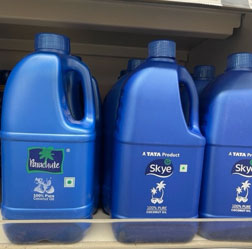
    Tata’s Skye range is astonishingly similar to several brands which are leaders in their categories. The coconut oil has the same bottle shape and colour, identical product description as Marico’s Parachute. The mnemonics of coconut palms and half coconut have been integrated into one visual, as opposed to separate for Parachute. Small mercies.


    For its glycerine soap range, Tata Skye turns to HUL’s Pears for inspiration. Again, similar colour schemes – white and green / orange are used, and the soap bar is prominently pictured on the pack. The price? Rs 231 for Pears Aloe Vera vs Rs 117 for the Tata Skye version; Rs 202 for the Pure and Gentle version vs Rs 129 for Tata’s glycerine soap. All these for a pack of three.


    Now imagine a budget-stretched couple in Dum Dum or Govindpuri doing their weekend shopping. For them, there is no better assurance than seeing the words ‘A TATA Product’ emblazoned on the label. With such a significant price benefit, which brand do you think they would pick up?


    Let’s look at another popular brand – Mondelez’s popular Oreo cookies, which became a runaway success in the Indian market since its launch.


    In 2020, Parle, by far a much bigger maker of biscuits and cookies, decided to launch a chocolate-vanilla cream cookie by the brand name FAB!O, with identical packaging. Mondelez took Parle to court, and the latter was forced to withdraw its product from the market.


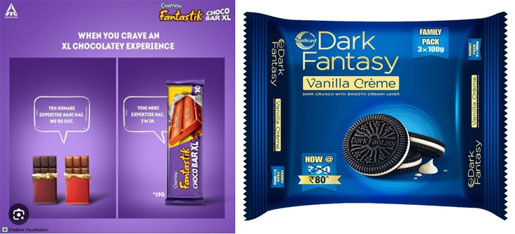
    That judgment did not deter another leading CPG company – ITC Foods, from creating and selling its own chocolate-cream cookie, Sunfeast Dark Fantasy Vanilla Crème. As it branched out into chocolates, the packaging and advertising for Candyman Fantastik makes no apologies about borrowing from Cadbury’s colour codes.


    So, what’s with this penchant for copying? And does the adoption of these practices by market-leading companies give copying legitimacy?


    Let’s put it down to lazy marketing and short-termism.


    When marketers see a competitor do well, the easiest trick in the world is to say, “Let’s do what makes them successful! There’s already a model in place, and if we adopt it, we’ll be able to make money quickly.”


    According to Sabeer Bhatia, founder of Hotmail, speaking at a Nasscom event, “90 per cent of the innovation industry is copycat in India, there is nothing new.”


    It’s a refrain one keeps hearing in the agency world. The client asking “Can you give me something new, innovative?” Upon being presented a bunch of new ideas, they’ll respond by saying, “Can you show me examples of how this has worked?”


    Google might be phasing out cookies, but in business it is still a cookie-cutter world!


    Kunal Sinha is a senior strategy and foresights executive based in Jakarta, Indonesia. He is the author of several books including The Future of India’s Rural Markets and Raw – Pervasive Creativity in Asia. He writes for MxMIndia every other Monday. His views here are personal.


  • How Travel Fuels Economic Engines and Ignites Growth


    By Kunal Sinha


    Kunal SinhaThe flights are going full again.


    International visitor spending in India is projected to exceed USD 23 billion, while domestic visitor expenditure is forecasted to surpass USD 150 billion.


    The tourism sector is expected to generate 1.6 million new jobs, recovering most of the pandemic losses, resulting in a total employment of nearly 39 million, which accounts for approximately one in 13 workers in India.


    According to WTTC’s estimates, the sector is expected to expand its GDP contribution to USD 438 billion by 2033, representing approximately 7 percent of the Indian economy.


    The number of foreign tourist arrivals in Indonesia reached 8.5 million in 2023.

    Last year, the number of domestic tourist trips also showed a significant increase of 19.82 percent year on year, reaching 734.86 million trips.


    The absolute economic contribution of tourism in Indonesia was forecast to continuously increase between 2024 and 2028 by in total USD 59.4 billion (+91.84 percent). After the eighth consecutive increasing year, the economic contribution is estimated to reach USD 124 billion and therefore a new peak in 2028.


    How do people decide where to go?

    Amidst abundant options and information sources, travellers are particularly conscious about making the right decisions, and they’re willing to invest extra effort for that assurance.

    In Asia Pacific, travellers in India and Indonesia use the most sources of information and planning for their trips – 6.88 and 5.44 sources respectively.

    As they search for their next travel destination, a remarkable flip happens.

    52% of travellers in the region change their destination, airline or accommodation choice during the holiday search and planning process. In Indonesia, that figure is 65%, in India 78%, according to Google. FOMO (Fear of Missing Out) on an attractive offer is the most likely reason.

    Travellers change their destination for different reasons – after coming across social media posts from friends and #influencers, encountering a great flight or hotel deal – a lower price / discount often being the clincher.

    With discovery, adventure, personal growth, stress-relief and social connections being the top reasons why Asian travellers take holidays, what are some of the unique, local experiences that have the potential to attract them?

    Having spent the Christmas – New Year break in Jogjakarta in Indonesia, I realised how much of untapped potential there is for travellers from India.

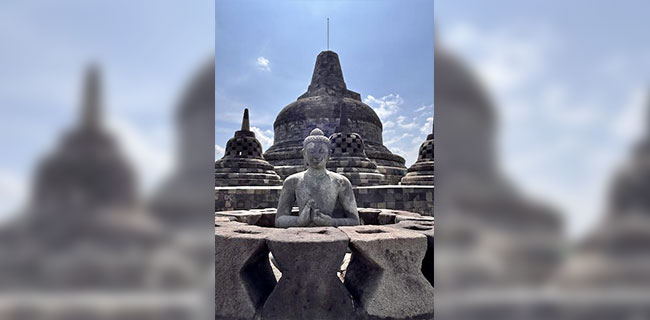
    Jogjakarta is home to two architectural wonders: Borobudur and Prambanan.


    Prambanan Temple is a complex consisting of 240 temples. The main temples are dedicated to Shiva, Brahma, Vishnu, Parvati and Nandi. All the mentioned temples form the Prambanan Archaeological Park and were built during the heyday of Sailendra’s powerful dynasty in Java in the 8th century AD.


    The temples are decorated with reliefs illustrating the Indonesian version of the Ramayana epic which are masterpieces of stone carvings. These are surrounded by hundreds of shrines that have been arranged in three parts showing high levels of stone building technology and architecture from the 8th century AD in Java. The Prambanan Temple Compound represents not only an architectural and cultural treasure, but also a standing proof of past religious peaceful cohabitation.


    Every evening, a two-hour staging of the Ramayana by students of the local fine and performing arts university enthralls visitors. The ticket sales go a long way in subsidising their education.


    Borobudur, the largest Buddhist temple in the world, is simply stunning. Set in the middle of verdant surroundings, it was built in the 8th and 9th centuries AD during the reign of the Syailendra Dynasty. Visits to the temple are well organised, with numbers being restricted to 1500 a day, to prevent the massive stone monument from subsiding into the volcanic soil.


    On the flip side, winter in India is the stage for hundreds of thousands of weddings. For many inbound tourists – hooked on to Indian movies and soaps, being able to participate in such a wedding can be a once-in-a-lifetime opportunity.


    www.joinmywedding.com allows guests to soak in the wedding atmosphere, dress up, taste the food and dance their heart away, for a fee, of course. Right now, you have the opportunity to join a wedding in Thanjavur, Chittorgarh, Ahmedabad, Dehradun, Udupi, Goa – all perfect destinations to soak in the local culture, history, or nature.


    So what could be unique ways to showcase the local?

    The Faroe Islands, a gorgeous archipelago located in-between two always-popular tourist destinations – Iceland and Scotland turned Google’s “Street View” into “Sheep View”.

    They have tons of exciting sights there for travellers, but getting there can prove challenging. Rather than wait for Google’s mapping cars, they took it upon themselves to give the world a unique of their beautiful landscapes.

    Sheep are the most populous inhabitants of the Faroe Islands. In fact, there 83,000 of them.

    The Faroe Islanders strapped 360° cameras to some of the many sheep that wander freely all over the country. The campaign manager then uploaded the footage to the Google Street View, or as she called it: “Sheep View”. https://www.youtube.com/watch?v=ywdqiyoQNgQ

    This resulted in a unique look at these amazing islands which 49,000 people (give or take a few) call home. Their creative solution represents an authentic way-of-life as well as the unique benefits for travellers. And that was achieved using an unlikely marketing tool – Google Maps.

    At the other end of the spectrum, Colombia went old school with the ‘Book of Warmth’, a 212-page beautifully photographed ebook dedicated to its famously welcoming residents.

    In Spanish and English, it picks out different iterations of “warmth” from beekeeper Humberto Narváez’s love of sustainability to Maria Eugenia Clavijo’s top-notch treatment of her hotel guests.

    So what are your best local destination experiences?


    Kunal Sinha is a senior strategy and foresights executive based in Jakarta, Indonesia. He is the author of several books including The Future of India’s Rural Markets and Raw – Pervasive Creativity in Asia. He writes for MxMIndia every other Monday. His views here are personal.


  • Brands and mental health


    By Kunal Sinha


    Kunal SinhaA few months ago, one of my son’s close friends jumped off the balcony of his high-rise home.


    For several weeks, I experienced first-hand, the trauma of a 15-year-old and his friends as they struggled to make sense of the loss. From talking to his school counsellor the very next day, to his friends speaking to each other regularly, promising to discuss their feelings – they showed remarkable maturity.


    Not everyone does. The numbers of those in mental distress are alarming. And they need help.


    According to a WHO report, more than 14% of people in India have mental health problems.


    Unicef’s State of the World’s Children states that one in seven young people between the ages of 15 and 24 in India experiences poor mental health, including symptoms of depression and disinterest. Shockingly, only 41% of those surveyed felt the need to seek support when dealing with mental health challenges.


    The sources of stress are numerous. There is a strong positive correlation between the population’s growing number of mental health issues, the decline in job opportunities for young graduates, unequal economic growth, as well as unrealistic expectations caused by exposure to social media.


    49% of Indonesian internet users had experienced bullying on social media; the figure in India is a shocking 85% – the highest in the world.


    A quarter of Americans said they were spending less time reading the news to manage their mental wellbeing.


    What’s more, the stigma attached to the disorder goes hand in hand with the rising number of problems with mental wellbeing.


    In India, there are 0.329 mental health outpatient services per 100,000 people. The ratio in Indonesia is highly disproportionate as well, with one psychiatrist serving approximately 227,000 individuals. Post the pandemic, the demand for online consultation had surged enormously, up to 800%.


    People are looking for solutions.


    In Indonesia, 83.6% of GenZ state that mental health is very important to them. The numbers for Gen Y and Gen Z aren’t too far behind, 80.5% of GenY and 80.3 percent of GenX also feel that mental health is very important to them. Over the past year, there was a 230% increase in search interest around the word ‘healing’, according to Google Trends.


    That’s where brands and organisations have the opportunity to step up.


    Help people dealing with stress

    From the 12 markets included in Global Web Index’s Zeitgeist data, 37% of people are under financial strain, while 30% are struggling to find a work-life balance.


    While 80% people globally believe businesses should assist customers during the cost-of-living crisis, only a small fraction of consumers received advice from their banks in the past year.


    The UK’s Lloyds Banking Group’s charity partnership with Mental Health UK stepped up to the challenge. The partnership promotes awareness of the link between mental health and money problems, encouraging discussion between customers and colleagues while raising at least £2 million per year.


    With this raised cash, Lloyds Banking Group went on to develop the UK’s first Mental Health and Money Advice service showing financial marketers around the world that clear, practical advice can support people experiencing issues with mental health and money.


    Normalise conversations around mental health

    Conversations about our feelings and mental health can be difficult, but they need to happen. Just 32% of internet users say they’re comfortable talking about their mental health, showing there’s still some way to go.


    In 2022, ITV released the latest instalment of its Britain, get talking mental health ad campaign.


    The ad depicts a conversation between a father and daughter after she’s had a bad day at school. Subtitles are used to illustrate the gap between what they’re saying and thinking, showing how difficult it can be for young people to open up. After a slow start, there’s a breakthrough, and the daughter finally tells her dad what’s on her mind.


    Was the campaign effective? Exploring the gap between what we say and how we feel felt an important conversation to bring to bear, especially when it comes to the young people in our lives. Since launching Britain Get Talking with ITV, it became the UK’s most recognised mental health campaign and started over 100 million conversations.


    Build a community of support

    Maybelline Brave Together is a global initiative, active in 25 countries, to support everyone experiencing anxiety and depression. The cosmetics brand is not selling beauty products; rather creating awareness to de-stigmatise mental health issues facing the population.

    https://www.maybelline.com/bravetogether

    More than half of first-year college students (54%) frequently felt anxious since starting college – and 60% don’t turn to professionals for help. They turn to their friends.

    Maybelline partnered with a community of mental health experts, and created support tools to help navigate everything from spotting the signs, to how to practice self-care, to exploring resources.

    The brand developed Brave Talk in partnership with The Jed Foundation – a free, expert-developed training designed to be delivered by college staff to empower students with the skills to support peers who may be struggling and help connect them to care.

    The campaign generated extremely high user engagement, achieving the goal of destigmatising mental health issues by promoting honest conversation among the audience:

    25% of users went on to look up mental health resources, and over 50% users said that their opinion about Maybelline had improved as a result of the campaign. In India, Maybelline roped in badminton star PV Sindhu in its campaign that asks people to “Raise your hand if you are pretending to be okay in front of friends and family”.

    So what do these mental health ads all share that make them so successful? Here’s a few things they have in common:

    1. They’re authentic

    Featuring real people, real stories, or real events that we can all relate to, all of these campaigns feel genuine, and are sensitively executed. The Jed Foundation works directly with volunteers with mental health issues, and Lloyds Bank encouraged discussion between its employees and customers in financial distress, and this creates empathy.

    2. They’re guided by data

    The best mental health campaigns draw attention to what’s happening right now, and they’re backed up by stats. When the story is led by true insights, it’s much harder to go wrong.

    Global Web Index data shows that younger people are most likely to experience mental health issues (16% more likely than the average person to say they’re prone to anxiety), and are overwhelmingly in support of mental health messaging in ads (73% say this), highlighting they’re an important, and likely receptive audience to target.

    3. They all include a clear message and call to action

    There’s a common thread that runs through each mental health campaign I’ve drawn attention to: brands need to normalise talking about mental health, and assure people that help is available. It can be a simple, but impactful message.


    Sources: 

    https://timesofindia.indiatimes.com/blogs/voices/cyberbullying-in-india-a-growing-concern-for-parents-and-educators/


    https://www.idntimes.com/hype/entertainment/lala-dita-pangestu/6-film-indonesia-bertema-mental-health-salah-satunya-kukira-kau-rumah-c1c2?page=all

     

  • NBDA submissions on the Draft Broadcasting Services (Regulation) Bill, 2023

    News Broadcasters & Digital Association (NBDA), the association of news, current affairs and digital broadcasters in India, has submitted its comments expressing strong reservations and concerns regarding the Draft Broadcasting Services (Regulation) Bill, 2023 (Draft BSR Bill) which was circulated in November 2023 by the Ministry of Information & Broadcasting (MIB).

    In its submissions to the MIB, NBDA highlighted the main areas of concern, which are as follows:

    1. Excessive Delegation
    2. Inclusion of OTT and Digital News Content
    3. Vague Definitions and Ambiguous Provisions
    4. Three-Tier Regulatory Structure
    5. Self-certification by Content Evaluation Committee (“CEC”)
    6. Stringent Penalties
    7. Power of the Central Government to prohibit transmission of programme or operation of broadcaster or broadcasting network.

    NBDA submitted that there is excessive reliance on delegated legislation under the Draft BSR Bill, which creates ambiguity with respect to the Central Government’s expectations regarding the eventual implementation of the relevant provisions of the Draft BSR Bill. It can also lead to further contradictions and ambiguity, leading to potential arbitrary use of regulatory powers.

    It noted: “Regulating OTT services akin to traditional broadcasting services would amount to treating dissimilar/unequal services in a similar manner/equally, which would not only be arbitrary and discriminatory but would also be violative of Article 14 of the Constitution. The Draft BSR Bill overlooks several fundamental distinctions between these services based on the very nature of the applicable regulatory and technology framework, business practices, and nature of relationship with consumers. Further, no prior study or impact analysis was conducted to ascertain the feasibility of treating OTT services as Broadcasting services and whether the same would potentially result in censorship or overregulation and be detrimental to the ease of doing business. Since the content disseminated by OTT services is already regulated by and under the Information Technology [Intermediary Guidelines and Digital Media Ethics Code) Rules, 2021 (“IT Rules”), the MIB should avoid regulatory overlaps under the Draft BSR Bill, which will only lead to duplication (and increase) of compliance liability for stakeholders.”

    NDBA criticised the usage of several broad and vague terms in the Draft BSR Bill. It stated that vague or overly broad terminology carries with it the distinct possibility of misuse and/or arbitrary application by authorities since vagueness itself serves to delegate matters of public policy to regulatory authorities, law enforcement and the Executive and can lead to unconstitutional fetters on the freedom of speech and expression. For instance, the broad definition of “news and current affairs programmes” under the Draft BSR Bill, apart from the inclusion of the terms “noteworthy”, “cultural”, and “analysis”, may also result in the regulation of any content created by individual bloggers and journalists who may not be considered broadcasters in the traditional sense, which would in turn lead to violation of Article 19(1)(a).

    According to the NBDA, the imposition of the Programme Code and the Advertisement Code as they exist today would “discourage journalists and individual broadcasters from expressing their views and providing diverse perspectives on various matters, as the terms used under the Programme Code and Advertisement Code are vague and can be subjectively interpreted”.

    NBDA submitted that the Draft BSR Bill vests uncanalised powers with the Executive to determine the contours and standards of content regulation. Since the Programme Code and Advertisement Code would impact content and thereby the freedom of speech and expression and the broadcaster’s right to carry on business under Articles 19(1)(a) and(g), respectively, any restriction sought to be imposed must be within the four corners of Article 19(2) and should be prescribed by way of legislations and not by way of rules which would be notified subsequently.

    NBDA submitted that using the contravention of the Programme Code or the Advertisement Code as a touchstone for undertaking action against broadcasters goes beyond the reasonable restrictions laid down in Article 19(2) and is likely to have a “chilling effect” on the freedom of speech and expression.

    NBDA opposed the proposal for creating a Regulatory Structure under the Draft BSR Bill, similar to the Three Tier Complaint Redressal Structure established under the Cable Television Networks (Amendment) Rules 2021 and the IT Rules 2021.

    Given that the challenge to the Three Tier Complaint Redressal Structure is pending before the Hon’ble Supreme Court and the High Courts, NBDA, while expressing its deference for industry-led self-regulatory bodies such as News Broadcasting & Digital Standards Authority (NBDSA), suggested that the provisions concerning the Regulatory Structure should be kept in abeyance. Upon perusal of the provisions of the Draft BSR Bill, NBDA stated that the Bill suffers from the vice of excessive executive interference.

    The Draft BSR Bill also results in pre-censorship as the broadcasters are permitted to air only those programmes which are certified by the CEC. “News and current affairs programmes” have not been exempted from the aforesaid requirements. NBDA submitted that implementing pre-broadcast certification in news and current affairs content is not feasible, and the creation of CEC is a prime example of regulatory overreach.

    NBDA conveyed its apprehensions regarding the disproportionate and stringent penalties prescribed under the Draft BSR Bill, including under the First Schedule for violating the Programme and Advertisement Code. It stated that the penalties prescribed must be reduced as they were not industry-friendly and would impede the ease of doing business.

    To ensure the objective of transparent policy formulation in relation to a critical legislative exercise which will have a far-reaching and long-term impact on multiple industry sectors, NBDA submitted that the MIB upload stakeholders comments and make these publicly available on its website so that all stakeholders can understand the various perspectives put forth in relation to the Draft BSR Bill and subsequently comment on the same.

    NBDA stated that it believes that the Draft BSR Bill is an opportunity to revisit the extant policy and regulations and suggested that an effective light touch regulation approach should inform the formulation of the Draft BSR Bill.

  • Planet Marathi gets Abhijit Panse as Director of Content

    Planet Marathi OTT has appointed filmmaker Abhijit Panse as Director of Content.

    In his new role, Panse will spearhead content identification, curation, and acquisition for the platform, while also overseeing a dedicated team tasked with pitching, producing, researching, and developing creative content. With a focus on establishing strategic direction and advancing long-term content objectives, Panse brings his extensive experience and creative vision to Planet Marathi OTT.

    Said Akshay Bardapurkar, Founder, Planet Marathi OTT: “We have had a fabulous working relationship with Abhijit Panse. He has a keen creative eye and the right aptitude to lead Planet Marathi OTT’s content journey. We are thrilled to have in on board and welcome him officially as a part of our family.”

  • Canara Bank rolls out campaign against cybercrime

    Canara Bank has rolled out a campaign addressing the rising cybercrime rates in Rural India with its ongoing initiative, ‘Be Cyber Smart.’ The awareness initiative has been launched across 489 bus stands across India. The campaign was conceptualised and executed by Vritti iMedia.

    Said R P Jaiswal, General Manager, Head Office, Canara Bank: “Canara Bank identified a disturbing increase in cybercrime cases. We observed there is a critical need for creating awareness and educating the public, particularly in rural areas where cybersecurity awareness is critically low. To tackle this issue head-on, the ‘Be Cyber Smart’ initiative was launched to equip people with the knowledge and skills needed to protect themselves in the digital age.”

    Added Rajesh Radhakrishnan, Co-Founder and Chief Marketing Officer- Vritti iMedia: “Vritti Solutions recommended the use of engaging musical jingles and messages on cyber awareness, strategically placed within the regular bus announcements. These jingles are placed amidst bus arrival and departure announcements; thus, guaranteeing 100% engagement rate. The ability to convey messages in regional languages and dialects proved to be a key asset, fostering a direct and relatable connection with the target audience.”

  • Lame & Lazy: News Media’s Poonam Pandey Coverage

    Lame & Lazy: News Media’s Poonam Pandey Coverage

    Shailesh KapoorLast Friday saw the bizarre publicity stunt, whereby Poonam Pandey, along with a media portal (Hauterrfly) and a digital agency (Schbang) staged the news of her death, with cervical cancer being the stated cause. The stunt ended the next day, when Pandey posted a video message on social media.

    Rather than creating any significant awareness for cervical cancer, the incident has served as a comment on the state of our news media today. Every single news platform carried the news of her ‘death’, made tribute videos (often like showreels of her  pictures from her social media handle), spoke to ‘fans’, and generally behaved very concerned about the whole thing. These videos and articles, still available on social media, are a testimony to the sorry state of affairs in our news business.

    Even if one grants the benefit of the doubt to news platforms, that the incident was so bizarre that one wouldn’t expect any ‘foul play’ in it, that benefit of doubt would last an hour or two at best. Principles of sound journalism would suggest follow-up coverage that’s more investigative in nature. Here, a celebrity death was being reported for an entire day, but with no trace of the body or the place of death.

    Social media users came up with conspiracy theories that should have been no rocket science for a seasoned investigative journalist, such as Pandey posting very normal pictures on her Instagram just a couple of days earlier. Digital news platforms could have (somewhat) valid budget constraints. But for our leading news channels to report on the story from the desk, taking a text-based Instagram post, from a celebrity known for courting controversy, on face value, is a sign of how low the standards have fallen.

    If one were to think of staging a stunt like this, they will simply be deterred by the audacity of the idea. After all, you would expect it to be called out within a few hours, if not minutes. That a celebrity and two companies had the confidence of being able to pull this off is itself a telling statement. It’s like a live social experiment, in which our journalists were the social groups being tested.

    Disappointing it may be, but not surprising. If editors who get paid handsome salaries sit in the studios night after night and do armchair politics, staging debates with foregone conclusion, laziness is bound to seep into the culture of popular journalism, especially on the television side. Chasing a story seems to be now the job of the minions, and a desk job can be seen as a promotion!

    In any case, the art of interviewing has been long forgotten, and only a few veteran journalists from the 90s (or earlier) are keeping it alive. Political reporting has lacked nuance, and reporting on the economy has lacked domain literacy. And now, celebrity reporting, which one would imagine to be the easiest of them all, also seems sub-standard.

    The Poonam Pandey story would be forgotten soon. But the lazy media that reported it is here to stay. And we have little choice but to suffer.