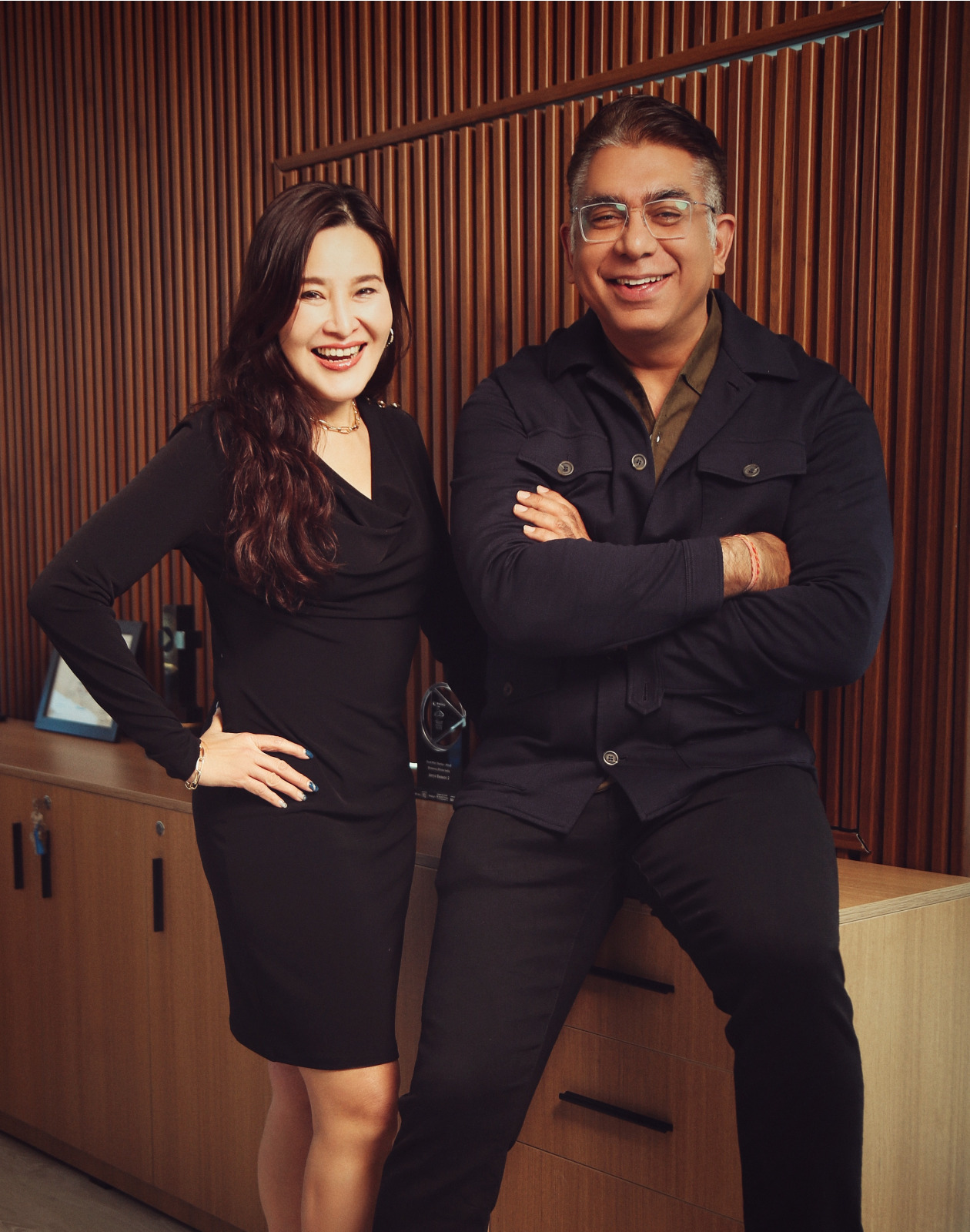
Deepak Dhar, Founder & Group CEO – Banijay Asia and EndemolShine India, has announced the entertainment major’s strategic expansion into South East Asia, with the formation of a new entity – CreAsia Studio. With a focus on local collaborations to create local originals and produce local Banijay IP adaptations, he announced the appointment of Jessica Kam-Engle as the EVP & Business Head of CreAsia Studio. She will report to him, and be responsible for driving business strategy and growth in the key markets of South East Asia – Malaysia, Indonesia, Singapore, Hong Kong, Philippines, Vietnam, and Thailand.
Talking about the development, Dhar said: “Given Jessica’s unparalleled experience in the Asian market, Banijay’s global IPs and marquee concepts, exciting local collaborations and a focus on India as a production hub for the region, CreAsia Studio is our next growth engine.” He further added, “We’re confident of Jessica’s leadership to steer us towards a leading presence in the region. Her appointment is also a testament to our commitment to tapping into newer markets and diversifying our portfolio in the vibrant South East Asian entertainment sector.”
Ground Zero Consulting has appointed business journalist Ankit Doshi to head the strategy division for the agency.
Commenting on the appointment, Rahul Tekwani, Founder and Managing Director, Ground Zero Consulting said: “I always knew that to be the change in the field of environment and climate change, we would need passion over experience. Fortunately, Ankit is a mix of both. He brings with him an enthusiastic approach and a natural inclination towards environment and sustainability, and with the understanding of the communications space, we realised he was the perfect fit. Ground Zero is working on very interesting projects in the sustainability marketing landscape. This is only a reflection of our commitment to a greener and more sustainable future.”
The path to love is paved with gold. And strewn with flowers.
In the United States, consumers plan to spend $25.8 billion on Valentine’s Day this year – an average of $185.81 per person. A 2023 Assocham report estimates the Indian Valentine’s Day market to be worth ₹25,000 crore, while the flower market around Valentine’s Day is estimated at about ₹500 crore.
Source: National Retail Federation, 2024
While couples spending on jewellery, flowers, clothes and romantic dinners drive the lion’s share of that consumption, non-romantic celebrations are a growing trend across the world.
A remarkable evolution of the target audience is apparent in the diverse celebrations associated with Valentine’s Day. Celebrations are now about various kinds of relationships, including friendships, family bonds, self-love, and even expressions of love for pets.
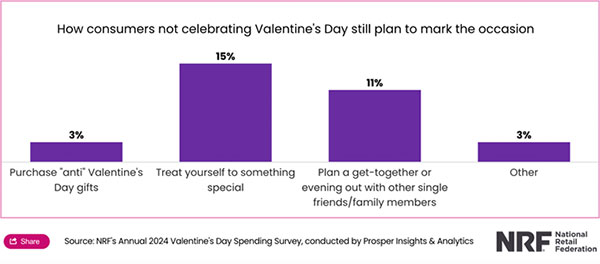
Research amongst ‘non-couples’ reveals that people are spending on themselves – which is only to be expected in this age of self-love, getting together with other unattached friends or family members, or even buying ‘anti-Valentine’ gifts.
These trends are particularly popular among younger consumers.
Over half (53%) of 18- to 34-year-olds and 42% of 25- to 34-year-olds not celebrating Valentine’s Day still find a way to mark the occasion.
Crafting campaigns that embrace this diversity resonates with a broader audience, capturing the essence of love in its myriad forms.
For young women who mark the occasion by treating themselves or throwing a party with single friends, there’s “Galentine’s Day” gift guides from brands like Macy’s, Kay Jewellers and Walmart
1-800-Flowers emphasises the importance of celebrating friendship, recognising that Valentine’s Day is not limited to romantic relationships.
Their ad features a heart-warming scene between two friends, as they reflect on the bond they share and how their friendship has evolved over time. The friends engage in a touching conversation, asking each other meaningful questions about their friendship and the impact it has had on their lives.
DoorDash Self-Love
Knowing that most other delivery services would cater to traditional couples, delivery app DoorDash put forth a narrative that gave single women permission to enjoy Valentine’s Day to the same extent that couples would. This meant capitalising on the existing narratives around pleasure, passion, and romance that are always front and centre on Valentine’s Day – and tailoring them to single women.
Since self-love isn’t new, it was important to have a fresh take. Taking self-love literally, the campaign tapped into the 72% of US adults that believe self-pleasuring is a form of “therapy”, and start a conversation that is weirdly taboo: female self-pleasure. Rooting the conversation in destigmatising female self-pleasure, it used the most iconic Valentine’s gift — a bouquet of red roses. The surprise element: The Self Love Bouquet, a bouquet exclusively on DoorDash made of 11 real roses and one Rose, the bestselling female sex-toy of the last five years. In creating the bouquet, DoorDash was able to deliver $6 million worth of flowers – twice as much as in the previous year to a new demographic – single people who don’t purchase flowers on this holiday, selling the stocks out in four days.
In India, sexual wellness brand, MyMuse challenged love’s most well-known ambassador, Cupid, with its campaign, ‘Modern Love Needs Modern Solutions.’
With Cupid representing age-old societal norms that represent only one right way to love, MyMuse shows how love and people’s expression of it have changed. So, whether it’s choosing your own path, picking your own traditions (old or new), or choosing to settle down or stay single, MyMuse understands that there is no one-size-fits-all in modern love.
Proposing that “Modern Love Needs Modern Solutions – Cupid doesn’t get it, MyMuse does, the brand is running a campaign showcasing a well-meaning Cupid, who attempts to bring couples together in the name of love, using age-old tricks. As his attempts are rejected by people who prefer to find love and express it in their own way with the help of MyMuse products, Cupid has a complete meltdown and starts questioning his life’s purpose.
Watch the series here:
In addition to the films, MyMuse created a Cupid profile and launched a #cancelcupid campaign on LinkedIn, where it leveraged its employees as brand ambassadors.
New forms of celebrating relationships notwithstanding, technology is allowing couples in love to experience Valentine’s Day in fresh ways.
Gaming romance
Zynga, the game publishing label owned by Take-Two Interactive, is commemorating the season of love with a variety of delightful Valentine’s Day 2024 festivities throughout its array of games.
On Farmville, FarmVille 3 – Sweet Nothings, Ginny is brimming with enthusiasm for Valentine’s Day, eager to ensure that everyone on the farm feels cherished and included. She has organized a Valentine’s Phone Booth, where individuals can dial their loved ones and traditionally convey their affection. Participants can even win romantic rewards, contributing to making Valentine’s Day truly unforgettable under Ginny’s thoughtful planning.
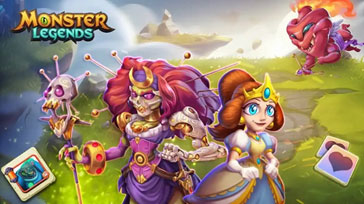
Monster Legends is commemorating Valentine’s Day with an uproarious new Era Saga featuring Lovestruck, a playful creature known for stirring up mischief during this festive period. However, Lovestruck isn’t the sole attraction in this season’s array; they’re also unveiling Shakespearante, a romantically reimagined rendition of one of their beloved characters.
Dragon City is staging a series of Valentine’s Day-themed events. Players are invited to gather around the campfire to listen to the twisted tale of the new Storyteller Dragon in Part I of the ‘Enemies to Lovers’ Valentine’s event. Participants can aid the new Hanshock and Gretackle dragons in piecing together this ancient narrative by unlocking storybooks filled with rewards and restoring honour to their families in Part II, ‘Sweet Revenge.’
Cadbury Dairy Milk Silk – AI Stories
Cadbury Dairy Milk Silk, the chocolate brand from Mondelez India, plays cupid once again to highlight love stories around us. This year, the brand brings an experience that allows couples to transform everyday moments of love into cinematic experiences, powered by generative AI and filmmaker Zoya Akhtar.
Consumers can scan the QR code on Cadbury Dairy Milk Silk packs, leading them to a site where they will need to answer some questions that will help in curating their love stories with personalised avatars, which will be featured in the animated movie. The AI converts simple text input from the consumer into lovable character animations featuring the consumer.
These AI-curated stories will be amplified through strategic media partnerships and personalised content collaborations with leading OTT and music platforms, as well as brand experience zones. Riding on the ultimate goal of making every couple’s Bollywood dream come true, selected videos from the campaign will be featured on the streaming platform Disney+Hotstar, allowing consumers to share their love stories with a wider audience.
Watch the launch video here: https://www.youtube.com/watch?v=8FMhNiKYdOw
Bumble
Bumble, the dating app, is celebrating Lunar New Year and Valentine’s Day in Singapore by launching a new campaign called “Toss Love into the New Year”. The campaign is inspired by the traditional and iconic “Prosperity Toss” or Lo Hei and aims to help Singaporean singles cast out their dating fatigue and manifest a more prosperous love life.
As part of the campaign, Bumble is giving away a curated exclusive ‘Lo Hei’ pack filled with eight goodies, such as fish ball crackers, Hershey’s kisses chocolates, and salted egg fish skin from Golden Duck. Each goodie represents Bumble’s eight mantras to manifest a prosperous love life, such as “Everything starts with a belief”, “I take control, love will unroll”, “Healing on the inside, beaming on the outside” and “I’m always real, authenticity is the deal”.
The first 200 users of the app can get the pack on a first-come-first-serve basis. Bumble’s partners in the campaign are Singaporean influencer and content creator Saffron Sharpe and Feng Shui expert and TikTok creator Cliff Tan. Sharpe is featured in a video explaining the meaning of the eight mantras and setting up Bumble’s ‘Lo Hei’ pack. She also provides tips on rearranging one’s personal space to invite love back into their lives.
Something to be inspired by when planning your next Valentine’s Day activation?
Kunal Sinha is a senior strategy and foresights executive based in Jakarta, Indonesia. He is the author of several books including The Future of India’s Rural Markets and Raw – Pervasive Creativity in Asia. He writes for MxMIndia every other Monday. His views here are personal.
RPSG Lifestyle Media and Penske Media Corporation have announce the launch of The Hollywood Reporter, an entertainment publication with a focus on film, television, and entertainment.
Currently, The Hollywood Reporter has editions in the US, Italy and Japan. The appointment process of the Editor-in-Chief and other senior positions are currently underway. The date of launch will be announced shortly, notes a communique.
Said Avarna Jain, Chairperson of RPSG Lifestyle Media: “Hollywood is home to one of the world’s oldest film industries and is the genesis for the multitude of local names that filmmaking communities enjoy all over the world,” she said. “The Hollywood Reporter India will be the first Indian publication that will look at the Indian entertainment industry as a whole. It will celebrate cinematic creativity across languages, regions and platforms, including OTT, digital and theatre. Hollywood may be the oldest, but India is the world’s biggest filmmaking industry and THR India will celebrate that.”
Added Elisabeth Rabishaw, Executive Vice President and Co-Publisher of The Hollywood Reporter: “This partnership signifies our continued commitment to fostering global connections and celebrating the culture, vibrancy, and robust entertainment business in India.”
Said Nekesa Mumbi Moody, Co-Editor-in-Chief of The Hollywood Reporter: “We’re excited to embark on this journey with the THR India team and bring our editorial voice to the process as we showcase and amplify India’s rich and compelling entertainment industry on an international stage.’
On World Cancer Day observed on February 4, the Federal Bank Hormis Memorial Foundation, News18 Network, and Tata Trusts, in collaboration with Fortis launched a short film titled ‘#YaadRakheinScreenKarein’.
Speaking on the campaign, M V S Murthy, Chief Marketing Officer, Federal Bank said: “There is tremendous effort happening on the other side of cancer. Unfortunately, at advanced stages, it feels all in vain. Through Sanjeevani we are giving life more than a fair chance of putting up a strong fight by promoting early detection. There are two intertwining aspects that we want all of us to commit ourselves to – an annual health check-up and in that an add-on of cancer screening. Sanjeevani has both width and depth of effort, as it works in the intersection of patient support, on ground screening across corporates and large communities and finally on building commitment to self-care by screening annually. Championing the cause beyond Sanjeevani, Federal Bank Hormis Memorial Foundation, in partnership with Tata Cancer Care Foundation and Assam Cancer Care Foundation, has extended support to over 1900 families in a short span of a few weeks. When it comes to cancer, more is less.”
Added Puneet Singhvi, CEO, Digital, and President, Corporate Strategy at Network18: “In the realm of healthcare, where knowledge, awareness, and timely diagnoses are crucial, ‘Sanjeevani’ remains dedicated to educating and advocating for the benefits of early cancer detection. Using communication tools such as this social experiment film is an excellent method of creating emotional connections and influencing behavioral changes. We hope that this soul-stirring film breaks stigma and acts as a powerful reminder for our audience to schedule their cancer screening soon.”
Said Deepshikha Goel Surendran, Head of Brand and Marketing Communications, Tata Trusts: “Tata Trusts remains committed to alleviating the cancer burden in India by not just focusing on providing access to quality and affordable care but also providing as much, if not greater emphasis on awareness. While early detection of cancer helps save lives, it also plays a significant role in reducing the financial burden for patients while also reducing the overall burden on the system. Our effort at the Trusts, therefore, is to drive this behaviour change that will eventually lead to a reversal of the late to early detection ratio from 70 to 30, as is the case, internationally. Through the film #YaadRakheinScreenKarein, as part of our partnership for ‘Sanjeevani, United Against Cancer’, we hope to lay emphasis on the significance of regular screening using a thought-provoking lever that we hope will inspire introspection and help to move the needle on early detection.”
Pulp Strategy, a digital agency, has unveils an AI-powered advertising brand film for Dabur Red.
Said Ambika Sharma, Founder and MD of Pulp Strategy, said: “AI is at the peak of its hype cycle; the capability of the tools is limited but growing. There are many interesting and real value use cases beyond creative and content with generative AI. It is our collective responsibility to prevent ‘nice-looking garbage’ through quality control processes to ensure impactful and effective campaign outcomes.”
Equitas Small Finance Bank has unveiled the inspiring journey of Virumandi under the ‘Circle of Life’ campaign.
Said Vignesh Murali, Senior Vice President & Head – Marketing, Equitas SFB: “Virumandi’s journey epitomises the essence of resilience and determination,” “His unwavering commitment to hard work and his partnership with Equitas underscores our mission to empower individuals to achieve their dreams, no matter the obstacles they face. We are honoured to stand by Virumandi on his journey from the garage to greatness. Moreover, it’s the persistence of people like Virumandi who are our driving force to actualize financial inclusion and exemplify our commitment to go ‘Beyond Banking’.”
Bajaj Allianz Life organised the fourth edition of #Plankathon in Bengaluru’s Sri Kanteerava Outdoor Stadium to celebrate the Indian Space Research Organisation’s (ISRO) achievements with Chandrayaan and the Solar Mission, Aditya L1.
Addressing those present at Bajaj Allianz Life Insurance’s Plankathon 2024, N Sudheer Kumar, Director, Capacity Building and Public Outreach, Indian Space Research Organisation HQ, said: “This is indeed an extraordinary event that showcases the collective Indian spirit. With the initiative like #PlankForAces, Bajaj Allianz Life has brought together several thousands by igniting their passion for their country, as well as their motivation to stay fit and healthy. We appreciate and thank everyone who have participated for their efforts. Your wishes will further fuel our endeavor to make India proud, as we set our focus on the new frontiers within space research.”
Commenting on the success of #PlankForAces and setting a new world record for the Company, Chandramohan Mehra, Chief Marketing Officer, Bajaj Allianz Life Insurance, added: “Bajaj Allianz Life Plankathon has evolved to be more than India’s flagship fitness initiative, that captures the sentiment of India. We are thankful to tens of thousands of participants who planked offline and online to express their admiration towards ISRO’s outstanding accomplishments that makes us all immensely proud. Anything less than the world-record breaking feat would have been inadequate to the applause ISRO deserves.”
Pidilite Industries Limited has unveiled a new digital campaign for Motomax Insta Shine, an easy-to-use DIY vehicle polish. The campaign, conceptualised by Sideways, is set to captivate audiences across various popular digital platforms.
Said Manish Dubey, Chief Marketing Officer, Pidilite Industries Ltd: “Motomax Insta Shine is not just about giving your vehicle a quick shine; it’s about adding a touch of shine to your everyday life. This communication reflects the essence of our brand – providing effective solutions for vehicle care and maintenance. We believe it will resonate with our audience and reinforce Motomax Insta Shine as a go-to choice for auto-care.”
Commenting on the TVC, Abhijit Avasthi, Founder, Sideways added: “We’ve always enjoyed crafting fun narratives for our Pidilite films. With Insta Shine, we wanted to demonstrate the instant shine functionality, but still do so in our signature, humorous way.”
The Bharat Bill Payment System (BBPS) has unveiled its redesigned website crafted by Bombay Design Centre. Adhering to the regulatory compliance standards set by the RBI and run by NPCI, BBPS’s refreshed website interface guarantees a distinctive experience for stakeholders, encompassing customers, billers, operating units, and developers, notes a communique.
Said Noopur Chaturvedi, Chief Executive Officer NPCI Bharat BillPay Ltd (NBBL): “The redesigned website encompasses an extensive bill payment category, accessible through a unified interface. Embracing technology and staying abreast of the modern age is crucial. Acknowledging the significance of our platform, we sought someone who understands the intricate nuances of digital products, design, and communication, ensuring a seamless experience for our partners and customers. Bombay Design Centre perfectly aligns with these requirements. In the future, with additional features like language options, sandbox, dashboard, ticketing and resolution and knowledge hub, we are committed to making this website the go to interface for all information and interactions with Bharat BillPay.”
A monster being fed baskets of infants and excreting them with horns; symbolising vaccination and its effects. Etching by C. Williams, 1802. Wellcome Collection, CC BY-NC
By Stephanie Alice Baker and Michael James Walsh
If you think memes are simply online images of cute cats and celebrities with funny captions, then you might be surprised to learn that they can have a more sinister function.
Our research shows that memes form part of a highly sophisticated strategy to spread and monetise health disinformation.
Memes may appear trivial, but they should be taken seriously. Dismissing them as harmless jokes is to grossly underestimate their influence – and bolsters their power to spread potentially harmful health messages.
Anti-vaccine memes have a long history
Memes aren’t a recent invention. They have featured prominently in anti-vaccination messaging for centuries.
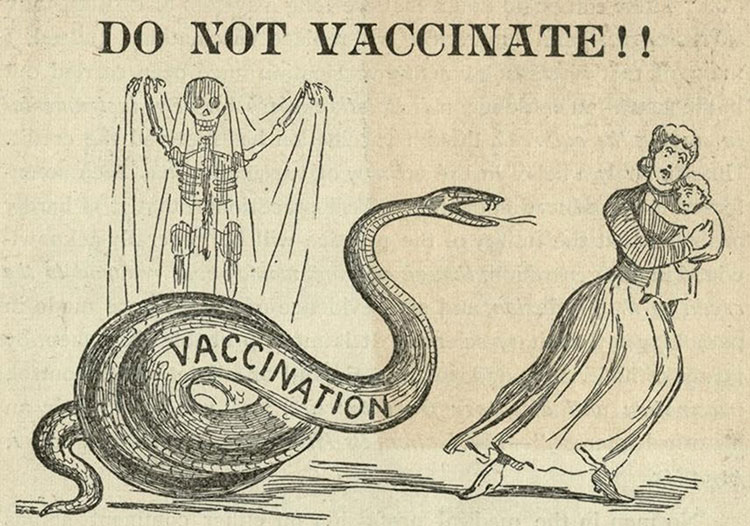
When widespread smallpox immunisation began in the early 19th century, political cartoons published in print media used memes (see image below) to evoke fear about the safety of the vaccine.
Cartoon from an anti-vaccination publication, titled ‘Do not vaccinate!’, 1892. The Historical Medical Library of The College of Physicians of Philadelphia
The most infamous anti-vaccination meme, however, emerged from a now discredited 1998 study that falsely linked the measles, mumps and rubella (MMR) vaccine with autism.
The meme “vaccines cause autism”, which appeared on billboards and was circulated widely in the media, provoked doubts about the safety of the vaccine. The study, since described as an “elaborate fraud”, was published the same year as the launch of Google’s search engine allowing “vaccines cause autism” to became a global meme.
Today, memes remain an important part of the anti-vaccine movement. The internet enables memes to be created anonymously, repurposed and shared at scale – making them a highly effective medium for spreading health disinformation.
They are often used as part of a meme war, defined as “the intentional propagation of political memes on social media for the purpose of political persuasion or community building, or to strategically spread narratives and other messaging crucial to a media manipulation campaign.” According to disinformation research platform The Media Manipulation Casebook.
Memes play an integral role in disinformation campaigns by facilitating fear, uncertainty and doubt.
Influencers and money
Our study analysed how popular anti-vaccine influencers used memes to galvanise the anti-vaccine movement during the COVID pandemic.
We discovered three recurring themes for encouraging vaccine refusal.
First, memes were used to vilify the government and social institutions, portraying them as corrupt and politically compromised. Anti-government sentiments were used to support several claims. These included claims that the government is corrupt and tyrannical; that vaccines are unsafe and ineffective and that the government is using vaccines as a form of state surveillance, for control and profit.
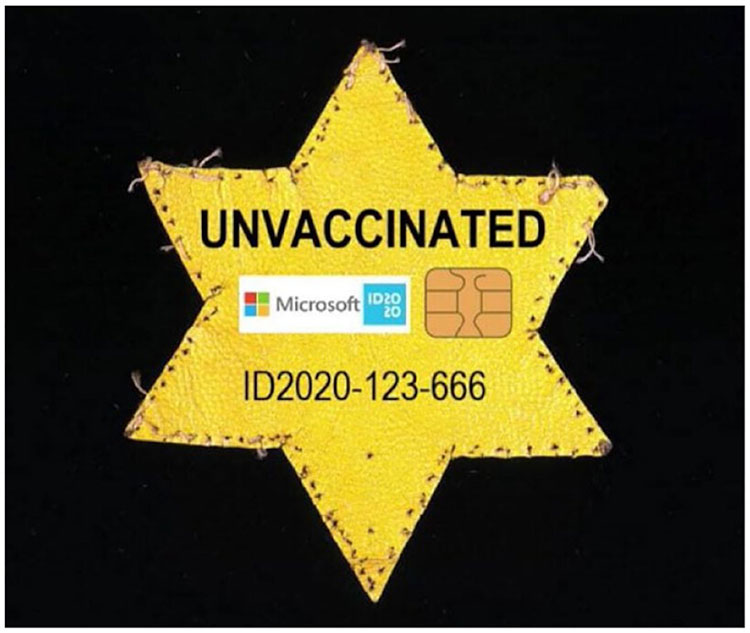
Second, memes depicted unvaccinated people as unfairly stigmatised. Influencers suggested the unvaccinated were being persecuted, using evocative imagery to imply a false equivalence between those who remain unvaccinated by choice and the persecution of Jews during the Holocaust. Such memes portrayed unvaccinated people as victims subject to Nazi-like sanctions and social exclusion.
A meme representing the Jewish Star to draw parallels between the victimization of the Jews during the Holocaust and the unvaccinated today.
Third, vaccinated people were depicted as morally and physically inferior to the unvaccinated. Vaccination was associated with infertility, low sex drive and a lack of critical thinking. Those opposed to vaccines, however, were portrayed positively as virile, attractive and intellectually superior.
To establish group membership and promote a sense of belonging, influencers referred to those who are anti vaccines as their “soul family”. But our research suggests there may be a more cynical motivation behind this apparently warm sentiment.
Going viral – and avoiding challenge
Influencers were strategic in their use of memes for political persuasion and commercial gain.
Several influencers provided their followers with “meme drops”: packages of memes with dissemination instructions. These memes were tested and produced in meme factories, then distributed monthly to a mass audience via personal newsletters and websites, encouraging followers to spread anti-vaccination content. By adapting memes to current affairs, influencers increased their relevance and likelihood of going viral.
Memes weren’t just a method of self-promotion for anti-vaccination influencers, however. They were also a way to profit financially from pandemic anxieties.
Anti-vaccine sentiment became a powerful gateway to promote potentially harmful health products.
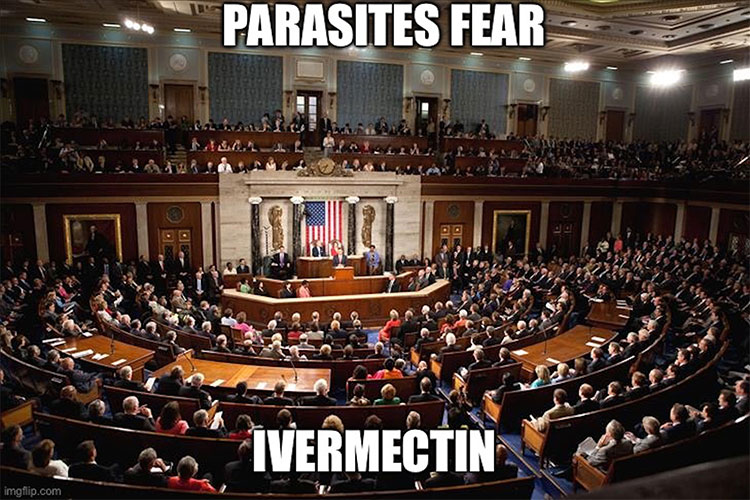
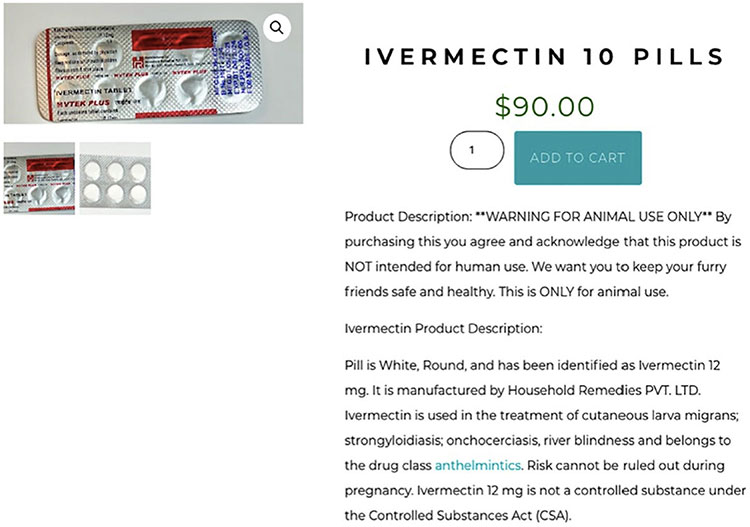
We found that memes were used to market unauthorised medical products by directing consumers to online stores. For example, we found that clicking on satirical COVID themed memes directed consumers to purchase hydroxychloroquine (a treatment for autoimmune disorders) and veterinary Ivermectin (used to treat parasites in animals). Both medicines are unapproved for the treatment of COVID.
A meme depicting the U.S. House of Representatives, which refers to elected officials as parasites, and links to the anti-parasitic drug, Ivermectin, which was promoted by some anti-vaccine influencers as an alternative (and unapproved) treatment for COVID-19.
The Ivermectin pills sold by the influencer for $90USD were intended for animal use only.
Memes are powerful propagators of disinformation because they allow influencers to claim plausible deniability. Under the protective guise of humour and satire, memes can evade fact checkers and content moderators while promoting anti-vaccine myths and unauthorised treatments.
Influencers promoting vaccine hesitancy use memes to build their online following, sow distrust of health authorities and profit from the promotion of unapproved medicines. This enables them to evade responsibility for any negative consequences of their messaging.
Memes may not look threatening – but that’s why they are such effective super spreaders of health disinformation.
Stephanie Alice Baker is Senior Lecturer in Sociology, City, University of London and Michael James Walsh is Associate Professor in Social Sciences, University of Canberra. This article is republished from The Conversation under a Creative Commons license. Read the original article.
Gozoop Group, has secured the integrated marketing mandate for edible oil manufacturing company – BN Group. The mandate will be serviced by the group’s Mumbai office.
The responsibilities of the mandate include brand communication strategy, which effectively conveys the brand persona and philosophy.
Commenting on the partnership Anubhav Agarwal, Managing Director & CEO, BN Group said: “BN Group is delighted to partner with GoZoop as our integrated marketing partner on this transformative journey. Their proven track record of crafting cohesive, data-driven campaigns across all channels perfectly aligns with our vision for maximizing brand engagement and achieving our marketing goals. We are confident that this partnership will be instrumental in amplifying our message and forging innovative and impactful connections with our customers.”
Added Mohit Ahuja, President, GoZoop Group: “It truly is thrilling to be associated with one of the leading FMCG edible oil manufacturers – BN Group. It is not often that a new brand is launched in this category and, we at GoZoop are really enthusiastic to kickstart the campaign.”
 Deepak Dhar, Founder & Group CEO – Banijay Asia and EndemolShine India, has announced the entertainment major’s strategic expansion into South East Asia, with the formation of a new entity – CreAsia Studio. With a focus on local collaborations to create local originals and produce local Banijay IP adaptations, he announced the appointment of Jessica Kam-Engle as the EVP & Business Head of CreAsia Studio. She will report to him, and be responsible for driving business strategy and growth in the key markets of South East Asia – Malaysia, Indonesia, Singapore, Hong Kong, Philippines, Vietnam, and Thailand.


 The path to love is paved with gold. And strewn with flowers.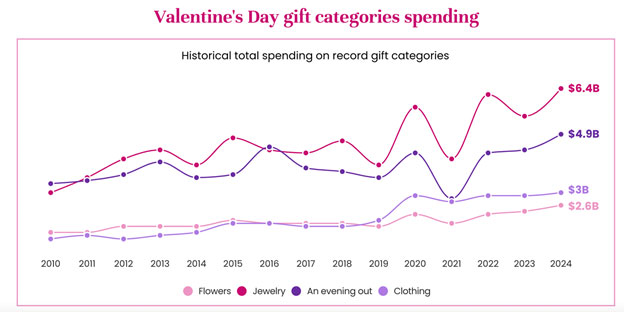
 On Farmville, FarmVille 3 – Sweet Nothings, Ginny is brimming with enthusiasm for Valentine’s Day, eager to ensure that everyone on the farm feels cherished and included. She has organized a Valentine’s Phone Booth, where individuals can dial their loved ones and traditionally convey their affection. Participants can even win romantic rewards, contributing to making Valentine’s Day truly unforgettable under Ginny’s thoughtful planning.
 Monster Legends is commemorating Valentine’s Day with an uproarious new Era Saga featuring Lovestruck, a playful creature known for stirring up mischief during this festive period. However, Lovestruck isn’t the sole attraction in this season’s array; they’re also unveiling Shakespearante, a romantically reimagined rendition of one of their beloved characters.
 Dragon City is staging a series of Valentine’s Day-themed events. Players are invited to gather around the campfire to listen to the twisted tale of the new Storyteller Dragon in Part I of the ‘Enemies to Lovers’ Valentine’s event. Participants can aid the new Hanshock and Gretackle dragons in piecing together this ancient narrative by unlocking storybooks filled with rewards and restoring honour to their families in Part II, ‘Sweet Revenge.’
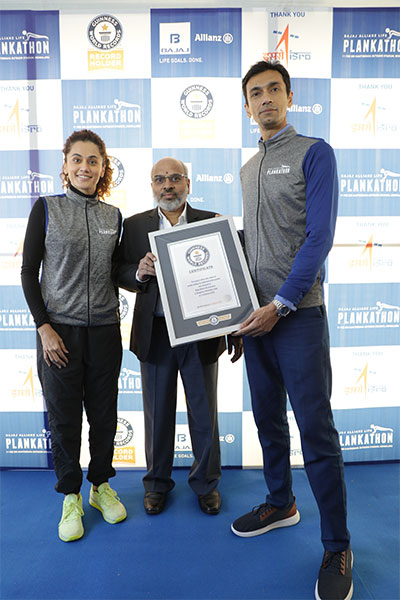 Bajaj Allianz Life organised the fourth edition of #Plankathon in Bengaluru’s Sri Kanteerava Outdoor Stadium to celebrate the Indian Space Research Organisation’s (ISRO) achievements with Chandrayaan and the Solar Mission, Aditya L1.