By Kunal Sinha
 The flights are going full again.
International visitor spending in India is projected to exceed USD 23 billion, while domestic visitor expenditure is forecasted to surpass USD 150 billion.
The tourism sector is expected to generate 1.6 million new jobs, recovering most of the pandemic losses, resulting in a total employment of nearly 39 million, which accounts for approximately one in 13 workers in India.
According to WTTC’s estimates, the sector is expected to expand its GDP contribution to USD 438 billion by 2033, representing approximately 7 percent of the Indian economy.
The number of foreign tourist arrivals in Indonesia reached 8.5 million in 2023.
Last year, the number of domestic tourist trips also showed a significant increase of 19.82 percent year on year, reaching 734.86 million trips.
The absolute economic contribution of tourism in Indonesia was forecast to continuously increase between 2024 and 2028 by in total USD 59.4 billion (+91.84 percent). After the eighth consecutive increasing year, the economic contribution is estimated to reach USD 124 billion and therefore a new peak in 2028.
How do people decide where to go?
Amidst abundant options and information sources, travellers are particularly conscious about making the right decisions, and they’re willing to invest extra effort for that assurance.
In Asia Pacific, travellers in India and Indonesia use the most sources of information and planning for their trips – 6.88 and 5.44 sources respectively.
As they search for their next travel destination, a remarkable flip happens.
52% of travellers in the region change their destination, airline or accommodation choice during the holiday search and planning process. In Indonesia, that figure is 65%, in India 78%, according to Google. FOMO (Fear of Missing Out) on an attractive offer is the most likely reason.
Travellers change their destination for different reasons – after coming across social media posts from friends and #influencers, encountering a great flight or hotel deal – a lower price / discount often being the clincher.
With discovery, adventure, personal growth, stress-relief and social connections being the top reasons why Asian travellers take holidays, what are some of the unique, local experiences that have the potential to attract them?
Having spent the Christmas – New Year break in Jogjakarta in Indonesia, I realised how much of untapped potential there is for travellers from India.
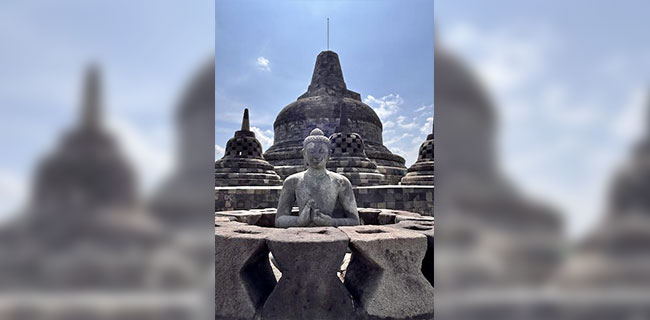
Jogjakarta is home to two architectural wonders: Borobudur and Prambanan.
Prambanan Temple is a complex consisting of 240 temples. The main temples are dedicated to Shiva, Brahma, Vishnu, Parvati and Nandi. All the mentioned temples form the Prambanan Archaeological Park and were built during the heyday of Sailendra’s powerful dynasty in Java in the 8th century AD.
The temples are decorated with reliefs illustrating the Indonesian version of the Ramayana epic which are masterpieces of stone carvings. These are surrounded by hundreds of shrines that have been arranged in three parts showing high levels of stone building technology and architecture from the 8th century AD in Java. The Prambanan Temple Compound represents not only an architectural and cultural treasure, but also a standing proof of past religious peaceful cohabitation.
Every evening, a two-hour staging of the Ramayana by students of the local fine and performing arts university enthralls visitors. The ticket sales go a long way in subsidising their education.
Borobudur, the largest Buddhist temple in the world, is simply stunning. Set in the middle of verdant surroundings, it was built in the 8th and 9th centuries AD during the reign of the Syailendra Dynasty. Visits to the temple are well organised, with numbers being restricted to 1500 a day, to prevent the massive stone monument from subsiding into the volcanic soil.
On the flip side, winter in India is the stage for hundreds of thousands of weddings. For many inbound tourists – hooked on to Indian movies and soaps, being able to participate in such a wedding can be a once-in-a-lifetime opportunity.
www.joinmywedding.com allows guests to soak in the wedding atmosphere, dress up, taste the food and dance their heart away, for a fee, of course. Right now, you have the opportunity to join a wedding in Thanjavur, Chittorgarh, Ahmedabad, Dehradun, Udupi, Goa – all perfect destinations to soak in the local culture, history, or nature.
So what could be unique ways to showcase the local?
The Faroe Islands, a gorgeous archipelago located in-between two always-popular tourist destinations – Iceland and Scotland turned Google’s “Street View” into “Sheep View”.
They have tons of exciting sights there for travellers, but getting there can prove challenging. Rather than wait for Google’s mapping cars, they took it upon themselves to give the world a unique of their beautiful landscapes.
Sheep are the most populous inhabitants of the Faroe Islands. In fact, there 83,000 of them.
The Faroe Islanders strapped 360° cameras to some of the many sheep that wander freely all over the country. The campaign manager then uploaded the footage to the Google Street View, or as she called it: “Sheep View”. https://www.youtube.com/watch?v=ywdqiyoQNgQ
This resulted in a unique look at these amazing islands which 49,000 people (give or take a few) call home. Their creative solution represents an authentic way-of-life as well as the unique benefits for travellers. And that was achieved using an unlikely marketing tool – Google Maps.
At the other end of the spectrum, Colombia went old school with the ‘Book of Warmth’, a 212-page beautifully photographed ebook dedicated to its famously welcoming residents.
In Spanish and English, it picks out different iterations of “warmth” from beekeeper Humberto Narváez’s love of sustainability to Maria Eugenia Clavijo’s top-notch treatment of her hotel guests.
So what are your best local destination experiences?
Kunal Sinha is a senior strategy and foresights executive based in Jakarta, Indonesia. He is the author of several books including The Future of India’s Rural Markets and Raw – Pervasive Creativity in Asia. He writes for MxMIndia every other Monday. His views here are personal.