Category: Big Story

  • Teens say ‘for you’ algorithms get them right

    Teens say ‘for you’ algorithms get them right

    By Nora McDonald

    Social media apps regularly present teens with algorithmically selected content often described as “for you,” suggesting, by implication, that the curated content is not just “for you” but also “about you” – a mirror reflecting important signals about the person you are.

    All users of social media are exposed to these signals, but researchers understand that teens are at an especially malleable stage in the formation of personal identity. Scholars have begun to demonstrate that technology is having generation-shaping effects, not merely in the way it influences cultural outlook, behavior and privacy, but also in the way it can shape personality among those brought up on social media.

    The prevalence of the “for you” message raises important questions about the impact of these algorithms on how teens perceive themselves and see the world, and the subtle erosion of their privacy, which they accept in exchange for this view.

    Teens like their algorithmic reflection

    Inspired by these questions, my colleagues John Seberger and Afsaneh Razi of Drexel University and I asked: How are teens navigating this algorithmically generated milieu, and how do they recognise themselves in the mirror it presents?

    In our qualitative interview study of teens 13-17, we found that personalized algorithmic content does seem to present what teens interpret as a reliable mirror image of themselves, and that they very much like the experience of seeing that social media reflection.

    Teens we spoke with say they prefer a social media completely customized for them, depicting what they agree with, what they want to see and, thus, who they are.

    If I look up something that is important to me that will show up as one of the top posts [and] it’ll show, like, people [like me] that are having a nice discussion.

    It turns out that the teens we interviewed believe social media algorithms like TikTok’s have gotten so good that they see the reflections of themselves in social media as quite accurate. So much so that teens are quick to attribute content inconsistencies with their self-image as anomalies – for instance, the result of inadvertent engagement with past content, or just a glitch.

    At some point I saw something about that show, maybe on TikTok, and I interacted with it without actually realising.

    When personalised content is not agreeable or consistent with their self-image, the teens we interviewed say they scroll past it, hoping never to see it again. Even when these perceived anomalies take the form of extreme hypermasculine or “nasty” content, teens do not attribute this to anything about themselves specifically, nor do they claim to look for an explanation in their own behaviors. According to teens in our interviews, the social media mirror does not make them more self-reflective or challenge their sense of self.

    One thing that surprised us was that while teens were aware that what they see in their “for you” feed is the product of their scrolling habits on social media platforms, they are largely unaware or unconcerned that that data captured across apps contributes to this self-image. Regardless, they don’t see their “for you” feed as a challenge to their sense of self, much less a risk to their self-identity – nor, for that matter, any basis for concern at all.

    The human brain continues to develop during adolescence

    Shaping identity

    Research on identity has come a long way since sociologist Erving Goffman proposed the “presentation of self” in 1959. He posited that people manage their identities through social performance to maintain equilibrium between who they think they are and how others perceive them.

    When Goffman first proposed his theory, there was no social media interface available to hold up a handy mirror of the self as experienced by others. People were obligated to create their own mosaic image, derived from multiple sources, encounters and impressions. In recent years, social media recommender algorithms have inserted themselves into what is now a three-way negotiation among self, public and social media algorithm.

    “For you” offerings create a private-public space through which teens can access what they feel is a largely accurate test of their self-image. At the same time, they say they can easily ignore it if it seems to disagree with that self-image.

    The pact teens make with social media, exchanging personal data and relinquishing privacy to secure access to that algorithmic mirror, feels to them like a good bargain. They represent themselves as confidently able to tune out or scroll past recommended content that seems to contradict their sense of self, but research shows otherwise.

    They have, in fact, proven themselves highly vulnerable to self-image distortion and other mental health problems based on social media algorithms explicitly designed to create and reward hypersensitivities, fixations and dysmorphia – a mental health disorder where people fixate on their appearance.

    Given what researchers know about the teen brain and that stage of social development – and given what can reasonably be surmised about the malleability of self-image based on social feedback – teens are wrong to believe that they can scroll past the self-identity risks of algorithms.

    U.S. Surgeon General Vivek Murthy discusses the harms teens face from social media

    Interventions

    Part of the remedy could be to build new tools using artificial intelligence to detect unsafe interactions while also protecting privacy. Another approach is to help teens reflect on these “data doubles” that they have constructed.

    My colleagues and I are now exploring more deeply how teens experience algorithmic content and what types of interventions can help them reflect on it. We encourage researchers in our field to design ways to challenge the accuracy of algorithms and expose them as reflecting behavior and not being. Another part of the remedy may involve arming teens with tools to restrict access to their data, including limiting cookies, having different search profiles and turning off location when using certain apps.

    We believe that these are all steps that are likely to reduce the accuracy of algorithms, creating much-needed friction between algorithm and self, even if teens are not necessarily happy with the results.

    Getting the kids involved

    Recently, my colleagues and I conducted a Gen Z workshop with young people from Encode Justice, a global organisation of high school and college students advocating for safe and equitable AI. The aim was to better understand how they are thinking about their lives under algorithms and AI. Gen Zers say they are concerned but also eager to be involved in shaping their future, including mitigating algorithm harms. Part of our workshop goal was to call attention to and foster the need for teen-driven investigations of algorithms and their effects.

    What researchers are also confronting is that we don’t actually know what it means to constantly negotiate identity with an algorithm. Many of us who study teens are too old to have grown up in an algorithmically moderated world. For the teens we study, there is no “before AI.”

    I believe that it’s perilous to ignore what algorithms are doing. The future for teens can be one in which society acknowledges the unique relationship between teens and social media. This means involving them in the solutions, while still providing guidance.The Conversation


    Nora McDonald, Assistant Professor of Information Technology, George Mason University. This article is republished from The Conversation under a Creative Commons license. Read the original article.


  • Sorry, consumers. We’ve failed you!

    Sorry, consumers. We’ve failed you!

    Sanjeev KotnalaDear Customers, I am sorry and guilty as a member of the industry that has collectively, with the government, failed you, the consumer. I say this after Patanjali’s Baba Ramdev got away lightly with just a minor rap on the knuckles… an apology.  I can bet that the debate about Babaji’s Patanjali and its misinformation campaign will not die down quickly enough.

     

    Apology of an Apology

    Okay, so the size of the apology was increased. But it appeared once in the larger size and once in the smaller size. It is minuscule compared to the total space and time consumed by Patanjali with its misinformation campaign. Hence, expecting the audience to have the same opportunity to see the apology as they had when they saw the campaign is futile. This means that most will remain unaware of the apology and continue to be under the influence of all-powerful misinformation and miscommunication. In a true sense, if we want a real example and deterrent, the apology must appear in the same media (Press-TV-Digital) in the same size and with the same frequency as the misleading campaign. Now, that may be too much to ask, but should that not be justified for a habitual offender brand? And till it happens, the brand should be debarred from communicating in the media. That would have been justice.

    I wonder if they ran a 15-second apology on TV and digital with the same channel and platforms. Logically, they should have.


    The Products are not Bad, the Misleading Information is

    Before you take it otherwise, let me tell you I firmly believe in remedies and the products that Patanjali propagates. However, it is all about the hugely exaggerated, unscientific, unsubstantiated claims the brand has been pushing with heavy media exposure riding on Baba Ramesh Yoga and Ayurvedic Acharya image.


    This is no time for Celebration

    It is not the time to celebrate the victory. This is just a demonstration of the industry and the government’s failure to curb such brand menace.

    No time to rejoice for the apology that the brand was forced to publish.

    This is like any other time- a good time for introspection.

    An industry that expects a celebrity endorser to do a due diligent check on the brand must take the blame when it feels at the creative and media level to question misleading claims. And that is not just about Patanjali, it is about the non-healthy health drinks- the Fair that now Glows and many other such brands.

    It is time to once again call upon every stakeholder and see what genuine efforts are needed so that no other brand dares to create and release misleading communication.


    Two Questions

    One way in which the brand should be penalised for the long-term damage it could have created on the highly influenceable minds of the masses. The courts and the ministry must work together to ensure that even if it is a witch hunt, Baba Ramdev and the brand are made an example of it. Is taking brands off the shelf good enough? Should the brand be asked to mirror the product’s misleading campaign media plan for the apology media plan? Or should we ask the brand to provide 5% of the revenue as a deterrent?


    What about the Future?

    I have often said this – No One Is Worried Of ASCI and the fragmented industry. Recently, ASCI has been trying to act bravely and get some teeth by working with the consumer affairs and information ministry. However, it remains a source of a sparkling array of meticulously crafted guidelines-  which remain what they are: guidelines.  It does not have the power to sanction a brand. And without that, brands are willing to risk litigation delays and what escape routes they can exploit.


    It is Not a New Issue

    I had seen the brand’s damaging approach and attitude many years back. I raised the issue- the year- Baba Ramdev was fighting and defending the brand in court battles with other brands. That year, Babaji was a Guest of Honour speaker at Goafest- the advertising and marketing industry’s flagship festival. I protested that the Baba, who has refused to follow ASCI guidelines, must not be invited as a speaker at an Ad Club and IAA event. I asked the industry associations to stand together against a habitual offender of ASCI guidelines, which every brand should consider sacrosanct.

    But my voice of dissent failed to find enough takers.

    Babaji entered and exited to a standing ovation from the industry.


    Can’t Blame Media

    Many may even want to question the role of media. They knew what they were publishing. Advertising whose promises and claims were questionable. Were they not supposed to be the guardians of audience rights? Well, one should not expect them to start scanning every campaign and sit in the seat of justice. However, the creative and the media planners must answer – what they were doing. Everyone wanted the cream till the party lasted.


    ASCI and Polite Self-Governance/Self-Regulation is Not Working!

    We are the noisy, naughty students in preparatory school who need the teacher in the classroom to enforce discipline. Our attempt at nudging the misguided brands to follow the guidelines has failed. Most brands smoothly side-step and repeatedly flout guidelines- knowing nothing will happen and nothing happens.! ASCI asks for an explanation. The brands take time to provide. Then, if the communication is found fault, the brands silently say sorry, and the business goes on; otherwise, everyone would have learnt their lessons by now. Sometimes, like Patanjali did, the brand takes ASCI to court.

    We need something more. It is not working- it is so broken- we must do something about it. How long can the audience be asked to sacrifice their interest in the absence of some real action?

    The brands that flout the rules are big brands. They understand the legality and how to escape it. They do it knowingly. There is an intent behind every action of the highly paid planners and creative and strategic people. They do it because industry self-governance is toothless and needs to be fixed.


    We failed the Industry & the Audience

    The creative agency, if any, willingly follows the brand directive. It dare not ask for substantiation. It will never refuse the work- because many others are in the line to do it.


    ASCI must get teeth or…

    ASCI must graduate from an industry body of guidelines to something that still constitutes the same way but can enforce discipline. It should be powerful to dictate the terms, and the media and creative industry must accept the ruling.

    It may lead to many court cases. The cases will further clarify what is allowed and what is not. Maybe the Ministry of Information and Broadcasting should foot the bill for these cases.


    Net-net

    ASCI must be given Teeth as the first port of call, or a decision/penalty/guidelines enforcer or some other framework must be created to address it. 

    Trust me, Exaggerated, False, and Misleading Claims will continue to be created and released, putting the public at large at risk because we lack a system to quickly address and nip them in the bud. Patanjali has been doing so for more than a decade- and hopefully, we in the industry know that by allowing a brand this free run, we have not lived up to our duty and responsibility. 

    We, as an industry, have collectively failed the audience.

    Let the recent happenings on the FMCG Health front, and Baba Ramdev/Patanjali be a call to wake up. If we do not self–govern, the law will govern, which may be a sad phase.

    Maybe every marketer, communicator, brand custodian should take a print of the Patanjali apology, frame it, and hang it in their room. Just to remind them not to participate in any process of creating or releasing misleading communication.


    Sanjeev Kotnala is a senior business strategy consultant and educator. He writes on MxMIndia every Wednesday. His views here are personal.

  • The ‘Third Man’ of May

    The ‘Third Man’ of May

    Avik ChattopadhyayIn his book ‘South’, adventurer Ernest Shackleton describes a phenomenon called ‘The Third Man Syndrome’ that he experienced for the first time in his Antarctic expedition of 1914-17. He was convinced that a dead companion of his team accompanied them through the last arduous leg of being in snow for two years. he wrote, “During that long and torturous march of thirty-six hours over the nameless mountains and glaciers… it often seemed to me that there were four of us, not three.” In fact, TS Eliot’s ‘The Waste Land’ refers to ‘the third man’ from lines 359 through 365, inspired by Shackleton’s experience.


    Psychoanalysts say that the “third man factor” or “third man syndrome” is a phenomenon where, in cases of conditions of extreme resistance, destruction, isolation and even death, the brain sends ‘switches’ or signals to allude to the presence of another figure next to the victim, as a symbol of comfort and reassurance.


    The people of Gaza are going through their “third man syndrome” right now. There are young people, of all faiths, backgrounds, ethnicities and streams of education, thousands of miles away, in some of the most reputed of educational institutions, in the thousands, standing next to the dead, desolate and destroyed in a tiny strip of land merely of 365 square kms.


    Close to 1200 students from LA to NY have been arrested so far. And there are close to 10 times that number that continue to sit out in demonstrations, pitching tents, holding placards and delivering speeches, from UCLA to Northwestern to Berkeley to Columbia, where it all started.


    The movement has spread outside of the US, to Canada, France and Germany. The students have three simple demands – [1] complete ceasefire in Gaza as more than 35,000 have already been killed, [2] their governments should stop funding the war and supplying arms and, [3] their key corporations, like Google, should stop doing business with the government of Israel.


    While the protests and demonstrations have had their share of friction and violence with the “other camps”, they have largely been peaceful and purposeful. Decades after the “anti-Vietnam war” protests has the US seen a significant portion of the student community and the young American stand up united for a cause. They have been the ideal “third man” for the Gazan, while a large part of the world has chosen to look away.


    Tagore had written in a song, “When life is hard and parched up, come as a shower of mercy.” These students have done exactly that. Their teachers, who stand with them, have done exactly that. Both communities have risked their careers and jobs. There are videos of celebrated academics being literally manhandled and handcuffed by the police. Both are doing their jobs. The teacher is supposed to help widen horizons and encourage questioning through their teaching and action. The policeman is supposed to put an end to ‘disorder’ and ‘disruption’.


    In India, except for the ‘usual suspects’ like JNU who have declared support for the protests, we have chosen to remain quiet. We need not bother, as it does not affect us. It is about people being killed in a far off land that is any way not important to us, either for education or jobs or investments. In fact, even if it were about a neighbouring state within India, one need not be bothered at all, as long as it does not affect me today. About tomorrow or the day after, who really cares as I am not too secure about my today.


    Even though I ‘pooh pooh’ the demonstrators on social media as “wokes”, “libtards” and “le-lis”, and pass random judgments on how the universities can allow such anarchy, as soon as I am in class 12, I shall start applying to the same universities. If I am a parent, I shall ask my child to do whatever it takes to get admission into one of them. If I wish to do a masters or doctorate, I would give an arm and a leg to be there, for the calling card is so damn important. My clean, non-questioning, anti-anarchist upbringing and values do not come in the way at all.


    As Nietzsche had so rightly said, “There are no eternal truths, as there are no absolute facts.”


    We need to understand that these educational brands are where they are because of such instances of student activism and standing up for causes, against QAnon one time to Russia on another and Israel now. These brands are not what they are in spite of these key milestones in their timelines. They take pride in taking a stand, openly expressing opinion, constructively criticising and encouraging the spirit of inquiry. These brands do not step back from putting their hard-earned reputation at stake if the cause is justified.


    It is a lesson for our educational institutions who actually encourage students to “stay calm and carry on”. The likes of a JNU today or a Calcutta Presidency College yesterday are exceptions. Like most of us, our educational institutions are also equally servile and opportunistic. That is exactly why not a single institution rubs shoulders with the ones we are currently castigating.


    Remember, celebrating May 1 as Labour Day also started in the US way back in 1886. The poster boy of ‘capitalism; is also the pioneer of workers’ rights and trade unionism. So, having students demonstrate for a cause like Gaza is natural and expected. In India, Labour Day is not celebrated as a national holiday, so how can we expect students to leave the classrooms, hold placards and march to the city centre for some faceless people thousands of miles away?!


    I celebrated May 1 comforted by the fact that “the third man” is standing beside the homeless, maimed, scarred and orphaned in a land where I might never go but I shall forever belong.


    As the Canadian band Rush sang in “Nobody’s Hero”…


    I didn’t know the girl, but I knew her family

    All their lives were shattered in a nightmare of brutality

    They try to carry on, try to bear the agony

    Try to hold some faith in the goodness of humanity


    As the years went by, we drifted apart

    When I heard that she was gone

    I felt a shadow cross my heart


    But she’s nobody’s hero

    Is the voice of reason against the howling mob

    Hero… is the pride of purpose

    In the unrewarding job

    Hero… not the champion player

    Who plays the perfect game

    Hero… not the glamour boy

    Who loves to sell his name

    Everybody’s buying

    Nobody’s hero

  • Summer Diaries: Elections, Cricket & More

    Summer Diaries: Elections, Cricket & More

    Shailesh KapoorWe are hitting peak summers, and elections are generating their share of heat too. Having watched election coverage over the years, it is impossible to not experience déjà vu. With all the growth in technology, election rallies continue to be a prominent election feature since the 1950s. I first remember watching election rallies in the late 80s, and visuals from the current elections look remarkably similar, just better in video quality.

    Elections are one place where the poor and the rural population, otherwise ignored by media for most part, comes into the mainstream, simply because each vote carries equal value, and the numbers are heavily stacked up outside the big cities and the affluent classes. And this hasn’t changed over decades now.

    But one thing that has changed is the use of the word “manifesto”. Over so many elections, one got a feeling that the term was moving out of election lexicon, and there didn’t seem to be even basic awareness about it among the general voters. But the Congress manifesto being targeted by BJP has stirred up things, and it is hard to find any political speech or interview where the M-word is not uttered.

    We are less than halfway into these long elections, and still four-and-a-half weeks away from June 4, which is the results day. June will be the more interesting month compared to May, as results lead to headlines, irrespective of how emphatic or fractured the mandate is.

    Interestingly, the T20 World Cup kicks off in the same week, and India play their first game on June 5, followed by a marquee clash with Pakistan on June 9. Even the T20 World Cup is month-long now, extending from June 2 to June 29. The venue may be West Indies and USA, but BCCI’s might ensures all India games are 8PM IST. After all, there’s an IPL slot to fill!

    India looks for its first World Cup win in this format since the nobody-saw-it-coming win in the inaugural edition in 2007. But irrespective of whether that happens or not, we are in for a double bill of politics and cricket in June.

    Meanwhile, Malayalam cinema is making waves, and setting all kind of crazy records, which deserve a separate piece of its own someday. After a euphoric 2023, the theatrical business has been tepid so far this year, but for the astonishing performance of Malayalam cinema, which is set to cross its 2023 annual number in just 4.5 months in 2024!

    And since I frequently rant in this column about the lack of innovation in Hindi GEC content, I should take a moment to acknowledge a trend that surprised me, and very pleasantly so. My colleagues Keerat Grewal and Aakriti Bhatia have put together this report on how Hindi GEC women are not housewives anymore. It’s a crazy trend, and even if you have no interest in GECs, I highly recommend reading it, just as a showcase of how data can be so powerful in revealing trends, and in such a simple manner too.

  • So which brands have caught Election Fever?

    So which brands have caught Election Fever?

    Photograph of first-time voters in Jaipur from the ECI.gov.in website

    Kunal SinhaWe are in the middle of a frenetic, high voltage election campaign in India. Of particular interest to political parties and brands alike is the sentiment of first-time voters.
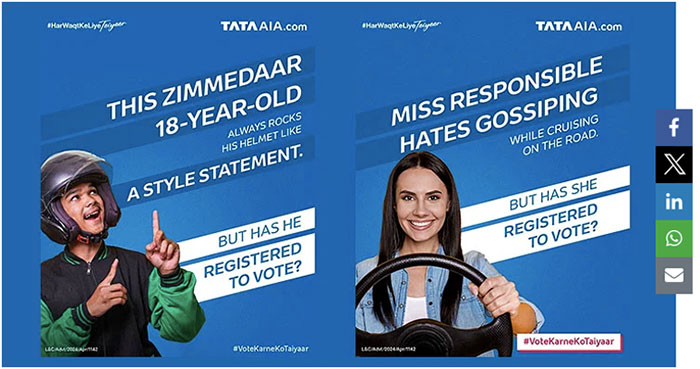
    With only 18 million out of eligible 49 million first-time voters having registered to vote, the Election Commission has roped in brands to reach out to their fans and followers. In Bihar, which has the country’s largest number of young people, only 17% have registered to vote. In Delhi, the centre of political action, the figure is 21%, while in Uttar Pradesh, it is 23%.

    So how are brands getting to be a part of the feverish campaigning?

    Insurance brand Tata AIA launched a social media campaign titled #VoteKarneKoTaiyaar, encouraging young Indians, particularly first-time voters, to immediately register themselves to vote and then go ahead and vote on election day. The election campaign integrates the brand’s core idea of ‘taiyaari’ (readiness), with its tagline being ‘Har Waqt Ke Liye Taiyaar’.

    Booking platform BookMyShow’s campaign underlines the importance of voting as a fundamental duty of every responsible citizen, especially the youth. With the tagline ‘Aaj Picture Nahi, Bigger Picture Dekho’, its campaign urges citizens to focus on the larger picture of nation-building by exercising their right to vote on their respective election days.

    The film deploys a uniquely-weaved narrative and clever word play, keeping viewers that unaware of the purpose of the campaign until it is revealed in the end. The story aims to connect with viewers across the country, inspire civic engagement and demographic participation.

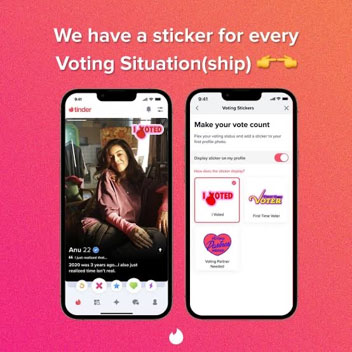
    Can political participation be a desirable feature on your profile? Dating app Tinder seems to think so. It has added special stickers to its app that users can add to their profiles. These stickers are about voting, like voting partner needed, first-time voter, and I voted. Collaborated with Yuvaa, an Indian youth media organisation, and Mark Your Presence, an organisation that helps young people learn about voting, Tinder’s campaign started running from April 18 and will be on till May 15, 2024, with its users in India being able to see special cards in the app with information and tips about voting.

    Bangur Cement’s election-themed campaign featured Bollywood actor and MP Sunny Deol.
    The campaign, with the tagline Vote Solid, Desh Solid, carries the message about how important each person’s vote is for making the country stronger. There’s a brand connect as well: just like using strong cement helps build a sturdy home, voting solidly helps build a strong nation. With low voter turnout observed in the first two phases of the election, the campaign has pivoted to ask voters to take the pledge ‘Vote Ka Vachan’, saying ‘Chutti baad mein manao, pehle vote kar aao’.

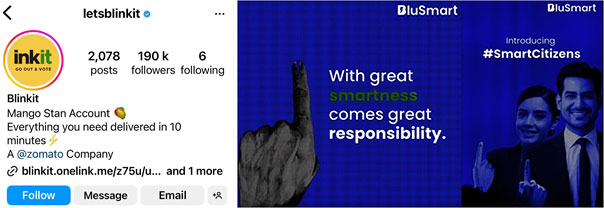
    Delivery service BlinkIt dropped the first two letters from its logo, as it encourages voters to go out and vote.

    BluSmart, an Indian electric vehicle (EV) ride-hailing service and EV charging infrastructure network, launched a campaign called #SmartCitizen. Their effort, focused on their key markets in Delhi, Gurugram and Bengaluru, is to tell people how important it is to vote and how much of a difference one vote can make. BluSmart is giving a special badge to riders who vote to encourage everyone to get involved in voting.

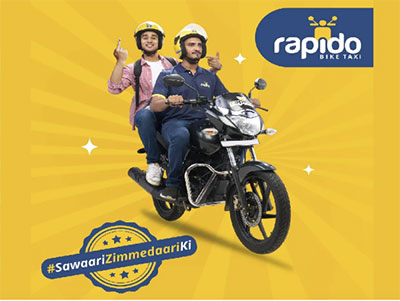
    Across different states, rideshare company Rapido has collaborated with the State Election Commissions to offer free bike-taxi rides to voters cities like Shillong, Nagpur, Asansol, Siliguri, Durgapur and Kolkata, running a campaign ‘Sawaari Zimmedari ki’.

    Apart from these direct appeals to vote, brands are also having some fun at the expense of politicians.

    Colgate Salt toothpaste‘s campaign ‘No Card, No Darr’ promotes oral hygiene alongside civic responsibility, with a dash of humour. The ad depicts a politician who is scared of sitting on the chair in front of him, much to his party workers’ surprise: it’s the one kursi which even politicians are scared of. That’s because he views it as a dentist chair because of he is suffering from toothache.

    The rising temperature, both politically and weather-wise, has presented some brands the opportunity to showcase their cooling-down creds.

    Innerwear brand Technosport tells us the secret of how a politician keeps his cool even while campaigning in the heat.

    Electrical appliances brand Novamax also uses the platform of elections to depict the intense heat experienced during election season.

    The brand’s tagline, ‘Ek Hei Naam Gunje Ga Jab Chalegi Hawa,’ aims to connect with consumers and emphasize the relief provided by Novamax Air Coolers in combating summer heat.

    With about four weeks remaining in the general election season, how many more brands will get consumers to vote – for them, and for the nation?

    Kunal Sinha is a senior strategy and foresights executive based in Jakarta, Indonesia. He is the author of several books including The Future of India’s Rural Markets and Raw – Pervasive Creativity in Asia. He writes for MxMIndia every other Monday. His views here are personal.

  • Travellers pained by poor service

    Travellers pained by poor service

    For an industry that leans almost entirely on customer experience, 40% of travellers are intensely annoyed with unresponsive customer support. Kapture CX, an AI-powered customer experience automation platform, recently conducted a survey to assess customer experience levels within the travel vertical.


    As part of the survey, travel buffs shared their most frustrating pain points when travelling, highlighting the need to address customer support challenges in the industry.


    The survey unveils that 40% of travellers are intensely annoyed with unresponsive customer support during their travel. The travel industry is built on providing excellent customer support. However, slow and unsatisfactory support ruins the customers’ travel journey as well as an overall experience. As a result, rather than only focusing on managing bookings online, the industry players need to move out of their brick and mortar setups in the customer support journey and increase the bandwidth of their support team that requires interaction with customers.


    Commenting on the survey, Gaurav Juneja, Chief Revenue Officer of Kapture CX said: “As a platform that specialises in improving customer support with AI-first solutions for all industries, it was time to pass over the stand to the travel sector and get acquainted with their problems. With the findings of the survey, we are looking forward to transforming the present customer support landscape within the travel vertical, creating a thriving journey for all travellers.”


    In addition, the survey noted that 35% of travellers’ journeys are complicated with hidden charges. These hidden costs are significantly higher and can cause extreme dissatisfaction among travellers. Subsequently, this can further have a major impact by causing unforeseeable damage to the company’s reputation by involving lost revenue due to missed sales and hefty legal costs.


    Furthermore, the customers’ pain points are followed by booking complications as 14% of travellers are intensely annoyed with such challenges. Hidden charges, price fluctuations, unclear customer policies and technical glitches make up a complicated booking system. For instance, a traveller may find a great deal on a hotel or flight booking, but the change in price can affect the availability and raise several concerns for the customer.


    Apart from this, 10% of travellers believe a lack of self-serve options also contributes to a frustrating customer support journey. The survey evidently demonstrates that travellers today seek a more transparent and easy-to-navigate booking process. They also want to see more self-serve options, such as strong AI customer assistance which can help resolve simple customer queries immediately.


    With this crucial knowledge at its disposal, the travel industry needs to move the needle on improving customer support, which can go a long mile in elevating the travel experience. In response, tech integration can play a significant role in emphasising the importance of customer feedback in enhancing travel experiences, leading the path to AI-driven revolution.

  • The Cred-isation of Advertising. But not everyone gets it

    The Cred-isation of Advertising. But not everyone gets it

    Sanjeev KotnalaCred has evolved from its previous style of communication, which was often misunderstood but has been effective. Though forced, there has always been an attempt at being humorous and there is a storyline that delivers the message. Here is the recent ad, sharing the longer version of the Rajamouli ad. The other ads featured Illa Arun and Leander Paes.  The Cred way of advertising indeed has a history of consistency.


    Learning from Cred

    TheCcred way of advertising has a history of consistency. Remember Govinda  and other star auditions, the Goof for Great, Cred bounty and even something I just discovered and had not watched earlier- typical Cred- the claw  (is that really Cred?!).


    Meanwhile, many brands have learned from the Cred Institute of Advertising and are attempting to make advertising simple.

    Have a message.

    Maybe have a celebrity.

    Create communication that repeats what you want to say.

    Say it simply enough.

    In the name of creativity and humour – try a condescending tone.

    And most likely, there will be enough consumers who will try you out.

    If you have the budget, you can attempt multiple edits or celebrities. However, that is not an essential requirement.


    Make My Trip

    Have you seen the Real Hero campaign of Make My Trip, where celebrities are hinted at but don’t show their face? It is where Cred was ages back. I am surprised at the campaign- which keeps spraying bullet point statements from a PowerPoint presentation – and even has to point out that Make My Trip is the real hero. So they have their Moves Don’t Lie, Breathless, Steamy and  Bhidu Shakespeare- Jackie Shroff. Why, when you have such a great pair of Alia and Ranveer Singh doing a great job? Not that I liked their latest ad for first international travel. But every brand is allowed some goof-ups.


    HDFC PayZap

    HDFC is one of these advertisers that uses the Cred strategy of plain, iterative, repetitive, simplified, and no-storyline advertising. I must agree that Cred always had a storyline holding its creativity, and hence, the HDFC PayZap act with Virat for its payment platform is an innovation. However, one can cite the various restrictions one faces while using IPL association for advertising, and really making a good ad is sometimes difficult.


    MRF ZLX

    Talking of Virat, MRF, another brand endorsed by the celebrity, has recently made some friendly additions to the message, but it is still MRF ZLX or whatever that is supposed to meet.


    Many brands have believed that the punch line- an end dialogue that can be repeated sticks and makes the brand memorable. Well, the SBI ads are trying to do the same – ‘I will upgrade to Cred’ with ‘Janata hai uska Bank kaun hai’ almost like ‘Mera baap kaun hai’.


    Net-net 

    Now, before you get me wrong, the ads may be working, or the metrices must be showing them to be working. Maybe Cred-isation is the need of the hour in the shortened attention span and fragmented media reach. I am not sure, but I would love to know your point of view. However, I must say that the excitement, the humour, the smile and the aha moments are missing from these communications- maybe that is not what advertising is expected to do anymore.

  • Net-Zero and The Diffusion of Technology

    Net-Zero and The Diffusion of Technology

    Ashoke AgarrwalClimate change, the most pressing issue of our time, is manifesting unprecedentedly. The erratic weather patterns, marked by prolonged droughts, devastating floods, and uncontrolled forest fires, underscore the need to achieve net zero emissions swiftly and subsequently reduce greenhouse gases in the atmosphere.
    There are four broad routes to reaching net zero (and then continue on the path of reduction):

    • Reducing the average carbon footprint of each human through lifestyle changes – mainly through consuming less electricity and fuel and changing to more eco-friendly diets
    • Technology that a) enables humans to consume less electricity and fuel beyond lifestyle changes and b) lowers the carbon footprint of economic and industrial activities like agriculture, manufacturing and computing.
    • Increase the natural green cover that absorbs greenhouse gases from the atmosphere and
    • Create, build and run technology systems that absorb and sequester greenhouse gases from the atmosphere.

    Decades of grappling with the problem of climate change have made it clear that getting humans to change lifestyles to reduce their average footprint is challenging, if not impossible. The reason is that fundamental human nature prevents humans from sacrificing individual comfort to attain community goals.

    Preserving and increasing the green cover runs into a geopolitical logjam engendered by the uneven development of countries worldwide.

    The above reasons make the development and diffusion of new technology critical to meeting the world’s net zero and beyond goals.

    These technologies range from low—to zero-carbon footprint power (wind, solar, nuclear fission, and someday perhaps nuclear fusion) to greener mobility (biofuels, hybrids, hydrogen and electric) and industrial processes (grey or green Hydrogen).

    Each of these new technologies faces multiple challenges in meeting its full potential.

    Take electric cars, for instance. The market opened at the high end, and pricey Teslas became symbols of a woke lifestyle. In the process, Tesla solved tricky technical problems, including batteries with enough juice to support viable range and life and reliable and fast charging systems.

    The Theory of Product Form Strategy (PFS) postulates every innovator of new technology faces a product-form decision at an early stage of building a business out of his innovation. The innovator company has three choices: Market the Know-How, Market a Component, or Market A System.

    In a pre-print manuscript submitted to the Journal of Marketing titled “A Theory of Product-Form Strategy: When to Market Know-How, Component or Systems.”, Frias, Ghosh, Janakiraman and Duhan, have an interesting illustration of the PFS Theory. For example, consider an innovator who has developed a technology that tracks the mechanics and dynamics of a baseball bat as it meets the ball, allowing coaches to refine a batter’s ability. As a result, the innovator can decide to sell the technology to a party that determines how to market it. Alternatively, the innovator can develop the technology into a component that fits on a bat and market it to bat manufacturers.

    The third alternative is for the company to get into bat manufacturing and build a bat brand based on its advanced technology.

    Tesla, the pioneer in the EV market, decided to go the “Market A System” route.

    This decision has impacted the very structure of the EV market globally. Today, the EV market is a positioning and pricing battle between traditional auto brands and newcomers.

    In an alternative scenario, if technology pioneers had developed and marketed know-how and components in the battery technology, charging, power electronics and drive train areas (including hybrid), the structure of the green mobility market would be very different. It would be akin to how the PC industry developed with Windows and the smartphone category with Android.

    Over the past year or so, the EV category has experienced a slowdown, with many people wondering whether hybrids will be the future of green mobility. As a result, the green mobility market might evolve with standard batteries, charging systems, power electronics and drive train components, releasing economies of scale in capital costs and end pricing. In such a scenario, a brand like Tesla could be the premium walled-garden brand, much like Apple is in smartphones.

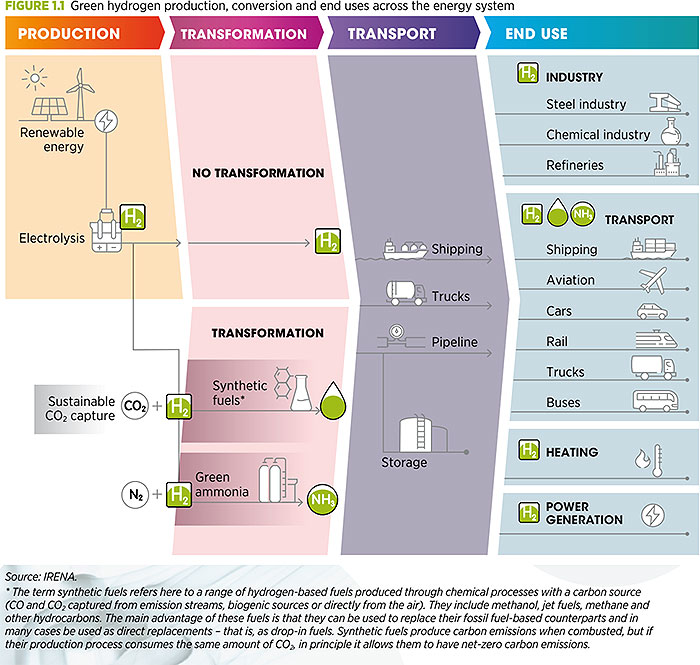
    Green Hydrogen has a more extensive remit than EVs or Hybrids, as it can impact broadly and deeply, as illustrated below.

    The Product Form Strategy that pioneers the Green Hydrogen revolution will have a seminal impact on the global economic and industrial framework over the next few decades.

    Green Hydrogen is at an early stage of evolution; given its distributional nature, it is likely to mature into a Big Oil-type category–“Big Hydrogen,” so to speak.

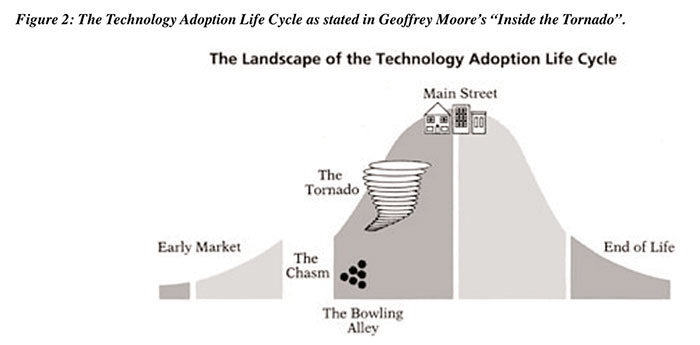
    The penetration of Green Hydrogen will follow the Technology Adoption Life Cycle as stated in Geoffrey Moore’s “Inside the Tornado”.

    “Big Hydrogen” must adopt “The Bowling Alley” strategy to release The Tornado to build tomorrow’s hydrogen economy.

    I explained “The Bowling Alley” strategy in some detail in my MxMIndia column of February 16th, 2023, titled “The Diffusion of AI: What do the marketing models predict?”.

    AI, Green Mobility, Green Hydrogen, and their offshoots will be important marketing and communication categories for tomorrow, and marketing and advertising people should invest in closely following their development and diffusion.


  • IPL’s Run Feast & the Future of Cricket

    Shailesh KapoorWe are in the second half of another engrossing edition of the Indian Premier League (IPL0. While the beats of IPL are now all too familiar, this season has managed to catch our attention because of the consistent stream of high scores we have witnessed. Two days ago, Sunrisers Hyderabad chased down 166 in less than 10 overs, without losing a wicket.

    The Hyderabad team has been at the forefront of the run feast that’s been unleased in IPL 2024. They account for three of the Top 4 team scores this season, including the top entry: a staggering 287 vs. Bangalore. In the 2024 edition, the 250-mark has been breached eight times already. And we are still 14 games away from the tournament’s end. In contrast, the 2023 edition saw 250 being breached only once, over the entire event!

    This is not an increment change. It’s a sign that the game may be evolving faster than one imagines. 300 is not far away, one imagines. And who knows what the upper limit in a 20-overs innings could be.

    Purists would argue that this makes the sport all too one-sided in the batter’s favour. But the audience, who are essentially there from entertainment, are certainly not complaining. And there is Test cricket for the purists anyway. It’s difficult to compare IPL viewership over the years because the digital component does not have transparency on viewership reporting, and the split between linear and digital continues to change with each passing year. But it’s safe to say that we may be in the middle of the most-watched IPL season of all time.

    The IPL will make way for the T20 World Cup, and the IPL run feast will invariably extend to T20 international games too. This may have been a boost cricket needed, for some sort of global expansion, which the governing body of the sport has been trying for years now, often half-heartedly, mostly unsuccessfully. If only they muster the courage to pull the plug on the ODI format, the future of cricket may not be that bad after all.

    In our latest sports report released in March this year, the awareness and viewership numbers for some of the foreign T20 leagues, especially the Big Bash (Australia), Caribbean Premier League and Pakistan Super League were very healthy. It shows that the Indian audience has developed an appetite for T20-formatted entertainment over time, and this will only rise if we have more high-scoring games. Perhaps it’s time to bring the Champions League, an idea that was too early for its times back in 2008.

    Meanwhile, with 14 games to go, I’m rooting for 300. Sunrisers have two home games to go, and we may not have to wait too long.

  • Speed thrills. But it kills. Kills creative rigour…

    Speed thrills. But it kills. Kills creative rigour…

    With apologies to none


    Vikas MehtaI live in the foothills of Himalayas and whenever I drive up the mountains, I see this sign on the roads. Speed thrills. But it kills. And this also reminds me of the state of Indian advertising. How? Let me outline it.

    Every year, I watch the Indian Premier League (IPL), eager to watch the cricket and also the new ad campaigns. IPL would mean that many brands would be ready with new ads. Much thinking and effort would go into the same. Brands like Vodafone would release campaigns just for IPL. Zou Zou ads were released by Vodafone only during the IPL. New brands like Cred made a splash and an impact with some outlandish campaigns during IPL. Swiggy’s ‘no order is too small’ with its ubiquitous uncle was another such memorable campaign. Even fantasy betting brands like Dream 11 made their beginings during IPL. Amazon’s Chonkpur cheetah was another memorable campaign which resonated during IPL. And who will forget the Indian Panga League ads done by Virgin mobile which were produced enmasse and was the first example of brand going viral in India.

    But, sadly, in the past two-three years even though advertising spends during IPL have increased and the opportunity to advertise has also increased manifolds with OTT channels now hogging a lion’s share of the advertising budget, the level of creativity and the memorability of the campaigns has moved in the opposite direction. Even brands like Cadbury’s Dairy Milk which have almost always been synonymous with memorable creative ads, have become pedestrian.

    I have seen marketing and advertising pundits commenting about the same. Everyone has some solid reasons. Lack of talent bemoan a few. Advertisers are not remunerating ad agencies enough so good talent is staying away from advertising. True to a certain extent but this is not a recent phenomenon. No long-term relationships between clients as every advertising execution is seen as a project and every project is pitched for. So, agencies do not understand the DNA of the brand. Again, partly true as I will explain later. Digital and ROI/ measurability is destroying the concept of creativity. That is an overrated statement as almost all clients for decades have been trying to understand impact and effectiveness of advertising. It’s like saying that science and its rigor kills creativity. Many a pre and post tests have existed and many brands have lived by them and still produced some memorable advertising.

    All the above reasons may have combined to contribute to the decline in the advertising standards, but in my thinking the single most reason that has caused a decline in creative standards is the lack of rigour in advertising.

    Starting from the brand or client. Is there a good brief? Is the marketing objective clearly spelt out? It’s not just about increasing sales. It could be differentiating a benefit. It could be reinforcing a new benefit. It could be creating a brand perception. It could be strengthening an emotional connect. But is it spelt out and defined? Does the agency convert a marketing brief into an advertising brief?

    Is the Target Group well-defined? I am not saying buyer groups but target group. The misunderstanding today unfortunately, is that since IPL is a universal event liked by all, the brand should talk to all. That’s a big mistake. Because a brand can use different tone of communication for different target groups. One tone means the lowest common standard. Please all and fall flat on your face.

    Is the brand personality clear? That can also affect the tone and the type of communication. Pepsi is cheeky, fun, rebellious, thinking out of box. But not Coke.

    And brand personality can decide the brand ambassador. Every brand need not use the Khans or the Bachchans or the Kapoors. Or even the Kohlis or the Sharmas. Nor should their price or availability decide the brand ambassador.

    How much is all above discussed and debated and decided upon? It’s all about doing things fast and immediately.

    I would like to take a simple example. RBI is doing a good job alerting people against frauds and financial awareness. From what I read and from experience of my relatives, I think RBI is trying to alert senior citizens who may not be either tech savvy or even financially savvy from potential frauds. And an ambassador like Amitabh Bachchan is for that TG a respected and looked upon icon. So, RBI ads are doing a good job. But are they making an impact with the GenZ, who are into money management in a big way from a young age? I doubt it. If RBI has to talk to them then its messaging, tone, ambassador all need to change.

    Are RBI ads memorable? Not exactly. My definition of memorable is simple. Will the TG remember it amongst a clutter. Will they think about it? Will they talk about it and maybe forward it on social media? The answer is no. They could have been much more memorable if these had a good consumer insight. Currently, the ads are just a proposition and explanation type of ads.

    And insight like all the above points needs a strong rigour. It’s something which one does not think about or even imagine but it lurks in the mind and is semi-conscious. It’s not an obvious thing but needs astute observation, deliberation and peeling of layers by asking questions. Every guy’s fantasy is that the girl makes the first move, is an insight. When it comes to cricketing loyalties or for that matter sport loyalties families can be divided, is an insight. The biggest enemy of the child getting into winning ways is the love of mother, is an insight. Consumption is not a guilt, is an insight.

    The rigour involved in defining the target group, in defining and maintaining the brand personality, in finding a relevant TG insight is what is missing in today’s advertising. And these are missing for the reasons that pundits mention.

    Short-term relationships mean not understanding the brand in terms of either brand personality or their TG. Incidentally, this holds good for the marketing teams also. Marketing people keep on jumping for better prospects. So, there is no one who really understands the brand or it’s TG or it’s personality.

    Marketing teams going through revolving doors means that marketing objectives are all short-term sales-related. Bonuses and increments are linked to the same. All ROI or effectiveness is measured in those parameters. And since Digital has various ways to measure immediate returns the concept of TG gets converted to user, or bluntly put the whole universe. So, brand-building, emotional connect, TG relationships etc are rarely considered as objectives. Either for marketing or advertising.

    This results in poor communication, improper results and poor remuneration for agencies. And finally, short term relationships.

    It is a vicious cycle that keeps on repeating.

    I am not saying that this happens with all clients or brands but my experience shows that this is symptomatic.

    So, everything happens in a rush. There is no time for proper TG understanding or clearly defining the TG. Everything is required immediately. There is no time to even craft an ad in terms of casting or art direction or editing. Rigor is sacrificed. Fundamentals are not pursued.

    As I said. Speed thrills but also kills. In this case it kills creativity, memorability and sadly the advertising industry.

  • Killer hoarding!

    Killer hoarding!

    In the marketing services arena, the outdoor media business is known to have reported questionable trade practices and governance in the past. Things may have improved much over the last decade-odd with international players and networked agencies entering the fray, but what happened in Mumbai on Monday was a shocker. Or perhaps not. Given reports of trees being poisoned trees to ensure visibility of a billboard.

    It’s all over the news media: a hoarding in Mumbai has caused the death of 14 people, and there are 74  who have been rescued from the spot where the hoarding crashed. Updates on this are still coming.

    We are basing our reports on what has appeared in multiple newspapers.

    Here’s what Mumbai’s Free Press Journal has reported:

    The death toll after a big hoarding collapsed in Maharashtra’s Ghatkopar area has risen to 14 on Tuesday. According to the National Disaster Rescue Force, 74 people have been rescued alive from the spot, while 14 have been declared dead.

    The count of total victims stands at 88. National Disaster Response Force (NDRF) has been conducting rescue operation for those trapped since Monday evening, when the incident happened due to heavy rains and strong winds.

    The incident is said to have happened at 5pm on Monday.

    Meanwhile, another report in FPJ notes:

    “… an FIR was registered at Pant Nagar police station against Bhavesh Bhinde, owner of the hoarding (Ego Media Company) under section 304 (culpable homicide not amounting to murder) among other sections of the Indian Penal Code. A case under section 304 (culpable homicide not amounting to murder), 338 (causing grievous hurt by act endangering personal safety of others), 337 (causes hurt to any person by doing any act so rashly or negligently as to endanger human life) and 34 (common intention) of the Indian Penal Code was filed against Bhavesh Bhinde by Mumbai Police.”

    As per the FPJ, it had first reported about this illegal hoarding last Friday. “The Pant Nagar police, who were conducting the investigations on who poisoned the trees on the land owned by the Government Railway Police, said they have received complaint in the name of the company which owns the hoarding and now will proceed with the investigation,” a report adds. “As of now (Monday evening) we are in the rescue operation of over (expected) to be around 100 plus people, trapped under the hoarding that fell. Immediately after, along with the BMC, a new FIR will be registered in the matter and stringent action will be taken against the offenders under relevant sections,” an official said. He added, “If the company who owns the hoarding is the same as the ones who poisoned the trees, a supplementary FIR shall be registered.”

    According to a report in The Times of India, the hoarding size was a problem. It was illegal. “Not only was the hoarding illegal, but it was also far bigger (120×120 sqft) than the maximum size (40×40 sq ft) allowed by the civic body.”

    Now if you see a hoarding that’s illegal, why allow it to be there in the first place? Demolish it instantly. Yes, what happened on Monday — ‘Acts of God’, as they are called, happen once in a blue moon, but it’s not just enough to damn the hoarding firm. The civic authorities and all those who are responsible must also be booked.

    It’s also important for the various industry associations – the Advertising Agencies Association of India and the Indian Society of Advertisers chief among them to be vigilant. The Ego Media website boasts of some discerning corporates as its clients. It’s time they also crack the whip.

    Cleanse the system, or get cleansed!

  • Clean Indore’s Next Challenge: Taming Traffic Chaos

    Clean Indore’s Next Challenge: Taming Traffic Chaos

    Sanjeev KotnalaI don’t understand Indore. How the logical, sensible people who understand civic duties and needs like cleanliness forget their responsibility towards traffic sense and rules?


    Indore The Cleanest City

    The city, which changed how its average citizen treats and disposes garbage, has failed with other initiatives. Indore has been the cleanest city in the country for almost a decade now. It is said that Indore processes over 1,900 tons of urban waste every day, which helps the city fuel its buses and gives it crores of rupees. And hold it, Indore segregates garbage into six distinct categories at a collection point. It must be happening, but I am yet to witness it at the household or society level.

    However, the truth remains that it has been declared the cleanest city repeatedly. The credit goes to the management (Indore Municipal Corporation) and more to the citizens of Indore who have undoubtedly played a significant role in making the city neat and clean.

    A clean city is only possible when the habits of the citizen and their outlook toward cleanliness are changed. The change is evident in the surroundings.

    So, someone knew the magic spell- the trigger to press and the pulse of the city.

    It is the same city that was ranked 25th in 2016 in the list of 73 cities and then has continued to rank 1st in the following years of the Clean India Mission Surveys.


    There Are Chinks in The Clean Mirror

    One sees the work and processes that keep the city clean.  However, the status may be the cleanest city, but the ground reality does not evoke the same confidence.

    Yes, there are public toilets at a fair distance. And you don’t see people urinating or defecating in the open.

    The roads are mostly clean. At least the main roads are.

    My doctor treating me for an upper throat infection, instructs me not to go for a morning walk on the main street as it is dusty with the morning weeping of the roads.

    People take pride in their city being the cleanest. However, most of the cleanliness drive workers are without gloves or masks.

    The affluent (and mostly literate) pet owners do not pick pet poo from the roads. No amount of logic works. More so, they give you a weird look as you diligently pick the poo- place them in the bags and deposit them in the dustbin. Their looks question you. It shouts. Are you mad?  Why, someone will pick it up and will you pick the poo of the stray dogs too! I don’t know where the Indore pride of the cleanest city vanishes on such occasions.

    There are spots along the roads where families leave their trash in plastic bags, which are picked up by the workers. It is clean but not as clean as the cleanest village in the northeast.

    Something has worked for the cleanliness drive.


    You can’t be No 1 in everything.

    Being No 1 for a long has somewhere instilled the thought as a habit. James Clear would appreciate it- because, yes, cleanliness is somewhat of a habit in Indore.  However, the system and the citizens are misguided in knowing their limits to behaviour change.

    Indore must have been the cleanest election. You hardly saw posters- banners or loudspeakers in action. No one is talking of the manifestoes and the need for the promises to be made. However, towards the end, there was an intense activity by Congress for people to go and vote NOTA.

    As the city wanted to achieve the highest percentage of voting and become number 1 in voting- even Voting for NOTA in an almost No-Election was desirable.

    The thought was right, but it was an over-expectation. It was doomed to fail. Even the ‘Run for Vote’ Marathon had limited participation. There were orphaned posters and sponsored by retail chains and educational institutes promoting an attempt at maximum voting plastered over the city. A waste of time after BUMB the Congress candidate withdrew his candidature and joined the BJP. The task of getting the voters to visit the booth during the heat wave made it further challenging.


    Here is the cause to be the No 1. TRAFFIC

    Indore citizens are proud of their cleanest status and now even shun the otherwise welcomed comparison as a Mini Mumbai. They are in a Zone of itself.  I am not from Indore and, hence, I have many cribs, unlike a person from Indore who has adapted to life and thrives in the scenario.

    Whatever has worked in the cleanliness drive has failed to show results in another aspect of governance or initiative. And I fail to understand it.

    They are the same citizen. The initiatives are for their benefit. So, why do they refuse to follow them?

    Are they rebels? Or has the cleanliness drive had some negative impact, too?
    Are people feeling let down?

    Do they think that if they join in for any other initiatives, they will be trapped? It is a one-way street, and they will lose the freedom they so enjoy and want.

    Being the best puts pressure to behave continuously. Then being just Good is not enough.


    Indore needs Traffic Sense.

    Can someone help the town with a sense of driving?

    It is illogical. It is mayhem. It is depressing, irritating, and frustrating.

    People crisscross without any respect for lights, police, cameras or zebra crossing.

    In the main squares, it is like the WhatsApp videos you see of traffic going from all directions. Well, the light gets green just for sufficient time for the person to sprint to the next side. And you better sprint and find your way to the next side. Surprisingly, there are hardly any accidents.

    The service roads convert four-way traffic to 16-way traffic. And that excludes the BRTS.

    Everyone is in a hurry. No one wants to wait.

    The traffic police watch uninterested.


    A Revenue Stream in Waiting.

    Trust me, if the traffic violators were to be diligently challenged in just two main traffic crossovers a day, Indore could get huge revenues.

    Additionally, maybe the Indore rebels will be tamed.

    Maybe we need a start-up or an NGO to do it with the Indore Development Authority and Indore Municipal Corporation.

    Pedestrians have perfected the art of crossing the road through this Brownian moment traffic.

    Hardly anyone wears a seat belt or helmet.

    However, you find abundant use of the Chunni guard. The woman wraps around their head and faces to save their skin from sunlight and pollution.

    It proves that Indore people do have the logical sense to make the right choices.

    The food vendors have their own stalls on the service roads or covering the footpath. But they all have a waste basket for the trash.


    Can Indore grow from Cleanest to a Model Smart City?

    So, do we have anyone who completely understands what worked for the cleanliness drive? Will someone take the initiative to do the same for traffic control?

    So that Indore can grow from being a mere cleanest city to the most model city worth living.


    Net-net

    Yes, Indore is clean, and even the street vendors keep the place clean.

    However, if it really wants to be the best city and a smart city, the citizens of Indore must grow up and follow the rules. Maybe then the pride could swell. Maybe then the other cities could understand and follow the way. The citizens of Indore have demonstrated through the cleanliness drive that it is the place for such experiments. So, if you do want to be number one is something, I have a list- but can we start with Traffic?

    If you want to read more about the Indore Cleanliness Drive- read it here – INDORE SMART CITY.