Category: Big Story

  • What you read is not what it really is!

    What you read is not what it really is!

    By Ranjona Banerji

    Ranjona BanerjiThe verdict of the International Court of Justice on the case for emergency measures in the genocide in Gaza brought before it by South Africa appears to have confused the media, especially the western media. Of the 17 judges, 15 voted for most of South Africa’s demands, except the demand that Israel stop all military action in Gaza.


    This means that the ICJ ordered Israel to take action to prevent acts of genocide in Gaza, it disagreed with Israel’s contention that the ICJ had no jurisdiction in the matter, it directed Israel to abide by the Genocide Convention and noted that several acts by Israel and statements by its officials fell within the scope of the Genocide Convention.


    And yet, if you followed the western media after the ICJ ruling on January 26, you may have missed all this. You may have even understood that South Africa’s case had been struck down. Almost all the attention was on the two judges – one from Israel and the other from Uganda – who did not agree with the majority verdict.


    The problem in some parts for the media is that the judgment is nuanced, and the media on the whole does not do nuance. A big fat hammer has not fallen on Israel’s head. But Israel has been told that what it is doing is illegal, and it does not get immunity for its actions. Both South Africa and Israel are signatories of the Genocide Convention and therefore, South Africa has every right to call Israel to account.


    Some of the attempts to whitewash Israel have taken interesting turns – the court did not come down that hard, the Israeli judge voted with two of the rulings and that Russia has ignored the ICJ ruling on its invasion of Ukraine. The Ugandan judge had her own reasonings, which possibly went beyond the brief of the court – she said the matter had historical and political context. However, the issue at hand was contravention of the Genocide Convention.
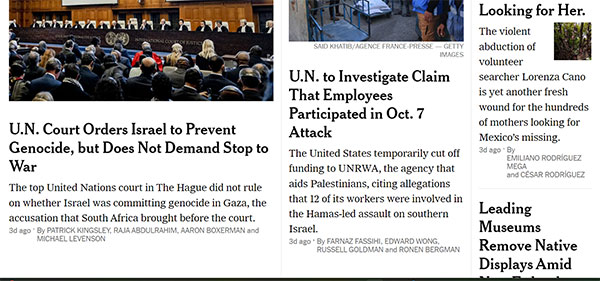


    A screenshot of the online front page of the New York Times on January 27 shows how the entirety of the ruling is misconstrued in the headline. The adjoining story is of the US cutting of aid to the United Nations Relief and Works Agency, based on Israeli accusations that 12 workers may have been part of Hamas. Heinous as this funding holdback is, the fact that Israeli prime minister Benjamin Netanyahu openly collaborated with Hamas is largely ignored. Nor does the headline mention that over 150 UNRWA workers have been killed by Israel, since October 7.


    A sweep of the CNN website shows a tilted concentration on reactions to the ICJ ruling to those from Israel and from Hamas. The Palestinians themselves – over 25000 civilians, many of them women and children, and the attacks on them and their homes, are all spun through a Hamas lens. This bombardment of the word Hamas is a clear tactic.


    The ICJ ruling has in fact provided much fodder to the news chain. And eventually, within western intelligentsia and political thought, there may be some course correction. The official US position may not change, but within civil society, there is already change. Influential podcasters like Joe Rogan for instance no longer toe the Israel line. University lecturers within the US are calling out their universities for not allowing students to protest for peace. The Nakba – massacre – of 1948, where more than 750,000 Palestinians were forcefully evicted and hundreds of homes destroyed is now open for discussion.

    As this opinion piece in the Los Angeles Times discusses:

    https://www.latimes.com/opinion/story/2024-01-27/icj-israel-south-africa-gaza-genocide-court-ruling


    As for the western media, well…


    Meanwhile in India, we practically donated Republic Day, January 26, to the “consecration” of a temple. It is poignant that the ICJ ruling came on January 26, the day we the people of India adopted our Constitution. It harks to a time when we, India, stood tall on the world stage against injustice, colonialism and oppression. This mantle we appear to have handed over to South Africa, even as our media remains caught up in religious fervour. And celebrating attacks on Muslims by Hindutva over temple politics.


    The government, being in control of the Indian media, is triumphant. Please do read the link below, based on a statement by the Network of Women in Media, India, on how the proposed broadcast bill is one more way to regulate the media. It will affect everyone.


    https://m.thewire.in/article/media/intent-to-overregulate-media-behind-draft-broadcast-bill-irreprable-damage-nwmi


    Ranjona Banerji is a senior journalist and commentator. She writes on MxMIndia on Tuesdays and Fridays. Her views here are personal. 


  • Beyond Infinity: Cinematic Multi-Universe Fatigue

    Beyond Infinity: Cinematic Multi-Universe Fatigue

    Sanjeev KotnalaIn the cinematic world with superhero sagas, a recent newspaper article flagged a potential concern: audience fatigue with Marvel’s ever-expanding superhero multiverses. These movies now ask viewers to have extensive background knowledge to enjoy them thoroughly. It may alienate viewers and highlight the importance of closure each time for a sustained engagement. Closure is something movies need for the continued association and hunger to engage.

    Marvel’s success story is not without challenges. And it is true for its challenge to fight fatigue and keep the viewer’s interest alive. Indian cinema, though more familiar with remakes, has been late to such sequential exploits and franchise build-up.

    The current Indian cinema is attempting to create multi-universe and demi superheroes like the Spy drama of SRK and Salman, War of Hrithik, Brahmastra and Animal of Ranbir Kapoor and top of the charts – the police universe of Rohit Shetty and Gang.

    They work best as a standalone movie with a teasing twist and reminder of something to come in future or very little of what happened in the past. When it does refer to the past, there is a well-managed short flashback; they do not allow the coordinates of the past to catch up and become a constraint to enjoyment.

    Shetty knows it best; not only does he have cinematic experience, but he also hosts one of the popular running reality shows on Indian television, Khatron ke Khiladi. The soft intrusion of the next chapter with a tinge of the past keeps his set of franchises alive. We need not add that their being successful is a definite advantage.


    Bridging the Gap: The Art of Timing in Cinematic Universes

    More than the question of when to kill the franchise, the multiverse grapples with the desirable and manageable gap between the two releases. Rohit Shetty has managed to understand and explore it the best in the Police and the out-of-mind, senseless laugh-a-minute Golmaal. Other films like Hera Pheri, Bhool Bhulaiyaa and Hungama have just managed to keep the interest alive and create a partial world of followers. However, it cannot be said about Brahmastra for two reasons- one, the franchise is yet to take shape, and two, the indicative gap suggests that the makers may be overestimating the viewer interest- taste and memory.


    Balancing Act for Enduring Appeal

    We heard of a possible sequel to Munnabhai, but the lack of feasible content and subject has closed the chapter. It is like Dhoom, which cried for continuity but failed to live the promise. On OTT, only a few have managed it right. The criminal justice series and the Delhi Crime have worked well. However, the constraints and the need to explore new areas and subjects have become daunting for creative teams.


    Rohit Shetty – A Lesson in Universe Fatigue Management

    Rohit Shetty has understood the model, and he keeps it simple- there are no surprises. He works and serves on the franchise’s promise and exploits the audience’s faith in jumping, blasting, twisting cars and a no-nonsense bold police character.

    The director keeps the imagery alive whenever he has a presence in a reality show. He has been so well associated with his brand of films and audience expectations that similar dialogue and imagery get used in product advertisements featuring him.

    Enjoy his films as standalone of a sequel: they work. The minor twists to the plot and introduction of new characters keep the frames rejuvenated while keeping the old ones under a support system to be revived if needed.


    Net-net

    There is no set pattern. And like in mutual funds, the past performance is not a guarantee for future performance- the filmmakers must understand the complete script and possible audience reaction before making the film. However, a few solutions have worked selectively in the past. No one can be sure of their aftereffects. Look no further than the franchise of Star Wars, James Bond, Pink Panther, Fast and Furious, Mission Impossible, Jumanji and Indiana Jones. Each has used and exploited the canvas in different ways. Here, Star Wars and 007 are outstanding in managing the audience’s interest, engagement and expectations. However, there is no one-size-fits-all solution.


    Adrift or Afloat: Brands that Endured and Those that Faltered.

    Finding a true purpose and a long-serving brand proposition is tough. Advertising and marketing also face this problem. The brands continue to remain in the same framework without rejuvenating and recrafting the proposition- risk fatigue at multiple levels. It is a delicate balance that needs exposure control and newness to the plot- in terms of execution to keep interest and relevance alive and make sense to the audience.

    Ariel share the load, Surf- Daag Acche hai, Happydent, Santoor, Tata Tea, Santoor, Policy Bazar, CREDand the Make My Trip are examples of handling them right. Surf and Make My Trip are my favourites with respect to keeping the thought alive.

    What examples come to your mind? Brands that have brilliantly extended the brand proposition and which have failed in the process?

  • As AI surges, tough times for news biz

    By Nic Newman

    News organisations are bracing for serious disruptions as a result of the increasing influence of artificial intelligence (AI) – both on the way that they work and the way their audiences consume news. As part of our latest journalism trends report, my colleagues and I at the Reuters Institute for the Study of Journalism found that less than half (47%) of 314 editors, CEOs and other digital leaders from more than 50 countries say they are confident about journalism’s prospects in 2024.

    The report details a tough period for the news industry over several years. A decline in online advertising, slowing growth in subscriber numbers and rapidly declining referrals from social media have fed into dramatic falls in revenue.

    Industry data shows that Facebook referrals alone fell by 48% in the past year, and many fear that search traffic will be next. Google and Microsoft, among other tech giants, are expected to roll out AI-driven, chat-based interfaces that have been trained on publisher content – mostly, or so the publisher of the New York Times alleges, without their permission.

    But it is not just internet search. We are also seeing a proliferation of conversational AI assistants built into computers, mobile phones and even cars that will change the way we discover and consume content of all types. Queries about the news are increasingly answered directly by the AI interface. Links to sources of the news on publisher websites, meanwhile, disappear into the background. As a result, far fewer audience eyeballs will find their way to each publisher’s site.

    Against that background, it is not surprising to find that some publishers such as AP and Axel Springer have already done deals with AI companies. The New York Times, meanwhile, is taking legal action over what it says was the unauthorised use of published work to train AI technologies.

    Many publishers hope that this time round, the outcome will benefit publishers of original and high-quality news and information. “There is an opportunity for the industry to work with AI players to design a symbiotic ecosystem and that’s an opportunity we must not squander,” says the chief operating officer of a leading UK news provider, who wishes to remain anonymous.

    Most publishers in our survey, however are not optimistic that this new phase of negotiations will work out well. More than one-third (35%) of respondents felt that only a few big media companies would benefit, while around half (48%) predicted that ultimately there would be little money available for any publisher.


    Publishers are not confident about funding from big AI companies

    Industry concerns are not just about money. More than two-thirds (70%) of respondents think that widespread availability of generative AI could reduce trust in the news. “The explosion of crap content definitely has the potential to shake the trust,” says Christoph Zimmer, chief product officer at German news company Der Spiegel.

    Zimmer highlights concerns about the use of deep fakes and other synthetic media, even as he hopes that the widespread availability of such second-rate content could also “allow [trusted] news media to differentiate ourselves more clearly”.

    Trying to adapt

    While the risks around business models, platforms and trust need to be managed, publishers know there are also significant opportunities to make their newsrooms more efficient. In our survey, we found the majority of publishers (56%) are focusing on back-end automation this year – using AI to help with copyediting, metadata creation and translation – with the next most common AI-related aim being identifying better ways to recommend content (37%).

    “The most compelling user case for AI in newsrooms is in the automation of routine tasks,” argues Ed Roussel, head of digital at The Times and Sunday Times. “We do not believe that AI is a substitute for reporting stories, which will continue to be done by journalists.”


    Which newsroom uses of AI will be most important in 2024?

    This focus on back-end automation is partly because news executives recognise the reputational risks in using AI for content. But that won’t stop others pushing ahead. Nordic publishers are routinely adding AI written summaries to their stories, while one German newspaper uses an AI robot to write 5% of its articles, albeit with human oversight.

    NewsGPT is the world’s first 24-hour TV news station created entirely by AI, and Channel1.ai, due to launch this year, promises a personalised news channel that can speak in any language.

    Rapid developments in AI are disrupting many industries, not just journalism, but news executives know they can’t just bury their heads in the sand. Rather than using AI to create volume, forward-thinking news organisations should be looking to build unique content and experiences that can’t be easily replicated by AI – think curating live news, deep analysis, and human experiences that build connection between audiences and the news provider.

    But they’ll also need to use AI technologies to make their businesses more efficient, as well as more relevant for audiences, in an era when many are turning away from the news.

    The impact of AI on the provision of online content in general is harder to predict. Much will depend on emerging public attitudes to the technology, but also on how responsibly the platforms that share this content behave. Equally important is the outcome of the legal cases around intellectual property, which could open up – or severely restrict – the way news content can be used for training AI models without proper compensation.

    We’re still at the early stages of the AI revolution but this is a year in which many of the rules and approaches are likely to be set. Against that background, journalists and news organisations need to proactively rethink their role and purpose with some urgency.The Conversation


    Nic Newman is Senior Research Associate, Reuters Institute for the Study of Journalism, University of Oxford. This article is republished from The Conversation under a Creative Commons license. Read the original article.

  • The Social Consciousness of Advertising Agencies

    The Social Consciousness of Advertising Agencies

    Ashoke AgarrwalMany think of advertising people as hustlers. A few voice their opinions with wit; for example, the comedian Steven Wright said, “I saw a subliminal advertising executive, but only for a second. ”

    Those of us in advertising know that the average advertising man is only as unscrupulous as the average human being.

    There are many reasons for the societal image of advertising people. Though advertising, by and large, plays a valuable role in society as a source of helpful information and entertainment, most people, at one time or another, have been seared by it at the personal level, consciously through the post-purchase dissonance that they blame at advertising’s door. And subconsciously because the lifestyle much of the advertising portrays makes them dissatisfied with their circumstances.

    Another reason was the glamour associated with advertising a few decades ago. Advertising no longer has that problem as it has shifted from brand custodians peopled by stars to quotidian vendors largely peopled by drones.

    Beyond the general populace’s extant image of advertising people, the pertinent issue is the advertising profession’s societal responsibility. At its core, advertising is a profession with highly specialised skills as much as the practice of medicine and the law are professions. I would even include politics as a profession. The issue is that the professions of medicine, law, accounting, architecture and engineering are codified and guided by a stated or unstated set of rules; soft professions like politics, advertising and management are not. The harm done to societies worldwide by having the profession of politics open to all and governed only by the mandate of “anything goes in politics” is evident.

    Management and advertising, on the other hand, are answerable to stakeholders and the rigours of the market, and even without codification, a relatively tight set of rules and guidelines has evolved.

    What, then, are advertising’s societal responsibilities? Mark Twain once said in jest (I hope) that advertising is legalised lying. Anyone who has been in advertising knows that consumers and markets are brutal masters and will weed out those who think advertising works because it fools people. Advertising works because it is based on the consumer’s deeply held conscious and subconscious attitudes and beliefs and seeks to effect behaviour aligning with these beliefs.

    The advertising profession’s speciality is in unearthing beliefs and attitudes and crafting arresting messages that align with these beliefs and attitudes in suggesting or reinforcing an action.

    Commercial advertising does not attempt to change underlying beliefs and attitudes because doing so would require budgets far beyond the commercially viable range. Instead, it addresses an existing set of beliefs and attitudes most conducive to its commercial objectives.

    Advertising, in its commercial sense, is value-agnostic. If a deeply held belief in a vital section of the audience that driving a fast car is a symbol of sexual potency, then advertising will run with it. If being woke about gender equality or secular values is a strong belief in another section, advertising will run it no matter whether it is for a detergent or jewellery brand.

    Advertising plays a societal role in enabling a consumerist society, a central pillar of modern economies. It also subsidises media – mass, digital and social – and thus enables the cultural and communication milieu of societies.

    However, the advertising profession can go beyond its commercial role and use its unique skills to do good to society more directly.

    Advertising can do in the societal space what it is wrongly accused of doing in the commercial space. It can zero in on beliefs and attitudes that harm individuals and societies and change them with the right messaging and level of persistent exposure.

    Such advertising, blandly known as Public Service Advertising (PSA), is currently reduced to a hoax category at advertising award functions. Advertising that juiced up creatives let rip on issues and causes they barely understand.

    Decades ago, when advertising agencies sat at the business and marketing high tables and had a different image of themselves, the Advertising Agencies Association of India (AAA of I) devoted some of their resources to creating effective PSA campaigns and persuaded the media to give them meaningful exposure. One worthy recently told me that they could not think of such activities nowadays as the agencies fight for their existence in the age of Google, Facebook, ad tech, and now, God forbid AI.

    Au contraire, wouldn’t creating powerful PSA campaigns that improve societies’ dynamics be the best way to revive recognition of the high art of advertising and, thus, the prestige and influence of advertising agencies? Wouldn’t traditional and digital media wholeheartedly support such an effort because they, too, are under existential pressure?

    Time was when Doordarshan was the only TV channel in the country, Kailash Surendranath and Suresh Mallik got together to create the inimitable “Mile Sur Mera Tumhara” campaign – the ultimate PSA for its time.

    The world is much more complex today, so PSAs must dig deeper. My decades of campaign planning experience have taught me that the more complicated the problem and the deeper you dig, you come up with a startlingly simple solution. For example, one of the critical problems facing societies today is increasing tribalism, the deep division of societies into “Us and Them” factions based on politics, religion, ethnicity, age and class. At the surface level, the reasons are complex, and tackling each cause of division individually is intractable. But dig deeper; the core cause is losing the ability to listen universally and without a filter. To do so would not just create a lowering of barriers between individuals but would make life richer and more meaningful for each individual. The advertising planners and creatives will dive deep and unearth those beliefs and attitudes that prevent listening and those latent ones that can support listening and create messaging that negates one set and reinforces the other.

    The above is just one illustrative example of how deep a PSA can go.

    To reassert, advertising agencies can find the high table again if they deploy their unique skills to address society’s urgent psychographic needs. Let’s think of this as a core business development strategy.

  • Bad P for the Big C

    Bad P for the Big C

    Ranjona BanerjiNow that the excitement over Poonam Pandey’s supposed death has died down, is it too late to discuss the implications of her stunt? Reactions have been largely negative, not unexpectedly. To claim to have died of cervical cancer only to resurrect yourself the next day because you wanted to raise awareness about cervical cancer is both extreme and trivial. That this death followed the announcement of a government scheme and the launch of an indigenously-manufactured HPV vaccine by an Indian company, and knowing that Pandey likes a bit of publicity for herself, rung a few alarm bells, but evidently not enough.

    In that, it’s hard to dismiss a formal death announcement as a publicity prank, and yet that is what it was.

    A columnist on this website, Vikas Mehta, tried yesterday to negotiate through all the reactions – shock, laughter, outrage – and came to two conclusions: that younger people did not see the event as angrily as most people, and that any publicity is good publicity. And shock tactics often work in the world of advertising.

    The last is a well-known axiom in the world of publicity. And Poonam Pandey is skilled in the art of staying in the news for doing as little as possible. The Kardashians you might say are masters of the craft. To become famous for being mildly famous and then use that fame to build zillions of careers, not least the family’s own. Pandey is not quite in that category… but she tries poor thing.

    Is awareness about cervical cancer important? Definitely.

    Is awareness about a vaccine that can prevent cervical cancer important? Without the shadow of a doubt.

    Do you have to pretend to die to create this awareness?

    Well.

    It is not clear whether Pandey jumped on to this cervical cancer bandwagon herself, or whether she was hired to do so. Were either the Union Government or the Serum Institute of India part of this? No clarity on that yet, although even I would be shocked if they had paid for this.

    The agency which organised the death issued a statement after the event, which included this explanation:

    “There was no change in people’s curiosity regarding Cervical Cancer when our Honourable Finance Minister mentioned it no less than a few days ago during the Union Budget.

    “The act by Poonam has now resulted in making Cervical Cancer and its related terms the most searched topic (s) on Google.”

    From a publicity point of view then Pandey and her team feel they have won. She’s got her two minutes and then will move on to a new demo of her untested skills.

    Some media watchers have blamed journalists for carrying the news of her death without checking, given Pandey’s history. Others make the excuse that since the death announcement came from Pandey’s own team, how could journalists have further confirmed this death?

    No clear answer there.

    But this is what will happen. For one, cancer patients and their families, and those who have lost loved ones to cancer, will feel the pain of someone trying to benefit from their suffering. This feeling will not go away just because she did this to raise awareness. All of us cancer patients, victims, survivors, whatever we call ourselves, know the shock within when you get the diagnosis of the Big C, of mortality, of fatality, of imminent death. Yes, life is a sexually transmitted terminal disease. But we all feel we should get the chance to complete our three score years and ten, and hopefully then some. Pandey’s stunt played on the worst of our fears and attempted to profit from them. And then, trivialised the journeys of millions, not all of whom survive their cancer diagnosis.

    Secondly, it is doctors who need maximum awareness about this vaccine, especially first response doctors. Oncologists enter the picture later in the journey. How many gynaecologists have started jumping about saying “O yaay, Poonam Pandey pretended to die and now my patients can get a vaccine”?

    The change will come from the medical community, from camps conducted, from taking healthcare to slums and remote areas, to targeting women at Primary Health Centres, those who get left behind in the race for health.

    Regardless of online fame, cancer and death are real. Rarely fun. And sometimes, bad publicity is just a bad idea.

    Ranjona Banerji is a senior journalist and commentator. She writes on MxMIndia on Tuesdays and Fridays. Her views here are personal. 

  • Poonam Pandey & Cervical Cancer: A Case of Generation Gap?

    Poonam Pandey & Cervical Cancer: A Case of Generation Gap?

    With apologies to none at all

    Vikas MehtaBy Vikas Mehta

    Things moved fast last week. On Thursday, February 1, Union finance minister, Nirmala Sitharaman, announced in her interim budget speech that the centre is proposing a plan to encourage use of vaccine for preventing cervical cancer amongst girls 9-14 years of age. Cervical cancer is the second-most common cancer in India and almost a fourth of global cervical cancer deaths happen in India. No details of the government scheme were forthcoming but the initiative was lauded and welcomed.

    The very next day, news came in through her media team that controversial and newsmaker model Poonam Pandey had died at the age of 32 of cervical cancer. For me, it sounded too much of a coincidence but social media was trending with the news and there was much shock reaction too.

    Then a day later, Ms Pandey appeared to say that the news of her death due to cervical cancer was part of a campaign to raise awareness of Cervical cancer.

    And yesterday was World Cancer Day.

    All hell broke loose after Ms Pandey’s disclosure. My social media was full of angry friends and acquaintances. Influencer marketing had hit a new low, said someone. Another mentioned Ms Pandey’s past and said that she is not new to controversies. Her act may be for a noble cause but given her past it could cast a shadow on her intent, opinioned another. Someone mentioned that this marketing stunt had crossed all limits. The editor of this portal lamented the death of journalistic good practices as breaking news was more important than checking it out first.

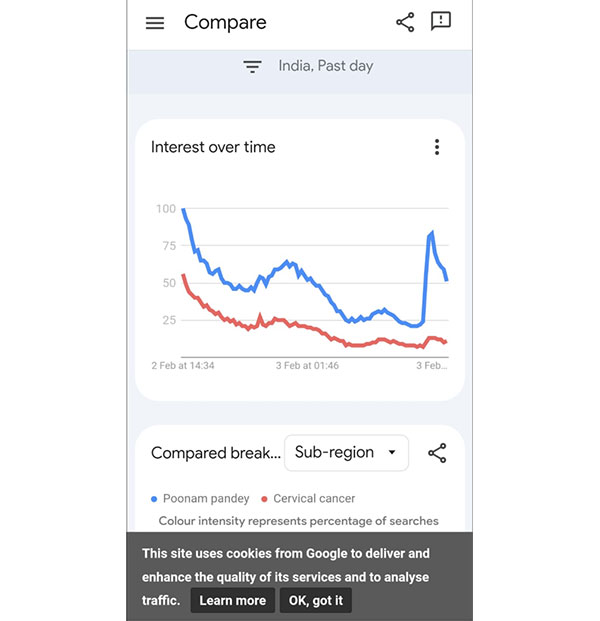
    A digital guru tweeted (or should I say Xed) a google analytical graph that demonstrated that search for Ms Pandey had gone up substantially whereas cervical cancer search was languishing.

    In the meantime, I had posted about this marketing deed on some groups which are solely populated by GenZ and the reaction I got was exactly opposite.

    How clever, said one. Don’t know who she exactly is but she seems to be famous and has used her fame well, chipped in another. Fake news is bad but nothing wrong in using fake news for good was another response I received.

    Sensing a generational gap (me, my friends and acquaintances are all over 50) and also a distinct shift in values and ethics, I challenged GenZ with similar comments as listed above by my generation.

    What I am narrating below are not my views but as generated by GenZ.

    • She didn’t die and willingly gave her name to a cause. What’s wrong in that?
    • We see worse fake news which is actually fake. This was not actually fake.
    • I did not know about cervical cancer and when my mother shared this news with me (of a celebrity dying so young), I found much more about it.
    • She did not kill anyone. She did not hurt anyone. She did not cause a loss or a scam. So how does it matter?
    • She may have gained lot of publicity for herself but it has brought cervical cancer in the news too.
    • Ethics and morality evolve with times. I am told a few decades ago it was not right for a boy and a girl to meet alone. Today it is accepted.
    • My parents want me to get high marks in exams. They don’t bother how. If I cheat and get it, it does not matter. The end result matters. Here too the end result is good.
    • What matters is grabbing attention. Nowadays news portals give sensational headlines which are only half true or in some cases not true at all. Or brands send message that my card is waiting despatch when I haven’t even applied for a card. If they can do so to catch attention then what’s wrong in this stunt?
    • Journalists anyways are all sold out and have no spine. So why expect them to chase the truth or research well before publishing a news (hear hear Mr. Editor!).
    • She seems to be old, but she thinks like us. Maybe I will follow her.
    • She should not have done this as it is inauspicious to fake death was a stray comment. But it was latched on to by 2-3 others and attacked. How can one be so old fashioned and traditional was the refrain. Do not believe in such superstitious things. Don’t you wear black?
    • I never knew that a form of cancer can be prevented with a vaccine. At least now I am aware.

    This last point resonated with me. I have a daughter who is now approaching her twenties and neither me nor my wife had ever heard about the dangers of cervical cancer or its vaccination. As I write this, my wife is talking to our doctor to see if she can be vaccinated.

    Now let me add my two bits to this generational gap issue.

    I do confess that initially I too was dismayed at this whole issue. In fact, because it was Ms Pandey and the news was released by her team and not family had seemed quite odd. But I could never suspect that someone will fake one’s own death unless it was for some subterfuge. So, my morality, traditional thinking and values were shaken.

    But when I heard some of the arguments, I realised that there are worse things happening to be upset by this. And it definitely was for something good. Even though data shows that the cause was a distant second to the influencer at least it had been stirred up. A small technicality too. I don’t think Ms Pandey is an influencer. At best she is a celebrity.

    This episode not just highlighted the generation gap but also reinforced a marketing dictum. Your users may be many but identify your target and talk to them. Don’t forget that this initiative was not Ms Pandey’s. It was initiated by the HPV vaccine and they should be lauded for targeting teenagers to get their attention to the dangers of cervical cancer.

    It also tells me how sharply segmented we are by demographics. News portals and social media like Facebook which are more frequented by the older generation have been quick to criticise Ms Pandey. Issues more relevant to this older generation like ethics, morality, tradition, good old days etc matter more and that dictates their writings and rants. It becomes a closed circle where nothing else matters or exists.

    The GenZ is not too troubled by these attributes. They are more open, not affected by past and more result focused. Some of my generation call GenZ instant gratification generation, but I think that’s unfair. They live in the present because they have no history to dwell upon. And with the rapid technology evolution, history becomes historical rapidly.

    Let’s not forget that brands have in the past also used half news or fake news to create sensation and frenzy. As a friend reminded me, Taj Mahal tea ran a PR campaign in the 2000s announcing that Ustad Zakir Hussain, who was the brand endorser, had decided to stop playing tabla. There was lot of frenzy and health speculation until it was revealed that it was a challenge, wherein the Ustad had announced ‘find me a better tea and I will stop playing tabla’.

    Wasn’t this also spreading fake news? Distorted news? So how was that acceptable? For, last I heard that became a case study on how to do good PR. How come Ms Poonam’s case was going to an extreme and falling to a new low? Or her past will shadow the noble deed? Or was it just because Poonam Pandey was used and not a “more respected celebrity”.

    Come to think of it, this campaign (that’s what I will call it from now, not a stunt) was about shock value but maybe it will also fall into the awe category.

  • A Family’s DIY Experience

    A Family’s DIY Experience

    Sanjeev KotnalaThe Ikea experience is more than just assembling furniture; it is a fascinating, engaging experience reshaping how we perceive DIY craftsmanship. No doubt IKEA is changing the furniture space one piece at a time.

    DIY, short for Do It Yourself in furniture assembly is new to Indian customers. For us, fully assembled, no-nonsense furniture is the norm. And if they are to be made at the site, the seller must better send the carpenter to do it. Our apprehension and discomfort associated with assembling furniture stem from unfamiliarity, perceived complexity, and concerns about potential damage.

    However, it is not so tough for a well-informed and slightly more confident – mainly from the new generation. Ikea had given wings to it.

    So here is what happened when our family tried it out with a simple three-drawer cabinet during the weekend.

    My daughter identified it (the three-drawer cabinet) on the Ikea site, saw it at the Ikea shop and then ordered it for delivery at home. We all thought that it should not be complicated.

    The assembly was in a slim, minimalistic, safe, and robust packaging. Something that one did not associate with e-commerce. The unboxing ceremony was eventless, but soon all the elements were on the floor.

    There was an immediate urge to start assembling it. How tough it could be?!

    The initial optimism soon gave way to a realisation – the task was more intricate than anticipated. Different-sized panels with varied holes, grooves suggesting interlocking parts, and an assortment of screws confronted us. A 3D puzzle with eight different types of screws, locks, and holders was before us. The initial thought was to call professional help, and UrbanClap sounded the best option- till someone discovered the assembling booklet.

    And the family decided that we would try it out and make the whole thing.

    This booklet was the saviour of the situation. However, there were no words but pages after pages demonstrating some 38 steps to follow. Simple sign language of pointers and crosses and tick-marks. Instruction to match the dots on the board with the screw number that would go in there. I would call it idiot-proofed, ensuring that even beginners could navigate the assembly process effortlessly.

    There was no way things could go wrong.

    The challenge arose when our tools at home were far from Ikea’s specific requirements. There was no star-headed screws and even a hammer. So, the juggad tendency took over, and the innovative solutions of using a knife and spoon and such items from the kitchen took over. And as for the hammer, the back of the screwdriver and belan took over.

    So, we started the family activity- the best part of the whole process.

    Everyone joined in. What followed was a delightful family activity lasting about three-and-a-half hours, punctuated by a well-deserved 30-minute tea break. Each family member played a unique role. The daughter took the lead in understanding and reading the manual. I took the role of macro directing, and my wife, who is not so mechanically inclined, took charge of putting the pieces together. The process was not just about building furniture; it was a lesson in understanding structural connections, channels, and lock-ins.

    The family members learned how things are held together, about channels and lock-ins. They truly admired the thought that has gone into designing every piece of DIY structure. More, so at the end, get up to say- not that harsh- not so bad- brilliant.

    It was joyful and playful working together. The family had its first DIY Ikea three-chest drawer that worked, and there were wild cheers when the drawers actually worked. The smiles and satisfaction that accompanied the completion of our first DIY Ikea three-chest drawer were invaluable.

    I believe such events help strengthen the family bond. And I suggest some offices take it as a bonding exercise.

    I may use a somewhat complex DIY structure in my workshops. Ensure that teams get different pages of the manual so that, in the end, they can derive new learning of coordinated, cooperative teamwork. The client would also get a fresh piece of furniture in the process.

    Our family thoroughly enjoyed the Ikea DIY adventure, and we’re eager to explore more projects in the future. So, try it out whether you’re a seasoned DIY enthusiast or a novice contemplating furniture purchases.

    Maine Ikea Kiya – Kya Tumney Kiya? Take the plunge into the DIY world, and you might discover not just furniture but a new way to bond and create memories with your loved ones.

  • What do films like ‘Animal’ tell us about the societal mindset towards inclusion?

    What do films like ‘Animal’ tell us about the societal mindset towards inclusion?

    Shruti PushkarnaLast week I underwent some major dental work. Dealing with excruciating pain and dizziness induced by a bouquet of medicines, I took to Netflix for comfort. Partly my objective was to try and doze off, hence I deliberately chose not so addictive content. And I decided to watch the much acclaimed (read slammed) Ranbir Kapoor starrer, Animal.

    For those unfamiliar with the title, the film is a dark crime thriller directed by Sandeep Reddy Vanga. The story revolves around Ranvijay (Ranbir) who craves for his industrialist father’s (Anil Kapoor) attention. He returns home from the US after several years, following the news of a fatal attack on his father. The rest of the (longish) movie is centered around bloody revenge, quite full of gore and violence.

    What’s my problem with the film? Not just mine, let’s list down some of the controversies surrounding this cinematic creation. It’s almost three hours of mindless action. One that shouts of masculine toxicity. Women characters have no room in the plot. You can count the number of times they are allowed a few words, only to be shut up by their husband(s) and brother.

    Vanga toys with obsession as one of the key emotions defining his protagonist, similar to his earlier production, Kabir Singh. An unhealthy fixation with a lover, father or another relation almost justifies the violent display on screen, the shrill in dialogues and the evil in action. And women are mute spectators, if not participants in this ghastly exposé of masculinity.

    I must confess, in the first couple of scenes where the young Ranvijay is seen neglected by his busy, wealthy father, I felt a sense of empathy towards the little boy. But the feeling didn’t last too long because the little boy quickly evolves (reads regresses) into a rich entitled brat, who turns up with a gun to her sister’s college classroom. All in the name of ‘protecting’ her.

    And then there’s the bad guy, the antagonist played by Bobby Deol. Although Abrar (Bobby) shows up much later in the film, towards the latter half, the scenes laden with ferocious machismo are equally exhausting to watch. There is a similar story of mental trauma experienced in early childhood that the filmmaker uses as an excuse for the irrational behaviour.

    Both broken men in some ways, at loggerheads to protect their kin. But that’s not it. What’s interesting is that both these characters have a form of disability. Abrar has a speech impairment, he needs his brother to act as the interpreter, who uses signs to communicate with him. Ranvijay loses his hearing as well as taste and smell after sustaining several bullets. In fact, after the attack, he is a medical miracle, walking, talking, and fighting despite a failing heart, no bladder control and several injuries.

    None of the film reviews have looked at why the filmmaker uses disability in curating the two main characters. For quite some time after watching the movie, I was also confused if the hearing or speech impairment is used to highlight a vulnerability. I am not sure.

    But here’s how I see it. For the longest time, Indian cinema has either pitied or ridiculed disability on the silver screen. Ranvijay and Abrar are both brutal, they are disabled too. Their condition doesn’t get in the way of their (dirty) business. However, skewed it may sound, it is empowering in a way. And there is no sympathy generation given their inability to taste, hear, smell, or speak. In fact, in more recent films like Andhadhun and Kaabil, the characters are ridden with flaws, they are not the typical heroes. It’s almost refreshing to see disability coloured with a streak of anger, violence, trickery, deviousness and more.

    These are all human emotions, associated with a person with disability as much as any other non-disabled individual. So, irrespective of how much I disliked the film for its senseless action, played up chauvinism, I managed to find something I couldn’t entirely dismiss.

    Of course, the film is far away from a utopian world that respects and includes the marginalised communities, including women, persons with disability, elderly, or any other weaker minority. And yet I managed to stay awake and watch it till the very end. Morbid fascination, I guess.


    Wondering why MxMIndia publishes a disability advocacy column? Well, we strongly feel that the media can dramatically transform the world for persons with disabilities. This series attempts to help bring forth issues that the media must champion to create a truly inclusive and accessible India. Writing  this column is Shruti Pushkarna, a former journalist and now a disability inclusion advocate based in New Delhi. Her views here are personal. To access the archives of her 80-plus columns, please visit: https://www.mxmindia.com/category/ columns/shruti-pushkarna/


    If you have a view on the issues raise or would like to align with MxMIndia on this cause, write to us at editor [at] mxmindia.com.

  • Brand lessons from the Ballot


    By Avik Chattopadhyay


    Avik ChattopadhyayA little over a fortnight ago the election results were announced for the five states of Goa, Manipur, Punjab, Uttar Pradesh and Uttarakhand. The outcomes were as expected only that nobody expected the magnitude of the Punjab victory.

     

    This was one set of elections where we saw seemingly smaller and regional parties wanting to be counted. Not that this was their first attempt, but in this round they seemed more committed and invested.


    There are interesting brand lessons to be taken away from the strategies adopted by the key political parties and personalities and also the outcomes.


    PunjAAP!


    This was the most emphatic, so let’s start with the AAP’s campaign in Punjab. There is nothing like a solid proof-of-performance as a testimonial of what you can do when in power. Just like start-ups with the best proofs of concept get the highest investors, so did the people of Punjab decide to invest in this development model from the shark tank.


    Whenever entering a new market or business segment, it is always prudent to appoint and announce the person who will lead the operations and give him/ her the required bandwidth to set the narrative. It is best if the person is a local who understands the market better than an expat.


    A critical part of a market entry strategy is to get your ‘own people’ converted first before you set sights on the others. Your own people are those who are culturally closest to your domestic market in terms of codes, rituals and likes. They become your early adopters and brand advocates in an otherwise socio-economically fragmented market.


    Lastly, the classic advertising appeal of “try me once” never fails. The appeal still carries a sincere ring to it, sans all the hype. There will always be the experimentative and early-adopters who lead the way. Just that in the case of Punjab they seemed to be the majority!


    Another “Nokia moment”!


    You have a commanding market share and come crashing in just 12 months all due to your own obstinacy of not deciding on an operating system and understanding what the customer needs. That’s the Nokia moment of 2007. Can also be termed a Rip Van Winkle moment!


    The Congress repeated it with unerring accuracy in Punjab. It depended on legacy while the people wanted policy. And it failed to capitalise on a traditionally supportive segment in the farmers who could have turned the tide.


    Just like a market leader loses focus on its core customer base in its urge to capture newer markets and address new product and customer segments. A case in point are brands like Maruti Suzuki and Hero wanting to go ‘premium’ while their core base of entry level product offers gets neglected.


    Divide and Rule!


    It still works. As it did in UP for Yogi and the BJP. Astute marketers do not waste time in addressing all customers needs and desires. They go for those that have a natural alignment with the product benefits. Like aspects of protection, exclusion and intimidation in the case of BJP. Consultants call this segmentation.


    Also, the best event managers do not fuss with the entire duration of the show but create just one or two ‘wow’ moments that impact most and stay on longer in the viewers’ minds. So, images of temple corridors and highways that double up as airstrips combine very well to cover both tradition and technology. The recipient is not really bothered with all details of your narrative, so a few ‘doosras’ are forgiven. The average human being understands and remembers pictures much better than data tables.


    Do not reinvent the wheel, at all. All successful brand managers will tell you that. Not that they are halting the wheel but are going on the same track, faster, smoother, and better while refreshing the look and feel of the wheel. Within a smaller gestation period.


    Elephants cannot dance!


    If Kodak had taken heed of early digital photography and re-calibrated itself accordingly, it would not find mention here. Market leaders typically fail to notice warning signs on their radar screens… of a new technology, of a new trend, of a new entrant, of a new solution, of a new regulation…! Some quickly change course while others perish. Netflix did. Blockbuster didn’t.


    While divide and rule worked for the BJP, it cannot escape the fact that it lost more than 50 seats to the SP. Most contests have been very closely fought. It might not be a wave yet, but certainly a ripple. And it is not that the BJP has not been defeated before, despite the narrative being the same, albeit much milder.


    When both AAP and TMC announced themselves as true successors of the Congress, it needs to read the clear signals on lifecycle management.


    When you are too large as a brand, the Nirmas and Chiks of the world can come up, nibble away at your pie and create a larder big enough for them to sustain. Someone like Sensodyne can change the narrative at one end. Size has its disadvantages. Elephants cannot dance!


    Different ground, different game!


    “Khela holo na” for Didi and the TMC in Goa. The game may be the same, but the ground conditions are different. Knowing how to play football does not mean one plays equally well on hard and slushy turf and in any position. Just because VW rules the roads in Germany does not entitle it to do the same in India, as it has painfully learnt. Cut-copy-paste does not work especially when there are strong cultural differences in the two markets.


    Remote control operations do not work in any market and for any product category. Also, a non-playing captain is not always the best option. One has to have a leader of the team at the ground level to assess the pulse on a daily basis and take corrective action in narrative and promotion. Moreover, the local team has to be empowered to take decisions and modify strategies without having to wait for an approval from headquarters.


    Controlling is fine. Micro-managing kills.


    Tell me something new


    The general narrative of the legacy parties remains more or less the same, be it the Congress or the BJP. They typically bash each other silly. While it works in some places, it fails in others.


    The Congress had nothing to offer the people of UP except for the glamour of the family and the legacy of the freedom struggle. The fact that the leadership had to fall back upon the forefathers rather than create a testimonial in Amethi or Rae Bareilly, is telling it all.


    Even though playing second fiddle to the Akali Dal, the BJP could have certainly performed better had it not applied the same narrative of UP. Also, its stand vis-à-vis the farmers over the last 18 months did not help.


    Political parties rarely seem to have any candour. They never seem to accept mistakes and own up to them. They offer no apologies. Just like most big brands never do. The challengers, however, use candour and vulnerability as strategic tools to move ahead faster. Today’s customer appreciates brands that are frank and fragile rather than infallible. This is a trait that most brand managers need to train upon and acquire.


    The light at the end of the tunnel…


    Work shows. Good work shows better. I saw an interview of N Biren Singh on NDTV after the exit polls were out and showed that the BJP would get a 3/4th majority in Manipur. He said that the projections might be too optimistic but as positive work had been done over the last five years, he was confident of getting the mandate. Eventually, he did get a mandate close to the projections.


    Market share is the outcome and not the objective. Just like good governance. Profits, loyalty, repeat purchase, electoral results and majority are all outcomes of fundamental work for the target customer. I get amused no end when brands make announcements of “x%” market share by such date almost as soon as they enter the market. Makes for masala journalism and nothing more.


    Biren Singh should know that pretty well. He was a journalist once. And a footballer before that!


    Avik Chattopadhyay is a senior brand and strategy consultant. He writes on MxMIndia every other Thursday. His views here are personal


  • Happy Birthday, Brand India

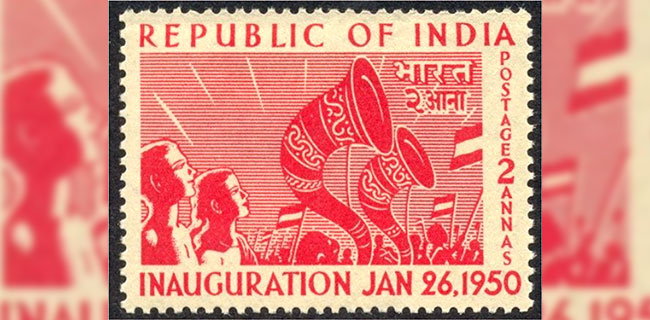
    Stamp issued to commemorate the creation of the ‘republic’ – Source: Government of India Archives


    By Avik Chattopadhyay


    Avik ChattopadhyayIndependent India was formed on August 15, 1947.

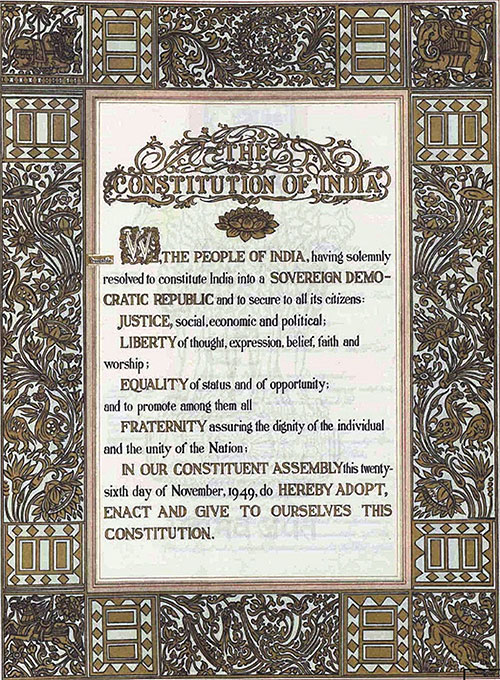
    Brand India was created on January 26, 1950.


    Since the “dominion” of India was created on the day the Indian tricolour was hoisted at Red Fort, we continued to be a constitutional monarchy with George V as the head of state and Mountbatten as the Governor-General till the 26th of January 1950 when we adopted our own constitution. It was only on that date that we had our first President in the form of Babu Rajendra Prasad. Till then this newly formed nation was governed by the Government of India Act of 1935.


    So, the significance of our Republic Day assumes greater importance when we realise that it was on that day, after two years, five months and 11 days of having become independent that we decided what exactly we would become in terms of a nation. The product India was rolled out as a prototype on August 15, 1947. The final production version, after all tests and validations, was finally launched for the citizens and the world at large, as a brand that said “Republic of India” on January 26, 1950. Till that day, no common citizen was aware of what exact shape and form we would take in terms of purpose, promise, values and personality. This task was entrusted to a team called the Constituent Assembly, a 308-member team made up of 21 committees headed by some of the sharpest minds like Jawaharlal Nehru, Vallabhbhai Patel, KM Munshi, HC Mookerjee, Bordoloi, BN Rau and GV Mavlankar submitting their reports to the drafting committee headed by BR Ambedkar. They met for 166 days painstakingly putting together the Constitution that was finally adopted on November 26, 1949.


    In an organisational context, it is almost like all functional teams providing their inputs to the brand strategy team that finally prepares the brand book, to be presented in a townhall before all employees for their feedback and necessary modifications before the entire organisation adopts it as its credo and ethos.


    The Preamble is the brand essence.

    It encapsulates all the pages that follow with their numerous chapters, schedules and articles. It describes the purpose, the promise and the operating values. In fact, all organisations in India could as well study the unique structure of the Preamble to design their own, in terms of brevity of expression and clarity of purpose.


    The original text of the Preamble – Source: Government of India Archives


    Of the Preamble, Ambedkar said, “It was, indeed, a way of life, which recognises liberty, equality, and fraternity as the principles of life and which cannot be divorced from each other: Liberty cannot be divorced from equality; equality cannot be divorced from liberty. Nor can liberty and equality be divorced from fraternity. Without equality, liberty would produce the supremacy of the few over the many. Equality without liberty would kill individual initiative. Without fraternity, liberty and equality could not become a natural course of things.”


    As a part of the debates before its final adoption, there was a proposal to call ourselves the ‘Union of Indian Socialist Republics’. Also, some had proposed that ‘God’ and ‘Gandhi’ be incorporated in the text. Thankfully, all such proposals were struck down as each would have been paradoxical to what we had aspired to nurture ourselves into as a nation.


    By the 42nd amendment of the constitution during the Emergency of 1975, the words ‘socialist’ and ‘secular’ were added to describing the republic over and above being sovereign and democratic. The brand purpose was expanded in scope. However, the promises of delivering justice, liberty, equality and fraternity remained as before, except for the word “integrity” being added to unity to describe the fraternity we aspired for. Very similar to what happens when the second or third generation of the founding family wishes to ‘revisit’ the brand purpose and ‘contemporise’ it, in sync with an evolving market and customer behaviour.


    These very later insertions or modifications are subjects of heated debates today. The brand purpose is being questioned by the new leadership. Like most organisations, the new CEO, especially if brought in from outside, wishes to leave a mark on the key aspects of the brand, especially the ‘vision’ and ‘mission’. That it typically the legacy the leadership wishes to create for posterity to marvel at.


    Even if those ‘controversial’ words are to be removed, the essence of the Preamble does not change one bit. In its very construct it espouses the fundamental principles of socialism and secularism. The word ‘socialism’ is part of the Directive Principles of State Policy and implies social democracy and distributive justice. The word ‘secularism’ implies that there is no state religion and that the powers of the state and any religion are clearly separate. The former cannot be partial towards any particular religion or religions while the latter cannot dabble or interfere in the functioning of the state. Reminds me of the occasion when MA Jinnah in 1919 implored Gandhi not to support the Khilafat movement as “mixing politics and religion” would have disastrous outcomes.


    Brand India is at the crossroads right now. The very brand purpose is being challenged by various factions and fringes by their operating principles [or lack of them] and socio-political acts. There has been no direct attempt to alter the fundamentals of the Republic but subaltern and diversionary tactics are certainly being used, citing the need to go back to our “pure past” to rediscover ourselves and reclaim our greatness as a teacher of the world. We are certainly at the crossroads as we enter the 75th year of being Brand India.


    I will conclude by quoting Ambedkar once again from his last address to the Constituent Assembly on November 25, 1949:


    “On the 26th of January 1950, we are going to enter into a life of contradictions. In politics we will have equality and in social and economic life we will have inequality. In politics we will be recognising the principle of one man one vote and one vote one value. In our social and economic life, we shall, by reason of our social and economic structure, continue to deny the principle of one man one value. How long shall we continue to live this life of contradictions? How long shall we continue to deny equality in our social and economic life? If we continue to deny it for long, we will do so only by putting our political democracy in peril. We must remove this contradiction at the earliest possible moment or else those who suffer from inequality will blow up the structure of political democracy which this Assembly has so laboriously built up.”


    Jai Hind.


    Avik Chattopadhyay is a senior business strategist and commentator based in Gurugram. He writes on MxMIndia every other Thursday. His views here are personal


  • Copy that!


    By Kunal Sinha


    Kunal SinhaIn the late 1990s, I visited countless haats across India with my colleagues, understanding the rural residents’ shopping behaviour, helping develop strategies to engage and convince them.

     

    On those trips, we chanced across a plethora of copycat brands. Funny & Lovely, Fairy & Lovely fairness creams, Polands cream and talcum powder, Dafur and Babur Dant Manjan, Nise and Pearl biscuits. With their limited ability to read the English alphabet, villagers looked at the brand’s logo as the visual ID, because the rest of the packaging was pretty identical to the original brand.


    The makers of these copycat brands were small, local entrepreneurs, riding on the popularity of brands that enjoyed high equity and trust, and out to make a quick buck. They were hard to track down.


    Nearly three decades later, we are witnessing an upsurge of brands that have no qualms about capitalising on the equity of market leaders. The difference: these are brands owned and introduced to the market by well-established, reputable companies.


    One need not travel to a small town or village to find many of these brands. They are available both online and your neighbouring Star Bazaar. Not only that, the placement on the shelf is right next to the original brand. How brazen could that be?

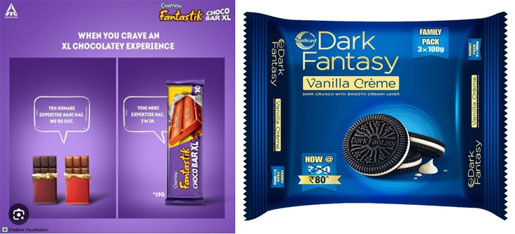
     

    Tata’s Skye range is astonishingly similar to several brands which are leaders in their categories. The coconut oil has the same bottle shape and colour, identical product description as Marico’s Parachute. The mnemonics of coconut palms and half coconut have been integrated into one visual, as opposed to separate for Parachute. Small mercies.


    For its glycerine soap range, Tata Skye turns to HUL’s Pears for inspiration. Again, similar colour schemes – white and green / orange are used, and the soap bar is prominently pictured on the pack. The price? Rs 231 for Pears Aloe Vera vs Rs 117 for the Tata Skye version; Rs 202 for the Pure and Gentle version vs Rs 129 for Tata’s glycerine soap. All these for a pack of three.


    Now imagine a budget-stretched couple in Dum Dum or Govindpuri doing their weekend shopping. For them, there is no better assurance than seeing the words ‘A TATA Product’ emblazoned on the label. With such a significant price benefit, which brand do you think they would pick up?


    Let’s look at another popular brand – Mondelez’s popular Oreo cookies, which became a runaway success in the Indian market since its launch.


    In 2020, Parle, by far a much bigger maker of biscuits and cookies, decided to launch a chocolate-vanilla cream cookie by the brand name FAB!O, with identical packaging. Mondelez took Parle to court, and the latter was forced to withdraw its product from the market.


    That judgment did not deter another leading CPG company – ITC Foods, from creating and selling its own chocolate-cream cookie, Sunfeast Dark Fantasy Vanilla Crème. As it branched out into chocolates, the packaging and advertising for Candyman Fantastik makes no apologies about borrowing from Cadbury’s colour codes.


    So, what’s with this penchant for copying? And does the adoption of these practices by market-leading companies give copying legitimacy?


    Let’s put it down to lazy marketing and short-termism.


    When marketers see a competitor do well, the easiest trick in the world is to say, “Let’s do what makes them successful! There’s already a model in place, and if we adopt it, we’ll be able to make money quickly.”


    According to Sabeer Bhatia, founder of Hotmail, speaking at a Nasscom event, “90 per cent of the innovation industry is copycat in India, there is nothing new.”


    It’s a refrain one keeps hearing in the agency world. The client asking “Can you give me something new, innovative?” Upon being presented a bunch of new ideas, they’ll respond by saying, “Can you show me examples of how this has worked?”


    Google might be phasing out cookies, but in business it is still a cookie-cutter world!


    Kunal Sinha is a senior strategy and foresights executive based in Jakarta, Indonesia. He is the author of several books including The Future of India’s Rural Markets and Raw – Pervasive Creativity in Asia. He writes for MxMIndia every other Monday. His views here are personal.


  • Lame & Lazy: News Media’s Poonam Pandey Coverage

    Lame & Lazy: News Media’s Poonam Pandey Coverage

    Shailesh KapoorLast Friday saw the bizarre publicity stunt, whereby Poonam Pandey, along with a media portal (Hauterrfly) and a digital agency (Schbang) staged the news of her death, with cervical cancer being the stated cause. The stunt ended the next day, when Pandey posted a video message on social media.

    Rather than creating any significant awareness for cervical cancer, the incident has served as a comment on the state of our news media today. Every single news platform carried the news of her ‘death’, made tribute videos (often like showreels of her  pictures from her social media handle), spoke to ‘fans’, and generally behaved very concerned about the whole thing. These videos and articles, still available on social media, are a testimony to the sorry state of affairs in our news business.

    Even if one grants the benefit of the doubt to news platforms, that the incident was so bizarre that one wouldn’t expect any ‘foul play’ in it, that benefit of doubt would last an hour or two at best. Principles of sound journalism would suggest follow-up coverage that’s more investigative in nature. Here, a celebrity death was being reported for an entire day, but with no trace of the body or the place of death.

    Social media users came up with conspiracy theories that should have been no rocket science for a seasoned investigative journalist, such as Pandey posting very normal pictures on her Instagram just a couple of days earlier. Digital news platforms could have (somewhat) valid budget constraints. But for our leading news channels to report on the story from the desk, taking a text-based Instagram post, from a celebrity known for courting controversy, on face value, is a sign of how low the standards have fallen.

    If one were to think of staging a stunt like this, they will simply be deterred by the audacity of the idea. After all, you would expect it to be called out within a few hours, if not minutes. That a celebrity and two companies had the confidence of being able to pull this off is itself a telling statement. It’s like a live social experiment, in which our journalists were the social groups being tested.

    Disappointing it may be, but not surprising. If editors who get paid handsome salaries sit in the studios night after night and do armchair politics, staging debates with foregone conclusion, laziness is bound to seep into the culture of popular journalism, especially on the television side. Chasing a story seems to be now the job of the minions, and a desk job can be seen as a promotion!

    In any case, the art of interviewing has been long forgotten, and only a few veteran journalists from the 90s (or earlier) are keeping it alive. Political reporting has lacked nuance, and reporting on the economy has lacked domain literacy. And now, celebrity reporting, which one would imagine to be the easiest of them all, also seems sub-standard.

    The Poonam Pandey story would be forgotten soon. But the lazy media that reported it is here to stay. And we have little choice but to suffer.