
 Climate change, the most pressing issue of our time, is manifesting unprecedentedly. The erratic weather patterns, marked by prolonged droughts, devastating floods, and uncontrolled forest fires, underscore the need to achieve net zero emissions swiftly and subsequently reduce greenhouse gases in the atmosphere.
There are four broad routes to reaching net zero (and then continue on the path of reduction):
- Reducing the average carbon footprint of each human through lifestyle changes – mainly through consuming less electricity and fuel and changing to more eco-friendly diets
- Technology that a) enables humans to consume less electricity and fuel beyond lifestyle changes and b) lowers the carbon footprint of economic and industrial activities like agriculture, manufacturing and computing.
- Increase the natural green cover that absorbs greenhouse gases from the atmosphere and
- Create, build and run technology systems that absorb and sequester greenhouse gases from the atmosphere.
Decades of grappling with the problem of climate change have made it clear that getting humans to change lifestyles to reduce their average footprint is challenging, if not impossible. The reason is that fundamental human nature prevents humans from sacrificing individual comfort to attain community goals.
Preserving and increasing the green cover runs into a geopolitical logjam engendered by the uneven development of countries worldwide.
The above reasons make the development and diffusion of new technology critical to meeting the world’s net zero and beyond goals.
These technologies range from low—to zero-carbon footprint power (wind, solar, nuclear fission, and someday perhaps nuclear fusion) to greener mobility (biofuels, hybrids, hydrogen and electric) and industrial processes (grey or green Hydrogen).
Each of these new technologies faces multiple challenges in meeting its full potential.
Take electric cars, for instance. The market opened at the high end, and pricey Teslas became symbols of a woke lifestyle. In the process, Tesla solved tricky technical problems, including batteries with enough juice to support viable range and life and reliable and fast charging systems.
The Theory of Product Form Strategy (PFS) postulates every innovator of new technology faces a product-form decision at an early stage of building a business out of his innovation. The innovator company has three choices: Market the Know-How, Market a Component, or Market A System.
In a pre-print manuscript submitted to the Journal of Marketing titled “A Theory of Product-Form Strategy: When to Market Know-How, Component or Systems.”, Frias, Ghosh, Janakiraman and Duhan, have an interesting illustration of the PFS Theory. For example, consider an innovator who has developed a technology that tracks the mechanics and dynamics of a baseball bat as it meets the ball, allowing coaches to refine a batter’s ability. As a result, the innovator can decide to sell the technology to a party that determines how to market it. Alternatively, the innovator can develop the technology into a component that fits on a bat and market it to bat manufacturers.
The third alternative is for the company to get into bat manufacturing and build a bat brand based on its advanced technology.
Tesla, the pioneer in the EV market, decided to go the “Market A System” route.
This decision has impacted the very structure of the EV market globally. Today, the EV market is a positioning and pricing battle between traditional auto brands and newcomers.
In an alternative scenario, if technology pioneers had developed and marketed know-how and components in the battery technology, charging, power electronics and drive train areas (including hybrid), the structure of the green mobility market would be very different. It would be akin to how the PC industry developed with Windows and the smartphone category with Android.
Over the past year or so, the EV category has experienced a slowdown, with many people wondering whether hybrids will be the future of green mobility. As a result, the green mobility market might evolve with standard batteries, charging systems, power electronics and drive train components, releasing economies of scale in capital costs and end pricing. In such a scenario, a brand like Tesla could be the premium walled-garden brand, much like Apple is in smartphones.
Green Hydrogen has a more extensive remit than EVs or Hybrids, as it can impact broadly and deeply, as illustrated below.
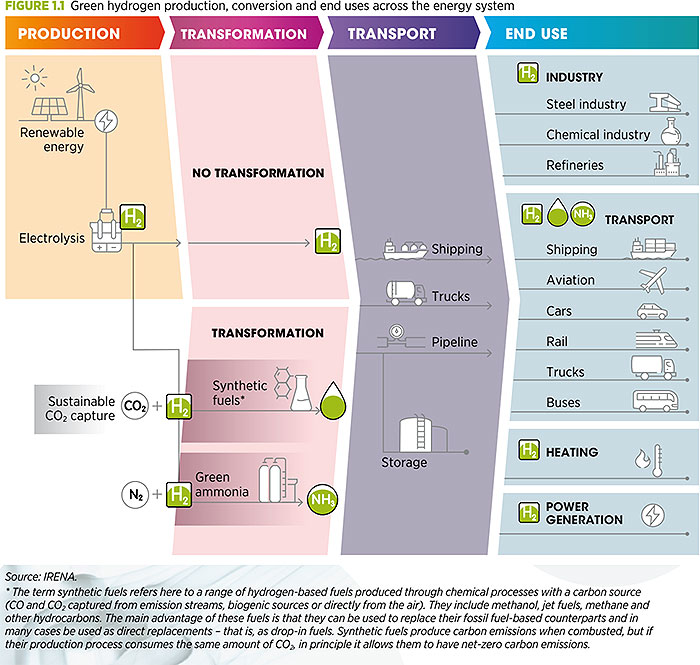
The Product Form Strategy that pioneers the Green Hydrogen revolution will have a seminal impact on the global economic and industrial framework over the next few decades.
Green Hydrogen is at an early stage of evolution; given its distributional nature, it is likely to mature into a Big Oil-type category–“Big Hydrogen,” so to speak.
The penetration of Green Hydrogen will follow the Technology Adoption Life Cycle as stated in Geoffrey Moore’s “Inside the Tornado”.
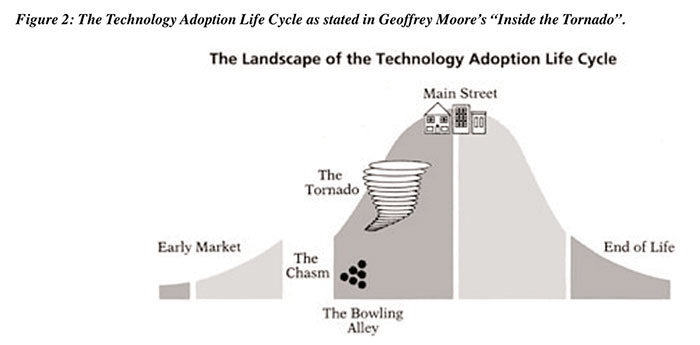
“Big Hydrogen” must adopt “The Bowling Alley” strategy to release The Tornado to build tomorrow’s hydrogen economy.
I explained “The Bowling Alley” strategy in some detail in my MxMIndia column of February 16th, 2023, titled “The Diffusion of AI: What do the marketing models predict?”.
AI, Green Mobility, Green Hydrogen, and their offshoots will be important marketing and communication categories for tomorrow, and marketing and advertising people should invest in closely following their development and diffusion.