Category: Big Story

  • Leo Burnett is Creative Agency of the Year at Abby 2024

    Leo Burnett is Creative Agency of the Year at Abby 2024

    Leo Burnett India was crowned the Creative Agency of the Year on the final day of the Abby Awards 2024 which were powered by One Show. The Publicis Group agency also won the Specialist Agency of the Year titled for Brand Activation and Promotion, and Branded Content and Entertainment Specialist categories. Good Morning Films won the same in Video Craft of the Year category and Havas Worldwide India was named the Health Specialist of the year.


    In Creative, Leo Burnett won a Grand Prix for Spotify India’s Feel the Music campaign featuring Shankar-Ehsaan-Loy in the category audio visual TV, cinema, digital, OTT below one minute. It also took home four golds, eleven silvers and eight bronze metals to aggregate 157 points. VML India came second in the Creative Agency category with two golds, three silvers, 15 bronzes netting 105 points in all. FCB Group India stood third with two golds, three silvers, eight bronzes to earn 72 points on the last day.


    A Grand Prix each awas won by Famous Innovations and Maitri Advertising Works. Famous won it for the OOH campaign for Mumbai Police titled Blockbuster Excuses. Maitri got it for Netflix’s promotion of the show Sex Education titled ‘Shakila’s Driving School’ in the category audio visual TV, cinema, digital, OTT above one minute.

  • Spam Chronicle- The Insightful Charade of Corporate Connect

    Spam Chronicle- The Insightful Charade of Corporate Connect

    Sanjeev KotnalaEvery week, my inbox is inundated with spam, a relentless nuisance we all grapple with. Despite my best efforts to fend them off with auto filters, blocking, reporting as scams, and the futile act of unsubscribing, one persistent pestilence remains impervious to these measures. This unyielding onslaught has driven me to publicly vent my frustrations, in the hope that others might find solace in my shared plight.

    These infuriating emails always begin with a polished, almost poetic charm. They deftly employ every conceivable tactic of written NLP to nudge and influence, all under the guise of offering me a platform to share my ‘inspiring entrepreneurial journey’ with their ‘global readership community.’ It’s a masterclass in deception.

    The true intent soon becomes clear: they propose elevating my advertising prowess by featuring me in a paid write-up adorned with ego-stroking titles like “The Most Impactful Entrepreneur of The Year 2024” and “Global Entrepreneurship Honour & Award-2024.” Clearly, they believe I and my Brand and Marketing consultancy is ready for the global stage. How can I see such benevolent entities as spam?

    The pitch includes social media promotion, advertising space, press releases, certificates, trophies, and complimentary magazine copies. The email concludes with a mandatory-sounding plea: “If you don’t want emails again, kindly reply later or click Unsubscribe.” I’ve pressed this button countless times over the past few years, only to see new “opportunities” spill into my inbox each week.

    Their offers extend to exclusive sponsorships, promising effortless awards delivered to my office. No travel, no wasted time, and no hefty payments. They assure me that this recognition will bolster my authenticity within the business community, complete with a press release to plaster my photo across 45+ media outlets like Hindustan Times, Outlook India, and Zee Business. Notice the cunning use of “with” rather than “in” when describing their promised features.

    Upon calling them, they apologetically admit and make me realise I’m merely part of a list. Every call ends with them vowing to act, but invariably, they continue to spam. Perhaps they hope I’ll eventually succumb to their persistence. Their inability to update their list is evident–they remain clueless about the size of my brand and marketing consultancy, indifferent to the nature of my business. But, I do suspect that their email marketing is successful in giving them enough leads looking for ego massage.

    I feel compelled to share this “opportunity” with the wider public in the spirit of corporate social responsibility. So here it is, straight Insight for a much larger Corporate Connect. It is a self-proclaimed media titan renowned for its business acumen and predictive prowess. Boasting a history of featuring over 4,000 business leaders across 7,000 pages. You are promised a heightened Corporate Connect as an industry leader and shared insights to uphold the lofty standards.

    Let me know if you’re interested in joining this farcical parade, and I’ll gladly share their contact information. I will do so only with genuinely interested parties who promise not to spam these benevolent corporate saviours.

  • Utterly Butterly Poll-icious!

    Utterly Butterly Poll-icious!

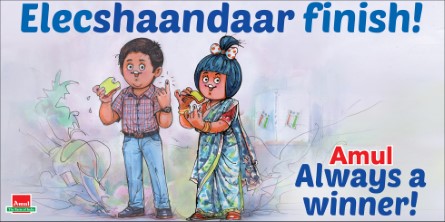
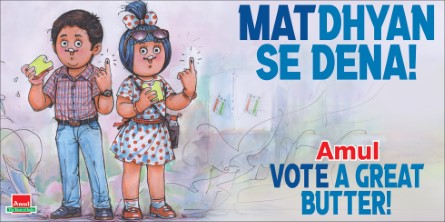
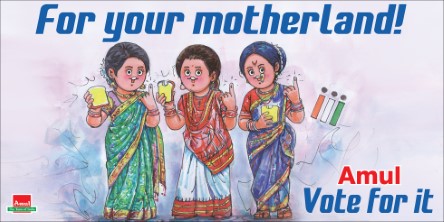
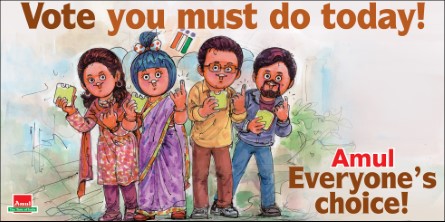
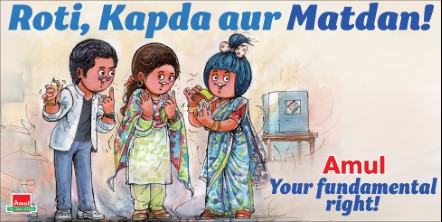
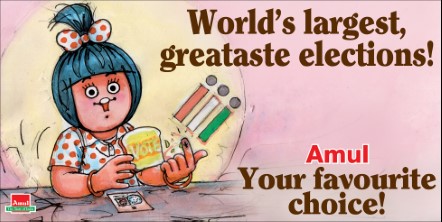
    It’s Counting Day, and no better way to recap the seven-phase election process than the Amul Butter topicals


  • Cry, Exit Polls, Cry!

    Cry, Exit Polls, Cry!

    Image courtesy: Report on Hindustantimes.com

    Ranjona BanerjiThe sight of Pradeep Gupta of Axis My India weeping on India Today as election results did not stand up to his exit poll predictions is not an edifying sight. Watching grown people cry is bad enough; but to collapse in public because you were so, so wrong and your bombast was so pathetically absurd, sad.


    The anchors on India Today, especially Rahul Kanwal who could not have been so happy himself with the results, given the amount of money he has spent on butter to cosy up to the BJP, worked hard to console Gupta. After all, most exit polls, including Gupta’s, predicted that the Narendra Modi-led NDA would better its 2019 tally. As of now, 17.25 on June 4, they look hard-pressed to even cross 300. Let’s forget Modi’s own expansive boast of 400-plus Lok Sabha seats.


    But we all know Mr Modi. He’ll now pretend that he meant he’d win Varanasi by more than 400 votes and his pet news anchors will nod their heads like dummies and allow him to get away with it. As they did when he claimed he was not born biologically, or that no one had heard of Mahatma Gandhi until Richard Attenborough’s film was made.


    That the exit polls got these elections very wrong is no longer news. I have never been a fan of exit polls. And not just because they get it wrong. By pre-empting what is an important result, they also leach away the essence of why we vote. And from a media perspective, they are nothing more than big fat drama for TV channels to make money while pushing their favourite party, person and so on. They serve no news purpose at all. Some cynics believe that exit polls are also a way for TV channels to pay even more obeisance to the ruling party and especially the current deity of self-avowed non-biological origins.


    Why then was Gupta crying? Because he had been caught out? Because he was scared? Because he was forced to lie and now his reputation might take a blow? Why did the giant master manipulator of all elections, Prashant Kishor have that meltdown on Karan Thapar’s show and then almost vanish from public eye? He also claimed big victories for the BJP in Bengal. Which alas has not come to pass.


    As I scrolled through “news” channels today, and their social media feeds, it was fascinating to watch how they tackled the unexpected happenings of the day. Since the India Alliance and the Congress Party did somewhat better than expected, the hooting celebrations and brash masculinity which our TV channels are known for, was missing in action. Instead, they were forced to be a bit toned down. Try, as much as they could, to regain some lost journalistic ground. It is too late for that of course.


    The focus early in the day seemed to be to concentrate on BJP wins and filter out the ambient sound of losses. For instance, India Today TV presented Rahul Gandhi’s huge margin in Rae Bareli as a concession of defeat by the losing BJP candidate. A neat sidestep to miss the actual news and thus upset the bosses less.


    Times Now had a different tactic of mentioning the BJP as often as possible, even when one of its NDA partners was doing the hard graft. And also, they mentioned the Congress Party and the India Alliance as little as possible. Navika Kumar – is that her name – had a little sideshow about Sanjay Jha and the Congress Party. A complete waste of time in the context of these elections but anything to show the Opposition in a bad light.


    NDTV appeared to focus on wins and losses for the BJP and Congress, which is intriguing given the Adani ownership.


    Meanwhile, the story which should be top of the news and is not is the sudden slowdown in counting and in the release of figures from the Election Commission website. For instance, Shashi Tharoor’s lead over Rajeev Chandrashekhar in Thiruvananthapuram barely moved from 15000 to 16000 in over an hour an a half, from 15.30 to 1700.


    See you tomorrow for an update on the great show!

    As for now, the Great Man has not kept his promises. Who knows what will happen, eh?


    Ranjona Banerji is a senior journalist and commentator. She writes on MxMIndia on Tuesdays and Friday, and when necessary, on other days as well. Her views here are personal.


  • Checkmate, Legacy Media!

    Checkmate, Legacy Media!

    Ranjona BanerjiNow that the Greatest Showman on Earth has been brought down from his Non Biological origins to the hard, bumpy ground of coalition politics, what will happen to the Indian media is the question that some people are asking.


    The voter has spoken and both Narendra Modi and the Bharatiya Janata Party have badly missed the most ambitious target they had set themselves — to win over 400 of the Lok Sabha’s 543 seats. No Indian TV channel had questioned this figure; rather they amplified it as the absolute, incontrovertible truth. The exit polls they conducted and promoted also pushed the same figures or figures close to this remarkable claim.


    Reality provided a harsh check and far from 400, Modi’s campaigning skills managed to garner just 240 seats for the BJP. His party managed to lose in the constituency where, as PM, in an extraordinary move for a Constitutional democracy, he inaugurated the Ram Temple. Far from being a winning masterstroke – as the media has projected every act of Modi’s – it turned out to be an electoral damp squib.


    Modi will form the next government. The BJP and his allies have the numbers. The Opposition put on a great show but it would require massive contortions to form at best a minority government. But Modi’s third term will exist at the mercy of coalition partners, who have already demanded high returns for the promise of support.


    We come back then to the Indian media which has spent the last 12 or 13 years attacking the Congress and other parties while promoting Modi and the BJP as India’s panacea. As counting day progressed, channels were hard-pressed to interpret results, as we have already discussed. Which from a journalistic point of view is criminal, if funny. Possibly they stayed with their own hype, knowing it was lies. Or their heads are so far into Modi worship that they actually believed their own lies. But for any journalist, departure from the expected or the usual or the normal is what makes news – man bites dog. So, the air leaking out of Modi’s balloon thanks to a voter and Opposition pushback is the biggest news of all. Unless, as we know, you are one of the people who’s been charged with pumping air into the balloon.


    Mid-Day came up with a killer headline on June 5, taking off from Modi’s own boast: “Ab ki baar, 272 bhi too far”.

    The Telegraph comes a close second with “India cuts Modi Down”.


    The rest, as mxmindia.com showed yesterday, played it down with straightforward bread and butter headlines or played around with the coalition angle.

    https://www.mxmindia.com/media/newsstand-and-this-is-how-the-dailies-covered-results-2024-results-on-their-page-1s/


    However, most newsrooms have had to deal with the details of the results and what they entail. The fact that voters have signalled unhappiness with government policy. The fact that social factors of religion and caste have re-entered the arena, thanks in fact to Modi’s divisive and discriminatory policies. News agencies and websites have also picked up on the unhappiness within the RSS – the BJP’s parent organisation – with Modi’s style of governing.


    Times of India informed its readers that nothing lasts forever: “(Modi) was the BJP’s campaign. And that was the problem. No political brand is immune to political fatigue.” (“18 takeaways from an election which redefined Indian politics”)


    I might add here that if the media had identified voter fatigue as it happened and not after the fact, it would have better served its customers and consumers.


    As several within the media know, it is the non-traditional non-mainstream non-legacy media which has kept the spirit of investigation and enquiry flying high. Journalists and media teams have taken to digital spaces, and found success there. As much as Youtube is full of propaganda and crackpot sites, it is also full of robust journalism. Several old-timer news junkies woke up on June 4 to be pleasantly surprised by the return of Dr Prannoy Roy and his election analysis on DeKoder Digital, with many from his old NDTV team.


    And it is not just big names and definitely not just the English media. Across India, on the ground reporting, news and analysis from local journalists via media like Youtube have provided voters with information which matched their lived experience. This is where the mainstream media failed the most: by harping on BJP propaganda and Modi fandom, they forgot that most basic democratic tenet set down by Abraham Lincoln. That you cannot fool all of the people all of the time.


    Many hope that the mainstream media will correct itself. I find myself sceptical. It may try, but there is no comeback from the depths to which several media houses have fallen. The change and direction will now be set by these new voices, and new ventures. It is very hard to relearn journalism when you have wilfully abandoned it for 10 and more years. Voters across India have mentioned the term “Godi media” or media which sits on the lap of Modi when referring to TV channels. They know they are being fooled.


    This extraordinary rant by Zee News anchors against media rivals underlines the bizarre world in which Indian TV lives:


    https://www.newslaundry.com/2024/06/05/from-india-today-to-india-tv-zee-goes-all-guns-blazing-against-top-media-owners


    The other danger is that journalists have lost the game to the public. When a talented YouTuber like Dhruv Rathee can provide better researched analysis on Indian politics than most TV anchors, you have a real danger at hand for traditional media. Years ago, the media tried to shoot itself in the foot by promoting “citizen journalists” only to discover that without basic fact-finding rigour, random opinions are boring and dangerous. But people like Rathee have facts and indepth research at their fingertips. They have beaten the big names at their own game. And they have both viewership and success to cement their status.


    The Modi government has been very unhappy with the rare criticism from the foreign media. But as the Economist points out, in a piece which still praises Modi in some roundabout manner, “…the opposition parties have been given a new lease of life; and debate and dissent will be reinvigorated. That may be the most lasting consequence of the 2024 general election.”


    https://www.economist.com/asia/2024/06/04/a-shock-election-result-in-india-humbles-narendra-modi


    Swati Chaturvedi writes for Russia Today: “Modi was the medium and Modi was the message, complete with a “Modi guarantee” for voters in the most presidential-style elections that India has ever seen.

    And the little guy – the voter – cut the prime minister down to size in the biggest reversal of his political career.”


    https://www.rt.com/india/598784-modi-in-limbo-india-election/


    The media will know be forced to change its strategy on Opposition leaders like Rahul Gandhi, Mamata Banerjee and Stalin, to name just a few. From constant attack – merely parroting BJP lines on them – they will have to be analysed more fairly. Their success in the face of enormous odds has changed the game.


    That is, if the mainstream media remembers how to play after over a decade of lying down and playing dead just for Modi’s cuddles.


    Ranjona Banerji is a senior journalist and commentator. She writes on MxMIndia on Tuesdays and Friday, and when necessary, on other days as well. Her views here are personal.

  • Random Musings or Connecting Dots?

    Random Musings or Connecting Dots?

    Image Caption: We scanned the internet for a photograph to go with this article, and found this one by Suhail Bhat possibly the most fitting. It has been taken from https://asia.nikkei.com/


    With apologies to none at all

    By Vikas Mehta


    Vikas MehtaThe last 10 days or so have been quite hectic for me, but not all in a bad way. First, of course, was the heat that has overwhelmed much of North India for the last 2-3 weeks. Even Dehradun had eight consecutive days of temperatures above 40 degrees. All outdoor activities or excursions were shelved unless they had to be done before 7 am or after 8 pm. Shopping, therefore, went totally online for all types of groceries. I think quick commerce saw a surge, at least from our household.

    Zomato put out a tweet requesting people to avoid ordering during peak afternoon hours. Oh, how I wish they had actually stopped deliveries between 12noon and 4pm. Anyways, the least one can do now is ask if any delivery person wants water. Most are thrilled and accept it, which makes me sad because it means that most residents do not voluntarily ask or offer it.

    This begs another question: Why is there no law stopping outdoor work if temperatures hit a particular high, without affecting the pay or earning capacity of the workers? A country like the UAE mandates stopping all outdoor work between 12:30 and 3pm during the summer months. Even ILO conventions prescribe that if temperatures go beyond 45 degrees, all outdoor work must be stopped. Then why aren’t the government or social service organizations looking at legalising such conventions? Just a few days ago, I was at the Delhi International Airport for about 45 minutes in the well-covered and shaded arrival area, where the temperature was around 43 degrees but felt like 45, and outside, in the open, labourers were toiling away.

    Last week, Dehradun saw the opening of its largest mall. I gratefully accepted the invite to attend, not just to beat the heat but also to witness first-hand a launch in a small town. Incidentally, mall-gazing footfalls shoot up in the summer months due to school vacations and to beat the heat. I call this mall-gazing as a huge number of people hardly buy anything but will spend 2-3 hours inside the mall.

    The mandatory selfie points were available, and one of these featured a replica of the Eiffel Tower. And if you go global, local can’t be far behind. There was a wall of Uttarakhand depicting its culture. Would you want to hazard a guess where the crowd was?

    Reel or YouTubers were visibly present. Some dressed awkwardly to catch the eye (a jacket and a lungi, for example), some shooting from weird angles, and some shouting away, in that crowd and noise, into their phones. Most were streaming live. But the strange thing was that hardly any of these were officially invited as part of the media.

    That honour still went to traditional vernacular press and TV channels. Good food, gifts, etc were laid out for them, as usual. I think none came alone, so freeloaders were plenty. And the next day they dutifully covered the inauguration in a 10 by 1 column or 5 by 2 columns with a photograph. But I am sure that better coverage was generated by the YouTubers, Instagrammers, and reel-makers. So why aren’t they considered part of the media yet?

    What impressed me was the range of products and brands available, from local to international, from footwear to electronics, from Apple reseller to Croma, from chic perfumes to Oud, from Market 99 to DIY. While Westside had a huge presence across two floors, Allen Solly and Van Heusen, with separate outlets for men and women, were keeping the international flag flying. There was Burger King, and then there was a local burger outlet which was flashing its price of Rs 49 for a burger, boldly. No prizes for guessing again where the crowd was.

    Clearly, Bharat and India were walking shoulder to shoulder.

    A few days later, I hit the road, and though it was unbearably hot, roadside dhabas were a good place to catch up with local gossip. With the election results announced just the previous day, I took the liberty to befriend my cab driver. He stopped at dhabas where the owners offered them free food in exchange for bringing in the clientele, and I chose to sit amongst these cabbies.

    What immediately struck me was the age of almost all cab drivers. All those I met were below 30. Earlier, until a few years ago, most drivers were in their mid-thirties. The age dividend had caught up here also.

    And they lead a punishing life. The major tourist season is the summers and monsoons. With Chardham Yatra, the road is the only option to travel as helicopter rides are way too expensive. And almost a month out of this is taken out of the equation during the Kanwariya season in monsoons when most highways are restricted to allow foot movement for Kanwariyas.

    The cabbies work back to back. Often, they get only 2-3 hours of sleep a day, and they drive at a stretch for 4-5 hours. On top of that, my cabbie told me that he couldn’t sleep properly because of the excessive heat. The result is scary. You have to keep the cabbies engaged in conversation, or else fatigue takes over. To keep themselves awake, they consume gutka and Sting. Many times, they are on the phone as that’s the only way to keep in touch with families.

    I am dejected that there are hardly any regulations for drivers. Why not a mandatory 15-minute break after three hours of driving? Why not an eight-hour break after every trip? Why don’t cabs have speed governors? Why are electronic tamper-proof driver logs not maintained, which can register the driving hours? I know there are economic compulsions, but it’s also about human life. It’s also about setting wrong precedents for too long, which will be very difficult to change in the long run.

    The gist of my conversation with the drivers was the dismal performance of the incumbent government in UP. These guys were not surprised. So, definitely, the lack of employment opportunities was a reason. But specifically, they mentioned Agniveer and the cancellation of government exams.

    Agniveer. I totally underestimated its relevance in the polls. There is palpable anger against it on the ground. The temperatures were in the mid-40s. Hot winds were blowing, and the heat quotient rose by about 5 degrees when Agniveer was mentioned. One guy likened it to ‘bal vivah’. Shaadi toh ho gayi par fayda kuch na raha. chaar saal baad divorce. What I didn’t know is that the Rs 11 lakh odd lumpsum that Agniveers get after four years comprises 30% of the basic salary every month taken from the Agniveer and equally matched by the government. “Hamara paisa baad mein hume dekar koi ehsaan nahin kar rahe.”

    In today’s environment, where jobs are hard to come by, many families considered becoming a jawan a good career option. That too had been compromised. The anger had spread to the whole family, not just these youngsters.

    Government jobs are still the El Dorado. So, when the government announced a drive to recruit 60-odd thousand people in the police and a few thousand more in other departments, hopes rose. Lakhs appeared for the exams. But then the exams were cancelled due to paper leaks. Again, the palpable anger against mismanagement was not hard to miss.

    The bigger story for me was that finally, reality had triumphed over religion.

    Interestingly, all the drivers I met had already been to Ayodhya. Some as part of their occupation and some on sponsored trips by political parties. But clearly, all that was forgotten.

    The trip left me battered and bruised by the harsh climatic conditions. And my new friends, many of whom gave me their numbers just in case I need them for a trip, face this weather, these conditions, the unregulated driving conditions, and an uninsured future day in and day out.

    So, while I write this in my cooled home and you read this in an AC environment, just think how little things which we take for granted could be a matter of survival for so many of our countrymen. And could decide the electoral future of our leaders. Just like small missteps or poor understanding of consumers can kill good products and destroy brands.

    Were all these events random musings? Or were they connected randomly? You decide.

  • From the Editor: We need to change!

    From the Editor: We need to change!

    When I watched the Exit Poll results over the weekend, I was dismayed. How can the masses be such asses, I wonder. Should I go in for a Vipassana-like self-exile for a week after the results and figure what I should be doing in life, and with MxM?


    Yes, I am a Hindu, and am proud of my religion, but I am of the firm belief that majoritarianism sucks. Especially of the form that has existed over the last three decades and that reached a crescendo in the last five years. I have seen some close friends and even members of my family turn aggressive (if not rabid) Hindutva propagators. That India or Hindustan is meant for Hindus. I have seen a vulgar exchange of trash in many WhatsApp groups.


    Over the years, MxM has paid a very heavy price for its journalism. We’ve been castigated just because we believe in commenting on the editorial policies of media entities. Even now – and the absence of any ads on our homepage is testimony to this, we don’t get too many ads, because we refuse to call a spade a rose.


    But this article is not about MxM. It’s about how the Indian media catapulted. MxMIndia was the first to flag off a clear bias that was creeping into the narrative of our news channels. Senior journalist and friend Ranjona Banerji has been at it – scanning the print, television and digital media. Her columns are an integral part of MxM, and are by far the most read on our website and across the media spectrum. Some of our other columnists have also been fairly critical of the news media.


    There have been times when I’ve been embarrassed when they have written about someone known to me, or a channel with whom I am set to close an advertising deal. But I have never disagreed with them, and I’ve never ever asked them to change their views.


    The election results have been amazing. Amazing in the way the BJP fared, and the margins in many of their wins – including that of Prime Minister Narendra Modi in Varanasi – have dipped. That despite all the frenzy around the building of the Ram temple, the BJP lost in Ayodhya indicates a clear anti-BJP wave. Yes, a wave, just as there was one in 2014 for the BJP.

    Coalition politics can be quite a bitch. Be ready for a fair bit of action over the next few years.

    So what do we do now: We will continue the way we are. Applaud and Damn. Offer bouquets and brickbats, wherever necessary. The election results have given us hope that despite the negatives of various political formations, there is hope in Indian democracy.

    The masses aren’t; asses after all.

    Meanwhile, MxM will change. Our business model is advertiser-dependant. That can’t continue given the kind of journalism we love to practise. In the next few months, we will move to a platform that will only be available if you pay for our content.

    Thank you for keeping the faith,

    Pradyuman Maheshwari

    Editor-in-Chief

  • Donald Duck @ 90: how the Disney favourite has evolved to appeal to a changing society

    Donald Duck @ 90: how the Disney favourite has evolved to appeal to a changing society

    Caption: Donald-duck wallpaper by AdorableKitty08 on DeviantArt. Creative Commons

    By Joel Gray

    Donald Duck’s first appearance on screen was the animated short titled The Wise Little Hen. He was intended as a one-off supporting character, but his immediate popularity meant Disney used him in subsequent comic stories and animated shorts.

    Within a few years of his debut appearance in 1934, Donald Duck had already achieved a celebrity status comparable to Shirley Temple or Greta Garbo. His popularity is made clear in Disney’s 1939 animated short The Autograph Hound, whereby the Hollywood A-List of the time drop their studio filming commitments to seek Donald’s autograph.

    By 1940, Walt Disney himself referred to Donald Duck as “the Gable of our stable” – pairing Donald’s popularity with the Hollywood superstar Clark Gable, the biggest name at MGM Studios at the time. Donald’s icon status was cemented in the 1940s the world over, from comic books in Europe and South America, to starring in US government domestic propaganda during the second world war.

    Donald starred in cartoons designed to encourage Americans to rally behind the war effort. These short animations range from encouraging people to invest in American government bonds, to ridiculing Hitler as a deranged despot. The latter short – Der Fuehrer’s Face – won Donald his first Oscar in 1943, though it has since been widely criticised for its caricatured imagery of Japanese people.

    Donald is arguably as popular now as he was in his mid-20th century peak. Media researcher Chris Rojek has even used Donald as an example in his categorisation of celebrities. The duck represents the archetypal “celeactor”, a “fictional character who is an institutionalised feature of popular culture”.

    Der Fuehrer’s Face won Donald Duck an Oscar in 1943.


    Unlike many Disney characters, Donald’s stories take place in the present day and his stories are contemporary to the audience enjoying them. This is clear in his relationships with female characters.

    In Donald’s early days, female characters were often limited to representing beauty, domesticity and subservience to the patriarchy – reflecting the experiences of women the world over. For example, Daisy Duck was originally almost never shown as having her own job or career, in sharp contrast to Donald, who is shown in many jobs including private detective, postal worker and salesperson.

    In more recent years, though, female characters have developed to reflect the modern world. This includes the animated debut of characters such as Donald’s sister Della Duck. Della is a skilled pilot, often found in the middle of action scenes and essential to the plots of the comic-book series Ducktales (2018), as well as the television show of the same name. Della Duck, Daisy Duck and other female characters have agency in these stories – they are main characters and not merely there to support the male superstar.

    Arguably, Donald Duck is a more relatable character than aliens from a galaxy far away, or teenage royals from a place of “once upon a time”. Donald and his friends meet the same daily challenges and enjoyment we do; traffic jams, job (dis)satisfaction, seaside holidays, festive family gatherings and so on. It is not difficult for his audiences to empathise, identify and understand the situations Donald finds himself in.

    In Ducktales (2017), Della Duck is a female character, and one of the stars of the show.


    Relatable experiences have been an important narrative device for Donald Duck over the past 90 years. Donald enjoyed the technological developments of radio and television in the animated shorts he starred in during the 1930s, 1940s and 1950s. And in his most recent animated appearances in Ducktales, characters are seen using social media platform QuackChat – an obvious parody of Snapchat.

    Donald Duck is eternally popular because he is the “everyman”. People the world over still find much to relate to and laugh at in his temper tantrums at life’s travails. He provides a way to project our own frustrations in a comparable way to more adult cartoon stars, such as Homer Simpson of The Simpsons or Peter Griffin of Family Guy.

    As long as Donald keeps pace with society, and continues to reflect the ever-changing world we live in, this duck is unlikely to fly away anytime soon.The Conversation


    Joel Gray, Associate Dean for Teaching and Learning, Sheffield Hallam University. This article is republished from The Conversation under a Creative Commons license. Read the original article.

  • India shining at 9.5% growth….

    India shining at 9.5% growth….

    GroupM has released the 2024 Global Midyear Forecast for its annual This Year Next Year forecast and study. As per the study, advertising revenues (spends) in 2024 will touch $18.5 billion in India, which points to a 9.5% growth in the year. The forecast for 2024 is 8.7%. It may be recalled when GroupM had released its TYNY numbers in February this year (2024), the forecast growth for 2024 was 10.2%.

    “We estimate that global advertising revenue will grow 7.8% in 2024 to $989.8 billion. The industry will surpass one trillion in revenue in 2025, increasing 6.8% to $1.1 trillion, one year earlier than we forecast in December of 2023. We have also revised estimates for the US, which we now expect to reach $365.9 billion in ad revenue, up 5.8% over 2023’s $345.9 billion (excluding the impact of political advertising in both years). The great economic engines of the U.S. and China, which together make up 57.1% of global ad revenue, are clearly the largest drivers of growth, adding $44.5 billion to their totals in 2024 (excluding U.S. political spending) — nearly 1.5 times the cumulative $27.4 billion in incremental revenue for all other markets combined. They are also home to 22 of the top 25 global media sellers and account for more than 40% of global GDP.

    Indis is third highest in growth rates as per the GroupM data. China is at 14% growth in 2024 and Brazil is at 11.3%. In 2025, China growth is estimated to be 10.8% while Brazil will top the list at 12.4%. In absolute terms, China ad revenues for 2024 is 199.4 bn and Brazil stands at 21.3 bn. All figures are in US dollars.

    The GroupM TYNY 2024 Global Midyear Forecast also adds: “The marketing ecosystem over the next few years will face potential impacts from governments and regulatory bodies across the world — impacts that have the potential to upend forecasts and alter even the most sound projections. On top of that, such projections can be skewed by two major players, China and the U.S. Their governments and their major companies have the power to shape vast aspects of the global economy.

    “Artificial Intelligence also has the potential to reshape the industry — as do regulations put in place to guide (or control) its growth. Those regulations, of course, depend on politicians, which in turn are determined by upcoming election cycles.

    “Despite some reactionary moves toward protectionism from some of those politicians, we can see the power and enduring appeal of shared experiences brought by globalisation, whether it be a Korean series rocketing to the top of the Netflix charts, or Rema bringing Afrobeats to Spotify’s top songs list. You can see it, too, in increasingly global fan bases for sports.

    “With increased globalisation – of financial systems, commerce, and media – can come a level of resilience as interconnected systems such as coral reefs tend to be very adept at recovering from multitudinous small shocks. Innovation, the exchange of ideas, and a shared goal to make the advertising industry work better for everyone will help ensure a bright future.

  • Marketing Lessons from the Polls

    Marketing Lessons from the Polls

    Avik ChattopadhyayThe dust has settled down. The celebrations and cribs are over. The oaths have been administered. And the machinery is getting into action once again.


    More or less, the country at large is pretty pleased with how things have emerged. Democracy clearly demonstrated who calls the shots. For some, it has been a fresh lease of life while for others it has been a wakeup siren. All in all, the utopian idea chosen by us close to 80 years ago seems to have been the right decision. Conceptually, India could never have been a monarchy of one or an amalgam of principalities like the 16 Mahajanapadas. With all our imperfections and paradoxes, democracy seems best placed as the individual impoverished and ignored voter does have the power to shake up comfort zones.


    For a marketer, in any industry and from any part of the country, a gargantuan event like the parliamentary elections, in its implementation and outcome, has important lessons to learn and remember in one’s own professional life.


    None of them are new revelations. All are one more round of reinforcing and reiterating deep ground truths that we sometimes tend to forget.


    1. Never underestimate your target segment. S/he she is far more intelligent and mature than what marketers typically would like them to be. S/he can spring surprises at the most unexpected of situations to drive home a point.


    1. What was very good for yesterday is not good enough for tomorrow. You need to consciously stop charting strategies for the future based on what you did in the past. You are where you are today based on what you did day before yesterday. The day after tomorrow depends on what you do today.


    1. Numerical targets are meant for internal communication. They are never to be used to communicate to your external stakeholders. Slip a little and they will hold you to them or even have a good laugh at your expense. And competition will definitely find ways of using them against you.


    1. Local leaders are needed for local issues. Your regional leaders are to be brought to the forefront to connect better with the local populace or potential customers. They speak the language the locals understand and know what specific buttons to press. The national level CEO or MD has to be selectively used and not overexposed.


    1. Nobody is an untouchable. In the market, you have no permanent enemies when it comes to channels of trade, regional collaborators and technology partners. While long-term relationships are always helpful, sudden reality checks may require you to reach out to facilitators tomorrow whom you has severed ties with yesterday.


    1. Never ever abuse competition. That is a sure sign of anxiety before both network partners as well as the potential customers. a minimum level of professional decorum requires you not to concoct lies about competition or be derogatory towards specific competitors.


    1. Mere edifices do not convert prospects. The target needs personalised experiences and promises. S/he is not enamoured by large showrooms or display zones just by themselves. S/he expects to be catered to one-on-one.


    1. Appeal to both left and right brains. Always try to maintain a healthy balance in your narratives and ownership experiences. While raising emotional issues, support them with ground level demonstrations of your intent and abilities. Those actually help create unique emotional bonds.


    1. Focus on yourself. Do not obsess with competition. Make sure your target knows all the right things about you, your offerings, your promise and your capabilities. Wasting time over discussing competition actually shifts the narrative towards them and the target spends more time researching your competition than you.


    1. Never sell fear. Whether you are selling a water tank or a luxury automobile, do not make the mistake of stoking the target’s inner fears and apprehensions as your route to success. Fear leads to unexpected reactions of the reptilian brain and rapid negative word of mouth which will be much beyond your control.


    Market well. Sell wise.

    Jai Hind. 


    Avik Chattopadhyay is a Gurugram-based business strategist and commentator. He is currently also working along with XLRI to set up the Indian School for Design of Automobiles. He writes on MxMIndia every other Thursday. His views here are personal.

  • Exit Polls: A ‘No Confidence’ Motion

    Exit Polls: A ‘No Confidence’ Motion

    AI generated image showing an abstract representation of the discrepancies between the Exit Poll results and the actual results declared on June 4.


    Shailesh KapoorThe marathon elections are finally past us. But not without a result not many saw coming when the elections season started three months ago. The results on June 4 came as a surprise to many, particularly because a plethora of exit polls funded by mainline news channels of the country had predicted a resounding victory for the Narendra Modi-led NDA, with almost all of them giving the alliance 350+ seats, and some even predicting ‘400 paar’.

    As we know now, even ‘300 par’ didn’t materialise. Since then, there has been intense debate about exit polls, and whether their inaccurate predictions are simply a case of incompetence on the part of multiple agencies, or a result of malafide intent to influence the stock market. I have been asked this question more than a few times over the last 10 days, in my capacity as the head of a media research firm.

    While I’m no stockmarket expert, the scam allegations seem a bit far-fetched. It would take multiple agencies to comply with the perpetrators of the scam, put their reputation on the line, and hope that they make some illegal money off it. The history of scams suggest they are ‘designed’ in a way that they are under the radar, far from the public eye. Exit polls were anything but that. In any case, I don’t see how we will know any more on this topic anytime soon.

    The incompetence argument is a lot more persuasive one. Despite large sample sizes (while not all polls reveal their methodology and sample design, some do), and the claim to have covered all 543 constituencies, and represented different demographic segments adequately, how do so many polls get it wrong? In my opinion, the incompetence doesn’t lie in their ability to conduct field surveys, but in their lack of confidence to look at the findings dispassionately. All quantitative research that comes with the responsibility of predicting an outcome will operate on ranges, rather than exact numbers. And it’s now evident that the exit polls were leaned towards the higher ends of their ranges, and probably stretched them further. One poll made sure its upper end was 401, and another went for the round figure: 400!

    Over the course of this year’s election coverage, we have seen many pollsters become election experts, going beyond analysing their data, and entering domains of political analysis that’s best left to journalists with their ears to the ground. Bafflingly, many editors of mainline news channels have encouraged this, by giving pollsters a platform on their shows every night, even during the period when the Election Commission embargo on exit poll results was in play.

    It may be hard to resist fame, but if it comes at the cost of objectivity, a pollster must examine if it’s worth it. As it is, our news channels operate like echo chambers, and it is hard to not get influenced by their narratives if they are platforming you as an important talking head.

    So, the pollsters have gone wrong in their minds, probably working backwards from a pre-decided outcome they talked themselves into believing. It’s impossible to say what conclusions a more objective analysis on their data would have led them to conclude.

    In any case, exit polls seem to quite a wasteful indulgence for news channels. But it’s a vicious loop, because no channel wants to miss out on an evening’s hype. Just like no pollster wants to be the only one who got it wrong!

  • Daddy downgraded to daddy!

    Daddy downgraded to daddy!

    Ranjona BanerjiThe Indian mainstream media is still grappling with the election results of June 4, 2024. You might imagine that they’d have grown up by now but no. The children are still weeping that Daddy may have downgraded himself to daddy. One TV person is bereft that the opposition keeps opposing and won’t allow daddy’s government to “breathe easy”. Another wonders why anyone would call for the resignation of the railway minister after a rather bad train accident in Bengal.


    An investigation by Alt News looks at how Meta “allowed” policy violations of its own codes (put in place after the Cambridge Analytica scandal) by proxy pages put up by political parties. Most of these proxy pages supported the BJP and pushed their Islamophobic messages on social media. Meta is the parent company of Whatsapp, Facebook, Instagram and Threads.


    Often when Meta is investigated, the tables have somehow been turned on investigators by this very powerful corporation. Meta has also denied the content of this investigation by Alt News. It is however worth reading, just to understand the layers that run in social media, without the understanding let alone knowledge of lay people. As in most consumers.


    Exclusive: How Meta allowed policy violations by proxy pages running pro-BJP ads


    If even a small percentage of this is true, it gives the lie to the on-air weeping by media giants like Smita Prakash of ANI and other right-wing functionaries about how the BJP and the rightwing did not do enough on social media to make sure it won the general election with a massive majority.


    The upshot of the success of various social media influencers and sites which highlighted the shortcomings of the last Narendra Modi government is a possible renewed attempt by the new Modi government to double down and get its controversial broadcast bill through. This bill will severely impact all “content creators” which do not get their entire content from the BJP IT cell. One can expect no support from the legacy media when freedom of expression is curtailed. Remember, according to stalwarts of the legacy media, the opposition must not oppose and to demand accountability from elected representatives is unfair.


    The fact that the mainstream media did not want to listen to their own boots on the ground underlines just how deep the dependence on propaganda has become. From all accounts, reporters knew, in UP and Rajasthan for instance, that the BJP would not do as well as projected. In spite of this, mainstream TV channels ran exit polls which rammed up the BJP’s chances well above the ground reality. The BJP may have believed this: but why did the media?


    Sadly, this malaise is not limited to the Indian media. As evidence mounts of Israel’s brutality against Palestinians, the bulk of the Western media is still unable to call out Israel’s transgressions. Even today, eight months after the Hamas attack which began the bombardment of Palestinian civilians by Israel, big names in the media are unable to fearlessly attribute responsibility to Israel. These names include The New York Times, the Guardian and the BBC, some of the most trusted and respected entities – so far – in the world.


    If you look for media reports on allegations of torture by the IDF on Palestinian prisoners, and by some Palestinian armed groups of Israelis, media outlets like Le Monde and Al-Jazeera are most likely to provide the information. It is easier to go to the United Nations websites than to the media.


    On which sad note…


    Ranjona Banerji is a senior journalist and commentator. She writes on MxMIndia on Tuesdays and Fridays. Her views here are personal