Category: Big Story

  • Cutting marketing spending often backfires on businesses: Journal of Marketing

    Cutting marketing spending often backfires on businesses: Journal of Marketing

    By Andre Martin

    Businesses are often tempted to cut their marketing budgets for the short-term savings it provides – but those cuts can cause problems in the long term. A new study my colleague Tarun Kushwaha and I published in The Journal of Marketing proposes a method for predicting whether these counterproductive cuts will take place up to a year in advance.We gathered transcripts of nearly 25,000 earnings calls held by public companies from 2008 to 2019. We then analyzed how management teams discussed marketing and earnings. We found that the more earnings-oriented language was in a call — think words like “lucrative” or “revenues” — the more likely a management team was to cut their marketing budget for a boost in earnings.Unlike business-as-usual budget shifts, the motive in these cases was to raise short-term earnings to gain personal profits – for example, to boost stock prices before an executive retires – to raise immediate funds, or to satisfy investor pressure and expectations. These cuts in exchange for a bump in earnings are shortsighted, since investing in marketing tends to grow a company’s market share over time.


    Why it matters
    Executives often feel pressured to meet short-term earnings targets at the expense of long-term goals, survey data and research have shown. Cutting costs is one way businesses make themselves look better in the short term. And since investing in marketing takes time to pay off, marketing spending often winds up on the chopping block.My fellow marketing professors call these “myopic” marketing spending decisions – “myopic” being a fancy word for shortsighted. They often happen before initial public offerings, share repurchases and executive retirements.While these myopic decisions have short-term benefits, they harm investors, customers and other stakeholders in the long term. After companies myopically cut marketing spending, they often lose market value; that’s why such cuts are linked with worse stock-market performance in the long run. A tool that helps investors identify myopic marketing spending would help them protect their portfolios from negative long-term consequences.Our method isn’t just backward-looking – it can be used to forecast future shortsighted cuts to marketing spending. Investors could use it to analyze publicly available earnings-calls transcripts for useful data up to four times a year. We estimate that for every US$100 invested, using our method to avoid investing in shortsighted companies could return an additional $6.44 over four years compared with conventional methods. Marketing firms and advertising agencies could also use it to identify companies that plan to pare their marketing budgets.


    What’s next
    As part of our research efforts, my team has published the algorithm and data necessary to replicate our findings. This will let individual investors and other stakeholders gain valuable insights into executives’ intentions regarding the funding of their marketing and research departments.While our research has primarily focused on transcribed text from earnings calls, we see more potential in analysing the audio and video from these calls. Audio analysis could reveal insights from tone, pitch, pauses and filler words, while video analysis could capture the brief involuntary facial expressions known as micro-expressions.

    Andre Martin, Assistant Professor of Marketing, University of Notre Dame This article is republished from The Conversation under a Creative Commons license. Read the original article.

  • Digital Transformation 1-2-3 with Sanjay Mehta: Part 2

    Digital Transformation 1-2-3 with Sanjay Mehta: Part 2

    Few people in the advertising and marketing ecosystem are better equipped than Sanjay Mehta to lead this online Masterclass on Digital Transformation. In our discussions with him, we were inspired to ask Sanjay Mehta to formulate a three-part series aimed at motivating founders and owners of mid-sized businesses in India to embrace digital transformation. 


    While Digital Transformation is a much-touted (and often incorrectly used) buzzword in Indian business circles, Sanjay Mehta’s series highlights the real growth potential that comes with the right retooling. This insightful series, ‘Digital Transformation 1-2-3 with Sanjay Mehta’, will culminate in a Zoom-based webinar on Wednesday, August 7, at 3 pm IST. The webinar is exclusive to 40 professionals on a first-come, first-served basis.


    Masterclass #1: July 17, 2024 – Boards and Founders need to see “outside the box” for the multiplier effect (published last week. Link: https://www.mxmindia.com/advertising/digital-transformation-1-2-3-with-sanjay-mehta-part-1/)

    Masterclass #2: Today, July 24, 2024 – Exploiting Opportunities, Overcoming Challenges

    Masterclass #3: July 31, 2024 – The Specific Nature of the Beast

    Masterclass #4: August 7, 2024 – Live webinar (Registration will open on July 31)


    By Sanjay Mehta 


    Exploiting Opportunities, Overcoming Challenges 

    In the first part of this three-part set of articles, we saw that there are many growth opportunities for a company, not just ordinary regular growth, but potential growth multipliers, and within the company, the skills may be limited, to exploit all of those. The idea then being that companies, and Boards and Founders should be open to think outside the box and reach beyond and outside their current set of directors or leaders, to find the right help to enable them to crack these growth multipliers.


    When we think around the larger aspect of generating growth, it is about increasing revenues increasing profits.


    Breaking it down further, increasing revenues could include:

    • Getting more customers to buy
    • Getting existing customers to buy more frequently
    • Getting existing customers to increase their average spends each time they buy
    • Increasing product lines / categories
    • Increasing distribution channels
    • Increasing geographical reach
    • Getting new kinds of customers – some new cohorts
    • etc.


    Likewise, increasing profits could include:

    • Reducing cost of new customer acquisition
    • Generating repeat sales from existing customers, preferably unaided or at least additional cost
    • This could then include remarketing, marketing automation, CRM being done well
    • Ensuring against loss of customers, or basically enhancing lifetime value of an acquired customer, so that you can keep generating revenue from that customer
    • Ensuring a good brand reputation so that a miss there does not cost sharp drop in customers and transactions
    • If people are a key to your success, ensuring a good employer reputation, which translates to long-term and good employees, and reducing cost of hiring good new talent
    • Reducing all other costs and expenses in general, to improve profits
    • Using tech solutions for internal processes to enhance productivity and efficiency
    • Using AI tools to get significant improvements in processes and efficiencies


    These bullets do not indicate any kind of exhaustive and comprehensive lists here. There could be many more things that one could think of generically, and many others that one could think of, specifically for a certain business.


    However, what the list indicates is that one can take each of these bullet points, examine either the opportunity that can be exploited and converted into a growth multiplier, OR in case there is a weak spot, then it may be seen to be a challenge and work to overcome the same.


    Let’s look at an example from the revenue side. Say, you are selling a product which in a way, has an end life, and then a new one must be purchased. You could be speaking of printer cartridges or milk bottles or a car battery or a whey protein or whatever. In all such cases, either you exhaust the content and need more, or there is an end of life, and then you need to replace the product. Now, as a seller, you may have the knowledge of a buyer in as much as what specific SKU they are purchasing, what is the likely life of that, what date it’s been purchased on, etc.


    Once it approaches for the time to buy again, the customer is up for grabs. Open to be acquired by your competitor, as loyalty pull may not be that strong. But the customer is yours to lose. So, do you have a comprehensive strategy around this? Is it in place, is it working, what are the metrics to confirm the same?


    Done well, this is a classic growth strategy as you continuously increase the lifetime value of the customer, you get more sales without corresponding cost of acquiring a customer, and your new customer acquisitions continuously grow your base of customers.


    Do you have the skills and expertise to think through the strategy to make this happen, and then the necessary technical support to execute this and the ability to measure the ROI on this effort?


    Let’s look at a second case, which may be in challenges. And if not addressed, it could be hurting your growth and your revenues.


    Let’s consider the matter of your online reputation. This can be manifested by conversations on social media, mentioning your brand. It could also manifest as reviews on Google, reviews on Amazon and other marketplaces, that people have put. If you are an employer and people are a key, the reviews on HR portals like Glassdoor become crucial, etc. I have often seen people not taking these with much seriousness. When people shop on Amazon, your rating and review can make a difference between a customer buying your product or your competitor’s. Over time, this factor alone can make a big difference to your sales. Likewise, if there is a poor mention of your company on Glassdoor, that could be the reason that good talent is not joining you. And so on.


    Finally, all those factors play on your growth – of revenues or profits.


    Again, as a company, are you handling these and more? Who’s looking at the larger opportunity grid? And the challenge grid? Who is prioritising what you need to be doing from amongst those items? And then, who is executing and monitoring progress?


    Here again, for the building out of the opportunity and challenge matrices, in case in-house expertise is not available, it goes back to the Part 1 – that think outside the box, and get experts from outside the current base, bring them in to work closely with the Board or with the Founder etc.


    Next week (Wednesday, July 31, 2024): Masterclass #3: The Specific Nature of the Beast


    Sanjay Mehta is one of the pioneers in the digital world in India, having founded and spearheaded several companies: HomeIndia, Mirum (earlier SocialWavelength before WPP took it over) to name a few. He is also an author and commentator on all things digital, and beyond. He is an investor, mentor and also helps organisations – large and small – in their process of digital transformation.

    He tweets @sm63. Linkedin.com/in/spmehta

  • Disability in the Spotlight: Controversies, Triumphs & Passionate Debates

    Disability in the Spotlight: Controversies, Triumphs & Passionate Debates

    Shruti PushkarnaThe last few days or maybe weeks have been brimming with news around disability. These include several updates in the form of a historical court ruling, controversies, (presumably) offensive videos, distasteful representation on a reputed magazine cover, influential individuals’ responses to brewing disagreements and more.

    Believe you me, this makes me happy. Or even excited. At least we don’t have monotonal deliberation around disability. There is anger, frustration, vociferous expression, hearty articulation, a whole flurry of emotions in the public space.

    Disability is complex and so should be the conversations around it. That’s what makes it real. Let me begin by citing some of these sensational items.

    #1 Famed disability rights activist Nipun Malhotra filed a lawsuit against Sony Pictures for one of its productions, ‘Aankh Micholi’ which portrays persons with disabilities insensitively. In response, the Supreme Court ordered an immediate injunction of the film in its current form. It also mandated respectful and accurate depiction of disabilities in films, issuing a detailed set of guidelines to prevent disparaging future portrayals.

    Grateful to the Supreme Court of India for creating guidelines on portrayal of Persons with Disabilities in visual media, following my petition against @SonyPicsIndia for lampooning PwDs in ‘Aankh Micholi.’
    Happy about the distinction made in the judgement between “disability… pic.twitter.com/UC9YMD8EpN

    — Nipun Malhotra (@nipunmalhotra) July 8, 2024

    It’s important to note that the court distinguished between ‘disability humour’ and ‘disabling humour’, the latter demeaning individuals with disabilities. The seven-point guidelines designed to foster inclusion focus on avoiding derogatory terms like ‘cripple’ or ‘spastic’, steering clear of myths and stereotypes, consulting disability experts, sensitising creators and so on.

    Of course, there’s the other side which feels that this impinges on their right to freedom of expression. In fact, that debate simmers and amplifies further in the next incident.

    #2 Former Indian cricket team players Harbhajan Singh, Yuvraj Singh and Suresh Raina posted a video on Instagram where they were seen grooving to Vicky Kaushal’s latest song, Tauba Tauba. Except their movements were awkward and para-badminton star Manasi Joshi was the first one to call them out for mocking the gait of polio-affected people. Then ensued a series of clamorous gripes online.

    While most disability advocates fumed at the inconsiderate act of celebrated sportsmen, some cautiously piped in their alternate views on tolerating a joke. However, an official police complaint was lodged by Arman Ali, Executive Director of the National Council for Promotion of Employment for Disabled People (NCPEDP).

    Here’s my take. We have become a society of increasingly easily offended people, thanks to the cultural shift propelled by polarising politics. So why should we expect any different reaction from Persons with Disabilities, who are equal citizens of the same country you and I inhabit. It’s a bad joke, one that reminds of me children in school, mimicking a certain teacher’s amble given her osteoporosis-ridden knees.

    Should they have done it? No. Is it insensitive? Yes. Have we blown it out of proportion? Certainly. I say this about all news political as well. There is no need to play up silly occurrences and utterances as primetime headlines. Ditto for this one. By the way, a public apology was issued by the players.

    #3 Trainee IAS Officer Puja Khedkar’s selection to civil service has come under the scanner. There is a criminal case accusing her of “misrepresenting and falsifying facts” to appear for the UPSC exam multiple times. She obtained three disability certificates in three years and a fake caste certificate. In 2007, while securing admission in a medical college, she was declared ‘medically fit’. In 2019, she secured a certificate of vision impairment from Ahmednagar district hospital. In 2021, she got a combined certificate of vision impairment and mental illness from the same hospital. In 2022, she filed an application for locomotor disability in a Pimpri hospital.

    She also sought relaxation under the OBC quota, which was questioned after her father, Dilip Khedkar, a former Maharashtra government officer, was suspended facing a corruption charge. Her mother, Manorama Khedkar, who is a sarpanch, was arrested in an Arms Act case when a video of her brandishing a gun threatening some farmers surfaced on social media.
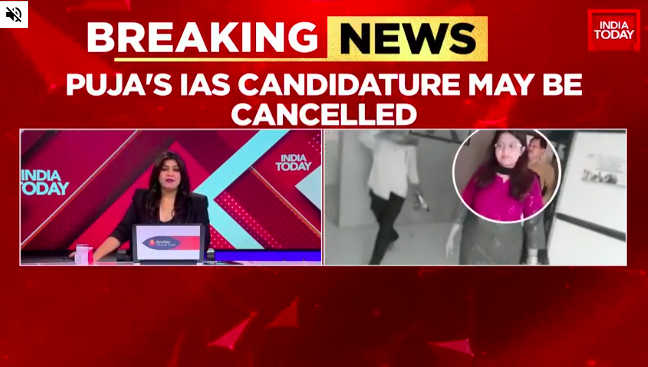
    Disability rights groups have been united in their reaction to this egregious act. While opinions were circling around the misuse of disability and the usual ‘one dirty fish spoils the whole pond’, reactions from the non-disabled audience validated the analysis.

    Senior Telangana IAS Officer Smita Sabharwal stirred a fresh row questioning the need for disability quotas in All India Services (AIS). She tweeted, “Does an airline hire a pilot with disability? Or would you trust a surgeon with a disability? The nature of AIS is field work, long taxing hours, listening first-hand to people’s grievances, which requires physical fitness.”

    Unfortunately, this was seconded by Former CEO of Niti Aayog, Amitabh Kant (Former N) when he said, “I am in favour of SC/ST or OBC reservation. These reservations should continue, with the creamy layer regulations being enforced. However, the existing reservations for the physically and mentally handicapped and the proposed 1% reservation for the third gender for the top Civil Services need to be reviewed. They are being misused.”

    Now that’s taking it a bit too far, because reassessing appropriate implementation of provisions and policies, will be opening an abysmal Pandora’s Box! By the way, I can instantly name Pranjal Patil and Beno Zephine. two women with disabilities who are IAS/IFS officers and have been doing superlative work despite the odds.

    #4 And there’s been some contentious news across the Pacific Ocean. So far, we’ve only had Former US President Donald Trump taking jibes at persons with disabilities, and specifically those in the media. Well, stupidity and ableism don’t come with any copyright, do they? After the disastrous show by President Joe Biden in the first presidential debate and consequential speeches, The Economist featured a walker adorned with a Presidential Seal on its cover. And the headline read, “No way to run a country.”

    Several slips there. Ableist representation in the use of a graphic that shouts, ‘crippling’ or ‘disabling’. The cover implies that if a person is physically disabled, or needs a crutch, he or she is incapable (read incompetent). Also, disrespecting several world leaders with disabilities. Like, Franklin D Roosevelt who was left paralysed waist down due to polio. Winston Churchill who had a speech impediment.

    A rather poor editorial call by a publication one least expects it from. The only thing that can possibly change media representation of disability is the act of hiring and working alongside persons with disabilities. Also, bold calls like the photo carried by The Indian Express in November 2022 following the appointment of 50th Chief Justice of India, DY Chandrachud. It’s a candid shot of him with his family which includes two foster daughters who have a disability.


    #5 But let’s end this piece on a rosy note. Or should I say pinkish? As part of this year’s global Barbie Fashionistas lineup, Mattel Inc. introduced the first ever Blind Barbie reinforcing inclusion and representation for all. Throughout the design process, Barbie partnered with the American Foundation for the Blind (AFB) to develop accessories, elbow articulation, textured fabric, accessible packaging, distinct eye gaze et cetera.

    Last year, Barbie had introduced the first-ever doll with Down Syndrome (DS), partnering with the National Down Syndrome Society (NDSS). Again, fixing the right hair, sculpt, glasses, outfit and so on. They have introduced its next Black Barbie doll with Down Syndrome along with the Blind Barbie. These dolls will soon be available in Indian stories as well.

    Clearly the disability landscape is evolving across the world. One day, we cite progress and hullabaloo on another. As long as the discourse is relevant, consistent and moderate, I think we are headed in the right direction. It is these complexities surrounding disability that will open up the dialogue to challenge stereotypes of all kinds. 

     Wondering why MxMIndia publishes a disability advocacy column? Well, we strongly feel that the media can dramatically transform the world for persons with disabilities. This series attempts to help bring forth issues that the media must champion to create a truly inclusive and accessible India. Writing  this column is Shruti Pushkarna, a former journalist and now a disability inclusion advocate based in New Delhi. Her views here are personal. To access the archives of her 95-plus columns, please visit: https://www.mxmindia.com/category/ columns/shruti-pushkarna/

    If you have a view on the issues raise or would like to align with MxMIndia on this cause, write to us at editor [at] mxmindia.com.

  • Before there was diving and relays, there was the Poetry Olympics…

    Before there was diving and relays, there was the Poetry Olympics…

    Jonas Åkerström’s 1790 work, Session of the Accademia dell’Arcadia on August 17 1788.
    Nationalmuseum/Cecilia Heisser


    By Katrina Grant

    Ever wondered whether you’d have a better chance at winning an Olympic gold if you could fling words rather than a javelin? Or maybe you could beat down your opponents with comedic wit? If so, you may have been a strong contender at the Poetry Olympics, held in Rome around 1700.

    Some 200 years before the modern revival of the Olympics as we now know it, a group of poets met in a garden in Rome to revive the ancient games in their own way. Their Giuochi Olimpici (“Olympic games” in Italian) was based not on speed or strength, but on one’s ability to string together a poem or win a debate.


    An ode to the mythical pastoral poets

    The first of these new games was held in 1693 and they ran semi-regularly into the mid-18th century. The group met outdoors in places including the Farnese Gardens, a lofty site on the Palatine Hill in Rome overlooking the ruins of the Ancient Forum.

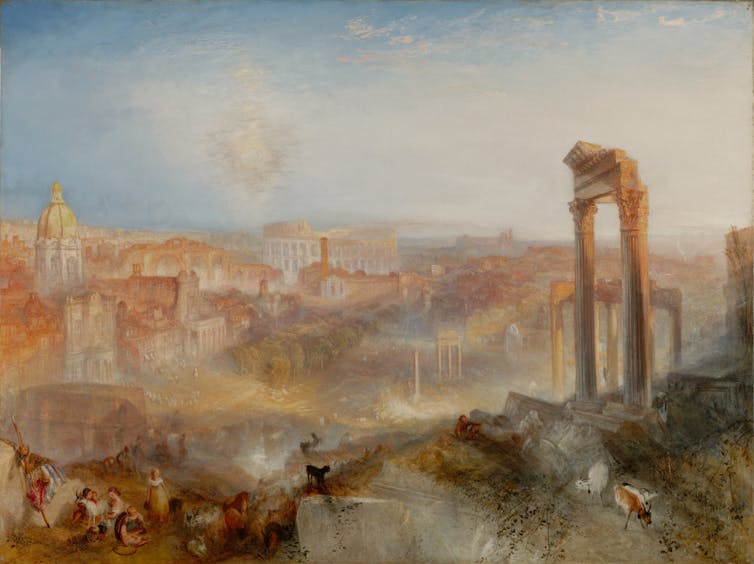
    Joseph Mallord William Turner’s 1839 oil painting, Modern Rome – Campo Vaccino, shows Baroque churches and ancient monuments in and around the Roman Forum.
    Getty Museum Collection

    They was a mix of (mostly male) poets, writers, lawyers, clergymen, nobles, artists and musicians. All were members of the Arcadian Academy, a group named for the region of ancient Greece – Arcadia – that was regarded as the “home of poetry” in Early Modern Europe.

    In 1504, the writer Jacopo Sannazaro had published a poem called Arcadia that presented an ideal vision of a world in which shepherds lived in harmony with nature.

    This idea took hold of writers and artists, who came to view such an idyllic landscape as a necessity for poetic invention. They imagined shepherds and shepherdesses roaming with their flocks and conversing in poetry with nymphs and satyrs – an image that was further popularised in 17th-century paintings by Nicholas Poussin and Claude Lorrain.

    These later 17th-century writers longed to inhabit this world of mythical pastoral poets. When they met, they cast aside their real names to use pseudonyms as shepherds or shepherdesses. They pretended the garden they met in was an Arcadian wood. The garden they built in Rome is still called “Bosco Parrasio” or Parrhasian Wood (Parrhasia was a region in ancient Arcadia).

    They described their meetings as “democratic” gatherings, which was highly unusual in Rome at the time, as all aspects of daily life were governed by social hierarchies and strict etiquette. But the naturalistic setting of the gardens and the playful disguises as shepherds or shepherdesses allowed for a bending of the rules.

    The title page of one of the published editions of poems composed during the Poetry Olympics held in Rome in 1705.
    Internet Archive

    It was in this setting the poetic revival of the Olympic games took place. It was one of a few revivals in 17th-century Europe, with several sporting competitions in England also calling themselves “Olympicks” or “Olympiads”. But the Olympics in Rome was the first to focus only on poetic and literary performance.

    Later on, poetry also became an official part of the first of the modern Olympic games – and remained so until 1948.


    Intellectual combat

    The Poetry Olympics took the ancient pentathlon, but replaced the five sporting competitions with five new games based on poetic composition and intellectual debate. A description from 1701 lists these as “the foot race, the javelin, the discus, the wrestling and the long jump”. Each was intended to showcase skill in poetry, wit or song.

    The foot race became a game called “the oracle”, in which a debate was held on a topic set by the custodian of the games. The javelin became a game of dispute, in which the “shepherds” took part in friendly poetic disagreements. They were encouraged “to sting and prick each other with verses” to dispel any “bitterness that may have occupied their minds”.

    The third game, the discus, became a game of wits in which the poets bested each other in composing witty songs.

    Wrestling changed to a “game of transformation”, drawing from the myth of the metamorphosis of the ancient Arcadian King Lycaon, who was transformed into a wolf by Zeus after he sacrificed his son (one origin of the werewolf myth).

    The poets presented sonnets about transforming into inferior things such as animals and plants, and then considered the virtues of these new states. In one poem that was recorded in one of the short books published after the event, a competitor imagines becoming an industrious bee, going from petal to petal and creating sweet honey to help them bear the “bitterness of the world”.

    In the fifth game, called “the garland”, the winner was the person who could weave together the most beautiful poem in praise of nature. This was the only game in which women could compete.

    While this may seem exclusionary, it was actually very permissive for Rome around 1700. Most women at the time received less education and were expected to live relatively cloistered lives. The more relaxed social structure of the academy and the games allowed women to participate in poetic performances and socialise beyond their immediate households.


    A way to build bridges

    The 300-year-old gathering of poets in a garden in Rome might seem very distant from athletes converging in Paris for the 2024 Olympics, but we can draw some parallels.

    Structured play, with its clear rules of engagement, is often regarded as a way of mimicking more serious types of social confrontation. The “play” of games at the Olympics – whether poetic or physical – allows all of us (spectators included) a chance to move through the emotions of combat, disagreement, disappointment and elation in a friendly way.

    Gathering for play also encourages us to envision new and better ways to come together as people. Roman poets in 1700 used wit and metaphor to push against the limits of courtly society. In 2024, leaders can point to the Paris Olympics and ask us to imagine a world that comes together in friendly competition, rather than conflict and disagreement.The Conversation


    Katrina Grant is Research Associate, Power Institute for Arts and Visual Culture, University of Sydney. This article is republished from The Conversation under a Creative Commons license. Read the original article.

  • RIP, Bobby Sista. Advertising Hot Shot. Champion of Gender Sensitivity

    RIP, Bobby Sista. Advertising Hot Shot. Champion of Gender Sensitivity

    Those who have met him only in the last decade or so have only seen a soft-spoken senior in his trademark white. But everytime he would speak, it was evident that here was someone who has been there and doing it. And how!


    We are referring to Shambhu Venkatrao Sista, better known to his friends as Bobby, who passed away in Mumbai, peacefully, on Saturday, July 27. He was 93, and leaves behind his family and a large number of admirers.


    In his passing, the Indian marketing services fraternity has lost one its most revered pioneers with. A visionary leader who helped shape the landscape of Indian advertising over several decades, Sista leaves behind a rich legacy of creative excellence, brand-building and social impact.


    Born into an advertising family, Sista took over the reins of Sista’s Advertising, founded by his father in 1934, and transformed it into one of India’s most respected creative shops. Under his leadership from 1970 to 1998, Sista’s rose from 27th position to become Top 10 agency, competing with multinational giants through its focus on breakthrough creativity and strategic brand-building.


    Sista’s early career provided him with a multifaceted understanding of the marketing and communication landscape. After an apprenticeship at Sista’s under his father, he gained international exposure by attending an advertising conference in London as a youth delegate in 1951. He stayed on in London for two years to study advertising and work at an agency, experiences that shaped his approach when he returned to join Sista’s as an account executive.


    One of Sista’s earliest and most successful campaigns was for Tinopal (later Ranipal), an optical whitener that he helped launch and build into a market leader with 90% share within three years. The campaign was praised by famed scientist Dr Vikram Sarabhai and even caught the attention of Hindustan Lever’s chairman for its distribution reach. This early success highlighted Sista’s strategic acumen in leveraging advertising to drive distribution and market dominance.


    After a stint as marketing manager at Tinopal’s parent company and as India’s first marketing manager for Reader’s Digest, Sista returned to take over as Managing Director of Sista’s Advertising in 1970. Over the next three decades, he built the agency into a creative powerhouse, personally nurturing talent like creative director Jean Durante and fostering a culture that prioritised creative excellence above all else.


    Under Sista’s leadership, the agency created iconic campaigns for brands like Nycil, S Kumar’s, VIP Luggage, HMT Watches, and Hot Shot cameras. The “bramble back” campaign for Nycil helped it overtake Johnson & Johnson to gain 70% marketshare within a year. For VIP Luggage, Sista’s not only made it the #1 brand but grew the entire molded luggage market by 300%. The Hot Shot camera campaign featuring the audio mnemonic “Just aim and khatak” broke records for awards won (the khatak bit was courtesy Prahlad Kakkar).


    Sista was a pioneer in many aspects of advertising and marketing in India. His agency created Mumbai’s first three-dimensional lighted hoarding, organised one of the earliest fashion shows on a swimming pool, and executed ambitious on-location shoots and sets that pushed the boundaries of production at the time. He also instituted the Annual Advertising Arts Ball as Secretary of the Advertising Club Bombay, which became a marquee event in the industry calendar.


    Beyond his advertising career, Sista was deeply committed to social causes. After selling Sista’s Advertising to Saatchi & Saatchi in 1998, he focused his energies on social communication and development sector work. He founded Population First in 2002 to address population issues from a gender and social development perspective. The organisation’s Amchi project brought development to 100 villages in Maharashtra through community empowerment, while the Laadli campaign and Media Awards worked to change perceptions and portrayals of women in media and advertising. In Dr A L Sharda, he found an able leader, who could take his mission many steps forward.


    Sista’s contributions to advertising and social causes earned him numerous accolades, including the Lifetime Achievement Award from the Advertising Agencies Association of India. In his acceptance speech for this honour, Sista’s humility, wisdom and passion for positive change shone through. He credited much of his success to luck and to the talented people he worked with, while also pushing the industry to institutionalise gender sensitivity in advertising through a dedicated award category.


    He was also a very active member of the complaints committee of the Advertising Standards Council of India.


    Bobby Sista will be remembered as more than just an advertising veteran. He was a visionary who understood the power of communication to build brands and change society. His legacy lives on not just in the iconic campaigns he created, but in the institutions he built, the talent he nurtured, and the causes he championed. In fact, if the Indian media – especially advertising – is a lot more gender sensitive than it was, say, a decade back it is thanks essentially to the wonderful institution that he set up under the aegis of Population First and Laadli.


    In his acceptance speech at the 3As of I award, he said: “I did not have an MBA Degree. I had neither training nor experience of running an agency. Common Sense was my only qualification and personality and people skills my assets. I was lucky with the team I was able to build up and the roster of clients we had acquired as we went along.” And this is what he said on the transition from Sista’s to the social sector: “the period 1970 to 1998 when I headed Sista’s was a happy period. Of course, there were worries- financial and otherwise, frustrations, many mistakes I made, but on the whole it provided a lot of satisfaction and sense of achievement. In 1998 I sold the advertising business to Saatchi & Saatchi. We had a staff strength of 370 between the Head Office and four branches. I quit because my heart was into social communications and I wanted to explore the opportunities in the development sector.”


    As Indian advertising continues to evolve in the digital age, Sista’s principles of creative excellence, strategic thinking, and social responsibility remain as relevant as ever.


    The passing of S V “Bobby” Sista marks the end of an era in Indian advertising. Yet, his impact on the industry and society at large ensures that his influence will continue to be felt for generations to come. He will be deeply missed, but warmly remembered as a pioneer, mentor, and changemaker who helped shape the soul of Indian advertising.

  • City news, anyone?

    Ranjona Banerji PhotographEvery year, the monsoon affects us in damaging ways. Both too much and too little are catastrophic. The news from the months of June to October is full of disaster, outrage and despair. For city people, potholes, waterlogging, commuting mishaps and general discomfort. For the rest of India, devastation of crops and fields from water and/or no water, rivers in spate or too dry, major road links broken, collapsed bridges and destructive landslides.


    But because the news cycle has changed so much and drama and sensationalism has taken total hold, the nitty-gritty of local reporting has taken a backseat. Old necessary beats like civic issues in cities, which is what would cover monsoon damage, or rural coverage, no longer gets consistent space. Environmental reporting makes up for some of these lapses, especially outside urban centres.


    The tragedy for consumers of news and for the news media is that boring as civic issues maybe, they affect people the most. Often voters will talk about drains or roads when they are interviewed about their voting choices, even if it’s for the Lok Sabha elections and these municipal issues cannot be fixed by Members of Parliament. It makes for a huge dichotomy between hope and reality. And in the middle falls the shadow of an errant media.


    Because if these issues are constantly covered and highlighted, if pre-monsoon measures are diligently tracked, if government’s ill-advised forays into destruction of forests and mountains get consistent mainstream coverage, if one falling bridge is enough to bring people to the streets, then yes, we have some little hope of less disaster in the coming year.


    This morning, one train accident in Jharkhand, another in Mumbai and a massive landslide in Wayanad dominate the news. Train accidents have become distressingly common, but you do not see the legacy media demanding accountability in one voice. You mainly see a parroting of the BJP line about past errors by the Railways under other governments – and this is a Central government in its third term – and PR photos of a railway minister scooting about on someone else’s two-wheeler. No responsibility and therefore no future action.


    As for landslides, apart from natural calamities outside the domain of human interference, well, we all ought to know that we are responsible. The Wayanad incident has got massive space – as it should – but two similar happenings in the Himalayas have not managed to capture the imagination of a caged TV media quite in the same way. I leave you to work out the political benefits of attacking Kerala’s governance over Uttarakhand’s dismal record and wilful destruction of the environment. Religious tourism has led to a constant assault on the Joshimath area, thanks to the construction of unwanted dangerous roads. Rivers have changed course leading to more turmoil and pain. Local people have suffered but they do not matter as much as tourists. To give the local news media its due, these problems have been covered locally. But for the national legacy media, it is sensationalism and protectionism that counts. And the protectionism is of such depth that even when a vital road used by the Indian Armed Forces near the China border collapses, it is less important than Union Defence Minister Rajnath Singh getting upset with the Congress’s Rahul Gandhi over the Agnipath/Agniveer scheme. Therefore, all news that is negative to those in power gets scant treatment.


    Remember, this is a media which can barely stand up for itself, even when access to Parliament is blocked, when journalists who do actual work are attacked. This is a media which obediently spreads BJP propaganda without any fact-checking. This is a media which cannot bear for the public, including its own customers, to question the Union finance minister on problems which her Budget have caused for them. It cannot of course ever question the finance minister directly either.


    I understand that civic news is boring and time-consuming. It requires diligence, vigilance and consistency. A change of hats by a waving Prime Minister, a dog-whistling speech and attacks on Opposition members is so much more exciting. Add some Islamophobia and caste hatred into the mix, and you have a show. Wow!


    O, look, that mountain has just collapsed. Now who should we blame???


    Some dead Prime Minister, obviously.


    You choose.


    Ranjona Banerji is a senior journalist and commentator. She writes on MxMIndia on Tuesdays and Fridays. Her views here are personal.

  • What’s the future of Rupert Murdoch’s media empire?

    By Naomi Cahn and Reid Kress Weisbord

    Conservative media titan Rupert Murdoch is making news again – this time, with a secretive effort to change an irrevocable trust. That trust has important ownership interests in both Fox Corp. and News Corp., so it affects broadcast news as well as The Wall Street Journal and other publications.

    Under the current terms of the trust, upon Murdoch’s death, his four oldest children – Lachlan, James, Elisabeth and Prudence – will have “an equal voice” in determining the future of the news empire.

    But as The New York Times recently reported, the 93-year-old Murdoch has been trying to alter the trust to ensure his oldest son, Lachlan, stays in charge of his media properties. The legal dispute played out behind closed doors for months, and it might have stayed there if the Times hadn’t obtained a sealed court document shedding light on the conflict.

    Murdoch is calling his efforts to change the terms Project Harmony, reportedly out of the belief that doing so would head off any intrafamily wrangling.

    The effort to change the trust is so secretive that a spokesperson for the Nevada probate court where the proceedings are occurring stated that all information related to the case is confidential, based on a court order.

    As law professors who teach trusts and estates, we are intrigued by the publicity surrounding a somewhat obscure method for holding property. Trusts are private documents that don’t get filed in court unless there’s a dispute.


    All about trusts

    Trusts are an estate planning technique for giving away property. In our law classes on trusts and estates, we explain how they can be useful for minimising estate taxes, protecting assets, making charitable contributions, avoiding probate and, in certain circumstances, qualifying for government benefits.

    Unlike making an outright gift and transferring full ownership to someone else, the donor of a trust – called a “settlor” – transfers legal control of the gifted property into the trust.

    The people who hold the legal title to the property in the trust are called “trustees.” They manage the property and make decisions about how and when to distribute funds to the beneficiaries, who are the actual recipients of trust property.

    Trustees are fiduciaries, which means they are under strict legal requirements to manage the property in the sole interests of the beneficiaries. If the property in a trust includes shares in a business, then trustees have the power to exercise any voting rights for those shares.

    Trusts allow donors to prolong their control over their property by appointing trustees to carry out their objectives after they die or become incapacitated. Trusts are useful when giving away complex business interests that require extensive supervision and sophisticated decision-making, all of which can be administered by trustees according to the settlor’s preferences stated in the trust.


    The view from Nevada

    In Nevada, where the Murdoch case is playing out, a settlor can’t unilaterally change any trust’s terms unless the trust itself specifically reserves the right to do so. In other words, trusts are presumed to be irrevocable, or irreversible.

    But even when a trust is irrevocable, there are still ways to change its terms.

    In any state, including Nevada, irrevocable trusts can be altered by court order if the settlor and all beneficiaries agree to the modification. In some cases, trusts can also be modified without court approval through a process known as “trust decanting,” which can be performed by the trustee without the consent of settlors or beneficiaries.

    Nevada is unusually permissive in allowing settlors to maintain secrecy about the trust, even with respect to trust beneficiaries. In most states, trust beneficiaries have much broader rights to receive financial information about the trust.

    Nevada also explicitly protects confidentiality in trust proceedings by law, even without a court order. Indeed, having reviewed thousands of trust cases from courts around the country, we find Nevada to be especially protective of the donor’s interests. That may be one reason the Murdoch Family Trust is located there.


    The stakes of the dispute

    The Murdoch Family Trust holds a variety of types of property, including a family farm in Melbourne, Australia; the Murdoch art collection; and shares in Disney, News Corp. and Fox. The property in the trust is managed by a corporate trustee, Cruden Financial Services.

    The trust terms at the center of this dispute appear to stem from Murdoch’s 1999 divorce from his second wife, Anna. She negotiated an agreement to ensure that their three joint children – Lachlan, James and Elisabeth – along with Prudence, Murdoch’s daughter from an earlier marriage, would inherit News Corp.

    The trust document sets out what will happen to ownership of the media assets upon Murdoch’s death: His voting share will be transferred to the four oldest children. That could lead to a scenario in which the children are fighting over the future of the media assets. Fear of that outcome seems to have motivated Rupert Murdoch to seek this change to the trust.

    Although Lachlan is now the chair of News Corp. and executive chair and CEO of Fox Corporation, the children have already aired some of their disagreements over the political direction of the media companies. For example, James and his wife have criticized Fox’s move to the right. Murdoch may well see this as a threat to the company’s business model, which caters to a conservative audience.

    Even though Murdoch’s trust is irrevocable, it reportedly “contains a narrow provision allowing for changes done in good faith and with the sole purpose of benefiting all of its members.” Rupert Murdoch’s argument is that by taking away governance rights from James, Elisabeth and Prudence, Lachlan will be able to manage the family business more profitably, thereby increasing the value of trust assets for all beneficiaries.

    Because some of Murdoch’s children object to his proposed governance changes, Murdoch appears to be relying on the power he retained as settlor to modify the trust in good faith for the beneficiaries’ benefit.

    A court will decide later this year whether the changes really are in good faith; If so, then Murdoch will be able to change the trust as he would like so that Lachlan can continue to control the family business.

    The saga shows the ways that trusts can protect a family business. But when the next generation lacks a shared vision for the future of that business, even irrevocable trusts can’t ensure family harmony.The Conversation


    Naomi Cahn, Professor of Law, University of Virginia and Reid Kress Weisbord, Distinguished Professor of Law and Judge Norma Shapiro Scholar, Rutgers University – Newark. This article is republished from The Conversation under a Creative Commons license. Read the original article.

  • Marketing Luxury to Indian Millennials

    Marketing Luxury to Indian Millennials

    Ashoke AgarrwalIndia’s early millennials, those between the ages of 44 and 34, are roughly 220 million strong. Given this group’s educational profile, rising incomes in the tech and knowledge work sectors, the booming start-up sector, and the increasing prevalence of double-income households, the estimate is that at least 5% of the early millennial age cohort live in households with annual incomes above INR 6 million, which in purchasing power parity (PPP) terms–INR 25 to a USD–is equivalent to a USD 2,40,000 yearly income.

    Indian millennials, like their global counterparts, exhibit a lower inclination towards saving than earlier generations. This trait and increasing affluence position the 11 million affluent Indian millennials as a growth market for luxury and bridge-to-luxury products and services.

    Millennials place experiential richness above material wealth. This shift has significant implications for the luxury market. While luxury brands have traditionally marketed themselves based on exclusivity and prestige, these factors hold less sway with millennials.

    Studies worldwide have revealed four factors enabling brands to market luxury and bridge-to-luxury products to millennials successfully.

    The first of these factors is that millennials value experience over possession.

    Further, millennials prefer customization and personalization.

    Millennials prefer brands with authenticity and brand purpose.

    And finally, they gravitate towards digitally integrated brands that engage them seamlessly from online to offline.

    Many global luxury brands have tailored their marketing to millennials in the rich world. Burberry’s is a digital innovator pioneering interactive campaigns integrated across their showrooms and online spaces. Gucci builds on the authenticity dimension by leveraging social issues and cultural narratives in its campaign and content marketing. Rolex delivers customization, offering personalized engravings on its watches. Louis Vuitton has added an experiential dimension to the brand with pop-up experiences and collaborations with artists.

    There is a massive gap between the nominal and PPP values of USD (the dollar is overvalued vis-av-vis the Indian rupee by nearly 3.5 times), which leads to global luxury brands losing out on the domestic Indian market.

    Further, the space for “luxury” as defined by millennials—products and services that offer rich, customized, and personalized experiences seamlessly across online and offline spaces—is expanding the remit of luxury offerings beyond the traditional areas of fashion and accessories, decor, cars, hotels and high-end liquor- to a whole host of categories.

    In today’s India, brands from financial services to bespoke travel to fitness can aspire to tap into the market defined by affluent millennials with luxury and bridge-to-luxury offerings.

    The fact that global biggies find it challenging to match price expectations in India is an opportunity for Indian brands to leverage domestic demand to, in time, build global markets.

    Across all potential categories, the most essential way to build a luxury or bridge-to-luxury brand is to create a relationship with the client. In other words, as I wrote in my MxM India column dated March 17th 2022, titled ‘Like Saas is BaaS the Future’, creating a new brand paradigm with the Brand-as-a-Service (BaaS) model. In the case of marketing luxury products to millennials, a BaaS model will be crucial to the success because BaaS will deliver on three of the four factors listed above directly:

    • It delivers a subscription-like experiential relationship with the brand – think of a subscription service to a luxury car brand where one can change models as frequently as one wants
    • BaaS implies a continuing relationship that makes delivering customization and personalisation easier.
    • And integrating communication and interaction across online and offline channels

    The fourth factor of authenticity and brand purpose will determine the more successful BaaS brand in the luxury market.

    In conclusion, Indian marketers should see a luxury product and service market emerging among affluent Indian millennials as an excellent opportunity to build businesses and brands that can eventually go global.

  • Different rules for Different Governments

    Different rules for Different Governments

    Ranjona Banerji PhotographMonsoon related disasters continue across India. The landslide in Wayanad is undoubtedly the worst with at least 300 people dead, homes and livelihoods destroyed. Torrential rain, a river changing course and the human lack of respect for nature are all possible reasons for the landslide and subsequent damage.


    The media, or sections of it, would rather concentrate on the political dynamics – since Kerala is ruled by the CPI (M) and like all non-BJP states, the government must be severely castigated – than on aspects of the disaster itself. Or, discussions on why opposition politician Rahul Gandhi who is still the MP from Wayanad has not visited yet, with implications that he is somehow to blame.


    And yet, as we have one more train accident – three on passenger trains in the last six weeks – in Jharkhand, the legacy media is unable to find any politician to blame for the sad state of the Railways. The excellent article from The Economic Times linked below provides all the details, has a stentorian tone about safety and protocol failures and yet, if you were new to India, you would be excused for believing that India has no railways minister. Is Ashwini Vaishnaw’s name there? Is he blamed or asked to take responsibility? O no. The rules are different for Kerala and the BJP-ruled Central government. Of course. What’s new here, eh?


    https://economictimes.indiatimes.com/industry/transportation/railways/howrah-mumbai-mail-accident-india-rail-joy-ride-or-fatal-ride-15-lives-lost-in-6-weeks/articleshow/112123228.cms?from=mdr


    August 1 and India saw the unedifying spectacle of the new Parliament building leaking like a sieve. Not metaphorically, as in politicians sharing juicy details of government gossip with journalists. But actually physically leaking rainwater into the fancy new entrance hall. Journalists who cover Parliament are kept in a cage and possibly some are quite used to be being treated like lapdogs, so they don’t mind. And ruling party politicians mainly share gossip about opposition parties.


    If not, there would be have massive fisticuffs about the BJP’s Nitin Gadkari writing to the BJP’s Nirmala Sitharaman requesting her to cut GST on health insurance. O no, we are so circumspect about turmoil within Narendra Modi’s ship, even when there is turmoil, so you would be forgiven for thinking that this media is stuck in the 1970s. Polite news articles are matter of fact: “Gadkari writes to Sitharaman”.


    But obviously not with other political parties: “Cracks in India Alliance!!! Is this the end! One party member did not smile at a member of another party! Who is to blame??? Is it Nehru???” and so on is the media response.


    But that Parliament building. Now this is a real shame in terms of India’s glory and Modi’s ambitions. But we must be circumspect with blame here. Rahul Gandhi may have caused the Wayanad landslide, or done nothing about it, Nehru has caused the rest of the problems. But our friends in the Central government? No way. So let’s cover the embarrassment of this prime ministerial project being shoddy – not the first time – by shooting from the shoulders of the Opposition:


    https://www.business-standard.com/india-news/rs-971-crore-parliament-building-faces-leaks-due-to-heavy-rains-in-delhi-124080100457_1.html

    (heavy rain to blame, Congress mentioned in intro, Akhilesh Yadav mentioned early in the article, Prime Minister Modi mentioned lower down as someone who merely inaugurated a building which perhaps mysteriously manifested.)


    https://www.ndtv.com/india-news/new-parliament-roof-leaking-delhi-rains-akhilesh-yadav-built-with-billions-opposition-jabs-bjp-over-parliament-roof-leak-video-6238329

    (Opposition)


    https://timesofindia.indiatimes.com/india/opposition-highlights-new-parliament-buildings-leaking-roof-government-says-small-issue-addressed/articleshow/112209481.cms

    (Opposition)


    Luckily, they do tell us that this badly made structure cost Rs 971 crore to make.


    Don’t worry yourselves. It’s just our money getting washed away.


    Ranjona Banerji is a senior journalist and commentator. She writes on MxMIndia on Tuesdays and Fridays. Her views here are personal.

  • Paris Olympics 2024: Faster, Higher, Stronger… and more data-driven

    Paris Olympics 2024: Faster, Higher, Stronger… and more data-driven

    By Andy Miah

    For the first post-Covid Olympics, there are some major changes now in place at the Paris 2024 Games. First of all, there are no physical tickets for visitors. All tickets are digital, but spectators can separately purchase an additional paper souvenir ticket for their event. While this is significantly a Covid legacy, it’s also a sign of the times, as more of the Olympic Games moves into the digital world.

    If we dig deeper, we see how the DNA of this transformation is a story about data and its expansion – and how the ability of the Olympics to grow economically relies on it being harnessed and exploited. As AI steadily changes the strategic positioning of all aspects of life, the sports world has rapidly begun a similar journey. AI is now playing a key role at the Olympics across many areas, including performance analysis, doping checks, security threats, athlete comfort, sports reporting, and broadcasting.

    The Olympic Games have been quick to respond to the rapidly developing technological environment. Gone are the days where the International Olympic Committee (IOC) talked about its impact in terms of television viewing figures. Now, it’s all about the live views across all channels, and a looming presence at Paris 2024 is the prominence of TikTok, which itself is driving a huge amount of Olympic athlete content. It is even an official partner of Team GB.

    At a session before the opening ceremony, the IOC unanimously supported the creation of the Olympic Esports Games, due to take place for the first time in Saudi Arabia in 2025, building on five years of developing esports in the Olympic programme. It will consist of competitions in familiar computer games formats such as Fornite, along with some new gaming titles which are aligned with traditional sports, including taekwondo, in virtual reality.

    This new event ends speculation about whether esports will ever make it into the Olympic Games. Planned to happen every two years – when the Olympics and Winter Olympics aren’t taking place – it signals a major step change in how the sports world interacts with gaming and esports.

    Underpinning a number of these changes is the IOC’s realisation that the economic model underpinning the Games needs to evolve. With 61% of the income generated from television rights, and TV’s future looking ever more uncertain, the IOC is betting on gaming and streaming platforms becoming a major feature of its future economy.

    Another major innovation this year was the creation of a ticketed experience in Imax cinemas in the US for the opening ceremony, following the model of national theatres around the world.

    These new kinds of audience experiences may signal the end of the traditional family-viewing-at-home era. Instead people are more likely to either watch on their own on a personal computer device, or collectively in large groups. Similar shifts are taking place more widely in other major events, from Eurovision to the Euros.

    Over nearly two decades, this shift in audience experiences has been driven by the rise of social media and, perhaps more critically, mobile viewing experiences. With platforms such as YouTube, Instagram and Meta driving a vast amount of activity to mobile audiences, the Olympic movement has become increasingly reliant on their platforms to grow their audiences.

    In the run up to this year’s Olympics, some athletes used social media platforms to share the beginnings of their journey to Paris. It’s the kind of content that many fans wanted to see – but never could until now.


    Will AI squeeze out the human element?

    The IOC launched its Olympic AI Agenda in June. In Paris, AI is being used to assist in performance analysis, raising questions also about whether it could further be used to judge sports. For instance, might AI be more able to scan a dive and assess its quality? These are some of the applications being discussed at these Olympics, but there is some division over its use, with fears that AI may replace human judgement in the field of play.

    AI has also been used to design personalised bedding for athletes in the Olympic village, add colour to old black-and-white archival footage of Olympics past, and create new forms of sports reporting – such as using AI-generated results stories and commentary.

    While so much of this change is driving greater openness and awareness about the Olympic Games, there is also a deeper question we face about the role of professional journalism in the making of sports history.

    As more brands become concerned about anything negative surrounding their industry, and the numbers of journalists on news payrolls diminishes, there are worries that the elevation of technology-driven reporting could lead to a loss of independent, investigative journalism. This could have a serious impact on securing a fair record of events like the Olympics.

    The extension of this into AI could exacerbate these fears, jeopardising the traditional view of journalists as necessary witnesses to historic events. These matters become increasingly worrisome when this means that officials who oversee such events are not sufficiently interrogated to ensure accountability.

    Yet, the motto of IOC president Thomas Bach over the past four years – during which he has driven his reform agenda to ensure the Olympic movement modernises and remains a world-leading community in the 21st century – has been “change or be changed”. It is a mindset that must shape how we think about the future of entertainment as we see new formats of experience being created.

    It may not be too far off that viewers will be able to watch Olympic athletes as digital avatars – highly precise computer-generated animated versions of themselves – and this might create new and younger audiences who have grown up on computer games.

    Alternatively, active esports are leading to new hybrid sports, where athletes compete in virtual worlds against each using full body tracking technology, competing from anywhere in the world all linked up through the Cloud, which was tested with great success during the COVID restrictions.

    The advent of AI occurs at a defining moment in Olympic history, as it becomes an event embracing new technologies. Its major worldwide partners are companies driving new standards in technological innovation – the economic powerhouse underpinning the Olympic industry and shaping the character of the Games in the 21st century.The Conversation


    Andy Miah is Chair in Science Communication & Future Media, University of Salford. This article is republished from The Conversation under a Creative Commons license. Read the original article.

  • Entertainment in Limbo

    Entertainment in Limbo

    Shailesh KapoorIn more than 25 years of observing the Indian media and entertainment industry closely, there has never been a period like the one we are in currently. Every mainline sector of the industry is going through a phase of stagnancy or descendancy. It is difficult to say if any of this will change anytime in a hurry.

    The television industry has been struggling to hold on to pay subscribers. The drops are not sizeable in percentage terms. But in a country where more than 30% of the population still doesn’t have access to TV, growth should be a given. Instead, we are looking at stagnant numbers. Because BARC India hasn’t conducted a baseline study in a while, this data point is open to debate. On the revenue front, the EY-FICCI report projects positive revenue growth, but that’s a little hard to believe in the current scenario.

    On the content front, big-ticket cricket is the only marquee property type that television has to show. Nothing on mainline Hindi GECs is in that league anymore.

    Over the last couple of years, the popular narrative suggested streaming is the future, and television will slowly make way for it. But the streaming numbers paint a picture of their own. In our recently published OTT report, India’s digital video audience size went up by 14%, from 481 Mn to 547 Mn. But this entire growth comes from the AVOD segment, largely on the back of new audiences who have entered the category via YouTube and social media videos.

    As new audiences enter, one would expect those already there to move to the next level. In case of OTT, this would mean from AVOD to SVOD. That hasn’t happened at all, and the total paid subscriptions seem to have frozen in time. Audiences outside the Top 15 cities are not keen to pay for OTT subscriptions, and the Top 15 cities have reached their saturation point post the pandemic.

    The evident slowdown in content production makes the picture look gloomier. The number of originals on OTT this year may be a good 30-40% less than 2023. Next year could be even lower. Creators (producers, writers, directors) who were navigating multiple projects last year are now in sustenance mode.

    The theatrical category is doing decent numbers, but matching last year’s box-office will be a tough ask. In any case, a handful of big films are driving the box-office, and the long tail has weakened considerably, leading to a lot of scepticism, and a general drop in the number of Hindi releases. We are currently in one such period, where there are no major releases for several weeks after Stree 2’s release on Independence Day.

    The silver lining comes via positive signs on the larger consumer sentiment and demand in the country. Evidently, media advertising will ride on this sentiment. But that could be the only tangible positive for the Indian media industry currently.

    Hopefully, there are positive developments round the corner, which will pleasantly surprise us. For now, the next few months may be those of wait and watch.

  • A Tryst with Books and Gen Z

    A Tryst with Books and Gen Z

    With apologies to none at all

    By Vikas Mehta

    Vikas MehtaMy daughter is an avid book reader. She actually reads books. That’s offline reading. Not Kindle or from any online site, but physical books. And that is a rarity. Since childhood, she would never get any pocket money but a monthly allowance to buy books. I would try to gently nudge her into buying some books but her independence in choosing her own genres came through at a very young age. Even now, books are her indulgence. Maybe that’s the reason she is doing graduation in journalism with creative writing as her elective. Three months summer break and she has already bought around 25-30 books and is now stocking to take some to the university.
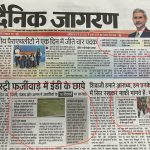
    Dainik Jagran clipping showing highlights of newsNeedless to say, she is an exception. Reading as a habit is declining in Gen Z. Attention spans are also reducing. It’s not even videos but reels. Newsletters send summary with their articles. Even regional newspapers like Dainik Jagran summarise big stories into highlighted points; something which I noticed that some mainline English newspapers have also started to follow. (See image).

    Podcasts are catching on. You can be driving and listening to a podcast or even watching cricket and listening to a podcast on the perils of investing in cryptocurrency. All major news sites also have audio version of the news.

    So, what’s happening? Too much information, too little time? Multitasking and wanting to keep up with the Jones? Multifocus (does that even make sense?) and multifaceted? All valid reasons. But is there a cost to it?

    My thinking is that the explosion of technology, in every field, have made people insecure. So, everyone is trying to know everything. And with Gen Z being born with a technology spoon, technology is not a medium or conduit but way of life. So, if I can do a masters in finance, I can also do a certification in AI, follow someone who gives tips about immigrating to Australia or Canada, learn how to retire at 40, follow stock market to get rich quick… you get the drift. Insecurity about the future, ironically caused by technology itself, forces them to try and know as much as possible

    The width of knowledge of Gen Z is amazing. But the depth is a question mark? Jack of all trades but master of none is very applicable here. There is a view on everything but there is no confidence in that view. And proper lack of reading books is one reason why the depth of knowledge is missing. Reading books gives one a context. Historical perspective. Various viewpoints. Nuanced knowledge. A rich vocabulary. Ability to communicate, I can go on and on.

    I was therefore eager to visit a book fair in Doon which my daughter discovered.

    It was promoted online (the irony of it!) with 3000 books available as a hook and it promised books by the kilo.

    And to my pleasant surprise I found that the venue was full of Gen Z, mostly students. Not to buy curriculum books, they hardly buy curriculum books nowadays its either some online repository or maybe in some cases library, but to buy books of various genres. I noticed that except me and my wife, there was just one more oldie parent. Heartening, to say the least.

    At first, I was bewildered.

    All I could see was books by unknown authors.

    Self-help books.

    Books advising on stockmarkets.

    Books on romcom.

    Books on psychology fiction, literary fiction.

    And books on dark mystery.

    I had hardly heard of these genres. But my daughter patiently took me through them.


    Good girl guide to murder- it was a series of three or four books.

    Before the coffee gets cold – sort of science fiction psychology

    People we meet on vacation – Romcom

    Cleopatra and Frankenstein – Literary fiction

    I want to die but I want to eat but I want to eat tteokpokki – Psychological fiction

    Normal people – Romance thriller


    And most of these books claimed to be bestsellers. Published by leading publishing houses like Penguin or Bloomsbury publications amongst others.

    But the most eyecatching thing was that most of the books had very young authors. Late twenties or early thirties. And mostly females. Holly Jackson (31 years), Anna Hueng (33 years), Emily Henry (33 years), Baek Sehee (33 years).

    And most books were between 200-350 pages. No voluminous read that went for months.

    In contrast, I hardly found the old voluminous classics like War and Peace or some of the Charles Dickens ones. The only old classics I could see were Crime and Punishment and Exodus.

    There was a smattering of Dan Browne, Fredrick Forsyth and Jeffery Archer.

    And then there were tonnes of self-help books, many by Indian authors, all men, on how to game the stockmarket, get rich quick, retire at 30 or 40 etc.

    Most books had Hindi translations available. Alchemist by Paul Coelho was available only in Hindi. So were almost all help books and get rich books. And the Romcoms too.

    Autobiographies and biographies were also available but mostly in Hindi or of Indian sports stars. Virendra Sehwag, Suresh Raina, Shane Warne and Nelson Mandela were the favourites, all in Hindi.

    There were many detective and mystery books too and many by Indian authors. I guess the genre needs better situational and local nuances understanding.

    By now my mind was buzzing with questions and I took the help of my ever-obliging daughter and wife to ask three-four youngsters some questions.

    I am listing some interesting observations into Gen Z reading habits.

    They usually do not have book reading as a habit but do come to such fairs as many self-help books and modern books are available cheap. By kilo. Strike one.

    Mystery, politics, true events etc are more fun to watch on OTT rather than read about it. As one smartalec wisecracked, the daily newspapers are full of it anyways. Strike two.

    They are comfortable in reading English as long as it is not Tharooresque. Not comfortable in communicating in English. But reading is a different ball game. Strike three.

    Books do give them some sort of privacy. As its their personal area. But phones give them more privacy because no one knows what they are reading on it. Strike four.

    They don’t read authors (my daughter disagreed), they read recommended books. Influencers and friends play a very strong role in their reading decisions. Strike five.

    There is no budget for books. It’s a rare occurrence. Only at such book fairs where they buy in bulk in kilos. And they never keep the books. Exchange with friends or sell them off and that’s how they get recycled into such book fairs. Strike six.

    But finally it was one guy who when asked about reading books for indepth knowledge, gave me a quizzical look and muttered: “Jab padai mein hum zyada depth mein nahin jaate tohi uski aadat kaise padegi” Loosely translated “When our education does not encourage us to dig deep then how will we get that habit.”

    I will leave you with that deep thought as the master of all strikes.