
Category: Big Story

  • Ideas for Ethical Practices in the Client-Agency Ecosystem

    Ideas for Ethical Practices in the Client-Agency Ecosystem

    Sanjeev KotnalaSelf-declaration is Self-Regulation 2.0, but it is there because many agencies and clients have repeatedly defied the guidelines. The industry is trying to sort out the ambiguity on the process, coverage, and practicality of self-declaration. It is time to address some other issues, or a third-party intervention to regulate them is a sure possibility. These are issues the advertising-marketing industry has grappled with little success.

    Issues of ethical behaviour and fair play issues. These include unethical practices like plagiarising content, releasing unpaid-for work, exploiting ideas sourced through pitches without compensation or promoting concepts developed by previous agencies without agreed proper credit or payment. Trust me, the problem is far more significant than the small number of cases that get noticed or reported on public platforms.

    The faith in the senior clients and industry stalwarts to act ethically and responsibly has repeatedly proven to be misplaced. After all, it is usually the very literate, aware clients who take calculated chances in full knowledge of their internal system and approval processes.  The unjustified actions show their trust in their unethical actions going unchallenged. There is a definite absence of deterring penalties, and the slow pace of arbitration exacerbates the situation, turning these acts into one of smartness rather than infractions.

    Industry associations have not been entirely passive observers. However, they have been unable to impose penalties or ensure compliance due to their limited mandate. We need a paradigm shift towards practical solutions that promote ethical behaviour within the industry. Self-regulation without outside intervention is preferable. A robust self-regulatory initiative with a broader scope, wider acceptance and compliance is required.

    Here are some crowdsourced ideas. They are not fully practical or tamperproof, but they are an excellent place to start the internal Manthan.

    REWARD THE IDEA.  Reward the creative agencies for their ideas, even if they have been executed/implemented by some other agency. This will ensure the originating agency receives recognition and reward for its intellectual property and the client does not run away with a Big long-term idea paying a short-term engagement fee.

    REWARD WITH 10% OF THE INCREASE IN BRAND VALUE. The agency that creates the branding idea gets 10% of the increase in brand value published as an asset in the client company’s annual report. Brand value is monitored by an independent firm of CAs. To help agencies retain their top talent 5% of these ‘brand success fees’ go to the team that created the branding idea as long as the team members stay with the agency. (Sumit Roy, Univbrands)

    CMO & BRAND ETHICAL SCOREBOARD. A process-led, publicly accessible, transparent system and process is maintained at the industry level. Everyone starts with equal points. Points are deducted for guidelines violations, unfair play and non-adherence to guidelines. The scores are available for anyone to check. It becomes a strong point and process if the brands refer to it as a checkpoint before hiring, and consumers can check while making their product decisions.

    UNIONISED MARKETING ADVERTISING PROFESSIONALS. Mandatory union membership is required for all marketing advertising professionals. Companies can and should only hire union members. The union has the power and the authority to sanction non-compliant members. The members must remain updated aware, and follow all the processes and guidelines, including ASCI.

    BLOCKCHAIN-SUPPORTED CREATIVE VAULT: All creative work is timestamped and stored in the blockchain-supported creative vault. A verifiable record is available to combat plagiarism and protect intellectual property.

    PITCH TRIBUNAL: An industry body or part of an industry association that oversees pitch processes. It ensures fair compensation for ideas and pressurises clients to adhere to ethical pitch practices.

    APOLOGY WITH AN IMPACT: Apologies for guideline violations must be released, and a minimum of 30 per cent of the media weight of the executed media plan must be obtained. It can help rebuild trust and maintain transparency, ensuring the apology is an apology of substance and a warning to others. Ensures the client does not get away with a token apology for a large campaign. Ensures that the audience exposed to misleading communication has equal chances of being exposed to the apology and be better aware/warned.

    ADLAUNDRY: Like Newslaundry, an independent watchdog led by experienced advertising professionals who act as fact-checkers and myth-busters, ensuring accountability within the industry. (Rajiv Shukla, Partner Resonance Consulting)

    Self-regulation remains the best approach, but it must be enforced with more robust measures, including reprimands and penalties. Saurabh Mathur, an entrepreneur with 30+ years of experience, aptly captures the ethical debate by suggesting the four fundamental rules that the industry must ensure: Nothing is Free. Pay for What Isn’t Yours: Fair Co-Creation Compensation and Credit Where Due.


    NET-NET: While these ideas may not be foolproof or practical, and some may sound silly, they represent a possible starting point for a more ethical and compliant industry. The challenge remains to craft a most agreeable, accepted solution and implement it in all fairness. It may foster a culture of fairness and respect in the client-agency relationship. The other challenge is to have a robust system, and the industry will creatively find escape routes and loopholes to exploit.

    The industry must act and take it into the discussion for an early solution; otherwise, it may be too late, and it may not be able to resist a third-party intervention- which may kill it.

    Meanwhile, on the issue of SELF-DECLARATION, I must add and reiterate that if your ads are not misleading information or false claims and comply with the ASCI and other category regulators’ guidelines, there is nothing to worry about.

  • Can Indian Brands Go Global?

    Can Indian Brands Go Global?

    Ashoke AgarrwalCan India become an economic superpower without some of its homegrown brands going global, whether in the B2C or B2B space?
    Probably not.

    The Germans reconstructed a shattered war economy and became an economic giant, building global B2B and B2C brands like Siemens, BASF, Mercedes and BMW. The Japanese did with mid-market, high-volume brands like Sony and Toyota and the Koreans with value brands like Samsung and Hyundai.

    A brand is a multi-dimensional complex entity.

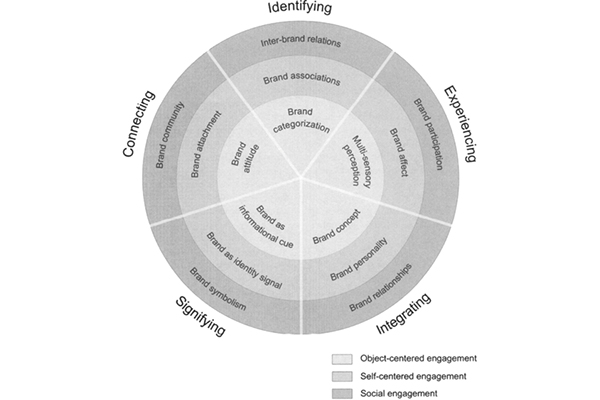
    Bernd Schmitt of Columbia Business School posited a model delineating a brand into fifteen dimensions.

    Figure 1: Consumer Psychology Model of Brands

    For a brand to succeed in India and establish itself globally, it must build on all 15 dimensions of its markets.

    However, one dimension is critical for a brand to become global.

    It is ‘Brand symbolism’ under the ‘Signifying’ triad.

    Schmitt writes, “Brands must be used to signify not only individual selves; they may also represent a group, a society, or a culture. As cultural symbols, they can stand for nations (McDonald’s), generations (the Gap), and cultural values (Marlboro, Harley-Davidson). As exemplary symbols worthy of admiration and respect, they can assume the role of cultural icons and assume mythic qualities.”

    In writing about Brand Symbolism, Schmitt refers to D.B. Holt’s 2004 book, “How brands become icons: The principles of cultural branding”.

    In his book, Holt explains how brands become icons by creating “identity myths” that connect with culture and help people make sense of their lives. He argues that iconic brands cannot be built using conventional branding strategies focusing on benefits, brand personalities, and emotional relationships.

    Iconic brands do not target specific consumer segments or psychographic types. They do not mimic pop culture but instead lead it. They speak with a rebel’s voice. They don’t try to mirror their customer’s thoughts and emotions. They speak into a cultural conversation in a relevant way and take on meaning beyond their categories.

    The global brands of the US, Germany, Japan, and Korea became global icons because they took a slice of their country’s cultural identity and gave it global resonance.

    Indian brands that aspire to global success must do the same. They must capture India’s soul and make it relevant to people’s lives worldwide.

    India has done it before with Yoga. Yoga is an iconic practice across the world that captures Indian asceticism and gives it relevance to the day-to-day lives of people.

    I have worked, in their foundational years, on two Indian brands that have lately begun to enter global markets – Amul and Tanishq.

    Both brands have the DNA to become global successes.

    Amul, a food brand focused on dairy products, can build on the Indian cultural concept of Satvik. Satvik is a powerful cultural concept that elevates dispassion and purity as the keystones to blissful happiness. This will find global resonance in the world looking to embrace “less is more” to combat environmental degradation and an epidemic of greed. Specifically in the area of food, there is growing disgust with cruelty to livestock to overstuffed, overdosed, and over-mechanised meat farms, leading to a counter-culture movement towards vegetarianism.

    Tanishq, as a jewelry brand, can build itself on the Indian cultural concept of ‘Shringar’. Shringar is one of the Navarasa – nine emotions, moods, or feelings that govern life. Shringara, in Sanskrit, means love, romance, decoration, beauty, attractiveness, and an aesthetic sense. Shringar can give rise to all kinds of love, be it romantic love, love between siblings, parental love, holy love, or even love towards a pet.

    Tanishq can build itself as the Shringar that creates, and nurtures love in an increasingly stressed and alienated world.

    I know that both brands–Amul and Tanishq–are currently in a conventional brand-building stage, focused on the 14 other dimensions of the Schmitt model. However, it might be helpful for them to chart their course to becoming global icons starting today. In that journey, they must identify a cultural strand that underlines their Indian identity while resonating with universal concerns and values.

    Other categories offer India the opportunity to build brands with the potential to become global icons. I’m fortunate to be working with one such brand. It operates in the fabric space–a natural fabric unique to India and resonant with the very Indian value of non-violence–Ahimsa–while being equally strong on Shringar. Someday, over the next few years, I hope to share the global success story with this very Indian brand.

  • Journalism of Courage??!!

    Journalism of Courage??!!

    Ranjona BanerjiThis June, the International Women’s Media Foundation awarded Palestinian journalist Maha Hussaini with their Journalism of Courage award for her coverage of Israel’s war on Gaza.


    This week, the IWMF withdrew that award for comments made by Hussaini in the past. The IWMF’s position is that it is opposed to intolerance and it cannot compromise on that.


    Hussaini writes in the Middle East Eye about being subjected to smear campaigns after the award, from Israeli sources, demanding that the award be withdrawn. She makes the important point that the IWMF has not mentioned what these objectionable comments are.


    What is courage in journalism if it is not protesting against the intolerable?

    Writes Hussaini: “During this period (since October 7, 2023), I was forcibly displaced three times, moving from one shelter to another. My home was bombed, and I endured months of starvation, blackouts and ongoing bombardment. At times, I had to resort to using a pen and paper to send my reports via text messages after Israel cut fuel and electricity supplies and bombed the infrastructure of Gaza’s main telecommunications companies.”

    https://www.middleeasteye.net/opinion/palestinian-journalist-gaza-take-away-award-will-not-take-away-my-voice?utm_source=twitter&utm_medium=social&utm_campaign=Social_Traffic&utm_content=ap_wlfqanvigg


    What we have seen consistently since Israel’s bombardments on Palestinians, first in Gaza and now elsewhere began, after the Hamas attack on October 7, 2023, is the failure of journalism. Especially western journalism. Thousands of Palestinian civilians have been killed, women and children in large proportions, medical staff and UN workers have been killed. Hospitals and universities have been targeted and destroyed. And now suddenly we have found that the release of numbers has dried up. Now we do not know how many people are being killed every day by Israeli forces.


    In such circumstances, what is “journalism of courage”? Is it standing on a rooftop from a distance asking an Israeli politician to identify missiles raining down on another country? Or is it being on the ground, in the midst of battle fire, reporting on events as they happen?


    https://www.middleeasteye.net/news/israel-gaza-war-education-students-fight-keep-learning


    https://www.middleeasteye.net/news/israel-gaza-war-famine-mothers-struggle-feed-babies-starvation-returns


    It is not a sufficient excuse for media organisations – where I include media houses and associations – to hide behind the curtain of funding and the threat of withdrawal of funding for their actions. Yes, money is important, but if we are going to give in to rich people pulling the strings then we might as well give up now and stop pretending that our work has any meaning.


    Why didn’t the IWMF do due diligence on Hussaini before giving her this award, if her crimes were so terrible? That the IWMF cannot even be clear about Hussaini’s transgressions, gives credence to the allegation that the award was taken back because of Israeli pressure. It is difficult for anyone to take their excuse seriously. Every murderer after all is entitled to a defence in a just world, where organisations claim to have core “principles”.


    **


    Meanwhile in India, the Modi-led BJP government demonstrated its intolerance of foreign journalists once again. Sebastien Farcis of Radio France found his work permit had been cancelled on March 17 and he was forced to leave India on June 17. Farcis had lived in India since 2011, is married to an Indian and has OCI status.


    https://www.livemint.com/news/india/home-ministry-refuses-to-renew-visa-of-french-journalist-sebastien-farcis-says-uprooted-overnight-with-no-reason-11718870004826.html


    https://www.telegraphindia.com/india/french-radio-journalist-leaves-india-adds-to-exodus-of-foreign-correspondents/cid/2028481


    Although we are now in the regime of the BJP-led NDA government, and Farcis’s departure predates the new ascension to glory, the message to the media remains the same: criticise us and you will pay the price. Even if there appears to be marginally more courage from some journalists and newsrooms, the bulk of the media is still in worship mode. And possibly applauds this decision taken by their lord and master. No doubt his three set not very taxing yoga poses will get maximum coverage today. Because who cares for a few public examination scams, destruction of lives of thousands of students, train accident, fallen bridges and so on when you can stay blessed in permanent worship-asana?


    https://www.livemint.com/news/india/home-ministry-refuses-to-renew-visa-of-french-journalist-sebastien-farcis-says-uprooted-overnight-with-no-reason-11718870004826.html


    Ranjona Banerji is a senior journalist and commentator. She writes on MxMIndia on Tuesdays and Fridays. Her views here are personal.

  • Why are we building products and not brands?

    Why are we building products and not brands?

    With apologies to none at all


    Vikas MehtaA very interesting article popped into my inbox this morning. It spoke about the role of product managers in consumer-facing tech companies. The article was triggered because Zomato had placed a live order count which a consumer can see after s/he places an order. You can see it here.

    It seems that the feature was dissed on social media, mostly by the Product Manager types. Most were questioning the use of this feature. Did it help the consumer? How does it add value? Why is Zomato wasting time on features which do not help the user? You get the drift.

    The author of the piece moaned the fact that product managers are becoming too bureaucratic. Everything that is build into a product today, has to be justified with metrics or some quantitative outcome. Everything has to be about productivity and efficiency. Unlike, say, Google which in the 2000s encouraged its employees to spend 20% of their time working on things, besides their projects which may benefit Google. Or the Google Doodles which are an intrinsic feature of the brand today.

    The author said that product managers forget that some things can be done for fun. Or to give the product a cool quotient. That’s what the Zomato live order count was doing.

    Fun? Cool? Let the consumer have an emotional connect?

    Sounds familiar?

    I may be a bit old-fashioned but isn’t that what a brand does regularly.

    The problem is that new age products are just products. Not brands.

    That’s why they are being run by product managers. Not brand managers.

    That’s why the obsession with product feature which creates a better value for the product. Never mind if it will be copied soon.

    You don’t believe me.

    Ok, then. Here is a small test.

    You prefer Ola or Uber?

    Do you use only Zomato or Swiggy too.

    Can you actually differentiate between Blinkit and Zepto?

    I bet you use all these products that I mentioned above.

    You have all these apps installed on your phones.

    And you use all depending upon an offer or a cheaper option or just because someone gives you a better loyalty programme.

    And I am not even getting into Vivo or Oppo!!!

    So, the question is why are we building better products and not great brands?

    Why are the new age products not building brands?

    The easy answer is that the obsession with data and quantitative metrics, while being a welcome change from the days when marketers would struggle to gauge the efficacy of an advertising campaign due to lack of data, has made us jump to the other end of the spectrum. If anything cannot be explained by data then it’s of no use.

    A product differentiates with its features. All the new age products and the products which have thrived due to the proliferation of data focus on this aspect.

    But a brand differentiates in many other ways. It could differentiate with its pricing or distribution strategy. Air Deccan or Indigo and sachets do it well.

    It could differentiate with its advertising and emotional appeal. Remember Amazon with Aur Dikhao campaign or Flipkart with kids acting as adults? Remember the Vodafone Zoozoo campaigns? Or Abhishek Bachchan with what an idea sirjee for Idea.

    Or brand can differentiate with its service. In appliances, Philips has done an amazing job by harnessing local electricians to start service centres available in every nook and corner of the country.

    And brands also differentiate on the basis of their personality. Coke is fun but more in a family way. It’s a bit more mature. A bit more real. Pepsi on the other hand is fun which is rebel. Fun which appeals to the non-conformist. Fun which is flamboyant and maybe even in your face.

    That’s why the shift happened from product management to brand management. That’s why a Hindustan Unilever could have more than four brands of soaps. three brands of detergents, four brands of tea, three brands of skin care……… The difference was what each brand stood for and whom it targeted. And that helped HUL gain leadership in each of the product categories.

    By having brand managers and not product managers.

    These brand managers would build differentiating brands.

    But the new age products, and I cannot bring myself to calling them a brand, are too focused on building better products.

    Let me tell you for brand managers also the big challenge was to innovate their product regularly. In categories like soaps and detergents. And they would.  But because they would focus on brand and not just a product, they would look beyond the packaging, or the fragrance or an enticing offer. Sometimes it would be just memorable advertising.

    Fun anyone? Cool anyone?

    Or sometimes it would be combination of packaging and pricing.

    Godrej No1 launched Buy-3-Get-1 free, not as a promotion but as the only option available. It was a win-win for everyone. The retailer would gladly tear the combined pack and give individual soaps to consumer. Remember, he had one soap free so on that he would get full MRP as his margin. Or he could sell the one piece below MRP. So, even the consumer was happy.

    Brand building is also strategic. Jio launched not with the conventional pricing strategy of talk time plus sms plus some data but with data-led pricing. Calls and smses were free. The strategic thinking was that data was the real deal, not talk time. So, the whole product was built around data. And the product was turned into a brand with data lead pricing. And with the brand being free for first nine months, data users were happy to buy a new sim. The total nine-month free offer coupled with the earlier cheap plans created a perception that as a brand, Jio was cheaper. Today, when Jio is not really the cheapest, the brand perception of being inexpensive persists. And sponsoring IPL year after year helped gain massive exposure

    Phew! See the well-thought-out strategy that covered almost all aspects of marketing.

    To me, building products and not brands is also the sign of times.

    Brands take a longer time to build. Products can come and go. Already Zomato is saying that its revenues from Blinkit will overtake Zomato this year. So, why build a brand when new products can be arrived at. Why worry about brand extensions or line extensions when one can just name a new product and call it a brand.

    Avoiding brand building is being lazy. Quick results. Not necessarily in terms of profits. But in terms of valuations, Gross Merchandising Value or even IPOs. Targetting a focused customer is not the deal but targetting VCs is.

    So, will the new age products change?

    They better. Because the first new age product Google, built a brand and is still going strong. But Yahoo search and many such others built products which just disappeared.

    Will Zomato, Uber and Blinkit survive by the time your children grow up? That is the million-dollar question.

  • 11.8% growth to touch Rs 1.2tn in 2024: Magna forecast

    11.8% growth to touch Rs 1.2tn in 2024: Magna forecast

    The Indian advertising industry will grow from ₹1.1 trillion (US$13.1 billion) in 2023 to ₹1.2 trillion (US$14.6 billion) in 2024, 50% higher than pre-pandemic period, as per estimates released on Monday by Magn Global. However, print, radio and cinema are lagging 2019 levels. The advertising revenue is forecast to grow +11.8% in 2024 . It was +11.2% 2023..

    The digital media is poised for a +15.9% growth with share growing  from its current 47% to reach 50% of the total revenues by 2026. Social will overtake search to become the second-largest media after television. Traditional media is also experiencing growth year-over-year. Linear formats are likely to grow at +8.4% (8.7%, 2023) in 2024. Magna estimates +10% growth in 2025 and continue to grow at a CAGR of 10% to reach ₹1.7 trillion (US$21.1 billion) by 2028.

    Said Venkatesh S, SVP, Director – Intelligence Practice, Magna India: “The Indian advertising market is set to expand by 11.8% in 2024, reaching ₹1.2 trillion, driven by a robust 15.9% growth in digital media. Traditional media formats are also growing, enduring the relevance of Print, OOH and Radio in addition to Television. The government’s emphasis on digital public infrastructure is propelling digital ad spend to nearly half of total revenues by 2026. Our forecast highlights social media’s significant rise, overtaking search as the second largest media format after television.”

    Here is the rest of the information as received from Magna Global:


    Growth in India is projected to remain strong at 6.8 percent in 2024 and 6.5 percent in 2025, with the robustness reflecting, continuing strength in domestic demand and a rising working-age population according to IMF. With the per capita income increasing multifold, consumer spending outlook remains positive. India has been evolving as one of the world’s most dynamic consumption environments and is expected to maintain steady economic growth. The fastest growing economy is projected to surpass China’s growth rate by over 2% points. India, by 2028 is expected to become the 3rd largest economy leaving behind Germany and Japan.

    Inflation is projected to decline from +5.4% in 2023 to +4.2% in 2024 and long-term inflation estimates remaining anchored, monetary policy stance of central bank is expected to support growth.


    In 2024, total advertising revenue from ₹1.1 Trillion (US$13.1 billion) will touch ₹1.2 Trillion (US$14.6 billion). Digital formats or new media contribute over 60% to the incremental revenue. Digital is estimated to grow +15.9% and linear growth will be at +8.4%. In a normal year, H1 contribution is generally less than H2, however general elections scheduled from March to May followed by ICC T20 Cricket World Cup in June-July will boost H1 growth (+11.8%) equal to second half of the year (+11.9%). Both general elections and live sports will lead to a significant growth in adex across both Digital and Linear media.


    In 2023, listed companies’ average income and profits have grown in double digits. This is encouraging as private investment in capacity building and marketing activities will increase. Auto sector demonstrated significant growth across all segments in 2023, this is expected to boost marketing and advertising budgets in 2024. CPG continues to rise as more people start to move up the economic ladder and the benefits of economic progress become accessible to the public. The urban segment is the largest contributor, however, in the last few years, the growth has come at a faster pace in rural India. With normal monsoons expected, rural demand will pick up and this bodes well for the sector. Retail sector is experiencing exponential growth across pop strata. Sizeable middle class, changing demographic profile, increasing disposable income, and urbanization are some of the factors driving organized retail. E-commerce has transformed the way business is done and has enabled newer segments like D2C. Rapid expansion into Tier-2 and Tier-3 cities will aide sectoral growth.


    CPG, Auto, Retail, Government & Political advertising, and Finance are expected to be the most dominant sectors contributing to India’s adex growth in 2024, followed by Pharma, Education, Real Estate, Media & Entertainment and Building Materials making up the top ten sectors.


    Consumption trends continue to favour digital media. The liberal and reformist policies of the Government have been instrumental in developing digital public goods. All digital formats are growing at a healthy pace specifically social, video & audio streaming and online gaming. With the democratisation of content consumption, Ad-supported video on demand platforms have transformed viewership by providing easy and affordable access to live sporting events. As of 2023, wireless base stood at 1.15 billion subscribers and 95% of the data consumed have come from 4G connections. Rise in mobile penetration and decline in data costs is expected to add to the internet base. In 2024, digital ad spends will grow +15.9% to top ₹580 billion (US$6.9 billion). Social & Search with 34% and 33% shares drive the digital pie followed by Display & Video at 19% and 14%. In terms of growth, Social (+21.9%) and Video (+19.1%) are the fastest growing formats.


    Television reaches 778 million viewers (759 million 2022) and overall time spent has increased to 230 mins (218 mins 2022). Close to a third of homes do not have television and linear TV has potential to grow. Probable launch of Direct-to-mobile will increase the reach of Television, trials for this home-grown technology would soon be planned across cities. Overall Television ad revenues in 2024 will grow +8.7% to reach an estimated ₹393 billion (US$4.7 billion). Elections will drive advertising growth for TV, specifically for news and T20 World Cup will further boost revenues.


    Print media has reinforced itself as the most trustworthy source of information. The circulation in 2022-23 has gone from 391mn to 402mn copies and the largest local media is still relevant providing the geographical spread and audience size. Advertisers’ belief in this consumption story led to a handsome growth of +7.0% last year. In 2024, ad sales revenue will grow +6.1% to ₹188 billion (US$2.2 billion) but it is still 11% below pre-covid levels. Digital print revenue is estimated to be ₹13 billion (US$159 million). Drop in social media referral traffic as Meta dissociated itself with news is hurting publishers. Print advertising growth will come on the back of national elections and local elections in 8 states.


    Radio is still ailing from the slowdown caused during covid, recovering only 86% of the 2019 levels. While there is enormous increase in volumes, ad rates have remained soft. The long-standing challenge of audience measurement capabilities is hurting the medium. Increase in Government ad rates will help growth considering this is an election year. Government recommendations on News broadcast, reduction in license fee and mandatory FM tuner on mobiles will bring windfall to the industry. The revenue for 2024 is estimated to be ₹19 billion (US$231 million) reflecting a growth of +9.0% over previous year.


    OOH media is on a growth trajectory and is expected to cross 2019 levels this year. All 3 forms, Traditional, transit and DOOH is showing incremental revenues. Government push on infrastructure and urbanization will boost OOH inventory especially premium formats. In 2024 OOH revenue will increase +16% to reach ₹34 billion (US$402 million). DOOH share to total OOH is at 6%, growing at a CAGR of +33%, by 2028 share of DOOH will touch 11%. Roadstar, a unified audience measurement tool for the OOH industry developed by the national body for Outdoor Media, is likely to see light, this should help demonstrate effectiveness of the medium and facilitating growth. In-cinema advertising was the biggest casualty of covid which has recovered to the extent of 72%. Successive come back from all languages with box office hits in 2023 and good inflow of content in 2024 will drive both demand from advertisers as well as surge in audience foot falls. In 2024, the growth is estimated to be +19% to reach ₹8 billion (US$95 million).


    Added Hema Malik, Chief Investment Officer, IPG Mediabrands India: “India’s advertising industry is gearing up for an impressive 2024, with significant growth driven by pivotal events like the general elections and ICC T20 World Cup. We expect substantial ad spend increases across sectors such as auto, retail, and CPG. The anticipated 11.8% growth in ad revenues highlights the market’s resilience and potential. With rural demand expected to rise due to favorable monsoons and digital ad spend projected to reach ₹580 billion, the convergence of traditional and digital media presents unique opportunities for advertisers.”

  • ‘Kill your Darlings’ to find time and energy in life

    ‘Kill your Darlings’ to find time and energy in life

    Sanjeev Kotnala‘Kill Your Darlings’ is not a new Idea. I, too, have referred to it in some way in my book – ‘25 Rules of Life- I wish I had known earlier. However, reading it on #Firstprinciple by The Ken worked wonders for me. It pushed me to take a snappy audit of my work. Re-check the listless old projects that I kept on working on. Things I have become emotionally attached to. Ones which are more of a comfort zone for me. Projects that eat into my time, which I could have definitely used more productively.  I had not been able to amputate from my life emotionally. Though I have prescribed it, I have found it most challenging to execute and follow.

    Here, I reiterate it as one of the most important things to do. And it is not just about entrepreneurship; it is about life, balance, passion and direction.

    1. Knowing what not to do is as important as knowing what to do.
    2. Every time you decide to “not do” something, you free up energy to do something.

    ‘Killing the First Principles podcast wasn’t an easy decision for me’. With these words, Rohin Dharmakumar, The Ken’s co-founder, informed his passionate readers that he dares to walk the talk. He is discontinuing the two-year-old newsletter – the ‘First Principle’, which has covered 41 CEOs and their thinking.

    I selfishly wish he continued it for the benefit of readers like me. But I know no amount of audience pressure would make ‘The Ken’ rethink its decision. I also know whatever they add, replace, or create will be based on deep understanding and focus. Maybe it will help them recheck their thinking and success mantras.

    I have often been given this advice to ‘Kill my Darlings’ in different formats. Unfortunately, I have not been strong and have followed it in spurts. I plan to do it again and believe one must do it many times a year. It is like Diwali cleaning the house. It is liberating. It releases time and makes the energy available to be put into other more efficient and productive work.

    ‘Kill Your Darlings’ –  kill projects and products that are not going anywhere and focus efforts on the most important bits of the business and life. Be willing to emotionally amputate yourself from these unnecessary time and energy eaters- which have outlived their lives. Be ‘Positively Selfish’- because you are your biggest asset and because you are only responsible for yourself.  And it is important to say- that when you do- you will realise you can do the rest of the things better- because- If you can’t do big things better, then at least do the small things the best. I thought it was worth framing and keeping it in front as a reminder.

    Here is another gem from the newsletter. And I have practised this almost every day to great success. It is called subtraction, meaning that if I am taking anything new on my platter, I must decide what I am willing to drop from the things I am doing. Because remember the total energy and time available to you is finite. So, go ahead and look at your set of projects dispassionately and Kill the Darlings. There is another concept about ‘Helping the Jobs commit suicide’ but that I leave for some other day.

    Now, yes, the ‘First Principle’ newsletter and podcast are no longer alive at The Ken, but it is one place where my subscription has given me a lot more thoughts, insights and learning than what I have paid. So think again- and if you want- check out or subscribe to The Ken.

  • Journalism’s trust problem is about money, not politics

    Journalism’s trust problem is about money, not politics

    Caption: Photo: Roger H Goun on Flickr | Creative Commons Licence

    By Jacob L Nelson

    Journalism faces a credibility crisis. Only 32% of Americans report having “a great deal” or “fair amount” of trust in news reporting – a historical low.Journalists generally assume that their lack of credibility is a result of what people believe to be reporters’ and editors’ political bias. So they believe the key to improving public trust is to banish any traces of political bias from their reporting.That explains why newsroom leaders routinely advocate for maintaining “objectivity” as a journalistic value and admonish journalists for sharing their own opinions on social media.The underlying assumption is straightforward: News organizations are struggling to maintain public trust because journalists keep giving people reasons to distrust the people who bring them the news. Newsroom managers appear to believe that if the public perceives their journalists as politically neutral, objectively minded reporters, they will be more likely to trust – and perhaps even pay for – the journalism they produce.Yet, a study I recently published with journalism scholars Seth Lewis and Brent Cowley in Journalism, a scholarly publication, suggests this path of distrust stems from an entirely different problem.Drawing on 34 Zoom-based interviews with adults representing a cross-section of age, political leaning, socioeconomic status and gender, we found that people’s distrust of journalism does not stem from fears of ideological brainwashing. Instead, it stems from assumptions that the news industry as a whole values profits above truth or public service.The Americans we interviewed believe that news organizations report the news inaccurately not because they want to persuade their audiences to support specific political ideologies, candidates or causes, but rather because they simply want to generate larger audiences — and therefore larger profits.


    Commercial interests undermine trust

    The business of journalism depends primarily on audience attention. News organizations make money from this attention indirectly, by profiting off the advertisements – historically print and broadcast, now increasingly digital – that accompany news stories. They also monetize this attention directly, by charging audiences for subscriptions to their offerings.Many news organizations pursue revenue models that combine both of these approaches, despite serious concerns about the likelihood of either leading to financial stability.Although news organizations depend on revenue to survive, journalism as a profession has long maintained a “firewall” between its editorial decisions and business interests. One of journalism’s long-standing values is that journalists should cover whatever they want without worrying about the financial implications for their news organization. NPR’s Ethics Handbook, for example, states that “the purpose of our firewall is to hold in check the influence our funders have over our journalism.”What does this look like in practice? It means that journalists at the Washington Post should, according to these principles, feel encouraged to pursue investigative reporting into Amazon despite the fact that the newspaper is owned by Amazon founder and executive chairman Jeff Bezos.While the effectiveness of this firewall in the real world is far from assured, its existence as a principle within the profession suggests that many working journalists pride themselves on following the story wherever it leads, regardless of its financial ramifications for their organization.Yet despite the importance of this principle to journalists, the people we interviewed seemed unaware of its importance – indeed, its very existence.


    Bias toward profits

    The people we spoke with tended to assume that news organizations made money primarily through advertising instead of also from subscribers. That led many to believe that news organizations are pressured to pursue large audiences so that they can generate more advertising revenue.Consequently, many of the people interviewed described journalists as being enlisted in an ongoing, never-ending struggle to capture public attention in an incredibly crowded media environment.“If you don’t get a certain number of views, you’re not making enough money,” said one of our interviewees, “and then that doesn’t end well for the company.”People we spoke with tended to agree that journalism is biased, and assumed that such bias exists for profit-oriented rather than strictly ideologically oriented reasons. Some see a convergence in these reasons.“[Journalists] get money from various support groups that want to see a particular agenda pushed, like George Soros,” said another interviewee. “It’s profits over journalism and over truth.”Others we spoke with understood that some news organizations depend primarily on their audiences for financial support in the form of subscriptions, donations or memberships. Although these interviewees saw news organizations’ means of generating revenue differently from those who assumed that the money mostly came from advertising, they still described deep distrust toward the news that stemmed from concerns about the news industry’s commercial interests.“That’s how they make money,” one person said about subscriptions. “They want to entice you with a different version of the news that is not, I personally believe, overall going to be accurate. They get you to pay for that and – poof – you’re a sucker.”


    Misplaced concern about bias

    In light of these findings, it appears that journalists’ concerns that they must defend themselves against accusations of ideological bias might be misplaced.Many news organizations have pursued efforts at transparency as an overarching approach to earning public trust, with the implicit goal being to demonstrate that they are doing their work with integrity and free from any ideological bias.Since 2020, for example, The New York Times has maintained a “Behind the Journalism” page that describes how the newspaper’s reporters and editors approach everything, from when they use anonymous sources to how they confirm breaking crime news and how they are covering the Israel-Hamas War. The Washington Post similarly began maintaining a “Behind the Story” page in 2022.Yet these displays do not address the chief cause for concern among the people we interviewed: the influence of profit-chasing on journalistic work.

    Instead of worrying quite so much about perceptions of journalists’ political biases, it might be more beneficial for newsroom managers to shift their energies to pushing back against perceptions of economic bias.Perhaps a more effective demonstration of transparency would focus less on how journalists do their jobs and more on how news organizations’ financial concerns are kept separate from evaluations of journalists’ work.

    Cable news as a stand-in

    The people we interviewed also often appeared to conflate television news with other forms of news production, such as print, digital and radio. And there is ample evidence that television news managers do indeed appear to privilege profits over journalistic integrity.“It may not be good for America, but it’s damn good for CBS,” said CBS chairman Leslie Moonves of the massive coverage of then-presidential candidate Donald Trump in 2016. “The money’s rolling in.”With that in mind, perhaps discussions about improving trust in journalism could begin by acknowledging the extent to which the public’s skepticism toward the media is well-founded – or, at the very least, by more explicitly distinguishing between different kinds of news production.In short, people are skeptical of the news and distrustful of journalists, not because they think journalists want to brainwash them into voting certain ways, but because they think journalists want to make money off their attention above all else.For journalists to seriously address the root causes of the public’s distrust in their work, they will need to acknowledge the economic nature of that distrust and reckon with their role in its perpetuation.The Conversation

    Jacob L. Nelson is Associate Professor of Communication, University of Utah. This article is republished from The Conversation under a Creative Commons license. Read the original article.

  • Crumbling of the Bollywood star system is imminent

    Crumbling of the Bollywood star system is imminent

    Shailesh KapoorOver the last year or two, there has been escalating media coverage how remunerations demanded by Bollywood stars are making Hindi film-making an increasingly-difficult business. The top rung of stars, such as the three Khans, have either turned producers, or forgone their fee against what’s called a ‘backend’ deal (typically referring to a distribution or licensing deal), the next line continues to operate on fixed fee structures, where the numbers increased significantly since before the pandemic. There’s also a lot of conversation about star entourages, and how ridiculous their costs are.

    Now all this would just be gossip, if the stars could justify these fees through their box-office performance. But that’s not happening at all. The biggest ‘Hindi’ language film of the first six months of 2024 is likely to be the dubbed Hindi version of Kalki 2898 AD, which released yesterday. A non-starcast, concept-led film Munjya is set to cross the Rs 100 cr mark, even as star-led titles made at much higher budgets, such as Bade Miyan Chote Miyan, Maidaan, and Chandu Champion, have fallen well short.

    For a year or two after the pandemic, streaming platforms were in a mad rush to acquire theatrical films. Since these deals happened before the theatrical release, the star power came into the picture. With time, and facing their own share of challenges related to stagnant subscriber growth and profitability, streamers have become conscious, and are often insisting on deal structures that have box office linkages.The message is clear: If the star cannot pull an audience in the theatres, he (or she) is not ‘saleable’ on OTT either.

    Movie channels in linear television have been on the decline anyway in the post-NTO world. Licence fees for satellite rights is no longer a prominent item on the P&L of most films. The reliance on theatrical (box-office) revenues is only going to go up in the coming year or two. And all evidence suggests that stars cannot pull in the audience anymore on their own strength, and need the story or the concept to work for the film to stand any chance on the theatrical front.

    It is hard to imagine how any of this is sustainable. Hindi film producers cannot even make films that go direct to OTT anymore. There is no demand for such films, either from the streamer or the audience side. There is only one way out: Stars must understand that the audiences and the marketplace has evolved, and bite into the humble pie that a pay cut can be. They can also be a lot more prudent in their film selection, aligning it with evolving audience tastes and expectations in a digital-first, post-pandemic era.

    Whether that will happen is anyone’s guess.

  • Momentum Shifts & Miracles

    Momentum Shifts & Miracles

    Sanjeev KotnalaOn June 30, 2024, much before sunrise, the whole nation was sleepless and celebrating the famous Houdini act of the Indian cricket team. The wait was finally over. A few of the articles covering the event rightly said, India snatched victory from the jaws of defeat or snatched the T20 World Cup from the hands of South Africa. The South African team did nothing wrong, but they still ended up strengthening the choker branding.

    The nation of armchair commentators and experts, with the right of ardent, passionate fans in the country where the game is a religion, was up for debate in person and on social media. In a relay of comments, they took what was served to them by the experts on TV and ran with it with their versions. Each tried to outdo the other in understanding the game’s intricacies.

    So was the fight between turning points and tipping points among the armchair experts. The T20 World Cup Final in Barbados was a great example of the unpredictable nature of Cricket and sports in general.

    A turning point in cricket is the dramatic moment when the match’s momentum shifts decisively from one team to another. Yesterday, there were many such moments in the seesaw battle. The absolute gem of the catch by Surya Kumar Yadav—SKY is the limit on the boundary; the 22 runs over of Axar Patel, the change of gear by Kohli, and the Bumrah 18th over are all examples of it. These are easily identifiable moments, providing clear markers in the match’s narrative.

    On the other hand, a tipping point is more nuanced and subtle. It is the cumulative effect of numerous small events that collectively build up to a decisive shift in the game’s outcome. Unlike a turning point’s sudden and noticeable impact, the tipping point results from sustained pressure, consistent performance, or a series of minor mistakes by the opposing team. The slow and steady build-up of these small factors eventually leads to a significant change, tipping the game’s balance in favour of one team.

    Now, both the tipping and the turning points result from players’ belief that everything is possible until the last moment. It is not just a motivational slogan. A fundamental mindset that fuels resilience, creativity, and relentless effort. This unwavering self-belief is crucial, especially in high-pressure situations with high stakes and uncertain outcomes.

    However, if the same belief shows signs of weakness and doubts creep into the team’s collective psyche, they could choke.

    Self-belief among individual players plays a crucial role in these high-stakes moments. For a batter facing a daunting target, believing in their ability to chase it down can transform their approach, allowing them to take calculated risks and innovate in their shot selection. Kohli, Karlsen and Axar Patel showed it. Similarly, a bowler who believes in their skill can maintain focus and precision under pressure, delivering match-winning performances even in the most challenging circumstances- well, Hardik and Bumrah showed what is possible.

    Cricket history is replete with instances where teams have snatched victory from the jaws of defeat, demonstrating that a match is never truly over until the last ball is bowled. The T20 Final on June 29, 2024 was another example of these uncertainties.

    Having celebrated the individual brilliance, we refocus on the fact that cricket is inherently a team sport, and collective performance is equally important. A team of champions need not make a Champion team.

    While individual brilliance can turn games around, the combined effort of the entire team determines the outcome. Effective communication, strategic planning, and mutual trust among team members are essential to a successful collective performance.

    Each player must understand their role and contribute to the team’s objectives, whether building a solid partnership in batting, maintaining high fielding standards, or executing bowling plans meticulously.

    Cricket’s unique charm combines individual heroics and collective synergy. The glorious uncertainties on the field, with everything possible until the last moment, make cricket so thrilling and unpredictable.

    This belief fuels remarkable comebacks, stunning upsets, and the sport’s enduring appeal to fans and players alike. But hell, I would any day take a straightforward, solid win over these tense moments—however, I must admit there is more fun in a win like the T20 World Cup 2024.

  • Brrrrrrr! The news media is shivering!!!

    Brrrrrrr! The news media is shivering!!!

    Ranjona BanerjiIn Monday, as Leader of the Opposition, the first in a long while, Rahul Gandhi gave a speech which had the Lok Sabha laughing with him and the treasury benches squirming, with the BJP all riled up.


    The speech got enormous traction on social media all day, it has got 5 lakh views on Gandhi’s Youtube channel.


    Narendra Modi has not uploaded his Lok Sabha pronouncements to his Youtube channel. One short clip of Modi talking about former vice-president and fellow BJP member Venkaiah Naidu received 22000 views.


    How did our legacy media cover this speech? Often, as is the norm, headlines do not represent the bulk of the copy which follows. For instance, the Times of India headline reads: Lok Sabha sees rare PM Modi vs Rahul Gandhi faceoff. The copy however is mainly about Gandhi’s speech. Since the actual “face-off” was a bit of a damp squib.


    https://timesofindia.indiatimes.com/india/lok-sabha-sees-rare-pm-modi-vs-rahul-gandhi-faceoff/articleshow/111403045.cms


    This “report” from NDTV cleverly attempts to present happenings in Parliament from the BJP’s perspective, and further, is written to mislead the reader into thinking that the BJP and Modi had the upper hand. The reality of anyone who actually watched the proceedings was quite the opposite. Even TOI hints at that.


    https://www.ndtv.com/india-news/pm-narendra-modi-rahul-gandhi-lok-sabha-bjp-rss-not-entire-hindu-community-rahul-gandhi-vs-pm-in-lok-sabha-6008976


    The Hindustan Times also concentrated on the poor beleaguered BJP with this pathetic “point by point rebuttal”. I am unable to understand whether they actually believe their own drivel or were directed to write like this:


    https://www.hindustantimes.com/india-news/on-rahul-gandhis-hindus-agnipath-scheme-charges-bjps-point-by-point-rebuttal-101719878748437.html


    The fact that the BJP misrepresented Rahul Gandhi’s speech – especially his remark about Hindus – has not been covered, rather shamefully.


    Factcheckers have checked the misinformation in the BJP-led government’s “rebuttals” which makes the newspaper’s coverage even more embarrassing.


    The Hindu provides more comprehensive coverage of Gandhi’s speech and the BJP’s reactions:

    https://www.thehindu.com/news/national/you-are-not-hindus-rahul-gandhis-dig-at-bjp-draws-protests-in-lok-sabha/article68355018.ece


    India Today’s tawdry notion of being the “gold standard of journalism” apart, the following link is interesting because it gives the people of India an idea of how the BJP wants to limit how much the people of India are allowed to know. All the items “expunged” from Gandhi’s speech are important subjects for us to discuss. Whether India Today is aware of this or not, well. I’m not going there.


    https://www.indiatoday.in/india/story/rahul-gandhi-lok-sabha-speech-parts-expunged-from-parliamentary-records-2560992-2024-07-02?onetap=true


    A more complete report of Gandhi’s speech comes from the digital non-legacy media, obviously:


    https://thewire.in/politics/in-maiden-speech-as-lop-rahul-gandhi-tears-into-bjp-on-hate-politics-price-rise-and-neet


    What I have not been able to find is another newsworthy event which happened in Parliament yesterday: that Prime Minister Modi was reduced to being just one more MP, one more politician in a Constitutional post. Not a non-biological divine being – both Gandhi and A Raja referred to this – and not the Teacher of the World. This was perhaps more significant that Gandhi’s speech. And the squirming of the worms in the media is directly related to this downsizing.


    Mahua Moitra gave an extremely fiery no-holds-barred speech. Happily, the legacy media was happier with giving Moitra her due. Massive congratulations all around for such courage.


    https://www.telegraphindia.com/india/hear-me-dariye-mat-mahua-moitra-tells-pm-narendra-modi-in-lok-sabha/cid/2030875


    https://timesofindia.indiatimes.com/videos/international/tmc-mp-mahua-moitra-bashes-bjp-in-fiery-lok-sabha-speech-paid-heavy-price-for-watch/videoshow/111410814.cms


    Both Rahul Gandhi and Mahua Moitra emphasized the fact that they do not fear Modi and the BJP.


    Judging from this coverage though, the Indian media though is still shivering and snivelling in its collective shoes. Uriah Heep has nothing on them.


    Ranjona Banerji is a senior journalist and commentator. She writes on MxMIndia on Tuesdays and Fridays. Her views here are personal.

  • Dealing with Disbelief of Winning at Cannes

    Dealing with Disbelief of Winning at Cannes

    Sanjeev KotnalaWell, there comes a time in life when one is shaken to the core. This is the case of Naveen (name changed), who mostly appreciates the excellent work in the advertising industry and usually refrains from attacking or downgrading any work because he knows how much goes into producing the collective output. As an advertising marketing professional, he prides himself on his ability to judge campaigns and their reflection or alignment with the brand identity. However, without naming the campaign or the brand, he was shocked and shaken when a few campaigns he believed were lacking or were majorly misaligned with the brand’s perceived core values or the changing market dynamics won awards at the Cannes Lions. It has him questioning the judgment, the possible reasons the jury saw while making the decision, and the creative process.

    He has been honest. He is one of the numerous creative-client–agency personals who entered their work confident of a win.  Understandably, not making the shortlist gave him time to recover. Making the shortlist and not winning for another entry was painful but acceptable. Where it crossed the line was someone else (a known competitor in India) winning it. Yes, he celebrated with the other delegates from India. He drank the whole night, but the pain was immense. And that’s when dear Vermajee, my mentor and friend, a brand and marketing consultant, came out of semi-retirement to counsel him.

    The result of Vermajee’s surprisingly effective counselling helped Naveen. Here is what Naveen said and wanted to share with the other potential winners who did not make the cut.


    The Shock of Disbelief

    My initial reaction was naturally of sheer disbelief. How could a campaign so flawed be recognised as one of the best? How did the jury miss the clinks in the armour or the details that made the piece of brilliance a has been? Several factors compound this shock:

    Trust me, at such times, it is hard to reconcile to the jury’s apparent admiration and point of view when my evaluation finds the campaign’s creative execution, messaging, or strategy lacking. When I see that the campaign is clearly misaligned with the brand’s core values or identity. Did the jury miss this crucial aspect? Have I not moved with the industry? And if my expectations are unjustified? What was my campaign lacking?


    The Imperative of Self-Evaluation

    Beyond the initial stage of disbelief, the next stage forced me to introspect and critically evaluate my professional judgment.

    I mustered enough courage to reanalyse and see the winning campaigns from a different perspective. I’m trying to understand what I might have overlooked. Were there any innovative elements or insights that escaped my notice during the first interaction? What made it resonate with the judges? I then engaged with colleagues and industry peers to gather diverse perspectives. Their constructive criticism and different viewpoints illuminated aspects of the campaign that contributed to its success. And still, I could not negate the possibility of biases or preconceived notions that might have influenced the jury or my judgment. I look back to check and recheck if my personal preferences cloud my professional assessments. And the silly answer is, maybe.


    Questioning the Jury and self.

    Naturally, I was not going to escape this question: whether the jury was wrong or if my perspective was limited. Did they see something I missed? Is their collective wisdom superior to my assessment? These questions are tough but necessary for growth.


    Maintaining Self-Belief.

    On the other end, I am shaken, and it is essential for me to regroup to maintain self-belief, stay motivated and confident:

    So, I took the emotional insurance of strategic thinking and acknowledged the subjectivity inherent in creative output and engagement. What resonates with one person may not resonate with another, and hence, there is a wider jury panel that could be given the benefit of better wisdom against a verdict of sample size—1.

    The Cannes Lions jury, like every other respectable award, has diverse industry leaders who bring differing spectrums of perspectives and likes to the table.

    I reiterate, telling myself that embracing differing opinions does not negate my expertise. Instead, they enrich the creative landscape. Acknowledging and embracing a broad spectrum of perspectives enhances my creative approach and broadens my understanding of successful advertising. Such an inward-looking examination is a learning opportunity. It is an opportunity to reframe my own set of expectations. A window to channel my energies into developing innovative ideas and strategies that align with my client’s creative vision and professional standards.


    Net-net

    There is no need to repeat that staying resilient and open-minded is crucial in advertising. The disbelief explosion caused by the unexpected success of some campaigns should not deter me, but it should inspire a deeper commitment to excellence and continuous learning. Creativity is a journey, not a destination—so are awards and market results.

    The relentless pursuit of improvement and a willingness to see things from different angles will help drive my success. I celebrate the achievements of others, learn from them, and use those lessons to fuel my creative endeavour. After all, in the world of advertising, the ability to adapt and evolve is as crucial as the ability to create. Cannes 2025 will be a different ball game. Thanks for the long call over WhatsApp, and I tell you- Mere Number Aayega.

  • Can India be an MaI and AdI Powerhouse?

    Can India be an MaI and AdI Powerhouse?

    Ashoke AgarrwalThe world awaits the paradigm-shifting potential of Machine Intelligence (MI) and Advertising Intelligence (AI).

    MI and AI are foundational technologies like electricity that need to be deployed for specific purposes to generate economic and social value.

    The competition is fierce, with established corporations and countless start-ups worldwide vying for a piece of the MI and AI pie. With its unique strengths, India can make a significant mark in this arena.

    This column briefly explores India’s opportunity and potential to be a leader in applying MI and AI to marketing and advertising—a field I term as MaI and AdI.

    The first requirement for MaI and AdI is the accumulation of relevant data, including public-facing data like syndicated market, media, and consumer data compilations and research and, to the extent possible, private data on sales, consumer profiles, and research with brand owners from across the world.

    Developed on this data, MaI and AdI engines can offer a brand owner the following based on deep and evolving consumer insight:

    • Fine-tuned and dynamic marketing mix plans that maximize ROI
    • Messaging templates that turbo-charge the marketing mix
    • Product enhancement and development ideas

    Can India become a global leader in this game?

    Yes, if we move fast and move-wise.

    The first step would be to test and perfect new modes of collecting consumer data.

    The internet, the smartphone, MI, and AI promise a new age of syndicated consumer research. Currently, syndicated consumer research sits in silos. Sales numbers are compiled through retail audits. With retail worldwide increasingly dominated by e-commerce and big-box retail, retail audits largely fail as market share indicators simply because e-commerce and big-box retailers treat sales data as a valuable resource and loathe sharing it with third parties.

    Conventional media research needs to be improved. The increasingly dominant digital powerhouses like Alphabet and Meta think of audience data as the engine central to their business, and they have it at a level of granularity that no conventional research technique can match.

    As OTT platforms like Netflix and e-commerce giants like Amazon muscle into advertising, they will keep their audience data close and be equally impenetrable to conventional research.

    Media research focused on traditional mass media has a utility and funding problem. As a hangover from the halcyon days of advertising agencies when they fed at the 15% trough, brands wanted the agencies to fund media research and who, in turn, twisted the arms of media houses to share the costs. Audience research for traditional media thus came to be split into silos – press, TV and even radio, OOH and cinema – had research funded and controlled by narrowly focused bodies.

    As the percentage of marketing communication budgets allocated to traditional media continues to shrink brand, mass media owners and media agencies are finding it hard to continue funding research and the brand managers who are increasingly used to the clarity of performance marketing and pay-per-click contracts, wonder whether bland broad-brush data of who watched what is adds any edge to their marketing data.

    The third data dimension is brand lift. Marketing is going down the AIDA funnel – from awareness to consideration set to intention to purchase, with the final sale, satisfaction, brand loyalty and advocacy culminating in the process. Currently, very little syndicated consumer research is available in this area. The big brands invest in privately funded research to track this dimension, with others adopting a set-of-the-pants approach to this crucial aspect.

    The answer to the challenges above is developing a technology-led process in which the consumer is the direct and single source for all three data dimensions—brand lift, 360-degree media exposure, and purchase. The two critical issues to be resolved are compliance, incentives, and data privacy regulations. The answer lies in innovation in technology, including LLMs and contractual relationships. In the spirit of full disclosure, my partners and I are experimenting with one such system in collaboration with a UK-based company.

    A critical element differentiating successful brands is a nuanced understanding of what works and what does not in advertising and other marketing communication for a particular product category, geography and consumer segment. Ogilvy, in its heydays, used to generate multimedia Magic Lanterns for product categories of interest that laid out, with examples, the dos and donts when creating advertising for a particular category. These Magic Lanterns were assiduously produced by a cell of PhDs running factor analysis on advertising from across the world and some measure of the efficacy of each ad.

    The single source data envisaged above will produce multidimensional efficacy data for campaigns across categories, markets and segments. A state-of-the-art AdI engine could be developed that uses Deep Learning to pinpoint what works and what doesn’t.

    While MaI and AdI will be the first generation of AI in marketing, the third generation will likely result in AI avatars of brands.

    Parallelly as the Siris and the Alexas of the world will, over decades, morph into Concierge Intelligences (CI) that will become AI avatars of individuals. I have written about the idea of CIs in an earlier MxMIndia column. In the age of AI, marketing and marketing communication will evolve to primarily be an interaction between the AI avatars of brands and the AI avatars of consumers.

    In the near future, the single source would meld with the client’s private data, providing a never-before-used base for effective marketing planning.

    There is scope for more than one Indian player to make India the single-source powerhouse of the world for the following reasons:

    • India has the technology nous in the high quality, low-cost quadrant.
    • India is an evolved B2C and B2B market that can support the development of single-source-research-based MaI and AdI systems.

    Since the single-source system will be digital, India can market its fully developed MaI and AdI systems worldwide.

    Single-source data coupled with MaI and AdI are the future of marketing and advertising, and India, on its way to Viksit Bharat, can own it.