Category: Big Story

  • 48% of Online Shoppers are Women: IPG Mediahbrands-Google Study

    48% of Online Shoppers are Women: IPG Mediahbrands-Google Study

    IPG Mediabrands, in collaboration with Google, has presented a study titled ‘The Indian Online Shopper 3.0,  a study of consumer behaviour in the digital shopping landscape. This  report surveyed over 7,000 consumers across India, delving into 18 key categories to unveil crucial insights for understanding the evolving online shopping trends.


    Top 5 takeaways:

    The report equips businesses and marketers with invaluable knowledge about consumer behavior, enabling them to tailor strategies that resonate with the dynamic preferences and expectations of the Indian online shopper. Key takeaways include:

      • The Indian Online Shopper is open to hedonistic shopping; however, is still mostly conservative across categories.
      • Shopping missions (motivating factors) vary not only across categories, but also across shopper profiles.
      • 15 years after the advent of e-commerce, Indians still need handholding from online retail platforms.
      • Social commerce is not ready to be a sales channel. However, it’s becoming the most important point of discovery and influence.
      • Marketplace giants are bleeding users to category-specific marketplaces and D2C brand websites.


    Indian Online Shopper Profile:

    Dissecting the Indian online shopper profile, the report examines demographics, consumer classification, household income segmentation, and state-wise behavior analysis. Key findings include:

    • Online shoppers skew younger: 75% of shoppers are aged 18-44.
    • Shopping for household, not just self: Most are married (69%), living with children, and nearly half (49%) live with parents.
    • Significant portion are affluent: 62% of online shoppers have medium to high household income.
    • Concentration in select states: Five states account for over half of online shoppers: Maharashtra (16%), Delhi (12%), Karnataka (9%), West Bengal (9%), and Tamil Nadu (8%).


    Shopped Categories:

    Focusing on 18 categories, the report explores shopping missions, analyzes purchase frequency, and unveils the influences driving online shopping decisions. Key insights include:

    • Rise in emergency purchases: Quick commerce has accelerated purchases in categories like food, groceries, and baby products.
    • High dependence on recommendations & reviews: Shoppers seek expert opinions before buying expensive items like electronics and furniture.
    • Fashion and Beauty ecommerce on the rise: These categories show both impulse and routine buying behavior, driven by ease of online shopping.


    Shopping Sources:

    The study identifies pain points in online shopping, investigates reasons prompting consumers to switch platforms, and outlines the latest trends. Findings include:

    Resurgence of D2C marketplaces: As many brands want more control over the branded space and user shopping experience, D2C marketplaces are witnessing a comeback. Users like buying from D2C potentially due to the perceived quality and authenticity of buying straight from the source.

    Fashion and Beauty lead in social adoption: Influenced by popular trends, creators and celebrities, Fashion and Beauty are fastest growing categories when it comes to social commerce.


    Platform Features:

    Recommended products, live chat, and online catalogues are the most used platform features, with younger shoppers being more accustomed to using experiential, assistive features. Key takeaways include:

    • Shopping experience/assistance features are expected by users: 92% users claim to have used some type of platform feature when they shop online.
    • Product recommendations: Form a vital point of discovery and strong influence in the decision-making process, >2/3 shoppers claimed to switch brands due recommendations on the platform.
    • Loyalty programs: Monetary value and exclusivity are appreciated, but data privacy and low reward value are concerns.


    Influence Points:

    • Top influences: Brand websites, recommendations from friends/family, TV ads, social media, and marketplace reviews.
    • Emerging influences: Live streaming on online platforms, AI reviews, social commerce shops, tech-enabled services, and social curation platforms.


    Shopping Experience Pain Points:

    • Top issues: price (21%), shipping charges (20%), delivery time (20%), product returns (19%), and product availability (18%).


    Said Shashank Rathore, VP, E-Commerce, Interactive Avenues (the digital arm of IPG Mediabrands India): “The e-commerce industry in India is growing rapidly, poised to reach $300 billion by 2030. Quick commerce is now thriving, with over 50 million monthly active users. Amidst these changes, marketers face challenges in understanding audience behaviour across multiple shopping platforms. To simplify these complexities and provide valuable insights, we conducted a detailed study of over 7,000 online shoppers. Our report explores strategic consumer nuances, growth drivers, and online buying behaviour across key demographics, industry categories, and shopping platforms. I am confident that the Indian Online Shopper 3.0 will serve as a valuable resource for businesses and industry professionals navigating this dynamic market.”


  • Expand and celebrate the spirit of learning this Teacher’s Day

    Expand and celebrate the spirit of learning this Teacher’s Day

    Sanjeev KotnalaMost of us remember celebrating Teacher’s Day in honour of Dr Sarvepalli Radhakrishnan, a scholar, philosopher, and former President of India, at school on September 5. On this day, we express gratitude to schoolteachers and acknowledge their pivotal role in shaping young minds.

     

    The Perfect Bond

    The relationship between a teacher and a student is one of the most profound connections one can experience. It is built on trust, respect, and a shared journey of discovery. Good teachers do more than impart knowledge; they inspire, challenge, and nurture their students. They encourage curiosity, critical thinking, and a love for learning that lasts a lifetime. This bond is not just about academic success but also about personal growth, resilience, and the pursuit of wisdom. Teachers come in many different formats, with different attitudes and approaches to life and teaching.


    The Spirit of Learning

    However, learning is not restricted to the classroom, nor is teaching limited to those holding chalk. The spirit of Teacher’s Day should extend beyond the confines of classroom and school. It is a day to recognise and celebrate everyone who has helped us learn in a formal setting or through life. Like our parents, friends, colleagues and even strangers-  everyone can be a teacher in the classroom called life. These informal teachers play an essential role in personal development, often leaving a lasting impact that shapes character and decisions. By expanding the scope of Teacher’s Day to include all these influences, we acknowledge the diverse sources of knowledge that enrich our lives.


    Expanding the Teacher-Student Association

    Celebrate Teacher’s Day, and broaden your appreciation to include everyone who taught you anything, formally or informally. Recognise the value in every lesson learned and honour the unique bond between a teacher and student that transcends the traditional classroom. By doing so, we celebrate the act of teaching and the spirit of learning that connects us all.

    Here are some memorable advertisements celebrating and leveraging the Teacher-student bond. Pick the one that reflects your bond with the teacher and share it with them. Cadbury could have used the existing platform with a twist to help personalise these teacher dedication messages.


    PARLE G 

    When we succeed, it is not us but our teachers who are the happiest. That’s why they say, “Genius wahi jo auron ki khushi mein paaye apni khushi.


    RAYMOND – COMPLETE MAN- TEACHER. 

    This is one of the few teacher-student ads I remember clearly, and its sequel was equally touching. It shows a teacher at the wedding.


    BOURNVITA- LEARNING MORE IMPORTANT THAN MARKS.

    It is a very educative commercial that questions overreliance on exams as a barometer of learning.


    DS GROUP. Hame Kise ne Sikaya Tha.

    Typically, I would have avoided the DS group ad, but this one had a learning in it.


    TITAN: JOY OF GIFTING.
    Teachers can blame this ad for getting a watch as a farewell gift.


    VISA TEACHER.
    This completes the thought. As a child gives birth to a mother, a teacher is there whenever and wherever a student wants to learn. Teachers also learn from their students.


    Post Script

    I was surprised not to see (until now) a Teacher’s Day ad celebrating WhatsApp and Facebook- the largest educators of the Indian masses. I am equally surprised that the Teacher’s Day celebration is still confined to physical school. It has not moved to a virtual, hybrid setup or included AI as a teacher or maybe even as the biggest student today.

  • Why Clutter isn’t the Enemy against Advertising in IPL or Elections?

    Why Clutter isn’t the Enemy against Advertising in IPL or Elections?

    Aniruddh Naik
    Aniruddh Naik

    You usually do not go and tell the supply chain team which model they should use for forecasting. Or the CFO what type of accounting she or he should do.

    Or question a tech guy on why python and not, say, C++.

    Or a management consultant why this framework?

    Because intuitively we tend to take whatever they say as the truth, cast in stone.

    Cometh marketing meetings on brand and media, everybody including the one whose job is to only ship couriers in office seem to have a view.

    They tend to tell you what should happen in your ad, where you should play the ad and why you should use the giant-sized billboard on some highway because you pass through it daily.

    In my experience on promoting a commercial on IPL, the common question in the office is, “is it worth promoting in the IPL.”

    “There’s so much of clutter.”

    “Will people notice us?”

    And so on. Yet, when you go ahead and promote, the questions changes, “I saw the ad, but not sure if it will register.”

    Why? Because there’s clutter. And how much can we remember?

    This persists within the marketing and advertising teams as well.

    Many are non-believers in going for big-ticket items to promote your advertising. If it is a question of lack of funds, then fine. But if you can stretch the budget, then clutter SHOULD NOT be the reason to AVOID.


    Lack of Research Usage

    The whole point of my grouse was this- we do not use enough research in advertising and media from let us say psychologists or neuroscientists.

    Why? Because we tend to dismiss it as ‘subjective.’ FYI, when Bill Bernbach says it took a million years for man’s instincts to develop. It is fashionable to talk about the changing man, but we must be concerned with unchanging man.

    Let us explore that.


    The Traditional Advertising View

    That an ad must make the person take notice, command attention and then, land the message about the most brilliant features of your product.

    Assumption: Lack of attention = No Impact. So, the one who watches the ad, should be conscious.


    Does the human brain work like that?

    Yes. Only if you believe our brains, all the time, make conscious decisions.

    That is not true. Only 5-10% of decisions the brain makes are conscious. The rest without our conscious brains realising that.


    Come to IPL. Please.

    #1 Yes, a moment. Dr Robert Heath study and research says advertisement, unlike the popular opinion, is a LOW INVOLVEMENT PROCESSING.

    Watching an advertisement, with our attention elsewhere, can still lead to us absorbing the advertisement. So, an ad playing in the background can bypass our conscious mind and be sub-consciously taken inside without you knowing.

    How? By associations. A neuroscientist’s definition of branding would be something like advertisement is an exercise in designing associations.

    If you are a Coke–Happiness

    If you are a Nike–Athletic Motivation

    If you are Rebill–Thrill & Adventure


    #2 Research by Ipsos in the Brand Immortality Study assessed 97K subjects with 512 commercials from 47 companies, the results were interesting.

    7.3 % brand uplift in people who were attentive to ads.

    2.7% brand uplift in people who could only recall the ad when described.

    1.2% brand uplift who could not recall the ad.

    So even with low recall, there is a brand uplift of 1.2%.


    #3 What if people Skip or Fast Forward the ad?

    Research by Innerscope assessed people who watched the advertisement live, who fast forwarded and people who didn’t.

    Result? The fast-forwarded group recalled and recognized twice as many as the group who had not seen. Obvious, is not it. The point is despite fast-forwarding, they saw the ad.

    Why? Because our brain captures, connects and stores visual information in eighty milli-seconds!

    Showing the advertisement, even in a cluttered environment, can make your brand recognize (during the buying process or buying situation. You will end up feeling familiar).


    Finally, why does that happen?

    A famous experiment uncovered a phenomenon called Blindsight. A blind person with pupils unharmed was put in a room full of obstacles and asked to go to the other end of the room. He did so without touching the obstacles. And the experiment was repeated.

    When asked how, he said he had no idea. That is because the eyes picked up the stimuli and navigated without making his rational side of the brain recognise.

    These visual cues are linked to amygdala that processes fear and emotions. Now can you connect RedBull with thrill and adventure, Coke with happiness?

    The connection will happen even if we do not see the entire ad of Coke. Our brain subconsciously picks up a family sitting around, laughing faces, food on the table, and bottle of coke in hand. That is all.

    The onus is on us. How good can we associate the things that will make the brand quickly noticeable and store information in the brain?

    It is not the media clutter in IPL. It is how good are you at hacking the subconscious part of the brain!

  • Free over Pay: Reset Time for Streaming?

    Free over Pay: Reset Time for Streaming?

    Shailesh Kapoor2023 saw the release of 383 streaming originals in India, across languages and formats (fiction series, direct-to-OTT films, unscripted, etc), across all major OTT platforms (excluding YouTube and social media) put together. That’s more than one launch a day. The equivalent number in 2024 so far is a lot more modest. On a pro rata basis, the year can be expected to just about touch the 300 originals mark, a good 20% below last year.

    Clearly, streaming platforms are commissioning less content than before. The number of originals were significantly higher than 300 in both 2021 and 2022 (337 and 368 respectively). Effectively, we are back to the pre-pandemic levels in terms of supply of Indian OTT originals. Like the US, our peak TV phase (which we never really celebrated last year) is also over.

    One can call it a slowdown or a correction, depending on how one looks at things in general. But semantics apart, the signs are there for us to see. Streaming originals may not be the next big story anymore. The OTT category is still growing, with immense headroom for growth, given that only 38% of Indians watch digital videos at least once a month. But this growth will come via sports, YouTube, social media videos, news, comedy, catch-up television, etc., all of which are ‘free’ content forms on OTT in India today. On the paid side, new theatrical films were already a strong force, and are going to be get increasingly stronger compared to originals in the coming times.

    A huge creators economy has flourished in India on the back of the demand for OTT originals, and one can already sense the impact the supply slowdown is having on this economy. It doesn’t help that the film (theatrical) industry is not producing a lot of content either, especially in Hindi.

    In all this, traditional linear television, the punching bag of many, could emerge as an unlikely saviour. The TV industry has been on perception and business decline, but it’s nowhere close to losing relevance, and a bounce back is not entirely ruled out. But even there, free-to-air platforms, more than the pay ones, seem to be better positioned to drive some growth in the future.

    Has the pay-for-content endeavour in India died a premature death? The top platforms like Netflix and Prime Video would choose to differ. And indeed, “death” may not be the accurate term. But pay TV or pay OTT are going to go through their toughest challenge yet, in the coming year or two. And all eyes will be on the big players in the category to shape the trajectory ahead.

  • 13 years of MxM, 13 years of the slow demise of Indian media…

    13 years of MxM, 13 years of the slow demise of Indian media…

    Ranjona Banerji PhotographIt’s been 13 years since Pradyuman Maheshwari started MxMIndia.com. Congratulations to him, his courage, for putting up with me, and congratulations to his amazing team and contributors.

    It seems unbelievable that I’ve spent 13 years watching and commenting on the Indian media. I remember kicking and screaming when Pradyuman said I had to watch television news. Unlike most people, I never got addicted to 24 hours of vapid material. I prefer reading to listening, which is why I find podcasts intolerable beyond about five minutes. It takes me three days to finish a half an hour podcast. The written media works fine, whether on paper or online. Anyone who has read my columns knows this.

    When we started, though, I did watch a bit of TV news. NDTV was of course the best of the lot, but they all had their moments – India Today, CNN News 18, Times Now and the rest. Arnab Goswami was extremely entertaining, although his spiral into Howard Beale was disturbingly evident. (You haven’t watched Network (1976) yet? Despite all my imploring? Please do!)

    No sooner did the first Narendra Modi government come to power in 2014 than the signs of collapse we had already seen in the Indian media were now no longer hidden in newsrooms. Owners and editors decided that bowing down was the best sign of survival. Actually, I am being kind. Some of them obviously believed in the sectarian policies of the RSS and rejoiced that their time had come.

    I saw the signs when I quit my last full-time job in 2010. The paper changed hands and the new owner openly told us that all this “secularism” would no longer do. Soon after the India Against Corruption movement began, with the support of the RSS, and political strategists used financial fraud as a means to create the myth of Modi.

    The capitulation of the media to political ideology did not in fact quite work out the way its masters and owners thought it would. A gradually flailing economy further ruined by incompetent governance meant that ad revenue was low. The pandemic took a heavy toll on everyone, including the media. Instead of tackling the issue head on, the media carried on with its adulation tactics. It is only when death tolls and general mismanagement became intolerable that some – not all – media outlets realized they owed something to their consumers, not just to the ruling regime. These forays into journalism ended as the pandemic ended.

    But by then, something else had changed. Consecutive lockdowns meant that people got used to an offline life. Digital media, and I don’t mean the traditional media here, took over. YouTube, Instagram and so on, were easier to access for those who had smartphones and the time. Nothing in the traditional media has gone back to what it was, and what it was had been struggling for years with a broken model that everyone knew was broken.

    A lot of this assessment is easier in hindsight. But many of us who watch the media knew that some of it was coming and that the legacy media thought it could continue to run on past glory. Even if that past was about 30 years old. Whether centuries or decades, though, the end result has been the same: if you do not deliver the news as is it is not how your masters want it to be, people will go elsewhere.

    In India, as political fortunes have changed, some in the legacy media have made allowances in their usual sectarian love fests. Those further from Delhi have usually been more courageous. But when you look at how the media has ignored Manipur because it is a BJP-ruled state and how Bengal is being blown up because the BJP wants to make inroads there, you see how old habits die hard.

    This has been the tragedy of the past 13 years. The chronicling of the slow demise of traditional media where I spent most of my life.

    You want me to end on a hopeful note? All right. Stop paying attention to its last throes and move on to credible and intelligent independent digital sources. Or just get doped out on the dopamine hits from Instagram. You’ll learn more than you will from TV debates and have more fun!

    Ranjona Banerji is a senior journalist and commentator. She writes on MxMIndia on Tuesdays and Fridays. Her views here are personal.

  • Challenging the Disparity in Our Reverence for the Paralympics

    Sanjeev KotnalaThe recent 2024 Paris Summer Olympic Games were a grand spectacle that captivated the world, where athletes from every corner of the globe pushed the boundaries of human capability. Nations celebrated their victories with exuberance, their stories of dedication and sacrifice lauded by everyone, and their achievements etched into the nation’s sports history annals. With their extraordinary performance, many of these names fulfilled the nation’s desires and dreams and became household names. Shreyesh and Manu Bhaker, Neeraj Chopra and Sindhu are examples of this.

    But there’s a darker side to this celebration of the human spirit–a glaring inequality that is almost racist in its subtlety and pervasive in its impact. There is a disparity in how we address and react to the Paralympics, as if the challenges are somehow less, the medals are of a different hue, or the gold is of a lesser carat. Pat yourself if you know Bhagyashri Mahavrao Jadhav and Sumit Antil and their sports: the flagbearer for India at the Para Olympics 2024. Or if the names of sportspersons like Nitesh Kumar (Badminton), Avani Lekhara (Shooting), Bhabina Patel ( Table Tennis), Yogesh Kathuniya Mariyappan Thangavelu and Preethi Pal (Athletics), and sound familiar to you. I did not know many of these names before I started writing this article.

    Like the Olympics, the Paralympics are a stage where athletes represent their countries, strive for excellence, overcome incredible odds, and inspire millions. Yet, the enthusiasm, pride, and recognition accompanying Olympic victories are noticeably dimmed when it comes to the Paralympics. This disparity in perception is not just unfair–it’s unjust.


    Double Standards in Recognition

    Consider the emotional wave that swept across the country when Manu Bhakar won the bronze or the emotional tsunami that cut across the nation when Vinesh Phogat lost her chance because she was a few grams overweight. These were moments of collective pride and charged emotions of national unity, where the athlete was hailed as a hero.

    Compare this to the reaction when a Paralympian achieves the same feat. Fortunately, nowadays, they make it to the sports page and the front page like Avani  Lekhera and Mona Agarwal did for their win in shooting. However, the applause is fainter and lasts that much shorter. The media coverage is sparse, and the recognition is fleeting. It’s as if their gold is not as golden, and their victory is not as victorious.

    This disparity reveals a troubling double standard. Paralympic athletes train just as hard, if not harder, than their Olympic counterparts. They face the same pressures, gruelling schedules, more demanding physical challenges and most often, a challenging sponsor and monetary gap. Yet, the world seems to view their achievements as lesser, as if the effort required to overcome physical disabilities diminishes the value of their triumphs. This is not just a failure to recognise individual merit; it’s a failure to acknowledge the full spectrum of human potential.


    The Need for a Paradigm Shift

    This almost dismissive attitude towards Paralympic achievements reflects a more profound societal bias that equates physical ability with worth. This bias sees disability not as a different ability but as a deficiency, something less than a whole. This mindset is changing but at a pace that is too slow for comfort. It must change now.

    The Paralympics should be celebrated with the same enthusiasm, pride, and respect as the Olympics. Paralympians, too, represent the countries. Their dreams are just as big, their efforts just as intense, and their victories just as hard-earned. They deserve not only equal recognition but also equal respect.


    Steps Toward Change

    A concerted effort on multiple fronts is needed to address this issue. Fortunately, media coverage of the Paralympics has improved—though still far less than that of the Olympics. Educational campaigns should be launched to raise awareness about the Paralympics, highlighting the athletes’ stories, the challenges they overcome, and the significance of their achievements.  Touch your heart, and you will know how much you have celebrated your para Olympians. How have the brands, corporate sectors, and government short-changed them? We talk of equality in sports. Can we start with equality of support, funding, sponsorship, and recognition for Paralympians?

    Most importantly, we as individuals need to change our perceptions. We need to challenge our biases and recognise that the value of a medal is not in the physical act of winning it but in the courage, determination, and spirit it represents. The colour of the medal, the carat of its gold, is the same whether it is won at the Olympics or the Paralympics. We must feel the same pride and maybe more when our athletes win in Para Olympics. We must celebrate- but more importantly, we must watch them perform the way we watched and chased our summer Olympians. That may pull the money into the sports, trigger a new wave of recognition and push para-sports.


    A Call to Action

    It’s time for us to change the narrative. It’s time to celebrate Paralympians not as athletes with disabilities but as athletes. It’s time to give them the recognition they deserve and to be as proud of their achievements as we are of any Olympic victory.

    The Paralympics are not a sideshow but a testament to the indomitable human spirit. Let’s honour that spirit with the respect it deserves.

    In doing so, we uplift Paralympians and ourselves as we move towards a more inclusive, equal, and just society. Let the pride in our hearts be as strong, the cheers as loud, and the recognition as enduring for every champion—Olympic and Paralympic alike.

  • Wish Us Luck. We’re 13!

    Wish Us Luck. We’re 13!

    As we mark our 13th year, I feel it’s only right to begin with a note I often sign off with: Thank you for keeping the faith.

    These are turbulent times, and the challenges facing the media industry are more real than ever before. For some of us, the struggle is not just words on this page — it’s staring us in the face, in our offices and in our daily lives. It’s about survival.

    Yes, survival.

    But here’s the paradox: there has never been a better time for the media to prove its worth. There is a pressing need for honest, unflinching journalism to survive, thrive and continue doing what it was meant to do — hold up a mirror to society and to those in power.

    At MxMIndia, we’ve faced our share of financial pressures, but despite them, we’ve held firm. We continue to practise the kind of journalism we believe in.

    Let me give you an example. A well-known conglomerate once offered us monies to write a feature on them. We declined. We lost the business. Then, others suggested we exploit the challenges we face to gain sympathy. Again, we didn’t.

    We’ve also been told to stay away from critical stories — to focus only on positive ones. But that’s not who we are. That’s not why we set up MxMIndia on September 9, 2011 — Onam Day.

    From that day to this one, it has been an incredible journey. And I am immensely grateful to all who have walked this path with me.

    To the MxM team — past and present, our columnists, industry professionals, readers, advertisers, and shareholders — thank you for your continued support.

    Of course, revenues matter. But our primary allegiance will always be to our readers. Only when we produce high-quality, credible content, will everything else follow.

    Over the years, I’ve made a few promises in my annual anniversary notes — I’ll admit, not all of them have panned out. But we’ve made progress. We revamped the look of our website, and for that (and standing by me over the last 13 years), a heartfelt thanks to Manish Dhingra and his incredible team at Mediology Software.

    I’d also like to take a moment to thank Rafiq Barak, Kishor Kate, and our CA Nishant Soni, Shripal Kavad, and their teams, who keep the gears of this organisation running smoothly every single day. And to my friend, Prashant Basrur, for showing me the light whenever needed.

    And finally, a special thank you to my family. Over these 13 years, they deserved better materially, but they’ve stood by my belief in what MxMIndia should be and the value of independent journalism, especially in the B2B space, where quid pro quos are most often not frowned upon.

    To all of you who’ve been with us on this journey — thank you once again. I couldn’t have done it without you.

    Best,

    Pradyuman Maheshwari

  • Point of View: Only the Ambanis could pull off an event of this scale!

    Point of View: Only the Ambanis could pull off an event of this scale!

    Courtesy: Reliance Industries Limited Facebook id


    We first read this as a post by the writer on Facebook, and later saw an interesting exchange with some of his connections. We sought his permission to compile his posts and some of his response to comments in this article. Read on. – Ed


    By Sanjay Mehta


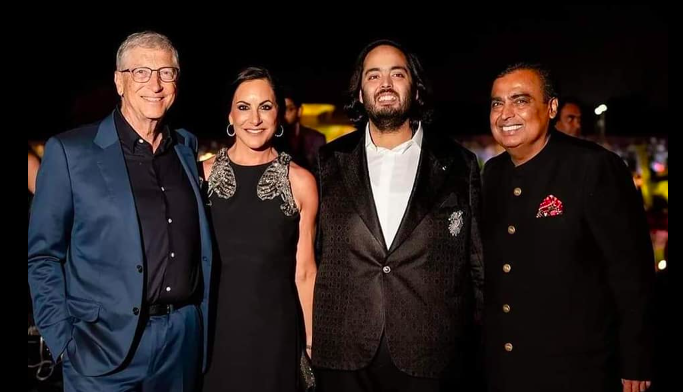
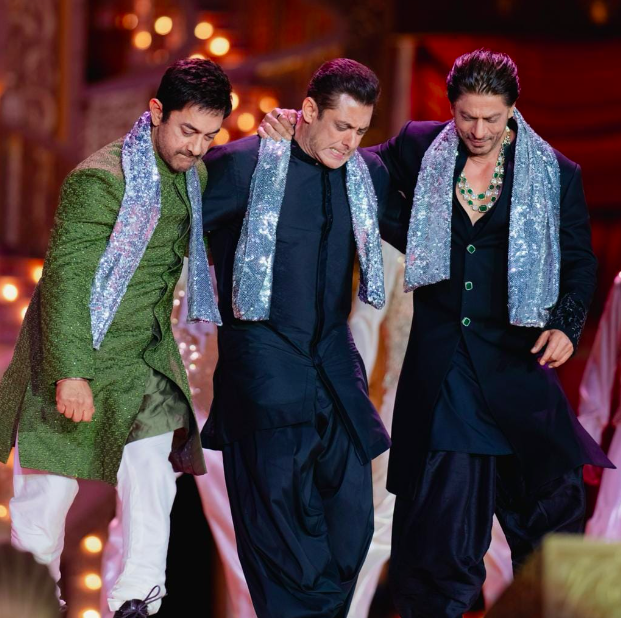
    The more that one reads and sees of the Anant Ambani pre-wedding event in Jamnagar, what stands out is the extreme logistical exercise that it has been. And to even have the audacity to consider pulling something like this off!
     

    Anyone who has ever managed an event of any reasonable size knows what it takes. Say, a conference or a marketing event, with a certain number of variables. Put in some challenges with celebs involved, and what it needs to take care of them and their entourages!

    Or say, you’ve hosted a wedding. With the multiple events. The relatives and friends to be taken care of. The invites, the RSVPs. The diet preferences, the transportation arrangements. Now make it a destination wedding. And see the variables multiply! Call a politician to your event. And worry about the number of hangers-on who need to be accommodated with the individual. Think of the security that he may bring along, but which you also need be taking care of, at your venue! Add a few foreign guests to the twist! Phew!


    If you’ve ever been through anything even close to this, you know what I am talking about, don’t you?!


    Now think of what the Ambanis dared to do, and did, and pretty flawlessly, from the looks of it. Celebrities of the highest order. By the hundreds! Their entire logistics! Invites, confirmations, travel and transportation, stay arrangements keeping the stature of all, the show itself, doing all this not at a large 5-star resort reasonably equipped for this, but in fact, creating the entire event infrastructure of their own, in their home town.


    Yes, money is a big factor. But the point is that this is not just about putting money on the table. It is so much more! It’s the ability of visualise scale projects and the ability to execute them well. In a time-bound manner. This has been their strength in business forever and now seen at an event like this as well!


    One other thing: I see this is that this is part of a new India. I have seen times in our country when the wealthy were living subdued lives so as to not come into anyone’s eyes – be it the local goondas, the income tax folks, jealous neighbours, the Labour unions in your factory etc. All that has changed now. There is a far larger acceptance of the wealthy to do their thing and not be concerned about others. They in fact, create aspiration and inspiration! This was one extreme event, but I speak in general.


    As for why:

    a) because they can,

    b) they’re still only spending a tiny bit of their wealth,

    and c) indeed, the money rotates and feeds so many on the supply chain. Not to speak of the reality show experience that the country enjoyed for free, on Reels and elsewhere!


    A lot of people have said that it’s a splurge, a waste of monies. We have to momentarily pause and relook at the splurge word. A typical wedding in our kind of families, or our homes or our dinner outings etc will seem like a splurge to lakhs of people. But we don’t see it that way for ourselves. Where Ambanis are, this would be thought of as par for course. It’s a splurge only from the distance that we are at!


    Jamnagar is a place hardly known for hosting anything remotely close to this. Just imagine the security arrangements itself! Nearly all of the guests being serious security risks! Think about the various food preferences! Think about young and old folks! The mind boggles!


    Yes, there are event organisers available to do all this, plus there’s the money and connections. It’s the X factor beyond that, which makes Ambanis what they are.


    And the Ambanis could visualise this, take it on, and pull it off! Even with the money, few would have been able to do so! From oil and gas to mobile to data to retail and that shows up now in a family wedding event as well!! Hat’s off to them!


    Sanjay Mehta is one of the pioneers in the digital world in India, having founded and spearheaded several companies: HomeIndia, Mirum (earlier SocialWavelength before WPP took it over) to name a few. He is also an author and commentator on all things digital, and beyond.

  • Money for nothing!

    Money for nothing!

    Avik ChattopadhyayTwo news items caught my fancy last fortnight.
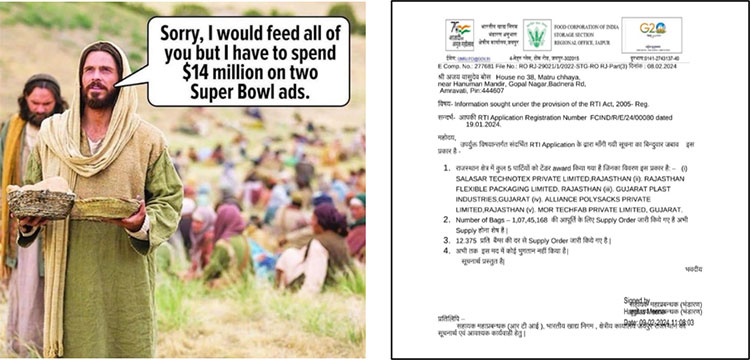
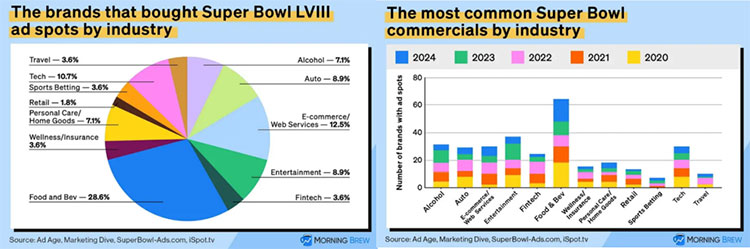
    One was a meme on some brand spending $14 million for two, yes just two ads during Super Bowl 58 in the US. That’s Rs117 odd crore at today’s exchange rates.

    The other was an RTI reply by Food Corporation of India that around Rs 13 crore were spent on printing the Prime Minister’s photo on bags meant for food rations in the state of Rajasthan alone. Multiply that same amount by the number of states under the current ruling political party and you get the math.

    The first one is an entirely private affair and probably the best demonstration of hyper-decadent capitalism at play. Every year, brands across categories vie for the right spot to buy for the sheer eyeballs one gets on the one single occasion which can also pass off as the official ‘couch potato day’.

    Madhvi Mavadiya of Finextra wrote a wonderful piece dissecting the madness that takes over all brand managers with every Super Bowl. You can read it at Super Bowl 2024: The fintech firms that spent $7 million on a 30 second ad (finextra.com).

    We too have our marketing media madness every year but it does not last for just one day. It goes on for 50 odd days. The IPL. Another example of gross display of marketing muscle. And it just keeps growing, year after year, as the broadcaster and organiser justify the stratospherical ad rates by the rise in viewership. In 2023 it increased by 30% over the previous year on television alone with another 15-odd % on pay-TV. In an interview, the head of ad-sales of the broadcaster mentioned that the CPM on IPL was the lowest at just Rs 50-60 per CPM. In 2023, the total ad revenues were a whopping Rs 10,000 crore while the fantasy sports platforms earned Rs 2800 crore. In plain speak, we gambled away Rs 2800 crore in two months under the garb of “team building skills” and nobody really raises an eyebrow!

    The broadcaster and the organiser will always justify to the potential advertiser that the RoI is the highest. They will justify the Rs 20 lakh per 10 seconds of advertising saying that the teams earn and the players earn and all the money goes into developing the sport and getting the best of the world to converge for this festival of sport.

    Cross your heart and ask yourself whether all this can really be justified. If the ESG regulators get down to their audits in all sincerity, will they not question such spends? All advertisers, in unison, sing out loud that their business gets positively impacted by advertising on IPL but has someone really audited and measured? If it were true, why would some of the key advertisers flounder in their business?

    Brands need to do some serious soul-searching on the way money is spent on advertising as all of it is passed on to the consumer in some way or other. A hedonistic institution cannot be propped up actually fleecing millions of gullible content junkies under the justification of freedom of choice and expression.

    The day some hard-nosed auditing is done of the spends against returns and the famous “50% that is wasted” is identified, many brand managers and marketing heads will roll. This is a cohort of people scratching each other’s backs to keep living the high life of a money-spinning capitalist enterprise under the garb of sporting excellence accessing 500+ million viewers in a country where 800 million are poor enough to get free rations from the government every year.

    Which brings me to the money wasted on printing photos of political leaders and sticking them up in any vacant space available. I once had the opportunity to ask a minister as to why did he want his face on posters of a government scheme. He was candid enough in saying that he wanted as much visibility and recall as possible… at government expense! Hence every minister uses the resources of one’s own ministry to propagate oneself, in complete contravention to the norms of governance.

    While one can still excuse a little known politician for using tax-payer resources to build awareness and recall, what really justifies the top leadership that everybody in the country recognises by a mile or a mere spoken word? To me, it is the incessant habit of loving to see one’s own face everywhere. Across all politicians, unless the party diktat forbids you as in case of the Left Front. Every measure of governance, from an airport for the rich to free rations for the poor is seen as yet another opportunity not to be missed, at the tax-payer’s expense.

    As students of economics, we had learnt that “money is a matter of functions four – a measure, a medium, a standard and a store. Somewhere, the function of “morality” has to come in. Academicians and activists together have to bring about this change in the definition of money. The moral compass has to be integral to evaluating how the money is being spent and how it is performing against parameters of ethical and sustainable use. The recent Supreme Court judgment on Electoral Bonds is one strong step in that direction. If all the money from that source of funding is blocked from usage in the elections to happen, it will be a litmus test of “moral money”.

    Talking of which, there is a “Moral Money Summit” being planned in Europe in the month of May with the primary objective of giving naked capitalism some decent clothes. We need a similar initiative in our country at the earliest.

  • Yes! OpenAI’s Sora could revolutionise marketing content creation

    Yes! OpenAI’s Sora could revolutionise marketing content creation

    By Omar H. Fares

    OpenAI’s new generative Sora tool has sparked lively technology discussions over the past week, generating both enthusiasm and concern among fans and critics.

    Sora is a text-to-video model that significantly advances the integration of deep learning, natural language processing and computer vision to transform textual prompts into detailed and coherent life-like video content.

    In contrast to previous text-to-video technologies, like Meta’s Make-A-Video, Sora is able to overcome limitations related to the type of visual data it can interpret, video length and resolution.

    From what OpenAI has demonstrated, Sora can generate videos of various lengths, from short clips to full-minute narratives, and in high definition, accommodating a wide range of creative needs.

    Although no official release date has been announced, Sora will likely be available to the public in the coming months, judging by OpenAI’s typical pattern of public releases. For now, it’s only available to experts and a few artists and filmmakers.

    How Sora works

    At the heart of Sora’s innovation is a technique that transforms visual data into a format it can easily understand and manipulate, similar to how words are broken down into tokens for AI processing by text-based applications.

    This process involves compressing video data into a more manageable form and breaking it down into patches or segments. These segments act like building blocks that Sora can rearrange to create new videos.

    Sora uses a combination of deep learning, natural language processing and computer vision to achieve its capabilities.

    Deep learning helps it understand and generate complex patterns in data, natural language processing interprets text prompts to create videos, and computer vision allows it to understand and generate visual content accurately.

    By employing a diffusion model — a type of model that’s particularly good at generating high-quality images and videos — Sora can take noisy, incomplete data and transform it into clear, coherent video content.

    Sora’s approach differs from CGI character creation, which requires extensive manual effort, and from traditional deepfake technologies, which often lack ethical safeguards, by offering a scalable and adaptable method for generating video content based on textual input.

    What does this mean for businesses?

    One of the most noteworthy aspects of Sora is its flexibility, as it supports various video formats and sizes, enhances framing and composition for a professional finish, and accepts text, images or videos as prompts for animating images or extending videos.

    The emergence of Sora presents key opportunities for businesses across different sectors. In the near future, there are two key areas that may have significant applications.

    The first area is in marketing and advertising. Just as ChatGPT has become a marketing and content creation tool, we can expect businesses to use Sora for similar reasons.

    With the public release of Sora, brands and companies will be able to create highly engaging and visually appealing video content for marketing campaigns, social media and advertisements.

    The ability to generate custom videos based on textual prompts will allow for greater creativity and personalisation, possibly helping brands stand out in a crowded market.

    The second area Sora could impact is training and education. Companies could use Sora to develop educational and training videos that are tailored to specific topics or scenarios. This could enhance the learning experience for employees and customers, making complex information more accessible and engaging.

    Other sectors, such as e-commerce, also hold promising potential for the future application of Sora. Retailers could create dynamic product demonstrations that effectively showcase products in a more engaging and interactive manner.

    This would be especially beneficial for companies that want to highlight specific aspects of products that might not be easily conveyed through static images or text, or for advertising products that require a detailed explanation.

    Sora could also significantly reduce the uncertainty associated with online shopping by facilitating virtual try-on experiences, allowing customers to visualize how a product, such as clothing or accessories, would look on them without the need for a physical fitting. This, in turn, could result in a better return on investment.

    What are the key challenges ahead?

    While there are key opportunities ahead, OpenAI, regulators and users need to carefully consider key factors that could pose challenges, including copyright issues, ethical concerns and the consequences of increased digital noise.

    With Sora’s ability to generate lifelike video content, there’s a risk of inadvertently creating videos that infringe on existing copyrights. OpenAI has already been sued several times over copyright infringement and intellectual property issues.

    OpenAI hasn’t disclosed where the data used to train Sora is from, but it did tell the New York Times it was training the system using videos that were publicly available and licensed from copyright holders.

    The technology also raises ethical questions, particularly around the creation of deepfake videos or misleading content.

    Establishing guidelines and safeguards to prevent misuse will be essential for maintaining trust in the technology. In a post on its website, OpenAI stated it was working with experts to test the model before releasing it to the public.

    As more businesses and individuals gain access to Sora, there’s a potential for an increase in low-quality or irrelevant video content, leading to increased “digital noise” that could overwhelm users. Finding ways to filter and curate content will become increasingly important for businesses looking to maintain their edge.

    Last, but certainly not least, is the question of how Sora will impact the job market for content creators. While Sora does have the potential to automate certain aspects of video production, like ChatGPT, it’s unlikely to replace human creativity and insight anytime soon.

    Instead, Sora could serve as a tool that enhances the capabilities of content creators, allowing them to produce higher-quality content more efficiently. As with any technological advancement, the key will be for professionals to adapt and find ways to integrate Sora into their workflows, leveraging its strengths to complement their own skills and creativity.The Conversation


    Omar H. Fares is Lecturer in the Ted Rogers School of Retail Management, Toronto Metropolitan University. This article is republished from The Conversation under a Creative Commons license. Read the original article.

  • Behno aur Bhaiyo: Remembering Ameen Sayani’s Evergreen Voice and Timeless Legacy

    Behno aur Bhaiyo: Remembering Ameen Sayani’s Evergreen Voice and Timeless Legacy

    Photograph courtesy: Fotocorp


    By Sandeep Nomane

    The world of broadcasting and cinema has lost a true legend as Ameen Sayani, the venerable host whose voice resonated through countless homes for decades, has passed away at the age of 91. With his departure, the golden era of radio loses one of its brightest stars, leaving behind a legacy that will forever echo in the annals of broadcasting history.

    Sayani has been keeping indifferent health, and was working on his autobiography which was due to be published this year.

    Born in December 1932 in a family deeply involved with the Indian independence movement, Sayani’s journey into the realm of radio began as a young man fueled by an unyielding passion for communication and music. Little did he know that his distinctive voice would become synonymous with the very essence of Indian music culture.

    He assisted his mother Kulsum Sayani from 1945 to 1960 in editing a fortnightly journal called ‘Rahber’ for neo-literates, initiated by Mahatma Gandhi. It was simultaneously published in Devnagiri, Urdu and Gujarati scripts – but all in the simple Hindustani language promoted by Gandhiji. This was Sayani’s basic grounding in clear and credible communications in Hindustani.

    His multi-talented brother, Hamid who was a well-known broadcaster in English. nudged him at an early age into stage acting and direction, compering, writing and even a little bit of ‘magic’. He then introduced him to All-India Radio, Bombay, where he participated in English programmes for 10 years.

    Helped on by Hamid, he joined the Indian agency of the commercial service of Radio Ceylon – switching from English to Hindustani. Through the same agency, he began to create and participate in radio shows and commercials – also for All India Radio when its Commercial Service commenced on its ‘Vividh Bharati’ network.

    Sayani’s crowning achievement came in the form of ‘Geetmala’, a radio programme that captured the hearts of millions across the nation. Debuting in 1952, ‘Geetmala’ swiftly became a cultural phenomenon, serving as a beacon of musical delight for generations of listeners. With his eloquent narration and deep understanding of Indian music, Sayani guided audiences through the melodies and rhythms that defined an era.

    ‘Cibaca Geetmala’ (earlier Binaca Geetmala) was broadcast mainly on Sri Lanka Broadcasting Corporation and later over Vividh Bharati (AIR), for a combined total of over 42 years. It was again revived after a gap of seven years – and was, till August 2003, aired over the National Network of Vividh Bharati as ‘Colgage Cibaca Geetmala’.

    Some other shows he was known for were S Kumar’s ka Film Muqaddam and Film Mulaqaat, Saridon ke Saathii (which incidentally was AIR’s first sponsore d show), Bournvita Quiz Contest which he did for eight years, taking over after his brother passed away in 1975. There were other shows as well – Shalimar Superlac Jodi and Sangeet Ke Sitaron ki Mehfil for an FM station.

    Beyond his role as a radio host, Sayani was a cultural icon, his voice serving as a constant companion during moments of joy, sorrow, and everything in between. His ability to connect with listeners transcended mere entertainment, forging a bond that endured the test of time.

    Sayani’s impact extended far beyond the confines of the radio studio. He played a pivotal role in shaping the careers of countless artists, providing a platform for emerging talent to showcase their craft to a national audience. His dedication to promoting Indian music not only enriched the cultural landscape but also paved the way for future generations of musicians to flourish.

    Sayani was Founder member of the Radio & TV Advertising Practitioners’ Assocation and its President from 1984 to 1987. He was founder-member of the Advertising Standards Council of India and its Chairman in 1989-90. He was a member of the Council for Public Service Commuciation since its inception. In 1991, he was awarded a Gold Medal by the Indian Society of Advertisers for his contriution to advertising. At the Advertising Club, he was member of its Radio/TV committee for many years. He was awarded the Ad Club’s ‘Golden Abby for Geetmala, which was adjudged the Most Outstanding Radio Campaign of the Century.

    Despite the evolution of media and the advent of new technologies, Sayani remained steadfast in his commitment to radio, proving that the power of the spoken word knows no bounds. His voice became a cherished part of daily life for millions, a comforting presence that transcended the transient nature of trends and fads.

    Throughout his illustrious career, Sayani garnered numerous accolades and honours, each serving as a testament to his enduring influence and contribution to the world of broadcasting. Yet, it was the unwavering affection of his listeners that truly underscored the significance of his legacy.

    In recent years, Sayani’s magic was revived with the Saregama’s Caravaan music device which had episodes of Geetmala hardwired.

    As news of Sayani’s passing reverberates across the airwaves, tributes pour in from all corners of the globe, each one a testament to the profound impact he had on the lives of countless individuals. From aspiring musicians to devoted fans, Sayani touched the hearts of all who had the privilege of tuning in to his broadcasts.


    with inputs from assorted sources on the internet

  • Do brands have a mid-life crisis?

    Do brands have a mid-life crisis?

    Ashoke AgarrwalNike is 60 years old, and is it showing signs of middle age?

    The brand still signs the world’s most high-profile athletes and has a legacy of proprietary technology.

    The mojo was displayed at the Paris Olympics with a three-day ‘Nike on Air’ gala.

    It debuted new shoes for runners, basketball, and soccer and optimized performance apparel for skateboarding and breakdancing. It also showcased Project A.I.R., a platform that leverages generative AI to design and print personalised prototypes for athletes in minutes.

    It was as if the brand was pushing to remind everyone of its mojo. Forty years ago, at its pomp, the brand had debuted Air, a tiny, pressurised airbag in the shoe’s sole that gives athletes an energy return as their foot hits the ground. A legendary functionalisation of the brand’s ‘Just Do It’ promise with a literal swoosh of compressed Air. Today, the legend lives on moviedom with a movie called “Air” starring no less than Matt Damon and Ben Affleck, but does the brand’s mojo?

    Or, like a lifetime achievement award, is the movie a tribute to a has-been cultural phenomenon?

    The brave show at the Paris Olympics did not hide Nike’s struggles with low sales numbers and its longest losing streak since 1980. The company’s move from wholesalers to direct-to-consumer wasn’t as successful as hoped.

    The reasons for Nike’s bad period are myriad, and it will probably cause them to go on for another 60 years.

    The point I want to make is that many storied brands—Nike, Coco Cola, Levis, VW, Marks & Spenser, Bajaj, Titan—the list is long—are undergoing a crisis. And the commonality between them is that they are all “middle-aged” or “old.”

    The most straightforward explanation for the crisis is that times change, consumers change, technologies change, and challenges come with change.

    However, shouldn’t then the uber-successful leader brands should be the first to meet such challenges? They have the resources, expertise and experience.

    But nine out of 10 ‘middle-aged’ leader brands flounder with a new generation of consumers.

    Could the explanation lie in the realms of psychology – the mid-life crisis that affects most successful men in Western cultures as they slide into middle age?

    While a mid-life crisis is, at its core, a disruption in self-confidence and self-image, its manifestation is a rejection of this disruption and an over-assertion of the past.

    Is Nike’s Paris Olympics show an assertion of this sort?

    The wise counsellors suggest that the proper response to a mid-life crisis is to evaluate the self, identify your core values, discard peripheral notions that no longer fit the circumstances, and orient your core values to the new paradigm.

    Is Nike confronting a new generation for whom fitness is a holistic concept that deals with social attitudes, diet, and exercise? To them, is seeking the extra edge of proprietary technology in their daily exercise regime an aspect that robs it of a value they cherish -authenticity? So, while they admire Nike and the premier athletes whom it helps perform better, the admiration does not translate to them wanting the brand for themselves. They are happy with brands like On Running and Lululemon.

    So, how does Nike be relevant to the new generation? For starters, it should be admitted that the mother brand is now a niche brand for performance athletes and the small part of the market that are aspiring athletes or have a self-image of being athletes. There is money to be made in that niche to support their other plans. It should then get down to using its inventiveness and brand-creation skills to launch a new brand that hooks onto the concept that fitness is a 360-degree concept with authenticity at its core. It could then build a whole range of products and services, including digital platforms and AI application layers to enable an individual to ‘Be the Fittest Yourself’.

    The above is just an illustration. An innovative set-up like Nike would have scores of better ideas provided it got out of its middle-aged funk and stopped doubling down on the past.

    The point is that a brand in a mid-life crisis needs to recognize the crisis, reevaluate and use the opportunity to reinvent.

    There are so many well-resourced brands in mid-life crisis worldwide that I expect all the big consultancies to make a beeline for this rather lucrative pie.

    But then, aren’t the McKinsey’s of this world also in mid-life crisis?

    It may take a bold, young start-up consultancy to convince old, foggy brands to see their mid-life crisis as an opportunity to reinvent.