Category: Digital

  • 22feet Tribal Worldwide bags digital AOR mandate of Flipkart

    By Our Staff


    Flipkart has awarded its digital agency of record (AOR) mandate to 22feet Tribal Worldwide, following a multi-agency pitch. The mandate includes managing Flipkart’s digital campaigns and strategy. 22feet WW will help the brand drive business growth through creativity, with an increased focus on strengthening Flipkart’s fashion, BGMH and mobile phone categories.


    Commenting on the win, Preetham Venkky, President – 22feet Tribal Worldwide & Chief Digital Officer, DDB Mudra Group said: “With this digital AOR mandate, we are thrilled to be partnering with Flipkart. Our commitment to creatively enabling Flipkart’s next stage of growth with an increased focus on strengthening their commercial spectrum is hugely exciting. Our teams will provide unexpected and clutter-breaking solutions to help India’s homegrown e-commerce market leader overcome new challenges in the online marketplace.”


  • First Economy wins digital mandate of Nicobar

    By Our Staff


    Nicobar lifestyle brand, has awarded its digital media mandate to First Economy. The digital marketing agency will be responsible for the brand’s media strategy and overall media buying across all the digital platforms.


    Said Raul Rai, Co-founder, of Nicobar: “During the inception of Nicobar, we always had a brand in mind that stays unique in this world of over-flowing repetitiveness. Nicobar, with its distinctive products, has always made its consumers happy and satisfied. To help the business grow, we wanted someone who had a great reputation for handling performance marketing. First Economy stood up to all our expectations.”


    Added Jigar Zatakia, Founder, of First Economy Pvt. Ltd. on acquiring Nicobar’s performance media mandate: “Performance marketing has always been our strongest point and we have proved ourselves time and again. With this alliance, we wish to add value to the brand’s journey ahead and look forward to bringing a change in the lifestyle industry.”


  • Why social media makes you feel bad – and what to do about it


    By Divna Haslam


    Have you ever found yourself scrolling through social media and noticed you felt a bit down? Maybe a little envious? Why aren’t you on a yacht? Running a startup? Looking amazing 24/7?

    The good news is you are not alone. Although social media has some benefits, it can also make us feel a little depressed.


    Why does social media make us feel bad?

    As humans we inherently compare ourselves to others to determine our self-worth.
    Psychologists call this social comparison theory.

    We primarily make two types of comparisons: upward and downward comparisons.

    Upward comparisons occur when we compare ourselves to someone else (in real life or on social media) and feel they are better than us (an unfavourable comparison for us) in whatever domain we are assessing (such as status, beauty, abilities, success, and so on).

    For example, comparing your day at work to your friend’s post from the ski fields (we’re looking at you Dave!) is likely to be an upward comparison. Another example is making appearance comparisons which can make you feel worse about yourself or your looks .

    Although upward comparison can sometimes motivate you to do better, this depends on the change being achievable and on your esteem. Research suggests upward comparisons may be particularly damaging if you have low self-esteem.

    In contrast, downward comparisons occur when we view ourselves more favourably than the other person – for example, by comparing yourself to someone less fortunate. Downward comparisons make us feel better about ourselves but are rare in social media because people don’t tend to post about the mundane realities of life.


    Comparisons in social media

    Social media showcases the best of people’s lives. It presents a carefully curated version of reality and presents it as fact. Sometimes, as with influencers, this is intentional but often it is unconscious bias. We are just naturally more likely to post when we are happy, on holiday or to share successes – and even then we choose the best version to share.

    When we compare ourselves to what we see on social media, we typically make upward comparisons which make us feel worse. We compare ourselves on an average day to others on their best day. In fact, it’s not even their best day. It’s often a perfectly curated, photoshopped, produced, filter-applied moment. It’s not a fair comparison.

    That’s not to say social media is all bad. It can help people feel supported, connected, and get information. So don’t throw the baby out with the bathwater. Instead, keep your social media use in check with these tips.


    Concrete ways you can make yourself feel better about social media

    Monitor your reactions. If social media is enjoyable, you may not need to change anything – but if it’s making you exhausted, depressed or anxious, or you are losing time to mindless scrolling, it’s time for change.

    Avoid comparisons. Remind yourself that comparing your reality with a selected moment on social media is an unrealistic benchmark. This is especially the case with high-profile accounts who are paid to create perfect content.

    Be selective. If you must compare, search for downward comparisons (with those who are worse off) or more equal comparisons to help you feel better. This might include unfollowing celebrities, focusing on real posts by friends, or using reality focused platforms like BeReal.

    Redefine success. Influencers and celebrities make luxury seem like the norm. Most people don’t live in pristine homes and sip barista-made coffee in white sheets looking perfect. Consider what real success means to you and measure yourself against that instead.

    Practise gratitude. Remind yourself of things that are great in your life, and celebrate your accomplishments (big and small!). Create a “happy me” folder of your favourite life moments, pics with friends, and great pictures of yourself, and look at this if you find yourself falling into the comparison trap.

    Unplug. If needed, take a break, or cut down. Avoid mindless scrolling by moving tempting apps to the last page of your phone or use in-built focus features on your device. Alternatively, use an app to temporarily block yourself from social media.

    Engage in real life. Sometimes social media makes people notice what is missing in their own lives, which can encourage growth. Get out with friends, start a new hobby, embrace life away from the screen.

    Get amongst nature. Nature has health and mood benefits that combat screen time.

    Be the change. Avoid only sharing the picture-perfect version of your life and share (in a safe setting) your real life. You’d be surprised how this will resonate with others. This will help you and them feel better.

    Seek help. If you are feeling depressed or anxious over a period of time, get support. Talk to your friends, family or a GP about how you are feeling. Alternatively contact one of the support lines like Lifeline, Kids Helpline, or 13Yarn.The Conversation


    Divna Haslam is Senior Research Fellow, Queensland University of Technology and Sabine Baker, Research Fellow, Queensland University of Technology. This article is republished from The Conversation under a Creative Commons license. Read the original article.

     

  • Zee5 Intelligence Monitor launches its 5th report – Digital Payments Growth

    By Our Staff


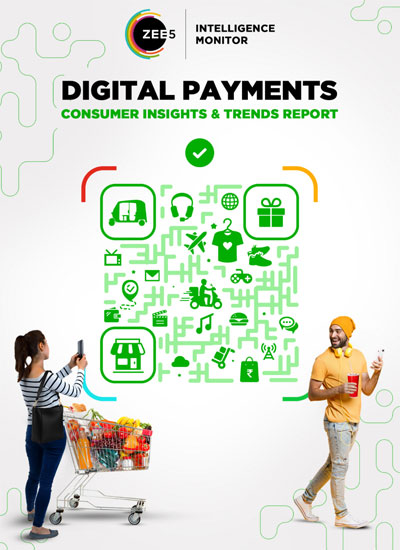
    ZEE5, video streaming platform and multilingual storyteller for entertainment seekers, launched the fifth edition of its knowledge series ‘ZEE5 Intelligence Monitor’, deep diving into the trends and consumption patterns of digital payments.


    The Digital Payments industry edition sheds light on how its entire ecosystem has evolved in recent years and where it is headed. It highlights how the adoption of digital payments has gathered critical mass in India especially due to the democratisation of affordable smartphones and the proliferation of Internet and connectivity. It also calls attention to women feeling empowered with digital payments as it gives them a sense of being independent and tech savvy. The survey also accentuates how digital payments are becoming omnipresent in India, as people are not only using more than one app to pay digitally but have also found multiple use-cases to pay through their phones.


    Key Highlights of the Digital Payments Report:

    >> The survey found that Tier II markets are emerging as the hotbed for digital payments in India and the reasons for the inclination being ease of use (73%) and instant transactions (63%).

    >> Digital payments are gaining prominence over traditional financial systems with 63% of debit card users preferring mobile wallets and UPI.

    >> 57% of users feel secure using mobile wallets/UPI.

    >> 54% of users use more than three apps to avail offers and discounts.

    >> 63% of the people surveyed mentioned that the top reason to avail digital payments is ‘ease of use’, followed by 56% saying ‘cashback offers’ and 51% of them considering ‘faster transaction’ as a reason to use these apps.

    >> The top three categories of spending on mobile wallets/UPI apps, according to the report, were mobile bills (50%) followed by online shopping (40%) and utility bills (42%)

    >> 50% of users feel progressive and tech-savvy while using mobile wallet/UPI


    Launching the report, Rajiv Bakshi, Chief Operations Officer – Revenue, ZEE Entertainment Enterprises Limited, said: “The ZEE5 Intelligence Monitor – Digital Payments Report unravels the key trends of the digital payments sector which has become ubiquitous across regions with increase in adoption of a digital-first lifestyle. ZEE5, with its strong presence in both metros and non-metro cities, has a significant access to monitor, map and access data in determining consumption habits, purchase behaviour and consumption patterns. As a consumer-first brand, we invest in identifying audience’s preferences to cater to them more efficiently, alongside empowering the marketers to tap into the audience base to edge a better connect and expand their products’ reach. We discovered interesting insights which brand marketers can use at their advantage; some findings that also challenge conventional notions of digital behaviour with respect to personal finance.”


    A first of its kind, ‘ZEE5 Intelligence Monitor’ seeks to uncover transformative consumer behaviour, attitudes, and aspirations across multiple industries ranging from e-commerce, EdTech, online gaming to smartphones, presenting an unmatched opportunity to advertisers to access a hyper-enriched predisposed audience cohort across multiple demographics and geographies. Through this series, ZEE5 aims to identify trends, map behaviours, and deliver actionable insights into consumers’ attitudes toward products and services in emerging and fast-growing industries.


  • Is 13 too young to have an Instagram account?


    By Catherine Page Jeffery


    The surgeon general is the “nation’s doctor” in the United States. They are tasked with giving Americans the “best scientific information” about their health.

    Late last month, the current US surgeon general, Vivek Murthy, warned 13 is too young to join social media. He said it poses a risk to young people’s “self-worth and their relationships”, adding:

    I, personally, based on the data I’ve seen, believe that 13 is too early […] the skewed and often distorted environment of social media often does a disservice to many of those children.


    Is 13 too young? What should parents think about when it comes to their kids and social media accounts?


    Why are we talking about 13?

    Major social media platforms, including Twitter, Instagram, Facebook and TikTok, require users to be at least 13. This includes those in Australia and New Zealand.

    This minimum age requirement stems from 1998 US legislation which banned the collection of children’s personal data without parental consent.

    For many parents, schools and cybersafety experts, this minimum age has become something of a benchmark. Many assume it comes with the implicit assurance social media platforms are appropriate and safe for children once they turn 13. Conversely, they also assume they are unsafe for children under 13.

    But this is not necessarily the case.


    What does the evidence say?

    Social media platforms do present some risks for young people. These include online bullying and harassment, exposure to misinformation and inappropriate content, grooming, privacy breaches and excessive use.

    Stories documenting the potentially harmful effects of social media are rarely out of the news. Studies claim links between social media and poor mental health and low self-esteem.

    These findings are concerning, and there is no doubt social media may negatively affect some young people’s wellbeing. However, it is not a straightforward question.

    While these studies might find a correlation or link between excessive social media use and poor self-esteem, for example, they rarely point to direct causation. Young people already experiencing low self-esteem and depression may use social media significantly more than others.


    So why don’t we just increase the age?

    Murthy acknowledges it is difficult to keep kids off their devices and social media. But he suggests parents band together, and say you know, as a group, we’re not going to allow our kids to use social media until 16 or 17 or 18.

    But any increase in the age – whether formal or informal – will not necessarily keep children safer online. Children can easily falsify their ages (many already do). And young people are good at finding creative and secretive ways of doing what they want regardless.


    Why can’t parents just say no?

    It is often suggested – by cyber safety experts – that parents just say no. This message has been reinforced by celebrity commentators such as British actress Kate Winslet, who recently told the BBC:

    My children don’t have social media and haven’t had social media.

    While these approaches may work with younger kids, older children are unlikely to simply comply. Blanket bans and restrictions not only lead to family conflict, but are also more likely to lead to children using social media without parental consent or knowledge.

    This is a problem because parents play an important role in helping children navigate online spaces, including the sometimes fraught nature of peer relationships on social media.

    If a child has a social media account without parental permission, they are much less likely to seek out their parents for help if they have a problem online, for fear of getting into trouble or having their device taken away.


    Children also have a right to be online

    Discussion about risks also tends to ignore the potential benefits of being online.

    Social media is incredibly important for many young people. It keeps them connected with friends and extended family, provides a platform for creativity and self-expression, and enables civic participation and activism.

    Social media also provides access to like-minded individuals and communities who may provide solidarity and support, especially for marginalised teens.

    Children, particularly teenagers, also have a right to participate in online spaces, including use of social media.

    The United Nations’ Committee on the Rights of the Child notes children have the right to “meaningful access to digital technologies” as a way of realising the full range of their civil, political, cultural, economic and social rights.


    So, when should my child get a TikTok account?

    There is no one-size-fits-all approach here. Children vary tremendously in terms of their maturity, skills, life experience and judgement.

    On top of this, online risk is not equally distributed, as children who are more vulnerable offline are more vulnerable online. For example, children with mental health problems, learning difficulties, a disability or who have problems at home are more likely to experience high-risk situations online.

    In deciding whether your child is ready for a social media account, parents might consider:

    Is my child especially vulnerable to online harms?
    Does my child have the required maturity and resilience to manage potentially negative online social interactions?

    Does my child listen to advice and follow rules?
    Is my child aware of the risks, and do they have strategies for managing them?
    Will my child come to me with any problems they encounter online?

    Parents might also consider their children’s offline lives, as these often carry over into online spaces. This includes what their friendships are like, their propensity for taking risks, and their ability to consider the consequences of their actions.


    Start talking early

    The best thing that parents can do is initiate conversations about social media and the internet early and often.

    Many issues that play out on social media are extensions of young people’s existing peer relationships. Parents can talk to their children about their friends and peers, show an interest in their child’s online activities, and openly discuss their child’s rights and responsibilities online.

    Some parents may wish to set reasonable expectations and rules about appropriate use of social media. Documenting these expectations through a “family technology agreement” that is negotiated democratically as a family, rather than through top-down rules, is more likely to succeed.


    Catherine Page Jeffery is Lecturer in media and communications, University of Sydney. This article is republished from The Conversation under a Creative Commons license. Read the original article.
     

  • Alt Balaji is now Altt

    By Our Staff


    Alt Balaji, digital entertainment platform, launches a new identity. It will now be called Altt.  It has also unveiled a bold new logo. The company has stated that the change in logo is part of its broader rebranding strategy, which is aimed at aligning its image with its core values and mission. Altt provides its customers with innovative and engaging digital content, and the new logo reflects that commitment.


    Besides the logo change, Altt has announced the appointment of a new Chief Business Officer Vivek Koka, as Ektaa R Kapoor and Shobha Kapoor Step Down. While the process of stepping down started last year, Altt now has a new team to take over. This decision is a strategic one to focus on their other ventures.


    Vivek Koka
    Vivek Koka

    Talking about his association with Altt Vivek Koka said: “Altt has been a pioneer in the Indian OTT space and has entertained audiences across the country. With success and adulation comes the responsibility of staying true to the consumers’ expectations. Keeping in line with the same thought, Altt embarks on an exciting journey with its identity which will be backed by equally engaging content. It is a great time for me to be associated with the brand and to be a part of this journey.”


    Shashwat Singh
    Shashwat Singh

    Talking about the new logo and change in brand Image Content head Shashwat Singh said: “Our customers are at the heart of everything we do, and the new logo reflects that sentiment. The new design is more forward projecting and simplified, making it easier for our customers to connect with us and our offerings, without veering away from the well-established brand identity. We believe that this change will help us to make stronger connections with our audience and reflect the renewed passion with which we bring brand new stories to them.”


    Added Ektaa R Kapoor: “We are thrilled to welcome Vivek Koka to the Altt family. His expertise and vision for the future of digital entertainment make him the perfect choice to lead Alt Balaji into its next phase of growth and success.”


  • Aha OTT unveils expansion plans

    By Our Staff


    Aha streaming service, offering Telugu and Tamil-language content, unveiled plans for expansion in new languages and genres.


    Allu Aravind
    Allu Aravind

    Giving details about the investment, Allu Aravind, Promoter, aha said: “We are happy with the run we’ve had in these three years. We know that aha came in and catered to a gap in the OTT space by offering 100% local content. Today three years since, we are successful in Telugu and we are growing fast in Tamil and I believe the time has come for us to grow further into more languages. I am happy to say that over the next three years, we have a solid plan of growth with expansion into new languages and genres; and to that end, we are committed to infusing Rs 1000 crores.”


    Ajit Thakur
    Ajit Thakur

    Ajit Thakur, CEO aha added: “Today aha is synonymous with 100% local entertainment. We believe within our current markets we have a lot more to offer beyond the films and original series that we have come to be known for. We are committed to making aha a super app for our local audiences, and towards that over the next three years we will offer gaming, news, K-dramas, short form, interactive content, and a host of other features on our platform. In addition, we have also started working on our plans to launch in Malayalam and Kannada.”


  • Zee5 marks its fifth brand anniversary

    By Our Staff


    ZEE5 marks its fifth brand anniversary. It is celebrating the occasion with a week-long campaign in India titled ‘5xThankYou’ from 13th to 19th February, featuring exciting offers on annual plans, Indian and international blockbusters and exclusive titles.


    Sharing his views on the milestone, Amit Goenka, President – Digital Businesses & Platforms, ZEE Entertainment Enterprises Limited (ZEEL) said: “ZEE5 was launched five years back with a vision to take Zee into its next phase of growth through leveraging the rapidly growing digital ecosystem to bring audiences extensive content choices and enhanced viewing experiences across screens. Today, I am happy to see ZEE5 emerge as India’s largest homegrown multilingual platform and the leading global platform for South Asian content representing the rich linguistic and cultural diversity of the region to the world. The journey has been enthralling with many learnings as we strengthened our presence across international and local markets in the last few years, and our teams have a lot to be proud of. The appetite for digital content with advancements in emerging technologies has catapulted the demand for OTT content, paving the way for us to step into our next phase of growth with a robust content-led digital-first strategy.”


    Added Manish Kalra, Chief Business Officer, ZEE5 India: “As a leading player in India’s OTT industry, we at ZEE5 have helped in expanding the contours of entertainment business over the last 5 years owing to the large appetite of Indians for quality content across languages. We, as a customer focused platform, believe in delivering high quality content for consumers, as well as engage with creators that could propel sector’s growth and address the demands of the culturally diverse and discerning audiences. With innovative storytelling, evolved character arcs, compelling narratives and content that transcends all barriers of languages and geographies we have grown remarkably over last 5 years across SVOD and AVOD. Our investments on content development increased significantly as well, as we strengthened our regional presence making inroads into the smaller pockets of India. Charting the next course for ZEE5, we will focus on producing good-quality stories, enhanced viewing experiences, creative collaborations, and increased choices for our viewers.”


  • Nokia reports three-fold increase in mobile data usage

    By Our Staff


    Last week Nokia announced in its annual Mobile Broadband Index (MBiT) report that mobile data traffic in India has risen 3.2 times over the last five years. The report also revealed that pan-India mobile data usage per month grew from 4.5 exabytes in 2018 to 14.4 exabytes in 2022.


    Nokia’s report includes many key takeaways about the evolution of the Indian mobile market, including data on mobile data consumption and growth, the ongoing transition from 4G to 5G as well as the prospects for enterprise adoption of 5G with private networks.


    Further findings point to mobile data consumption increases coinciding with the launch of commercial 5G services in the country in October 2022, as Communication Service Providers (CSPs) deploy 5G networks and expand to newer areas at a fast pace. Together 4G and 5G subscribers now account for almost 100% of the total mobile data traffic in the country.


    In addition, average data consumption per user has risen sharply since 2018, reaching 19.5GB per user per month in 2022 – this is the equivalent to 6600 songs. At an aggregate level, total mobile data consumed in India is expected to more than double by 2024. Over 70 million 5G devices are estimated to have been shipped to India in 2022, indicating a strong traction for 5G in the market.


    MBiT 2023 highlights a significant acceleration in enterprise investment. Enterprise spending on Private 5G networks will be driven by new use cases in diverse industry verticals, including manufacturing, utilities, transportation and healthcare among others in India. India’s investment in private wireless network is expected to reach around US$ 250 mn by 2027.


    Said Sanjay Malik, SVP and Head of India Market at Nokia: “India has seen a massive uptake of mobile broadband based on successful deployment of 4G LTE networks. We believe that 5G will take mobile broadband consumption to the next level in India by will enabling new digital use cases for both consumer and enterprise segments. It is essential that this growth is managed in a sustainable manner while supporting India’s aim to become a trillion-dollar digital econom.


  • ShareChat introduces Learning Hub

    By Our Staff


    ShareChat, multilingual social media platform, has launched ShareChat Learning Hub, a certification program specially designed for marketers, advertisers and brands. The idea behind launching this free-of-cost, self-paced learning program is to enable brands to leverage ShareChat & Moj’s network of more than 400 million Monthly Active Users (MAUs) to reach an ‘uncharted’ Bharat and young India (Gen Z & millennials) audiences and create high-performing campaigns that drive great results. It also aims to highlight the immense potential of short-form videos to drive campaign messaging in a differentiated manner for young India.


    Commenting on the launch of the program, Udit Sharma, Chief Revenue Officer, ShareChat & Moj said: “As the preferred content destination for Bharat, we understand the pulse of diverse language-first Indian users and young India. ShareChat Learning Hub is a step towards enabling brands, advertisers and marketers to deploy our comprehensive ad formats and content innovations that have been designed keeping in mind the media consumption behaviour of Bharat and Gen-Z audiences on ShareChat and Moj.”


  • Farzi: The Real Thing


    By Shailesh Kapoor


    Shailesh KapoorIt’s not a major talking point yet, but the OTT Hindi fiction space may just have entered its second innings. Farzi, Amazon Prime Video’s recent launch, has amassed huge viewership numbers, and is almost certain to become the most-watched SVOD show in India across platforms by the end of next week, based on Ormax Media’s viewership estimates for OTT originals in India.

     

    The success of Farzi marks the end of a lean period that started in mid-2022. The first half of that year saw a good mix of launches: Panchayat S2 proved to be a worthy successor to the delightful first season; Rudra received mixed audience response, but went on to get huge viewership, thanks to Disney+Hotstar’s sizeable subscription base and Ajay Devgn’s star value; Rocket Boys received immense appreciation, and was Sony LIV’s tentpole property for the year; Gehraiyaan delivered some solid numbers in the first week despite mixed to negative audience feedback; starting off as a low-profile film, A Thursday went on to become the most-watched direct-to-OTT film of the year; Human, The Great Indian Murder, Gullak S3 and Mai were fairly successful as well, especially for shows of their scale.


    But then started a drought of sorts. The second half of 2022 just didn’t have enough firepower. Criminal Justice: Adhura Sach managed to build good viewership, perhaps aided by a staggered episode drop, but scored below the show’s previous (second) season on audience likeability. The same can be said for Delhi Crime S2, which lacked the relevance of the first season that focused on the landmark Nirbhaya case. Films like Monica, O My Darling and Darlings good positive reception, but the viewership levels were only moderate.


    The lull continued till the launch of Farzi on Feb 9 this year. The show recorded a peak ‘Buzz’ of 45% on Ormax Stream Track, the highest since The Family Man S2 in June 2021, incidentally another show by Raj-DK, the creators of Farzi.


    There were more than 150 SVOD originals that launched in Hindi in 2022. But clutter generally comes with its share of issues. In a year where the conversation moved back to theatrical content, the absence of truly marquee shows on streaming made one wonder if the honeymoon period that the streamers enjoyed, especially during the two pandemic year, is over.


    Farzi can be called the start of a new phase in the Indian OTT originals market. The category is more mature and stable now, and one hopes that, like theatrical, it finds its equivalent of an “event film”. Six-eight “event shows” in a year will keep the category running strong. Farzi is 2023’s first, and one hopes the next one is round the corner.


  • The Cookies are Dead. Long Live the Cookies!


    By Indrani Sen


    Indrani SenEver since Google announced its decision of withdrawal of third-party cookies, which were a driving force behind programmatic advertising and digital marketing, there has been lot of speculations in the digital industry about the future course of actions for digital media planning and marketing. For years, marketers have relied on third-party cookies for behavioural targeting, re-targeting and data-driven advertising and the decision of Google suddenly shook up the core of existing digital marketing strategies. Before Google, Apple’s Intelligent Tracking Prevention (ITP), and Mozilla’s Firefox enabled them to stop the practice of collecting data through third-party cookies which did not raise such hue and cry. As Google holds 60% plus share of the worldwide browser market, it is not surprising that its decision had a widespread reaction. While no one could argue with the need for user privacy, many marketers as well as publishers panicked and scrambled for finding alternative digital marketing strategies for their brands. However, this is not the end of working with cookies as first-party cookies can be a very useful tool for marketers.


    While the third-party cookies will no longer be available, first party cookies will continue to exist. First-party cookies are set by the websites viewed by the users and are stored by the websites.  First-party cookies help the website owners to collect anonymous data about their users and improve user experiences. Consumers do not complain about these first party cookies as these help in improving their digital experiences leading to higher satisfaction. However, consumers object to invasion of their privacy by third-party cookies which are created and set by third parties other than the publisher or owner of the website which they are visiting and stored at the browser ends.


    These third-party cookies became ubiquitous on the internet for behavioural targeting, retargeting, audience extension, tracking and ad serving and at the same time they were the main bone of contention in the crusade for consumer privacy in the digital world. Google has argued that the removal of third-party cookies will not only create more privacy for consumers, but also will provide the marketers opportunities for better digital advertising. First-party cookies will help the advertisers to have a better and more direct relationship with their consumers which in the long run will reduce their dependency on distribution platforms like Google, Facebook, and Amazon. Consumer Relationship Management (CRM) which has been gaining importance over the last two decades, will play a key role in building direct contact with the consumers.  Data tie-ups between advertisers and digital publishers based on first-party cookies can be leveraged for marketing.


    Google had been working on developing alternative analytics platforms based on first-party cookies, etc. even before they made the announcement about removal of third-party cookies. Universal Analytics was built for a generation of online measurement that was anchored in the desktop web, independent sessions, and more easily observable data from third-party cookies. With elimination of third-party data this measurement methodology will become obsolete. In mid-October 2020 new version of Google Analytics GA4 was launched as the new default analytics property for Google for the replacement for Universal Analytics. Google has been urging all their users to move over to GA4 as soon as possible in order to build the necessary historical data before Universal Analytics stops processing new hits. As it stands now, all standard Universal Analytics properties will stop processing new hits on July 1, 2023, and 360 Universal Analytics properties will stop processing new hits on July 1, 2024.


    GA4 collects both website and app data to better understand the customer journey; it uses event-based data instead of session-based data. It has been designed with privacy settings at its core, can track consumers across touchpoints and measure their engagements and conversations and has predictive capabilities.  GA4 offers behavioural and conversion modelling to improve ROI with data driven attribution, it can activate consumer insights. Apart from GA4, Google Chrome has also offered marketers the Privacy Sandbox technology for interest-based advertising which will target groups of people with common interests instead of individual consumers. This tool hides individuals “in the crowd” and uses on-device processing to keep a person’s web history private on the browser.


    However, elimination of third-party cookies will have certain effects on the publishers as the flow of targeted ads will stop. So, publishers will have to look for alternative ways for monetising traffic to their sites. In order to make up for the loss of ad revenue, publishers may try to introduce Paywalls which in turn may reduce the traffic to their sites as some of their regular customers may not opt for paid subscription.


    There will be growth of walled gardens of data collected through first-party cookies. Google and Meta already have their own first-party cookies and logged-in user data, Amazon is also likely to develop such database. Various video and audio streaming services such as Netflix and Spotify also have such first party data and can join the group of walled gardens opening new digital marketing opportunities.


    Departure of third-party cookies is likely to be a big challenge for Indian programmatic industry which has been thriving on start up ventures and consultancy outfits. The programmatic marketing and advertising will become more an expensive and difficult proposition. We can review how our programmatic industry is planning to cope up with the new challenges in another article. In conclusion we can only say ” The cookies are dead. Long live the cookies!”