
Category: Digital

  • Will the Twitter Takeover lead to Muzzling of the Disabled?


    By Shruti Pushkarna


    Shruti PushkarnaSince Elon Musk’s takeover on November 4, Twitter has been constantly in the news. For firing around 3700 people within the first week in the name of cost-cutting. For $8-a-month fee to get the verified blue tick status. For scammers that popped up soon after the announcement of the Blue subscription plan. It’s been chaotic, in short.


    Both the Indian and the foreign news media have been nosing around for the tiniest whiff of this musky saga. Chasing all angles of the unraveling stories, be it the woes of the Twitterati, their tweeps, the economics at play or the lives affected by the brutal layoffs.


    In the local context, we’ve seen moving accounts of Indians who stand to lose their H1B status after being fired. A tweet by the new CEO rationalising the nearly 50% reduction in staff to save the company $4 million a day, is hardly any consolation.


    There is another human angle to this disruptive development that has been missed by the Indian media. It’s how the new guard and the subsequent decisions impact persons with disabilities. However, there has been some coverage in the American media, of the disabled Twitter users’ fears of the changes being brought about on the social media platform. But unless you are a Disability Rights Advocate, or disabled yourself or related to someone who is, it’s not the most obvious issue that stands out in the flood of mainstream Twitter reportage.


    Let’s try and understand why it matters. And what has changed.


    Fifteen percent of the world’s population lives with some form of disability. Despite the huge numbers, the community has remained invisible for various reasons. Lack of access to opportunities, barriers in the physical and digital environment, stigma in the society towards disability and so on. The emergence of the internet, technology and finally social media, provided a possibility of engagement to these faceless people, giving them a chance to voice their ideas and opinions.


    Social media platforms level out the differences that may exist in the physical world, extending an equal chance to mingle with the mainstream. The vulnerabilities and the discrimination fade away to a great extent.


    Up until now, Twitter has made significant efforts to make the platform accessible for persons with disabilities. In 2016, it introduced ALT (alternative) text for images where you can add description for non-textual content, to help users with low vision, blindness or cognitive disabilities. In a statement released in September 2020, Twitter promised to enhance its efforts to make the platform more accessible, announcing new teams placed in-charge of focusing on user experience. A new handle, @TwitterA11y carried all updates on product/ service accessibility.


    If you are wondering what are these features and how do they make it possible for people with different types of disabilities to engage on the platform, here’s a list naming a few:

    1. Image Description

    2. Captions

    3. High Contrast Buttons

    4. Left-aligned text

    5. White background

    6. Accessible content labels

    7. Keyboard shortcuts

    8. Reduce Motion

    9. Auto-generated Captions

    10. Magic Tap action to compose tweets


    And there are several more, including different settings for Web, iOS and Android users. Earlier this year, the Twitter Accessibility Experience Team rolled out the ALT text badge and new Closed Captions (CC) button. The visible The ALT badge on images lets you know when someone has added a description to their image. The CC button appears in the top-right corner of a video that has captions available, giving you the option of turning captions on or off.


    Now here’s the big news.


    On November 4, 2022, Elon Musk scrapped the entire Accessibility Experience Team, along with other important ones like Human Rights, Communications, Public Policy et cetera.


    Rejected and dismissed by surrounding community, many disabled people found a new home on social media. A place that helps them discuss issues, find support and answers, pursue interests other than disability and make friends beyond physical boundaries. Not all platforms are mindfully geared towards accessibility needs of the PwD (persons with disabilities) groups. Twitter was leading by example. Many users looking for alternative platforms of interaction, have now been reporting barriers of access on platforms like Mastodon and so on.


    On one hand, Musk publicly vouches for making Twitter a space for citizens, and yet on the other, sidesteps the needs of more than 1 billion people. Would it be an exaggeration to call this another Nazi-like propaganda against the disabled?


    So why are we publishing this column on an A&M site? Well, we strongly feel that the media can help in dramatically transforming the world for persons with disabilities. And this series can help bring forth issues that the media must champion to create a truly inclusive and accessible India. To write this column, we invited Shruti Pushkarna, a former journalist who now works as Director, EnAble India where she heads North India operations as well as media and communications outreach. Shruti writes for MxMIndia every other Thursday. Her views here are personal. To access the archives of all her 60-plus columns, please visit: https://www.mxmindia.com/category/columns/shruti-pushkarna/


  • Sandhya Devanathan to occupy Facebook hotseat in India, as Meta India boss

    By Our Staff


    Meta, formerly Facebook, has announced the appointment of Sandhya Devanathan as Vice President of Meta India. Devanathan will focus on business and revenue priorities as also supporting the “long-term growth of Meta’s business and commitment to India”. And perhaps also a watch on the socio/geo-political realities that concern Meta.


    She will report to Dan Neary, Vice President, Meta APAC and will be a part of the APAC leadership team. She will move back to India to lead the India org and strategy.


    On the appointment, Marne Levine, Chief Business Officer, Meta said: “India is at the forefront of digital adoption and Meta has launched many of our top products, such as Reels and Business Messaging, in India first. We are proud to have recently launched JioMart on WhatsApp, which is our first end-to-end shopping experience in India. I’m pleased to welcome Sandhya as our new leader for India. Sandhya has a proven track record of scaling businesses, building exceptional and inclusive teams, driving product innovation and building strong partnerships. We are thrilled to have her lead Meta’s continued growth in India.”


  • UpGrad rolls out new brand campaign

    By Our Staff


    UpGrad has rolled out a brand campaign, featuring the journeys of its alumni in candid conversations on-screen.


    Said Ankit Khirwal, Head of Marketing at UpGrad: “It was our deliberate effort to bring out such real stories from upGrad alumni, which resonate with the concerns of the millions who want to pursue upskilling to fast forward their careers. This also helps build trust and credibility of our courses and their impact at large.”


    Added adman and filmmaker, Manoj Tapadia: “Realism was inbuilt, and I didn’t have to try and manufacture anything like fiction. The challenge was how to make it entertaining and engaging because there are dime-a-dozen testimonial ads. How could have we been different? That’s where the idea of capturing the real onset interaction between the director and the ad came in. It was spontaneous, like a live shoot.”


  • Game on!


    By Our Staff


    Gaming in India has since, come a long way. In India, the gaming boomed in the 1990s with the adoption of liberalisation, privatisation and globalisation policy and opened its doors the global economy, repots the Dentsu Gaming Report India 2022 released last week. A bigger fillip happened in the Covid pandemic-led lockdown where around 45% of India started playing games, the electronic variety essentially.


    Said Anita Kotwani, Chief Executive Officer, Carat India and Lead, Dentsu Gaming: “Gaming’s growing cultural impact, combined with the promise of the metaverse, has generated endless opportunities for advertisers. With the meteoric expansion of e-sports and streaming platforms, gaming has shifted from solitary play to spectator sport. Gaming platforms are now the main avenue for social connections and self-expression. One cannot follow the cookie-cutter approach anymore given the fluidity and dynamism of the industry. Dentsu Gaming offers the minds and tools necessary to create and develop strategies that are relevant to the culture, promote it and graduate the brand to be a cultural icon itself. Dentsu Gaming was created to deliver the tremendous expansion of gaming needs to our clients through creative partnerships, products, and solutions. We bring together enthusiastic, diversified expertise to help brands add incremental value through mutually beneficial relationships with game publishers and partners. Dentsu has access to in-depth gamer audience information via priority data and analytics. Our CCS (Consumer Connection Systems) data platform has been boosted by data fusions of unique bespoke gaming surveys as well as the GWI (Global Web Index) Gaming survey, providing us with advanced gaming audience data from across 24 markets.”


    Key highlights of the report:


    1. There is a game for everyone. In varying degrees, gaming is consumed across age groups as there is some or the other game available on some or the other device. People can choose their own devices, genre, and platform. The choices are virtually unlimited.

    2. The Covid-19 pandemic has acted as the biggest recruiter in the gaming pool. Around 45% of the Indian population started playing games during this period. Cheaper internet and one’s need to kill time and connect with people were the biggest drivers.

    3. Gaming-related content is on its way to be mainstream content. Gaming-related web series, merchandise, fashion, and music are all indicators of gaming culture making its way into the day-to-day lives of people.

    4. Gamers are not media-isolated. They watch and follow a lot of content on TV as well as Online TV. They spend around 28 hours a week on the medium.

    5. Casual gamers make up the largest cohort in the gaming audience pool. They mostly prefer smartphones as their gaming device. They choose to play puzzles, trivia, 3match, and especially board games like ludo, scrabble, UNO, etc. They are not into spending a lot of money on gaming but are prone to In-App micro transactions to progress their game.

    6. E-sports in India has evolved as a new form of entertainment. The scope for brands to associate with E-sports is massive and the receptivity from the gaming community is also high. Gamers understand that brands & sponsors are vital for the E-sport industry to go big.

    7. AR/VR (Augmented Reality/Virtual Reality) in India is still at a nascent stage. The challenge in the market is due to high cost and lack of exposure & experience. Contrary to smartphone apps made in India, the apps and technology that employ AR&VR are also underdeveloped.

    8. The rapid rise of gaming in India has also affected the Education and Learning industry. A lot of education and coaching centres have now incorporated animation, game development, coding, etc. in their curriculum and offerings. Even the apps and education formats are gamified to engage the students and assist them in learning.

    9. Gamers are passionate about gaming-related stuff but are also quite interested in fashion, fitness, and food.

    10. Gaming as a habit is an expensive hobby. On average, a hardcore gamer spends approximately Rs. 6500 on accessories and peripherals to enhance the gaming experience.


  • Ormax Media releases study to size OTT audience

    By Our Staff


    Media consulting firm Ormax Media has released an audience research to size the OTT universe in India, titled The Ormax OTT Audience Sizing Report 2022. The research, based on a sample size of 13,500 across urban and rural India, was conducted from July to September 2022.


    Ormax Media released select findings of the report, which reveal that the Indian OTT audience universe is currently at 423.8 Million (or 42.38 Crore) people. This translated into a penetration of 30%, which means that 3 out of 10 Indians watched online videos at least once in the last one month. The report breaks this universe by gender, age, NCCS, pop strata, states and cities.


    Speaking about the need for the report, Shailesh Kapoor, Founder & CEO – Ormax Media, said: “India’s OTT audience universe has grown rapidly since 2018, with a boost during the pandemic years of 2020 and 2021. Now that we are in a more settled, post-pandemic period, this annual report is an important reckoner for the OTT industry to understand how their audience base is growing, and where this growth is coming from. Unlike other reports that rely on desk research, this report is based on primary audience research across India.”


    The report also reveals that there are currently 119 Million active paid OTT subscriptions in India, across 49 Million paying (SVOD) audiences, i.e., an average of 2.4 subscriptions per paying audience member. 65% of these paid subscriptions are with male audience. The top 6 metros contribute only 10% to India’s OTT universe but 33% to total paid subscriptions in India. Mumbai, Delhi and Bengaluru, Delhi and Mumbai are the top 3, with more than 8.5 Million active paid subscriptions each.


    Speaking about the findings, Kapoor said: “A large share of the 20% growth in audience base has come from rural India and small towns. The metro cities have reached saturation levels, with more than 79% OTT penetration. Platforms will have to rely on the smaller markets for the next phase of growth. From an SVOD perspective, the most significant finding has been that the average number of subscriptions have remained static at 2.4 per paying user. This data point holds immense strategic value, as it suggests that subscriptions growth will come from more people paying for subscriptions, than the same people paying for more subscriptions”.


  • Baazi Games appoints Himank Tripathi as CCO

    By Our Staff


    Baazi Games, online gaming start-up, appoints Himank Tripathi, as its Chief Communications Officer (CCO) and Spokesperson.


    The leadership announcement follows a year of rapid growth, including eighth anniversary of PokerBaazi, announcement of Shahid Kapoor as PokerBaazi’s brand ambassador, onboarding ace poker players Muskan Sethi & Abhishek Goindi as game ambassadors, completion of standalone poker tournament – Greatest of All Tournaments (G.O.A.T) among several other initiatives with an aim to build Poker as a game of skill.


    Commenting on the appointment, Navkiran Singh, Founder and Chief Executive Officer, said: “Over the years, Baazi Games has been constantly contributing to nurturing the growth of poker ecosystem and real money gaming sector in India. As we move into the next phase of growth, building and expanding our marketing capabilities is vital. We are pleased to have Himank onboard and his deep knowledge of marketing and communication across industries will be crucial to drive strategic conversations with both, our internal and external stakeholders to further accelerate growth while strengthen our positioning in the industry.”


  • Digital media dominates consumers’ choice in India: YouGov Report

    By Our Staff


    YouGov, a British international Internet-based market research and data analytics firm, presents its Global Media Whitepaper 2022 across 18 international markets. The paper aims to understand how media behaviour has changed during the last 12 months and what the future media landscape might look like in the year ahead.


    When comparing global future media behaviour to the previous 12 months, YouGov research shows that media penetrations remain high and stable across various types of media. Digital media continues to dominate consumer choice, with websites or apps registering the highest penetration.


    In India, two-thirds of (67%) urban Indian consumers report having visited websites/apps in the last 12 months, and six in ten (59%) intend to continue this activity in the next 12 months.


    In addition, more than half have streamed video and music (53% and 51% respectively) in the previous 12 months, and a similar proportion (48% and 50%) are likely to do so in the coming 12 months.


    Watching TV (both live and non-live) appears to be more popular than watching movies in a theatre but engagement with cinema may increase in the future.


    Listening to radio and attending live-events were the least consumed forms of media in the past twelve months, and consumption is likely to remain similar in the future as well.


    Exploring consumption of different media channels by age, annual penetration of websites/apps remains high across all age groups, whereas engagement with social media starts to drop off among adults aged 45+.


    Traditional media activities such as watching live TV and reading newspapers/ magazines have lower engagement among those aged under 24. Younger audiences are significantly more likely to stream music and video, play video games, listen to podcasts, and attend live in-person events or watch movies at the cinema than watch TV or read newspapers/magazines.


    If we look at the ‘net growth scores’ for each media activity (calculated by subtracting less consumption from more consumption percentages) in the last 12 months, we see polarization between digital media activities and outdoor in-person activities.


    At the top end of the scale, websites and apps registered the highest ‘net growth’ score in the last 12 months (+57%), followed by social media (+45%), streaming music (+36%) and streaming video (+35%). On the other hand, traditional media like radio registered a negative ‘net growth score’ of -10%, along with in-person mediums such as live in-person events (-5%) and watching a movie in a theatre (-3%).


    Looking ahead to the next 12 months, growth in consumption for digital media types appears to be slowing, but penetration of traditional media (such as newspaper/ magazine and radio) is expected to grow in the next twelve months.


    In-person media activities are likely to pick up in the future as well. Watching a movie in a theatre shifts from a negative (-3%) ‘net growth’ score in the last 12 months, to a positive (+5%) score in the next 12 months.


    The gap between those expecting to increase their number of outings at live events (rather than decrease) is also closing, with a -1% ‘net growth’ score in the next 12 months (compared to -5% in the previous 12 months).


    As media behaviour continues to evolve, it is key for marketers and advertisers to understand which media consumption habits are most likely to stick, and which are set to grow among current consumers.


  • Tracking the Metaverse


    By Our Staff


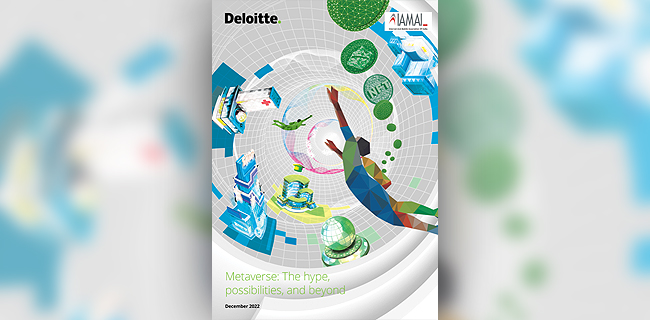
    The Internet and Mobile Association of India (IAMAI) in association with Deloitte launched a report titled ‘Metaverse – The Hype, Possibilities, and Beyond’ at Digital Marketing Conference, ‘Marcon 2022’ in Mumbai on Monday (Dec 12).


    The report was launched by Sreeram Ananthasayanam, Partner, Deloitte. The event also saw a panel discussion after the launch.


    Here is the Executive Summary of the report:

    Technology is getting affordable, scalable, and trustable, and transforming business models and consumer expectations. Robust and scalable digital infrastructure and applications are enabling personalisation for a generation that prefers differentiated experiences. In addition, alternative technologies (Decentralized Autonomous Organizations [DAO], Decentralized finance [DeFi], Nonfungible token [NFTs]) are disrupting digital ecosystems by disintermediating intermediaries and decentralising ownership. Technology is building decentralised trust to make processes and transactions efficient, transparent, and seamless.


    One such technology is Metaverse, which refers to an immersive, interactive, and live virtual environment, distinguished by its ability to transport the real-world experience into a virtual world. In this world, people across locations can interact live and work in real time. This is supported by a digital economic infrastructure powered by virtual digital assets. Metaverse is a confluence of technologies that aims to integrate businesses in innovative ways, enhances operational efficiencies and transactions, and provides an experience par excellence. It creates new market avenues, which are futuristic, yet revolutionary. The exponential nature of technology growth is only going to make it more feasible and affordable. Several enterprises and customers are foraying into this space that is redefining business models and customer expectations.


    In this report, we aim to understand how businesses engage and interact with each other in a Business-to-Business (B2B) and Businessto-Consumer (B2C) ecosystem. We believe that adopting Metaverse is possible through the merging together of the physical and digital worlds (phygital). It will help businesses reduce costs, collaborate in real time, overcome logistics issues, provide enhanced opportunities and productivity, improve feedback processes, and offer possibilities for product and service augmentations. All these will not only generate revenue but may tilt the competitive advantages in favour of those ahead in the adoption curve. It will enable businesses to take a step towards introducing environment friendly policies and sustainability.


    Metaverse is a ‘virtual world’ with real people in digital avatars, who come together to interact and transact. Hence, the boundaries for work and play are blurred. Such a concept is hard to understand, monitor, and regulate because of the undefined rules and unimaginable complexities that may exist. In the following chapters, we begin with our understanding of Metaverse as the world is still exploring its confluence in the Phygital space. We also debate on the possibilities of different types of Metaverse architectures and their potential across enterprises. Subsequently, we discuss the challenges that will likely arise while implementing the Metaverse ecosystem and the possible measures to sustain business in a dynamic marketplace.


    There is also a section that provides an overview of the applications of Metaverse and its potential across sectors. We will discuss the art of possibilities for enterprise Metaverse and how it will help enterprises scale and diversify their businesses and opportunities by using the myriad elements of the Metaverse economy. While most of the current use cases on Metaverse primarily relate to the B2C segment, this report also explains the potential enterprise-grade use cases that address the B2B segment.


    Conclusion of the report:

    The Metaverse technology is likely to see exponential growth in the coming years with rising awareness about its applications and rapid advancements in the digital infrastructure and digital natives gaining purchasing power.


    On one hand, as the supply side of the Metaverse ecosystem develops, more organisations are likely to reorient their business to take advantage of this evolving technology. Several organisations have already announced their Metaverse offerings, which may help achieve the required scale and demand to improve cost-effectiveness and adoption rate. On the other hand, the demand side of this ecosystem. has been driven by demography, along with phygital worlds, virtual work/play facilitated due to the pandemic, and Moore’s law playing its role in making the infrastructure affordable.


    The success of Metaverse penetration will depend on the time organisations take to understand its relevance to their business and the pace of this ecosystem’s development. The ability to ramp up the technical skills and readiness, and deal with rising cyber threats will be critical to its adoption. Governments can play an important role through the right regulatory policies and incentives for new-gen tech adoption.


  • Cosmos Maya announces key appointments, forays into VFX

    By Our Staff


    Kaushal-Nanavati
    Kaushal Nanavati
    Asif Khan
    Asif Khan

    Animation company Cosmos-Maya has strengthened its leadership team with key appointments, that of Kaushal Nanavati as its Chief Revenue Officer, and Asif Khan as its Business Head – New Ventures (VFX, EdTech).


    The duo will work closely with Megha Tata, CEO Cosmos-Maya, towards the company’s next phase of growth. The Singapore-headquartered company, was founded by filmmaker Ketan and Deepa Mehta and is backed by NewQuest Capital Partners.


    Talking about the new appointments, Megha said: “We are delighted to welcome Kaushal and Asif to our senior leadership team. They bring years of experience and expertise in their respective fields and the combined force of their vision will help Cosmos Maya to reach new heights. We welcome them to the Cosmos Maya family, and I’m thrilled to work on new business opportunities together.”


  • Digit Insurance launches new YouTube series

    By Our Staff


    Go Digit General Insurance, a general insurance company, has released a new series on YouTube named ‘Simply Put’. The series will focus on simplifying complex financial decision making, including insurance, using pop-culture references, memes, data visualizations and more.


    Commenting on the newly-launched YouTube series, Tanya Marwah, Vice President and Head – Brand Marketing, Digit Insurance said: “The ‘Simply Put’ series is one of our latest conquests towards making insurance simple. Tackling inherent biases, doubting the real value of health cover or thinking of insurance through different life stages is something we have all done at some point in time. The series will demystify these complex ideas, albeit through simple and easy-to-understand references, all in a fun narrative that people would hopefully love watching.”


  • LinkedIn @ 20: Transforming the business networking giant


    By Theo Tzanidis


    When someone says social media, you probably don’t immediately think of LinkedIn. But there’s no denying that the business networking site has gone the distance: it is now 20 years since it was founded in Silicon Valley.


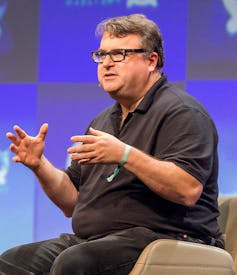
    It was the brainchild of Reid Hoffman, a US entrepreneur who worked on an early social media platform for Apple before launching one of his own in 1997. SocialNet was a dating and professional connections site, but folded two years later after failing to find a big enough userbase in those early days of the web.

    LinkedIn founder Reid Hoffman talking at a conferece
    LinkedIn founder Reid Hoffman. Photograph credit: Marco Verch, CC BY-SA


    Hoffman went on to become a senior manager at PayPal, and made a substantial amount of money when it was bought by eBay in 2002. This helped him to co-found LinkedIn on December 28 2002 with a team of former SocialNet colleagues, becoming its first chief executive and later executive chairman.


    This was a period when everyone was realising the importance of individual interconnection and peer-to-peer interactions. LinkedIn launched in May 2003, just ahead of Myspace and Facebook. But where they and others like Friendster went after the consumer market, Hoffman’s venture was always focused on business.


    How it grew

    LinkedIn was originally set up as a place where users could share their CVs and establish a network of people who could recommend them. It took a while for the service to find its feet via innovations like allowing users to upload their contacts books (2004), as well as jobs listings (2005) and public profiles (2006).

    LinkedIn went international in the late 2000s, opening an office first in the UK in 2008 and introducing Spanish and French language versions the same year. Jeff Weiner, formerly of Yahoo, took over as chief executive the following year as the company morphed into a proper business.

    It made money from premium features that enable users to do things like messaging outside their network, send promotional emails and access analytics. It also sells advertising space and packages to help recruiters attract talent.

    It floated on the stock market in 2011 with a valuation of US$9 billion. This helped to finance an acquisition spree that has gradually bolted new features onto the platform, such as posting articles (2015) and videos (2017).

    The company was acquired by Microsoft in 2016 for US$26 billion (£21 billion). With Hoffman joining the Seattle giant’s board the following year and Weiner still LinkedIn’s chief executive today, Microsoft has taken a relatively hands-off approach to ownership.


    Pandemic benefits

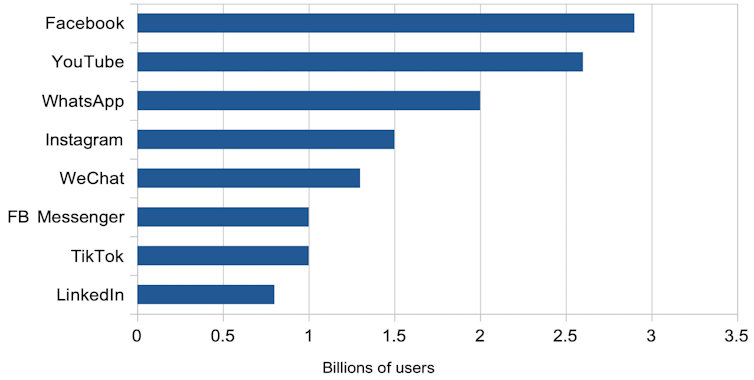
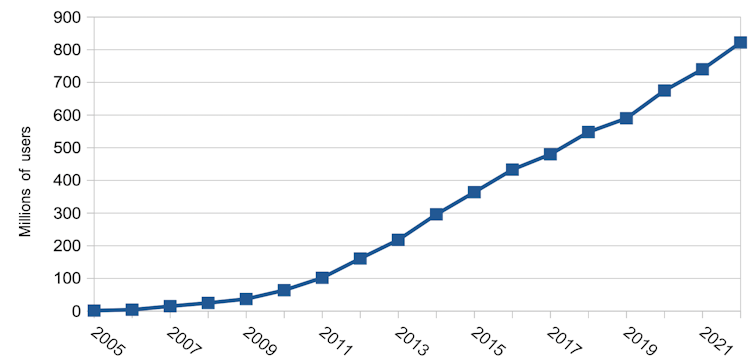
    Today LinkedIn is arguably the seventh largest social network after Facebook/Messenger, YouTube, WhatsApp, Instagram, Twitter and Tik Tok. In 2021 it had nearly 824 million users across 200 countries and territories, of which 6% (49 million) are premium subscribers, paying a minimum of US$29.99 a month.

    Not only does LinkedIn’s business focus attract an upmarket userbase, they are also youthful. The majority (59%) is made up of 25-34s, followed by 18-24s (20%) and 35-54s (18%). It generated revenues of over $10 billion in 2021.


    World’s biggest social networks

    Bar graph showing the largest social networks by user numbers
    All the data is monthly active users from January 2022, except LinkedIn, which just gives user numbers. Statista


    LinkedIn had a “good” pandemic, with conversations on the platform rising 43% and content-sharing almost 30%. It benefited from a shift in how people networked, related to findings from numerous studies that it’s the “weak links” in our professional networks who are the most important for gleaning critical information that leads us into jobs we genuinely desire.


    At a time when the usual barriers of time and space were less relevant and Zoom calls were ubiquitous, it became the perfect moment for reconnecting with these occasional contacts. Especially with so many people questioning their work situations, LinkedIn was the ideal place to see their posts and reach out to them.


    This meant that LinkedIn played a key role in the great resignation, particularly since like the platform, this movement was dominated by millennials. Users posting about changing or quitting jobs would attract large numbers of likes and comments, inspiring others to do likewise. The fact that so many people were connected on LinkedIn multiplied the effects, making it both the main catalyst and the main solution for employers.


    LinkedIn user growth over time

    Line graph showing growth in LinkedIn user numbers over time
    Various sources


    Meet the ‘work-fluencer’

    LinkedIn’s role as a lightning rod for work issues is also likely to determine how it develops, as a new category of social media influencer emerges – the “work-fluencer”. Companies are increasingly finding that employees’ LinkedIn profiles and postings can express the brand better than corporate accounts, allowing them to develop the corporate business network much more quickly and naturallyand naturally.

    When this is done well, employee posts are usually much more authentic than corporate PR. Rather than just curating articles on professional milestones and triumphs, people have become more open and honest about day-to-day work life.

    Over 13 million LinkedIn members have their profile set to “creator mode” to obtain higher exposure for their postings. Many use the hashtag #careertiktok to publish things like their wages and day-in-the-life vlogs about their professions, achieving over 1.5 billion views.

    This new “online watercooler” represents a change in the amount of information people reveal about their work on the internet. Workers are raising formerly taboo concerns like pay transparency, discrimination and professional undermining. Some professionals like lawyers, entrepreneurs and HR experts, have leveraged their posts into new content-marketing businesses and other profitable side hustles.

    Twenty years after LinkedIn was founded, this could enable the platform to enjoy the kind of trust and community growth that other social media networks would envy. Certainly it has challenges – fake accounts are an issue, for example. And LinkedIn inevitably attracts a lot of spam, which is probably one reason it doesn’t achieve the same amount of daily interactions as other social media.

    On the other hand, it benefits from not having a single direct competitor of scale. The nearest big ones would be Facebook Groups or Reddit, but LinkedIn’s purely corporate focus is always likely to be a plus against such players. At a time when traditional platforms like Facebook and Twitter are experiencing difficulties, LinkedIn has a real opportunity to continue succeeding as the one dedicated platform of its size.


    Theo Tzanidis is Senior Lecturer in Digital Marketing, University of the West of Scotland. This article is republished from The Conversation under a Creative Commons license. Read the original article.


  • Prime Video releases a new session of ‘Maitri: Female First Collective’

    By Our Staff


    Amazon Prime Video has released a new session of Maitri: Female First Collective. The collective is an endeavour to help build a community for women from media and entertainment where they can come together to discuss their experiences, challenges and successes, and offer their perspective and advice on how to bring about a positive shift.


    Moderated by the creator and curator of Maitri, Smriti Kiran, the participants comprised Aparna Purohit, Creator – Maitri and Head of India Originals, Prime Video; Indhu VS, Writer & Director; Ratheena Plathottathil, Writer, Director & Producer; Elahe Hiptoola, Creator & Producer; Parvathy Thiruvothu, Actor & Director; Rima Kallingal, Actor, Producer & Performing Artist; Shreya Dev Dube, Filmmaker & Cinematographer and Neha Parti Matiyani, Cinematographer.


    Said Aparna Purohit, head of India originals, Prime Video: “With the new session of Maitri, we wanted to take stock of where we stand with respect to diversity, equity and inclusion, understand the challenges ahead, and collaborate to find the right solutions. We are very heartened by the encouragement and support we have received for Maitri: Female First Collective so far. While it is a gradual journey, I am happy to see some change already coming through. To hear things like ‘we have women writers in our writers’ rooms’, or ‘our women characters have agency’ and ‘our content will definitely pass the Bechdel test’, in conversations with creators, for me, is a major step in the right direction. At Prime Video, we remain deeply committed to DEI. As the next step, we want to strive to have at least 30% women HODs across all our productions.”