Numeric Company, a UPS manufacturer and supplier, has unveiled its new year film themed #DisconnectToConnect. The film reminds people to connect with one another in real life and spend less time on screens.
Satpal Singh, CEO, Numeric UPS said: “In today’s time, everyone is busy scrolling over their smart devices and rarely finds time to enjoy their life in its true essence. It’s time for all of us to remind ourselves of living in the moment and feeling a positive ignition. This new year, we must disconnect from the digital world whenever possible, in order to have real-life conversations, spend time with family, play sports, go hiking, and just embrace the world around us.”
Delhi NCR based digital marketing agency Digital Kong has won the digital communication mandate for Dubai based MMI Diplomatic, beverage marketing, sales and distribution. A subsidiary of the Emirates Group, Maritime and Mercantile International (MMI) holds a 100 year long legacy in supplying premium and super premium spirits, the largest wine portfolio and quality beers in over 40 countries across 4 key geographical regions- the Gulf & Middle East, East Africa, Indian Ocean and SouthEast Asia.
Digital Kong’s team will be taking the charge of MMI Diplomatics’ official communication across social media channels.
Karan Dhingra, Key Account Manager, Maritime and Mercantile International, said: “I’d heard tremendously well about Sanjana and her team at Digital Kong through associates in the industry. The team is creative and adapts quickly to the tonality of brands. MMI has always had an innovative approach in retail and marketing and I am sure that the experts at Digital Kong will continue to reflect the same through their analytical and contemporary approach.”
Sanjana Nischal, COO, Digital Kong, added: “I’m excited to once again serve the hospitality industry. My team and I equally share MMI’s vision and are elated with this partnership. Our focus will be on maintaining the legacy that MMI carries and further using our distinct marketing propositions in delivering an enhanced brand and consumer experience across funnels.”
The Internet and Mobile Association of India (IAMAI, www.iamai.in) in a statement issued today has lauded the Digital Personal Data Protection Bill (DPDP) as industry-friendly. It has struck the right balance between protecting the interests of the data principals while leaving enough room for tech start-ups to innovate and grow.
According to the feedback received from the majority of IAMAI members, the reconceptualization of the data protection framework in the DPDP to balance innovation and economic growth with the interests of users will go a long way to assuage concerns of digital businesses and help make India a trillion-dollar digital economy by 2025. In particular, IAMAI appreciates the more liberalized framework for cross-border data flows and the exclusion of non-personal data from the ambit of the DPDP Bill. IAMAI also appreciates that the Bill imposes only financial penalties for non-compliance as opposed to both financial and criminal penalties.
Commenting on the Bill, Dr. Subho Ray, president, IAMAI said: “By following a deep and wide process of consultation including that of a joint parliamentary committee, excluding non-essential provisions, by making a clear commitment that no Rules exceeding the provisions of the Act would be made, and yet protecting the interests of the state, citizens and the digital economy, this Bill has possibly set up new standards of law-making.”
On behalf of its members, the association has requested the government to provide clarifications regarding the DPDP so that once it is passed into an Act, there is better compliance by IAMAI members. In particular, there remain ambiguities surrounding the timelines for implementing the various provisions of the Bill and mechanisms for obtaining verifiable parental consent to process the personal data of children. As the inclusion of specific timelines will provide a roadmap for the industry to better comply with the Bill, IAMAI has requested the government to clearly indicate reasonable timelines by which the various provisions of the DPDP will be implemented and to adopt a graded approach to prescribing such timelines. IAMAI has also urged the government to consider a flexible approach to obtaining parental consent, as prescriptive mandates may have an adverse cascading impact on sectors that provide services to younger individuals.
IAMAI is confident that through consultation and collaboration, the final version of the law will help stakeholders who are invested in and committed to the digital ecosystem of India.
The interactive ability of digital and social media has given rise to the concept of Hypertext Marketing. Hypertext Marketing differs from traditional integrated marketing strategy in that it not only integrates a single brand message across multiple media but also draws upon interactive platforms that modify and generate new brand messages.
The integrated brand strategy and management school gathered momentum in the late seventies and early eighties of the twentieth century. It began with the outmoding of Vance Packard’s famous persuasion model of marketing and the resultant “hidden persuader” school of advertising. Instead, brand strategy and management took on a consumer-centric focus on meeting consumer needs rather than manipulating consumer minds through artful advertising.
This evolving school of marketing then further challenged the notion that rational forces and metrics drive markets. This evolving understanding of consumers, market and culture led to the Marketing Semiotics paradigm.
Semiotics focused on the role of emotion and creativity in consumer decision-making and on applying these insights to the strategic planning process.
Marketing Semiotics focuses on three dynamics – a) the semiotic space defined by the product category, b) the relative positions of the competitive brands in this space and c) changing cultural trends that might affect the semiotic space and the positions of brands within this space.
The dynamic interaction between cultural norms, marketing action, and consumer interaction defines the dimensions of a category semiotic space.
For example, in formal Western menswear, research in India has shown that two dimensions define the semiotic space – the Elite-Accessible dimension, Trendy -Traditional. In traditional analysis, this leads to four quadrants for available brand positions – Elite and Trendy. Elite and Traditional, Accessible and Trendy and Accessible and Traditional.
In semiotic analysis, even the negatives of each dimension – Not Elite, Not Accessible, Not Trendy, Not Traditional are considered -leading to ten quadrants of positioning space to be explored. This approach allows for a) more positioning options to emerge, b) for more dimensions to emerge and c), over time, better track cultural shifts affecting the semiotic space as well as brand positions.
Semiotics can lead to more effective marketing communication. In the communication context, marketing communication is defined by its formal and cognitive properties as a medium of consumer persuasion. Semiotics, however, defines marketing communication from the marketing context – as a vehicle for sustaining brand positioning over time, maintaining its competitive distinction and aligning brand message with cultural change.
To sum up, Marketing Semiotics is an approach that creates and builds brands as an integrated and interactive part of the product category code and the broader cultural code within the competitive framework and responds to category and cultural code changes over time.
Combining Hypertext Marketing with Marketing Semiotics allows integration with the ability to respond to interactive platforms.
In her book “Creating Value: The Theory and Practice of Marketing Semantics Research, “ Laura Oswald gives an example of the integrated use of Marketing Semiotics in Hypertext Marketing by Red Bull.
Red Bull used the brand metaphor of “Wings” to signify its core benefits of “Lifts, energises, inspires” and fashioned the advertising theme of “Red Bull Gives You Wings”.
Red Bull decided on the brand tone of “irony” because humor was the most engaging content genre with its core target audience – the young. And within humor – irony had the most upmarket appeal.
Red Bull consolidated its functional position with its consumers by sponsoring extreme sports and high-energy cutting-edge rock music. However, in the Hypertext Marketing context, it needed to find an interactive platform that resonated with its ironic advertising and enhanced the brand’s chosen persona. It did so with the Flugtag events. The basis of Flugtag events was the concept of giving human wings – literally. The event invited teams to build a flying machine solely powered by humans and then demonstrate these at the event by flying over a water body. Most flights lasted less than a minute, with the spectacle of the contestants crashing harmlessly into the water. After a Flugtag event, social media would light up with user-generated content based on videos of the event. The zaniness of the Flugtag event, the ironic advertising on the theme “Red Bull Give You Wings”, and its sponsorship of extreme sports and rock music allowed Red Bull to build and nurture a formidable brand that was equally strong on the functional and emotional dimensions.
Chart from “Creating Value: The Theory and Practice of Marketing Semiotics Research” by Laura Oswald
In my decades in the Indian advertising world, I have seen much change. When television emerged as the primary media in the late nineties, the lingua franca of Indian advertising changed from English to Hindi and other Indian languages. Today as the focus of Indian marketing shifts from mass media to digital media, from linear TV to connected TV, from brick-and-mortar to omnichannel, and from Gen X to Millennials and Gen Z, the process of marketing and marketing communication strategy making needs to shift. Many consumer behavior models that today form the basis of marketing and advertising strategy need to be updated. We need to audit and continuously reframe our understanding of the semiotic and cultural spaces that constitute the operational matrix of our products and brands. Finally, we need to reinvent market research from the silos of quantitative and qualitative, ad hoc and syndicated, and move to a more strategic form of analysis and research that integrates across all marketing mix elements and time.
We must also know and act on the actual value of digital and social media emergence. Most brands across categories solely base their digital and social media strategy on the paradigm of better and more fine-tuned targeting. The big unexploited opportunity that digital and social media platforms offer brands is Hypertext Marketing, which creates a virtuous, brand-building cycle between the brand and the consumer.
Infidigit, organic digital growth platform, has bagged the search engine optimisation (SEO) mandate for SBI Life Insurance. As part of the mandate, Infidigit is all set to create a strategy to organically boost SBI Life’s ranking through its interactive website and further consolidate brand SBI Life’s strong online identity.
Kaushal Thakkar, Infidigit’s Founder and Managing Director said: “Infidigit is proud to have SBI Life Insurance as one of our esteemed clients. SBI Life is one of the most credible and reputed insurers in the Indian life insurance space. In the post covid era, a large number of Indians have realized the importance of securing their family’s financial future and the effects of this can be seen on Google search. Google has become a crucial touchpoint for brands as users turn to Google for quick answers. We aim to further drive organic traffic and rankings by optimizing for both users and search engines.”
Speaking on the development, Ravindra Sharma, Chief of Brand, Corporate Communications & CSR, SBI Life Insurance, added: “We are excited to onboard Infidigit for taking over the SEO responsibilities for SBI Life Insurance and look forward to their valuable strategic direction that will further enhance SBI Life’s online presence. Looking at Infidigit’s notable SEO work, we are optimistic that the team will enhance SBI Life’s presence and grow our website’s organic traffic and enhance online ranking.”
Disney Star today announced the appointment of Ajit Varghese as Head of Network Advertising Sales. In this role, he will be responsible for overall advertising revenues of Disney Star’s television and digital businesses and for driving growth through transformative sales and channel strategies, creating alliances and business development. Varghese will also develop the long-term vision and define the strategic direction of the sales organization. He will report to K Madhavan, President & Country Manager, Disney Star.
Said K Madhavan: “Ajit is a highly respected and well regarded professional within the advertising and marketing fraternity. I am confident that under his leadership, we will be able to unlock significant value and create more opportunities to further grow our market leadership.”
Chrome Pictures, ad production house, is expanding their team of directors and producers. After producing over 5000 ad films and carving a niche in the advertising world in their 19 years journey; Chrome Pictures is all set to include a few new names to their list of directors. The list begins with Secret Superstar & Laal Singh Chaddha fame director, Advait Chandan. The list also goes on to name Debanjolie Bhattacharjee, Aman Rai, Roopali Singhal & Atul Shahi.
Chrome Pictures is all set to take on a much larger team of producers for meeting the high demands of the ever growing advertising sector, along with their success with digital wing- Minikin DGWorks. Having lead the TVC department for 10+ years, Napolean Daniel Amanna & Abhishek Notani are now joined by Kush Malhotra & Rajat Gulati. With more than 14 years of experience, Rajat was the Vice President, Account Management at McCann, Delhi. His prior experience also includes account management positions at agencies such as Leo Burnett and Ogilvy.
Speaking about their roadmap, Hemant Bhandari, Co-Founder, Producer & Director- Chrome Pictures, said: “With the revival of the ad production post the pandemic era, Chrome Pictures felt the need to expand our team to accommodate the high demand that we are facing. We felt the need to introduce these individuals who will bring a fresh outlook and help achieve larger goals for Chrome Pictures. Change is constant, thus the need to explore newer ways to connect with the audiences is a must.”
On the heels of Argentina’s historic FIFA World Cup victory, Lionel Messi has posted ‘Namaste India’ on his Instagram to the delight of his millions of followers. The post carries a series of pictures showing Messi wearing Byju’s jersey to promote the cause of equitable and accessible education through the Byju’s Education For All (EFA) foundation.
Byju’s, the edtech company, had announced Messi as the global brand ambassador of EFA, its social initiative, a month before the World Cup began in November. Messi is known to promote the cause of equal education and also serves as a global brand ambassador of UNICEF.
“Children are our future,” Messi wrote, adding that no matter where they live, every child deserves an equal opportunity to learn and grow. Commending BYJU’S and its groundbreaking work in championing inclusive tech-driven education for all, Messi took the message of equal, equitable, and quality education for all to his 400 million+ social media followers, and marked his welcome into the BYJU’S family. His post garnered nearly 10 million, or 1 crore, likes in the first ten hours, making it one of his most popular endorsement posts.
Said Divya Gokulnath, co-founder of Byju’s: “We are honoured to have Lionel Messi join us in our mission to provide accessible education for all children, regardless of their background or location. Messi’s passionate advocacy for education and children aligns perfectly with our own values at Byju’s, and we look forward to working with him to expand the reach and impact of our Education for All initiative.”
E-Gaming Federation (EGF), an organization representing online skill gaming operators in India, launched ‘Asli Gamer’ campaign to promote responsible gaming practices among players. It onboards cricketer Shubman Gill and rapper Naezy to promote and encourage the adoption of responsible gaming practices.
Reiterating EGF’s commitment to player protection and responsible play, the thought-provoking campaign outlines the promising standards of responsible gaming aiming to educate players and protect them from any adverse consequences of online gaming.
Said Sameer Barde, CEO, E-Gaming Federation: “Player protection and Responsible gaming have been at the core of EGF’s self-regulatory standard for the past 4 years. For industry, we have always emphasized the importance of enabling and facilitating responsible gaming for the players and platforms that promote fair and transparent play. Our certified operators already implement our Code of Conduct meeting requirements that require features like daily monthly limits, self-exclusion, assisting vulnerable players, protecting player data, ensuring secure payments, and maintaining responsible marketing complying amongst other things. Whilst Industry continues to do its best, at the end of the day, responsible gaming also comes down to the individual. The ‘Asli Gamer’ campaign is our proactive approach to empower players with the knowledge and tools to ensure responsible gaming is top of mind for them. As the next step, we will also organize an awareness drive focused on the five principles of EGF’s ‘Responsible Play’ model.”
Koo, the Made-in-India Twitter-like microblogging platform has launched a campaign around Republic Day. Called #TogetherWeKoo, it started on January 21.
“India is a land of diversity, with 1000s of languages, and true expression lies in being able to speak from the heart, in one’s own language,” said Aprameya Radhakrishna, CEO and Co-Founder of Koo. “True democracy lies in giving a platform to everyone, and we invite you to join us on Koo and support this campaign of equal opportunity of expression.”
Coto, the social community app exclusively for women, brings on board Avi Kumar as Chief Business Officer. He will report to former boss Tarun Katial, Founder and CEO, Coto.
Commenting on the appointment, Katial said: “Avi has an earned reputation as a game changer, brand innovator, agile marketer, and proficient leader. He has the desired skill set mix that allows him to expertly comprehend consumer needs and requirements and build lasting brand relevance while driving business outcomes. His entrepreneurial outlook will go a long way in fortifying coto’s commitment to delivering a safe online space for women.”
Added Kumar on his new remit: “I am excited at the opportunity of joining the senior executive team at coto and working collectively towards building a responsible virtual environment for women. coto brings together leaders of today and tomorrow and enables and empowers them to be the changemakers. I will focus on driving business growth, consumer engagement, and relationship management as part of the larger strategy. It would be an incredible opportunity to unlock incremental value for our customers and partners by curating richer and more immersive experiences.”
AajTak has becomes the first news YouTube channel in the world to cross 50 million subscribers, notes a communique, adding: “This record milestone comes just three years after crossing 10 million subscribers in 2019.”
Kalli Purie, Vice Chairperson, India Today Group, met Gautam Anand, Managing Director of APAC – YouTube, in Singapore to commemorate the special achievement.
“Thank you so much, YouTube! This is just amazing. The team is already planning its way to 100 million so YouTube had better start designing the next button,” Purie, adding: “Trust has always been the foundation for audience engagement at AajTak. It’s no different with our YouTube channel, but on a much wider scale with hundreds of videos getting uploaded every day. We place equal emphasis on having new audiences discover our channel while ensuring loyal viewers revisit, and invest in figuring out what works on YouTube – whether this is a nuanced understanding of thumbnails or producing hero content frequently.”
“Constant experimentation with new formats like Shorts and investment into our Community page has really paid off, and consistently breaking stories has helped create a very loyal fanbase,” explained Purie. “Events like the Presidential Elections of 2022, Solar Eclipse and the Cricket World Cup just kept encouraging us to do better and better.”

 The interactive ability of digital and social media has given rise to the concept of Hypertext Marketing. Hypertext Marketing differs from traditional integrated marketing strategy in that it not only integrates a single brand message across multiple media but also draws upon interactive platforms that modify and generate new brand messages.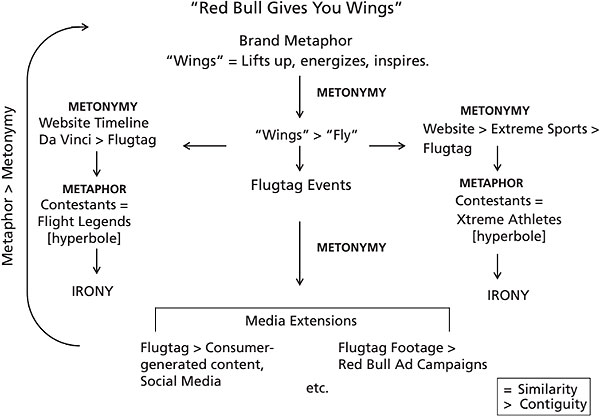

 AajTak has becomes the first news YouTube channel in the world to cross 50 million subscribers, notes a communique, adding: “This record milestone comes just three years after crossing 10 million subscribers in 2019.”