Category: INTERVIEWS

  • What’s made Dentsu Creative Impact #4 at Goafest Abby?

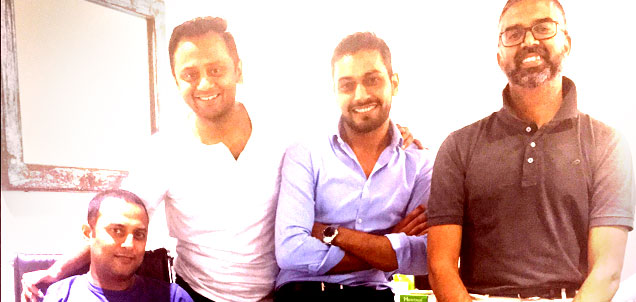
    L to R: Soumitra Karnik, Kartikeya Srivastava, Amit Wadhwa and Narayan Devanathan


    A few years back, not many would have known about Dentsu Creative Impact. But their debut at Goafest 2016 sure got everyone to sit up and take notice. A part of the Dentsu Aegis Network, they won 2 Gold, 3 Silver and 18 Bronze metals across seven categories, which included Radio, Print Craft, Print Single, Direct, Design, Ambient and OOH (Out Of Home advertising). Competing against seasoned industry names, the win did take everyone by surprise.  Pradyuman Maheswari speaks to Narayan Devanathan, Group Executive and Strategy Officer, (erstwhile CEO, Dentsu Creative Impact); Amit Wadhwa, President, Dentsu Creative Impact; Kartikeya Srivastava, SVP & Head of Strategic Planning, Dentsu Creative Impact; and Soumitra Karnik, NCD, Dentsu India Group, the men instrumental in making this happen.


    23 metals at Goafest, the # 4 creative agency… how it did happen, all of a sudden?

    Soumitra Karnik (SK): I think it has been part of the plan. It is not something that has surprised us because we went about it very methodically. In the first few years, we had to stabilise the business side of Dentsu. And then very clearly we defined what the creative product will be eventually. So, even the hiring of the people that we have been doing for the past some time is in line with what we are seeing now.


    You all have been around for a while, why did you enter Goafest now and not earlier?

    SK: Team structure-wise we were not there very clearly. And when you say Dentsu has been around for a while, we count only the last four years. A lot of people from different agencies came together for a common cause.. There was no single vision or agenda. I think I give credit to Rohit (Ohri), he really brought the people together, from that point, we say, the birth of Dentsu 2.0 started, four years back.


    What were the milestones achieved in this journey?

    Amit Wadhwa (AW):  If you cut to 2012, the basic objective was survival at that point of time.


    That was when when Sandeep Goyal moved out?

    2011 is when he moved out. Probably it was December, when we came together and obviously that was the year closing also. For all of us it was like, oh, is it a good thing that we have done?


    All of you came together despite knowing the fact where Dentsu was….

    AW: What we were trying to achieve was something that we could have created history or become history. But we finally did manage to create one. At that time it was a big challenge. Finally, the likeminded stuck together and we managed to pull it off. At that point of time, the basic objective was how do we grow and obviously our business and creative are linked together. The prime importance was we needed to be above floating line, we needed to manage the numbers nicely. We won a lot of businesses in 2012


    Kartikeya Srivastava (KS): I was already there in Dentsu and you know everybody came together. To me, it has been a huge turnaround story. The three-four years saw the strengthening the fundamentals and foundation. Having lived in the early 2011 era, it was not even an advertising agency, to be very honest. The key really to our turnaround for me was the instilling of the right culture. It is an organic process and over the three years we have built a strong culture base.


    What is the current staff-strength?

    110 people at Dentsu Creative Impact (DCI) based out of Gurgaon.


    What did you aspire to be eventually?

    Narayan Devanathan (ND): Probably not size-wise but focus more on quality.


    AW: In terms of numbers, I do not want to go by number of people. But we intend to grow 40% this year. So,we are not stopping on growth in the number front but what we are saying and seeing is that if we are doing well in the creative front, the other bit of growth will automatically come.


    Santosh Padhi made a statement at Goafest that, ” Those guys are 2000 people, so many offices. We are 40 people and we got 40 metals and they have got 47″. So, how much does size matter?

    SK: It does. I have been part of JWT for a very long time. It is a very strong network, it is a very well-oiled machinery, resources are available. The culture already exists for the past 100-odd years. So, the network support eventually, whether you call it financially or in terms of manpower, it does make a difference.


    But in terms of, if metals are the indicators of how good you are, then Taproot has got 40…

    All: That is fantastic.


    SK: That is the point he was making. If these guys have 2000 people and if 1000 fire, it is still a substantial number.


    ND: Eventually it boils down to the focus. Like Amit and Kartik said, last 3-4 years we were about stability. What we like to say is that, this is kind of bungee jumping. If the rope holds, thrill of a lifetime and if it doesn’t, hopefully you won’t feel the pain. But to add to Amit’s point is that, this is a ship that needs turning around and it won’t happen if people are standing on the shore and cheering. It is all hands on deck, power to everybody in the ship. That’s what is happening right now. This is the focus that we are driving towards to push stability. Creative excellence will take us further.


    Where does DCI fit into the larger Dentsu portfolio?

    ND: Each has an individual identity. Back in 2013, when Taproot became part of the group, we thought of it as a tugboat to pull the ship. But right now, this is more than a tugboat. Creative Impact on its own steam is going to take the Dentsu brand forward. Where we are now, there is enough steam on our own.


    What were the surprises like? Was it a “God, these guys exist?”

    KS: No, the surprise was that ” Oh god! We never knew these guys would exist”. The fact of the matter is that we were up against biggest agencies in the business. We could pull the rug out of a lot of people’s feet was happening, stood out for DCI.


    AW: If you look at what we have been trying to do and what we have been trying to do and what we have done so far, we have managed to surprise. No one expected us to win. We managed to surprise them by winning 80% of the pitches in 2012 itself and managed to hold on to handle one brand of HT, now we handle 4 brands of HT, from 4 brands of Maruti Suzuki to 13 brands of it.


    12. Where does DCI stand among other networks and why people should look at you’ll for their brandsand not the others?

    ND:. There’s a reason behind it and the reason is that this is the difference in Creative Impact. It continues to be young and the average age is 28. It’s the young being fearless and thinking there’s nothing to lose. Bringing the A game whatever the consequence may be, not being afraid to do the unsafe.


    There are agencies which are creatively run and some by suits. What about DCI?

    SK: DCI runs creatively.. A simple reason is we all are creative. If one person comes into our thinking sessions, it could be a planning guy cracking an idea, could be an account management guy, it could be anyone. It is a free flowing session. What I say as a creative leader, when we started advertising, none of us said that we want to be an account management guy. We all said we want to be an advertising guy. So, all of us have to be ideas people. The thinking is creatively driven kind of a thing. Ultimately, we all drive towards creating a creative idea.


    Is it really that everybody does everything?

    AW: I’ll give you an example. We discussed this around 2013.. We had gone into a bit of rhythm, we had managed some numbers, we were stable and we said okay, next what? What should be our positives? What should be our playground? How should we be running the show? All of us are creatively linked. I keep pestering Soumitra with some idea or other, most of them he rejects. So does Kartik. We all have that creative streak. What we decided was that anyone and everyone who comes into the system needs to have that streak. SK: But you’re right that so far it has worked, going forward it might not. Nowadays, people are open. If I were reading the same article you’ll publish, I would be worried that here’s an agency where an account person is meeting the creative person. But it is not as bad as it sounds.


    ND: I would be as cynical as you, if I read that. ‘Yaar ek aur agency aagayi, phir wohi baat bol raha hai’. But,two indications. Can’t name the client, as recently as last week, some grey hair and experienced heads were in the room defending this out-of-the-box idea that we had presented to the client. How much logic we put in front of the client , they weren’t buying it. The juniormost writer in the team stood up and said ‘ You know who are you trying to sell this to? You’re trying to sell this to me’. He made an amazing argument and didn’t hesitate to speak up. This is one indication. The other is a ghar wapsi movement. People have switched from our agencies to other agencies and it’s been less than 3 months they said ‘  ‘Acchi jagah nahi hai yeh. Can we come back?’. For us it is a testimony that we’re doing something right.


    What is the path ahead?

    AW: In terms of numbers we are very clear on how we want to go. But we are selective about what all we are going for. So,what is of prime importance is the set of brands that we have . Usually, what happens is that in the stretch of growing you go on pitching and you start neglecting the existing brands. It’s a conscious decision that we are going to make sure that we deliver on existing brands  and obviously grow also. What will talk about us is the work we create.


    SK: What could be flattering was that Aggie called up. He was in London that time. He has already set us the next year’s target. He said you guys should be the next Taproot. That’s a clear target, work wise and expectations also in the network,coming from the guy.


    Awards are an indicator that you have arrived. How do you think you fare if you were to enter some of your work with Effies?

    ND: Honestly, it’s a journey. Part of it is oriented internally to approach so that the data mindset is there. Fortunately or unfortunately, the Effies are the brand put together under case studies rather than work that has been envisioned and has been done. You have a data from an independent firm, that maps the results, which is always not the success seen on ground. Not all of our clients or us are oriented towards working like that.


    KS: This is a start. I’ve always felt, professionally, that Effies are a great way to judge, to get recognition. The kind of work that we do today make us a good case.


    How are you aligned towards 2017 where Dentsu wants to be the #2 agency network in the country?

    SK: I don’t think specifically it would be awards and cut-throat competition and we’ll start doing work only for awards. Have we tasted blood? Yes. Does it add to the expectations of the network? Yes. So, I think we are completely aligned with the vision set in front of us both in terms of business and creative output.


    ND: I would like to add what Amit was saying earlier about where next. And I’m coming at it from a not just Creative Impact point of view but specifically, I would like to make it about Creative Impact. One of the things we have going forward, biggest strength is that we are part of the Dentsu Aegis network and therefore the partners that we have within the group driving growth organically, through the networks internally, is the key KRA for all of us. But what Amit has done and this team has done is quietly without talking about it made it work already.


    AW: And it’s important what Dentsu Aegis brings to the table, the scope of thinking has widened. We think of an idea and keep the rest for the client to execute. Now we know the intricacies of the other mediums, because we sit together, work together, interact a lot more and the idea is very closely guarded. What we have realised in the last few months is that clients are appreciating that a lot. And, the kind of output we’re getting is far far better. That’s another part of the change that is happening at DCI.


    ND: We are lucky to have a creative leader like Soumitra who never starts a meeting by saying TVC banate hain. ‘ Kya idea kya nikalna hain first’ and then it will take form.
     

  • The importance of Emotions


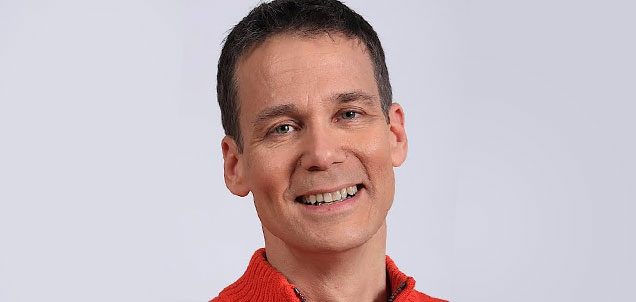
    It’s not enough to find a message that resonates with your customer, or tap into universal feelings and experiences to sell something. If your product isn’t good enough or competitively priced, the message will never hit home. That’s what Graeme Newell, President of 602 Communications and a customer loyalty expert who shows organisations how to build deeper, more passionate relationships with their customers, tells Anuka Roy, on the sidelines of recent PromaxBDA conference in Mumbai.


    So what exactly is emotional marketing?

    Emotional Marketing is moving beyond mere product features, and attributing those products with a deeper emotional resonance that really touches something that is in all people. Those universal emotions which all of us feel, for ourselves and each other, those are the most powerful drivers. The instinctual things that were built thousands of years ago — when we cared for each other, when we were bold and adventurous — those are the things that help a species survive. By being able to tap into those natural things that we all feel, we can give very standard products deep emotional meaning. It is also almost like turning a product in to a person.


    You are an expert on customer loyalty and your advice to organisations is deeper emotional connect with customers. But isn’t that what marketing is all about?

    It is, and it is about taking it to the next level. My company researches very specific customer groups and on the network side, we get the best loyal and new customers they hope to grab. We do not ask them how they like the network, but we ask them about how they feel about themselves, the things they worry about and hope for, and then we build the programming — the shows, the marketing, promotions and advertising around those deeply resonant things that those audiences are predisposed to feeling about themselves. If we can make that average content into something that has deep emotional resonance, people will come to our channel first. For me, when HBO comes out with a new series, because I have a deep attachment to HBO, I am totally ready to give that show a try. It is because of the experience and emotional feeling.


    How important are emotions in modern marketing, when people have no time?

    It’s a balance because you have to make sure you have good product features. In any category — whether cars, soaps or shows — if you have bad programming, no matter how emotional you are, you will not watch bad shows. I have a good product and I have to make sure that is there. And if you do not have that, then you have to work on it. It’s an idea that we call warmth and competence. You’ve got to have competence when you come in. In the television category, there are a tremendous number of competent networks. There are a million choices for dramas, comedies, sports and such. The only way I am going to give another network a try is if they, first, have proven that they have got basic competence. But aside from that, once you achieve that level, it goes to the next level, which is about affinity to that product, the idea that ‘I truly believe this network gets me’.


    Would you say that with the advent of social media and a digitally-driven society, the work of emotional marketers has become easier?

    It has. What that has enabled us to do is have a direct connection with our customers like never before, prove to them that we are listening to them, and get two-way feedback. But I think a lot of marketers misunderstand social media and are still treating it as advertising platform. It is an amazing opportunity to show what we stand for. It is a delicate mix and we have to make sure that we use social media responsibly, but it has never been easier or more powerful than it is now. Getting people, particularly loyalists, to hang with us, provides amazing opportunities for us to hyper-serve those loyalists.


    You mentioned the fact that people name-drop brands to impress others. How much of that is prevalent in a place like India where people are sensitive to prices?

    It does not matter how emotional you are if you do not have a good price point or a good product. Apple is trying hard to get into India right now, and it’s having a hard time because of its price point. What they are trying to do is to get that price point down by selling used phones and allowing people to have much better prices. It is always going to be a combination of that. Again, it is that warmth and competence idea. If you’ve got a high-priced product, I do not care how nice you are, I am not buying it. It really comes down to whether people have more time or money. In India, it is much more about time. People are willing to watch a few more commercials if they are able to save a few rupees.


    How far does emotional marketing work in the Indian context?

    You are an incredibly passionate community here. I think more than any other country in the world, the opportunity here is endless. But the concept of emotional marketing has really not been explored here. That is the next step. So much of what we have done so far has been proving basic competence. We have got good shows, line-ups, new dramas. The quality of programming is progressing rapidly here. There is an amazing, new number of networks, shows, and just introducing people to this is a pretty big job. The plot — that has to come first. Emotional marketing tends to work best on more mature products, and you have got a lot of young and a very upstart products that have a lot of explaining to do about just what they are. The first step would be to build a base around those product features. That is a solid plan where you clearly understand what the emotional derivers are for your audiences. Some networks still do not do that. My company does that as a first step. Typically, networks come in, get a programming and head out and then they figure out the emotional part of it, quite late. So, most of the time, we end up guessing what that emotion is. We do not have quality research or data that backs it up. This is what I call the ‘golden gut’ marketing. The idea that ‘I know my audience better than anybody and I know what they want’, as opposed to talking to them in a very real way. It is really about listening to your audience.


    This interview first appeared in dna of brands on May 16, 2016


  • OOH is moving to the centre of media planning!


    Just as many digital agencies are becoming full-service to cater to specific categories, Kinetic Worldwide Global CEO Mauricio Sabogal believes a leader in the Out-of-Home (OOH) space, like his organisation, must also go beyond the brief to grow its business. Especially when it comes to high-potential customers in the luxury, travel and banking sectors.


    Even before you took charge at Kinetic, you headed BPN at IPG Mediabrands and are hence familiar with the Indian market. How do you find we’ve changed over the years?

    It is fantastic how it’s evolved. India is a challenging market in the developing world, and you can see how technology has changed the way the country interacts with the rest of the world. When you come to India, you see a kind of energy, you see people presenting new ideas, new possibilities to create different capabilities for our business. I think that’s a big evolution in the country.


    In terms of the out-of-home business, while there is talk about how it is gaining ground, the GroupM report says it is just 5.8 per cent of mediaspends. Isn’t that too little for a large organisation like yours to be playing with?

    First, I have to say that Kinetic is the largest OOH buyer worldwide, so for us it’s a meaningful number. However, yes, you are right. The number is still small but it all depends on how it is interpreted. If you talk about static OOH, perhaps that’s the number. But when you define the scope of OOH according to what is reaching people on the go, that’s different because it involves mobile investment, social media, digital OOH and even interaction with other media because OOH is today becoming the centre of media planning.


    So which means that obviously Kinetic will be doing a lot of what other WPP group agencies are engaged in with on-the-go advertising?

    We are trendsetters, so I think all agencies are moving towards what we are doing. We were the first to propose that OOH is moving to the centre of media planning; we deal with partnerships that allow us to interact static billboards with mobile phones.. . Our competitors are following us and I am glad to hear about that because that’s what we have to do in the industry in order to grow it and position out-of-home really as moving to the centre of the media planner.


    But some of these competitors are possibly within the group itself, and doing similar things…

    I do not think we have a competitor within the group. We have an agency that complements the job we do. Or we complement their job, because they are bigger than us and we provide services to them. However, it all depends on how you approach your own business. There is a possibility of some media OOH specialists trying to create different work, to amplify OOH offerings.


    You mentioned that mediaspends are going to now revolve around the entire OOH business, and we’ve seen digital agencies becoming full-service in recent years. Do you see Kinetic becoming a full-service agency too?

    For some categories, yes, like digital agencies becoming full-service agencies for specific categories. Categories like travel and banking are high-potential categories for us to sell a full service because they are focusing on OOH and people on the go. Most luxury, travel and banking clients are on the go, so those categories are becoming attractive for us to manage in a full-service way. It doesn’t mean we will replace the work big media agencies are doing, but for certain categories, yes, that’s the idea.


    So the creative and media buying will be done by Kinetic, as against existing creative and media agencies?

    Sometimes, yes. Creativity comes from different services, and we also propose to provide services for all markets, which includes really good creativity, since we have that capability at the moment in India


    Kinetic has been there in India for a while, and you now have a new India head. What are your plans for India, and your targets for him?

    There are very big targets. Suresh is a very well-known professional in India. I know him from my previous job too, so we have worked together before. I know how aggressive he is in the market or how good he is in growing the business. There is no better person to lead the evolution of Kinetic than Suresh, and I am confident that he will achieve all the big targets we have for him.


    There is a sentiment that in the OOH business, that there is no yardstick to measure the efficacy of advertising etc, and expectations from a large network like Kinetic, which is a part of the WPP group, is that it will invest more on measurement systems and such. So what are you doing towards that?

    We are doing a lot. We are testing different methodologies, investing in data, research and analytics. We are even testing satellite technologies to measure audiences, partnering with telephone companies to get data to measure all this etc. The issue is agreement with the industry. We cannot continue having 10 different ways to measure OOH. We have to get the best information and agree on a methodology like in any other medium that will professionalise our industry and make advertisers invest with more confident.


    Professionalise?

    The more data we have, and the better the understanding of our currency, enables more professional dialogue between advertisers, agencies and media vendors.


    People say the OOH business is disorganised and there is some corruption. Do you agree, and how would you improve the situation and change this perception?

    It’s a perception and it depends on the different companies and their ways to manage regional products. At Kinetic, we follow compliance strictly… none of the companies are as strict about following compliance protocols.


    This interview first appeared in dna of brands on April 18, 2016


  • The Rise of Communitainment


    They call themselves an odd couple. One is is a professor of media and communication at Queensland University of Technology and the other is a Clinical Assistant Professor at USC Annenberg’s School for communication and journalism. And together they – Professors Stuart Cunningham and David Craig – coined the term ‘Communitainment’. They were recently in India when they spoke with Anuka Roy on their coinage, the rise in OTT (Over The Top) and VOD (Video On Demand) platforms and more.


    You both come in from a land where communitainment has proliferated? While the anytime access of content is a huge plus, what is that has led to the widespread acceptance of platforms like OTT and VOD?

    Stuart Cunningham (SC): The big underline driver is the whole digital infrastructure that has emerged in the world and has made way for content-makers. The internet, originally a pure communication platform, has now become a platform or a critical infrastructure also for rich content.


    David Craig (DC): Besides the technological and the industrial platforms, there is the cultural impulse. The truth is there have been typically a lot of underrepresented voices, topics, genres of content that are not seen in traditional media. We make a stark distinction between digital and social which we believe has not fully been understood by our colleagues. If you are a content creator, content and the kind of communal activities that occur in these social networking platforms, can be and needs to be quite different from what you see in traditional media content. It is about sharing time online with your favourite friends that may number in the millions. In other words, community, communal, communication make communitainment.


    Do you know who Superwoman is? Or what AIB stands for? If your answer to all these questions is no, then may be you are living under a rock! The common link between the above is that their claim to fame is through social media platforms.


    The entertainment industry has undergone a tectonic shift. With the rise of ‘social media entertainment’, a proto-industry has been formed by new digital platforms that are defined by intense interactivity with content and the community that consumes this content. The Godrej Culture Lab hosted an event – Communitaiment- Mapping The New Screen Ecology Of Social Media Entertainment on May 27 which dealt with this rising trade. This term has been coined by Prof Stuart Cunninghamof Queensland University of Technology and Prof  David Craig of University of Southern California.


    Their presentation used video to make the audience understand how social media entertainment works. They explained the four pillars of communitainment- communication, commutent, commodification and community. “Subscription as revenue model is growing. YouTube Red is a live example of it,” said Cunningham about how revenues are generated in this new ‘industry’. Both professors said that the concept of vlogging (video blogging) has not caught up in our country but the future is bright.


    Craig spoke on Tyler Oakley as a case study. Oakley is an American YouTube and podcast personality, humorist, author and activist. “He used his popularity to raise funds for a project which helped the homeless youth of America, of whom a majority belongs to the LGBT community,” said Craig about how people are not always looking for commercial gain but social gain as well.


    In conclusion, they said it is about using the various social media platform effectively and content has to be platform specific, the same content cannot be used for every platform.


    In India, while we have all major entertainment players hopping onto the OTT/VOD bandwagon, the numbers are still small thanks to bad connectivity and high costs. Do you think that’s the biggest stumbling block to the acceptance of these platforms with the masses?

    SC: They are very big stumbling blocks. Most of our research in US, the streaming capacity is very well developed and so very distinct. So, you have got Netflix, for example, in 130 countries around the world which started as a DVD mail order business and that is a digital service. They are interested in the interactive modes; they are interested in selling you professional, mainstream content via another means. Over here in social, you have got social interactivity that David’s been talking about.


    DC: We have been taking an ecological approach. So, while technology is important and cost is important and let us not forget regulation is important – regulation not only about net neutrality giving access to these platforms but also censorship and political constraints about what you can and cannot say in these platforms and also sub censorship as well as trolling. The kind of backlash you have to be weary of, we were in conversation with Indian content creators who have seen frighteningly horrific backlash to the kind of content they post on their platforms. But again there is that cultural impulse of trying to fill in those numerous spaces around subjects and topics. Here in India, of course, most of the content online is in English or Hinglish, there is not a lot of Hindi but there is now opportunity for all these other languages. You have 28 languages here, so there are all these opportunities for the languages but also for other forms of community. LGBT, progressive Muslims, game players – these are all spaces to be seen, start to fill up in communitainment elsewhere, we think it will happen here as well.


    SC: But there is as you say big obstacles and the obstacles are the differences between urban educated people and the vast rural areas of the country where access to 4G mobile is still many years away. And, it is also a gender question. We think that most of the people in this communitainment space in India are overwhelmingly male educated urban, there is a long way to go to see a broader range of social participation.


    Any type of content that you think that works particularly well on these platforms?

    DC: The type of content that works here in India is specific to the nature of the content that already exists. For example, first two categories we have identified here in India is professional independent music, so the OMLs (Only Much Louder) of the world and standup comedy. Neither of which had much opportunity to flourish in traditional media and Bollywood. So, that is here and is very much from a very elite professional kind of trained creator. In the US, where there is much more diversity around content what we have seen is distinctly social media content innovation. Vlogs (Video blogging), gameplay, the DIY (Do It Yourself), which is much more participatory and communal is what we have seen in the United States. And, again, we think that the US is not necessarily imposing that but rather it just suggests that there is still whole raft of communicative kind of practices that are yet to emerge in India because the lowest hanging fruit is music and comedy. But you certainly are seeing food, beauty, design and lifestyle emerge, which again is connected with your celebrity-driven culture which is very distinct around the nature of Indian culture, sub genres and alternatives genres are emerge as we seen in the States.


    SC: We are very interested in identifying distinctive Indian genre. If you can help us and point us in the direction of content that may not be very popular elsewhere, we are very interested in distinctly Indian cultural approaches to online participation and interaction as well as content forms and genres.


    DC: The one particular content that is coming from the margins that we have noticed that here is a rapid growth in women in this space. We would not necessarily term the Indie music or standup comedy as an alternative, only in terms of genre but not in terms of voice. In terms of voice, we are seeing it initially with women harnessing these platforms to finally start raising awareness about these issues. Most importantly, they are doing it through entertainment and very curiously enough with the support of advertisers and brands who understand that they can no longer sell their products to millenials who are on these platforms and they need these influencers to not only to use and promote the products but do so in the context of social issues, authenticity and if it aligns with Corporate Social Responsibility (CSR).That is where a lot of these alternative voices are able to commercialise and make money out of what they are doing.


    SC: One of the important things that we are stressing here is that these are people who are making enough money to make it a viable career option. This is one of the distinctive things we are trying to really focus on. When YouTube started 10 years ago, the US started to offer 55% of the advertising income from popular YouTube content to the creator it created a new industry. And, while YouTube is not the leading platform here, it has been the driver of this new industry, the sort of emerging proto-industry, commercialising new kinds of content. We think that is a really distinctive and important part of what we are searching.


    There has been some original content introduced by a few platforms, but with limited viewership numbers, there is a fear that that pipe will dry up eventually.

    DC: Drying up? You have 1.2 billion people here and the youngest society on the planet, about to get 4G access on mobile technology that gets cheaper every year. You are looking at the very tip of the iceberg right now. On the contrary, it is about to explode. I do not know what the better metaphor is, Indian communitainment is about to catch on fire. We will be having a completely different conversationnext year in terms of what our research is looking at. This incredible proliferation of new voices, content and enlarge audiences. It is important to understand we are looking at multiple platforms too, it is not just Twitter, YouTube, Whatsapp, it is Snapchat Vine, Vimeo, Tumblr, Periscope and now of course the second thing is aliveness- broadcast live online, Facebook live, Snapchat , Periscope- they are all game changers and they are going to happen in the next year.


    On social media, with so many clicks or like farms around, the popularity of people and products and services are always looked at with suspect.

    SC: This where the idea of communitainment is very important. One part of it is community. Community means that if you are online and creating content, an advertiser or brand comes to you and says will you promote my brand we think that the people who follow you your fans would really like our product. The first thing the creator has to ask themselves is, if I endorse this product, if I allow it to be associated with me, will my fans accept. It is not just single person or company’s decision, it is what about the fan base, what the community thinks is acceptable and there are number of examples out there of people doing something like this and finding their fan base would not accept. It is not always authentic. So, authenticity and community are far more important in this content industry than it is in top down. The idea that advertisers and brands have always controlled over us, you do not see this over here. It is very clear that the successful content makers will only go for brands and align themselves with brands to fit their community base.


    DC: The minute the influencers see themselves as celebrities doing endorsements is the minute they will lose their community and that is where the power comes from.


    You have used the term ‘mapping the new screen ecology’. What exactly is it and what are the parameters of mapping it?

    SC: The ecology of new screen, we are trying to say, who owns the platforms, and how are they relating to other platforms.Are they competing? Are they cooperating? What is the relationship between the new platforms in the old media? Do they have existing co-ownerships? This is all we call political economy. Political economy to this ecology, there is all the intermediaries help to make the connection. A lot of these are called multi-channel networks. So, new organisations and agencies have grown up to play match maker between content and brands. You have got that infrastructure; the content creators. Are they professional content creators? Are they new beginners, amateurs? That is very important. And, you have got the whole question of how global is this? These platforms, most of them have originated in the States, so, is this just another form of media imperialism? Or is it different from the old days? Not in India, which has the largest film industry in the world. But in rest of the world Hollywood dominates. So, is this another form of media imperialism because US platforms have come in to other countries; where we would argue that this is very different scenario because the content is all local.


    DC: As academics we are trying to take a macro systemic look at this space rather than on the lines of platforms and ownership, content distribution or advertising typically from one perspective. We tend to have very clearly worked out ways of analyzing traditional media.Those same content and conceptual ideas do not particularly apply here because of the different nature of the platforms, content, role of the creators and power of the community.


    While it is difficult to predict the future due to technological advancements every day, but if we want you to use the crystal ball, what would you say is the road ahead in terms of platforms, content and other mediums?

    SC: David has already pointed to the fact that we think this phenomenon is going to be on the point of growing very rapidly in this country as it has in China and many parts of the world. So, I think we are in the end of the first stage. First stage was very US-centric,the next stage is, how all this is going to play out in the rest of the world. Around the world 2 million YouTube content creators are earning money from this platform. It will be different in India because there will other platforms that will be just as big if not bigger. But that gives you a sense of the growth of this ecology.


    DC: One thing to say is that, remember, the mass communication model of the 20th century around linear media, which we did not call linear until we had interactive media, has been built around very highly capitalised expensive gatekeeping kind of operations that have tampered down the cultural impulse that we all have in every society. To have our voices heard, to tell our stories, for which we can now find ways to actually make a living doing on these platforms should not be discounted when we talk about the future of the platforms, creators and these intermediaries like the Culture Machines and OMLs. You have got 1.2 billion people here who need their voices to be heard and some of whom will be able to do so in such clever ways.  It is going to be really interesting and exciting thing to watch.


  • Balki has always been fair: Piyush Pandey

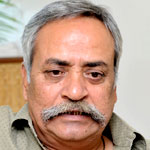
    Piyush Pandey

    A quick chat with Piyush Pandey, Executive Chairman and Creative Director of Ogilvy and Mather India and South Asia


    What do you think led to the super success of the Reshma campaign?

    I think the main reason is Reshma’s bravery. For a girl to come out and make a statement for other women in the country [is very brave]. I salute her bravery, and my team’s way of thinking about it and working closely with Reshma. It is a very sensitive way of being handled, and hats off to each one of them for collaborating for a cause.


    In the last three years, you have endorsed the Kyoorius awards in a big way. But you are not participating in Goafest. Is there a reason you participate only in Kyoorius and not elsewhere?

    I can provide a number of reasons, as we have discussed in the past. One of them is a standardisation of the jury, and a well-selected jury [at Kyoorius], which I find is more transparent.


    The fact that Balki has selected an Ogilvy ad is a good thing too. He was the chairman of the jury.

    Balki has always been fair. I have a high regard for Balki.


    How much do awards matter for agencies like yours?

    I think you have to look at the atmosphere here. It matters a lot when it comes to self-esteem. Does it convert into business? No. Does it motivate people? Yes.


    You have creativity and you have effectiveness awards. Effectiveness awards are another area that Ogilvy scores high on. Which, to you, is most important?

    If you are creative, it is better to be effective. If it is effective, and bad advertising, that means other elements of the product will not help your advertising. Good advertising must convert into effectiveness.


    First appeared in dna of brands dated June 6, 2016


  • We couldn’t have done the ad without Khali: Bobby Pawar

    Bobby Pawar

    Excerpts from an interview with Bobby Pawar, Managing Director and Chief Creative Officer of Publicis Worldwide on the Khali Ad for Ambuja Cement winning the Black Elephant


    The best of the show at Goafest, and a Black Elephant here. It seems to be Khali all the way…

    Certainly looks like it. Although my face does not show it, I am very happy.


    Would you say that the last year, Khali was the best creative work done in the country?

    I do not really care to make such statements. [The ad] got voted on its views and shares and so was among the most talked-about pieces of work. I am proud of it, and there are quite a few people out there saying it is the best piece of work.


    What, according to you, really made the work outstanding?

    It is a combination of things. At its most basic level, it is a very human story about a man who’s born too big and strong for this world. His struggle with everything around him — along with the humour of him crashing into and breaking things — touched a chord. We have not just showcased a celebrity, but used one in a manner that drives the benefit of the brand.


    It won two Blue Elephants, one for casting and one for direction. Getting Khali seemed to do the trick for you.

    The idea was born with Khali in mind. It was Khali’s story. We would not have done it if we could not get Khali. It was a story about his life, and nobody else could have played it.


    Are you looking at a sequel?

    Yes, down the line. It is not even a year old right now. I guess we will evolve it and, like every story, it needs to go to different places to remain interesting to people.


    First appeared in dna of brands dated June 6, 2016


  • Stay creative, the awards will follow


    Emma Wilkie has been Donald Gunn’s collaborator and co-presenter of The Gunn Report since January 2003. As managing director of the famed benchmark of advertising excellence globally, Wilkie was in Mumbai last week to witness the Kyoorius Creative Awards held last Friday. Earlier in the day, she also had lunch with a section of senior agency captains. The fact that the Gunn Report managing director was present at Kyoorius led to some speculation whether the report will now factor in the winners of the Kyoorius Creative Awards in the advertising, digital and media categories. Excerpts from a quick chat with Emma Wilkie:


    So what brings you to Kyoorius?

    I just came to see what goes on at the festival, and I have to say the size of the event is fantastic. Their connection with D&AD and Tim Lindsey says a lot about Kyoorius, so I wanted to see it for myself.


    Does your presence confirm murmurs that the Kyoorius awards are going to be part of the GUNN Report’s scrutiny?

    We never publicise the shows which are included in the report. Obviously, Kyoorius is a relatively new show so it would be. I am doing my job as an ambassador to see how it is running and what is going on. That is why I am here.


    You have been tracking India for a number of years. What is your view about creativity in India?

    I think it is fantastic. In the last few years, it has definitely joined the global stage in creativity. It has an exciting future.


    But we do not seem to get any major awards on the international circuit.

    [It will happen] slowly, I think. The UK, US and Europe are losing their grip and at Cannes you see plenty of work from smaller countries, so there is no barrier now to do well in Cannes. So, it’s just a matter of time before India makes its mark at Cannes.


    How big is the Indian market for the GUNN Report?

    Our work is done globally. My work is to make contact with small and independent agencies and find more local and independent agencies.


    Any word of advice to Indian agencies on how they could possibly be doing better in the GUNN Report?

    Keep doing creative work. If you do creative work, the cream rises to the top. The awards and recognition will follow.


  • ‘Consumers do learn from ads’

    Photograph: Vilas Kalgutker


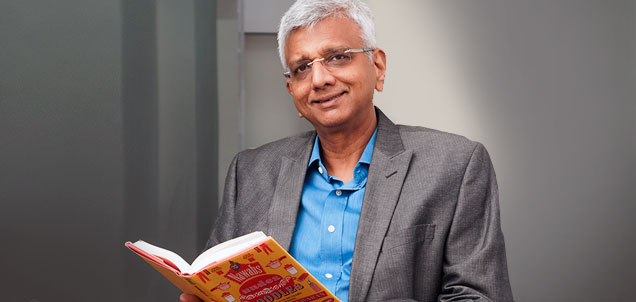
    The Indian advertising industry has several leading lights but few have got down to chronicling the industry and documenting case studies like MG Parameswaran has. Ambi, as he’s known in the fraternity, recently set up Brand-Building.com after 35 years in advertising, sales and marketing, a large part of it was helming FCB Ulka. He is also President of the Advertising Agencies Association of India (AAAI). In his new book titled ‘Nawabs, Nudes, Noodles’, Ambi writes how advertising has changed society and adapted with the times. Excerpts from a free-wheeling interview with Pradyuman Maheshwari:


    You are among the few advertising professional who have written books, and this is your eighth. How do you manage to make time for writing?

    The writing started in reverse. In 1997-98, I was looking for cases to use for teaching when I discovered they were still using some veryold books. Then I started writing some short cases based on brands I’d worked with and . Tata McGraw Hill was interested [in publishing them as a book] so that’s how it started. I wrote cases for teaching, and those became books. Once the books came out, they actually sold, and the publisher stared asking what are you writing next? Then I wrote the second, and the next, and it just continued. Obviously, there was a big lacuna of professionals writing books, in the late 90s. Now there are a lot more people writing, which is good. My first bunch of books was more academic. Then my agent, Anish Chandy, said I need to write for a larger audience and that is how ‘For God Sake’ was born. It was based on my thesis, but it was a light book. And, after I finished writing it, the idea for [the latest] book came up and we started discussing.


    How much time did this last book take?

    40 years (laughs).


    And it’s packed with loads of information…

    80,000 words (smiles). The idea for the book happened about two years ago, and it took a year of writing. I was working full time so I used to devote three or four hours every weekend to compile stuff. I did not want to do a history of agencies, but wanted to look at how society has changed. First you have to compile information, and I went through 30-40 books. Also, one had to not just write about different topics but also see if there are any international parallels. So I had to hunt for relevant books on that topic. Fortunately, some of my friends are senior professors, so they helped identify the books I should look at. It took six months of collecting information, and six months of writing.


    In the book, there are a fair number of references to influences in society and how it has changed. For instance, you write on ads having helped Indians discover new products and services. Really?

    If you ask a consumer ‘did you buy this product because of the ad’, the response will be no, I heard about it from a friend. But where did your friend hear about it? She heard it from her friend. There might be an ad involved. Take the example of Dalda, which was the first Indian product advertised in 14 different languages in print. Each ad was different because it was specific to the cuisine of a particular region. Ads were written in 14 different languages to convince Indians that Dalda was as good as ghee, during the days of a ghee shortage. And it succeeded. Today I saw an ad where they were trying to sell 4G services saying you can use it to locate a loo for your kid. That is education. Advertising is performing the role of disseminating education so consumers do learn from ads. They may not admit it, but they definitely learn a lot.


    At the same time, there is a lot of advertising which is possibly instilling values you don’t want, like fairness creams or ads for colas which are not good for health. Advertising can be educational, but there are many brands which don’t sending out positive messages…

    I believe if it is legal to sell a product in a country, it should be legal to advertise a product. If it is legal for me to make and sell beer, it should be legal for me to advertise the beer too. If you go back to how this idiocy started in this country, 25 years ago the government suddenly decided that sanitary napkins would not be advertised on TV. They said the ads could only play after 10 pm. Maybe that has caused a problem. Today, one of the biggest issues we have is girls are afraid to go out because of their menstrual cycle. If they had allowed those products to be advertised widely, maybe we would have had more innovative products coming out. But why was it was not allowed before 10pm? Because it was considered a bad, female hygiene thing, which could not be shown on TV. We banned the ads, and now we are saying girls are not going to school, not going to work on those days because of this problem, and now we are regretting it.


    Every month, the Advertising Standards Council of India (ASCI) comes out with a list of ads against which complaints have been registered. A fair amount of such advertising shows that not all practitioners are doing their job correctly…

    Yes, it is a combination of the agency and the client. Often the agency pushes the limit and the client says okay let’s do the ad and see what happens. I am happy that ASCI has become powerful now because in the good old days, it used to take a month to respond to a complaint. Now they come back to you within a week, whether they uphold the complaint or reject it. The government has also mandated that if some ad complaint is upheld by ASCI, TV channels cannot run that ad. To be fair, every brand owner and agency is trying to claim whatever they can do to the maximum.


    In your book you have referred to the Tuff shoes ad, and the case against it that went on for two decades. Do you think the ad was beyond decency? And would it be accepted now?

    I do not think it would be accepted. Today we will probably react just as badly to that ad. As a piece of art, it was brilliant and beautifully art directed, and launched an unknown brand in a sensational way. But it got into all sorts of trouble and the court case ran for 20 years…. Today, the complaint would have gone to ASCI, which would have either upheld or rejected it. For all you know, ASCI may have even passed it.


    There is a lot in your book about the changing man, woman, child or youth. You have mentioned that the Raymond ad was a milestone in the way it depicted men.

    I have been a follower of Raymond advertising for a long time, and for a hot country like India, Raymond made suitings cool. But it moved away from an executive suit to embrace the concept of a complete man. One of the best ads they had was about this man from abroad looking for his friend and discovering that his friend has lost his legs and is in a wheelchair. He takes him to Marine Drive and they are shown having fun, chatting about old times. There is no mention of suits except for the fact that this guy was dressed in suit but carried his jacket in his hand. Suddenly this presented a whole new face to the guy who wears suits — that he is not an automaton but a guy with a heart. Such ads have redefined suiting advertising.


    You have written about men, women, children and teens in ads. Which of these strata do you think have changed the most in terms advertising in the last 15 years?

    All of them. May be women more significantly, because earlier, women were never featured in a financial services ad or in motorcycle, scooter or car ad. Like the ads for Hero Pleasure, which is a scooter for women. A lot of car brands are showing the woman driving the car. The biggest change in Indian society has been with respect to women. Their education and desire to work has dramatically changed over the last 20 years. Therefore, the depiction of women in ads has also dramatically changed.


    Yet there is a lot of advertising that is not gender-sensitive…

    I think there is a need to sensitise people to this. Sometimes you do it even without thinking. Some ads are being created without any deep agenda on pushing down of women. It’s just a lack of awareness.


    Do you find that in the last 10 years, effectiveness awards have become very big and that even creativity in advertising tries to earn brownie points from social media and the buzz created?

    I do not think so. Advertisers today are looking at two different kinds of advertising. First is the classic way, where you spend a big amount on advertising. The second is the ad which is created for social media. One is the 30-seconder which will run on TV channels, and the other is the three-minuter which will run on YouTube. Today, these two are working on two different agendas, but one day the two will meet.


    The book covers about 50 years of advertising, but perhaps some inside stories and gossip would have made it more juicy. You have stayed clear of controversies…

    The last chapter is all about the problems advertising has faced. It deals with the Tuff shoes ad, the Kamasutra ad or the problem I had with an innocuous Sweetex commercial, where I was showing the navel of a model, which got into trouble. I have not discussed any gossip, such as who copied whose idea, because that is not the domain. I am writing this book because I hope the young people entering advertising can, in just a few hours of reading, understand how this business works and have a positive impression of the industry.


    If you were to pick three, five or 10 ads that have been game-changers, what would they be?

    I would say go back in history. The Maharaja ad for Air India is one. The Amul hoardings (which even the client gets to see only after it goes up, shows the kind of trust you need to have with your agency partner), the Lalitaji ad which re-defined and put the middle-class woman in the market. Or ‘Doodh’, which made milk cool. Also, the Cadbury cricket film….


    And Liril?

    Yes, Liril was path-breaking. And in recent times, stuff like the Gundappa film for Lifebuoy and the Airtel ‘Hare ek friend zaroori hota hai ad.’ So, there have been quite a few films, Fevicol take a very humble adhesive in to landmark creative, again that is a very good client-agency partnership.


    Ads like ‘Doodh’ for Amul that you have worked on at Ulka, which you are extremely proud of?

    I am proud of what FCB Ulka has done with Naukri.com – the Hari Sadu ad. I am especially proud of the work done on Tata Indica. Then of course the work we did on Santoor, Sundrop – two brands which took on the might of Levers and succeeded. Some fabulous work we have done on Zee, Zee Cinema especially.


    What next?

    Well, I do not know. I hope this book does well and serves the purpose of both making people like you and me nostalgic about the past and make young people say these guys actually did some good work and now we need to do better.


    This interview first appeared in dna of brands on May 23


  • Bullish on India @ Cannes Lions


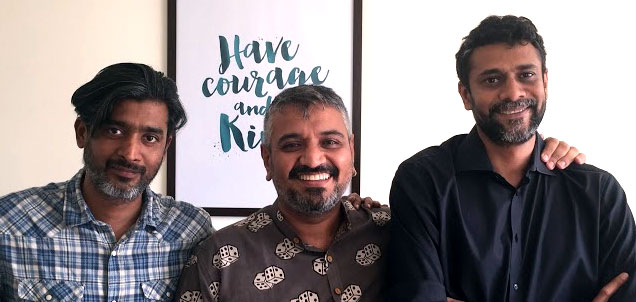
    The 29th annual Cannes Predictions were published by Leo Burnett Worldwide recently, projecting some of the major contenders for wins just ahead of the 63rd Cannes Lions International Festival of Creativity, which will be held in the French city from June 18 to June 25. And, for the first time in the history of the predictions report, an Indian agency has been shortlisted: Leo Burnett’s own ad for the Bajaj V, ‘The Nation’s Bike’. Pradyuman Maheshwari had a quick chat with Saurabh Varma, CEO, South Asia – Leo Burnett, before he left for the biggest advertising event of 2016.


    All set for Cannes? It seems like Bajaj V is going to win.
    Honestly, it is a big deal for us. We are back on the awards scene after a long time, and we are going straight to Cannes. We are very excited about what we have on the table, but Cannes is Cannes. We are going to be competing against the best pieces of work in the world. While we have given our best, we have to see whether it is good enough at the moment. And in a few days, we will have the answers.


    The bar is set pretty high for India at Cannes this year


    The festivities at Cannes Lions 2016 have begun and although India put up a fairly forgettable showing in terms of number of metals one last year there is confidence that our agencies will fare better in 2016. Here’s what a cross-section of industrypersons told Anuka Roy:


    Agnello Dias, Co-founder and Chief Creative Officer, Taproot Dentsu: We always hope that India does well. It was only some eight or nine years ago, India started showing significant hope at Cannes; before that it was not so. That’s why the expectations go up every year. I hope we really do well, particularly in the non-traditional medium categories like digital and activation. Ariel’s ‘Share the load’ campaign has a strong chance of winning.


    Josy Paul, Chairman and Chief Creative Officer, BBDO India: I think India is going to do better than last year. I have seen some fabulous work from other agencies and there are a lot of probables this year. So I think we are on a good wicket. There is also a lot of contributive work. I think everyone will do well. Every agency will have something, and a lot more is happening in the country, so there is new energy and things that are fresh, for the jury.


    Shubhajit Sen, Chief Marketing Officer, Micromax Informatics: We have set pretty high standards over the last few years, and we have got to beat that. I think the industry is moving to a place where we are creating communication that obviously works in India, but we are articulating why that is a global property, that is one of the reasons we have been winning in the past. So I am looking forward to some interesting stuff. As for the winner – we’ll have to wait. Never make a prediction or speculate. That is the golden rule.


    Dhunji S Wadia, President, Rediffusion Dentsu Young and Rubicam: I think there has been terrific work. And I think India is really poised to have a great run at Cannes this year. Regarding the winners, it is for the juries to decide. I just feel that there is so much work, that collectively India would be among the strong contenders this year.


    Nandini Dias, CEO, Lodestar UM: Hopefully, we will do well. I think since we have done well in the last couple of years, the expectations have grown. Hopefully we will fulfill them this year. I have no clue about the winners, but I think there are campaigns across the creative end which I thought were worth looking at and I hope they win.


    Even at the Ad Club ad review there was talking of how the Bajaj V commercial is something dramatically different from what we’ve seen so far, and sort of raises the bar for nationalistic advertising. From your experience, how do you rate the Bajaj V work versus the various things that Leo Burnett has done over the years?

    I am truly grateful that the whole industry has praised an idea like the Bajaj V. Grateful to Josy (Paul), (R) Balki and many other industry leaders for speaking positively about an idea like this. We think this may be the best piece of work we have ever done in India. I think we love it because it is really about business. An idea which leads to the production of bikes — which essentially translates into a sale of half a billion dollars. So we are very positive about the idea. I think the challenge lies is whether the judges at Cannes will understand what INS Vikrant meant for the country. Will they get the narrative and the story? That is going to be the challenge, we feel.


    You have been to Cannes over the years. What do you think works very well with the jury there?

    I think what works at Cannes is one of the toughest questions faced by all of us. First, I believe it is really about work which is purposeful. There has to be purpose in whatever we do. Second, it has to be surprising. It has to be an idea which makes you go ‘Ahh!’. And third, it has to be scalable. So in our minds, it has to be purposeful, surprising and delightful. It has to be something which uses technology, media and creativity to have an impact on business. Those are the things which we would like to look at, at Cannes.


    You have been taking a large team to Cannes every year. Apart from the awards, the Cannes Lions are also about consuming a lot of knowledge, interacting with a lot of people internationally and such. What, according to you, do the Cannes Lions mean for the advertising fraternity in India?

    Every year we have people going to Cannes. It is a big investment for us and it is not just spent on the senior leadership team. We take young planners and account management people, and they all experience Cannes. For us, it is actually the best learning ground. This is an opportunity where 25 people are exposed to the Cannes experience and to the best from around the world. It is about understanding differences, [generating the] best ideas and it is also about understanding where the industry is moving, and then working together with this team to share what we want to build here as Leo Burnett India. I think that is the opportunity and possibility that Cannes offers. And for us, it is one of the most critical things we do in the year, in terms of exposing our young teams to the best works. So their benchmarks and world view changes, and ultimately they start giving shape to the work that we believe is needed for us to evolve as an industry.


    Would you like to make any predictions about the Lions?

    My prediction is that we have some great work coming out of India. We have the Khali ad, which is from Publicis, and we have ‘Share the load’, and these are real, honest and big pieces of work for brands. I think we, as a country, will do really well this year. That is my prediction.


  • The Ogilvy Way on Digital


    It’s the numero uno creative agency in the country. And it was among the earliest big agencies to go digital. Even as it started this transition over a decade ago, Ogilvy India is still perceived as an agency tied to the more traditional areas of television, print and outdoor. For this discussion, Vikram Menon, President and Country Head, OgilvyOne Worldwide India and Neo@Ogilvy; Kunal Jeswani, Chief Executive Officer, Ogilvy India, and Rajiv Rao, National Creative Director,Ogilvy India got together to speak with Pradyuman Maheshwari about Ogilvy India’s digital outlook…


    Ogilvy has been in digital for many years, but it is perceived as a traditional television campaign agency. Why?

    Kunal Jeswani (KJ): Because it is the best advertising agency in India, and possibly in Asia too. When you want to build something else within that kind of a unit, it takes a lot of effort, and years, for it to shine.

    Rajiv Rao (RR): I think the shadow advertising agencies cast, is very large. If you are an independent agency, and into digital, people say: ‘Oh! Ogilvy also has digital’.

    Vikram Menon (VM): The sheer size of this agency and the work it delivers overshadows everything, from an advertising standpoint. So it becomes far more difficult for a unit — regardless of what the unit is — to stand out.


    Are you happy with the way things are?

    VM: Absolutely. As a part of Ogilvy, you have resources and talent you can always rely on. We are 500 people; I don’t think there are many agencies of that size anywhere in the country.


    Of all the large agencies, you got into digital fairly early. You acquired a digital agency many years ago, but the perception, that you are essentially not a digital agency, continues…

    KJ: Ogilvy One was one of the first agencies in India to start taking digital seriously. We started making a transition from being a direct one-to-one agency, to a digital agency almost 12 or 13 years ago. Now, three things could have happened at the time. Either the advertising agencies Ogilvy and Mather- could have started declining, in which case we would have seen Ogilvy One shine a lot more than it does now. Or Ogilvy One would have been scrapped, or – as it has happened — advertising has continued to hold its own, and [Ogilvy has been] the best agency in the country for the last 12 years. Ogilvy One has been built up, gradually, as the largest digital agency in the country, but in terms of perception, it is still hard to break out the ‘we-are-an-advertising-agency-first’ mode. People need to see that right next to the advertising agency, sits this big, shiny, fantastic digital agency. We churn out 250 to 300 fantastic films a year, and you see it a lot more because it is on TV. Television is difficult to outshine. But anyone who has worked with Ogilvy One and seen the capabilities we have, will know it is great. [We] have done fabulously in [awards events like] the D&A Echos globally. We are listed eighth on Warc, and are the only Indian agency in the Top 50 I think. I think we were a little ahead of our time. The demand for digital work, and client spends started only five or six years ago.


    Rajiv, Ogilvy has been a creative-led agency. Are you looking at digital as a part of the thing or you do stuff television and it is kind of shoveled in to digital?


    RR: The approach to what we do is the same, whether it is digital or advertising. We look at every brief and try to make something as interesting and exciting for digital as we would for advertising. There is a lot of work we have done that you do not see on television. Television is the most visible medium, so that is another reason you do not see a lot of digital works, which are less in-your-face. Most of the time we create work for television first, and then adapt it to digital.


    I was there at the Kyoorius Creative awards judging, the fact of the matter is while digital was there, print and radio, there were a 100-plus entries which entered but only four both categories which were shortlisted. Clearly, I think the focus is coming towards digital in a bigger way than the others.

    KJ: In terms of spends, yes. If  I asked a client five years ago, where their spends were, they’d have television, outdoor, print, radio and then digital. Today, digital is right after television. But it differs from client to client. We have clients even now coming to us and saying: “Where is my Digital First work? I want to see it.”


    Only an agency like Ogilvy can convince clients that they need to use digital and it is a better way to communicate something. Are you all doing that?

    KJ: I don’t think we need to. Every one of our clients is pushing us for fabulous digital work.

    VM: We have passed that point where we have to convince people that digital is a necessity. Earlier, it used to be a tick box. But now it is integral to the campaign in itself, and measured on several different parameters. So there is no need to convince people.


    What about digital-only clients?

    VM: I don’t think there are too many clients like that. It may be an Ogilvy One only client rather than an Ogilvy One plus advertising client, but they also have their advertising agencies, and a lot of cases where you see digital leading the campaign. So the idea is first cracked and then we decide how it will work on mobile, social and all other platforms. And then we may do television also.


    When a client is getting advertising work done for television, is separate thought going into digital, or is most of it the same?

    RR: About 50 per cent of work is outside of the main campaign. Yes, we do a lot of it.

    KJ: If you are doing a large ATL campaign, the campaign should have a digital face as well. It does not need to be the same thing, but it needs digital integration. There are times when you are silent on television. Most clients cannot afford to be on television throughout the year but you can afford to be on digital. You have your whole campaign amplification, idea amplification piece on it and then when you are off television, you do a digital-only campaign.


    Rajiv, would you say the agency has changed over the years given the fact that it is now more digitally-active than, say, five years ago?

    RR: Not just the agency, but even the environment across the industry. People are thinking of ideas and not films, about ideas that would go social and viral. It is a conscious decision which comes to people naturally.


    The essence of this conversation is to see how Ogilvy has changed. So what are the kinds of services that you have on offer at Ogilvy One?

    VM: We offer things across the spectrum. There’s just consulting at one end of the spectrum (which we do for a few clients like Aditya Birla), where we design programmes and then hand it off to the agency to execute it. From there all the way across is social media, in terms of what your presence should be across social channels, building websites, building your own media, the content that you are putting up there etc. For Rajasthan tourism, for example, we have done some hundred pieces of content for their website to make sure people keep coming back. Then there are things like social care, where we manage all the online complaints of Vodafone. Today it is very difficult to define digital as a space, but we have got a lot of offerings in that space, with full teams working on it.


    As digital gets mainstreamed into the agency, will the entire agency be seen as a digital agency also? And will all agencies eventually be viewed that way?

    KJ: Will Ogilvy be seen as a digital agency? The answer is no. I think the market will shift very fast, with all agencies, including Ogilvy, being able to do and deliver digital content and campaigns across the agency. Exactly the way we do a print ad, television or radio spot and outdoor. The entire agency will be able to churn out digital campaigns and video content and all other content seamlessly. At the same time, digital is going to get more fragmented and more specialist. You are going to need deeper e-commerce specialisation, performance-marketing specialisation, digital production and asset management-specialisation, data analytics specialisation linked to all the content and such, and all of that is what we, at Ogilvy, are going to be known for. I think that is where it is going to move. You need the digital content, campaign done; you do not need a specialised digital agency, every agency in the country will be able to do it soon.


    Many years ago, a similar thing happened with big, creative agencies. Media agencies were de-merged and became independent. In the last few years, there has been a growing realisation that it makes sense to have full-service agencies. Given this background – that is the advantages and disadvantages of having media separated — do you think the digital part of business should be integrated with the creative?

    VM: We are doing that, actually. We do have digital media, in a set-up called Neo, and it has been around for some time. But as of now, we are investing quite significantly in it. It has trebled in size in the last one-and-a-half years. We brought a new head, and we have been driving performance. We’ve got great models and tools for that, so you will see a lot more use from that.


    In the past, media agencies have broken away from creative agencies. Do you think it is better to have a separate digital thing?

    KJ: There was a time when you had one agency. Then it split, and media and creative were separated. Then came digital. You had digital agencies and you had digital media agencies. Every client is going to a separate media agency and a separate digital media agency. Then you had the digital media agencies splitting into three. Mainstream digital media agencies do all your buying and planning across channels, and you have specialist search agencies and specialist performance agencies. Now, most clients want one agency that does everything. Soon client will start asking, ‘Do I really need a digital agency to do all this stuff?’ Not really. They need specialist capability. So you will see more and more specialist capabilities inside the digital agencies separate, and you will see the basic capability delivered by integrated agencies like Ogilvy.


    Rajiv, how do you look at performance and..

    RR: (laughs) I don’t. But I agree with Kunal. I think there is a digital agency and there is an advertising agency and, I think at least for some time, it should be one unit. We are creating ideas which have to be adapted or transmitted into digital and vice versa, so it should be one unit. And yes, there are specialist parts of the digital thing which can be a separate entity. As Kunal said, the clients also want to go to one place and find all the digital solutions.


    If you had to make a pitch to clients to show how different you are from earlier, and that digital is very much part of your offerings, what would it be?

    VM: I would just like to position ourselves as a modern agency, in terms of the skills we bring to the table in delivering campaigns. I would stick to something as simple as that. Underneath all that, you have specialist skills that go towards making what I call a modern agency. It becomes complex to explain.

    KJ: Let us look at why anyone comes to Ogilvy today. Any client, why do they call us? What would your perception be?


    Piyush (Pandey) and Rajiv… (Everyone laughs)

    KJ: Perfect! What do Piyush and Rajiv stand for? They stand for a fantastic creative product. That is why anybody comes to us for. They come to us for a fantastic creative product. I will be completely stupid to try and do something different with that, because it is not necessary. This agency is built on great story telling and fantastic creative. The only job Vikram and I need to do with Rajiv’s partnership  and everybody else we have here is make sure that the great story telling, that fantastic creative spreads across every single channel that we have.


    And, is that happening?

    KJ: Yes, it is. We were already discussing that it is much more difficult for people to remember great digital campaigns because in India television campaigns come to you very easily as we are exposed to it.


    Once upon a time, most digital campaigns used to be Gabbar Singh and Rajnikanth

    VM: That was 10 years ago.

    KJ: At heart, we are going to be a fantastic creative agency which delivers great storytelling across every single platform. But the bit Vikram was talking about, about being able to do a degree of modern marketing, also means we need to get more tech-savvy in the way we approach advertising. The data backbone, the technology backbone of the agency and the ability to deliver on digital. From the delivery point of view, one is the story and the second is being able to give the client confidence that we can build his mobile applications, websites and manage his social platforms. So, at heart we will always be a creative agency. I just need to build enough backbone to ensure clients also understand that these guys also have the technology, data and delivery chops.


    Rajiv, are you looking at re-tooling your team for the new order, or is it just as it comes?

    RR: The way it is right now, I don’t see the need to. Everybody across the agency — whether it is advertising or digital – is thinking in the same manner, and whether they are thinking about film or editing or anything else, the approach is very similar. When you have a brief on an exciting thing, most teams are thinking [in multiple ways], unless they are asked to think only film or TV. I really don’t think I need to make any changes.

    KJ: At the same time in terms of messaging, everybody in the company understands we need to be fantastic. It is not a choice. We have training in place. We have done something called Digital Dojo, a three-day workshop for everybody. Right now, it is for our senior key managers, but it will distill down. Next month, we are doing an intensive digital planning workshop [about] the way we approach digital as a company.


    Is it for everybody?

    VM: The dojo was for creative; the digital and data-planning framework is going to infiltrate the entire organisation. So we are doing a two-day workshop next week for everybody again.

    KJ: Every week there is a global webinar on a different aspect of social done by the best people in the world. It is done from New York and it is available to all of us. Everyone accesses it.

    VM: Some of the sessions are for clients too.


    The thing has to come from top down.

    KJ: At the same time, our employees are not in school. I cannot take a ruler and hit people on their wrists and say, ‘you have to attend 10 sessions in the month’. We are not that kind of company. We are a creative company and at the end of the day we will make training accessible to everybody. Rajiv, Piyush, Vikram and I will send the message to everybody that this is important for them; they need to be thinking in these spaces and it is important for the company, and the rest of it is up to the employee.


    This story first appeared in dna of brands on June 13


  • Borders between media & creative are getting blurred


    Mindshare India is on a roll. The GroupM agency network notched up over 176 awards last year, and this year, the agency’s Unilever team in Mumbai bagged a Grand Prix Glass Lion at Cannes for creating India’s first transgender pop group, the Six Pack Band, in partnership with tea brand Brooke Bond Red Label. Started last year, the Glass Lion honours creative work that highlights some significant cultural or gender issue. Hindustan Unilever’s Brooke Bond Red Label partnered with Mindshare Mumbai and Y Films on a campaign that would draw attention to — and generate debate around — transgenders, by creating a band unlike any other. In an exclusive interview, Prasanth Kumar, CEO of South Asia at Mindshare took questions from Pradyuman Maheshwari and Anuka Roy, about the Grand Prix win and the agency’s relationship with long-time partner HUL.


    This must be the first-ever Grand Prix where a home team, which worked on a winning campaign, wasn’t these to collect a Lion. How come all of you were in Mumbai,not enjoying the salubrious climes of Cannes?

    First of all, we are very excited and delighted that we could win a Grand Prix for the work we have done. We were planning to be there, but some things came up, and we decided to celebrate the award from India. Ours is a large network, and some of our colleagues are there. If everything goes well, next year a couple of us will surely go to Cannes.


    HUL believes in our ideas and solutions

    Winning the Grand Prix at Cannes is not just special for Mindshare Fulcrum, a unit of Mindshare India, but also for partner Hindustan Unilever (HUL). Amin Lakhani, Head, Team Fulcrum, Mindshare talks to Anuka Roy about the 20-year relationship Mindshare has with HUL, and what this win means to both of them


    Talk to us about the bond that Mindshare Fulcrum shares with Hindustan Lever (HUL)…
    It’s a journey both Unilever and Mindshare have co-created. We celebrated our 20-year anniversary last year. And after the celebrations, there could not have been a better gift from Mindshare for Unilever than a Grand Prix for the work we have done together. I am sure this will go a long way in increasing the amount of work we do, and belief in the work that Mindshare does.


    How did the Glass Lion-winning campaign come about?

    We initiated this entire brand-centric content solutions conversation. It is a matter of great happiness that one of the great ideas went on to win a Grand Prix at Cannes. It has reached the pinnacle of all work we have done through the years. What makes it more special is that we are the first media agency to win a Grand Prix in the Glass Lions.


    The success here is indicative of the creative powerhouse that is Mindshare. But how much of that does a client like Hindustan Lever value over better media rates or cheaper GRPs?

    When clients put down money, they deserve to get the best value. Given Unilever’s scale and size, and our relationship with them, it is critical that they get the best value out of it, and there can be no compromise on that. I do not think that because we seek great value, we do not see creativity. They don’t either, because Unilever also believes in the ideas and solutions that we bring to the table.


    Talk to us about the sentiments of the team that worked on this.

    They are ecstatic. I think many of my team members have not slept since they got to know [about the win]. Ad this is not only the Fulcrum teams in Mumbai, but our Unilever media team is also celebrating. The brand teams and our content partners at Y Films, are also celebrating with us. Not only these teams, but the entire Mindshare fraternity across the country, whether it is in Delhi or in the Bangalore office, everybody is joining us in the celebrations because it is a matter of great pride. As we call it in our system, the ‘purple pride’….


    Though there is no bar on anyone from sending in an entry for the Lions, typically entering the Glass Lions is the preserve of a creative agency, right?

    From what I’ve been told, the Glass Lions are about the creative work that gets picked up. We believe that every work and stakeholder in the ecosystem can be creative and do the right things needed for the brand. A lot of understanding of the brand, the market and consumer, [provides the] right perspective. Then, it is about being creative, by putting the right treatment of what communication to use, what platform to adopt, which is what every team gets into. That is how we look at this category as well. Today, it is also important that brands get integrated treatment and they are able to get the right insights, creativity and technology to use. Therefore, all this enablement should provide the right solutions for the brand.


    While one might say it’s the clients’ business that is the best thing for any agency, what does the Grand Prix for the Glass Lion mean for you as CEO of Mindshare South Asia?

    It means a lot to me. We were told that this is the first time ever that a media agency is winning a Grand Prix for a Glass Lion. We need to be lot more creative and innovative to break the clutter. This means so much to us that it encourages and motivates us [to opt for] the new things and the new innovations and product frameworks that we are putting out; our content is a separate focus where our content team is working on getting some newer products, partnerships and a better ecosystem in place, so that we are able to bring more and more precise solutions, and also bring in some clutter-breaking creativity. It also reassures us that some of the actions we have taken have started resulting in recognition for the work that we do.


    Please talk us through your relationship, as an agency, with Hindustan Unilever…

    We just completed 20 years of our relationship last year. It almost feels like an anniversary gift, and God has been kind to both of us. A lot of things have gone into the relationship: Shaping brands for two decades, launching new brands, inventing new practices that are born off more challenges. In this space, we do not feel tired even when we challenge each other, because we feel and believe that when we debate and are able to be radical, which encourages us to get precise solutions for the brands. We are happy that Unilever has also grown from strength to strength in terms of recognising our work, and also being a part of us as we feel a part of them. [Over the years] the leadership has changed, and new people have come in, but we have only grown from strength to strength. We celebrate this relationship as one of the best that we have.


    Specifically on this campaign, what was the brief and how did it come about?

    This is primarily a content initiative, and many of the ideas got discussed, co-created and stumbled upon. That is how winning ideas get formed; they develop from A to B to C, and then the teams debate on it. It then gets co-created with clients, such as us and the Y Films team. It is not a single campaign; it is an ongoing one, and we have a sixth video coming out. It is more about creating a particular cause and a platform for it, so that the associated brand is able to leverage that platform.


    Media awards are being won by creative agencies and creative awards like yours are being won by a media agency. Your comments.

    The borders are getting blurred. New technology, a way of looking at solutions, insights-driven and creativity-driven solutions are all getting into a more exciting space. What’s more, people are trying to break our records for what we did earlier, which is very encouraging because we have just won at Cannes and we cannot be complacent. We need to look at how to keep innovating.


    Media agencies are typically retained for media planning and buying. How much is creativity a focus area at Mindshare India?

    I don’t think a media agency does only planning and buying today. Our focus on data, content and digital has been so intense that our products have also evolved over the years. And being the leaders in the market by far, we also take the responsibility of shaping the practice and the market to a certain ‘right way’ of looking at solutions for brands. We have a very large content team, headed by Deven, while Ajay Mehta is content head of Fulcrum and works with Deven and Navin. Ideas can come from the media, message, and content, or from anywhere. We deal with it in every form. Some use media to understand consumers, their tastes and what they like and dislike. All of these allow the creator to understand things better and get a little closer to magical idea of creativity, which can help the brand more.


    Hindustan Unilever has some of the best creative shops working for it. So why did it get this campaign created by Mindshare and not a creative agency?

    It’s not about why they didn’t go with someone else. We had the content, and the content team’s purpose was to come up with different ideas. This magical idea happened and that’s how we got the job. We believed in the capability of doing it and had our own partners, Y Films, and came together to create a story. We are happy we won a Grand Prix for that. We’re also happy that the client supported and encouraged us so much that we able to come up with some great work.


    Last year has been good for Mindshare – the Emvies, Media Abby, the Grand Prix and various others. And we have the Emvies coming up soon.

    We have got to win the Emvies and make sure we fight for that. Last year, we won some 176 awards as well as ‘Agency of the Year’ across platforms, besides ‘Digital Agency of the Year’ and ‘Global Agency of the Year’ too. We began this year with a bang, with ‘Festival Agency of the Year’. We topped the Abbys by far and won the IDMA digital awards. And, now we have a Grand Prix. We are not going to get tired, but we are hungry: Every day and every award makes us hungrier. Every good work makes us hungrier to do better.


    Indian media agencies, including Mindshare, typically don’t do well at the Media Lions at Cannes. Why?

    Better understanding and better creativity and ability to get the brand reciprocate on better ideas, is required. It is a global platform. We see lots of work from different part of the world, and the best of the best ideas win over there. But making the shortlist is equal to a great award. However, if you have not done well as a country, it is because we need to focus on how others look at you. Many a times, learnings from others gives us more clarity on what we should do. We are happy that we have been able to make the country proud. We take it as an opportunity to learn and be better the next time.


    Many critics say that ’cause’ campaigns are done more to generate buzz and free publicity. And of course awards. Your views?

    This happened 13 months ago and was not created for Cannes. It was done for the brand. We will continue to do it, with the sixth song coming out soon. It is also true that for some of the band members, it has changed their lives. This band has made them more acceptable. It is not easy to start with an idea like this. We do not want to do it for the sake of it. Our philosophy and that of our clients is that we believe in it, and we would treat [transgenders] with the same dignity as any other celeb. That is what Y Films also did, and hats off to them for managing that. That is what we believe in, and would continue to do.


    This interview first appeared in dna of brands on June 27.


  • Integrating medical, creative and strategy, the Medulla Way


    India had a great start at the 2016 Cannes Lions Festival of Creativity, with Mumbai-based Medulla Communications bagging the Healthcare Agency of the Year in the Lions Health category – a first for the country. Praful Akali and Amit, former Grey creative chief , front men of the agency, bagged seven Pharma Lions in all: two Golds, two Silvers, and three Bronzes. Their campaign, ‘Last Words’, for the Indian Association of Palliative Care, hit home. They speak to Anuka Roy about their win, the healthcare advertising scenario in India and what lies ahead.


    You are a young agency, having been set up in 2008, but your works have been winning awards over the years. But being ‘Healthcare Agency of the Year’ is a big deal. Your sentiments as you look back on your eight-year journey…

    Praful Akali (PA): We feel proud to have won ‘Agency of the Year’ for India. We are happy to have made India proud.


    A B-Pharm degree followed by a PGDM from an IIM is a winning formula to lead a healthcare agency. Plus a brother who is among the top creative professionals in the country. So what would you attribute your success to?

    PA: Our success is based on our philosophy of integrating medical, creative and strategy, which is why all our communication — whether for clients or awards — has been appreciated. The rest has been about focusing on the advertising basics. If you look at any healthcare advertising agency, either in India or even abroad, they understand healthcare but not necessarily advertising. So the planning pieces of advertising, the basic creative and strategic processes, are not followed. An advertising agency does not necessarily get healthcare and very few have a healthcare arm. We felt that we needed an agency which got both advertising and healthcare. When Amit joined us, we used him as Chief Creative Officer to bring a basic creative strategy and philosophy on board, and also hire great creative people.


    Amit Akali (AA): When I left Grey two years ago, I felt that the level of strategy and creativity in a niche industry, was not the same as in mainline agencies. In the healthcare agency that already existed six years ago, called Medulla, while the strategy (coming from Praful’s background of IIM) was world-class, and their medical team was among the best in the world, where creativity was concerned Medulla had benchmarked itself against the Indian healthcare industry. We were clear that with the medical expertise already there, the creativity had to be benchmarked to the best in the world, and so we benchmarked it against Cannes. Last year was the first time we entered at Cannes, and became the No. 3 agency in the world. That is when we decide that we owe it to ourselves to now become No. 1.


    What are the challenges of being a healthcare agency as against a regular creative shop?

    PA: The communication you have in healthcare can genuinely impact the lives of people. But the regulatory barriers, in terms of more complex messaging, also have to be medically robust. The complexity of medical advertising means that my creative has more pegs to hang things on. And the other things – like medically robust communication, saying the right thing and being ethically correct — is the same for all kinds of advertising. Agencies from Mexico, South Korea and Indonesia have been telling us that they are glad that an Indian agency won because the work has been truly inspiring for them.


    AA: Healthcare has its regulations and restrictions. All your life you work on briefs for cold drinks, chips and chocolates and suddenly, over here healthcare is a completely new sector and the briefs are very specific. For me, coming from mainline, the propositions were really fresh. In healthcare, you also have a medical team that is part of the creative process. They come up with the knowledge of the product and they really give you very sharp briefs to reap off.


    Tell us about your client, the Indian Association of Palliative Care, for whose campaign (‘Last Words’) you bagged two Golds and a Silver.

    PA: ‘Last Words’ is not a simple campaign. It is a huge project for the Indian Association of Palliative Care (IAPC), and gave us a lot of emotional connect with everyone, including the jury. The campaign has been a personal journey for us. Our mother was suffering from cancer and wanted to die at home, and not in the hospital. At the last stage, she was in such bad shape that we had to move her to a hospital, and she died in the ICU. We were not sure if we had done the right thing since we had not heard of palliative care. Later, when IAPC was looking for a campaign, we were inspired by our own journey. Palliative care reduces pain in the last stage and provides counseling to both the patient and the family to prepare them. You always expect that your last words will be heard by your family, but when we realised that the last words are actually heard by nurses, we did this campaign with nurses, and chose the strongest last words to become a part of the AV and online film.


    Healthcare advertising is not really big in India. Do you think winning ‘Agency of the Year’ will change that?

    PA: I think it is already happening. When we were there, we met everyone from the Indian advertising fraternity, and they were all proud of the win. A lot of them may not have heard of Medulla because healthcare advertising was not necessarily on their radar, but they were proud. Realising the potential of healthcare advertising is already happening. Between last year and this year, I think the number of entries from India in the Cannes Lion Healthcare category has increased five-fold while entries from across the world have gone up by 40 per cent. People are realising that healthcare advertising can genuinely change lives and is an opportunity for people to do more impactful communication.


    AA: At Cannes, we presented JWT’s Blood Bank project and the Blue Dot project by McCann. Clearly, the focus this year was on healthcare, not just from Medulla but India. Healthcare is a very important sector in a developing country like India. Twenty years back, Ogilvy worked for the Pulse Polio campaign and helped eradicate polio. In a country like India, healthcare and healthcare communication have importance, but specialised healthcare agencies are not doing as much creative work as the mainline agencies. That is something Medulla set out to change two years ago, and that has clearly happened.


    A Grand Prix still eludes you. Are you aiming for that next year?

    PA: The ‘Last Words’ campaign, we were later told, was considered for a Grand Prix. For us the big aim was clearly to become Agency of the Year. I do not think that a Grand Prix is necessarily the peg, but there are pegs of winning even more awards the next year, and making people realise that it was not a flash in the pan, but that Indian advertising is very mature when it comes to healthcare. We want to do some of the best international advertising work in pharma and healthcare, and if tomorrow we do that and people laud the work done by an Indian agency, that would mean more for us than a Grand Prix.


    This interview first appeared in dna of brands on June 27