Category: INTERVIEWS

  • We have broken the shackles: Josy Paul

    BBDO India celebrated its third anniversary on August 30. Mr Josy Paul, Chairman and Chief Creative Officer of the agency, is a happy man as in an existence of just three years, BBDO India has established its credentials as an agency nurturing creative excellence that incubates impactful ideas. As Mr Paul puts it, We create acts and not ads.

    Ritu Midha of MXM India caught up with Mr Paul on the anniversary day. Presented below are excerpts of the stimulating conversation encompassing 25 years of Indian advertising, Mr Paul’s journey through these years and of course BBDO  and what makes the agency the creative powerhouse it is today. Enjoy!


    You are celebrating the third anniversary of BBDO India. How does it feel?

    It feels great. We are celebrating three years of not being in advertising. We started three years ago with the thought that India needs more acts than ads. We started with a belief that there is a greater social consciousness in consumers, and the consumer is not only father, mother daughter… or any other relationship. Besides, the family or personal values, a social value is also creeping into the human beings. India is far more socially aware, and we felt that brands must be able to resonate with that. And that is what we are trying to achieve.

    This year, we won four Lions at the Cannes – one of them a Black Lion. This year, for the first time, Cannes has created Black Lion for advertising effectiveness  there are only six of them. One that we have is the only one in Asia. We are celebrating that as well.

    You sure must be a very happy man.

    Yes, of course. The awards are a big testimony to the team thinking together. It is a young team and all the accolades help in our continued strive for excellence.

    Tell me something more about the environment at the time of your launch.

    Well, at that time media fragmentation had started, and the only way to bring them all together was and is, with an excellent idea. A fancy line was just not enough – you needed an action-oriented idea based on behavior, which then allowed all mediums to get involved. It holds true today as well.

    We have proved the power of action oriented idea with campaigns like women against lazy stubble  it started on Facebook, Aviva great wall of education that started as a wall on the road, Quaker healthy heart mission that was a website and invited people to take healthy heart test and Quit India Movement for Nicorette which spanned various media. An interesting one down South (Tamil Nadu) was Lemon Patalum, which we did for 7up. It is a whole platform to invite kids to play light-hearted, lemony, rubber ball cricket with their superstar CSK. Today more than 2000 teams participate in it. We are creating platforms. Many such things are in the pipeline.

    Would you then say that television might cease to be the lead medium?

    TV will continue to be at the core, because it allows you to reach a lot more people faster, with a singular message, but the TV would not be just a 30-second spot, it will be more about content. For example, the Anna Hazare movement does not have any ads but it is there as news, views and debate and also images. What you create may be a documentary, just a vignette or a quick news item. The message can keep changing.

    If television is only a standalone thought where you are just cracking a joke or saying something in an entertaining manner, it becomes just for that moment, but if it is part of a larger consciousness, or a larger behavioral activity  it is part of the continuum, it is part of one energy wave  and hence it is 10 times more effective. A lot of our work is in that area.


    How can one maximize the creative impact?

    There are so many kinds of people with so many different mediums at their disposal  you have to maximize based on the budget you have. If you don’t have a great budget, and you have to just do a car sticker, it still has to be a great sticker. It is your ambition, together with what the environment allows and offers you. It is all about how you react to the world around you.


    To a very large extent, media effectiveness is a game of budgets; to what extent does it hold true for creative?

    It is a very interesting question. Honestly, as a creative person I can’t answer the question on the budgets  I can only chat about the impact. And when you have an effective idea, you know it has great impact value.

    If you have a larger budget, maybe a big celebrity in the ad, it might have a bigger jump. However, the core of good communication is ALWAYS an impactful idea. Some companies have the ability to take an impactful idea and distribute it widely to make the impact much larger. Others put it in a specific medium because that is the only money they have and that is what they need at that point. So big budget or small, you need an impactful idea.

    I will give you an interesting example. We did a piece of work for a company called White Collared Hippies  an alternative travel company set up by young Gujarati guys from California. It won us an award, and quite a few nominations at Cannes. They do not have large media budgets, so they have posted the campaign we did for them on their own website and their Facebook page. While it may not be distributed widely, and they might not be getting customers, this campaign is getting them partnerships. They are getting famous in the B2B space, the campaign is helping them in creating the echo system.

    To what extent does gut feel help a creative person?

    Gut feel is essential to a creative person. If there is no gut, no leap, no personal filter, you cannot add to the world. The unique point of view that comes from your own gut, from your own perspective of the world, is what makes it fresh. Freshness is a must in a creative person.

    However, gut feel does not work in isolation. We are also studying consumer behavior at media level. Though we have not set up any system to segregate content and understand it in different ways, we are watching what consumers are viewing and what they are gravitating towards.

    Moving to another oft discussed phenomenon – user generated content. Do you see it happening in creative?

    Well, in creative, there are a few examples but I do not know whether they fit into your definition of user generated content. The user is generating more content  not because he is creating the content but because he is forcing the content  for instance in the case of Old Spice campaign: The man your man could be. It started with one television spot, became three television spots – people started getting excited about it. They wanted their own version on the Net. So Old Spice said you speak to us, and we would start creating it online. So the consumer was talking to the advertiser  and he was creating it live for them. It is a very interesting format.

    A slightly different question, how has the ad world changed from the time you returned from the Himalayas about 25 years ago?

    Some things have changed and some things have not changed  but everything has definitely evolved. Interestingly, advertising is teaching us, especially me as an individual to also evolve.

    I am going with the flow…

    There was a time when we were doing a lot of print. There were many good print writers in mid-80s, around the time I joined. It gave way to a bit of cinema, and then to a lot of television. You started enjoying that.

    In 2005, we launched CNN IBN, with Rajdeep Sardesai and Dilip Venkatraman, and with that we pioneered two-way television in India. You realised that television is no longer the medium that just beams down on you.

    It isn’t just the acceptance of new worlds, and knowing that your past is irrelevant. It allows you to enjoy what is happening. It is just explorative  you are doing it because you are enjoying new things. It is not that you know something very well, it is that you don’t know enough about anything and that allows you to enjoy everything. That is a nice space to be for me personally.


    And how has Indian advertising changed in terms of quality?

    Advertising has really opened up and it has become very free  it is not really as structured as it was before  it has changed with the changing times. It is getting better and better and integrating with the real world. It was not so real earlier. I remember David Ogilvy asking me during his India visit in 1989, Why are all the women on Indian television completely pink-faced  pasted with makeup  while I have never seen any such lady in a five-star hotel or on the road? I had no answer, and the reason was we had become so used to seeing two different worlds on television, and in real life. Today when I look around I realise that we have broken all those shackles. Openness, freedom and new ways of looking at the same problems, is there. There are young, open-minded people  who are far better than us, far better than me at least.
    Is there a dearth of talent in advertising?

    There is a lot of talent  but talent over time starts becoming solidised… fossilised. They accept only what they know from before. Cholesterol starts getting into the system  and the only way to beat that talent cholesterol is continuously asking questions. The solution is going out and getting new people into the system  so that the whole system gets energised.


    Coming back to you, how is the experience in BBDO different from that in David?

    I have never seen it as difference. I see it as a continuum. The spirit of David was the spirit of challenge  the ability to question everything. It operated in a small space, with young clients who in most cases did not have a national footprint. We never had giant businesses. In a way it was the seed of BBDO. What BBDO gave you was space, size, ambition… the ability to integrate with the larger world and to be a part of one world philosophy. BBDO Worldwide is just a giant David – it is a great agency that is doing great work across the world – not only for challenger brands but also for leadership brands. What has stayed is the spirit of challenge  and what has changed perhaps is size, ambition, the platform, the dream, the people you are working with  the osmosis  the ability to integrate with the larger world.


    So, what plans for the agency?

    BBDO is not about me, it is about brilliant talent led by a fantastic team. We are an organization  and not a one-man band. Three years, and we have built a fantastic foundation.

    We want to build on that, and we want to build through national clients. We are a very cohesive agency with a new world mindset. We can solve lot of national problems from a non-advertising perspective, and that’s why we say we create acts not ads. We are in the business of solving a communication issue or using communication for solving a national or social issue or using communication to build something or to create relationships. We feel confident vibrations that we can do anything today.


    My last question, do the mountains still beckon you?

    It is important to try to find space to the assimilate speed of what you are receiving. Running away to the mountain again is great. It gives you time to catch up with what the world is telling you. You need time to receive. You are using that time to reflect. You are trying to find pauses and spaces in mountains, nature, mist and rain, to catch up with incredible experiences so that you can learn from it.

  • The top of the consumer pyramid is growing: Sam Balsara

    Mr Sam Balsara, Chairman & Managing Director, Madison Communications Pvt Ltd, is one of the most influential people in Indian media. It is not only because he owns one of the largest media agencies in the country, and has a 51 percent stake in the other (Mediacom India), but because of his understanding of the Indian consumer and industry issues, and his ability to be one step ahead.
    Ritu Midha of MXM India spoke with Mr Balsara on topics ranging from the current consumer sentiment, experiential marketing, industry issues and more. Excerpts from the conversation:

    GDP growth at 7.7% is the lowest since December 2009. Besides, a recent AC Nielsen study shows that consumer sentiment has gone down. What does it augur for the advertising industry?

    More than slowdown, I think the sentiment is getting a bit affected, and this, indeed, is going to impact the advertising industry. I would say advertisers, or for that matter categories, which do not advertise regularly would get seriously affected by the prevailing sentiment.

    Talking of specific media, advertising on TV would be the last to be affected. Advertising in English print and outdoor would be affected first and in a slightly deeper way than advertising. The television, to my mind, provides far more flexibility, and tends to keep the inventory full… at whatever rate.

    On the positive side, however, India continues to be a shining star on the global map. Many more foreign companies will come to India with their global brands and competition for the established brands will increase. It surely means new players will have to spend aggressively to carve a niche for themselves, while the established players will have to step up their spends to keep ahead. This would, in a way, counterbalance the ad spends.

    We must not forget that India is an under-advertised economy. Our GDP-to-advertising ratio continues to be one of the lowest in the world.

    Will the mass brands cut down ad budgets more than luxury brands?

    Mass, specifically mass FMCG brands, understand that advertising is as important for them as raw material or packaging.

    It is discretionary categories like financial institutions and real estate and not FMCG which could cut down or exit totally like financial institutions, and real estate. 50 to 60 percent of television advertising is FMCG advertising. In print, FMCG would be less than 15 percent. And that is the reason television would not be hit that badly.

    Moving on to consumers, do you believe that the top of the pyramid is expanding

    Yes it is. The rich in India are growing richer, and that too at a terrific rate. This has led to luxury brands coming in and doing good business.

    But from a media perspective, these brands use more of events, CRM and experiential marketing. The impact of their advertising on typical mass media is a bit limited.

    This, in turn, should give a boost to aspirational brands.


    You just mentioned experiential marketing. Do you believe its time has come?

    Experiential marketing is growing at a phenomenal rate. More and more companies are now focusing on integrated marketing and engagement. So directionally, it is the way forward.

    Marketers now know that they need to engage their prospective target group in a more meaningful and deeper way to in order to convert them into customers and retain them.

    Earlier, a television commercial would suffice, but things are changing now. In addition to traditional advertising, you need to seduce the customer in variety of different ways. Awareness about one’s brand is not enough. Marketing spends in experiential marketing are substantially increasing.


    Are advertisers also reconsidering their retail and PoS strategies?

    Most large advertisers now have a focused set of people to look after modern retail and merchandising. Though organised retail is pegged between 6 to 10 percent of the total retail, for many upmarket brands these figures would be much higher, and for them to succeed adequate expertise in the modern retail area is a must.

    As per a few gurus, many purchase decisions are now made in the last seven minutes before the actual purchase happens.

    This is definitely true for smaller value products  the way a product is displayed and merchandised makes a huge difference.

    Indians, by nature, are changing. Earlier one wanted to use the brands that their mom and dad used. Now one can’t use the same brand that one’s mom and dad used, even if it is a very good brand. In addition to it, there is an increasing tendency to switch brands. If last month one used brand A, this month brand B would be the brand of choice. Loyalties are very difficult to come by, and experimentation is going to a higher plane it earlier was. People are not afraid to experiment with new brands and experiences. I think all this is putting the market on a boil.


    Moving on to a term I am still trying to understand well  neuro marketing. Do you see it helping advertisers?

    Given the two facts, a, world spends 400 to 500 billion dollars in advertising, and b, the phenomenal development in both medicine and technology  it stands to reason that we should spend a lot more effort in understanding why and how people buy.

    I have no doubt that in next 15 to 20 years, we would have a set of dos and don’ts as well as aids. These would provide a scientific basis on what to say and how, and what to show and what not to show. All this would definitely trigger sales.

    Right now in India, it is still in the parking stage. Not much happening as of now.


    And in what stage is digital as of now?

    Well, digital is finally at take-off stage. Last year, our digital arm grew at around 50 percent, and this year we are expecting 35 percent growth. Many large advertisers, including FMCGs, are now taking a serious look at digital as the medium to connect and engage with customers.

    It is now moving to a more serious attempt at using digital, and spending serious money on it to deliver business results. Digital is going to get very important in the next one or two years.


    Which of the Madison arms are growing faster in percentage terms?

    These are obviously the new divisions  as they have a smaller base. However, our OOH and experiential marketing divisions have seen good growth last year.


    Is rapid OOH growth a phenomenon across the industry?

    It is not just outdoor; the entire spectrum of OOH, activation, experiential and events is growing at a fast rate. Increasingly, advertisers believe that they need to include these, over and above what they were doing before. Hence, they are allocating a little more of their overall advertising budget to this. This, in turn, is making these segments grow at a faster rate than traditional and conventional segments.

    Moving back to Madison, how are your branches in Thailand and Sri Lanka performing?

    They are performing alright, but I would not say they are doing spectacularly well. Thailand has seen a fair share of problems in last few years, and it has been a bit of dampener. The company over there also does a lot of experiential marketing, events and promotions, and there was a setback for the last few years. However, from the middle of last year, there are signs of stability returning to the country.

    Now something about Mediacom. How have things changed for you from the time you picked up 51% stake in the agency?

    This industry is all about change, and if you are in advertising you have to do things differently and do different things in order to make your clients win every day. If you keep doing the same thing every day, both your clients and your clients customers are going to reject you.

    You must be a happy man, considering the achievements of Madison and Mediacom.

    Mediacom is a part of global network, and it has its own set of international clients. Madison, meanwhile, is homegrown agency rooted to the ground here. Both have their unique strengths and are doing well. Mediacom, of course, has done extremely well due to the aggressive growth of multinational clients. Madison’s growth is largely thanks to large clients that we have picked up in the last few months.

    Are there any more acquisition plans in the near future?

    We are fortunate that people continuously talk to us. It is not that we rush into acquisitions, but we do look at them on and off.

    One last question- a few agencies believe that they should not be penalised if their clients fail to pay channels for advertising

    To the best of my knowledge, IBF AAAI holds the client responsible for non-payment and so the client is put on PDC or advance payment before a complete ban is placed on the client. We understand that, though it is the agenciesresponsibility  ultimately one can’t earn 3 percent and pay up 97 percent!

    That brings me to another pain point raised by a few agencies: commission of 3%, which in many cases is 2% or less.

    Large clients now understand that they made a serious mistake by reducing media agency commissions under pressure. They have now begun to take corrective actions.

    At the top end, it is improving but at the middle and bottom end it’ll never improve. But as they say, If you throw peanuts, you’ll only get monkeys.


  • No place for Sonal Dabral and Prasoon Joshi at O&M


    By Anil Thakraney


    It has been a fantastic advertising career, to put it mildly, for the 56-year-young Piyush Pandey. Enough has been said about Ogilvy & Mather’s top dog and the Indian ad industry’s most celebrated player. So let’s just sneak in some yorkers and see if the bat still packs in the punch. It’s always a joy to meet the man because of his joie-de-vivre and the on-the-tap humour. Tonight it’s even more fun as we lounge by his sea-facing apartment off Shivaji Park, with Piyush downing vodka shots.


    Q: Don’t see you much in the media these days. Finally got fed up of the over-exposure?

    I have never approached any journalist ever in my life. And I have never said no to any journalist either. Actually, I have been travelling quite a bit these days. But I have never felt I am missing out on anything. And sometimes journalists call to ask about things one doesn’t know. Anything that happens, I get a call! (Laughs.) Also, in the earlier days, I used to attend parties but now I seldom go. I even avoid judging (ad competitions) these days because it takes away five days of my time.


    Q: You’ve spent a lifetime in the ad world. Still get the same buzz? Aren’t you bored?

    The day I stop getting excited about this business I will go. You don’t know what a kick I get out of this profession. Gratification comes to people from various things. Some get it by playing golf. Others by spending a day at the club. I get my kicks out of meeting people in my office, and out of the ideas. I have never thought of my job as a burden, I am having a ball.


    Q: Oh ok. After you built yourself that palace in Goa, I thought Piyush would disappear to the beaches.

    It’s a three-bedroom house, not a palace! And when I am in Goa, I look at my watch and say, “Oh! It’s only nine o’clock!”


    Q: O&M’s big boss, Shelley Lazarus, famously said you are the brightest mind in the network. And we all thought Piyush would take global charge of the agency.  

    It doesn’t make sense to the company and it doesn’t make sense to me. I do sit on the worldwide board, I have a view on the worldwide policies. But I will never re-locate myself. Also, I don’t believe in controlling the world, I enjoy being in India. I think we are still on a graph which is unfolding. And I love having Indians around me. So I can give all that I have learnt to the world, wherever relevant, but I don’t think that burden is mine. (Laughs.)


    Q: I suspect the key reason for your huge success is understanding the Indian culture and ethos. By extension, that means you will struggle in other nations.

    Markets don’t scare me, I do help if there’s a need somewhere. I go there and discuss the idea and then leave it to the locals to express it. What I once hated happening in the good old days, how can I do that to the others now that I am a worldwide board member? I will never do all those things which I disliked. Even when I discuss ideas with Pakistan, I tell them I don’t think I am capable of understanding their local nuances.


    Q: Ah, I get it. You don’t want to do what Neil French did to you. Which is to try and interfere in your work. I remember you told him this: “Neil, come help me, don’t f*** with me.”

    I did tell him that. Because he tried to (interfere). But he couldn’t do it. My first conversation with him was, “I will show you some work we have done for Cadbury’s and I don’t want your comment on it”. (Laughs.) I must share another incident with you. Many years later at a creative meet near Jodhpur, Neil saw the Hutch boy-and-dog film and tried to make fun of the song. And in the evening my boys went and got the Rajasthani musicians to sing the same song for him! (Laughs loudly.)


    Q: Your rival agency heads are pursuing other passions and enjoying a lot of success in those. Making movies, writing songs. You don’t feel the need to experiment?

    Those things come to you when you are bored of what you are doing. And I don’t think three hours is a greater achievement than one minute. I did it once, I wrote the script for the film ‘Dus’ for Mukul Anand but it never got completed because he passed away. But it (movies) never excited me. The kind of people who wanted me and Prasoon (Pandey) to write… from Yash Chopra to Subhash Ghai to Dev Anand… and I told all of them this is stuff I would do on a weekend or at night. That my first job is advertising. I can only handle one thing at a time.


    Q: New media is upon you in a big way. Ready for it? Honestly.

    One, we are investing heavily in the new media. There is no technology that we haven’t provided to our youngsters. And two, in my working life, things aren’t going to change. I see maximum activity in the mass media at least for the next five years. So the idea is to invest for the future. Which we are doing.


    Q: And you aren’t on Twitter or Facebook.

    I am not even on the internet. I don’t even know how to start a computer.


    Q: You are joking.

    I am not joking. I did not study all these years to become a typist. Every computer user is a fantastic typist. (Guffaws.)


    Q: So if a client wants to know how he can promote his brand on the digital media, you are in trouble.

    I will sit with him (the client) to assess the solution. And tell him that I have people on my side who will help him. To give you an analogy, I know what a good ball is, but I can’t bowl it. So I will get Kapil Dev to bowl it.


    Q: I think you are a test match player who now has to deal with the T20 format. And you don’t understand that game.
    I am saying to the client, I will put together a team that can satisfy his needs. I will not play the T20 match. But I will come and watch every match. I will hire the best T20 players. And I will cheerlead them.


    Q: There’s a flip side too. Does it worry you the excess use of tech may make the youngsters get disconnected from the real world? Which is where big ideas come from.

    I didn’t write the MP Tourism ad, the kids wrote it. Also the Asian Paints work featuring the two brothers. They wrote it. So I think the next generation is very savvy. They know that even in the digital space it is the idea that will win. The idea is to know the medium, but express the same kind of engagement that we have done all these years. But yes, about being buried in technology, there is a worry, and for the world at large, not just for Ogilvy. I say to the youngsters: go to Facebook, but don’t become faceless. That, interface is the greatest way to connect with people.


    Q: The one big challenge facing the ad world?

    We need better remuneration from clients to be able to hire interesting people in the industry. I don’t have the answer to this challenge right now. But before I leave this company, I will make every attempt to make sure this is solved. If we don’t pay people well, how will we get the best people into the industry? Every agency is under so much pressure, we are not negotiating properly with clients. Maybe clients are better negotiators than us. If other industries are taking our people away, then we have a problem.


    Q: Does it hurt when you nurture young guys, train them, and then they go and head rival agencies?

    Sometimes, yes. But not with guys who are leaving to do the same job that I am doing. That is a natural progression of life. I regret losing those people who had misconceptions about themselves and their abilities, and left to do it on their own. And then disappeared. And all that talent Ogilvy alone hasn’t lost, the industry has lost it. Because in the next job, if the guy is a failure, he simply disappears.


    Q: If Sonal Dabral and Prasoon Joshi wanted to return to O&M, and you had place only for one, who would you pick?

    None of them. Because our people have grown. And in the last five years, they’ve done work that’s the best in the industry. So why would I put anyone on top of them? Sometimes when you vacate a position, others grow into that position so fast, it becomes difficult for them to be brought back. If you missed three matches, and Vinod Kambli came and scored three double hundreds, how do you get Kambli out of there? It’s important for all of us to be at the right place at the right time. Suppose I decide, before my retirement, that I want to be in Goa and am going to write my book. Then somebody will obviously occupy my position here. Now if I want this position back two years later, and if that guy has done so well in the meanwhile, they’ll say ‘Sorry!’.


    Q: Are you planning to write a book?

    I will write one. But it will not be a prescriptive book. I will write something that people read between the lines. It will apply to life and not just advertising.


    Q: Any red hot-tips for youngsters?

    One, celebrate life. Don’t crib. Because if you crib four hours a day, you don’t approach anything with a positive mind. Two, if you are passionate about something, go ahead and do it. Don’t worry about society. You might actually become the role model for that. And three, in the world of communications, respect your environment. If you don’t think of the receiver, you will never make a good giver. For example, on your way to Jaisalmer, did you notice, in that 48 degrees heat, those guys who are tarring the roads, they are singing songs to distract themselves from the adversity? That is what will give you insights.


    Q: Your retirement is due in exactly two years. Will you actually leave?

    Maine aaj tak life plan nahin ki. Did you, in your younger years, ever hear from me that one day I want to be the Chairman of this company? You didn’t. I don’t make long-term plans, I only make plans for tomorrow. That I will wake up at five in the morning and go for my walk. And even that may not happen! (Laughs.)

  • Malls are great for Digital: Ishan Raina

    Ishan Raina, CEO & MD, OOH Media India Pvt Ltd is an advertising veteran. An IIM Calcutta Alumni, Raina was one of the first industry experts to stress that it was important to engage consumer at various touch points.  The changing lifestyle today has proved his conviction true. In a conversation with Ritu Midha of MXM India, elaborates on the evolving OOH medium, advent of digital OOH and measurement. Excerpts:

    Q: How do you see Digital OOH growing in India vis-à-vis other media?

    The Out of home TV medium in India is about four years old and still in its growth phase. But the medium has grown a lot as compared to what it was four years ago. It was a conceptual selling at that point of time where the challenge was not only in growing the company but also growing the industry as a whole. Today people understand this medium and the future prospect of this medium. The change in the lifestyle trends of the consumers and media fragmentation has led to the growth of this industry. Time spent for consuming traditional mediums is also getting shorter. OOH TV being an SEC ‘A’ focused medium adds dynamism to the existing media plan of the clients for their brands.

    Today OOH industry commands 15-20 percent of the total advertising share.  Digital OOH TV has 15 percent of this share ie 1-2 percent of the overall advertising budget. The biggest challenge is to grow the size of the market which is still at a growth stage. We need to grow this to 4-5 percent in the next two years.

    Today we have over 300 clients from across categories from Automobiles, Finance, Telecom, Retail (Luxury, Apparels etc), Media, FMCG, Consumer Durables, Travel & Tourism, Education etc. using us for various reasons /campaigns. In brief, since the industry is still emerging and not yet mainstream media, there is immense scope for new clients, categories and growth. While starting new clients & categories has been difficult, repeat clients have been relatively easier, due to good formal (research) & informal (word of mouth) feedback.

    Q: In terms of new types of Digital OOH advertising, how does India compare with US, China and Europe?

    In India there is certainly a considerable change in the lifestyle of consumers today. People spend more and more time out of home whether it is in their offices, malls, multiplexes, restaurants, gymnasiums, bookstores etc. This change in the lifestyle trends of the consumers and media fragmentation has led to the growth of this industry. OOH television networks adds a great value as it follows these consumers wherever they are thus becoming the only medium present in a day of the life of a consumer.

    India is a growing market and thus provides tremendous opportunities to advertisers to reach out to their target group. This has also resulted in the development of various new media formats with digital OOH being one of them. In general, Digital OOH space is expected to see a tremendous growth in the future, given the expected infrastructural growth, increased amount of time spent outside home, and the general economy boom in the coming years.

    China is the largest market in the world for digital OOH TV, and our strategic partner Focus Media, is the global leader. In Europe as in the US this medium has become more of a point of sale medium and not a “day in the life of an SEC A consumer” as it is in emerging markets, such as India and China.


    Q: What part of media spends goes into Digital OOH?

    Digital OOH TV commands 1-2 percent of the overall 24,000 cr advertising industry. This will grow to 4-5 percent in the next 2 years. About 80 per cent of this would belong to 2-3 national players and we hope to continue being the revenue leaders of digital OOH TV industry. Digital OOH advertising is emerging as an integral part of the media mix for advertisers, and is being used by them for various companies and launches.

    Q: Is measurement still an issue with Digital OOH advertising and promotions? What kind of research is now being done to measure?

    In Digital OOH format, we understood the gap of measurement in traditional OOH and thus initiated OOH Metrics, which is today India’s first ever large scale digital Out-Of-Home TV research. Out-of-Home media conducted this research in association with Nielsen – world’s leading provider of marketing information and audience measurement.

    OOH Metrics is the only Metrics available in Outdoor Audio Visual space as of now conducted to understand the Demographic profile of the people and the audience behaviour. It is the study done across 8 cities, conducted by Neilsen, with a sample size of almost 15,000. OOH Media also does campaign research for the brand advertisers on OOH screens to quantify and qualify the viewership.

    We have done over 100 Campaign Evaluation Studies across categories like Auto, Telecom, Finance, FMCG, IT and many more to find the recall of ads through this medium. The results have been encouraging which have resulted in long term relations with clients.

    Q: If we look at geographical segmentation – do some parts of the country respond better to Digital OOH than others? Similarly would the trends vary in metros and non-metros?

    Digital OOH is value for money in metros but as you go down the chain that is tier 2 and tier 3 cities, it becomes an expensive option because of the availability of the regional formats. So Digital OOH is actually a medium for major 8 metros with good density & quality of audience or locations.  This will change over time.

    Q: To what extent has the advent of mall culture and modern retail helped the cause of Digital OOH. And how do you see it contributing five years from now?

    The OOH TV format has actually evolved tremendously in Offices / Commercial Bldgs and Tech Parks / Residential complexes, Gymnasiums as well as large format malls / multiplexes / Modern Trade. There is a constant evolution of infrastructure (malls and hypermarkets) which is bringing the radical change in lifestyle and spending patterns of consumers. These In-stores facilities offer a wonderful opportunity for Branding of various products at the “point of purchase”. Thus greater the increase in number of In-store networks more is the opportunity to utilize these networks as a medium of advertising and creating a top of mind recall. Digital OOH media is strategically present in In-store locations with more than 2000 screens in Malls, lifestyle stores, Supermarkets. Digital OOH adds a lot to the communication by being the only audio- visual medium and thus we can say the medium is increasingly becoming effective and is here to stay for a long time.

    Q: What as per you are emerging trends in Digital OOH advertising?

    Audience, not screens, is the Mantra:  The quality and quantity of audiences that the screens provide, is what is the ultimate driver for this medium and the differentiator between different brands in the medium.

    Localisation / Customisation of Messages: OOH Media has been the most flexible medium today and gives a chance to slice and dice the message of the campaign as per the kind of audience an advertiser would like to reach. The client can select the locations, cities, frequency and language as per their requirements. Flexicasting provides an advantage of getting as local as possible just like an outdoor but with the power and capability of Audio-Visual.

    Relevance is the new king: The role of content is thus becoming very important in this medium and OOH Media continuously experiments with content to make it more relevant for the audiences and thus attracting more eyeballs. Content Integration helps in creating a contextual connect for the brands. OOH Media customizes in-house content as per the client’s requirement and offering to make it contextual.

    Connect with consumer: The medium offers an advantage of Flexicreation i.e. creating customized ads and content according to the kind of audience the client wants to reach and also the kind of locations they want to advertise in. Flexicreation for the same medium is impossible in any other audio visual medium. The future will be and has to be the contextualization of the content and advertising messages.

    Q: How effective are touch screen kiosks and how best can they be utilized by the advertisers?

    It is still early  days – not currently scalable. Our model is ‘Push’ to the consumers, where as Kiosks rely on consumers to take some action.

    Q: A lot of money is being spent on airport advertising? Is it just the premium customer that lures the advertisers there – or is the recall value much higher of airport ads?

    Airports are a very effective locations –and of course brands advertise there to target a specific target group.

    Q: How powerful is OOH as part of experiential marketing?

    Its part of the experience currently, not really experiential marketing or interactive marketing. What OOH TV ensures is great recall across Sec ‘A’ and increasing also reach in select locations where due to media fragmentation and audience habits, OOH TV is actually the first time the audience is exposed to the advertising.

  • Slowdown will get worse next year: Pranesh Mishra

    Mr Pranesh Misra, Chairman and Managing Director, Brandscapes Worldwide, launched the global data analytics and insight consulting firm after a career spanning 30 years in marketing, marketing research and advertising.
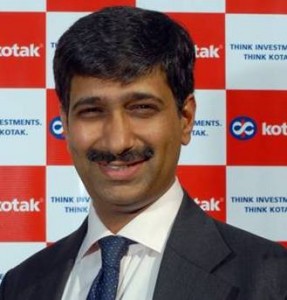
    With a team of domain experts who mine marketing data for insights, Brandscapes consults in the brand and marketing strategy spaces for consumer goods, retail and financial services sectors.

    Strategy, says Mr Misra, has long been a fascination with him. Having started his career in research with a job in Lintas and then Clarion, he moved to advertising and started Pathfinder, the research division of Lintas. When I look back I realize that it was the part of my career where I was far more intellectually engaged and therefore it was much more enjoyable for me as a person, he says.Strategy was always a passion for me.

    Read on for excerpts from an interview with Ritu Midha


    Is the grass greener on this side of the fence?

    The grass is always greener on the other side of the fence  depending on where you are. But this I can say it has been an exciting experience, because I am doing different things. I am learning new things for instance quantitative analysis, data at a level much higher than one was exposed to; we are also interacting with brands and clients globally.

    Also, starting something from scratch to an entity in itself is a fascinating experience we are now 85 people strong, and have about 25 regular clients. Considering that we started at the same time as the recession began, the fact that we are standing today is a good thing.

    Broadly, what are the work areas of Brandscapes?

    Brandscapes works in broad strategic areas. A large area of interest for us is Research Analytics we look at research data that clients already have, and get more value out of it, through further analysis and cross-fertilization. We also do Marketing Science Application, which is to predict the future based on past data, and Future Forecasting through sophisticated modelling.

    Marketing Dashboards is another service we are proud of. We realized that marketing data is all over the place and it is very difficult for anyone to take a holistic view. There was an opportunity to take sales data, market share data, and brand image data and put it all together on one screen It provides a holistic view, and has given us good traction.

    We also have a brand strategy service known as Strategy Maps.

    Have organizations become more conscious about research?

    If I look back over the last ten years, I can say there is a lot more orientation towards listening to the consumer. Has it has reached the global level? Obviously not. There is not enough awareness about qualitative research. For example, uninitiated marketers today ask, So how many people said this? In qualitative research you can’t answer that kind of question it is about what went behind.

    Having said that, the focus is increasing on listening in on the consumer rather than deciding everything on gut feel. There is definitely expansion of research beyond the larger companies and multinationals.

    I would also stress that research business, per se, needs to be far more accountable. I have noticed over the last few years that research business is far more engaged in downloading the data, than in helping the client take decisions based on the data. Which is why we started with data analytics.

    Moving to a specific area of interest, what are the essentials of brand building beyond logo and packaging?

    To my mind the brand should have seven to eight different dimensions that should be clear to everyone involved in creation of the brand. One, there should be clarity as to who is your competition. Very often you enquire with clients about their competition, and the answer is everybody in the category, or in some cases it is unclear. If I am selling a brand of soap, every soap is my competition. Now that cannot give you a very sharp strategy. Second, clarity on the target audience is very important very often it is not a decision that is very well thought through. It tends to vary from year to year. As a result, the brand architecture remains confused.

    The core insight about the consumer that we leverage into a brand is usually the most difficult one to decide. Very often there is no effort to define it. If you look at Google, the search engine, they said that people don’t want clutter they want information in a clutter-free way. So they want for a strategy where they didn’t want a landing page so it is insight that drove the strategy. Very often it is the most difficult thing to know, but it is a must for the structuring of the brand.

    Then there are elements that people tend to look at: Functional benefits, emotional benefits, and the brand personality. When the client comes up with the feature, the research agency has to check the benefit to the consumer from that feature. Often, that leap is not taken. You could say it is a germicidal soap but that is not enough, you need to look at functional and emotional benefit. For instance in Lifebuoy, the functional benefit is that your family could be free of germs. If your kid gets a cut, and you are using Lifebuoy, you can be free of concern. If you wash your hands with Lifebuoy before eating then you are germ-free. The emotional benefit was translated into Koi dar nahi (No fear). You feel in control because you don’t have the fear of germs coming in. This needs to be documented and discussed.

    Then, of course, comes the DNA and the key differentiator of a brand. These are some of the elements that need to be structured to create a holistic brand.

    Most brands do not succeed because they do not do proper brand planning.

    As per a recent Forbes study, globally customer retention is far more important than acquiring new customers.

    In India, if you look at segments like telecom the last seven-eight years has been about acquisition. If you talk to players about customer retention, you would not get as much attention because the whole game was about customer acquisition. That holds true of other growth sectors too. It is largely because of the country’s development stage and product lifecycle.

    But globally, markets have matured and retention becomes more important. You need to retain the customer for a longer time to get maximum value out of the customer and there is very little to acquire anyway.

    Coming to India, due to the exponential GDP growth in the last ten years, the focus will move to retention, so I see that becoming a need going forward.

    Coming to the obvious question, is the slowdown a reality or is India not that impacted? And is it impacting branding exercises?

    With GDP level at 7.7 percent, India is still seeing some growth. You cannot compare it with the USA and UK where they are either seeing negative growth or no growth. More than slowdown in growth, the biggest challenge is slowdown in sentiment. The optimism that we saw last year is now turning to a little less of optimism bordering on pessimism. And that typically affects the consumer spending pattern. Consumer sentiment has a long-term impact on growth. That is what we have to watch out for.

    It is the reasons inside India itself, rather than global impact, that is generating despondency in people. When they become so concerned they become conservative in their spends they will postpone buying of high-ticket items like houses, cars, etc and that impacts demand.

    Do you see the festive season bringing good news for marketers?

    I think everyone is hoping for that to happen. But marketers would have to come up with really good offers and discounts to start again. This year there is a dampened demand in durables and cars sectors  it is already visible  and it is not going up. So there should be many more cut-throat promotion offers during the festive season this year, as compared to the previous year.

    You are expecting the slowdown to continue to next year

    Unless something very good happens in the economy, the negative sentiment will pull down the demand. As interest rates keep going up, investments will start suffering. Prices are rising. I am not really optimistic about next year

    What about FMCGs, will they sail through?

    I don’t think so if you are talking of mass FMCGS. They did not see a lot of slowdown in top line growth in 2008. I think they are suffering largely due to inflation, because they have to pass on the price rise to the customer. So they might be getting larger value realization today, but automatically consumers will cut back  they will go from large to smaller sizes, they will use things less frequently. Volume growth will be impacted.

    A few companies may sail through because of the audiences they are catering to. If you are in the upper middle and upper segments, your chances of seeing a downturn are less. Companies like LOreal would be able to go through it much better because there is that rich segment, which is not impacted by the price rise because their disposable income is so high.


  • ‘Taking bets that pay off’

    Mr Karthi Marshan heads marketing for the Kotak Mahindra Group, India’s fourth largest private sector bank and BFSI conglomerate. In his role at Kotak, Mr Marshan oversees marketing efforts across all the verticals that Kotak is present in, including insurance, banking, brokerage, asset management et al.
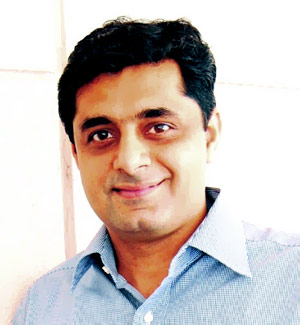
    An alumnus of IIM Bangalore (class of 92), Mr Marshan started his professional career as a copywriter, then moved on to account management at Grey Worldwide, producing television content for Sony India, heading marketing at IDBI Bank, and founding Sharekhan, one of India’s leading retail brokerage firms, along the way. Prior to joining Kotak, Mr Marshan was based in Sydney, where he helped turn around an ailing DTH business that catered to the Indian diaspora in the ANZ region.

    In a candid one-to-one with Tuhina Anand, he speaks about Kotak’s age, both physical and mental, and why Facebook is better than the company website.


    What would you describe as the Kotak Mahindra edge among the other players in the banking sector?

    The first edge we can talk about is the fact that though our firm’s name is that of a bank, we are actually a unique, fully integrated financial services provider, which is able to serve all your financial needs under one roof.

    Beyond that, we have long had a sterling reputation among consumer segments with respect to our expertise in the various financial spaces we operate in.

    Finally, our relative youthfulness is, I believe, our most powerful differentiator. The fact is that our firm and its myriad offerings are all the progeny of the rapid pace of financial reform in this country over the last few decades. Thanks to this, we understand the emerging young post-liberalization India and are able to connect with, customize and serve it best.


    When it comes to banking advertising, relationship seems to have become the focal point of conversation for all banks and it becomes difficult to differentiate one brand from another. Agreed that relationship building is important in banking, but how does one succeed in creating a brand that’s not me too?

    You are absolutely right, the emphasis on relationships in BFSI communication has rendered the space quite commoditized and undifferentiated.

    While the insight is valid, that relationship management is at the heart of successful business in our category, I think a key fact which has been glossed over is that things like service and relationships are merely empty promises if used in advertising, since consumers don’t believe such claims without trying. If you see an ad for a new ketchup that promises something special, next time you can pick up a bottle and give it a chance. If a coffee shop promises great service, you can sample it and decide for the price of just a cup. Banks don’t have the luxury of letting you sample anything, making trial very difficult. And it is compounded by approaches that boast claims which are hard for consumers to digest without trying.

    As far as answering how one can succeed at creating a brand that’s not me too, I can only speculate. What we have been trying to do over the past couple of years is certainly an attempt in that direction, but only time will tell if our recipe worked.


    Kotak’s earlier campaign was It’s great to be 25; now the campaign is Money ka matlab. What prompted them and how do the campaigns tie with each other?

    The grt 2b 25 campaign was our response to what we saw as a disruptive positioning opportunity, rather than just a hoary anniversary celebration. It was our bet that the campaign would help us further enhance our credentials, create disproportionate growth in our recall scores and tell the story of our coming of age.

    The campaign did all that and then some. So when it was time to do another round, we sought to consolidate the good it had done, and build on it. So, for instance, we stayed with the strategic choice of allowing regular folks to speak their minds instead of doing brand propaganda, which had worked really well. Needless to say, we also wanted to ensure we kept the youthful flavor of the brand alive. Beyond that, with Money ka matlab, what we essentially are seeking to do is use our age and connect it with a distinctive insight we developed on the evolving role of money in our country.

    The bridges between the last and the current campaign are in the creative strategy, as also the fact that the current campaign also continues to celebrate our 25 years in the business.


    What is the aim of the campaign and how has it helped the bank?

    It is our belief that for categories like ours, as it is for categories like colas, the advertising is a part of the product. Hence a key aim of our campaigns is to make our brand one that people will prefer, at least from those segments that we are targeting. To this end, our research tells us that we need to constantly work on objective metrics like spontaneous and total recall, and soft measures like credibility, trust, et al. It’s too early to say if this campaign has helped move the needle or not, but I can say that the last campaign did certainly make a significant impact.


    How long will this campaign continue, and what do you expect going ahead?

    This campaign has just reached its most exciting part. We are in the last lap of the broadcast part, where we used TV, outdoor, radio and the internet quite aggressively to communicate the Money ka matlab platform. We have just now kicked off an engagement programme, where two motorcyclists are riding from Chandigarh to Bangalore, and asking people across India what money means to them. These interactions are being captured in video form and will be uploaded every day from along the route.

    At the end of the journey, I am hoping we will be able to produce a meaningful document, in video and other forms, which will provide rich perspective on what money means to the people of India today.


    As the campaign is active on the digital platform, it would mean you are looking at the young TG. How has the campaign fared with that TG?

    The bulk of our fans on Facebook are in the 18-34 age group. However, it is a misconception that our target audience is only youth. We are conveying the brand’s youthful stance, to ensure it resonates with people of all age groups with a youthful bent of mind. What I mean by that is that in mindset terms, we are targeting people who will be comfortable with mobile and net banking, net-based trading, as well as the use of social media etc.


    How much has been the spend on the Money ka matlab campaign? Would you say it looks like about Rs 100cr?

    I will tell you what I can say. We have taken some fairly radical media strategy calls on this campaign.

    First, we opted for very short length films, since we believe frequency is critical in this age of ADD (attention deficit disorder). Our average film length is 15secs.

    On TV itself, we took a bet that really paid off, where we eschewed the main general entertainment channels and focused on news, movies, infotainment etc.

    Next, we used outdoor as a primary medium, not a support medium. We spent as much or more on OOH as we did on TV. Our insight was that people in cities are spending more time on the road than they are in front of their TVs and its mostly idle time, waiting in traffic jams, providing us a receptive audience. Also, the format of the medium itself lends stature to the brand.

    Finally, we focused all our messaging to drive traffic not to our brand website, but to our Facebook page. This again is insight-based. Today, people want to hang out at the mall, not come to your branch. Hence, if we want to engage them, we have to go to the mall. Similarly, few people actively seek out and visit brand websites, but it seems almost everybody will soon be on Facebook. Hence the bet.


  • The Future is on the Shelves: Devendra Chawla

    As per Boston Consulting Group estimates, the size of the organized retail market is approximately $28 billion and is likely to grow nine times to $260 billion in 10 years. Modern retail is no longer testing the water but is all set to grow at a reasonable pace. And as is known, the Future group has played a key role in the growth of modern retail in India.

    Mr Devendra Chawla, President, Food & FMCG Category, Future Group, reflects upon the increasing importance of retail in brand communication, consumer insights and trends among other things, in conversation with Ritu Midha of MXM India.


    Customer engagement is the buzzword. What steps can a retailer take to keep the customer involved and engaged?

    The landscape for brands is undergoing a transformation. While media is proliferating from one channel to multiple channels and one screen to multiple screens, brands need to shout louder to get consumers’ attention in this age of the addictive remote. Yet, the bigger challenge for marketers is not to get attention but to engage with this consumer. While the media is expanding, retail is converging in the sense that a brand can reach and interact with more consumers under the same roof. Though in a nascent stage, modern trade is contributing in a major way towards the growth of categories such as breakfast cereal, cheese, packaged rice, toilet cleaners, liquid soaps, air fresheners and hair conditioners, to name a few. A retail store in that sense is the new media vehicle to create awareness about new brands/products for a large number of consumers visiting the stores.


    It is said that most purchase decisions are now made in the last leg  or seven minutes before the customer actually shops. Are marketersmaking specific point of sale strategies to influence customers?

    Last mile marketing is about engaging the consumer and most decision by the consumers are taken at the final consumer touch point, the store, where given new information, brands may interrupt the decision-making process and enter the consideration set. One can activate last mile marketing by engaging in the following effectively in the retail theatre.

    • Celebrating new product launch
    • Sampling
    • Category Dressing
    • Knowledge to customers  usage, recipes
    • Break-the-routine promotions
    • Multi/Combi Pack
    • Cross promo
    • High customer engagement activities like lucky draw
    • Education & upgradation of Customer


    As per a recent Forbes study in the US and Europe, customer retention is far more important now than gaining new customers  how true does it hold for India? And more specifically for modern retail?

    Modern retail penetration is very high in case of Europe and the US. So more and more players are targeting the same set of customers. But in India, modern retail is still nascent (7-8 percent of total trade), penetration primarily limited to Metros and state capitals. For India there is huge opportunity particularly in the tier 2 and 3 towns. The pie is so large that acquiring new customers is as important as retaining them. Having said that, loyalty needs to be worked on to create customer stickiness.


    Data and research seem to be gaining in importance; how do you track the customer behaviour? Can you give a few examples of learnings bringing change in your retail format?

    Interestingly for us, the stores also double as a live research laboratory and a constant source of feedback . There is as much feedback as one wants to accept on behavior of categories, the way they are consumed, what need gap exists giving way to valuable consumer insights.

    Some examples… Kids engagement with products is much higher in a supermarket environment where products are displayed at their eye level and are well within their reach. For example, in the ketchup category, we learnt how kids are dependent on grown-ups for usage, thanks to the heavy and breakable glass bottle. Consumers were indirectly asking for innovative solutions here as the bottle is consumer unfriendly for the primary consumer.

    We worked around the issue and launched an easy-to-use standee pouch with spout for our ketchup brand, Tasty Treat. Mothers instantly loved it since it made them anxiety-free and their kids self-sufficient. This pack reduced packaging cost by 30 percent and supply chain cost by 40 percent due to lighter weight, providing even more value to the consumer.

    We Indians are unique and unconventional in our own way. In a category like soups, speaking to consumers before the launch of our private brand regarding the ideal soup serving size brought to light the fact that 70 percent of them preferred drinking soups in mugs, in the comfort of their homes  while the form of consumption is in bowls under public gaze like in a restaurant!

    Apart from insights , POS data is also a huge repository of consumer behavior, but still nascent in India. Plus we also work on

    • ACN reports
    • Kitchen Audit where we study in which catchment what consumers are consuming so we can stock them.
    • Catchment Studies within a given radius of the store.
    • Community Studies  Food habits, Festivals.


    Experiential marketing is a much talked about phenomenon now  how important a role does a retail outlet play in it?

    It’s the retail theatre where imagination and the buying experience can be fired up. We enable market development and driving consumption, as India is still under-branded and under-penetrated in most categories. We gave away mugs during our soup launch with a campaign ab soup ka mazaa mug mein, and saw category expansion of 25 percent. Traditionally, category expansion role was played by the advertised brands. Future group has rewritten some of those rules.

    We follow a toolkit including a multi-sensorial engagement with the consumer in the retail theatre.

    • In food categories, where taste and palate play an important role in buying decisions, experience in terms of sampling is very effective.
    • We have sampling counters in all the family centres, live cooking/recipes.
    • In the non-food category, testers are provided to help customers with decision-making.
    • Promoters play an important role  eg, case of beauty products through demonstrations.


    Talking specifically of the Future group, how do you distinguish in brand experience across your retail formats?

    The focus obviously is on providing customer satisfaction  whichever food retail format store they shop in. We have segmented our formats keeping customer type and convenience in mind. We have KB’s Fairprice largely for the people who are looking for convenience. Store formats keeps limited assortment but we stock all the top brands and SKUs that consumers would require.

    Then comes the Food Bazaar  which is mainstream and for the aspiring class. As it is now a food shopping destination for a large urban and semi-urban class, the focus is on making brands available at different price points, and ease of navigation. These have wide and deep assortment play.

    Next is FoodRight, and the aim is to delight the customer by making available aspirational products. At the top of the pyramid is Foodhall  the new upmarket format we have introduced for the discerning customer. From layout to the products on the shelf, everything is for a specific customer  it is the outcome of a lot of research and consumer focus groups coupled with kitchen audits. The initial feedback tells us we are in the right direction.


    Talking specifically of food and beverages, how do you strike a balance to keep both the customer and the brand happy?

    The most important thing is driving consumption, working with national brands to upgrade consumers to more value-added categories , thereby giving choice and new status to the customer, and sales to the brand via category management .

    • Properties like Monthly Bachat Bazaar, Sabse Saste 3 din, Mahabachat, give an excellent opportunity to brands to interface with consumers.


    Would you say retail has far more to offer in terms of PoS experience, and brands need to take advantage of it?

    • The moment of truth for the retailer is the PoS, a gold mine to understand behavior, data, money spending patterns like share of wallet on various categories. Though data is extremely perishable, brands need to capture pattern/behavior on a regular basis by tying up with the retailer in lieu of remuneration.


    Any instances of Big Bazaar working together with a brand to make it a part of consideration set?

    Quite a few, and just to give some examples…

    • Coffee Category project with Nestle, Coke fixture for CSD category, PoS data sharing with elect sambandhis.
    • Juices project in leading brands.
    • Solution Centre for Chinese with brands like Ching’s.

    In the case of private labels, which are the categories where private brands are doing well?

    Future Group has significant presence in the private brands fashion, electronics and general merchandise categories. In Food and FMCG, though we are a recent story, our brands are no 1 or no 2 in a dozen product categories including staple food, ready to cook and home care. Our entrenched brands are Tasty Treat, Clean Mate, Fresh & Pure, Premium Harvest and rising brands are Sach, Ektaa and John Miller. Tasty Treat now ranks as the 5th Brand in terms of sales in our stores from the 3000+ brands that we offer in Food and FMCG categories.


    Has the customer mindset towards store brands changed for better?

    A label on the shelf becomes a brand by covering the two-foot distance from the shelf to the trolley. After all it is the consumer’s choice, the rest is marketing terminology we marketers use. For consumers everything on the shelf is a choice and are all brands. The proof of the pudding is in the eating, and the leadership status of many private brands shows the acceptance of these brands. We are creating independent brands like John Miller, Tasty Treat, Clean Mate and Premium Harvest, and these are not store brands as store brands use the store’s name as the brand.

    In many cases, our brands are manufactured by the same factories that produce for brands marketed by leading multinational and domestic companies. Our formulations are arrived at with rigorous development process. We work closely with our vendor partners for fostering high quality and long term relationships.


  • Keeping pace with technology is the huge challenge: Jwalant Swaroop

    Mr Jwalant Swaroop, who has more than 26 years of experience in the newspaper industry, has been associated with the Lokmat Media Group since 1992. He recently took charge as the chief operating officer of the group’s publishing and events division, based in Mumbai.
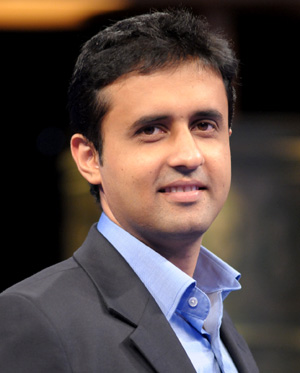
    In a freewheeling chat with Ritu Midha, Mr Swaroop talks about topics including new challenges to the newspaper industry, the growth of the regional press, and digital as the next big thing.


    How has the newspaper industry evolved in the last decade or so?

    The newspaper industry has evolved remarkably in the last ten years, both in mindset and revenues. The approach is futuristic so investments have been made in that direction. Just for numbers sake, the industry has shown robust growth of around 15 percent YOY in advertising revenues and about 10 percent on the circulation front in the last ten years.


    Traditional media in markets like India is still growing. Would you say that print players have taken the right steps to take optimum advantage of that and push the medium further?

    Yes very much. I think digital is being seen as the most potential transition, there are investments being made and backed with complete will to seize all opportunities. However, it is a long-term view and probably it might take another five years to see the real ROI.


    Looking specifically at regional press, do you believe it is poised to grow at a reasonable pace?

    It will, of course, as the regional markets growth is pretty robust. Therefore regional press will have its share of growth.


    Coming to Marathi media competition is growing intense (what with the launch of Divya Marathi). Do you see it helping in growing the market, or could it fragment the market?

    Both. Growth brings fragmentation. It is good, of course, making content the King and the consumer the real Hero.


    Moving on to your new role at Lokmat, what are the changes and transformations that you intend to undertake as the COO Publishing?

    As a company we are poised for the next orbit of the growth and therefore I need to accelerate that pace and make it happen so that the company is future-ready.


    On May 15, 2011 Lokmat saw a content and design change to its product. On August 15, Lokmat Samachar saw a similar makeover. Did they achieve their objectives?

    Differentiation and relevance are the key elements of the change, and I am glad that both the makeovers respectively, of Lokmat and Lokmat Samachar, achieved this.


    What has been the market response to your Hindi compact daily Lokmat Samachar? Do you think the compact format, like in the west, will have more appeal in future as it is easy to read and handle?

    Lokmat Samachar is actually a broadsheeter; the compact is the City News Express (CNX), launched in Aurangabad as a bilingual newspaper. That is doing pretty well, both in terms of advertising and circulation.


    Do you think that the regional newspapers are doing enough innovation to gain the attention of the advertisers? What are some of the recent noteworthy innovations?

    Unfortunately, innovations by the regional press are not showcased properly. We do everything that can deliver the desired impact to the brand communication. Communities and printing innovations are a regular in thing. We are doing several cross-media promotions for many brands these days. We recently published a 3D issue in Nagpur, Aurangabad, Nasik, Kolhapur, Mumbai, Jalgaon and Pune, which became hugely successful.


    Digital is supposed to be the next big thing. Do you think that such a threat would not affect the regional players for a long time as the technology, perhaps, has not percolated to the grassroot levels?

    Technology reaches the masses rapidly  faster than anyone can think. The huge challenge is actually to keep pace with it. Digital is reality, and why next big thing it is already a big one. Social media is changing the landscape and fast impacting media consumption patterns, and mobile internet browsing will be the defining medium of the future.


    How has the year been so far? And how do you see it panning out for the group?

    The early months have been disappointing and I hope, as we go forward, things will be better.


  • Voice for Imagine TV

    By Dhara Salla

    After Colors with Bigg Boss and Sony with Kaun Banega Crorepati, it is the turn of Imagine TV to come up with a big-ticket reality performance show – The Voice. The Voice is an American reality talent show based on the reality singing competition The Voice of Holland, created by Dutch television. MxM India talked to Mr Nikhil Madhok, Senior Director Marketing and Communications, Imagine TV, about the show and what it means for Imagine.


    Q: Imagine already has a great new lineup of content; why did you feel the need for this big-ticket?

    One of the things we are trying to achieve is a good balance with fiction and non-fiction. We are revamping and refreshing the line-up of our show. We got our fiction shows line-up in place and it was the time to start the phase with non-fiction. Imagine TV has done a lot of reality shows like Rakhi ka Swavamyar, Shaadi Teen Crore Ki and Pati, Patni Aur Woh, to name a few, but had never tried a talent show. If you talk about Nach Le, it was a differentiated concept with Saroj Khan teaching the contestants to dance. Therefore, we never had a talent show per se, and The Voice is it.


    Q: Tell us about the show.

    The Voice, which will start in January 2012, actually has a differentiated concept, we are not saying it just for the sake of it. We will have blindfold auditions; the judges will be blindfolded and will select the contestants only on the basis of the voice. The contestants cannot influence the decision of the judges with their looks, crying or an emotional sad story. Beyond this, there will be involvement of the coaches. There will be four teams, with 14 contestants per team and every week the coaches will only select the good and the bad from their team. With The Voice we want to ensure that the final talent will be a superlative talent. The auditions will go to 12 cities – metros and important states where we can pull the maximum talent. It will be positioned in cities where people can easily drive down to the location.


    Q: Why an adoption of the international format, why not original?

    If you see Imagine TV has already experimented a lot with original shows such as Rakhi ka Swayamvar and Shaadi Teen Crore Ki, and we thought that it is the right time to get this show on board. We did not want to experiment at this stage. The Voice has already been a successful show in other countries and its rating has proved it. This format has already been syndicated in 25 countries. It has proven itself in markets and the strength is the format of the concept.


    Q: What is the show’s budget? We hear it is a big number…

    (Laughs) If I tell you the budget then I will have to resign from my job. But I can tell you that we have invested a lot in this show and it is a big ticket in real terms.


    Q: What part of the total budget will be allocated to marketing?

    We are going to do a heavy marketing campaign and about 20 to 25 percent of the total amount of the budget will be dedicated to marketing.


    Q: How will the marketing campaign be distributed, and what is the strategy?

    It will be distributed among different phases. The first phases will be the call for entry, second will be about educating the viewers to know how the show is different and talent matters, third will be the launch campaign. The show will run for 12-14 weeks and we will be marketing throughout the time the show is on air. The campaign is still in progress and we will come out with it once everything is finalized and things fall into place.

  • ‘Diplomacy? Not for Mail Today’

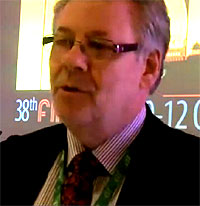
    Rahul Thappa, COO, Mail Today in a candid conversation with MxM India’s Akash Raha.
    Q: For a long time you had been in Malaysia, how does it feel to come back to India and join the India Today Group?

    Well, these are two different questions and I will take them separately. Coming back to India… I don’t think I ever had a big departure from India. Perhaps, there a few more cars on the road and lots of development since then, but the people are still familiar and the same. Moreover, I was in India fairly often even when I was working abroad, so coming back wasn’t a shock. As far as the rest of the family is concerned, and it was important decision for them too, they have been doing very good. Whereas joining India Today Group is concerned, I think it has been an excellent experience and a very good opportunity thus far. It is one of the best media houses and also one of the oldest. Usually in media, the oldest have the advantage of having settled down well and not being in a state of flux, like many new media organizations trying to find their DNA. So it’s been good on both accounts.

    Q: What is change of tactic that you are adopting, since you have been on the other side of the business too – Media Planning?

    How I characterize it is, I came from the demand side (for media) which would be the advertiser, advertising agency side of the business. And now, I have come to the supply side. I know how the demand side works. I know the psyche of the demand side and that helps me to understand on our end how our supply is to be sold to the demand side, what changes they may need to facilitate the exchange better etc. The knowledge helps us in building and positioning our product better in their mindset and in the way they conceive our product.  Since, we all have an ad-revenue model it is essential know more about the demand side. If we were a subscription based model, it would, perhaps be not as essential. I think that is what I bring to the table apart from the fact that I have been in senior managerial roles for a while now which helps me shape an organization; you could call us (Mail Today) a start up considering that we have spent merely three and a half years in the industry. I hope my past experience will help shape our team further as we will have exciting times ahead. We bring a strong differentiated product in the market and it’s doing very well. I am not saying it will meet the main stream newspapers head-on, as it was never meant to. It might very well contest against the magazines. It was purposed differently and not to take on the big boys on, and our aim was never so. It might look like such a product, but our content is packaged very differently, unlike other newspapers. Hindustan Times and Times of India are everything for everyone. And anyone who wants to read an English newspaper can pick them up. They are fairly democratic that ways and the entry barrier for those who want to come in is low. They have something for everybody. However, we are not everything for everyone… Our content is curated and our content is for a certain demographic.  And in that demographic itself we have several focal points. SEC as we know it today is not as flat as it is… IRS in the coming years with developed and enhanced methodology will aptly point out the fact where they will have a more living standard measure gauge of SEC’s rather than educational and occupational parameters. So if I were to see SEC as a pyramid, which it rightly is, then we as a product, we cater to the top half of that pyramid. Hence, we will not go deep in the market, because we don’t intend to…We don’t intend to access that audience. By choice we have defined our own playing field and it is, in a way, a niche product. We have lower values in mass product and yet, we are a subscription based product. Since we are a subscription based model in time we will have the leeway or flexibility to depend less on ad revenue and focus more on subscription.

    Q: So what are some of the changes that Mail Today has seen since you joined the group and what are some of the changes that the group is likely to see in future?

    Change in management doesn’t mean change in the way how a company is run. There are only subtle changes where efficiencies are creamed out of each system. A person X will look in efficiencies in one place and a person Y will look at efficiencies at another. That is how they are made and that is how they think. But yes, since I have joined, I have looked for efficiencies in certain places… Given the state of economy currently, everyone is making sure across all boards that all processes are running smoothly and efficiently. But a change in management doesn’t change a way in which a newspaper works… the DNA of our product can’t be changed. As we learn about the market, consumers and demand side of the industry, if any process needs to be changed/improved then so be it.

    Q: Efficiency since the slowdown has become an euphemism for job cuts, is that what you are hinting at?

    No, job cuts happens when one process grows faster, builds up fat and then realizing that that process wasn’t necessary to begin with . But in a media industry all processes are equal and that is not what I am hinting at.

    Q: Mail Today began as a paper for the newer audience – the office goers, to put more literally, the metro commuters. Being a ‘compact’ it is easier to handle and read? Are we right in understanding that this focus still continues?

    No, our compact size had nothing to do with the ease at which it could be handled in tight situation, like the model Mid Day in Mumbai. At least, that was never the overt intention. However, if does mean that a person travelling in a metro finds it easier to read, then so be it. One can observe a trend that successful international newspaper are or have switched to compacts such as Daily Mail, Independent, Guardian… One, it is good for savings in terms of the newsprint cost on the other hand it is also fairly easy to read. Ease of reading, pleasing to the eye, logistical advantages, cost advantages… We think that the newspaper industry can take this (compact) route in the years to come. We have taken a bold decision first and we are proud of that. We have taken the first step towards taking compact forward this format that has been a trend internationally too.  If people say only broadsheet is a serious daily then they are out of date… their size has got nothing to do with the seriousness of content. That’s just stereotyping. One cannot compartmentalize the products content by its size.

    Q: Talking about content… Mail Today was known as the ‘Paper Tiger’.

    Yes that focus still continues and will always continue because that is the belief on which media organizations are built. There is no ‘Madhyam Marg’ to it for us…which is what we call our competitors. They are large and fairly entrenched and they take the ‘Madhyam Marg’, or what we will call, being diplomatic. And we don’t believe in that. We tell a story straight, take the bull by the horns… several idioms come to my mind, but in essence we are very direct. We say what we mean and mean what we say, whatever be the consequences.

    Q: Not too long ago Mail Today used to have their circulation number on the masthead. We see that it is not there anymore… Any specific reasons for this change?

    We can put it back there… that is not a problem. But if it becomes two million and two hundred copies I can’t change it every day. It is a little tedious too and is nothing short of a live ticker. We started it only to tell that we were approaching a milestone and thereafter, that we have crossed it. Printing it every day will not make any difference to anybody’s mindset. Eventually, it will become a blind spot. We are currently at over two lakh copies and when we reach our next big milestone, we will put it up too. But keeping it up there permanently solves no purpose. It was for our detractors who said that we won’t grow. The market is growing and with it we are growing too. The market is not only growing only vertically but also horizontally… and there is enough space for us to grow in it. Everything is being diced up and segmentalized according to age, gender and so many other parameters. So the way media is going to grow is with more choice and there is going to be space for everybody; in fact, journalists will have far more trouble keeping their roots. But getting back to your point, the numbers were just to point out to the fact that we are alive and kicking and growing at a steady rate. In three and half half years, I think the numbers we have got in this cut-throat market is phenomenal.

    Q: Since Mail Today was launched in 2007, it was said that expansion was on the cards. Especially Mumbai and Chandigarh were being talked about. Yet, the industry is still awaiting the expansion. Is it still on or has it been scrapped?

    Hopefully you will hear of it soon, expansion has always on the cards. But expansion just for the sake of expansion, what you would have seen in several publications, is something we won’t like to do. We have seen several premiere media houses which saw splits, mergers, acquisitions expanding and trying to enter into every business, launching in every market that they can think off. And look where they are, look what the recession has done to them… Yes, money has become scarce; funding has become scarce too… There are companies in the market close to 80 and 150 years old and that’s why they are successful. We won’t take that long to be successful as they are, but we will get there. But we won’t ruin our work by trying too hard to get into newer markets. Delhi is our market and we know this market and stabilizing Delhi is of critical importance, which we have done. And very soon you will hear of us launching into major markets in a major way. We don’t want to be insignificant players in several markets. We won’t go into a market just because it’s large and growing… Big newspapers which are meant for all audience types can do that but not us. We are also looking for a certain/specific audience type; be it Bhopal, Cuttack or Port Blair. However, we already have a few marked city, the plans are at place and are being deliberated by the management. And very soon you will hear of our first foray out of Delhi.

    Q: What is your annual revenue from Mail Today, and what is your revenue target for 2011-12 and what is the growth number it has seen?

    Our readership is constantly growing. As far supply side, we are growing on that front too. As far as revenue side, we are growing at high double digits. Our growth over the last year is well into 40 per cent. For us, being a relatively new organization and having faced the slowdown, and yet being in the market with such a substantial growth figure is an even bigger achievement. Otherwise the way we started in 2007, we would have been growing currently at 60-70 per cent. We would love those times to come around but till then we are fairly happy with our growth rate.

    Q: It is being said that the IRS-NRS merger are at hand. Do you think it will solve the measurement problem that the industry faces?

    It won’t solve the measurement problem but it will certainly reduce the confusion. We will have one metric to go by and it will make it easy to everybody to look for improvements. When there are two measurements, it’s like having a pound and metric systems working together. The merger won’t solve the endemic problems immediately that publications may have but it will benefit if everyone focuses on one metric. For example, the simplest thing is when you go to a client or planner or agency you might find one of them focusing on one set of data and another one on the other. You waste a lot of productive time that way, which we can now do away with. Two sets of money which was used in setting up samples can now be used to set up double the samples, hence more robust data.

    Q: What are your digital plans?  We have seen your epaper on the digital space but do you have a plan to do more on the digital space and monetize it with advertising revenue, and perhaps subscription revenue through partial pay walls etc.

    We realize that the digital era is already here, yet, none of the Indian players have been able to do anything substantial on it. But I can’t hide behind and say since it’s not working and we will not go there. Digital has become a way of life, information is dynamic and people want information at any time and at any place. When the demand will increase, so will the entire market and then, people will have many models. For example, if you have a complete pay wall it might not work, yet, if you have a partial pay wall it might just work. Also, you can focus on advertising and give content for free. Ad rates, as we see today differ for a digital pixel and a print pixel, which is not right. It is a peculiarity of mindset and it has to change. In years to come, digital will reign. Yet as I say that, I believe that physical product will co-exist. In 20 -25 years when today’s generation consuming digital grow older and new generation of people consuming arrive, print might see a little fall, yet it will co-exsist and then better product will reign. Mobile, tabs and more futuristic system will come into existence and then the sole factor will be how you reach out to a consumer throughout his day on various mediums. Answering your question, eminently, we have been a little slow on that front (going digital) because we are just a start up and we wanted our editorial to focus on the paper product first and we wanted to keep it growing. The demand side still understands print better and hence it was understandable to keep that going before we jump into anything new. We are already making plans to go digital… But we want to come up with something different… Not something regular and utility base like the other Indian websites we have today. The idea will be to be a Huffington Post equivalent, otherwise, the content and the medium will not be differentiated. For example, god-forbid, if there is a bomb-blast everyone in a matter of 10 minutes will have the news. Hence, time is not a differentiator in that space because everyone has caught up and is as fast. Wealth, is the second dimension (one could be paid, one is not) yet, there is yet to be a successful model in it. Lastly it is skill, which is where one can differentiate. A well curated news and content is important. How does an event affect a person’s life and how you add value to it, which is the skill dimension… Currently at number two, Mail Today, our parent in the UK are competing on time and content. They have most of the news and on time too… You have to see it to believe it, how they put content together, on time and seamlessly where the designing is superb.

    Q: It is interesting how you say Daily Mail is your parent, I was more expecting a term like partner.

    Yeah, they are our parent as far as the website is concerned. And then again, I could say that we have two parents, one is Daily Mail and the other is India Today group, which undoubtedly is a parent. If you see the mast head (of Mail today), one can say that they are similar. We borrow a lot from them. Our DNA in terms of look, feel and the physical self of the paper is from Daily Mail. The way the content is put together is an India Today DNA.

    Q: What is the interaction level of Daily Mail with Mail Today after three years?

    We are very interactive. In content sharing of course we are the equity partners. Apart from that, they provide us the glimpse into the future and whole lot of other learning, as to how to handle multi-national clients. They have been handling the same format for a longer duration of time than us, hence the expertise. Our relationship is a fairly active and very cohesive.

    Q: Do you think that media houses should do something to change the current overdependence on advertisement revenues? Do you think rationalizing cover prices will help? What are the challenges?

    Yes they should. The biggest challenge is, the fear that if prices are hiked circulation will be affected. For example, there are houses where there are 4-5 a paper going in each day and the fear is with a hike in price they might cut down on 1-2 paper. But I don’t really see it as fear, rather it is a affirmation of two things –How valuable your product was in that person’s life if he can do away with it? On the other hand if that person was so price elastic that he couldn’t pay another two rupees for valuable information he or she is buying the first thing in  the morning, it creates serious doubts over the buyability of the reader as a valuable asset to an advertiser. For certain advertisers selling regular day to day stuff it will be bad. But for an advertiser selling a car, it becomes interesting… Let’s say my circulation is one million. If all products become double the price, the people who drop out are for instance 300 thousand. In that case, I would value that 700,000 more than the entire 1 million. Now that 700,000 I have are taking me no matter what the cost, they are actually reading the product and see value in it. The other 300 million weren’t reading me and taking me only because I was cheap.

    My argument to the advertiser would be, as it is earlier only 700 thousand were reading the product. And hence you continue paying me as much as you were, since that’s the exact number I still have. Then, my cost comes down and my revenue stays stable and I am a little more profitable. Some of these costs can be shared with the advertisers like they will want you to, but there are other ways of doing that; by elongating their campaigns, making content for them, doing events etc.,  not by giving them a price off.  The aims should not be to talk to everyone, but to talk to fewer people and be sharper in the communication.   It is time we bite the bullet, it is time we increase our price and it is time we do something rational for ourselves rather than keep digging ourselves deeper in the pit. If two rupees a day can bring down the edifices of large organizations then it is a slap on their face. If the whole network of large newspapers is built on Rs 2 a copy then there is no point discussing their value anyway.  It speaks a lot about what you have built over the past so many years. If you have built content-based credible organizations then the consumers will read you irrespective of a Rs 2-3 price hike. It can’t do away with what I call ‘Elasticity of Doom’. ‘Elasticity of Doom’ will come irrespective of the money – Sorry, you didn’t build a strong enough organization. You can very well increase 50 paise every month for four month. Then people in the industry say that do it all together, how would it make a difference, what is the point of doing it slowly. But like one of my colleagues in Mindshare used to say, you don’t boil a frog by putting it in hot water, it jumps out. You heat it slowly, and sooner or later you can boil the frog and make a nice broth. And all publishers can do it together, 1st of every quarter, across all boards. So that one is not costlier than the other and the parity stays. So it’s possible, you just need will to do it, because the ‘Elasticity of Doom’ eventually is inevitable. The cost of paper has to rise up, it’s not a renewal source, so might as well do it right now. Especially in the paper industry there is no reverse logistic. So till reverse logistics become a part and parcel of life, you will never have cheap recycling and cheap paper. Most of the paper today gets imported and there are tariffs, company disputes etc., due to which prices will always keep rising.

    Q: Talking about lighter subjects, Mail Today comes up with interesting initiatives. What are some of the upcoming marketing initiatives that the paper has planned?

    We have planned a lot of initiatives. But unfortunately we can’t talk much about it as it is a revenue stream for us. Olympics, Delhi centenary year we plan to do a lot on a lot of topics. Delhi has its own problems and being Delhi’s own paper we will try to tackle it in the best way possible. You will see several campaigns in times to come.

    Q: On a broader note, what are the new emerging trends in print media?

    There are wiser people who can talk about trends, but there is one trend that I will talk about which is the rise of tablets. I think it’s at our doorstep right now. While it might seem very quiet… you see cheap tablets of Reliance, Beetel. Samsung too have been known to lower costs drastically. The ipad market, I feel, will grow faster than the penetration of smart phones. There is still very little Indian content on the ipad. Yes the Times of India has an ipad app and a few others too, which is good and evolving, but it is not seamless yet. It is nothing like the foreignpolicy.com apps. We were talking about consuming content at ease in a metro. Consider the iPad which collapses a newspaper to one-eighth its size. You don’t have to open it any more, you can just slide your way through the complete newspaper. There are already about 250 thousand iPads in the country by official or unofficial estimate. Every second member in our industry has an iPad. It’s just a matter of time before the market explodes, and when it does, it will be everywhere without anyone having to curate content for it. That is something we should all keep our eyes on.

    Q: Can we expect Mail Today to come out with an iPad app soon?

    Mail Today would certainly like to do it; but probably as an organization we don’t think we ‘need’ to do it right now. But we have our eyes pinned on it, and will offer a value package to our consumers if and when we think it is the right time.

  • Huge expectations from ‘Good Food’: Tarun Rai

    Tarun Rai has been the CEO since 2008 of the Worldwide Media group which, during his tenure, has seen several new launches and titles. The most recent in the long list of magazines is BBC Good Food which is to be launched on October 21. In a conversation with MxM India’s Akash Raha and Shruti Pushkarna, Mr Rai, who took over as AIM President from Mr Pradeep Gupta, Chairman and Managing Director, Cybermedia, talks about the Engagement Study, Good Food, Zinio platform and the future of magazines in India.


    [youtube width=”350″ height=”250″]http://www.youtube.com/watch?v=KKPL01uKuDA[/youtube]

    Q: You are launching BBC Good Food in India. What are your expectations from the magazine?

    I just got to hear that the magazine is ready; it’s bound, ready for dispatch. We are launching BBC Good Food on Good Food Day, October 21, which we are celebrating and we are encouraging people to try something new on the day. We have huge expectations from Good Food. India is changing, food habits are changing. People are experimenting with food both in their kitchen as well as when it comes to eating out in restaurants. We believe that the time is right for such a magazine. There are no precedents; there are no international food magazines in the country. We are going into uncharted territory and we are beating a new path. There are dangers but as I said, somebody has to do it and we believe that the potential is huge. And the response we’ve got from advertisers for the magazine is excellent and you’ll see it in the number of ad pages we’ve got in the first issue.


    Tarun Rai on Indian magazines becoming successful international brands
    [youtube width=”350″ height=”250″]http://www.youtube.com/watch?v=-gdT17SBAtk[/youtube]

    Q: Several international brands are licensed to India. When do you see an Indian title becoming a successful international brand?

    As you know Femina and Filmfare are heritage brands for us and they are doing fantastically well. Femina already is present in Sri Lanka. Filmfare we’ve licensed last year to UAE and we’re hoping that we will take it to many countries; there is already interest because Bollywood today is international. The Indian diaspora still wants to connect with Bollywood and I think very soon you’ll see Filmfare in many other countries. The other advantage is, thanks to what people say the ‘digital issue’ but I see it always as an opportunity, we are already on the Zinio platform with Filmfare for the past month; and the response has been fantastic. Almost 60 percent of our total sales of all the magazines that we’ve put on Zinio have been for Filmfare because this is the demand which is coming from the international markets and now suddenly it has become very easy to subscribe to Filmfare just at the click of a button. So I think there are going to be huge opportunities on some of the brands like Filmfare and Femina.

    Q: What do you feel at being appointed the President of the Association of Indian Magazines? What does this responsibility mean to you?

    It’s an honour… I have been a part of AIM for four years now, pretty much as soon as I joined the industry. For me it has been a fantastic experience. I come from advertising and I had no idea about the magazine business. Thanks to my membership of AIM, very quickly I was co-opted to the magazine industry. I have learnt a lot from my peers in AIM and I owe a lot to them. Mr Pradeep Gupta, the outgoing President, has had a terrific run in the last two years and as I take over from him I hope to continue the good job that AIM has done over the last two years. We are a small organization but I think we have learnt a lot to collaborate and make sure that we do things that are beneficial to the entire industry. Right now we are too small. We are just 3 percent of the total ad spends. We deserve more, but just by saying that we deserve more we are not going to get it. So we have to do things to convince the advertisers about the strength of our media. That is the reason we instituted the engagement survey and we are going to take it to its right conclusion by having a proper campaign around it and material which will convince the advertisers. That’s just one of the things. Generally speaking, the magazine industry can do with a higher profile.  So my attempt will be to raise the profile of the magazine industry by doing activities. One of the things it will do is to bring more talent to our business. The way our industry is growing we need a lot of people very fast. We need different kinds of people; with this digital opportunity that has come up we need different and varied kinds of young people to come to our business. By raising the profile of the industry we will also attract new talent to the business. That is going to be one of my important priorities.”


    Q: Do you think the Engagement Study that AIM has come out with will solve the measurement woes of the industry? Moreover, do you think that the advertisers will accept it as a robust currency?

    You never know until you try, and this is our attempt. Now it’s up to us to convince them. One piece of research is not going to do it. The good news is that the media buyers and the advertisers themselves are trying to understand media better. Ambika Srivastava spoke about the touch point study, the brand experience points, about how magazines score very highly when it comes to influence. So the conversation has already started. We want to push that conversation along where the judgment on one media is not only dependent on the numbers but also dependent on the quality of numbers, on the quality of engagement. And therefore the engagement survey is just the first step; it is not going to persuade people overnight but we don’t know whether we’ll be able to persuade people till we make our first step. So this is our first initiative to do that.

    Q: What are the take-aways from the India edition of the World Magazine Congress, moreover, on the 360-degree opportunity theme?

    It is called the 360-degree opportunity, not challenge, because I am of the firm opinion (and the board of FIPP was of the firm opinion) that we should look at it as an opportunity rather than as a threat. I just think it’s a fabulous place to trade ideas, to get to know what people in the developed market are doing, what people are doing in the South East Asian market which is still coming up. It’s new territory for us. Organization structures are being experimented with; we had this whole thing about how do you manage content along with so many platforms, do you have a core editorial team…? Business models are being experimented with. So to me it’s still a time of flux. Everyone agrees it’s an opportunity which we cannot ignore; do we have the right answers yet, maybe we don’t but this is a forum where you can learn, you can share, you can discuss and hopefully going forward we will arrive at some solutions which will work for different magazines.


    Q: What according to you is the future of magazines in India?

    I think the potential for magazines in India is huge. I always say that magazines, specially the lifestyle and special interest magazines, in India are a sunrise sector. So if it’s a sunrise sector, we are only 3 percent, the only way is up. We are too small to go any lower than that, the only way for us is up and I am very bullish about magazines in India.

  • No crisis for magazines in India: Chris Llewellyn

    Chris Llewellyn, President and CEO, FIPP, UK spoke to Akash Raha and Shruti Pushkarna of MxM India at the recently held World Magazine Congress. Mr Llewellyn spoke about the future of magazine, future events of FIPP and about the recently held World Magazine Congress in New Delhi, India.  Federation of the Periodical Press (FIPP) is a worldwide magazine media association, which represents companies and individuals involved in the creation, publishing, or distribution of quality content, in whatever form, by whatever channel, and in the most appropriate frequency, to defined audiences of interest.


    Q: FIPP has been taking up the interest of magazine publishers around the globe. What are the upcoming events that we can expect?

    FIPP exists to help its members construct better strategies and to build better media businesses. And the way they do that, is by finding what is happening around the world. So we come together at various meetings and events, share experiences and share knowledge, and go back better informed. I am really pleased to be able to confirm that next year September 19 to 21, Seoul Korea will be holding the third Asia Pacific Digital Magazine Media conference. And that will be specifically geared towards the Asian market and the hot topics of the time then; and we are talking digitally, so a year from now god knows what they’ll be, but they’ll be on the top of publishers mind. We will bring in some international speakers and we will engage with the Korean market which itself is incredibly digital. So that is an exciting new event next year. On top of that, we will be doing in early November, an American conference, out of Central America. In fact, I can even confirm that it is going to be in Costa Rica, which is a very attractive venue. And again that will be talking about the hot issues of the day, appropriate for the publishers of that territory.


    Q: How do you think the Indian magazine marketing is shaping up?

    The issue at the moment is that we have these two huge forces at play. One is this structural change that the digital revolution is forcing on our thinking and the second one is just the cycle of poor economy. You know, India, which is still booming, still ‘incredible India’, and yet people in India think there is a crisis. But it is not a crisis in India, believe me. This is just the cycle and this will turn around. How long, well, if I knew how long I will be a very rich man. But the truth is, it will change. At the same time, I think the publishers are responding magnificently to the digital changes and realizing that the strong magazine brands that have an emotional engagement with the audiences can be taken to different platforms and it just deepen the engagement. Don’t confuse content with how you deliver content. Content is an art and that content can be on magazines and it can be on any other format that we want it on. But it will still be the magazine publisher’s knowledge of his audience, which is the key, and that’s not going away.


    Q: How do you think digital will affect print?

    Hollywood films have never being bigger – huge blockbusters. Hollywood is making so much more money but not at the box office … their business model has changed. Today, Hollywood is built on the sales of popcorn, the sales of the food and drinks when you visit the cinema. It’s the full cinema experience, not the box office that entails profits. Similarly, in the magazine industry too, we will see a change in the business model, that’s certain. But the medium will still be there because of the strength of the medium. The emotional engagement of turning the pages, fresh magazines, just the way that we represent images is fantastic.  The women’s fashion sector needs glossy magazine too. So magazines are not going away, but the business models will change.


    Q: One can say that the World Magazine Congress has been immensely successful. What are the important points that have emerged from the conference?

    There is still a huge print industry and print is not at all dead. Innovation in print, as we have seen in several publications, is there, creativity is there and it will get more creative. And we have a bigger train set to play with now with all these new mediums and that’s exciting. So print is fine and we have a world of opportunity that is opening up. That is the big take away from the conference I feel.


    Q: What has been the feedback from the World Magazine Congress?

    You know, when we planned this conference two years ago, coming to India and quite a few people were saying ‘that could be interesting’. They clearly meant it in both ways… It could be interesting because it’s exciting and it could be interesting because it is quite a logistical challenge. I can’t tell you how difficult it is to get a visa to come to this country. My word, I am British and we left you bureaucracy which you have taken to another level (he jokes). However, the feedback I have got is really good. The opening reception just got the energy into everyone; The Bollywood dancing, the charisma of Shahrukh Khan. A lot of international people had never heard of him, they do now. I was told that the programmes were fantastic and there was lots of value to it. Many international visitors are extending their stay in India and are going to see a little more of this country. I am going to have the pleasure of seeing the Taj Mahal too. All in all, the congress in India has been absolutely wonderful.


    Watch Chris Llewellyn:

    On the magazine market
    [youtube width=”350″ height=”250″]http://www.youtube.com/watch?v=5rgYpWMJhjU[/youtube]


    Magazine business model might change, but the medium isn’t going anywhere
    [youtube width=”350″ height=”250″]http://www.youtube.com/watch?v=rCMEvZtioqc[/youtube]


    Takeaways from WMC 2011
    [youtube width=”350″ height=”250″]http://www.youtube.com/watch?v=Gtgers8eSAw[/youtube]