Category: INTERVIEWS

  • Getting ready for Disruption: Abraham Thomas


    To the world of advertising and media, Abraham Thomas needs no introduction. Having spent over two decades with organizations such as the Indian Express, Sony, MTV and Red FM, Abe, as he is known in the industry, has proven track record of running large media businesses, having demonstrated the ability to work with high performance teams to build and scale businesses within a competitive environment. But it’s his work at Red FM that got him into the big league of media captains. Excerpts from a free-wheeling interview


    A little over months at Radio City and for for many years you were at Red FM. You are now working with a rival and perhaps attempting to outwit the same station that you nurtured. So how’s it been over here?

    It’s been a great two months. A lot has changed in radio from where we were in my earlier stint…  when it was like the Wild West. We were all cowboys, we were thinking of something and shooting from the hip. A lot of stations operated in that play. Now, when the business has matured, it is organised even by system and processes and lots of information. Then, we didn’t have the amount of information that is currently available. That is one big difference that I am seeing. Radio City is extremely driven by very strong MIS and processes. Earlier, we didn’t have information, we just kind of assumed stuff. Also, I think in the last 4-5 years, everybody is settled in to their comfortable position. That will change now with the launch of all these suddenly, there will be disruption. And out of 28 cities, 23 will have new competition. So trying to sharpen each of those, ready to welcome the new entrants who come is a big task. Properties that were created over the years have reached a certain level. I have to try refresh them, go to the next level, right from Babbar Sher and Love Guru. A lot of those properties have survived 15 years and are still among the most recalled and memorable properties. So the canvas here is huge. First is refining, I won’t say refining but actually sharpening the existing things. Because competition is going to come. Competition will come with newer formats, they will have..some of them being second stations they will definitely do newer formats…


    What you are saying is earlier there was madness in the method now it’s method in the madness.

    Yes


    And so, what do you think, is possible a better way to do things?

    Definitely method in the madness. Because it is a far more strategic way of  being able to go where you want to go. Now, there is some level of maturity, where local advertising is beginning to equal national advertising. But those days, not only was the ad pie small, it was dominated by the national advertisers. And national advertisers use to give us jingles of their TV commercials and say, ‘Chalo ye chala do’. To now people creating content, to people now creating campaigns for Radio.


    Specifically what are you looking at tweaking at Radio City? Your reputation precedes you… you did a whole lot lot of dramatic things at Red.

    Basically I love brands and also media brands. Every brand has a certain space in terms what to operate. While the middle-of-the-road, sunshine radio space was a great space to occupy which is why a slightly more edgier activisty kind of brand needed to be created as a challenger to that… that was the strategy then. Currently we are in the centre of the road that occupies both the ends and the other competitors have in that sense moved to the edges. Therefore, the strategy for this brand has to be different. Having said that, audiences have grown old from 10 years ago to now they are in completely different life spaces. So, I won’t use the word tweaking, the attempt is to get more relevant to this new audience.


    Is there a sentiment that radio as a medium is on a shaky grounds because people have got tired of it?

    I won’t use such strong words, but yes, I’m saying the audience has changed.  Five or ten years ago, your objective was to dumb it down, make it idiot-proof, make it so simple that nobody can  mess with it. So the famous example is when my agency would come and present creatives to me, I’ll say 1 second and I’ll call my liftman and I’ll say zara padhke dhikana kya hai yeh. And they will say you can’t do that. I would say, he is my listener. That was then. Today, 10 years on, the audiences have gotten far smarter with technology, and exposure. So, there needs to be levels of intrigue and layers to storytelling compared to then when you had to make it very obvious


    Plus there’s competition from the digital media?

    Yes


    And, even the mindspace of the listener has, is kind of now divided with the other things.

    Correct. So even having coffee at Barista or a Starbucks is competing with this, because in terms of time, time that what is doing. You are bang on when you say that consumption is changing. For example, if you look at all the music applications and the online radios that exist, what seems to be working there is the playlist. Very few people are actually going and saying, let me make my own playlist from the million songs that are there. So if you check all the music apps, it’s all about playlists. Playlist is radio. Here we create a playlist for the city…may be you can create 20 different playlist for different taste that people can choose. So in that sense it’s now very different. It just that the device has changed, the method of consumption has changed, it’s any time anywhere, but conceptually it’s the same.


    So what one is looking at you doing is a certain kind of disruption in the way the medium is and specifically with Radio City. Do you see that happening in certain specific stations or across the board?

    No, it’s more about strengthening; it’s more about finetuning. Because with more competition people will start getting slightly more focused. I mean, I have this, favorite example that in the UK the chocolate market was really fragmented, there was leader was at some 14%, 13%, 12%. So they are all close together. Chocolates were primarily seen as a category for kids and the youth. And 80% of the consumption was at them. So the chocolate were targeting the kids and youth. Till After Eight came in and launched chocolate for adults. Suddenly that entire 20% went for this, and they became number one, despite being a niche. Similarly, you know, it’s with music radio and formats. The moment you have a very clearly distinct TG kind of curved out, suddenly those numbers look healthy. So it is not that I’ll do a 12-plus, 12-to-75 kind of station that will appeal to everybody, which is what, worked then. I’ll now do different stuff. Some disruption will definitely happen.


    So what are the specific things that one can expect in terms of changes at Radio City now that you here, are you settled in?

    The first things we are trying to do is in terms of the advertiser. When you make an ad, the brand is the hero, right? And you are talking of things from the brand standpoint to attract advertisers. When you are trying to integrate it into content, the brand can’t be main hero, the consumer, the listener is the hero, right? And then you are trying to give information or entrainment to the listener, so that he gets both, right? Which is why we have launched AudaCity. It is a mad out-of–the box team, that is able to go out and create. They are radio specialists, people who have grown in radio. Our attempt is to create this agency inhouse which will then be able to come up with really breakthrough integrated ideas.


    Are you going to hire fresh creative talent?

    We’ve put together talent from different parts of our content teams. Some on-air talent, some off-air talent that have come together and who understand radio as a medium and theatre of the mind and how to kind of use sonic branding and mogos and all of that. We are also working with extended bunch of creative people outside the system but who are now affiliated and who will work on a project. So I have the ability to pull, get lot more ideas than what is restricted within my team. And in the bargainm create truly memorable brand solutions. Ten years ago, I would make a jingle and give it to the advertiser and that was great. Then I started doing standard integrations and contests and RJ mentions. Now it is saying I will create integrated brand solutions for you using the medium. So for which the team is primarily radio people.


    Back to your being here… what are things you are looking at achieving?

    See, we are looking at creating some really breakthrough, benchmark, prime properties. Sonic branding, musical logos, ideas that are unique for the brand and therefore we believe we will get a premium for that. So we want to therefore be known as the most creative brands team.


    Have you got any clients on board already or that is..

    At one level this has been an ongoing thing. We have been working with clients and doing some awardwinning stuff with them. But now we are actually making a claim. We are sticking our neck out and saying give us a brief and let us work on your ideas and we will come up with solutions that are wow, because we are radio people because we understand the theatre of mind and we know how it works.


    So apart from this what else is coming up?

    We have been working on finetuning and sharpening the brand across multiple cities. We are not looking like one size fits all market kind of things. So there is a region-wise, station-wise kind of plan is being worked on to refresh and sharpen the brand at that level.


    If you look at RAM ratings, Bengaluru is a clear leader, but what about the rest

    See, Mumbai has been consistently been up there except for… I know I hate the asterisks in every ad. But the point is that the other player is the After Eight. It’s that 45-50 plus where they kind of suddenly score because of the format of the. So currently our attempt is to be No 1 across the whole thing.
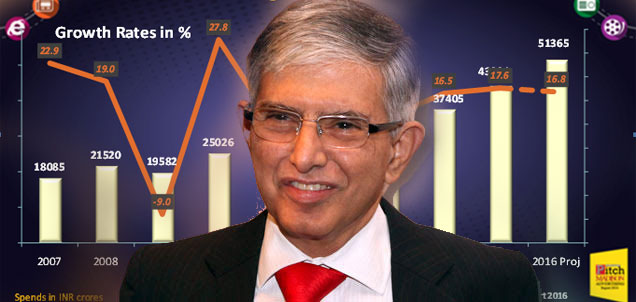
     

  • Industry will once again invest heavily in advertising: Sam Balsara


    According to the recently-released Pitch Madison Advertising Report 2016, adspends grew by 17.6 per cent in 2015 and are expected to notch up another 16.8 per cent growth this year. Given the poor shape the markets and the economy are in, this does seem a tad unrealistic. But Sam Balsara, Chairman, Madison World, doesn’t think so. He tells Pradyuman Maheshwari that the optimism is not misplacedand if advertisers and media owners to read the full report, not only would they get a better understanding of the media market, but also sharpen their strategies in line with that.


    A 16.8 per cent, overall growth is huge. And we hear of doom and gloom all over. The markets are tanking, the economy isn’t looking hunky-dory either. So is the report being over-optimistic about  2016 adspends?

    The report outlines, in reasonable detail, the reasons for our optimism. Please see the commentary under Forecast 2016.  Primarily, confidence of the Indian Industry in Indian markets is growing by leaps is high and accompanied by low commodity prices. The industry will once again invest heavily in Indian advertising. Advertising is recognised as a trusted engine to stimulate demand.


    And the 17.6 per cent growth of 2015 confirms it’s ‘achche din’?

    Yes, the figures took us by surprise too. As you know, we revised upwards the TV figures mid-year, but the final figures for TV exceeded our mid -year revision, and all other media too grew more than our forecast. In fact, print grew at twice the growth rate we projected.


    Madison has always known to be more conservative than the others in its spends forecast…

    Our attempt is always to be realistic. And we try to base our forecast on data and numbers.


    Is this essentially on the back of ecommerce, 4G and telecom hardware, and the sporting encounters and leagues?

    FMCG, with its dominant size, will be the largest contributor to growth, supported by what you mention.


    Television is seeing a huge growth still. What would you attribute this growth to?

    Television continues to be the large advertisers’ chosen and dominant medium for brand-building. Many advertisers now use a support medium, though. TV, along with digital, makes for a potent combination today, with TV working at top of the funnel and  digital at the middle-to-lower end.


    And there’s no sign of print growing in a big way. But in print do you see different trends in English mainstream, regional and magazines?

    Print will grow by another 10 per cent in 2016, according to our forecast. Regional will grow at a faster rate than English. Magazines will remain flat.


    Would you predict the demise of the print magazine as it is today by, say, 2020

    No. Magazines are a useful medium and have a role, though limited in the marketing mix.


    Most forecasters are bullish about radio, and said the good times will begin with Phase 3. But do you really see much happening there? It’s the second-lowest among media vehicles in 2016…

    Over the next two years, radio should show high growth. It’s a good medium for new advertisers where entry barriers are low.


    The Top 10 spenders account for 17 per cent of the total market. In a sense, it’s far from the 80-20 Pareto Principle. But three e-commerce players in it, and no devices or telecom major in there. How come?As we said, advertising is a Big Boy’s game. The e-commerce players are in the growth stage and looking forward to converting millions more to e-shopping. Telecom is in a mature stage. But data wars will see more action here in 2016.


    The FMCG growth of 20 per cent to Rs 12,364 crore is heartening. Would you attribute this steady rise to any reason or was it expected?

    Soft commodity prices is one major reason. And FMCG advertisers know that it is very expensive to regain lost share, so nobody wants to let go.


    The Madison report is the last of the four annual adspend reports releasing at this time of the year. An unfair question to ask, but how would you differentiate this from the others which exist?

    We like to wait till we have seen data for January-December, and most companies in India follow an April-to-March panning cycle, so its timing is perfect.

    A slightly shorter version of this appeared in dna of brands on Monday, February 15, 2016


  • So which ads are most gender-sensitive?


    The image of the women in Indian advertising, is changing. From wife/mother/homemaker earlier, she is now career person/influencer/decision maker as well, which is a more accurate reflection of society. But it is still only a handful of ads that have gone a step further to bend gender stereotypes and show men taking on the roles traditionally played by women in a household. Gender sensitivity in advertising is still some way off, but the new, empowered woman in today’s creatives, shows it isn’t that far down the road either. Meenakshi Menon, Founder, Spatial Access, and AL Sharada, Director of Population First speak about how today’s ads have come a long way and pick their favourite TVCs…


    Do you think advertising is more gender-sensitive today than ever before

    Meenakshi Menon: I think the biggest problem with advertising today is that it lives in cuckoo land. You see the people in ads that you would never come across in the street. And the way advertising portrays women has also historically been a problem. But I think recently, one has seen a positive change.


    AL Sharada: There has been a visible change in the last two or three years, perhaps as a reaction from younger women and men against gender stereotyping and gender violence. Also, more women today are influencing and being actively involved in purchase decisions. There is more participation of women in the workforce, so obviously advertising can no longer ignore them. I don’t think it is being done because of social or altruistic reasons but it [has become] an important issue for [marketers]. Particularly with digital media, they are able to explore these issues in a more elaborate way.


    Menon: Now that you mention digital media, I think a lot of advertisers today are concerned about the gender issue not because they are genuinely concerned, but because digital and social media will immediately pounce on somebody if they are seen to step out of line. So thank god for social media.


    And would you say that gender-sensitive ads can really change social beliefs and improve the lot of women in the country?

    Menon: It’s a popular myth that advertising reflects the reality of life. So if wives are being beaten up in the privacy of their homes, should they then also be beaten up in the public arena of television? This is such a stupid argument. But as practitioners of advertising, if we believe that because of our creative work people go out and buy one brand rather than another, then it is our responsibility to not just reflect society, but actually guide society as well.


    At Population First, you’ve been doing a lot of activities to educate advertising people. Do you think you have been successful?

    Sharada: It really had a lot of impact in the sense that the [feedback] we received from the senior-most leaders in the industry was amazing. And that makes me very optimistic and hopeful that we will be able to take this agenda forward. Particularly, if you look at the fact that an ad is instituted for gender sensitivity this year means a lot because the industry is recognising gender-sensitivity as an intrinsic value for good communication.


    So let’s talk about the ads that you find worthwhile, sensitive and ‘right’…

    Menon : I’ve been very impressed with Ariel’s Share the Load ad. Everytime I see it, I want all the men that I know, to see it too. Today it is becoming increasingly fashionable for men to cook, but it’s not fashionable to do laundry. Everywhere across the developed world, laundry is seen as a chore for the individual — men and women do their own laundry. What I really like about it is that it’s the father saying, with regret, that he did not help his wife, or [pay heed] when his daughter was playing house while his son was playing cricket.


    Sharada: I totally agree, because in all our campaigns, we see that if you don’t change the family, you can’t change society. The balance between the father and mother is [shown as] unequal and this gets perpetuated through generations. This ad actually talks about the whole gendering process that happens in the family, where the girl is given a tea set to play with, while a boy is given a cricket ball, and how that builds up all the associated roles and responsibilities, which are not equal.


    What other ads would you list among the Top 3 or 5 on gender sensitivity

    Sharada: I think the Titan Raga ad is good because it talks about the right of the woman to have a career, and also subtly and effectively shows the attitude of a man when he wonders how he can be without a job…


    Menon: Another ad I thought interesting was the Biba arranged marriages one, where a hackneyed, traditional situation – of a boy’s family coming to see the girl – is [turned on its head] when the boy says, ‘Give me 10 days, and I will learn to cook something for you’. I thought that was really amazing.


    Sharada: There are two or three ads that challenge the gender stereotypes of a man. One of them is the Samsung Galaxy Note 4, where they show the man spending time with his daughter, taking her for her performance, taking her out for a meal and then, because he has to get back to work, he takes her to his office. The work-life balance we see in this ad, is usually associated with women, but here a man is seen striking that work-home balance. Another ad I like, which is similar, is the Raymonds one where a man opts to stay home to look after the child while the woman goes to work. We really need to question the ‘macho’ image of men, and bring in new and more socially-acceptable images of them. I also like the Myntra ad where a woman decides to leave the job [because her boss has promoted someone else over her because she is pregnant]. It addresses a very important issue of gender discrimination in the workplace and it was significant that they had a woman boss in the ad…


    Any message for marketers and the creative fraternity on producing gender-sensitive advertising?

    Menon: One way to distinguish advertising that is gender sensitive from advertising that is gender offensive, is for [a male] creative director to ask himself if he would be okay with an ad that portrayed his wife or mother in a similar way. If he uses that as a filter, then you might find more people saying this is ok, and that is not. We need to educate people on how they can tell whether something is gender sensitive or not.


    Sharada: There are four or five points which you should keep in mind when you are creating an advertisement. You should give equal space and an equal role to both men and women. I find many youth brands doing that, having an equal number of young men and women in the ads. Second, the way they are addressed and spoken to in the ad, is also very important. Third is to keep this in mind: Are you promoting certain stereotypes because they are comfortable and accepted, and will not cause hassles, or are you reflecting the reality? If you keep these things in mind, I think you can avoid being gender insensitive in your communication.


    Menon: Frankly, I think that we have seen a lot of gender-sensitive advertising today because more and more marketers are concerned about consumer backlash. Because of social media, it is very easy to point out something that is offensive. And yes, this trend is not limited to the urban areas alone.


    A part of this discussion appeared in BrandStand on Zee Business on March 5 and 6. Catch it on YouTube at http://bit.ly/BStand05Mar16. This story first appeared in dna of brands on March 7, 2016.


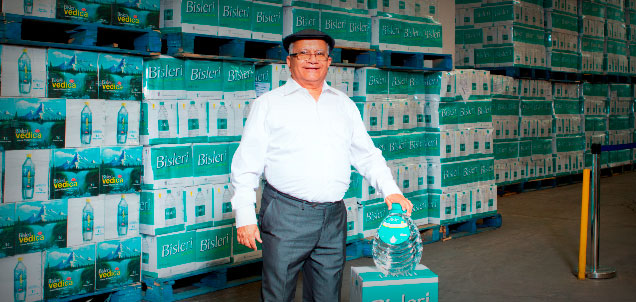
  • Thumbs Up to Ramesh Chauhan’s new innings!


    More than two decades after he sold Thums Up, Limca and Gold Spot to Coca-Cola, Ramesh Chauhan, founder of India’s largest bottled-water brand Bisleri, is planning a comeback with a new range of soft drinks. He speaks to Pradyuman Maheshwari about his latest offerings, his strategy and why incompetence and complacency are the silent killers for any business


    Some 23 years after you sold the famed Thums Up and other carbonated drinks, you are returning to soft drinks. How does it feel to get back to the market you loved so much?

    We are not entering the same market. I’ve been trying to impress upon everyone, that we are doing some variance. Our cola is different; it’s a spicy, masala cola. Someone who has a spicy cola would find it hard to switch to a regular one. A lot of people today take a cola and add some spice to it, some masala, so we observed that this is what we need to do. The Pina Colada is a completely novel product for most people in the market, and I would have thought that it would be difficult to sell it. It seems to be the hottest selling product.


    What’s your favourite flavour?

    I’ve said very clearly to everyone that nobody should have a favourite because I don’t want to have a bias. All four should be able to run in a parallel manner.


    Your non-compete clause with Coca-Cola ended in 2008, so what took you so long to enter the market?

    It’s not an easy thing to jump into any business. You don’t get into a business based on your past love and passion. You have to have infrastructure, a distribution system. The earlier infrastructure is gone, so we have had to start from scratch. In ’95 when we started building up Bisleri, and in the 20 years since, we’ve got a significant number of people in the field as well as contracts with retailers.


    You’ve been asked this question several times before, but as you look back, do you have any regrets about selling out to Coke 23 years ago?

    No.


    Tell us more about Bisleri Pop, the Limonata, the orange drink, the Pina Colada and the Spicy Cola. How did these come about?

    I have talked about the Spicy Cola, but the Limonata is different from any other lemon drink which is there in the market. This is a lemonade with lime, not a lemon, which is very different from a lemon. The Fonzo is a mixed fruit drink, it’s not just a mango or an orange. Are four are uniquely different.


    I still remember the old Thums Up, Limca and Gold Spot ads. Advertising paid a huge role in your products becoming as big as they did, so how do see the role of adverting in the soft drinks market?

    It’s very important. Without advertising, all these brands are meaningless. Today, advertising no longer means just television or print. You have the electronic and social media, which lends ample opportunity to promote your products in ways that are different from what you were doing before.


    And for these four flavours, you have a creative and a digital agency. So how big is the advertising offensive for this?

    Not as much as people think we should do. What we have seen is that the product acceptance in the market, with the retailer and the consumer is fantastic. We didn’t expect this kind of welcome from retailers, distributors and consumers. I haven’t come across a single person who says ‘I don’t like the flavour or taste’.


    But in this range, apart from the regular cola and the lemon drinks, there are a lot of variants in the market from not-so-well known brands. There are jeera colas and the like, so where do you think you fit into the market?

    The jeera cola is the one that got us talking about the spicy cola. But the jeera cola has got nowhere, with only one manufacturer and not much structure to support it.


    Rim-Zim your brand, right?

    Yes.


    So you have been in this kind of space before?

    Yes.


    And this cola is spicier than Rim-Zim?

    I wouldn’t say that. It’s different. It’s like a Rim-Zim and cola put together.


    How critical is advertising for the success of a product? A lot of people say it is the product’s quality, its taste, and finally it’s distribution that matter. Having tracked this business for so long, what do you think about advertising vis-à-vis distribution and product quality?

    Distribution is a must. Without distribution, you can’t sell. Your product must be available. Besides, the advertising can’t be the traditional kind only, it has to include digital and social media advertising. What is fantastic is retailers have a communication system among themselves as well. Like in Mumbai, we started around our plant in Andheri and Vile Parle, but retailers in South Bombay were asking ‘why are you are not talking to us?’. So communication within the trade is very high and especially now, with mobile phones. In fact, the people in Andheri probably have a branch or an associate running an outlet in South Mumbai.


    Thums Up as a brand has done very well in northern India. Do you anticipate any specific geographical domination of your current lot of drinks?

    We have four drunks, but we don’t know which will dominate in which part of the country.


    How is Bisleri doing? It’s been there for many years, and is a leader in the bottled-water segment. What are your plans for it?

    Bisleri is doing very well, it’s growing at a healthy 32per cent. We feel a bit guilty not spending enough time and money on promoting Bisleri, but we are struggling to get more and more outlets and more and more production to support the growth.


    And Urzza, which you launched as an energy drink?

    That is on the backburner now. We will take it up once we are comfortable with Bisleri Pop.


    You had once said, or written in your book rather, that our biggest competitor is our incompetence. Do you still believe that?

    Yes.


    So how do you ensure that in your company, you are able to overcome it?

    In India, the market is huge and the population is also so large that it gives us immense satisfaction to be growing at 22 per cent. But is there more we can do? The market is much bigger and we can do better, but people tend to say, ‘this is enough’.


    You have launched four drinks now. Is there a plan to launch more in the near future?

    Of course, but I think we need to see how these four drinks move. I don’t think we can think about adding anything for at least another three months. We first need to get feedback from everywhere.


    So assuming the feedback is good, would you look at adding expanding your portfolio of drinks?

    Not necessarily, because if the feedback is good, you are going to concentrate on making that product even more dominant. Sprite, 7Up and such are top-of-the-mind recall, and for us to reach that level of brand recognition and that kind of demand, it takes a lot of time.


    I know it’s an unfair question to ask, but can you comment on how the other drinks are doing now — the drinks that you sold versus the other drinks that have entered the market?

    The drinks which we sold, are doing very well. But you cannot leave it to the drink. It’s the people who drive it – how much attention they are paying, what are their inputs, because it’s a helluva job trying to sell so many different products of so many different sizes.


    With drinks such as yours entering the market and the fact that you are looking at achieving a fairly stiff target in the next five years, do you see the soft drinks market – which is around Rs 14,000-crore or so– growing to a bigger extent?

    That’s a big question. The market is now shrinking and the juice market seems to be growing much faster, and water even faster still. So it’s different. We haven’t paid attention to the soft drink market as such.


    One last word to people who are your observers, who have tracked you for so many years, and now your re-entry into soft drinks: What should they look forward to from you now?

    They should look forward to innovation and of course, a good, high-quality product. Because whatever we have introduced till now, was always of high quality and consistency.


    This interview first appeared in BrandStand on March 12 and 13 and in dna of brands on March 14


  • Viewers, viewership & then monetisation: Sudhanshu Vats


    Last week, Viacom18 launched its OTT platform Voot with much fanfare. MxMIndia caught up with Group CEO Sudhanshu Vats on the launch of the platform, the content strategy and whether the group intends getting into sports. Excerpts from the interview…


    So Voot took a long time coming?

    I have been answering this for everyone. There are two ways of looking at it. One, you could argue that we’ve taken little longer, but I think in digital, it’s important to get it right. The digital ecosystem is evolving rapidly. The number of new consumers on mobile, digital, video eco-system this year will double compared to last year. So I think we are fresh for them. Two, it’s about getting a product and content right. For digital, you have to keep refreshing technology every year. Tech upgrades which are needed for digital products are almost at a frequency of a year so it’s like a new product for everyone.


    So would you say that there’s a first-mover disadvantage for those who came in early?

    No, I would say that I think the point is if you’ve got your product and content differentiated, you are as good as first-mover here.


    There’s a lot of talk about OTT, including the FICCI-KPMG report. On how it’s going to boom in a big way. For Viacom18, this kind-of completes the picture, right?

    Yes, yes. I think it’s good that we have got a product now which sort of stitches all our content for the viewer in a very digital experience. Another differentiation is we haven’t gone TV to digital. Yes, we’ve got a lot of original hours of content of television which will be on this product but we’ve done a digital product and I think that’s a fundamental difference from bringing your TV starting with a brand name, starting with the discoverability. I don’t know whether you notice small small things. Each of our programmes have a 40-60-word description, each of the episode within that tells you what is happening, that’s a very digital product… that’s the way the digital piece goes.


    A lot of work has gone into the existing piece also. But tell me, what’s going to happen is from now onwards the existing websites of the various channesl that you have, whether it’s the Colors or MTV websites, some of which are exceedingly popular will now obviously merge into Voot, right?

    No, I think what will happen is our product websites, for all our channel websites and brand websites will remain because they’re very important marketing tools, they will remain but videos, the moment you want to watch and you will also have an option to start playing the video from there. But, supposing you go onto Colors and you want to watch Naagin, what it will do is it will bring you to Voot and will play Naagin for you… But our websites and our social interaction tools, our Facebook pages, all that will remain.


    You mentioned about all the programming across channels that you have will be on Voot. Does this mean that some of your older shows which aren’t on air right now will also be there?

    Yes. So we do about 10,000 hours of programming every year from Viacom 18. To answer your question, most of our stuff will be there but we’ve picked and chosen things. We’ve not put everything which was there in the past. For instance, if someone wants to see Balika Vadhu from the beginning will that option be there? The answer is yes.


    Specifically, will Comedy night with Kapil be there?

    Obviously it will be there.


    He has left and joined another channel…

    But it is our content so it will definitely be there and it will find a pride of place under comedy.  We are proud of that work, and it is on Voot.


    Coming back to Viacom 18, what else now…? You don’t have sports as part of your bouquet, you’ve just about got back the movie channel which had been exited some years back. What about sports and any other white spaces that you would like to fill up?

    There are white spaces for us to plug and I think movies was one of them which we recently done. Theoretically, there are English movies as well as some regional genres which are white spaces for us. Our focus on youths and kids is a little higher compared to anyone else in the business. In the brands, you’ve got dedicated brands. We’ve got enough white places to plug before we start thinking of sports.


    Is it because the kind of money you need to invest over there is…?

    No, it’s a combination of everything. There are 3 things with this: it’s very high investments, longer gestations and a business model which is not fully proven in the Indian context because subscription is not there so that is perhaps resisting us. The second piece which I was saying however which is that we’ve also got so many new other things to do which are clearer and which have got much better, and which have got better returns are attractive propositions which we would drive.


    One of your joint venture partners is Network 18 and it is going to come up with a huge telecom offering… do we synergies of Voot with that?

    There will be lot of synergy. We are continuously working with Jio and there are synergies at all levels.


    Will there be some exclusive content availed only to Jio subscribers?

    We are looking at all options. With the amount of content we have, there are things which we will be able to do, which are in this area. To give you an example, and this is my favourite example which I keep giving. So, if you look at Big Boss, a Big Brother, we’ve got 70 cameras in the Big Boss house. These 70 cameras are actually shooting for 24 hours. Let’s assume for the moment that for 12 hours people are sleeping and there is hardly any recording. Even if you look at 12 hours, that means 12 hours x 70 cameras which is 840 hours and what you show on the TV is sanitised 40 minutes of that. Therefore, our ability to do content around content and exclusive in this is pretty high. So whether we do it as Voot exclusives or for our partner exclusives, I think those things we will continue to explore and we will drive those synergies as we go forward.


    In the last two years, from the time you took charge, there has been much activity. You’ve had the regional and the English channels, the movie channel, now Voot. What’s coming next?

    We are actively looking at a lot of spaces and we will continue to grow. We will continue to grow our broadcast TV channel space, we will hopefully grow our digital space which we have just done. We will be growing our ancillary space both on consumer products and this.


    One last question… From what we have seen over here, obviously investments have been huge on Voot. Would it be right to say that it’s possibly your biggest investment after Colors?

    It is a substantial investment in terms of our greenfield investments If you look at Viacom 18, there have been three significant investments. There was an investment when Viacom 18 was formed and the investment in Colors was big.Then there has been an investment basically through acquisition of the ETV piece which was also substantial And the third… basically this is also going to be a slightly longer term high investment. I think we need to stay invested here because digital as I keep saying, digital models, across every industry are going to be different models and they are not conventional revenue models of business we grew up with or we were taught. The focus has to first be on viewership, users, usage and monetisation so in our case it will be viewers, viewership and then monetisation and there it will take some time.


  • Prasanth Kumar: Focus on breaking clutter & fragmentation

    Winning ways continue for Mindshare. After an emphatic win at the Emvies last year…

    Yes, we will make sure that continues forever. We finished 2015 in great style. We won about 176 awards. This year has also seen an excellent beginning. Goafest has been a great opportunity for us to show some of our great work, many more clients, and many more brands.


    Are you happy with the work this year? Also, the fact that there was no Grand Prix in Media must be a disappointment?

    Good work across categories were observed but maybe the Grand Prix required greater push or needed more out-of-the-box thinking. For me, it was good to find the works of some 11 or 12 clients shortlisted. I simply look at how we can get more and more awards across categories, trends and work.


    Does winning against sibling Maxus makes it sweeter?

    Being a winner is always delightful. I don’t look at it from the point of winning against A, B or C.


    Media Abby vis-a-vis the Emvies… what do these mean to you?

    At the Media Abby at Goafest, there is a lot of focus on creativity and inventiveness. The Emvies looks at things from a business perspective, in addition to all of these. More and more, I find people who are looking at both sides, which is not something distinct. They have to be more closely linked and work hand-in-hand. Any work you do, should be for the brand.


    Is the focus is on doing work that’s different and ‘hatke’?

    Yes, the emphasis is on providing innovative solutions to clients, to break the clutter and fragmentation.


    The Emvies are not far away. Do you hope to do an encore there?

    Certainly, and it’s not just hope. As you said, the winning continues. We will ensure that we do some great work…


  • Tarun Rai: Having JWT and Contract in Top 3 is the best part

    It’s a hat-trick for you…

    Yes, it’s fantastic, three years in a row. JWT is on top and Contract in comes at No 3. So for me, it is even better news than just being at the top.


    Since you’ve have joined JWT things have changed. We’ve heard about you you working in the background to rebuild the agency. Tell us more…

    I have just finished a year myself, last month. It has been a very, very exciting ride. And most people don’t know, but there has been a complete turnaround in business performance. And here, we’re at Goafest and to be able to also do well creatively — and again not just for JWT but also Contract — is extremely heartening for me. The other thing I believe we have won on, are big brands like Unilever and Godrej. And to me there are other many other firsts to this. We have also won the Young Abbys Gold, and to me that is very heartening too. Not only have we won the maximum number of Golds, but also the maximum number of metals. I understand there were 200 shortlists, which itself is a record. So the sense I get is that our work is looking better across the board, and also to have won in various categories, including PR, shows us that we are winning across platforms. So overall, it has been fantastic news to me at Goafest, and it feels great to be here. Over the last one year, I think we have succeeded in turning the agency around. And I think we are poised to have a fantastic 2016.


    What is being the No 1 agency at Goafest mean to an agency which has been success and has a rich past?

    It means a lot. To me they’re awards, but awards are a reflection of what’s going on in the agency. They’re a huge pat on the back to all the creative people we have. And as I said, to have both JWT and Contract in the Top 3 is the cherry on the cake. I feel really honoured to have done so well and it is a tremendous tribute to Senthil, Teesta, Ashish of Contract and the entire team.


    One of the things that Goafest is known for, apart from the participation of a lot of big as well as small agencies is, notable omissions. Does that take away from your big win?

    I don’t think so. You know it’s up to them to participate or not. From what I was reading in the media, 96 per cent of all agencies have participated. If that four per cent doesn’t want to, well, that’s their decision. So it can’t put a dampener on the victory celebrations.


  • ‘More opportunities than challenges’


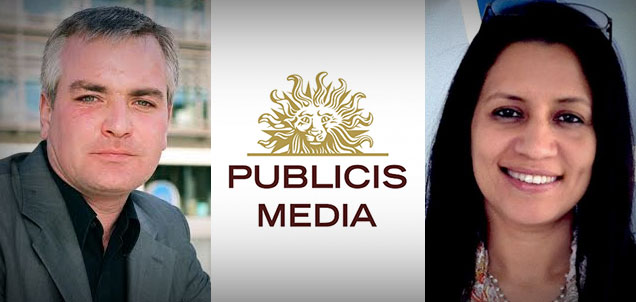
    The grouping of the media agency networks of the Publicis Groupe was announced with much fanfare in the recent past. In India this week, Gerry Boyle, head of Publicis Media – APAC along with Anupriya Acharya, the newly appointed of Publicis Media for India answered questions from Pradyuman Maheshwari on the scope and prospects of the new grouping and of course how Publicis Media is doing in India.


    It may be still early days for Publicis Media, but for someone who has been part of the system at the group, what are the specific changes that you hope to effect post the formation of Publicis Media?

    Gerry Boyle: As you may know, the whole idea behind Publicis Media is to unleash the Power of One and to line up our end-to-end capabilities for our clients, in a model that is simple, flexible and efficient. The purpose is to put client satisfaction first, and it is essential to have a structure that eliminates complexity and silos. The focus will be to make the business leaner, simpler and more scaled up, in line with our objective of getting to the future first. Publicis Media is a fresh opportunity to simplify our organisation, invent more modern approaches to gain efficiency, introduce structures for greater collaboration and effectiveness, and drive new levels of scale and client value. Such a structure will not only bring more value to our clients but will also further accelerate our growth.


    And this specifically for India?

    Gerry Boyle: It will pan out in India pretty much in line with our global thinking and framework, albeit taking into account the India market dynamics and current life-stage and strengths of our brands here. Anupriya Acharya has been announced the market lead for India a few days back and takes over the role with immediate effect. She and I have already started putting together the key strategies and, along with the agency brand teams, we should see them come alive in the coming weeks and months.


    Putting businesses together and trying to work out synergies etc. sounds good on paper and in Boardroom resolutions, but in fact it’s not as easy to implement given each organisation has its own culture, and most importantly, its own P/L and targets? How easy is the task ahead?

    Gerry Boyle: Sure, the task ahead is not easy, but we see more opportunities here than challenges.  Client delight and satisfaction will be at the heart of everything we do. We are removing some individual P&Ls to make the business more fluid and add to the speed of business and delivery. We are creating practices which will allow the best of our specialist talents to work across our agency brands. These more effective approaches will help us invest into areas like Tech, Data and Analytics, areas that are complex, fast-changing and require high investments. Bringing in scale and efficiencies to these will enable us to provide better service and results for our clients.


    In India specifically, the Publicis Media group entities have had a mixed presence if you compare them vis-a-vis a GroupM and even an IPG?

    Gerry Boyle: Not sure I would agree with you… Granted our media brands are relatively young in this market and perhaps do not enjoy a so-called ‘legacy advantage’. Despite this, we have achieved much in a short space of time – we are amongst the top three media groups in India. We have grown through acquisition, and organically. The addition of the great talents and clients of Convonix and Resultrix have worked phenomenally for the Group. As we speak today, around 50% of our business comes from digital – and more importantly, our best-in-class digital, data and tech capabilities give us an overall competitive advantage. The advantage of not having a legacy is that we could move fast towards the future areas.  Legacy can slow one down.


    How would you say are your Indian constituents doing?

    Anupriya Acharya: Our brands have shown high double-digit growth per year for the last couple of years and we have great momentum on new business too. Our agency brands have great client rosters and have added some significant business over the last few years like Dabur – the largest pitch of 2015, Oppo, Citi, Visa, Jet – Etihad, Toyota, Hennes&Mauritz AB (H&M), Truecaller, Singapore Airlines and Fitbit.


    On the Performance and Digital Media side, we have had massive wins like the Air Asia pan APAC performance business, Tata Docomo and Tata Vistara, amongst others. The good thing is that both groups have strong presences in Digital Media and Data Analytics through Performics, Ninah, and the two great acquisitions – Resultrix and Convonix. We have also streamlined our trading practice over the last 15 months.


    Starcom? Big brand globally, but in India not really perceived to be doing very well?

    Anupriya Acharya: We have had some great leadership at Starcom, infusing energy in the organization in the last couple of years. Starcom had one of the best new business record for any agency in 2015, and a 70% success rate in pitches! Dabur, the largest pitch of 2015, was won by Starcom.


    Global award-winning Data & Analytics team (iComm – global data award 2014) has been a key contributor to their product and growth. There have been over 40 Convergence Analytics projects actioned globally in past 18 months for Samsung, Coca-Cola, P&G, Heineken, King.com and Kellogg’s! The key learnings of how interactions across Paid, Owned and Earned drive business have helped accelerate the clients’ digital journey in India along with SMG Convonix.


    In fact, Starcom had such a successful run that they won a Silver at Campaign AOTY 2015!


    What are your targets for India? What do you hope to achieve here?

    Gerry Boyle: We expect India to be a market that will set the example on transformation for us globally. It is a fast-growing market and now has all the right conditions for success. We have a strong presence in all the futuristic practices and expertise across some very important and fast growing sectors like Telco, Travel, Entertainment, E-comm, BFSI etc.


    India will be an engine of our APAC and global growth in business, talent and product.


    Any inorganic growth moves planned? Any acquisitions?

    Gerry Boyle: Of course. We are always on the lookout for anything which delivers against our strategy and can help solve our clients marketing challenges.


    What about the other Publicis Media brands? Any specific PoA on the their launch?

    Anupriya Acharya:When the time is right and the client demand is there, we will look to bring all of our global brands to this market. They will bring unique positioning and yet still be backed by the power of Publicis Media. Blue 449 has a unique ‘open-source’ positioning and Spark is a brand that stands for both creativity and agility. Together with Starcom and Zenith, they create an exciting portfolio of client choice.


  • CNN-News18: Will the change be gamechanging?

    By Anuka Roy


    What’s in a name? This famous quote by Shakespeare may or may not hold true for media organisations. On April 19, the Network 18 group rechristened its English news channel CNN-IBN to CNN-News 18. The new name and logo was revealed from 8 pm onwards.
     

    A new tagline- On Your Side- along with a revamped studio was also revealed as part of the re-branding exercise. IBNLive.com will now be called News18.com. Prime Time 2.0, a new show, will be telecast between 8 and 11 pm; comprising of on-ground reporting, opinions, debates and humour-laden content. In the press release, they said that, the focus will be on “making news more relevant to its viewers by bringing immersive journalism to the fore.


    Said Adil Zainulbhai, Chairman, Network18: “A decade back, CNN-IBN re-invented news by getting to its viewers the benefits of a reputed international news partner CNN, and eventually emerging as the most awarded English general news channel. We are optimistic about bringing this change wherein we will keep the journalist and the consumer at the centre of our programming, which is the critical need of the hour,”


    So, will this re-branding excercise work? What do people have to say about it? MxMInida asked a cross-section of experts about the same and here is what they had to say,


    > Old wine in new bottle? Do you think the change is cosmetic? Because the people are the same, and it’s just a slicker, newer version?

    Avik Chattopadhyay, a senior marketing and brand consultant (AC): I actually watched the channel for an hour. There seems to be some new programming, like “Big 5 @ 10”. The colour palette seems new. But it is early to conclude whether it is purely cosmetic or is the channel making the most of the change in name to have a substantial change. to set it aside from others and truly distinct.


    Vikas Mehta, formerly CEO, Lowe Lintas, Dubai, currently blogger and consultant (VM): My take is simple. The media brand is CNN, which has a bigger brand equity. To me it doesn’t make much of a difference.


    Sushobhan Patankar, professor at Symbiosis Institute of Media and Communication and former employee of Network 18 (SP): As far as I’m concerned, it’s kind of sad for me. I’ve been associated with CNN-IBN since its launch in 2005. The brand had slipped since Rajdeep Sardesai’s exit. It is difficult to predict.


    > CNN-IBN has been a household name for around a decade. Do you think the rebranding will mean that it will take the channel some time to become a household name? Headlines Today did change to India Today, but India Today was a known media brand….

    AC: Guess the change in name is not that significant to create a total disconnect from its previous avatar. It is an evolutionary rebranding… not a revolutionary one. As long as the “CNN” name remains, the viewer will be able to connect. If it were called “Newswork 18” or something as drastic, it would have been another matter.


    VM: I don’t have research to back up ,when I’m watching CNN-IBN, I would say I’m watching a CNN channel. But for the consumer to realise it would take sometime… but it doesn’t matter much


    SP: When ABP acquired Star News, the channel was known for its faces. I feel faces are bigger than brands. Brand change doesn’t matter. Brands are not important but faces are.


    > CNN-IBN is today far from being the leader on the ratings roster. Do you think the new look and thrust will help build it?

    AC: It is all about content, content and content. They have some big names like Swapan Dasgupta, Vir Sanghvi and Bhupendra Chaubey. Now they need to create the right relevance with the target viewer they want to reach out to. It cannot be the same as one who watches Times Now or India Today or…


    VM: That’s true. I don’t.know the actual reason why they have done the rebranding . May be they are trying to refurbish the brand. It’s handled right in terms of raising interest that something new is happening in the channel. When Star News changed to ABP news, they handled it quite well. The viewership didn’t suffer because they kept the curiosity factor high. It’s kind of a lot has changed but nothing has changed at all. It means it has to better than what it was and needs to be better perceived than what it was. If the change is cosmetic, it won’t make a difference but if the content has changed dramatically in terms of stories, anchors, then definitely it would make a difference.


    SP: I don’t know what their editorial plan is. If they create new content and follow a new model, it might work but if they stick to the old model it may not.


    > Your view on whether the masses are indeed interested in news without an agenda… or do they like the noise at primetime?


    AC: Not everyone wants to ‘view’ noise. There is definitely a substantial segment that looks for quality and credible content. And there can be no news without an agenda…even if it is “100% unbiased truth”…this is also a credible agenda, possibly the most difficult to achieve and deliver over time. There are news platforms that have painstakingly built their reputation on agendas that people actually appreciate and value. CNN News 18 needs to define and deliver the same for itself. Give it time…


    VM: I don’t know what you mean by masses. This is a niche channel. It is aimed at higher SECs. This is my personal view, I don’t have a research to back it, a lot of consumers want to see the reality. But a lot of channels are giving a twist of their own. For me, the masses are looking for channels without a biased point of view. They want to judge for themselves.


    SP: There should be an element of spectacle. There needs to be drama to engage the audience. The audience wants something chatpata. So yes, people are more interested in primetime drama.


  • Shiva rules for Nick, and how!


    It’s been a big year for Nickelodeon, both in terms of revenue as well as viewership. Nina Elavia Jaipuria, Executive Vice President and Business Head of the Kids Cluster at Viacom 18 shares with Anuka Roy how the last business year, her big plans for the brand. Read on…


    So how is Shiva doing? That was the highlight of the last year among the various new things you did…

    Yes, Shiva is one of the many highlights that we had. One of them being, we have been #1 for the past 20 months, but the fact that Shiva broke all the roles in one shot. I have worked for this category for almost a decade now and I haven’t seen a launch like Shiva. So, I’ll just take a step back to explain to you why. Normally when you launch a show on a channel, it’s a new character and children of course have not seen too much of that character. They are currently watching a toon or a character that they really love, a show that they really love and therefore they fall in love and are habituated to watching what they really like to watch. When a new character is launched, it usually takes some time for kids to warm up to the character, you have to start liking the character, the character has to grow on you.


    Shiva broke all the rules because in the first week of Shiva’s launch, it was the second slot in the category in the second week onward, it was the number one show in the genre. So, not just for Nickelodeon but as a category I am saying. It continues till date to have at least two, three or four slots in the Top 10 of the category. Highlight is an underestimation. We had done an extensive need gap study to say that Nickelodeon as a franchise doesn’t have an action- comedy genre. And therefore, we identified it as a need gap, gone after it, created a show which had fabulous storytelling, character and animation. So, all put together it was like a full masala-action-adventure-comedy plot. I think that was what probably clicked with kids and continues to click with them. Even as of date today it continues to be 12 % of our ratings. Even though it is only five months old and has limited episodes, because episodes are in the making whereas Motu Patlu and Pakdam Pakdai have significant library, but even with a limited library Shiva has made a big mark. And that is why I am going to continue without even asking what the story is. The story is we are moving Shiva to Sonic and that’s a very bold, brave and strategic decision we are making. That’s the focus for this year as well that while we maintain the number one position in Nick, we take Sonic to an all new high and hope that channel as well to become a very strong second competitor. For that reason, we are taking all the loyal viewers of Nick and Shiva and moving them to Sonic. Hopefully, the audience will move with show as well, that’s what the hypothesis is. And we have a huge summer campaign to follow it up in the vacation which will create awareness about Shiva on Sonic.


    Fiscal year 2015-16 has been yet another year of leadership for Nickelodeon. We saw it launching in HD. And we have seen the entry of the BARC ratings plus rural numbers. How has the year been for Nick? Not just Nick, but the entire slew of channels under the categories you look.

    It has been fabulous. From a financial year perspective our toplines have really grown. The Nick yield is the biggest highlight for me, which has growing two years in a now. Last year, we grew it by 40%. So, monetisation of Nick along with the number one position is the big highlight for me and the fact that, we have grown our entire topline which consists of Ad Sales, Ancillary revenue. All of that has grown by a robust percentage and we have tripled our bottom line as well, two years consecutively. So, we are a profitable vertical at Viacom 18, which is delivering to the Viacom 18 profits now. From the genre perspective, adsales grew as well. It has been consistently growing year after year. So, we are correcting the under indexation and I am happy to say that, finally, it is in the right trajectory. A lot of growth expected in the adsales pie as well. While it was at a 1%, today it is at 3% of the adsales pie. We have a lot of non-kid advertisers joining in. Almost 58% of our advertisers today are non-kid. I do From a viewership perspective also we continue to grow and continue to have 6% of our total viewership is the kids’ genre, so, that hasn’t gone away anywhere. In fact, in the urban it is at 8%. We are a very big genre, bigger than news, music, sports, infotainment and all of that.  It’s a big genre with total viewership coverage of about 6-8%…


    Any noteworthy trends that you would like to highlight.

    The trend is very clearly the fact that kids are taken to Indian local content we have creating. The trend seems to continue because we have got success stories on our own franchise to talk about when we started with Motu Patlu and then we have Pakdam Pakdai and now we have Shiva. So, you should watch out for more of them . We are storytellers, content makers and we would continue to invest in that part of the business big time. That’s really the trend from a perspective to say that, there Indian local content, which is now being extended beyond series into movies. Kid movies made for television making into the hearts of our kids; to me is another big trend.  A trend I would look at from the adsales perspective would be to say that there are big takers and brands are now looking forward to it. They look at customisation, integration and in show placements to get the access and their brand out there for kids to see and consume. Another trend is that the ecosystems for kids’ franchises are really growing. We have made big moves into consumer products and we have grown from 25 to 40 categories today and the whole back to school range that’s going to launch this summer.  So, a consumer product is something that will only grow as characters and character affinities grow. Kids will like to have consumer products of those characters. We see a lot of potential there and of course the affinity towards brands and characters as well and we have got into licensing in a big way. We had Britannia and Tiger biscuits doing it with Ninja, McVities with MotuPatlu. So, we have partnered with Boost as well and their licensing as well, Mother Dairy has also come on board. There is the trend of this ecosystem going beyond television. I think it’s growing into all forms of engagement. We are also looking into digital. The Shiva digital games have already got 1.5 million game plays in a couple of months that we launched.  Digital is creating a lot of engagement for marketeers. We are able to engage our toons beyond television in digital as well. So, that’s a new trend. All these trends have potential which will grow.


    How has been the acceptance of Nick amongst rural audiences Vs urban

    Typically, the category gets about 65% of its ratings from urban and 35% of their ratings from rural. And that trend is very significant which says that pretty much tells us that the content which we have in the channel today is appealing across a different tiers of market s and different markets as well. Even in urban we do as well in 0.1 million as we do in megacities as we do now in rural. And, because of the fact that we now have English, Hindi, Tamil and Telegu dubs which has actually been able to penetrate and we do get 35% of our ratings from the rural market. That’s how appealing the content is to every child in the country today.


    The success of any business is viewed in terms of revenues. Please do talk us through that.

    Topline has really grown. Ad sales for Nick have really grown. The top line yield has grown by 40%. Sonic has also grown by significant leaps and bounds. There are lot of people who have sampled the channel and have now brought it into their consideration. 35% growth on the total top line is a great success story and how well we have been able to monetize the number one position. That growth has come in the period of two years.  Subsequent in two years we have grown our Ad sales and top line and profits as well. A profitable growing business along with growing viewership as well.


    What about audience engagement drives? How have those panned out

    Fantastically well. We have over 1000 touch points in the year, we do a lot of stuff outside of television and digital as well which is more or less in terms of mall activation, we do many school programmes in the year. In fact for the summer campaign, we have partnered with retail outlets to ensure that the partnership goes forward. We have partnered with Pantaloons on their stores, Fun City which is a gaming zone, with McDonalds, with malls to do meet-and-greets, so and so forth. This year, we have partnered with National Centre for the Performing Arts (NCPA) for its kids fiesta. Every year they do kids plays and workshops and this year, our toons are a part of their syllabi and meet and greet. All of these gives us a lot of touch, feel and play because it’s about a character you watch on TV and when it comes out of TV there is this whole  tangablisation of the character which is what engagement gives us.


    What are the plans for the year ahead and specifically for this summer?

    We are going to move Shiva onto Sonic. Along with new episodes of Shiva on Sonic, we have new episodes of Pakdam Pakdai, new episodes of Shaun, the sheep and Supa Stikas, some of our very big shows. We would go outside of the network, in channels like Star, Zee and Sab to ensure that we create awareness about Shiva on Sonic. There is a big mass campaign for Shiva in summer, where there will be watch and wins. We will go to theatres as well. Big plan on Nick as well, it will see new episodes of Motu Patlu, new episodes of Ninja after very long and we are launching our 10th movie which is Motu Patlu in Double Trouble. We are doing van activation for Sonic as well. So, the vans go to Tier 2 and Tier 3 towns in 30 days, they do 20-25 cities. Lot of activity and action plan for summer.


    The kids’ zone is very big on Voot. Will that be in sync with some of what you are already doing for your channels?

    Voot and we are in a win- win position. They grow from us and we grow from them. Therefore, we have become the aggregators of a lot of good content between us and that’s really working for us as we can cross pollinate and we have the flexibility of using so much of the Intellectual Property (IP) that is our own. We can have the toons in the OTT (Over-the-top content) platforms which will only popularise them that much more.


  • Adspends don’t make a brand big: Suman Srivastava


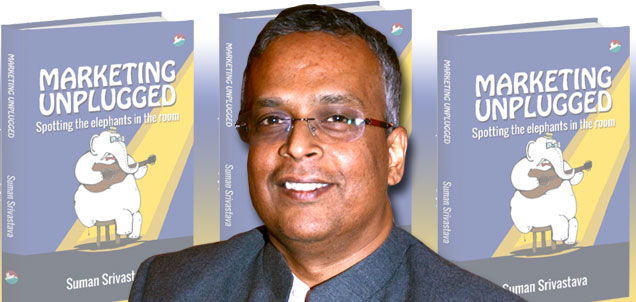
    Veteran advertising professional Suman Srivastava, who is vice-chairman and Chief Strategy Officer at FCB Ulka, has authored a book entitled ‘Marketing Unplugged’. In this interview with Pradyuman Maheshwari, Srivastava talks about the changing demands of marketing in India, and how the world’s biggest brands were not built on huge ad spends


    You’ve dwelt on the changes in the way marketing is practised today. Would you say this is because of changing needs of consumers, or have organisations and their stakeholders gotten more demanding?

    Change is a cliché. The drivers of change are equally clichéd — technology, social media, consumer sophistication. My perspective, though, is that marketers seem to think their profession has reached maturity and doesn’t require further innovation. Or that innovation needs to come from doing the same things as everyone else, but only better. This book is really a cry for innovation in the way we approach problems, and in the tools we use to deal with them. These days everyone doing well is referred to as a ‘brand’. From cricketers to film stars to even political parties or even our country. A lot of the attempts to treat products, services and people is not well-strategised or executed by trained practitioners.


    Would you say marketing is no longer the preserve of trained B-school graduates?

    Marketing was never the preserve of B-school graduates. One of the great things about marketing is that the lead is often taken by practitioners in the field and then academia catches up, rather than the other way around. I would say that the key problem may be that too many trained practitioners are trying to manage brands. They are all doing it in exactly the same way as the next guy. This is a recipe for disaster. I have always maintained that the best B-schools train you how to think and approach a problem. That is the valuable bit. The tools they teach you are outdated by the time you step out of class. If you cling to those tools, then you are unlikely to succeed. Huge ad spends are often mistakenly considered to comprise smart marketing, as evinced by the approach adopted by big retailers and some flush-with-funds e-commerce players.


    So what is your view, and recommendation, to marketers?

    The strongest brands in the world today are Google, Apple, Starbucks, Facebook, Tesla, Red Bull – and none of these was built by huge ad spends. The big e-commerce players are not really brands; they are just great deals. Brands command a premium. These guys are discounters. Perhaps that is a lesson to all of us.


    You’ve written on how Apple has succeeded in generating a buzz without using social media. As competition gets stiffer for Apple from the big and small device players, do you think the company will need to influence opinion via social media?

    What I have said is that Apple does not have a direct presence in social media. But it already influences social media. It is a brand that is obsessed with word-of-mouth and is quite skilled in handling that. Look at the way it leaks information about products, creates Mac events and uses its fan base to advantage. The company does use social media, but it doesn’t do posts.


    It’s interesting that you write about brand experience. But in India, while attempts are being made to have smarter packaging and design, attempts to improve the experience are generally considered an unnecessary addition to overheads. Like it happened with Kingfisher. Would you say that brand experience is a casualty, given RoI presssures?

    The problem in India is that brands think it is cheaper to get a new customer than serve an existing one. It certainly is simpler to get a new customer. The market is growing and mass media still works. But creating a brand experience is hard work and the results are not instantaneous. Still, I would argue that this is a short-term view; If you take a lifetime-view of the customer’s interactions with the brand, then it is far better to improve brand experience than not.


    Kingfisher was a marketing success story that was undone by one bad business decision (to buy Deccan). Even today, there are many customers (including myself) who yearn for that brand and would love to fly the good times again.


    Marketing Unplugged – Spotting the elephants in the room By Suman Srivastava

    Is available to purchase at: www.marketingunplugged.in

    Price: Rs 399 (Paperback), Rs 199 (Kindle)


  • Up, Close & Personal: Vikram Sakhuja


    Six months ago, Vikram Sakhuja quit GroupM to join Madison Media as Group CEO, Madison Media and OOH and Equity Partner, working closely with his former professional rival Sam Balsara. Bursting with ideas on how to take both Madison and its business forward, Sakhuja opens up to Pradyuman Maheshwari about his move out of the global role at GroupM and into Madison, his regard for Balsara and his plans for the agency network. Excerpts from the interview


    Six months at Madison last week. How has the journey been so far?

    In a word, fantastic. It’s everything I expected it to be, and perhaps a little more. But this is the long haul. So when one is entering into this thing, it’s with a Test match mentality, and not with the sensibility that things are broken and I have to fix them. If Sam [Balsara] has found a role for me to join him in leadership, it is probably to help with the next stage of evolution at Madison.


    So I think that’s the way I have approached it, and though I have been slow about it, purposely, it’s because I have been trying to drive a few agendas. In this interview I don’t think you will get too many silver bullets. You won’t even get any bombastic statements. But there will be a flow of thought, and you will see a process unfolding.


    You were familiar with the scene in India and at Madison having been out of the country for just a few years. Was it different from what you had expected it to be when you came in?

    Not at all. I had a fantastic time running GroupM’s South Asia operations for six years, and Mindshare before that. I have loved every bit of my WPP tenure in India. It was interesting because I was doing South Asia and then I was a part of the Asia Pacific management team but based in this part of the world. So after that, to suddenly do a global thing, a few things struck me.


    The GroupM role was more of an organisational enabling role. While we were building GroupM’s superstructure, a large part of it was to make the agency stronger — whether it was buying and trading, or putting in place; whether it was digital infrastructure or talent. A large part of that was about still enabling clients. But I had started noticing, in my early years at GroupM, that my client contact had gone down even though there was a lot of other exciting stuff happening. When you get to a global role, it becomes even more rarefied. Maxus, at that point of time, had more local than global clients. When you have local clients doing their job, you don’t want to get in the way. You have the standard ceremony and meeting clients and stuff, but you’re not adding tangible value. So the way you add value at a global agency leadership level is to set direction, drive P&L, drive the product and those kind of things. It is very internal.


    So you missed getting your hands dirty?

    Absolutely. At GroupM in India I wasn’t missing that because it was familiar turf. Even though I was not involved in client work per se, a lot of clients were old friends. So I have always had that steady contact and a relationship with clients at some level. That became a bit removed in the global Maxus setup, and even more when I was doing global strategy for GroupM.


    There was a sentiment that your leaving Maxus was very abrupt…

    It probably was. It was my boss who felt it would be better if I got out of the role and got into a strategy role, since they were doing something in the area of digital, data and stuff, and wanted me there. Even I felt it was abrupt.


    Even at GroupM, there was a fair amount of shock about your sudden exit from the Maxus top job.

    Yes, it was abrupt, and made me revaluate what I should really do. I had a feeling the global GroupM strategy role would frustrate me. The vision was interesting but the implementation would have been too slow for a person like me.


    And then this whole thing happened with Madison. How did you think of joining Sam because – even though he has been a friend and you have had some collaboration — at the end of the day, he is somebody whom you have fought so much against in the media agency battlefield. It’s almost like sleeping with the enemy…

    Actually way before we were competitors, we had a seven- or eight-year partnership. I was the one who started the practice of AORs in India when I was in P&G. I was in research and media at P&G when I heard the word AOR. When I asked my then-boss Vivek Bali about it, he suggested that instead of working with various agencies, we consolidate our media efforts. We organised a pitch and the [duties] were awarded to Sam. Then I moved to Coke, we got a pitch on there too. There were two pitches in that four-year period I was there, and Madison defended both.


    So I would say that my respect and affection for Sam has been there right from the beginning, even before I was a competitor. And it’s not only with Sam. We are blessed that in our industry, we have a mutual respect for other agency heads. Many of them are very good friends of mine, but we have no problem separating the professional from the personal.


    What are the things you are trying to bring in, at Madison?

    There are three things on the agenda. First, is this entire thing of outcomes. Then there is a piece about agency management, which is the way we want our people to conduct themselves and build teams. The outcomes piece, simply put, is that in the last 25 years, media has been about efficiency over effectiveness. Everybody coasts on impact, and the science of intelligently spending your marketing money to grow business, has become weaker. Today, you are able to not only measure output but also, to some degree, behavioural outcomes. So this is something I am hoping you will see a bit more of, in the coming months. I can’t announce it today but we have identified a chief strategy officer who will join us and I am very excited to have him. There is also a large outcomes-based thing I am trying to do since I have always believed that organisational culture is a total of all the conversations that happen in our workplace. So if I can get conversations going in corridors about what we are doing to grow the business of the client, I think it will make a qualitative and profound difference.


    For me, the biggest joy has been that I have come back and now almost 70 per cent of my 14-hour day involves client work, as against my earlier setup where it was less than 10 per cent of a 12-hour day.


    Are new businesses a part of your agenda?

    Yes, and we have won eight or nine [accounts] since October. Last April- May we won Snapdeal, which comes with Freecharge, and fills up a very large hole. The BJP remains an active client, and with all the Assembly elections, not insignificant.


    Is there a pressure on new business?

    Who is there to put pressure? Sam and I have to put pressure on ourselves. We watch the space; there are some categories in which we want to have some businesses. We would love to get a good car client or a telco…


    Was it expected of you, or did you think you could pull some clients from GroupM? Or was that not a part of your agenda?

    We all have certain non-poaching clauses relating to good clients and people in our contracts, so I was mindful of that. As per my contract, I was not allowed to work for six months, which I didn’t, and a few months after that, I was not allowed to poach people and clients.


    One has seen you interact with your former colleagues from GroupM at forums like Goafest. You are still very friendly and comfortable with each other…

    I have had a very close relationship with them and I am very fond of them. Some of them are like extended family. But you separate professional and personal relations. Firstly, they have to have a place in Madison. And second, everyone takes a professional call and I am not just going to [hire them] because they are friends. But if they feel that the way I lead or the way I am going to envision things can attract people then I don’t mind. Just because we are good friends will never be the reason.


    In your six months [at Madison], especially in your early days, did you feel that things were better here, or there [at GroupM]?

    Things are definitely better here. I was getting very frustrated in the global setup, by the lack of delivery that I had to show for. I had a good time at Maxus where I was driving a few agendas. Fortunately, in the two years that I led, Maxus saw fantastic growth.


    When you were at GroupM, especially in India, you were the boss and reporting to the Board etc. Here, Sam has a larger-than-life role in the organisation. Does that affect your day-to-day working?

    In the last six months, I have had no reason to feel constrained. Sam has given me all the space, but I also realise the kind of power that Sam brings to a party, is enormous. At GroupM, I was taking all the calls and it ended with me. Here, the responsibility is divided and it’s a very comfortable zone of working. He gives me all the space, and is very patient and receptive to what I have to say. So from that standpoint, he is my Martin Sorrell.


    You are comparing Sam to Sir Martin Sorrell?

    I am serious. In terms of capability, both are on par. Sam has a very well-honed sense of intuition that comes with having done something many times. He can break down complex issues and get to the heart of the problem. Martin Sorrell is also like that. He also gets to the heart of a complex problem and solves it…


    So you have the space? And you don’t feel stifled in any way?

    Yes, the space is there. I have a mentor to look up to. I have a boss that I can go up to and gets things validated. So I think it is very good. No, I am not feeling stifled in any way. Not at all.


    Everybody wants to know if and when Madison is going to sell out. You are still something of an outsider, so what is your view on this? Do you think Madison should be aligned with an international network?

    Because I have run a global agency, I have seen how difficult it is for global to impact local. I don’t believe any extra value can be added, apart from in the structure [in aligning with an international partner]. Even if I have quality talent, I will never be able to replicate the talent of a local agency. At the risk of sounding immodest, I believe that if an agency had to have pedigreed leadership, like with Sam and me, can that be replicated?


    But then it happened with Mondelez moving to Dentsu Aegis because of an international alignment…

    Yes, these are very frustrating, and for that reason alone, I think we should consider it. But that said, I don’t think there is a tearing hurry. It’s got to be the right value, the right partner. And frankly, it’s not a question you should be asking me. You should be putting it to Sam. But my view is exactly that: If there is the right value and the right partner, then why not?


    So what are you looking at over the next six months?

    I had mentioned the three agendas which I want to drive, like outcomes, One Madison [which is about integration] and internal agency management. Our ability to holistically look at clients’ requirements and present integrated solutions, makes for outcome-based thinking. On the consolidation side, buying is the obvious piece. I am trying to put a central buying unit in place which is going to drive a few agendas, and I would not like to talk about them right now. Automation is the third thing. These are all things that come under [an entity called] Madison Next.


    In terms of size, is there something you are looking at? Do you want Madison to be the same, or 1x, 1.5x or 2x bigger?

    I am definitely looking at pretty aggressive growth. At this point of time, we are the second-largest standalone agency after Mindshare, so we would definitely like to retain our position. We have to do whatever it takes to drive growth in the market.


    The part about agency management is, according to me, one of those critical values I can bring into this place. It has been run very entrepreneurially, and I would love it if we can get the spirit of entrepreneurship one or two levels down, so our divisional heads could become mini Sams. Then nobody will be able to stop us. But this is an HR piece and requires a talent game that you need to play. It starts with aggressive growth targets and comes down to a business plan, on the back of a [good] team that will deliver it. The part I think most agencies struggle with, is the empowerment of people who are the managers of managers. So there are two areas where empowerment is required: One is running the agency and the ability to take calls that a head of an agency does at an office level. And second is to be managers of managers so that when a junior person comes to you with a problem, plan, buy or whatever, you don’t just do the job but actually mentor and help the guy do the job.


    So in my next six months I’m going to put into place performance management in a very profound manner by setting up a training club programme in the agency which is going to develop people in a number of areas. And I will personally oversee one or two of them. Another part of Madison which would be a bit of both outcomes and bit of talent focuses on people. I am pleased we had Deboo Mohanty join us from the Asia Pacific for ITC. I am going to bring in a CSO who is going to be a gamechanger, so hopefully when we announce it, the market will also see that. A digital piece is something I’m doing now where I have restructured it and broken it up into two parts within Madison, with two people handling different parts which I oversee to gauge how that can be developed as a clear focus on digital. So I have given targets of what percentage of our billing needs to be going into digital because I just feel that we need to be more aggressive than we are right now and in the last six months, that has moved up considerably.


    Is there anything that is causing you an anxiety about the business?

    Staff turnover always causes me anxiety, especially at the junior levels. Even though that is normal in the industry, it causes me anxiety. I am a firm believer in something called an employee value proposition. I believe employees like to work for an organisation that stands for something good, with leadership you can look up to. They want to do good work, want to see growth and of course, want to be rewarded. You need a place where the culture is in sync with them. So the culture part we have to work on backwards, and I am fixing that by trying to figure the kind of conversations you want to have at the workplace and drive those.


    If you talk about leadership, I think we are blessed with people like Sam who is an icon. Madison is an agency people look up to. But I think all of this needs to be dialed up. So whether it is on the awards front, or whether it is a new business front people like to be associated with or just recognising and rewarding good work, those are the kind of things that we are trying to do to build a great organisation. Our systems are not bad, but we are putting in place things which will help develop performance, management, training plans, career plans and such. The minute an organisation is able to recognise and reward merit, respect for that organisation builds. So that’s a huge play for me.


    This interview first appeared in dna of brands on April 25, 2016