Category: INTERVIEWS

  • Marketing is all about the moments of truth


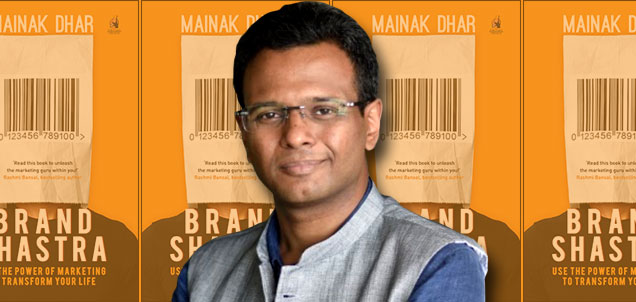
    Mainak Dhar wears many hats. The Managing Director of General Mills India Private Limited is also a much-published author. An alumnus of IIM Ahmedabad, he has set himself a goal of writing one book every year. Brand Shastra, his latest, is on the stands though an official launch event is scheduled to happen soon. Also being released virtually simultaneously is his new novel 03:02. Pradyuman Maheshwari talks to Mainak Dhar about his books, balancing personal with a busy professional life and most importantly, finding the time for writing,


    You are on to your 14th and 15th book, and you have a pressing day job at General Mills. How do you manage both?

    Writing is something I have been passionate about ever since I was a child. My father was in a government job, so we moved around a lot. By the time I finished my education, I had gone through nine different schools. When you are moving constantly, you are alive in your own imagination. Ever since I was very young, I wanted to write. When you are passionate about something, and you decide that it is going to be a part of your life, you make time for it.


    And it’s your ambition to write a book a year. That is a huge ask, alongside the demands of the top job at a  company like General Mills…

    The passion to sustain anything has to be coupled with discipline and deliberate choices. Passion can get you through one book. But if you want to make anything sustainable — whether it is writing, exercise or a hobby — that needs to be coupled with discipline and clear choices. My priorities are very clear. Number One is my family; Number Two are the people at work whom I am accountable to because ultimately that is where all the things in business helps people succeed; and Number Three is how I make time for health, fitness and what I want to do. My writing is in those spaces in my routine when I am not with my family or with people at work. Every morning I run for an hour, and that is when I am thinking about writing. Every day, I keep half an hour aside for writing, and it all adds up. My target is 500 words a day. If I can sustain that for nine months, you have a reasonably-sized novel. I also get a lot of writing done when I am travelling on work. When I am on a flight, at a hotel, sitting in the lounge at the airport, I write.


    This is your second book on brands…

    Yes. My first was Brand Management 101, which was about the real-world application of marketing. That book was written nine years ago, so at that stage of my life and career, what struck me was that there was a certain kind of marketing you learn in schools and case studies, and there is a whole different side to it in the real world. So Brand Management 101 is really focused on how you would deal with the ‘P’s of marketing, and taking all that into account.


    Was this when you returned to India?

    No, I was still in Singapore. I was abroad for 15 years and came back in 2014. Brandshastra is about moving nine years on, at a different life-stage, when I am married with a kid and dealing with larger organisations. A lot of energy, passion and thinking is put behind building brands [today]. I have an eight-year-old son, and so much of our effort as parents goes into how you teach kids the right habits, how do you encourage them to repeat desired patterns of behaviour and such. [The marketing equivalent of that are] loyalty programmes and hotels and airlines do that. And how do brands do it? Through positive reinforcement. Also, a lot of us make resolutions which we don’t stick to. All those resolutions involve changing our habits. You have a certain pattern of behavior, and there are habits you want to break. Marketers have been doing it for years by convincing someone using a bar soap to use a detergent, and someone who has not used a disposable diaper to use one etc. That is the genesis for this book.


    Several captains of industry have written books which are either memoirs or about case studies. Yours is a totally different and original take on the subject.

    Fundamentally, marketing is about understanding people, their motivations and about influencing their behavior. And we have doing it for thousands of years. The framework of marketing gives us a way of thinking about it in a structured way, which is then used to impact various parts of our lives. The first chapter, which is called ‘Adam’s Apple to Acche Din- A brief history of Marketing’, basically says that what we accept as a marketing tool, is the basic of influencing, understanding and shaping perceptions, which people have been doing since time immemorial. That is what inspired me. I think we can unlock a lot of power in our everyday lives if we make those connections. People build billion-dollar brands on the basis of understanding perceptions, motivation and behaviour. So how can we take something from that to impact people around us, and our lives and our behaviours?


    Often, when people from industry write books, they talk about how successful they have been in doing things themselves. Have you looked at some of your own successes in this book?

    No, I have not focused on things which I have done personally. But I have built on learnings and experiences, and observations. But there is a lot that I still have to learn. I think the book is more about somebody who has walked several miles in the shoes of people who build brands, run businesses and make connections to everyday life, and that is how I would like to pitch the book. It is more of an expedition — what are the possible ways of thinking about our choices differently. I have [adopted a tone] which is more conversational, exploratory and certainly [offers] no definite answers. If there were definite answers to all these questions, we would all be leading very different lives.


    What according to you, in the facets of everyday life, is perhaps the best use of a textbook marketing strategy?

    One thing which has wide applicability is, in the Indian context, the concept of moments of truth. In the industry they say there is a zero moment of truth, there is a first moment of truth, a second (which is the actual results) and a third moment of truth which is what people say about you. I think the way we grow up, our educational system is the single point moment of truth, which is the percentage you get, rank, did you get in to the job- that is how we train our kids. Now that I see kids growing, that is the context a lot of us have grown up. And, then people bring that attitude to the workplace, to their relationships which is have I met my target? Target is the second moment of truth. The perceptions that people are forming about you from what you have done in the past is your zero moment of truth. How you communicate, motivate and influence people is your first moment of truth. The stories that people tell about you when you are no longer in the room, is the third moment of truth. That is a work example, but the same thing holds in terms of how people interact with each other. A lot of the focus is on ‘let’s get the results’.


    Lastly, what would you ask marketers to learn from everyday life?

    In everyday life our strongest relationships, whether it is a friendship or marriage or any other relationship, are the ones we build by engaging with people without necessarily any end in mind. Our best friends are people we met over random conversations and we saw that there was a match of values, outlook, beliefs and fear. And that is how our deepest relationships get built. In today’s day of social media, it is a wonderful opportunity for marketers to think how to engage in conversations without saying ‘I have something to sell you’ or ‘I want you to think in a certain way about a brand’. In everyday life, our strongest relationships are the ones which do not start with a transaction.


    This interview first appeared in dna of brands on June 20, 2016


  • ‘We are not a typical digital agency’


    Charulata Ravi Kumar took charge as CEO at Razorfish India in 2014. Her two-decades-long career includes stints with WPP, 141 London and the MullenLowe networks in India, West Asia and Europe. Kumar has also established her own successful innovation and leadership skills consultancy, Coffee Kettle. She speaks to Anuka Roy about the digital disruption that Razorfish wants to implement, the milestones in her journey, and more.


    It’s been a little less than two years since you took charge at Razorfish. Do talk us through the journey, milestones and all…

    Let me start with a little background. Razorfish was owned by Microsoft many years ago, and then got bought over by the Publicis group globally. It started operations in mid-2013, and got into full-scale operations in early 2014. Before I came on board, in the last quarter of 2014, the objective of the company was to consolidate. There was DigitasLBi, a Razorfish and all of that was together as one group and it kind-of separated to bring in more efficiency and more capabilities in more companies etc. The year 2015 came with a startup state of mind. Although we had had some really good clients, we were still putting together the India strategy: What approach and capabilities should we bring in India? What is the market ready for? I was given a blank canvas to chart the journey, and we focused on two or three things. We were doing a large amount of business, but nobody knew us, probably because the energies were focused on establishing Razorfish and consolidating the business. The first thing we did here was that we started talking to people about ourselves. That did well for us; people sat up and took notice. Until then, aggressive growth was not our objective till 2016. Building capabilities and getting the right set of people was important in 2015. These were the two big things we did — we plugged the gaps in talent and got people to notice us. A third thing we did was get out of things which were ‘vanilla’ kind of services in the market that millions of other shops were there to deliver. We are here to transform the client’s business, to help them find how they re-imagine the customer experiences themselves, and that is our expertise. We decided to focus on that.


    The digital domain has seen much action in these last two years. Your views?

    [Earlier] hardly three or four per cent was put into digital, and that was still more social media, some banners and ads on certain sites. But even today, just about 10, 15 or a maximum of 20 per cent of advertising budgets is digital. People are looking at the digital piece in the wrong light when they refer to just digital advertising. Two kinds of digital transformation is happening [today]. The first is where brands are doing more advertising on digital, creating more content and video. But the true digital transformation is happening when companies are looking at themselves from the core of their business, and transforming the entire organisation from the core business platforms they are using  — from HR practices, to product R&D to the experiences they are creating, both offline and online. Offline, a lot of customer experiences are using technology in the retail space, and we do not classify this as advertising anymore; this is truly customer experience. But if you talk to the companies investing in this, you’ll find this spend is not a part of the advertising budget; it comes under capital expenditure. All processes are moving from analog formats to digital platforms. That is where the spends really are and that is where we come in and work on, with our clients.


    The IPG Magnaglobal study still puts digital spends at much lower than television or even print.

    For us, advertising is a very small part of the revenue that comes in. What is important is the entire digital transformation we create for clients — setting up the e-commerce platform, the entire technology at the backend, integrating it with CRMs, data and analytics to study consumer behaviour and changes and such. We work with different technology teams, and not just advertising agencies. But marketing is still at a low level because research methodologies are still poor in terms of impact that digital ads can provide and measure. But internet penetration is low and the infrastructure is also very poor, often not allowing for downloads. You cannot expect all these to pick up or for companies to invest too much money into it, as we cannot measure it accurately yet. We do a lot of performance marketing work; create communication where we can track how many people clicked it and how many converted to buy your product and place online orders, or how many people called you up to say they are interested and such. People are spending a lot of money on videos, but what impact is it creating on the consumer? Are they seeing and remembering the ads? What are they doing after that? In India, television will be ruling for a long time because of the penetration.


    There are many digital media agencies. How do you differentiate Razorfish from the others?

    We are not a typical digital agency. We do social media as well, but it’s not just that. We create customer experiences both online and offline. We create e-commerce platforms for clients end-to-end and integrate it with their backend systems; we create the interface that customers will see to experience the brand ad go all the way to delivery to your doorstep. We manage the entire e-commerce process which other digital agencies do not do. There is no nomenclature for us, so for want of better name, people call us a digital agency. We are somewhere between a business consulting company and a digital agency. We have technology, media and creative, so the differentiator for us is the technology part. We have an entire team which develops, implements and runs the technology. That is something digital agencies would not usually do.


    As digital gets more mainstreamed with even regular ad agencies doing great digital work, where do you see specialised entities like Razorfish fitting in?

    We would not fit in anywhere, that is why I joined the company. The DNA of Razorfish is that it was created for disruption and to create new customer experiences by reimagining how brands are living right now. We have an in-house system that actually focuses on re-imaging the customer experience for our clients. Our process and planning is very different, and our R&D labs focus on different things.


    Razorfish is a key component of Publicis.Sapient (earlier Sapient Nitro). And then there are entities like Resultrix/Peformics, Indigo etc.

    Publicis.Sapient has been created to leverage the strengths of all the digital companies under the Publicis Group and create one entity at the top. But the brands remain very distinct, whether it is a DigitasLBi, Razorfish or Sapient. This helps us to develop and focus on the technology part of the business very distinctly, as opposed to the advertising part. All the advertising companies come under Publicis.Communications.


    Please take us through some of the important work done by Razorfish India…

    Globally, Razorfish is very significant and out work for Audi — creating a customer experience and changing the model for them – has been much-talked-about. All car manufacturers find it difficult to set up a showroom [in the heart of a city]. For Audi, we created a showroom in the heart of London, as well as in Berlin and Shanghai, where this showroom is a complete interactive customer experience zone. There is not a single car on display but you can configure your own car from a combination of 40,000 options. You can take an engine from the many engines that are there, take the body and paint it however you want. Then you can experiment to see what it is going to look like. It’s like a gaming zone. You can place the order and test drive it, and also take it back in a chip and take a look at it. This was a complete breakthrough in the auto industry. We have done some exceptional work for Maruti as well. And changed the model of business for Eureka Forbes.


    Tourism New Zealand has been one of our biggest successes. Indians want to go to Australia but not New Zealand. We did a sustained, two-year campaign on performance marketing; and a lot of analytics to understand what people like. We started geo-targeting all the communications and this year, Tourism New Zealand has won the most highly-visited adventure destination for India. We do a lot of work for Madura, based out of Bangalore, managing their social mandate, social listing and engagements, and converting it into commerce.


    India doesn’t do too well in digital at international awards. Why?

    A lot of our good entries go in the ATL (Above The Line) space. I think it is a mind-shift the creative people in India need to make. Many creative people believe, myopically, that the television campaign is where the future lies. We do well in ATL television because a lot of agencies are just nominating that. Social media agencies are small, and they do small interactions and peg it more for Indian awards. Organisations like ours go deeper in setting up the entire digital and technology capabilities for a company, and there is nothing to recognise how well you do that. Global and Indian awards events need to re-visit how awards are structured. They are also living in the past. They have created awards to glorify each other. I think where we need more awards platforms, relates to the impact we have made in transforming a client’s business. But there is no such thing as a Client Effectiveness award.


    This interview first appeared in dna of brands on July 4.


  • Mondelez has eyes on our mornings


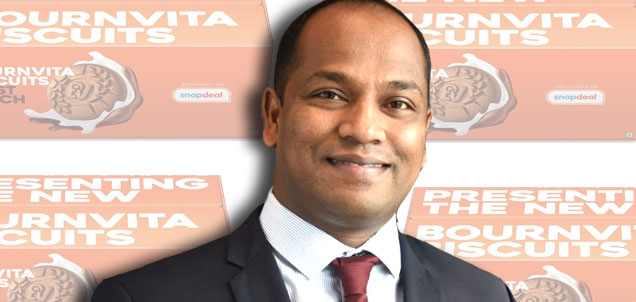
    Mondelez India Foods has launched yet another product in its vast portfolio. The launch for Cadbury Bournvita Biscuits has been done with a TVC that highlights morning as an important time of the day. The one-minute video is based on the idea, that this is a ‘Subah ka Biscuit’, and is the company’s second product in the biscuit category after Oreo. Chella Pandyan, Associate Director, Marketing, Biscuits India and Kids Fuel AP, Mondelez India Foods Private Limited, speaks to Anuka Roy about the biscuit, the marketing strategy and what the broad targets are around the launch.


    The biscuit sector is quite challenging because there are so many players already present. What is your marketing strategy for this new Cadbury Bournvita product?

    India is a top priority market for Mondelēz International, and the Indian biscuits market is among the largest in the world. Cadbury Bournvita Biscuits has been ‘designed for India’, by leveraging our knowledge and insights of the local market but by adding some global innovation expertise and biscuits experience. We are confident that Cadbury Bournvita Biscuits will be a strong player in the ‘morning biscuits’ segment. Cadbury Bournvita is considered one of the tastiest malted food drinks, and it also has a clinically tested Pro-Health Vitamins nutrient bundle.


    A high-decibel marketing campaign around Bournvita Biscuits will help build rapid awareness amongst buyers. The campaign includes impactful, on-ground activation, as well social and digital media presence to engage with a wider franchise of biscuits users, and build momentum for trials.


    Can you share with some insights from research that has gone into the positioning of ‘subah ka biscuit’?

    The ‘morning’ biscuit is the single-largest consumption occasion in India. Nearly 50 per cent of biscuits consumption happens at this time of the day. The morning snacking occasion, therefore, presents a huge opportunity for a product that brings together taste and nutrition — which is what consumers want. Cadbury Bournvita, as a brand, has always been a ‘morning’ beverage. With biscuits, the opportunity is to leverage this symbiotic relationship. Cadbury Bournvita Biscuits will provide the choice of a delicious biscuit enriched with the goodness of a drink Indian consumers have trusted for close to seven decades. Bournvita Biscuits is positioned as a purposive morning biscuit that has the Bournvita Pro-Health Vitamins along with the signature taste of Bournvita.


    Tell us a little about your tie-up with Snapdeal.

    Cadbury Bournvita Biscuits were made available through an ‘exclusive’ launch pack on Snapdeal. We saw tremendous response to our ‘First Batch’ packs and are happy that a lot of our consumers got to try it.


    What are the broad targets that you want to achieve through this product?

    We are very bullish about this product and expect it to do well. The nature of the product, its value proposition, our plans to invest in brand-building and the Cadbury and Bournvita heritage, all give us the confidence that this product will do well.


    And what will your distribution spread be… restricted to the metros or will you also be looking at Tier II and III cities?

    We are happy to introduce Cadbury Bournvita Biscuits in all markets across India. Our consumers will find them on the shelves of retail outlets across urban and semi-urban markets, at affordable price-points. This biscuit will be the only brand to embark on the largest-ever sampling activity, with 10 million samples.


    This interview first appeared in dna of brands on July 4, 2016


  • What makes VR a must-try for brands


    How would you like to go on a vacation to an exotic, faraway place while sitting in the comfort of your home? Or drive an ultra-expensive car that would otherwise be unaffordable? The amazing, unbelievable world of Virtual Reality makes it all possible. While this breakthrough technology has been doing the rounds for some time, it is only now that some brands are using it to promote their products. Ashish Limaye, CEO, APAC, Happy Finish speaks to Anuka Roy about the workings and wonders of Virtual Reality


    For the benefit of our readers, could you please explain, in brief, what VR or Virtual Reality is?

    Virtual Reality (VR) by definition means you export yourself into a virtual world. Today I am sitting here, but in case I want to explore a location where I cannot travel physically, I can still travel virtually, and that is what VR is. I could be physically present here, but I should be able to experience a different world virtually.


    VR CASE FILES

    Tata Motors Tiago
    The brief from Tata Motors was clear: Let’s make people experience a test drive, no matter where they are. With a keen focus on the distribution channel, a VR solution was created enabling the car major to leverage the power of the mobile, producing engaging content via an easy-to-use app, available on both Android and iOS phones. The video content was envisioned as a complete, 360-degree experience of the car. The virtual experience began by immersing the viewer in a CG stadium before moving to a comprehensive exterior and interior view of the Tiago traveling on the road, which was shot in live-action.


    Renault Kwid
    Renault wanted a narrative-driven, 360-degree VR experience for its new SUV-inspired small car, bearing the tagline ‘Live For More’. Since the VR film was to support the pre-launch on-ground activation campaign for the Renault Kwid, the storyline had to appeal to people hanging out at malls, large department stores, and even pre-transit at airports.


    The solution enabled Renault to narrate the story of two friends headed to a campsite in their Kwid. The VR experience helped bring the product to consumers, even if it wasn’t shown in the real world.


    Information courtesy: Happy Finish


    As someone who has been on top of technology, how different is this from the rest of what we have seen till now?

    VR, as a technology, itself is new in India. What we have seen generally in the Indian advertising landscape, is a little bit of augmented reality where you bring the outside world into your world. VR is completely different from whatever we have seen till date, in terms of the sheer engagement and involvement with communication, because you are almost able to feel yourself driving a car or vacationing on the beaches of Australia, without leaving your existing location. The engagement and involvement of the consumer with storytelling is going to be the biggest difference which, in my view, is going to drive this particular segment


    In the past we have seen several technology-led innovations available, which have sometimes fizzled out, for some reason or the other. Where would you say VR stands?

    It is too early to actually comment on whether VR will be a success or a loss, because we are still scratching the surface. The ecosystem of VR has been very robust, unlike that of other technologies like Google Glass, which was a little ahead of its time because the ecosystem had not evolved. If you talk about VR, I think, thankfully, the ecosystem is coming along at a good pace. And when I talk about ecosystem, I mean the content creators — people like us, the need from brands to create a VR which is essentially where the communication comes from, and then hardware, like maybe Google cardboard. All these three different pieces are coming together at a much better pace than what I would expect in any other technology. Yes, this technology would have its own learning curve, it is bound to have its teething problems as well, and I think we should give it its due. But I think it is at a far better stage than other evolving technologies.


    One of the factors that has been a stumbling block is the impediments in mass consumption. Even a simple thing like 3D didn’t really take off as one thought it would. Your comments.

    Any communication has to be on a mass scale because only then would the masses be interested in encouraging that particular communication channel. So you are right — it needs to be on a mass scale. When it comes to VR, thankfully, there are multiple channels of distribution, which have already been explored.


    What would you say is stopping VR from getting as big as it deserves to be?

    The ecosystem is coming together, but the pace at which it is, is probably the only limitation; it is stopping the growth to the desired degree we would expect for VR. A lot of people have smartphones, but do they have access to Google Cardboards till the time a brand actually provides that? Second, even the content creators are not really evolved in this particular space because the creation of 360-degree VR content is a right blend of culminating storytelling, creativity and technology. It is not just about either creative storytelling, not just about technology. From an execution part of VR messaging or content, content creators are definitely one of the key stumbling blocks to my mind because there are not many players who can actually say they can create good content. The third stumbling block is the fact that clients themselves have limited understanding of the way storytelling can be implemented in this. These three factors will probably make the growth a little slower than what it should be. But I see them being just a function of time.


    Despite still being out of the reach of even the tech-savvy consumer, VR has been embraced by some brands.

    Brands, and progressive brands, have always loved to be the first to adopt anything that is innovative and helps to break the clutter. I am not surprised that it’s the brands which have taken the lead. The challenge for brands would be the ability to differentiate between just an innovative medium and a beautiful way of storytelling. Some brands which are doing commendable work have an understanding of the creative part of this particular storytelling, as well as the technology part, and then allow experts to steer them. Some brands have really understood what it takes to deliver and invest enough time to first have an appreciation of this particular medium. The brands which have been able to do so have certainly been able to leverage the benefit.


    Would you say that certain sectors like automobiles and real estate have realised the potential of this more than others?

    Automotives, FMCG, beverages, real estate, hospitality, tourism — these are the sectors who have gone ahead and embraced VR. Each one of them has some experience to narrate. There are categories like beverages which eventually talk about the process of making the beverage. It could be Coca-Cola or alcoholic brands like Whiskeys. Wherever there are experiences to be narrated, and where brands believe that consumers would love to be a part of that storytelling, they have been the early adopters. However, there are a lot of interesting examples — like life sciences — which are coming up in a big way where brands are actually talking to consumers and doctors, and telling them that a particular molecule helps cure a particular disease.


    Everything finally boils down to monies and time. How much does a typical VR project take in terms of costs and monies?

    Unfortunately, there is no one-size-fits-all answer to that. But if I were to do a fair assessment of a good VR experience which is a two-minuter, and a client should be looking at an investment of close to 70 to 80 lakh, which gives them a good cinematic experience and combines that with a good application or some kind of a distribution platform. I am not including the hardware cost but I think this is a reasonable budget to go with.


    What do you see as the growth prospects for VR and a company like Happy Finish?

    Happy Finish is not just into VR. We have other verticals as well but we do believe in VR — or for that matter interactive — as a business is likely to be growing at a much faster pace, globally as well as in India.  Talking about VR as an industry within India, I think I am already seeing early signs of growth and a lot of studios which are mushrooming and providing a decent amount of output in terms of VR. In the next three years, in VR you will find that there is good amount of growth which is, in fact, good communication from the brand side, and a lot of good storytelling is likely to happen. I am expecting that a lot of creative agencies would be able to embrace this medium from a point of storytelling, and thereby provide brands and consumers completely different experiences.


    This interview first appeared in dna of brands on July 11


  • Selfie with RK: Rajiv Dubey

    It is easy to mistake Rajiv Dubey, Head of Media of Dabur India, for a cyclist/athlete. Extremely fit for  a man of 46, he not only controls Rs 400 crore of adspend but also manages to cycle at least  50 km almost four times a week! Of all the media heads  I know, and I know almost all, he is easily the most prompt, courteous and organised. There is NO attitude. Just a focus to do the job and do it well…
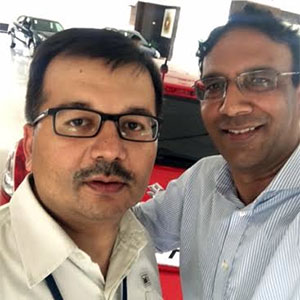
     

    I began by asking him

    What’s your biggest strength?

    Numbers he replied. I am very good with them. I have been doing them for years. I also understand the industry very well. And especially Dabur where I have been almost since I began my career.


    What’s your biggest weakness then?

    I am a very safe player, take very few risks. This works for me, he says


    Hard work or luck?

    Only hard work. 100% turned things around. Bosses have always been good to me and given me a free hand with zero interference.


    Your favourite CEO?

    N R Narayana Murthy, he says instantaneously. He let people perform. Had confidence in them, didn’t interfere. Most importantly he didn’t keep the job indefinitely and knew when to exit. In many companies, a succession plan is absent and people like to keep their jobs. Not him.


    How would you like to live your life again?

    Pursue sports at a serious level. Running and cycling are my passions, he says. He’s been a late starter in the running bit but has made up for lost time and is an eager participant in all the marathons across the country. In cycling he says he’s in the 2% that will beat the rest of the 98% Quite an achievement!


    If a movie were to be made about your life who’”d you like to play you?

    Irrfan Khan. I like the fact that he’s from a small town like me (Lucknow), has tehzeeb which Delhiiites lack and portrays the small nuances rather well. All these factors are essential in playing me


    On a scale of 1 to 10 how wierd are you?

    He seemed to like this question. Normal according to him is boring and he doesn’t trust those people quite as much. He himself is quite wierd for a lot of people, he says. The thinking and the things he likes are quite different from what is seen to be normal. He likes weird peiople, he says.I s fond of punk rock, in keeping with his character traits. People who are simple and straight are boring for him


    What didn’t you get a chance to include in your resume?

    An IIM degree, though he’s an Electronics Engineer and an MBA from Nagpur.


    Describe yourself in four words?

    Passionate, Objective, Wierd, Sporty


    What’s your superpower?

    Cycling: When I am on the bike I feel invincible!


    How do you destress?

    Cycling and running. I stretch a lot.Yoga, though my wife practises it, is boring.It’s something I might do when I m 75! I see him cycling even then though.


    Dream job?

    Anything interesting in Apple


    If Bill Gates gave you ten million dollars, how would you change the world?

    Change peoples habits. Two lakh people die on the roads each year. I would take a city at a time and teach people discipline and road safety.


    Rate me as an interviewer?

    6.75, with a smile!


  • The Importance of Penetration in a Brand’s Success


    At last Consumer Connections 2016 conference, organised by IMRB, Josep Montserrat, Global CEO at Kantar Worldpanel and K Ramakrishnan, General Manager and Country Head – Household Panel at IMRB Kantar Worldpanel spoke with Anuka Roy about how the importance of penetration for a brand to succeed. Excerpts from the discussion:


    About Brand Footprint and Penetration

    Josep Montserrat (JM): Penetration is basically about how many people are buying your brand. The metric that we analyse here is how many interactions the consumer has with your brand, and how many times has your brand has been bought by a consumer. It is a matter of penetration: How many people and how often are they buying it? When we analyse that, we see the brands that have raised the number of times buyers have bought them. The top leaders, and the brands that have grown more in terms of consumer reach points, have done so because of increased penetration. Considering the size of the population that we are measuring, which is a billion households, one per cent penetration translates into 10 million people.

    K Ramakrishnan (KR): The basis on which Brand Footprint works is Penetration. It looks at the population size you are trying to reach and the penetration the brand has — at least what percentage of them has had access to your product in the last year, and also how often they have used them. So, to that extent, there is no other ranking which tries to take these into account. They may take some other brand parameters into account, but this one specifically considers the extent to which a brand has penetrated a household. That becomes the biggest point on which it is based, and also the things that makes it different.


    On Penetration as a yardstick

    JM: I would say it is much more relevant in India than any other country because here, consumer backgrounds and hence choices, differ depending on geographies. What are the drivers and initiatives that you can put in place in India to win penetration, is different in other markets. Considering penetration of the products and the brand and the population can afford is a key driver for the success of the brand. There is an increasing trend of marketers to rate penetration as one of the key metrics in their scorecards in a way of measuring success in terms of the initiatives they have put in place and more we have clients at the local level and global level, that they put the penetrating and go to the CEOs to see the brand performance.

    KR: Loyalty is important and penetration is important. But if you consider growth of brands, the brands that have grown, what have they improved on? Have they improved on penetration or have they improved on loyalty? At this point, it is clearly established that penetration is what is leading to growth. In that sense, there is really no clash. Therefore it is not a competition. The relevance in India for something like a Brand Footprint is very clear; the new measure or the new metric by which brands are getting assessed is actually penetration, which means the number of new customers they have, the extent to which you are able to reach. If that is the case, and if this is becoming a metric globally — and in India many brands are taking it on — then there is clearly no other metric which can tell them well enough about their standing, apart from Brand Footprint.


    On Penetration and Mass Media Advertising

    JM: There is no general rule to see how much mass media advertising has impacted penetration. Of course, we have services and solutions that allow the marketers to understand that by investing in advertising — either digital or offline — what is the effect in purchase behaviours. Not only in terms of sale, but also growth due to new people engagement by the brand, or an increase in buying frequency. Advertising is important because you need to be in the mind of the consumer.

    KR: If anything, it has only added to it. Brand salience already exists because of the brand’s presence in media. Then the presence of these brands on the digital media. Third, the discussion about these brands on social media. If you add all these things together, it is only about building salience, in my view.


    First appeared in dna of brands on July 18


  • Raising the bar with HUL, baar-baar


    PHD India has been on a roll ever since it kickstarted operations  in 2013. Some big and small metals in the awards circuit – including a Bronze at the recent Cannes Lions – have ensured that it keeps winning new clients. Jyoti Bansal, Managing Director, PHD India, speaks with Pradyuman Maheshwari about awards, the company’s association with Hindustan Unilever and about being digital-focused


    You have won [awards] for your work for HUL in the past, and again this year. The work that you do for HUL has been acknowledged both as work and reaffirms their continuing faith in PHD. Which of these is more important?

    Everything is inter-connected. Once the client trusts and partners with us, then the work happens, and then the awards happen. It is a two-way street; they have to believe in us and we have to have the ability to push ourselves to the best that we can do for them.


    Does HUL as client nurture advertising work, or does it just happen?

    It does not [just] happen (laughs). It happens with a lot of thinking and planning which obviously the outside world does not see. A lot of it has to do with the mindset, the scale and the fact that there is this belief that we can make it work. With us, the biggest factor has been that they push the bar and we push the bar, and that works. It is always a shifting thing. You reach there, and immediately you ask — what next?


    And, it happens baar-baar?

    Yes, it happens baar-baar which I think is great (smiles). That is how we have won awards so many times for them.


    It is an unfair question to ask given you have many clients, But what is that makes working with HUL different from the others?

    The scale is different. It’s not like we don’t do good work with other clients, but the scale at which things are done by and for Unilever are different. It is seen more, so it pushes [us] more. It’s not like another client would not get the same kind of input from us. But the scale pushes everything to a different level.


    By scale you mean the monies spent?

    By scale I mean the size of their operations in India. It is also about the scale of money spent but everything is not about the money. The money helps, but it also the faith that they put in their partners and the way they listen and agree to do things, makes a difference. They have not won awards only with us; they have won it with other agencies as well.


    Creativity and innovation are fine, but eventually people look at ROI…

    Nobody will put in the kind of money that is needed for things like this if it was not delivering results. Clients are not sitting there just to fund nice ideas. For both [the previous, award-winning campaign] Kan Khajura Tesan (KKT) and now this, there were well-defined success metrics put in place. If there is nothing by way of readily-available metrics, we try and see if we can customise results, which they did for KKT.


    You are obviously aware of the kind of spends HUL makes on other media, including digital. Do you think spends on digital by large FMCG companies is commensurate with the kind of digital activity happening in the country?

    A lot of it depends on the audience they are trying to reach out to. If you were to include mobile within digital, I would say no. The reach of mobile today is as much as television. But the usage of mobile as a medium has not reached a level where we spend that kind of money on it yet. It is an interactive medium but at the end of the day, a lot of control is in the hands of the user. With television, apart from switching the channel, you cannot do much to avoid the advertisement. With mobiles, or in the digital space, that is much easier. The control lies more with the consumer than with us.


    Do you think spends on digital are appropriate, or could they have been more?

    At an industry level, yes, we can definitely go higher. But there is wide variation by sector. It depends on who they are trying to talk, and what they are trying to achieve with the money they are spending. For Unilever, we do only digital, but we have a lot of clients for whom we do integrated work, and the principles are similar. If I was trying to design a campaign for an FMCG brand versus a travel hospitality brand, obviously I would do different things. They will never have the same kind of split across channels and platforms.


    Do you see mobile overtaking television at all?

    It is an interesting question. I would say it is a little simplistic in the way it is looking at where our world is going. I do not think anything ever replaces another completely in that sense. The form and the character of it changes and the way things are going, television, itself, will evolve. We actually coined this term called video audio text planning some three four years back that instead of doing television, print, radio, cinema, we will start looking at it as video, audio and text. Are we delivering an audio visual message or just a video or just an audio or text? I mean you get a lot of new on this (iPad) device you are holding. You still get the newspaper in your home. You time spent may have gone down. The important bit is the news not the paper and not the tab. So, that is all text.


    You are known for your digital expertise. What is your play on digital versus other media?

    We do not look at it as digital versus traditional. We look at what is right for the brand and the task at hand. We have done different things for different campaigns of the same client. We are actively trying to move away from this television versus print versus whatever, to ask if video is the format by which I am delivering my message, what are the best platforms for me to do it? Is it the TV, the mobile or desktop?


    Clients, unfortunately, are not looking at it with an Indian approach.

    I don’t agree. Clients get it when we talk to them about this. As an industry, we have not yet managed to understand that we are still relying on levels of assumptions and two different databases which give us our television and web viewership measurement. We are hoping that with BARC’s new web measurement, things will change. You will see a change in the structure and form of video advertising being deployed by advertisers. Eventually it will come to a common metric.


    Does it worry you that it will impact the way agencies are hired? For instance, someone like HUL may not look at a separate digital agency but at a combined thing instead.

    Right now, it is a hypothetical question. Eventually, each client will look at it differently. I do not think it worries me. The way I look at it is this: Why does everybody think that if there is a common agency, it has to be a television agency? For all I know, interactivity is only going to increase.


    What do you think of the traditional media agencies’ big brotherly attitude towards digital? The best creative talent in the country, for instance, does not work in digital.

    Anybody who continues to do that for very long, will have to change. What is the reason to exist for a creative or a media agency? It is to help clients reach their message to consumers, and consumers are seamless in their consumption of media. The way technology is going, I believe it will shape the way this industry will be over the next few years. A lot of fusion and merger of all of these are going to happen leading to a seamless storytelling across devices and screens.


    If you had to do a self- assessment, how would you say you have done?

    For a two-year-old agency, we have done pretty well. When we walk into a pitch room, people look at us with respect and other agencies worry about our pitch which, to me, is a good place to be in. We have been appreciated for our work, won clients and ticked all the boxes that denote success pretty quickly. The Cannes win was a defining moment for us. It reaffirmed every belief we had to set up an agency in India. Globally, PHD is all about creativity and innovation, but they are also about doing path-breaking work for clients. Clients have commented, at various forums, that PHD is one agency which has a very differentiated positioning among the media.


    You mentioned the Cannes win

    After that, we have gone on to win more clients and more awards. I think the other big milestone is how we continue to be at the edge of forward thinking. After the first win, everybody wondered what we would come up with next. We have proven that it was not just a flash in the pan and we can do good work consistently.


    PHD meant to be a digitally focused agency when it was set up, right?

    Not really. The digital focus came from the fact that, we are a younger agency in the network; we had the Unilever business to push digital positioning forward, and that we found that digital was where both our industry and consumers are evolving. It helped to be skewed towards digital. We are more digitally-skewed than other agencies, with an 80-20 kind of split.


    And this is in terms of revenues?

    Everything. The teams, the size, and the kind of work we do. Even though a lot of our clients are only digital, we have a fairly balanced mix of the so-called traditional and new-age digital work. Frankly, in our minds, we do not even see that much of a divide [between the two].


    Big Data is the buzzword in India today. Your comments?

    I don’t know whether to call Big Data — which is a much-used but misunderstood phrase – or just say data and technology, which is empowering creativity today. You will see a very different shape and form of our industry in 10 years from now. As PHD, we are betting on Artificial Intelligence changing how things work — and sooner than any of us think. Our hiring is also future-focused, in that sense.


    Where do you see PHD India a year from now?

    I think we will continue to be the agency that advertisers will choose when they really want to transform themselves, from a digital perspective. We have a good handle on what it takes to do that.


    This interview first appeared in dna of brands on July 18


  • Selfie with RK: Week #2 | Himanshu Dahiya, Media Head @ Maruti

    By Rahul Kishore


    It is extremely tough to get to meet Himanshu Dahiya, Head of Media, Digital and Research at Maruti Suzuki. Not only does he keep a low profile, he’s also very hardworking and Maruti takes a lot of mileage out of him. I finally got to meet him in his showroom on the ground floor of his huge office building in Delhi’s Vasant Kunj. Over a hot cup of coffee I began by asking him…


    What’s your biggest strength?

    Analytical , being  creative and I’m extremely fond of brand-building. His previous stints have been with HM and Honda.


    What’s your biggest weakness?

    I get into too much detailing. May seem a chore but that’s the way I’m built. I’m extremely conscious of the money I spend and always want maximum bang for the buck.


    Hardwork or luck?

    Completely hardwork. It’s all perspiration. My bosses have been good to me generally speaking but there have been a few exceptions. I have worked extremely hard…


    Favourite CEO?

    Though it’s competition, but it’s got to be Anand Mahindra, he says with a smile. I find him extremely savvy and suave. He’s fully focussed, very active on social media and digitally inclined. What I really admire is that somehow he seems to find a lot of time and money for social causes.


    How would you like to live your life again?

    He thinks for a while then he says as a football player. I’ve played at the school level and it’s a game that always fascinates me. Ronaldo is my favourite. I like the glamorous life of the footballers and the money they make.


    If a movie were to be made about your life who would you like to play you?

    Aamir Khan. He’s meticulous, is a method actor and can spot nuances in my character that even I may not have noticed. As you might have guessed, he’s my favourite actor.


    On a scale of 1-10 how weird are you?

    My family would rate that an 8. I have two kids 15 and 9 and this question would seem better directed at them. Life is a great teacher and I try to appear normal at work. And work is a large part of my day.


    What didn’t you get a chance to include in your CV?

    An IIM degree would have been handy even an international  one. I do go to IIM Lucknow for courses but it’s not the same thing.


    Describe yourself in 4 words.

    Hardworking, Attention to detail, Innovative, Creative


    What is your area of interest?

    Sports. Im passionate about it and I’m very fond of music.


    How often do you destress?

    Not as much as I should be… he says with a wry smile. I listen to rock music in English, in Hindi music I do the full range. Guru Dutt, Dev Anand are eternal favourites.


    Dream job?

    I would love to work in a sports club like a Chelsea or a Real Madrid and enjoy what I love to watch.


    If Bill Gates gave you 10 million dollars and asked you to change the world what would be your big idea?

    He thinks long and hard, looks at me as if searching for answers. And then says: I would like to empower poor kids, educate them, teach them about sanitation and health and offer them opportunities to secure their futures by creating jobs for them. This remains a #1 cause for worry in India. I believe in his sincerity.


    Rate RK as an interviewer?

    He smiles, since you’ve managed to extract so much from me and your questions have been excellent I would say 10/10. I nod in agreement.


  • More on the Importance of Penetration


    We have carried a quick chat with K Ramakrishnan, GM and Country Head, IMRB Kantar World Panel along with Josep Montserrat, global CEO of Kantar Worldpanel recently.  We had also spoken to Ramakrishnan on Parle being the #1 brand. Here is the complete interview with him by Anuka Roy


    There are brand studies and brand studies, how would you say is the Brand Footprint Global Ranking different from the others?

    The basis on which Brand Footprint works is penetration. It looks at the population size you are trying to reach, the penetration that the brand has, at least what percentage of them has access to your product in the last one year and also how often they have used. So, to that extent there is no other ranking which tries to take these in to account. They may take some brand parameters in to account or any of those but this one specifically takes the extent to which a brand has penetrated in to a household. That becomes the biggest point on which it is based and that way it is different.


    What would you say is the reason for Parle to be the No 1 brand in India?

    In India it is #1 because it reaches a very large number of people, a highly penetrated brand and bought at a frequency. You may have heard that many parts of the country, there is a lot of chai and biscuit happen. So, Parle has taken that occasion pretty well and to that extent that is the reason why it is right on top


    In the Indian context where it’s said that India actually comprises many India, can you elaborate on the relevance of the Brand Footprint ranking? Especially the entire Loyalty v/s Penetration debate?

    In my mind, it is really not a debate. Loyalty is important and penetration is important. But if you see growth of brands, the brands that have grown what have they improved on? Have they improved on penetration or have they improved on loyalty? At this point, it is very clearly established that penetration is what is leading to growth. In that sense, there is really no clash. So, therefore it is not a competition. And, the relevance in India for something like a Brand Footprint is very clear that the new measure or the new metric by which brands are getting assessed is actually penetration which means the number of new customers they are having, the extent to which you are able to reach. If that is the case, and if this is becoming a metric globally and in India many brands are taking on it, then there is clearly no other metric which can tell them well enough about their standing apart from Brand Footprint.


    Has the proliferation of digital impacted the salience of brands in a country like India?

    If anything, it has only added to it. Brand salience already exists because of the presence in media. Then the presence of these brands on the digital media. Third, the discussion about these brands on social media. If you add all these things together, it is only building salience in my view


    And how would you rate the impact of e-commerce. It’s said that thanks to e-commerce, even the hinterland has access to products (if not services) that were not available because retailers wouldn’t stock the products because of low consumption.

    E-commerce at this point of time in our household panel data is a very small percentage. But that said, there are enough sources of information from Kantar itself which state that where and which part is e-commerce growing. Hinterland contributes to a significant percentage of business coming from e-commerce. That is one of the hypothesis is fundamentally those markets do not have access to products because of distribution reasons and other reasons. Since they do not have access by physical availability, they are reaching them through e-commerce is some of the Kantar studies are saying. It is not household panel but it is from Kantar.


    Could you elaborate on the term CRP used in the Brand Footprint Study?

    Brand Footprint study aims to assess the performance of brand year after year on a certain set of parameters. The term that Brand Footprint uses is called Consumer Reach Point (CRP). So, CRP is actually a product of the population that is available and that can be addressed by the brand, the penetration, which is what percentage of them have reached by this brand in the last particular year and their frequency. It tries to assess is by what extent is the brand able to touch that household in terms of its usage. So, that is what Brand Footprint tries to measure. Therefore, it is a real measure of consumer behaviour towards your brand.


    Your study observes that consumers in India expect brands to contribute to creating a better society. But does that really result in better sales?

    At the end of the day, we are talking about a case if it is only contributing something in society and not addressing the need for which the brand or product was created that would not be the case. But the fundamental assumption here is that there is product parity. So, each product is delivering on a certain promise. Over and above that, if it identifies with a certain cause then that cause affects a certain set of people and they get associated with the brand that is the benefit. Is there a direct correlation to sales? No. But if they do that consistently, repeatedly and if they are seen as doing that, it has a long term impact on sales.


  • Smooth ride on this Street


    Around this time last year, Pratap Bose, former chief operating officer at DDB Mudra, launched with much fanfare a full-service advertising agency, The Social Street. With some seasoned names in the business by way of partners, like outdoor and experiential specialist Mandeep Malhotra, entrepreneur Arjun Reddy who also runs a diversified portfolio of businesses, and Pradeep Uppalapati, a former senior director and India lead for global corporate development team at Accenture, Bose’s venture has been on a roll. In a freewheeling interview with Pradyuman Maheshwari, Pratap Bose, Chairman and Managing Director, The Social Street, speaks about completing a year in existence, winning awards and his relationship with DDB Mudra.  Excerpts:


    One year of The Social Street, since June 22, 2015. How has the journey been so far?

    If you asked me last June where I would be, [I’d say] I would not have expected such progress in one year. When we set out, we had big ambitions but I didn’t think we would do so well. I think we have put an impressive list of clients together and done some really good work.


    The Pratap Bose interview first appeared in dna of brands on July 11.


    Mandeep Malhotra, Founding Partner and CEO

    On Year 1: I have loved the year.  A couple of months in the beginning were a bit of an emotional turmoil journey but then I got back to the 16 hours of working a day. I love staying busy and I had a great year.

    On the road ahead: I think if there is passion and hunger, India as a market has so much more to achieve and do. I am fairly excited for the teams who have got a lot of hunger and passion in them. So, it is an upward journey but it is a very gratifying, satisfied journey ahead. Looking forward to it.


    Pradeep Uppalapati, Founding Partner and CFO

    On Year 1: There are two ways I would answer that. Personally for me, it has been a very fun experience, a lot of learning and I am glad that I am part of this. From a company standpoint, in the one year that we have been in existence, we have achieved quite a few things, so we as The Social Street I think are very proud of it. We would like to keep the momentum going and achieve better things.

    On the financial front: Financially, I think we have met all our goals, no surprises. And we are on track.


    Interviews by Anuka Roy


    How do you define ‘so well’?

    The fact that we have already hired 150 people and  opened our Bengaluru and Delhi offices.


    Three very fancy offices

    The Delhi office is nice and much bigger than the Mumbai one. About 135 clients have been signed on. We have not made too much noise in the media about which clients we have won, but that was intentional. We are happy keeping it quiet.


    But you are not known to be a quiet person…

    It was part of the strategy and PR plan laid out during the first year. As a new set-up when you announce a win, your competitor agencies [also wake up to it]. But that is not the reason. Besides clients and setting up three main offices, we also have quite a few satellite offices. It has been a fair progress.


    You started off with a full-service agency, but some areas were not covered until you hired a creative head…

    Contrary to popular belief, a Chief Creative Officer (CCO) is not confined to the creative department. We brought in a team from various agencies to fill the gap. We thought if we were going to be a creative powerhouse in the area of communication, barring the traditional stuff, we need a CCO to run that. It is a team that understands the whole new world of content and creating content for activation – which is really what Deepak does. I’m not saying that we don’t want to get into print or television advertising, but that is not the focus right now.


    Does that bracket you as a BTL agency?

    I don’t care about that because at the end of the day, I am going to run a successful and profitable business. I think the media is also to blame for this. Everyone thinks that the creative agency is the be-all and end-all [of advertising]. But the new world is all about technology, social media, content, sharing and creating meaningful pieces of work in the social and marketing space.


    Are you saying that in advertising, you no longer make money on the traditional, creative stuff?

    Obviously the margins for the non-traditional side of the business are always higher. But barring the top four or five agencies…


    In this one-year journey, you have established an alliance with Rediffusion Y&R.

    I think the Rediffusion deal was good for both for us, where we run everything in the communication space and leave them to do their creative job. That is a partnership which is working well. It is a mutually-beneficial relationship that expands both their business and ours.


    But Wunderman is in the same space as you, isn’t there a clash?

    Today’s age is really about collaboration. It does not mean that if two agencies are in the same space, they need to compete. While Wunderman is largely in B2C, consumer, direct marketing and all that, it is a skill-set that complements what we do. Direct marketing, data — that is not our core competency right now.


    Do you see this relationship with Rediffusion cementing further?

    As long as we do good work together, and a lot of trust is there, and we want to further the relationship, we would probably make it a stronger.


    By further, do mean equity? You are known to be close to Martin Sorrell…

    I am. But that is not on the agenda right now. We just started out. Unfortunately or fortunately, there has been a lot of positive vibes from the industry, as well as in the communication business. But I don’t think you ever set out to create a business with the intent of selling out. If you did that, you would probably be a failure.


    Would you ever look at selling out or part with some equity?

    Not averse to that but there is a point in time where you think about that. But right now we are not thinking about this at all, five or six years later if things work out then. You do not set out to start a new business with the intent of selling out.


    You mentioned that having an international agency connection helps you with big, international clients.

    Not really. Dhunji Wadia and I are good friends, and had been working together even before we started The Social Street. As we started looking into some businesses, it turned out to be extremely fruitful for both of us.


    In terms of talent, how are you doing?

    We always knew we would succeed in the business. It is how to handle the large clients and the large assignments with limited resources. Our challenge right now is to be able to deliver on the promise we made to our clients, especially the large ones. That is a pressure, because if you keep adding bigger clients, you obviously would need to increase your workforce.


    What about your promise to investors?

    Thankfully, the investors have a lot of faith in us. They are looking at us long term. It is clearly a five-year projection we are working towards. As long as the basics have been ticked off the checklist, I think we are doing well.


    All the cheques coming on time?

    (Laughs) Actually, we are collecting very well.


    Where do you see yourself a year from now?

    That is the beauty of being on your own. We have set an agenda for what we want to be, and the areas we are getting into, and it is quite a large list. Having said that, if an opportunity presents itself, let us say in B2C, I would grab it with everything I have got. At the end of the day, we are entrepreneurs at heart.


    This opportunity can be in the form of acquisition or in the form of business?

    It could be in the form of business, it could be acquisition which any way is a part of our strategy. We would get in to more joint ventures, collaborations with other agencies, internationally as well as in India. That is all part of the plan.


    Any particular direction you are looking at in terms of international?

    We are looking at a couple of international firms in the area of brand activation, promotions, digital etc. We are already collaborating with a few. We got our first assignment in Indonesia last month. So it will gradually move that way, is my sense. Entertainment, digital and content is the space I see myself getting into, in the next couple of years.


    You have a CCO in Deepak Singh now. Are there any other heads you are targeting and appointing in the next year or so?

    We are looking at a senior position in the digital space, as well as seniors in the area of account planning and activation. Deepak’s team will also grow and branch out into similar kind of talent in Delhi and Bengaluru.


    And traditional media?

    We already have [people] in traditional media. We run a media planning and buying business for a few clients. Given that we have all the tools and databases, media is the glue that binds all the entities. It has to make money on its own for sure, but the intent is not to make a large media company.


    What about creative?

    I think creative will grow as we grow. The demands that we have in today’s briefs — these are socially-relevant big ideas; and for that, you need a juxtaposition of activation planners and highly-skilled creative people in that area to make things happen.


    Does your deal with Rediffusion prevent you from getting in to a space which it is into?

    No, not at all. It is not an exclusive relationship in any case.


    When you started out, a large number of people moved in from DDB Mudra. What is your relationship with DDB Mundra now?

    All of them were great friends. I probably had one of the best times in my life with DDB, which was Agency of the Year at Cannes in 2010 and 2011, from literally zero. We even toppled Ogilvy at Goafest. But I think I got out at the right time. It was a decision which I thought was the right decision at that time. My relationship with DDB Mudra is [still] fabulous.


    There are rumours that Madhukar Kamath may be moving on next year. So wouldn’t it have been nicer if you were still there?

    No, not now. Is there an option to merge The Social Street and take over Mudra? Why not? (laughs)


    You mentioned awards. Like it or not, the success of an agency is determined by the number of awards it wins. How do you rate your performance, vis-à-vis awards?

    Awards are really wait-and-watch. I think we will do spectacularly well next year.


    You know the game well.

    I know the game. If my job is only to win Agency of the Year and do nothing else, I would win it hands down. But you have to run a successful business. But I can promise you next year, at Cannes or at Goafest, we will do spectacularly well. I am saying that because of all the ideas we are currently working on. While everyone was at Cannes, and even before we put our heads together, there were some stunning ideas.


    So, south of France next year?

    Absolutely!


  • Time to be programmatic


    Programmatic ad buying has been and still is changing the face of online advertising, but still there is a lot of confusion and ignorance around what it actually is. So is it just goodbye to human negotiations and manual release orders with machines buying band booking ads? MxMIndia speaks with Michel de Rijk,CEO, APAC, Xaxis, the GroupM arm specialising in programmatic, who was in Mumbai last week. Excerpts from the interview:


    Xaxis has been formed in 2011 and it has been in Asia Pacific since 2012. How has been the journey for so far in terms of the way the business has grown, the number of publishers and clients on board?

    I think it has been a very interesting journey. Xaxis launched globally in 2011 and Asia Pacific in early 2012 when I joined. In general, the journey has been interesting because Xaxis was the first initiative like this within an agency holding group, this case WPP. The whole thing started back in 2005 or 2006 when WPP acquired a company called 24/7 and that was sort of a foundation for Xaxis later on. When we started in 2012, programmatic as we know it today was only running a little bit in Australia, the rest of the markets was nearly non-existing, especially the South-East Asia markets. We went in to these markets as the first entry in this space where we had to educate publishers, agencies and brands about what it means – the value of it. If you see where we started it at that time compared to where we are right now, the industry has run through a massive change. We are almost five years in right now, for us it means we got 18 offices across 14 markets in Asia Pacific, we have three offices here in India, just over 300 people we have currently in a region. Globally, we have grown Xaxis to 45 offices, close to 1300 people, so the growth has really been there. If I look specifically at India, I have always perceived India as a market where where technology is developing for outside India (unlike China where a lot of technology is being developed in the country). I think there is a lot knowledge and understanding of programmatic in market, I just do not think it has always been executed in the right way in India in itself and I think there are some opportunities and India is currently catching up a lot.


    What are the learnings from APAC market that you think would be applicable for India? Given that India has had its peculiarity in terms of the digital development in itself as well as there is always this fear of whether programmatic will actually deliver results as the same way as human intervention would.

    One of biggest challenges that India faces right now and the differences that they have with other markets in Asia or even the world is that I do not think India set the right fundamentals to be able to build a successful programmatic or audience-led strategy on top.


    What do you mean by right fundamentals?

    Things like measurement and ad serving- these are things that are fundamentals which if I talk to my counterparts in other markets outside of India or Asia and explain them that India is one of the markets where ad serving is not standard in the market, they are a little bit surprised by that because that has been a journey in their markets 10 years ago and everybody has accepted it and understands that. A third party measurement, a neutral view on success and performance is important. What is being perceived as results and how can programmatic actually deliver on expectations if the current way of buying is not being measured in a proper way. And, I think because programmatic is technology led, it needs to run on a foundation that is part of the technology led as well.


    Are you doing something to evangelise this to ensure there are some standards? Obviously this is a huge stumbling block.

    It is, absolutely! I think not only for programmatic but it is a huge stumbling block for digital growth in general. If you look at the brands which are successful in digital advertising, be it in e-commerce side or innovative bigger FMCG brands for example, they have embraced them and they understand that third partyad serving is extremely important for measure of their strategies.


    In terms of clients, what you have are GroupM clients or you have clients who are beyond a client set of GroupM?

    It depends a little bit on the market. From a global perspective, close to 25% of our business comes from outside of WPP clients that are partly driven from a Xaxis offering or one our other brands Plista, there is a lot of traction with direct clients. In India, our direct businesses are fairly small, single digit, which is clearly the focus for the remainder of this year and next year.


    So with 75% of your businesses in various markets and in India, possibly more than that, come from within the GroupM fold, they also have to be convinced about your offering. How easy has that been to convince the internal customer?

    It has not been easy. You sort of described it as internal customers and a lot of people in the industry think that it was easy for Xaxis to do business with GroupM agencies because we are in the same building, colleagues, sort of clients and supplier relationship and friends and all that. I think it makes it even more complicated. We need to deliver at least on par with better than the rest of the mediaplan to make sure that we stay in that mediaplan. I do not think the agency makes it easier for us. From an education point of view, it is not easy because the industry is constantly changing. Our products are changing as well because there are new products that we can launch based on technology, readiness and just the opportunities that we have. Every time you have to do re-education and re-training of all these people who come new in to these agencies. Like we have our own teams we have to keep training.


    Are there challenges that you are facing with the internal customer? Are they the same in India as it is in the rest of the region?

    There are few different challenges. In general, we are still working with a lot of internal, when we talk internal, our clients are agencies obviously, we are having a lot of education and a lot of discussions with these agencies around what have they done in the past and what are the new opportunities right now. I think in the past when media planning was placements and publish your ads, which have been changing because you do not have to buy media in bulk anymore like you used to be doing. You combined audience bases and do a cherry pick, single impressions based on the audience you want to reach as brand. I think there is a change of mindset. And, the second thing there is that brands and agencies are used to sort of a benchmark right now, whether it is performance or reach or anything like that now, which with all the new technology, data and insights that are there right now that they might not be the true benchmark. We go through this discussion with agencies and brands that click through rates of five percent is not a real benchmark. There is probably that has been driven on not real engagement with real audiences that we use as a benchmark and then go in to the new world where you are able to track and create more insights around whether there is real person behind the click or is it a fraud and all these issues that arise is that benchmarks may be set at a too high standard. So, now what programmatic brings to you, means that the results that are being delivered might be from a metric point of view but at least they are real results. People do not see that as long as their benchmark stays high, it is a difficult discussion to have because nobody wants to say that they have been doing it wrong for the past five years or so.


    How has it been with brands and large advertisers? What is it that has convinced them to go in for programmatic as against traditional mode?

    It all depends on what the brand wants to achieve. If you have to go back to the overall communication strategy of a brand, I think, especially what programmatic brings and eventually is just the technology, the underlining layer down. The whole idea of you as a brand, you may have a product or a service, what you want to do is reach an audience relevant to your product. We as an ecosystem have created a very complex world with all kinds of different matrices around in different channels which have been confusing if you ask me. But eventually we have to go back to the basics. So, how do we deliver what a marketer wants to have? I think we have over complicated the industry ourselves and we need to bring that back to more basic world. If programmatic technology and data gives you the ability to reach these audiences that you as a marketer want to have then everything in the middle is not relevant.


    You have a central trading group as part of GroupM, and that is a very important and powerful unit over here which does the deals with publishers for clients. So, how does Xaxis work with them because they are doing the buying decisions and there are lot of deals and negotiations which are on which they get involved with.

    The central trading group is extremely important and for big portion that creates the value that the group gives to brands. The word programmatic- it is a level playing field- a lot of people look at is as exchange and you bid against each other and your skill does not matter. That is how people look at programmatic. Real-time bidding (RTB) is there but only a small part of programmatic. In my world, zero percent of media goes in to RTB when we want to buy 100% in programmatic. Those are clearly two differences. In RTB, which is the biggest media buyer that we are as GroupM, do not create any benefits for our clients. The reason why any of our clients are with any of our agencies is because they are from a planning point of view, strategically they are good but also because they give and create training, that is why it is so important. You should not look at programmatic as a level playing field in RTB environment; you should look at it as an efficiency that brings technology to be able to do the cherry picking of the exact media but also the pre negotiated deals with publishers. That is why we still go the top 20 or 30 or 50 publishers in market and we set a direct trading relationship with them, whether it is Xaxisor together with the GroupM trading team and we set up these trading relationships where the execution of that trading relationship happens through programmatic. So, we have best of both worlds.


    So, it does not happen through the CTG (Central Trading Group)?

    Yes, we work very closely with them.


    But, does it happen through them or does it happen through you’ll?

    It is a little bit on their side and a little bit on our side. They bring clear value because there is a digital outlet of a big publisher; we have a big trading relationship with on TV. Then they support with their dealings in that. If it is more of a digital property where we deal with and most of the time Xaxis led.


    Getting back to India, where given the fact that you have issues with measurement and other issues, where do you see business growing for you?

    Unfortunately, I have not been in India for the last 10 months. But between my last visit and my visit now I have seen a big change already. The challenges around foundation..


    In what way have you seen a change?

    I think brands are more receptive and the foundation is extremely important and the measurement piece is extremely important. They start to understand thinking from audiences first instead from a product point of view; they have started to understand that a lot better from a year ago.


    So, what are your specific targets for India?

    There are a few things. First is education, people should understand the true values of programmatic. If I talk to a brand and the brand thinks programmatic is going to give them efficiency in their buying then that is sort of disappointing stage where the client is, because if you only look programmatic as an efficiency tool for your buying then you are missing out on the true benefits that programmatic gives to you. That is the main thing for this year and next year for India. That is the core thing. For us, on top of that is that we keep developing our centre pieces of technology called turbines, which is the Data Management Platform (DMP) that houses the biggest audience pool, also in India. There has been too much focus on from brands and agencies on which DSP (demand-side platform) should I use because there are so many out there. We have this fundamental belief that it does not matter which DSP you use because there are just pipes to inventory. For us the differentiator is how to we create a valuable data pool where our clients can execute on and that is what we have been doing.


    Do you see business doubling?

    We have been seeing business at least doubling over the last four years, I continue to expect that. I do not know the exact growth numbers in India when it comes to digital and programmatic. What we see that is programmatic, globally, still grows that 35-40 % that includes various markets like the US, Australia and UK. We see across Asia it is probably close to 50-60%. And, as long as we are growing faster than the industry does, which we have been doing, means that we have maintain our leading position in market.


  • Sun shines on another refresh for ABG


    By Anuka Roy


    Change is the only constant. And, when the change is synonymous to continued growth and evolving oneself to suit the change, it is a very good indicator. The same logic holds true for brands. When it set up two decades ago, the Aditya Birla Group retained Preeti Vyas, Chairwoman and Chief Creative Officer at Vyas Giannetti Creative (VGC), to build its identity and logo. Earlier this week, the group and VGC unveiled the third logo developed. Vyas speaks about the need for the current refresh, her relationship with the group and much more. Excerpts from the interview:


    Two decades, the third identity and a second refresh. Speaks a lot for your relationship with the Aditya Birla Group

    I feel very privileged personally and professionally to be have been associated from the birth of the brand. When Kumar Mangalam Birla took over after his father passed away, he asked us to create a logo for him. We were very much part of the original branding journey, the strategy, research etc. and we stayed true to the journey in the sense that the group crossed so many milestones. We have stayed with them through the corporate communication, worked on so many opportunities and down the line, five years ago, we even had a refresh. One of the reasons why we had a refresh is that the group itself had become a superbrand. From not existing, it went on to become one of the more important brands in the country. In fact, it was seen as one of the architects of a new India. The group came on its own when the economy opened up and India had a very international outlook. Indians were becoming very significant consumers, the businesses actually added on to their portfolio of commodities… with consumer-facing businesses, telecom and fashion etc. When all of this happened, there were so many opportunities for the group to actually make sure that whatever it did, it was very committed to their vision and to the way it had structured the policies…  so it became a group of significance. And, the relationship which we had with them prior to the birth of the brand was also interesting because Kumar Mangalam Birla had reached out to me years ago when I was Creative Director of Trikaya Grey and he wanted some work to be done for something the Group was sponsoring. At that time his father was also alive, I had the privilege of meeting his father. So, the relationship actually goes back more than 25 years. Since then as the group expanded in terms of these different businesses, we have worked very closely with him and Pragnya Ram, Group Executive President, Corporate Communications and CSR who mentors the entire process. So, I was always the fronting sort of person of Vyas Giannetti Creative and they stayed true to us as we continued to deliver work for them.


    Talk us through the three identities that you developed, and what they have meant for the Aditya Birla group at each stage that it was conducted.

    When I was asked to do their logo first time, he said, I want to call it Aditya Birla Group and I want to herd all the companies under the umbrella of Aditya Birla Group. So, we said, fair enough, if Aditya is the name of the Group we should look at the meaning of Aditya, which is sun. Therefore, that is the origin of the logo inspired by the sun. If you look at the first logo, it had two semi-circles, one was an internal play and then there is an external play which as a group there are so many things happening within the group and externally we send out messages and then that in turn comes back.

    Here, I would like to say Kumar was very interested in keeping the legacy, it is a new entity  but as such the name itself has a lot of legacy and he wanted a certain sense of richness and legacy which is why if you see the first logo, it also had a richness of colours. It was a solar colour but also had textures; it was in a sense carrying forward a classic brand in to the future. So, that was the approach to the logo itself.

    Then as the group gained equity through whatever it did and became a Group of great worth, internally, there was a lot of call for new entities, new businesses… Aditya Birla itself. Aditya Birla as a name became very popular. Various companies like Grasim and Hindalco, existed before the Aditya Birla Group… they were all listed companies. Aditya Birla Group was an endorser brand which is why we had a strapline. It gained so much equity that in the second version of the logo, Aditya Birla Group was no longer a strapline. It became a very assertive and emphatic presence. The logo itself went through a colour refresh and a three-dimension was added to it. That was in a sense, a gradual change, it was not a jump. But it certainly was a small change for a brand but a giant change for a corporate entity.

    When that happened, soon thereafter, as the group was getting older it was talking to a much younger audience – the millennials, people who are looking for something more global, something they could relate to in terms of their profile of exposure that they had and as a result the feedback that Kumar was getting, was that, perhaps the logo needed to go through a change. The core values remain the same, the core principle of the sun remains the same, but could we make it more dynamic, could we do so without divorcing a core graphic in terms of colours and so on, could we just give it much more energy, power and youthfulness? Then we embarked on a new journey and what we have now is definitely a departure from the old logo but it is not a complete and absolute 180-degree change either. We still have the sun; we have an added element of the ascension form. So, there is a sun and there are the rays, there is an ascension form which gives it much more power and energy. That is the journey.

    What is interesting is that how many agencies around the world actually have this privilege- having seen three changes and being the corporate agency of one brand for two decades. It is of course a landmark moment for us as a company and it is quite heartening to see the change, the group actually rises so much in stature as well.


    A brand refresh exercise doesn’t come cheap and while the Aditya Birla group is known for its emphasis on excellence, surely it’s cost-conscious like any traditional Indian empire. How much does a design refresh and a change of logo mean to an industrial group?

    It is not just a commodities industry group. First of all, when we did this branding, it was largely a B2B business. But at that point in time, the only other company which went in for a professional branding exercise was the Tatas. The Tatas and Aditya Birla Group actually did their branding at the same time. When you go through a branding process, it creates great amount of equity not just for consumer-facing businesses but for all stakeholders, starting from your internal stakeholders, potential employees –  you will only grow on the strength of good people that you hire, it also means that you may want to align and associate with good people. When you are growing you are constantly creating associations, alliances and acquisitions, you always want to be in the consideration set. So, you need to make those branding investments.

    It is a myth to say that just because you are a B2B business. you do not need branding. Everybody needs branding. Having said that, the group itself went from being practically and entirely a B2B business to largely – if you see their profile now – a much bigger FMCG business than all of the FMCG businesses put together. They are the largest fashion retail brand in the country, one of the largest (and growing) telecom networks, in terms of cement, again huge… it is the number one player in the country. Just look at the amount of the consumer-facing interfaces – financial services, insurance, mutual funds- all of these things are actually consumer-facing. So, the group itself has transitioned itself in to the consumer-facing businesses. It has a mixed portfolio. It needs to be understood that all businesses require branding and as they evolve, it is often matched with the strategic requirement. It never is an aesthetic requirement. There is a strategic need to create a brand, it always enhances and helps in growing the equity of a company, which means it helps in the business plans of a company. A branding strategy properly executed actually is a business ally which is why people who embrace design are in fact smart business people like an Apple brand where design became intrinsic to the product itself.


    It is said if ‘it isn’t broke, why fix it’. Was it really necessary for the refresh to happen at each stage?

    When you find that the feedback you are getting from stakeholders is that you are looking at a company which has a slightly younger profile, more dynamic and global, so, therefore, although the group itself is transitioning, the logo perhaps has to keep pace with that. So, we made it to get a much more dynamic, energetic and a youthful sort-of feel to complement where the group itself is moving to and where its aspirations were. The change that we made would probably last for another decade. By which time things will be clearer about what might be a refresh, will there be an alteration or change – a radical one or a minimal one, all of these things will happen can be reviewed possibly a decade from today.

    All brands definitely need a review every five to seven years. There was a time when we said every 10 years but now everything has become for a shorter span.


    But isn’t it better to stick to the same logo given that it shows a certain sense of continuity?

    We have a lot of things which continue – there is a sun element, the warm solar colours are very much part of that. So, we have that. We have obviously from level one and level two, we have moved away because beyond a point, the old logo did not travel any further. Just as a graphic exercise, it would not go any further. We just needed to move to the next level of change.


    The Aditya Birla Group has now got a diverse range of activities – from the core businesses it was in to telecom, retail and fashion. Hence the identity needs to appeal to a diverse set of people, including millennials who may not have much loyalty to age-old brands and corporates. How does the new identity that you have created help connect the Group connect to these diverse stratas?

    For example, a lot of people did not know that Idea Cellular belonged to Aditya Birla Group. Once you have a corporate brand, individually there are companies and the relationship with the company branding is called the brand architecture. That has been designed, for example, if you take a cement product which is out there, you will find that this logo has transitioned in to that. If you walk in to an Idea retail place, Aditya Birla Group logo will also be there as an endorser. Go to a Pantaloons store, it will be there as well. When consumers walk in, they see the brand from whom they want to transact at the same time they know it is being endorsed by a larger entity. So, it gives a lot of confidence to the individual brand. The individual companies and brands are building their own equity. Aditya Birla Group as a brand is an umbrella which actually endorses all the activities and becomes a symbiotic relationship. For example, the equity gain from cement translates to a fashion brand and vice versa. Also, it translates in to corporate brand equity at a higher level. If you have seen all the advertising we have done for the group, it never really talks about products they make, because the group companies will talk about them. It takes the stature of a statesman. In terms of communication, it always talks about how this is an Indian multinational and how it is across various geographies. It does not tell you that we are in telecom or we are in this or that. It does, but in a manner which is a much larger landscape. That is why through all kinds of research that the group has done, it is seen as one of the most trusted brands of India. So, all of the right recall parameters and all the right boxes have been ticked for them… The group has done a lot of great things and of course the branding has been there to partner the group where the brand name is concerned.