Category: INTERVIEWS

  • No Dhamaka Advertising this Diwali?


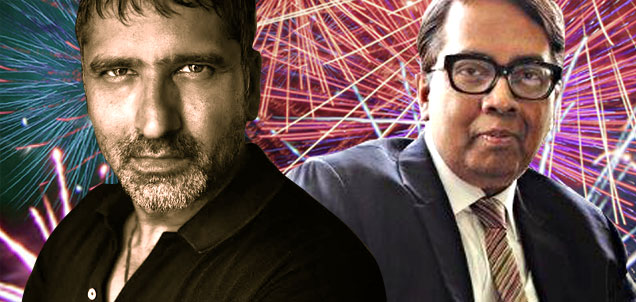
    It’s that time of the year when marketers maximise their sales. Well, they also happen at other festive occasions like Pongal, Ganesh Chaturthi, Navratri and Christmas, but it’s Diwali where large parts of the country that marketers converge to announce sales and special offers. Naturally, these are accompanied with high voltage advertising and attempts to woo customers. But does Diwali bring out the best creative juices in the ad fraternity? Pradyuman Maheshwari engaged Sonal Dabral, Chairman and Chief Creative Officer, DDB Mudra Group and Partha Sinha, Managing Director, Publicis Worldwide in a conversation to discuss this and more.


    Would it be correct to say that every year, Diwali sees the best of creativity coming out of Indian advertising agencies?

    Sonal Dabral: Diwali, like any other big festival, is the right platform for great creativity to happen. Whether it happens or not, is the case in point. Like this year, the output hasn’t been as creative as it has been in the previous years.


    Partha Sinha: I agree with Sonal, but it’s not only this year. Compared to the average creative standard of the industry, the standard around Diwali actually drops. We talk about multiple dimensions and multiple ways of looking at things, but when it comes to Diwali, it becomes very linear. I don’t know whether it’s a problem with agencies or clients, Diwali [results in a] sea of sameness. I’ve recently tweeted that if you take out the two words ‘Iss Diwali’ or ‘This Diwali’, the industry’s revenues will come down by 20 per cent. Diwali advertising is extremely formula.


    Dabral: Because of the emotions attached to Diwali, this is the best time to give out stories that engage, entertain move people. Instead, as Partho also said, all we see is noise and noise. Diwali is not just about crackers and sound; the noise actually starts to happen on television itself.


    Or in the newspapers, where you have jackets upon jackets upon jackets. But do you think the sea of sameness that you mentioned is also there in the west around Christmas and New Year?

    Sinha: I disagree there. There is lot of boiler-plate advertising during Christmas and New Year in the West, but a lot of brands come up with fantastic work at this time of the year. Even if you go way, way back, the reason Santa Claus wears red clothes started with a Coca-Cola promo. We’ve had great Diwali ads, but they are few and far between compared to the West because every year, during Christmas, there are at least one or two pieces which are out of this world.


    Would you say the reason creativity dips is because the emphasis is more on sales and making people consume more?

    Dabral: Yes, definitely. So much of buying happens that marketers see this as a time to maximise their revenue. With e-commerce companies coming in, it’s becoming a game of ‘how big my logo is’, and how loud can I be. My agency, DDB Mudra, did the Big Bazaar commercial where we talked about fire crackers which create smoke and sound and asked, why not create sound with paper crackers this year? That’s the commercial that went out, and was loved by people. You can have creative solutions which connect with people.


    We spoke about emotions earlier. Many Diwali commercials are meant to be tearjerkers. Is there a definite intent to produce these kinds of commercials?

    Sinha: There was a time when every Diwali ad had a mother and a son or daughter who lives far away, and then there is Skype and some laddus exchanged. That was the formula for Diwali advertising. Brand after brand is telling this 30-second story which is soaked in saccharine and nostalgia. There seems to be no search for a new narrative, even though emotions are myriad.


    Dabral: Diwali brings families together, so emotions are considerable part of this festival. But the thing is that the people start to take it easy. Again, as Partho said, we are not trying to find a variety of insights, a variety of different stories around Diwali. It’s one kind of emotions being played around.


    Do you see a shift towards digital because the kind of audiences you are possibly targeting, are also out there on social media and various digital platforms?

    Sinha: What you are seeing on digital is a sad replica of television and print. They still use those marigold garlands and a little bit of starburst, and the 30-second things are becoming seven minutes long. That’s all. There is no attempt to get into a new narrative or even connect with people over social media in a different manner. Tell me one piece of communication or digital activity that has gone viral this Diwali? Perhaps only Gujarat Ambuja’s Khali. Point is, there is no dramatically new narrative even on social media.


    Both of you are masters of the craft. Why would you say we’ve only seen mediocre work during the biggest festival in the country? Why is there no outstanding work?

    Sinha: I think one of the key reasons is too much pressure on clients to reach their Diwai sales target numbers. If you take a little bit of risk, you don’t know whether you’ll meet your sales numbers. So you tend to hedge your bets when your stakes are high, and Diwali stakes are increasingly becoming so. The last two Diwalis haven’t been good, so people are hoping for a better one this time. But they won’t take a chance to connect with audiences in a different way. Whether it’s e-com advertisements or four jackets on a newspaper, it’s all just about discounts: Come buy now, that’s it.


    Dabral: I keep reiterating that Big Bazaar also had to watch its sales, but took a conscious decision to find different insights, different narratives to talk about the brand rather than just look out for sales.


    And do the multiple jackets in the newspaper work?

    Sinha: There is a running TV joke about this. That the only thing that can survive three jackets in Mumbai weather, is a newspaper. So whether it’s three jackets or two, in advertising and communication, everything should be there for a reason. If there is an idea behind using those three jackets, then it’s fine. But if the idea is simply to state that I’ve got more money and therefore I’m a bigger brand and you should buy from me, then it’s absolutely wrong and foolish. But that’s what is happening. Actually the three-jacket thing is really a marketing success — for the newspaper, that is.


    But they are obviously here to stay. Media professionals and agencies are still buying [this space] and advertisers still see some return on these investments…

    Sinha: I’m sure they do. But if you measure everything with the [yardstick of] money — the amount of visibility, or the amount of recall — then you’ll only come up with tried-and-tested things. Nobody is measuring returns on ideas. [In the West] everybody does Christmas advertising, but then somebody does something which is dramatically different. Then they get disproportionate impact on their brand and sales. If you go to the West, nine out of 10 ads look exactly the same during Christmas. It’s all about 30 per cent and 20 per cent off, and buying one to get two free. Increasingly, I think it will change; we will have landmark Diwali ads.


    Dabral: There is also a question of budgets. How much time and money are you ready to put into a certain piece of advertising? People have to step back and start to find newer, better insights and to see whether by doing these short-term, loud, ‘sale’ kind of ads, is you are building your brand. Or are you getting lost amid so much of noise, as is already happening


    Sinha: That’s a good point. The brand has to answer that question. Do you see Diwali as a tactic to get in there and get out quickly because people are in a spending mode? Or do I see Diwali as an opportunity because people are in a different frame of mind – they are happier, and [therefore able] to connect with things — that I use this opportunity to build a stronger affinity for my brand and turn it into successful sales? Many times, the answer to this question will determine what kind of communication will happen. One more thing. To cite a classic example, people believe to push a blunt nail into the wall requires a really large hammer. That’s what they are trying to do, rather than make the nail sharper. If you make the nail sharper, that is, with really good communication, you’ll need a smaller hammer.


    Thanks Sonal and Partha, and a Happy Diwali to you!

    Happy Diwali! And may we have really good advertising.


    A shorter version of this appeared in dna of brands on November 9, 2015. Catch the chat with Sonal Dabral and Partha Sinha that was aired on BrandStand on November 7 at https://goo.gl/Fpuuqa 


  • Design thinking is new Mantra for Brands


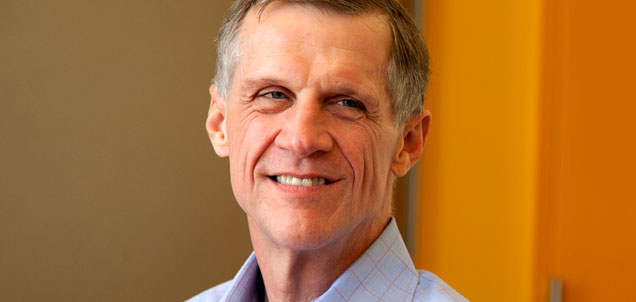
    Education in design has moved beyond traditional advertising and design agencies, as the emphasis is beyond just art and craft, but an all-new approach to dreaming up innovative solutions. In Mumbai to formally launch the Indian School of Design & Innovation Design which has a tie-up with the acclaimed New York-based Parsons The New School of Design schools, the New York-based school’s President, David Van Zandt, spoke to Pradyuman Maheshwari in an exclusive interview


    So what brings Parsons to India?

    We look at India as a growing economy. Already, a third of our students come from outside the US and India is a big provider. But we also think there’s a lot of growth here in India and it’s a place where the government is now [supporting] design [initiatives] in terms of pushing for it in the economy. So it’s a natural fit for us.


    Your second school outside the US was in France, and the third is here, so that’s a significant vote for the country.

    Yes, it is. We think of Mumbai as a global city that has a deep, cultural history and there’s a lot of making going on here. We think it’s a perfect place for design students to learn because design, essentially, is taking cultural bits and building on those to solve problems.


    But design is also misunderstood. People may be willing to pay for advertising, but they think design is just a logo here or there and can be done by any design or creative agency…

    Yes, but we look at design as more across-the-board. It’s a broader concept, about how to organise people, objects and environments to make the world a better place. That, at the end of the day, is about human behaviour, and the more our students know about cultural depth, the better designers they are they going to be. You see this in the industry now, with designers becoming an important part of new products. Google, for example, grew by hiring many great engineers, but a few years ago, it realised it designers to bring in a different skillset and it did that. In fact, one of our alumnus heads Google’s design lab in New York.


    At Parsons and internationally, which area of design do you find is growing the most?

    Right now, most of it is about making technology products more user-friendly. But across industries, people want to bring design thinking into their operations, whether they are product makers, service providers or something else. We’ve even seen governments bringing design consultants to help them change their processes and make things easier for citizens.


    At The New School, apart from just the skill, there is a fair amount of emphasis on academics and theory as well. So how much of the programme stresses academics and how much hands-on skills training?

    There are two parts to it. In our Bachelor’s programme — our first degree programme — about 25 per cent of the courses are in the liberal arts and social sciences, which means humanities taught by the social sciences faculty that we have. The other part is the research behind design itself, so are integrative seminars take place both in New York and Mumbai, students go out to research particular cultural features like try to go very deep before they get to design things that around or for that cultural feature. To be a good designer, you have to understand how humans behave and what’s going on in the world. And that’s how research impacts designing in the design courses.


    Given the kind of training students in the design school go through, do you see marketers and agencies using more of design school graduates in the future than advertising school?

    A lot of our graduates at Parsons end up in advertising-marketing sorts of companies. With social media and other forms of advertising, you are seeing a lot more design come in, not just in terms of pretty pictures making the print ad look good, but in terms of how do you reach the particular audience you need to reach and what’s going to – and that’s a matter of understanding how people interact with various media.


    How do you ensure the same Parsons’ experience for Parsons students here, because any educational institution is a lot more than just what is being taught…

    The key is really in the first year, and we replicate the first year programming and style of teaching [of the Parsons abroad] here in Mumbai. There will be differences, one, in terms of scale because we’re just much bigger in New York. Mumbai’s is also a different culture from New York so students have different experiences.


    And you’ll ensure the same standards are maintained?

    Yes, that’s extremely important to us. As a business proposition using the Parsons’ name we don’t want to have it diluted in terms of its quality. It’s the No 1 brand in the world, in terms of design education, so we want to keep it that way.


    Could you elaborate on how you will ensure the same standards?

    It’s in our supervising and overseeing of the syllabi. We will have faculty visits to follow-up on the teaching here and make sure it’s up to our standards. We keep a constant flow of information, and the curriculum and syllabi have to be passed through our faculty in order to be sure that we’re covering the same things, and we also care about the quality of the teacher. One of the reasons Mookesh Patel [Dean at ISDI Parsons] is here is because he has the experience of both and he’ll do an excellent job of maintaining that quality.


    Does a certificate from here get the same credit that a certificate of a student from New York would?

    Yes, if a person graduates with a diploma certificate here from Parsons Mumbai, it is certainly eligible for one of our post-graduate programmes in New York. Though that would require an undergraduate degree design.


    Yours is a private institute, not affiliated to any university. But it’s recognised as one

    In New York we have a lot more freedom so we care less about what the label is and more about what the quality of education is


    And in India it’s all about label.

    I know. Hopefully some day we’ll be able to actually offer our degrees in India, but at this point, we can’t do that and we just have to go on the quality of the programme.


    A shorter version of this interview first appeared in dna of brands.The interview also appeared on BrandStand as a part of a package on ISDI. Watch it at: https://www.youtube.com/watch?v=tr3EG7gXph4 


  • Mother of all Brand Surveys!


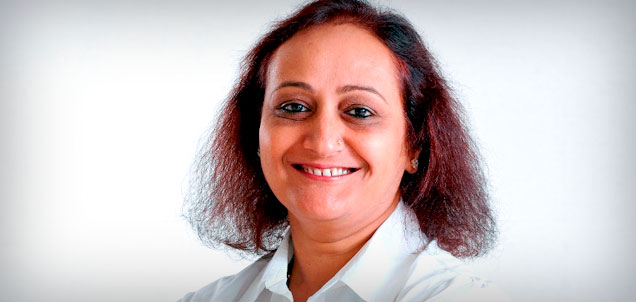
    You’ve read about the Meaningful Brands survey on MxM already. Here’s a link, if you missed it: http://www.mxmindia.com/2015/11/amul-is-indias-most-meaningful-brand/. Last week, we met Anita Nayyar, CEO of Havas Media India and South Asia at her office in Gurgaon, Delhi NCR, for a freewheeling discussion on the study and more. The study is so consumer-centric, that there is a valuable lesson in there for companies and their CMOs on how they can improve their brands’ standing, Nayyar told Pradyuman Maheshwari


    There are brand surveys and brand surveys. How is this different from the others?

    This is the mother of all brand surveys. The Meaningful Brands Survey looks at a brand in totality – how it is meaningful to people, the community or the market place. I think this is a complete study, and it doesn’t have the ‘most liked’ or ‘most popular’ brand type of thing.


    Except that what is meaningful to me may not be meaning to you and vice versa…

    So the study pans across three parameters – personal well-being, collective well-being and the marketplace. As a consumer, I need to figure out how a brand is more meaningful to me; collectively, how it is meaningful for society at large, and finally, does the marketing manager actually think his/her brand is far more meaningful try to project the brand in the marketplace that way?


    But how does the survey help a brand apart from the fact that it looks on the CMO’s CV?

    We don’t do this study for it to appear on the CV of the CMO. But we do take a lot of attributes into account when we do the survey: Pricing, packaging, whether the brand contributes to good health or not, whether it makes any difference to people’s lives, how it is doing versus its competitors and such. These attributes can be interestingly used by marketing, not only to look at brand health, but also in the communication for the brand. For instance, if the pricing is low, is it perceived as a low quality brand? When you get into the details of the study, you can get lots of cues from it that brands can use [to improve themselves].


    But in your Top 10 you do not have brands from the Tata, Birla and Ambani groups –brands that one would think are an integral part of the economy and are hugely trusted…

    This is the third year of the study and as we go along, we will add more brands. Last year, the Tata Group was also one of the top meaningful brands but as we added more categories, like food, [groups like] Amul became more relevant. The study also allows for year-on-year tracking, so I could figure out the meaningful brand index core for Tata, Amul or LIC. Whether they are going up or down or what is the attachment score for these brands. So, today, Amul is the most meaningful brand out of the 100 brands [we have considered] across the country, but LIC has the highest attachment score. That means if LIC vanishes tomorrow, then 86-87 per cent people will be worried and concerned.


    In the past few years, private insurance players have been creating some great advertising around their brands. Surprising, that this does not necessarily make them more meaningful in the eyes of the consumer…

    Yes, good creatives do not make you meaningful, good actions do. Take the case of LIC. When the Uttarakhand floods happened, LIC was one of the companies who was there doling out insurance monies and reimbursements to [the affected] people. When addressing why LIC is a top brand, we take into consideration, for instance, the ease of getting your reimbursements, the presence of that company during calamities and such. Today, getting insurance cover out from a private company is a nightmare. The ease of transacting business, the security people think a brand brings to them and obviously the trust, has led the brand to becoming a very meaningful one over time.


    Globally, Samsung is the No. 1 brand, but it’s #10 in India. Why this variance between the Global and Indian Top 10?

    That will always be there because brands which are important in one country may not be important in another. The relevance of the brand matters in the market. The classic example again is LIC; nowhere else is insurance as relevant as it is in our country.


    How come brands like Dettol or Colgate, which are such an integral part of our lives, and are also meaningful and helpful, don’t figure in this list?

    The oral care category is not covered. Like I said earlier, you have to look at the categories that we have covered. I am sure when we add more categories you will find Colgate or Pepsodent or Dettol or Lifebuoy there.


    Speaking of meaningful, shouldn’t some public undertakings, like BEST buses in Mumbai or the Delhi Metro, also be considered since they are important in the lives of consumers in these places?

    They should. But like I said, we will definitely add on more brands in the coming years. Three years ago when we launched the study, we had just 25 brands. This year, we have a hundred.


    As costs go, having 13,000 respondents across the country means this is an expensive endeavor. So are people paying for it?

    One of the issues with research – and this is not country specific – is that it costs a lot of money. We have not been funded by anybody to do this research, but invested a lot both globally and in the India perspective. Three years ago, we had just 25 brands. We have increased it to a 100 now, and in our fourth year, we will have 150 brands. So it costs us a lot of money and once we have more funds, we will be able to make the study more elaborate. We would definitely be happy for brands to take a little financial load off us, but we will continue to do the study nevertheless.


    A part of this interview first appeared in dna of brands on Nov 23. Don’t miss the interview with Anita Nayyar on BrandStand on Zee Business on Saturday, Nov 28 at 1.30pm and Sunday, Nov 29 at 7.30pm


  • Sounding out Brands, musically


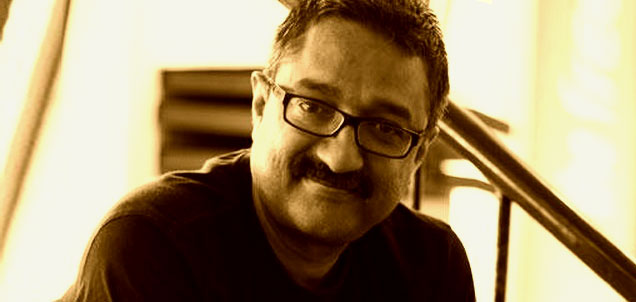
    Sonic branding, or creating recall and association for your product through a piece of music, is the next big ‘connect mantra’. Rajeev Raja, soundsmith and founder-co creator of BrandMusiq, who left advertising after 25 years in the profession to combine his two passions of music and brands, tells Pradyuman Maheshwari how a simple tune can bring alive the values and persona of a brand. And seals the argument by playing a few notes on the flute.


    There has been an amazing response to this mogo or musical logo of HDFC Bank. You hadthe entire staff humming it at the launch, including Managing Director Aditya Puri. Walk us through the process of how it came about…

    Music is a holistic way for brands to look at sound. But in my 25 years of experience in advertising, I’ve found that music is used in an ad hoc manner. You use it for a jingle but often don’t put in the ‘brand filters’ that you would normally put when you create, say, a visual ad. So we wondered if there was a space to look at a robust brand process which leads to the creation of sonic scape for a brand that is unique to its values and persona. And that really was the beginning of our entire thinking. Luckily for me, it brought together my two passions, brands and music. I have also been a musician for 25 years, so I guess I’m blessed in many ways that I had both these options for an alternate career even a bit later in my life.


    So the HDFC Bank work was done in three months?

    Yes. We didn’t compromise at all on the process, and I think Mr Puri, Kartik [Jain, the CMO] and the HDFC team need to be complimented on having the vision to [say yes to] sonic branding.


    One has a great relationship with banks, but it’s generally an impersonal one. You go to the bank, withdraw your money, deposit a cheque, get your statements and such. Why would they need sonic branding?

    I think every bank on the planet needs sonic branding, and that is the market we’re looking at. Today the bank is much more than a place where you keep your money. It touches your life in many, many ways, whether it is with investments or financial advice and relationship management. HDFC is already moving into the digital space with new innovations, but when it comes to emotion and engagement, music can play a big role. We believe that for a brand like HDFC, contemporary branding ideas are crucial and reflect the brand’s forward-thinking process.


    You have dealt with so many brands in this last 25 years. Why haven’t others opted for sonic branding?

    Because there has not been a process till now. We’ve worked out one out that understands the brand as if it were a human being. It is a way that brings the personality of the brand alive, in sonic terms. For instance, I am known by my friends to be a bit of a jester and a creative person at the same time. So if you want to translate [my personality] into a sound, what would it be? What kind of sounds give you a feeling of creativity, and what kind of sounds denote humour? Music creates moods and emotions. If you take any piece of music, it will trigger emotions like no other medium. If you use this powerful force strategically to convey the values and persona of your brand, what emerges is sonic branding.


    Brands pay a lot of attention to music in the form of jingles and signature tunes, but you’re taking it to the next level…

    Absolutely. We are looking at all branding parameters. Fundamental research shows music affects human beings and their behavior, but how does it affect consumption? We are going to engage a psychologist, an academic, a social scientist and musicians to create an archive. For example, we know that Indian ragas have certain [associated] emotions and that there is a morning, an afternoon or an evening raga, and we know that a raga will make you feel in a certain way, but nobody has codified it. So one of the things that we are going to do, which is going to be like a treasury for us, is to start codifying Indian music and also Western scales.


    How do you convince a marketer that this is good RoI?

    We do a simple thing in our presentation. We ask everybody to close their eyes [while we play some music] and tell them to just let the music allow certain images to flit across the mind and trigger some emotions and memories.

    [Plays a short piece on the flute]


    So did you see any images? Did it give you a feeling of calmness, of being transformed to a different plane? You didn’t feel this by accident. This is an early morning raga, and when we played it [at other places in the world, like] a summit in Moscow, people say they saw greenery, rivers, children playing. That they felt calm. This is how we begin to say that if music is thought of strategically, you can almost guarantee [a certain kind of] emotion and feeling.


    In specific terms, does that mean the HDFC piece will bring more customers to the bank?

    In the long run, yes. But I don’t think we should look at it in such a, shall I say, businesslike manner. More importantly, in today’s world, brands are no longer about being seen, but being experienced.


    And a better relationship with clients?

    Of course. If we hear a piece of music that is interesting, nice and makes you feel good, you start associating that mood with the bank. So over time, whenever that music is heard, you go into that mood. As far as sonic branding goes — and this holds true of any communication or branding exercise — if the pudding is not great, then it doesn’t matter whatever dressing you add to it. I think HDFC is a fantastic bank and it’s proven this through action. HDFC Bank has not, if you have seen, spent millions of bucks on advertising campaigns. It’s an experienced brand with a historic legacy, and every Indian today is embracing it.


    Ever since you moved out of DDB Mudra, you’ve immersed yourself in this BrandSoniq.  How has the business worked out for you?

    We’ve been in it for three years, and while the first year was encouraging, the second was disastrous. We wondered whether we had taken the right decision. But the third year has been amazing. It’s like suddenly the ball has started rolling, and in the last 12 months, we have finished about six big projects of blue-chip brands.


    So no regrets or possibility of going back?

    No, this is my new passion. And no regrets, only joy.


    The Rajeev Raja interview appeared in dna of brands on November 30 and in BrandStand on Zee Business on Nov 28 & 29. Catch the interview at https://www.youtube.com/watch?v=3Vne_zv_5K4 


  • Adspends in 2016 to grow 13%


    By A Correspondent


    Leading media agency network ZenithOptimedia says its growth forecast for advertising expenditure in India will be 13 percent for 2016.  Television largely fuels this at 15% and print – newspapers – at 10%. Digital is expected to grow upwards of 20% while all other media are expected to grow at 5-10%. E-commerce, telecom, mobile phones expected to have the maximum growth followed by automobiles and FMCGs.”


    ‘13% growth in adspends is a positive movement’


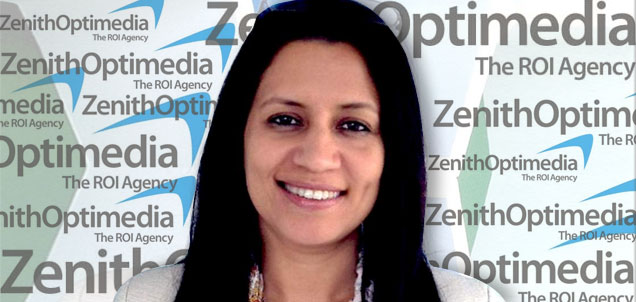
    Anupriya Acharya, Group CEO, ZenithOptimedia India on her agency network’s global spends forecast as she tells Pradyuman Maheshwari that the actual growth for 2015 will be at 13% as against 12% forecast last year, primarily driven by higher than expected growth on TV at 15%.


    You speak about rational optimism for the year ahead. But given your overall forecast for adspends as 13%, will you say that “achche din aanewaale hain” or would it be that “they could well have been ‘kharaab’, so be happy with this one”?

    The rational optimism is to contrast it with the irrational exuberance that was there last year this time given the new government. But to answer your question… I would say at 13% it’s a positive movement and if we have sustained momentum, it should go up further in the coming years.


    But even as forecast reports such as yours paint a rosy picture, friends in various media sales jobs rue that sales aren’t happening in right earnest…

    That’s right… at an informal level one can get different reports depending on who one is talking to. For example, most sellers will tell buyers that the market is booming and most buyers will tell sellers that it’s a tough market! :))


    Our report however is based on closely tracked data, including inventory sold, impact properties hitting media, annual reports of media companies, secondary research on economic parameters and key categories, actual movement on pricing coupled with market intelligence on key deals.


    Real estate for instance has taken a severe beating…

    That’s right… but actually sometimes that’s when it’s really advertised!


    Your forecast for 2015 was a 12% growth. How has it been in 2015 looking at actual spends. And what about specific sectors… the forecast % v/s actual?

    By the time we close 2015, it looks that the actual growth will be at 13%, primarily driven by higher than expected growth on TV at 15%.


    You’ve mentioned automobiles to see have a good growth, but we have seen modest rise there with very new brands too cutting price?

    Yes, as a category, AdEx on automobiles are quite volatile, say compared to FMCGs which are fairly stable in terms of growth/ degrowth. But this year we have seen a healthy 25% plus growth in automobile spends. New brands cutting price also need to advertise it!


    “In 2018 we expect the internet to overtake television to become the largest single advertising medium,” the report says. Would this apply to India too? And if not, by when do you think will the internet overtake television?

    It does not apply to India at this point in time. But if quite a few things kick in well and collectively like 4G, broadband highways, consumer’s earning and spending potential – and this coupled with the marketer-advertising fraternity accelerating their understanding of this space then it is not impossible to expect it in the next 7-8 years. I must also point out that interestingly, this is not because of slow growth of internet but because in India TV is also growing and far from saturation point!


    Lastly, given that we are the world’s largest democracy, second-most populous country… with a smart and creative advertising fraternity and have very active marketers, isn’t a matter of shame that we are sooooo far behind China?

    Well, China’s GDP is five times of India and their currency ten times stronger! We need to accelerate growth on all fronts in our country and media, marketing and advertising are a subset of it. Collectively, we can and we will 🙂


    ZenithOptimedia predicts global ad expenditure will grow 4.7% in 2016, reaching US$579 billion by the end of the year. This will be a 0.8 percentage point improvement on 2015: 2016 being a ‘quadrennial’ year, when ad expenditure is boosted by the Summer Olympics, the US presidential election and the UEFA football championship in Europe. “The global ad market has enjoyed stable growth since 2011, with growth rates ranging between 4% and 5% a year, and we expect it to maintain this pace for the rest of the forecast period,” the report adds


    Interestingly, while television is currently the dominant advertising medium with a 38% share of total adspend (in 2015), in 2018, ZenithOptimedia expects the internet to overtake television to become the largest single advertising medium. According to the report, one of the reasons for television’s loss of share is the rapid growth of paid search, which is essentially a direct response channel (together with classified), while television is the pre-eminent brand awareness channel – and we expect it to remain so for many years to come.


    Audiovisual advertising as a whole – television plus online video – is gaining its share of display advertising. Television offers unparalleled capacity to build reach, while online video offers pinpoint targeting and personalisation of marketing messages. Both are powerful tools for establishing brand awareness and associations. Audiovisual advertising will account for a record 48.4% of display advertising in 2015, up from 44.1% in 2010, and its share can be expected to reach 48.9% in 2018.


    Also, in 2018 mobile advertising will overtake desktop and account for 50.2% of all internet advertising. Programmatic advertising will account for more than half of digital display advertising (53%) for the first time this year, and will increase its share to 60% in 2016. “We expect programmatic advertising to grow another 34% in 2016 and 26% in 2017, at which point two thirds of global display will be programmatic,” the report adds.


    At regional  levels, Fast-track Asia economies (China, India, Indonesia, Malaysia, Pakistan, Philippines, Taiwan, Thailand and Vietnam) are growing extremely rapidly as they adopt western technology and practices, while benefiting from the rapid inflow of funds from investors hoping to tap into this growth. China accounts for 74% of adspend in Fast-track Asia, so its slowdown naturally has a large effect on the region as a whole. The expectation is for ad expenditure in Fast-track Asia to grow 8.9% in 2015, and at an average rate of 8.4% a year between 2015 and 2018, down from 14.7% a year between 2009 and 2014.


    Adspend growth is slowing down in three out of the four BRIC markets that were responsible for much of last decade’s ad market expansion. India – the only BRIC market – continues to combine rapid growth and large scale, making it a distinct hot-spot of adspend growth. The market is benefiting from sustained, healthy economic growth and strengthening personal consumption. With adspends growing at double-digit annual rates here, ZenithOptimedia expects the market to expand by US$3 bn between 2015 and 2018.


  • Indian adspends to grow 18.4% next year: Magna Global


    By A Correspondent


    In its latest report on the global advertising marketplace, market services conglomerate IPG’s strategic research arm Magna Global estimates that media spends will grow 18.4 percent in 2016. Media owner advertising revenues grew by +3.2% in 2015 to $503 billion. This is lower than the previous forecast (+3.9% in June 2015) and represents a slowdown compared to the 2014 growth (+4.9%).


    Erosion in shares is a reality even for television: Venkatesh S 

    Like every year, we posed a few questions to Venkatesh S, EVP, Director Intelligence Practice on the basis of the numbers and report posted by IPG’s Magna Global


    16.3 percent this year as against your forecast at this time last year for 2015 being 13.3 percent. And now a forecast of 18.4 percent growth next year? Way too optimistic, na?


    In 2015 both television and digital has seen unprecedented utilization. In the case of television, supply restrictions have been breached even by the networks which were following earlier. On Digital, E-commerce, M-Commerce, other services like Housing and Quikr and auto aggregators have increased their spends


    Digital will see a one off blip in revenue in 2016 thanks to opening of new advertising platforms from Instagram and Twitter. Content creators like AIB and TVF have seen success in audience acceptance. Native advertising is another format which will start contributing to the overall pie.


    Television adspends are going to be down further next year as per your forecast. What would you attribute this to?
    From +18.5% to +15.1% is because of the NRS (non-recurring spends) getting neutralised. 15.1% is a very healthy growth when globally TV is diminishing


    The total market share of all digital has just got into two digits even though growth is very high. Your comments
    Digital is still 1/10th of traditional spends and traditional is still growing even at its current scale. 17% market share in 2016 will give this category scale and by 2020 we expect the shares to equal print.


    From the 12th largest in 2015 to the 7th largest in 2020. Given that we have a population of a billion-plus and are the world’s largest democracy with a not-down-in-dumps GDP, this rise from #12 to #7 is pretty slow, right?
    India is in the bottom of the Ad Spend per capita ranking (at $7 compared to APAC at $40 and Global at $87). I think we have made progress in making media accessible to the entire populace through cable digitisation, mobile penetration, radio privatization, publishers expanding their edition network etc. On the measurement front too TV has expanded. This will aid media owners to monetise their audience and in turn grow the advertising economy.


    So guess the biggest headline forecast is that India will see market share of digital equalling that of print by 2020?
    This was expected to happen one day and not that print has stopped growing but digital volumes are attaining scale.  While globally digital is going to be the number one category in two years, India will take a long time to achieve this.


    You hope that IRS or some such study will help print win back market share in 2016. Since it doesn’t appear to be happening as of now, is the erosion here to stay?
    Erosion in shares is a reality even for television. Measurement permanency will help reduce the intensity of this and gives an opportunity for the 2nd and 3rd rung publications to get their due advertising share.


    So which sector was the biggest advertiser in 2015 (sports, e-comm, telecom, polls…)? And which do you expect to be in 2016?

    Sports have been one of the marquee content because of ICC World Cup. In 2015 while E-commerce has been the major driver of growth in 2016, E-commerce and Telecom will fight out for a larger share of media space.


    As China is slowing down ((slightly), India has become the most dynamic economy among BRICs and among all the large nations monitored by Magna. Real DGP grew by +7.3% in 2015 and will grow again by +7.5% in 2016 according to the IMF, with consumer price inflation at around 6% per year. In that context advertising spending grew by +16.3% in 2015 to 487 billion rupees (approx. $8 billion) allowing India to become the 12th biggest ad market in the world at the expense of Russia.


    In 2016, ad revenues will be boosted by economic stabilisation and the incremental spending generated around non-recurring even-year events (US Presidential and General elections, UEFA Football championship in Europe, Summer Olympics in Brazil). Magna Global is hence predicting ad sales to grow by +4.6%, marginally less than its previous forecast. Neutralising the impact of non-recurring events (NREs) in 2014, 2015 and 2016 (generating approximately 0.9% of extra growth in even-numbered years), the global ad market would have grown by +4.1% in 2015 and +3.7% in 2016, which suggest no real 2016 acceleration in the underlying ad demand, beyond the cyclical drivers.


    In terms of geographies, Asia-Pacific was the most dynamic region (+6.5%). Latin America and Central and Eastern Europe, once the fastest-growing regions, are both suffering from dramatic economic slowdown reflected in ad spend cuts (-3% in CEE, +3.8% in Latam). Meanwhile, Western Europe continues its recovery (+2.9%), while North America is slowing down (+2.0%).


    Of the 73 countries analysed by Magna Global in this update, 62 experienced ad revenue growth this year and eleven (incl. Russia, Finland, France, Greece, Peru, Singapore) suffered a decrease. The biggest contributors to the 2015 slowdown are the two BRICs countries affected by severe economic difficulties: Russia, where ad revenues are now expected to decrease by -12% (previously -11%), and Brazil (+4.4%, unchanged). On the other hand, the 2015 growth estimate for China, India and the US have increased. For 2016, only four markets are expectred to remain in the red while 69 (including Russia) will experience some level of growth.


    Asia-Pacific: this year +5.6%, Next Year +5.2%

    Media owners ad revenues increased by an estimated +5.6% in 2015 to $146bn, making APAC the second-largest region with nearly 30% of global spend. This is down slightly from previous expectations of +6.3%, despite the fact that growth was slightly stronger than expected in two of the region’s biggest markets (China +9.9%, India +16.3%).


    Growth in 2016 is expected to be slightly weaker, at +5.2%, due to continuing slowing of the region’s economy. APAC is now the second-largest global region, behind North America, having passed EMEA, with 29% of global ad revenues generated in the region. Given the high growth rates expected in APAC going forward compared to EMEA, the region will become increasingly critical to global advertising spend growth, notes Magna Global.


    APAC’s GDP growth is expected to be +6.5% in 2015 according to the IMF, down from +6.8% in 2014. Economic growth will again slowdown slightly in 2016 to +6.3% as China continues to transition to a consumer economy while India accelerates. Despite concerns about APAC growth weakness and the spillover to the global economy, it’s important to keep in perspective that it’s only modest slowdown and APAC growth remains significantly ahead of most of the western world, notes the Magna Global report.


    India: this year +16.3%, Next Year +18.4%

    Advertising revenue increases by INR 68 billion to touch INR 487 billion in 2015.  On the back of increased volumes, Television revenue will add +18.5% (Dec 2014 +11.9%) to reach INR 200 billion.


    While television market share is up by a percentage point (41%) Print goes down from 41% to 38% to touch INR 183 billion (growth of +7.7%). In 2016 Television is estimated to grow +15.1% and Print +8.2%.


    Digital formats continue to grow the maximum at +49% to touch 57 billion rupees and thereby increase its market share to 12%. Ad sales generated from Video and Social increasingly will be through mobile impressions while Desktop in the near future will still be the domain for Search and Display. Share of mobile from 32% will be close to half the pie in 2016. Programmatic outside of Search will grow +5.7%.


    Newer formats and revenue streams (Twitter and Instagram opening up new advertising and influencer management platforms), bandwidth expansion through 4G launch and traditional advertisers increasing their digital budgets will contribute to the growth of +67.3% in 2016.


    Radio with a market share of 4% will grow +14% in 2015. Through the expansion of foot print and there by volume is estimated to add +16% in 2016. OOH will grow +11.9% in 2015 and by another +10.4% in 2016.


    Magna Global estimates total advertising revenue to touch 576 billion rupees in 2016.


    The T20 World Cup, encouraging response from audience to non-cricketing leagues, state elections, 4G launch are some of the drivers for the advertising economy in 2016. E-commerce will continue to pursue GMV’s, most action will be seen in the telecom sector followed by Auto and FMCG advertising.


    Digital television and expansion of the measurement panel will allow advertisers to reach more consumers and broadcaster to better monetize their audience in 2016. While so far India is bucking the global trend of declining spends on Print by growing at a high single digit rate, Digital market shares are projected to equal Print by 2020. Magna Global hopes the 2016 round of data will get the currency out of the data dark period and aid the category to fight market share erosion. The second round of the Phase III auction, commissioning of the new stations won in the first round of bidding will keep radio top-of-mind, the report adds.


  • Trust before eyeballs


    Ajay Kakar, Chief Marketing Officer– Financial Services, Aditya Birla Group, feels there are two problems with the sector he works in. While the first is poor penetration and knowledge about various offerings, such as insurance or mutual funds, the bigger issue is that of building trust in your brand – and not necessarily through splashy advertising campaigns. If you have customers’ trust, you have them for life, Kakar tells Pradyuman Maheshwari


    So this is a season for financial services, for investments?

    The Aditya Birla financial group represents 10 lines of businesses across the financial services spectrum, and we intend to launch an eleventh, which is health insurance. While people view these as individual categories, ie, life insurance, mutual fund, banking, broking, wealth management and such, we see all of these as representing only one product category, which is money, and these are all shades of it. It’s like when Asian Paints advertises, you know they are advertising one product called paint, and they will have various shades of it.


    But money is possibly the toughest thing to part with.

    Yes, that’s why I started with that, and will then come to the individual categories. Interestingly, you will find certain common trends, whether it is a consumer site or industry site across all these verticals. First, imagine a category that is relevant to any and every person alive, and that is money. This needs no sell. Yet banking in India has got only 40 % penetration. I would have thought that everyone across the country, even in the smallest pockets, would have a bank account with, say, the State Bank of India. Yet that is not the case. Second, while all of us are busy selling our products and categories, very few of us are even thinking of selling solutions to either the customer’s felt or perceived needs. That’s why we advertise what we sell; we don’t advertise what customers buy. For example, nobody ‘buys’ a car loan. You want a car and the loan is a necessary evil. All of us are busy talking about what we have. We don’t try to understand the customer’s unique need.


    I believe the Indian financial services consumer is a financial simpleton, even though he may be globally aspiring, thanks to the media and the opening up of boundaries. And even the richest man may not have the time to manage his finances, let alone a common, office-going person. They want somebody to hold their hand and guide them to their dream destination. There is still a lack of connect between what the customer wants and what we offer, and that’s why [the financial services] penetration levels remain low. So we at the Aditya Birla Financial Group, decided to be different. The first thing we decided is that we must be an agent provocateur to help the Indian masses self-realise the importance of making money work in their lives. So that’s why we’re taking approach to customer with the entire spectrum called money and yes, we have products and solutions in every category. We are committed to being a broad-based as well as an integrated player.


    Your ‘Janoge tabhi toh Manoge’ campaign has been there for more than three seasons. Don’t you think people would tire of the same kind of message?

    Of course. But, first of all, ‘Janoge’ is a brand created for investor education and is directly related to Birla Sunlife mutual fund. Two, it’s a brand which tells me what’s in my best interest. We are wearing two hats — we are wearing the earning hat or the business hat, and we are also wearing the corporate social responsibility (CSR) hat. We want to tell you to buy our products and solutions but first tell you what is in your interest. Our commitment in ‘Janoge’ is investor power; making you learn how to fish, rather than handing you some fish. Second, we have found different facets in mutual funds in our three seasons. In our first season, we talked about how mutual funds need time though not a lot of money. Today, we are talking about a smarter way to benefit from the equity market. So we are changing our message with every season.


    When it comes to mutual funds, people look at NAVs, past performance, and which scheme will make them the most money. Given this, does advertising really work?

    We need our customers of Mass India to realise the cost of no action. Having taken a decision, you must act because not acting is going to make you miss the bus. You won’t get money sitting at home; you have to work at it. So be smart about it, take an informed decision. Brands capture the hearts of customers but the problem with our category is under-penetration. If we don’t understand why this is so, it will not work. The life insurance industry loses money if a customer leaves after two or three years. But If I’m in a hurry to make a sale, there is a chance the customer will, after two or three years, question his decision to have bought the insurance. So if you buy for the right reasons, you will stay for the right reasons.


    In the last few years we have seen a severe liquidity crunch and job losses. How much has that impacted the investment behaviour of people?

    Everyone needs money, and those who have it, need to know what to do with it. And this will always be the case, in both good times and bad. But a lot of financial services categories are fair-weather friends; they advertise when the market is good, and pull back when it is not. Imagine a doctor who will be ready to see you when you’re healthy, but is not available when you are ill. Customers want and need to see throughout the year. They need to know that what they are buying, is in their interest. If they trust you, they will stay with you for a lifetime


    There are a host of players in this business, and while some of them advertise, many others don’t. What are the most critical components to look at?

    Everyone has his own strategy. The Aditya Birla group is highly committed to building and nurturing brands because they believe brands abide for generations. They believe in investing across economic and sentimental cycles because they know that at the end of the day, the human being decides with his heart which brand to go with. There are three things you need to look at for this. First, are you fortunate enough to have and invest in a brand, to start with. Second is what you say, and third is how you say it. And I think we are blessed with all three. We don’t rest on past laurels but keep nurturing and investing in our brands. Advertising is not the end; striking a cord [with people] is. Our brand track shows that as against our investments — which are most conservative compared to our competition — our benefits have been the highest.


    What is your strategy towards promotions, in terms of percentage spends on ATL, BTL etc?

    A marketer spends where he can capture the most eyeballs, right? And that differs from category to category, and from brand to brand. In the financial services industry, you reach out to a relatively mature consumer, so you must target [people of a] certain age and above. To reach mass India, you must use mass media. About 70% of our marketing spends are on campaigns leaning towards mass media and television. Mostly television because we are not only selling categories, we are selling categories the emotional way. So print takes a back seat.


    How much of digital do you use?

    Last year, our life insurance campaign was a 3.5-minute film where we dared to tell a story, rather than have a regular ad. We dared to not plug our product or category, and we dared to invest heavily in digital, even though this reaches a far lower mass [of people]. This strategy paid off, and now three leading brands have followed us in quick succession with possibly the same strategy. It’s not the spends, but what you do with the spends. In financial services, the biggest award you can think of is the Midas Award of New York, where you only compete against the financial services ads of the world. We have won for five consecutive years. I believe that customers have given us the thumbs-up (if you look at our brand track scores) and I think the industry and our peers have given us a thumbs-up, going by our awards and recognition.


    How much of social media and content marketing do you use to influence the influencers?

    We have something called zipsip which is an instant and convenient way of investing in systematic plans of mutual funds. It’s in our portal. We have promoted it in a very big way and it has surpassed our marketing and business expectations. For that, we spent a lot because we knew it was a product for the digital-savvy audience in a digitally-savvy world. With our ‘Khud ko ker Buland’ campaign, we crossed one million views on YouTube within days. We were trending on Twitter on Day Two. Today, we have five million views by people who have chosen to view our film so the fact is we do work for our audiences, irrespective of where they are, and then we tailor [our campaigns accordingly]


    But YouTube hits and ‘likes’ are not verified, right?

    I would like to believe that in social media, you have to crank the engine and then see where you go. And the fact is, you can land up anywhere. For example when we had [cricketer] Yuvraj Singh talk about his illness on social media, I would like to believe that ours was the platform which was helping him spread the message.


  • It’s here! Netflix arrives, will storm screens!


    By A Correspondent


    In the glam town of Las Vegas, at the consumer electronics show CES 2016, Netflix co-founder and CEO Reed Hastings announced its famed service to more than 130 new countries around the world. Including India.


    “Today you are witnessing the birth of a new global Internet TV network,” said Hastings. “With this launch, consumers around the world — from Singapore to St. Petersburg, from San Francisco to Sao Paulo — will be able to enjoy TV shows and movies simultaneously — no more waiting. With the help of the Internet, we are putting power in consumers’ hands to watch whenever, wherever and on whatever device.”


    No comments on Indian partners: Netflix

    For one of the world’s most iconic media and entertainment companies, Netflix is curiously shy of the media. So when we asked the major’s media partners for an interview, we did receive near-instant responses except for to a question on marketing plan and possible premieres for India, but the attribution was to Netflix, no person. We’re publishing the responses as is, and as you’ll figure, there’s hardly any information given out. Guess for Netflix it’s the content that’ll do the talking. Read on….


    Is there an Indian partner?


    We would be unable to comment on private discussions with local partners. Any announcements will be shared with you and available at media.netflix.com.


    Can you name people in the senior leadership team in India?


    Netflix is based in Silicon Valley (Los Gatos, Calif.) where product development and engineering is the focus. The company’s second largest office is in Hollywood (Beverly Hills, Calif.) where the content development teams are located. In Europe, Netflix is headquartered in Amsterdam and in Asia, Netflix has an office in Japan and is planning its regional headquarters in Singapore.


    How many Indian movies? Right now one finds only Hindi movies? I couldn’t find any Tamil movies. What languages do we have?


    There is a limited amount of local content available at launch in some countries. We will add more as the service grows in popularity and we better understand what our members want to watch in each region.


    What’s the library for all movies and TV shows? Number of hours is given, but can you give numbers of movies and TV shows, stand-up acts etc?


    We don’t publish a number of titles because our offering is always expanding and changing. In 2016 we plan to spend about US$5B on programming rights, including many titles that will be exclusive to Netflix around the world. That includes more than 30 new Netflix original series (or seasons of existing series.) Most of these will be available to our members everywhere, exclusively on Netflix. That’s more than one full new season of a series every other week. In addition, we’re expanding our original film initiative, launching more than 10 films exclusively on Netflix in 2016. We also are adding more kids programming and documentaries.


    Any tie-ups with Indian film studios/companies?


    We would be unable to comment on private discussions with local partners. Any announcements will be shared with you and available at media.netflix.com.


    Are these films for India distribution or global?


    We’re working toward being able to offer a fully global service with a global catalog. Examples of titles Netflix has licensed, largely on a global basis include How To Get Away With Murder, Gotham, Jane the Virgin, Zoo and Breaking Bad. We still have territorial licensing, that’s a legacy from the last 7 or 8 years. We’re moving as quickly as we can to have global availability of all the content on Netflix so that there are not regional distinctions. We’re still somewhat a prisoner of the current distribution architecture, we’re trying really hard to get there.


    What’s the target for number of subscribers by end of 2016?

    We provide international member guidance and segment reporting on a quarterly basis with earnings announcements. Netflix ended Q315 with nearly 26M international members.


    Do we see any Indian language interface? Because that’s where the real growth will happen in India?


    Only English will be available in India for now. We haven’t made any decisions about what India-based languages will be added in the future. As we gather member feedback and better understand usage patterns, we will make decisions about what languages to add.


    Broadband speeds are still slow, even though the promise of 4G exists? Are you looking at any tie-ups with ISPs for cheaper bandwidth?

    Netflix automatically adapts the data rate of the video stream to meet the bandwidth available to the member at any point in time. The minimum required broadband connection speed for standard definition is 0.5 Megabits per second.


    For one monthly price, members around the world will be able to enjoy Netflix original series including Marvel’s Daredevil and Marvel’s Jessica Jones, Narcos, Sense8, Grace and Frankie, and Marco Polo, as well as a catalogue of licensed TV shows and movies. And some interesting Bollywood films too!


    In 2016, the company plans to release 31 new and returning original series, two dozen original feature films and documentaries, a wide range of stand-up comedy specials and 30 original kids series — available at the same time to members everywhere.


    “From today onwards, we will listen and we will learn, gradually adding more languages, more content and more ways for people to engage with Netflix,” said Hastings. “We’re looking  forward to bringing great stories from all over the world to people all over the world.”


    Netflix will not yet be available in China, though the company continues to explore options for providing the service. It also won’t be available in Crimea, North Korea and Syria due to U.S. government restrictions on American companies.


    Said Netflix Chief Content Officer Ted Sarandos who was also at CES 2016: With the Internet, global distribution no longer needs to be fragmented. It means that everyone pretty much everywhere should be able to see great films or TV shows at the exact same moment. The technology is there. It’s business models that now stand in the way. Great stories come from everywhere. We’re now working with local storytellers right now…


    Since Netflix launched its streaming service in 2007, the service has expanded globally, first to Canada, then to Latin America, Europe, Australia, New Zealand and Japan to include 60 countries.


    Netflix is available on virtually any device that has an Internet connection, including personal computers, tablets, smartphones, Smart TVs and game consoles, and automatically provides the best possible streaming quality based on available bandwidth. Many titles, including Netflix original series and films, are available in high-definition with Dolby Digital Plus 5.1 surround sound and some in Ultra HD 4K. Advanced recommendation technologies with up to five user profiles help members discover entertainment they’ll love.


    The month’s free trial ends on February 7, 2016. There are three tiers – Basic at Rs 500, Standard at Rs 650 and Premium at Rs 800. The Premium offers Ultra HD, Standard only HD, and Basic doesn’t offer HD or Ultra HD, just the standard definition. One can watch unlimited movies on the regular TV set, laptops, tablets and phones. While Premium allows for viewing on four screens, Basic and Standard are for one and two screens respectively.


  • Cleaning up India!


    By Ravi Balakrishnan & Ratna Bhushan


    The Swachh Bharat Abhiyan has been announced a while back. Why did it take you so long to come on board?

    First off all, I don’t think it took a while for us to get involved for the simple reason that we were doing it even before it was announced as an initiative by the government. While infrastructure is very important and necessary, it’s not sufficient. There has to be a change in habit, behaviour and in some very deeply ingrained beliefs. That’s where we come in. We have been thinking over what we need to do to leverage our expertise and make a positive difference. That’s where the seeds of Swachh Aadat leading to Swachh Bharat were sown.


    The inspiration came when we met Prime Minister Narendra Modi in February last year, when our global CEO Paul Polman was visiting. Mr Modi said you are doing so much work in rural India but what about urban India? Can you look at mass communication as a means of spreading the message? We went back to the drawing table, had a small team working intensively to understand this and came back with this urban behaviour change programme and mass media campaign. ‘Haath Munh aur Bum, Bimari Hogi Kum’ is something we want to see on everyone’s lips


    What sort of a role do you believe company like yours has in such an initiative

    Over 90% of households use one or more of our brands. Our reach is extensive and small actions make a big difference. Swachh Bharat Abhiyan is not something the government or a corporate can do alone. A company like ours understands our role in society. A healthy society is imperative for business to succeed. And that is ingrained into our ethos of doing well by doing good. Whenever we get into an initiative, it’s always thought through on how we make a meaningful impact and scale it up. We have been doing this and will continue.


    We don’t have a CSR department. We have integrated social responsibility into the conduct of our business. Unilever Sustainable Living Plan provides us the blueprint for us to achieve our purpose of making sustainable living commonplace.


    All our brand managers ask themselves how they can reduce the environmental footprint and improve societal impact of our brands. And so, the activities are in sync with the essence of the brand and not something superimposed or done as an afterthought. That’s where purpose becomes important: if it’s not linked, it then depends on the whims and fancies of a CEO or marketing head.


    How long before we start to see an impact?

    Mass communication on a campaign similar to Swachh Bharat continued for two decades from the 60s and 70s to the early 80s in the US before they could bring a change. We need to stay invested in this cause to be able to bring change in India on a mass scale.


    Source:The Economic Times

    Copyright © 2016, Bennett, Coleman & Co. Ltd. All Rights Reserved

    Licensed to republish


    Can Indian FMCGs do a #CleanIndia?


    By Ravi Balakrishnan & Ratna Bhushan


    How FMCG companies are getting their hands dirty to keep India clean


    Building Loos

    Reckitt Benckiser (RB): 25,000 toilets in partnership with the Swades foundation; adopting 200 villages to make them “open defecation free”


    HUL: Domex Toilet Academy builds toilets across MP, UP, Maharashtra, Odisha and Bihar in association with the World Toilet Organisation and social enterprise eKutir


    Dabur: The Sanifresh 700 se 7 kadam programme will construct toilets and is adopting fi ve villages to make them “open defecation free.” Catching Em Young:


    Catching Em Young:

    HUL: A pilot campaign in association with municipal corporations in Mumbai and Delhi aimed at school children, and reaching their parents via community programmes in slums:200,000 people by end 2015. HUL intends scaling up and expanding the programme through 2016.

    RB: Hygiene curriculum for 2.5 million school children comprising of 45 lessons over three years in four languages, covering personal hygiene, hygiene at home, school, the neighbourhood and during illness.


    Cleaning Hands:

    HUL: The handwash campaign has impacted 60 million people since 2010. In the model village of Thesgora, HUL claims to have brought down deaths by diarrhoea from 36% to 5%.

    RB: Distributed hand sanitizers and liquid handwash during the Kumbh Mela.


    During a brief stint in advertising, I worked on an AV to publicise an initiative one of our clients, a FMCG, had run in rural Bihar. Agency and brand had hit on the idea of pushing hair oil on the back of a cleanliness drive: hook the consumers in with messages and suggestions for a healthier life, and then switch to hard selling product. And yes, rope in some of the youngsters to be “cleanliness ambassadors”, rewarding those who volunteered with a goodie bag. It was hoped that the freebies would motivate them to drive cleanliness in the village long after the company with its vans and hectoring promoters moved on. The activity wound down in the early months of monsoon. But as we cut the AV, we thought it would be a good idea to check back with the volunteers and see how they’d been doing. It wasn’t.


    Let’s just say the volunteers, mainly young women, were motivated more by a tote bag than by an abiding commitment to sanitation. Many of them never expected to be asked to give an account of themselves, especially on camera, some five months down the line, and their only response to our questions was to stare in blank horror. The problem was less with the youngsters and more with the structure of the programme: a mistake that more companies than just this FMCG made.


    For too long marketers dallied with causes. Cleanliness, especially in the rural context, was and remains a perennial favourite. But very few firms have either the budgets or the commitment to see it through to the end. Mainly because there really is no end; at least none that’s in plain sight.


    Starting off on a slightly gimmicky note, with its selfies with brooms and a pay it forward style campaign liberally inspired by the Ice Bucket Challenge, the Swachh Bharat Abhiyan has finally got champions in the FMCG industry. Reckitt Benckiser was the first off the bat. And more recently India’s largest FMCG Hindustan Unilever has come up with a massive campaign driving the clean agenda, as has homegrown FMCG major Dabur.


    There are some obvious places to start and pretty much every FMCG worth its salt is partnering in educating people, particularly children and in the building of toilets (See Being Swachh). Not just FMCG; the Confederation of Indian Industry committed to building 10,000 toilets. Oil and coal PSUs claimed they’d build one lakh toilets in schools across the country in a year. The Bharti Foundation and TCS pledged Rs 100 crore each.


    However, the problem is not only about infrastructure. On a rural visit, Sanjiv Mehta, MD and CEO at HUL discovered that while several households had toilets, they weren’t used regularly. He got flippant responses from people who claimed they liked the idea of going to the bog in the open with their mates, but a response that resonated was from a person who said he didn’t want his wife to clean a toilet and so avoided using the one he had at home. A study by the National Sample Survey Office published in November last year found only 46% of the 95 lakh toilets built in rural India were used for their intended purpose. The problems range from the infrastructural: toilets with no running water to the ideological.


    Which explains why HUL opted for the multimedia and on ground Haath Munh Aur Bum campaign, focusing on handwash, pure drinking water and clean toilets, in the hopes that the same behaviour change model that got people to shift from soaps to shampoos may persuade them to adopt healthier habits. HUL is gunning for a 3% shift in awareness post the activation. The branding is, by FMCG standards, subtle. HUL is not ending its activations with sampling and sale, claiming it would rather people adopt habits than specifically push brands via this initiative. To the point where at a recent event in a school in Mumbai, when a few kids began to sing the Dettol jingle as promoters spoke of handwash, no attempt was made to “correct” them or push Lifebuoy instead.


    It’s of course a little too much to expect brands to do this for purely social reasons. Branding, though covert, is present in all HUL’s initiatives. Reckitt Benckiser managing director Nitish Kapoor says: “Over the last one year, we have made a considerable progress in driving behaviour change towards hygiene and sanitation.” But Reckitt-Benckiser has seen an uptick in sales too following its linkage to Swachh Bharat.


    The cleaning industry is poised to experience 30% growth according to Ken Research’s India Toiletries. Praveen Khandelwal, director at Pranay Impex, says: “The home cleaning equipment industry stands at Rs 4,500 crore and has potential to scale up 20%-30% annually.”


    Which is why marketing consultants like Market Gate’s Shripad Nadkarni believe the association with Swachh Bharat stands to benefit the brands to a greater extent: “Unless you are committing huge amounts of money that you’d normally put aside for CSR it becomes tactical. I think the issue with Swachh Bharat is more social than personal.”


    For years, marketing has laboured under the bad rap of being an industry that convinces people to “buy things they don’t need.” Which is a little disingenuous because people obviously need the products they buy for reasons that go past the merely functional. Beyond profit motives and good intentions, it boils down to this: do Indians believe they need cleanliness, hygiene and a Swachh Bharat as much as they need a new toothpaste? The behaviour change model touted by companies has succeeded since the changes were relatively easy to make. And setting aside the HUL catchphrase of Swachh Aadat leading to Swachh Bharat, there’s a yawning chasm between personal hygiene and a clean country, where our rivers and outdoors are not choked with trash. It remains an area where no brand, however intent it is on a Swachh Bharat, has dared to tread so far. Any takers?


    Source:The Economic Times

    Copyright © 2016, Bennett, Coleman & Co. Ltd. All Rights Reserved

    Licensed to republish


  • There are sharks everywhere, I am one too: Rohit Ohri


    Ever since it was announced in July last year that Rohit Ohri would take charge as Group Chairman and CEO of the FCB Ulka agency network there has been a buzz about the winds of change that we could see blowing in the 54-year-old agency network. After all, it’s got clients which have been around for several decades. But, as it happens, several senior hands have either retired and Ohri’s predecessor Nagesh Alai has taken on a global role. Rohit Ohri joined the agency on January 4 and spoke to Pradyuman Maheshwari three days later in his Nariman Point office hours before addressing the team in a townhall. In the interview, Ohri makes a reference to partnering Shashi Sinha and media agency Lodestar. Sinha, it may be noted, is CEO, IPG Mediabrands India of which Lodestar UM is just one of the many arms, albeit a significant one. The day-to-day operations at Lodestar are headed by its CEO, Nandini Dias.


    Excerpts from the interview:


    So what made you join FCB Ulka? What was your perception of the agency when you took the decision?

    This is a question a lot of people have asked me. And you know one of the reasons I decided to join FCB was the fact that it was the people and the quality of people in this organisation for the longest. I have the deepest regards for Arvind Wable as a friend in Delhi, for Ambi, Nagesh. And Shashi. So you know there were bunch of people with a great degree of integrity. And not just integrity in terms of professionalism but also intellectual integrity. They have always kept that as you know like the holy grail of the FCB. And to my mind I had the deepest regard for it because one of the most important thing in an agency is the quality of people there you know. And fact is I have seen lots of people now at senior levels, mid-levels and junior levels and there is a lot of integrity and honesty. There’s a very ‘let’s get the work done’ and ‘let’s not get in to politics’ kind of environment here, which is really for me kind of like home you know.


    So unlike an advertising agency, right? You need to have some fun, some politics, a little bitching etc. Is it too sanitised?

    Yes, but that’s what I think I will bring here (laughs). But there are a bunch of really good people, which is the biggest reassurance. Honestly, in the five-month break I had before joining, I was wondering if I really need to go back to this again. Because transforming an agency from the inside, and creating a new culture in an organisation, is a lot of work, as my four years in Dentsu showed.


    Dentsu was a new project, but FCB-Ulka is a 54-year-old agency. You have some rather large and old clients there. If you tinker around too much, other sharks will grab the clients…

    There are sharks everywhere, but I am one too. With a lot of clients, we have a deep-rooted relationship, but as far as creativity is concerned, you need to stay current and fresh. So what I’m going to bring to these agencies is new energies, some fizz and fun….


    In fact, FCB Ulka is seen as a fuddy-duddy agency. It has done some great work, but in the past…

    It has done some absolutely fantastic work, even in recent years, for [brands like] Docomo. The idea is to add some freshness and newness. And I think that’s the reason the FCB Ulka board as well as the global management, wanted to bring in new leadership and look at some fresh ideas.


    But the fresh ideas need to come from a creative head, and right now you don’t have one in the agency…

    It’s fresh ideas not just in terms of what you are producing, but also when it comes to a way of working. To me, creative transformation is about setting a new culture in the organisation which looks at generating creative ideas.


    But that’s dramatically difficult to achieve right?

    Not really. Fundamentally, FCB is always been about solid ideas. I am really going to actually look at the big shift from solid and I think future is about not solid but liquid ideas. And that big shift is really about making ideas which actually work across the whole host of mediums. It’s not just in to television, not just in to traditional advertising but really about you know taking every single touchpoint and bringing that liquid idea alive for consumers at every single point.


    Have you identified anybody who can take charge as CCO?

    It’s only been my second day at work, I believe I am fast, but not that fast. Yes, we are thinking about it. I don’t think that one CCO, however, can come and transform the fortunes of an agencyThat model is kind of old model right. It is traditional advertising…


    There are not too many names to choose from…

    That’s a very traditional way of looking at it. I think it’s about getting a group of talented people together – from digital, those with media expertise or outdoor — and getting them to work together. And that’s what I mean about liquidity of talent. It’s about new teams starting conversations with clients and consumers. It is no longer about one person in today’s context.


    I have just come from a client meeting, and they told me that they don’t want that one big film any more. They want to see a complete package, and I want to see that idea come alive across every single touch point. That’s the most important thing.


    You’ve obviously seen things change dramatically over the yers when you were at JWT…

    Absolutely and this is the new paradigm. This is the paradigm of liquid ideas, liquid talent, liquid networks and liquid structures. I am saying that today what we have to do is put the creative idea in the centre and then move along every single touchpoint. It is no longer that the creative agency sits in the middle and then the media agency or the activation agency they are revolving around that one single creative.


    So will we see a younger CCO? Sorry to get back to the question again…

    I know that’s one thing you definitely want out of me! To my mind, it’s not about age but calibre. What I am looking for is freshness and a new sensibility.


    Are you sure your old clients won’t be upset about your speed of change?

    The clients are very used to the speed of change today, because they are in the market. For the next 100 days, I’m going to put a plan together after speaking to clients and getting their perspective on what strengths and weaknesses and delivery [systems they need us to work on]. I will also meet with people in the agency and understand what they consider their strengths and how we can move forward. So more than a CCO, Brand FCB Ulka needs to stand for something. We have a global positioning, but how does that translate for the Indian market, is the starting point. Fundamentally, in an elevator in one-and-a-half minutes, if I need to be able to tell you that this is the reason why FCB as an agency is what you need to work with. This is the reason why it is best in the game. So this very reason needs to be very sharply articulated and articulated in the context of today’s volatile world. And in today’s world the challenges are enormous in terms of communication.


    One of the things creating a buzz around your taking charge is about the change of guard, and what it would mean for the old guard in the agency. There are quite a few people who have been there for many, many years. Could you shed some light on what has been happening?

    Nagesh is now working global projects and directly reporting to Carter Murrey. I think Ambi retires in March, and with his depth of knowledge, he always been like the planning head of the agency. So we would like to recast his role going forward, perhaps making him a mentor on some of the brands he’s been working with closely. Arvind would also become a consultant and mentor. Both he and Ambi have spoken to me, and since this is a company they have built, FCB is like their life’s work, they would like to help in whatever manner required. So for the group, it is really about putting and knitting a lot of the agency together and making sure that all the offices, all the different verticals, work together.


    FCB Ulka has a lot of offices. Are you going to integrate some of them?

    Not integrate because FCB Ulka and Interface are separate agencies, and it’s important to keep that separation. But we are going to put a working methodology in place. To work closely with Lodestar, and the digital agencies FCB, then there are opportunities in activation. The fundamental cultural shift that I want to bring in, is the  resource and capabilities of thinking in a holistic manner.  But Shashi and I are going to partner and work together to take this thing forward. There are a lot of occasions for Lodestar and FCB Ulka to work together. So in today’s day and age, if you can leverage that, the value we can give to the client is enormous.


    This partnership thing sounds very good, but at the end of the day, one person has to report to the other. So how will that work between Shashi Sinha and you

    Shashi is not going to be reporting to me. Up to now, the agency has been like a brotherhood, with five people running it. And there was a seamless matrix… it is an amazing matrix.


    But even the ’Paanchayati Raj’ has to have one leader who will drive the organisation and whack the others into shape, if necessary, right?

    So clearly I am going to lead the creative agency, and he is going to lead the media assets. The whole thing is about collaboration. If you cannot work in a collaborative manner then frankly, you are not fit for today’s marketing environment.


    Six months or 100 days. When can we expect to see a difference in the agency

    That’s what lot of people have asked me. My thing is that I have entered the agency with no plan. There is no plan in my mind. How can that be?But you know the the worst thing would be for somebody to come into an agency with a preconceived idea of what he wants to do. I know broadly the objectives we want to achieve, but I will evolve a plan after getting a good understanding of what the business needs and what the clients want. If you have a plan and force it on people because you think it’s a good one, that would be the worst thing to do. It’s important to evolve a plan in partnership with the existing leadership of the agency.


    You have existing long-standing relationships with many clients. Do we see you pulling them now that you here?

    I think now my first priority is to look at our client base here. I think we’ve got fantastic list of clients and there are some deep, deep relationships. Protecting a relationship is almost a heritage. If you have 50-year-old relationship with a client, that’s really something to be proud of and something to build and grow. So the first port of call is about existing client relationships and that’s I am going to focus on. And of course when we go out, we will be looking at every other opportunity.


    The agency hasn’t done much on the awards circuit. It may have won some awards, but not too many. Do you see that as an indicator of the quality of work that’s being done?

    That’s a big conundrum and [references the] question of what kind of culture do we want to create. Are we going to chase awards for the sake of awards and do a lot of scams, or do we want to create famous advertising — campaigns that build famous brands and as a result, fame for the agency as well?


    Will we see you do any acquisitions?

    Yes, we will be open for them.


    You have been in Delhi and in Singapore. How do you feel about moving to Mumbai for the first time ever in your career?

    Oh, yes. I have built a career in advertising without ever stepping foot into Mumbai. When I was at Dentsu, we were building a Mumbai operation with the acquisition of Taproot and then Webchutney. But you know, Dentsu as a creative agency didn’t have much of a presence here. So I used to come to Mumbai, but infrequently. Now I will be here and I am looking forward to it.


    The move to Mumbai should be interesting. You moved to Delhi from Kolkata where the advertising business was headquartered in Kolkata…

    It would be very interesting. I find this city fascinating, especially the cultural complexity and diversity of people. I took a walk down Marine Drive this morning in an attempt to ‘embrace’ Mumbai (which you can’t do from a hotel room). And during the walk, I saw Mumbai and the spirit of the city and the beauty of the different types of people you see here. [In Delhi you only see people] from Jatland in Haryana. But here it was fascinating.


    Cleaner air too?

    Cleaner, yes though after the odd and even scheme, hopefully Delhi air would be clean as well.


    If FCB Ulka is a senior citizen taking a walk on Marine Drive today, what do you think FCB Ulka under Rohit Ohri would be like, a year from now?

    That’s a bit uncharitable, and really just a perception. If you meet the people here, they are all buzzing with ideas and talent. So it’s an unfortunate perception that has come about. And one that I would like to change.


    And no names of a CCO yet?

    No (laughs!)


    This interview first appeared in dna of brands dated January 11. The interview also appeared on BrandStand on Zee Business. Watch it at https://goo.gl/9QyIrM


  • ‘This is the best time for innovations’


    Drawing from her rich experience with brands in India, marketing consultant Anisha Motwani has written and edited a book of 20 stories of brands that have been successes in more ways than one.  With a foreword by insight specialist Santosh Desai and an afterword by innovation specialist Ranjan Malik, Anisha Motwani speaks to Pradyuman Maheshwari as ‘Storm the Norm’ makes its way to leading bookstores and e-commerce sites. Read on…


    Your book cover says that it carries the ‘untold stories of 20 brands that did it best’. Many of these stories, or case studies, are known in the industry; some even discussed in B-schools. So how are these ‘untold’ stories?

    These are known brands [but with] partially-known stories and some completely untold details. The brief to the business owners — and my subsequent interactions with them — led to certain revelations that you won’t find in whatever has been shared till now. The stories are as much about strategic manoeuvres as they are about human endeavour: Stories about ordinary people pursuing extraordinary dreams and achieving them. It has details of not just what they did, but also why and how.


    We have 20 stories in the book… any brands that you would’ve liked to look at, but weren’t able to?

    These 20 stories are the final set that went into publishing. I did also want to look at brands like BookMyShow, Himalaya and Maggi.


    Having studied the 20 brands and various more while shortlisting these, would you say there’s anything common to all of them and their success stories?

    After having written these stories, Ranjan Malik and I decided to take a perspective-building step back and noticed something really interesting. There was a pattern in the way these brands had gone about ‘storming the norms’ of their respective industries.  So if there’s one truth that these success stories prove beyond doubt, it is that industry ‘storms’ aren’t purely accidental. They can be made to happen by design and, perhaps, at will. There is a method to the magic.


    While researching the success stories, we discovered a factor that economists have known for long but businesses don’t: The issue of Total Surplus. One big secret behind most business successes is the stormer’s ability to spot the invisible, sub-optimal in the industry, and conceive a breakthrough that unlocks new total surplus.


    Tell us more about the ‘unique new framework for the industry’ that your book promises…

    Most organisations just go from one project to the next, or are too busy celebrating their success to pause and look at what lead to that success. We’ve did just that, across 20 brands. And hindsight offers some amazing insights. We’ve tried to decode the method in retrospect, and to help organisations apply it by design in their most high-challenge projects. We have outlined a five-stage methodology called the Storm the Norm Framework.


    Clearly innovation and thinking out-of-the-box is something everyone wants to do, but is it easier said than done?

    This is the best time for innovation. We will see more innovations in the next decade than we did in the last century. And there are two reasons for it.


    First, we have hindsight so we now know what has helped organisations succeed with innovation in the past. Thanks to these learnings, the strike rate of innovation in the future will be much better than it has ever been in the past. Our reason for developing the Storm the Norm Framework was just that, to develop a methodology after studying different kinds of organisations: legacy, challenger and entrepreneur


    Second, every sector has evolved well and has developed amazing technologies. There is enough cross-industry inspiration available. Today you simply have to imagine a fantastic scenario, and someone somewhere has already cracked the solutions needed to realise it. You often only need to create creative combinations. Organisations often don’t look beyond their own industries. Our aim with this book is to trigger cross-industry learnings and inspiration.


    Do you think global giants find it tougher to be nimble and adapt to the times because they have to follow a certain way of doing things compared to homegrown players who are less rigid?

    Both kinds of organisations have their own strengths and their own ways of succeeding with innovation. Constraints aren’t always bad; they force you to unlock new value within the defined boundaries. We have included both kinds of organisations in the book. Every organisation must find its own unique way. That’s why this book – to get a more nuanced understanding of what stormers do differently, and initiate your own storm the norm strategy.


    If you had to identify one brand (from among the 20) that has achieved more than the others, which one would that be?

    Each brand in the book has had its unique context and unique challenges. Each one of them has been amazing in its own way. They achieved the extraordinary and ended up surprising, not just the world but their own selves too. I can’t pick just one.


    This interview first appeared in dna of brands on January 18, 2016


    The Story of Success


    Extracts from ‘Storm the Norm’, a new book that recounts the ‘untold’ stories of 20 leading brands


    By Anisha Motwani


    A diverse assortment of stories that give insight into what kind of levers can be used to create a winner brand. Take for example chocolate maker and market leader, Cadbury. Everyone has savoured the taste of Cadbury Dairy Milk, and nearly every marketer worth his/her salt would be aware of the brand’s successful integration into the traditional-sweet-eating habit of Indians. But what strategies and actions went into achieving this? The Cadbury story documents how it all began with a big shift in thinking about business and growth. It is a lesson at many levels: a lesson on how a large and potent target audience can slowly become a roadblock for future business; a reminder that the path to growth need not always be through growing market share; a story of how it is possible for a foreign brand to become part of the cultural fabric without localizing the product too much. Equally the story showcases the magic that ensued when the brand adapted itself and created new codes that fitted more seamlessly with category and culture.


    Let’s change gears to a challenger brand now. When you think of great products, bathing soap is hardly the first thing that comes to mind. However, that is exactly what the Indian Tobacco Company (ITC) aimed to do, when it decided to penetrate the category with Fiama Di Wills. A really late entrant into one of the oldest categories in the country, the brand was clear that its foremost intent was to challenge the typical soap and create a sensational new product–one that was differentiated not merely by form, colour or fragrance, but also a concoction of ingredients and technology that Indians had never witnessed before. The Fiama di Wills story illustrates how some companies are clear that first it is critical to create a hero product. The bells and whistles and propositions and campaigns can come much later. In its endeavour to deliver a new, unmatched experience to consumers, there were so many stumbling blocks that the Fiama team had to face, so many occasions when it could have given up and created a me-too product and just used the ITC muscle to push sales. But it didn’t. It persisted every time it was tested, to ultimately emerge with a winner.


    Moving to another league of brands altogether–the young entrepreneurial businesses. While there are plenty of such success stories in India today, I have selected a few that have made a mark in more ways than one. These are businesses whose success is not simply measured in terms of business valuation or the fact that they are media darlings, but those whose start-to-date journeys hold vital lessons in doing business for everyone. For instance, Make My Trip. This is an extraordinary story of pursuing the dream of forever changing the way Indians researched, planned and booked their travel. From the days where vacation planning was a tedious project and life without travel agents and long ticketing queues unthinkable, to now, when online travel planning and purchasing is common practice, this brand has had a pioneering role in shaping the change. By riding emerging trends, taking sensible decisions when a large bulk of the market was not ready for their dream and fostering deep relationships with allied partners, Deep Kalra and his team strategised their way to success. Like a great movie, the journey had several twists and turns and a few occasions when the founder was tempted to sell or shut shop but chose to keep faith instead. What adds to the excitement is that the Make My Trip story is packed with not one or two but so many innovations across product offerings, service standards, technology, marketing and operations that one is constantly looking out for what next they did differently!


    Such remarkable lessons continue across other entrepreneurial brands as well. What these kinds of brands do best is to open up refreshing ways of thinking and going about their business, so they naturally offer many valuable lessons along the way. Like PVR, where Ajay Bijli turned the whole expectation from cinema theatre upside down. Until the 1990s, cinema theatres were mostly just a destination, and movies were the real deal. The theatre itself was just a venue for stories to unfold. But he changed all that. Not only did he introduce the country to the multiplex, he created a new era in movie watching, where choice, comfort, luxury and entertainment all came together to take the movie-goer’s experience to a new high.


    There are several more examples of such category transformation. Radio Mirchi, for instance, is a story of a turnaround of the radio medium itself; of how a boring medium from which expectations had remained unchanged for decades, turned cool and irreverent; and how entertainment found a new source. It is also a great lesson on how you can win many fans by experimenting all the way through.


    Many of you may not know this, but Raymond’s ‘The Complete Man’ broke the conventions of fashion advertising in its time. Then there is Honda two wheelers–a fabulous story of storming the norm in scooters and making Activa a resounding success, and then of how it carried with it its winning strategies post its joint venture with Hero coming to an end. On a completely different note is the story of Sprite, a brand built on communication, on strongly marrying youth insights with product truth, of turning an absolutely niche lime category into a mass brand.


    Similarly, there are Ford Ecosport, Axis Bank, Kissan, MTR Foods, Saffola, Real Juices, Sensodyne, Tata Tea and Mahindra XUV500. Each of their growth stories provides insights into creating a storm in their respective categories and achieving outstanding results. Some successes are based on distribution, some on product, some on communication, while others are based on core business models. There are stories of reinvention, of strategies on market expansion, and some even of using weaker siblings in the brand portfolio to fortify overall business. 


    Published with the permission of the Author/Editor

    Storm the Norm: Untold Stories of 20 Brands that Did it Best

    Written and Edited By Anisha Motwani

    Hardcover, 320 pages

    Published by Rupa Publications India


  • Soon mobile will be 2nd biggest medium…


    With a surge in growth to 14.2 per cent last year and a prediction of 15.5 per cent for 2016, the good times are finally here for the A&M industry. FMCG and e-commerce have buoyed the sector by spending beyond expectations, while digital is another lucrative opportunity lurking just around the corner, says GroupM South Asia CEO CVL Srinivas as he talks about the This Year Next Year (TYNY) report for 2016 with Pradyuman Maheshwari


    With a 15.5 per cent growth forecast for 2016, would you say it’s ‘achche din’ for the industry now?

    It’s definitely good; in fact it’s been good since last year. Last year, we grew at 14.2 per cent as an industry in 2015, over 2014. This year we are seeing it go up to 15.5 per cent.


    Your prediction at around this time last year, was 12.7 per cent. So what led to the 14.2 per cent growth?

    There were two or three sectors that spent much more than projected. The first was e-commerce. While most studies did predict that e-comm will be a top contributor to growth, across the board there was an underestimation of what the quantum of spend would be. The other was FMCG. Don’t forget, today,  FMCG is supposed to be 30 per cent of the adex, and an increase of a couple of points here or there, leads to quite a swing in terms of the overall number. Despite all the pressures we were going through in 2015, FMCG as a sector continued to invest overall in brand-building through the year.


    The adex percentage for e-commerce is just 8.1. Does that mean it wasn’t as much as we all thought it would be given the large number of jacket and television ads?

    But don’t forget an 8.1 per cent contribution from almost zero two or three years ago, is a phenomenal jump in the overall adspend. Today it is a number comparable to other established and mature categories like auto, In fact, e-commerce is probably the third biggest category today, after FMCG and auto, in terms of overall spend. Not counting the government sector, of course.


    The government and the media sector account for almost 20 per cent, so that’s significant…

    The government sector, we believe, is going to contribute quite a bit in 2016 because of all the schemes that are being announced, and a lot of activity is happening both at the Centre as well as the states. There are going to be five Assembly elections in 2016, with related advertising spend in the regional media, making the government a big contributor this year. With media companies, there is competition today, with new shows and players looking to build their brands in Tier II and III markets.


    While mobile advertising is what will be the future. But the real numbers are still not significant enough…

    We are still growing from a relatively smaller base when it comes to overall digital and mobile advertising. It was close to 10 per cent in the price area in 2015, and in 2016, overall digital will be close to 13 per cent, month-end onwards, but we believe a lion’s share of it is going to come from mobile. The base is smaller, but given that it is growing between 45 and 50 per cent year on year, very soon we will see mobile becoming the second-biggest medium after television in terms of ad spends.


    When do you expect that to happen?

    It will take a few years, because in terms of absolute amounts, print as a medium is still pretty big. It contributes about 20 per cent to growth in terms of adex. There is still a lot of headroom for growth in certain clusters, and among certain audiences and markets. There are categories that are undergoing a phase of evolution where they will need print. So while it’s not going to happen in the next one or two years, we are definitely headed in that direction. Also, all the media players – whether TV or print — are establishing their own mobile platforms and becoming content providers across multiple platforms. We will have to start looking at some of these studies a little differently, going forward.


    Are there anxieties about media segments or any other categories that you think people should watch out for?

    I think overall the mood is still cautiously optimistic although we think it is slightly more optimistic than cautious at the moment and at an overall levelI think every medium has challenges when it is going through an evolution in its measurement system — whether it’s expansion, or loss of viewership or leadership to digital — and I think it all depends on how each of the players’ deal with the challenges.


    The prediction is that magazines are going to de-grow 14.8 per cent. That’s huge…

    Magazines have been under pressure for a while, and we have seen advertising money shift from them to digital. I think this sends out a larger message that [if you have content that is] available on the go, 24×7, consumers would rather have it in a format or device they are comfortable with. There has been quite a shift in consumer behavior and consumption of content, and whomsoever we advise, we suggest they transform themselves into digital entities, because many of them are strong brands with loyal readership bases. They have great content so the sooner they transition, the better.


    What is your prediction about how the various genres of television will do?

    We don’t put up those numbers because these are estimates and projections. But within different genres, it’s going to be a good year for sports with the ICC World T20 to be played in India in February and March, and with the IPL coming in after that.


    I think regional language channels would do extremely well. Regional clusters and GEC channels are continuing to do well because it is like carbohydrate for any media plan; they provide stability to the mass brand which is present in the market. Generally speaking, across the board it will be a good year for TV. In fact, TV had close to a 19 per cent growth last year, and we see much the same in 2016.


    You are saying today that the growth is 15.5 per cent. Could it be more, a lot more?

    We will review this in the middle of the year, and take stock in July. We will have actual data from about three months [by then] so we will have a better idea.


    This interview first appeared in dna of brands dated January 25, 2016