Category: INTERVIEWS

  • Filmy Tadka to Desi Chinese


    The poster of ‘RanveerChing Returns’ must have caught your eyes, since it is all over social media. If not, we are here to update you. When the first poster was released many confused it for a new film of Ranveer Singh, directed by Rohit Shetty. No, it is not a Bollywood film but a filmy new campaign for the Capital Foods brand Ching’s.


    The film has unique content innovations and promises to be a game changer in terms of how brand integrations are done in the category. It had a premiere in Mumbai’s Chandan Cinema where in several fans watched the first screening along with the entire cast and crew including Singh, Tamannaah Bhatia and Shetty. And within a week, it will premiere exclusively on Sony Entertainment Television.


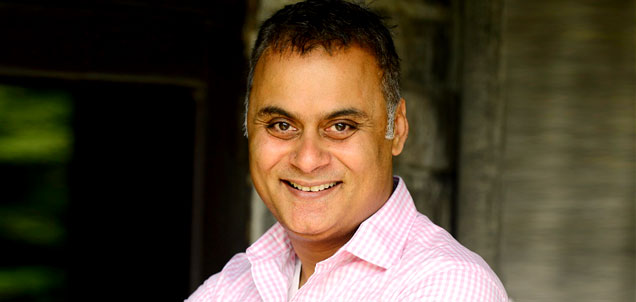
    The content and treatment of this film goes on to show how Ching’s has evolved as a brand. We spoke to Ajay Gupta, Managing Director, Capital Foods to know more about the brand’s journey and the new campaign.


    How has the marketing strategy evolved over the years?

    Since 1996, we have been focusing on a cuisine block called Desi Chinese. As the consumer kept evolving with experimenting with food outside in restaurants, we have been evolving the categories within the cuisine. Started with the most basic of sauces and hakka noodles and at some point we said the woman is ready to now experiment by cooking manchurian and paneer chilly at home. That is when the masalas came in. Then we saw an opportunity in soups. While there was soup in the market, it was at the premium end of the market. We ended up creating a single serve pack and going to the large mass consumers, creating a completely new consumer base for soups. And, somewhere down the line we also bought in noodles. Noodles came very late in fact. That is how we evolved our entire portfolio.


    Talk us through how the tagline – I love Desi Chinese – come about and how has it done for you?

    We all love Desi Chinese. The cuisine that connects this country from Kashmir to Kanyakumari, is Desi Chinese. You go to districts in Tamil Nadu and they may not have heard of tandoori but ask them about fried rice and chowmein, they know. Go up to Kashmir, you do an idli-vada, probably the idli will break your head, it is so tough but the chowmein is fabulous. And, that is a cuisine that has linked the country. People have called it with different names- Indo Chinese, Indie Chinese, we sat back and said we need to give it respectability now. That is where the line ‘Desi Chinese’ came up. ‘I love Desi Chinese’- it has connected with the consumers.


    What was the idea behind this new campaign?

    We went to Ranveer (Singh) and he agreed with us is because Ranveer and the brand marry each other perfectly. ‘I love Desi Chinese’ is what we want to own. This country loves Desi Chinese, not only in urban cities but in Tier I and II cities. How do you reach the masses? Through Bollywood. Go out and create a blockbuster. Who will make a blockbuster? Rohit Shetty.


    You came in at a time when there were other big players in the market. How easy or difficult was it for you?

    There were people who were doing sauces, there were people who were doing noodles but nobody was doing Desi Chinese. So, we have struck to a strategy, single-mindedly focused on everything that we do is around the cuisine Desi Chinese. We are a specialist when it comes to sauce and soup. I do not do all kinds of soups like others in the market do, we are doing Desi Chinese soups, sauces are Desi Chinese sauces, masalas are Desi Chinese masala and noodles are also Desi Chinese. So, I do not compete. I compliment them in the market.


    Ching’s has now moved on to sponsoring events and shows in a big way. So, what other plans do you have in store?

    You just saw a blockbuster (referring to the release of the Ranveer Ching Returns film). Give us a little time to sleep over this and enjoy what we have done and yes we will come back to you with something bigger and better. We are a hat ke brand. We do things differently and that is what you saw.


    When it comes to advertising, you have always been quirky and minimalistic in nature in terms of the scale and spend. Has it changed or still the same?

    The stereotype Ma-baccha is done to death. We keep saying we are a young country, so we need to talk to the young and the language they speak is the language we speak. We are a young brand, our core consumers are between 18 and 36 years, and we stick to the language they speak. We are quirky, fun and we are tadka. It is not about how much you spend. Good ideas and bad ideas is not about money. We create ideas; we spend the money and then bag those ideas. So, it is not really about how much money, you may get all the money and do stupid things, so, we spend enough.


    You were one of the firsts to explore the digital platform. How did you come up with the idea of experimenting in the digital space when others were still loyal to more traditional ways?

    As I said earlier, we are talking to the youth and if you are talking to the youth, where is the youth? Social media, all kinds of social media. We were the first who created one million fans on Facebook. We are very active on social media and we will continue doing that. If you look at this film, everybody has been talking in the last two years about these two or three minute films, then they celebrate when 50 thousand people watch it, they celebrate it on 100 thousand views. The trailer of our film has reached four million. Our strategy is very clear, we are there across. Where you spend money is not important, it is important what you are telling the consumer and how you are connecting it. We think we are connecting it right.
     

  • Our job is to challenge the status quo: Prasanth Kumar (+Video)

    It was a big haul for Mindshare at the Emvies 2016. MxMIndia caught up with Prasanth Kumar, Mindshare, CEO South Asia for a quick chat right after the event.


    395 points, Dho dala! Quite a clean sweep!

    Maine team ko 300 hi bola (I had told the team about 300). My team is wonderful. The success of Mindshare is only because of the army of talent on which it is built on. I am so happy and delighted that the dream of the ability to get fantastic outcomes. It is a fantastic moment for me and the company as well as the brands we worked for.


    What is the secret behind winning year after year?

    One is you are habituated to doing something different… you get habituated to doing something that is working for your brands. There is a sense of responsibility that comes from leadership and being a leader in the market. Our job is to challenge the status quo and get the work done for the brands. The end result is that we are winning awards.


    The body of work that you have done and won awards for can put a creative agency to shame

    The statement is wrong and it does not put any shame on any creative agency. Ideas, we believe, can come from anywhere. We are so lucky that we have talent who are able to bring in more and better results. We are not competing with any ecosystem; we are competing with the results we produce, we want success of all the brands we work for. If you have all the brands that you work for succeed, that is the ultimate success.


  • Design is crucial to reach consumers: Gabor Schreier, Jury Foreman, Kyoorius Design Awards (Text+Video)


    On the last day of the Kyoorius Designyatra 2016, the D&AD-backed Kyoorius Design Awards will be presented. The jury sessions took place from September 2 to 4 in Mumbai’s Ecole Intuit Lab. Gabor Schreier, Executive Creative Director, Saffron Brand Consultants, chaired the jury as Jury Foreman. Anuka Roy and Santosh Jangid India caught up with Schreier for a quick chat about the awards this year


    The judging process of Kyoorius Design Awards:

    The judging process works according to the criterion established by D &AD and Kyoorius Awards. We go through the whole work from the beginning according to the different categories submitted. First, we screen everything and how they look like and how they work, this becomes the part of the first selection process. We then go through it and look what goes in to the book; this is for the Baby Elephant. After that we discuss the Blue Elephant, what is good to go the second round. Obviously, after that what is the best of show for the big award- the Black Elephant.


    Trends spotted this year:

    Many different things and categories from logo design to environmental work, so it is a little bit difficult because some pieces you have physically in front of you and other pieces  you just have to trust what you see and what gets submitted, whether it is a video or image and you have to trust. Every year is different and I have been judging this a couple of years ago and you can see global trends get repeated and also in India you got a strong cultural component, you have a lot of projects that have social component.  I would say, graphic design in general is very much sort of global trends getting repeated and things that you have seen before. Some things are there that stand out and emerge. They are excellent design and obviously some basic things that we have seen before, it is sort of representation of what is going on in the country right now.


    Importance of design from the marketing and branding perspective:

    Design is the most importance thing. Design is what gives the strategy, if there is one, a body. If the strategy is a structure, the design is the body. So the body needs to be the thing that makes me want to interact with the product, the interface, the design, that company, with whatever we are talking over here. Design is absolutely crucial in order to be able to get an idea across in the most efficient and compelling way to attract consumers, audiences and attract attention of the targets that has been set for that product.


    Does design get the importance it deserves?

    No, obviously not, because now everyone is a designer. We have trends going on where people do outsourcing; they crowdsource logos and design. Design has become a sort of a task for everyone. Everyone has an opinion about designing which is somehow true because we are exposed to design every day. But there is very much a sort of inflation going on about design as well. So, here we are exposed to a lot of mediocre communication and this has been lowering our expectations.  We are now satisfied with almost anything.  It is really difficult because there are so many good designers and design conscious companies out there. There are so many people who are really in to valuing design and making aneffort that design becomes a part of the company’s culture. But it is a difficult task, especially if you have no clear design education. If design education is not good enough, you have obviously, the culture would not sort of react on design the way it should.


    India’s position in the world of design:

    If you compare the design, the branding sector in India with other countries, obviously, in my opinion India has great internationally performing companies that are out there that people know. Products that are used worldwide and I think still there is these companies have a long way to go until the design culture becomes more important to them. I think everyone knows about that because we have so many examples out there that people always mention the same examples. The good examples have been able to become good examples because through years and years of investment they have got where they are today. And, I think in India there is a big difference between the way people look at design, it is sometimes a decoration but it needs to fulfill a function and has to have a strong reason to be. Sometimes it is just a bit difficult to separate these two things and leave decoration with decoration and make a design which becomes a vehicle to give value to a product or an idea.


    Advice to participants:

    First of all it needs to be outstanding work and it needs to be good. It needs to withstand the competition; it needs to be well-explained, which is super important. We have seen lots of work that could have been much better but it was not properly explained. If you look at the board or a video, you need to cut through the unnecessary things and get immediately to the point. What was the idea, how did you get the idea across and how does it react to me. I think less is more and make sure that whatever you submit, it really capsulate the essence of the project and it makes the best aspect of the project come through in a very sort of a reduced way, it is absolutely crucial because you do not have time to go through everything in detail, you need to concentrate.


  • ‘ASCI decisions are not taken by the Board’


    On Friday (September 9), Srinivasan K Swamy, Chairman and Managing Director, R K Swamy BBDO, was unanimously elected Chairman of the Board of the Advertising Standards Council of India (ASCI) on September 9. Abanti Sankaranarayanan, Vice Chairperson, CIABC was elected Vice-Chairman and Shashi Sinha, CEO, Media Brands was reappointed the Honorary Treasurer. Other members of the Board of Governors are Al Rajwani (Managing Director & Chief Executive, Procter & Gamble), Benoy Roychowdhury (Executive Director, HT Media), Mr. Dev Bajpai (Executive Director Legal & Corporate Affairs & Company Secretary, Hindustan Unilever Ltd), D Shivakumar (Chairman & CEO, PepsiCo India), Gurmit Singh (Vice President & MD, Yahoo India), N S Rajan (Global Partner & MD, Ketchum Sampark), Narendra Ambwani (Director, Agro Tech Foods), Prashant Singh (MD, Neilsen India Region), Raj Jain (CEO, Bennett Coleman & Co Ltd.), Rohit Gupta (President – Network Sales & International Business, Sony Pictures Networks India), S K Palekar (Adjunct Professor & Advisor – Executive Education, Institute of Management Technology), Subhash Kamath (Managing Partner, BBH Comms India) and Sunil Lulla (Chairman & Managing Director, Grey Worldwide India). Anuka Roy caught up with the new ASCI Chairman for a quick chat:


    On his new role:

    ASCI is fairly well-known. There is no advertiser or agency of consequence that has not been told that their ad is somehow misleading or offensive. They all know because they have been hit by ASCI at some point. My real task I do not think is to talk about what is ASCI, that is known. The important thing to tell people is that ASCI’s decision is not made by the Board of Governors of ASCI but is made by something called Consumer Complaints Council (CCC) and what is more relevant there has members from the civil society. The majority of the members are from the civil society that means consumers activists, educationists, lawyers, doctors  – they constitute the majority in CCC. Only some people are from the advertising industry. These people look at advertisements and figure whether they are misleading, offending and then they take the decision. So, they are the ones who take the decision. That is something I would like to take an important part of the agenda to tell people who adjudicates on passing a campaign and hopefully that would set the record straight because the general perception is that ASCI is being influence by the people in the Board of Governors and their mission is against one competitor because the Board influences the decision. That is something I would like to bring in front, so that people know what is happening here


    His agenda as the new ASCI Chairman:

    To talk about CCC. There are many things we need to talk about with respect to what it does. For example, when a mission is given, that is an appeal process, you can then get appeal.  When the matter is very complex, you have experts coming in briefing the CCC members about the complexities, whether it is technical or a complex thing they cannot understand, expert is called in. Based on that, CCC members actually take a call. So, there are many things which we can talk about. And, of course we have regular issues like someone will take us to court; we will have to figure out what our strategy will be to defend ourselves. There are all these government bodies that are a part and parcel of us. If ASCI is finding a place in Consumer Protection Act then there is a lot work to be done.


    Any other new initiative to engage the consumer, like the WhatsApp initiative:

    The point today is not to get more complaints. We ourselves are monitoring the complaints. We have a group of people looking at all that is appearing in all important advertising categories to see whether an ad is offending or not. Even if you do not complaint, we will track those ads. The marketing of WhatsApp and all is more to engage the consumer but we have been tracking a lot more ads on our own.


    On the Patanjali controversy:

    Patanjali is taking ASCI to court, the court will decide whether Patanjali is right or ASCI is right. The fact of the matter is ASCI’s decision is not the Board’s decision, it is the decision made by people like consumer activists, journalists, doctors, educationists etc. So, the court will look at all the facts and decide. Advertising is a critical part of every business and is somebody is going to challenge them in running the business they will take them to court, it is a part of life and we will address it.


  • No designations, only good work


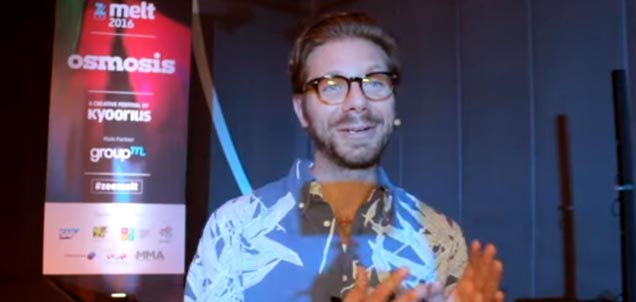
    One of the star speakers at Zee Melt 2016, Ted Harry Mellstrom, Creative Director at Forsman and Bodenfors,  took time out to speak with MxMIndia on the importance or rather the not-so-importance of fancy designations of advertising agency professionals…


    You say there is no need for designations, only Art Directors and Copywriters. Does that really work, because at the end of the day everybody has an aspiration to grow?

    From my perspective, it actually works. We have been working that way for more than 20 years and it has been working out really well for us. Businesses have growth and internal growth as well. I think the people who can work within this model need to want to do good work and that is the growth they can get. I do not necessarily think that you need another title to grow, you do not need a title in front of your name in a business card, it is not important. Important thing is to do good stuff and you will get rewarded for it if you do good stuff.


    Most big international agencies have several designations. How do you ensure that your people do not get influenced by it or the aspirations are taken care of?

    I think we tend to be proving that we can do really good work this way and the people who come to us and start working, understand that we work in a different way. You need to let your ego aside and need to just want to do good work and if the people who come want to do good work, they will fit in. But if people are more interested in making a career and get a nice title, they probably should go somewhere else because at our office we believe that the team together does the good work. We do not feel it is necessary for them to get another title. They will be rewarded in other ways.


    And, you obviously pay your people well.

    Medium, I would say. Probably I would say a little less than other companies.


    Is it just work, work and work that drives people?

    No, we also tend to look for nice people. We always say that we look for people we call talented and nice because you need to be humble about what you do. You need to like to collaborate, work with other people because we are sorting out problems together, we are working in groups. The only thing that is important is to solve the problem for the client and you need to leave the ego aside. So, we kind of tend to look for special kind of people who can handle that because many cannot. Some people just want to make a career. That is not the people we are looking for, we are looking for people who really want to do work because we find the work fun, we like the people we work together with.


    The fact that you were the most awarded agency in 2014 reflects the fact that it has worked for you. And, how has it worked after that?

    We were in the Top 5 in the best agency of the world this year. So, it has worked out quite fine. We won a Grand Prix this year as well. To be honest, three years ago we won a lot with Volvo trucks but this year we won several different times. So, we had a better year in Cannes this year than the year before, even though we won the best agency in the world. I think it worked out.


    What is your view of advertising in India?

    I have seen a little bit of Indian advertising. To be honest I am not so in depth with it, so I can say that the things I have seen are great but I have only seen a small part so I cannot make a judgment from what I have seen.


    Are you looking at setting up an office in India?

    No, I do not think we are but may be.


    For your clients in India?

    Yes and we are thinking about how to handle that since we tend to get a lot of more and bigger clients who are worldwide clients. We are managing that at the moment.


  • Zindagi takes on a new life


    Text and Video by Santosh Jangid


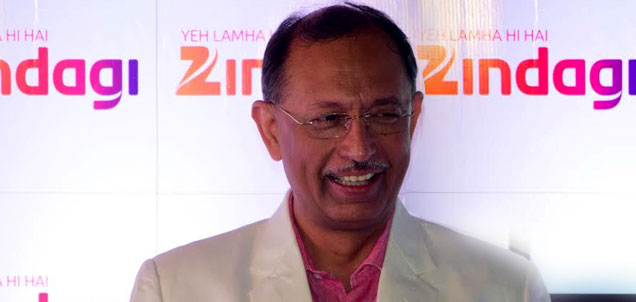
    Zindagi, the Zee Entertainment channel, is undertaking a renewed offensive. Having gained leadership over 27 weeks in the Alpha Club ratings from amongst premium entertainment channels, the channel is adopting a new credo and will see a renewed thrust on its differentiated content.


    Said Zee Entertainment Enterprises Ltd (ZEEL), Chief Business Officer, Sunil Buch who is also spearheading the channel: “Zindagi was launched with the promise of bringing the best shows from across the world to Indian television screens. Our compelling content has always been our calling card. A thought leader in premium entertainment with a distinct character, Zindagi presents finite world stories with bold narratives which unveil universal emotions. The Alpha Club numbers give us resounding encouragement that we are on the right path of providing premium entertainment. What sets the channel apart is its consistent commitment to show Finite, Real, Vibrant, and Premium world stories. Zindagi will enhance its slate of shows from October 3, 2016. Handpicked stories from India, Turkey, Spain, Italy, Pakistan, Latin America and Korea will now be available on the channel. For our bi-lingual premium audiences, Zindagi will also soon be available on a dual feed of Hindi & English.”


    “The channel’s positioning ’Yeh Lamha Hi Hai Zindagi’ mirrors the essence of the word Zindagi. Anywhere in the World,  Life is a finite procession of moments and it’s important that we live each and every one of them. There is no sense in doing Rewind – Play and lose our today, our moment in the quest of analyzing / living in the past. That’s the top line of the channel, literally. Again a departure from traditional base lines associated with most brands/channels and true to the thought leader grain of Zindagi,” adds Buch.


    An aggressive marketing campaign will be unveiled to across all traditional and digital mediums about Zindagi. There will be a roadblock across the Zee network of 33 channels on September 30. The publicity campaign will build advocacy through unique experiences that evoke the brand proposition and mirror the viewer’ premium lifestyles.


    Sunil Buch-speak:


    On the new tagline and how the content is different from other channels:

    Unlike many other brands, we don’t have a baseline because Zindagi is such an awesome name that we have a top line. Our learnings and evolution of the channel has got us to this place where we say that ‘Yeh Lamha Hi Hai Zindagi’. Life is all about living the moment and not doing rewind play, and to stop living in the past. There is a lot to enjoy and to look ahead and that’s what the new push is all about.

    Our stories continue to be thought leader stories, selected well, written very well, executed even more brilliantly, great casting, great screenplay, great dialogue writing and real. There is no typical stuff that you are used to seeing on the television and that’s what sets us apart.

    Essentially we are looking to have a 50-50 per cent of content on the channel where 50 per cent will be  indian content and the rest 50 per cent will be content from around the world.


    On how will Zindagi will ensure a significant presence in the space:

    We started off with Zindagi to be the channel for the whole world and if we look at the languages we speak, hindi has got a lot of Turkish and Persian. So our thought was, if there is world in a language why can’t there be world in a content. That journey we started off a couple of years ago by bringing Turkish shows which have had a resounding success, both Ferihaand Fatimagul. As we go along, as there is no dearth to great stories around the world, we will look into other countries like Russia, Spain, Korea, Italy and Germany. Wherever there is a great storytelling, we will look at it.


    On BARC Alpha Club ratings:

    In the alpha club ratings of BARC, we continue to be the No 1premium channel in the country. Our belief with this evolution is that the market is right for content which is differentiated, content which has done well. So we see that many people will come in fold with this approach of ours.


  • Tom Goodwin on digital media & the future


    One of the star speakers at the Zee Melt 2016 was Tom Goodwin, Senior Vice President of Strategy and Innovation at Havas Media. This was Goodwin’s second visit to India, and as in the past he kept the audiences of his sessions glued to their seats with his vision for the future and a reality check of the present. Excerpts from a quick chat with Tom Goodwin…


    In your session at Melt, you spoke about trends in the digital media – the goods and the bad. What is your view about the way things are in India?


    The famous saying by William Gibson about the future being here but not equally distributed… more than anything else as I travel around the world you realise how true that is. So, it is very easy for Americans to come here and to somehow think that the things are far behind here. There are some things which are very far behind here. But there are things which are way ahead of America and I also think that change will happen probably more quickly here as well. For example, if you look at the way the mobile phones are embedded in the culture of people here… When you look at people in terms of media consumption, it actually lags behind. The number of people that buy daily newspapers, for example, is something that has not been seen in the realm of a developed world for a long time. One needs to be mindful of the environment it creates and the degree to which companies can lead for a lot in the interim stages. It is very easy for China to build the world’s best railway network because they are able to invest in the very latest and very best and advanced trains which is why they have one of the best train structures in the world. It is interesting to look at what the equivalent infrastructure looks like for India. So, what is mobile banking like in an environment where banks have not built a vast system of high-end banks first. What does Uber or Ola look like in environment where people have not got high car ownership>  It is a very interesting market to look at how things can be very advanced very quickly. Retail would be a very good example of that.


    Why do you think there aren’t enough investments happening in terms of digital media spends?

    I think digital media has always been the next big thing and what we realised in some markets is that there needs to be a much more nuanced approach towards it. There is always a lag between new technology and how quick investment happens in that channel. Mobile is the best example at the moment where we find an incredible amount of time but investment in advertising is very low. So, what we are probably seeing is people learning from early mistakes that happened in other countries. We are seeing a certain degree of lag because that is how the world is. Probably, I am also seeing a slightly different demographic nature here where if you want to reach the mass market, it still may not be as possible to do so using digital channels and there are still huge numbers of people watching broadcast TV and reading newspapers as well, so it is a combination of factors.


    Consumption studies have claimed that print and broadcast are still going strong in India. So, traditional media is going to be here for long. Even the new media, for example Amazon, advertises a lot on traditional media.

    At the end of the day, India is a country that has 1.2 billion people and is going through a remarkable economic transformation with incredible amount of growth. So, unlike more mature economies, it is absolutely possible and likely and good that the entire advertising community grows. Traditional media will grow but it is also likely and sensible that digital marketing and channels will grow even faster. I would like to think of a world beyond digital and traditional split because if you are reading the Indiatimes on your phone, we are still reading quality journalism. I talk freely about the post digital age where you can shoot TV through streaming or broadcast or whether you are reading news on your phone or on your desktop or newspaper increasingly matters less. The distinction between traditional and digital will hopefully increasingly mean less.


    So, you are saying digital is going to get mainstreamed.

    I think in different countries in different times digital will become how virtually all mediums are delivered. Interestingly in India, the TV streaming infrastructure is pretty advanced. So, we are already seeing lots of people consuming TV on desktop and through the internet. If we look at the long-term future other than newspaper and outdoor virtually all media will become digital, it is a personal opinion of mine as Tom Goodwin. And, this differentiation between traditional media and digital will just become irrelevant. As it happens that digital is better, we got far more rich personal information, we get to see how people are behaving, we get to optimise and buy in real time. It is the best environment ever for advertising. So we should see a positive there.


    On a personal note, being a leading futurist yourself, don’t you want to do something bigger than what you are doing currently?

    I am lucky and have done quite a lot of things for the first time. I did one of the first mobile apps, the world’s first interactive digital ad. I feel very comfortable when I make things and less comfortable when I talk about things. At the moment, I really enjoy triggering a debate. I feel my role is not to have answers but to have really good questions and I enjoy going around the world observing behaviour and thinking about how things are changing and not changing and I like making things and more work that I can do for our clients. But for me as an individual I think I am an intrepreneur rather than an entrepreneur. I do not want to take on the massiver of risk and have sleepless nights making stuff when I already got an amazing job.


  • Benchmark to reach a consumer’s mind is getting tougher: Dinesh Kapoor, MD, Kantar Millward Brown (Text+Video)

    Text & Video by Santosh Jangid


    There are brands from large FMCGs like Surf or Ariel or Dettol which are as much Indian as any other international brand. They do appreciate local nuances. Aloo-tikki is the bestselling item on the McDonald’s menu. So how come we don’t see these popular brands  in the Brandz Top 10?

    The scope of Brandz in India includes Indian brands as well as multinational brands. We are including all brands that are available in India and are relevant to consumers because there is a consumer comprehend involved as well, so we are not excluding any brand. The framework would include any brand, so if we have selected x number of categories that we are going to include in BrandZ this year, we look at brands that are listed because that’s the only way we can get financial information about them and we will have a consumer component where we will talk about all those brands among consumers.


    The fact that an HDFC Bank has scored over various others for the third consecutive year underscores the strength of the brand. But it is hardly advertised… would you say there is a co-relation with advertising and promotions and brand salience?

    HDFC Bank has a large consumer base which is experiencing the brand on a day-to-day basis. The key element to success is how meaningful is the experience that you are creating for your consumers. Second element is: appealing communication which is getting your word out to the market. So, you have so many consumers, so many users, you’re building equity with them on day-to-day basis, you are meaningful, you are introducing new things in the market place. Therefore, communication is one of the things that helps you take it to your customers. Brands which have low awareness will have a bigger task in taking out to the consumers but larger brands are safe because of their size as they get out to consumers much faster.


    Why do you think that Airtel despite its large spends on advertising and some memorable campaigns has not been able to attain the top slot?

    In a consumer’s mind, when we watch a communication, we do not think – that this is a telecom communication or this is an FMCG communication. For us, it’s a lot of brands that are trying to reach us and we don’t watch it by silos or categories. All of the brands are trying to break into our minds to create space for themselves but only a few reach as there is so much competition and clutter, the benchmark is becoming tougher and tougher to reach into a consumer’s mind. So an ad has to be phenomenally good. It should connect with you, say something relevant and you should carry it with you when you buy it next time.


    It is interesting to say that premiumisation is key to the success of brands in the study. But in the final analysis, it’s dhanda or the revenues that matter, right?

    There are different niches in the market for every category. Finally it’s about money but which route I am going to take to get there is important. Some brands choose the route of premiumisation whereas some want to go with mass and want to reach as many people, gain share and some brands could do it in a different way.


    You say that brand loyalty is weakening, especially in urban centres. Would you say that is the case in rural India too?

    Based on the other work that we are doing for the clients, I would say probably that urban is a little different. Whenever you have more choice, then loyalty comes down because it becomes much more difficult to build loyalty when you have so much choice in front of you. In urban, probably there is a little more choice so loyalty could be a little lower but there is not too much to differentiate between rural and urban in India.


    Lastly, any standout features or trends of the Indian study vis-a-vis BrandZ in other centres? How are we different from the rest?

    The role of difference is becoming more important in India. It is more important now than it was 10 years ago, it is more important than other regions as well. So, just having a meaningful brand which is great is not sufficient now. You need to do that and also create a point of difference versus the next competitor so that finally you are chosen because finally it’s the customer’s preference. Personally for me, the difference was very interesting and the fact that it’s more important than the rest of the world is even more interesting.


    We couldn’t adding one more last question: given the way it’s growing, do you think Patanjali will be in the Top 10 next year? And at what slot?

    We need companies with financial revelation, financial information, so we are only looking at companies that are listed.


  • More efficiency & productivity with Kantar First


    Earlier this month, WPP group’s Kantar announced a new corporate identity and management structure. This meant that operating brands not previously Kantar-branded now have a Kantar prefix and a new, common typeface.  For example: Millward Brown, IMRB, and TNS will now become Kantar Millward Brown, Kantar IMRB, and Kantar TNS. MxMIndia had a detailed chat with Preeti Reddy, CEO of Kantar South Asia- Insights, who leads Kantar’s India & South Asia operations


    Congratulations on being elevated to the position of head of Kantar’s India operation as CEO of Kantar South Asia- Insights, and this in year after taking charge of IMRB. Can you talk us through the change that has been effected?

    The change was brought about as a end result of a strategy that Kantar Worldwide put into place where the strategy is called Kantar First and the intent is to try and offer clients the best of Kantar all the time and not only on occasions. Clients have been asking us to be more responsive, more agile and more collaborative because they realise that across Kantar if you look at the work that we do, the assets that we have, the people we have. The real benefit to clients come when we give them solutions that access excellence across Kantar. So, essentially the strategy was one of bringing in more efficiency and productivity and the ability to invest in operations which is the foundation of our business and shared services so that all the Kantar brands enjoy that and you actually have scale to be able to invest in technology for efficiency and productivity and then at the client end, offer clients the benefit of getting service from various brands that Kantar has.


    So you have all three working under Kantar umbrella?

    One of the key elements of this strategy was to create a management structure under Kantar insights which has three insight companies under it. In India, the three companies are – IMRB, TNS and Millward Brown. These are very powerful brands in their own right but what we are doing now is that we are saying that they all come from the stable of Kantar so all the brands will be prefixed with Kantar to say they are from the same family yet they are different and they are strongly differentiated. The values and benefits that each one of them brings are different, so clients will have the choice of choosing from the best, choosing depending on the business situation actually choosing the solution that each one of them offers whichever they think fits their requirements best and also in some situations, the solution may be one or two or three of the companies coming together to offer the client a solution. This is really a unique model and it’s a very powerful mix because you can come together when the client needs it and you can diverge when that is the solution that the client needs.


    The WPP group of which Kantar has several agencies run separately, often each of them doing things differently. Like in the case of creative agencies. And it also has media agencies under GroupM. So would you say the new Kanar – with the three  brands- IMRB, TNS and Milward Brown- will be a conglomerate like say GroupM?

    In a sense yes, because GroupM has various companies under the umbrella of GroupM. So, yes, it is similar to that and they each retain their individual branding and their individual identity so yes it is amalgams to that model. The other thing that we have done as a part of the strategy is  we are creating one another new brand in India which is going to be called – Kantar Public which will be launched in September, under which we will sit all the government and developmental and political work that we do


    While the objective of the integration is to facilitate seamless solutions to all the clients of the operating brands, how do you ensure that each company has its independence?

    They all have their own CEOs. They all have their own products and services. We are encouraging co-locations but even when we locate together they will maintain their separate identity. Also what each company stands for and how they deliver their service is going to be quite differently positioned.


    Could you talk to us about the individual companies – IMRB, TNS, Millward Brown. Millward Brown has a new head. Also, now that you have taken on a larger role, will IMRB have a separate business head?

    I took over IMRB in September [2015] and IMRB is very large and complex. Luckily for the person who runs IMRB, it is run by very senior people highly respected in the industry and they run their own units independently. So for sometime I will be the person heading IMRB. Kantar is also encouraging senior people double-hatting in some of their roles. Millward Brown has its own CEO, TNS has and I look after IMRB as well as South Asia.


    And will they compete with each other like a Maxus competes with Mindshare?

    Absolutely, in fact in 80-85% of the cases it will be business as usual where we will compete. In the balance 10-15% of cases where the real benefit to a client is because of the collaboration and there are many clients who are asking us for that. In the sense they appreciate what Millward Brown brings to the table, what IMRB or TNS brings to the table but they often also want holistic solutions. So we will collaborate there but otherwise yes, we will compete against each other.


    Since you are going to be leading Kantar, it would be interesting to know the services and best practices that would now be adopted and offered to the clients? For instance, how will Kantar IMRB be different from IMRB?

    IMRB will also be now part of a far more global network. Earlier, Millward Brown and TNS were already global brands whereas IMRB is a regional brand but it’s a very strong brand in the region. So the difference it makes to IMRB is that it is now part of a global network and we are looking to see if India as a county can actually can play a stronger role in Kantar. One of the key elements of Kantar’s new strategy is that they have identified nine countries which are focused markets because they recognise the importance of these countries and India is one of them. So India is important because it is a growing emerging market. It is also important because the three Kantar companies together have the highest share of business in this market. It is also an important market because given capabilities that we have in India it is absolutely possible for reverse innovation to happen. Instead of new thinking, new products new services coming from the West to us, we are saying that we are emerging marketing experts, developing marketing experts and we can do fragile, agile innovation for you that you can take to the rest of the world.


    Can you share some thoughts about Kantar’s immediate plans in the region. And how is it in other parts of the region – Sri Lanka, Bangladesh…. And is Pakistan also part of the region for Kantar?

    Pakistan is a part of the Meena region for us. It is very difficult for us to do business in Pakistan from here. It’s much easier to do it from Dubai. So that’s not part of the region. Bangladesh and Sri Lanka are in a sense microcosms of India and they are at different stages of evolution. To some extent they do look to India for new thinking, new products and services but at the same time many of our clients have; like MNCs and even our large indian clients have to look at the region as a whole for them. Servicing them across the three markets and ensuring that protocols are followed and that the best of Kantar is given to them in all three markets is actually a benefit for them.


    A word on the challenges that lie ahead of the insights business?

    Everybody in the insights business realised that the industry is undergoing a transformation because consumers are changing. Consumers are far more connected and are changing in ways that makes clients themselves now look for much quicker, agile and holistic understanding of consumers. So the first demand that’s been made on us is on speed and agility. The next demand that clients are making on us is that it’s no longer about do this survey and give me the findings. Consumers themselves are generating so much data through social media, through all the opinion that they offer so its about now integrating a multiple data sources of which primary questioning of the consumers is only one data source. The most significant change that’s happened is the connected consumer and digital and it’s because of mobile phones. Recognising that and being ready for that is really the most important challenges that we face.


    There are also a few new practices that you have announced… Kantar Public and Kantar Consulting. What is the roadmap for these?

    The three Insights brands are already there and they are strong. Kantar public has already been announced and will be launched in September. We have another brand in India – Kantar World Panel which has been there for sometime now. The other brands that are present globally but are not in India is- Kantar Health, it is there in a smaller way, There is a team which does Kantar Health work here. What is not available here is Kantar Consulting which is a new brand that Kantar proposes to develop which actually is a coming together of various consulting businesses that they have – Added Value, Vermeer and the futures company. That’s not yet present in India but yes we are looking to see when the market will be ready for us to bring that in. it’s unlikely in immediate future.


    Kantar is also a 50 per cent partner in TAM.  Given that television measurement – which was the bulk of the revenue earner – is out of its purview, what is the plan for TAM?

    TAM audience measurement business has moved to BARC but now there is a joint venture which has formed between TAM and BARC which will do the data collection and provide the data to BARC. BARC will release the currency. TAM will continue to be in business of ADEX and other businesses that they had like Eikona and sports measurement, etc. So other than audience measurement business the rest of it will stay will TAM.


  • Brand-building via Content Marketing


    Text and Videos by Santosh Jangid


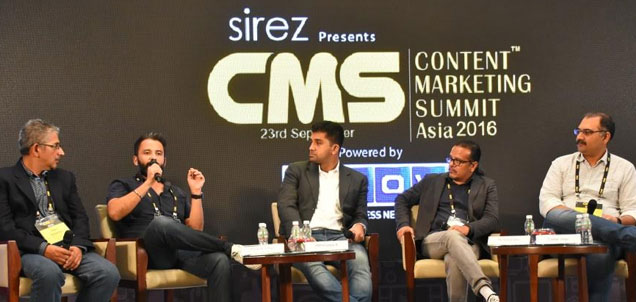
    How critical is Content Marketing to the marketing and media fraternity. It’s growing in acceptance, was the broad verdict from a cross-section of the fraternity at the Content Marketing Summit Asia 2016 held in Mumbai last week. The third edition of the Summit saw over 300 delegates listen in to to a diverse set of speakers. Amarjit Batra, CEO of OLX and the  first keynote speaker, stressed upon the fact how content has become the most important element in marketing today. Sandeep Bhushan of also emphasised that the timing is perfect right now to explore content marketing. Flipkart’s Senjam Rajsekhar spoke on the Flipkart way of storytelling. Using Salman Khan’s dialogues from blockbusters, Ashish Patil of Yashraj Films conveyed how to be a “Sultan” of content marketing. And Rohtash Mal of EM3 Agri Services, the second keynote speaker, encouraged marketing professionals to find a strong purpose of their marketing activities.


    The conference hall started Summit Chairperson RP Singh’s opening address “I am personally satisfied with the response as we continue to raise the bar every year. Unlike other events, we focus only on great content with almost Zero sponsored sessions so that CMS Asia becomes a platform to learn for every one rather than a platform to sell services,” he said while announcing that next edition will be held at Delhi NCR.


    The CMS Asia awards in five categories were also announced on the same day. Y-Films from YRF walked away with Content Marketing Agency of the Year & Content Marketing Innovator of the Year awards. Brooke Bond’s Six Pack Band was declared Content Marketing Campaign of the Year, which was also created by Y-Films. Content Marketing Brand of the Year was awarded to Nescafe and comedian Kapil Sharma was declared Content Marketing Personality of the Year.


    Senjam Raj Sekhar, Head of Corporate Communications, Flipkart

    How does Flipkart use content to reach various stakeholders?

    The way we look at it is that every organisation has interesting stories within itself. stories of customers, stories of employees and stories of the organisation itself or stories on how the organisation is funded. We have a team of writers and storytellers who actually go and hunt for the stories and  who look at what are the stories that will be of interest to readers. We report on ground and we found a lot of customers from Jhumaritalaiya actually shopping on our website. So we send them to Jhumaritalaiya, spent a week there to find out why Jhumaritalaiya is shopping online and from the mobile phone and we found some very interesting insights there. So, essentially if there are stories inside the organisation, then it is our attempt to tell those stories.


    You have said that Flipkart generates a lot of clicks on LinkedIn and Twitter but not on Facebook despite your various attempts to promote your content there. Why is that?

    The kind of content that we have are more long form content. Short videos of say 20-30 seconds work very well on Facebook, short posts work very well but if you look at long form pieces of around 2000 – 3000 words, we find a more engaging relationship on LinkedIn and on Twitter. The clickthrough rates of LinkedIn and Twitter are much more higher, in fact 4-5 times higher than Facebook. So medium to medium it depends on whether you have short form content or long form content. If you have a lot of visual content, then you use Instagram.


    Manish Kalra, Chief Business Officer, Craftsvilla

    Would you say that content marketing has short-term or long-term gains?

    Content marketing is completely a long-term phenomenon and you may not get short-term gains. What you can get is how many repeat visits are you driving to your website, what is the stickiness of the users that you are getting in, how much content consumption in terms of pages view per visit is happening, is it increasing your time spend on the site. So that’s where content marketing becomes very important for e-commerce websites but if you are looking for short term results it’s not at all effective.


    How does one check if content marketing is working or not for the audiences. What are the parameters for measurement of efficacy?

    Some of the parameters are that it will not be direct e-commerce attribution but it will be more around stickiness, repeat visits and pages view.


    Do you think content marketing helps in brand-building or is it just one of the many things one needs to be doing in a marketing activity?

    It is a part of building and connecting with the user in the long-term. It is not a short-term phenomenon. It is something which every brand should do if they want to connect with the user on a subliminal way, in a non intrusive way, in a way that they would like to consume you than the way you would like to get consumed. It’s an important part of the overall marketing mix.


    What are the challenges in content marketing for Crafsvilla?

    In case of content marketing, because we are so niche we need to ensure that the right content gets curated. So, if some handicraft from Kutch, say it’s a dhokra art and then people don’t know what it is, I need to have an expert who can go in and curate, source and shoot that content. So that’s the challenge that we don’t find the right talent which is able to curate the right kind of content for us whether its video or written content but we are evolving and creating internal teams which can help us.


    Bianca Ghose, Chief Content Officer and Head – Content Marketing, HCL Technologies Limited

    What are the challenges of content marketing?

    For a content marketer, creating quality content is something that I think is a major problem area because what you need is partners who understands your business, understands your business goals and the marketing outcomes and understands your audience. Unless you’re able to map all these three together you are not going be able to generate content that cuts through and grabs attention. The second challenge that content marketers today in India and all across the world are facing is also how is it that they are optimising the content to make sure that it’s performing because at the end of the day those form of tools and methodologies to measure the performance of content don’t really exist. But to be able to say that, this is my white paper and this is the kind of engagement that it has generated is difficult because a white paper is not just a white paper. It could be in the form of a blog or it could be translated in the form of a brochure that goes up on the website. How do you measure all those interactions with your piece of content to ensure that you are really taking back to your CxOs the amount of engagement or sales cut through that it has generated? These two are the areas that we still need to figure out as content marketers.


    Does content marketing have any short-term gains or is it a long-term play?

    Content marketing has no short-term gains and I don’t think this a play that can happen in a couple of months. You need to be able to do content marketing seriously, consistently for months on end to be able to generate some kind of impact. Content marketing will be able to take you to places where your sales folks won’t be able to go to. You’re sales folks will be able to leave behind a content asset in a closed door meeting or if you’re able to put in your content into the social browsing habits of your customer or prospect. So content is definitely something that will generate returns to your business but it is something that you have to do well and consistently for it to start showing results.


    Do you think content marketing helps in brand-building or is it just one of the many things one needs to be doing in a marketing activity?

    Content is the heart of a campaign so if you’re talking about a brand strategy or a brand narrative without having your content or your message at the heart of it, you really have a piece of a hollow shell. A lot of content marketers and brand marketers start thinking about the platform before they start thinking about the content strategy which means that you’ve thought through the outer circle without really thinking about what is the message that I’m trying to push out, what is that conversation that I am trying to generate for my audiences. So, unless you’ve really thought through the content, the message, the articulation of that and then the platform you’ve really done it the other way round. So being asked the question or saying that is content important is redundant. The question is how do I do it right to be able to generate the kind of outcomes that I am expecting for my business.


  • With 7mn monthly viewers, MailOnline has big plans for India


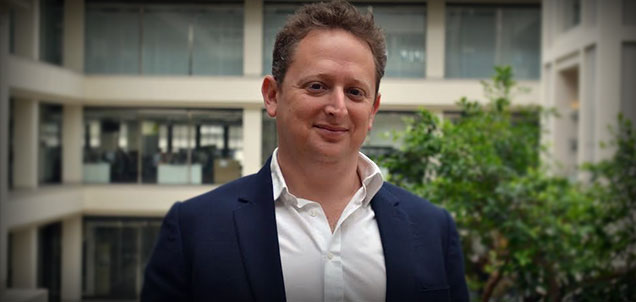
    MailOnline may be published from the United Kingdom given that it’s the online version of the popular newspaper Daily Mail, but it’s got a reasonable following across the world. In fact the consumption is higher in the United States than it’s in the UK. In fact it even boasts of seven million unique viewers in India. That may be some 3 per cent of its total viewers, but in absolute terms it’s large enough to attract revenue. James Leaver, General Manager, International, MailOnline is in India this week and spent some quality time with MxMIndia along with the team from Zirca, his sales partner in India. Excerpts from the interview


    When one was reading up about you it was mentioned that Mail Online has raided Microsoft to hire you to expand operations. How has it been going since you joined Mail Online last year?

    It’s been great, very different as you would imagine going from a big West Coast technology company to a traditional 120-year-old newspaper company, but it’s been a great experience. Mail Online has a fantastic footprint. I think it’s now about 230 million unique viewers around the world and that gives a huge amount of opportunity to do stuff. We’ve been doing a lot. We’ve got sales relationships going in about 15 countries now. So things are going in the right direction, been a busy year.


    And in terms of footprint of your readers, it’s essentially still the UK and the US comes next and Australia?

    Yeah, that’s about right. Roughly speaking, very roughly it’s about a third the UK, a third America and a third everything else.


    Do you expect US to increase more than…?

    We expect everywhere to increase.


    More than the UK?

    It is slightly more than the UK at the moment, so I think the US has definitely got room to grow.


    But in terms of revenue for advertising because obviously it is free content right now for subscription for it, so in terms advertising revenues what is the breakup like?

    The UK is a major revenue market. As you would imagine UK, the US, Australia and then the rest of the world is the developing bit.


    So would you be able to give a percentage of what UK is?

    Not off (the top of) of my head, not accurately.


    It’s significant majority?

    It’s a majority.


    Your role at Mail Online has to look at expanding the footprint to other geographies and I know you had a tie-up with the People’s Daily in China. Where else are you expanding, what is the focus?

    Right now the focus is on managing the monetization. I’d say we’ve got a big audience that we have been under-monetising for a couple of years. So my focus in the short-term, by that I mean the year we just had and the year we are about to, my second year is really about trying to develop that revenue, that monetisation foundation. I don’t know where it makes sense to expand at this point in time because I don’t know what the revenue opportunity is in different countries. I have a sense that places like here or Canada or others would make sensible opportunities for us, but my first and primary goal right now is to see what we can do on the monetisation side before we start localising.


    But the traditional rule of monetising is that you build audiences first and then monetise. So are you making attempts to grow the audience / consumers?

    We do grow the audience. We have about seven million unique viewers in India and that’s an audience that has grown over the last few years and it continues to grow.


    Seven million when the total pie is 238 million is a very small number though in absolute terms, the number is very large.

    Real numbers is large but the good thing is there is plenty to play for/ I see a huge opportunity over the next few years and we need to work out how we are going to address that working with Zirca on the revenue side and looking at what are other opportunities around them.


    In terms of really building the audiences from building numbers, growing that from seven million upwards, you will obviously need to have some a fair amount of content from India because while there is readership for international content but they are also looking at Indian content. Is that on the anvil?

    At this point in time, there is nothing in and nothing out. I mean it’s very possible that we will do something in India and locally expand etc., but I don’t know. I genuinely right now, as I sit here today I don’t know whether I want to build a local operation or partner with someone or I should just try and grow through the content that we’ ve already got. We produce globally, we produce 1600 stories a day. We’re producing within that over 600 videos, about 19,000 pictures we are publishing.  I believe that’s enough content in most countries to actually build, if we really want to grow the local audience I think we’ve got enough content. I think yes we would need to think about local contents.


    I was reading a quote from your publisher when the China deal happened and he said as the most populous nation on earth and one of the most dynamic economies, China is an increasing source of stories for outward-looking global publishers like MOL and China is the most populous country. Now India is the second-most populous country and the largest democracy… hence the question.

    As I said I don’t rule anything in, I don’t rule anything out,  I am not having any conversations today or this week that, I am very focused right now I am  meeting with agencies and advertisers and trying to see where I can take that business. I travel a lot, I will probably be back here on a regular basis and as the business grows I will start to look at what are the opportunities to then grow the audience. As I said to you at the beginning, the audience, as you said the audience it’s a nice real number but percentage of the total population there is room to grow. From a revenue point of view, there is room to grow and actually the room to grow in the revenue side is greater than on the audience side right now, not greater, it’s just – it’s more medium.


    Since you are meetings advertising this week, what is your proposition to them. So why should I advertise on dailymail.co.uk when you are essentially a British site with an international outlook?

    Yes, we are, but I think we have got a good audience… well-paid itinerant international-looking, local Indians.  And we have a very high engagement.  We have a very strong organic audience across platform, and we are creatively open to doing some fun stuff, partnering whether it’s native and native executions, which you know, sponsor comes in where we are really leading the way in some countries.  So, I think that we have got a good proposition to advertisers.


    And are you looking essentially the Indian audience in India or the Indian audience elsewhere in the world, because there are lot of Indians who consume content elsewhere and who are reasonably prosperous and who are being targeted by Indian companies, which have presence internationally, especially in the financial sector, that has embraced the digital space very rapidly.

    Right now, I am looking at the domestic Indian business, but I think there is an opportunity to explore the Indian diaspora at a later date.


    Do you have some kind of targets for the business from India over the next year?

    Every country I look at, I go into, I am asked this question, whether it’d be in Canada, where I was last week, or Europe; few weeks before that and I do interviews and people ask me, “What are your goals for the market?” Right now, my goal is to operate more efficiently than we have been operating.  I am not setting any hard goals.  I want to get out there, I want to meet advertisers and agencies, talk to them about what the opportunities are, and then we will see where we go to, and sit down with the guys at Zirca in a few months time and we will work out what’s worked, what hasn’t worked, how do we need to address the market, do we need to change the way we are addressing the market and what are some goals, but right now, my aim is to hit the ground and see what opportunities we have got.


    Is it because you are at a level where any growth is great growth, or is it because you don’t really know what the feel of the market is?

    It’s actually a bit of both.  I think any growth is good, because this is a huge market with huge opportunity. You know, as you say we’re 7 million unique viewers in India, what can we grow that to, can we grow that to you know – frankly, pick a number, right, and the same on the revenue side.  There is growth potential across – on both fronts.  So, I don’t have a real feel right now for what success is, other than better than we are doing today.


  • Delighted to be stepping into large shoes…


    Neeraj Roy, Managing Director and CEO of Hungama Digital Media, was elected as the President of the India Chapter of International Advertising Association (IAA) on September 23. A veteran of the Indian digital media domain, Roy has been an active member of various industry associations and has also been a Vice-President of IAA India. A fortnight after he took charge, Roy spoke with Santosh Jangid for this interview in text and video.


    The IAA India Chapter is decidedly the most active associations in the Indian A&M industry. And it was all thanks to your predecessor Mr Srinivasan Swamy. Your thoughts as you have taken charge?

    If we look at IAA in India, we have completed 25 years. It is part of an institution which is now over 75 years globally and its representation is essentially to the media, marketing and advertising community. Over the last four years we have been extremely fortunate and privileged to have the energy and enthusiasm of Srinivasan K Swamy or Sundar as we call him to energise IAA in India in a manner which he has done is unprecedented. He has been pretty much at the centre of numerous activities that have been undertaken and we are delighted that he is now going on to take more senior responsibilities within IAA global. I am delighted to be stepping into the very large shoes of Sundar and hopefully will continue to take the tradition forward in what we have been attempting to do in the Indian media, marketer and agency fraternity.


    Any specific deviations from the past, or will it be business as usual?

    Over the last six years, IAA has done about 120 events for the media, marketer and the agency community here in India. As I see things, we break it up into three distinct segments – there are those activities which we qualify as part of a knowledge series which is essentially there is an imparting knowledge by a way of specialist. These could be in the form of actual conferences and workshops or they could be in the form of interactive webinars. The other thing that we have done is that we have celebrated creativity and leadership. This is made up of numerous awards that IAA has undertaken. We have the IAA Leadership Awards which our partner Colors supports us on, we have had a very distinct and unique programme which is the IAA Olive Crown Awards which is the first and the only one of its kind which recognises creativity towards sustainability and a better planet. This was an initiative which was instituted during the tenure of my good colleague Kaushik Roy and we’ve got in recent times the IndIAA Awards which is a recognition of creativity done in a very different way. The third cluster of activity that we really want to focus on is how do we give back into the industry given that there is so much activity, so much knowledge that’s coming in. Parts of this whether they are converted in the form of research, basic papers which can be circulated back to benefit all key stakeholders. Ours is a problem of plenty and the focus is largely going to be to sharpen this to make them more relevant and more contemporary to the needs of the industry.


    There is a sentiment that perhaps there are very many events that IAA India conducts and it may make sense to have fewer events. What are your thoughts?

    It’s an opinion and we value any feedback and 120 activities in a matter of six years of which my sense is about 112 have happened in the last four years, is certainly a good problem to have. Several of these programmes that we undertake are using technology in a certain way. For example, the entire webinar series that we do, these could be for groups as little as 15-20 people but they are very targeted delivering knowledge and sharing experiences from specialists in their respective domains. So, to me, it’s not about quantity as it is about relevance, what is the impact that we are having and are we addressing the core needs of the stakeholders that that we represent and that’s the manner in which we will take this forward.


    You’ve been one of the early entrants in the digital arena, and of course mobile entertainment. There is no real big bang digital event in the IAA India calendar now (Digiyatra did not happen this year with Kyoorius Designyatra). Will we see an increasing focus on digital?

    Digital is a state where this country is right now. Our belief is over the next 12-18 months, there will probably be over Rs 4000 crore worth of communication that will all happen around the entire proposition of digital and this will be undertaken by numerous stakeholders. There will be those who are enabling this which could be telecom networks, there will be those who are further aiding it which could be device manufacturers, various media businesses whether they are in print, in radio, in broadcast or in films. Each of them are seeing a shift in consumption that’s happening on digital and digital is not merely impacting the broader media marketing fraternity, it is going to percolate into every aspect of our lives. Therefore, for me, it would be relevant to bring in as much of a focus not for the sake of “being seen as digital” but for this fact that digital is genuinely impacting and creating efficiencies, delivering disruptions across businesses and I think that is an aspect that we would certainly want to not only focus on but we would like to bring groups of specialists to our principal stakeholders and members such that they can benefit from that learning and prepare their businesses better in this broader theme of digital that we are all tremendously fortunate to be a part of.


    An association is as good as the people who manage it. A word on the managing committee that you have?

    Absolutely, we are fortunate to have the kind of management committee and it is very aptly broken up. You’ve got absolute industry leaders who have been associated with IAA for several years now. People such as our previous Past Area Directer Pradeep Guha, one of the instrumental people to have brought IAA to its current position, people like Sam Balsara, Past President Raj Nayak, Past President Kaushik Roy, our immediate Past President Srinivasan K Swamy and the new team which is taken on board which is the vice president Monica Tata – COO of BTVi as well as the newly appointed CEO of the Sakal Group -  Pradeep Dwivedi and our Treasurer Jaideep Gandhi. Apart from that, in the managing committee, we have very active participation by my colleagues Janak Sarda and Ashok Venkatramani from ABP News. The good thing is that because there are different type of activities that we have undertaken, each of them have taken responsibility of various types of forums and its pretty much in that sense on auto pilot. Over the last 12 meetings that we’ve had at the IAA, at least half of them were followed up by dinners with respective management committee members hosting them. So, you are absolutely right, an association is as good as its members and its core team and the kind of feeling and friendship that exists and what’s nice is within the IAA, over the years we have grown to become great friends all with one common cause to try and do as much for our industry and give back in whatever small way that we can.


    Given that the majority of people in the trade are youngsters, many under 30 or even 25, what will IAA India be doing to engage them? There are of course some knowledge and ‘Young Turk’ events. But something that will engage them further?

    It is something that not just now but it is an aspect over the last couple of years has been a big focus within our management committee discussions which is why programmes like Young Turks, the webinar series, our debates, these have all been initiatives to draw upon what we call as the young professionals. We have specific programmes for them which is called The Future Leaders Awards that we have inculcated. Even in terms of the manner in which IAA has chosen to communicate not just within its own membership group but also with industry and other stakeholders. We’ve done our best to embrace newer technologies, embrace social media, and the respective teams which handle each of these particular forums. Each year, we look back at what we have achieved and we set new goals for ourselves. The participation of the younger generation is an integral part of any organisation and as IAA, across the key principal stakeholders of media, marketer and agencies, we are continuously looking at ways by which we will have more participation from them, more leadership and responsibility as well to be held by them and you will continue to see that focus as far as IAA India chapter is concerned.


    One last word to industry people who are reading and watching this… on asking them to join IAA India and what will be the benefits they will get by joining it?

    If you visit our website, our entire theme in this is broken up. There is an entire series of knowledge which is broken up by various activities and events that we undertake. We believe that networking is a great offering that has happened on the back of the numerous types of programs that IAA has done in unique manner and we feel that recognition of excellence whether it’s in the form of creativity and leadership. One of the big focus areas for us this year will also be to highlight innovation because we feel that innovation across businesses needs a lot more attention and there’s a premium towards that. Each of these are values which both our existing and prospective members stand to gain and benefit from. Ultimately, the membership fee structure for the association has deliberately been kept at levels which calls for as much of participation and it’s also in two-tiers in its own form. There is membership for a younger generation who just wants to see what do I benefit and get out of this till they actually want to become full-time members.