Category: INTERVIEWS

  • Kyoorius with Kejriwal


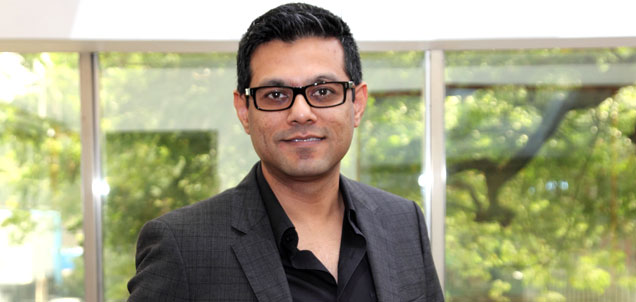
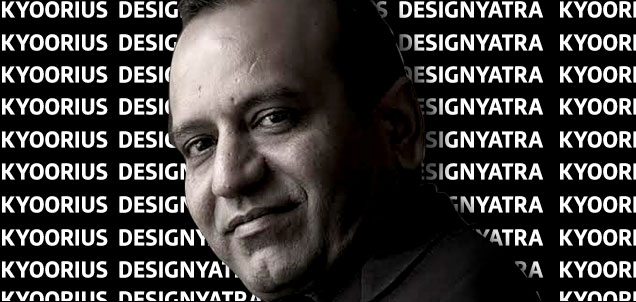
    It’s tough interviewing someone who is always consistent in his views. For, Rajesh Kejriwal, Founder CEO of Kyoorius, is very sure of what he wants to achieve as he speaks to Pradyuman Maheshwari. The tenth edition of Kyoorius Designyatra will only get better, with marquee speakers and a varied mix of delegates, he says.


    So it’s 10 years of Designyatra. How is this year going to be different from every other?

    I don’t think the conference should change just because it’s in its tenth year. We’ve been changing things every year anyway, depending on audience feedback and our own perception. This year, too, there is an inspiring line-up of speakers. We are doing a few surprise things – not because it’s our tenth year — but because we’ve learnt a few things at Melt. For instance, we’re trying to incorporate more experience zones than expo stalls.


    In terms of speakers, what’s special this year?

    From the perspective of content, the speakers are all good. In terms of ‘famous’ speakers, we have Jessica Walls, John Wilkins and such. This year, we have a lot of speakers who are not that well-known but have done awesome work.


    And Indian speakers?

    I think there are a few like Autowale, so we’ve not got from the fraternity but people who’ve used design knowingly or unknowingly to solve some problems.


    Given that digital is all over, is there a need for a separate IAA Digiyatra, which is in its third year?

    Digiyatra, it’s in the third year.  In a sense, digital has evolved considerably, digital has changed considerably.


    Yes, digital has become all encompassing. There is nothing which is not digital. We are killing it next year. At Designyatra, all our speakers use the digital medium. Today, you can’t get a conference in communication which does not use digital. So how can there be a separate focus on Digiyatra?!


    At Designyatra, ones see a lot of paper. Guess the fact that you are a paper company, you can’t wish it away. But today it is all about tablets and smartphones!

    It’s a lame attempt at me trying to keep my business alive! (laughs).


    Jokes apart, the paper is still the focus around design in India (and Designyatra), right?

    Paper still has its nuances. There are things that you cannot do without the medium being paper. There are things that are evolving for which digital makes more sense. From the paper perspective, if you see in 2000, 80-85% of our business was stationery. Today, stationery composes of may be 1% of my business. We are more into brochures, catalogues, then came your wedding invites which all of a sudden started becoming very expensive and very different. So, the medium has changed. The needs have changed. But paper is still used. I’m not sure how long, how much technology will take away paper but I feel if technology comes in, it also needs paper to promote itself. So, there is obviously going to be use of paper all the time. Yes, it’s coming down. What’s not coming down in terms of usage, China is bringing it down in terms of making it a commodity.


    One of the highlights of Designyatra in large formatted writing board etc. Are you going to be switching to an app that we can just stick out there, I pads.. You still want people to put pen to paper?

    Of course, as designers people do love because I don’t think designers can make do without doodling. We are talking about the graphic community which irrelevantly even if they are sitting in a restaurant they take a napkin and start doodling. So, pen and paper can never be segregated from this community of designers.


    Do you see a change in the kind of the audience structure, the delegate structure?

    Of course, over the 10 years immensely.


    About the constitution of delegates, last year one saw a lot of clients attending. Do you expect it to be the same?

    It’s increased. Ten years ago, our focus was purely on graphic design and 80 per cent of the speakers had it as their background. Then came digital, and design started being looked upon more as a tool than an aesthetic way of doing things. Today, graphic designers are only 20 per cent of the speakers. Similarly, the audience has moved from pure designers to advertising and digital guys, to clients who come to Designyatra to check out trends and see how they can use design in different ways to communicate.


    But there are still some design companies who do not attend. It’s the same with some old-time designers some of whom come, while others don’t. Is there a specific reason?

    I don’t know. [With design companies] I think it’s a matter of trying to see if it helps their business. If some design studio does not want to grow beyond its comfort level, it may not come. [With old design hands] I think it’s more to do with their personal comfort level about which areas they want or don’t want to go into. The marketing communications industry has changed because of the internet; not all skill-sets have kept up.


    Is it also because you are very rigid and particular about not calling the big dads. At most conferences, you always call them to speak or give away an award or felicitate, etc. You don’t do that to people.

    It’s not about giving importance. Whether it is young or old designers, I will always call them if they’ve something which is content-worthy. If they don’t have what I think is content worthy for the audience, then I won’t call them. My focus is the audience out there and I’ve try and make sure that every speaker who comes on stage keeps that  audience occupied. If a speaker is not able to hold the attention of the audience for any reason, I’m not talking about maybe a small group of 100 designers or 100 people in the audience may not like a particular speaker because he or she comes from a different field altogether though they could take inputs from that field as an inspiration for something that they do. But it’s a larger quantity that should be occupied, should feel inspired being there, should feel that they’ve profited from being there.


    Are you happy with the way your D&AD-backed awards have happened?

    Very happy, and I think this year, the work has been far better than the last. The jury, and even the D&AD president, mentioned there has been a lot of good work here which could’ve won a D&AD. I think there is a lot of Indian work that could win globally.


    I did hear one jury member say the work was not all that great…

    Must be an Indian. If you [compare the entries from last year to this year’s] there’s a context, and you are able to see whether there has been any good work this year. In advertising, there wasn’t as much good work this year compared to the last. Next year, you’ll see much better advertising.


    More importantly, does it attract the best work done in the country?

    Fairly, yes. We’ve got a lot of new studios, though some of the old studios did not participate. But that always happens. We had a fair amount of work that was awesome, and one of them – the winner of the Black Elephant — was really good.


    So, you have a Black Elephant winner this year.

    Yeah.


    You normally never tell who is..

    I don’t.


    So, one or two?

    I don’t know, I don’t think even the jury members know. But I’ll tell you one more thing about the awards which I found very surprising. There are a fair number of design studios which have won but there are a larger number of advertising agencies which have also won. I’m not sure where the industry is headed.


    Are clients also sending in entries directly?

    Yes. I have a client who submitted an entry and won an award. Many clients have submitted entries, but this one, won.


    When Designyatra first started, many of us didn’t attend because we thought you are a paper merchant who is doing this essentially to attract designers so that they buy your product…

    It started off that way, as a purely promotional exercise for me. As a paper merchant, I wanted to be closer to the community; a friend rather than a vendor. In some ways, it was also about giving back to society. But after the first year, you could see the passion and the hunger that this built in the audience. And after 2007, it also became a passion for me, and had nothing to do with paper.


    So are you selling more paper because of this?

    I don’t think so. No.


    And you still you are a businessman?

    Yes, I am (laughs) but this is something that my family is not very happy about.


    I remember you once said that you were a not-for-profit thing and have converted yourself into not-for-loss…

    Yes. We are now at that stage where Designyatra is breaking even.


    Which is a bigger success, Designyatra or Melt?

    Melt, obviously. It’s going to become a bigger festival, overall, which has nothing to do with design or advertising. That industry size is bigger than [our] industry size.


    At Designyatra, you have people stuck in the hall, while that wasn’t the case with Melt. Is this a comment on the kind of crowd which attends?

    No, partly it has to do with the fact that we could’ve done things better at Melt. But it was the first year. You’ll see a lot of changes happening next year because we’ve learnt that a conference like Designyatra is good with content-rich speakers who keep the audience occupied. But [at Melt] there are advertising, media, marketing, digital and social media attendees and the knowledge they want to gain is specific. So while the main hall of Melt was not full, the breakaway sessions — of which 15 were happening at any given point — were always packed.


    While you parallel tracks at Melt, at Designyatra, there’s just a single track.

    No, we are doing some things in the evenings, like workshops, because we feel they are required to enhance learning. We can’t do workshops for 1,400 people but we can do them for 400 people. So we are incorporating workshops this year in Designyatra. Day time will be restricted to the conference. But we are taking some side sessions, like The Critic. This year, we are having intense, get-your-hands-dirty kind of workshops.


    Has the interest in design changed over the last 10 years?

    Of course. From design being looked upon as an aesthetic skillset, it is now seen as a tool to be used in business/ product/ communication and as a strategy as well. You look at example of a company like Apple, which has become hugely successful because of design. There are companies taking design more seriously now than before.


    As for Designyatra, when did you realise you were on to a good thing that could also become the mainstay of your business?

    For the first three years, it was about getting the best out of Designyatra, even for my paper business. After 2009, the year we moved to Mumbai, it was no longer about paper as much as it was about a passion for doing something. I was driven by passion, but also by the fact that this will help fuel a design movement in India. I’ve seen that happening, and even though I’m not the cause of it, [I know] we’ve played a small role in helping that evolution happen.


    When did you think it would become so big?

    I realised that it has become big when we were voted among the Top 3 conferences in the world.


    Given that digital is taking over the creative business, don’t you think you should now start evangelising paper?

    I don’t know. I would probably try to figure out how I can do a business in digital rather than in paper now. Off the track from Designyatra, we are into specialty papers, not commodity papers. The specialty paper business globally is declining rapidly, and the biggest specialty paper merchants have closed shop. The larger paper mills have all gone bankrupt in Europe and the US. I’m not sure how big this industry will remain. But India is at a very low base, so there is still ample growth possibility. But is it a business that will become a focus point for us? I don’t think so.


    In the last 10 years, were there any lows that you would rather forget?

    I did a design award in 2007 which was very shoddy. But I learnt from it, closed it down and only brought it back when I was able to professionalise it with the D&AD partnership. The winners [of 2007] might have loved it. I regret that I made it happen without doing much research.


    Then you brought it back in 2013. Anything else in the conference?

    In the conference, in the early years, I did not research the presentation quality of speakers. Some were good names but not great presenters. That was a low. In 2008, we decided we are going to see the speakers first, and also curate the talk that’s happening on stage. So we asked for the presentations ahead. Now we write to speakers telling them what we’d like them to speak on.


    Why is that you are able to do it so well in Designyatra, but not for the advertising folks?

    This year, Melt was done in too much of a hurry, put together in two months, which was a disaster. We were not able to have a dialogue with the speakers because of the time constraint, which was a loss for us. This year, we are already in discussions with speakers we want for [the next] Melt.


    Last year, you mentioned that you are looking at doing some other design conferences like interiors. Is that still on track?

    We are trying to do that and will probably launch it in November of 2016 or 2017. I don’t want to do two festivals and not do either well. I want to get Melt to the quality and level that I personally would like it to be, perhaps of the standard of Kyoorius. Once we’ve achieved that, I’ll move on to the next, but not before that.


    A shorter version of this interview appeared in dna of brands on September 7, 2015
     

  • Big Magic’s over-the-top comedy gambit will work: Paritosh Painter

    When in February this year, CEO Tarun Katial announced the appointment of Paritosh Painter as Network Creative Director of the Reliance Broadcast Network’s slew of offerings, friends and broadcast insiders had seen the path RBNL would take. For, Painter is known for being a specialist with comedy – whether it’s on Mumbai’s hyperactive theatre circuit or television and even cinema. He has done over 23 plays in Hindi and English with some 2500 shows across the globe. Besides this, he has scripted Bollywood films like Dhamaal (2007), Paying Guest (2009) (also directed the film), and All The Best: Fun Begins (2009). Being armed with an MBA, he has the much sought after combo of a creative mind who can think numbers and can crunch them with ease. As Reliance Broadcast’s flagship television channel Big Magic, has gone on an offensive in the comedy route, MxMIndia caught up with Paritosh Painter in his office for a quick chat.


    Big Magic has seen a recent change of look and positioning. What was the thinking behind that?

    When I joined Akbar Birbal was the No 1 show for Big Magic…


    In fact, it had become the driver for the channel. Just when everything was going right, you changed it.

    Since that time Tarun (Katial) and I have been debating on the positioning of the channel.  What should the channel be? I come from a very strong comedy background. I have been doing comedy in my theatre and my films.  I was debating with Tarun about how we can explore the comedy space to the maximum extent possible in the Indian market. The biggest Hindi comedy channel in the market is Sab TV today. But again, we felt Sab is more on the Dramedy zone:  a mix of comedy and drama. So it is not like a hilarious out-and-out Comedy Central kind of comedy. We felt that there is a vacuum in that space. There was no point doing a regular GEC because it is already saturated. We thought we could do a lot more ha-ha comedy rather than the Dramedy. So, that’s how we decided to change the complete strategy and positioning.


    But this is the fourth time the channel has taken a new look. It started off as yet another GEC with a focus on the middle end of the market, then it moved to being a light-hearted channel, later more in-your-face humour, and now a kind-of over-the-top comedy channel?

    Yes, it has become over-the-top and edgy since the whole shift was towards youth. Then, we did a lot of research, in terms of watching loads of content available on the internet, watching international content. And, we felt that the edgy comedy or content works more for the youth. That’s how we got all the shows around this concept…whether it is Boyz, PMS, or Akbar Birbal to  Hazir Jawab Birbal. We need to target the youth, we need to do stuff that excites the youth. As per our research, we felt that the edgy comedy space was the space that we need to be in. That’s how we are now focussing and positioning ourselves.


    You mentioned over-the-top approach. Does comedy have to necessarily go over-the-top? You have been a practitioner of comedy for long?

    So actually, there is this thing about Indian audiences which I have seen. Fortunately, I have been doing theatre and tend to travel not only across the country but also abroad. And we do shows in the US, UK, the Middle East and all across the globe. What I have noticed that Indians somehow prefer loud comedy as compared to other parts of the world. In fact, within the Indian subcontinent also I find a difference in taste. For example, in Mumbai, when I do shows in the suburbs, folks prefer loud, in-your-face comedy; but the same loud stuff is not preferred by the townies; they prefer more subtle comedy. So there are a couple of jokes we keep reserved for the suburb audience as against the NCPA audience. Again, North Indians love the loud, insulting edgy kind of humour, When we do shows in South India they prefer a subtle, intelligent kind of humour. But since our audience is more from North India so that’s the space we are exploring for the moment. Most of them prefer loud humour.


    But edgy also means double entendre… risqué content.

    Yes. We do. People enjoy that. Not only youth, but a large number of men also. I feel shows like Bhabhiji Ghar pe Hain has given us a good start for the Indian television viewers. Or even Kapil Sharma, the kind of humour he uses, I feel it really works. We are looking at exploring that space.


    But television is still watched by families in single TV homes. Does the edgy humour work?

    In fact, that’s the reason why we have moved our primetime. On Big Magic, primetime will start from 8.30 pm all the way to 11 pm. That’s how we have planned our strategy.


    Some of this could see some problems with the content regulator

    We are ready to take this risk. And, we want to take that risk. We have debated and decided and that’s the way we want to go.


    With shows like Boyz, PMS, you seem to be going all out on that path.

    Yes, we are. And there is no point holding back. The AIBs and TVFs of the world are taking over internet by storm. Why should television not be delivering what people want? So we are targeting the TVF, AIB space. They are our direct competitors, not other television channels who have other different programmes. Our competitors are not Sab or MTV. We are the new internet television channel catering to the youth.


    AIB has intelligent, news-oriented humour…

    We are getting into that space. We are coming out with two unscripted shows by Diwali which will be unscripted, news-based and topical shows.


    For instance, Aktor Calling Aktor, does comment, or does have some suggestions on what’s happening.

    So Aktor Calling Aktor, are the short comedy-based formats. We are also breaking formats. We are breaking rules. That’s what we want to do.


    How is it working with potential advertisers?

    If you have the right content, advertisers will lap it up. They would love to be a part of it. And advertisers are looking for a different kind of content. So again, I am probably dragging the AIB and TVF comparison, it is because people want to align with them, because they are different. Today, I believe people are more attached to the shows than channels. I think channel loyalty is dying and show loyalty is coming up. If we can get people to be loyal to our shows, it is better than people just getting loyal just to the channel.


    The channel tagline has the word LOL? Would you go in for English or a mix of Hindi and English?

    Yes, we are very keen to get into the Hinglish space also. We want to get into late night comedies. We are looking at some of those formats also. We talk of things which people don’t usually talk on television.


    What about targets and TRPs?

    A lot of factors dictate TRPs. There is distribution, there is marketing, a host of other factors. Just because the TRPs meters keep moving up and down doesn’t essentially mean that the content is wrong. There are other factors which could influence TRPs. Right now our target audience is the urban youth.


  • We are all winners: CVL Srinivas

    Your position would be like that of Serena and Venus Williams’ father – to have one daughter win and the other lose, isn’t it?

    For me, I think, we are all winners. All [the agencies have] done extremely well and at the end of the day, one agency has to come out as a winner, and it happened to be Mindshare. Maxus, I thought, put up a tough fight and ended up in the Top Three. What’s heartening to know is that we did well across agencies and across clients. Overall, it’s been a fabulous night and we’re going to party hard.


    What do you think led to Mindshare gaining the No 1 spot?

    Mindshare had a fabulous body of work, not just across clients, but also across all the different categories. They’ve really managed to institutionalise excellence across the entire agency. Mindshare is India’s No 1 standalone agency. But when you become No 1 and keep winning, it’s also challenging to keep the team motivated and continue to do well, year after year. That’s something that’s there in the DNA of Mindshare. They have a new leader in Prashant Kumar who took over the reins at Mindshare a few months ago, and I think that has brought in a lot more energy and passion. They’re growing from strength to strength.


    Madison gave a pretty good fight at the end?

    The Emvies night is really the big night for all of us in the media industry and it’s the most looked-forward-to event in the year for all the boys and girls who toil very hard in the office every day. There’s been a lot of build up and anticipation in the last few weeks. Of course, Mindshare had a lot of shortlists, so they were expecting to do well. But as we’ve seen in the past, it’s not necessary that the agency with a lot of shortlists will win the Agency of the Year title. But I think they managed to pull through in the end by quite a healthy margin. Madison also did pretty well. In fact, there was great work, not just from Madison, but some of the other agencies as well. So we need to ensure that we don’t get complacent. We have to come back next year and try to do even better.


    What were the trends that you could see from the results of this year?

    Winning an award has become important not just for agencies, but also clients. Today, we find a lot of our clients telling us to work hard and to actually get them fame as well. All the hype that goes into awards in our industry, is actually helping the fraternity raise the bar in terms of quality of work. And today, we’re getting a lot more support from our clients and partners. A good thing that was done this year was that there was a recognition for media partners too at the Emvies. So it’s good if all stakeholders are celebrated equally because all of us come together to create great work.


    What would be your message to the team at Maxus?

    Maxus has won many titles in the past and continues to do well in many other awards. I’m sure they’ll be a tad disappointed for having come close and still not winning the Agency of the Year title. But knowing Maxus, I’m sure they’re going to go back and put shoulder to the wheel and try and come out Number One next year.


  • This is something which belongs to us: Prasanth Kumar on Emvies win

    After last year’s loss to Maxus, this must be a huge win, right?

    Last year was just an aberration. It was one of those years when probably a ‘no ball’ situation happened. This is something which belongs to us.


    What does an Emvie mean to successful media agency like Mindshare?

    It means a lot to us. Wherever we’ve demonstrated our work, it’s been acknowledged by most of our clients. As you’ve seen, we’ve won awards across different categories and clients. That shows that a lot of team effort goes into every single brand. We’re quite happy with our performance and we’re going to celebrate hard.


    And how do you think clients view wins?

    I’m sure clients appreciate great work on their brand, and the fact that we can provide solutions. Clients do get attracted to the best of talent, the best of the tools and the best of products and processes. And this is one display of how great things happen and it’s a no-brainer: Clients see lot more meaning in working with teams like this.


    Maxus won last year but couldn’t beat you this year. Madison almost got there. The competition out there is quite stiff. So what’s your mantra going to be for Emvies 2016?

    For us, it’s simple: Every work needs to be the best work. And for us, it’s not the competition. We need to be shaping the market. We are the leader by a large margin and it’s because of a lot more talent focusing on lot more great work. That shows in every single research that we’re doing. We want to ensure that every single brand that we work on, gets more success. For us, that is the bigger [aspect of] pride. And this is just encouraging us to do that.


    For you personally, it’s a big night, right?

    This team in Mindshare is one of the best in whatever it does. I feel lucky to have been able to facilitate this entire thing. I’m looking to do this magic more and more, and even better it. It’s just proving to me that I’ve been able to facilitate this, and it’s just the beginning.


  • We’ve finally understood the awards code: Sam Balsara

    So near, but yet so far?

    On the contrary, it’s more like going from nowhere to somewhere. I’m personally delighted that we made it to the runners-up Emvie of The Year because the way it started, it was a little scary for us. It’s been a fantastic season for us on the whole. I think Madison has finally understood the awards code. We always knew we were very good at our work, but somewhere in our awards entries, something was lacking.


    You think sending entries from various Madison arms as one unit may have helped?

    In a way you could say that. We persuaded a lot of our people to give up on their tags. But I think our performance tonight has been better than it has ever been in the past. We’ve always been in the Top Three. But this time in the Emvies, we were at Number Two for the first time.


    What does an award like this mean for an agency which is well-known for its work?

    It doesn’t mean too much but also means a lot because it energises us and gladdens our heart to see that we’re being recognised. Unlike some other agencies, Madison won these awards for a large number of clients. What delights me is that we’re producing outstanding work, not for one or two clients, but we won today for Mondelez, Asian Paints, Marico and Godrej. For Cadbury, we had eight in the shortlist, and converted all eight. For Marico, we had 11 in the shortlist and converted eight. So our track record tonight has been rather good.


    Now the challenge is to maintain this pace…

    Yes, that indeed is a challenge but I think we’re up to it. We’re doing lots of things at Madison. In fact, as we speak, we’ve launched a massive programme called Madison Next. We flagged off one of the first big initiatives of Madison Next, which is a four-day programme on digital. There are about 75 people going through a four-day programme on adopting digital as a way of life.


  • Breaking rules for break-out creativity


    Years of doing the same thing becomes like a muscle memory. It becomes so ingrained, you forget to be innovative and different. But Jon Wilkins, Chairman of Karmarama, and one of the founders of the iconic Naked Communications, tells Pradyuman Maheshwari on the sidelines of the recently-held Kyoorius Designyatra that one needs to get off the beaten path and break old habits to create advertising everyone’s talking about


    In your presentation at Designyatra, you spoke about breaking rules. While it’s good to talk about it, is it practically possible?

    A lot of our members deconstruct the way things are traditionally being done and create new ways of thinking. So breaking a rule is like breaking a muscle memory, and recreating new ways of solving problems. In advertising and marketing, muscle memory often takes you into doing what you’ve always done, rather than reconfiguring the way you think to actually solve the problem. That’s breaking a rule. You’re breaking a habit.


    Can clients seeking major results through advertising and communication, afford to break rules and, often, err?

    You need to show them there’s a more effective way to solving a problem. You need to win their trust. Most marketers are quite a long way away from ‘channel thinking’. They rely on agency partners to help them to re-design communication. You can them you need this mobile application to drive people to this website and will advertise the response. The communication’s design is breaking the rules without them really knowing why you’re doing it.


    Can one break rules in communication with response-driven advertising? For instance, a Walmart or Tesco or Big Bazaar here might want immediate results for their festive sales. Is it possible for them to experiment and break rules?

    At Karmarama, we talk about dealing with clients’ challenges for now, and later. In the example you mentioned, the retailers have a focused period that they’re looking at. But you’ve got to keep them thinking about changing the game because their market is competitive. We work in two streams: [We tell them] this is what we’re doing for you now, and this is what we think you should do next, which keeps them open to new ways of communicating.


    A lot of young and older talent want to do something different. But often, their creativity gets stifled by their own network, agency or client. What do you say to people grappling with this predicament?

    I’ve worked in very good agencies but found it frustrating because of the reasons you just described. You either deal with that frustration or go with what you feel and do something different. If you work in an independent or an entrepreneurial structure, you can create your own ways of working, which you can’t do it in a network. What I would say to people who are frustrated is this: It depends on how frustrated you are and it also depends on your attitude and aptitude for risk. Because doing your own thing can be successful; but it can also be a terrible failure.


    The big network agencies across the world speak about breaking the rules and innovation, but they’re not able to do it.

    I think they are distinctly silo-ed organisations. Given the skills and talent you’ve got within the big coding companies, it’s possible to be disruptive. But the chances of those people meeting on the same day at the same time with the same problem are so remote, it’s almost like they are inefficiently-run businesses. The reason for that is they have only one servant, which is the stock exchange. So if you’re Omnicom or WPP, you report in verticals and that’s how you report in cities. It’s the way you acquire businesses. You’re actually serving the shareholder; you’re not built to serve the customer, who wants the right blend of skills against the right problem. You can only do that if you’re an independent. I strongly believe independent agencies are better built to serve customers and big companies are built to serve shareholders.


    But when you increase scale and manpower, you do have to look at the bottomline, don’t you?

    You do, if you build into your DNA something that’s precious to you. At Karmarama, we talk about one floor, one P&L, one team. That’s the essence of the way we serve our clients. If that’s your DNA, every new skill you bring in has to adhere to that way of working. Whereas, if you are WPP and you see a new skill, mobile technology and you buy an independent mobile technology company, that’s your silo! They report numbers. You don’t get cross-pollination. If you build collaboration in the heart of it, anything is possible.


    It’s often said, if it ain’t broke, don’t fix it, and hence a lot of our agencies don’t change things.

    It’s just the funny thing with the big, legacy agencies. They’re all broken. When things are down, they bring in a new CEO or a new Creative Director. They win you some businesses. But it’s like a forced adjustment. If you talk to the guys who run these holding companies, they would candidly tell you that that’s why they buy new agencies. They buy new technologies to keep an overall upswing on the share price.


    You’ve attended various advertising awards events. How much do awards matter to you?

    It depends. We’re always into effectiveness awards because we think if you’re judging yourself by craft, you haven’t done the right thing and doing the right thing is pretty central to the way we work. Personally, I think some awards shows are really good because from a practitioner point of view, I want to benchmark myself among the best in the world. Sometimes when you work in isolation with clients, you don’t know. If you talk to the big, holding companies, their share price is affected by the number of awards they’ve got. If you’re an Omnicom agency, you have to enter as many awards as you can. Because ultimately, when the numbers are reported, the only differential between the EBDITA and the value, is awards. That’s the way you’re evaluated.


    You’ve worked with a large media network, heading PHD. Increasingly, media agencies are also getting into creative. Are you happy with the kind of work they’re doing?

    There aren’t many media agencies that are producing unique ideas that are selling globally. I think media agencies are incredibly creative, but I don’t think they will become the new creatives. Because they don’t have the strategic principles to solve client problems.


    We have a lot of startups in India. To people who are looking at campaigns which could turn their fortune, what would you say?

    When you want to start something, you need to look at the marketplace. The Indian market is oversupplied with mediocre, big companies. The one thing we did successfully is that we said, we’re not going to be there for everyone. We’re going to be edgy and produce work that everybody talks about. So we didn’t go to middle-of-the-road, conservative clients; we went to the most edgy, determined, risk-taking clients and said: ‘Can we help you as your riskiest partner?’ and that determined our point of view on advertising and we got more business in that space. Don’t try and be for everyone. You don’t do what everybody is doing. Find your point of difference, hold your position and then just stay in that position until you naturally grow and then make the change over time.


  • Collaboration is key: Raj Nayak


    One of the first things senior mediaperson and Colors CEO Raj Nayak did when he was elected President of the Advertising Club a fortnight back was to register a Twitter handle, and start reaching out to the fraternity.  He has several other plans up his sleeve, including collaborating with other industry associations to work for a common cause. In an interview with Pradyuman Maheshwari last week, Raj Nayak spoke of some of his plans for the Ad Club, on doing things beyond Goafest, Effies and Emvies and how he manages to find the time to do all of it…


    One did get an indicator that you were looking at bigger things when you took on the responsibility of the secretary of the Advertising Club two years back…

    You should be a fortune-teller or an astrologer because two years back I had no inkling of this when I was roped into the Ad Club as secretary. I’ve been a part of the advertising community – whether it’s the Ad Club or IAA, but to be honest with you, this hasn’t happened by design.


    As someone who has been tracking Ad Club events for the two-plus decades since you’ve got into the profession, what are the things you remembers most from then to now?

    I’ve grown up with the Ad Club. When I started my first job and became a member of the Ad Club, I remember having contributed two articles in Solus. Ad Club used to organise events on a regular basis. It used to be in the Nehru Centre in Worli or other venues and the entire industry would attend them. It used to be a big thing to be invited or for your boss to say, “I’ve got a pass for you to go to an Ad Club function.” Today if you look at the Ad Club, we do some big functions. We do the Emvies, the Effies and of course the Goafest. We do a lot of things. But these are all big events. I think the constant engagement that we used to have with the fraternity, with the industry, has somewhere got eroded. That too for me was the uniqueness of the Ad Club. It was a close fraternity which not only came together during big events, but there was constant engagement happening.


    So, Mr President what do we expect from your tenure?

    The Ad Club has been one of the best institutions in our industry. It’s 60 years’ old, there have been many past Presidents. There have been many committees before and I think that they did a phenomenal job. My sole aim is to build on it. To try and see how do I take it to the next level. As you wrote on your website, one of the first things I did was to start a Twitter handle for the Ad Club. I plan to start a website for the Ad Club which will be a one-stop shop to get curated content for the industry.


    The Ad Club has become more of just the Goafest, Effies and Emvies. Surely it should be doing lot more than just these big events.

    Yeah. I agree with you completely. We are all non-profitable organisations and are working for same cause in a way. We are working for the fraternity. We do similar things. I don’t see any reason if IAA is doing an event why can’t Ad Club be a partner of it. If Ad Club is doing an event why can’t AAAI be a partner of it? If all three of us work together because the objective is the same, the purpose is the same. We are actually giving our personal time from our daily routine to give back to the industry. I’m going to initiate it with the IAA and AAAI. Say, let us work together on some projects so that we can amortise costs, instead of doing more of the same, let’s do quality events. Let’s bring the fraternity together instead of doing things alone.


    A few years back the Club changed its name from The Advertising Club Bombay to The Advertising Club with the objective of taking on a national footprint. It hasn’t really happened in right earnest except for the fact you’ve jury meetings and a few events happening in Delhi.

    I don’t think it’s the right way to look at it.  It is the Advertising Club of India because everything that we do has national participation whether it’s the Emvies or theEffies. What we need to do is to find some ways of engaging with people in other cities that’s not just by going and doing events. I used to be the Secretary of the Bangalore Advertising Club in 1990.  A friend of mine Arvind Kumar, ex-Times of India, is now the Executive Director of the Club. He sent me a congratulation message this morning and said  “Raj let’s look at doing something together.” I would like to reach out to advertising clubs in Bengaluru, Chennai, Kolkata, Delhi. Why don’t we partner and do things together? On the national level, we’ll give you the support. On the local level you extend your support to us. That’s the way we should do things rather than do things in isolation.


    Do you think the Advertising Club awards – the Abby – should be held as a part of Goafest?

    The Goafest is established in spite of all the minuses, controversies and everything. I have no hesitation in admitting that it is the biggest advertising festival this country has ever seen or the country used to see. The participation last year was around 6-7000. I don’t know the exact number but it’s not easy to gather such a kind of number. One is to get number of people. Second is to curate it and make it better…


    But a majority of the advertising folks are based in Mumbai and they find getting to Goa a pain.

    I don’t agree because if the people are ready to make the effort to go to Cannes, I think they can come to Goa. It’s just an excuse. If you don’t want to do something, you won’t do it. The fact that if 4-6000 people can come to Goa, then anyone can. But what is important about Goafest is that we don’t plan our calendar well in advance. If we are able to fix the calendar and say this is when Goafest happens and try and fix a date every year then nobody can make an excuse. If you’ve a board meeting, you can make an excuse. Then we should be able to tell the industry these are the dates, block your calendar and please be there. Then, nobody will have an excuse.


    The advertising industry has changed considerably from being the 10-15 big agencies of yesteryears. The media fraternity has also grown considerably. Do you see the Ad Club adapting itself to the new reality?

    We have to. I want to be more inclusive. One of the reasons I opened a Twitter handle and intend to have a website is to send the right signals that we are evolving. There are lots of small agencies and they are doing very good work. It’s not just the big agencies. There are small agencies whether it’s in the media or creative. Look at the composition of my managing committee. Prasoon Joshi has been appointed as the creative advisor to the club. You’ll see some more names. It was just that I was out of the country when everything happened, I put up everything in a day. I’ve already a client there. We’ll soon see another creative person or client coming on board. So, I’m trying to put together a team. We have Bhaskar Das and Shashi Sinha ensuring continuity because they know how the club has worked, what are the pluses and the minuses. I can learn from their experience and knowledge. At the same time I’ve brought in a lot of new people, fresh blood who will bring in fresh ideas. Keeping in mind a very clear structure as to who will do what. So, one of the things I’m going to do is to start a membership drive. There is going to be a sponsorship drive. So, in every area,  I’ve identified people who I think will be best suited for particular role so that clearly roles are earmarked for everybody. Then we work like any corporate structure works.


    Loads of plans, how are you going to manage the time, especially with a busy job as CEO of Colors?

    A lot of people say when you become CEO you are supposed to be extremely busy. I actually work the other way round. I believe a CEO should free himself and make time for himself. My KRA is just one thing: to make sure that every person who works with me wakes up in the morning and says I want to go to work. If I’m able to create the adrenaline rush in that person, my job is done because they do the work, I get the credit. Delegation is the key. That’s how we work at Colors and we delegate roles and responsibilities. We clearly have a marked calendar for our meetings. We don’t need too much time. At the end of the day, if you plan well I think you can manage.


    It’s too early to ask you this question. You’ve just taken on the job of the President. If there is one thing you would like to be remembered for having achieved as Ad Club President, what would it be?

    Too early for me to answer as well. But I come from a school of thought where if you ask me what’ll be my one contribution that I’ll bring to the table: I will say passion. Anything I do, I’m passionate about it. I firmly believe everybody does a job. Very few people are remembered for what they’ve done. I would like to be one of those people, hopefully someday to be remembered for whatever I’ve contributed to the Ad Club. What it will be, I don’t know. As you said, it’s too early for me. But, once I get into the pool and start swimming, probably I would know how deep the water is. Hopefully I’ll swim well.


  • ‘Jugaad is responsible for where India is today’


    Dheeraj Sinha, Chief Strategy Officer, South & South East Asia with the Grey Group and author of the recently-released ‘India Reloaded: Inside India’s Resurgent Consumer Market’ tells Pradyuman Maheshwari that the very things we are proud of –- India’s jugaad mentality, or the fact that the country is a great, big billion-plus market place – are likely to be their undoing if companies start believing only these things to be true. Innovation and adapting to rapidly-changing tastes and conditions might provide businesses with a better chance of success.


    We’ve always celebrated India’s ‘jugaad’ mindset, but you call it a handicap in your book. Isn’t it this ability that has got India where it is today?

    When I see the potential of India and where we could be, versus where India is, it isn’t an encouraging story. Jugaad has meant that in manufacturing, we either imported critical machinery or copied them. We never invested in R&D. In service, jugaad means that we have little regard for standard operating procedures. Jugaad will never let us achieve excellence; it promotes shortcuts and fixing, by hook or by crook. The potholes on our roads which keep coming back; the fire accidents owing to electrical shot-circuits; the incidents of ward boys stitching people’s wounds in the Bulandshahr hospital, are a few examples of jugaad in our everyday lives. Jugaad may have been our answer to desperate situations – your vehicle breaks down on the road because of some electrical failure and some mechanic puts it back in motion by bypassing the fuse — but long-term growth is not about getting out of tricky situations with yet another trick. Unfortunately, the lines between jugaad and sab chalta hai (everything goes, as far as the job gets done in the interim) are blurry. And that’s the reason I hold jugaad responsible for where India is today.


    You’ve pooh-poohed the craze for reaching out to a billion-plus Indians. And how many products are blinded by mass-market thinking. Our Prime Minister paints a rosy picture of ‘demand’ in his speeches. Do you see a rise in this mindless chase of the billions?

    I think from a socio-political perspective, the Prime Minister has indeed to care for the 1.25-billion population. This is imminent when you realise that almost 600 million (Census 2011) of this population doesn’t even have access to clean drinking water and toilets. But the business and marketing community needs to realise that there isn’t a consuming class out there which amounts to 1.25 billion. According to the Census of 2011, not more than 56 million people own four wheelers, while around 198 million claim ownership of two-wheelers. The projected size of the middle class at 300 million then, is a big question mark.


    My sense is that businesses are beginning to realise this. Many businesses in sectors such as telecom, retail and auto — that went on the mass-market chase — are under huge debts and haven’t tasted profitability even now. Meanwhile, those who have played an upgrade game, have fared much better. Brands such as Mahindra & Mahindra in utility vehicles, Zara in retail and Micromax in mobile phones are a few examples of businesses doing well on the back of upgrade-market-thinking.


    In the book, you have written on the contrasts and contradictions which exist in the various regions in the country. Does it make it exceedingly difficult to develop a strategy for reaching out to consumers?

    I think we have made too much of a deal about the diversity in India. It doesn’t take more than a second to prove that India is a diverse country. The oft-repeated refrain is that India changes every 100 kilometres. This diversity view of India defeats the idea of India as one big market. How do you devise products and services that change every 100 kilometres?


    The good news is that the diversity of India is powering a unified, national, popular culture. Dosa is now a national snack and Karva Chauth is a national festival. India has witnessed a huge amount of cultural mobility in the last few decades. Looks like what divided us in the past is now uniting us – our cultural influences. Marketers now have a national pop culture where influences such as YoYo Honey Singh, Rajnikant, Chettinad and Mughlai, all sit at the same table. This textured national culture can be of great use to brands and businesses.


    A recent [PwC] research report says that as countries like India grow, aspirations of the Indian consumer, too, are growing. Due to this, the Indian consumer expects more from product and service providers. Your comments?

    I agree fully with that. Many companies have been busy building cheap, stripped-down products and services for the so-called poor Indian consumer. Consumers, on the other hand, are now on an upgrade cycle. Even the bottom-of-the pyramid consumer wants to be top-in-status. This is apparent in the demand of products such as smartphones in the smaller towns of India. We need to look at the Indian consumer through the window of aspiration, not affordability. That’s a major shift required in the way businesses have traditionally approached mass markets.


    This is your second book and you have a day-job that possibly requires you to give 500 per cent of your time. How do you manage the time to write a book… and your advice to those who want to, but can’t get around to it?

    It’s certainly not easy to write with all the work and family commitments. When I am on a book project, I am writing in any free time that I get – in the morning, after work, on flights, over weekends. My reason to write is that I really want to put these debates out there, on the centrestage. I think to be able to write 65,000 words that make sense, the purpose must come from within. If you have that, you’ll definitely write your book.


  • 6 things to remember when creating a new brand


    By Alok Nanda


    Today a brand must stand for something beyond functional attributes. For instance, a brand like Saffola stands for heart care, not just better cooking oil. Here are six things to remember when creating a new brand.


    1.Have a purpose

    Employees are the first to imbibe purpose– it gives them direction. Being a coffee fiend, I spent time recently trawling coffee shops in the US. Stumptown, Blue Bottle and Ritual Coffee are carving a space for themselves in the face of Starbucks. Spend time observing the front-end staff and you’ll know why. They aren’t serving a beverage; they are preaching a religion they believe in. How else could they painstakingly turn out cups of perfection while spending time talking to you about the differences between roast and bean? Today, where access to capital is uniformly easy, talent aligned to the brand’s bigger picture is a big differentiator.


    2. The consumer is overrated

    In creating your brand, you are the most critical component. I’ve seen how companies faced with the same business opportunity, targeting the same consumer, armed with the same research, but adopting completely different strategies. Why? The difference is internal culture, belief systems, vision and unique strengths. Don’t under-value them. Harness them instead. Entrepreneurial vision and conviction — your unique take on the business has the power to become reality. The consumer is only 50 per cent of the equation. Okay, let’s be charitable, 60 per cent.


    3. Every product category creates its own clichés. 

    You have an opportunity to disrupt them and stand apart in a crowded market. When IDFC approached us to do the identity for its bank, we discovered the banking cliché — a symbol (usually abstract) followed by the name of the bank in reverse white on a strip of colour. You take red, I’ll take blue and someone else will take orange. The identity we devised, of coloured tiles, breaks category codes. More importantly, it is designed to move in the digital world. Of course, an identity is only a reflection of who you are: In this case, it began with the positioning of a differentiated bank.


    4. Advertising is not branding. 

    There are many powerful tools available. Know when to use what. Advertising, for example, is terribly inefficient in enhancing perceived product value. Product design is a better way (look at Apple). Investing in great packaging design is another. Get these right first.  For luxury brands, experience design and a livery that creates a seamless world, is critical. Real estate is another category where branding supersedes advertising. You unlock the value of an address with appropriate branding. You propagate it with advertising.


    5. Tell a story

    There is no better launch pad for a new brand than having an interesting story to tell. An amazing ingredient sourced with difficulty. The passion of two engineers toiling in the garage to bring their dream alive. A family recipe lost in time, resurrected. A powerful story can become part of the brand. Your core loyalists will propagate it.


    6. Start with a unique product or differentiated service 

    You’ll need less help from consultants like us to do the above.


    (Alok Nanda is Founder and CEO of Alok Nanda & Company, a creative brand consultancy)


  • Panel-based measurement is better: LV Krishnan


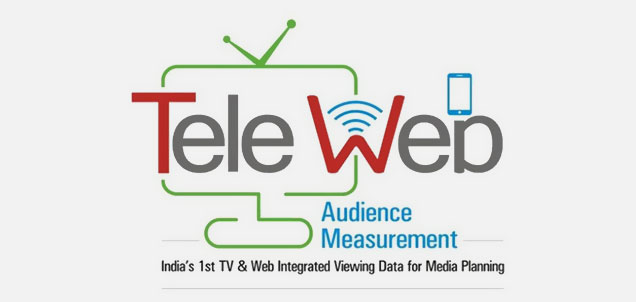
    Last week, the Kantar Media-Nielsen jv TAM Media and Kantar-owned IMRB announced the TeleWeb ratings for an integrated study of viewership on television screens and the internet – desktop/laptops as well as on devices. We caught up TAM CEO LV Krishnan to understand the finer details of the offering…
     

    You had spoken about the multiscreen measurement earlier. But do you think it could’ve come in a year or two earlier?

    Well, it required a lot of work to put it together because one is a non-linear medium and the is a linear one. To bring together both into the same database and be able to tell an advertiser that using a combined medium maybe better than using one medium etc requires work. We did a lot of groundwork. If only publishing numbers in terms of saying which sites were getting hits and which sites were getting what kind of profile of audiences. it could’ve been easy. It could’ve happened much before than now. Probably about 4-5 months back. But to integrate both, this is the earliest we could’ve got to.


    Given that there is an MoU with BARC on meters the merger move is work in progress, what happens after the merger happens?

    We’ll see it at that time.


    BARC is also doing something similar, it is also looking at multiple screen measurement.

    From our perspective we are looking at the present moment of time. We’ve done almost a year-and-a-half of work into this exercise. Obviously, since we are still running the television panel, the idea was to launch it and help the industry use it. What will happen a couple of months down the road is something we haven’t thought about at all. From our perspective, the work on TAM BARC integration is going well at a high speed level. That’ll continue.


    Since IMRB’s digital measurement exercise has been on for some five years now, couldn’t this have happened earlier?

    Two important things. Before we launched something like the integrated data we also needed to ensure the fact that the two panels are stable. TV was completely stable. The online one was a new one launched around 2011-2012. So it took time for that panel to settle down and get used on a regular basis because at that time if you look at it the advertising online was hardly around 2-3% of the advertising that was going over there. So, even if we had launched at that particular moment of time, the integrated quotient, the usage could’ve been very low. The demands coming in from the advertisers that we need do it the integrated way. Only in the last one year, in the beginning of 2014, when we were interacting with advertisers that there was a huge push going towards digital. Probably also because of the fact that most of the advertisers were MNCs were also being pushed by the global directors saying that let’s get starting investing on digital because globally digital was picking up strongly.


    What we previewed at the press conference last week was about English channels and the Hindi news channels. But I’m sure the difference is significant with English GECs.

    English GECs are basically international sites. So, we need to see what you want to track within that and how much of it is with the Indian audience largely. So, probably with time we’ll look at English entertainment also as a next step.


    Do you see a lot of viewing happening online in the case of all GECs?

    There is dailymotion.com, Hotstar, Sonyliv, Ditto, all of them are coming in the Top 50 sites. Platforms like Hotstar are among the Top 5.


    Now a channel like Colors has ‘Comedy Nights With Kapil’ which is among the most watched as per your numbers, but a channel like Colors which targets urban audiences is not in top channels list in tele-web, vis-à-vis Zee which is on the list?

    That’s because of Ditto TV. Ditto is the push for Zee. It has certainly got some audience in the metro markets. Colors is yet to have a platform that could be visible and for which audiences are walking in.


    So, will you say OTT is playing a big role?

    Yeah, certainly.


    What is the kind of response that you’ve seen from the advertising community, from the advertising agencies and media agencies?

    We don’t know yet the response because we just launched today but we’ve been working with the advertisers on this for almost a year now. We connected with them and we realised what they are looking for. So, therefore from that perspective this is exactly matching up to what their expectation was from a feasibility perspective of trying to alleviate a campaign on a multimedia level.


    There is no joint industry body to contend with the way you work. There is no industry association as such…

    No, there is no industry association involved in this. We are on our own and like any other research we are marketing it on our own for users to take their independent decisions whether they want to buy it or not or use it or not.


    There have been views on the entire element of panels. In the case of television, the cost of set-top boxes ensured that the sample size of panel homes couldn’t grow. But no such thing exists for the internet, so why only 6-8000 sample size? Do you think it can be browser-driven so that anyone can download and install?

    There are two different kinds of measurements that happen across all media. One is measurement based on universe and second one is measurement based on panels and specific sub-groups of profiles. The problem comes in when the universe study is when you don’t know who the individual is, who is responding to a particular viewing. So, most of the dynamics related to the universe measurement is already available with the publishers themselves like a Google or a Facebook knows about their customers largely and to that extent Facebook I could say knows it even better because age and gender is something they capture apart from the geographic location which is universally available to them. So, therefore, from a universe perspective, limitation is a fact that while you’ve a larger base you don’t know who that base is, who that individual is in terms of profile. So when you are targeting it, you are targeting more based on the behaviour pattern of the respondent rather than on the basis of demographics. In a panel0based exercise you are able to measure demographics as well as in terms of behaviour patterns together. So you know individually what the profile of the guy is, what profile of home he comes from, what are the numbers in the home, what are the platforms they have in the home that can be access point or a competitive perspective, a competitive touchpoint. So, all this kind of information is available on a panel-based exercise. Therefore, we are able to integrate between two mediums very effectively in this kind of a panel-based exercise. In a universe level it’ll be very difficult to integrate two measurement systems. So, largely speaking, for an understanding of a consumer behaviour and trying to monitor it on the basis of his behaviour, a panel makes sense actually. But in the longer run, we could actually do it the way it happens in television where the set top box data and the panel data work together. To therefore use a panel data is to optimize the set top box data. Similarly here too the panel-based data can be worked on to the universe data. You could mine better data at smaller discreet levels. These things will happen in future.


    How much of the TAM sample are you looking here?

    Six metros put together will be about 10,000 individuals actually, which is close to 2500 paneled homes.


    On a lighter note, had the news on NDTV scoring so high on TeleWeb come in earlier, things would’ve been much nicer for TAM?

    No, we take it as it comes. For us the most important thing is to indicate what is happening in the behaviour front. Business decisions are taken by users.


  • Mera Gaon, Mera Desh! Interview with BARC CEO Partho Dasgupta


    When we last met him, Partho Dasgupta was seen on the wheels of a pretty BMW.  A few months back, the Board of joint industry body Broadcast Audience Research Council (BARC) issued a go-ahead for work on the measuring of rural television audiences. But some we heard got the heebie-jeebies when the day dawned and the data was ready to be loaded on the BMW, short for BARC Media Workstation. It was for the first time since television entered the country in 1959 that a composite audience measurement system for rural and urban India had happened. The BARC CEO loves driving his BMW, but we are certain that it’s the coincidentally abbreviated software dashboard that he enjoys navigating more and offers him greater satisfaction. The weekly urban+rural data, says BARC CEO Partho Dasgupta in an interview with Pradyuman Maheshwari, will offer an optimum indicator of what the country is watching on television. Read on…


    With the data released on Friday, are we now looking at a true measure of what the country is watching, in terms of viewer patterns, markets based on languages spoken and such?

    Yes. Finally we are seeing what India watches across the length and breadth of the country. This includes all kinds of languages spoken and all kinds of geographies, from Jammu and Kashmir to Kanyakumari; from Itanagar to Gujarat. This means 77.5 million urban households and about 76 million rural households — that’s the kind of dispersion Indian TV has.


    Across the country, in J&K, in the border areas where people have problems with the terrain and law-and-order?

    Absolutely. We also had problems. We are all over the country and even in J&K, Arunachal Pradesh and everywhere.


    A major part of rural India doesn’t have electricity. And since your meters depend on electricity, how did you manage?

    TV depends on electricity, forget about the meters. Everyone watches TV when only you have electricity, and not just in rural India. We’ve seen electricity problems even in Bengaluru, in the last few weeks. The ratings go up and down based on this, so that is a problem, and it has a telling effect on the time spent on rural watching. That’s reflected in the data too.


    The industry still remembers the volatility brought in by digitisation and the introduction of LC1  a couple of years ago. Apparently there were murmurs about some channels wanting a delay in the release of the rural current ratings, given that we are just getting used to the primary BARC ratings. Are we certain of a stable measurement system?

    The issues are real. If you want to brush them under the carpet, you can do that. Fact is that when there is a power cut in Bengaluru, people watch less TV. If floods or rains cause power cuts, people watch less TV. These things affect the numbers. If the system is very stable, then I would say something is wrong. Do you spend all your evenings in the same way, watching the same things, doing the same things? You don’t, right? So how can you expect every day, every week, every year of every person to be exactly the same? There are variances, and we show that. By now, most of our stakeholders understand when they see interventions reflected in the ratings. [If there are no variances then] you are doing something dishonest.


    What you are saying is that the system is robust, but there will always be some instability because people watch different things every week…

    There are external stimulus. If you make changes in the storyline, it should show up. That’s why you are changing the storyline. If there are major news events, it should reflect in the ratings. If there are elections in Bihar, and the Bihar numbers don’t go up, there is something terribly wrong. Why would you call it instability? We call it fidelity.


    Are channel heads convinced about it?

    Yeah, absolutely. Obviously there’ll always be some minority who are yet to understand the realities of life. But, most people have understood and they’ve all accepted and rather welcomed it.


    For the broadcast economy and its stakeholders (broadcasters, programmers and advertisers), do you see a significant impact in terms for viewership, advertising, content etc? For instance, primetime in an urban centre may be bedtime for people in the rural areas. How does this impact content?

    You are right, in a way. Rural India wakes up and sleeps earlier than urban India, but it’s just a difference of an hour or so perhaps. In another way, you could say you have two primetimes – an earlier one for the hinterland, and a later one for urban areas. So from the broadcast point of view, you are capturing more people and more opportunities.


    It means more expenses for broadcasters. If you look at the bigger thrust of programming, you must consider the rural sector…

    Yes, but at the same time you are actually catering to so many different audiences that this could translate into a price advantage. Especially with advertisers. There are a lot of advertisers who make bigger gains on their sachets [sold in the rural areas] than on their urban packs.


    What are the significant things that the data shows?

    There are quite a few. For example, we always thought English news is for the metros, but about 52 per cent of English news is watched beyond the metro markets, and 45 per cent of English entertainment is consumed by people may find it hard to believe but that’s the fact. Many of my friends who’ve done work in the rural markets and done dipsticks there, tell me the same thing. It is a rapidly-changing rural India, and we could not capture this in many of our earlier paradigms.


    Is there a lesson in the numbers and the trends they point to?

    Yes, you should see how distribution makes a huge difference. Different modes of distribution. I will not go into the details, but the numbers will make life different for a lot of channels.


    How much do you think will this impact India’s rural economy?

    The accountability part of the money being spent on advertising for the rural markets, will itself change. If you know that you can address a large audience, people will. I have friends who are doing a lot of rural activations right now, and they can see that there is something changing. Now with the numbers coming in, we [have proof of this].


    It’s just been two years since you set up operations, and you’ve released the rural numbers just five months since when you launched this project in April. You have the merger of the TAM meters coming up. What’s next from BARC?

    I think something quite near on the horizon is that we are looking at split beams. Many of the broadcasters are now doing the local split beams, so how do you measure that? The TAM meters merger is also fairly high on the agenda. The next thing you can look forward to is a 10,000 increase every year in panel sizes. And digital measurement of multiple screens, which means mobiles, laptops, all the OTTs, YouTube etc. Apart from the fact we are coming up with a new Broadcast India survey, which is underway in the field. We should see it early next year, and the results will also tell you what the larger or macro numbers look like.


    A slightly shorter version of this appeared in dna of brands of today (October 10), and a part of this interview appeared in the show BrandStand on Zee Business over the last weekend. Watch it on YouTube at https://www.youtube.com/watch?v=bSosY-LBpu4


  • Tata Motors, Refreshed and Responsive


    There’s nothing worse for an automobile major to lose connect with the personal buyer, even if one was exceedingly strong in the commercial and taxi segments. Tata Motors realized this and unveiled a new, multi-pronged strategy that would help it turn future-ready and a responsive, happenin’ organisation. Among the many things that are a part of the gambit is the unveiling of two new offerings every year,  Delna Avari, Head – Marketing Communication and Services, Passenger Vehicle Business Unit, Tata Motors tells Pradyuman Maheshwari


    Tata Motors has not spent too much effort on marketing and big launches. But there has been a change of tack over the years. Tell us more about your HorizonNext strategy?

    If you go back in time to see when the last big launch was, you’ll struggle to come up with a date. In the automobile sector, you can’t deny that the product is at the heart of it all. We realised this and announced the HorizonNext strategy that you also are referring to in June 2013. This was an acknowledgment that we need to do multiple things as an organisation to keep pace with the market.


    Was that on the basis of some research?

    Absolutely. The biggest insight was the market share, when you see your declining numbers. Also realising that you are losing connect with a certain type of consumer. We are strong in the taxi and commercial segment, but the connect with the personal buyer was weak. Actually, efforts were also being made, but it was really about structuring that effort. As a strategy. We work on four distinct pillars — product focus, manufacturing capability and quality, selling capability and post-sale capability. After the Nano launch, which was really big, we stated that till 2020, we’ll be launching two new products every year. We’ve had an ageing kind of a portfolio in terms of brand and the kind of customers we engage with. We needed to refresh the entire brand, product portfolio and offerings to consumers.


    Often when you have to rethink strategy, you first need to convince your internal customer. How much of that is required before you go on to convince the outsider?

    You need to get your house in order first. The top management understands this, but it’s about getting that understating right down the ecosystem which, in our case, ends with the dealer. When speaking to a commercial customer, you might haggle over the money or that month’s scheme, and the eventually the deal is done. But with a personal buyer, the engagement is different. The first time he will come in and see the car. Then he’ll probably come with friend. Then he’ll come back with his wife and child. Sometimes your ecosystem is not designed to deal with this. That really is the challenge – the understanding that this buyer needs to be dealt with differently. Four or five years ago, the top things consumers looked for in a car were price, economy, reliability, after sales etc. In the last few years, design has moved to No 2. All other things being equal, design plays a very important role. It was very important for us to actually rethink in the way we design our cars. So we put an internal focus on design, both on external design and internal space usage.


    Was your strategy worked out internally, or did you have consultants?

    Tata Motors has worked with a lot of good consultants, like Accenture and BCG. But this, we had to do ourselves. It was about a lot of research and holding up a mirror. Understanding that it’s a long-term play, which is why we’ve got our strategy in place till 2020 and will revisit it every six months. There is no point in going down a path if you don’t check whether or not you’re on the right path. No matter what changes have happened in management – and there have been some in the last few years — whoever came in, picked up the ball and ran with it because there was some sense in that.


    But how much did external factors, like slumps and peaks, influence your strategy? Have you had to change course?

    No, you can’t afford to change course when it comes to something like this. You’ll at best have to be mindful of it. From a strategy point of view, we are very clear what we want to do in terms of how we want to go about it.


    In the last few years, you’ve innovated considerably in your media spends. Has innovation been a major emphasis for you to break the clutter?

    Absolutely. People are consuming media differently, and the same language cannot be used for everyone. We’ve a mobile strategy as well. The first thing you always have to do is get people to recall the brand name. For Bolt we had a one-minute challenge where people had to click options on their mobile.


    In terms of your spends, you have ATL, BTL and digital. Given the changing profile of the consumer, is anything given preference over the others?

    It definitely does shift. For a very long time, it was only print and TV. If it’s the festive season it’s all print. Those kinds of rules were there. Frankly, we’ve not followed that in the last two years, because we are working with a much smaller budget compared to others. More weightage has to be given to experienced staff around launches because we need to take our product out there and let people experience it. We are having to do a lot more in terms of mobile and digital just to get the brand’s conversation to change. The digital space is where people are first shopping. They read reviews, look at consumer feedback, see what experts are saying. There is a lot of noise that happens out there and if you do not manage that well, you could be drowned out.


    In terms of allocating your resources, how much is it for digital when you say almost every automobile maker is using it too?

    Spends-wise I would say it is still a little less because it doesn’t cost us much. But it’ll suck up almost 30-40% of your time.


    The spend is not very much but the time effort is considerable. Also, you need to be a lot more responsive.

    Time effort is considerable. One has to be very quick. A lot of it started with Nano. The first clean-up you need to do is in the digital space. A lot of people had not actually noticed that what was going wrong with Nano was in the digital space. Our response time came down to 37 minutes average. You can imagine how quickly we were responding to people. We are talking about complaints and feedback and all of that. I’m not talking about just the ORM part of it or I’m not just talking about social media part of it. It was needed because it was only then that you could change the way you were perceived.


    That was to be my next question. How’s the new positioning of Nano working for you?

    Very well. Touchwood, I would say. There was a method to the madness. A lot of people wondered what the hell was going wrong when we first came up with a red box and suddenly there were kids in the car. That was just the external manifestation. The TVC is just one thing and probably the most visible thing so people pick that up. It really was about changing the conversation around this car. So, this car really was all about being your personal mobility option. It was not about the fact that it was for the poor or the rich whatever. It’s really about saying that if I want a mobility option no matter what my strata, income strata is or age is, it is for me. Somewhere you know now it’s part of folklore that somewhere the management of the brand was not done effectively. But you had to jolt the system. You literally had to move it from there to where it is today which is an aspirational, young, car which is great for the city, great runabout. We moved the price point expectation in people’s mind where they were just stuck on one lakh. The unfortunate branding of it as ‘lakhtakia’ (one lakh car) poor man’s car got stuck. You had to change that entire thinking to an aspirational, young, youthful, young-minded car.


    Clearly, the one lakh price point wasn’t a major factor at all.

    Now nobody talks about it. There is definitely still a reality that it is the most inexpensive car. It definitely still is your entry-level car. But what is interesting to note is that it ceased to be the reason for buying or talking about the Nano.. Today the conversation is not about the price, it’s about the car.


    With the success of automatic version, do you think you’ve successfully turned the Nano brand around? The fact that you’ve turned the ‘cheap car’ tag into an aspirational one…

    Honestly, I don’t know if we ever went out there saying that. Let that chapter be; it had probably hit its lowest point and everybody was saying, ‘What happened to our dream?’ From there to now, we’ve moved the needle. The product and its variants we fixed along the way. You fix the variants, you fix the brand. You fix the average selling price in a way people are willing to pay for your brand, and I think you’ve got the blocks in place.


    You mentioned you are looking at two new offerings every year. Are those variants or new models?

    Under HorizonNext, the first brand was Zest and then Bolt. There are 14 brands, each with three or four variants and another five colours. We were very clear that there are certain brands with which we are going to the next generation, and we’ve taken brutal decisions with some saying we don’t continue with them. So, we’ll have fresh products coming in, and we’ll ‘next generation’ of some of the existing ones.


    Which are these brands?

    There are very strong brands in the Tata portfolio and we’d be fools to kill them. There are brands that are strong in the hearts of consumers, and those will keep evolving. Not every brand will be above in that line-up. There was a point in time when in the same newspaper, you had several ads for Tata brands. It was ridiculous. It was one of the things I changed when I took over the entire thing from a marketing point of view and consolidated it. We only spent on certain brands, on certain media, and certain amounts.


    When do you think this focus on digital is going to grow, given that a large number of your potential consumers are there?

    We are very strong in the digital space. Today, digital is still at a stage where it’s the first place people look for information. But digital is not yet the place where you buy; that’s the next level of evolution. For now you better manage your brand well out there [and have both a] mobile and digital strategy.


    A shorter version of this appeared in dna of brands dated November 2, 2015