Category: AVIK CHATTOPADHYAY

  • Tinker, tailor, marketer, sailor…


    By Avik Chattopadhyay

     

    Avik ChattopadhyayI attended a very interesting conference of CMOs yesterday. The one subject that took my fancy was that of “marketing in the era of technological disruption”. The panellists were CMOs from different industries, ranging from BFSI to consumer electronics, food and home improvement…from the totally digital to the totally physical consumer spaces. [I hate using the term ‘phygital’ as it sounds derogatory to both the spheres or spaces.] These people were in the thick of things, hemmed in between increasing personalisation and the rising head of AI and ChatGPT. I had some key takeaways from the session which I share here, as I believe these CMOs represent the larger community of marketers who chart the course that corporate India takes in building and nurturing brands and businesses.


    The role of the marketer fundamentally remains the same as before. The larger objectives remain the same while the ‘tools’ of the trade have certainly changed and proliferated. Given the rapid digital proliferation, the marketer now has to focus on reducing inefficiencies than ever before.


    While data is the ‘new oil’ and the ‘king’, it is easy to be burdened with tons of data without knowing what exactly to do with it. After all, the tasks of how to mine the data are also created by us humans, so anomalies may creep in till the time when AI totally takes over this job and we become mere implementors of orders from the ether. It is crucial for the marketer to draw the line between big data and usable data.


    Conversion continues to the biggest challenge for the marketer. While the funnel gets richer by the day, it narrows too soon leading to a rapid fall in % shares from prospect to customer. The marketer has to shift the focus of both the organisation as well as the investors from mere visitors / footfalls / followers to converts / advocates / consumers…basically from the passive base to the active base.


    The second biggest challenge is retention. As there is an overwhelming investment in getting customers, the required focus on retaining the existing base gets diluted on occasions. This is why the marketer has to look after the service aspect too, in terms of communication and engagement. We all know how expensive it is to get a new customer vis-à-vis retain one who gets more by word-of-mouth.


    The third biggest challenge is measurement. With the proliferation of channels and media, there is also an explosion of measurement systems, with each claiming to be the “right one”. The marketer looks forward to a single measure for all media and channels, and also a simplification of the process. Aspects like sustainability also need to feature in the measure, as it is a corporate regulation now. Both new media like OTT and traditional ones like OOH suffer from credibility issues when it comes to measurement.


    The use of jargon seems to bother today’s marketer. He / she wants the language to be simplified. Terms like “omnichannel” and “cohort” have been recklessly used to justify both esoteric strategy as well as on-ground non-performance. While the old guard would grapple with such terminology, the new-age CMOs do not fall for such smokescreens.


    The marketers agreed that every organisation has developed into a ‘software firm’ along with the business it conducts. Thankfully, learning tools have become more accessible and intuitive to allow people in marketing and sales to remain updated ‘over the air’. While AI and its tribe will take over the routine tasks of capturing data, processing it and churning out reports, the marketer will need much higher analytical and cognitive skills to use the reports for culling out insights. Will that mean that marketing teams will be down-sized? Remains to be seen. Will that mean that tools like ChatGPT will make the marketer dumb, as Harari fears? Not at all.


    As long as the human being continues to consume physical products, the focus on creating immersive sensory physical experiences will keep growing. The marketer has to create the smooth bridge “from the screen to the showroom”. After all, all e-commerce and q-commerce entities survive on delivering physical products from their physical warehouses. The bridge has to be intuitive, seamless and bespoke for each customer over a period of time. That is the final frontier in the career of a marketer.


    A new role added is to also keep a tab on competition or vested interests using technology to create deep fakes to damage your image and market. The same technology that holds us in awe, with its ability to insert a person into a video and put words in the mouths that never said them, can become a double-edged sword. We already have cases of deep fakes in advertising created to damage brand reputations.


    Finally, technology is not a disruptor but an enabler. It is the means and not the end. The marketer has to have complete control over it rather than become a victim of its whims. New technologies will always be fascinating but shall always remain the ‘tool’ of the marketer. How one uses it decides what one becomes of it.


    To draw inspiration from the childhood nursery rhyme,

    “Tinker, tailor, marketer, sailor

    Rich man, poor man, beggar man, thief!”

     

  • Size 35 please…


    By Avik Chattopadhyay


    Avik ChattopadhyayAirport lounges can be some of the best places for stimulating discussions and rude revelations. Given that one needs to reach two hours before a flight takes off and you end up having one hour spare, ghost-shopping [for lack of windows] helps you stay updated with what people are ‘into’.


    I was looking at belts. Why, my colleague asked? Because all the trousers I have are of waist size 36 while I actually need 35. And I don’t get it in the brand I choose to wear. “The others don’t have them too,” he quipped. “Brands do not offer odd sizes in apparel and ½ sizes in footwear to Indian customers.” “Really?!” “Yes.” “No, that can’t be! Look at the market size…” “So what? We are still third world.” That was the rude revelation moment!


    Then started my little research. What sizes of clothing and footwear are offered to us Indians? Was my brand an aberration? Let’s check the global ones. Levi’s would be a good starting point.


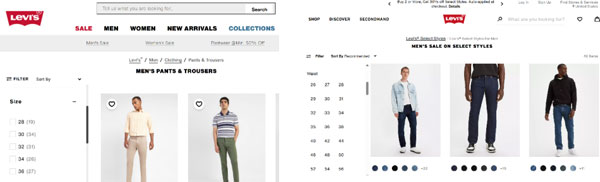
    Levi’s India online store and Levi’s US online store


    As I was pre-warned, Levi’s in India offers no odd sizes while they do so in the US. There are different ‘fits’ available, but no odd sizes. Why would they do such a thing? Indian waist sizes are as varied as the Americans. Market size? Well, the upper middle-class that can afford one jeans per year is around 20 million odd, which is close to 8% of the US population. So, what would make Levi’s take this decision, given that they have had Indian bosses for a long time?


    1. Sheer convenience of lesser SKUs? Doesn’t make sense as I can charge you a bit more for the exact size you want. And there are so many ‘fits’ on offer.


    2. Sheer apathy for the Indian customer as we generally accept whatever is handed out to us? This could be the reason as I have personally experienced the same when marketing automobiles. “The Indian customer does not know what he/ she wants, so let’s give what we have. Why re-engineer or tailor-make?”


    3. Sheer lack of activism by the brand-struck customer? And, therefore, being more forgiving towards the ‘phoren’ brands?


    4. The ‘Unnees-Bees’ Syndrome as I call it, of the customer accepting particular drawbacks while other requirements are met. So, I can live with the erring waist size on offer as long as they give me the choice of five fits to choose from.


    The Indian ones should be more sensitive then. Let’s check out what our homegrown brands offer us.


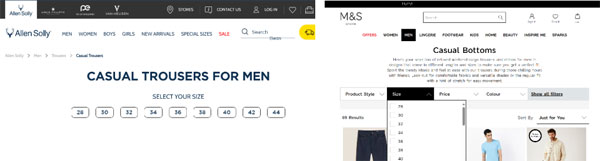
    Allen Solly online store and M&S India store


    Louis Philippe, Allen Solly, Indian Terrain… all the same. Only even sizes. While offering choice in fits – classic, regular, slim, super slim, skinny, jogger, carrot and what not. The same applies to shirts only in even sizes, with ‘39’ being the only odd size on offer with the choice of fits. No customisation in the form of collar size and sleeve size. Let the ‘natives’ learn to adjust!


    Talking of natives, M&S metes out the same treatment to their customers back home in Blighty. “Sorry, we destroyed your textile industry to set up Manchester, so as a mark of solidarity, we shall wear your sizes.”


    Does the same apply to footwear? Will my colleague be once again proven right?


    Let’s start with our homegrown favourite Bata.


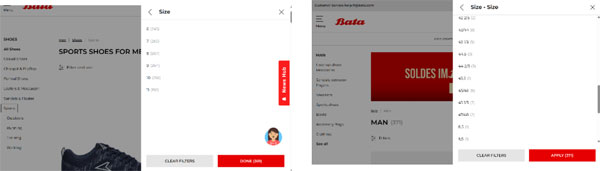
    Bata India online store and Bata France online store


    Now the thing with footwear is not about odd or even sizes, but the ½ sizes. An 8.5 or a 9.5 rather than compromising with a 9 or a 10 and swimming in the shoe for life. Bata India offers no ½ sizes while Bata France does. The same questions crop up in my mind. SKUs? Market size? Marketer apathy? Consumer adjustment?


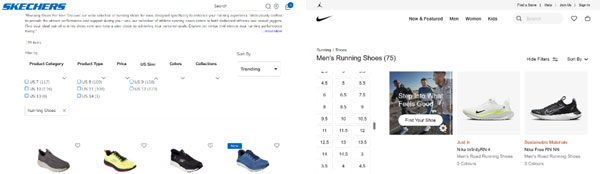
    How do the global brands treat us? No different. Adidas and Skechers play the same game as Indian brands like Bata and Liberty. What a letdown. When I was close to losing all faith in humankind, the Nike India online store came up as the redeemer, offering not just the same product lines but also the same sizes as they do in the US and Europe. So, there is hope!


    Skechers India online store and Nike India online store


    What I am trying to put across to you is the rude fact that the Indian market, in spite of its size and potential, is still not treated at par with a China or Russia when it comes to most global brands. And it is not just to do with the sizes of apparel or footwear, it is also about the availability of their latest portfolio in the soon-to-be world’s third-largest economy. It is about the larger ‘mindset’ of the brand and the marketer in approaching and addressing the market. It is about the true respect that a brand has for the customer coming alive in its on-ground deployment of product and promise. Any amount of advertising, social media posts and press statements will not add up to the actual demonstration of respect.


    One may say that these are minor issues in the larger landscape of a country and market on the move, but thousands of these issues make up the attitude of an industry addressing the Indian consumer. In the apparel and footwear world, everyone seems to follow the same path while Nike is the exception. Imagine the potential word of mouth when someone is delighted to find his/ her perfect ½ size with one brand while being disappointed with the others. That keeps the cash counters humming. Respect the consumer and you will get it back in multiples. Otherwise you will remain a mere transaction and temporary fad. And, the 20-million strong market today will one day surely double in the next five to seven years.


    The fault does not lie only with the brand marketers and portfolio managers. We, the consumers are equally to blame for adjusting to compromises and not becoming vocal and visible activists for being given what we deserve. A social anthropologist will argue that this is exactly how we have been for eons, whether it be the pantaloon or the politician. So hang on, do I continue my search for a better belt?


  • Over the moon, and how!


    By Avik Chattopadhyay


    Avik ChattopadhyayWe made it. Once again. The Indian “Space Programme”, since it kicked off with the setting up of INCOSPAR [now ISRO] under Dr Vikram Sarabhai in 1962, has been one of the best  ambassadors of Brand India. It has embodied the true Indian spirit of inquiry, ingenuity and innovation. The age-old scientific temper of one of the world’s oldest civilisations comes alive not merely in the number of engineers and doctors that go abroad to work but in those that consciously choose to stay back to create institutions and ecosystems which are global benchmarks. As someone quipped in a WhatsApp group, “The Chandrayaan 3 mission cost less than the budget to make the movie Aadipurush”.


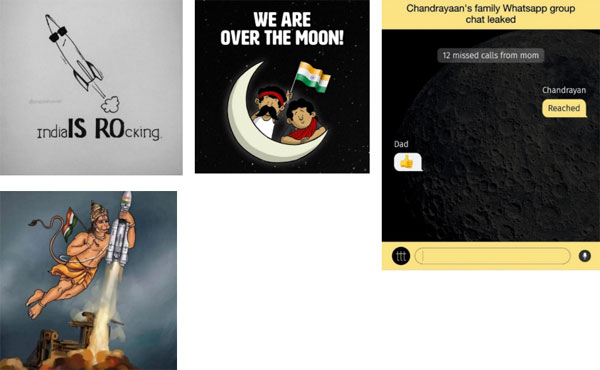
    While a large part of the nation was glued to the news updates for 30 full minutes, what I find fascinating is the genres and variety of memes and messages that took off as soon as Mr Somnath announced: “India is on the moon.”


    This piece is about the unique ecosystem of communication that is created around key milestones, good or bad. The fact that the memes I share here landed on my phone within minutes of the milestone show that there are hundreds amongst us who have invested time in preparing them well in advance, both as individuals as well as organisations or corporates.


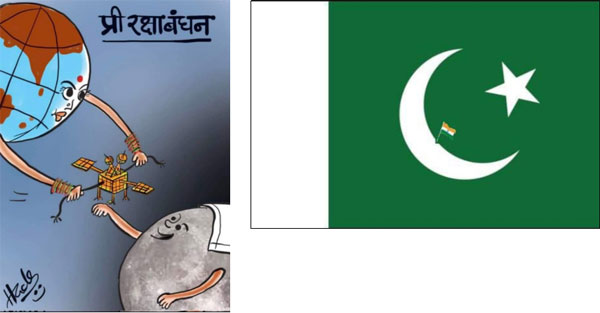
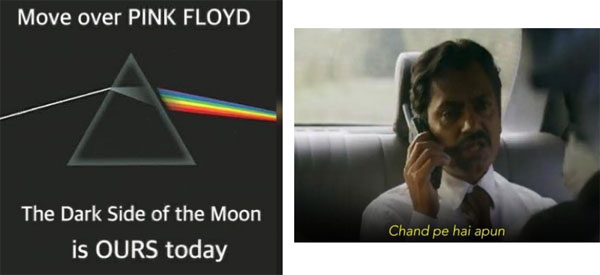
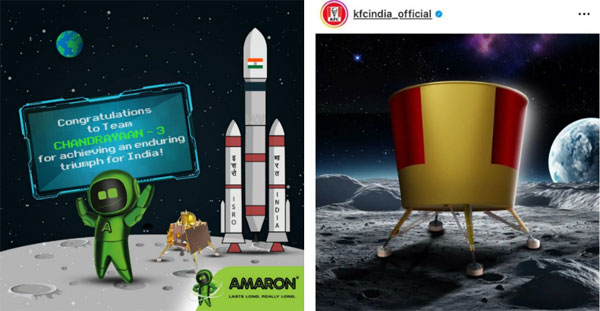
    I picked 17 specific memes from the close to a hundred I received across groups and individual contacts. The different levels of creativity are a wonderful sight to behold for they stand for the sentiment of the people at large. They can be classified as [a] celebratory, [b] topical and [c] corporate.


    The celebratory ones I share here range from the typical play of words to expected images to the excellent use of humour in the one on the right, shared below..


    Then we have the topical memes. With Raksha Bandhan coming up on the 30th of this month, there had to be one on that theme which was one of the more popular ones doing the rounds. Going by our obsession with Pakistan, there had to be one with a jibe at our neighbours too. It was however pleasant to learn of many from across the border wishing the mission all the very best on social media. I found the one about Pakistan very subtle as if implying that there is always a part of India in Pakistan.


    There are two memes which I loved. Not to be understood by most but those that did, enjoyed both of them. One was with Pink Floyd’s iconic music album “The Dark Side of the Moon”. Given that Vikram landed on the southern and dark side of the moon lent itself to this meme. Given it happens to be the album’s 50th anniversary, there could not been a better coincidental tribute, especially for a fan like me. And then there was this wickedly corny take on Nawazuddin Siddiqui’s character in “Sacred Games”. Both deserve to be archived.


    Then we have the corporates who wanted to encash on this achievement and show solidarity with the mission.


    The one by Amaron was ‘cute’ while the one by KFC was surely over the top but does bring a smile, something more apt in an issue of Mad.


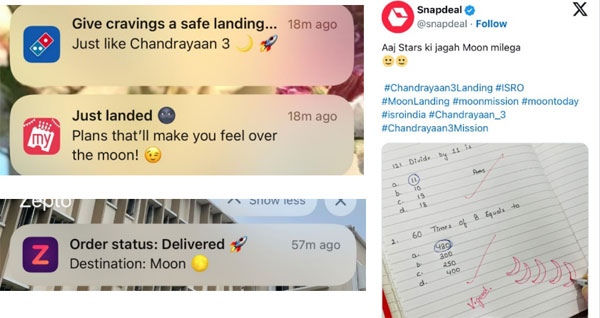
    Then there were posts by the e-commerce guys which were absolutely pedestrian and so predictable. If you do not have a really powerful thought, you might as well not communicate. But the fear of not being seen doing something on such a momentous occasion gets the better of you. When the Chandrayaan had taken off, Ixigo had come up with a brilliant little film which spread like wild fire [maybe not the most appropriate term to use right now].


    Here is the YouTube link to the simply loveable Ixigo video.


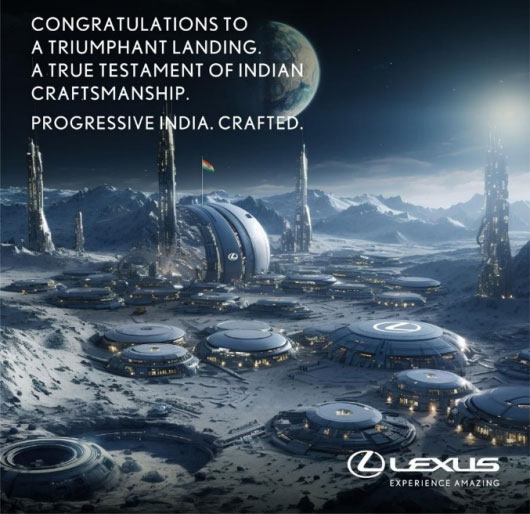
    And then there was this really esoteric one by Lexus. Obviously, it is the moonscape of the future with a Lexus branded building and a launchpad…hopefully. I really did not get it. Hope the Lexus owners have.


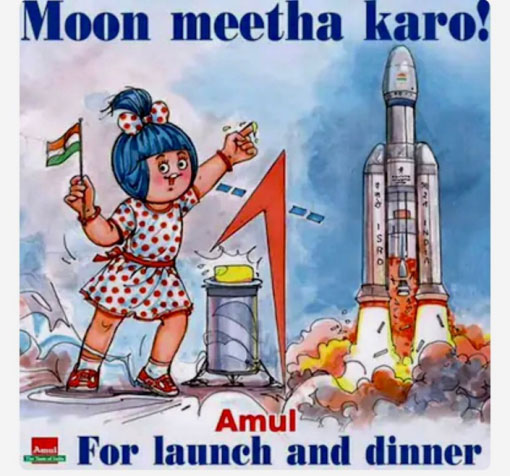
    How can corporates messaging be discussed without sharing what Amul did. True to its DNA, it came up with yet another little masterpiece using their unmatched play with words. Very correctly, the true taste of India and the occasion.


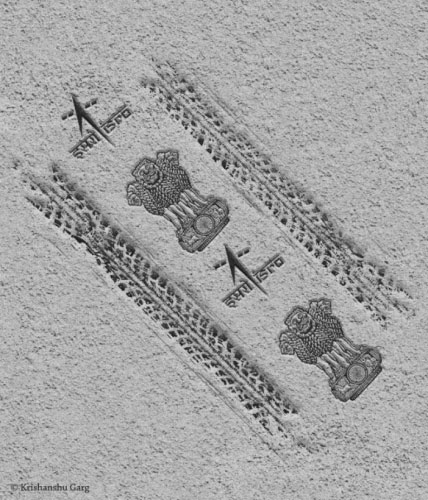
    My last two mentions span from the ridiculous to the sublime. The former is a meme created by one Mr Krishanshu Garg about the supposed permanent imprint the Pragyan rover has left on the moon’s surface. Much before landing happened. Yet people, in the sheer enthusiasm and enormity of the situation, shared this as yet another “moment of pride”. Tells you that creativity can go seriously overboard at times.


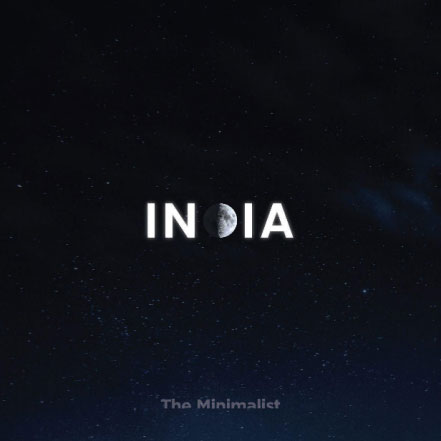
    I finish with the one I would preserve as the image I would retain for life if asked to choose just one. Created by The Minimalist, it is indeed simple and sublime. Possibly the best tribute to all our fellow citizens who have given us this rare moment of celebration and pride! Jai Hind.


  • Thompson, with a ‘p’


    By Avik Chattopadhyay


    Avik ChattopadhyayHere I am, on a blue-blooded advertising and marketing platform, taking a chance at expressing my opinion on WPP finally doing away with the famed “J. Walter Thompson” name. I am not an advertising professional, so do I have the very credibility to write on this subject? I think I do as I have been a ‘client’ for almost two decades dealing with various advertising agencies, including the one with a ‘p’.


    Since WPP decided to give the agency a new name, or impose a name of an existing much smaller agency on the bigger one, many advertising professionals have lamented and lambasted the decision. “How can you take away such a venerable name?” has been the common refrain. “Who on earth knows the new name? No one!” has been the second most popular one. Most of these people have had careers in HTA / JWT / WT and have moved on in life.


    So, will the name change see a change in business? Will it see a change in the ethos and culture? Will clients leave as they do not like the new name? Will employees leave as clients are leaving? Will the entire business come crashing down?


    As someone had told me early in my career, “An agency is as good as the client.” This adage has had a 100% success rate in my professional career till now across eight organisations, six as a client and two as an agency. At every stage, whatever the context or occasion, the communication output has been as effective, efficient and enriching as the quality of the brief, the level of the involvement and most importantly, the depth of the understanding. Right across conventional advertising to media planning to digital marketing to out-of-home to on-ground activation and event management.


    Just like brands have grown being with the right communications partner, so have the partners grown continuing with the right brands. The relationship is mutually impactful. If HTA / JWT / WP is the intellectual behemoth that it is today, it is because its relationships with certain brand behemoths have endured over decades. And these relationships have built its reputation. Just like any superstar, more than 50% of its work would be mediocre or pedestrian but it is that balance that has created the magic for it.


    Over the years I have realised that using “partner” in place of agency and “brand” in place of client works better if you keep repeating them a thousand times in your head as then you start respecting the agency more as a partner and a client more as a brand. That makes a huge difference in the relationship and the quality of the communication.


    Fiat became FCA. Peugeot became PSA. Then Fiat and Peugeot became Stellantis. One may argue that only the corporation names have changed while the customer-facing brands have remained the same. Okay. Ciba-Geigy and Sandoz became Novartis. ICI became Akzo Nobel. Sakura became Konika. Vam Organics became Jubilant. Phoenix became Firefox. Danone’s Bio became Activia. Bombay became Mumbai. The legacy brands wore new clothes and went about their work. The earth did not part consuming them for this act of blasphemy.


    In fact, most of them benefited from donning a new name. it gave a new sense of purpose and direction. And the customer was the biggest gainer. In the enthusiasm of the new name, new ways of customer delivery, product innovation and delight were conjured up by the same team, almost like saying, “We have not only changed, we have gotten better!”


    Advertising has evolved into communication. Communication is going through a tectonic change with the AI interface now rubbing shoulders with the creative human being. Mediums and methods are changing as rapidly as you can say “James Walter Thompson”. The new name VML has been consciously chosen to denote a fresh look at the world of communication. The consumer is changing. The brands needs to change. Should not the communication partner change too? As long as the people are the same and the intellectual capital only increases, the lamenters can rest easy. The clients will not run away. Neither will the employees. Nor will the operating standards fall.


    As long as the ‘p’ of Thompson remains intact.

    ‘P’ for partner.

    Cheers.


  • Obsolescence vis-a-vis Relevance


    By Avik Chattopadhyay


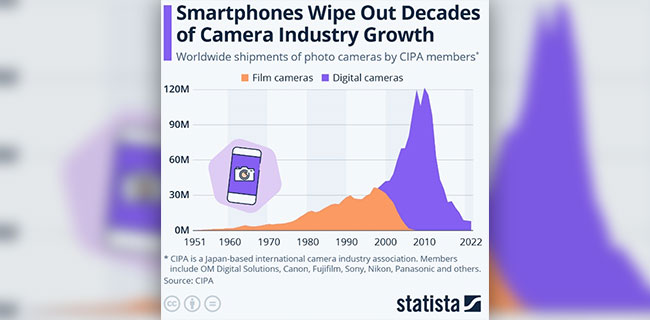
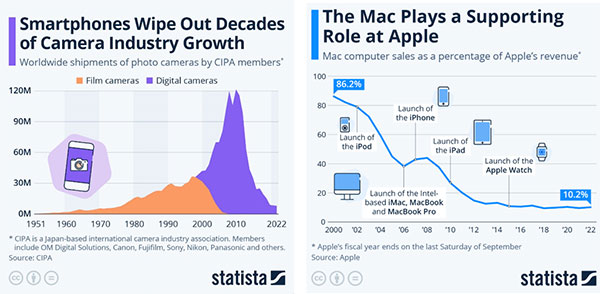
    Avik ChattopadhyayI came across two very interesting infographics by Statista last week. Though they are different pieces of information, to me they seemed bound by the common thread of a problem that every brand faces in its lifetime – obsolescence.


    Brands are scared by this very word. It is a stage in life that no brand wishes to ever experience. Yet, every brand must.


    I was discussing the infographic on cameras with a friend and he said, “These Japanese brands have become obsolete. They are nothing today. In just 15 years.” Little knowing, he had posed a crucial question that every brand manager would ask oneself and try the best to answer.


    Does a brand become obsolete?


    I do not think so, if it is a true brand in the first place. A brand is the promise of an experience, consistently delivered over time, as my guru Wally Olins used to say. Hence, a brand not merely a physical product, method or process. It is the experience that the product or method or process provides. Kodak was not about making cameras. It was about preserving memories. The day it forgot this basic and obsessed with making better cameras, it lost the plot. Just like Canon or Nikon or Panasonic or the hundreds of camera brands that believed their purpose was making a camera.


    Those that realised that their purpose was to help capture occasions, share experiences and create memories did not get bogged down by just one product format or process and devised new formats and methods. While many had written off the European camera makers in the 1990s due to the sheer dominance of the Japanese, they are back in business, collaborating with the smartphone makers in engineering their optics. So you have One Plus or Oppo collaborating with Hasselblad. Nokia had collaborated with Zeiss. Xiaomi has collaborated with Leica, which had a previous partnership with Huawei. Amongst the Japanese brands, Sony too realised its brand calling was much bigger than just a camera box, hence happens to be one of the largest optics partner for smartphone and smart device makers.


    If Colgate thinks of itself only as a toothpaste and not about dental health and happiness, its days are limited. Similarly if Maruti Suzuki thinks of itself as a maker of personal 4-wheeled vehicles and not as about democratising mobility in India, it will get gobbled up by someone who provides mobility solutions, however large it might be.


    A brand never becomes obsolete. A product does. A method does. A process does. And if a name thinks it is only the means and not the end, it surely does become obsolete.


    Now, the second infographic says that the Mac is now merely around 10% of Apple’s annual revenues. Which raised the second question in my mind – are brand relevance and obsolescence correlated? Which means, if a brand remains relevant, it cannot become obsolete, and vice versa.


    In just 22 years, the share of the Mac in Apple’s revenues has fallen by 8 times. Does that mean that the Mac is losing relevance in Apple’s future scheme of things? Does that imply that the Mac is on the verge of becoming obsolete?


    Not at all. The Mac continues to play a critical role in the larger ecosystem that Apple has created. Just that the ecosystem is so damn huge that its financial impact has reduced. However, it continues to do robust numbers, is always a focus at every annual product announcement day and is a critical lifeline for students and creative people. Without the Mac, the ecosystem will be incomplete and other business lines will get adversely impacted. And the fact that Apple keeps regularly upgrading the entire range demonstrates the key role it plays.


    So, a lesser share of revenue does never mean waning or lesser relevance of a brand both for the organisation as well as the marketplace. Even though share goes down, profitability can go up. And that critical brand can actually open doors for the organisation into other customer needs and applications. A student buying the first Macbook will certainly be a prime target for the phone, watch and every future solution that Apple comes up with.


    Just like the lesser numbers of the Tata Harrier does not imply it has lost its relevance vis-à-vis the Nexon and Punch. The Harrier plays a key role of demonstrating a certain level of engineering, design and performance shoulder to shoulder with a Honda, Hyundai and Kia. Hence, it plays a critical role for the larger Tata brand and its mobility ecosystem.


    The next time someone casually comments that a brand has become obsolete or irrelevant, just pause for a moment, give a deep think and then decide whether the statement holds any water, or is it just a temporary phase in the brand’s lifecycle.


    Peugeot had started off its brand lifecycle making water mills and steel knives and forks.

    So there!


  • Value Brand vis-à-vis Discount Brand


    By Avik Chattopadhyay


    Avik ChattopadhyayThere is an ‘End of Season’ offer from Levi’s that you get two pieces of apparel for every two pieces you buy. People in WhatsApp groups I am part of are already sharing this offer exclaiming it’s a terrific deal. At the same time, many in the same groups are writing off the Maruti Suzuki Jimny as it is going on Rs 2 lakh off the sticker price. One is great “value” while the other is simply a “discount”.


    What really distinguishes a consumer offer as a value offer from one that is scoffed at as a desperate one? I think there is a very thin line dividing them.


    Amazon Prime’s annual membership fee was terrific value.

    Netflix slashing its monthly single device fee to Rs199 was a desperate discount.


    Levi’s offering ‘Buy 2, Get 2’ as an ‘End of Season’ is terrific value.

    Cantabil offering the same throughout the year is a desperate discount.


    Having spent my life in brand management and marketing, I have always grappled with finding the balance between an offer and a discount…a strategic move versus a desperate measure. Having faced failure from close quarters, this marketing puzzle continues to put my fraternity in a tizzy, from soaps to SUVs.


    What must be going on in the mind of the brand manager of the Jimny?

    What must have always eaten into the minds of the people who run Cantabil?

    What makes Indian brands join the ‘Black Friday; bandwagon while we have our own Diwali / Puja season?


    Timing is critical

    When you plan your special offers sets the tone of the promotion’s correlation with the brand’s positioning. If it coincides with the traditional periods of promotional sales, you are not a sore thumb. In fact, people expect the most popular brands to offer their best on these special occasions the prospective customers save up for.


    If it is too soon after your launch in a market, be ready for the jibes and barbs. Even if you realise you need to make a strategic pricing recalibration, doing it soon after your launch is not very clever. If you need to clear immobile inventory, convert it into a special edition or a limited edition, add some features or freebies and then push it out. Luxury brands are masters at this game, from fancy coffee machines to cars. If you cannot think up such a fix, then just bear the pain for some more time and wait for the right time.


    Most apparel brands plan their offers during the bi-annual ‘End of Season’ periods. I know of uber HNIs waiting for these periods to stock up on their Hugo Boss wardrobes.


    Context is key

    You may also choose your ‘time’, based on brand milestones like anniversaries, founder’s day, sales numbers and so on. That justifies the reason to offer a special price as part of an overall celebration. Volkswagen in India started the ritual of the ‘Volksfest’ in October as a celebration of the brand including special offers. An India-specific initiative, it coincides with the traditional festive season and seemingly does quite well for the brand.


    For this to actually work for the brand, it has to be aspirational enough to expect customers to wait for such occasions that stand apart from the traditional periods. ‘Cyber Monday’ was created as an extension of the Black Friday week encouraging people to shop online only as recent as 2005. Amazon has created a brand out of ‘Great India Shopping Festival’ and a significant part of digitally-abled India wait for this half yearly promotion.


    Market leaders like Maruti Suzuki could create its own promotion festival coinciding with its foundation day. That way, customers get to appreciate the brand better as it is associated with a key milestone, helping build a bond more emotional than merely transactional.


    Discounts need not be desperation

    There are brands that have developed discounting as a virtue than a handicap. Amazon gives you not only the range but also deep discounts. Reliance Retail does the same through Trends and Digital. Vishal Megamart caters to a certain economic stratum with the same benefit proposition.


    For other brands, discounting need not be made to look as a desperate measure. Even if it is a price recalibration or correction, the brand has to have the candour to admit so and pass on the same benefits to all previous customers of the same product. That way, nobody feels cheated. In fact, you convert them into brand advocates through your demonstrated ‘transparency’.


    As an example, we have always seen automakers increase prices due to rising input costs and a plethora of reasons cited by them to justify the act. There have been occasions when input prices have come down but not a single automaker has even brought its prices down, even if symbolic.


    In hindsight, I do not think there is anything as a ‘discount brand’. They are all ‘value brands’ for the market segments they target. What is a mere discount for me will be great value for someone else. And vice versa. A discount is not derogatory. We love it when it is offered as a “customised” offer to us as an individual buyer. As long as the brand behaves confident and justifies its price offers, it offers great value. And that is what really matters.


  • Happy 40th, little one!


    Avik ChattopadhyayBy Avik Chattopadhyay


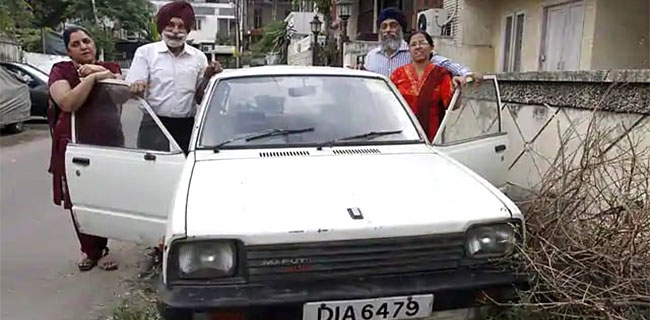
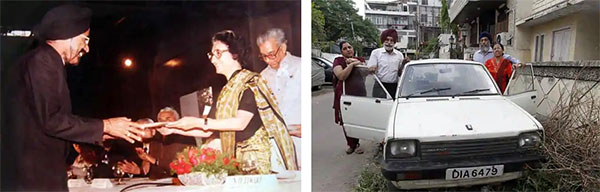
    Yesterday, happened to be the 40th anniversary of one of India’s most loved brands: Maruti. On December 14, 1983, the first batch of the Maruti 800 rolled out with the first car eventually registered as DIA 6479 was handed over by Mrs Indira Gandhi to Mr Harpal Singh of Delhi.


    The key of the first Maruti being handed over; the car before it was restored and displayed at the Maruti Suzuki brand centre adjoining their head office in New Delhi. Photos courtesy Mr KG Verma of Maruti Udyog Limited.


    Rarely has any brand once owned by the government firstly survived this long and secondly maintained its market leadership almost since inception. Rarely has a ‘subsidiary’ company overtaken its parent and become the de facto reason for the parent’s sustained global success. Rarely has a mass market brand, literally catering to millions of customers across every corner of the country, become a benchmark in customer-centricity. Maruti is indeed a rare brand, not only in India, but in any market and a case study for all management schools across the world.


    Legend says that on that eventful day 40 years ago, when asked to say a few words, Mrs Gandhi started with “Yeh ek chhoti si gaadi ki ek lambi kahaani hai…” [This is a long story of a tiny car…] obviously referring to her son Sanjay’s obsession with building a ‘people’s car’ in India, a la the Volkswagen Beetle, Renault 5 and Austin/ BMC Mini. He had started his early efforts sometime in 1975, with a break from 1997 to 1980. His sudden death in the same year spurred on his mother to ensure his dream gets fructified.


    While the numbers, the loyalty, the profitability and the sheer market dominance has done most of the talking for the Maruti brand, the corporate has been telling cagey about its history. And that is the very issue I raise today, as an alumnus and an individual who owes a lot of what I am to the seven rich years I breezed through there in two stints.


    There should have been a Maruti Suzuki museum by now, exhibiting all interesting pieces of history, experimental vehicles, the single-seater racing cars, the concept cars, documents, photographs, blueprints and so on. It should have been the pilgrimage of every Indian motorhead, just like the Autostadt for the Volkswagen group. The results the company posts every year, year after year, are… the results and not the reasons. The reasons should have been showcased and celebrated. Sadly, even if numerous proposals were put up for the museum, the top management thought otherwise.


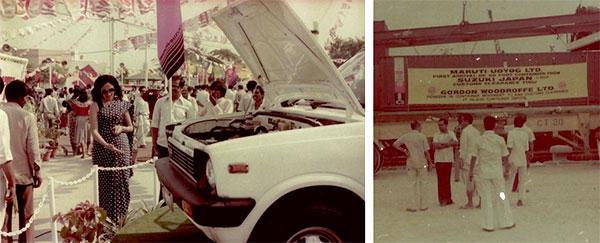
    On display before commercial launch at IITF in November 1982 in Pragati Maidan, New Delhi; arrival of the first lot of plant machinery from Suzuki, Japan in early 1983 at Madras (then Chennai) port. Photos courtesy Mr Rakesh Gupta of Maruti Udyog Limited.


    The company cannot wish its history away, however much the parent wishes to, for its own myopic reasons. ‘Maruti’ is Sanjay Gandhi’s concept and that needs to be recognised. His original office in the Gurugram plant was converted into a ‘Tool Room’. As if that was not disrespectful enough, it was unceremoniously razed to the ground in 2002, in spite of a few protests. Insiders say that in 1983, there were five working prototypes built by Sanjay Gandhi and his team of rag-tag engineers kept in one corner of the plant. There were ‘orders’ from way above to destroy them. Thankfully, one was whisked out and is in a closely guarded private collection. Basically, everything to do with Sanjay Gandhi was to be removed or destroyed.


    This is such a contrast to a brand like VW that does not run away from the fact that Adolf Hitler sponsored the idea and encouraged Dr Ferdinand Porsche to build what is popularly called the Beetle. At the Autostadt in Wolfsburg, there is a bust of Major Ivan Hirst, the British army man who revived VW after the war. There is no shame in admitting to the chequered history any memorable has had. Frankness and candour are virtues for any brand, more so a market leader. Running away from it is sad cowardice.


    A brand like Maruti is much more than Arena and Nexa dealerships, a robust service network and a digitised buying process. It cannot be constricted to mere products, which may come and go depending on their own brand lifecycles. It is a pillar of India’s story of slow but sure evolution from an under-developed to the world’s fastest growing economy. It stands for all that is good and not so good about India.


    The good is the ambition to be truly world-class. The good is to openly accept and incorporate a foreign management system and make it one’s own. The good is to establish the concept of customer satisfaction as the cornerstone of any business. The good is to demonstrate that a ‘sarkari’ [governmental] setup could be efficient, effective and profitable. The good is to help the consumer mature to a level where no brand, however global in repute, can take one for granted. The good is to make mobility affordable to millions of the emerging middle-class.


    The not-so-good is to be introverted about its rich legacy and accept the controversial with the laudable. The not-so-good is to not impress upon its parent that it needs both recognition and representation at the global level. The not-so-good is to be defensive about the quality of its people and see them being rightfully treated as global equals vis-à-vis its Japanese counterparts. The not-so-good is to stay away from causes of national importance that look forward to a stand taken by an icon. The not-so-good is to stonewall progress on issues of safety standards and emission norms using its clout to protect its own turf.


    Guess that is what truly memorable brands are made of… the good and the not-so-good. Being proud of one’s legacy and milestones is a mark of maturity of a market leader. Being the 40th anniversary, one would have expected major celebrations by the brand in the form of special editions, on-ground initiatives and customer advocacy programmes. And of course, if not a brand museum, at least a coffee table collector’s edition containing the huge repository of photographs and documents that the company and its alumni have. Given that nothing of this has happened and the day has just passed by, the onus lies on us alumni to take the initiative and do things to commemorate this milestone of one of India’s most loved brands ever!


  • Rebel brands – love them, yet loathe them!


    By Avik Chattopadhyay


    Avik ChattopadhyayThe rude intrusion into the new parliament building on December 13 when Manoranjan and Sagar threw up yellow smoke amidst our lawmakers drove the nation into a tizzy. Five people were rounded up, with the sixth to be roped in soon. The others are Amol, Neelam, Vishal and Lalit, the last person still absconding. Their occupations cover the spectrum from being unemployed to being an autorickshaw driver, a competitive exam preparer, a plumber apprentice to a teacher. They came together for causes like the farm laws, unemployment, the Manipur crisis and the general state of affairs. Justified? Not at all. A most immature act, actually, as an independent, democratic nation provides enough methods of expressing angst and raising red flags.


    They claim they were inspired by an act of April 8, 1929 when Bhagat Singh and Batukeshwar Dutt set off two low intensity bombs in the Central Legislative Assembly hall. That was against the Trade Dispute Act and Public Safety Bill.


    The colour of the smoke bombs chosen by Manoranjan and Sagar was significant… the same as the colour of Bhagat Singh’s turban… ”Basanti”. They were there to make a statement, not to kill. While the media equated the act with the dastardly attack on Parliament 22 years ago, they felt they were emulating the act 94 years ago.


    They are rebels, with a cause, but without direction. They wanted to highlight the plight of the common man. They stepped in to the “temple” of the world’s largest democracy to wake up those elected by the common man to, what they claimed, bringing the key issues to the forth.


    The sheer hyper-histrionics that some sections of the media went into was something to be seen. The saner part of the media thankfully called it a “breach”. Two unarmed people and one yellow smoke canister seemed enough to make the house literally come down. What ensued was straight out of a Marx Brothers movie. The opposition created verbal terror. The chairs of the houses countered that with expulsion terror. Probes have revealed that the position of joint secretary of security was vacant for 45 days. Furthermore, the entire place was understaffed by 40%. When the yellow smoke billowed, the smoke detectors refused to get into action. Holy smoke!


    The Prime Minister could have actually met the five and had a candid discussion on what brought them take such a step. That would have been a great example of leadership, where immaturity can be given the back seat to assuaging anxiety and addressing frustration, setting an example for others who might have had similar ideas.


    Sadly, nobody likes to deal with a rebel. You wish your neighbour had one that you eulogised but never would want one in your own home. You garland the rebels in history but round up the ones in your own time. For society does not like rebellion as an act. You do not enjoy disruption. You abhor disturbance. The same goes for rebel brands.


    When you look up “rebel brands” on the internet, it throws up “challenger brands” to you. Even the Economist falls into this trap. Have a look at this article – The rise of the rebel brands (economist.com). Design firm Pony.insights says, “Rebel branding is an unconventional marketing strategy that contradicts traditional norms and breaks the existing rules of the industry. These brands position themselves as iconoclasts, bucking conventional wisdom, and challenging the status quo in innovative and often provocative ways. Rebel brands dare to be different, seeking not to fit into an existing market but to create new spaces and to redefine norms. They are unafraid to disrupt and they thrive on controversy, pushing boundaries with their unconventional approach.” And then goes about citing examples like Tesla, Patagonia, Netflix and Chipotle as rebel brands. Brand strategy platform BrandStruck cites examples of Lyft, Salesforce and Dollar Shave Club as how rebel brands have expanded their market appeal.


    These are NOT rebel brands. These are mere challenger brands. Brands that have challenged convention and the set boxes to redefine business solutions and metrics. That is all. Their deep down purpose was to eventually go mainstream and become as large as the then legacy or conventional brands, if not bigger and more profitable. To be challenged by yet newer ones. And the cycle of “Brand Darwinism” goes on.


    Rebel brands want to disrupt. They do not wish to sustain. They wish to deconstruct. They do not fuss with reconstruction. They leave a mark. They are both bothered with legacies. They wish to be rare. They are not looking to be copied. They are bothered about impact. They do not measure returns. They are very good from far, part of folklore and case studies in business schools. They are not about making pre-placement talks and recruiting people.


    Can I cite any example of a rebel brand? Trying very hard and by habit falling back to the automobile industry I can think of only three through the 140 year timeline – Gustav Trouve’s electric car in 1881, the “Wankel” engine in 1934 and the newly launched Tesla “Cybertruck” in 2023. All have huge shock value and have made the world sit up and gasp “aaahhhh”. The first two have had short lives and I do not see the last having a long one either. But just like the Nihilists do, they shook up the equilibrium, got people out of their comfort zones, whether through technology or design and mightily embarrassed the ‘establishment’.


    The next time someone cites you examples of this or that brand as a “rebel”, be careful not to get swayed by the enigma of the term and remind them that those are mere “challengers”. For rebel brands, due to their very nature, do not last for long. But surely leave a lasting impression.


    Avik Chattopadhyay is a Gurugram-based brand and business strategist and commentator. He writes on MxMIndia on alternate Thursdays. His views here are personal.


  • Brand lessons from the Ballot


    By Avik Chattopadhyay


    Avik ChattopadhyayA little over a fortnight ago the election results were announced for the five states of Goa, Manipur, Punjab, Uttar Pradesh and Uttarakhand. The outcomes were as expected only that nobody expected the magnitude of the Punjab victory.


    This was one set of elections where we saw seemingly smaller and regional parties wanting to be counted. Not that this was their first attempt, but in this round they seemed more committed and invested.


    There are interesting brand lessons to be taken away from the strategies adopted by the key political parties and personalities and also the outcomes.


    PunjAAP!


    This was the most emphatic, so let’s start with the AAP’s campaign in Punjab. There is nothing like a solid proof-of-performance as a testimonial of what you can do when in power. Just like start-ups with the best proofs of concept get the highest investors, so did the people of Punjab decide to invest in this development model from the shark tank.


    Whenever entering a new market or business segment, it is always prudent to appoint and announce the person who will lead the operations and give him/ her the required bandwidth to set the narrative. It is best if the person is a local who understands the market better than an expat.


    A critical part of a market entry strategy is to get your ‘own people’ converted first before you set sights on the others. Your own people are those who are culturally closest to your domestic market in terms of codes, rituals and likes. They become your early adopters and brand advocates in an otherwise socio-economically fragmented market.


    Lastly, the classic advertising appeal of “try me once” never fails. The appeal still carries a sincere ring to it, sans all the hype. There will always be the experimentative and early-adopters who lead the way. Just that in the case of Punjab they seemed to be the majority!


    Another “Nokia moment”!


    You have a commanding market share and come crashing in just 12 months all due to your own obstinacy of not deciding on an operating system and understanding what the customer needs. That’s the Nokia moment of 2007. Can also be termed a Rip Van Winkle moment!


    The Congress repeated it with unerring accuracy in Punjab. It depended on legacy while the people wanted policy. And it failed to capitalise on a traditionally supportive segment in the farmers who could have turned the tide.


    Just like a market leader loses focus on its core customer base in its urge to capture newer markets and address new product and customer segments. A case in point are brands like Maruti Suzuki and Hero wanting to go ‘premium’ while their core base of entry level product offers gets neglected.


    Divide and Rule!


    It still works. As it did in UP for Yogi and the BJP. Astute marketers do not waste time in addressing all customers needs and desires. They go for those that have a natural alignment with the product benefits. Like aspects of protection, exclusion and intimidation in the case of BJP. Consultants call this segmentation.


    Also, the best event managers do not fuss with the entire duration of the show but create just one or two ‘wow’ moments that impact most and stay on longer in the viewers’ minds. So, images of temple corridors and highways that double up as airstrips combine very well to cover both tradition and technology. The recipient is not really bothered with all details of your narrative, so a few ‘doosras’ are forgiven. The average human being understands and remembers pictures much better than data tables.


    Do not reinvent the wheel, at all. All successful brand managers will tell you that. Not that they are halting the wheel but are going on the same track, faster, smoother, and better while refreshing the look and feel of the wheel. Within a smaller gestation period.


    Elephants cannot dance!


    If Kodak had taken heed of early digital photography and re-calibrated itself accordingly, it would not find mention here. Market leaders typically fail to notice warning signs on their radar screens… of a new technology, of a new trend, of a new entrant, of a new solution, of a new regulation…! Some quickly change course while others perish. Netflix did. Blockbuster didn’t.


    While divide and rule worked for the BJP, it cannot escape the fact that it lost more than 50 seats to the SP. Most contests have been very closely fought. It might not be a wave yet, but certainly a ripple. And it is not that the BJP has not been defeated before, despite the narrative being the same, albeit much milder.


    When both AAP and TMC announced themselves as true successors of the Congress, it needs to read the clear signals on lifecycle management.


    When you are too large as a brand, the Nirmas and Chiks of the world can come up, nibble away at your pie and create a larder big enough for them to sustain. Someone like Sensodyne can change the narrative at one end. Size has its disadvantages. Elephants cannot dance!


    Different ground, different game!


    “Khela holo na” for Didi and the TMC in Goa. The game may be the same, but the ground conditions are different. Knowing how to play football does not mean one plays equally well on hard and slushy turf and in any position. Just because VW rules the roads in Germany does not entitle it to do the same in India, as it has painfully learnt. Cut-copy-paste does not work especially when there are strong cultural differences in the two markets.


    Remote control operations do not work in any market and for any product category. Also, a non-playing captain is not always the best option. One has to have a leader of the team at the ground level to assess the pulse on a daily basis and take corrective action in narrative and promotion. Moreover, the local team has to be empowered to take decisions and modify strategies without having to wait for an approval from headquarters.


    Controlling is fine. Micro-managing kills.


    Tell me something new


    The general narrative of the legacy parties remains more or less the same, be it the Congress or the BJP. They typically bash each other silly. While it works in some places, it fails in others.


    The Congress had nothing to offer the people of UP except for the glamour of the family and the legacy of the freedom struggle. The fact that the leadership had to fall back upon the forefathers rather than create a testimonial in Amethi or Rae Bareilly, is telling it all.


    Even though playing second fiddle to the Akali Dal, the BJP could have certainly performed better had it not applied the same narrative of UP. Also, its stand vis-à-vis the farmers over the last 18 months did not help.


    Political parties rarely seem to have any candour. They never seem to accept mistakes and own up to them. They offer no apologies. Just like most big brands never do. The challengers, however, use candour and vulnerability as strategic tools to move ahead faster. Today’s customer appreciates brands that are frank and fragile rather than infallible. This is a trait that most brand managers need to train upon and acquire.


    The light at the end of the tunnel…


    Work shows. Good work shows better. I saw an interview of N Biren Singh on NDTV after the exit polls were out and showed that the BJP would get a 3/4th majority in Manipur. He said that the projections might be too optimistic but as positive work had been done over the last five years, he was confident of getting the mandate. Eventually, he did get a mandate close to the projections.


    Market share is the outcome and not the objective. Just like good governance. Profits, loyalty, repeat purchase, electoral results and majority are all outcomes of fundamental work for the target customer. I get amused no end when brands make announcements of “x%” market share by such date almost as soon as they enter the market. Makes for masala journalism and nothing more.


    Biren Singh should know that pretty well. He was a journalist once. And a footballer before that!


    Avik Chattopadhyay is a senior brand and strategy consultant. He writes on MxMIndia every other Thursday. His views here are personal


  • Happy Birthday, Brand India

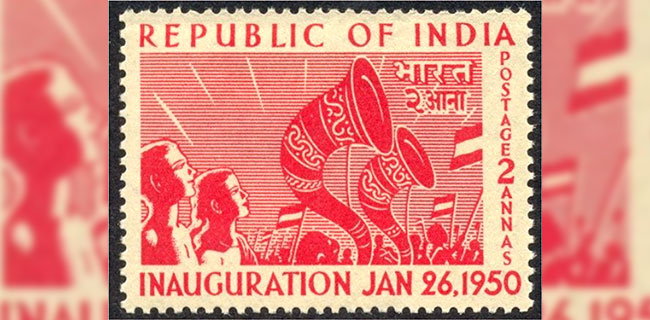
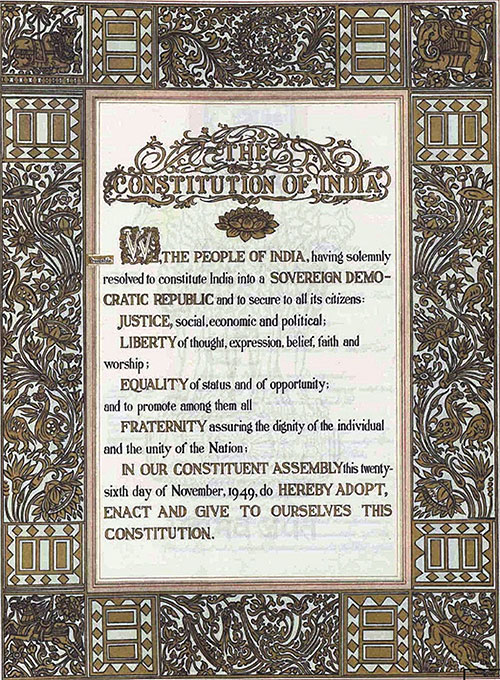
    Stamp issued to commemorate the creation of the ‘republic’ – Source: Government of India Archives


    By Avik Chattopadhyay


    Avik ChattopadhyayIndependent India was formed on August 15, 1947.

    Brand India was created on January 26, 1950.


    Since the “dominion” of India was created on the day the Indian tricolour was hoisted at Red Fort, we continued to be a constitutional monarchy with George V as the head of state and Mountbatten as the Governor-General till the 26th of January 1950 when we adopted our own constitution. It was only on that date that we had our first President in the form of Babu Rajendra Prasad. Till then this newly formed nation was governed by the Government of India Act of 1935.


    So, the significance of our Republic Day assumes greater importance when we realise that it was on that day, after two years, five months and 11 days of having become independent that we decided what exactly we would become in terms of a nation. The product India was rolled out as a prototype on August 15, 1947. The final production version, after all tests and validations, was finally launched for the citizens and the world at large, as a brand that said “Republic of India” on January 26, 1950. Till that day, no common citizen was aware of what exact shape and form we would take in terms of purpose, promise, values and personality. This task was entrusted to a team called the Constituent Assembly, a 308-member team made up of 21 committees headed by some of the sharpest minds like Jawaharlal Nehru, Vallabhbhai Patel, KM Munshi, HC Mookerjee, Bordoloi, BN Rau and GV Mavlankar submitting their reports to the drafting committee headed by BR Ambedkar. They met for 166 days painstakingly putting together the Constitution that was finally adopted on November 26, 1949.


    In an organisational context, it is almost like all functional teams providing their inputs to the brand strategy team that finally prepares the brand book, to be presented in a townhall before all employees for their feedback and necessary modifications before the entire organisation adopts it as its credo and ethos.


    The Preamble is the brand essence.

    It encapsulates all the pages that follow with their numerous chapters, schedules and articles. It describes the purpose, the promise and the operating values. In fact, all organisations in India could as well study the unique structure of the Preamble to design their own, in terms of brevity of expression and clarity of purpose.


    The original text of the Preamble – Source: Government of India Archives


    Of the Preamble, Ambedkar said, “It was, indeed, a way of life, which recognises liberty, equality, and fraternity as the principles of life and which cannot be divorced from each other: Liberty cannot be divorced from equality; equality cannot be divorced from liberty. Nor can liberty and equality be divorced from fraternity. Without equality, liberty would produce the supremacy of the few over the many. Equality without liberty would kill individual initiative. Without fraternity, liberty and equality could not become a natural course of things.”


    As a part of the debates before its final adoption, there was a proposal to call ourselves the ‘Union of Indian Socialist Republics’. Also, some had proposed that ‘God’ and ‘Gandhi’ be incorporated in the text. Thankfully, all such proposals were struck down as each would have been paradoxical to what we had aspired to nurture ourselves into as a nation.


    By the 42nd amendment of the constitution during the Emergency of 1975, the words ‘socialist’ and ‘secular’ were added to describing the republic over and above being sovereign and democratic. The brand purpose was expanded in scope. However, the promises of delivering justice, liberty, equality and fraternity remained as before, except for the word “integrity” being added to unity to describe the fraternity we aspired for. Very similar to what happens when the second or third generation of the founding family wishes to ‘revisit’ the brand purpose and ‘contemporise’ it, in sync with an evolving market and customer behaviour.


    These very later insertions or modifications are subjects of heated debates today. The brand purpose is being questioned by the new leadership. Like most organisations, the new CEO, especially if brought in from outside, wishes to leave a mark on the key aspects of the brand, especially the ‘vision’ and ‘mission’. That it typically the legacy the leadership wishes to create for posterity to marvel at.


    Even if those ‘controversial’ words are to be removed, the essence of the Preamble does not change one bit. In its very construct it espouses the fundamental principles of socialism and secularism. The word ‘socialism’ is part of the Directive Principles of State Policy and implies social democracy and distributive justice. The word ‘secularism’ implies that there is no state religion and that the powers of the state and any religion are clearly separate. The former cannot be partial towards any particular religion or religions while the latter cannot dabble or interfere in the functioning of the state. Reminds me of the occasion when MA Jinnah in 1919 implored Gandhi not to support the Khilafat movement as “mixing politics and religion” would have disastrous outcomes.


    Brand India is at the crossroads right now. The very brand purpose is being challenged by various factions and fringes by their operating principles [or lack of them] and socio-political acts. There has been no direct attempt to alter the fundamentals of the Republic but subaltern and diversionary tactics are certainly being used, citing the need to go back to our “pure past” to rediscover ourselves and reclaim our greatness as a teacher of the world. We are certainly at the crossroads as we enter the 75th year of being Brand India.


    I will conclude by quoting Ambedkar once again from his last address to the Constituent Assembly on November 25, 1949:


    “On the 26th of January 1950, we are going to enter into a life of contradictions. In politics we will have equality and in social and economic life we will have inequality. In politics we will be recognising the principle of one man one vote and one vote one value. In our social and economic life, we shall, by reason of our social and economic structure, continue to deny the principle of one man one value. How long shall we continue to live this life of contradictions? How long shall we continue to deny equality in our social and economic life? If we continue to deny it for long, we will do so only by putting our political democracy in peril. We must remove this contradiction at the earliest possible moment or else those who suffer from inequality will blow up the structure of political democracy which this Assembly has so laboriously built up.”


    Jai Hind.


    Avik Chattopadhyay is a senior business strategist and commentator based in Gurugram. He writes on MxMIndia every other Thursday. His views here are personal


  • Excess is success

    Excess is success

    Avik Chattopadhyay

    Avik ChattopadhyayWhile a significant part of the nation was busy with discussing dance moves and dresses of the rich and famous gathered in a little town on the west coast of India, a bunch of medical students danced around in joy on the east coast of the US. While one of the richest people on this planet spent a whopping 100+ million dollars on a family function, a retired professor at the Albert Einstein College of Medicine in the Bronx donated a mere billion dollars to ensure free tuition for all medical students, almost for life.


    It is cultural. Very very cultural. The two nations make up the world’s largest democracies, and have their own share of unemployment and poor, yet the two are poles apart. In a discussion with a social scientist who requested anonymity, I was reminded that we are basically a monarchy in the garb of a democracy. We celebrate 75 years of becoming a republic yet are deeply servile. We boast of some of the world’s biggest people movements, yet revel in creating demigods of the rich and the powerful. “We will always be a land of confluences, cross-connections and contradictions”, the social scientist commented, trying to explain to me how Indian brands are thereby quite different in their DNA from ones from the US or France or Germany or Japan.


    “Indian brands love to show-off. We love to live in the now, more than for the future. For us, excess is success!”


    What is wrong with showing off? Or for that matter, living in the now? Nothing wrong. It is just a matter of perspective. The same rich person who gave a pre-wedding bash will also go ahead and build a hospital or school, but the bash is very important as that sets a context. It is like when the ‘benevolent despot’ of an emperor used to throw silver coins in the air for the commoners to scuffle for at his child’s wedding. While the poor would get their clinics, night shelters and rations, they had to be reminded of the grandeur and graciousness of the mighty powers from time to time. The living in the present moment is a clever diversion from the present state of life into a world of make belief, with the subliminal message that this is a life that one could aspire for.


    When the personality of the brand is derived from the personality of the ‘promoter’, things get very heady. The socio-economic and cultural background of the promoter clearly determines the way the brand behaves. If one’s legacy has been mired in a fair bit of controversy, the need for periodic demonstrations of power and pomp are crucial to establishing authority. If the background has been less than average, then the attempt is always to go over the top. “It’s a natural response of the reptilian brain,” explained the social scientist, born out of some kind of inferiority complex. The need to set the narrative from time to time is important or such personalities suffer from inadequacy.


    This is why most Indian brands come across as more pompous than proud, more combative than competitive, more conflicting than collaborative. We see that in most of our communication. We experience it most in our service experience. We see that in the way most business leaders present themselves. We have an obsession with using terms like “#1” and “the best ever”, be it a toilet cleaner or an automobile. We love using pompous words like “unbeatable” and “unmatched” because, somewhere, the promoter or brand custodian is insecure and needs such posturing to reaffirm potency and power.


    “It is like a stand-up comedian starting a show with the words ‘Mind you, I am the world’s funniest guy’”, said the social scientist, to put things in perspective. An American brand is running an enterprise. An Indian brand typically wishes to run an empire. It could be a response to the fact that we were a colony for close to 200 years that we are yet to be out of the mindset while our colonisers have adjusted with a post-colonial world.


    We react positively to symbols of regality, power and authority. Which is why both our politicians and judges sit on quasi-thrones whether at a function or in judgment. Simple chairs will not work for either. It is the same with corporate India. Most board rooms I have peeked into have a larger chair and a fixed place for the leader. Everyone knows who the leader is yet the symbols are needed as constant reminders. The chair plays the role of omni presence.


    It is the very same mental wiring that makes millions of us take voyeuristic pleasure in an exhibition of excess that thrives on our culture code of the need to overtly establish leadership. And nothing really can change that. We thrive on contradictions. While we believe in rebirth and the after-life, we prefer to live as if there is no tomorrow. While we revere saints and seers who excuse themselves from worldly pleasures, we choose overt displays of wealth and grandeur. While we preach the power of ‘karma’, we portray the potency of the ‘fruit’.


    Avik Chattopadhyay is a Gurugram-based brand and business strategist and commentator. He is currently also working along with XLRI to set up the Indian School for Design of Automobiles. He writes on MxMIndia every other Thursday. His views here are personal. 

  • Avik Chattopadhyay: Bidrohi Rahman!

    By Avik Chattopadhyay


    Avik ChattopadhyayA fair amount of controversy has been stirred up amongst Bengalis about a song in the recently released Hindi movie ‘Pippa’ about the 1971 Bangladesh Liberation War.

    The song, ‘Karaar oi louho-kopat’ written and composed by Kazi Nazrul Islam, one of the most celebrated literary comets of Bengali literature, has been freshly rendered and presented by AR Rahman in the movie as it was one of the key driving literary forces for Mukti Bahini and the then East Pakistanis. Composed by the popularly termed ‘Bidrohi Kobi’ or revolutionary poet in 1922, it first appeared in a Bengali magazine called ‘Banglaar Kotha’ [Stories of Bengal] and was then included by Nazrul in his compilation called ‘Bhangaar Gaan’ [Songs of Breaking Free]. It is an integral part of the Bengali psyche, on both sides of the border.

    A large section of Bengalis have not liked what Rahman has done with the song. In fact, some have called it sacrilege and showing utter disrespect to the poet and his legacy. How can someone just put an iconic composition to new music and change the meter of the song? This is sheer blasphemy, some scream. They have even gone to the extent of wanting the song removed from the movie. What a storm in a tea cup, literally!

    Can iconic creations not be freshly interpreted? Can venerable ‘brands’ not be reviewed to be made relevant to present situations and circumstances? Are things cast in stone? Are creations so rigid that they cannot be recast?

    In this context, it is important to understand the very brand Nazrul. He is the revolutionary poet. He is the one who broke all preconceived shackles of faith and dogma to go ahead and compose close to 500 songs that are part of some of the biggest Bengali Hindu festivals in the form of Agamani gaan, kirtans and Shyama sangeet. In fact, in the last genre of poetry, he is considered the uncrowned king. Nazrul was an iconoclast and humanist rolled into one bright flame, full of passion for freedom and compassion for all. He had criticised both the Khilafat movement for its “hollow religious fundamentalism” as well the Congress for soft-pedalling on the independence issue. He was a poet, a composer, a dramatist, an editor, a founder of a workers’ party and also an army man in his youth.


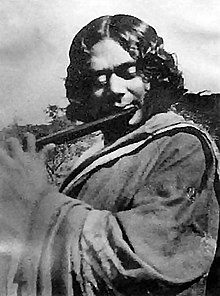
    Kazi Nazrul Islam
    Kazi Nazrul Islam


    In his landmark poem ‘Bidrohi’ [The Rebel], he roars…

    I am the burning volcano in the bosom of the earth,

    I am the wildfire of the woods,

    I am Hell’s mad terrific sea of wrath!

    I ride on the wings of lightning with joy and profundity,

    I scatter misery and fear all around,

    I bring earthquakes on this world!

    I am the rebel eternal,

    I raise my head beyond this world,

    High, ever erect and alone!

    The last thing that Nazrul would ever want is to narrowcast an idea or straightjacket a thought into chains under the garb of ‘tradition’. Tagore and Rumi were huge influences on his thinking and the philosophy he conjured up through his genre of poetry called ‘Nazrul Geeti’. He sent Tagore a composition called ‘Tirtho-Pathik’ in admiration of his writings. Tagore had famously said that darkness shall be banished when the first issue of ‘Dhumketu’ [The Comet], Nazrul’s bi-weekly publication was released. Tagore dedicated his play ‘Basanta’ [Spring] to Nazrul.

    Nazrul was invited to be the music composer by Naresh Chandra Mitra for the film adaptation of Tagore’s ‘Gora’. The Visva Bharati Board was of the opinion that the seven songs used in it did not do justice to the writings putting the film’s release was at risk. When Nazrul did a special screening for Tagore, he commented, “You have adapted my songs, and in what sense do they find you at fault? Do they understand my music better than you do? Can they honour it more than you have?”

    This is exactly what makes an iconic creation and a brand timeless – the flexibility to interpretations, the openness to debates, the ability to recast and the liberty to modify as appropriate. Brands have guidelines, not rules. Brands are open to evolution and modifications over time, not be cast in stone and locked away in a vault.

    The country today sings a particular tune of ‘Vande Mataram’ that has no connect with the original written by Bankim Chandra Chattopadhyay in 1882 and set to tune by Jadunath Bhattacharjee in 1883. What the cricket fans across India in the current ICC Men’s World Cup swing to is the 1997 version, interesting by Rahman.

    If we could so lovingly accept the new version of our National Song, wherein lies the problem in at least allowing the larger populace listen to the adaptation of Nazrul’s iconic song? The problem lies in letting go our own shackles in our minds and hearts under the garb of heritage, legacy and convention. Which is exactly what the Bidrohi Kobi fought against.

    Only the insecure and inept cannot cope with the shackles in the mind being broken. For, in the shrouds of convention and tradition lie their very existence.

    It is important to read the entire poem to smile at the sheer paradox of the current storm. The first two paragraphs of the original in Bengali are followed by an excellent translation of the entire composition by Sajed Kamal

    কারার ঐ লৌহকপাট

    ভেঙ্গে ফেল কর রে লোপাট,

    রক্ত-জমাট শিকল পূজার পাষাণ-বেদী।

    ওরে ও তরুণ ঈশান

    বাজা তোর প্রলয় বিষাণ,

    ধ্বংস নিশান উড়ুক প্রাচীর প্রাচীর ভেদি।

    কারার ঐ লৌহকপাট

    ভেঙ্গে ফেল কর রে লোপাট,

    রক্ত জমাট শিকল পূজার পাষাণ বেদী।

    Destroy those iron gates of prison,

    demolish the blood-stained stony altars

    of chain worshipping!

    O youthful Shiva,

    blow your horn of universal cataclysm!

    Let the flag of destruction

    rise amidst the rubble of prison walls

    of the East!!

    Play the music of the festival of Shiva!

    Who’s the master? Who’s the king?

    Who is it

    that punishes the truth of freedom?

    Ha! Ha! Ha! It’s a laugh–

    God is to be hanged?

    Rumour-monger–

    who teaches this pitiful “truth”?

    O you forgetful Madman —

    shake — shake the prisons

    with your forceful cataclysmic pulls!

    Send your Haidari call,

    play your war-drums–

    call Death

    towards Life!

    There, the Baishakhi storm is dancing–

    are you just going to sit through your days?

    Let’s see

    you shake up the foundation

    of that terrible prison.

    Kick – break the locks!

    All those prisons–

    set them on fire,

    burn them down, uproot them forever!

    Carry on, Bidrohi Rahman!