Category: AVIK CHATTOPADHYAY

  • India@75: Brand Secularism

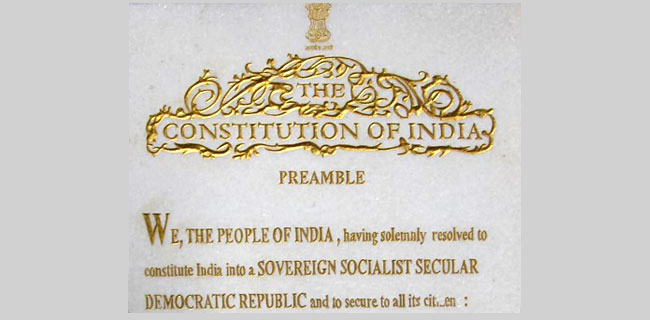
    Preamble to The Constitution of India. Source – internet


    By Avik Chattopadhyay

     

    Avik ChattopadhyayIn the fourth of my series on India@75, I deal with one more brand that we have grown up with that has now subsumed a significant portion of our coffee table conversations, social media activism and newsroom studios – Secularism.


    Secularism as a brand is a bit like ‘Kumbhakarna’ from the Ramayana – a humongous sleeping giant that needs huge coaxing to be stirred into action. In slumber since 1947, it was rudely woken up in May 2014. An integral ingredient in the concept called India that happened at the stroke of the midnight hour, the brand was a silent performer. It was woven into the fabric of a new nation just as freedom and justice were in the Constitution we gave ourselves. Given the complexity of the fabric, provisions were created by Dr Ambedkar and his team to define what “secularism” implies in the Indian context. This was crucial as the very nation was born out of a division on religious lines.


    Secularism is a foreign concept to the subcontinent. It is closely intertwined with another concept called ‘Socialism’. It was an outcome of a conscious effort in certain European countries like France to formally delink the state or polity from any religion or faith for the early socialists believed that only then would a true people’s government be established that worked for the greater good of all people, irrespective of colour, caste or faith.


    Our subcontinent was only a geographical entity which housed close to 500 odd kingdoms and principalities till the British called it a day. Each individual king or nawab or begum ruled with their specific faith as the official one. Most of their royal standards, flags and coins would carry elements of their faith. The outsider would easily identify whether the kingdom was Hindu or Muslim or Sikh or Christian with just one look at the flag!


    The state was never delinked from religion. The progressive ones patronised other religions too to allow a multicultural citizenry that enriched the arts, food, music, science, and architecture of the times. Rulers like Ashoka, Harsha and Akbar were exceptions to the rule. While Ashoka changed his faith, Ashoka dabbled with creating a new one and also had his sons convert to Christianity for some time. It is such broadness of their minds that make us address each of them as “the Great”. The subcontinent was a milieu of kingdoms and states each ruled by a family and a faith.


    With independence in 1947 and the trauma of the Partition, India could not afford to encourage any open patronage of any faith or even a bunch of faiths. And we had to be different from the part we lost that was born out of a single faith. Patronage was also a relic of the monarchies. Therefore, the new brand of ‘Secularism’ was introduced through the Constitution. It was well accepted in principle by most of us as we had higher priorities than building places of worship. The growing popularity of socialism as a post-war and post-colonial governing system also played a critical role in establishing the need for secularism to ensure success.


    Thirty years later the government, facing severe criticism of moral corruption all over the country, needed to divert attention of the common people and change the narrative of the media. Hence, both operating principles of ‘socialism’ and ‘secularism’ were used as political tools to be incorporated in the Preamble through the 42nd amendment to the Constitution in 1976. The rulers wanted to demonstrate their commitment to removing poverty [“Garibi hatao.”] before the electorate to ensure they stay in power. This one act of rashness brought the concept of ‘secularism’ into the limelight. People now started questioning what it really meant. And since then, it has been degraded into becoming a political tool rather than an underlying operating value.


    Appeasement of specific faiths, castes, clans and tribes became rampant under the garb of being secular. They were seen as vote-banks and nothing more. The rulers were never interested in actual alleviation but only appeasement in the aspiration of a better life. The rotten quality of life of these vote banks has further decayed over the decades of this deployment of secularism at the ground level. Otherwise, we would have at least seen the quality of life of certain communities having improved over time


    We still expect a Hindu election candidate from a Hindu area and a Muslim from a Muslim one. Political parties use the excuse of understanding the needs of the specific community better to justify such open “divide and rule” practices. This is one of the key legacies of the British that we have adopted very well.
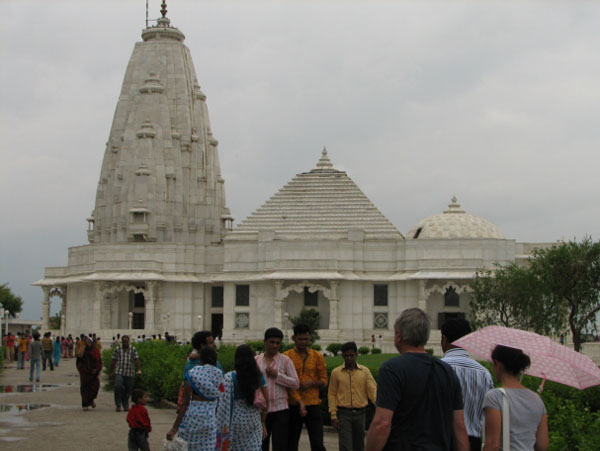
     

    The Birla Mandir in Jaipur – unique architecture incorporating the tower of Hinduism, pyramid of Buddhism and dome of Islam in one structure. Source – Wikimedia


    Since 2014, secularism has become a bad word. While it has been correctly described as a tool used to divide through selective appeasement, the new narrative denounces the very principle rather than question its misuse since 1976. Those who are truly secular in their individual lives are addressed as “Sickular”. It is a dirty word, bordering on being anti-national and disrespectful of our cultural heritage. The brand had been sullied with the 42nd amendment and has now assumed pariah status.


    So where have been the key shortcomings in managing brand ‘Secularism’?


    Mere ad-speak!

    Incorporating the term in the Preamble is not equal to actually believing in it and living by the principle. It’s like adding the term “corruption-free” to the Preamble through another amendment. Operating principles need not be openly advertised for they then remain only as advertising taglines. Across the world we have seen that the nations having the term ‘Socialist’ in their names have been the least so. You need to behave as socialist and secular and not merely talk about it.


    Lack of purpose

    True secularism totally delinks polity from religion. Not only does the state not have any religion but none of its constituents have anything to do with any activity or promotion of any faith. This is to ensure universal laws, rights and duties for every citizen, irrespective of faith.


    India is a classic case where we have adopted the word but operated just as before. As a culture we follow the tenet of “Sarva Dharma Sambhava” [Confluence of faiths] rather than the principle of “Dharma Nirpekshata” [Neutrality of faith]. We have eulogised Ashoka and Akbar who have patronised various faiths rather than a ruler who decided not to have any state religion.


    From patronising, we have moved to “peaceful co-existence” and not adopted the principle of secularism in its entirety. One may counter by saying we have adapted it to our conditions and requirements, but then, before 1947 we did not have democracy either! Hence, instead of choosing equi-distance from all faiths and have a set of universal social laws, we have deliberately chosen equi-proximity. That allows us to divide and rule and be selective towards one set of target segment / customer segment over others as market forces demand. This cannot be a sustainable proposition for any brand as word gets out and other segments either rise in defiance or shun you.


    Personality conflict?

    The current narrative tends to club the ‘sickular’ with the ‘communists’ and the ‘liberals’. This is dangerous for the current rulers as you will alienate more than you will accept. The communists abhor the concept of ‘secularism’ as they do not accept any religion at all. The socialists choose to delink while the communists choose to destroy. Therefore, calling communists as secular makes a laughing stock of the caller as you do not understand the fundamental differences. The liberals are again different from being secular. Theirs is a vastly open system of acceptance and allowance that follows the ethos of universal tolerance. And the true liberal will tell you that there is nothing called ‘religious tolerance’ as every faith teaches its believer to be tolerant towards others.


    Any promising showcase?

    The application of secularism in India really does not have any showcases to be proud of. According to data from the National Human Rights Commission, since 2005 an average of 100 lives have been lost and 2000 people have been injured due to inter-faith riots every year. More than 700 cases of rioting are reported every year. The Anti-Sikh Riots of 1984, the Kashmiri Pandit Exodus of 1990, the Christian-led separatist movement in the Northeast in 2000, the Gujarat Riots of 2002 and the Delhi Riots of 2020 are glaring examples where the stated value of secularism has been trampled with the powers that be being mute spectators.


    The underlying tensions can be easily brought to the surface for political benefit and the law-and-order machinery sadly falls prey to adherences to individual faiths from time to time.


    Just like the Shah Bano Case in 1986 and the Babri Masjid Demolition of 1992. Both were to undermine the Constitution and pander to specific electorates. The deliberate deprivation of basic rights to women of a faith while allowing them for others especially when the Supreme Court had passed a judgment against the same was a sure low point in our secular journey. Couple with the decadent destruction of an unused place of worship to drive home a divisive agenda for political momentum. The aftereffects of both incidents are being faced by the entire nation till date.


    So, secularism as a brand has not had a good journey in a 75-year young nation like ours. Its purpose is unclear, its personality is a bundle of contradictions, its promise totally shredded to bits by various pockets of powerbrokers. It has been used as a tool by some and a target by the others. All in all, a terrible situation for any brand. Especially when a ‘monk’ becomes a member of the polity and runs a religious administrative agenda.


    Appeasement gives way to aggrandisement!

    And that is the last nail in the proverbial coffin.

    Or piece of sandalwood in the pyre.

    Or fistful of soil in the grave.


    I finish my eulogy to brand ‘Secularism’ with a quote of Swami Vivekananda, one of the truest of seculars that ever walked this land. “A ‘sanyassin’ cannot belong to any religion, for his is a life of independent thought which draws from all religions; his is a life of realisation, not merely of theory or belief, much less of dogma.”


    Avik Chattopadhyay is a senior brand strategist based in Gurugram. He writes on MxMIndia every other Tuesday. His views here are personal


     

  • Eight Buzzwords Wiser


    By Avik Chattopadhyay


    Avik ChattopadhyayTwenty twenty-two has not started the way we expected. The tentacles of the pandemic remain, in fact in newer forms. While we are coming to terms with the Omicron variant, countries like France have moved on to the IHU variety while Israel battles with Florona and the US with Delticron.


    Fanciful names for a killer!

    The WHO could have kept it simpler like Version A, Version B and so on but that might have taken the drama away. Just see the names of the hurricanes, cyclones and twisters and you will get the drift. Guess “I know what you did last summer” would not have sounded sinister enough if it were simply called “Revenge”.


    There is an art to naming and creating terms. It is an age-long craft. Axis sounded ominous while Allied seemed reassuring. New phenomena are explained and referenced better when given an interesting name or term. Conversations become easier when you refer to the group as BRICS rather than saying ‘Brazil-Russia-India-China-South Africa’ every time. Imagine calling the Cold War as the Russo-American Conflict! What would Bond do?! The uninitiated might think that DINK is the third option after DIY and DIFM. Such is the lure of naming.


    The pandemic over the last 22 months has thrown up certain names or terms that have caught my fancy. Reading them across platforms and hearing them on innumerable video calls and webinars have certainly made me wiser as I entered 2022. Some did appear pre-Covid but gained traction in terms of usage and ubiquity once the virus hit us becoming buzzwords for brands and businesses.


    New Normal

    This one became a rage in the first 12 months and has now somehow paled in popularity. I could never understand the construct. If it was ‘new’, how could it be ‘normal’? Maybe it was devised as a trick term and that is what made it the subjects of innumerable articles, webinars, and debates. It became a prefix to everything around us…new normal life, new normal work, new normal eating, new normal manufacturing and so on. Guess when we realised that normalcy was taking longer than our comfort levels, we switched to ‘post-Covid’ and this term lost the race. However, an interesting buzzword indeed,


    Omnichannel

    This was the consultants’ blue-eyed term to explain what tomorrow’s strategy would have to be. Enough white papers were written to rephrase another favourite buzzword of the yesteryears – 360-degree-engagement. I took the pains to read through a few of the papers and realised it was as creative as the NDA government renaming existing schemes and programmes as new!


    Hyperlocal

    Basically, “kirana” stores were given a makeover when marketers and consultants [again!] termed them so. For years the local vegetable vendor and the ‘paan’ shop had been doing exactly what the wise men in the metros suddenly realised as the holy grail of consumer connect.


    Greater Purpose

    This was the poster-boy of terms that became a symbol of corporate maturity and relevance. Almost all brands talked about having revelations of their ‘greater purpose’ due to the pandemic and how that has transformed them. Those that never ever bother with fundamental purpose of business now espoused the wisdom of greater purpose. Sadly, the longevity of this fad will be just as long as the effectiveness of a vaccine shot!


    Start-up

    This is my personal favourite. It just makes everything before the birth of this term seem prehistoric. It is as if all businesses that happened before did not start up but stalled up. It is as if nothing previously started as a new idea or from scratch. Every business since ancient times has had to start up before it was built up. It is like saying earlier we had motorcars and now we have automobiles! Massive disruption indeed.


    Unicorn

    Close on the heels of the start-up is this amazing term for businesses that have been evaluated as being worth at least a billion USDs. I understand you need to recognise such stalwarts by giving them a name but why ‘unicorn’? It is a mythical character that could be anything from a bull, goat, wild ass to a horse. Leonardo Da Vinci wrote, “The unicorn, through its intemperance and not knowing how to control itself, for the love it bears to fair maidens forgets its ferocity and wildness; and laying aside all fear it will go up to a seated damsel and go to sleep in her lap, and thus the hunters take it.” I rest my case.


    Deep Tech

    This is a relatively new one and makes you question if there is something called “shallow tech”! I have always believed that all technology is inherently and necessarily deep if it is to be useful and sustainable. The sudden emergence of this term makes one feel that all previous developments and investments have only been the froth.


    Metaverse

    This is the latest as 2021 closed. It is not a new term at all, first appearing in Neal Stephenson’s science fiction novel Snow Crash in 1992 to describe a three-dimensional virtual world, very much like Second Life. Facebook rebranding itself as “Meta” also helped this term become a buzzword now to describe a converged virtual world where ‘avatars’ and ‘NFTs’ are the way to be. The mind boggles!


    As the new year has broken, I have become eight buzzwords wiser. While I still ponder over a few, I am surely amused at the others as transient attempts to ‘brand’ behaviour and consciousness. How many start-ups will become unicorns in the metaverse using omnichannel deep tech to offer hyperlocal solutions in a new normal world that values greater purpose? Do I sound like a consultant? Terribly sorry…


  • With IPL, have the Tatas finally found the right vehicle after all these years?

    Photograph source: IPLT20.com


    By Avik Chattopadhyay


    Avik ChattopadhyayNew terminology at IPL…

    Fours and sixes – Tata Assault

    A quick single – Tata Steal

    Strategic timeouts – Tata Consultancy Time

    Wicket – Tata Bye-Bye

    Man of the Match – Match ka Ratan


    So goes one of the many WhatsApp messages since BCCI announced that Tata will be the title sponsor of IPL from next season. There is a GIF too being circulated done by someone called Outcry Entertainment which shows the batsman in the IPL logo whacking Vivo out and the Tata logo emerges to the signature tune!


    This is certainly big news, beyond just the world of sports as India’s “most trusted” corporate brand chooses to play tag-team with India’s biggest sporting brand. What would have made this happen?


    After Galwan and Doklam, BCCI needed a non-Chinese brand to be the title sponsor for its marquee annual entertainment event. The optics were not good for the government and BCCI. Here you have skirmishes every month, chest-puffing galore and even the 14th round of talks breaking down while there you have a Chinese brand sitting proudly on the IPL trophy. Terrible paradox! It had to change. Dream 11 did not apparently have the shareholders’ nod to carry on with such spending beyond a year. The solution had to be more sustainable. Adani and Ambani are not the best brands to reach out to if you do not wish the opposition to have a field day. So, what are you left with? The Tata brand. You have returned Air-India to it. You have awarded it the Central Vista contract. Over the last few years, it has been cosying up to you for a significant pie of ‘Atmanibhar Bharat’. The brand is the talisman of trust and respect. Nobody will ever raise a finger at you.


    For the Tata brand wanting to appeal to the digital WFH generation, IPL is a terrific platform to ride. Given its forays into more D2C businesses like BigBasket, 1mg and Cliq, it can get a hold on the Indian family sitting in front of television watching their superstars create magic. Non-metro India can be reached even better on the mobile phone through the IPL platform. The brand wants to markedly shun its image of being big and bulky and behave young and connected. Also reach out to the diaspora who celebrate their biggest annual festival in IPL. The brand has had a long association with sports in general, having invested in football [TFA and FC Jamshedpur], archery, marathons, Formula 1 and a few more. One cannot forget the fact that one end of Wankhede Stadium was called the Tata End. Only that given the stature of the brand, I would have expected them to go more grassroots in sport development rather than join a filthy rich sport and make it richer!


    This looks like a win-win.

    BCCI has saved itself the blushes and finally turned nationalistic.

    Tata might have finally found the right vehicle after all these years!


  • Netagiri with Netaji!


    By Avik Chattopadhyay


    Avik ChattopadhyayOn his 125th birth anniversary Netaji has become a ‘holographic projection’. Very soon that will be replaced by a magnificent statue in granite, as our respected PM emphasised on, for the nation and the world to marvel at.


    Every time we erect a statue of a national leader in the national capital, we lock him or her up into the vaults of time, almost like being cursed to turn into stone as the mythological character Ahalya! That is the most convenient way of showing respect.


    Bose has always been a character too rebellious and unconventional to be put into a box. The myth around his ‘end’ and the facts around his aura have prompted every political party to appropriate him, ending in failure. I had written about the same last year on 23rd January.


    Is Brand Bose Too Hot To Handle?! « MxMIndia


    Last year it was all about the elections in West Bengal. Round 1 went to the state.


    This year was pay-back time. The centre was waiting for the right time to pounce. It came with the state wanting to make its Republic Day tableau on Netaji. No way said the jury that decides which tableaus to accept. The CPWD had already submitted the same proposal. No point having too much of Bose. The state erupted shouting “controversy” and “disrespect to Bengal’s son” and so on. The centre swung into action. The Republic Day celebrations would start henceforth from the 23rd of January every year. And the big one was the statue in the heart of the capital. That was the ace. But how would one come up in a few days? A holographic projection, for Bose’s sake!


    Netaji has been appropriated! Or at least that is being projected [pardon the pun]. Round 2 to the centre.


    And then the icing on the cake of nationalism came with the CPWD tableau at the Republic Day parade on 26th January dedicated to Netaji. I have taken grabs from the recording of the same rolling past. The last portion of the tableau showing INA soldiers holding up the flag is a straight copy of the iconic Iwo Jima photograph. Talk about originality and respect!


    Screen grabs of the CPWD tableau on 26.01.2022 – the rear portion depicting the INA soldiers holding up the Indian flag


    The original photograph from the battle of Iwo Jima, Japan, 1945 and the US postage stamp


    Brand Bose has always been too unpredictable. His narrative has been too dynamic to get a firm grasp on and spin stories for one’s individual benefit. The man was rediscovering himself with every step and move he made right from becoming an able student of Chittaranjan Das to being the mayor of Calcutta to the president of the Indian National Congress and finally in his role as Netaji.


    His writings either in the form of letters to his siblings and friends or as articles show that this was an extremely restless mind. Nothing was taboo for him while nothing was sacrosanct either. He admired the Bolshevik Revolution but had serious reservations on the model of Communism put in place. He supported socialism but not at the cost of nationalism, one of the key points of dialectic conflict with Nehru. He believed in the forming of a constitution but after the ‘revolution’ and not before it, being a point of strategic conflict with the man he first called the ‘Father of the Nation’. He followed the tenets of Vedanta but despised the growing tentacles of fundamental Hindutva. He believed equally in silent protests as much as in violent struggles. He had solid differences of opinion with Gandhi and Nehru but respected their points of view and commitment to the cause. Just as Ramakrishna had said, “Joto mot…toto poth” [The paths are as numerous as the beliefs, but the goal is the same.], Bose believed that every type of strategy had to be applied to make the colonialist capitulate, hence all of them working in tandem were acceptable and supported by him.


    There were only two principles on which he had a single line of thought with no deviations, distractions, and interventions.


    First was that ‘Swaraj’ had to be “poorna” or complete with no half measures. “Freedom is not given, it is taken” were his famous words. Negotiations with the colonialist had to be for complete independence and not incremental and provisional steps. Che Guevara, a few decades later, was the perfect successor of Bose’s belief in perpetual revolution. Yet, when the Andaman & Nicobar Islands were occupied by INA and the Japanese, he declared a ‘provisional’ government and not a government-in-exile.


    Left: Pic of Netaji with INA and Japanese officials at Port Blair after declaring Arzi Hukumat-e Azad Hind or the Provisional Government of Free India – note the India flag with the Congress’ ‘charkha’!

    Middle: A Japanese manga [graphic novel] on Bose against Churchill using the India flag – published in Manga Mainichi in 1945 – note the charkha on the flag.

    Right: Asia Graph magazine, owned by Asahi Shimbun, with Bose on the cover – his popularity in Japan was far and wide.


    Second was that there was no room for religious fundamentalism or state support in a Free India. in his “Free Indian and Her Problems” published in 1942, he states that the ‘Muslim Problem’ was a creation of the British and a free India cannot have any state religion. Always a rationalist, in “The Indian Struggle” written in 1938, he believes in the Aryan migration theory, admires the Harappan civilization for its uniqueness and eulogises the positive impact of the Mughal period on the India he had inherited.


    These are the terribly uncomfortable aspects of Brand Bose that no ‘Netagiri’ can grapple with. When a certain group called ‘Itihasa Sankalana Samithi’ created a series of posts on Netaji with Savarkar, to imply the former’s closeness towards the latter, they forgot that Bose was as much a target of right-wing Hindutva as were Gandhi and the rest of the Congress. The cartoon below, published in Dainik Agrani in 1944 published by the Hindu Mahasabha gives it away.


    Cartoon in Hindu Mahasabha publication Dainik Agrani in 1944, edited by Nathuram Godse. Bose very much part of the 10 heads of Ravana to be destroyed by Veer Savarkar and Syama Prasad Mukherjee!


    Though Bose had broken away from the Congress five years ago and was now Netaji with his Azad Hind Fauj, he was still a ‘LeLi’ to use today’s terminology!


    In 2008-09 I had made an unsuccessful attempt to restore the Wanderer W124 in which Sisir Bose drove his uncle to Gomoh station from where Bose took an arduous journey on to Germany. In the due course of that effort, I interacted with a couple of people who had set upon the ‘mission’ to dig out the truth about Netaji’s death. I enquired as to why not work to keep his legacy alive rather than bother with whether he died in the air-crash and whether Gumnami Baba was him. I realised that like most of the nation, they too were obsessed more with Netaji’s death than with his life! That led me to create this social media post way back in 2010.


    Children wear Netaji uniforms.
    Adults wear Netaji caps!

    Legends make Netaji holograms!!


    Brand Bose will always be too hot to handle!

  • Blond-haired blue-eyed brands!


    By Avik Chattopadhyay


    Avik ChattopadhyayAs we read this, over 300 brands from across the world have taken a stand against Russia since it invaded Ukraine. Some real big names like Apple, General Motors, Volkswagen, Levi’s and MasterCard have decided to halt/ suspend operations and shipments. Consultancy firms like BCG, McKinsey and Deloitte have taken a call. Even some Chinese brands like Bank of China and Tik Tok have joined the list. All non-Russian energy companies have moved away either like BP and Shell divesting their shareholding in Rosneft or ExxonMobil walking away from the Sakhalin 1 project.


    While tracking the updated status on the internet, I came across an interesting Twitter feed that I cannot help but share here.


    While such economic ‘sanctions’ are very much expected, it is interesting to note that equally big brands like Coca-Cola, Unilever, Bridgestone, Pirelli, Pepsi, Philip Morris, Nestle, McDonald’s, Mondelez, Kellogg, Citi, Marriott, and Caterpillar still continue to do business in Russia.


    But the situation is very fluid. In fact, as I write I have an update that Coca-Cola and McDonald’s have also decided to suspend operations.


    Yale School of Management is keeping a real-time track of the status. Over 300 Companies Have Withdrawn from Russia – But Some Remain | Yale School of Management


    So, what makes some take one stand while others take another, or do not take the same one? Does this mean that McKinsey does not support Russia while Mondelez does? Or does BP denounce war while Bridgestone does not?


    While the ones who have taken a call against Russia are obviously being lauded for calling out an “imperialist” like Putin, are the ones who consciously have not, being subjected to criticism and pressure to fall in line? Will they experience serious fallouts on brand image and reputation in the long run?


    During my internet studies on the rise of Vladimir Putin and his oligarchs over the last two decades, I came across a term called “The Moscow Rules”. Bing! I remembered reading about this in ‘Tinker, Tailor, Soldier, Spy’.


    The Moscow Rules is a collection of 10 one-liners supposedly used by the Soviet secret service. They are also displayed at the International Spy Museum in the US. Post-Cold War, the rules remain as per the grapevine, now being used by the oligarchs to spread their presence across the world. They go as follows…


    1. Assume nothing.

    2. Never go against your gut.

    3. Everyone is potentially under opposition control.

    4. Do not look back; you are never completely alone.

    5. Go with the flow, blend in.

    6. Vary your pattern and stay within your cover.

    7. Lull them into a sense of complacency.

    8. Do not harass the opposition.

    9. Pick the time and place for action.

    10. Keep your options open.


    The stark simplicity hits you right away. There is no fancy business school jargon. Just plain common sense. Reminds me of Confucian precepts. Or Murphy’s Laws.


    Each is very much applicable to the world of brands. Each is fundamental to brand strategy and nourishment. Each feels more honest and powerful over the previous one. And the obvious paradoxes are simply brilliant! Just read 7, 8 and 9 together and you will get the drift. The sequence is intuitive, clinical, and utterly brutal. It’s like Machiavelli, Sun Tzu and Kautilya rolled into a Karpov move on the chessboard. Cold, calculated and thoroughly revised and rehearsed. Yet, #10 tells you that it could all go wrong, and you need to go back to #1.


    In the context of the Rules, I asked myself a few questions about the strategic decisions taken by brands in the context of the invasion of Ukraine.


    Pulled the plug or switched off power?

    Have the brands who have shown empathy with Ukraine pulled the plug altogether or merely switched off the power supply for the time being? The list by Yale uses terms like suspended and halted. These are all temporary measures and not finite ones. Once the invasion is brought to an end, whatever the outcome, they will be back for sure. Russia may be seen as a villain today but tomorrow it will all boil down to Putin, even if he wins this round. After all, a huge market of 145 million cannot be left alone to the Chinese and locals, can it? This is just like al Chinese brands, except for Tik Tok, were back in business in India just weeks after Galwan. The pressures of the marketplace and the shareholders are just too strong to pull the plug.


    Out of fear or fervour?

    With no disrespect to any brand that has suspended / halted operations in Russia, the action was taken more out of fear of political reprisal at home and other key markets rather than a foundational abhorrence of all war and military aggression. If it were so, similar stands could have been taken in cases of Iraq, Syria, Yemen, Palestine, or Tibet. It is all a matter of convenience. Most brands believe in #10 when it comes to morals. They take the high ground as the situation suits them.


    Hypothesis or hypocrisy?

    There are brands and then there are… brands. While a lot of posturing goes around about being led by and aligned with greater purpose[s], at the end of the day it just boils down to market share and share value. Most brands will not bat an eyelid to see their weaker competition die. Most would not hold themselves back from steamrolling a market. Most would love to enjoy ‘command and control’ in the markets they operate in, at the cost of unsafe working conditions, unethical influencing tactics, use of child labour and paying off officials and systems for staying a step ahead.  And they would not mind preaching to the ‘lesser’ ones, typically local / domestic. While constantly conspiring on how to gobble them up or bleed them to capitulation.


    These brands have blond hair and blue eyes.

    No harm can befall them.


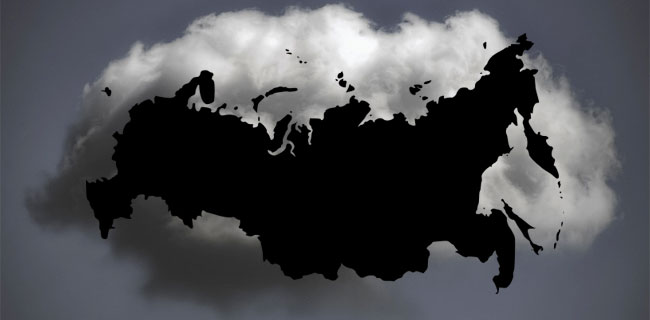
    I end my tirade with a cartoon by the Russian cartoonist Aleksey Merinov that speaks about the harsh reality and futility of war. Either with tanks or tweets!

  • English channel, Hindi advertising. Why? Kyun?


    By Avik Chattopadhyay


    Avik ChattopadhyayThe other day a South African friend residing in Delhi remarked, “I have been watching the IPL and there are so many ads in Hindi which I just don’t understand!! I choose to watch the games on an English channel yet why do they air Hindi ads?”


    Now, that was a truly existential question… one that asked the right thing but would not get a straight answer. It had been a ‘deaf’ spot for me for all this time, but his query made be surely feel uncomfortable, especially with all this social media chatter about language across the country.


    Now, Star1 HD is an English sports channel. The language used is to be English so that all those who understand English or wish to listen to all communication only in English shall feel comfortable and comprehend all that is said, both in the programming as well as the advertising. If one wishes to listen to all the same in Hindi, there is another channel specifically for that language. Why will there be any advertising in a language that the subscriber does not understand?


    The same applies to NDTV, Times Now and so on. English channels airing Hindi or Hinglish advertising without batting an eyelid or flapping the ear! And then they carry debates on why Hindi should not be imposed across the country and regional languages should be equally preserved and promoted!! The hypocrisy simply bests me! Just because you do not want to lose out on advertising revenues, you are ready to compromise with a core proposition of your brand yet will question why politicians from the Hindi belt address rallies in that language in the South. At least they genuinely do not know the local language and are handicapped, but you as a channel are not. You can stay true to your proposition, can’t you?


    Having lived in North India for most of my life, I too have turned apathetic to this basic issue of why should Indians who do not understand a particular language be force-fed advertising in it. In my professional life, I too have been guilty of the same, working with advertising agencies crammed with copywriters from the Hindi belt based out of Delhi and Mumbai churning out communication to be consumed by the entire country. We used to proudly announce that we have vernacular edits of the Hinglish commercials, as if doing a favour to their intended recipients. Then again, the core creative thinking used to be in Hindi or Hinglish at the best later adapted to a vernacular recipient. Basically, Mumbaikars and Dilliwallas having their way at the cost of regional sensitivities and national sensibilities! Till the time Calcutta/ Kolkata was the centre of Indian advertising, if the communication was to be on an English platform, it would be conceived and crafted in English.


    I have nothing against Hindi as a language. In fact, I read and write it better than my mother tongue Bengali. While I am ashamed of the fact, it does not take away from the beauty of Hindi, given its eclectic mix of Sanskrit, Prakrit, and Persian. Yet, it is not the national language of my country. It is one of the two official languages, the other being English. It is the official language of only nine states and three Union Territories out of a total of 28 and 8 respectively. I agree that it is spoken by roughly 40% of India, in various forms and dialects but then if numbers alone were to determine a national language, by that logic, the India street dog should be our national animal and not the Bengal Tiger!


    The ‘Hindification’ of Indian advertising is not a new phenomenon. It has been happening since the 1980s when Mumbai took over as the hub of advertising. The Bollywood DNA was injected into the thinking and expression. Delhi followed suit and reinforced the used of Hindi as an accepted medium of communication, with brands even creating their advertising taglines in Hindi. Banks to broom-makers signed off in Hindi.


    Those who stayed with English as that rightfully reached out to a larger base also fell into the trap and bit the Hindi ‘goli’. Thums Up stopped being “thunder” and became “toofan”. While Bollywood stars became national level brand ambassadors, stars from the South were confined to their respective language belts!


    So, you had the convenient nexus of Hindi-thinking advertising ‘mavericks’ and Bollywood to carry this ‘Hindification’ across the country. And they patted themselves on their backs for the same saying that they were thinking and talking ‘Bharat’ and not ‘India’. Then the media platforms joined this nexus, and the rout became complete.


    As the media did not balk at accepting advertising in a language that never fitted their intended format, it just emboldened the Hindi-thinkers to keep at it. This has led to a situation today where the brazen use of Hindi on English media platforms is quite apathetic and unapologetic. All research and analysis on the need to ‘think local’ and ‘talk local’ goes out of the window. Almost all North India-based brands seem to have ritualised this behaviour. Till recently, the brands from the East and South used to stay true to the language code but now you do see a few like TVS falling into the trap.


    Now with the language row raising its ugly head once again, the ‘cause’ of Hindi will become bolder and vituperative of the other languages of the land. The fact that Bollywood actors openly support the cause is a dangerous sign for the sheer quality of advertising in the country. Communication has to be thought out in the language of the medium of media communication. Assuming that your recipient or subscriber will forcibly learn a language is being foolish. Most of the advertising in Hindi on Star1 HD during an IPL match telecast is lost on the non-Hindi-speaking viewer. The numbers will be there but the comprehension will not. And life will not be as “dhana dhan!”


    Avik Chattopadhyay is a senior brand consultant and strategist living in Gurugram. He writes on MxMIndia mostly on every other Thursday, and sometimes on other days as well.


  • For the impatient imbecile…


    By Avik Chattopadhyay


    Avik ChattopadhyayOn May 29, a Member of Parliament raised the subject of the 10-minute delivery businesses in India. Her contention is that such a service is a serious threat to road safety, both for the delivery people as well as others on the roads.


    For once, a serious subject will be raised in Parliament irrespective of the outcome. For all you know, it might remind a few there that they hadn’t ordered their pizzas for lunch!


    We live in truly interesting times when junk food is delivered in 10 minutes but medicines in 120, and we seem quite at ease with this paradox.


    We are a society where we honk incessantly behind a car and jump red lights with gay abandon as we are in a tearing hurry to reach our destination. Yet, we are one of the most patient when it comes to having our politicians deliver on their promises.


    We are a polity where automakers are regulated to have six airbags in their cars while allowing “unicorns” to cock a snook at traffic management by advertising hyper-fast deliveries at any cost.


    We are a marketplace where we encourage people to plan for their children’s future by taking insurance policies but do not support planning their household purchases better.


    We are an impatient country. We want everything yesterday on our doorsteps. We need to break the queue to be served before others. We need to grease people’s palms to get a favour out of turn. We do not mind driving at high speed to get home to teach moral science to our kids.


    And our service providers treat us as imbeciles too. As mature people who cannot plan their purchases well on time. As people who realise at 10.30 pm that we need to have dinner. Or who cannot check the refrigerator in the morning to realise which vegetables we are running out of to order many hours before we actually need them. Get a life, dude! Plan better. It is not a matter of pride that you order for things at the last moment and get served for your inbuilt inefficiency! It all started a few years back with a pizza brand guaranteeing delivery in 30 minutes or free! What was a market disruption then has taken Frankensteinian proportions with timelines like 19 minutes and 10 minutes for deliveries. Basically, encouraging us to be impatient imbeciles!


    And what do our regulators do in all this? Pretty much nothing at all. The Advertising Standards Council does not realise the sheer threat to road safety as such an outcome may not have been foreseen in its book of violations. The Ministry of Roads, Transport and Highways does not think this is serious enough to be regulated. The automobile industry bodies like SIAM and SMEV do not think this falls under their “CSR” or “ESG” mandate to object to vehicle fleet operators encouraging such openly dangerous practices.


    Just because there is a latent demand for last moment ordering does not mean a service provider is going to cater to it at the cost of social balance [here road safety]. If all latent demands of the customer were to be met, we would end up living in total mayhem and chaos. The service provider has to be mature enough to take such decisions, even if it means the investors are not pleased.


    If the service provider is immature or apathetic, it is the responsibility of other key stakeholders in the system like regulators, policy makers and industry bodies to raise a red flag. A piece of advertising does not only need to be misleading or disparaging to be yanked off the air. It can have the potential of being dangerous for society which is a good enough reason to pull the plug. Like the advertisement of a ride-hailing service that blatantly shows its motorcycle rider carve through traffic with no heed to traffic rules.


    The responsibility of an automaker or the automotive industry body does not get over when the vehicle is sold but covers also how the vehicle is used. And the policy-maker’s job is not just to mandate how safe the vehicle engineering is but also to ensure that the entire road safety ecosystem is in place, with compliance and enforcement.


    The impatient imbecile is a social malaise who needs to be on the fringe of community. Bringing this person into the limelight and justifying catering to his / her demands is a dangerous trend in marketing and advertising. It needs to be nipped in the bud right away. We cannot afford to be patient about that!


  • Three to win!


    By Avik Chattopadhyay


    Avik Chattopadhyay“Three’s a crowd” is a thing of the past.

    Today it takes three to tango.


    Welcome to a world of three-way relationships in ‘brand management’.


    Since the term was created [and I really do not know when], it has been all about the product or service and the consumer. A company makes a product or creates a service offering with a certain performance promise. Through a channel or medium, it reaches the prospect who consciously chooses it over others. A simple two-way relationship between the provider and the consumer. We spent decades learning how to manage the dynamics of this relationship, with the consumer being the single-minded focus. Till recently, the provider literally provided the consumer all that was to do with the product or service. The process of feedback, complaints and redressal was two-way.


    The task for the brand manager was well laid out in terms of what to research, what to create, who to cater to and how to offer. Brand management was more or less linear in nature even though the process might incorporate many stakeholders and be circular.


    The new millennium has changed all that. With growing personalisation or customisation and the outburst of digital interfaces, the dynamics of the relationship has taken a new form. If earlier it took two to tango, now threesome is wholesome!


    The product or service has given way to an experience. The same hardware may allow use of multiple software depending on the specific requirements of the user. Previously, the product or service provider was expected to create the entire package for the customer. Today, the tasks are clearly demarcated for the domain experts to do their own little bits in creating the whole experience for the consumer. Earlier you bought a car, and it came with all the bells and whistles pre-fitted or pre-loaded by the automaker. Today, one buys a car from the automaker and chooses a connected interface from an Apple or a Google and the two need to work in tandem to give the consumer an immersive experience!


    Similar examples abound in every aspect of life.

    Dominos prepares a pizza that is delivered by a Zomato to a consumer.

    Netflix makes content that is viewed on a Sony smart television by a consumer.

    The entire experiences are created by two brands working together than merely one.

    A smart television would be useless without the customisable OTT platforms.

    A Zomato is not feasible without the food maker.

    A Maruti Suzuki is incomplete without Apple Carplay or Android Auto.


    Hence the relationships have now become three-way. There are typically two product propositions that work together in catering to one consumer. Both the propositions could be physical in nature, or digital or a mix, depending on the final experience being designed.


    This makes the traditional brand manager’s role a bit complex now. Now he/ she has to work symbiotically with another outside the organisation to create the final offer. The purpose and promise of the two brands need to respect each other in the first place. Both need to realise that in isolation, it is both incomplete and incompetent in delivering the final benefit proposition it desires. This necessitates mutual respect and genuine collaboration. This requires the candour to admit one cannot do everything by oneself. Some of the world’s biggest brands have been singed trying to do everything by themselves, rendering them irrelevant or late in the race.


    The brand manager has to remap his/ her role into not only protecting the interests of one’s own brand but also becoming capable enough of collaboration and co-creation. This capability has to be acquired through training and counselling as majority will not have such skills as natural. The collaboration and co-creation will be with a counterpart of the same stature. This is an adult-adult relationship and not a parent-child one that brand managers are used to when dealing with ‘agencies’.


    Another key evolution in the brand manager’s skillset is to cater to not just the customer but also the consumer. Earlier a product or service had to be bought to experience it. Now one need not buy to experience. One can merely loan or lease for a limited time period to use a product or service and share an opinion on the same. Today one may rent a car for merely a few hours to experience it. Or lease it for a few months. Tomorrow’s generation does not believe in owning but only in consuming, whether it be an app or an automobile. And when an industry as traditional as automotive has realised such a future, all other product categories are sure to follow.


    My brand + Collaborating brand + Consumer.

    That’s the equation the brand manager must balance in the days to come.

    There will be a constant back and forth from each constituent as each is an active contributor to the experience. The days of the provider and recipient are gone. All are collaborators and creators. The quicker the brand manager realises the same and upgrades accordingly, the better for all constituents in making it a win-win-win outcome!


  • Brand Vijay is back!


    By Avik Chattopadhyay


    Avik ChattopadhyayWhen Salim Khan’s Inspector Vijay Khanna appeared on the screen on May 11, 1973, a new brand was born in Indian social fabric from the least expected of places…celluloid. The brand of the ‘angry young man’.


    Depicted par excellence by Mr Bachchan, ‘Vijay’ was more than just an upright police inspector out for revenge. The character stood for the young Indian in the early 1970s, disappointed and frustrated. Gone were the days of utopian simplicity of a Raj Kapoor in the 1950s or the romantic optimism of a Rajesh Khanna in the 1960s. The new India was not shaping up as predicted and promised by Nehru and Patel.


    Corruption had seeped into every nook and cranny of life. Politics was not clean and noble anymore. Scandals broke periodically. The rich got richer at the expense of the poor. The mouths to feed were going up exponentially. Questioning was not encouraged, and freedom of speech was at a premium. The grand vision and promises lay torn asunder on the sidewalk. Nation building had given way to nepotism. The white sahib had given way to the brown one!


    In this context rose Vijay Khanna… sceptical, sneering and sardonic. He was symbolic of the state of mind of the young Indian. He was the young Indian. He was tired of the way things were around him. He wanted to change things. He did not necessarily have a clear idea of how to but definitely had a greater goal in mind of finally getting up to take the proverbial bull by the horns. Vijay Khanna was a character that every young Indian could relate to and saw a reflection of self. The angst and explosive action were relevant to all parts of India, urban, rural and villages. ‘Vijay’ became a brand.


    The establishment then thought that Vijay was more of an aberration than the harbinger of the future. The nationwide popularity of the character should have been a clear signal of the mood of the nation wanting correction or change. And change it was!


    The brand kept evolving over the years, manifesting itself in various celluloid roles played by Mr Bachchan right till Vijay Dinanath Chauhan in 1990. Many other celluloid characters were created in various languages mirroring the same purpose, persona and value system of Vijay. Importantly, the parallel or art cinema movement played the perfect foil in creating equally compelling manifestations of the angry young man, right from Gopalakrishnan’s ‘Vishwam’ to Nihalani’s ‘Anant Velankar’.


    Come 1991, India entered a new phase of optimism. The economy opened up. Liberalisation happened and with it came a new form of romanticism. There were things to look forward to in terms of opportunities, prosperity, and social wellbeing. A bit of utopianism creeped back into the mainstream mindset. Just like the first phase of feeling good lasted around two decades, so did the second. Corruption, nepotism and brazen capitalism again raised their ugly heads to overshadow the progress we made.


    2014 was a consolidated and conscious change of course. The old order was overthrown, and new hope was given a chance. Fresh dreams were woven and shared. Awe-inspiring targets were set. Promises galore were made about development for all and with all. Then year after year, initiatives were taken that took a toll on the enthusiasm of the average Indian. Demonetisation. GSR roll-out. CAA and NRC. Farm Laws. Agnipath. The promises of 2014 were nowhere to be seen in 2020 when Covid struck as the proverbial last straw. The young Indian, grudgingly, is angry once more. Yet again, the enthusiasm, energy and optimism has given way to bitterness, frustration, and a feeling of helplessness.


    Paving the way for ‘Brand Vijay’ to come back. In the forms of Pushparaj, Rocky, Advocate Chandru and Komaran Bheem. They are all Vijay in different avatars, in different contexts, fighting different battles. Whether for villagers smuggling timber or social outcastes asserting their right to equal existence. They are full of angst. They have none of the refinements of urban life. In fact, they are caustic about the lives of comfort of a privileged few.


    The sheer popularity of a Pushpa or a KGF is once again a clear signal of the mood of the nation, 50 years later. The youth is on boiling point right now, once again looking for correction or change.


    A brand need not be only a product, service or solution. It can very well be the outcome and a reflection of society. It can be an amplification of a state of mind or the prevailing mood, in the form of a literary or creative character. Vito Corleone is a brand. So is Hannibal Lecter. As well as Forrest Gump.


    As Pushpa tells Shekhawat at the fag end of the movie that a brand is not merely the label on a shirt. The brand is Pushpa himself.


    Just like ‘Vijay”!


  • Here’s to celebrating failures!


    By Avik Chattopadhyay


    Avik ChattopadhyayThis week has been a revelation for me on two fronts, first getting to know about the ‘Museum of Failure’ and second watching a Hindi film called Samrat Prithviraj.


    The first celebrates defeats and the second tries its best to cover up one.


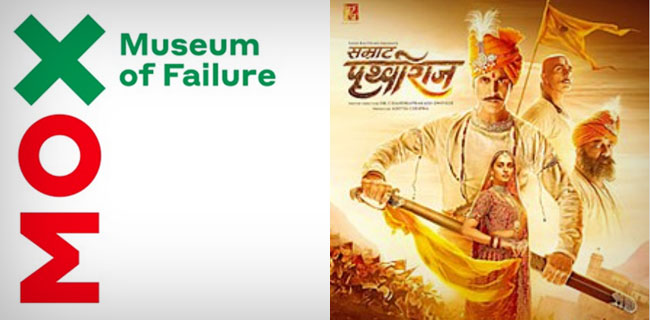
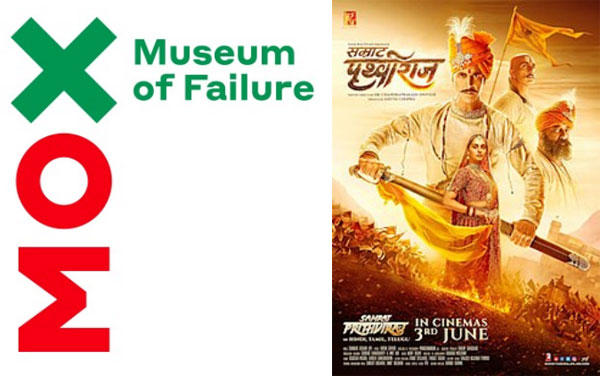
    Logo of the Museum of Failure / Poster of Samrat Prithviraj


    The Museum of Failure is a simply awesome concept. It showcases close to 150 products and solutions launched that ended up being duds. Examples are like the Apple Newton, Google Glass, Harley-Davidson Cologne, and Sony Betamax. Mega brands. Mega failures.


    The reasons for failure could range from being ahead of the times to being totally irrelevant. But the objective of creating this amazing display according to founder and creator Samuel West is to celebrate the spirit of innovation and learn from the failures. He says that the displays demonstrate the risks in innovations yet encourage the human mind and spirit to create newer things. Financially supported by the Swedish Innovation Authority [Vinnova], it opened in 2017 in Helsingborg, Sweden. Since then, it has evolved into a travelling show, doing stints in Los Angeles, Shanghai, Paris, and Minneapolis. The Parisians in fact celebrated a complete Festival of Failures!


    Big brands have sportingly supported him with providing exhibits. It was not demeaning for Kodak to donate a DC-40 camera [costing $1000 per piece which is why it failed] or for Lego to talk about its failed fibre optics venture. There is no shame in admitting to mistakes like Coke-II or Nokia Taco. They are brutal facts and hiding away from them just does not make any sense. It would be hilarious for Coca-Cola to wish away the Coke Blak. It was an interesting innovation, something new was tried but it did not work. Simple. Samuel West clarifies that every product or solution featuring in the museum is carefully chosen for its innovation quotient. Samsung Notes was a failure but will not qualify as an exhibit as it was nothing ‘new’! It’s not about the failure. It’s about the ability to be creative and at least try new things. And learn from failures, defeats and mistakes. That’s the hallmark of any successful brand.


    I remember Osamu Suzuki once telling us at Maruti [Udyog] Suzuki that one may launch 10 new cars and only two would finally work in the market. The success of these two will cover up the financial losses of the failed eight and provide the investment to create 10 more! The passion for innovation and creation cannot ever stop.


    Will Maruti Suzuki donate a Zen Classic to the Museum of Failure if it travels to Mumbai? Will brands operating in India happily own up to failures? Will brands believe that admitting to defeats and reversals endears them better with the customer and makes them more ‘human’? Will Ratan Tata own up that the Nano failed in spite of being a brilliant piece of design and engineering?


    Which brings me to Samrat Prithviraj, the movie. Made by Chandra Prakash Dwivedi, a person my generation has hugely admired for his portrayal of Chanakya on Doordarshan, I had expected the fundamental admission that Prithviraj Chauhan lost to Mohammad ibn Sam of Ghor [commonly known as Mohammad Ghori] in the second battle of Tarain in 1192 AD. Ghori outlived Prithviraj by close to 14 years. We Indians have a big problem with admitting to failures and defeats. So, we revel in the myth that Ghori was killed by a blind Prithviraj aided by his confidante Chand Bardai. The movie claims to be inspired by a work called “Prithviraj Raso” by Chand Bardai written much after the battle, to keep the spirit of the king alive and positive. However, in the movie he too dies along with Prithviraj leading to the basic question that who then wrote the very literary piece?


    This fear of admitting to failure drives our brands too. Reversals are not even whispered in the corporate corridors, leave alone openly sharing them with the outside world. For us, the Hindi term of ‘naak kat jaana’ which means ‘loss of face’ is a huge social stigma which leads to such defensive action. We do not wish to see the valour in Prithviraj’s defeat for in defeat there can be no valour. We do not wish to learn from the fact that Ghori lost once but came back again better prepared for outsiders or competition cannot be worthy of admiration. We love weaving myths and trying to live in them. I have never seen any politician, judge or bureaucrat accept mistakes and defeats in a truly candid and sporting manner. If in a position of power, we are seemingly invincible. Vulnerabilities are signs of improper parentage and weaknesses are to be hidden from all, including self. Which is why most of us fail to do reality checks in time. We tend to start checking too close to failure.


    The day we openly celebrate failures as a nation and society will see us as more confident of ourselves, bereft of falling back on our ‘golden past’ and bold enough to invite Samuel West and his Museum of Failure to do a nationwide tour!


  • What ails Brand Pakistan @ 75…

    https://www.freepik.com/
    Source: Freepik.com


    By Avik Chattopadhyay


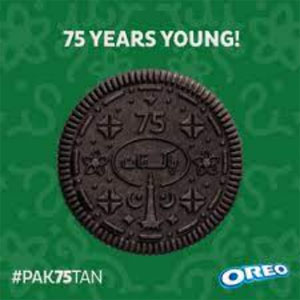
    Avik ChattopadhyayAs we celebrate ‘Azadi ka Amrit Mahotsav’, so is Pakistan celebrating ‘Jashn-e-Azaadi’ to commemorate 75 years of its existence. The first is the cause while the latter is the effect!


    Pakistan would not have happened but for the creation of India as an independent nation state in August 1947, so technically, while India can rightly claim this as her 75th year of independence, Pakistan technically can claim this her 75th year of creation. Therefore, our neighbours in the north by northwest should be celebrating their ‘Jashn-e-Wajood’.


    This paradox itself is a demonstration of brand “Pakistan”. A brand made up of contrasts, paradoxes, and conflicting paradigms. Its very creation is due to the existence of another. Therefore, it’s very lifeline is dependant on the health of another.


    This is the typical image of the brand. It is a bit like a parasitic plant, living on the nutrients from another brand that is India. Maybe I sound too harsh, but that is the reality of brand Pakistan today. Almost all references to Pakistan are vis-à-vis India. Comparisons are natural to be drawn but they are of the nature of proving time and again that the brand has been one big mistake. I remember listening to a lecture by journalist M.J. Akbar in 2016 where he said that the current state of Pakistan actually proves that partition, though painful, was a correct step in India’s favour. And Pakistan has not done itself any favours over the last two decades to prove us wrong.
     

    Can the 75th year of its existence give it the space to introspect? Is the Pakistan today the one that the elites of the Muslim League led by Syed Ahmed Khan had dreamt of in the early 1900s? Is this what Mohammad ‘Allama’ Iqbal visualised? Or for that matter even Jinnah? While the germination of the thought of a separate state for the Muslims in British India was a reactionary one, emanating out of fear of losing out rather than any positive vibes, being casually called a ‘rogue state’ and a ‘basket case’ could never have been the desired outcome.


    And it is this fundamental principle of brand creation and building that decides where it finally ends up. A brand born out of negative emotions cannot last for long in a positive state of being. It is inflicted with complexes of various dimensions… neglect, inferiority, and lack of self-belief. The brand cannot stand on its own feet. And this exactly is the malaise of brand Pakistan.


    Pakistan is one of the world’s richest cultural and civilisational regions. It is the one melting pot of Mehrgarh of the Neolithic Age, Indus Valley of the Bronze Age, the Greeks, the Seleucids, the Mauryans, the Kushans, the Guptas, the Umayyads, the Hindushahis, the Ghaznavids, the Sultans, the Mughals, the Durranis, the Sikhs and the British. It carries a historical legacy that would have seen it as one of the most socio-culturally thriving parts of the world. It could have created a model nation state based on plurality of cultures rather than the purity of faith it opted for. It has ended up choosing the turbulence of multiple cultures rather than their inherent richness. This is so typical of brands that somewhere neglect their roots and natural moorings and go for causes that are non-credible, transactional, and synthetic.


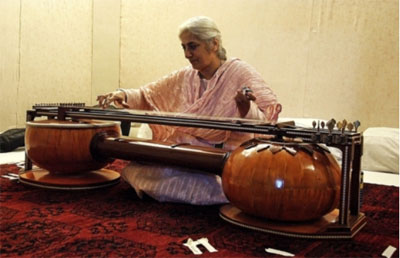
    Pakistan is the land of the Nobel winning physicist Dr. Abdus Salam. It is the land of the pathbreaking ‘Ommaya Reservoir’ that transformed medical surgery. It is the land of Naveed Zaidi who developed the first plastic magnet. It is the land of the Farooq Alvi brothers who created the first computer virus (c)Brain! It is the land of Raza Kazim who has created the Sagar veena. It is the land of Mahbub-ul-Haq who created the ‘Human Development Index’! It is the land of Abdul Sattar Edhi who set up the world’s largest private fleet of ambulances.


    Noor Zehra, daughter of Raza Kazim, playing the ‘Sagar Veena’

    Pakistan is Faiz, Manto, Iqbal and Eliya. Pakistan is Imran Khan, Hassan Sardar, Jahangir Khan and Abdul Khaliq. Pakistan is Nusrat Sahab, Abida Parveen, Nazia Hasan and Strings. Pakistan is Sadiq Khan, Riz Ahmed, Ayesha Jalal and Zayn Malik.


    Pakistan is well beyond the army, ISI, JeM, Masood Azhar, HuM and the Taliban. Pakistan is well beyond bombings, ethnic hatred, corruption, and fundamental terrorism. But the brand is a victim of such a narrative. Pakistan today is a pale picture of the vibrant Pakistan of the 1960s and 1970s. It stands before India today as a stark reminder of what we could become and should stay away from.


    Nooh Butt and Gurdeep Singh in Birmingham

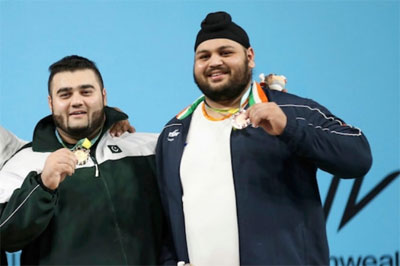
    When Nooh Dastgir Butt dedicates his weightlifting gold in the just concluded Commonwealth Games to Mirabai Chanu and celebrates with his dear friend and Indian weightlifter Gurdeep Singh dancing to Siddhu Moosewala songs, it is a Pakistan that is counter to the popular narrative. When Arshad Nadeem throws his javelin beyond 90 metres and remembers his sparring competitor Neeraj Chopra in his moment of victory, it is against the narrative.


    On 31st May this year, the Institute of Policy Studies in Islamabad and the Fatima Jinnah University in Rawalpindi organised a seminar titled ‘75 years of Pakistan: Constitution, Public Representation and Governance System’ where some of the sharpest minds reiterated the crucial role the revised constitution of 1973 plays in keeping powers in check and needs to get stronger by the day. To quote from the deliberations, “Martial laws have been imposed on the country a number of times, however, all of the initiators had to seek some form of public representation after some years. Ayub Khan had to resort to local democracy, Zia-ul-Haq had to conduct a referendum to provide the impression that he was a representative of the people, even Pervez Musharraf had to turn to local bodies elections and a referendum.”


    In 1956, Pandit Nehru saw Abdul Khaliq run the 100 metres and called him ‘Parinda e Asia’.

    In 1960, Ayub Khan saw Milkha Singh race against Khaliq and called him ‘The Flying Sikh’!


    On the 75th anniversary of its existence, Pakistan has to take a strong hard look at what defines its very existence as a brand. It has to question its core purpose and promise to itself. It has to decide whether to remain the parasitic rafflesia flower or evolve into the the symbiotic orchid. And that will be done by its people and not the government, army or ulema.


    The two brands of India and Pakistan are inseparable. How I wish the two nations were to together celebrate ‘Azaadi ka Amrit Jashn’. For each brand has a part of itself living in the other.


    I conclude with the final lines from Piyush Mishra’s song ‘Husna’ written a decade ago…


    “Aur rota hai raaton mein

    Pakistan kya vaise hi

    jaise Hindustan,

    O Husna?”

    [And does Pakistan shed tears every night just as India does, my love?”]


    Jeevey jeevey Pakistan!

    Jai Hind!!


    (You could watch the song being performed by Piyush Mishra and Hitesh Sonik at Coke Studio MTV Season 2 on YouTube at https://www.youtube.com/watch?v=4zTFzMPWGLs)


    Avik Chattopadhyay is a senior brand and business strategist and advisor based in Gurugram. He writes on MxMIndia every other Thursday. His views here are personal.


  • Adani Stake Buy of NDTV: Brand ownership woes!


    By Avik Chattopadhyay


    Avik ChattopadhyaySo there has been a lot of buzz around Adani ‘taking over’ NDTV. While claims and counterclaims are being made, I wish to divert your attention to spend the next few minutes on discussing the typical issues that rise when brands undergo a change in ownership.


    In my professional life, I have undergone three such instances, when Exxon acquired Mobil, when Suzuki became the majority shareholder of Maruti and, when Apollo Tyres acquired Dunlop [in Africa]. In the first two cases, I was a member of the acquired brand while in the last, I was part of the acquiring brand. In all three instances, the crucial issues were always three – identity, independence, and integration. Guess the same applies to every case across industries the world over.


    Identity

    The acquired brand fears a loss of identity… specifically that it will be subsumed into the acquiring brand. this loss is not just of the name but also the brand purpose, values, and culture. While the fears are justified, in many cases, the new owner actually acquires the brand for improving its own stature, credibility, capability, segmentation or market presence.


    An example is the Chinese automaker Geely acquiring brands like Volvo [cars], Lotus, Benelli and Polestar. It has done to gain recognition as a global corporation while also enhancing the group’s capabilities in aspects of research and engineering. Here, the owner will ensure the acquired brands retain their identity and in fact get stronger by the day as it justifies the purchase and enhances valuation.


    When Apollo Tyres acquired the Dunlop operation in Africa, the world got to know of the new owner and the brand. The acquisition was not just for access to new technology and markets, but also for enhancement of stature and global recognition.


    Unilever as a megalith has been built on acquiring brands through decades, right from Lipton and Brooke Bond to Dollar Shave Club and Pukka Herbs. The owner acquires brands to enter product categories and markets to cater to a wider customer base. This helps in offering its existing portfolio to the same customer in a far more efficient manner. Therefore, the acquired brands not only remain but remain stronger than before!


    Independence

    This is the second most crucial element of anxiety for the acquired brand. In most cases, due to the business pressures of bringing economies of scale and quicker returns on investment, the new owner, while retaining the identity, wants to ‘commonise’ aspects of research, supply chain, production, blueprints, operating systems and even in some cases, manpower. I could use the same assembly line for making Lifebuoy and Lux and as long as it does not matter to the customer, it is perfectly fine!


    However, as each brand has [supposedly] its own distinct DNA, mature owners let each acquired brand retain its independence of thought and operation. It is a function of the industry. And in some cases, the market realities make the owner realise the need to allow a level of independence to ensure business success.


    Martin Sorrell did this pretty well with all the agencies WPP acquired over the years, though the backend operations might have been streamlined into one. Rajeev Chandrasekhar learnt the importance of independence when he acquired Asianet in 2006. He wished to mould its narrative into his own thinking but realised that it would lead to serious loss of viewership that enjoyed Asianet’s left-of-centre editorial stand. He let Asianet retain its editorial independence and in fact sold it off to Star India in just two years’ time. The case of Thums Up retaining its position under Coca-Cola ownership is another ‘toofani’ one!


    On acquiring Mobil in 1999, not only was the independence of the Mobil brand assured but the new organisation itself was called ExxonMobil! This obviously sends out positive signals not only to the markets but also the employees of the acquired brand about retention of both identity and independence.


    Integration

    Even if the new owner preserves identity and independence of the acquired brand, things can just fall apart due to flaws in integration. This is the third and most critical aspect of a change of ownership, especially if the new owner has existing interests in the same industry or field.


    Mega-mergers and acquisitions have failed due to faulty integration. DaimlerChrysler is a case study. ESPN Star Sports was another. There are many more around us. The basic human nature is of control and command and one individual always wants to have the upper hand over another, especially of the latter is an acquired brand. Making the acquired brand feel welcome and taking extra precautions not to ruffle sensitivities is important. It is indeed tough to shed one’s ego of being the owner or the bigger brand. The other side of the coin finds the acquired brand behaving irrationally defensive, protective, and sensitive about the smallest of issues.


    I personally experienced this is Maruti Udyog [then] as it was transitioning to Maruti Suzuki. We realised that the Japanese would call the shots very soon and many of us, including myself, behaved rank silly with our counterparts in Hamamatsu on numerous occasions.


    New ownership, either through change in shareholding, a merger or a buy-out is always filled with an expected dose of uncertainty for any brand. So must it be inside NDTV right now. I personally think it will be business as usual for the brand. The new owner gains in stature in the global media circles now by acquiring a respected media house. And Adani will never tinker with its ethos for its own good.


    Seventy-eight years ago, even though under the ‘ownership’ of Nazi Germany, a certain Hermann von Choltitz chose to disobey Hitler’s direct order to destroy Paris and instead handed it over intact to the French resistance forces. Brand Paris was kept intact!