Tag: Vikas Mehta

  • What they don’t teach you about retail at an MBA course

    What they don’t teach you about retail at an MBA course

    With apologies to none at all

    Vikas MehtaWhen I passed out from business school more than 35 years ago, India had not even entered the world of malls. Retail meant mostly mom-and-pop neighbourhood stores and every FMCG company worth its salt was into the depth of distribution. The role of wholesalers, in the Indian context, could never be overstated. While western marketing authors always used the words distributor and wholesaler interchangeably, In India depth of distribution meant huge dependence on wholesalers. Even for the HULs and the ITCs.

    But B-schools hardly explained the Indian wholesale phenomena. At best wholesale was referred to as buying in bulk, cheaply and then distributing it to retailers and earning good margins. In reality, it was almost the opposite. Sorry, not was. IS. Even today, wholesale is referred to as cheap. In fact there is a neighbourhood modern store in my area which is called Wholesale Store just because it claims to be at least 5% cheaper on almost everything.

    For the uninitiated, wholesalers in India buy across product categories, unlike most distributors. And it’s not just 5-6 categories but maybe 30-40 categories. The idea is to service kirana and groceries in small towns and villages with everything that they need. These shops may buy 20 soaps and five 1 kg detergent powder packs a month. A distributor cannot afford to service them as the margin on those small quantities does not cover even his/her transportation costs. A wholesaler, by servicing the whole gamut of products in a small kirana store, makes margins across product categories that allows it to make profits. And this allows sales at thin margins, in effect sometimes enabling a kirana store to sell below MRP. And that’s why the myth of wholesaler buying in bulk, selling cheap. S/he buys in bulk but across many product categories. S/he sells cheap because his depth of product categories allows him to do so.

    Since the last 35 years, trade has evolved rapidly. Modern trade, which is local supermarkets, emerged. They made shopping a pleasant and an involved experience. From dinghy, badly lit kirana stores, one could touch, feel and see the variety at offer.

    But it was the malls that shaped this modern trade into supermarket chains. The now-defunct Big Bazaar was the pioneer. There was Spencer too. And malls and big supermarkets were made for each other. Malls had big brands. In apparel, footwear. Electronics, fashion, etc. But the problem was that after the novelty wore off, the consumer would not visit regularly. One does not buy branded clothes or footwear or electronics every month. It’s maybe twice or thrice a year. Malls wanted footfalls every day.

    That’s when the concept of anchor stores came in. Consumers need groceries every week. So, if a mall could get a good supermarket, consumers would come in every week. And these would be located either on the top floor of the mall or at the end of a vast one level mall. The idea was that the consumer will get to see other stores and would be tempted to walk in, browse around and get attracted by offers. In fact, within a supermarket too, this concept works. Vegetables or daily products like milk, eggs bread are always at the end of the supermarket. So that you walk through the entire display and are tempted to buy more.

    Now, if consumers come in once a week, can we get them more than once? ‘Super Wednesday’ with the concept of mid-week replenishment came in. Or the concept of cheapest first seven days of the month. Traditionally, the local kirana would give credit which would be paid off in the first week of next month, once payday happened. This was one step ahead. Buy in advance for the month when your pay day happens. Stock up for the month.

    The concept of anchor stores got extended into multiplexes, food courts. All again on the top floor or at the end of the mall. Malls without anchor stores struggle. Even today.

    Retail had definitely evolved

    E-commerce of course changed retail forever. People call it retail at a click, I call it retail on wheels. It brought everything, even apparel to your doorstep. It made you lazy but it opened a new concept call gig workers. The delivery boys and girls. I would love to see some hard facts but I think that Dehradun, where I stay at least 20-30% of two wheelers on road are into delivery. And these have become brands in their own right. Ekart, Delhivery.

    But I digress. We think ecommerce changed the way we shop because they gave discounts. That’s a fact which cannot be disputed. But discounts were the sop. Today, we are used to paying delivery charges. One feels good that a saving of Rs 30 has happened on a Rs 250 order, but we also pay Rs 30 as delivery charges. Delivery charges have become so commonplace that free delivery today, is an effective promotion. That is the price we pay for the wheels. That’s why I call it retail on wheels.

    And today we are in the age of Q commerce. Quick commerce. Retail on steroids as I call it.

    I don’t think it’s about the 10-minute or 15-minute, quick delivery. I think it has touched the psychological sweet spot of completing the full shopping experience in a few minutes. Let me explain.

    Twenty or 30 years ago, shopping meant having a shopping list and going to the market to shop. One would spend maybe an hour or so, but in that one hour choosing, deciding, haggling, weighing and paying would happen. And one would be back home with the full shopping. Done and dusted.

    E-commerce actually stretched the shopping experience into days. Sure, one has a list. One clicks and checks out. But then one has to wait for delivery. It could be 24-72 hours. It causes anxiety. Will someone be at home when the order is delivered? Will all the stuff come? Will there be some mistake in the quantity? Will the quality be satisfactory? To assuage these came delivery on fixed time slots, return policy etc. But it was ironical that the shopping experience took longer to complete.

    Q commerce actually is a panacea to that. It came at a time when consumers were used to discounts. Q commerce offered it. Consumers were used to delivery charges, Q commerce extracted it. In fact, during certain hours Q commerce charges rush surcharge. And yesterday on Blinkit I saw a rain surcharge and it said that it’s raining heavily in the vicinity of the store so…. You get the point.

    But, more importantly, by delivering in 15-20 minutes, Q commerce rounds up the full shopping experience and frees one from all the worries. That’s why it’s been such a big success. It’s like going to your neighbourhood store and buying three-four things and coming back in 10-15 minutes. Except, this neighbourhood store also sells iPhones and pooja thalis.

    And like anchor store,s Q commerce is trying to make you visit more often. Just one example to explain this

    Big Basket every day morning sends me notification of some deals. All offers for Rs 29. Sometimes for Rs 10. Or BOGO. Buy one get one free. Or flat 15% off on bakery. Now it’s a good trick to get one to browse. Rs 10 could be a small Lays packet or a small scrubber or even 100 gms ladyfinger. But with that the bigger packs or larger quantities are also available. So, when I click the option, I may not want 100 gms ladyfinger but definitely 500 gms, so I buy that. In lure of Rs 10 I have entered the store and done shopping which I was not planning to.

    I started this column with the grouse that one never learnt wholesale distribution during MBA, I suspect it doesn’t happen even today. Do MBA courses keep pace with the evolutionary trends? Is Q commerce in the curriculum. Is the difference between Omnichannel retailing and multi-channel retailing being taught? Has the faculty participated along with the industry to understand the evolution? Or are the colleges and Universities just paying lip service by taking a guest lecture or two on the topic. Or holding a webinar?

    This column is not to criticise but to reflect upon how much has changed in the retail sector and are our MBA courses reflecting those changes?

  • A Tryst with Books and Gen Z

    A Tryst with Books and Gen Z

    With apologies to none at all

    By Vikas Mehta

    Vikas MehtaMy daughter is an avid book reader. She actually reads books. That’s offline reading. Not Kindle or from any online site, but physical books. And that is a rarity. Since childhood, she would never get any pocket money but a monthly allowance to buy books. I would try to gently nudge her into buying some books but her independence in choosing her own genres came through at a very young age. Even now, books are her indulgence. Maybe that’s the reason she is doing graduation in journalism with creative writing as her elective. Three months summer break and she has already bought around 25-30 books and is now stocking to take some to the university.

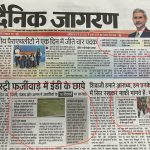
    Dainik Jagran clipping showing highlights of newsNeedless to say, she is an exception. Reading as a habit is declining in Gen Z. Attention spans are also reducing. It’s not even videos but reels. Newsletters send summary with their articles. Even regional newspapers like Dainik Jagran summarise big stories into highlighted points; something which I noticed that some mainline English newspapers have also started to follow. (See image).
    Podcasts are catching on. You can be driving and listening to a podcast or even watching cricket and listening to a podcast on the perils of investing in cryptocurrency. All major news sites also have audio version of the news.

    So, what’s happening? Too much information, too little time? Multitasking and wanting to keep up with the Jones? Multifocus (does that even make sense?) and multifaceted? All valid reasons. But is there a cost to it?

    My thinking is that the explosion of technology, in every field, have made people insecure. So, everyone is trying to know everything. And with Gen Z being born with a technology spoon, technology is not a medium or conduit but way of life. So, if I can do a masters in finance, I can also do a certification in AI, follow someone who gives tips about immigrating to Australia or Canada, learn how to retire at 40, follow stock market to get rich quick… you get the drift. Insecurity about the future, ironically caused by technology itself, forces them to try and know as much as possible

    The width of knowledge of Gen Z is amazing. But the depth is a question mark? Jack of all trades but master of none is very applicable here. There is a view on everything but there is no confidence in that view. And proper lack of reading books is one reason why the depth of knowledge is missing. Reading books gives one a context. Historical perspective. Various viewpoints. Nuanced knowledge. A rich vocabulary. Ability to communicate, I can go on and on.

    I was therefore eager to visit a book fair in Doon which my daughter discovered.

    It was promoted online (the irony of it!) with 3000 books available as a hook and it promised books by the kilo.

    And to my pleasant surprise I found that the venue was full of Gen Z, mostly students. Not to buy curriculum books, they hardly buy curriculum books nowadays its either some online repository or maybe in some cases library, but to buy books of various genres. I noticed that except me and my wife, there was just one more oldie parent. Heartening, to say the least.

    At first, I was bewildered.

    All I could see was books by unknown authors.

    Self-help books.

    Books advising on stockmarkets.

    Books on romcom.

    Books on psychology fiction, literary fiction.

    And books on dark mystery.

    I had hardly heard of these genres. But my daughter patiently took me through them.


    Good girl guide to murder- it was a series of three or four books.

    Before the coffee gets cold – sort of science fiction psychology

    People we meet on vacation – Romcom

    Cleopatra and Frankenstein – Literary fiction

    I want to die but I want to eat but I want to eat tteokpokki – Psychological fiction

    Normal people – Romance thriller


    And most of these books claimed to be bestsellers. Published by leading publishing houses like Penguin or Bloomsbury publications amongst others.

    But the most eyecatching thing was that most of the books had very young authors. Late twenties or early thirties. And mostly females. Holly Jackson (31 years), Anna Hueng (33 years), Emily Henry (33 years), Baek Sehee (33 years).

    And most books were between 200-350 pages. No voluminous read that went for months.

    In contrast, I hardly found the old voluminous classics like War and Peace or some of the Charles Dickens ones. The only old classics I could see were Crime and Punishment and Exodus.

    There was a smattering of Dan Browne, Fredrick Forsyth and Jeffery Archer.

    And then there were tonnes of self-help books, many by Indian authors, all men, on how to game the stockmarket, get rich quick, retire at 30 or 40 etc.

    Most books had Hindi translations available. Alchemist by Paul Coelho was available only in Hindi. So were almost all help books and get rich books. And the Romcoms too.

    Autobiographies and biographies were also available but mostly in Hindi or of Indian sports stars. Virendra Sehwag, Suresh Raina, Shane Warne and Nelson Mandela were the favourites, all in Hindi.

    There were many detective and mystery books too and many by Indian authors. I guess the genre needs better situational and local nuances understanding.

    By now my mind was buzzing with questions and I took the help of my ever-obliging daughter and wife to ask three-four youngsters some questions.

    I am listing some interesting observations into Gen Z reading habits.

    They usually do not have book reading as a habit but do come to such fairs as many self-help books and modern books are available cheap. By kilo. Strike one.

    Mystery, politics, true events etc are more fun to watch on OTT rather than read about it. As one smartalec wisecracked, the daily newspapers are full of it anyways. Strike two.

    They are comfortable in reading English as long as it is not Tharooresque. Not comfortable in communicating in English. But reading is a different ball game. Strike three.

    Books do give them some sort of privacy. As its their personal area. But phones give them more privacy because no one knows what they are reading on it. Strike four.

    They don’t read authors (my daughter disagreed), they read recommended books. Influencers and friends play a very strong role in their reading decisions. Strike five.

    There is no budget for books. It’s a rare occurrence. Only at such book fairs where they buy in bulk in kilos. And they never keep the books. Exchange with friends or sell them off and that’s how they get recycled into such book fairs. Strike six.

    But finally it was one guy who when asked about reading books for indepth knowledge, gave me a quizzical look and muttered: “Jab padai mein hum zyada depth mein nahin jaate tohi uski aadat kaise padegi” Loosely translated “When our education does not encourage us to dig deep then how will we get that habit.”

    I will leave you with that deep thought as the master of all strikes.


  • Vikas Mehta: Kanwar Yatra: Beyond just a ritual?

    Vikas MehtaWith apologies to none at all


    It’s uncanny how for the last two-three years our yearly family holidays have coincided with the Kanwar Yatra. For the uninitiated, Kanwar Yatra is an annual ritual during the month of Sawan (rains), when pilgrims walk barefoot from their villages to collect gangajal, mostly from Haridwar, but also from Gomukh and Rishikesh to take it back to the village Shiv temples to do jalabhishek of the deity.


    Till a decade ago, this was an unheralded, unnoticed and a quiet ritual that was not even a blip on anyone’s radar. But given the intertwining of politics and religion, the Yatra has earned its place under the sun. In the north, this is an event which today, unfortunately, is also associated with rowdiness and unruliness.


    In this column, I am attempting to make some unbiased observations and also delve into its economic consequences.


    As this is a strenuous Yatra, mostly it is associated with youngsters. Given India’s demographic profile, the Yatra attracts huge numbers of pilgrims. That, coupled with the current dispensation’s agenda of highlighting any Hindu festival or ritual the Yatra, attracts numbers in millions. On the occasion of Guru Purnima, that’s when the month of sawan commences, it is estimated that more than a million people had gathered at Haridwar.


    As the Yatra gains pace, most of the national and state highways between Delhi and Haridwar are overrun with the devotees. As a result, for about two weeks, the main highways are closed to all transport except for the Kanwariyas. But wait, wasn’t this supposed to be a barefoot walking Yatra. Technically, yes. But with the popularity, political patronage and money flowing into the Yatra, the Yatra has spread further and evolved with new rules and rituals.


    Enter Dak Kanwars. Traditionally, the Kanwars (that’s what the devotees who do the pilgrimage are called), would carry the gangajal in specially decorated palanquins a la, Shravan Kumar. I have attached some photos at the end of the article for reference. But now with distances increased and there being a premium on time, the Yatra is done in groups using bikes, trucks or tempos.


    These vehicles run along with the Kanwars who do a sort of relay amongst themselves carrying the gangajal as the baton in a relay race. One rule being that the gangajal will not be rested along the ground. Most Kanwars consult a priest to decide how much time they should take to get back from Haridwar and try to reach back in that time.


    Now these modes of transport become their home for a few days. The trucks are decorated with banners, religious flags and equipped with food, gas cylinders, gensets, water barrels, fuel for the genset, sleeping mattresses etc. In fact they have two levels. The upper deck is where they sleep and lower is where all the stuff is kept. And at the back a ladder is secured firmly. Please do look at the photographs attached. It’s Indian jugaad exemplified.


    But the jugaad is scary. Imagine gas cylinder, genset, diesel all in one closed area. All it needs is a spark. Actually it should not be called a jugaad at all.


    Some of you may be wondering why the genset. Well, now these Dak Kanwars also need music. So, music systems with huge speakers, disco lights and DJs also are part of the converted vehicles. I witnessed impromptu DJ contests right in the middle of the road. Vehicle pollution, genset pollution plus noise pollution was a potent cocktail that contributed to the increased levels of adrenaline and testosterone.


    And the increased level of adrenalin coupled with the increasing political patronage behind the Yatra, the Kanwars have a free hand. They become belligerent, they boss the whole route and mostly become a law by themselves. The governments of Uttarakhand and UP go out of the way to honour the Kanwars; showering of rose petals from helicopter, the CM and various dignitaries washing the feet of the Kanwars, all traffic being banned on roads. Given the lax handling, the Yatra is denigrating into a lawless affair. This year, police officers have been manhandled twice. FIRs have been registered but hardly any arrests or strict action has been taken.


    Last week, I witnessed some of the high-handedness myself. The bikers were shooing away cars. Once when our driver honked for the Kanwars to be careful, as they were driving recklessly, they glared at him, mouthing abuses and I feared the worst. But our cabbie was experienced at this. He immediately folded his hand in apology and mouthed a religious chant. We got away, but the danger was omnipresent.


    Personally, I think, all this is deliberate. Not only does this distract the youth from his miseries of unemployment and inflation but it also gives him a chance to flex his muscles and for once show to the world that he is the boss. And of course, I dare say that this also gives an aggressive outlook to Hindutva, which is what the current dispensation wants. Just as an example, all the flags which had the image of Lord Hanuman, had the new serious, angry, brooding look. Not his gentle and devotee look, which is how I remember Lord Hanuman. Again, see the visuals below.


    And the aggressiveness is exemplified by the songs that have become a rage during the Yatra. These are local songs, mostly based on the Bollywood tunes, but they are aggressive in nature. One song which I heard many a times had lyrics which said something to the effect “main highway hoga jaam, ke Kanwar aye hain.” (The main highway will be jammed because the Kanwars have arrived). The assertiveness and aggressiveness was in your face.


    Now let’s look at the economics of this event. There are first some negatives. Most of the hotels dhabas and eating joints on the Yatra route shut down. We found it very difficult to find even a single decent place, not overrun by the Kanwars to stop at. Of course the food courts and brands like McDonalds or Burger King which serve non-vegetarian foods stand no chance. But food with onion and garlic is also not allowed. Only Satvik food. One small dhaba was vandalised because it was alleged that it was serving non Satvik vegetarian food. Most of dhaba owners shut down voluntarily because they fear non-payment and vandalism. This results not just in loss of business but also loss of employment for many.


    On the positive side is the amount of money flowing into the economy. If you look at the economics of each Dak Kanwar truck and associated mobikes, depending upon the distance, nothing less than a lakh a day is required. Someone or many are sponsoring this. And the total amount is mind-boggling. Imagine the extra money that a DJ or the truck companies or the drivers, or the genset companies, or the petrol pumps are making. And the associate labour cost plus temporary employment opportunity. Not to forget that businesses, small businessmen and even families pitch in to help the Kanwars by opening free langars and bhandaras on the roadside. Again the temporary employment this all generates.


    What caught my eye was also group of people standing in the roadside with water bottles, food packets, snacks etc doling it out to the Kanwars.


    Environmentally, there are huge downsides. There is no waste management systems. There is no awareness of waste management. People dole out water bottles which are dumped on the road. Food left overs, waste as in plastic, packaging material, paper etc was littered right through the route. Gangajal is now transported in plastic bottles and plastic jerrycans. And the pollution issues I have already highlighted.


    Kanwar Yatra is not a new phenomenon. Indeed a friend tells me that it happens in the South too. But typically it was associated with the hardships of a pilgrimage. Youngsters walking for days, barefoot with palanquins slung over their shoulders carrying gangajal. Local villagers helping and feting them. Quiet, unassuming and serene.


    That has changed. Is it for the worse? That’s what many do not think.


    Religious overtones have become a sacred cow. Not to be debated or questioned. Even politically, opposing it may mean a kiss of death for a political party. So, no one questions it. In the meantime, the Yatra gets more boisterous, more aggressive and more in your face. Some say, it is good as it lets the youth vent out their anger and hopelessness.


    I don’t agree. For me it’s a reflection of how divided and polarised we have become.


    It also tells me how we have been intimidated into silence.


    We have a problem of a polarised youth. But we refuse to address it.


    I was advised by all not to travel by road. Avoid the Kanwars. Don’t take a chance with them. They are dangerous. Everyone was happy living in a cocooned sheltered safe life. No one wanted to address the issue but just criticise the Yatra. In private.


    All the above is also the reason why big brands or marketers keep away from the occasion. They don’t want to be associated with what goes in the name of the Yatra.


    The shame is truly on us.


    Vikas Mehta is a senior marketing strategist and educator based in Dehradun. He writes on MxMIndia every other Monday. His views here are personal.

  • Is customer service just a cost centre?

    Is customer service just a cost centre?

    With apologies to none at all

    By Vikas Mehta


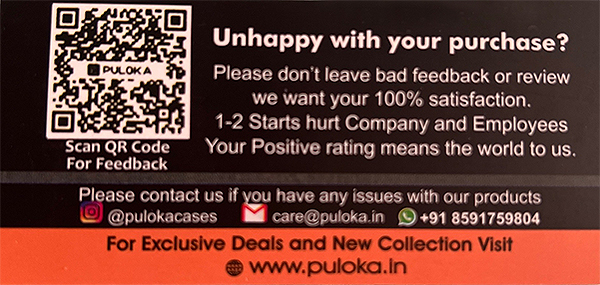
    Vikas MehtaOver the past few months, I noticed that while buying stuff from e-commerce sites, specially stuff made by small players, mostly new entrepreneurs, I would get an unusual request. It would be in the form of a leaflet or a visiting card which would request the buyer to get in touch with them directly if there were any issues with product quality or delivery etc. One or two of them would even request not to complain to Amazon or give a negative feedback. They would reassure of sorting out the problems. There would be a phone number or a WhatsApp number and also an email id. The products I bought were either accessories or small electrical or electronic devices. This is an example of the same when I bought a phone cover recently.

    Frankly, I hardly noticed or gave a second thought to such messages till one day, I actually faced some quality issues with a mini UPS I had got for my broadband router. I found the card with the contact details. I tried calling the number, which was a mobile number, but got no response. I send an email and still had no response. So, after three days I finally got in touch with Amazon who got my product replaced as it was in the warranty period.

    This set me thinking. First, the trend of brazenly asking not to report any problems and not to give a negative feedback. Some may say that it could reflect confidence in the quality of the stuff so if by any chance there is a problem they can handle it, but I think it’s exactly the opposite. It’s the worry that too much of negative feedback will lower the rating score. It also tells me that ratings score is an important parameter that contribute to the sales of the smaller unknown brands or products. I do follow rating scores and was not sure if buyers take it seriously, but this type of communication tells me that they do.

    Secondly, this raises a question whether this is just a gimmick with the sole purpose of avoiding lower ratings and bad publicity? Because if the sellers are genuinely interested in building good consumer relationship then they would respond to complaints. In my case, what happened was that my complaint was finally resolved but the seller escaped as I did not give any negative feedback on Amazon. I am sure Amazon took them to task or lowered some metric because of my complaint but the seller managed to avoid a public complaint from me.

    Which brings me to two simple questions? One, why do we still have a jugaad mindset? Why are we being smart in a negative way and not using the smart to build a strong brand or a better customer relationship. Second, is customer relationship seen as a cost centre or as a sales promotion tool?

    Let me explain the second point with a very recent example.

    I am an e commerce addict and do not hesitate to buy even large ticket items like TVs or AC etc online. I find the process easy. I am able to compare across brands sitting at home and rating points gives me a fair idea of consumer feedback and experience. Exchange allows me to dispose off old products and even get some value out of them. Not to mention the thrill of discounts and the psychological feeling of getting a good deal.

    Three years ago, during Covid while using my Dell Laptop I faced some issues. Given the fact that it was Covid time I was not too keen to go to a service centre. So, when I discovered a Dell store close to my residence, I visited it. The salesperson, was very helpful. Thankfully, the issue was software related so he set it right in 10-15 minutes. Not once did he ask me to visit a service centre. In fact, he gave me his mobile number and asked me to call him if I face any more issues. He did not make any sale nor did I promise him one.

    But a few months later when I was looking to replace my laptop with a new model, my thoughts turned to the helpful salesperson. I did my homework on Amazon and then approached him with my shortlist. I asked him to match the discounts. He actually showed me another model which was not in my shortlist and explained to me why it could be a better choice. I was not totally convinced but just his effort impressed me. Ultimately, I ended up buying a laptop from him. Even though it was slightly more expensive. It was as if his helpfulness, his going out of the way and his efforts in making me feel important was an extra feature to which I was assigning some value.

    And he became our go to guy on anything technical in electronics. My wife had a different brand but he did not hesitate in helping out with any issue with that too. He would even volunteer to come over if the need arose.

    In the last more than three years as a family we have bought three new laptops. And no surprises in guessing that all three have been bought from this one person. More than any celebrity he has been the influencer or endorser for Dell for us. I am even sticking out my neck to say that if he shifts to any other brand, I would follow suit.

    It’s not just the first experience with him but also subsequent experiences. Whenever we have bought a laptop, he has undertaken it on himself to transfer all data to the new laptop. Mostly from cloud but some from old laptop too. And this includes ppts, word documents, images, videos; everything. My trust in him is so strong that I leave the old laptop with him to transfer the stuff. Sometimes, he comes over and does the work. Any issue and he is available to sort it out.

    And every laptop that I have bought from him, I could have got it cheaper online. I could have saved 3-5,000 rupees each time.

    What has happened is simple. The customer service has not been a cost centre. It has become an additional feature. One, which makes me shell out extra or in plain words pay a premium.

    That’s something that new startups or small entreprenuers must understand.

    Do not look at customer service as a cost.

    It could be your extra product benefit.

    It could be a tangible value addition.

    It could be your differentiator.

    Neglect customer service and treat it like a gimmick at your own peril.

  • Fantasy cricket apps & brand-building- A lesson for advertising agencies?

    Fantasy cricket apps & brand-building- A lesson for advertising agencies?

    With apologies to none at all

    Vikas MehtaBy Vikas Mehta

    My last column titled ‘Why are we building products and not brands’ seemed to have sparked off many reactions. Some raw, I dare say. The questions ranged from differentiation to personality to digital. But one question stood out. I was asked if all new age brands are just products? Is there anyone building a brand?

    The answer was not difficult, but I will take the liberty of using this column to explain how a brand is being built by a new age product. Disclaimer first: I have nothing to do with the brand except I know the founder of the communication company which is spearheading the brand-building exercise. This is totally an outsider’s perspective.

    I am talking about Dream 11.

    Not many know that the brand was launched in 2008. The fantasy cricket app which is what they are all about today was launched in 2012 and by 2014 they had a million registered users. This figure rose to around 45 million around 2018, just when serious brand-building efforts started and today, the figure stands at around 150 million. I am deliberately starting with numbers because this is a brand which has been successful by all standards.

    The brand started advertising during the Indian Premier League (IPL) around 2018 or so. It had a simple positioning. The cricketers, who play for India, back Dream 11. It was decidedly an endorsement but an endorsement done with a positioning, personality and differentiation in mind.

    First, they aligned with the best Indian cricketers. Dhoni, Rohit, Pant, Bumrah, Hardik, Ashwin, Dhawan. Dhoni dropped out after a season or two but the core has remained the same. One of the first campaigns I remember was using Dhoni which was about khelo dimaag se. Dhoni was always an astute cricketer and the brand used his personality to show that it was a game of skill and not luck. This was required at the time because Indian laws did not allow any game which could be seen as betting or lottery. So khelo dimaag se, worked for the brand in more ways than one.

    And then the brand took off. It decided that its personality needs to be light fun, cricket humour, and showing the human face of the Indian cricketers.

    The positioning evolved into snippets of Indian street cricket as portrayed by star Indian cricketers. It was not too focused, neither too narrow. It did not get bogged down by a consistent tagline. I am not saying that consistent tagline is bad but the positioning is not just what the brand says in a tagline. Positioning is what the consumer stores in his mind. A tagline is static, positioning needs to evolve. Not change but evolve. Dream 11 did it brilliantly.

    Yeh apna game hai

    Yeh main kar leta hoon tum Dream 11 pe team banao

    Dream big. Dream 11

    Sab khelenge

    Team se bada kuch nahin.

    And each one of these taglines had a story. An emotion.

    Weaved into the game as played by Indians everyday. Using the Indian stars.

    Remember, pehle main batting karoonga kyonki bat mera hai, leaving Rohit stumped. Yeh apna game hai. Watch here

    Or the film stars like Amir challenging the cricketers who are acting in ads.  Sab khelenge. Watch here.

    Pant’s dream of becoming a singer or Bumrah acting as a romatic hero. Dream Big. Watch here.

    Or even magnifying the role of seemingly insignificant people. Ashwin’s soup wallah. Or the groundsman who prepared pitches for Rohi. Allowing them to Dream big. Watch here.

    And Sharmaji ka beta. Team se bada kuch nahin. Watch here.

    The brand owned cricket. And how.

    For IPL, it focused on team or club rivalry which overtook national rivalry. So even cricketers from other nationalities were used. Even family members. Sunil Shetty for example.

    For World Cups there was collectiveness, national pride. Ek se dikhoge toh best kheloge. The Mummyjee ad.

    This was brand building at its best.

    Dominate cricket. Own cricket. Emotionally own the category.

    And they did many other things too. If one searches for Dream 11 on YouTube there are many videos made by the brand which are not brand-building but which support brand-building. Stories of ordinary people who won big. Videos of how easy it is to play the app. Videos made by influencers on why winning is so easy. Or videos on how Dream 11 employees have grown…… Watch here

    And you know what. The competition too did all these. My circle 11. MPL. They too have such videos. They have big offers. Rs one crore prize everyday. An SUV to win everyday. They too talk about the big winners. They too have influencers in you tube videos. They have also used some Indian stars like Shubhman, Rinku, even Sourav Ganguli in the past.

    But what they don’t have is a brand.

    That is distinct.

    That differentiates. Emotionally.

    That dominates the category.

    Chances are that if you want to play fantasy cricket you will first download Dream 11.

    Because you remember it.

    Because you connect with it.

    Because it seems to dominate cricket.

    In a category where big prize matters.

    Where spends are high

    And where quantitative parameters are easy to judge by.

    So how much you spend where, gets immediate results or not can be the sole criteria to judge success.

    In such a category, Dream 11 has built a differentiating, preferred and leadership brand.

    So, should we still focus on products?

    And ignore brand-building?

    In my mind that is the role of advertising agencies.

    Build brands.

    That is the focus which the agencies have lost.

    And that is why they are struggling.

    Agencies need to start reemphasizing the need to build a brand.

    Do not tell me that clients do not want it.

    Do agencies explain it to them?

    Do the agencies explain what the brand idea is?

    How it can be differentiating and can be sustained long term.

    The agencies are trying to do what the clients want.

    Not what the brands need.

    Agencies need to create a niche.

    And they will find it is much beyond a niche.

    Do you agree?


  • Why are we building products and not brands?

    Why are we building products and not brands?

    With apologies to none at all


    Vikas MehtaA very interesting article popped into my inbox this morning. It spoke about the role of product managers in consumer-facing tech companies. The article was triggered because Zomato had placed a live order count which a consumer can see after s/he places an order. You can see it here.

    It seems that the feature was dissed on social media, mostly by the Product Manager types. Most were questioning the use of this feature. Did it help the consumer? How does it add value? Why is Zomato wasting time on features which do not help the user? You get the drift.

    The author of the piece moaned the fact that product managers are becoming too bureaucratic. Everything that is build into a product today, has to be justified with metrics or some quantitative outcome. Everything has to be about productivity and efficiency. Unlike, say, Google which in the 2000s encouraged its employees to spend 20% of their time working on things, besides their projects which may benefit Google. Or the Google Doodles which are an intrinsic feature of the brand today.

    The author said that product managers forget that some things can be done for fun. Or to give the product a cool quotient. That’s what the Zomato live order count was doing.

    Fun? Cool? Let the consumer have an emotional connect?

    Sounds familiar?

    I may be a bit old-fashioned but isn’t that what a brand does regularly.

    The problem is that new age products are just products. Not brands.

    That’s why they are being run by product managers. Not brand managers.

    That’s why the obsession with product feature which creates a better value for the product. Never mind if it will be copied soon.

    You don’t believe me.

    Ok, then. Here is a small test.

    You prefer Ola or Uber?

    Do you use only Zomato or Swiggy too.

    Can you actually differentiate between Blinkit and Zepto?

    I bet you use all these products that I mentioned above.

    You have all these apps installed on your phones.

    And you use all depending upon an offer or a cheaper option or just because someone gives you a better loyalty programme.

    And I am not even getting into Vivo or Oppo!!!

    So, the question is why are we building better products and not great brands?

    Why are the new age products not building brands?

    The easy answer is that the obsession with data and quantitative metrics, while being a welcome change from the days when marketers would struggle to gauge the efficacy of an advertising campaign due to lack of data, has made us jump to the other end of the spectrum. If anything cannot be explained by data then it’s of no use.

    A product differentiates with its features. All the new age products and the products which have thrived due to the proliferation of data focus on this aspect.

    But a brand differentiates in many other ways. It could differentiate with its pricing or distribution strategy. Air Deccan or Indigo and sachets do it well.

    It could differentiate with its advertising and emotional appeal. Remember Amazon with Aur Dikhao campaign or Flipkart with kids acting as adults? Remember the Vodafone Zoozoo campaigns? Or Abhishek Bachchan with what an idea sirjee for Idea.

    Or brand can differentiate with its service. In appliances, Philips has done an amazing job by harnessing local electricians to start service centres available in every nook and corner of the country.

    And brands also differentiate on the basis of their personality. Coke is fun but more in a family way. It’s a bit more mature. A bit more real. Pepsi on the other hand is fun which is rebel. Fun which appeals to the non-conformist. Fun which is flamboyant and maybe even in your face.

    That’s why the shift happened from product management to brand management. That’s why a Hindustan Unilever could have more than four brands of soaps. three brands of detergents, four brands of tea, three brands of skin care……… The difference was what each brand stood for and whom it targeted. And that helped HUL gain leadership in each of the product categories.

    By having brand managers and not product managers.

    These brand managers would build differentiating brands.

    But the new age products, and I cannot bring myself to calling them a brand, are too focused on building better products.

    Let me tell you for brand managers also the big challenge was to innovate their product regularly. In categories like soaps and detergents. And they would.  But because they would focus on brand and not just a product, they would look beyond the packaging, or the fragrance or an enticing offer. Sometimes it would be just memorable advertising.

    Fun anyone? Cool anyone?

    Or sometimes it would be combination of packaging and pricing.

    Godrej No1 launched Buy-3-Get-1 free, not as a promotion but as the only option available. It was a win-win for everyone. The retailer would gladly tear the combined pack and give individual soaps to consumer. Remember, he had one soap free so on that he would get full MRP as his margin. Or he could sell the one piece below MRP. So, even the consumer was happy.

    Brand building is also strategic. Jio launched not with the conventional pricing strategy of talk time plus sms plus some data but with data-led pricing. Calls and smses were free. The strategic thinking was that data was the real deal, not talk time. So, the whole product was built around data. And the product was turned into a brand with data lead pricing. And with the brand being free for first nine months, data users were happy to buy a new sim. The total nine-month free offer coupled with the earlier cheap plans created a perception that as a brand, Jio was cheaper. Today, when Jio is not really the cheapest, the brand perception of being inexpensive persists. And sponsoring IPL year after year helped gain massive exposure

    Phew! See the well-thought-out strategy that covered almost all aspects of marketing.

    To me, building products and not brands is also the sign of times.

    Brands take a longer time to build. Products can come and go. Already Zomato is saying that its revenues from Blinkit will overtake Zomato this year. So, why build a brand when new products can be arrived at. Why worry about brand extensions or line extensions when one can just name a new product and call it a brand.

    Avoiding brand building is being lazy. Quick results. Not necessarily in terms of profits. But in terms of valuations, Gross Merchandising Value or even IPOs. Targetting a focused customer is not the deal but targetting VCs is.

    So, will the new age products change?

    They better. Because the first new age product Google, built a brand and is still going strong. But Yahoo search and many such others built products which just disappeared.

    Will Zomato, Uber and Blinkit survive by the time your children grow up? That is the million-dollar question.

  • Random Musings or Connecting Dots?

    Random Musings or Connecting Dots?

    Image Caption: We scanned the internet for a photograph to go with this article, and found this one by Suhail Bhat possibly the most fitting. It has been taken from https://asia.nikkei.com/


    With apologies to none at all

    By Vikas Mehta


    Vikas MehtaThe last 10 days or so have been quite hectic for me, but not all in a bad way. First, of course, was the heat that has overwhelmed much of North India for the last 2-3 weeks. Even Dehradun had eight consecutive days of temperatures above 40 degrees. All outdoor activities or excursions were shelved unless they had to be done before 7 am or after 8 pm. Shopping, therefore, went totally online for all types of groceries. I think quick commerce saw a surge, at least from our household.

    Zomato put out a tweet requesting people to avoid ordering during peak afternoon hours. Oh, how I wish they had actually stopped deliveries between 12noon and 4pm. Anyways, the least one can do now is ask if any delivery person wants water. Most are thrilled and accept it, which makes me sad because it means that most residents do not voluntarily ask or offer it.

    This begs another question: Why is there no law stopping outdoor work if temperatures hit a particular high, without affecting the pay or earning capacity of the workers? A country like the UAE mandates stopping all outdoor work between 12:30 and 3pm during the summer months. Even ILO conventions prescribe that if temperatures go beyond 45 degrees, all outdoor work must be stopped. Then why aren’t the government or social service organizations looking at legalising such conventions? Just a few days ago, I was at the Delhi International Airport for about 45 minutes in the well-covered and shaded arrival area, where the temperature was around 43 degrees but felt like 45, and outside, in the open, labourers were toiling away.

    Last week, Dehradun saw the opening of its largest mall. I gratefully accepted the invite to attend, not just to beat the heat but also to witness first-hand a launch in a small town. Incidentally, mall-gazing footfalls shoot up in the summer months due to school vacations and to beat the heat. I call this mall-gazing as a huge number of people hardly buy anything but will spend 2-3 hours inside the mall.

    The mandatory selfie points were available, and one of these featured a replica of the Eiffel Tower. And if you go global, local can’t be far behind. There was a wall of Uttarakhand depicting its culture. Would you want to hazard a guess where the crowd was?

    Reel or YouTubers were visibly present. Some dressed awkwardly to catch the eye (a jacket and a lungi, for example), some shooting from weird angles, and some shouting away, in that crowd and noise, into their phones. Most were streaming live. But the strange thing was that hardly any of these were officially invited as part of the media.

    That honour still went to traditional vernacular press and TV channels. Good food, gifts, etc were laid out for them, as usual. I think none came alone, so freeloaders were plenty. And the next day they dutifully covered the inauguration in a 10 by 1 column or 5 by 2 columns with a photograph. But I am sure that better coverage was generated by the YouTubers, Instagrammers, and reel-makers. So why aren’t they considered part of the media yet?

    What impressed me was the range of products and brands available, from local to international, from footwear to electronics, from Apple reseller to Croma, from chic perfumes to Oud, from Market 99 to DIY. While Westside had a huge presence across two floors, Allen Solly and Van Heusen, with separate outlets for men and women, were keeping the international flag flying. There was Burger King, and then there was a local burger outlet which was flashing its price of Rs 49 for a burger, boldly. No prizes for guessing again where the crowd was.

    Clearly, Bharat and India were walking shoulder to shoulder.

    A few days later, I hit the road, and though it was unbearably hot, roadside dhabas were a good place to catch up with local gossip. With the election results announced just the previous day, I took the liberty to befriend my cab driver. He stopped at dhabas where the owners offered them free food in exchange for bringing in the clientele, and I chose to sit amongst these cabbies.

    What immediately struck me was the age of almost all cab drivers. All those I met were below 30. Earlier, until a few years ago, most drivers were in their mid-thirties. The age dividend had caught up here also.

    And they lead a punishing life. The major tourist season is the summers and monsoons. With Chardham Yatra, the road is the only option to travel as helicopter rides are way too expensive. And almost a month out of this is taken out of the equation during the Kanwariya season in monsoons when most highways are restricted to allow foot movement for Kanwariyas.

    The cabbies work back to back. Often, they get only 2-3 hours of sleep a day, and they drive at a stretch for 4-5 hours. On top of that, my cabbie told me that he couldn’t sleep properly because of the excessive heat. The result is scary. You have to keep the cabbies engaged in conversation, or else fatigue takes over. To keep themselves awake, they consume gutka and Sting. Many times, they are on the phone as that’s the only way to keep in touch with families.

    I am dejected that there are hardly any regulations for drivers. Why not a mandatory 15-minute break after three hours of driving? Why not an eight-hour break after every trip? Why don’t cabs have speed governors? Why are electronic tamper-proof driver logs not maintained, which can register the driving hours? I know there are economic compulsions, but it’s also about human life. It’s also about setting wrong precedents for too long, which will be very difficult to change in the long run.

    The gist of my conversation with the drivers was the dismal performance of the incumbent government in UP. These guys were not surprised. So, definitely, the lack of employment opportunities was a reason. But specifically, they mentioned Agniveer and the cancellation of government exams.

    Agniveer. I totally underestimated its relevance in the polls. There is palpable anger against it on the ground. The temperatures were in the mid-40s. Hot winds were blowing, and the heat quotient rose by about 5 degrees when Agniveer was mentioned. One guy likened it to ‘bal vivah’. Shaadi toh ho gayi par fayda kuch na raha. chaar saal baad divorce. What I didn’t know is that the Rs 11 lakh odd lumpsum that Agniveers get after four years comprises 30% of the basic salary every month taken from the Agniveer and equally matched by the government. “Hamara paisa baad mein hume dekar koi ehsaan nahin kar rahe.”

    In today’s environment, where jobs are hard to come by, many families considered becoming a jawan a good career option. That too had been compromised. The anger had spread to the whole family, not just these youngsters.

    Government jobs are still the El Dorado. So, when the government announced a drive to recruit 60-odd thousand people in the police and a few thousand more in other departments, hopes rose. Lakhs appeared for the exams. But then the exams were cancelled due to paper leaks. Again, the palpable anger against mismanagement was not hard to miss.

    The bigger story for me was that finally, reality had triumphed over religion.

    Interestingly, all the drivers I met had already been to Ayodhya. Some as part of their occupation and some on sponsored trips by political parties. But clearly, all that was forgotten.

    The trip left me battered and bruised by the harsh climatic conditions. And my new friends, many of whom gave me their numbers just in case I need them for a trip, face this weather, these conditions, the unregulated driving conditions, and an uninsured future day in and day out.

    So, while I write this in my cooled home and you read this in an AC environment, just think how little things which we take for granted could be a matter of survival for so many of our countrymen. And could decide the electoral future of our leaders. Just like small missteps or poor understanding of consumers can kill good products and destroy brands.

    Were all these events random musings? Or were they connected randomly? You decide.

  • The skill to judge creative product. Have you developed it?

    The skill to judge creative product. Have you developed it?

    With apologies to none at all


    Vikas MehtaI had been in advertising for two years when I went to present a finished TV commercial to a client. All alone. Due to some internal reasons, nobody could accompany me. I was nervous but confident as the film was exactly as discussed and had come out well. But being alone and that too presenting at the client’s house late at night, unsure about the TV quality and the VCR playback, I tried to remember all prayers I had learnt in my life. On the plus side, though the client was the chairman of a conglomerate, we had developed a good rapport.

    I was ushered into the massive dining room where the whole joint family was just finishing a meal. After exchanging small pleasantries and being introduced to the various children and grandchildren and the aunts and grandmothers, I put on the film. And waited with baited breath.

    The matriarch of the house took the lead. In rubbishing the film. And soon the whole family followed. I felt like a man standing on his death row and facing a barrage of gunfire and life slowly ebbing out of me. After what seemed an eternity, it was actually not even 2-3 minutes, everyone walked out of the room. Except for my client. He looked at me. Grinned. And asked, what now?

    I still don’t know how my tongue sprang back to life or how my brain instructed my tongue to speak. All I remember is telling my client with a straight face, confidently. “The film has to be seen through the eyes of the TG and it is bang on brief. So, it will work.”

    Later on, my client told me, that my simple logic and my confidence persuaded him in an instant. Because his reply was “Isko chalao”. No change, no cuts, no further discussions.

    And that remained my guru mantra whenever I went into creative assessment mode. As an advertising person, as a marketer or even as a critic.

    I think one of the most underrated but the most important skill which any marketing person must acquire is to asses and judge creative product. It’s a skill which is never taught. It is a skill which one acquires with experience but it is also a skill, the lack of which, can result in ineffective, insipid and wasted communication. I am not talking about just ads but about any communication. Assessing and judging an ad or a post or a blog or even a documentary is an art supported by some simple science.

    For me, there are three simple principles to be followed:

    Does the piece of communication meet the brief?

    The person who approves the brief must also be the final approval authority.

    Will the communication grab attention?

    Let’s delve into each. Let’s begin with the last one first.

    The way I started this column, I caught your attention. Didn’t I?  The story, the impending disaster and ultimately the great escape. Or happy ending. The very fact that you are reading this, tells me that I grabbed your attention. We are so busy trying to pack in brand message and brand rationale that we forget that we are one of the hundreds of messages that our target is being exposed to. So, we must develop the art of standing out in a crowd.

    Today, creating an impact means creating a controversy. Because we measure impact by the term viral. Did my ad go viral? Was my post viral? Are people talking about my brand? We forget that it’s not just about going viral. It must be connected to the brand story, brand personality, TG thinking and finally the emotion it creates. Because we humans remember emotions easily. Even facts presented as emotion are better understood.

    And to achieve all this we start with the brief. It should be super tight and focused. Personally, I think a good brief must be about four things. Single-minded benefit or service, TG, brand personality and desired response. An insight is a bonus.

    And two out of these four are anyways a constant. TG and brand personality. So, a marketing person must chisel the other two. First, be clear about the single-minded benefit. Rational or emotional. Do not pack in too many things. Remember, if someone throws more than one ball at you simultaneously, chances are that you will drop all. Exactly the same thing happens with a communication message. Do not clutter. Simplify to one benefit.

    Desired response is actually, what does one want the TG to recall. So, if the benefit is that Parle comes out with innovative products, then that is what the TG must recall single-mindedly. Now the challenge therefore is what stimulus or message will be communicated so that the TG remembers that Parle has innovative products. Stimulus is something that will make the TG recall that Parle comes with innovative products. Stimulus is the creative breakthrough.

    TG and brand personality are mostly non-negotiable. You may want to include a new TG, or enhance the TG base. But explain the new TG well. Actually, TG is not just about demographics but also about behaviour, emotion and attitudes. Are you as a marketer clear on your TG details? Will it help if all and sundry watch or read your communication but your TG doesn’t? Not understanding your TG and wanting the communication to go viral could be a waste.

    Personality does not change. How many of us humans are Dr Jekyll and Mr. Hyde? We all have a constant personality that defines us. The same is true for brands. No changing of personality with different pieces of communication.

    With the brief in place, we now move to the second of the three points in assessment. The final authority who is going to give green signal to the creative, has he or she signed off on the brief? You cannot expect a brand manager to sign off a brief and then the creative is rejected by the CEO who had not been privy to the brief. He may not agree with the single-minded benefit or the desired response. Is s/he clear about the TG and their emotions? The moral is simple. If your CEO will be the final approving authority, s/he better sign off on the brief too. I have worked with many MNC clients where this rule was followed and even if the CEO did not agree with the piece of communication, s/he would not interfere at the final stage. Mostly in such cases, the clarity, simplicity and impact in the creative was evident.

    While judging or assessing creative, leave aside your personal likes or dislikes, unless you are part of the TG. In fact, you need to understand the TG inside out. So that you can step into the shoes of the TG and then look at the TG from that lens. Judge a piece of creative through the lens of the TG. The I here has to take a backstage.

    I was lucky because the adversity I faced in that meeting, more than three decades ago, helped me learn the importance of creative judgement. But as an industry, I think we have failed in giving importance to this skill. Our creative judgment gets clouded because we are not trained to judge and asses it.

    It’s never too late to start.

  • Speed thrills. But it kills. Kills creative rigour…

    Speed thrills. But it kills. Kills creative rigour…

    With apologies to none


    Vikas MehtaI live in the foothills of Himalayas and whenever I drive up the mountains, I see this sign on the roads. Speed thrills. But it kills. And this also reminds me of the state of Indian advertising. How? Let me outline it.

    Every year, I watch the Indian Premier League (IPL), eager to watch the cricket and also the new ad campaigns. IPL would mean that many brands would be ready with new ads. Much thinking and effort would go into the same. Brands like Vodafone would release campaigns just for IPL. Zou Zou ads were released by Vodafone only during the IPL. New brands like Cred made a splash and an impact with some outlandish campaigns during IPL. Swiggy’s ‘no order is too small’ with its ubiquitous uncle was another such memorable campaign. Even fantasy betting brands like Dream 11 made their beginings during IPL. Amazon’s Chonkpur cheetah was another memorable campaign which resonated during IPL. And who will forget the Indian Panga League ads done by Virgin mobile which were produced enmasse and was the first example of brand going viral in India.

    But, sadly, in the past two-three years even though advertising spends during IPL have increased and the opportunity to advertise has also increased manifolds with OTT channels now hogging a lion’s share of the advertising budget, the level of creativity and the memorability of the campaigns has moved in the opposite direction. Even brands like Cadbury’s Dairy Milk which have almost always been synonymous with memorable creative ads, have become pedestrian.

    I have seen marketing and advertising pundits commenting about the same. Everyone has some solid reasons. Lack of talent bemoan a few. Advertisers are not remunerating ad agencies enough so good talent is staying away from advertising. True to a certain extent but this is not a recent phenomenon. No long-term relationships between clients as every advertising execution is seen as a project and every project is pitched for. So, agencies do not understand the DNA of the brand. Again, partly true as I will explain later. Digital and ROI/ measurability is destroying the concept of creativity. That is an overrated statement as almost all clients for decades have been trying to understand impact and effectiveness of advertising. It’s like saying that science and its rigor kills creativity. Many a pre and post tests have existed and many brands have lived by them and still produced some memorable advertising.

    All the above reasons may have combined to contribute to the decline in the advertising standards, but in my thinking the single most reason that has caused a decline in creative standards is the lack of rigour in advertising.

    Starting from the brand or client. Is there a good brief? Is the marketing objective clearly spelt out? It’s not just about increasing sales. It could be differentiating a benefit. It could be reinforcing a new benefit. It could be creating a brand perception. It could be strengthening an emotional connect. But is it spelt out and defined? Does the agency convert a marketing brief into an advertising brief?

    Is the Target Group well-defined? I am not saying buyer groups but target group. The misunderstanding today unfortunately, is that since IPL is a universal event liked by all, the brand should talk to all. That’s a big mistake. Because a brand can use different tone of communication for different target groups. One tone means the lowest common standard. Please all and fall flat on your face.

    Is the brand personality clear? That can also affect the tone and the type of communication. Pepsi is cheeky, fun, rebellious, thinking out of box. But not Coke.

    And brand personality can decide the brand ambassador. Every brand need not use the Khans or the Bachchans or the Kapoors. Or even the Kohlis or the Sharmas. Nor should their price or availability decide the brand ambassador.

    How much is all above discussed and debated and decided upon? It’s all about doing things fast and immediately.

    I would like to take a simple example. RBI is doing a good job alerting people against frauds and financial awareness. From what I read and from experience of my relatives, I think RBI is trying to alert senior citizens who may not be either tech savvy or even financially savvy from potential frauds. And an ambassador like Amitabh Bachchan is for that TG a respected and looked upon icon. So, RBI ads are doing a good job. But are they making an impact with the GenZ, who are into money management in a big way from a young age? I doubt it. If RBI has to talk to them then its messaging, tone, ambassador all need to change.

    Are RBI ads memorable? Not exactly. My definition of memorable is simple. Will the TG remember it amongst a clutter. Will they think about it? Will they talk about it and maybe forward it on social media? The answer is no. They could have been much more memorable if these had a good consumer insight. Currently, the ads are just a proposition and explanation type of ads.

    And insight like all the above points needs a strong rigour. It’s something which one does not think about or even imagine but it lurks in the mind and is semi-conscious. It’s not an obvious thing but needs astute observation, deliberation and peeling of layers by asking questions. Every guy’s fantasy is that the girl makes the first move, is an insight. When it comes to cricketing loyalties or for that matter sport loyalties families can be divided, is an insight. The biggest enemy of the child getting into winning ways is the love of mother, is an insight. Consumption is not a guilt, is an insight.

    The rigour involved in defining the target group, in defining and maintaining the brand personality, in finding a relevant TG insight is what is missing in today’s advertising. And these are missing for the reasons that pundits mention.

    Short-term relationships mean not understanding the brand in terms of either brand personality or their TG. Incidentally, this holds good for the marketing teams also. Marketing people keep on jumping for better prospects. So, there is no one who really understands the brand or it’s TG or it’s personality.

    Marketing teams going through revolving doors means that marketing objectives are all short-term sales-related. Bonuses and increments are linked to the same. All ROI or effectiveness is measured in those parameters. And since Digital has various ways to measure immediate returns the concept of TG gets converted to user, or bluntly put the whole universe. So, brand-building, emotional connect, TG relationships etc are rarely considered as objectives. Either for marketing or advertising.

    This results in poor communication, improper results and poor remuneration for agencies. And finally, short term relationships.

    It is a vicious cycle that keeps on repeating.

    I am not saying that this happens with all clients or brands but my experience shows that this is symptomatic.

    So, everything happens in a rush. There is no time for proper TG understanding or clearly defining the TG. Everything is required immediately. There is no time to even craft an ad in terms of casting or art direction or editing. Rigor is sacrificed. Fundamentals are not pursued.

    As I said. Speed thrills but also kills. In this case it kills creativity, memorability and sadly the advertising industry.

  • IPL ads: Entertaining or Philosophising?

    IPL ads: Entertaining or Philosophising?

    With apologies to none at all

    By Vikas Mehta

    Vikas MehtaA friend last week commented about the Indian Premier League (IPL) last week in a WhatsApp group. He likened the matches to the Roman colosseum where gladiators entertained thousands of cheering spectators to some gory spectacle. I was amused at the description and when I see the likes of Head, Abhishek, Salt demolish the bowlers, I feel for the bowlers who seem to be like the fodder served up for the kill, so that the spectators enjoy them being torn apart.

    And I feel the same when I see the ads on IPL. I visualise the various brand teams saying, ah! The gladiator season is here. We have an opportunity. Tens of crores of Indians will be watching the gladiators from the comfort of their homes. One opportunity to catch maximum number of Indians for 7-8 weeks. So, let’s make ads. We have 15-20 second slots. These are breaks in between the gladiator entertainment. Let’s give them some philosophy in the breaks. They are saturated with entertainment so let’s make the ads philosophical. These will stand out in all that entertainment gore.

    That is how, my dear readers, we see ads with such deep philosophical messages. I mean, how do you explain a brand like Pepsi, which all about irreverence, being a rebel, thinking out of the box, who use a Bollywood celebrity like Ranveer Singh, whose personality fits the personality of the brand to a T, suddenly spout lines like jitna bhi loud ho duniya ka shor, sunen sirf dil ki. Kyonki yeh dil mange more. There is nothing else, just the beleaguered celebrity spouting these lines on a mobike. Seriously, is that what’s Pepsi is about? Is Pepsi happy giving this speech to the Gen Z?

    Or take Parle. It tries to be funny in its execution, sorry, not funny, but slapstick. But the message it is giving is that Parle is about quality. Parle is about variety. Parle is about bharosa. Parle is about kuch naya. Parle is about sabki pasand. I seriously think they should have a contest asking viewers writing in and suggesting some more attributes that can be stuck to Parle. Here is my contribution. Parle is boring. Parle is unexciting. Parle is a yawn. Parle puts me to sleep….

    And then we have category which I think excites Gen Z the most. Financial apps which help you invest and make money. Actually, this category scares me too. Since I interact regularly with MBA students across the country and also with MBA aspirants, I have been noticing that a huge majority of these students invest in capital markets. To understand this better, I did some simple research. Between mid of January to end-March I was in touch with 315 such students. A staggering 263 out of these boasted of investing in stocks, derivatives and in options. That’s more than 80%. And these were not just kids from big cities but were from towns like Bheemavaram, Jhansi, Siliguri, Erode, Jhalawar, Latur etc also.

    The interesting part was that many of these were not from any financial background. But YouTube Videos and financial influencers had enticed them into making a quick buck. They did not understand any financial terms. Many could not differentiate between asset and liability or debit and credit. And yet they were following graphs and charts on you tube. Suggestions and tips from influencers. And most of them were happy that they had made good money on amounts ranging from fifteen thousand to a lakh.

    So, tell me, will an app like Groww not be wanting to rope in such students who will soon be earning and who may want proper financial guidance? And what does Groww tell them? Jo Groww karte hain woh life mein grow karte hain. Doosron ki nazar mein bade ho jate hain. Khud ke pairon pe khade ho jate hain. (Those who use Groww, grow in life. Become big in the eyes of others. They stand on their own legs) Nice philosophy. Nice emotion too. But is that good enough? Is capital market investment just feeding into your ego of coming to age only. And isn’t that what all financial apps and YouTubers and influencers want you to think. Upstox, on the other hand. does not spout philosophy but makes a bold statement (catches the attention of Gen Z, I say old chap) Kit kit hatiye. Stop the chatter, invest in mutual funds through Upstox. Sorry to pick up on the line from Sholay, but what did they think. Gen Z khush ho jayega, shabashi dega aur Upstox mein invest karega?

    If a brand like Pepsi was disappointing another brand which didn’t disappoint but actually shocked was Cadbury’s Dairy Milk. A brand which changed the way Indians looked at and consumed chocolates. A brand which gave us the hugely entertaining kya swad hai zindagi mein. A brand which made us include chocolates as a part of our sweet tooth habit with kuch meetha ho jaye (a popular idiom which means let’s have dessert). A brand which took CSR to another level with use of technology during Diwali in the last 3-4 years with Kuch meetha ho jaye, kuch accha ho jaya. That brand made such a flat, uninspiring and philosophical ad like #Thankyoufirstcaoch. The idea is not bad but the execution is very unlike Cadbury.

    Please, someone also explain to me what does the sound of India means? Jindal Steel has an ad which shows the various use of steel. From big to small. But then comes the philosophy of sound of India. The steel of India. Let me guess. Sound of India is construction happening all over India? India’s infrastructural boom? That makes sense but the ad shows even small things like hair clip or a nail or even a dancer’s headgear. So, what’s the sound of India? Philosophical nationalism for the sake of nationalism. I would any day still swear by Tata Steel’s We also make Steel or SAIL India’s There is a little bit of SAIL in Everybody’s Life. Not seen these? Watch here.

    And this philosophy mania has rubbed on some old advertisements being re telecasted during IPL too. Even the much-reviled apology of the pan masala ad featuring Sehwag and Gavaskar now spouts a line at the end which says har generation ka alag hai andaaz lekin sabke anokhe swad ka ek hai rang. Loosely translated: Every generation has a different style but in terms of taste it has the same colour.

    Am sure by now you are done with my pessimism. But it’s not all gloom and doom. I have already mentioned in the past about the Dream11 ads. I was also impressed with Rupay UPI Link credit card as well as the Make My Trip ads. These not only continue to entertain but have distinct messaging. You haven’t seen these yet? Go watch. And then of course, don’t miss the new Cred ad too, starring Warner with Rajamouli

    Thank God for some advertisers wanting to still give some gladiatorial entertainment and not spouting philosophy.

  • Gig Workers: Charity begins at home

    Gig Workers: Charity begins at home

    With apologies to none at all

    Vikas MehtaBy Vikas Mehta

    Yes, I had ended my last post with a link to the new Pepsi rehash of the old ‘yeh dil maange more’ ad. And had promised to review it. But, hey, promises are meant to be broken. Am actually so disappointed at the ads dished out during the IPL that I refuse to talk about them. Instead, I will narrate two contrasting tales that I picked up over Eid.

    A friend was just settling down to enjoy the Eid holiday when he got a call from a friend who was coming over with some Eid sweets. My friend panicked as he had nothing to offer. But then being a millennial and having acquired the habits of Gen Z, he immediately remembered Blinkit. Sure enough, Blinkit was offering Eid sweets, not the typical Eid sweets like Sewaiyan but Feni Lachha, Agra Petha, Panjeri Laddoo…you get the drift.

    As luck would have it, my friend’s guest and the Blinkit delivery guy reached almost together. The guest was dressed in Eid livery and as my friend opened the door to his apartment, the Blinkit delivery guy too turned up. He delivered the order and then wished the guest Eid Mubarak in a choking voice. While the guest reciprocated heartily, my friend checked on the app and discovered that it was Eid for the delivery guy too. Instinctively, he called the delivery guy who had by then almost reached the lift, and handed over the Blinkit packet to him wishing him Eid Mubarak.

    Taken totally by surprise, the delivery guy burst into tears. It seems he had reported for his job against his family wishes, because he knew that being Eid there would be a shortage of riders, an excess of orders and he could earn better. So, while he ached to be with his family and celebrate the festival, economic compulsions and family responsibility steered him away from it. But, my friend’s gesture bowled him over. Watching all this, the guest too slipped in a note into his palms and urged him to go home to enjoy Eid with the family.

    Now, before we all go mushy and applaud the generosity of the two gents, listen to another incident that I picked up the same evening. My wife’s friend had called her over for a small Eid party. While they laid out a sumptuous dinner, the lady of the house seemed a bit off-colour. On enquiring, she found out that the friend was upset with Myntra. She had ordered an Eid dress for her daughter, a bit late but the delivery date as promised was on Eid. So, she was relieved that she had not failed her daughter.

    But, on the morning of Eid, she got a message from Myntra that due to some operational issues, the delivery will be delayed. Now, this lady was tracking the package and she knew that it had reached Dehradun. So, she deducted, rightly, that due to Eid, there was a shortage of delivery guys. And that upset her. She was angry and upset that her Eid had been spoilt.

    What contrasting tales. Here were two people who had instinctively succumbed to the spirit of the festival. Caring and sharing had come naturally to them.

    On the other hand, was this person who had a narrow selfish view of the festival. Who did not get the spirit of the festival and treated it very transactionally.

    That’s of course, my view. But the diversity of human behaviour never stops to amaze me. And also, the unpredictability of it.

    More crucially it also tells us the indifference we have towards the gig worker. As consumers we have lapped up the culture of home delivery. We marvel at the technology. We are awestruck by the whole process. We are delighted by the speed of delivery. And we are also happy that employment is being generated in the form of delivery guys. But, have we ever thought about humanising the last mile delivery.

    The word gig comes from an early twentieth century jazz slang. When two or more musicians would combine together to perform informally. No contract, no formal agreement, no payment promised. In today’s economy, it stands for any informal job. And that is what I cannot understand. Why is this last mile delivery an informal job? Isn’t it one of the most important parts of the delivery process? When every day, nay, every minute counts in making the delivery happen, why is the role of the delivery boy downgraded to a foot note?

    These people have no formal timings. No structured holidays. No minimum payment guarantee or even a basic pay. Their remuneration is linked to just delivery. Come rain, come extreme heat, come festivals, come illness, these gig workers have to soldier on.

    And please, do not compare them to a train driver or to a medical worker or to a public transport official. All these people have jobs. Not gigs. Fixed pay, not just a variable component. Sick leaves, designated holidays. Either gratuity or pension or both. Even insurance. Nothing of that sort exists for a gig worker.

    Before you accuse me of turning socialist or maybe even communist, all I am actually doing is to draw the attention of us, the consumers, who meet and interact with these people daily, to the fact that delivery people are not robots. They are as humans like you and me. But is our behaviour towards them human?

    I have a theory called the Indian housewife theory. It is expected that the housewife will make tasty meals every day. In fact, three times a day. And rarely do we have a word of appreciation towards the food cooked. Because we take it for granted. But once in a blue moon if the food goes wrong for whatever reason, the whole family rains down on the housewife. No appreciation for the 99% good food. But protest and howlers for that 1% of mistakes.

    And that’s how we treat the delivery or gig workers. We rarely acknowledge them. We hardly notice them. But they become our target if they are late or there is a problem in delivery.

    All I am asking therefore is that we as consumers must change our attitude towards the gig workers. Have empathy. Treat them with respect. It’s getting hotter. We do not venture out but expect them to deliver. On time. The least one can do is ask them if they need a glass of water. Maybe a small snack. An orange a day will not burn a hole in your pocket but it will not only refresh them but also make them feel appreciated and human.

    And some apps like Blinkit now give you the option to tip them. Do that. If you have saved Rs 20 in that delivery, tip it. And if you are really transactional, satisfy yourself by thinking that you save much more than the twenty rupees. You saved the effort of venturing outdoors. Didn’t you? So, nothing wrong in tipping them a small amount.

    We, the customers have to start this movement. One may call this socialist thinking but frankly I don’t care what it’s called as long as it helps us be humane. Can we at least make a beginning?

  • Technology and the immortality of an advertising theory @IPL

    Technology and the immortality of an advertising theory @IPL

    With apologies to none at all

    By Vikas Mehta


    Vikas MehtaYet another season of IPL is underway. And like many millions, I have been following the matches keenly on JioCinema. Since I am travelling, I do not have access to DTH or cable to watch it on TV. So, my writing is based on my JioCinema experience only.


    Usually, I comment on the ads during the IPL. I will continue to do so. But this particular column is going to first recount my experience with JioCinema from a technology- and consumer-friendly viewpoint and then I shall take just two examples to highlight some issues in the IPL ads.


    I find the app very consumer-friendly during IPL. The home page highlights the match of the day and with one click, I am into the match. But when there are two matches then the homepage keeps on highlighting the first match, well beyond 7:30 pm and the second match requires real searching. The issue does not get resolved even by refreshing the page.


    In terms of the content, I find the ‘Jeeto Dhan Dhana Dhan’ contest very interesting. It’s a simple multiple-choice question based on what will happen in the next over. With one click, the answer is submitted. And before the next question comes up, one is informed if one got it right. But the beauty is that for all those who got right answers there is some prize. Usually, a discounted product from an online e-commerce portal. I, played it almost at the end of each over for two days and I had around 20 prizes. And the redemption was also well-planned. Click on the same page to redeem the prize. The right page, which offers only the products on offers open up. Your discount has been copied to the clipboard. Choose, fill your details, pay if required and the offer has been redeemed. No choosing of products and at check-out realising that your preferred products have no discount. No ambiguity. Very well-organised and planned. And at the last count, I came across nine brands offering the prizes. Two of the three I redeemed were delivered in Dehradun within 48-72 hours. And of course, there are bigger prizes for those who answer the most correct answers daily. Unfortunately, I did not have the patience to sit through all 40 overs and answer all questions. But kudos to a well thought through and planned contest.


    In terms of communication, I remember that ‘Jeeto Dhan Dhana Dhan’ was an offer that Jio had offered in the IPL four to five years ago. So, to find that this year MyCircle11 was sponsoring the contest was bit of a let-down. It also clashes with the MyCircle11 advertising as it caused a confusion in my mind if the contest had something to do with the gaming app offering discounts to play games on the app. I then realised that Tata had sponsored ‘Jeeto Dhan Dhana Dhan’ contest in 2021 and last year it was MRF. Personally, it’s a simple and rewarding contest and any sponsor will reap the rewards with a longer association. Like, I think Jio did for two-three years. I still remember it.


    Now, let’s focus on the ads. There were many new ads this year. Predictably, Dream 11 came up with, till now, the best campaign. Simple thought. Good use of the cricketers. I particularly liked the Mr Sharma ka beta mera beta featuring Rohit Sharma, KL Rahul and Sunil Shetty. It crossed the thin line between a cricketer and his personal life in a beautiful, interesting and heartwarming way, with a hint of comedy. Communication theories always say use celebrities who add to the brand personality and to the memorability of the ad. This is a great example of the same.  Watch the ad here.


    The other ads in the series have focused on personal rivalries. Bumrah vs Shreyas and then Shreyas vs Bumrah. Preity Zinta, co-owner of Punjab vs Pant got me cracking up at the end. Not in the same league as Mr. Sharma ka beta but at least Dream11 is not just splurging money on celebrities.


    I am now hoping to see a Hardik vs Rohit. Oh sorry. It’s about team loyalty. So maybe Hardik and Rohit.


    But the ad campaign which got me thinking was actually Parle. It has released a series of ads, thankfully without any cricketers or film stars. These address issues which are mostly intangibles. Difficult to pinpoint, prove or substantiate. So, difficult to communicate too. Quality, trust, variety, new products. The campaign has tried to use some odd metaphors or join some improbable dots to convey these messages. I just felt that someone is ramming down these virtues down my throat.


    And that’s when I remembered a gem of theory that was part of the JWT thinking process. The difference between stimulus and response. The theory mandated that do not put your benefit or message as a stimulus, rather let it be the response from the consumer. Do not spoon-feed. Let the consumer discover it. That way it will be more memorable and the communication will have a lasting impression. Remember the Ericsson black coffee ad? Nowhere it said the world’s smallest phone or even a small phone. It demonstrated its size as a stimulus and the response was “a phone so small it can hide in my palm.” No wonder the ad is recalled even after three decades. Watch the ad here.

    I feel that Parle has missed a trick. The amount of money that is spending trying to hit us with trust, quality and other parameters would have been much better spent if the desired response theory had been used.

    And this thought got amplified when I saw the Apple iPhone 15 app on storage for photos. It beautifully showed someone marking photos to be deleted and then they used a perfect song “Don’t let me go”. Each photo that was being marked for deletion suddenly came alive with the character in the photo singing the song. And at the end there was just a simple message which said lots of storage for lots of photos. They could have gone to town on memory capacity or on transferring photos to cloud through their cloud service. But by using the stimulus of each photo imploring not be deleted, through a song, the benefit was like a stimulus which I will not forget. Great ad.


    And we wonder why Apple iPhone commands such a premium and is yet a world leading brand! Watch the ad here.


    In fact the Preity Zinta vs Pant ad also is a stimulus vs response theory ad. Watch the ad here.


    I sincerely hope that some of the JWT theories like the stimulus vs response one are not buried along with the venerable brand.


    Before I end, I saw as a part of media co-sponsor super “Pepsi yeh dil mange more”. I was intrigued and excited to see what was the contemporary version of this classic Pepsi campaign. So, I found it on you tube. See it here. And let’s match our reactions in my next column.