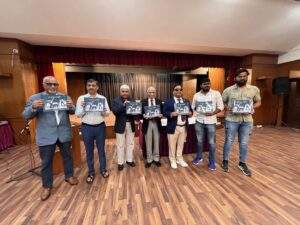
The Indian team’s performance at the Paris Paralympics was exemplary, but did our media do enough justice to this? Vis-a-vis the various wins at the Olympics for the Abled, also held recently?
MxMIndia has always held the belief that the media has a critical role to play in improving the world for the disabled in India. And it’s with this objective, we invited Shruti Pushkarna, a former colleague (and member of the MxMIndia founding team) to write a column focusing on disability and the media.
Through nearly five years, she has written 99 articles (columns, as we call them), and this discussion on the eve of Column #100 with MxMIndia editor-in-chief Pradyuman Maheshwari also touched upon on what the Indian media should do to better its coverage. For, Persons with Disabilities need empathy, not sympathy.
Do check this engaging conversation.
Watch/Listen, Like, Enjoy.
Apologies, we do not have this in sign language, but we will try and see if we can manage it….
Three years ago, the Indian Paralympian squad broke some records in Tokyo. Taking the country’s global ranking to 24, with five golds. This year in Paris, we have surpassed our 2021 tally of 19 medals. Our medal count as of today stands at 24 with the global ranking being 13. And there are still a few days to go.
But the news coverage around para champions remains consistently scant. Insufficient in both quantity and quality. Writing this piece is almost like déjà vu. I called out the Indian media in my column three years ago and here I am scripting similar displeasure and disappointment in Column #99. That’s correct, it’s been a while. Four years of ranting against the Indian media’s neglect towards disability inclusion.
However, it would be wrong to say nothing has changed. We have come a long way from 2016 when India didn’t even buy the broadcasting rights of the Rio Paralympic Games. Today, an average sports enthusiast who has access to streaming services is following and cheering the para champions. Several folks have posted their support and appreciation for the ace performers on social media.
In the Tokyo edition, India recorded its best ever haul with a tally of 19, which included five gold, eight silver and six bronze. This year so far, we have won five gold, nine silver and ten bronze, which is a total of 24.
Shuttlers Nitesh Kumar, Thulasimathi Murugesan and Nithya Sre Sivan clinched gold, silver and bronze medals respectively in para-badminton. Javelin thrower Sumit Antil won the gold for his record throw of 70.59 meters. Yogesh Kathuniya bagged a silver medal in the men’s discus throw. The youngest woman to compete in women’s para archery at 2024 Paralympics, Sheetal Devi won the bronze medal in the mixed team compound event along with partner Rakesh Kumar.
Avani Lekhara became the first Indian woman to win two gold medals at Paralympics in women’s 10m air rifle shooting. Preeti Pal also made history as the first Indian woman to win two para-athletic (bronze) medals in the Women’s 100m and 200m T-35 event. Rubina Francis bagged a bronze in the P2 women’s 10m air pistol SH-1 final. Athlete Nishad Kumar won a silver medal in the men’s high jump T47 event. World champion Sachin Khilari won the silver in men’s shot put.
And the list goes on. Imagine the number of stories behind these triumphs. The joyous caregivers behind some of the victories. The silent struggles from hopelessness to exuberance. Where are these missing accounts? The most I could spot was a headline ‘Ma hai toh mumkin hai’ in mainstream media, ensuing the social media post by Sheetal Devi expressing gratitude for her mother.
In contrast, the dailies were full of narratives around Manu Bhaker when she won the bronze at the Paris Olympics. There’s coverage around her views on gender pay parity, Bhagvad Gita, her devout Hindusim and what not. There’s no taking away from her journey, struggle and triumphs. Likewise for Vinesh Phogat. But when it comes to Paralympians, journalists peddle only wide-eyed amazement for our inspiring divyangjan!
No real news, no hard questions. No exposés on crippling infrastructure. No investigative pieces on funding contrariety.
What sums it up aptly is a post by India Today journalist Shiv Aroor on X.
The sad truth.#Paralympics pic.twitter.com/L8T5rSgaGO
— Shiv Aroor (@ShivAroor) September 2, 2024
It reads: ‘The sad truth. #Paralympics.’ Below the tweet, there is an image that highlights the disparity in media coverage between the Olympics and the Paralympics. The contrast in text size and placement implies that news about Olympic failures receives significantly more attention than news about Paralympic successes.
That’s the reality of India, today. We have space for coverage of losses and no room to celebrate and acknowledge the grit and excellence of disabled champions. Barring a few exceptions like The Indian Express which gave decent accounts of the journeys of these champions. Their reportage went beyond medal tally and the day’s game.
Another media channel, Much Much Spectrum has been consistent with their handling of news from Paralympics. They shared short and effective profiles of the para champions, alongside sporting updates, bringing out their tenacity without shying away from the disability. It isn’t your usual inspirational porn. They even published some candid posts highlighting the disparity meted out to Paralympics.
View this post on Instagram
A post shared by Much Much Spectrum – Stories of Social Good, Health & Disability (@muchmuchspectrum)
View this post on Instagram
A post shared by Much Much Spectrum – Stories of Social Good, Health & Disability (@muchmuchspectrum)
Of course, one cannot forget to mention Prime Minister Modi’s (cheesy) telephone call to the medal winners which was relayed and replayed on various channels. The question that remains to be answered is what difference will this record-breaking performance at the Summer Paralympics make to the state of infrastructure, encouragement, budget, training, recognition and dignity offered to disabled sportspersons in the country. Or does it all end at a mere tweet by the Indian supremo saying he is proud and delighted?
The last few days or maybe weeks have been brimming with news around disability. These include several updates in the form of a historical court ruling, controversies, (presumably) offensive videos, distasteful representation on a reputed magazine cover, influential individuals’ responses to brewing disagreements and more.
Believe you me, this makes me happy. Or even excited. At least we don’t have monotonal deliberation around disability. There is anger, frustration, vociferous expression, hearty articulation, a whole flurry of emotions in the public space.
Disability is complex and so should be the conversations around it. That’s what makes it real. Let me begin by citing some of these sensational items.
#1 Famed disability rights activist Nipun Malhotra filed a lawsuit against Sony Pictures for one of its productions, ‘Aankh Micholi’ which portrays persons with disabilities insensitively. In response, the Supreme Court ordered an immediate injunction of the film in its current form. It also mandated respectful and accurate depiction of disabilities in films, issuing a detailed set of guidelines to prevent disparaging future portrayals.
Grateful to the Supreme Court of India for creating guidelines on portrayal of Persons with Disabilities in visual media, following my petition against @SonyPicsIndia for lampooning PwDs in ‘Aankh Micholi.’
Happy about the distinction made in the judgement between “disability… pic.twitter.com/UC9YMD8EpN
— Nipun Malhotra (@nipunmalhotra) July 8, 2024
It’s important to note that the court distinguished between ‘disability humour’ and ‘disabling humour’, the latter demeaning individuals with disabilities. The seven-point guidelines designed to foster inclusion focus on avoiding derogatory terms like ‘cripple’ or ‘spastic’, steering clear of myths and stereotypes, consulting disability experts, sensitising creators and so on.
Of course, there’s the other side which feels that this impinges on their right to freedom of expression. In fact, that debate simmers and amplifies further in the next incident.
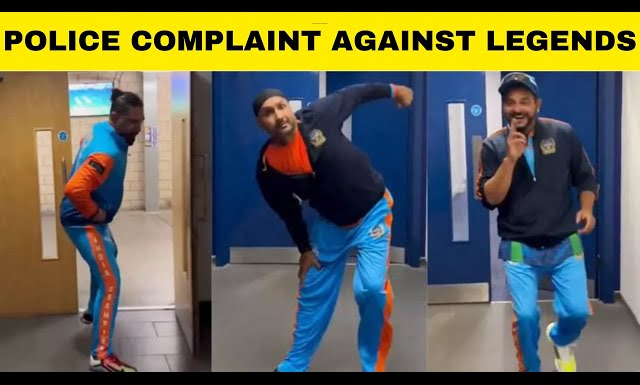
#2 Former Indian cricket team players Harbhajan Singh, Yuvraj Singh and Suresh Raina posted a video on Instagram where they were seen grooving to Vicky Kaushal’s latest song, Tauba Tauba. Except their movements were awkward and para-badminton star Manasi Joshi was the first one to call them out for mocking the gait of polio-affected people. Then ensued a series of clamorous gripes online.
While most disability advocates fumed at the inconsiderate act of celebrated sportsmen, some cautiously piped in their alternate views on tolerating a joke. However, an official police complaint was lodged by Arman Ali, Executive Director of the National Council for Promotion of Employment for Disabled People (NCPEDP).
Here’s my take. We have become a society of increasingly easily offended people, thanks to the cultural shift propelled by polarising politics. So why should we expect any different reaction from Persons with Disabilities, who are equal citizens of the same country you and I inhabit. It’s a bad joke, one that reminds of me children in school, mimicking a certain teacher’s amble given her osteoporosis-ridden knees.
Should they have done it? No. Is it insensitive? Yes. Have we blown it out of proportion? Certainly. I say this about all news political as well. There is no need to play up silly occurrences and utterances as primetime headlines. Ditto for this one. By the way, a public apology was issued by the players.
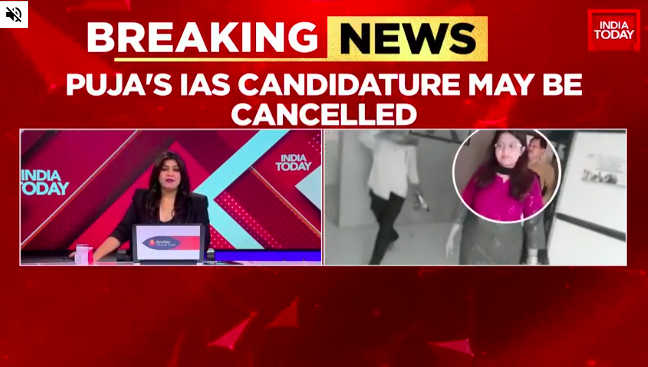
#3 Trainee IAS Officer Puja Khedkar’s selection to civil service has come under the scanner. There is a criminal case accusing her of “misrepresenting and falsifying facts” to appear for the UPSC exam multiple times. She obtained three disability certificates in three years and a fake caste certificate. In 2007, while securing admission in a medical college, she was declared ‘medically fit’. In 2019, she secured a certificate of vision impairment from Ahmednagar district hospital. In 2021, she got a combined certificate of vision impairment and mental illness from the same hospital. In 2022, she filed an application for locomotor disability in a Pimpri hospital.
She also sought relaxation under the OBC quota, which was questioned after her father, Dilip Khedkar, a former Maharashtra government officer, was suspended facing a corruption charge. Her mother, Manorama Khedkar, who is a sarpanch, was arrested in an Arms Act case when a video of her brandishing a gun threatening some farmers surfaced on social media.
Disability rights groups have been united in their reaction to this egregious act. While opinions were circling around the misuse of disability and the usual ‘one dirty fish spoils the whole pond’, reactions from the non-disabled audience validated the analysis.
Senior Telangana IAS Officer Smita Sabharwal stirred a fresh row questioning the need for disability quotas in All India Services (AIS). She tweeted, “Does an airline hire a pilot with disability? Or would you trust a surgeon with a disability? The nature of AIS is field work, long taxing hours, listening first-hand to people’s grievances, which requires physical fitness.”
Unfortunately, this was seconded by Former CEO of Niti Aayog, Amitabh Kant (Former N) when he said, “I am in favour of SC/ST or OBC reservation. These reservations should continue, with the creamy layer regulations being enforced. However, the existing reservations for the physically and mentally handicapped and the proposed 1% reservation for the third gender for the top Civil Services need to be reviewed. They are being misused.”
Now that’s taking it a bit too far, because reassessing appropriate implementation of provisions and policies, will be opening an abysmal Pandora’s Box! By the way, I can instantly name Pranjal Patil and Beno Zephine. two women with disabilities who are IAS/IFS officers and have been doing superlative work despite the odds.
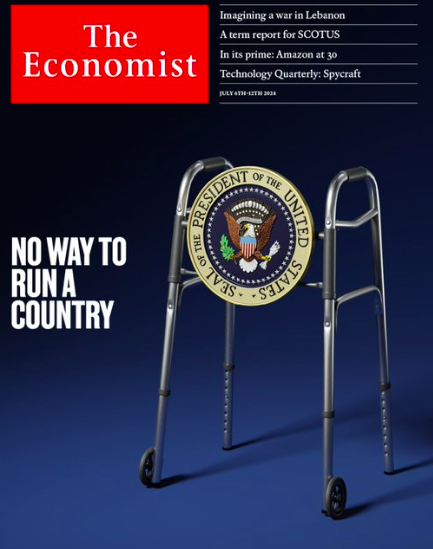
#4 And there’s been some contentious news across the Pacific Ocean. So far, we’ve only had Former US President Donald Trump taking jibes at persons with disabilities, and specifically those in the media. Well, stupidity and ableism don’t come with any copyright, do they? After the disastrous show by President Joe Biden in the first presidential debate and consequential speeches, The Economist featured a walker adorned with a Presidential Seal on its cover. And the headline read, “No way to run a country.”
Several slips there. Ableist representation in the use of a graphic that shouts, ‘crippling’ or ‘disabling’. The cover implies that if a person is physically disabled, or needs a crutch, he or she is incapable (read incompetent). Also, disrespecting several world leaders with disabilities. Like, Franklin D Roosevelt who was left paralysed waist down due to polio. Winston Churchill who had a speech impediment.
A rather poor editorial call by a publication one least expects it from. The only thing that can possibly change media representation of disability is the act of hiring and working alongside persons with disabilities. Also, bold calls like the photo carried by The Indian Express in November 2022 following the appointment of 50th Chief Justice of India, DY Chandrachud. It’s a candid shot of him with his family which includes two foster daughters who have a disability.
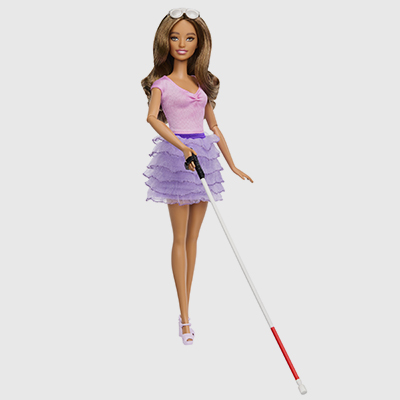
#5 But let’s end this piece on a rosy note. Or should I say pinkish? As part of this year’s global Barbie Fashionistas lineup, Mattel Inc. introduced the first ever Blind Barbie reinforcing inclusion and representation for all. Throughout the design process, Barbie partnered with the American Foundation for the Blind (AFB) to develop accessories, elbow articulation, textured fabric, accessible packaging, distinct eye gaze et cetera.
Last year, Barbie had introduced the first-ever doll with Down Syndrome (DS), partnering with the National Down Syndrome Society (NDSS). Again, fixing the right hair, sculpt, glasses, outfit and so on. They have introduced its next Black Barbie doll with Down Syndrome along with the Blind Barbie. These dolls will soon be available in Indian stories as well.
Clearly the disability landscape is evolving across the world. One day, we cite progress and hullabaloo on another. As long as the discourse is relevant, consistent and moderate, I think we are headed in the right direction. It is these complexities surrounding disability that will open up the dialogue to challenge stereotypes of all kinds.
Wondering why MxMIndia publishes a disability advocacy column? Well, we strongly feel that the media can dramatically transform the world for persons with disabilities. This series attempts to help bring forth issues that the media must champion to create a truly inclusive and accessible India. Writing this column is Shruti Pushkarna, a former journalist and now a disability inclusion advocate based in New Delhi. Her views here are personal. To access the archives of her 95-plus columns, please visit: https://www.mxmindia.com/category/ columns/shruti-pushkarna/
If you have a view on the issues raise or would like to align with MxMIndia on this cause, write to us at editor [at] mxmindia.com.
July is Disability Pride Month. It started initially in 1990 when the landmark legislation, Americans with Disabilities Act (ADA) was signed into a law. Since then, it’s celebrated every year to honour the achievements, experiences as well as struggles of those living with some form of disability. Typically, you’ll see Instagram, X (Twitter) and LinkedIn flooded with posts from disability advocates, rights activists and people with disabilities in general, sharing their stories and lived experiences through this month.
Interestingly, disability has been in the news for the past couple of months. And this is not confined to conversations within the disability rights groups. Cinema and OTT are rife with it.
On May 10, a film inspired by the real life of visually impaired industrialist Srikanth Bolla was released in theatres. Rajkumar Rao plays the lead role of Srikanth, showcasing on screen the various odds stacked up against a person with blindness in the mainstream world. It is one of the few exceptional portrayals without any inspiration porn or pitiful pathos around the character’s disabling condition.
Srikanth is born blind into a farmer family in Andhra Pradesh. His uneducated parents were urged by relatives and surrounding community to bury the blind child as they would be burdened by his lifelong dependency. Of course they decided otherwise. The boy perseveres myriad challenges to end up becoming the first international visually impaired student at Massachusetts Institute of Technology (MIT). Today, he runs a Rs 150 crore company, Bollant Industries, also employing other persons with disabilities.
My favourite part, there are several moments in the film where I feel Srikanth is annoyingly arrogant. He is just as human as anyone else. There is nothing ‘divyang’ about him. He is a relatable guy who made it big with his hard work and determination, also with immense support from his teacher. But he has his follies. And that’s good representation. Life as it is, with or without disability.
Also, last I checked, the film had grossed Rs 59.58 crore in India and 3.34 crore internationally. Inclusion not only makes sense for sensitisation but also has the potential to make bucks!
Another recent film with a disabled protagonist is Chandu Champion. Starring Karthik Aryan, the movie recounts the story of Muralikant Petkar who survived nine bullets in the 1965 Indo-Pak war and won India’s first Paralympic gold medal.
Muralikant grew up in a small village in Maharashtra with an ambition to win a gold medal for India in the Olympics. He is mocked for his dream by fellow schoolmates, neighbouring community and even his own father. But life takes its own turns, and Petkar ends up in the Army, where he trains for boxing. Unfortunately, while on duty, he is injured in an air raid which leaves him with multiple gashes and a spinal cord injury. Olympics might be out of bounds but his coach introduces him to Paralympics and some world renowned para champions. After rigorous training, Petkar builds a world record and bags gold for 50m freestyle swimming in 1972 Germany Games.
Yet another account of aspiration, grit and acceptance. Also, entertaining. The film amassed Rs 59.1 crore in India by the third week since its release.
Srikanth was born with a disability. Muralikant acquired one on the job. The direction their lives took were a mere outcome of their defiance and commitment towards mastering everything they were initially denied.
I’m currently watching an American detective TV series (Monk) on Netflix which first aired in 2002. It follows Adrian Monk, a private detective with multiple phobias and obsessive compulsive disorder which are heightened after his wife’s murder. A case he is unable to resolve. There are several episodes which have a complex interplay of disability, race and other diverse identities. There is often an exaggeration of the condition to generate humour but it’s undercut with Monk’s brilliant curiosity, attention to detail and ability to close cases.
Two decades later, when neurodiversity is a household term and mental illness is no longer belittled, a series involving ADHD, OCD, anxiety disorder et cetera is being consumed with a different (refined) lens altogether.
The evolving representation of disability in media is indicative of the progress society has made towards inclusivity and awareness. As nuanced stories like these reach wider audiences, they not only promote empathy and understanding but also underscore the potential for commercial success when inclusion is prioritised.
Wondering why MxMIndia publishes a disability advocacy column? Well, we strongly feel that the media can dramatically transform the world for persons with disabilities. This series attempts to help bring forth issues that the media must champion to create a truly inclusive and accessible India. Writing this column is Shruti Pushkarna, a former journalist and now a disability inclusion advocate based in New Delhi. Her views here are personal. To access the archives of her 95-plus columns, please visit: https://www.mxmindia.com/category/ columns/shruti-pushkarna/
If you have a view on the issues raise or would like to align with MxMIndia on this cause, write to us at editor [at] mxmindia.com.
Last week, I engaged with global leaders in the space of Accessibility and Inclusion. Neil Milliken, Debra Ruh and Antonio Vieria Santos started AXSChat 10 years ago, an online community of individuals dedicated to creating an inclusive world. They host weekly video interviews, podcasts, and Twitter chats.
Given my experience in the media and more recently as a disability inclusion specialist, our video chat focused on breaking attitudinal societal barriers to inclusion through media advocacy and representation. The half-hour conversation spotlighted the essential role of media in shaping (or breaking) stereotypes.
Interestingly, we also agreed on the need for the disabled community to speak in a language that the media can relate to. Essentially stepping away from headstrong activism to a more constructive solutions focused narrative. This to steer media reporting from awe inspiring accounts to a more pragmatic approach on ‘how to include’ persons with disabilities in the mainstream.
True to the format, the thread of conversation extended to a Twitter chat, where several inclusion advocates engaged in a series of questions around Building an Inclusive India. Here’s a synopsis of the online discourse.
Disability not an outcome of bad karma
How can India ensure Persons with Disabilities (PwDs) are not excluded due to cultural biases?
Is it fair to punish (read exclude) someone who is presumably cursed (read disabled) for bad karma in a previous life? Absolutely not! Neil Milliken emphasized that regardless of religious beliefs, everyone should be treated well in their current lives. Green Disability urged to focus on accessibility and customized trainings, while Puneet Singhal called for cultural sensitivity training and inclusive policymaking. India must dismantle physical and digital barriers to ensure PwDs are visible and heard.
Better media representation
How can Indian media, Bollywood included, appropriately represent PwDs? How essential is this for a societal change?
Bollywood and Indian media must stop using PwDs as objects of ridicule or villainy. Instead, they should portray PwDs as integral parts of society. Puneet Singhal and Antonio Vieira Santos suggested including people with disabilities in leading roles and consulting with disability advocates on how to normalize disability on screen. Anna M proposed creating a dedicated media channel for disability, similar to Canada’s Accessible Media. Accurate representation can challenge stereotypes and foster acceptance.
Changing the narrative from ‘they can’t’ to ‘they can’
Why is it important for Indian media to engage in discussions about accessibility and assistive technology?
Media representation should evolve from exposure to disability solutions. The current quality of reporting is reflective of the media’s limited understanding of challenges and possible fixes. Awareness of assistive devices and innovative technology can transform the narrative. Neil, Puneet and Antonio collectively highlighted the need for media to disseminate the benefits of accessibility and inclusion efforts. Spotlighting these through mainstream media discussions can inspire better policies and innovations for PwDs.
A6 the media can chose to feature disability issues as part of the mainstream because disability is part of everyone’s life journey at some point #AXSChat
— Neil Milliken (@NeilMilliken) June 18, 2024
Altering cultural perceptions
What role does cultural perception play in the inclusion of persons with disabilities in India, and how can the media impact these positively?
As mentioned earlier, cultural perceptions often see disability as a karmic fallout, leading to stigma and rejection. Positive media representation can change these views. Anna M recalled that older Indian immigrants show discomfort around disabled people, indicating the persistence of cultural attitudes. Are we imprisoned and colonised by our cultural contexts that follow us everywhere we go? Puneet Singhal suggested India’s pluralistic culture can promote empathy and respect, shifting perceptions through storytelling, inclusive policies, and community initiatives. Antonio also emphasized the need for awareness campaigns by the media to embrace diversity and cultivate equality.
India’s role on the global stage
How can India’s commitment to inclusion reshape the international landscape?
India, a country with over 1.4 billion people, holds immense potential for creating a society that is inclusive and accessible for all, including Persons with Disabilities. As Anna M pointed out, India’s population is comparable to the global number of PwDs, offering immense potential for setting inclusion standards. Puneet Singhal believes our country’s commitment can inspire other nations to prioritise accessibility and equity. Neil Milliken noted the potential of a population as large and diverse as India, to both shape and create markets for innovative assistive technology. India is complex also because of disability’s intersection with caste, gender, economic and social ranking et cetera. Once we crack this problem, perhaps some solutions can be replicated across the world.
A6 Indian media can lead on disability and aging inclusion by featuring diverse stories, hosting expert panels, and running awareness campaigns. They can influence public opinion by normalizing inclusion, challenging stereotypes, and promoting positive narratives. #AXSChat
— Antonio Vieira Santos (@AkwyZ) June 18, 2024
Media’s role in leading the conversation on inclusion
What initiatives can the Indian media take to drive the conversations around disability and aging inclusion to influence public opinion?
The Indian media should start with hiring persons with disabilities to understand barriers and solutions first hand and invite diverse disabled voices to speak on significant issues. Inclusive storytelling and social media campaigns can influence public stance. Neil Milliken suggested featuring disability issues as mainstream topics as everyone encounters disability at some point in life. Puneet Singhal recommended collaboration with NGOs and advocacy groups to champion disability and aging inclusion by amplifying voices of PwDs and the elderly. Green Disability recommended having dedicated programming on ageing and disability issues.
India’s journey towards an inclusive society requires concerted efforts across cultural, media, and policy domains. Improved media representation to replace existing misconceptions and promote accessibility can ensure that no one is left behind.
You can watch the AXSChat episode on Breaking Barriers: Media and Disability Advocacy here.
Wondering why MxMIndia publishes a disability advocacy column? Well, we strongly feel that the media can dramatically transform the world for persons with disabilities. This series attempts to help bring forth issues that the media must champion to create a truly inclusive and accessible India. Writing this column is Shruti Pushkarna, a former journalist and now a disability inclusion advocate based in New Delhi. Her views here are personal. To access the archives of her 95-odd columns, please visit: https://www.mxmindia.com/category/ columns/shruti-pushkarna/
If you have a view on the issues raise or would like to align with MxMIndia on this cause, write to us at editor [at] mxmindia.com.
We are experiencing a rather hot June this year. For one, Delhi is simmering with soaring temperatures. And the political atmosphere has been mercurial since the beginning of the month. The newly elected cabinet of ministers are gearing up to operationalize their tall campaign promises.
Sadly, the fun is over. We have traversed to the other side of number games, trend analysis, mudslinging, and finger pointing. It’s down to the basics of governance. I have honestly enjoyed all the print punditry around headlines and catch-phrases in the past ten days. One of the less critical and more practical ones was what I read in The Indian Express, “Continew”. Keeping constancy in action, setting some new order in motion. Change and continuity for the greater good I assume.
With Modi 3.0 set to roll out the 100-day action plan for various ministries, the Social Justice and Welfare Minister, Dr Virendra Kumar assured stricter implementation of Accessible India 2.0. The Sugamya Bharat Abhiyan or Accessible India was one of the initial flagship campaigns launched by Prime Minister Modi in 2015. The government vowed to create a barrier-free environment for independent, safe, and dignified living of Persons with Disabilities (PwDs).
Have we achieved what we set out for? Hardly. However, there’s been progress that deserves acknowledgement. But like my Math teacher would say, ‘no marks for steps, what counts is cracking and solving the problem all the way.’ The ruling party too needs to adhere to a strict agenda for inclusion and stop distracting PwDs with stimulating sloganeering.
Here are 10 key areas calling for the newly elected government’s attention.
Legal Framework
India has a progressive legislation, the Rights of Persons with Disabilities (RPWD) Act 2016. But till date the law hasn’t been fully implemented. We are lagging with respect to formulation and enforcement of state-specific policies in line with the RPWD Act. We also need detailed regulations and guidelines pertaining to different types of disabilities. Some states like Telangana and Tamil Nadu still don’t have the rules in place to recognize disabilities like Multiple Sclerosis, which is one of the 21 disabilities mentioned in the Act. We need State Advisory Boards with adequate stakeholder representation to drive policy and implementation.
Infrastructure and Accessibility
One of the top priorities in the BJP Manifesto released in April this year, is building world-class infrastructure. The government’s overarching goals of economic development and infrastructural improvements have the potential to support disability inclusion. But only if they ensure that public buildings, transportation and digital platforms comply with accessibility and universal design standards outlined in the Act.
Healthcare and Rehabilitation
That’s another area dear to the Prime Minister’s heart. Over and above the acclaimed Ayushman Bharat Yojana, reports indicate that the Ministry of Health and Family Welfare is working on a preventive healthcare scheme for the elderly. The government needs to ensure all healthcare facilities are accessible with a provision of disability specific services. PwDs also require mention in the preventive healthcare schemes, with a focus on expanding early detection and intervention programs as well as rehabilitation services.
Emergency Response
In a world shrouded in natural disasters, climate change and waging wars, it’s pertinent to build inclusive disaster management plans and emergency services catering to the needs of PwDs. Whether it is Covid-19, Ukraine-Russia war or seismic disturbances around the globe, persons with disabilities don’t receive timely and appropriate assistance. We need specific provisions issued and enforced by the central as well as state governments.
Data Collection
For the current or future governments to track progress and formulate effective policies, we need accurate and updated data on persons with disabilities. The government needs to allocate funds for research on disability issues, services and solutions. True that the Unique Disability ID or UDID project is designed to build a national database of PwDs but there are serious gaps in implementation across states. More specifically, we need disability data with regards to gender, income, employment, education, et cetera.
Social Security
The Indira Gandhi National Disability Pension Scheme was introduced in 2009. The central government provided INR 300 as monthly pension and the states contribute an equivalent amount to provide assistance as per RPWD Act. But in the absence of a mandate, the amount varies from INR 300 in Bihar to INR 3000 in Andhra Pradesh. Also difficulties in acquiring UDID or disability certificate prevents potential beneficiaries from availing the scheme. The government needs to revise the provision to make it relevant to the current scenario as well as ensure timely disbursements.
Digital Inclusion
Given the rapid adaptation of all things digital, the government needs to ensure all websites, services, documents etc. are fully accessible. There are many non-profit organisations working in silos to promote digital literacy among the disabled. But given its outreach and resources, we need a push towards digital inclusion of PwDs by the government. And this cuts across ministries. In fact last year, the Ministry of Social Justice and Empowerment took a step forward with the enforcement of IS 17802 standard. This Indian Standard aligns with the global accessibility standards and guidelines such as Web Content Accessibility Guidelines (WCAG), Section 508 of the US Rehabilitation Act, and the European Standard EN-301 549.
Inclusive Education
Persons with Disabilities need access to quality education to reduce dependency on state sponsored benefits. True to the spirit of empowerment, RPWD Act 2016 emphasises on reasonable accommodation for equal access to education, employment and other mainstream activities. PwDs require accessible infrastructure, trained teachers and learning material in accessible formats. Scholarships, grants and financial aids extended to students with disabilities need regular audits to close gaps in last mile implementation.
Social Inclusion
In some parts of India, disability is still seen as a result of bad karma. The stigma attached to disability prevents social inclusion, pushing PwDs to the peripheries. The RPWD Act cites grievance redressal mechanisms to be established at the district and state level. The government needs to extend legal support to PwDs willing to claim their rights. We need robust measures against discrimination in all spaces like schools, offices, public service and so on.
Awareness Drive
The RPWD Act 2016 emphasises the importance of awareness initiatives as a means to combat stigma and discrimination. Section 39 mandates the central and state governments to conduct awareness campaigns to lessen the attitudinal barriers towards disability. Government needs to initiate drives to promote a positive perception and wider acceptance in the majority population. Section 42 calls for the use of media including television, radio, print, and digital media to create public awareness on disability issues. Governments should collaborate with media organisations to ensure fair representation with a focus on potential rather than pity. We also need sensitization targeted to law enforcement agencies, healthcare professionals, educators, and other service providers.
With jumlaa season behind us, what remains to be seen is whether Modi Ki Guarantee extends to Persons with Disabilities.
One of the most common conversation starters among people is news. It could be news pertaining to politics, business, technology, infrastructure, sports, education or simply anything of mutual interest. Of course, given the current political/cultural environment, certain news items also pit the same people against each other.
How do we consume any form of news? Barring the decreasing percentage of print lovers like me, majority of people access news through websites, mobile apps, YouTube, podcasts, and social media. And thanks to so many available (free) platforms of expression, people across age, economic or social standing, gender, disability et cetera, vociferously share their views.
Yes, people with disabilities too access news media, in all shapes and forms. They are also informed and opinionated citizens of India. But are news offerings built keeping in mind needs of people with different types of disabilities? Are product developers aware of what these accessibility requirements are? Do they know there are more than 1 billion people with disabilities who have the right to equal access to digital content, and that there are laws mandating the same?
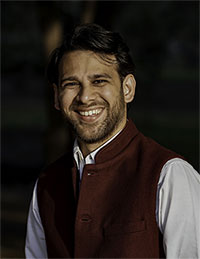
Sadly, very few news media organisations understand and cater to their access needs. But those who do, deserve acknowledgement and appreciation. Recently, Newslaundry launched NewsAble, making their website and mobile app accessible to everyone. I caught up with Chitranshu Tewari, who is their Product and Revenue Director, to find out what impelled this change. He leads a cross-functional team that manages product, subscription, tech, and audience.
Q: As a news media company, what prompted Newslaundry to think of accessibility?
A: As a subscriber-led organisation, our product strategy has always focused on serving the user needs of our subscriber community. Way too often, in mainstream media, tech and product resources are used to serve ads faster or optimise for ad revenue at the cost of reader experience. Our subscription model, on the other hand, enables us to try innovation in product and tech.
We first encountered the importance of accessibility for our app and website when a young blind subscriber reached out to us, expressing his struggle to access our journalism despite being a paying subscriber. His email was a wake-up call, leading us to engage with more disabled users and educate ourselves on accessibility. The more we interacted with users who had lived experiences, the more we realized the significant gap in India’s news market for accessibility. Their stories and struggles became our motivation to make the change.
Q: What’s different about the accessible version? What features have changed, and how did you go about working on this project? Tell us all about NewsAble.
A: Accessibility is not a shiny feature or an add-on; a good product is accessible by default. Accessibility must be baked into the DNA of the product. Frankly, if you’re starting a new product or an app, making it accessible is not rocket science and can be done relatively quickly. There are enough resources and Web Content Access Guidelines (WCAG) to help developers and designers.
But if you’re dealing with a 12-year-old tech stack, which is a combination of third-party software, native tech and code that is just holding it together, it’s a different challenge altogether. This is where we were, but we didn’t let that daunt us — we cleaned up and rewrote a lot of front code to make sure it was compatible with screen reading software used by blind users and set up the foundation on which settings and controls under accessibility could work. It was a painstaking process which took more than six months, but it was worth it to ensure our product was accessible to all.
At the outset, we researched accessibility, spoke with accessibility experts, and most importantly, learnt how disabled users access the internet, leading to a survey with a cohort for the kind of settings and contours they would like the most. We started the engineering work only when we had that info locked in. Then we did a beta launch where we again tested and iterated based on users’ feedback. We also partnered with the students at the Michigan University to do a heuristic evaluation of our design.
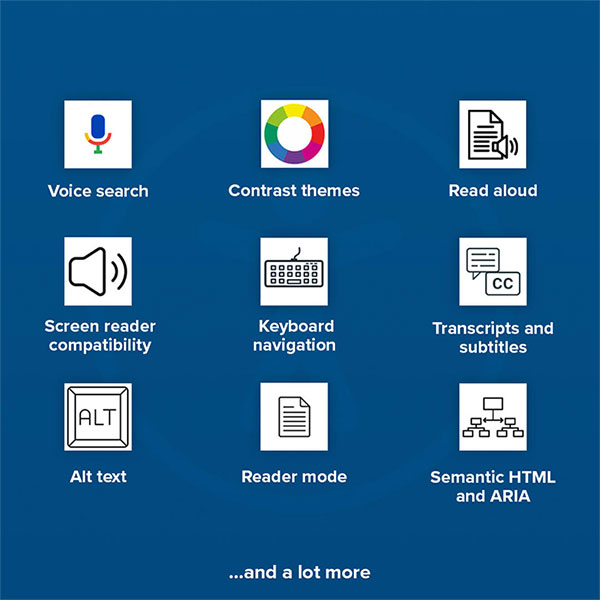
As a result, our website and app are now accessible—we launched them publicly for everyone on April 30. They’re compatible with all leading screen reading software and offer controls such as read-aloud for all text stories, transcript for all podcasts, contrast themes for users with colour blindness, motion control, keyboard navigation, alt text, semantic HTML, and ARIA to make our product compatible with assistive technology. For instance, our read-aloud feature allows visually impaired users to listen to our news stories, ensuring they can access our content without any barriers.
Q: Despite the legal mandate for compliance, organisations refrain from making products and services accessible because of the costs involved. And that perhaps also makes it difficult to get a leadership buy in. What’s your experience been on that front?
A: We have the Rights of Persons with Disabilities Act, 2016, but organisations hardly comply. Two major reasons are that the bodies enforcing it lack the teeth to take action or impose substantial penalties. Compare that to the US and Europe, where businesses must keep their sites accessible to avoid hefty lawsuits.
In our case, having an accessible product directly overlapped with our goal of putting users’ needs first. So, even though it was resource-intensive, it wasn’t a roadblock. Also, it helps when you have a small team. We could move into this quickly without the bureaucratic hurdles you see in larger companies.
Given that this required considerable engineering and development efforts, we needed resources to sponsor that cost. We pitched accessibility as an idea and its need to Google News Initiative Innovation Challenge, a global programme to empower news organisations that pioneer new age thinking in online journalism. Folks at Google backed the idea, helping us fund much of our engineering effort.
Q: What was the response of your internal teams, especially designers and developers, to this change?
A: I will be honest. News organisations lag way behind when it comes to product or tech innovations. This is mainly due to two factors: first, product and engineering resources are primarily used to serve SEO or ad revenue needs, leaving little incentive for product innovation. Second, often product decisions are made by executives and journalists who are quite short-sighted. Not to forget, newsrooms always have limited tech bandwidth and don’t attract the kind of tech talent that goes to say, an out-and-out tech company.
At Newslaundry, we have taken great pride in designing products that have been ahead of the market and have brought innovation, whether it’s a podcast player, crowdfunding platform, or app that has everything from multi-tiered subscriptions and e-commerce to custom notifications and podcast players.
When we first considered accessibility, the team readily saw its potential and the impact it would have on the news ecosystem. As a reader-supported outlet, I always tell our team that our work and its effects will outlast our careers in the news.
Q: Many news websites remain inaccessible, denying Persons with Disabilities their right to information. As someone in the same space, what do you think can motivate other companies to make their offerings accessible?
A: India has a significant population of people with disabilities, with conservative estimates putting the number at 25 million. These figures are likely under-reported. The World Health Organisation’s estimate is almost double. By making their sites accessible, executives can tap into this vast, underserved audience. The potential business benefits are clear, and the moral imperative to provide equal access to information should not be overlooked.
More importantly, accessibility or accessible design is not just for people with disabilities; it’s for everyone. It makes the app more user friendly and useful for everyone. For example, a font size control can easily be used by an elderly person who’s short-sighted.
Q: Do you think developers and designers lack the understanding of accessibility as they don’t have much feedback from a user base that comprises of Persons with Disabilities?
A: There needs to be more awareness. But we live in a world where information is just a click away. So, I won’t consider this an issue of a lack of understanding. In media, we have primarily invisibilized people with disability, leading to no feedback. A lot of blame goes to us for that. Especially if we look at how they are represented or talked about in India, even the use of words like divyang. Any disabled user should be able to use the internet with similar ease like you and me.
Q: Are organisations aware of Web Accessibility Guidelines and the compliance needs per the Rights of Persons with Disability Act 2016?
A: Very rarely.
Q: What role do you think mainstream media can play to sensitise people about the need for digital accessibility?
A: To start with, we need to focus on disability rights and the challenges faced by people with disabilities. Our cities and public infrastructure are notoriously inaccessible. Media can make the right noises to demand more accountability for making it accessible. We need representation of people with disabilities on our team. Our workplaces need to be accessible too.
Q: In this exercise of making the product accessible, has there been any rub off on the editorial side vis-a-vis a deeper understanding and reporting on issues of disability inclusion?
A: That’s certainly the plan. Last year, at Media Rumble, we did a panel discussion on accessibility in news products that discussed policy, legal, and engineering aspects of the issue. We are also working on a deep dive, long form podcast on accessibility, covering various aspects with domain experts. The idea is to push this in reporting, but we are a small team. We have covered a few stories on and off, but hopefully we will pursue it as a beat. My hope is that as more disabled users interact with our app and website, more people will write about issues around accessibility — nudging editors to put more reporting resources into it.
Q: Is there anything else that you would like to share?
A: I want to credit and acknowledge my team that worked hard and made this possible. We are a small team that takes great pride in punching above our weight, and we hope our work nudges other publishers to consider accessibility. If we, as a small team in an independent digital newsroom, can do it, outlets 10x our size surely can.
Lastly, people often claim accessibility for PR. They will put a few overlays and widgets that offer the bare minimum user control and call it accessible. There is a lot of research and literature on this. So, if you’re thinking of working on accessibility, don’t take the shortcut. Speak with experts, speak with disabled people, and do it right.
Get a sneak peek into the changes made by Newslaundry team here.
Today marks the 13th edition of Global Accessibility Awareness Day, commonly known as GAAD. A movement initiated in 2012 by Joe Devon and Jennison Asuncion with the intention of taking accessibility knowhow to mainstream developers. And much has transformed thanks to this global drive.
Technology, more specifically AI and Generative AI are the hot topics at every forum. Whether it’s the fear of losing our jobs to chatbots or driving business efficiencies with machine learning and artificial intelligence, tech innovations are rapidly altering the work culture.
Accessibility is no longer an alien concept to average social media users, who stumble upon several tips to omit barriers in physical and digital spaces, using simple tech solutions. As an inclusion advocate, I believe technology enables and empowers everyone, including the most vulnerable.
But do product developers, service providers, and industry experts understand how technology can mainstream marginalized communities like Persons with Disabilities?
I’m not so sure.
Last week, I was in the city of Nizams, or should I say the emerging IT capital of India, Hyderabad. I was attending an annual industry event focused on driving conversations in the space of HR Tech. A swanky summit showcasing workplace innovations empowering organisations to drive outcomes and human engagements. Sounds fancy and intriguing, right?
Honestly, I was quite enthusiastic looking at the speaker line-up, exhibits and masterclass agenda. Every panelist propagated the new mantra, AI + HI = ROI (Artificial Intelligence plus Human Intelligence equals Return on Investment), laying special emphasis on empathy in this growing robotic era.
Innovation. Technology. Empathy. Human Centric Approach. Almost music to my ears. Except it wasn’t. The scope of discussions was limited to present day work roles and current employee base. The futuristic innovations didn’t explore the possibilities of an accessible and conducive work environment for all.
The two-day extravaganza could have been a perfect setting to introduce a new equation to CXOs, CHROs and CEOs,
Let’s rewind to the beginning of this month, where I had an altogether crippling experience with technology. Contrary to efficient and easy access, the processes at Max Hospital, a leading brand in healthcare hit rock bottom when it came to IP (In-Patient) Care. The computerised functioning and omission of paperwork had me thinking of myriad job roles that could be executed by persons with different disabilities in this setup.
But my bubble was busted immediately as the colossal cracks in the system unravelled within hours of checking in to the ritzy facility. Health workers and care providers failed to administer timely treatment as the tech-powered processes held them hostage. It was a long chain of communication passing through layers of systemic approvals from doctors to assistants, to administration, to nursing, to pharmacy, back to nursing, and finally to the patient. And unlike AI, this was hardly intuitive or quick, it took hours to execute.
By the way, speaking of AI, Chat GPT 4o was launched recently. Hardly a geek myself, I was browsing videos to understand what’s unique about the latest offering. That’s when I encountered a post by Open AI on X without captions or subtitles. Ironic, eh? Something that could easily be generated using that very AI!
Say hello to GPT-4o, our new flagship model which can reason across audio, vision, and text in real time: https://t.co/MYHZB79UqN
Text and image input rolling out today in API and ChatGPT with voice and video in the coming weeks. pic.twitter.com/uuthKZyzYx
— OpenAI (@OpenAI) May 13, 2024
But it’s May 16 and GAAD, so I won’t end on a depressing note. Technology is a gamechanger for 1 billion people with disabilities across the world. People who would otherwise lose out on opportunities of engaging with the mainstream society, for work, education, entertainment and more.
Sarah Moin, a girl from Lucknow, scored 95 percent in her ICSE Class X exams. She is blind, deaf and speech-impaired. How did she managed to study and score well? The answer is technology paired with grit and determination. Sarah uses an Orbit reader which is a 3-in-1 device that works as a book-reader, note-taker and a refreshable braille display. It connects to computer or mobile using USB or Bluetooth. This tech marvel enabled her to write her exams digitally.
Ruhin Bhattasali is a 100 percent visually impaired girl from Hyderabad. She scored 491/500 in her CBSE Class XII exams. Belying the common stereotypes that blind students can’t pursue STEM subjects, Ruhin studied Maths, Physics and Chemistry. She wanted to pursue astrophysics but due to accessibility challenges, she has opted for Computer Science and is preparing for IIT JEE.
Here’s more good news.
Following a complaint against a leading app-based taxi service by a visually impaired consumer, the Chief Commissioner of Persons with Disabilities (CCPD) issued a directive that will enforce disability-inclusive behaviour by cab aggregators. Corporate lawyer and Accessibility professional Amar Jain faced difficulty using the Ola app which didn’t adhere to the Web Content Accessibility Guidelines (WCAG). The order from CCPD seeks appointment of an Accessibility Auditor and a Grievance Redressal Officer to ensure all existing and new features comply with accessibility standards as per law.
Is it time for industries to drop inherent biases, explore out-of-the-box ideas, and widen their consumer base to include underrepresented groups?
Wondering why MxMIndia publishes a disability advocacy column? Well, we strongly feel that the media can dramatically transform the world for persons with disabilities. This series attempts to help bring forth issues that the media must champion to create a truly inclusive and accessible India. Writing this column is Shruti Pushkarna, a former journalist and now a disability inclusion advocate based in New Delhi. Her views here are personal. To access the archives of her 90-plus columns, please visit: https://www.mxmindia.com/category/ columns/shruti-pushkarna/
If you have a view on the issues raise or would like to align with MxMIndia on this cause, write to us at editor [at] mxmindia.com.
In my last column, I featured two brilliant foreign films that dealt with the subject of disability in a sensitive as well as an entertaining manner. Moreover, persons with disabilities were truly represented and their challenges highlighted in both productions for mass consumption.
Sticking to cinema, let’s circle back to India. Recently, three exciting events caught the attention of disability inclusion advocates. It’s been good news for people like me who keep pushing for better (if not equal) media access and representation.
A President Awardee, an RJ and a person with vision impairment, Divya Sharma’s interview of Karan Johar at the Cinevesture International Film Festival in Chandigarh was widely shared across social media platforms. She asked some pertinent questions on the vision of Bollywood vis-à-vis inclusion of disabled folk, normalisation and the role of cinema in shaping mindsets, insensitivity and ridicule at the expense of persons with disabilities onscreen and more. The seven-odd-minute interaction between a visually impaired girl and a leading filmmaker and influencer will hopefully open up more opportunities of constructive exchange of ideas.
You remember the SRK starrer ‘Pathan’ that made headlines even before its release? Yes, I’m referring to Deepika Padukone’s controversial orange bikini and the Besharam Rang song. A lawyer filed a complaint in Muzzafarpur district court of Bihar against the leading actors and the objectionable song that allegedly offended the sentiments of the Hindu community.
We are familiar with the legal trajectory of that complaint as well as the political clamour in different states, seeking a ban on the film. But there was another case filed in the Delhi High Court against ‘Pathan’, which perhaps didn’t grab as much public attention.
A visually impaired student at the National Law School, Bangalore filed a petition along with three other persons with disabilities, out of whom two are visually impaired practising lawyers and one is a hearing impaired professional working as the Executive Director of the National Association for the Deaf. The complaint highlighted the lack of equal access to audio-visual entertainment in theatres and on online streaming platforms.
In response, the High Court issued an interim order directing the producer (Yash Raj Films) of Pathan to make the film accessible with audio description as well as subtitles and closed captions in Hindi before its release on the OTT platform (Amazon Prime Video). And after seven hearings, the court pronounced its final judgment on March 15, 2024, setting a new precedent for accessible cinema.
Why is this case or judgment important? And what are these accessibility features?
The Rights of Persons with Disabilities (RPWD) Act, 2016, includes a provision on media accessibility which states that the government must take measures to make electronic media accessible. In October 2019, an advisory was issued by the Ministry of Information and Broadcasting to the Central Board of Film Certification (CBFC) to persuade producers to make movies accessible. But this was hardly a mandate to ensure compliance. And so, nothing changed, up until now.
The filmmaker, producers and the media fraternity are focused on the 99% able-bodied audience, insensitive to the needs of persons with disabilities. The cost of accommodation is misconceived, seen as an additional burden on the filmmaker. Imposition of access features are also arguably perceived to interfere with an average movie-goer’s cinematic experience. These arguments are a clear reflection of a lack of empathy and sheer ignorance that have led to a systemic exclusion of the disabled community from channels of mainstream entertainment.
But with this recent judgment on Pathan, things are going to change. The judge also directed the other respondents/ stakeholders in the matter to work together and formalise standardised guidelines to ensure accessibility for all future productions. This means that the CBFC will need to include accessibility requirements in its certification process.
As for the cost of providing accessibility features, Yash Raj Films incurred an additional expense of INR 6 lakh, a tiny drop in its Rs 1,000 crore ocean of earnings!
As per Section 42 of the RPWD Act 2016, all persons with disabilities have an equal right to access information and communication technology. The government has to ensure that all content available in audio, print and electronic media are in accessible format. And that persons with disabilities have access to electronic media via audio description, sign language interpretation and close captioning.
Audio Description is a verbal depiction of key visual elements in media and live productions, involving description of the visuals on screen to enable imagination by person with vision impairment.
Subtitling provides a text alternative for the dialogues on screen, by characters, narrators, or any other vocal participants, in the language of the production.
Closed Captioning not only supplements the dialogues but also other relevant parts of the soundtrack, describing background score, phones ringing, noises, or any other audio cues.
The court has ordered for these accessibility features to be included on OTT as well as theater screenings. For now, the cinema halls and producers can work with certain mobile application providers (XL Cinema, Shazacin) which offer access to an audio described track that synchronizes on the user’s smartphone as the movie plays up on the big screen.
And lastly, a movie trailer starring Rajkumar Rao as a visually impaired person flooded WhatsApp groups and LinkedIn feeds on April 9. Set to hit the cinema halls on May 10, this is a biopic of industrialist Srikanth Bolla, the first international blind student in management science at Massachusetts Institute of Technology. Srikanth endured several challenges, rejection and apathy in life, before he set up Bollant Industries with the objective of providing employment to others like him.
Whether it’s bold activism, asking for equal access and a normal portrayal, ensuring compliance through workable measures or recounting real life struggles of successful persons with disabilities, the case for inclusion is strengthening by the day.
What is preventing the media to initiate baby steps and add disability inclusion into its overall agenda?
If there is one thing I missed growing up, it is sports. My school didn’t really encourage us to take up a sporting activity. I did have my moments playing badminton and table tennis with cousins and neighbourhood friends. Also, I enjoyed skating. But I can hardly say that I was a sports enthusiast, because the only sporting action I got was cricket tournaments on television, a feature intrinsic to most Indian middle-class households.
So, I never realised what sports could do for the overall development of one’s personality. It was many moons and interactions (with sports lovers) later that I seriously regretted my inadvertent abstinence from physical recreation. In my attempt to make up for the loss, I follow some sports, enjoy fictional and biographical accounts on the subject and of course cinematic portrayals. I’m also married to someone who is happy to trade any indulgence for some gaming action.
Recently, I watched two films, both inspired by true stories, one in Spanish and the other in English. Both comedy dramas revolve around so-to-say ‘weaker’ teams, constituted of players who are ‘different’, those who don’t fit into our normal (read limited) perception of sportspersons.
Campeones, Spanish for Champions, is a 2018 film directed by Javier Fesser which was nominated for the Best Foreign Language Film at the 91st Academy Awards. It is inspired by the true account of The Aderes Basketball team in Valencia, created with people with intellectual disabilities who won 12 Spanish championships between 1999 and 2014.
Marco Montes, assistant coach of a basketball team based in Madrid, gets fired from the job following his arrogant conduct. Hitting a police car in a state of drunkenness, Marco is ordered to either spend two years in jail or ninety days of community service, as Coach to Los Amigos, a team of basketball players with intellectual disabilities. At first, he is frustrated with this new assignment, unable to relate to players he feels are below normal (subnormales). But as he works closely with the team, he learns about each player’s unique story, strengths and weaknesses. The common thread binding them is persistence and the desire to play well.
Throughout the film, in the comic episodes, in the tense backdrop of Marco’s troubled relationships (personal and professional), the audience gets to witness the similarities in human narratives. Marco has his own set of hurdles to cross, like the players of Los Amigos. As he coaches them to overcome barriers on the court, he unties several knots in his own marriage, discovering fresh perspectives to look at life and challenges. In the end, Los Amigos place second in the National Championship.
I watched this film at a special screening organised in the capital on World Down Syndrome Day. What fascinated me the most was the director’s choice of casting disabled actors in the roles of all the players with disabilities. Giving them an opportunity to flaunt their prowess and represent themselves rather than relying on non-disabled actors to simply play the part. An absolute entertaining and hilarious saga, I watched the climactic moments of the final game with my mouth wide open.
The second film is a 2023 American sports comedy directed by Taika Waititi. Michael Fassbender plays the lead role of Thomas Rongen in Next Goal Wins. It is based on a documentary of the same name, about a Dutch American coach (Rongen) who is also forced, following a series of events, to coach the weakest soccer teams in the world. It’s the story of the American Samoa soccer team who suffered a terrible loss in World Cup history, losing 31-0 to Australia in 2001. Rongen struggles to work with this infamous set of ‘losers’, turning them into an elite squad. Under his training, the American Samoa team qualified for the 2014 FIFA World Cup.
While there are no persons with disabilities in this context, there are characters representing marginalised communities. It is a disparate group of players including a transgender defender (Jaiyah Saelua), a traumatised goalkeeper (Nicky Salapu), and an overweight midfielder (Rambo). Rongen deals with his own weaknesses and fears, as he motivates the team to focus on their strengths. The result is a nearly impossible feat of scoring goals and winning the game.
In the sporting arena, differences cease to be. And many similarities emerge. In both the films, the coaches traverse complex personal landscapes gaining valuable lessons from the diverse set of players.
While Champions and Next Goal Wins iterate the power of sports to include and empower, the two cinematic representations also bring out the multi-dimensional human sides of persons with disabilities and diverse identities. Something which helps the audience resonate with episodes on-screen.
Isn’t it time the India media catches up and goes beyond a stereotypical narrative of diversity? Can celebration of differences replace inspirational porn and ableist chronicling in the mainstream media?
P.S. Bollywood actor Aamir Khan began shooting for an Indian remake of Spanish movie Campeones in January 2024.
Wondering why MxMIndia publishes a disability advocacy column? Well, we strongly feel that the media can dramatically transform the world for persons with disabilities. This series attempts to help bring forth issues that the media must champion to create a truly inclusive and accessible India. Writing this column is Shruti Pushkarna, a former journalist and now a disability inclusion advocate based in New Delhi. Her views here are personal. To access the archives of her 90-odd columns, please visit: https://www.mxmindia.com/category/ columns/shruti-pushkarna/
If you have a view on the issues raise or would like to align with MxMIndia on this cause, write to us at editor [at] mxmindia.com.
Last weekend, I had the golden opportunity to witness the silver jubilee celebration of India’s first World Cup Cricket for the Blind. A room full of cricket lovers (players, organisers and supporters) took a trip down memory lane, recounting their love for the sport, the struggle for opportunities to play, some naughty moments, some tough ones. But all in all, a journey that shaped and altered their lives in distinct ways.
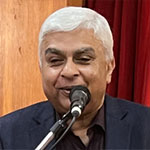
George Abraham
I was fascinated by each account. Just as awestruck as I was 20 years ago when I first learned about cricket for the blind. As a student training to be a journalist and a producer, I met with George Abraham, the Founding Chairman of the World Blind Cricket Council. India had already established its position on the international stage by then.
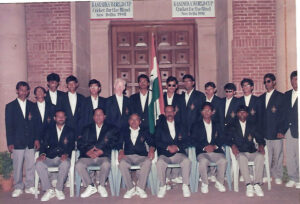
George shared how he came about organising the first ever Kanishka World Cup in 1998, bringing together representatives from seven countries to set the rules of the game. I also met with the then Captain Manvendra Singh Patwal, coach Uday Gupte and other Indian players, and shot a practice match with the team. That’s when I understood how this version of cricket was played with a ball molded with ball bearings that made sound. And the bowling was thrown underarm. There are 11 players like in mainstream cricket, out of these four are B1 (totally blind), three are B2 (partially blind) and four are B3 (partially sighted).
The Indian team for the Kanishka World Cup 1998
Some years later, employed in a television news channel, I attempted to recreate the story, this time for a bigger (broadcast) audience. I filmed interviews and practice matches, hoping my editors would be just as excited about this unique tale laced with hardship, joy, grit, and faith. But that was not to be. Such news items rarely make it beyond the ‘Good News’ segment. Any follow up coverage or intersectional issues at play, are less likely to interest a business that thrives on politics, violence, and sensationalism.
Rollercoastering through various jobs in the media, many moons later, I met with George again. This time to team up and raise awareness around life with blindness. That’s also when I really understood the objective behind this entire Blind Cricket movement. It was to erase the stereotype associated with vision impairment and give people an opportunity to witness (blind) men in action. The disability ceases to matter when you see enthusiastic players batting, fielding, bowling, and chasing runs.
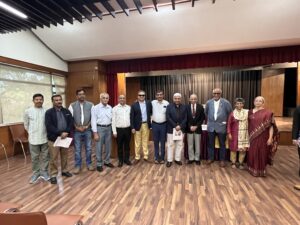
Members of the organising committee
At the 25 years nostalgia party at the New Delhi YMCA last Saturday, 1998 Team India players shared what the game and the World Cup had done for them. George Abraham and his fellow organising committee members had managed to instill confidence, leadership skills, decision-making tactics and more, in each one of them. Moreover, they had exposed them to a whole new world which was unthinkable and unimaginable for most of the cricketers who came from special schools and small towns.
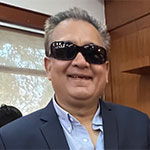
Siddharth Sharma
But the story that stood out for me was of a young man who chanced upon a television advertisement announcing the World Cup Cricket for the Blind. He had lost his eyesight in a motorbike accident a few years ago, and the ad intrigued him. Siddharth Sharma asked his mother to jot down the number flashing on the screen and he made an appointment to see George in his office. Little did he know that his life was set to change from that moment on.
Because of his ability to communicate effectively, Siddharth was offered a seat on the Organising Committee and made incharge of public relations. Suddenly after some years of unemployment and hopelessness, there was purpose to his life. He worked closely with a Public Relations agency, doing media rounds and sensitising journalists and raising awareness around the sport. Incidentally, the first Blind World Cup was vastly covered by the press in India and overseas.
The PR agency not only hired Siddharth full-time after the World Cup but also promoted him to take up operations and business development for the firm. As he went out into the world, securing new business for his agency, Siddharth found a new sense of self-belief.
The World Cup experience readied him for a brand new career. Today, Siddharth Sharma runs his own company, Foundations PR, that deals with lifestyle and luxury brands. He is also Asia’s first visually impaired self-employed public relations professional.
Release of a special volume celebrating 25 years of the First World Cup Cricket for the Blind
None of this would have happened if George Abraham didn’t decide to shift the focus from the blindness to the person and his (her) potential.
Cricket for the blind has progressed since then. There are many new opportunities, T20 championships and several other tournaments. We also have the Women’s Blind Cricket now. No doubt there is some media coverage around live matches and the struggle for mainstream recognition for this sport, but has the societal perception towards blindness evolved?
Does the average Indian know that persons with blindness have similar aspirations and interests? That they work harder to prove themselves and yet struggle for acceptance from the majority-sighted population.
If only the media representation of blindness focused on ‘what is’ as opposed to ‘what isn’t’.
Wondering why MxMIndia publishes a disability advocacy column? Well, we strongly feel that the media can dramatically transform the world for persons with disabilities. This series attempts to help bring forth issues that the media must champion to create a truly inclusive and accessible India. Writing this column is Shruti Pushkarna, a former journalist and now a disability inclusion advocate based in New Delhi. Her views here are personal. To access the archives of her 90-odd columns, please visit: https://www.mxmindia.com/category/ columns/shruti-pushkarna/
If you have a view on the issues raise or would like to align with MxMIndia on this cause, write to us at editor [at] mxmindia.com.
March 8 is International Women’s Day. A day of celebrating women across the world. The ‘suffragette movement’ or the fight for women’s rights dates back to the late 19th century. The advocacy for the women’s right to vote started primarily in the UK and United States, but it had a global impact, shaping various feminist movements across countries.
In India, the movement started off with reforms in education, progressing into equal rights in politics, health, wages and so on. After independence, several women’s organisations emerged seeking fair treatment of women at home and at work.
While we can all agree that a considerable amount of change is seen in terms of women’s participation in decision making of all sorts, women inclusion still remains a big agenda of most diversity forums.
And when we add layers of intersectionality, equality is a far-fetched dream for women of lower caste, for women with disabilities, for women of low economic status and so on.
Speaking of women with disabilities, they face double discrimination. Stigma not only surrounds the gender but also the physical or mental limitation. Out of the 2.68 crore (severe undercount) of the total disabled Indian population, nearly fifty per cent are women. And a majority of these women remain hidden from the mainstream, treated as liabilities by their families.
During the course of interaction with a family in Delhi NCR a few years ago, I learned that one of the daughters who had a vision and speech impairment, remained confined to one room. She had never interacted with the outside world or gone to a school. And this is not a unique case of isolation and exclusion.
While we aggrandise the digital strides being made by India, women with disabilities in rural parts of the country have little or no access to a phone. Seeking help or exploring options is not possible without the intervention of the man of the house.
Much like other women, the state of women with disabilities is also influenced by various social, cultural, economic, and political factors. Ill-conceived societal mindset towards disability is an additional disadvantage, that leads to intersecting forms of discrimination and marginalization. As a result, women with disabilities may have lower levels of education due to lack of access to educational institutions. This means they are less likely to be employed. Also, women with disabilities often end up being emotionally, physically, and sexually abused by family, friends, and caregivers.
Yes, the reality is grim. Does that mean there is no reason for this community to celebrate the International Women’s Day? Quite the contrary. Women with disabilities are up against magnanimous odds. So, their success stories scream of resilience and resourcefulness.
Here’s a list of few women who have not only had successful careers but challenged stereotypes, promoting inclusion and equal representation of women with disabilities.
Malvika Iyer: A disability rights activist, an international motivational speaker, and a national awardee. She completed her Ph D after losing both her hands in a bomb blast. She is also a model for accessible fashion.
Sangeeta Gala: Hellen Keller awardee, Sangeeta has trained some of the biggest actors in Bollywood to play the parts of hearing or speech impaired characters. She was born with deafness which also impacted her speech. She has worked as a trainer on several films including Black, Guzaarish, Barfi, Raavan et cetera.
Suvarna Raj: A national awardee, an international para athlete, Suvarna is a vociferous activist for equal accessibility rights for persons with disabilities. As an accessibility auditor, she works closely with the Ministry of Social Justice and Empowerment on the Sugamya Bharat campaign. Stricken by polio at the age of two, Suvarna is a para champion in table tennis, powerlifting and athletics.
Preeti Monga: Blind since birth, Preeti is Founder CEO of Silver Linings, working towards education and empowerment of blind women. She is also the first blind Aerobics instructor in India. She is also a national awardee for her work towards employment of persons with disabilities. Preeti has authored two autobiographies, ‘Flight without Sight’ and ‘The Other Senses’.
Virali Modi: A TEDx speaker, influencer and a disability rights activist, Virali is also India’s first wheelchair using model. She was paralysed from waist down at the age of fifteen. Virali has voiced many advocacy campaigns for equal access like #MyTrainToo and #RampMyRestaurant. A marriage registrar in Mumbai was suspended last October when Virali had to be carried up two flights of stairs to register her marriage.
There are several women with disabilities across the world famous for their work and success. Marlee Matlin is an Academy Award winning actress who is deaf. Judy Heumann, former U.S. Assistant Secretary of Education for Special Education and Rehabilitative Services was well known as the Mother of Disability Rights Movement. Stella Young is an Australian comedian, journalist, and disability rights activist. Haben Girma is an American disability rights advocate and the first deafblind graduate of Harvard Law School.
Interestingly, the theme of the International Women’s Day this year is Inspiring Inclusion. Individuals, companies, civil society organisations and even the media makes a spectacle on March 8. And then all is forgotten.
How can we mobilise change? Can we vow to socially include at least one woman with disability this year?
 Three years ago, the Indian Paralympian squad broke some records in Tokyo. Taking the country’s global ranking to 24, with five golds. This year in Paris, we have surpassed our 2021 tally of 19 medals. Our medal count as of today stands at 24 with the global ranking being 13. And there are still a few days to go.

 Yes, people with disabilities too access news media, in all shapes and forms. They are also informed and opinionated citizens of India. But are news offerings built keeping in mind needs of people with different types of disabilities? Are product developers aware of what these accessibility requirements are? Do they know there are more than 1 billion people with disabilities who have the right to equal access to digital content, and that there are laws mandating the same?
 A: Accessibility is not a shiny feature or an add-on; a good product is accessible by default. Accessibility must be baked into the DNA of the product. Frankly, if you’re starting a new product or an app, making it accessible is not rocket science and can be done relatively quickly. There are enough resources and Web Content Access Guidelines (WCAG) to help developers and designers.
 A: I will be honest. News organisations lag way behind when it comes to product or tech innovations. This is mainly due to two factors: first, product and engineering resources are primarily used to serve SEO or ad revenue needs, leaving little incentive for product innovation. Second, often product decisions are made by executives and journalists who are quite short-sighted. Not to forget, newsrooms always have limited tech bandwidth and don’t attract the kind of tech talent that goes to say, an out-and-out tech company.

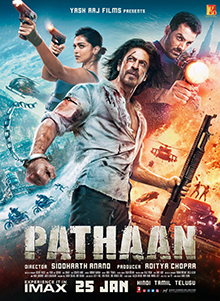 You remember the SRK starrer ‘Pathan’ that made headlines even before its release? Yes, I’m referring to Deepika Padukone’s controversial orange bikini and the Besharam Rang song. A lawyer filed a complaint in Muzzafarpur district court of Bihar against the leading actors and the objectionable song that allegedly offended the sentiments of the Hindu community.
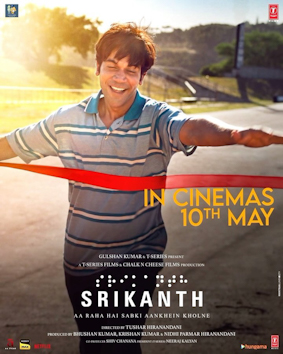 The court has ordered for these accessibility features to be included on OTT as well as theater screenings. For now, the cinema halls and producers can work with certain mobile application providers (XL Cinema, Shazacin) which offer access to an audio described track that synchronizes on the user’s smartphone as the movie plays up on the big screen.
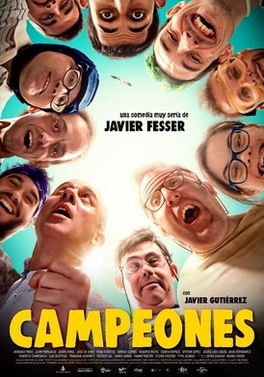 Campeones, Spanish for Champions, is a 2018 film directed by Javier Fesser which was nominated for the Best Foreign Language Film at the 91st Academy Awards. It is inspired by the true account of The Aderes Basketball team in Valencia, created with people with intellectual disabilities who won 12 Spanish championships between 1999 and 2014.
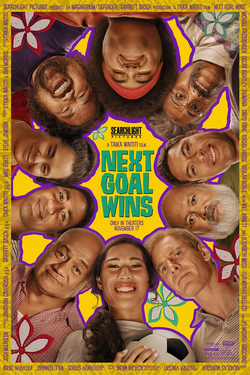 The second film is a 2023 American sports comedy directed by Taika Waititi. Michael Fassbender plays the lead role of Thomas Rongen in Next Goal Wins. It is based on a documentary of the same name, about a Dutch American coach (Rongen) who is also forced, following a series of events, to coach the weakest soccer teams in the world. It’s the story of the American Samoa soccer team who suffered a terrible loss in World Cup history, losing 31-0 to Australia in 2001. Rongen struggles to work with this infamous set of ‘losers’, turning them into an elite squad. Under his training, the American Samoa team qualified for the 2014 FIFA World Cup.