 Last weekend, I had the golden opportunity to witness the silver jubilee celebration of India’s first World Cup Cricket for the Blind. A room full of cricket lovers (players, organisers and supporters) took a trip down memory lane, recounting their love for the sport, the struggle for opportunities to play, some naughty moments, some tough ones. But all in all, a journey that shaped and altered their lives in distinct ways.
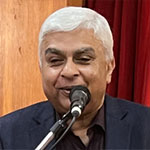
I was fascinated by each account. Just as awestruck as I was 20 years ago when I first learned about cricket for the blind. As a student training to be a journalist and a producer, I met with George Abraham, the Founding Chairman of the World Blind Cricket Council. India had already established its position on the international stage by then.
George shared how he came about organising the first ever Kanishka World Cup in 1998, bringing together representatives from seven countries to set the rules of the game. I also met with the then Captain Manvendra Singh Patwal, coach Uday Gupte and other Indian players, and shot a practice match with the team. That’s when I understood how this version of cricket was played with a ball molded with ball bearings that made sound. And the bowling was thrown underarm. There are 11 players like in mainstream cricket, out of these four are B1 (totally blind), three are B2 (partially blind) and four are B3 (partially sighted).
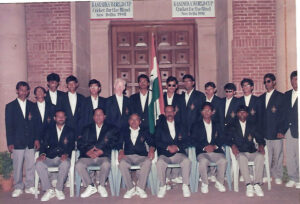
Some years later, employed in a television news channel, I attempted to recreate the story, this time for a bigger (broadcast) audience. I filmed interviews and practice matches, hoping my editors would be just as excited about this unique tale laced with hardship, joy, grit, and faith. But that was not to be. Such news items rarely make it beyond the ‘Good News’ segment. Any follow up coverage or intersectional issues at play, are less likely to interest a business that thrives on politics, violence, and sensationalism.
Rollercoastering through various jobs in the media, many moons later, I met with George again. This time to team up and raise awareness around life with blindness. That’s also when I really understood the objective behind this entire Blind Cricket movement. It was to erase the stereotype associated with vision impairment and give people an opportunity to witness (blind) men in action. The disability ceases to matter when you see enthusiastic players batting, fielding, bowling, and chasing runs.
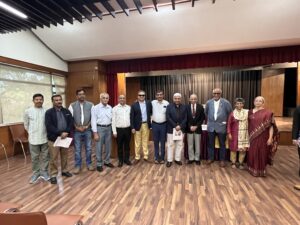
At the 25 years nostalgia party at the New Delhi YMCA last Saturday, 1998 Team India players shared what the game and the World Cup had done for them. George Abraham and his fellow organising committee members had managed to instill confidence, leadership skills, decision-making tactics and more, in each one of them. Moreover, they had exposed them to a whole new world which was unthinkable and unimaginable for most of the cricketers who came from special schools and small towns.

But the story that stood out for me was of a young man who chanced upon a television advertisement announcing the World Cup Cricket for the Blind. He had lost his eyesight in a motorbike accident a few years ago, and the ad intrigued him. Siddharth Sharma asked his mother to jot down the number flashing on the screen and he made an appointment to see George in his office. Little did he know that his life was set to change from that moment on.
Because of his ability to communicate effectively, Siddharth was offered a seat on the Organising Committee and made incharge of public relations. Suddenly after some years of unemployment and hopelessness, there was purpose to his life. He worked closely with a Public Relations agency, doing media rounds and sensitising journalists and raising awareness around the sport. Incidentally, the first Blind World Cup was vastly covered by the press in India and overseas.
The PR agency not only hired Siddharth full-time after the World Cup but also promoted him to take up operations and business development for the firm. As he went out into the world, securing new business for his agency, Siddharth found a new sense of self-belief.
The World Cup experience readied him for a brand new career. Today, Siddharth Sharma runs his own company, Foundations PR, that deals with lifestyle and luxury brands. He is also Asia’s first visually impaired self-employed public relations professional.
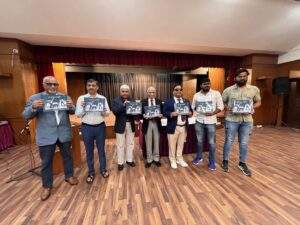
None of this would have happened if George Abraham didn’t decide to shift the focus from the blindness to the person and his (her) potential.
Cricket for the blind has progressed since then. There are many new opportunities, T20 championships and several other tournaments. We also have the Women’s Blind Cricket now. No doubt there is some media coverage around live matches and the struggle for mainstream recognition for this sport, but has the societal perception towards blindness evolved?
Does the average Indian know that persons with blindness have similar aspirations and interests? That they work harder to prove themselves and yet struggle for acceptance from the majority-sighted population.
If only the media representation of blindness focused on ‘what is’ as opposed to ‘what isn’t’.
Wondering why MxMIndia publishes a disability advocacy column? Well, we strongly feel that the media can dramatically transform the world for persons with disabilities. This series attempts to help bring forth issues that the media must champion to create a truly inclusive and accessible India. Writing this column is Shruti Pushkarna, a former journalist and now a disability inclusion advocate based in New Delhi. Her views here are personal. To access the archives of her 90-odd columns, please visit: https://www.mxmindia.com/category/ columns/shruti-pushkarna/
If you have a view on the issues raise or would like to align with MxMIndia on this cause, write to us at editor [at] mxmindia.com.