 If there is one thing I missed growing up, it is sports. My school didn’t really encourage us to take up a sporting activity. I did have my moments playing badminton and table tennis with cousins and neighbourhood friends. Also, I enjoyed skating. But I can hardly say that I was a sports enthusiast, because the only sporting action I got was cricket tournaments on television, a feature intrinsic to most Indian middle-class households.
So, I never realised what sports could do for the overall development of one’s personality. It was many moons and interactions (with sports lovers) later that I seriously regretted my inadvertent abstinence from physical recreation. In my attempt to make up for the loss, I follow some sports, enjoy fictional and biographical accounts on the subject and of course cinematic portrayals. I’m also married to someone who is happy to trade any indulgence for some gaming action.
Recently, I watched two films, both inspired by true stories, one in Spanish and the other in English. Both comedy dramas revolve around so-to-say ‘weaker’ teams, constituted of players who are ‘different’, those who don’t fit into our normal (read limited) perception of sportspersons.
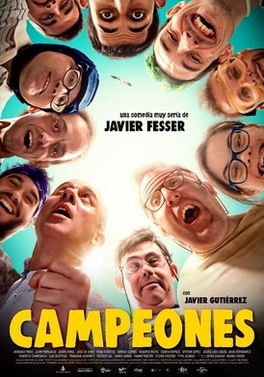 Campeones, Spanish for Champions, is a 2018 film directed by Javier Fesser which was nominated for the Best Foreign Language Film at the 91st Academy Awards. It is inspired by the true account of The Aderes Basketball team in Valencia, created with people with intellectual disabilities who won 12 Spanish championships between 1999 and 2014.
Marco Montes, assistant coach of a basketball team based in Madrid, gets fired from the job following his arrogant conduct. Hitting a police car in a state of drunkenness, Marco is ordered to either spend two years in jail or ninety days of community service, as Coach to Los Amigos, a team of basketball players with intellectual disabilities. At first, he is frustrated with this new assignment, unable to relate to players he feels are below normal (subnormales). But as he works closely with the team, he learns about each player’s unique story, strengths and weaknesses. The common thread binding them is persistence and the desire to play well.
Throughout the film, in the comic episodes, in the tense backdrop of Marco’s troubled relationships (personal and professional), the audience gets to witness the similarities in human narratives. Marco has his own set of hurdles to cross, like the players of Los Amigos. As he coaches them to overcome barriers on the court, he unties several knots in his own marriage, discovering fresh perspectives to look at life and challenges. In the end, Los Amigos place second in the National Championship.
I watched this film at a special screening organised in the capital on World Down Syndrome Day. What fascinated me the most was the director’s choice of casting disabled actors in the roles of all the players with disabilities. Giving them an opportunity to flaunt their prowess and represent themselves rather than relying on non-disabled actors to simply play the part. An absolute entertaining and hilarious saga, I watched the climactic moments of the final game with my mouth wide open.
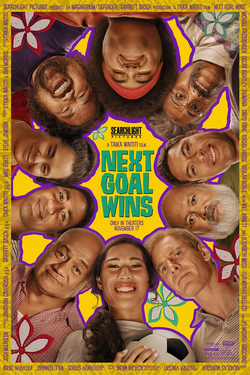 The second film is a 2023 American sports comedy directed by Taika Waititi. Michael Fassbender plays the lead role of Thomas Rongen in Next Goal Wins. It is based on a documentary of the same name, about a Dutch American coach (Rongen) who is also forced, following a series of events, to coach the weakest soccer teams in the world. It’s the story of the American Samoa soccer team who suffered a terrible loss in World Cup history, losing 31-0 to Australia in 2001. Rongen struggles to work with this infamous set of ‘losers’, turning them into an elite squad. Under his training, the American Samoa team qualified for the 2014 FIFA World Cup.
While there are no persons with disabilities in this context, there are characters representing marginalised communities. It is a disparate group of players including a transgender defender (Jaiyah Saelua), a traumatised goalkeeper (Nicky Salapu), and an overweight midfielder (Rambo). Rongen deals with his own weaknesses and fears, as he motivates the team to focus on their strengths. The result is a nearly impossible feat of scoring goals and winning the game.
In the sporting arena, differences cease to be. And many similarities emerge. In both the films, the coaches traverse complex personal landscapes gaining valuable lessons from the diverse set of players.
While Champions and Next Goal Wins iterate the power of sports to include and empower, the two cinematic representations also bring out the multi-dimensional human sides of persons with disabilities and diverse identities. Something which helps the audience resonate with episodes on-screen.
Isn’t it time the India media catches up and goes beyond a stereotypical narrative of diversity? Can celebration of differences replace inspirational porn and ableist chronicling in the mainstream media?
P.S. Bollywood actor Aamir Khan began shooting for an Indian remake of Spanish movie Campeones in January 2024.
Wondering why MxMIndia publishes a disability advocacy column? Well, we strongly feel that the media can dramatically transform the world for persons with disabilities. This series attempts to help bring forth issues that the media must champion to create a truly inclusive and accessible India. Writing this column is Shruti Pushkarna, a former journalist and now a disability inclusion advocate based in New Delhi. Her views here are personal. To access the archives of her 90-odd columns, please visit: https://www.mxmindia.com/category/ columns/shruti-pushkarna/
If you have a view on the issues raise or would like to align with MxMIndia on this cause, write to us at editor [at] mxmindia.com.