Tag: shruti pushkarna

  • Red Alert! Monsoon Mazaa or Disability Distress?

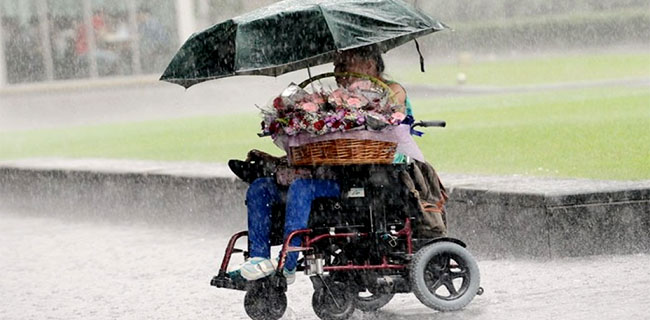
    Representative image. Photograph source: https://www.ohchr.org/


    By Shruti Pushkarna
     

    Shruti PushkarnaIn the past few weeks, monsoon fury has topped news headlines across different parts of India. If you google rain+news, the search throws updates of orange and red alerts in parts of Maharashtra, Gujarat, Karnataka and more. Then there’s the frightful, shrieky voices of television anchors warning us about the dangerously rising levels of Yamuna and Ganga. Not to miss the conspiracy theories and political buck-passing between neighbouring states on releasing excess water.


    Growing up in Delhi, I haven’t witnessed the city at such a standstill in the past, with roads completely blocked off because of water-logging. The situation is definitely bad. In fact, climate conditions across the world have been uncertain and alarming.


    Both traditional and digital (and social) media are brimming with accounts of lives lost, infrastructural damage, crops destroyed, poor urban planning, homes demolished, et cetera. Average (wo)man is posting photos and videos on social media from their places of work/ study and residence, highlighting the respective perils they are facing.


    I still recall the horror of July 26, 2005, one of the first few serious news stories I witnessed as a budding journalist. ‘Mumbai Deluge’, the headline and the corresponding pictures are vividly etched in my brain. The city received 944 mm rain, the eighth-heaviest 24-hour rainfall recorded ever, claiming thousands of lives.


    Then too, similar coverage ensued. Eighteen years on, our cities and states still seem unprepared to battle the nature’s wrath. But I’ll leave that debate for another day.


    For the average Indian citizen, what does monsoon mean? Baarish or pitter-patter raindrops throw up varied imagery and meaning for different people. A steaming cup of tea paired with hot pakodas, swaying lush green trees, potholes, overflowing sewers, watered-down roads, damp clothes, dripping huts, traffic snarls, careless children jumping in muddy puddles. I’m sure you can think of more!


    Ever think of what it means for an average disabled citizen?


    Twenty-nine-year-old Payal Bhattad lives in Virar near Mumbai and until recently, she traveled to Wilson College in Mumbai to teach history to undergraduates. The daily commute in the local train would easily take up three hours of her day. And Payal is a totally blind person who uses a white cane to navigate her way across the bustling city. When the heavy raindrops fall on the tin sheds of the train station, Payal is unable to register any other audio cues which otherwise guide her to move forward, backward, left, or right. She cannot hear the murmurs of fellow passengers, or hawkers’ cries, nothing that indicates any familiar direction or territory to her. Once, the roaring rain misled her to the edge of the platform and she fell onto the tracks. And no one noticed or stopped to help her up.


    Akash Nimbalkar is a 30-year-old social worker who also lives in Virar. He is a person with low vision, who finds it extremely challenging to wade through knee-deep water on his way to work, using a cane. He is always worried of submerging into an open gutter or losing balance and slipping on the flooded road. His family hesitantly stops him from going to the office every day, as they worry about their visually impaired son getting stranded in the rain.


    With wind blowing amidst heavy rain, it’s hard to steadily hold an umbrella, and manage to stay dry. Additionally, there’s personal belongings to juggle with the gamp. Forty-six-year-old Shirin Kheriwala works as a counsellor with a national helpline for the blind. She usually relies on sighted people to help her cross busy main roads and assist with directions. But during the monsoon, everyone is running to find shelter and save themselves. Coming back from work one day, she found herself isolated on the highway. And her umbrella broke. But as they say, necessity is the mother of invention. Shirin folded the umbrella to use as a cane and held her white cane up in the other hand as an indication to the rushing traffic, that she was walking across.


    The situation is equally precarious for persons with orthopaedic or locomotor disabilities. It is difficult, sometimes even impossible to use wheelchairs, crutches, or any other assistive aids in such extreme weather conditions.


    Saurabh Kohli is a 40-year-old person with multiple sclerosis (MS). Apart from the usual fatigue accompanying MS, he experiences balance issues and severe weakness in his legs. Although he drives a slightly modified automatic car to his office at Amity University in Noida, he uses a walker or wheelchair to get from one place to another. Walking without such assistance is next to impossible for him. He drives around 70 kms every day, but in rainy weather, he avoids stepping out alone. The humid weather conditions also adversely affect his medical condition.


    Prosenjit Chakraborty is also a person with multiple sclerosis. He lives in Guwahati, and drives a battery-operated tricycle to run his errands, visit the doctor’s clinic and the hospital for follow-ups. He fears the day when rainwater seeps into the battery of his vehicle and stops it from functioning, leaving him helpless on the road. So far, he’s been lucky!


    All these folks, like many other persons with disabilities don’t want to stay home, take leave, or not show up to work because of the additional challenges they face due to their disability, in the monsoon season. Instead, they look for solutions and brace up for perilous times.


    But is the administration aware of their difficulties? Are policies being designed and implemented to prevent or tackle such hazardous situations facing approximately 2.68 crore people?


    And what about the fourth pillar of democracy? Why doesn’t the media focus on reporting issues and accounts of persons with disabilities who have equal rights as citizens of India? Before raging another debate on urban development woes, climate change, or disaster management, the media should understand and include the stories of millions of overlooked disabled stakeholders.


    Wondering why MxMIndia publishes a disability advocacy column? Well, we strongly feel that the media can dramatically transform the world of persons with disabilities. And this series can help bring forth issues that the media must champion to create a truly inclusive and accessible India. To write this column, we invited Shruti Pushkarna, a former journalist who is now a disability inclusion advocate based in New Delhi. Her views here are personal. To access the archives of her 75-plus columns, please visit: https://www.mxmindia.com/category/ columns/shruti-pushkarna/


    If you have a view on the issues raise or would like to align with MxMIndia on this cause, write to us at editor [at] mxmindia.com.
     

  • Shruti Pushkarna: Crime against a disabled tribal reduced to vote bank politics

    By Shruti Pushkarna


    Shruti PushkarnaThe increased discourse on diversity and inclusion has brought another term into common parlance, intersectionality. It refers to the interconnected relationship of social categorisations like gender, race, caste, colour, sexual orientation, disability and so on. Intersectionality is about the different aspects of a person’s identity that make him or her vulnerable to discrimination and oppression. For instance, within disability, women with disabilities are said to be doubly marginalized, because of their gender as well as physical and/or mental limitation.


    At the recent Nasscom Global Inclusion Summit in Bengaluru, this term was repeatedly referred to, by DEI (Diversity, Equity & Inclusion) experts, corporate honchos, inclusion advocates and activists. I was part of a workshop on Inclusion in Technology Products and Services, where groups of professionals engaged in an activity to understand day-to-day challenges faced by diverse identities. And quite a few participants found it hard to comprehend scenarios where more than one form of diversity added to the complexity of the problem and made it that much more complicated to solve. So, while people may find it easier to talk about transgender and disabled identities separately, their combination becomes convoluted. And the myriad perils in the daily life of a transgender with disability appear overwhelming.


    But why am I ranting about intersectionality and complex ostracised identities?


    Recently, I woke up to a rather disturbing video shared in multiple WhatsApp groups. It was the video of a man urinating on the face of another man, and the incident took place in Sidhi, Madhya Pradesh. As I scrolled through my messages and Twitter feed, I discovered that the victim was a person with mental illness and a member of a tribal community. He was also poor. This intersectionality certainly made him powerless in many ways, compared to the perpetrator.


    As one tweet indicated, the heinous act was carried out by a representative of the ruling party’s MLA in reaction to the tribal labourer’s demand for wages. Another layer of power politics in the societal hierarchy.


    https://twitter.com/KashifKakvi/status/1676211020522741760


    Thanks to social media, the viral video circulated at light speed, and several reactions poured in, condemning the monstrosity of Pravesh Shukla. Exasperated with the imagery of gross inhumanity, I eagerly awaited news reports highlighting the crime.


    News media couldn’t ignore the story. Several headlines cited the brutal act, labeling it shameful and outrageous. And Shukla was soon arrested. A crime was committed, someone recorded and released it to the public. A hue and cry ensued. The offender was caught.


    Seems right, doesn’t it? Except it isn’t. The media and political narrative around the incident stripped away the intersectional identity of the victim. What was emphasised in the reportage was his tribal identity juxtaposed with the political allegiance of the culprit. Apart from The Print which merely stated, ‘mentally ill tribal’, I didn’t find any reporting mentioning disability and the stigma experienced by lower caste poverty-stricken persons with disability. There was no mention of how disability often becomes the grounds for abuse because their existence is seen as a burden on the ableist society.


    It was far more sensational to focus on the tribal identity which ignited a debate between the ruling party, opposition, and activists. Especially with the Madhya Pradesh elections coming up later this year. The conversation shifted from the victim who is mentally ill and deprived in more ways than one, to vote bank politics and hypocritical hurls between power-hungry leaders.


    Congress Leader Kamal Nath hailed his party as the Scheduled Tribes’ messiah,


    Protesting activists rallied support for Schedules Castes (SCs) and Scheduled Tribes (STs), demanding action against the crime,


    मध्यप्रदेश में गरीब आदिवासी व्यक्ति पर पेशाब करने वाले भाजपा के युवा नेता प्रवेश शुक्ला की यह शरारत और उद्दंडता असहनीय है। आदिवासियों के प्रति बीजेपी का यह असली चेहरा है। मप्र प्रशासन प्रवेश शुक्ला के विरूद्ध एससी एसटी एक्ट के तहत कड़ी कार्यवाही करें। #ArrestPraveshShukla pic.twitter.com/Yd95jIak1i

    — Hansraj Meena (@HansrajMeena) July 4, 2023


    In response, Chief Minister Shivraj Chouhan invoked National Security Act against the accused and resorted to dramatic antics, washing the victim’s feet while making tall claims of respect for every citizen.


    यह वीडियो मैं आपके साथ इसलिए साझा कर रहा हूँ कि सब समझ लें कि मध्यप्रदेश में शिवराज सिंह चौहान है, तो जनता भगवान है।

    किसी के साथ भी अत्याचार बर्दाश्त नहीं किया जायेगा। राज्य के हर नागरिक का सम्मान मेरा सम्मान है। pic.twitter.com/vCuniVJyP0

    — Shivraj Singh Chouhan (@ChouhanShivraj) July 6, 2023


    Both national and international media accentuated caste politics in India, specifically underlining the 1.53 crore underserved tribals of Madhya Pradesh and the 82 odd assembly seats reserved for SCs and STs.


    While this is an equally pertinent issue which requires media and political attention, the layers of marginalisation didn’t seem to attract any prominent response from either group. Disability like always took a backseat, once again only confined to raging discussions among the disability rights advocates.


    I guess calling them ‘divyang’ absolves humanity of all crimes.


    So why are we publishing this column on an A&M site? Well, we strongly feel that the media can dramatically transform the world of persons with disabilities. And this series can help bring forth issues that the media must champion to create a truly inclusive and accessible India. To write this column, we invited Shruti Pushkarna, a former journalist who is now a disability inclusion advocate based in New Delhi. Her views here are personal. To access the archives of her 75-odd columns, please visit: https://www.mxmindia.com/category/ columns/shruti-pushkarna/


    If you have a view on the issues raise or would like to align with MxMIndia on this cause, write to us at editor [at] mxmindia.com.
     

  • Does the media care about people with invisible disabilities like Multiple Sclerosis?


    By Shruti Pushkarna


    Shruti PushkarnaRecently, while researching different disabilities and their representation in the media, I stumbled upon a blog dedicated to fiction for adults, young adults and children which contain characters living with Multiple Sclerosis (MS). The creator, Jennie Minor who works in Brooklyn, decided to write her master’s thesis on Understanding Disability through Literature while in graduate school. Her mother was diagnosed with MS when Jennie was 13 years old.


    Around 2.8 million people are estimated to live with Multiple Sclerosis worldwide. While the prevalence of MS in India was valued at nearly 1/1,00,000 in the 1980s, reports suggest that annual diagnoses have almost doubled, as per more recent data collected from hospitals across the country.


    Yet the average Indian knows so little about this condition.


    May 30 is observed as World Multiple Sclerosis Day. The theme for 2023 is ‘Connections’. People with MS often feel lonely and socially isolated, so this year, MS advocates around the world urged people to build personal and community connections for better services, support systems and quality care.


    Anjali Vyas
    Anjali Vyas

    I spoke to a young MS advocate in India who has been living with this condition since 2014. Anjali Vyas hails from Bhandara, a town near Nagpur. She is a Chemical Engineer by qualification and an English language trainer by profession. Currently pursuing a fellowship on disability at National Centre for Promotion of Employment for Disabled People (NCPEDP), Anjali writes and propagates stories about people with MS and other invisible disabilities on social media.


    Q: For the benefit of our readers, can you articulate what is Multiple Sclerosis? And how does it affect the life of someone living with this condition?

    A: MS, known as Multiple Sclerosis (a tongue twister), is an autoimmune, neurological disorder. This means that one’s own immune system attacks the body, to be particular, the protective layer on the nerve fibres. This protective layer is called Myelin sheath which acts as an insulation of the nerve fibres and helps in smooth transmission of the messages from the body to the brain and vice versa. Just like we have insulated wires in our homes that support the flow of electricity by protecting the copper wires inside it! Now when this message to and from the body as well as the brain is not delivered on time, it disables a person to respond or perform a particular task. And this entire process is invisible, which also leads to extreme fatigue, brain fog, urinary incontinence, pain, tingling, numbness and weakness. It’s very difficult to make people understand the challenges due to the invisible symptoms while struggling to manage the condition. This further adds to the stigma around MS and hampers the quality of life of a person with MS and their caregivers/ family.


    Q: You have been involved in raising awareness around MS. What differences have you noticed in the awareness levels of people here in India versus abroad, in other countries?

    A: MS usually manifests in young adults, typically between the ages 20-30 and its prevalence is twice in women than in men. As per the India MS map (www.indiamsmap.org), 70% of the registered members at Multiple Sclerosis Society of India (MSSI) fall in the age group, 19-45; which is a working class population. Despite being recognised as a disability in the Rights of Persons with Disabilities (RPWD) Act 2016, the awareness on MS is very low. MS is prevalent in the western countries and hence is comparatively better known and understood by people, including health professionals and policy makers. In India, the awareness among general physicians and government officials is still low.


    When I had my first relapse in the form of temporary vision loss, my ophthalmologist had no idea about MS. Even to get a disability certificate, people with MS find it extremely challenging as the members in the assessment panel and the government officials don’t know much about this condition and its invisible symptoms. There is only one organisation, MS Society of India, that’s been working for the welfare of Persons with Multiple Sclerosis since 1985 and the fact that it exists was also not well-known until the RPWD Act came into force.


    Q: In your experience, are people living with MS comfortable in coming out and talking about their disability? Are they accepting of their own condition? Do they feel they can talk about it with others without the fear of being judged?

    A: Had this question been asked several years ago, I would definitely have said that people with MS aren’t comfortable talking and accepting it. Employed adults with MS are often uncomfortable disclosing it to their employers or colleagues due to the fear of job loss or fear of getting treated differently/ unfairly. But in the past 2-3 years, in my experience, I have seen things improve. While there still exists stigma and fear, people are getting vocal about their disability and being more acceptable of MS. I personally feel that this shift in mindset is owing to the impact of social media and role models, especially in the field of cinema.


    Yes, there’s always a fear of being misjudged or misunderstood and that will only disappear gradually when there will be more conversations around MS or for that matter, any invisible disability. I too, was in denial for almost a year after my diagnosis and wasn’t ready to share my condition until I decided to educate myself on MS, in the right manner. Ever since then, my journey as a self-advocate on MS, began.


    Q: Famous American actor Selma Blair who announced her MS diagnosis on Instagram in 2018, shared in an interview to The Guardian, that her doctors urged not to go public as no one would understand and she wouldn’t get work. She did make an appearance at the Oscars in 2019 with a bejewelled cane and she was applauded as a warrior, a hero. How do you respond to that?

    A: Before the news on Selma Blair getting diagnosed with MS came out, most people with MS didn’t even know of her as an established actor. Still today, some don’t. But as soon as the news aired, I remember some of my MS friends called me and said, they suddenly felt empowered. In fact, very recently, Selma Blair was also on the Vogue cover, which added to the confidence and feeling of belongingness amongst people with MS. Afterall, it was the first, international representation of the MS community.

    On the other hand, I personally also feel that labelling people with disability as warriors or heroes or glorifying them because of the disability, is not as fair. Terms like these, act as catalysts in shaping the stigma on disability around us. To ensure inclusion, we need to normalise the notion that every person with disability is as good an achiever as anyone without disability.


    Q: The lead actress in the Netflix series, ‘Dead to Me’, Christina Applegate received her diagnosis during filming the show in 2021. It was tough for her, and Netflix paused production and even considered doing away with it altogether. But she wanted to finish it. When Applegate was doing publicity for the latest season, her condition was also public. And there were a lot of social media responses to it. Do you think how we react to such news/ information today, has changed over the years?

    A: As I mentioned earlier, cinema and social media have been instrumental in demystifying the myths and alleviating stigma around disability over the past few years. Earlier, the portrayal of disabled characters had always been that of subject of pity. They were always seen as helpless and dependent. I always wondered about the impact of the female disabled characters on the impressionable minds. As the times changed, technology advanced and the youth became more involved and sensitive towards important issues. A shift in such narratives on disability was observed. In my recent experiences, I have seen that most of the younger generation has become proactive and pursues the issues around disability, empathetically yet logically.


    Q: While there are various Bollywood movies which have looked at protagonists with Cerebral Palsy, Autism, Asperger’s Syndrome, Amnesia and so on, the only character I recall with MS, was of Meenu in Mani Ratnam’s Guru. Vidya Balan plays Meenu, who builds a strong friendship with the lead, Gurukant Desai, portrayed by Abhishek Bachhan. What do you think of the portrayal of MS in our films and television?

    A: Firstly, there has not been enough representation of disabilities in the mainstream cinema, let alone conditions like MS. Also, it’s unfortunate that the characters who play the role of a disabled are themselves non-disabled. No offence, but talking about portrayal of MS in Guru does not hold true for most of the Persons with MS (at least in the present times) as many of us do not exhibit any visible symptoms or disability. Hence, I also feel that persons with MS must be provided the platform for right depiction of the many forms of this disability. I must add that very recently, a documentary on a woman with MS and her life, called ‘I am a Limited Edition’ was premiered in Chennai. It will be soon released on OTT platforms too.


    Q: What about the mainstream news media? Do you think journalists understand issues facing persons with MS, and report these adequately?

    A: Nobody can deny the fact that mainstream media has not been as heedful towards the issues of disability as they have been towards criminal stories. It’s only on the occasion of the paralympics that one can see media even talking about disability. Frankly, I am not sure if the media knows enough about ‘disabilities’. The gap can be observed clearly when the just a couple of news channels have only 10 minutes of news for the Deaf with Sign Language Interpretation, that too in the odd hours of afternoon. Using language like, ‘Despite being disabled…’ further segregates us from the matters, that matter the most.


    Q: How can the media help with normalizing MS or any disability for that matter?

    A: It all starts with using the correct terms/ language around ‘disability’. Calling us differently-abled or specially-abled doesn’t help in normalising disability conversations, as we are neither different nor special. It’s also important that media should make their news accessible for the disabled and make them a part of the dialogues that happen on any national issue that can impact the disabled population equally. For instance, the pre-budget discussions that air on news channels days before the budget session, should have at least one speaker or representation from the disability community. It’s as basic as that. To Leave No One Behind, inclusion in all forms is essential.


    Given that India is an emerging economy with a rising population of persons with MS in the country, it is high time that prime issues of people with MS and other disabilities be adequately reported by the media with appropriate disability terminologies.


    So why are we publishing this column on an A&M site? Well, we strongly feel that the media can dramatically transform the world of persons with disabilities. And this series can help bring forth issues that the media must champion to create a truly inclusive and accessible India. To write this column, we invited Shruti Pushkarna, a former journalist who is now a disability inclusion advocate based in New Delhi. Her views here are personal. To access the archives of her 70-odd columns, please visit: https://www.mxmindia.com/category/ columns/shruti-pushkarna/


    If you have a view on the issues raised or would like to align with MxMIndia on this cause, write to us at editor [at] mxmindia.com.


  • Are digital products/services accessible and inclusive for persons with disabilities?

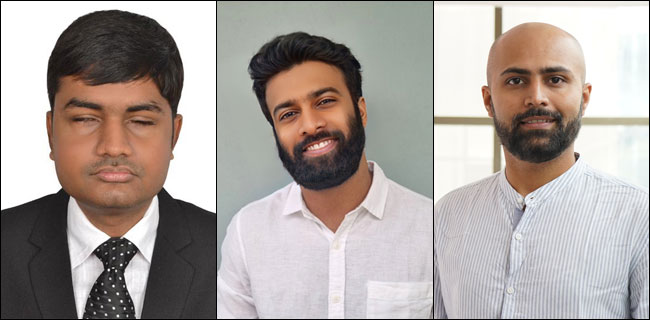
    Amar Jain, Akshay CM and Tushar Viradiya


    By Shruti Pushkarna


    Shruti PushkarnaWhat’s the first thing you reach out for when you wake up? Or, what’s the last thing you use before turning in at night? In all likelihood, it’s your cellphone. An inseparable part of our lives, it’s the mode for all kinds of content consumption. Whether it’s managing your calendar, getting the news, or scanning social media feeds, cellphone is a constant presence and an enabler.


    Computers, smartphones, and other smart devices have not only made things easy but also improved our productivity levels. Most services including healthcare, banking, food delivery, and entertainment have gone digital. Now imagine, if one billion people encounter challenges in accessing mainstream digital products and services.


    That’s the number of people who live with some form of disability, worldwide. They experience lack of access to basic things which we take for granted in our daily routines. Reading the news, browsing Instagram, making a UPI payment, transferring funds to another account, or ordering a pizza!


    Today (May 18) is the Global Accessibility Awareness Day (GAAD), an annual celebration to get everyone talking, thinking, and learning about digital access and inclusion of persons with disabilities. The theme of this year, ‘Keeping technology accessible for everyone’, is in line with the growing shift towards digital infrastructure.


    But what does accessibility mean in the context of disability? How can technology include or exclude people with visual, hearing, motor, and cognitive disabilities? To answer these and more, I spoke to three professionals who live with different types of disabilities.


     Amar Jain is a corporate lawyer and a person with total blindness. Akshay CM is a DEI (Diversity, Equity and Inclusion) and Talent Management consultant and a neurodivergent individual with multiple invisible disabilities. And, Tushar Viradiya is a deaf individual who works for a Bengaluru-based NGO.


    Q: What does ‘accessibility’ mean to you?

    Amar Jain (AJ): Simply put, Accessibility = ability to access. People perceive information and user interface components of technology using three senses, as we can neither taste nor smell technology. And to me, accessibility is when all of the information and components I can use with more than one sense. For example, colour alone to convey information relies only on sense of seeing, whereas a colour indicated with text alternatives like a * sign, makes it accessible to other senses of hearing and touch for people who may have difficulty using one of their senses.


    Akshay CM (ACM): Accessibility, to me, means ensuring that all individuals, regardless of their abilities or disabilities, have equal access to information, technology, physical spaces, and opportunities to fully participate in society.


    Tushar Viradiya (TV): For me, accessibility means creating an inclusive environment and services, which are available to individuals with abilities or disabilities. For example, sign language interpreters play a vital role in making communication accessible for both deaf and hearing individuals.


    Q: Give us one example from your daily life where access or the lack of it significantly impacts you?

    AJ: As a lawyer, ability to read handwritten text, and different designs that people create using pen on paper like cutting down stuff, inserting new lines, making different signs to indicate intent impacts my daily life a lot because none of this is accessible to me as a person with blindness and I have to depend on others to obtain this information.


    ACM: When websites or apps lack proper captioning or transcripts for videos and audio content. As a neurodivergent individual, I heavily rely on visual cues and text-based information. Without adequate access to captions or transcripts, I face difficulties in understanding and engaging with the content.


    TV: Every day I visit YouTube channels and social media platforms that provide news and information in Indian sign language. Having sign language interpreters present during work meetings on Zoom enhances accessibility for deaf and hearing individuals. It becomes fully accessible for me.


    Q: Given the push towards Digital India and the changed environment after Covid-19, with an increasing transition of activities of education, employment, and entertainment in the virtual space, how important is ‘accessibility’ to you as a person with blindness/neurodiversity/hearing impairment?

    AJ: While technology is progressing and replacing almost every manual effort, at the same time, inaccessible design is creating exclusion and more barriers for persons with disabilities. From gadgets to work, to entertainment to everything else, technology is getting the centrestage. And given this push, it is equally important to have the technology which is inclusive, accessible and usable for everyone including people with disabilities.


    ACM: As a neurodivergent individual, accessibility is crucial in the digital space, especially considering the increased reliance on virtual platforms for education, employment, and entertainment. It enables me to navigate and engage with these activities effectively, enhancing my overall inclusion and participation. Unfortunately, awareness of the principles of Universal Design for Learning (UDL) is relatively low among content creators, particularly in the context of neurodiversity. Adhering to UDL principles could greatly improve the accessibility and inclusivity of their content.


    TV: Before Covid-19, deaf students faced barriers in accessing education due to limited resources and challenges in communication. There is very little awareness around the deaf and Indian Sign Language (ISL). There are mostly hearing teachers in special schools for the deaf, who do not understand sign language and expect the kids to understand through notes they write on the board. There is no explanation, context or description given. Now, there are online education channels which have content available in sign language which helps deaf people acquire knowledge. With the shift toward online learning in education, we need to ensure accessibility for deaf people. This includes, providing closed captions and sign language interpretation for education material, so they can fully engage in the learning activities. However, there are very few qualified ISL interpreters to cater to the needs of around 18 million deaf people!


    Q: This year, the theme of GAAD is ‘Keeping technology accessible for everyone’. How relevant do you think this is in the Indian context and how far or close are we from achieving this? Especially in the context of media offerings, whether it is e-papers, news websites, OTT platforms, etc.

    AJ: Accessibility can only happen when we have the right attitude and we understand the impact of inaccessibility. While things are changing in terms of policies, the implementation continues to be a daunting task.


    ACM: India has witnessed a significant digital transformation in recent years, with increased reliance on online platforms for various activities. However, the accessibility of these platforms, particularly in terms of media offerings like epapers, news websites, and OTT platforms, remains a pressing concern. Many of these platforms lack adequate accessibility features such as screen reader compatibility, captioning, and alternative text for images, making it challenging for neurodivergent individuals and those with disabilities to access and engage with the content. While progress has been made, there is still a long way to go in ensuring inclusive and accessible technology for all.


    TV: TV news is not signed, and when it is, sometimes the interpreters are not good enough to be accurate, so it does not make sense to me. I depend on independent YouTube channels and social media that produce news updates in sign language for deaf people. Deaf individuals face challenges when it comes to accessing entertainment such as movies, TV shows, and live performances. However, there has been some progress. Closed captioning is widely available for movies and television programs.


    Recently, the Ministry of Social Justice and Empowerment notified that persons with disabilities can now approach the Chief Disability Commissioner to seek redressal under the Rights of Persons with Disabilities Act 2016, if ICT (Information and Communication Technology) products and services are not in keeping with the laid out standards of accessibility applicable to both government and private sector manufacturers and service providers. Will the government’s empowering move prove gamechanging in ensuring accessibility for all?


    So why are we publishing this column on an A&M site? Well, we strongly feel that the media can dramatically transform the world of persons with disabilities. And this series can help bring forth issues that the media must champion to create a truly inclusive and accessible India. To write this column, we invited Shruti Pushkarna, a former journalist who is now a disability inclusion advocate based in New Delhi. Her views here are personal. To access the archives of her 70-odd columns, please visit: https://www.mxmindia.com/category/ columns/shruti-pushkarna/


    If you have a view on the issues raise or would like to align with MxMIndia on this cause, write to us at editor [at] mxmindia.com.


  • Shruti Pushkarna: When will it be truly ‘Accessible India’?

    By Shruti Pushkarna


    Shruti PushkarnaThe Delhi weather has been delightful for the past couple of days. It’s what prompts you to go for a drive on an impulse. Or grab a sumptuous meal at your favourite restaurant. Or head out for a staycation at one of the boutique resorts on the outskirts of the capital.


    Well, the sudden change in temperatures also brings in unexpected bouts of illnesses and before you can do all the fun things, you are waiting in a doctor’s clinic or a pathology lab for a diagnosis.


    Whether you follow the heart or a more logical path, either way you get where you have to be, without thinking too much. I’m talking of a restaurant, hotel, or a hospital. But not everyone is as lucky as you are.


    At least not persons with disability or chronic illness. Have you ever wondered that spontaneity is not an option in the barrier-ridden lives of millions of people? In fact, it’s worse. Not even careful planning can land them in some places because of sheer thoughtlessness that leads to inaccessibility.


    When it comes to travel, medical healthcare, or amusement of any sorts, persons with disability and those living with chronic illness are left struggling because of the barriers in access to various places, products, and services.


    Foremost, let’s understand how many people we are talking about here. As per Census 2011, out of the 1.23 billion population, over 21 million live with some form of disability. According to the Longitudinal Ageing Study in India, 55 per cent people above the age of 60 suffer from a chronic illness. And as per the last census, that’s 8.6 per cent of India’s population, so 103 million elderlies. And chronic illness is not limited to people above sixty years of age. In fact, the Rights of Persons with Disabilities Act 2016 recognises certain chronic conditions in the 21 types of disabilities, these can be genetic or acquired.


    Notwithstanding the Census 2011 data is old and heavily undercounts persons with disabilities. It’s a large enough number for us, the government, the private sector, and the media to ignore.


    As a primary caregiver to a parent with a chronic autoimmune disorder, I encounter various hurdles in all the areas mentioned above. The last time we had to go for an X-Ray and an Ultrasound, it took us an hour and several phone calls to determine a place where the wheelchair could enter the laboratory. Usually, our first choice is to go to a hospital but when that doesn’t work out for whatever reason, the inaccessibility of most neighbourhood pathology labs glares at us.


    Anyway, once you have managed to enter a lab with wide enough doors for a wheelchair, the discomfort and lack of dignity is what you brace for, next. The patient with zero mobility is lifted up and down, pushed sideways by random strangers, who are dressed as attendants, but lack the knowledge, empathy, and training to handle complicated medical cases.


    And good luck if you are in for a whole abdomen ultrasound, nursing a full bladder, desperate to ease yourself. Because fate is what you are counting on to find a large enough toilet built with access needs in mind.


    Toilets are the same story in hotels and restaurants as well. Even big chain hotels which openly propagate their diversity goals to find a spot in the prevalent inclusion agenda, are non-compliant when it comes to infrastructural accessibility guidelines.


    My mother and I were surprised at the shoddy access offerings at the most luxurious (and expensive) hotel in New Delhi in a more recent visit. Although I must add that the hotel staff were kind and eager to help. Before I knew it, someone took the wheelchair away from me and pushed her all the way inside the restaurant. It was only on our way out that the glorious display began to show some cracks. There wasn’t a separate accessible washroom. I couldn’t wheel her in the ladies’ room. After pestering the staff for some time, we discovered that the men’s toilet could be accessed. As we headed out, I pushed her down the ramp in my usual matter-of-fact way, except I almost lost balance because the slope was too steep!


    Despite the rush of anger experienced in situations like these, one finds hope in national campaigns like ‘Accessible India’. Compliance maybe a problem, but the sentiment is right, and it has created awareness. The need of the hour is to propel the inclusion agenda with full thrust.


    For those of you unfamiliar with the subject, the Union Housing and Urban Affairs Ministry revised the Harmonised Guidelines and Standards for Universal Accessibility in 2021, to make India’s cities truly inclusive.


    Then how do these places, institutions, businesses get away with it? Doesn’t the nation want to know? Doesn’t any daily want to highlight the brutal disregard for a population so large? Doesn’t any television news channel want to lend a bit of shrill during primetime to these voiceless masses?


    So why are we publishing this column on an A&M site? Well, we strongly feel that the media can dramatically transform the world of persons with disabilities. And this series can help bring forth issues that the media must champion to create a truly inclusive and accessible India. To write this column, we invited Shruti Pushkarna, a former journalist who is now a disability inclusion advocate based in New Delhi. Her views here are personal. To access the archives of her 70-odd columns, please visit: https://www.mxmindia.com/category/ columns/shruti-pushkarna/


    If you have a view on the issue or would like to align with MxMIndia on this cause, write to us at editor [at] mxmindia.com.


  • Shruti Pushkarna: Is autism fashionable enough for media coverage?

    By Shruti Pushkarna


    Shruti PushkarnaWhat do Albert Einstein, Emily Dickinson, Tim Burton, Charles Darwin, Bobby Fischer, Bill Gates, Jerry Seinfeld, Tim Burton, and Elon Musk have in common? The answer is ASD or Autism Spectrum Disorder. It is a developmental disability caused by differences in the brain. People with ASD often have problems communicating and socializing, they may display repetitive behavior or restricted interests. But they also have their unique strengths and abilities. And all the personalities mentioned above are proof that although it may be challenging to live with autism, but people on the spectrum can accomplish great things.


    Source: Freepik.com

    April is Autism Awareness Month, and you would have come across several news stories around autism awareness, inclusion, numbers in the past couple of weeks. But do we really know enough about autism? Are we accepting and welcoming of people on the spectrum in the mainstream? Does India have enough services catering to the needs of autistic people?


    Merry Barua

    I posed these and several other questions to Merry Barua who is credited with initiating the autism movement in the country. Merry gave birth to her son, Neeraj in 1981. It took a new mother months and years to understand her autistic son’s needs, traits, and interests, to ultimately devote herself towards creating awareness and a conducive environment for thousands like Neeraj. Merry Barua is the Founder Director of Action for Autism, an organisation dedicated towards building a hopeful future for autistic children and their families. She has also authored many books on the subject.


    In this interview, she talks about her journey as both a mother and an activist, the transformation that people and organisations working on autism experienced over the years and how the media contributed, impacted, or lacked.


    Q: Tell us a bit about your first encounter with autism as a young mother.

    A: When my son was little, I had no knowledge of how a little baby must be like. He was my first child, and I had no experience. He reached all his physical milestones, except that he did not speak, but everyone assured me that boys speak late. He was very cranky as an infant. I was barely able to breastfeed him because he did not suck. There were other challenges, he would drop things out of the window. I couldn’t explain to him that this is not something that one does. As he grew, he barely slept at night. When he started going to the playschool, I noticed that all the kids were playing together but he would be hanging around on the fringes. I thought he was shy. At the end of the year, when they sent us the exercise books, all of them were empty except for the colouring book where the crayon had been rubbed repeatedly in one spot in the centre of whatever the outline was. Initially I thought he was a slow child. But there seemed to be something more and I tried asking his paediatrician, but he said there was nothing to worry about. So, life was quite challenging. And I felt there was something wrong in my parenting. One of the bad things I did was that I followed Benjamin Spock (American paediatrician) who encouraged to say ‘no’ and give them a little spank and I would do that. And I know now that those are terribly wrong things to do.


    Q: You began with championing autism rights as a mother, and later it translated into a national movement. Tell us a bit about this transformative journey.

    A: After I got a diagnosis, I realised that nobody had even heard of this word ‘autism’. There was nothing available. I got hold of one book by Lorna Wing.

    Autism is not a simple straightforward kind of disability. You have to really put in an effort to understand it. For example, when people would ask me, I would say it’s a difficulty in communication and socialisation. And people would say so what, there are many other shy kids who don’t play with anyone. And I didn’t have the understanding to explain the pervasive nature of social challenges that my son was coping with. I visited many schools for the disabled and I realised that there was very little or almost nothing people understood about disability, forget autism. So, I started writing. I wrote a few articles in magazines and newspapers with the aim to get people to at least know the word ‘autism’. Around the late ’80s, the film Rain Man had been released in India and a lot of people who watched the movie didn’t get that it was about a disability. So, I printed out a little piece of information and I went to all the local video parlours asking the owner to stick it on the cassettes to help people understand. I also started to bring about a journal called Autism News. My aim was to reach families and help them. These were all the small things I did to create awareness. I had a young girl whose sister brought her over, asking for me to work with her. I did and then another mother came with a boy. By this time, my son was 12. This is how the school started. My aim was to show through the school that these are children who can learn and progress just like other children. Because I’d experienced that with my son during his home programme.


    It wasn’t just about my child, it was about this whole population of autistic people who were not getting the right services they required. It was important to ensure that autism was recognised in policy. Also, in many places the understanding is that the way you teach kids with intellectual disability is how you also teach kids with autism. It’s like saying that you teach deaf and blind kids in the same way. Except it’s not! They’re completely different disabilities. So that understanding had to be pushed through. So, one of the things that I struggled with was to get the Rehabilitation Council of India (RCI) agree to start a training of teachers to work with children with autism. And that struggle took me seven years. As I began to understand autism, I saw there were so many children who had autism, but they were misdiagnosed. I was often told that I was trying to make autism fashionable! I could see that this was a population that desperately needed services, laws, needed things to change. We also realised that we had to do a lot more work on awareness, so we did a lot of concerts with popular musicians. I wrote the first book on autism around 1997. Then we write a manual for paediatricians. So, one thing led to another and that is how the whole movement started off.


    Q: Autism has been treated in different ways in literature and films, some close to factually correct, some stereotypical, some totally absurd. A classic example being Rain Man, people assume all persons on the spectrum are mathematical wizards! Then there was My Name is Khan, I am Sam, Who’s Eating Gilbert Grape and so on. How do you respond to some of these yesteryear productions? Do you think they have led to more stereotyping or have managed to educate the ignorant masses?

    A: Yes, I know there have been a lot of films and the depiction hasn’t always been the best and they have created a wrong impact. But at the same time, I deeply appreciate a lot of the films. For instance, ‘Rain Man’ when it came out, it was the only film that was really talking about autism clearly. And I know that’s not the kind of autism that my son has. But it was a film that gave us an understanding of the different kinds of autism. And it’s an excellent depiction of an autistic person of a particular kind. As for ‘What’s Eating Gilbert Grape’, I thought it was fantastic too. You cannot show every kind of autistic person in a film. I liked Gilbert Grape especially because the autistic person was not the main character, he was just the sibling. I thought ‘Barfi’ was cute, but the ending was unnecessarily happy. Like the kid in ‘Taare Zameen Par’, why did he have to win the competition. It’s like when you have a disability, you must have something to redeem yourself. That bugs me. Why can’t disabled people be like regular people and have happiness, failures, sadness, successes, everything doesn’t have to end on a happy note. But I guess the more the merrier because they create awareness. There’s so much stigma that is attached to disability in our country and if these movies address that stigma in some ways, I say let it be.


    Q: But today there is a lot more content that is produced from a more informed position, representing rather than misleading. To cite a few examples, there are shows like Atypical, The Good Doctor, Extraordinary Attorney Woo et cetera. What do you feel about this shift in portrayals?

    A: The early portrayals have been able to create some awareness. For instance, if we took our kids out, someone approached us asking if these kids are like ‘Taare Zameen Par’, and I would say yes. Because it didn’t matter, to that person, there was no distinction between a learning disability and autism. All he knew was that these people are different, and he was trying to be good. And I think that’s what matters ultimately. As long as people accept them for who they are and want to include and help them. Having said that, the current lot of OTT films and series are fabulous, including the ones that you have mentioned. So there has been a big shift, especially the stuff that’s coming from the West, if not as much in India.


    Q: Action for Autism, can you tell us a bit about the organisation’s vision and how the work has evolved through these years?

    A: Action for Autism was started with the objective of creating an environment which was supportive of autistic individuals and families. One had to change perceptions from them being hopeless, useless, violent children. And to do that one had to start services to prove that those perceptions were wrong. We started the school initially and then we moved to diagnosis, early intervention, teacher training, running a vocational centre and so on. And then moving to employment. The bigger shift which has colored all the work that we do is the evolution of our understanding of autism. We’ve learnt a lot from our colleagues with autism, as we have from autistic people who have written about their life experiences. As our understanding grows, it impacts our services.


    Q: April is also Autism Awareness Month, this year being the 15th annual observance. How have you seen the awareness raising activities and engagements grow or transform through these years?

    A: There has been a steady increase in the observance. Initially, we used to do an Autism Awareness month in December starting 2000 onwards and we did it across cities. Then of course Autism Awareness month was flagged by UN in 2008. Now, there are observances by organisations across the country helping create more awareness. There are also a lot of observances happening in smaller towns, but the reality is that awareness is still a long way to go. This is also a time when a lot of flaky therapies get majorly boosted by the people who propagate them. While there are a lot of walks, public events et cetera, there are also a lot of discussions, articles in the media that happen during this month. In earlier times, there was a lot of awareness activities. Now, the push is more towards acceptance of autism.


    Q: You have written extensively in newspapers about autism, you even started a journal called Autism News, what according to you is the media doing right and what it has missed out on. What should change?

    A: One of the good things is that the media is nowadays covering the condition. They suddenly seemed to have discovered autism as a worthy topic. In the entertainment media, there are series that have characters with autism, they try to portray people with lived experiences. But one of the things that happens with our news coverage is caricaturing, or a heroic portrayal. The language needs to change because it is ableist. The reporters who write the story, they are often people who don’t have much understanding of autism or even disability. Things like ‘differently abled’, ‘suffering from autism’, are indicative of very ableist language. The intentions are better, but because they come from an ableist perspective, the appropriate language is missing. But one should be happy that at least the media considers disability matters worth covering.


    So why are we publishing this column on an A&M site? Well, we strongly feel that the media can dramatically transform the world of persons with disabilities. And this series can help bring forth issues that the media must champion to create a truly inclusive and accessible India. To write this column, we invited Shruti Pushkarna, a former journalist who is now a disability inclusion advocate based in New Delhi. Her views here are personal. To access the archives of her 70-odd columns, please visit: https://www.mxmindia.com/category/ columns/shruti-pushkarna/

    If you have a view on the issue or would like to align with MxMIndia on this cause, write to us at editor [at] mxmindia.com.


  • Is Digital India truly inclusive?


    By Shruti Pushkarna


    Shruti PushkarnaA few days before India assumed the G20 Presidency on December 1, 2022, Prime Minister Narendra Modi spoke to the G20 leaders in Bali about the transformative power of digital architecture, applauding India’s efforts in the recent years. In July 2015, the flagship programme of the Modi-led government, Digital India, was launched with a view to digitally empower the society and knowledge economy.


    The initiative was deemed promising by different groups for varied reasons. It was seen as a step towards bridging the socio-economic gaps by providing access to services, digitally. Education could reach a wider audience tucked in far-out nooks of the country. Small business owners could tap into a new market share, thanks to digital payment gateways.


    Persons with disabilities, especially those with vision impairment, also saw a huge opportunity of inclusion and integration into the mainstream of things. With innovation in technology, acquiring a decently priced smartphone is no longer difficult or out of bounds. Increased internet penetration and the special push of the government to go digital, has opened up services to millions of blind citizens.


    A visually impaired student can access books, browse for information, appear for examination and more, all through the power of smartphone, computer and internet. A blind woman can apply for a job and work efficiently through a digital system built by the employer for all staff.


    Similar avenues have opened up for persons with other types of disabilities. Covid-19 is a case in point, where people transitioned to a largely digital existence because of social distancing. The corporate world experienced a mindset shift pertaining to remote work. The 2022 National Employment & Disability Survey which compares workplaces in 2017 and 2022, reveals significant gains in recruiting, hiring, accommodating and retaining employees with disabilities.


    Reports cite that around 40% of the world’s real-time payment transactions took place through UPI in the last one year. Reviewing these statistics, one tends to share PM’s optimism when he pitches for a digital transformation into the life of every human being in the next ten years.


    Sounds like all is hunky-dory, right? In principle, yes. Because the idea has immense potential. But there are quite a lot of rough patches that we need to smoothen before we pronounce utopia. We must improve our implementation tally before we can score a 100 on the Digital India dream.


    Certain basic services like shopping, banking, ordering food, booking flights or hotels, have all gone digital in the past few years. Three clicks and you are done. Similarly, content consumption has increasingly moved to digital media, whether it is entertainment on OTT platforms or news gathering via internet powered devices.


    If an average blind or visually impaired person is digitally literate and empowered by a smartphone or a laptop enabled by a screen reading software, what stops him or her from accessing information and engaging with the new digital world?


    It’s a one-word answer. Compliance.


    There is innovation in technology. There is a mandate to make products and services digitally accessible to all. But who will enforce these rules? Who will hold service providers accountable when they falter? Before you say judiciary, there are fairly detailed legal procedures listed out as well. But the real question is, are we aware of who accesses these numerous services and how?


    If I were to take the example of news websites, you’d be surprised how many of these mainstream publications are inaccessible because they don’t comply to the Web Accessibility Guidelines. The World Wide Web Consortium (W3C) has put together a set of recommendations for making Web content accessible, primarily to persons with disabilities. The latest version is called Web Content Accessibility Guidelines (WCAG) 2.0, which prescribe the norms in fine detail.


    Things like having clearly labeled headlines and buttons, using a CAPTCHA along with a text and audio substitute for deafblind users, et cetera, are all listed and explained in the internationally standardized document. WCAG 2.0 consist of 12 guidelines organised under four principles, websites must be perceivable, operable, understandable, and robust for all users. The latest version of these guidelines also accommodates feedback from accessibility experts and members from the disabled community.


    Recently, a Research Fellow at the Vidhi Centre for Legal Policy shared with me interesting findings pertaining to the digital accessibility of popular news websites. The author used accessibility measures like dark contrast, large fonts, as well as screen readers to ascertain compliance levels. The barriers in access are categorized as critical, serious, moderate and minor. Some of the websites that report serious accessibility oversights include, The Hindu, Economic Times, Aaj Tak, The Print, The Wire, Hindustan Times and so on.


    Under the Rights of Persons with Disabilities Act 2016, service providers have a legal obligation to make platforms accessible and the deadline to do that was June 2019. Are these news publications purposefully flouting the rules? Or are they unaware of a sizeable user base who are outside the purview of normal and therefore not considered part of the target audience?


    Access to information is empowering in the growing digital economy. How can we deprive fifteen per cent of the world’s disabled population from accessing relevant and valuable information, that can transform their lives?


    So why are we publishing this column on an A&M site? Well, we strongly feel that the media can dramatically transform the world of persons with disabilities. And this series can help bring forth issues that the media must champion to create a truly inclusive and accessible India. To write this column, we invited Shruti Pushkarna, a former journalist who now works as Director, EnAble India where she heads North India operations as well as media and communications outreach. Shruti writes for MxMIndia every other Thursday. Her views here are personal. To access the archives of all her 70-odd columns, please visit: https://www.mxmindia.com/category/ columns/shruti-pushkarna/


  • Breaking stereotypes at India’s first inclusive fest for Persons with Disabilities


    By Shruti Pushkarna


    Shruti PushkarnaThe year 2023 couldn’t have opened on a better note, or shall I say, ‘inclusive’ note. India witnessed its first ever large-scale inclusive festival for persons with disabilities in Goa from January 6 to 8. Purple Fest was a unique initiative of the state government, supported by the Office of State Commissioner of Persons with Disabilities and collaborating NGOs from across the country.


    Over five thousand delegates witnessed this novel amalgamation of different stakeholders including, persons with disabilities, parents, academicians, rehabilitation professionals, disability rights advocates, government officials, employers, entrepreneurs, trainers, technology experts, students, NGO representatives, media and civil society members.


    Fortunate to be in the middle of all action, I was in awe of the organising and ground level teams who worked tirelessly to curate an experience that was distinctively discerning. The three-day convention had parallel events and activities running in and around the Entertainment Society of Goa in Panaji, attracting curious crowds. Exhibits of products, services and solutions, experience zones, discussions around inclusive education, employment sports and policy, interactions with achievers and changemakers, music, games, dance, cruise ride, bird walk, movie screenings, marathon, car rally, sporting events and more. It was an action-packed jamboree!


    Purple Ambassadors for 21 disabilities at the opening ceremony of the Purple Fest


    And all done with the prime objective of including and sensitising the society towards the varied needs, solutions, issues and aspirations of persons with disabilities. According to Census 2011, Goa features in the list of states with low percentage of disabled population of around 32,000. But recent reports indicate a sharp rise in the overall number of disabled persons in the last few years. And the State Social Welfare Department is determined to create awareness as well as make infrastructure and services accessible to all. Purple Fest is one such step in this direction.


    Now that I have set the context, let me tell you why this event matters. Foremost, persons with disabilities were seen live in action, belying and breaking stereotypes. Age old images fixated in the minds of people were challenged.


    All events and activities had inclusion interwoven into them, true to the spirit of Leaving No One Behind. Physical spaces were made accessible with ramps, elevators, braille signage, QR powered navigation app and so on. Ensuring access for every attendee, there was audio description, sign language interpretation, tactile signing, captions and more. It was all done in a precise and yet matter-of-fact manner, emphasising (to the excluding majority) that it doesn’t take too much, only a mindset shift towards accepting the ‘other’.


    This was evident from the experiences shared by some people who participated in a car rally where persons with blindness were teamed up with sighted drivers for a 35km-ride. The visually impaired person used a braille map to help the sighted driver navigate his or her way through. During the rally, the conversations and interdependence experienced by both parties resulted in building friendships and potential long-term relationships between the sighted and visually impaired communities.


    Apprehensions gave way to curiosity, finally translating into a change in perception. The lifecycle of any person (including those with disability) involves parenting, education, skilling, employment, healthcare and social welfare. The various exhibits demonstrated how persons with disability and their surrounding community could ensure independent activities of daily living as well as equal access to all services and facilities.


    There were grassroots and technological innovations on display, making possible for a person with disability to walk, sit, eat, read, write, watch, cook and play independently or with little help. Assistive aids and devices made it possible for them to conduct science experiments, solve math equations, withdraw cash from an ATM, access smart appliances and even drive on their own.


    I could go on because there were many hits at the Purple Fest. The biggest one being the representation of Purple Ambassadors for each of the 21 types of disabilities listed in the Right of Persons with Disabilities Act 2016. It was a historic moment captured by crowds, cameras and crews where so many different disabilities were seen walking the talk.


    The Goan dailies and social media platforms were abuzz with stories from the Purple Fest. The inclusion advocate in me was both rooting and scouting for in-depth coverage of this magical manifestation of ability. But I was disappointed with the surface level reportage focused essentially on already famous government officials, disabled achievers and stalwarts in respective domains.


    What was missing from the media discourse were the raw, heartwrenching accounts of ordinary (average) persons with disability who managed to overcome challenges in personal and professional spaces. The media missed the chance to recount the stories of Purple Ambassadors of 21 disabilities, especially the lesser understood ones like haemophilia, sickle cell disease, blood disorder and other invisible disabilities.


    Fifty-eight-year-old Umesh Salagar from Pune touched many hearts while recapitulating the struggles of a 10-year-old who lost both his parents, forced to earn and study simultaneously, thankfully with some help from his landlady and primary school teacher, only to be later shocked by the death of his young wife, leading to a life with Parkinson’s disease.


    Manju Sharma representing chronic neurological disability, shared the sudden turn of events in her life and the gradual journey of acceptance. A jetsetting air hostess had to reset and reorient to a life with acquired neurological conditions that aren’t easily comprehended. She is now gainfully employed in Naomundi, Jharkhand.


    Persons with mental illness and learning disability as well as deaf people shared their excruciating trauma of being excluded at various stages in life by a society that scores rather low on empathy. Walking around the venue, having a cup of coffee, listening to the panel discussions, interacting with the 21 representatives, looking at simple solutions and performances, most people experienced innumerable eureka moments.


    Did the show of strength and glimpse of an equitable co-existence fail to stir up the media’s sensibility and responsibility towards its citizens?


    So why are we publishing this column on an A&M site? Well, we strongly feel that the media can dramatically transform the world of persons with disabilities. And this series can help bring forth issues that the media must champion to create a truly inclusive and accessible India. To write this column, we invited Shruti Pushkarna, a former journalist who now works as Director, EnAble India where she heads North India operations as well as media and communications outreach. Shruti writes for MxMIndia every other Thursday. Her views here are personal. To access the archives of all her 60-plus columns, please visit: https://www.mxmindia.com/category /columns/shruti-pushkarna/


  • Shruti Pushkarna: Hear, Hear! Inclusion Advocates

    By Shruti Pushkarna


    Shruti PushkarnaThree days until we pull the curtains down on 2022. The atmosphere is rife with joyful celebrations, with lurking fear of a new Covid variant, inflation and taxation woes and of course, hope for better twelve months.


    Although I’m not agog about a date change magically altering the course of our lives, I have my yearnings. I don’t indulge in resolutions because those are just clichés avowed and disowned annually. I am more of a bucket list person, who likes to either tick things off or cross them out altogether. And inclusion for all is the highlight of my Wishlist for 2023. Emphasis on ‘all’.


    Let’s rewind a bit. Some years ago, I shifted gears to reroute my career path, transitioning from the media to the development sector. I learned to navigate through a new world, new subject, new people and new ways. However, one thing remained consistent. A personal and professional ambition of challenging and changing the status quo.


    The hustling-bustling newsroom chatter gave way to ardent articulations of inclusion advocates. Learning from and working closely with persons with disabilities, I became aligned to a collective call for accepting differences and acknowledging abilities.


    Today, my work entails voicing the stories, the needs and the dreams of 26.8 million disabled people who stand separated by physical and attitudinal barriers.


    I often find myself digging deeper into the history and psychology of ‘othering’, revisiting my literature and film theory classes, where I studied multitudinous accounts of discrimination on the basis of gender, colour, caste, sexual orientation and ethnicity. The discourse on disability seems missing. And different marginalized groups are waging parallel battles against exclusion.


    I have also realised that the agenda to include is controlled by diverse individuals and their distinct schools of thought. In drumming up support to integrate one community, are we erroneously creating new subsections? I’m beginning to wonder whether inclusion for one is possible without excluding another.


    Let me simplify this a bit. I am a woman, a person with low vision, a caregiver and a professional who advocates for equal rights of persons with disabilities. The definition of inclusion varies with the different aspects of my existence. Similarly, the inclusion needs of a gay blind woman cannot be seen through the lens of disability, gender or sexuality alone. One can draw up many permutations and combinations like that.


    There are 21 types of disabilities identified in the Rights of Persons with Disabilities Act, 2016 but I am yet to find a forum where the needs of all different types of disabilities are looked at equally. What’s worse is that various disability groups don’t understand or empathize with the access needs of one another.


    The challenge of inclusion is complicated by the intersectionality of people and issues.


    A universal approach to problem solving addresses the needs of a wider collective. Take the example of technological innovations built into a smartphone, a product designed for diverse set of users. A senior citizen uses the magnifying tool to read easily. A person with blindness sends out emails and messages using Speech to Text feature. A working mother reads (listens to) books on her drive home on the Audible app. Similarly, modern homes equipped with smart appliances simplify and enable access for people in varied ways, disabled and non-disabled alike.


    Is it time to align streams of thought and reduce the fissures within factions to strengthen the business case for inclusion? Do we need to redefine the parameters of inclusion based on intersectionality, irrespective of tags like disability, gender, colour et cetera?


    I wonder what that inclusive Wishlist will look like in 2023 and the years to come.


  • Shruti Pushkarna: Much like charity, inclusion begins at home

    By Shruti Pushkarna


    Shruti PushkarnaThe battle for inclusion is an ongoing one. Different groups go through varied struggles at different points in time, to be accepted by the majority. Gender, race, colour, disability, religion, caste and sexual orientation, have been the basis of discrimination, keeping the so-called ‘abnormal’ outside of the larger group.


    Underlying beneath the idea of exclusion is a total absence of empathy. It’s the inability to realise the inherent privilege with which we overlook or dismiss the existence of another. It’s often assumed that the inability to understand and address the issues facing persons with disabilities comes from a lack of awareness or ignorance.


    Take a day-in-the-life scenario…


    Did you know that persons with disabilities or those with limited mobility, have to consider the following before heading out of their homes?


    They have to think of the mode of transport and how they will transfer from the wheelchair to the vehicle seat. The number of stops and transfers also have to be accounted for, to consider the rate of exhaustion in the entire process. Access to a bathroom is usually unpredictable in unknown territory. We hope to find clean facilities, while they think of the possibility of using a bathroom at all, given the narrow openings, unsuitable height of the toilet seat, et cetera. Foregoing the desire to drink in order to keep the water intake to a minimum seems the only option. Obviously, they have to check on the availability of ramp and elevator, and if they are operational.


    Speaking of functionality, in many residential complexes where maintenance of elevators is dependent on the funds generated by inhabitants, people don’t want to pay for fixes and replacements, if they can take the stairs. This not only displays apathy for someone who cannot physically climb up and down but sheer shortsightedness of an event that can render them temporarily dependent.


    But if 15 per cent of the world’s population living with some form of disability remains invisible or marginalised, how do we develop our knowledge of people’s diverse needs? Is it our (non-disabled) responsibility to educate ourselves in order to include them or does the onus of being included lie with the voiceless and oppressed?


    My own limited understanding of living life with disability comes from the acquaintances I have made in the last few years while working towards empowerment of the disabled population. But do all of us have enough opportunities where disabled and nondisabled worlds intersect and interactions flow freely?


    Rights-based advocacy groups rely on awareness campaigns and initiatives to sensitise people in a controlled, simulated manner. Consciously training to accept people as they are, communicate in non-threatening ways and use person-first language.


    Such drives and discourses are amplified around December 3, International Day of Persons with Disabilities. But we need repeated iterations through the year to bridge the humungous gap that separates groups of people on account of misconceived notions of ability.


    Media portrayals also prove helpful in widening the scope of imagination. In the last couple of years, OTT platforms have featured a variety of fictional content that tackles disability and inclusion from a humanistic as well as thematic approach.


    Here are a few recommendations to get you started on inclusive content,


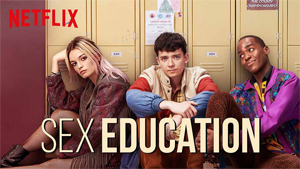
    1. Sex Education (Netflix):A British comedy drama featuring a teenage boy with a sex therapist mother who teams with a classmate to set up an underground sex therapy clinic in high school.
    2. Only Murders in the Building (Disney+ Hotstar): A murder mystery comedy starring Steve Martin, Selena Gomez and Martin Short. James Caverly who identifies as Deaf also plays the character of a deaf boy, Theo Dimas.
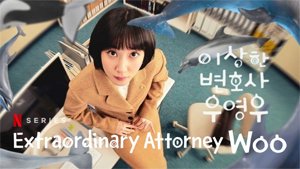
    3. Extraordinary Attorney Woo (Netflix):A South Korean legal drama in which 27-year-old Woo Young Woo who is diagnosed with autism spectrum disorder, plays the central character. She has an impressive memory but struggles with everyday interactions.
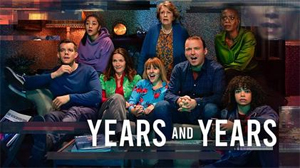
    4. Years and Years (HBO):A science fiction drama that revolves around the day-to-day lives of Lyons family. Ruth Madeley, a disabled British actress plays the role of Rosie Lyon, a single mother born with spina bifida.
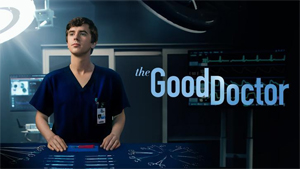
    5. The Good Doctor (Netflix):A series about Shaun Murphy, a young surgical resident with autistic savant syndrome, who challenges his sceptical colleagues by displaying extraordinary skill to save lives.


    While the natural instinct is to judge and exclude, can we challenge ourselves to unlearn and rewire, to accept even before we can embrace?


  • Will the Twitter Takeover lead to Muzzling of the Disabled?


    By Shruti Pushkarna


    Shruti PushkarnaSince Elon Musk’s takeover on November 4, Twitter has been constantly in the news. For firing around 3700 people within the first week in the name of cost-cutting. For $8-a-month fee to get the verified blue tick status. For scammers that popped up soon after the announcement of the Blue subscription plan. It’s been chaotic, in short.


    Both the Indian and the foreign news media have been nosing around for the tiniest whiff of this musky saga. Chasing all angles of the unraveling stories, be it the woes of the Twitterati, their tweeps, the economics at play or the lives affected by the brutal layoffs.


    In the local context, we’ve seen moving accounts of Indians who stand to lose their H1B status after being fired. A tweet by the new CEO rationalising the nearly 50% reduction in staff to save the company $4 million a day, is hardly any consolation.


    There is another human angle to this disruptive development that has been missed by the Indian media. It’s how the new guard and the subsequent decisions impact persons with disabilities. However, there has been some coverage in the American media, of the disabled Twitter users’ fears of the changes being brought about on the social media platform. But unless you are a Disability Rights Advocate, or disabled yourself or related to someone who is, it’s not the most obvious issue that stands out in the flood of mainstream Twitter reportage.


    Let’s try and understand why it matters. And what has changed.


    Fifteen percent of the world’s population lives with some form of disability. Despite the huge numbers, the community has remained invisible for various reasons. Lack of access to opportunities, barriers in the physical and digital environment, stigma in the society towards disability and so on. The emergence of the internet, technology and finally social media, provided a possibility of engagement to these faceless people, giving them a chance to voice their ideas and opinions.


    Social media platforms level out the differences that may exist in the physical world, extending an equal chance to mingle with the mainstream. The vulnerabilities and the discrimination fade away to a great extent.


    Up until now, Twitter has made significant efforts to make the platform accessible for persons with disabilities. In 2016, it introduced ALT (alternative) text for images where you can add description for non-textual content, to help users with low vision, blindness or cognitive disabilities. In a statement released in September 2020, Twitter promised to enhance its efforts to make the platform more accessible, announcing new teams placed in-charge of focusing on user experience. A new handle, @TwitterA11y carried all updates on product/ service accessibility.


    If you are wondering what are these features and how do they make it possible for people with different types of disabilities to engage on the platform, here’s a list naming a few:

    1. Image Description

    2. Captions

    3. High Contrast Buttons

    4. Left-aligned text

    5. White background

    6. Accessible content labels

    7. Keyboard shortcuts

    8. Reduce Motion

    9. Auto-generated Captions

    10. Magic Tap action to compose tweets


    And there are several more, including different settings for Web, iOS and Android users. Earlier this year, the Twitter Accessibility Experience Team rolled out the ALT text badge and new Closed Captions (CC) button. The visible The ALT badge on images lets you know when someone has added a description to their image. The CC button appears in the top-right corner of a video that has captions available, giving you the option of turning captions on or off.


    Now here’s the big news.


    On November 4, 2022, Elon Musk scrapped the entire Accessibility Experience Team, along with other important ones like Human Rights, Communications, Public Policy et cetera.


    Rejected and dismissed by surrounding community, many disabled people found a new home on social media. A place that helps them discuss issues, find support and answers, pursue interests other than disability and make friends beyond physical boundaries. Not all platforms are mindfully geared towards accessibility needs of the PwD (persons with disabilities) groups. Twitter was leading by example. Many users looking for alternative platforms of interaction, have now been reporting barriers of access on platforms like Mastodon and so on.


    On one hand, Musk publicly vouches for making Twitter a space for citizens, and yet on the other, sidesteps the needs of more than 1 billion people. Would it be an exaggeration to call this another Nazi-like propaganda against the disabled?


    So why are we publishing this column on an A&M site? Well, we strongly feel that the media can help in dramatically transforming the world for persons with disabilities. And this series can help bring forth issues that the media must champion to create a truly inclusive and accessible India. To write this column, we invited Shruti Pushkarna, a former journalist who now works as Director, EnAble India where she heads North India operations as well as media and communications outreach. Shruti writes for MxMIndia every other Thursday. Her views here are personal. To access the archives of all her 60-plus columns, please visit: https://www.mxmindia.com/category/columns/shruti-pushkarna/


  • Are businesses missing out on opportunities to sensitise & include?

    Starbucks outlet at Noida Sector 16B where the baristas use sign language
    Starbucks outlet at Noida Sector 16B where the baristas use sign language Photograph: Shruti Pushkarna


    By Shruti Pushkarna


    Shruti PushkarnaThis week started with waking up to the news of Morbi bridge collapse and the death toll crossing 130. Since 2020, health, education, employment, entertainment and almost every aspect of our lives have been reeling under the aftermath of Covid 19. News reports and social conversations revolve around natural or manmade disasters, rape and murder, fiscal scams and political horse trading.


    Radicalisation and inflation are on the rise. Cars, petrol, houses, food, everything costs more. There are no jobs.  Businesses are struggling. We are taxed for everything, including hospital room rent.


    In short, an average Indian is grappling with a gazillion problems on a daily basis. If your own issues don’t depress you enough, there is communal hyperbole to push you towards hopelessness.


    A simple ask for empathy seems unreasonable against this ubiquitous backdrop of societal grief. At a time, when the daily commute to work and back is an exercise in aggression due to bad roads, bad driving and bad traffic, how can anyone retain their sensitivity towards another human being?


    Thousands of people in urban and rural parts of the country can’t think beyond arranging two square meals a day. No wonder politicians and corporate giants get away with dirty ploys and false promises, because who is keeping track anyway?


    Fighting for inclusion and access for persons with disabilities sometimes seems secondary in this context. Especially if a large part of advocacy involves calling out the gaps and faults. At times, it helps to apply a two-pronged approach to the same problem. Where shrill activism fails, positive reinforcement does the trick.


    On that optimistic note, let me refrain from citing unmet targets and implementation loopholes pertaining to the country’s disabled population in today’s piece. Instead I want to share two encouraging encounters which deserve propagation.


    Due to temporary confinement following a knee injury, my movements inside and outside the house were possible only with the aid of a wheelchair. Desirous of watching a movie in the cinema hall, I booked a seat in PVR Director’s Cut at Ambience Mall, Delhi. I assumed there would be wheelchair access to the last row of seats I booked. But when I reached the assigned auditorium, the staff enquired if I could stand up and walk at all. Used to taking my mother (in her wheelchair) around inaccessible spaces, I was ready to slip into my activist avatar, demanding access. Just then the extremely polite personnel brought out a motorised wheelchair and helped me shift out of mine.


    Before anyone else entered the hall, I was escorted up the several set of stairs, seated secured with a seatbelt. It took the wheelchair operator around ten to fifteen minutes to transport me to my seat. He did that with patience and grace. I was mightily impressed. Of course, similar treatment was meted out at the time of exiting the hall. In addition, as my husband escorted me to the accessible washroom, the PVR staff jumped up to help, ensuring the facility was clean.


    My inability to walk didn’t hamper my entertainment experience, thanks to the trained and empathetic staff. There are definitely solutions available to accommodate and include, even in physical spaces that are built discarding the principles of universal design.


    I also noticed fellow movie-goers observe how a young person with an impairment was out and about, enjoying a fun evening like anyone else. If there were people speculating why did I venture out at all, I’m certain there were an equal number wondering, why not!


    Subtle sensitisation supersedes stereotypes.


    A few days ago, when I went down to a newly opened Starbucks to fetch myself my morning dose of caffeine, I was in for a pleasant surprise. I noticed the baristas at work were quietly focused on their jobs except they exchanged a few signs with each other as orders were passed on.


    Curious, I asked the cashier if they were hearing impaired. Her response was affirmative. All the seven baristas were hearing and speech impaired and their two managers were fluent in sign language. The cashier proudly shared that she was pursuing an advanced course in Indian Sign Language to further bridge the communication gap.


    With a barista at the Starbucks outlet
    With a barista at the Starbucks outlet

    As I collected my cup of coffee, I remembered to sign ‘Thank You’ to the cheerful server. I also signed to check if I could take a picture with him. He obliged, acknowledging my honest attempt to communicate in an inclusive language.


    This Starbucks is located on the ground floor of a commercial building that houses several private offices and a co-working space, in Noida Sector 16B. High influx of professionals provides an unmissable opportunity for sensitisation. Hiring persons with disabilities in a mainstream job helps counter misconceptions along with restoring agency and dignity.


    These two recent incidents speak of the power of change that is possible with certain additions and adjustments to a limited (and rigid) idea of normal. Publicising and broadcasting such acts of inclusion can whip up support for the excluded (disabled, elderly, severely ill) sections of the population. Practical demonstrations also help individuals and institutions realise that incorporating accessibility is not unfathomable.


    Here’s hoping that several such reports feature on the ‘good news’ sections of mainstream media.


    So why are we publishing this column on an A&M site? Well, we strongly feel that the media can dramatically transform the world of persons with disabilities. And this series can help bring forth issues that the media must champion to create a truly inclusive and accessible India. To write this column, we invited Shruti Pushkarna, a former journalist who now works as Director, EnAble India where she heads North India operations as well as media and communications outreach. Shruti writes for MxMIndia every other Thursday. Her views here are personal. To access the archives of all her 60-plus columns, please visit: https://www.mxmindia.com/category/columns/shruti-pushkarna/