On February 20, 2024, the world lost a legend. Radio presenter Ameen Sayani died of a cardiac arrest in Mumbai. He was 91. An iconic voice synonymous with radio, Sayani compered and presented over 50,000 shows.
Growing up in the 1980s, I have fond memories of listening to the Binaca Geetmala on the radio. It’s a coincidence that the legendary voice fell silent only a week after the World Radio Day on February 13.
Radio was a constant presence in the lives of the people back when the channels of entertainment were limited. Listeners formed a relationship, a bond of sorts, with the voices inside the radio sets. A similar personalisation is somewhat reflected in the compering style of All India Radio jockeys even today.
Radio offers content that is informative, empowering, liberating, and entertaining. A slice of little something for every listener. Driving long hours on Delhi’s traffic snarled roads has kept me close to FM despite the numerous choices of content consumption in Digital India.
In my interactions with blind and visually impaired people over the past few years, I realised how accessible this channel of media is, as compared to television, cinema, or OTT. Unlike the later generations of radio listeners who have switched to private radio stations, a large section of the 63 million (as per World Health Organisation) blind population still tunes in to the All India Radio. Their daily dosage includes news updates, sports commentary, dramas and short stories, interviews, and of course music.
Unlike the visual media, radio doesn’t exclude. Persons with vision impairment who rely heavily on audio input, can equally catch, participate, and enjoy radio broadcast. In fact, a lot of them grow up aspiring to be Radio Jockeys.
The National Institute for the Empowerment of Persons with Disabilities (earlier known as NIVH) located in Dehradun, runs a community radio station Hello Doon 91.2, where all programmes are presented by the visually impaired youth. The institute offers an RJ course which trains blind students to pursue career options in voice functions.
But what about mainstream radio? Do you know of any blind presenters on the popular radio stations?
RJ Shrikanth who was born with vision in one eye, works with the Food Corporation of India in Chennai. He lost his good eye in an accident and went completely blind. When he stopped going to school following his blindness, he was drawn to radio. Apart from his day job, he worked as a Radio Jockey on the weekends, to keep his creative passion alive. He has worked for All India Radio, 92 Tamil FM, and BBC World Service.
A few more visually impaired people in India who may not be widely recognised, have presented on the All India Radio. Rajni Gupta hosted a show called Yuva Swar on AIR, promoting young musical talent. Dilip Karampuri hosted shows focusing on literature and poetry. Rupendra Yadav worked as an AIR presenter on a show called Antardrishti, to empower people with disabilities.
In more recent times, Radio Udaan, an online radio station run by and for the disabled community, has popularised many voices among the visually impaired people. Since its inception in 2014, Radio Udaan has conducted several RJ hunts across cities, following which visually impaired people were trained to anchor and edit before going on air.
There are some well-known voices in the international radio circuit as well.
Peter White is a British journalist and broadcaster, best known for his work on BBC Radio 4. Born totally blind in Winchester in 1947, Peter has presented numerous programs including You and Yours and In Touch which focus on issues affecting visually impaired people.
Another famous presenter is Lucy Edwards who apart from contributing to various BBC radio shows, co-hosts a podcast called Blind Guy Travels.
Allan Russell is a blind radio presenter and journalist from New Zealand. He has worked for Radio New Zealand and other radio stations, covering a range of topics including disability issues.
Gilles Pépin is a radio host from Canada, who has worked for the Canadian Broadcasting Corporation (CBC) Radio. He hosted the program Les Heures du Monde (The Hours of the World) on Radio-Canada.
Closer home, in Pakistan, Rehana Gul followed her childhood passion to become the first blind RJ from Khyber Pakhtunkhwa. Gul works at FM 92.2 where she invites other persons with disabilities to her programme, Mashalona.
In a fast-changing world driven by technology, radio has managed to live on. That’s because it is accessible and connects with a diverse audience across geographies. It doesn’t discriminate on the basis of caste, gender, socio-economics, or disability.
Last week I underwent some major dental work. Dealing with excruciating pain and dizziness induced by a bouquet of medicines, I took to Netflix for comfort. Partly my objective was to try and doze off, hence I deliberately chose not so addictive content. And I decided to watch the much acclaimed (read slammed) Ranbir Kapoor starrer, Animal.
For those unfamiliar with the title, the film is a dark crime thriller directed by Sandeep Reddy Vanga. The story revolves around Ranvijay (Ranbir) who craves for his industrialist father’s (Anil Kapoor) attention. He returns home from the US after several years, following the news of a fatal attack on his father. The rest of the (longish) movie is centered around bloody revenge, quite full of gore and violence.
What’s my problem with the film? Not just mine, let’s list down some of the controversies surrounding this cinematic creation. It’s almost three hours of mindless action. One that shouts of masculine toxicity. Women characters have no room in the plot. You can count the number of times they are allowed a few words, only to be shut up by their husband(s) and brother.
Vanga toys with obsession as one of the key emotions defining his protagonist, similar to his earlier production, Kabir Singh. An unhealthy fixation with a lover, father or another relation almost justifies the violent display on screen, the shrill in dialogues and the evil in action. And women are mute spectators, if not participants in this ghastly exposé of masculinity.
I must confess, in the first couple of scenes where the young Ranvijay is seen neglected by his busy, wealthy father, I felt a sense of empathy towards the little boy. But the feeling didn’t last too long because the little boy quickly evolves (reads regresses) into a rich entitled brat, who turns up with a gun to her sister’s college classroom. All in the name of ‘protecting’ her.
And then there’s the bad guy, the antagonist played by Bobby Deol. Although Abrar (Bobby) shows up much later in the film, towards the latter half, the scenes laden with ferocious machismo are equally exhausting to watch. There is a similar story of mental trauma experienced in early childhood that the filmmaker uses as an excuse for the irrational behaviour.
Both broken men in some ways, at loggerheads to protect their kin. But that’s not it. What’s interesting is that both these characters have a form of disability. Abrar has a speech impairment, he needs his brother to act as the interpreter, who uses signs to communicate with him. Ranvijay loses his hearing as well as taste and smell after sustaining several bullets. In fact, after the attack, he is a medical miracle, walking, talking, and fighting despite a failing heart, no bladder control and several injuries.
None of the film reviews have looked at why the filmmaker uses disability in curating the two main characters. For quite some time after watching the movie, I was also confused if the hearing or speech impairment is used to highlight a vulnerability. I am not sure.
But here’s how I see it. For the longest time, Indian cinema has either pitied or ridiculed disability on the silver screen. Ranvijay and Abrar are both brutal, they are disabled too. Their condition doesn’t get in the way of their (dirty) business. However, skewed it may sound, it is empowering in a way. And there is no sympathy generation given their inability to taste, hear, smell, or speak. In fact, in more recent films like Andhadhun and Kaabil, the characters are ridden with flaws, they are not the typical heroes. It’s almost refreshing to see disability coloured with a streak of anger, violence, trickery, deviousness and more.
These are all human emotions, associated with a person with disability as much as any other non-disabled individual. So, irrespective of how much I disliked the film for its senseless action, played up chauvinism, I managed to find something I couldn’t entirely dismiss.
Of course, the film is far away from a utopian world that respects and includes the marginalised communities, including women, persons with disability, elderly, or any other weaker minority. And yet I managed to stay awake and watch it till the very end. Morbid fascination, I guess.
Wondering why MxMIndia publishes a disability advocacy column? Well, we strongly feel that the media can dramatically transform the world for persons with disabilities. This series attempts to help bring forth issues that the media must champion to create a truly inclusive and accessible India. Writing this column is Shruti Pushkarna, a former journalist and now a disability inclusion advocate based in New Delhi. Her views here are personal. To access the archives of her 80-plus columns, please visit: https://www.mxmindia.com/category/ columns/shruti-pushkarna/
If you have a view on the issues raise or would like to align with MxMIndia on this cause, write to us at editor [at] mxmindia.com.
After a huge success last year, the Government of Goa and the Office of the State Commissioner of Persons with Disability were back with a much bigger second edition of the country’s first inclusive festival for persons with disabilities. International Purple Fest 2024 was held in Panaji from January 8 to 13.
What a fantastic week-long celebration of inclusivity with 8000+ delegates from 17 countries, showcasing solutions, artwork, innovations in technology, experience zones, and heartwarming performances. All thanks to the hard work of the state government and the State Disability Commissioner’s office!
A group photograph of Purple Fest 2024 attendees
With workshops and discussions on pertinent topics like sports, education, employment, healthcare, politics, governance, laws and more, one would assume there was enough meat for the media to cover and report. But barring a couple of national stories, coverage was confined to local dailies. Another golden opportunity to cover hundreds of walking-talking human stories of success, struggle and strength, missed.
Like last year, there were Purple Ambassadors to represent each of the recognized disabilities under the Rights of Persons with Disabilities Act, 2016. And this year, they were given more screen presence, especially in a dedicated session with various State Commissioners of Persons with Disability as well as the Deputy Chief Commissioner of Persons with Disability.
Here’s what these Purple Ambassadors shared from their lived experiences, both personal and professional.
Vishant Nagvekar, Locomotor Disability (Goa): Persons with locomotor disabilities face a lot of challenges in outdoor environments, even in events like Purple Fest, when it comes to washroom access. There is little importance placed on this while planning. I heard other wheelchair users complain of the same during in the past few days, this is something that needs attention from the Disability Commissioner’s office.
Pooja Gupta, Thalassemia (Delhi): One of the requirements of persons with thalassemia is to get blood transfusion every 20-25 days. In India, there isn’t much blood donation on a mass scale and NAT (Nucleic Acid Amplification Testing) tested blood is not available easily. For instance, in Delhi, only two major hospitals provide NAT tested blood and not everyone can afford going to those. This type of blood can save thalassaemic patients from severe infections. Also, hardly any health insurance companies cover genetic blood disorders, and those which do charge an exorbitant premium with various terms and conditions. This is an expensive disease to manage, can the State help create awareness about this?
Shrutilata Singh, Deaf Blindness/Multiple Disability (Gujarat): There is little awareness about deaf blindness. There are 21 disabilities in the Rights of Persons with Disabilities Act, classifying deaf blindness as a Multiple Disability is not fair, as this is a condition with varying degrees. We need this to be a separate type so it can be certified and people can avail of reasonable accommodations. Today deaf blind people face difficulties during examination, applying for a job etc. because their certificate doesn’t mention the exact disability. Secondly, a lot of information about schemes and technology from the government doesn’t get communicated to us. We need a dedicated group that shares all relevant information in an accessible format.
Radhesh Varty, Haemophilia (Goa): Haemophilia is a condition which is unpredictable. Today I am speaking with you, standing here, tomorrow I can’t say what condition I’ll be in. There is a lot of challenge we face in reservation of jobs, because when people hear about haemophilia, they write us off. It’s hard to predict which body part might swell up when, and where bleeding may occur. We need specific accommodations for this disability and the corresponding conditions, especially to make gainful employment possible.
Swasti Mehta, Intellectual Disability (Maharashtra): We need specific focus on early intervention for this disability. It should be made mandatory for parents to get early intervention for such kids to improve their future because they are often confused. There is a need for occupational training for persons with intellectual disability after 18 years of age. There are no government provisions for that. Some parents send their children to private training institutes but after 18, government needs to support this disability. The loans that are provided by NHFDC (National Handicapped Finance and Development Corporation) are of no use without any training.
Dr Shanthipriya Siva, Parkinson’s Disease (Tamil Nadu): Why glyophosate, a herbicide, and another pesticide that cause Parkinson’s still not banned in India? After few years of Parkinson’s when your medicines don’t work and you get a lot of multiple motor fluctuations, there is a surgery called Deep Brain Stimulation which really helps patients. But it’s not performed in most government hospitals in India. Can this be made accessible to all patients with Parkinson’s because it can really help people with early onset, when they might be in the peak of their careers?
Priya Lal, Leprosy Cured (Delhi): I want to highlight the issue regarding disability pension. In my state, I only get a mere 500 Rs as monthly pension which is quite low. We need to increase this to meet daily expenses. There are so many girls like me whose families don’t accept them and they have no access to jobs. Some families even leave these girls in hospitals. Even though I work as an auditor with a multinational company, I still face a lot of problems because of my condition. How can we change this?
Anubha Singhal, Muscular Dystrophy (Delhi): Muscular Dystrophy (MD) has various types and sub-types. I want to highlight that many others with MD are unable to join this fest because most of them live with severe disabilities, and they need more than one caregiver at times. Looking at the accessibility of all states, we struggle. The laws exist but why is there such lack of implementation? Why are we not pushing for the online systems of building plan approvals? This can rectify the problem at the planning stage. Can the government not push this to make buildings accessible as per the harmonised guidelines?
Saurabh Prasad, Blindness (Jharkhand): Last year, DEPwD (Department of Empowerment of Persons with Disabilities) initiated a STEM-based programme and circulated proposals to 100 different national institutes working for blind and hearing impaired people, for establishing STEM labs in their schools. But they received less than five applications. This is because these institutes don’t have teachers to take this program up. Unless we have required special educators, we won’t be able to implement such initiatives. So what plans does the government have to manage this shortage of teachers and trainers across schools?
Smitha Sadasivan, Multiple Sclerosis (Tamil Nadu): It’s been eight years since the RPWD Act was enacted and we only have seven more years for the Sustainable Development Goals to be completed. In the interest of this timeline, we need to take stock of which aspects were implemented, which ones are underway and which couldn’t take off. One example is that of the caregiver’s allowance listed in the Act. Many states are giving a mere sum of 1000 Rs for caregivers who are parents, which is not a solution. These should be trained caregivers who are paid dignified wages. Data is another critical area, is disability related data available to different government departments? Also, how many people with disabilities are in decision making roles, especially in the various state disability departments?
Chaitanya Mukund, Cerebral Palsy (Haryana): Based on my research of past two years, crimes against persons with disabilities don’t get recorded properly, both on state and national level. India has no data in this regard, this is a huge lapse, and a violation of Section 7 of the RPWD Act. When there is no information available, how can awareness be generated for the same? I’d urge all State Disability Commissioners to issue recommendation as per relevant section of the Act for the respective State Police Departments to issue enforceable guidelines with regards to recording crimes against PwDs.
Nomesh Verma, Sickle Cell Disease (Chhattisgarh): Awareness is a huge problem, especially among medical professionals. Sickle Cell Disease (SCD) is an invisible disability, and due to the lack of proper medical consultation, many with this condition die. We need to train our doctors, and also spread awareness among common people. Treatment of this disease should be made available in villages. Around 14 lakh people are living with SCD but a mere one per cent has been issued Unique Disability Identification (UDID) cards. One of the reasons is the complex guidelines which prevent from issuance of certificate, if someone has not had a transfusion within three months. We are not able to avail of any government schemes as a result. Job reservation is also a challenge without a UDID. Can we simplify these rules?
Prasad Joshi, Deafness (Goa): There are many challenges, primarily that of communication, which leads to several other issues. We are dependent on interpreters, because most people don’t understand sign language. We want Indian Sign Language (ISL) to be registered as an official language. This will solve most of the problems like quality of education, early prevention, jobs, et cetera. If ISL is introduced, this will help include us in the mainstream.
Dr Anubha Mahajan, Chronic Neurological Condition (Delhi): We need a separate classification for Chronic Neurological Conditions (CNC) in the RPWD Act because Multiple Sclerosis and Parkinson’s are also neurological disorders. We get issued a certificate on the basis of chronicity, prevalence and progression of the disease but there is no clear definition for the same in the Act. The problem with CNC is the unpredictability of the disease. I can walk today, but that might not be true on another day. For every disability including CNC, we need a specialised team of doctors for assessment.
Aditi Gangrade, Autism (Maharashtra/Madhya Pradesh): Most parents of children with autism have no awareness about this condition. A lot them force their kids into therapies for a cure, which is not medically possible. A lot of doctors are offering Stem Cell therapy as a cure, even though ICMR has issued a guideline to use this therapy only for research purposes. Why can’t we spread awareness so parents don’t fall into such traps? Some autistic children also have intellectual disability, they are often beaten up and tortured to punish them for their so-called rude behaviour. Often films ridicule persons with disabilities, why is it still allowed despite the strict laws against discrimination?
Ekta Bhyan, Spinal Cord Injury (Haryana): I urge Spinal Cord Injury to be made into a new 22nd category of disability because as per World Health Organisation, it is the most devastating disability. The numbers are huge, 1.5 million in India, and every year 15-20,000 new cases. It is an injury that impacts the central organ system, every organ is directly or indirectly impacted by this disability. So we can’t club it with orthopaedic disability. Speaking of assistive devices, a normal wheelchair costs 3-4 lakh rupees, tax exemption should be available for affordability. Also we need more spinal cord rehabilitation centres in the country.
K Vaishali, Specific Learning Disability (Telangana): I have gone to 5 schools, a mix of private and government. I always wrote d instead of g, but none of the teachers were able to notice my Dyslexia. I had to diagnose myself at the age of 20. Teachers are the best people to catch hold of it at an early age but most of them have no awareness. Every school and college must have special educators. UGC and CBSE have specific guidelines about dyslexia but the teachers are clueless.
Prashant Naik, Low Vision (Maharashtra): Low Vision is a spectrum, we are neither totally blind nor do we have corrective vision. Hence, we face challenges in education and employment. One solution I want to suggest is to create awareness at a state and central level. We can perhaps have a ‘Sugamya week’ or something annually, so mainstream society can be sensitised. We should also have representation in the respective state departments for persons with disabilities.
Disha Pandya, Dwarfism (Maharashtra): I’d like to emphasise on the lack of doctors, paediatricians or orthopaedics who can specifically guide on dwarfism. Doctors are not aware on how to treat it or help with certain aftermath. More importantly, the entertainment society has made dwarfism into a joke everywhere, in malls, schools, on the roads! Is there no way of stopping this? There are many persons with dwarfism who earn through channels of entertainment but why should they be ridiculed?
Puneet Singh Singhal, Speech and Language Disability (Delhi): I have similar issues pertaining to accessibility, forced therapies, crime against disabled and so on. I am an activist and my organisation’s tagline is “Stammer, but with love”. Just like dwarfism, people like me are used for comic relief in films and television. Why can’t we spread awareness so people don’t turn insensitive towards us?
Sonali Mukherjee, Acid Attack Survivor (Jharkhand): There are laws but are not being implemented on ground. Girls are being made victims of acid attack every day. Why aren’t we regulating the sale of acid in shops? There should be stringent action against the perpetrators of such heinous crime. Acid attack survivors also face denial from health insurance providers, despite the fact that they may not have any serious illness. The other issue is pertaining to chasing the legal system for justice. My case has been running for 20 years now without a just verdict.
How can the media not see reason enough to air these critical issues that will impact the kind of nation we build for our upcoming generations? Is the media resigned to carry on propagating ridiculous stereotypes of disability which are far from reality, in these times of innovation and technology?
Wondering why MxMIndia publishes a disability advocacy column? Well, we strongly feel that the media can dramatically transform the world for persons with disabilities. This series attempts to help bring forth issues that the media must champion to create a truly inclusive and accessible India. Writing this column is Shruti Pushkarna, a former journalist and now a disability inclusion advocate based in New Delhi. Her views here are personal. To access the archives of her 80-plus columns, please visit: https://www.mxmindia.com/category/ columns/shruti-pushkarna/
If you have a view on the issues raise or would like to align with MxMIndia on this cause, write to us at editor [at] mxmindia.com.
2023 is almost over. It’s that time of the year when everyone looks back and reflects on the months gone by and resolves to do things differently in the upcoming year. And come January, all is forgotten, and we all slip into old habits and mundane routines.
But if there is one thing that has constantly been changing, is the way we look at disability and the related issues. The change might be slow, sometimes barely noticeable but it is consistent. At least from where I’m looking.
No longer is disability only perceived as a karmic fault, the conversations have evolved into more medical, clinical, and social contextualisation. Technological innovations are being devised and shared as solutions to overcome barriers. Products are being developed to sell at better affordable rates.
The government with its laws, policies and guidelines has managed to push people to think beyond reservations and quotas. Non-profit organisations, skill councils, trainers, rehabilitation professionals, private sector, are all propagating empowerment over entitlement. As a result of skilling programmes, companies are hiring candidates with disabilities, focusing on ability and talent.
While constant change is happening, some things remain the same. And one of those is the lack of empathy at a larger societal level, for those who we assume to be ‘less’ than us, in any way. Mindsets of people are still disabling for those who live with an impairment.
If you were to look at mass media coverage on disability and related issues in the year gone by, you will find topical news like paralympics tally, revised pension for disabled soldiers, reduced annual budget allocation for disability, and so on.
There is little coverage to raise awareness around the subject and an entire community. All transformative actions and work being undertaken by both private and public entities, is not reported in its entirety. People outside of the disability domain hardly know how much technology has advanced to create a level playing field in all aspects of living, including, entertainment, education, employment, et cetera.
Our understanding of the lives of disabled people is quite shallow. How many of you know that the Goa government will be hosting the second edition of Purple Fest in January 2024? It’s a festival exclusively dedicated to disability that sees participation from all stakeholders including, persons with disabilities, government, media, students, corporate sector, NGOs and so on.
Like I said, a lot is happening in this space to alter the way we think of disability. But for inclusion to become real, it needs to seep into our day-to-day ways of doing things. And for that, we need more awareness. Here’s hoping that 2024 will create more empathy in the mainstream society.
You can close this year by taking this short quiz to find out your Disability Quotient and making an individual resolution to get better next year!
1. What’s the correct term to address someone who has a disability?
1. Differently abled
2. Physically challenged
3. Person with disability
4. Specially abled
5. Handicapped
2. What percentage of the global population has some form of disability?
1. 5%
2. 15%
3. 7%
4. 5%
5. None of the above
3. How many medals did India win at the Special Olympics World Games 2023?
1. 76
2. 230
3. 51
4. 202
5. 39
4. What colour is used to champion the rights of the disabled community?
1. Purple
2. Red
3. Orange
4. Pink
5. Green
5. How can TV content be made accessible to viewers with disability?
1. Closed captioning
2. Audio description
3. Sign language interpretation
4. Large size font
5. All of the above
6. When was the first Disabilities Act passed in India?
1. 1995
2. 2016
3. 1989
4. 2021
5. 1976
7. Which of these is not a recognised disability by the law?
8. Which of these is an assistive device/technology used for reading and writing?
1. Magnifier
2. Braille typewriter
3. Audiobooks
4. Optical Character Recognition
5. All of the above
9. What is the term coined by the Narendra Modi-led government for persons with disabilities?
1. Viklang
2. Divyang
3. Handicap
4. Differently abled
5. Saksham
10. How do persons with vision impairment access a smartphone?
1. Touch
2. Text to Speech
3. Speech to Text
4. Voice command
5. All of the above
Answers:
1-C, 2-B, 3-D, 4-A, 5-E, 6-A, 7-C, 8-E, 9-B, 10-E
So how did you score?
0-3: Your DQ is below acceptable levels which means disability is far outside of your comfort zone. You need to educate yourself!
3-7: Your DQ is average but a good start. Now step outside and interact with a few disabled folks to learn more!
8-10: Congratulations on a winning score! Now you have the task of educating others around you and building a more empathetic ecosystem.
Wondering why MxMIndia publishes a disability advocacy column? Well, we strongly feel that the media can dramatically transform the world for persons with disabilities. This series attempts to help bring forth issues that the media must champion to create a truly inclusive and accessible India. Writing this column is Shruti Pushkarna, a former journalist and now a disability inclusion advocate based in New Delhi. Her views here are personal. To access the archives of her 80-plus columns, please visit: https://www.mxmindia.com/category/ columns/shruti-pushkarna/
If you have a view on the issues raise or would like to align with MxMIndia on this cause, write to us at editor [at] mxmindia.com.
India Signing Hands founder Alok Kejriwal (centre) with co-founders Aqil Chinoy (to his right) and Mansi Shah (to his left)
By Shruti Pushkarna
Picture a living room setting in any average household in the country today. You will see various members of the family engaged on their respective handheld devices while the din from a smart television fills the room. Now imagine a deaf child or an individual in this setup. Is (s)he able to participate or communicate with the family? Is (s)he able to consume and enjoy the after-discussions on the same content capsules? The answer is probably not.
India is home to nearly two crore deaf individuals, of which 90 per cent lose out on basic knowledge and information imparted through mainstream communication channels, including television. They remain disengaged from their family and friends because they are clueless about daily happenings and events.
In November 2018, three enterprising individuals, Alok Kejriwal, Aqil Chinoy and Mansi Shah came up with a potential solution for the deaf community, so they could equally access their daily dose of information and entertainment online (The ISH News website: https://www.ishnews.tv/ and the YouTube channel:https://www.youtube.com/channel/UC99w_Bzj8ikOz8Gpv0prbNg)
Meet Aqil Chinoy, Head of Information Technology, India Signing Hands (ISH), one of the forces behind ISH News.
Question: Tell us a bit about yourself, where did you grow up, study and about your work?
Answer: I was born and brought up in a deaf family in Mumbai. Indian Sign Language (ISL) was my first language as my parents, my younger brother, my uncle and aunt are deaf. Only my grandparents were hearing. After passing ICSE, I went abroad to study at Gallaudet University in Washington DC, USA. It is the only university with high standards of accessibility for the deaf in the US. There, my world changed when I realised the huge range of accessibility and opportunities that were lacking in India and how technology plays a major role in improving accessibility. I got myself involved in various organisations, took part-time jobs and learned how to lead an independent life.
Upon graduation in computer science and information systems along with several awards such as ‘Phi Alpha Pi Honor’, ‘Magna Cum Laude’, ‘President’s Scholars’ from Gallaudet University and after a one-year internship at a reputed company in US, I returned to my motherland to settle. Since then, I have been dedicating my time, skills and experiences in empowerment of the deaf people.
Q: What kind of work did you take up upon your return to India?
A: I enrolled in A S Moloobhoy Pvt. Ltd. and built the determination to push myself beyond the boundaries of disability. I became the Head of Information Technology and worked there for 15 years. At the same time, I was also involved with the deaf community, trying to improve the standards of accessibility with the help of technology. I played different roles in several NGOs. With the steady growth of India Signing Hands, I resigned from my job in 2021, and joined ISH full-time.
Q: ISH has been in the news lately, for all good reasons, but we will come back to that in a bit. First, tell us how did India Signing Hands come into being?
A: My parents and I were deprived of the knowledge and information from TV channels as they only communicate in the spoken language. Due to this lack of accessibility, many deaf individuals face difficulty in their lives especially pertaining to education and employment. For this very reason, I concluded that the first step is for them to have quality education and access to information to build up their knowledge. Currently, due to the inadequate method of education, lack of communication with hearing members of the family and inaccessible format of TV Channels, the deaf people have fallen behind. Determined to promote the best solution, I collaborated with Alok Kejriwal, a deaf businessman, and Mansi Shah, and we launched India Signing Hands (ISH).
Q: Access to information is a basic human right and yet we see so many people from diverse communities left out of mainstream communication. The deaf because of the lack of sign language usage and interpretation, blind and visually impaired lose out on heavily visual channels of communication, the illiterate and less educated due to other reasons and so on. What’s your view on this current state of exclusion or marginalization of communities?
A: Deafness is often an invisible disability, where the impact is not immediately apparent. The challenges faced by deaf individuals encompass a spectrum of issues, including formidable communication barriers, restricted entry to educational and employment avenues, and the pervasive social stigma. In times past, awareness surrounding sign language was very limited, with the predominant teaching method in Indian deaf schools being oralism, emphasizing on lip-reading. Unfortunately, this approach perpetuated a widespread misunderstanding that sign language might compromise cognitive skills and logical thinking. Despite ample research refuting such notions, these misconceptions persist.
The communication gap, experienced at home, in workplaces, and public spaces, creates barriers that obstruct their overall prosperity. Presently, a staggering 90 per cent of the deaf population in India grapples with these challenges and they are unable to contribute to the Indian economy. Deaf associations tirelessly advocate for concessions in various facets of life, from railways to tolls, seeking alternative solutions to alleviate the financial burdens. The struggle for inclusivity and recognition persists as the deaf endeavour to carve out spaces that accommodate their unique needs and amplify their voices in the broader societal discourse.
Q: Would you agree that there are enough laws and guidelines in place to ensure inclusion in terms of ICT, and yet no accountability in terms of last mile implementation? Like, despite the guideline issued by Ministry of Information and Broadcasting on keeping broadcasts inclusive for the deaf, reality is far from it. What do you think?
A: Recognising and addressing the challenges faced by the deaf community is a pivotal step toward fostering a truly inclusive society. Achieving this inclusivity necessitates the implementation of policies that extend equal opportunities. The anticipation surrounding the enactment of the Rights of Persons with Disabilities Act in 2016 initially infused hope within the community. Unfortunately, the realisation fell short of expectations. While there have been some positive efforts, such as the provision of ISL interpretation during DD News broadcasts and selected events organized by the Department of Empowerment of Persons with Disabilities, these steps are commendable yet insufficient to catalyse a broader impact.
Proposing Indian Sign Language (ISL) as the 23rd national language holds substantial promise for empowering the deaf community. The recognition of a language as an official one not only symbolises inclusivity but also catalyses socio-economic growth. Businesses thrive when their language is acknowledged, granting the community a sense of authority and presence. Conversely, there are organisations attempting to develop accessibility solutions, viewing this as an opportunity to contribute positively. However, some fall short in understanding a fundamental concept – the Deaf community does not seek to be “fixed.” Their desire is not for a cure but rather for an environment that provides accessibility, allowing them to bridge the communication gap.
Q: How and why did you think of launching ISH News? Tell us a bit about this venture and the team behind it.
A: ISH was launched in November 2018 as India’s foremost daily news and entertainment online broadcasting channel catering specifically to the deaf community. The channel delivers content in a format that combines Indian Sign Language (ISL), voiceover, and subtitles, ensuring an inclusive and enriching experience for its viewers.
The synergistic use of subtitles and ISL contributes significantly to the enhancement of vocabulary skills among the deaf audience. Additionally, the videos, presented in ISL with voiceover, serve a dual purpose by providing a unique learning opportunity for hearing parents, enabling them to acquire Sign Language skills. This, in turn, fosters enhanced communication and establishes deeper connections and trust within families.
My involvement spans diverse responsibilities, from crafting project proposals and defining workflows to detailing technical requirements and coordinating the design of the office and studio floor layouts. Additionally, I have taken an active role in the recruitment and training of team members, ensuring a seamless integration of their diverse skills and experiences.
Within ISH, we take pride in nurturing a diverse team of professionals, encompassing deaf individuals, Children of Deaf Adults (CODA), and hearing team members. This team, consisting of News Signers (anchors), editors, graphic artists, video editors, cameramen, coordinators, interpreters, and more, brings together years of collective experience, particularly within the realm of People with Disabilities (PwDs).
Q: Many individuals and companies believe that adding subtitles and auto-generated captions fixes the gap for the deaf. We know that’s not true, because the deaf population itself in diverse in many ways. Would you like to educate our readers on this?
A: While many companies assume that simply adding subtitles to movies or videos resolves accessibility challenges for all deaf individuals in TV channels or films, this oversimplification overlooks a critical factor – the quality of accessible education provided to the Deaf during their formative years. Within the diverse deaf population, the Hard-Of-Hearing (HOH) subgroup benefits from the ability to read, thanks to partial hearing and access to educational support. They can communicate effectively at home, aided by hearing devices. This represents only a fraction of the deaf population. The majority of deaf individuals encounter difficulties with subtitles. In this context, the Indian Sign Language (ISL) interpretation video-in-film overlay emerges as the most dependable tool for ensuring accessibility. Unlike subtitles, ISL interpretation transcends language barriers, providing a comprehensive and nuanced communication channel. Moreover, ISL interpreters, adhering to the grammatical nuances of ISL, convey not only the literal meaning but also the emotions and tones embedded in the dialogues.
Q: What’s the viewership of ISH News? Any response or feedback you would like to share with us?
A: Since its inception, ISH News channel has garnered an impressive cumulative total of 30.44 crore views and amassed a dedicated following of 5.88 lakhs subscribers/followers across various social media platforms. Averaging an impressive 45 lakhs views per month, our news videos span a comprehensive range, covering daily breaking news, sports, business, health awareness, Deaf Buzz (news related to the Deaf), festivals, disabilities-related news, and entertainment. The outpouring of appreciation and gratitude from thousands of Deaf individuals is a testament to our tremendous efforts in making news and films accessible to the Deaf. Today, they not only comprehend but also relish news and films through ISL interpretation video-in-video.
Q: Coming from television news, I know that it’s a fast-paced environment and not very open to empathetic inclusion, because of the way the industry and professionals are wired thus far. How do you think we as inclusion advocates, can push for a shift in this mindset and culture?
A: By combining a legal framework, success stories and testimonials from deaf individuals who have benefited from ISH News’ initiatives, educational awareness, financial collaboration, government support, and live demonstrations, we can build a compelling case for the inclusion of video-in-film ISL interpretation in TV channels and films, encouraging producers to take accessibility initiatives more seriously. We can begin by stressing on the importance of compliance with national standards and policies, emphasizing that this not only aligns with legal requirements but also reflects a commitment to social responsibility. We can emphasize that inclusive content not only caters to the Deaf community but also appeals to a wider audience, thus contributing to a positive public image for the industry.
The International Day of Persons with Disabilities is around the corner. For the past three years or more, I have been nudging readers to initiate a dialogue on disability inclusion, or take a small step which goes beyond good intent. Just anything that translates into action signifying the desire to alter mindsets towards disability and accept diversity that exists in each one of us.
This year, I have drawn up a list of people who have done far more than that. These are individuals who not only lead by example, but inspire people like me to do more. Of course this is not an exhaustive list, and pathbreaking work in the domain of disability empowerment and inclusion has been an outcome of the efforts of thousands, if not millions.
But here’s my list of 10 heroes who deserve a hearty applause for their efforts on this December 3.
1. Bhavesh Chandubhai Bhatia
A visually impaired entrepreneur who is the founder of Sunrise Candles based in Mahabaleshwar. Bhavesh has a vision impairment due to retina macular degeneration. A rehabilitation centre that taught candidates to make candles rejected Bhavesh because of his disability. Unfurled, Bhavesh set up his own venture in 1994. Today, he employs more than 10,000 visually impaired men and women, churning out a business of 350 crore per annum.
2. Shilpi Kapoor
A social entrepreneur and advocate of accessibility, Shilpi is the founder CEO of BarrierBreak. Her organisation is focused on making technology accessible to persons with disabilities. Shilpi actively promotes the use of assistive technology and ensures that digital platforms are designed to include persons with different disabilities. Fifty per cent of her accessibility testing team is comprises people with disabilities. Shilpi is recognised as one of the Top 15 Women Transforming India by the Niti Aayog.
3. Prateek Khandelwal
In May 2014, Prateek met with an accident which led to a spinal cord injury. This left him with paraplegia, making him physically disabled. This is when he realised for the first time how inaccessible the country is built up to be. And he decided to retrofit and ramp up the nation. Based in Bengaluru, Prateek founded a company in 2018, RampMyCity. Instead of complaining, he decided to become part of solution generation. RampMyCity is a start-up that makes mainstream places like offices, residential complexes, schools, colleges, restaurants, parks, et cetera accessible.
4. Dr Satendra Singh
An Indian doctor and a disability rights activist, Dr Satendra is well-known for his work in promoting inclusion in healthcare and education of persons with disabilities. He is a Professor of Physiology at the University College of Medical Sciences and Guru Teg Bahadur Hospital, Delhi. He has been instrumental in bringing about many reforms, including the inclusion of disability competencies in the new medical curriculum in India. He received the National Award in 2021 by the President of India for making elections in the country accessible to persons with disabilities.
5. Alina Alam
Pic source: The Indian Express
The founder CEO of Mitti Café, Alina is on the Forbes list of 2020 30 Under 30- Asia- Social Entrepreneurs. Her café provides persons with disabilities a space to exhibit productivity. With outlets in 26 locations across Bengaluru, Kolkata and Delhi, Mitti Café is managed by over 250 adults with physical, mental and psychiatric disabilities. Each of these cafes also provides experiential training to persons with disabilities and entrepreneurship opportunities for mothers of adults with intellectual disabilities, who come from low income families. Earlier this month, Mitti Café launched a new outlet inside the Supreme Court of India, with the support of CJI DY Chandrachud.
6. Guruprasad Pawaskar
In January this year, an inclusion marvel was created by the Goa government. One of the key figures to bring the first Purple Fest to life was the State Commissioner of Persons with Disabilities in Goa, Guruprasad Pawaskar. With astounding success in its first edition and participation from all stakeholders including PwDs, enablers, changemakers, government officials, corporate employers et cetera, Purple Fest is going global in January 2024. As someone who worked closely with Pawaskar during the Purple Fest 2023, I was amazed at the zeal and hard work put in by a government representative to make a success out of the event. He worked day and night, tirelessly, barely leaving the venue. And now his team is gearing up for a bigger production next year.
7. Alok Dixit and Ashish Shukla
In 2013, Ashish and Alok started the ‘Stop Acid Attack’ campaign and connected with acid attack survivors (consciously avoiding the term victim) from different parts of India. This campaign culminated into the formation of an NGO, Chaanv Foundation which used crowdfunding platforms to support the survivors. These were people who struggled to find jobs because of the apathy meted out by the society due to their visible facial deformities. So the idea to open a café to give them employment, was born. Sheroes Hangout Café in Noida (Uttar Pradesh) Stadium is helping acid attack survivors rebuild their lives with dignity. Sheroes also has branches in Lucknow and Agra.
8. Rupmani Chhetri
More than 2000 Indians have worked as international volunteers with the United Nations, but deaf activist Rupmani Chhetri is the first disabled Indian volunteer who worked in Ukraine. She was born in Nepal and later moved to Darjeeling. Her family tried everything under the sun to make their daughter talk which made her feel sick. She is determined to improve the lives of deaf individuals, so they can freely communicate and feel a sense of belonging. Rupmani is the co-founder of a start-up named SignAble Communications, which helps deaf people access sign language interpreters in real-time through a mobile application. She aims to bring down the communication barriers with technology and training.
9. Thakur Datt Dhariyal
A civil servant who served more than three decades in the Ministries of Defence, Home, Shipping, and Social Justice and Empowerment, Dhariyal was the longest serving Deputy Chief Commissioner of Persons with Disabilities till 2014. During his tenure as the State Commissioner for Persons with Disabilities, Delhi, he is well known for delivering pathbreaking judgements on disability policy and implementation of the Rights of Persons with Disabilities Act 2016. Dhariyal is a walking-talking encyclopaedia when it comes to the laws pertaining to disability empowerment. He not only understands the legal fine print, but has been instrumental in actioning implementation level changes to make places accessible in the capital. He has helped resolve many cases of discrimination of the rights of persons with disabilities. One can say that as the Deputy CCPD and the SCPD, he has been the most effective bureaucrat, driving inclusion.
10. Dr Sam Taraporevala
(Pic source: Rotary Club of Bombay website)
A retired Associate Professor and Head of the Department of Sociology and Anthropology at St. Xavier’s College Mumbai, Dr Sam is a person with blindness. His parents however, chose to educate him through mainstream institutions. While he was teaching, he was curious to notice the sudden decline in numbers of blind students in the college. Realising that they lack the means to study and interact effectively in a mainstream environment, Dr Sam launched the famous Xavier’s Resource Centre for the Visually Challenged (XRCVC). Today, as XRVCVC’s Executive Director he is spearheading social advocacy, creating awareness and addressing the various access challenges faced by students with low vision and total blindness. Among other accomplishments, Dr Sam’s work has resulted in the amendment of the Copyright Act, India in 2012, deployment of 30,000 accessible ATMs in India, and opening up of Science, Technology, Engineering, and Mathematics (STEM) education for persons with blindness in the country.
Wondering why MxMIndia publishes a disability advocacy column? Well, we strongly feel that the media can dramatically transform the world for persons with disabilities. This series attempts to help bring forth issues that the media must champion to create a truly inclusive and accessible India. Writing this column is Shruti Pushkarna, a former journalist and now a disability inclusion advocate based in New Delhi. Her views here are personal. To access the archives of her 80-odd columns, please visit: https://www.mxmindia.com/category/ columns/shruti-pushkarna/
If you have a view on the issues raise or would like to align with MxMIndia on this cause, write to us at editor [at] mxmindia.com.
Festivities are in the air. Weddings, Diwali, Bhai Dooj, Chhath Puja, it’s an action-packed November. Events that people bring people together, closely celebrating and exchanging happy moments. Also, events with a substantial economic impact, especially opulent Indian weddings. This year, the business from Indian weddings alone is estimated to be worth $51 billion.
I was part of a recent week-long celebration with close family and friends in a big fat Punjabi wedding. Away from home, tucked in a resort on the outskirts of the capital, we created memorable moments of joy. The organisers, hotel and event partners carefully crafted four distinctly themed events, vibrant with colours, music and dance.
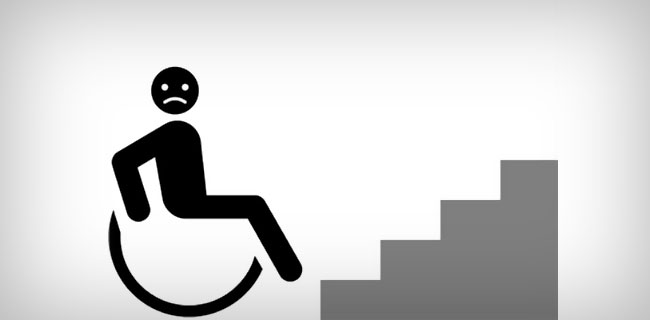
I was awestruck by the grandeur of the venue, the décor, and the variety of food on offer. Except there was one hiccup. Access. For someone on a wheelchair or someone with ageing knees, the venue was partially inaccessible.
One of the sections had a stair-only access, with no ramp, and no elevator. My mother who was suitably decked up for her dearest niece’s wedding, had to be lifted by four staff members (very willing to help), to get to the stage area. And this was done several times as she wheeled in and out of her room to attend the various festivities. I also noticed elderly family members on both sides, finding it troublesome to go up and down the long-winding staircases.
This hotel, like most others, was packed with wedding bookings through the season. Two or three simultaneous arrangements were underway. There was no dearth of money being made. And the crew was quite hospitable. But when it comes to accessibility, it didn’t seem to be a priority. There was a ramp at the entrance and one at another outdoor section of the venue. But nothing that was suitably built for ease of access. It was not in sync with the prescribed guidelines.
The bathrooms too were inaccessible for someone confined to a wheelchair, making me wonder if only ‘fit and normal’ people are expected to attend joyous celebrations.
Of course, since one is used to the lack of access, we had quick responses ready for each of the barriers. Nothing could prevent us from having a good time! But I wondered how people who were less experienced and less prepared than us, managed to navigate the space with its set of challenges.
It also reminded me of the frustration experienced by model and activist, Virali Modi, at her own wedding last month. In a series of social media posts that instantly went viral, Virali shared her ordeal as she was lifted ‘like a piece of luggage’ up two flights of stairs, so she could get married at the Mumbai Registrar office in Khar. There was no lift or ramp, and the officer refused to come downstairs for her signatures on the documents.
PLEASE RT!
I am disabled and I got married at the Registrars Office at Khar Mumbai on 16/10/23. The office was on the 2nd floor WITHOUT a lift. They wouldn’t come downstairs for the signatures and I had to be carried up two flights of stairs to get married. pic.twitter.com/ZNCQF3gJRY
— Virali Modi (@Virali01) October 18, 2023
The most precious moment of her life turned into an exasperating one, because the infrastructure in the country is built overlooking the needs of millions of persons with disabilities. Virali also highlighted in one of her posts that this could be equally disgruntling for someone who had a fall or a temporary difficulty walking up the stairs.
As she posted pictures citing the steep stairway and rusty railings, I recalled every single time when the lift in our housing society broke down and my mother was left with no choice but to be riskily transported three floors up on a plastic chair as her wheelchair won’t leave any room for turning.
Why should anyone go through such fearful and undignified experience for a regular excursion out of home? I have seen individuals and business owners finding it hard to understand different forms of access for persons with different types of disabilities. But when comes to wheelchairs, it’s fairly easily comprehended.
In fact, if one were to ask a non-disabled person, what they picture when they think of a disabled person, the response is likely a wheelchair, crutch, or a walking stick. And the most implemented accessibility solutions, are ramps and elevators.
Wheelchairs are frequently depicted in media, advertising, and cultural representations when discussing or portraying disability. This visibility reinforces the connection between wheelchairs and disability in the public consciousness.
And yet, such huge gaps exist in both private and public infrastructure. How come the average Indian citizen is unfazed at a wedding or any other social setting, where one or two people face restricted participation?
Wheelchairs are commonly associated with disability because they are a mobility aid designed to assist individuals who have difficulty walking or cannot walk at all due to various physical impairments. The wheelchair is a device that enhances mobility, making it one of the most visible symbols of disability.
For many people with mobility impairments, wheelchairs represent a means of gaining independence and maintaining an active lifestyle. They allow individuals to move around and participate in various activities, both indoors and outdoors, without relying on assistance from others.
And yet, most news headlines reporting Viral Modi’s harassment at the registrar’s office, termed her as a person who is ‘wheelchair bound’!
One wonders if it’s the cost of removing barriers of access that prevents inclusion or the deterring societal mindset towards the invisible majority of persons with disabilities, including those with permanent, temporary and age-related impairments.
Wondering why MxMIndia publishes a disability advocacy column? Well, we strongly feel that the media can dramatically transform the world for persons with disabilities. This series attempts to help bring forth issues that the media must champion to create a truly inclusive and accessible India. Writing this column is Shruti Pushkarna, a former journalist and now a disability inclusion advocate based in New Delhi. Her views here are personal. To access the archives of her 80-odd columns, please visit: https://www.mxmindia.com/category/ columns/shruti-pushkarna/
If you have a view on the issues raise or would like to align with MxMIndia on this cause, write to us at editor [at] mxmindia.com.
In my last piece (https://www.mxmindia.com/columns/will-persons-with-disabilities-enjoy-the-icc-world-cup-coverage/), I highlighted the issues of inaccessibility of mainstream sports coverage. Whether it’s Wimbledon, FIFA World Cup, Asian Games or the ongoing ICC Men’s Cricket World Cup, viewers with different disabilities often lose out on the sporting action because the channels of mass media don’t necessarily communicate to this so-called minority.
Our communication, information and programming are packaged overlooking the principles of universal design and access for all. We (read media) assume that persons with disabilities don’t participate in mainstream (normal) activities or use the same channels of media consumption.
As I wrote in my previous piece, this is not an easy problem to solve given the various stakeholders, costs, and more importantly, the attitudinal barriers, that prevent us from including people with diverse needs. So where can we start?
We can begin with an understanding of some ways of making sports coverage accessible for different viewers. Here’s a list of five ways (each) to help persons with Vision Impairment, Hearing Impairment and Neurodiversity enjoy and engage with sporting events, with equal excitement.
5 ways to make sports accessible for blind and visually impaired people
1. Audio description- Narrate key elements of the game like the player movements, location of the ball and any other notable event on the field. This commentary should be concise and in sync with the broadcast.
2. Audio commentary- Along with play-by-play commentary, provide supplementary commentary that describes the atmosphere, players’ and crowd reactions, emotions et cetera.
3. Accessible apps and websites- Create accessible platforms where blind viewers can check live scores, schedules, player profiles and more, with the help of screen reading software. Images should have alternate text added, for access.
4. Inclusive announcers- Train and educate sports commentators and announcers about the needs of visually impaired fans. This means the need to be descriptive without assuming that visuals speak for themselves.
5. Accessible graphics- Ensure that on-screen scorecards and other graphics are accessible with screen readers or other assistive technology, so the blind viewers can keep a tab on the statistics independently.
5 ways to make sports accessible for persons with hearing impairment
1. Closed captioning- Provide closed captions for all audio commentary, interviews, and any other audio content. Real-time captioning is possible with the help of AI tools and software, that convert speech into text automatically.
2. Sign Language Interpreters- Having a sign language interpreter for live events, especially for important announcements or interviews, makes it possible for deaf viewers to consume information easily and directly.
3. Text-based updates- Provide real-time updates in text format, like displaying score changes, highlights and more, on screen. These can also be made available through an app or website, allowing deaf fans to follow the game.
4. Visual alerts- Incorporate visual cues like flashing lights or graphics to signal important events in the game like a goal, wicket, replay or appeal. These visual indicators can help the hearing impaired viewers identify critical moments in a match/tournament.
5. Inclusive social media content- Ensure all digital content shared on social media platforms has subtitles or closed captions for the deaf audience. This includes interviews, analysis, behind-the-scenes et cetera.
5 ways to make sports accessible for neurodivergent individuals
1. Sensory-friendly options- Provide sensory-sensitive viewing options for neurodivergent fans as they find it difficult to handle any sort of sensory overload. For instance, a quiet feed with minimal crowd noise and commentary, ability to customise audio levels to suit individual preferences, low background music et cetera.
2. Predictable and clear graphics- Ensure on-screen graphic content is easy to read, consistent and isn’t too distracting from the main visual content. Frequent flashing graphics or animations or too many overlays can be overwhelming for this audience.
3. Visual schedules and timers- Display clear timelines or countdowns for neurodivergent individuals to anticipate breaks, half-time, the end of the game. Predictable viewing experience causes less anxiety for these viewers.
4. Accessible content- Create easy to navigate content on digital and mobile platforms that help viewers find specific games, player profiles or highlights. Use clean icons and labels to simplify the selection of desired content.
5. Alternative viewing modes- Offer the option of switching to a simplified or augmented reality view that enhances the clarity of player movement, ball tracking and any other important events in the game.
Over and above, it is useful to establish communication channels for disabled groups to share feedback on content (and platform) accessibility. By implementing these changes/additions, sports broadcasters and media organisations can create an inclusive and improved fan experience for persons with disabilities.
Wondering why MxMIndia publishes a disability advocacy column? Well, we strongly feel that the media can dramatically transform the world for persons with disabilities. This series attempts to help bring forth issues that the media must champion to create a truly inclusive and accessible India. Writing this column is Shruti Pushkarna, a former journalist and now a disability inclusion advocate based in New Delhi. Her views here are personal. To access the archives of her 80-odd columns, please visit: https://www.mxmindia.com/category/ columns/shruti-pushkarna/
If you have a view on the issues raise or would like to align with MxMIndia on this cause, write to us at editor [at] mxmindia.com.
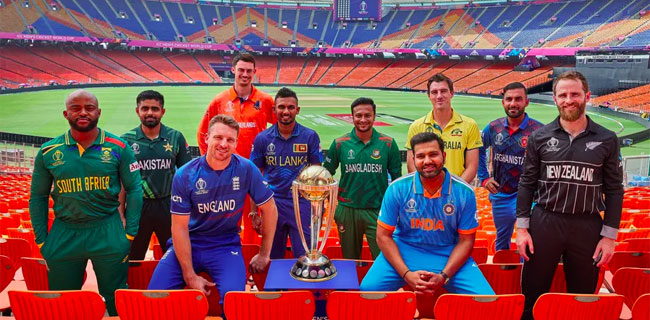
Photograph source: Official X account of the International Cricket Council (@ICC)
By Shruti Pushkarna
Almost eight years ago, I quit journalism (and the media) to work towards raising awareness and advocating for the equal rights of persons with disabilities. Having acquired experience and knowledge in this domain, a column on ‘Media and Disability’ seemed like a much-needed and a natural outcome of my passion for both these subjects, mainstream news and inclusion of persons with disabilities into the mainstream of things.
But it was much earlier when my two interests converged for the first time. As a budding journalist, I curated a video story around the Blind Cricket World Cup. This was also the first time, I viewed disability from an equal and empowering lens. When I met with the Founder of the World Blind Cricket Council, George Abraham, and the players as well as their coach, disability didn’t feature in our conversations at all. The only reference pertained to the technique used by this set of players with varying degrees of vision impairment. The modified version is played with a larger than standard cricket ball, filled with ball bearings to make sound that is audible to the players. Bowling is underarm and the team is divided into totally blind, partially sighted and partially sighted with slightly better vision players.
Other than that, there is similar enthusiasm and energy in the stadium, and the same passion for the religion called cricket. While producing this report on Blind Cricket, I experienced sports as an equaliser. Disability, and in this case, blindness took a backseat. As I witnessed the visually impaired players run between the wickets, the stereotype of a man in dark glasses begging on the street vanished into thin air. The focus shifted to the sporting skill, the game, team spirit and the zest of the players.
I also discovered that blind and visually impaired people, like most Indians, not only followed cricket on the radio and television, but also pursued sporting interests in football, chess, tennis, athletics and more. In fact, that’s true for persons with other disabilities too, something I have realised in more recent interactions, during the course of my work.
Haven’t you ever encountered someone in the bar or on the plane, who displays similar fandom for Novak Djokovic or M S Dhoni? Haven’t you ever hit off with a stranger in a party who analyses and critiques a game with calculated precision?
We all have. And this person could well be a person with disability. Physical and/or mental limitation to perform certain activities doesn’t take away the desire to follow a sport. But it does limit the way in which one consumes or accesses the sporting event.
Most of us have been following the Asian Games being held in Hangzhou, China. At the time of writing, the Indian contingent has bagged more than 80 medals, taking the country ranking to number four. And the biggest of all sporting delights, the ICC Men’s Cricket World Cup starts today in Ahmedabad.
Just like you and me, there are millions of disabled fans, cheering for their favourite players, hoping to see Rohit Sharma’s boys bring home the trophy after a decade. Are you still wondering if people who are blind, deaf, or on the autism spectrum, or any other disability follow these tournaments?
The answer is yes. The real question however is whether they can experience the game, process the information being relayed and check the updated score and tally, seamlessly. Unfortunately, not.
Television broadcast as well as online streaming of matches is heavy on visual production. Our screens are loaded with visuals, graphics, ticker, lower thirds et cetera giving out different pieces of information. A blind viewer experiences the game through audio commentary, which many a times omits voicing the information displayed on screen. Very often, when a new player enters the field, the name is announced through a graphic overlay on the match visual. Another example of inaccessibility of the gaming coverage is the analysis graphs or the field markings that appear on screen, again as an overlay. As for checking the latest score online, most websites open a pop-up with an update which is inaccessible to persons with vision impairment who use screen reading software to decipher details on digital platforms.
Similarly, deaf viewers miss out on the content consumption experience due to the absence of closed captioning or sign language interpretation. And this after the Ministry of Information and Broadcasting came up with accessibility standards for hearing impaired on TV channels in 2021.
While there is a whole visual effects industry that thrives on the graphic content of live events, like sports and music, we remain ignorant of the needs and challenges of diverse communities. For instance, a person on the autism spectrum or someone with dyslexia, or any other learning disability may find it disconcerting to consume jarring, colourful, and dynamic infographics and text on screen.
With the onset of OTT platforms in addition to the numerous private channels, outreach to a wider audience seems obvious. But clearly channels of mass media fail to communicate to a sizeable majority of the Indian population.
This is a problem facing not just the 2.68 crore disabled population but also an increasingly large percentage of seniors who acquire age-related disabilities that hamper their normal ways of functioning (read consumption). As per a recent report in The Hindu, senior citizens (above 60) will constitute around 12.5% of the total population by 2030.
So, what do we do? Who do we hold accountable? And more importantly, who bears the cost of ensuring accessibility for all? Is it the channel partner or the streaming partner, or the event organiser, or the production company? And is inclusion reliant on a government mandate, which doesn’t really extend to private entities in effect?
There aren’t any simple answers here. What is needed is perhaps a debate and discussion to work out a solution that minimises exclusive coverage. And a solution that makes business sense to reach an untapped audience which has quantified market worth.
Sporting events are also a perfect opportunity for brands and advertisers to promote their products/ services. Here’s an inclusive ad of Tide detergent that featured in the Super Bowl in 2021. It has descriptive audio and closed captioning for the visually and hearing impaired audience. With 385 million blind and visually impaired people in the world, and around 466 million people with hearing loss, can brands really afford to overlook such a large target group?
Streaming platforms like Netflix, Apple TV and Amazon Prime Video have consciously added accessibility features like audio descriptions, subtitles, and closed captions for their disabled audience. For the elderly, Netflix also has the option to increase the size of the subtitles, so they can read despite failing vision. These OTT websites and mobile applications are also designed keeping accessibility for screen reader users in mind. Of course, platforms like Sony LIV and Disney Hotstar remain inaccessible but with easy technological innovations available, one hopes that soon all streaming services will offer equal viewing experience to diverse audiences.
Wondering why MxMIndia publishes a disability advocacy column? Well, we strongly feel that the media can dramatically transform the world for persons with disabilities. This series attempts to help bring forth issues that the media must champion to create a truly inclusive and accessible India. Writing this column is Shruti Pushkarna, a former journalist and now a disability inclusion advocate based in New Delhi. Her views here are personal. To access the archives of her 80-odd columns, please visit: https://www.mxmindia.com/category/ columns/shruti-pushkarna/
If you have a view on the issues raise or would like to align with MxMIndia on this cause, write to us at editor [at] mxmindia.com.
How many of you have watched the Academy Award winning movie CODA? A film that won the Best Picture, Best Supporting Actor and Best Adapted Screenplay at the 94th Oscars.
CODA (or Child of Deaf Adults) features deaf actors Marlee Matlin and Frank Kotsur portraying their disability on screen. The film centres around Ruby Rossi, the only hearing character in this family drama.
What really stood out for me in this fictional representation of a complex issue, is its ending. When their seventeen-year-old daughter (Ruby) decides to follow her passion and leaves for college to pursue music, the deaf family is left to fend for themselves. But throughout the movie, the filmmaker never puts the onus of inclusion on the disabled, and same is true of the conclusion. Their surrounding community, which is the (hearing) fishing community figures out ways of communicating and transacting with the Rossi family.
September is observed as the Deaf Awareness Month and this year the theme is ‘Building Inclusive Communities for All’, where deaf people feel connected to their community as well to those without a hearing impairment.
Officially, India has only 250 certified sign language interpreters for a deaf population of ranging between 1.8 and 7 million.
With an estimated count of 700 million people (globally) to experience hearing loss by 2050, it’s time we learn ways of including deaf individuals in mainstream conversations. And what better time to start than the Deaf Awareness month!
The obvious question to ask is how can we include deaf individuals in day-to-day activities, at work or even in social settings?
Here are five easy tips.
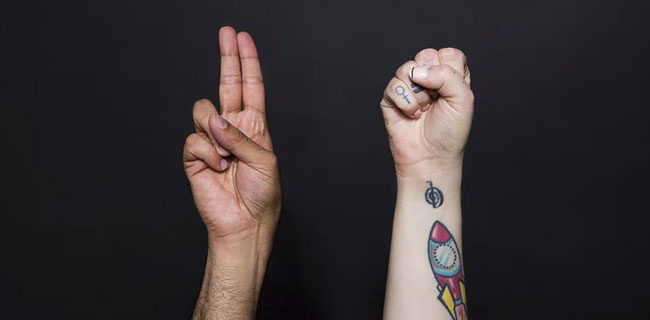
1. Learn basic sign language to initiate communication with a community severely dependent on visual cues. In 2017, the United Nations officially recognised September 23 as the International Day of Sign Languages. The aim was to raise awareness about the importance of sign languages as a means of communication and as a fundamental human right of deaf individuals.
2. Speak clearly without overemphasising or speaking too loudly or slowly, remaining natural in your delivery.
3. It always helps to communicate in quiet environments because noisy backgrounds can make it harder for the deaf (and hard of hearing) to focus on what is being said.
4. Always face the person you are communicating with while speaking or signing. Deaf individuals rely on gestures, facial expressions, and lip movements to communicate effectively.
5. Use visual aids like whiteboard, notepad or smartphone apps makes it easier to engage with the deaf especially if it involves information exchange.
In case you are curious about life with hearing impairment, here are five books that focus on the theme of inclusion using deaf characters.
1. El Deafo– This is a graphic novel based on the childhood experiences of American author, Cece Bell. It’s a heartwarming and humorous tale of a young girl navigating the world with her hearing aid, recounting her challenges and triumphs.
2. You’re Welcome, Universe– This book by Whitney Gardner features an Indian teenage deaf girl who gets expelled from her school for spraying graffiti on the wall. In her new school, she tries to find new friends and embarks on a journey of self-discovery.
3. Wonderstruck– This is an illustrated novel by Brian Selznick which follows the story of Ben, a deaf boy traveling to New York in 1977, and Rose, a deaf girl traveling to New York in 1927. The two stories overlap around the themes of connection and belonging.
4. Deaf Like Me– This novel by Thomas S Pradley and James P Pradley, is based on a true story. It recounts the journey of a hearing family raising a Deaf child. It delves into the challenges they face and their efforts to support their child’s communication and inclusion.
5. Deafening– This is a novel by Frances Itani, set during/before World War I, which tells the story of a young woman who becomes deaf due to a bout of scarlet fever.
And in case you are someone who prefers movies to books, here are five cinematic recommendations with diverse portrayals, exploring themes of deaf culture and inclusion.
1. Sound of Metal (2019)- Directed by Darius Marder, this film tells the story of a heavy metal drummer who begins to lose his hearing and must adapt to a new way of life within the Deaf community.
2. Iqbal (2005)- Directed by Nagesh Kukunoor, Iqbal is centred around a Deaf and mute aspiring cricketer. The film highlights his determination to overcome obstacles and pursue his dream of playing cricket at the national level.
3. The Shape of Water (2017)- Directed by Guillermo del Toro, this fantasy drama features a mute, non-verbal female lead who communicates using sign language. The film explores the power of communication beyond words and the connection between the characters.
4. Children of a Lesser God (1986)- Directed by Randa Haines, this film revolves around the romantic relationship between a hearing teacher and a Deaf custodian at a school for the Deaf. It explores issues related to communication, love, and societal expectations.
5. Soundtrack (2011)- Directed by Neerav Ghosh, this film is loosely based on the life of musician and composer Suman Sridhar. The film features a DJ who loses his hearing but continues to create music. It explores his journey of adaptation and resilience.
Change is not easy to come. Especially not in a country as diverse and complex as ours. It’s true that it takes more than one to transform and build an accessible world. But it’s the action of one that translates into a collective movement for change.
Can you commit to learn to sign at least one word this September?
Wondering why MxMIndia publishes a disability advocacy column? Well, we strongly feel that the media can dramatically transform the world of persons with disabilities. This series attempts to help bring forth issues that the media must champion to create a truly inclusive and accessible India. Writing this column is Shruti Pushkarna, a former journalist and now a disability inclusion advocate based in New Delhi. Her views here are personal. To access the archives of her 75-plus columns, please visit: https://www.mxmindia.com/category/ columns/shruti-pushkarna/
If you have a view on the issues raise or would like to align with MxMIndia on this cause, write to us at editor [at] mxmindia.com.
This article has been updated at https://www.mxmindia.com/columns/5-tips-5-books-5-movies-that-can-help-us-mainstream-deaf-individuals/
By Shruti Pushkarna
How many of you have watched the Academy Award winning movie CODA? A film that won the Best Picture, Best Supporting Actor and Best Adapted Screenplay at the 94th Oscars.
CODA (or Child of Deaf Adults) features deaf actors Marlee Matlin and Frank Kotsur portraying their disability on screen. The film centres around Ruby Rossi, the only hearing character in this family drama.
What really stood out for me in this fictional representation of a complex issue, is its ending. When their seventeen-year-old daughter (Ruby) decides to follow her passion and leaves for college to pursue music, the deaf family is left to fend for themselves. But throughout the movie, the filmmaker never puts the onus of inclusion on the disabled, and same is true of the conclusion. Their surrounding community, which is the (hearing) fishing community figures out ways of communicating and transacting with the Rossi family.
September is observed as the Deaf Awareness Month and this year the theme is ‘Building Inclusive Communities for All’, where deaf people feel connected to their community as well to those without a hearing impairment.
Officially, India has only 250 certified sign language interpreters for a deaf population of ranging between 1.8 and 7 million.
With an estimated count of 700 million people (globally) to experience hearing loss by 2050, it’s time we learn ways of including deaf individuals in mainstream conversations. And what better time to start than the Deaf Awareness month!
The obvious question to ask is how can we include deaf individuals in day-to-day activities, at work or even in social settings?
Here are five easy tips.
1. Learn basic sign language to initiate communication with a community severely dependent on visual cues. In 2017, the United Nations officially recognised September 23 as the International Day of Sign Languages. The aim was to raise awareness about the importance of sign languages as a means of communication and as a fundamental human right of deaf individuals.
2. Speak clearly without overemphasising or speaking too loudly or slowly, remaining natural in your delivery.
3. It always helps to communicate in quiet environments because noisy backgrounds can make it harder for the deaf (and hard of hearing) to focus on what is being said.
4. Always face the person you are communicating with while speaking or signing. Deaf individuals rely on gestures, facial expressions, and lip movements to communicate effectively.
5. Use visual aids like whiteboard, notepad or smartphone apps makes it easier to engage with the deaf especially if it involves information exchange.
In case you are curious about life with hearing impairment, here are five books that focus on the theme of inclusion using deaf characters.
1. El Deafo– This is a graphic novel based on the childhood experiences of American author, Cece Bell. It’s a heartwarming and humorous tale of a young girl navigating the world with her hearing aid, recounting her challenges and triumphs.
2. You’re Welcome, Universe– This book by Whitney Gardner features an Indian teenage deaf girl who gets expelled from her school for spraying graffiti on the wall. In her new school, she tries to find new friends and embarks on a journey of self-discovery.
3. Wonderstruck– This is an illustrated novel by Brian Selznick which follows the story of Ben, a deaf boy traveling to New York in 1977, and Rose, a deaf girl traveling to New York in 1927. The two stories overlap around the themes of connection and belonging.
4. Deaf Like Me– This novel by Thomas S Pradley and James P Pradley, is based on a true story. It recounts the journey of a hearing family raising a Deaf child. It delves into the challenges they face and their efforts to support their child’s communication and inclusion.
5. Deafening– This is a novel by Frances Itani, set during/before World War I, which tells the story of a young woman who becomes deaf due to a bout of scarlet fever.
And in case you are someone who prefers movies to books, here are five cinematic recommendations with diverse portrayals, exploring themes of deaf culture and inclusion.
1. Sound of Metal (2019)- Directed by Darius Marder, this film tells the story of a heavy metal drummer who begins to lose his hearing and must adapt to a new way of life within the Deaf community.
2. Iqbal (2005)- Directed by Nagesh Kukunoor, Iqbal is centred around a Deaf and mute aspiring cricketer. The film highlights his determination to overcome obstacles and pursue his dream of playing cricket at the national level.
3. The Shape of Water (2017)- Directed by Guillermo del Toro, this fantasy drama features a mute, non-verbal female lead who communicates using sign language. The film explores the power of communication beyond words and the connection between the characters.
4. Children of a Lesser God (1986)- Directed by Randa Haines, this film revolves around the romantic relationship between a hearing teacher and a Deaf custodian at a school for the Deaf. It explores issues related to communication, love, and societal expectations.
5. Soundtrack (2011)- Directed by Neerav Ghosh, this film is loosely based on the life of musician and composer Suman Sridhar. The film features a DJ who loses his hearing but continues to create music. It explores his journey of adaptation and resilience.
Change is not easy to come. Especially not in a country as diverse and complex as ours. It’s true that it takes more than one to transform and build an accessible world. But it’s the action of one that translates into a collective movement for change.
Can you commit to learn to sign at least one word this September?
Wondering why MxMIndia publishes a disability advocacy column? Well, we strongly feel that the media can dramatically transform the world of persons with disabilities. This series attempts to help bring forth issues that the media must champion to create a truly inclusive and accessible India. Writing this column is Shruti Pushkarna, a former journalist and now a disability inclusion advocate based in New Delhi. Her views here are personal. To access the archives of her 75-plus columns, please visit: https://www.mxmindia.com/category/ columns/shruti-pushkarna/
If you have a view on the issues raise or would like to align with MxMIndia on this cause, write to us at editor [at] mxmindia.com.
An earlier version of this article had misspelt Movies in the main headline as Bovies. It has been corrected. Our apologies – Ed
Yesterday, August 23, 2023, India made history. We became the fourth country in the world to soft land on the moon and the first to touch down near the lunar south pole. Prime Minister Narendra Modi proudly broadcast India’s prowess in technology and science to the rest of the world. The ISRO Chairman and his entire team were ecstatic with the monumental accomplishment. And so was the average Indian citizen.
I was also glued to the television screen until the last few anxious seconds, and when the moment arrived, I leapt up involuntarily. Transforming into a cheering and cheerful compatriot.
Journalists, analysts, space experts, engineers, politicians, and scientists drummed up enthusiasm for the country’s scientific expertise and technological innovation. Looking at the nation’s progress into outer space, one can only imagine how many young adults must be aspiring to join this technological revolution.
More than 50 per cent of India’s population is below the age of 25. The success of this mission is bound to ignite a spark, encouraging students to pursue careers in Science, Technology, Engineering and Mathematics or popularly known as STEM.
Out of the 2.68 crore disabled Indians, 17% are in the age group of 10-19 years, and 16% are in the age group of 20-29 years (as per Census 2011).
It’s obvious that this young community too has ambitions and dreams. Fortunately, disability does not limit the imagination. Although limited imagination might prove disabling.
There’s no denying that technology has grown leaps and bounds in the past few years, and that it has leveled the playing field for marginalized communities. But there is also no denying that millions of people don’t have equal access to quality education.
Did you know that several students with vision impairment drop out of school after finishing Class 8? Did you know that most blind students are discouraged from taking up STEM subjects? Schools and colleges implicitly and sometimes even explicitly dissuade them from studying higher levels of science and maths.
Science is not just a subject but a means to comprehend and explain our surroundings. It encourages students to reason and think logically. But the inadequacies in teacher training, lack of assistive tools and technology and inaccessible study material, keeps STEM subjects out of reach for students with disabilities.
There’s also a lack of awareness among educational institutions, teachers, and the general public about the needs and potential of individuals with disabilities. This leads to discrimination and exclusion.
A 2013 report published by Xavier’s Resource Centre for the Visually Challenged (XRCVC) cites: “A combination of fear, doubt, lack of knowledge, lack of teacher training skills, and resources have held STEM (Science Technology Engineering and Maths) education for blind and low-vision students the world over, and similarly in India, hostage. They have combined to give the false verdict, ‘It is not possible!’ These views, over time, have become institutionalized as part of education systems. This, in turn, has had significant impact on lives and career choices of blind and low-vision persons. When a trend or an experience becomes part of collective social consciousness for a long time, imaginations assume the power of truths, relegating fact to the realm of fiction. It is critical to the success of blind students that educators help dispel misconceptions among sighted students as to what blind people are capable of.”
Despite the absence of systemic will and adequate investment in infrastructure, technology and training, role models continue to motivate aspiring scholars to pursue these disciplines.
Dr Satendra Singh is a disability rights activist and a medical professional. He contracted poliomyelitis when he was nine months old but went on to complete a Bachelor of Medicine, Bachelor of Surgery and later on Doctor of Medicine in Physiology. He is an advocate for inclusive education and has worked to promote accessibility in medical education.
Kartik Sawhney is a disability advocate, entrepreneur and technologist who works to empower people with disabilities using technology, community, and support services. He is the first blind student to pursue science education in high school in India. A computer science graduate of Stanford University, Kartik co-founded Project StemAccess (now I-Stem) that provides technical training, mentorship and hands-on opportunities to blind math and science students across the country.
Dipendra Manocha is an advocate for people with print disabilities. He is the Founder and Managing Trustee of Saksham (NGO) and Director (Developing Countries) with Daisy Consortium, a network of over 100 global organisations registered in Zurich, Switzerland.
Blind since childhood, Manocha has used technology to build a communications and training infrastructure that enables the disabled to put their abilities to work alongside other citizens in mainstream society.
There are several organisations in India focused on providing STEM-skilling opportunities specifically tailored for persons with disabilities. The work of exemplary individuals and institutions is testament to possibilities of inclusive and accessible education and the impact on the lives of disabled students.
Agreed that teaching STEM subjects can present unique challenges for educators, but these gaps can be bridged with inclusive infrastructure, accessible learning material, assistive technologies, online learning platforms, Virtual Reality (VR ) technology, communication aids, et cetera.
More importantly, there is a need to address negative attitudes and societal stigmas for fostering a conducive education environment for all. While there are laws and policies in place, effective implementation at all levels, from government bodies to individual schools, is crucial. The process of ensuring quality education and opportunities for disabled youth requires focus, investment, and commitment from all stakeholders.
It’s true that landing on the moon and educating disabled youth involves different challenges, priorities, and complexities. But they are equally important goals for a developing nation with a rapidly growing economy.
Here’s hoping for a tomorrow where Indians will celebrate inclusion and equity with similar fervour!
Wondering why MxMIndia publishes a disability advocacy column? Well, we strongly feel that the media can dramatically transform the world of persons with disabilities. And this series can help bring forth issues that the media must champion to create a truly inclusive and accessible India. To write this column, we invited Shruti Pushkarna, a former journalist who is now a disability inclusion advocate based in New Delhi. Her views here are personal. To access the archives of her 75-plus columns, please visit: https://www.mxmindia.com/category/ columns/shruti-pushkarna/
If you have a view on the issues raise or would like to align with MxMIndia on this cause, write to us at editor [at] mxmindia.com.
 On February 20, 2024, the world lost a legend. Radio presenter Ameen Sayani died of a cardiac arrest in Mumbai. He was 91. An iconic voice synonymous with radio, Sayani compered and presented over 50,000 shows.
 Radio was a constant presence in the lives of the people back when the channels of entertainment were limited. Listeners formed a relationship, a bond of sorts, with the voices inside the radio sets. A similar personalisation is somewhat reflected in the compering style of All India Radio jockeys even today.
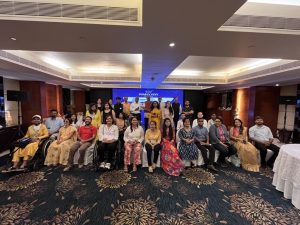
 Vishant Nagvekar, Locomotor Disability (Goa): Persons with locomotor disabilities face a lot of challenges in outdoor environments, even in events like Purple Fest, when it comes to washroom access. There is little importance placed on this while planning. I heard other wheelchair users complain of the same during in the past few days, this is something that needs attention from the Disability Commissioner’s office.
 Pooja Gupta, Thalassemia (Delhi): One of the requirements of persons with thalassemia is to get blood transfusion every 20-25 days. In India, there isn’t much blood donation on a mass scale and NAT (Nucleic Acid Amplification Testing) tested blood is not available easily. For instance, in Delhi, only two major hospitals provide NAT tested blood and not everyone can afford going to those. This type of blood can save thalassaemic patients from severe infections. Also, hardly any health insurance companies cover genetic blood disorders, and those which do charge an exorbitant premium with various terms and conditions. This is an expensive disease to manage, can the State help create awareness about this?
 Shrutilata Singh, Deaf Blindness/Multiple Disability (Gujarat): There is little awareness about deaf blindness. There are 21 disabilities in the Rights of Persons with Disabilities Act, classifying deaf blindness as a Multiple Disability is not fair, as this is a condition with varying degrees. We need this to be a separate type so it can be certified and people can avail of reasonable accommodations. Today deaf blind people face difficulties during examination, applying for a job etc. because their certificate doesn’t mention the exact disability. Secondly, a lot of information about schemes and technology from the government doesn’t get communicated to us. We need a dedicated group that shares all relevant information in an accessible format.
 Radhesh Varty, Haemophilia (Goa): Haemophilia is a condition which is unpredictable. Today I am speaking with you, standing here, tomorrow I can’t say what condition I’ll be in. There is a lot of challenge we face in reservation of jobs, because when people hear about haemophilia, they write us off. It’s hard to predict which body part might swell up when, and where bleeding may occur. We need specific accommodations for this disability and the corresponding conditions, especially to make gainful employment possible.
 Swasti Mehta, Intellectual Disability (Maharashtra): We need specific focus on early intervention for this disability. It should be made mandatory for parents to get early intervention for such kids to improve their future because they are often confused. There is a need for occupational training for persons with intellectual disability after 18 years of age. There are no government provisions for that. Some parents send their children to private training institutes but after 18, government needs to support this disability. The loans that are provided by NHFDC (National Handicapped Finance and Development Corporation) are of no use without any training.
 Dr Shanthipriya Siva, Parkinson’s Disease (Tamil Nadu): Why glyophosate, a herbicide, and another pesticide that cause Parkinson’s still not banned in India? After few years of Parkinson’s when your medicines don’t work and you get a lot of multiple motor fluctuations, there is a surgery called Deep Brain Stimulation which really helps patients. But it’s not performed in most government hospitals in India. Can this be made accessible to all patients with Parkinson’s because it can really help people with early onset, when they might be in the peak of their careers?
 Priya Lal, Leprosy Cured (Delhi): I want to highlight the issue regarding disability pension. In my state, I only get a mere 500 Rs as monthly pension which is quite low. We need to increase this to meet daily expenses. There are so many girls like me whose families don’t accept them and they have no access to jobs. Some families even leave these girls in hospitals. Even though I work as an auditor with a multinational company, I still face a lot of problems because of my condition. How can we change this?
 Anubha Singhal, Muscular Dystrophy (Delhi): Muscular Dystrophy (MD) has various types and sub-types. I want to highlight that many others with MD are unable to join this fest because most of them live with severe disabilities, and they need more than one caregiver at times. Looking at the accessibility of all states, we struggle. The laws exist but why is there such lack of implementation? Why are we not pushing for the online systems of building plan approvals? This can rectify the problem at the planning stage. Can the government not push this to make buildings accessible as per the harmonised guidelines?
 Saurabh Prasad, Blindness (Jharkhand): Last year, DEPwD (Department of Empowerment of Persons with Disabilities) initiated a STEM-based programme and circulated proposals to 100 different national institutes working for blind and hearing impaired people, for establishing STEM labs in their schools. But they received less than five applications. This is because these institutes don’t have teachers to take this program up. Unless we have required special educators, we won’t be able to implement such initiatives. So what plans does the government have to manage this shortage of teachers and trainers across schools?
 Smitha Sadasivan, Multiple Sclerosis (Tamil Nadu): It’s been eight years since the RPWD Act was enacted and we only have seven more years for the Sustainable Development Goals to be completed. In the interest of this timeline, we need to take stock of which aspects were implemented, which ones are underway and which couldn’t take off. One example is that of the caregiver’s allowance listed in the Act. Many states are giving a mere sum of 1000 Rs for caregivers who are parents, which is not a solution. These should be trained caregivers who are paid dignified wages. Data is another critical area, is disability related data available to different government departments? Also, how many people with disabilities are in decision making roles, especially in the various state disability departments?
 Chaitanya Mukund, Cerebral Palsy (Haryana): Based on my research of past two years, crimes against persons with disabilities don’t get recorded properly, both on state and national level. India has no data in this regard, this is a huge lapse, and a violation of Section 7 of the RPWD Act. When there is no information available, how can awareness be generated for the same? I’d urge all State Disability Commissioners to issue recommendation as per relevant section of the Act for the respective State Police Departments to issue enforceable guidelines with regards to recording crimes against PwDs.
 Nomesh Verma, Sickle Cell Disease (Chhattisgarh): Awareness is a huge problem, especially among medical professionals. Sickle Cell Disease (SCD) is an invisible disability, and due to the lack of proper medical consultation, many with this condition die. We need to train our doctors, and also spread awareness among common people. Treatment of this disease should be made available in villages. Around 14 lakh people are living with SCD but a mere one per cent has been issued Unique Disability Identification (UDID) cards. One of the reasons is the complex guidelines which prevent from issuance of certificate, if someone has not had a transfusion within three months. We are not able to avail of any government schemes as a result. Job reservation is also a challenge without a UDID. Can we simplify these rules?
 Prasad Joshi, Deafness (Goa): There are many challenges, primarily that of communication, which leads to several other issues. We are dependent on interpreters, because most people don’t understand sign language. We want Indian Sign Language (ISL) to be registered as an official language. This will solve most of the problems like quality of education, early prevention, jobs, et cetera. If ISL is introduced, this will help include us in the mainstream.
 Dr Anubha Mahajan, Chronic Neurological Condition (Delhi): We need a separate classification for Chronic Neurological Conditions (CNC) in the RPWD Act because Multiple Sclerosis and Parkinson’s are also neurological disorders. We get issued a certificate on the basis of chronicity, prevalence and progression of the disease but there is no clear definition for the same in the Act. The problem with CNC is the unpredictability of the disease. I can walk today, but that might not be true on another day. For every disability including CNC, we need a specialised team of doctors for assessment.
 Aditi Gangrade, Autism (Maharashtra/Madhya Pradesh): Most parents of children with autism have no awareness about this condition. A lot them force their kids into therapies for a cure, which is not medically possible. A lot of doctors are offering Stem Cell therapy as a cure, even though ICMR has issued a guideline to use this therapy only for research purposes. Why can’t we spread awareness so parents don’t fall into such traps? Some autistic children also have intellectual disability, they are often beaten up and tortured to punish them for their so-called rude behaviour. Often films ridicule persons with disabilities, why is it still allowed despite the strict laws against discrimination?
 Ekta Bhyan, Spinal Cord Injury (Haryana): I urge Spinal Cord Injury to be made into a new 22nd category of disability because as per World Health Organisation, it is the most devastating disability. The numbers are huge, 1.5 million in India, and every year 15-20,000 new cases. It is an injury that impacts the central organ system, every organ is directly or indirectly impacted by this disability. So we can’t club it with orthopaedic disability. Speaking of assistive devices, a normal wheelchair costs 3-4 lakh rupees, tax exemption should be available for affordability. Also we need more spinal cord rehabilitation centres in the country.
 K Vaishali, Specific Learning Disability (Telangana): I have gone to 5 schools, a mix of private and government. I always wrote d instead of g, but none of the teachers were able to notice my Dyslexia. I had to diagnose myself at the age of 20. Teachers are the best people to catch hold of it at an early age but most of them have no awareness. Every school and college must have special educators. UGC and CBSE have specific guidelines about dyslexia but the teachers are clueless.
 Prashant Naik, Low Vision (Maharashtra): Low Vision is a spectrum, we are neither totally blind nor do we have corrective vision. Hence, we face challenges in education and employment. One solution I want to suggest is to create awareness at a state and central level. We can perhaps have a ‘Sugamya week’ or something annually, so mainstream society can be sensitised. We should also have representation in the respective state departments for persons with disabilities.
 Disha Pandya, Dwarfism (Maharashtra): I’d like to emphasise on the lack of doctors, paediatricians or orthopaedics who can specifically guide on dwarfism. Doctors are not aware on how to treat it or help with certain aftermath. More importantly, the entertainment society has made dwarfism into a joke everywhere, in malls, schools, on the roads! Is there no way of stopping this? There are many persons with dwarfism who earn through channels of entertainment but why should they be ridiculed?
 Puneet Singh Singhal, Speech and Language Disability (Delhi): I have similar issues pertaining to accessibility, forced therapies, crime against disabled and so on. I am an activist and my organisation’s tagline is “Stammer, but with love”. Just like dwarfism, people like me are used for comic relief in films and television. Why can’t we spread awareness so people don’t turn insensitive towards us?
 Sonali Mukherjee, Acid Attack Survivor (Jharkhand): There are laws but are not being implemented on ground. Girls are being made victims of acid attack every day. Why aren’t we regulating the sale of acid in shops? There should be stringent action against the perpetrators of such heinous crime. Acid attack survivors also face denial from health insurance providers, despite the fact that they may not have any serious illness. The other issue is pertaining to chasing the legal system for justice. My case has been running for 20 years now without a just verdict.
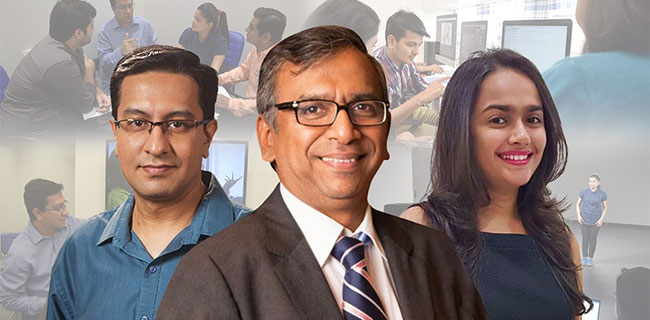
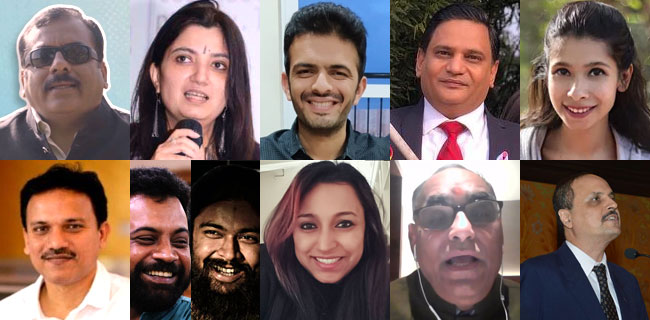
 A visually impaired entrepreneur who is the founder of Sunrise Candles based in Mahabaleshwar. Bhavesh has a vision impairment due to retina macular degeneration. A rehabilitation centre that taught candidates to make candles rejected Bhavesh because of his disability. Unfurled, Bhavesh set up his own venture in 1994. Today, he employs more than 10,000 visually impaired men and women, churning out a business of 350 crore per annum.
 A social entrepreneur and advocate of accessibility, Shilpi is the founder CEO of BarrierBreak. Her organisation is focused on making technology accessible to persons with disabilities. Shilpi actively promotes the use of assistive technology and ensures that digital platforms are designed to include persons with different disabilities. Fifty per cent of her accessibility testing team is comprises people with disabilities. Shilpi is recognised as one of the Top 15 Women Transforming India by the Niti Aayog.
 In May 2014, Prateek met with an accident which led to a spinal cord injury. This left him with paraplegia, making him physically disabled. This is when he realised for the first time how inaccessible the country is built up to be. And he decided to retrofit and ramp up the nation. Based in Bengaluru, Prateek founded a company in 2018, RampMyCity. Instead of complaining, he decided to become part of solution generation. RampMyCity is a start-up that makes mainstream places like offices, residential complexes, schools, colleges, restaurants, parks, et cetera accessible.
 An Indian doctor and a disability rights activist, Dr Satendra is well-known for his work in promoting inclusion in healthcare and education of persons with disabilities. He is a Professor of Physiology at the University College of Medical Sciences and Guru Teg Bahadur Hospital, Delhi. He has been instrumental in bringing about many reforms, including the inclusion of disability competencies in the new medical curriculum in India. He received the National Award in 2021 by the President of India for making elections in the country accessible to persons with disabilities.
 In January this year, an inclusion marvel was created by the Goa government. One of the key figures to bring the first Purple Fest to life was the State Commissioner of Persons with Disabilities in Goa, Guruprasad Pawaskar. With astounding success in its first edition and participation from all stakeholders including PwDs, enablers, changemakers, government officials, corporate employers et cetera, Purple Fest is going global in January 2024. As someone who worked closely with Pawaskar during the Purple Fest 2023, I was amazed at the zeal and hard work put in by a government representative to make a success out of the event. He worked day and night, tirelessly, barely leaving the venue. And now his team is gearing up for a bigger production next year.
 In 2013, Ashish and Alok started the ‘Stop Acid Attack’ campaign and connected with acid attack survivors (consciously avoiding the term victim) from different parts of India. This campaign culminated into the formation of an NGO, Chaanv Foundation which used crowdfunding platforms to support the survivors. These were people who struggled to find jobs because of the apathy meted out by the society due to their visible facial deformities. So the idea to open a café to give them employment, was born. Sheroes Hangout Café in Noida (Uttar Pradesh) Stadium is helping acid attack survivors rebuild their lives with dignity. Sheroes also has branches in Lucknow and Agra.
 More than 2000 Indians have worked as international volunteers with the United Nations, but deaf activist Rupmani Chhetri is the first disabled Indian volunteer who worked in Ukraine. She was born in Nepal and later moved to Darjeeling. Her family tried everything under the sun to make their daughter talk which made her feel sick. She is determined to improve the lives of deaf individuals, so they can freely communicate and feel a sense of belonging. Rupmani is the co-founder of a start-up named SignAble Communications, which helps deaf people access sign language interpreters in real-time through a mobile application. She aims to bring down the communication barriers with technology and training.
 A civil servant who served more than three decades in the Ministries of Defence, Home, Shipping, and Social Justice and Empowerment, Dhariyal was the longest serving Deputy Chief Commissioner of Persons with Disabilities till 2014. During his tenure as the State Commissioner for Persons with Disabilities, Delhi, he is well known for delivering pathbreaking judgements on disability policy and implementation of the Rights of Persons with Disabilities Act 2016. Dhariyal is a walking-talking encyclopaedia when it comes to the laws pertaining to disability empowerment. He not only understands the legal fine print, but has been instrumental in actioning implementation level changes to make places accessible in the capital. He has helped resolve many cases of discrimination of the rights of persons with disabilities. One can say that as the Deputy CCPD and the SCPD, he has been the most effective bureaucrat, driving inclusion.